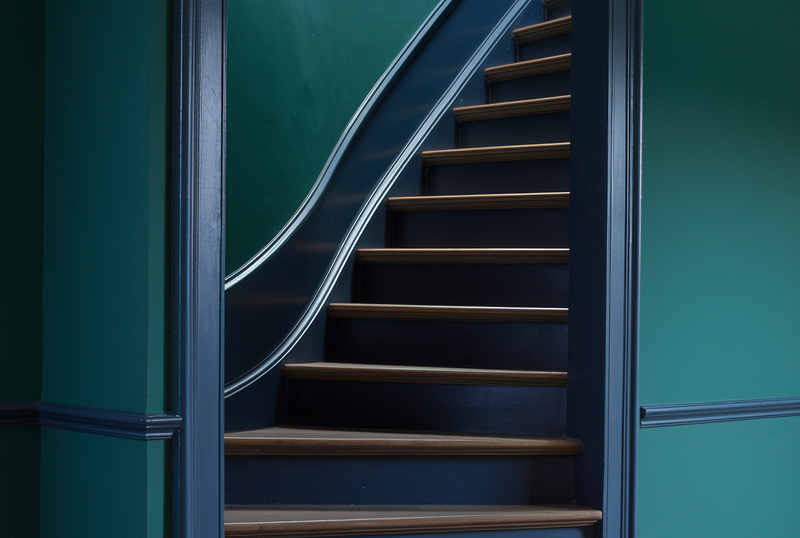
Staircases are usually treated like background noise.
You move up, you move down—and that’s it.
But the wall running alongside your stairs? That’s one of the most underused design opportunities in a home. It’s tall, visible from multiple angles, and naturally draws the eye as you move through the space. When done thoughtfully, it can add depth, character, and a sense of flow that ties your interiors together.
After working with and observing countless real homes, one thing is clear: a well-designed staircase wall doesn’t just look good—it changes how the entire house feels. It adds intention. It adds personality. It tells a story.
Below are 18 staircase wall design ideas that are stylish, practical, and made for real living—not showrooms or staged homes.
Create a gallery wall that grows over time

Gallery walls don’t need to be perfect.
In fact, they shouldn’t be.
I love staircase gallery walls because they’re allowed to evolve. Start with a few frames. Add more as life happens. Photos. Art prints. Kids’ drawings. That random postcard you couldn’t throw away.
Let the frames follow the angle of the stairs. It feels natural. Almost like the wall is moving with you.
Mix frame sizes and finishes. Wood. Black. Brass. Don’t overthink it.
This kind of wall feels personal.
And personal always wins.
Paint the wall a bold, unexpected color

White is safe.
Sometimes too safe.
A staircase wall is a great place to take a color risk without overwhelming the whole house. Deep green. Moody navy. Warm terracotta. Even charcoal.
Because the space is transitional, bold colors feel intentional here. Not loud.
Keep the trim neutral if you’re nervous. It helps ground the look.
The result?
Instant impact every time you go up or down the stairs.
Add picture ledges for flexible styling

Picture ledges are my secret weapon.
Especially on staircases.
They let you lean art instead of committing to nails forever. Change pieces easily. Layer frames. Add small plants or objects.
Install them parallel to the stair angle for a custom look. Or stack them vertically for drama.
This option is perfect if you like switching things up.
Or if commitment isn’t your thing.
It feels curated but relaxed.
Which is exactly what a staircase wall should be.
Install vertical paneling or beadboard

Paneling adds instant character.
Even in modern homes.
Vertical shiplap, beadboard, or simple board-and-batten draws the eye upward. It makes ceilings feel taller and staircases feel more architectural.
Paint it a soft neutral or a muted color. Nothing glossy.
The texture does most of the work. You don’t need much decor on top.
It’s subtle. Classic.
And quietly impressive.
Showcase black-and-white photography

There’s something timeless about black and white photos.
They calm visual noise.
On a staircase wall, they create rhythm. Especially when framed consistently.
Family photos work beautifully here. So do architectural shots or travel images.
The lack of color keeps things cohesive, even if the frames vary.
It feels thoughtful.
And quietly emotional.
Paint a mural or abstract design by hand

This one takes courage.
But it’s worth it.
A hand-painted mural or abstract shape adds soul you can’t buy in a store. It doesn’t have to be perfect. Actually, better if it isn’t.
Soft curves. Organic shapes. Muted colors.
Let it follow the movement of the stairs instead of fighting it.
This turns the wall into art.
And the home into something deeply personal.
Create a color-blocked wall for modern contrast

Color blocking sounds bold.
But it can be very livable.
Use two or three complementary colors to create horizontal or angled sections along the staircase wall. Follow the stair line for cohesion.
Stick to muted tones if you want longevity. Clay. Sage. Soft gray.
This adds visual interest without clutter.
It’s graphic.
But still warm when done thoughtfully.
Use wood slats for warmth and texture

Wood slats instantly elevate a staircase.
Instantly.
Vertical slats add rhythm and warmth. They also soften sound, which is a bonus.
Use natural wood for a cozy feel or paint them for a modern twist.
You can cover the entire wall or just the lower portion.
It feels architectural.
And surprisingly calming.
Add wainscoting or trim for classic detail

Trim adds quiet elegance.
Always has.
Wainscoting along a staircase wall creates structure and polish. Especially in traditional or transitional homes.
Paint it the same color as the wall for subtle texture. Or contrast slightly for depth.
It doesn’t need decor on top to work.
This is a long-term design move.
Timeless and grounded.
Use plants and greenery creatively

Plants aren’t just for floors.
Or windowsills.
Wall-mounted planters or trailing greenery along a staircase wall add life and softness.
Choose low-maintenance plants. Or realistic faux if light is limited.
Let them cascade naturally.
It brings the outdoors in.
And makes the staircase feel alive.
Highlight the wall with directional lighting

Sometimes the wall itself isn’t the star.
The lighting is.
Directional lights aimed along the staircase wall create drama and focus. Especially at night.
Use them to highlight art, texture, or architectural details.
It turns the staircase into an experience.
Soft. Intentional.
A little theatrical in the best way.
Create a minimalist art grid for calm structure

Not everyone loves eclectic.
That’s okay.
A structured art grid brings calm and order to a staircase wall. Same frame. Same size. Same spacing.
Choose art with similar tones or themes.
This works beautifully in modern homes.
It’s quiet.
Balanced.
And easy on the eyes.
Paint the stair wall and ceiling the same color

This trick is underrated.
And powerful.
Painting the wall and ceiling the same color blurs boundaries. It makes the staircase feel taller and more enveloping.
Choose a warm, mid-tone color. Not too dark. Not too light.
The space feels intentional.
Almost cocoon-like.
Perfect for dramatic staircases or tight spaces.
Add a custom handrail feature wall

Handrails aren’t just functional.
They can be beautiful.
Choose a sculptural handrail or paint it a contrasting color. Let it stand out.
Pair it with a simple wall so the shape shines.
This turns a necessity into a design feature.
Subtle.
But impactful.
Combine art with integrated lighting

Art deserves good lighting.
Always.
Install picture lights or recessed lighting to highlight artwork along the staircase wall.
It adds gallery vibes without feeling cold.
The space feels intentional at night.
Like it’s meant to be seen.
This elevates even simple art.
Big time.
Install textured wall tiles or brick slips

Texture isn’t just for bathrooms.
Or kitchens.
Brick slips, stone veneer, or textured tiles on a staircase wall add depth and warmth.
Keep colors natural. Earthy. Soft.
This works especially well in entry staircases.
It grounds the home.
Right from the start.
Create a child-friendly rotating art wall

If you have kids, this one matters.
Trust me.
Designate the staircase wall for rotating kids’ artwork. Use clip frames or magnetic strips.
It shows them their work matters.
And it keeps things fresh.
This wall grows with them.
And holds memories you’ll treasure later.
Use negative space intentionally

Sometimes the best design choice…
Is restraint.
Leaving parts of the staircase wall empty allows other elements to breathe. Light. Shadows. Architecture.
Not every inch needs something.
Intentional emptiness feels calm.
Confident.
It says you know when to stop.
Final Thoughts
You don’t need to do all of this.
Just one idea can change everything.
Start small. Trust your instincts. Let the staircase wall evolve like the rest of your home.
Because even the spaces we pass through deserve a little love.
And a lot of intention.
