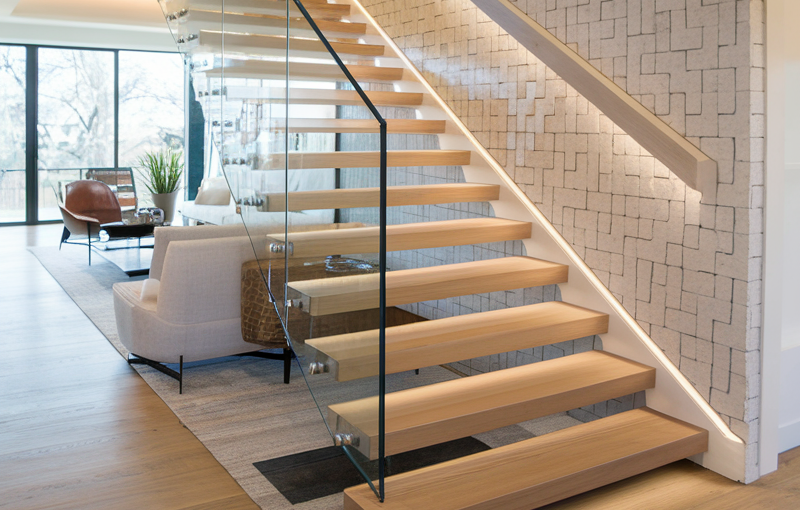
There’s something about a floating staircase that makes a home feel expensive.
Light. Open. Architectural. Almost sculptural.
When I first saw one in person, I couldn’t stop staring. No bulky risers. No heavy structure. Just clean lines that looked like they were suspended mid-air. Magic. ✨
If you’ve been dreaming about upgrading your entryway or building from scratch, these 21 floating staircase ideas will give you inspiration that feels doable — whether your vibe is modern, rustic, dramatic, or cozy.
Let’s dive in.
Install Natural Wood Treads Against a White Wall
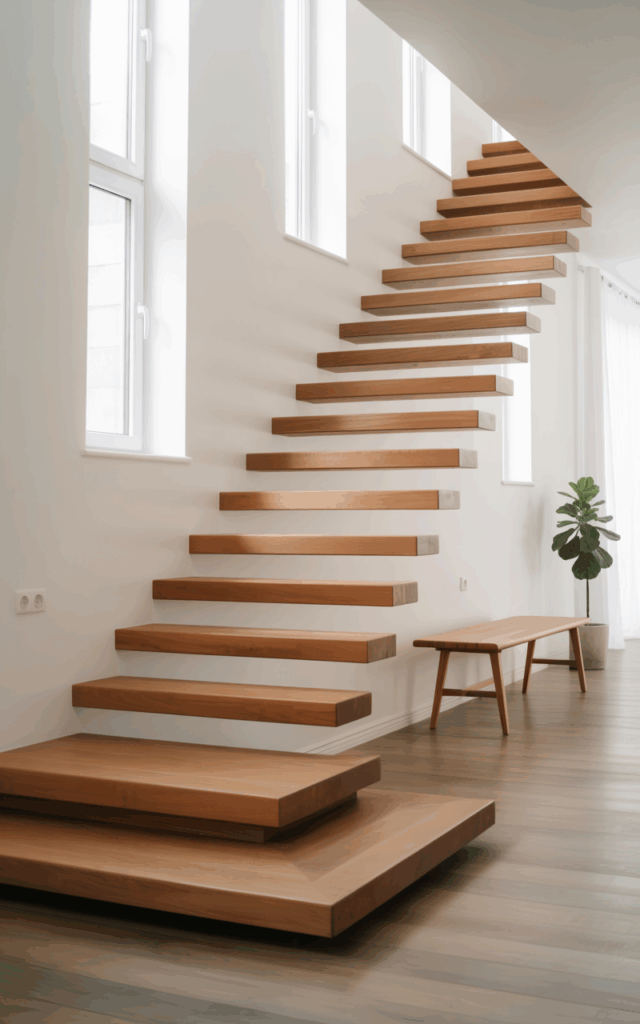
This is the classic move. And it never fails.
Picture warm oak or walnut treads floating along a crisp white wall. No risers. Minimal hardware. Just pure contrast.
The wood adds warmth. The white keeps things light and airy. It works especially well in smaller homes where you don’t want the staircase to dominate the space.
Why it works?
The contrast highlights every step, making the staircase feel intentional instead of structural. It’s simple. Clean. Timeless. 🤍
Add a Glass Railing for an Ultra-Modern Look
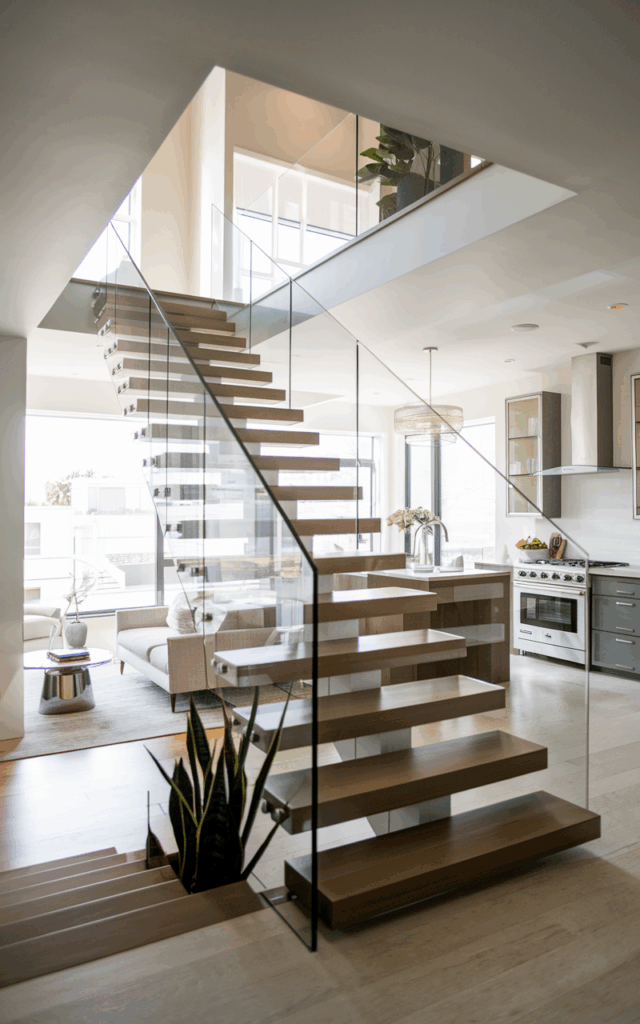
If you want that “luxury penthouse” vibe, go with frameless glass.
The treads appear to float even more because nothing visually interrupts them. Light moves freely. The room feels bigger instantly.
I love this in open-concept homes where the staircase is visible from the kitchen or living area.
A Pro-tip:
Use low-iron glass if your budget allows. It removes the green tint and keeps everything crisp and clear. Subtle upgrade. Big difference.
Embed LED Strip Lights Beneath Each Step
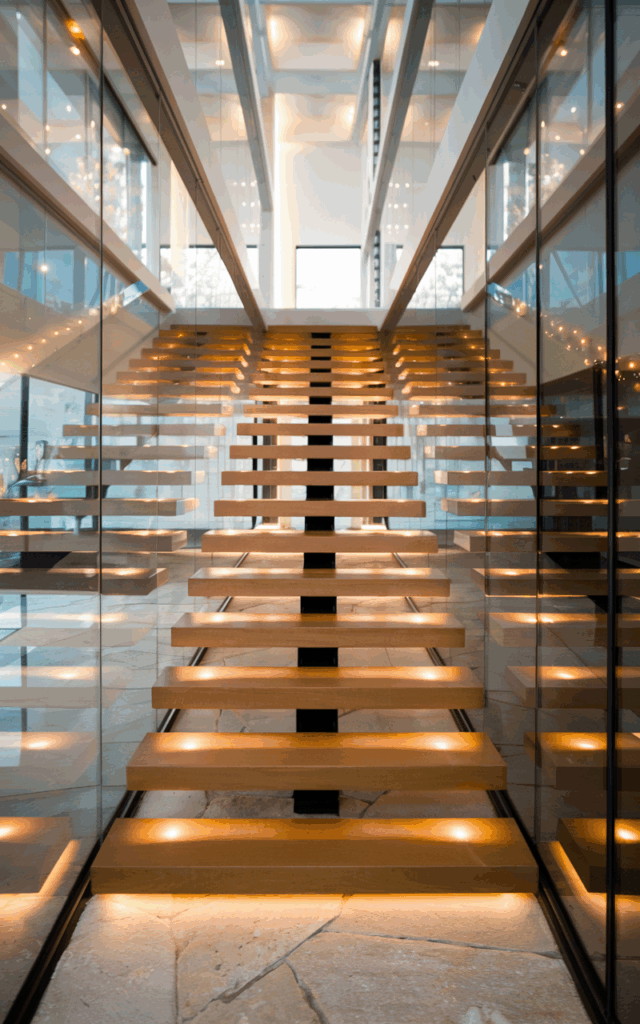
I love when form meets function.
Add soft LED lighting under every tread and suddenly your staircase glows at night. It feels high-end without screaming for attention.
Plus, it’s practical. Midnight snack runs become safer. 😉
Quick Tip:
Choose warm white lighting, not cool. Warm tones feel cozy and inviting. Cool can make it look too commercial.
Incorporate a Black Vertical Slat Divider
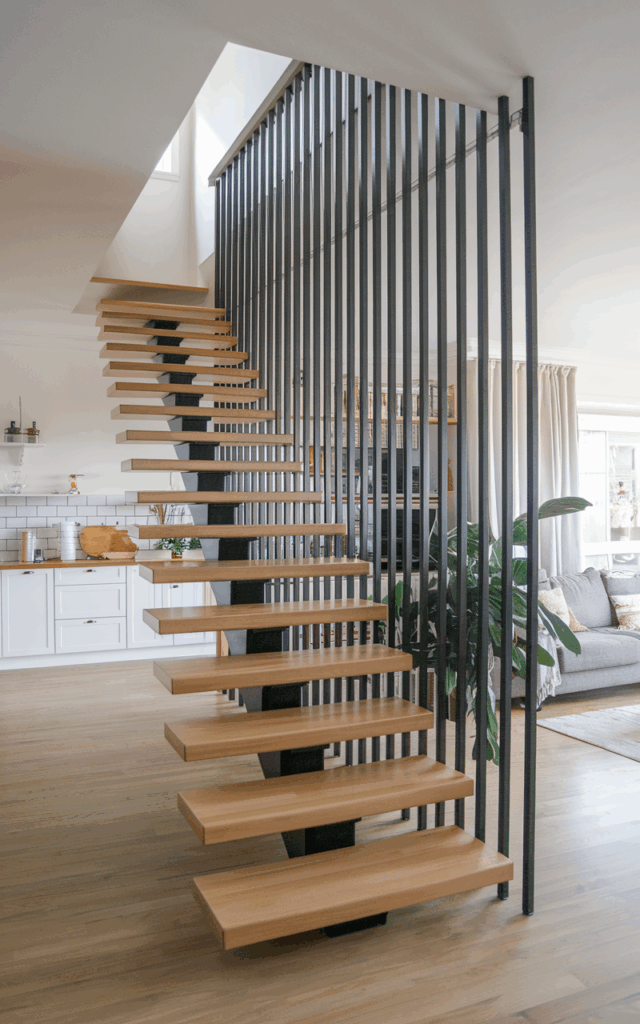
Instead of a traditional railing, install vertical wood or metal slats from floor to ceiling.
The treads still float. But the slats create rhythm and partial privacy.
I’ve seen this in Scandinavian-inspired homes and it’s gorgeous.
It also subtly separates spaces without fully closing them off.
Combine Marble Treads with Minimal Hardware
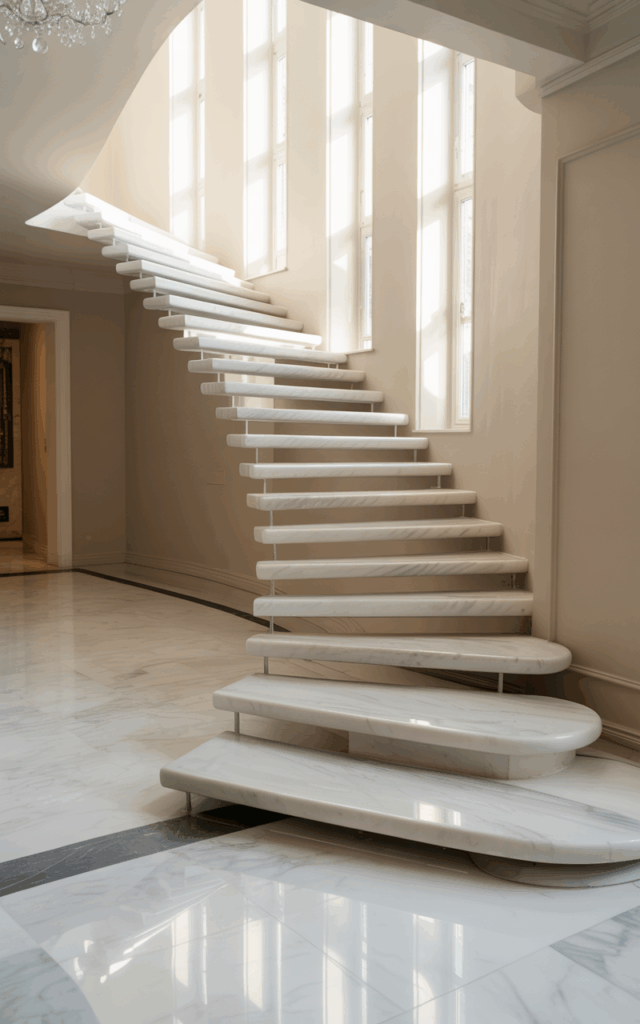
Marble floating steps? Luxury.
Keep the hardware hidden and let the stone shine. White marble with grey veining is timeless, but even dramatic darker marble can work in the right setting.
Pair it with understated lighting and neutral walls.
This is definitely a splurge moment. But wow. 🤍
Install Cable Railings for an Airy Coastal Feel
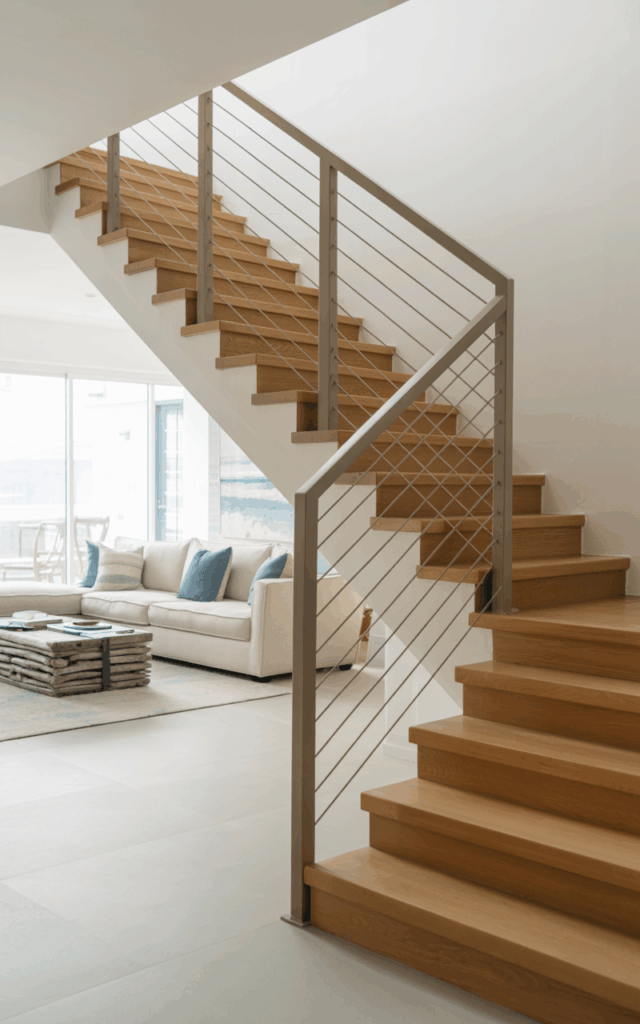
If you love breezy interiors, cable railings are your friend.
They keep sightlines open while adding subtle horizontal lines. I especially like them with pale wood treads and soft beige walls.
Unlike the dramatic black steel from earlier, this one feels light and relaxed. Think beach house energy. 🌊
Who this is for:
- Homeowners who love coastal or transitional design
- Open-concept spaces
- Families wanting safety without heavy railings
It’s functional without stealing focus.
Paint the Supporting Wall a Deep Accent Colour
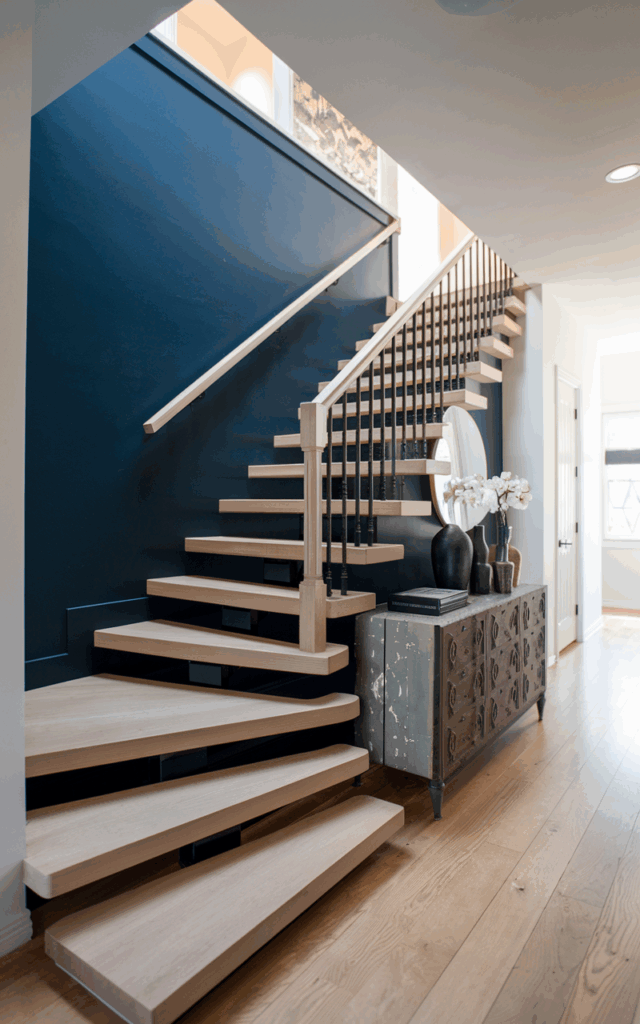
Here’s a trick designers use.
Keep the treads neutral — then paint the stair wall charcoal, navy, or forest green. Suddenly the steps pop.
It creates depth and a layered look without changing the staircase structure.
Colour swap suggestion:
| Classic | Bolder Version |
| White wall | Charcoal grey |
| Beige | Deep olive |
| Soft grey | Midnight navy |
This adds personality fast. 🎨
Tuck Built-In Storage Underneath
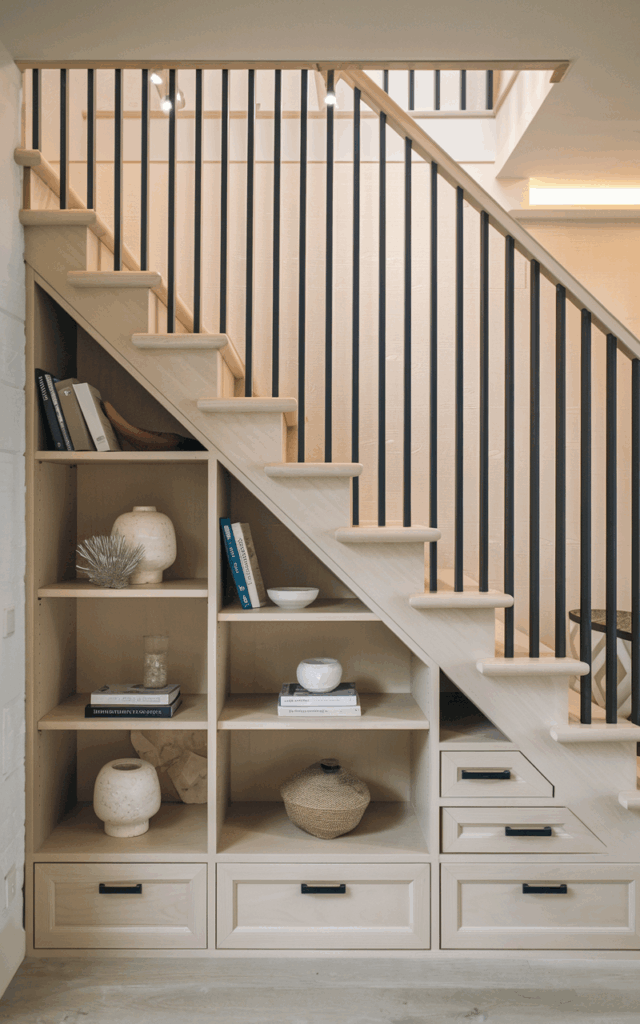
Floating stairs leave beautiful open space below.
Use it.
Add hidden drawers, open shelving, or even a mini reading nook. I’ve even seen wine storage done here. 🍷
Small space hack:
- Add closed cabinets for clutter control
- Install open shelves for décor
- Use soft lighting to highlight the area
Form meets function, always.
Contrast Light Treads With Dark Flooring
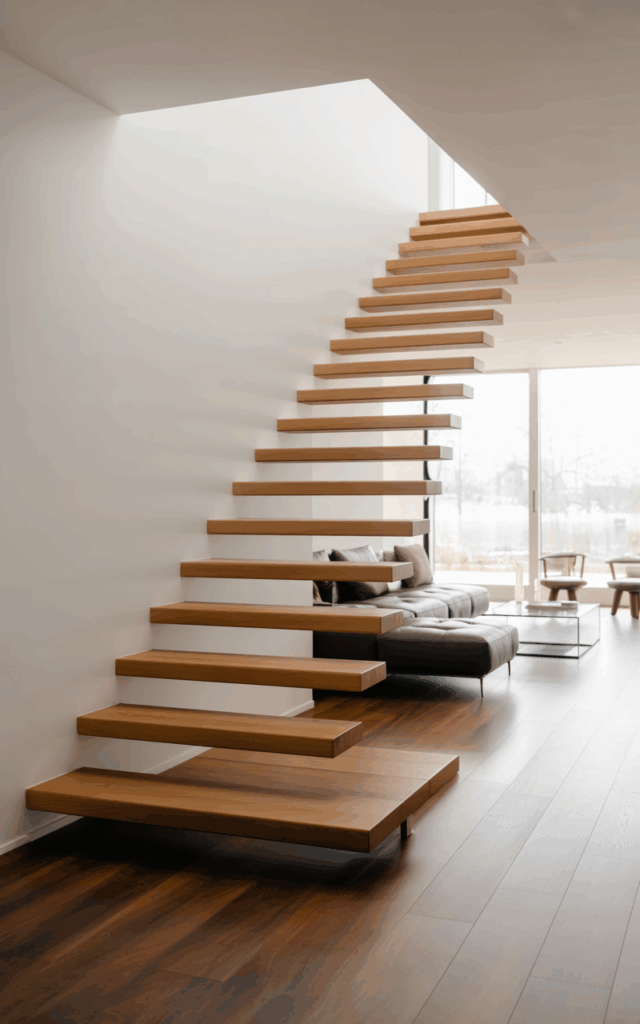
Instead of matching everything, flip the contrast.
Light oak stairs over dark walnut floors? Stunning.
The staircase stands out without overwhelming.
The psychology behind it:
Contrast draws the eye upward. It encourages movement. It subconsciously makes ceilings feel taller. And who doesn’t want that?

Mix Wood and Metal for a Balanced Look
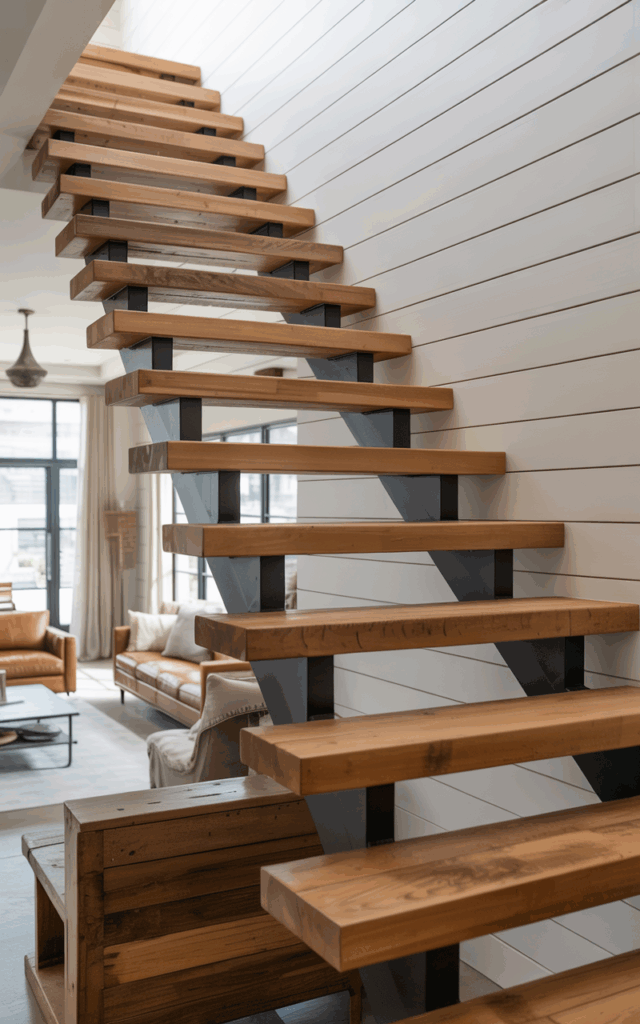
Remember the thick wood slabs from idea seven?
Pair something similar with slim black metal brackets. You get warmth and structure in one design.
It prevents the staircase from feeling too rustic or too industrial.
Thumb Rule:
If the treads are thick and warm, keep the metal minimal and matte. Balance is everything.
Float the Staircase in the Center of the Room
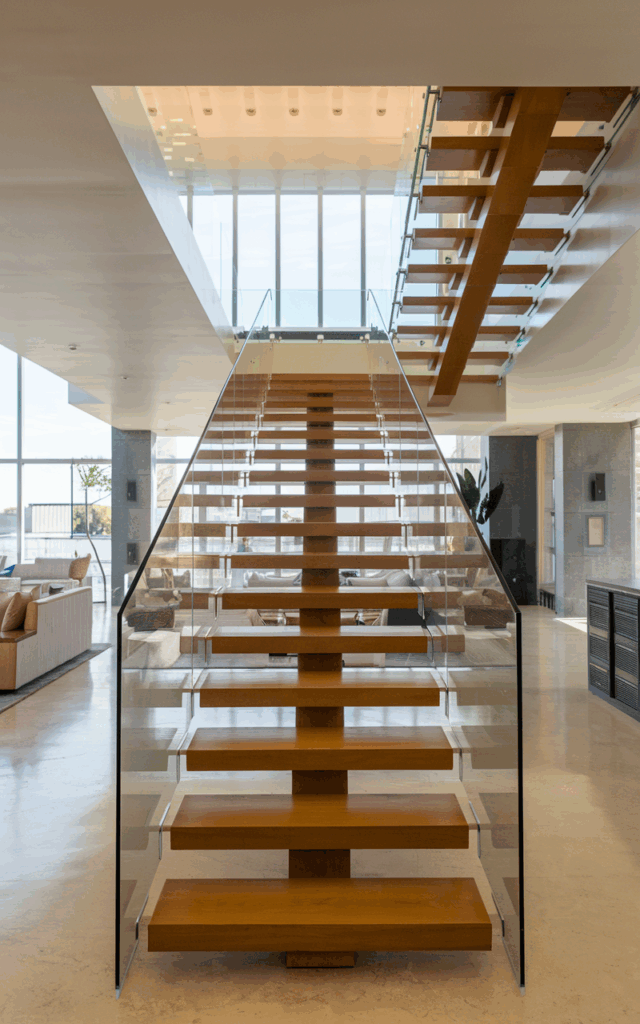
Instead of hugging a wall, let it stand alone.
This works in large open spaces where you want the staircase to divide zones without walls.
It becomes functional sculpture.
Tools you may need:
- Structural engineer consultation
- Reinforced floor support
- Hidden steel framing
Not a beginner move — but unforgettable. 🏡
Install Open Risers With a Matching Feature Wall
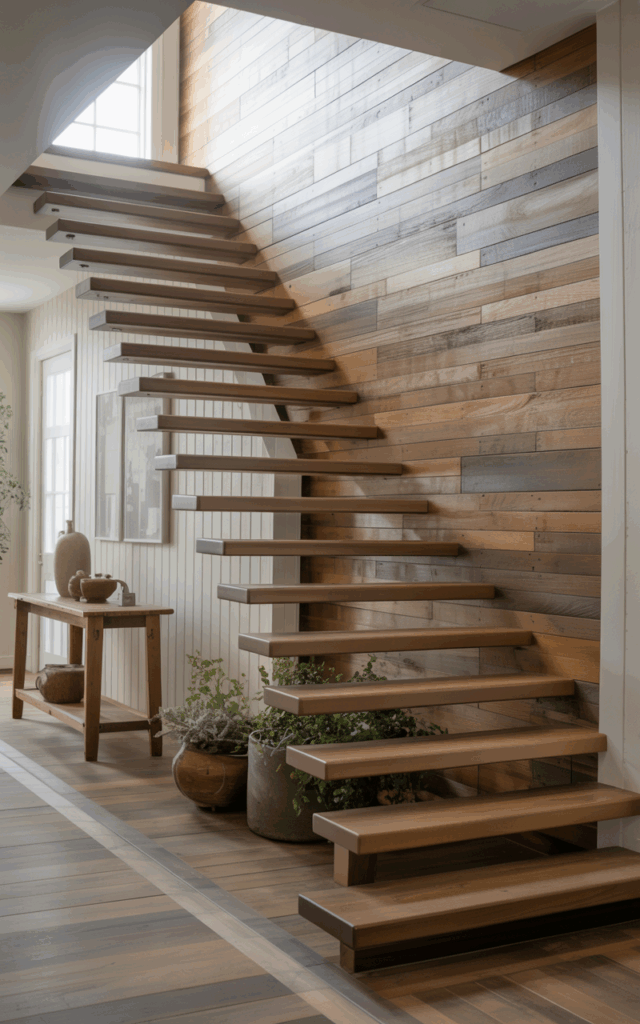
Tie the staircase visually to a textured wall — wood panels, stone cladding, or even microcement.
Unlike the bold paint trick earlier, this adds texture rather than color.
It makes the staircase feel integrated, not added later.
Works best in:
- Modern farmhouse homes
- Contemporary builds
- High-ceiling entryways
Texture brings warmth without bulk.
Use Slim Profile Steps for a Minimalist Effect
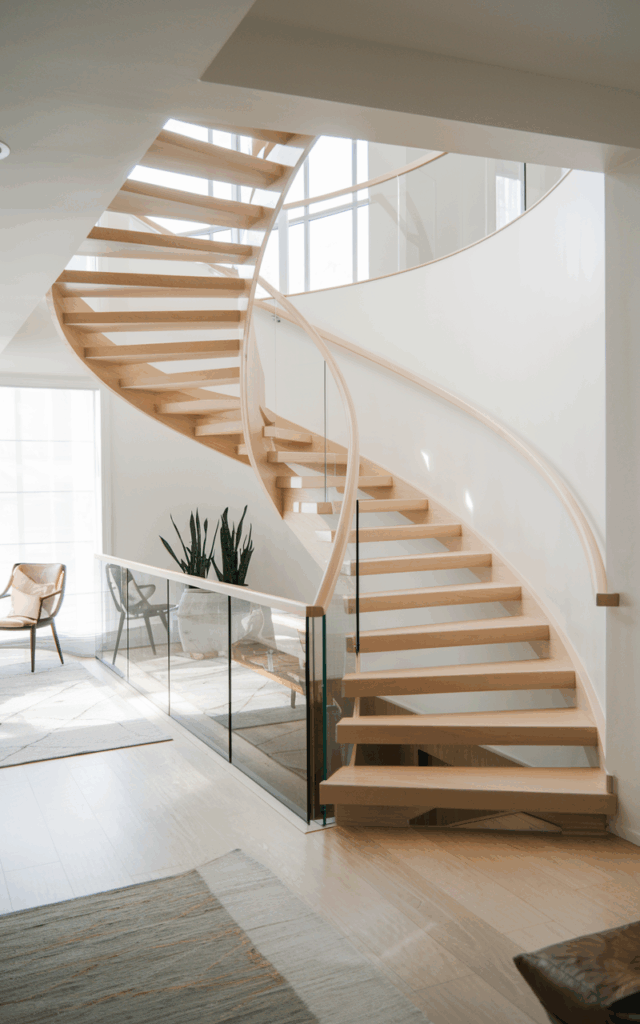
Go thin. Go sleek.
Ultra-slim floating treads create an almost invisible staircase aesthetic.
Do’s & Don’ts:
Do this 👉
- Reinforce properly
- Keep surroundings clutter-free
- Use subtle lighting
Not this ❌
- Pair with heavy railings
- Overdecorate nearby walls
Minimalism requires restraint. But it’s powerful.
Add Under-Stair Indoor Plants for a Soft Organic Feel
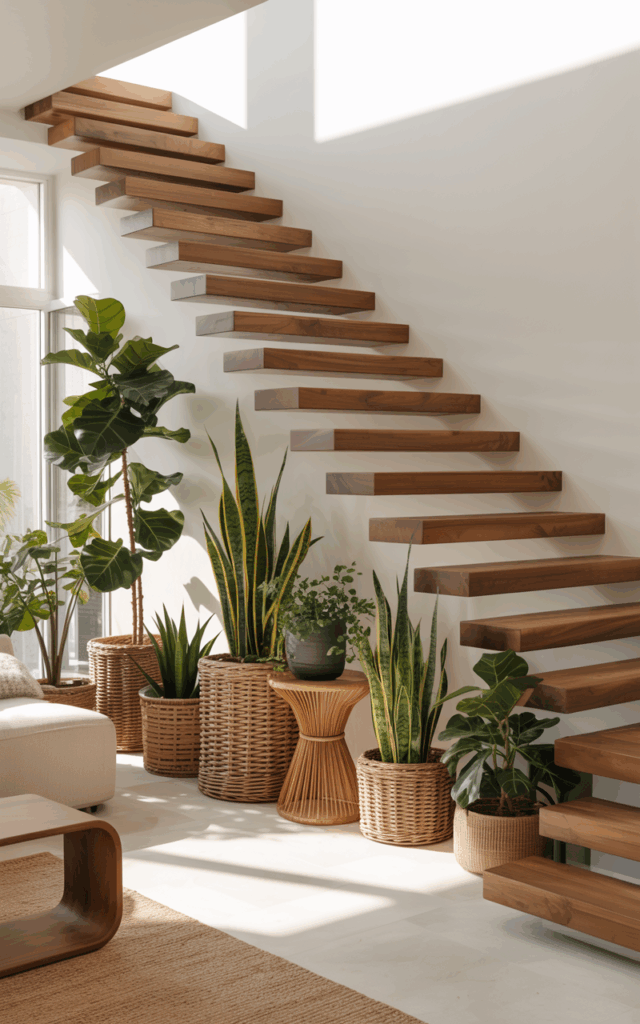
Floating stairs create negative space. And negative space begs for greenery.
Add tall plants like fiddle-leaf figs or snake plants underneath. Layer heights. Play with woven baskets.
It instantly softens the hard architectural lines. 🌿
Unlike the glass-box idea that feels ultra-sleek, this one brings life and movement.
Layer it like this:
- One tall statement plant
- Two medium plants
- One trailing plant on a low stool
The staircase becomes a living backdrop. It feels intentional. Calm. Inviting.
Frame the Staircase With Floor-to-Ceiling Windows
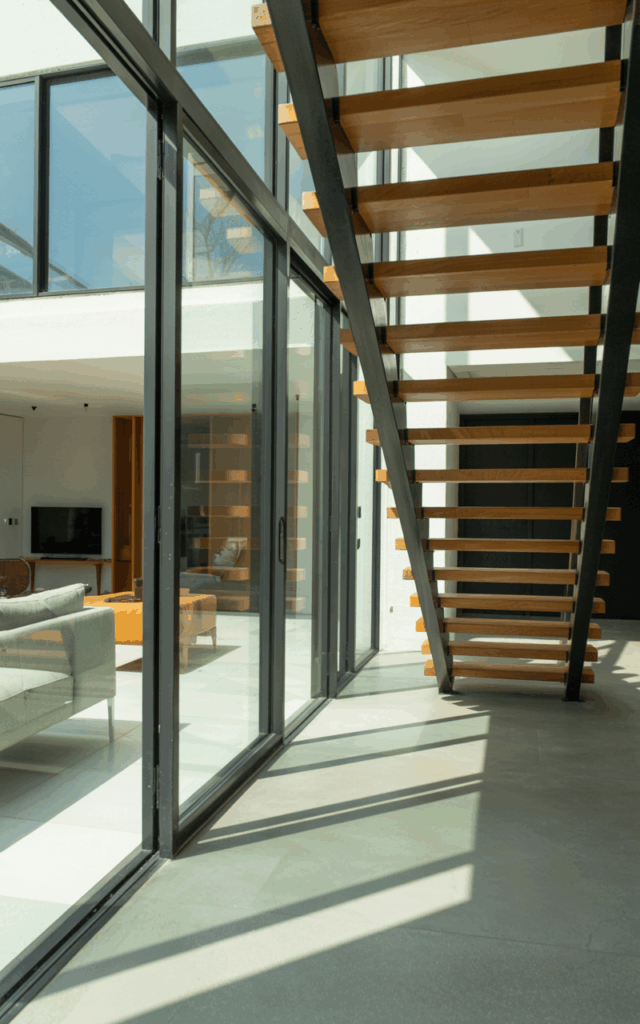
Natural light makes floating stairs look magical.
If possible, position the staircase near large windows. Light passes through open risers beautifully, creating shadow play throughout the day.
Morning light feels different from evening glow.
Surprise Fact:
Sunlight hitting wood treads over time deepens their tone naturally, adding character. It’s architectural poetry, honestly. ☀️ And unlike idea 12’s dramatic painted wall, this design relies purely on nature.
Add a Textured Runner Down the Center
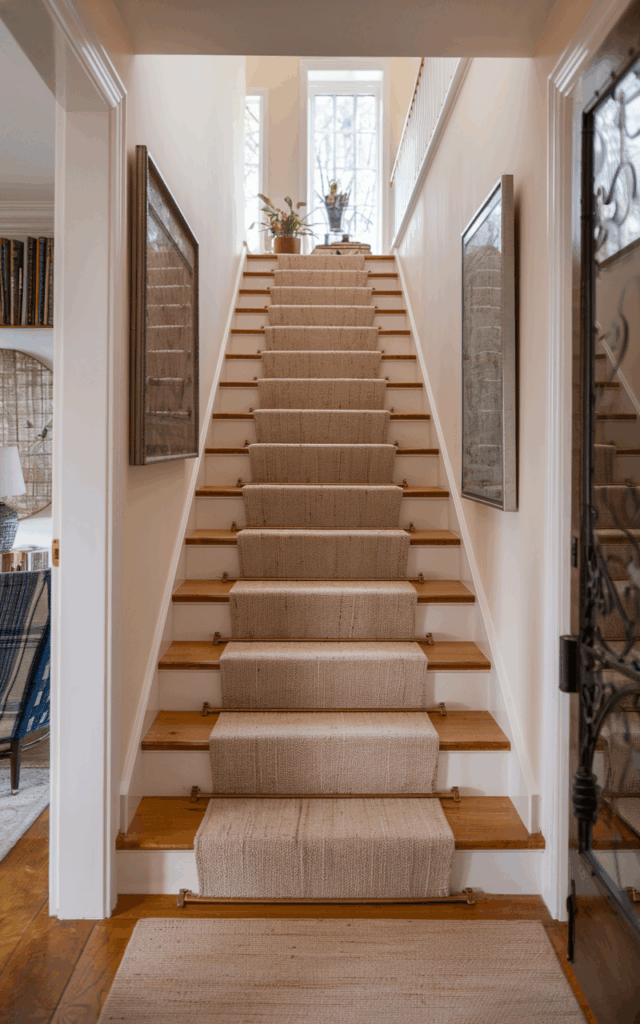
Yes, you can add a runner to floating stairs.
Choose something subtle — wool, jute, or a low-profile patterned design.
It adds softness, reduces noise, and introduces personality without taking away the “floating” illusion.
Checklist:
- Secure attachment method
- Non-slip backing
- Edge finishing
This is perfect if you want minimalism with comfort.
Create a Floating Staircase With Hidden Steel Spine
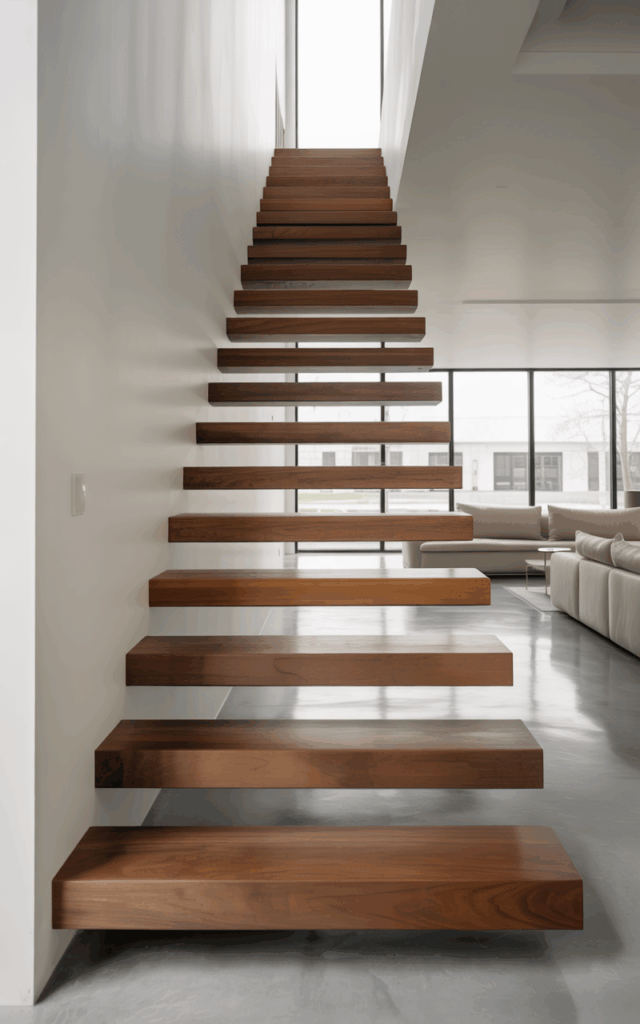
This design hides the structural spine beneath the treads.
So from the side? You see nothing.
It’s clean. Sharp. Almost futuristic.
Step-by-step instructions:
- Consult a structural engineer.
- Install concealed steel beam within the wall or center.
- Attach reinforced wood or composite treads.
- Finish with minimal railing.
It’s engineering meets design. And when done well, breathtaking.
Use Dark Stained Wood for a Moody Look
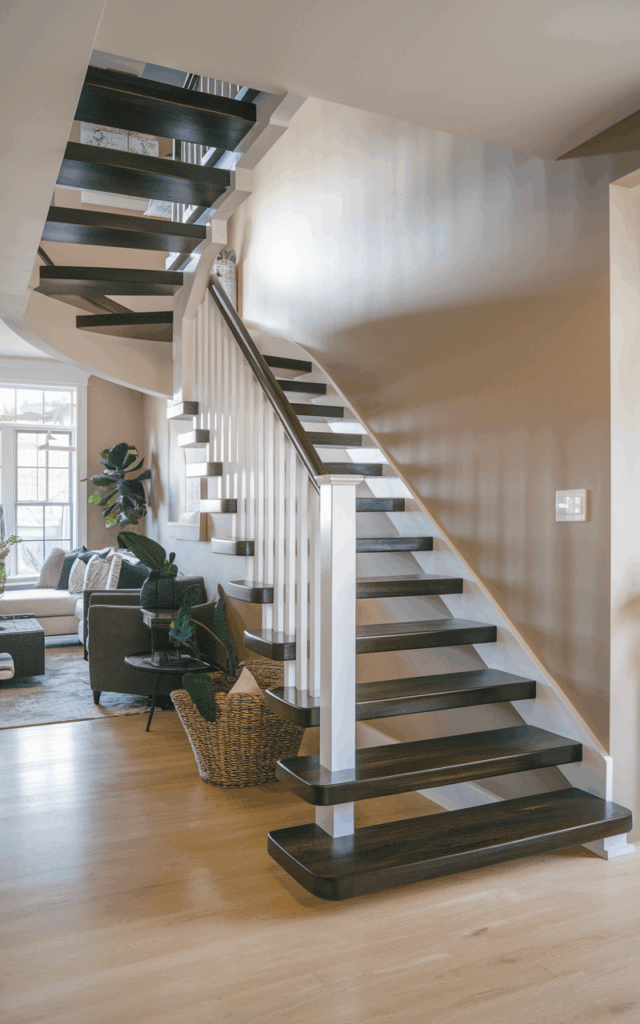
Light wood is popular. But dark stains? So underrated.
Deep espresso or charcoal-toned wood floating against lighter walls creates instant sophistication. It feels intimate.
Pair with warm lighting to avoid heaviness.
Trend Alert:
Moody interiors are making a comeback. Especially when balanced with lighter surroundings. This staircase feels strong. Quiet. Confident.
Mix Stone Wall Backdrops With Wood Treads
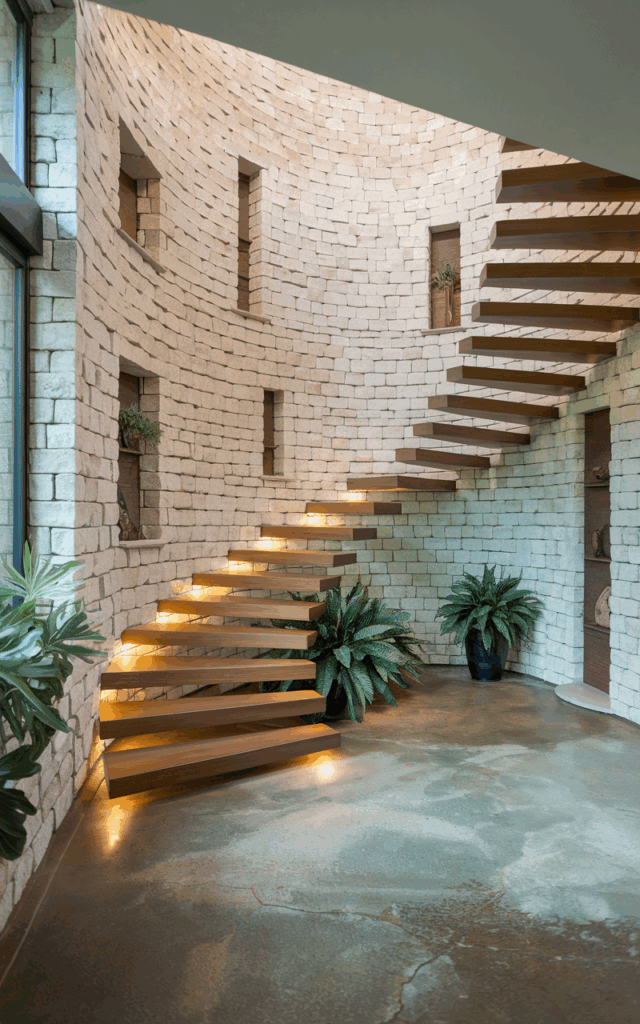
Stone adds drama instantly.
Install floating wood steps against a textured stone or brick backdrop. The contrast is rich and layered.
Unlike the sleek glass-box look, this one feels earthy and grounded.
One rule to remember:
If your wall is heavily textured, keep the treads simple. Let one element shine. It’s rustic-meets-modern done right.
Highlight the Staircase With Recessed Wall Niches
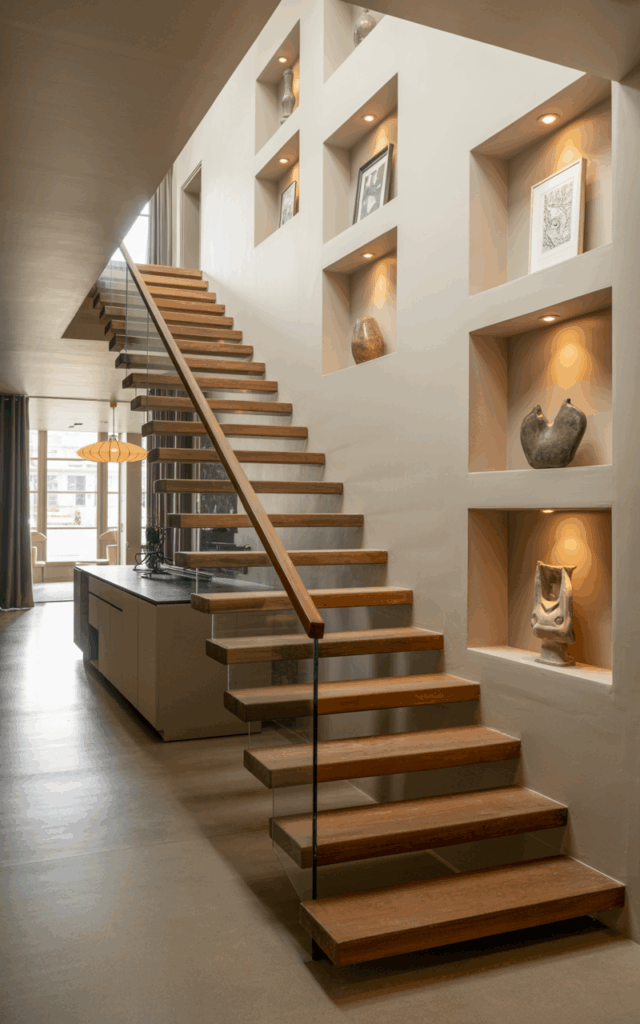
This one feels boutique hotel-inspired.
Add recessed niches in the staircase wall. Style them with art, ceramics, or soft lighting.
The staircase becomes part of a curated gallery.
How to steal this look:
- Add two or three evenly spaced niches
- Install warm LED spotlights
- Keep décor minimal and neutral
It creates rhythm and depth without clutter.
Combine Multiple Materials for a Custom Designer Feel
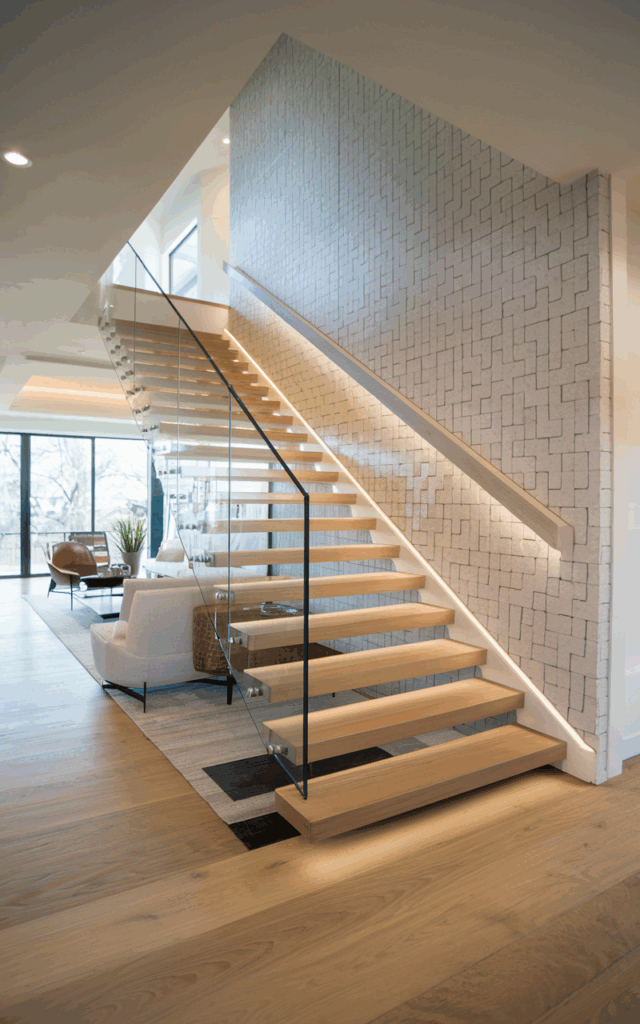
If you can’t choose just one idea… don’t.
Combine wood treads, glass railing, subtle LED lighting, and a textured accent wall.
Layer thoughtfully. Not chaotically.
Remember the first idea’s clean warmth and the fourth idea’s soft lighting? Blend those principles together.
A floating staircase should feel cohesive with the rest of your home — not like an afterthought.
When everything works together, the staircase stops being functional and becomes architectural art. And that’s the goal. ✨
Final Thoughts
Floating staircases aren’t just trendy. They’re transformative.
They open up space. Add light. Create movement. And honestly? They make a home feel thoughtfully designed.
Start small if you need to — maybe with lighting or wall updates. Or go bold and redesign the entire structure.
Either way, one of these 21 floating staircase ideas is bound to spark something.
And when you finally walk up your own floating staircase? Trust me. It feels amazing. 🏡
