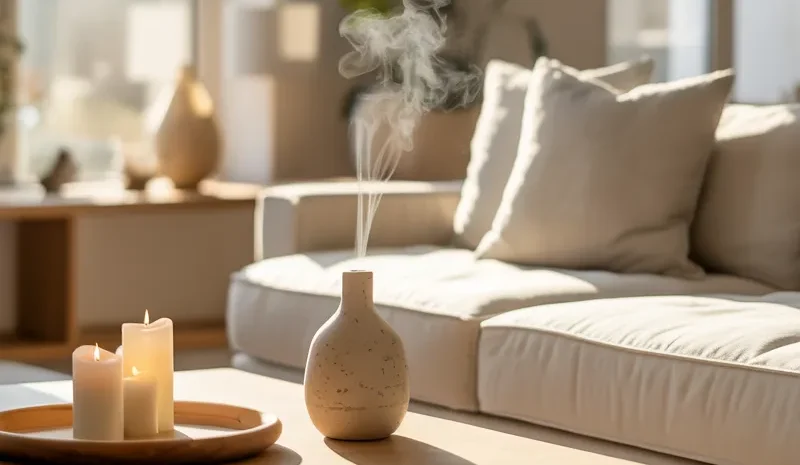
Minimalism isn’t about having less for the sake of it.
It’s about making space for what actually matters.
I’ve tried the cluttered look before… shelves overflowing, too many colors, too much “stuff.” It looked busy. Felt even worse.
But once I shifted to a minimalist approach? Everything changed. The room breathed. I breathed. ✨
So if you’re craving a living room that feels calm, clean, and still beautiful, these minimalist living room ideas will help you get there—one simple change at a time.
Choose a neutral color palette that soothes the eye
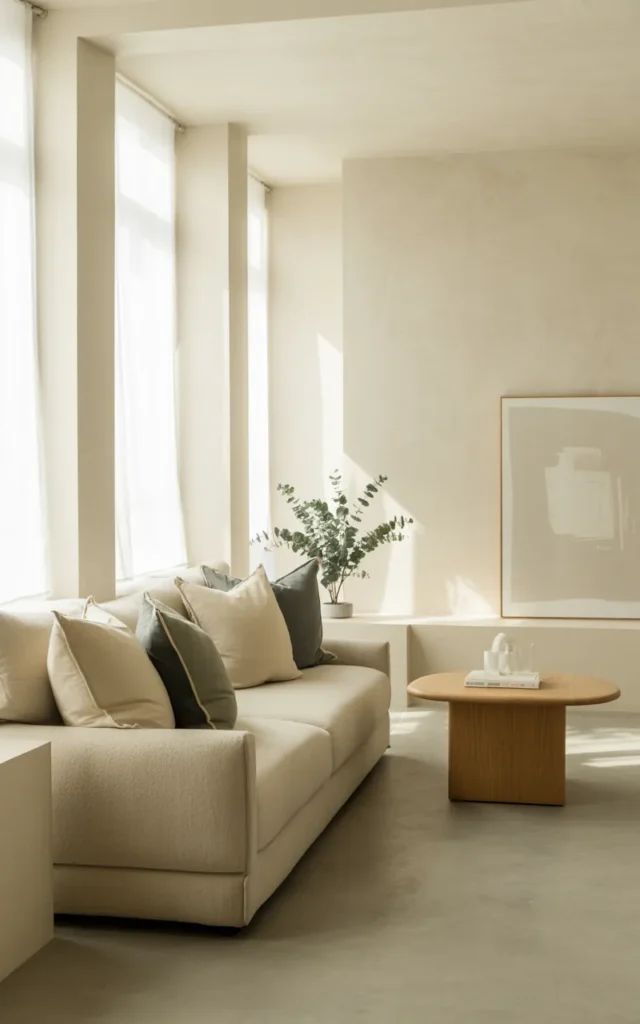
Start here. Always.
I like to build my living room around soft whites, warm beiges, and muted greys. Nothing loud. Nothing competing.
It instantly creates a calm base. The kind that makes you want to stay in.
Why it works?
Neutral tones reduce visual noise. Your brain relaxes because it’s not constantly processing bold contrasts.
Declutter like you actually mean it
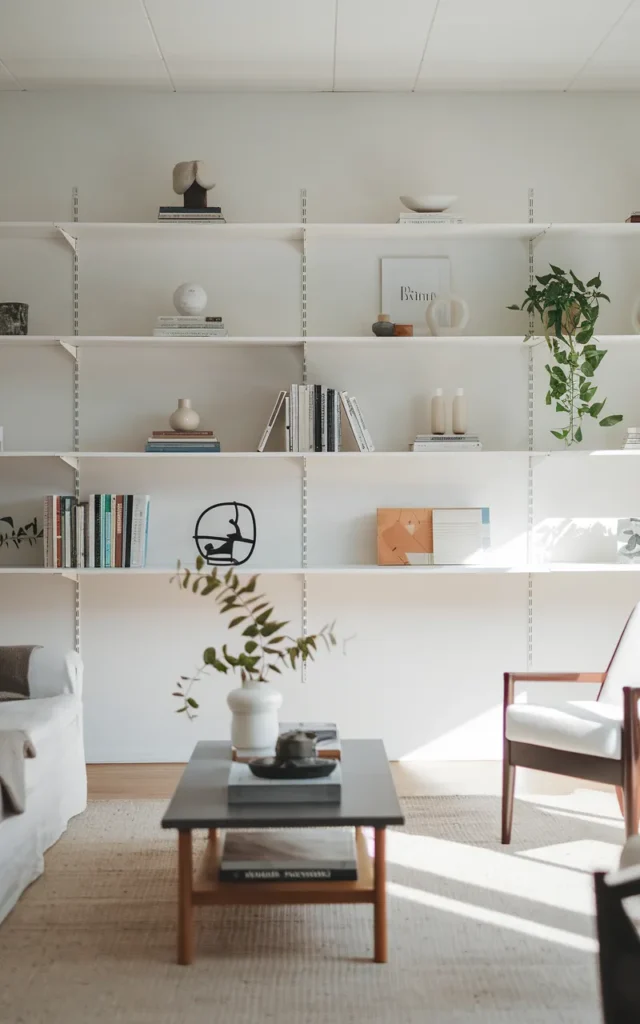
Minimalism doesn’t work if you’re holding onto everything “just in case.”
I go shelf by shelf. If I don’t love it or use it—it goes.
And no, you don’t need to do it all in one day. Start small.
Quick Tip:
Remove 30% of what’s currently visible. You’ll feel the difference immediately 😌
Invest in one statement sofa instead of many pieces
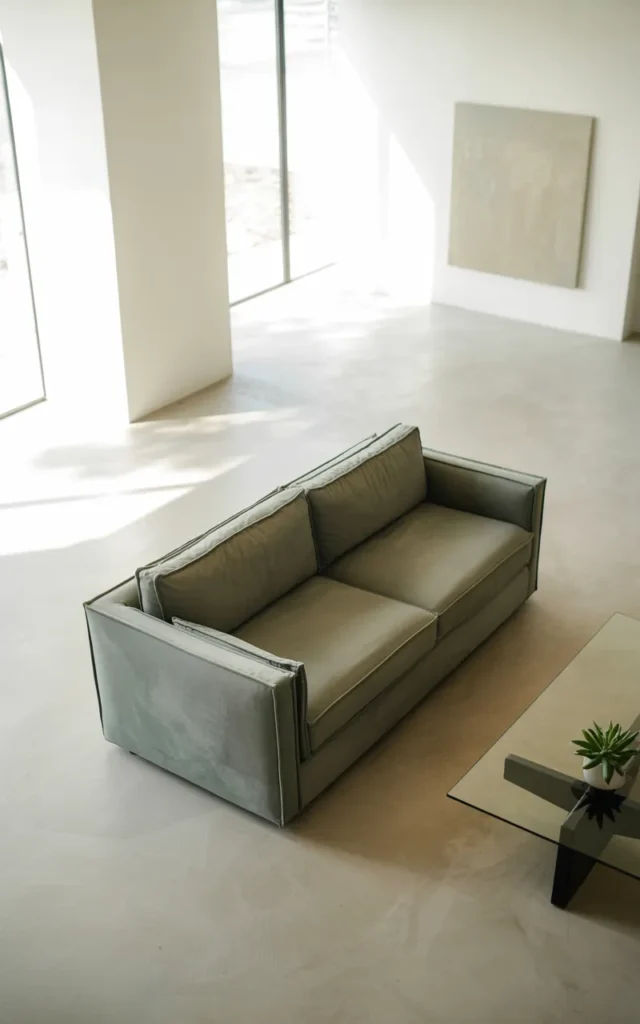
Instead of filling your space with multiple seating options, I always recommend one really good sofa.
Think clean lines. Neutral fabric. Comfortable but structured.
It becomes the anchor of the room.
A Micro-tip:
Choose a sofa with slightly raised legs. It visually opens up the space.
Keep surfaces intentionally empty
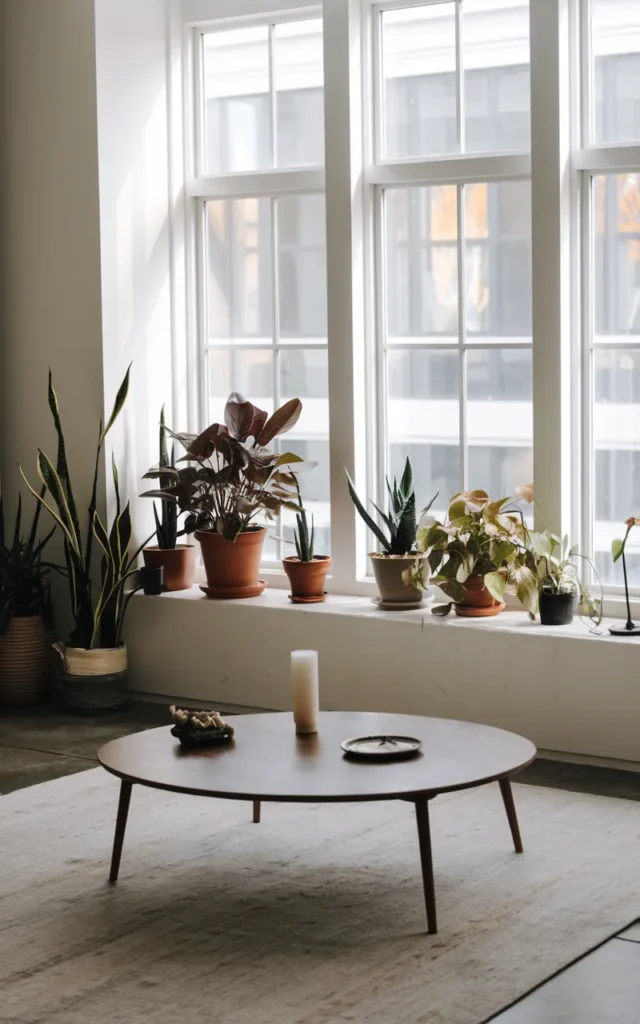
This one feels weird at first.
You’ll want to fill every table. Every corner.
Don’t.
I leave my coffee table almost bare—maybe one book, one small vase. That’s it.
Remember how we decluttered earlier? This is where it really shows.
Add texture instead of color
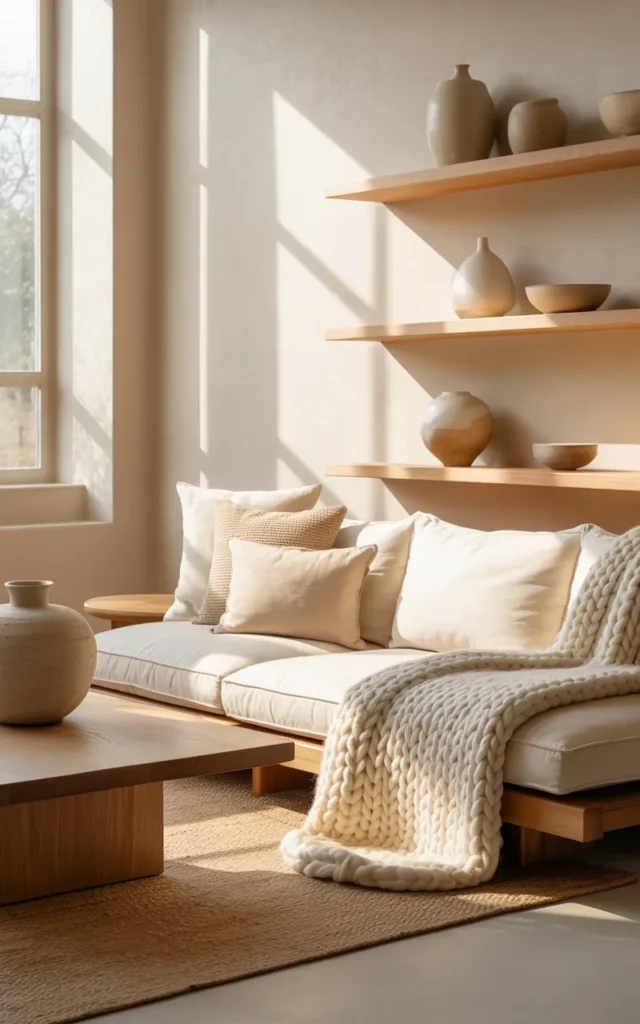
Minimal doesn’t mean boring. It just means… quieter.
So instead of bold colors, I layer textures—linen, wool, wood, ceramic.
It creates depth without chaos.
The psychology behind it:
Texture adds warmth without overwhelming your senses. Your space feels rich, not busy.
Stick to low-profile furniture
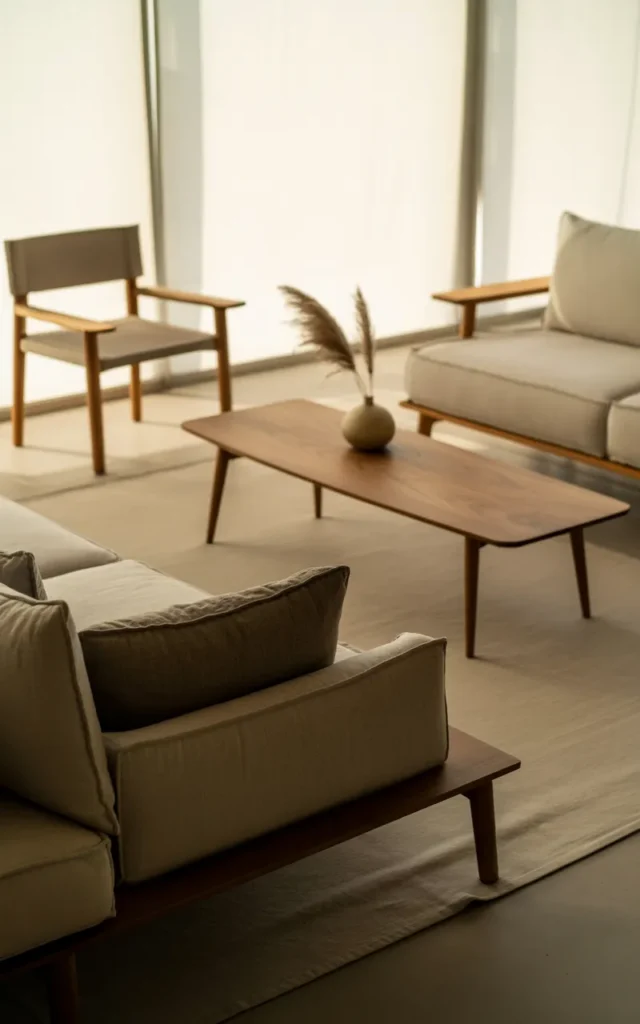
Bulky furniture makes a room feel crowded.
I lean toward low sofas, slim tables, and sleek chairs.
It keeps everything grounded and airy.
Thumb Rule:
If it looks heavy, it’ll feel heavy. Go light—visually and physically.
Hang one large artwork instead of many small pieces
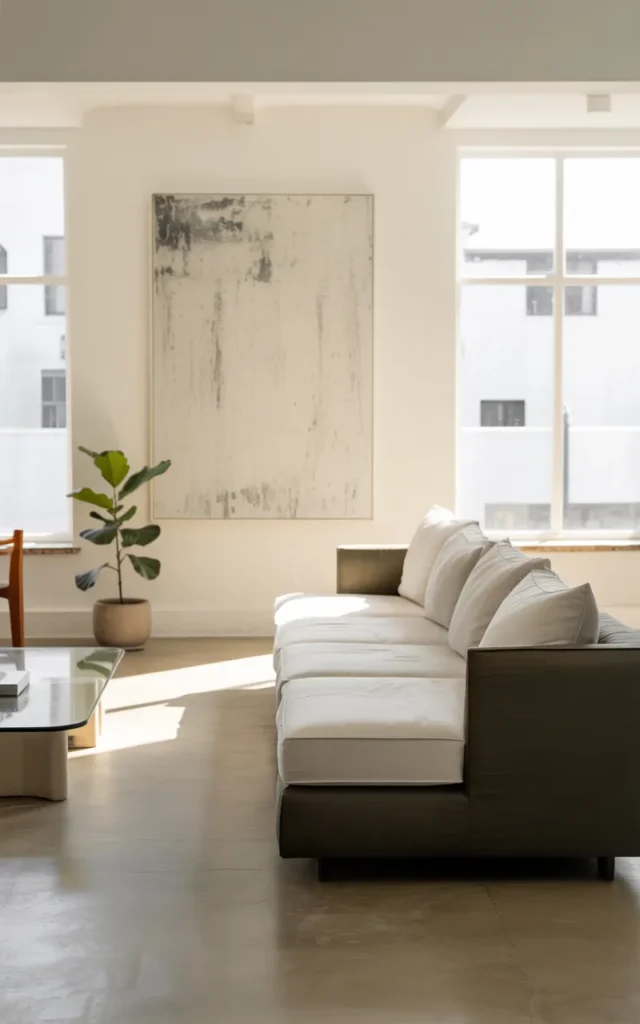
Gallery walls are great… just not here.
In a minimalist living room, I always go for one oversized piece.
It feels intentional. Calm. Focused.
Common Mistakes to Avoid:
- Overcrowding the wall
- Mixing too many styles
- Hanging pieces too high
Let natural light do the talking
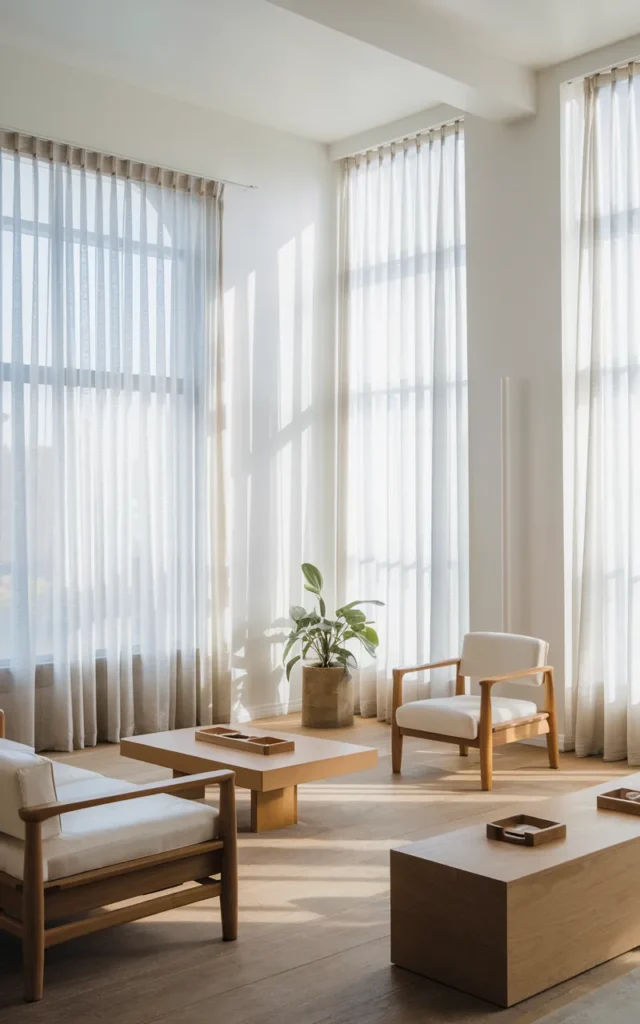
If you have windows, don’t block them.
I use sheer curtains or none at all.
Light flooding in? That’s your best décor.
Quick Tip:
Keep window frames clean and simple. No heavy drapes.
Limit your décor to a few meaningful pieces
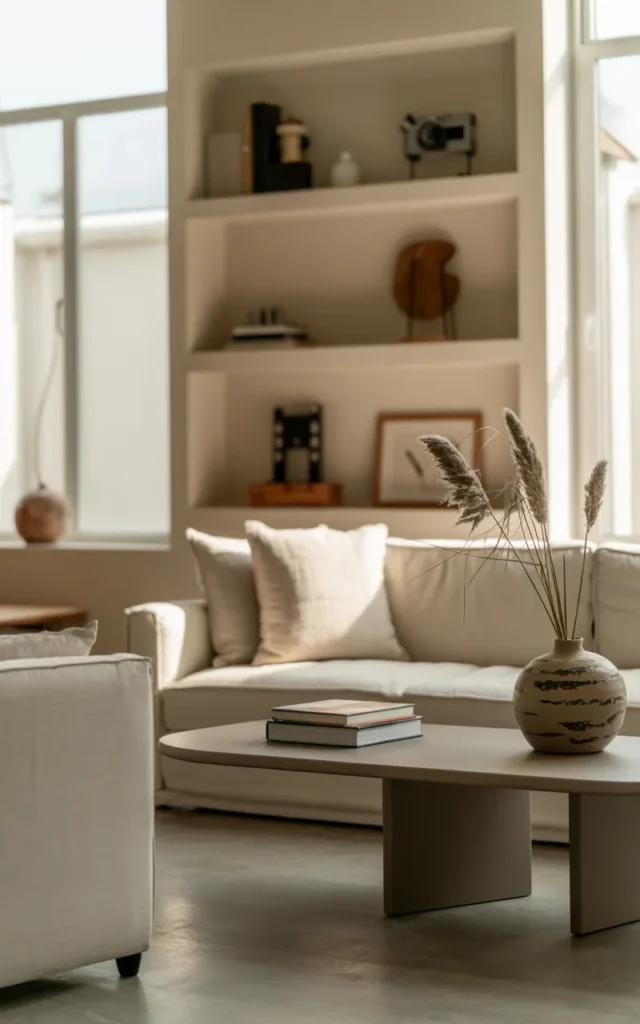
Here’s where minimalism gets personal.
Instead of decorating for the sake of it, I choose items that actually mean something—travel finds, a favorite book, a handmade piece.
Suddenly, your room tells a story. Just not a loud one.
Who this is for:
Anyone tired of buying random décor that doesn’t feel like them.
Introduce plants for a soft, organic touch 🌿
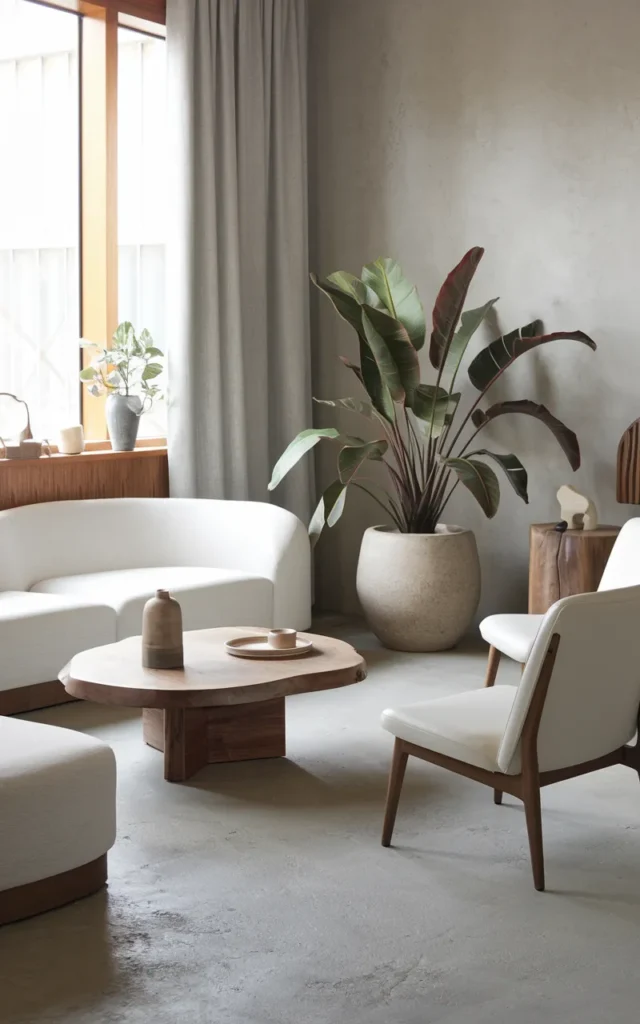
Minimal doesn’t mean lifeless.
I always add one or two plants—nothing excessive.
A tall indoor plant in a corner or a small one on a table works beautifully.
A Pro-tip:
Stick to simple pots in neutral tones. Let the greenery be the star.
Choose furniture with clean, straight lines
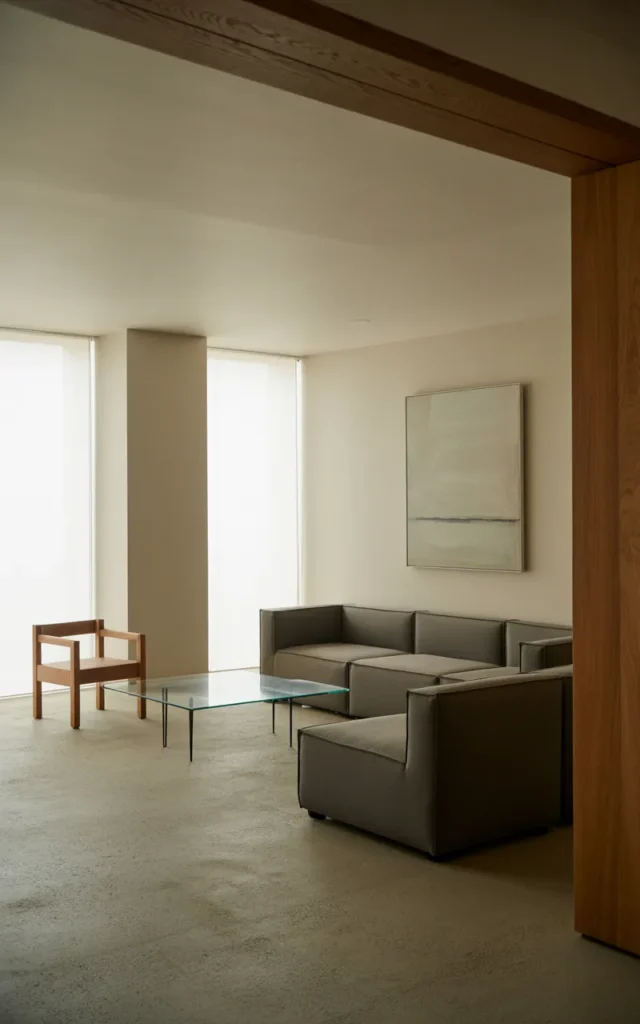
Curves can be beautiful, but in minimalist spaces, I keep things structured.
Straight edges. Simple silhouettes. No extra detailing.
It keeps the visual flow smooth.
Why designers do this:
Clean lines reduce visual clutter and make spaces feel more organized.
Create negative space on purpose
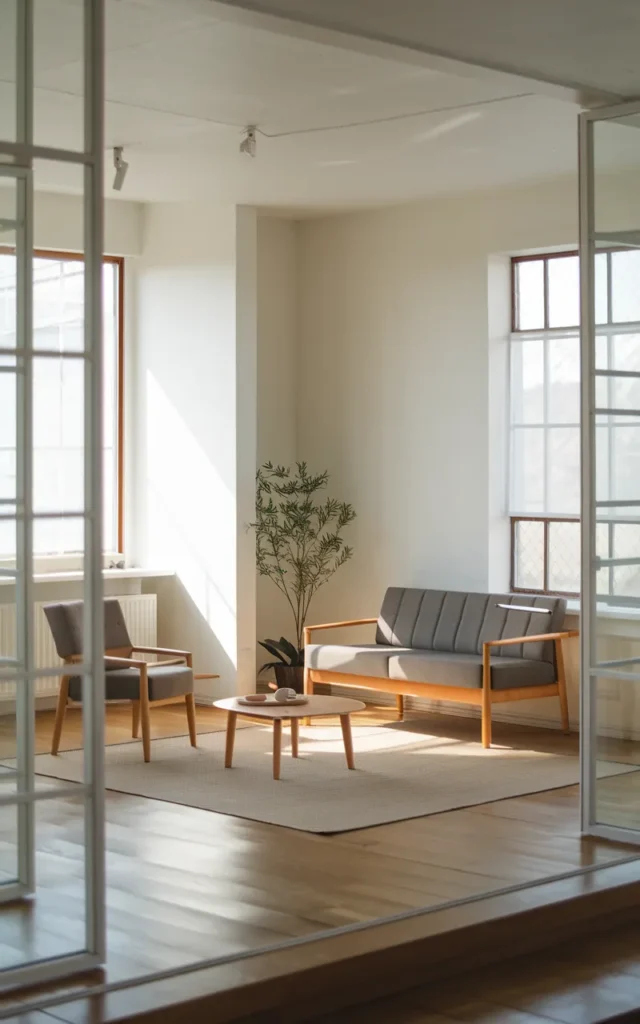
Empty space isn’t wasted space.
It’s breathing room.
I often leave corners intentionally empty. No chair. No plant. Nothing.
And somehow, the room feels fuller because of it.
Stick to a tight color palette (and actually commit)
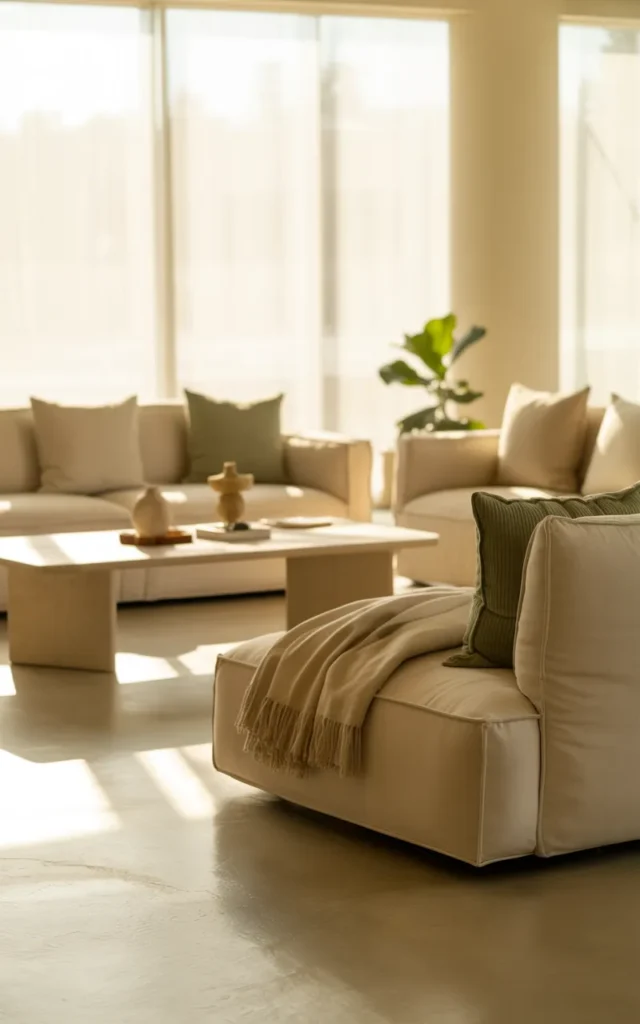
This is where most people slip.
They start neutral… then add “just one” bold piece. Then another.
Before you know it, the calm is gone.
Do this 👉:
- Choose 2–3 core colors
- Repeat them consistently
Not this ❌:
- Adding random accent colors
- Mixing too many tones
Keep cables and tech out of sight
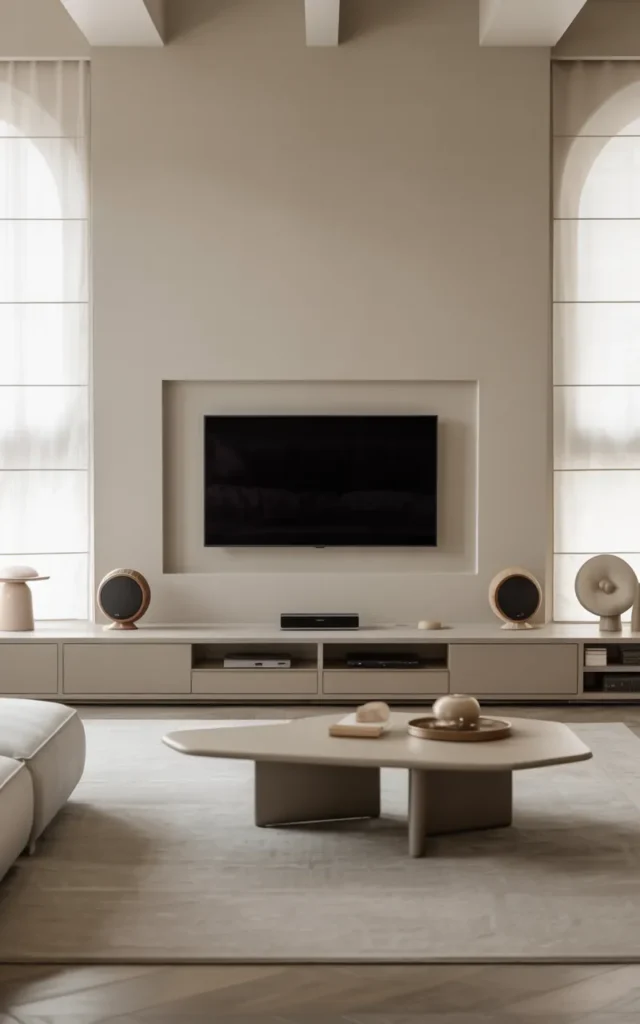
Nothing ruins a minimalist vibe faster than visible wires.
I hide them. Always.
Cable organizers, wall clips, or furniture placement—it all helps.
Small space hack:
Mount your TV and tuck cables behind it. Instant upgrade.
Choose quality over quantity every time
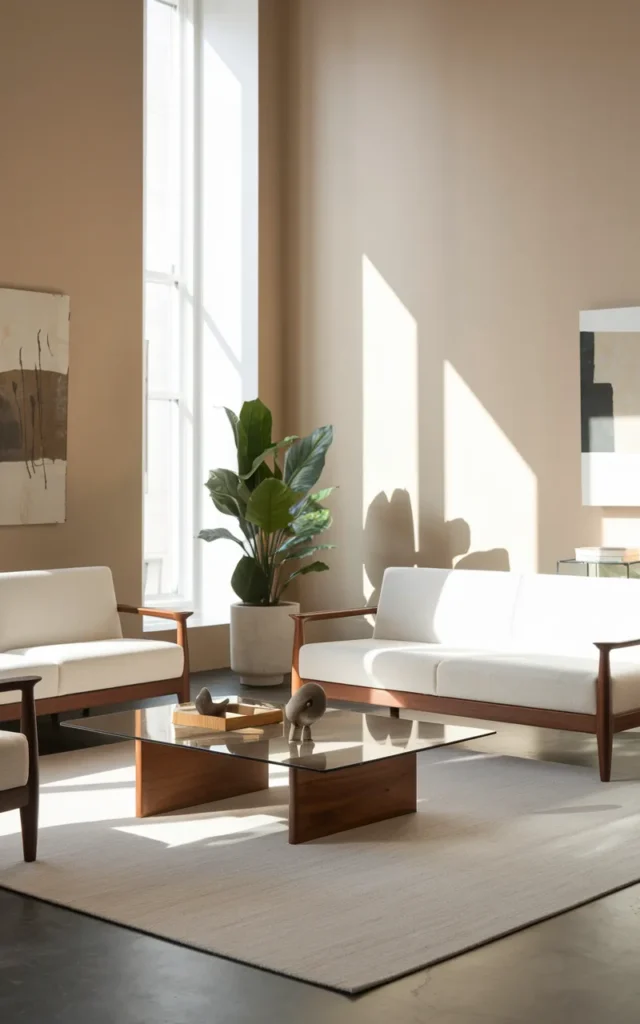
This is the core of minimalism.
Instead of buying five average items, I invest in one really good piece.
It lasts longer. Looks better. Feels intentional.
And honestly? It saves money in the long run.
Add a single accent chair for balance
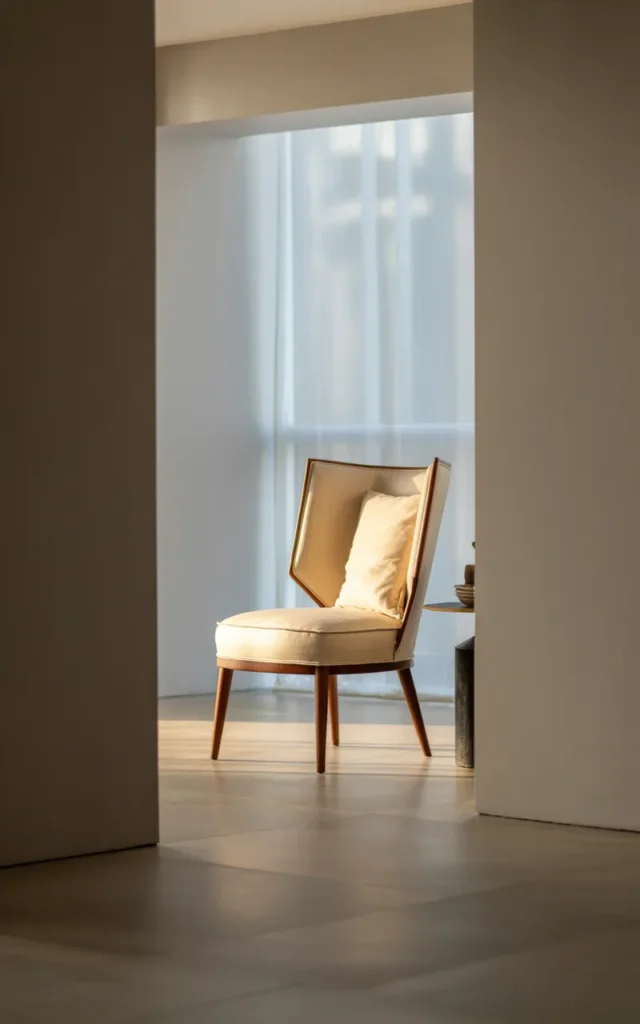
You don’t need a full set.
One chair. That’s enough.
Place it slightly angled, maybe near a lamp or window.
It creates a cozy little moment without overcrowding.
How to steal this look:
Pick a chair in a slightly different texture—not color—to keep things interesting.
Keep your coffee table styling minimal but thoughtful
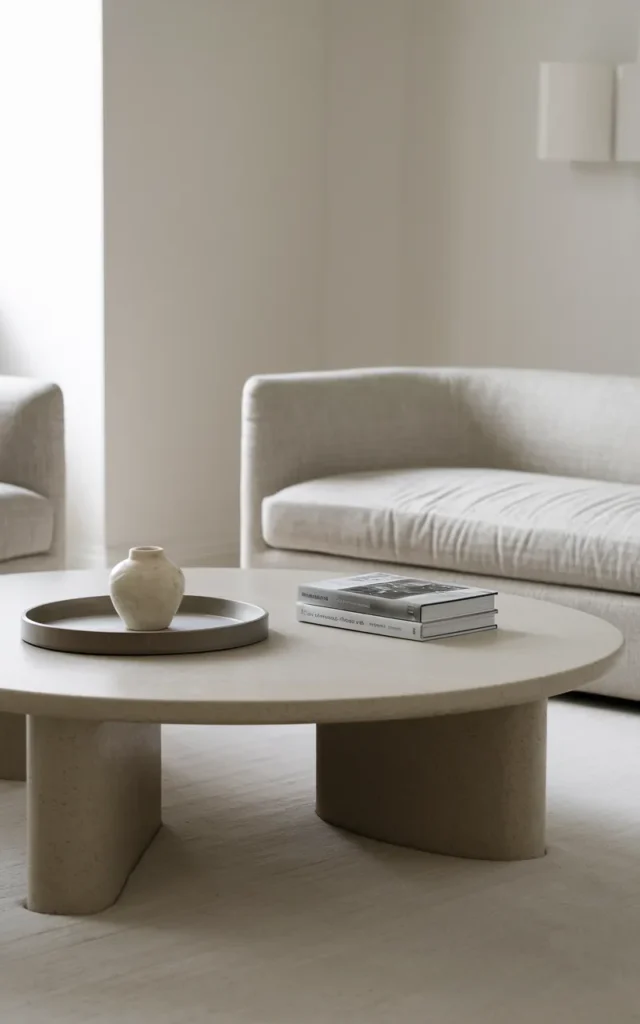
This is where restraint really matters.
I usually stick to three items:
- A book
- A small tray
- A simple object
That’s it.
Checklist:
- Keep it under 3–4 items
- Stick to neutral tones
- Leave space between objects
Embrace symmetry for a calm, balanced feel
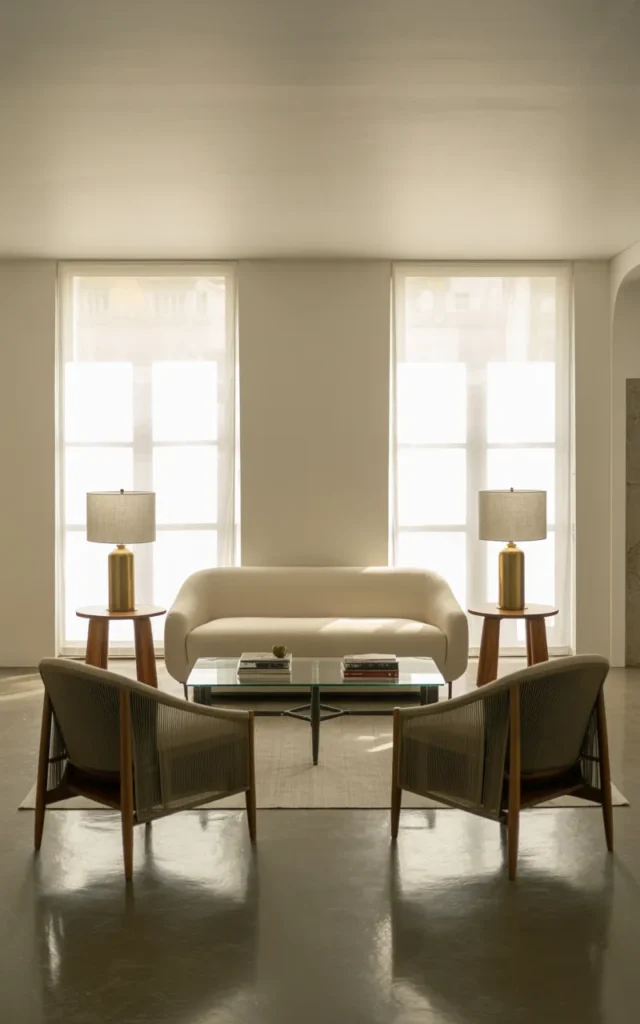
Symmetry is underrated.
When I place two matching lamps or balance furniture evenly, the room instantly feels more peaceful.
It’s subtle. But powerful.
Think of it like visual harmony—your eyes don’t have to work hard to understand the space.
And remember idea #6 about lighting? Pairing lamps symmetrically takes that concept to another level.
Why it works?
Our brains love order. Symmetry gives a sense of stability and calm without effort.
Opt for built-in shelving instead of bulky units
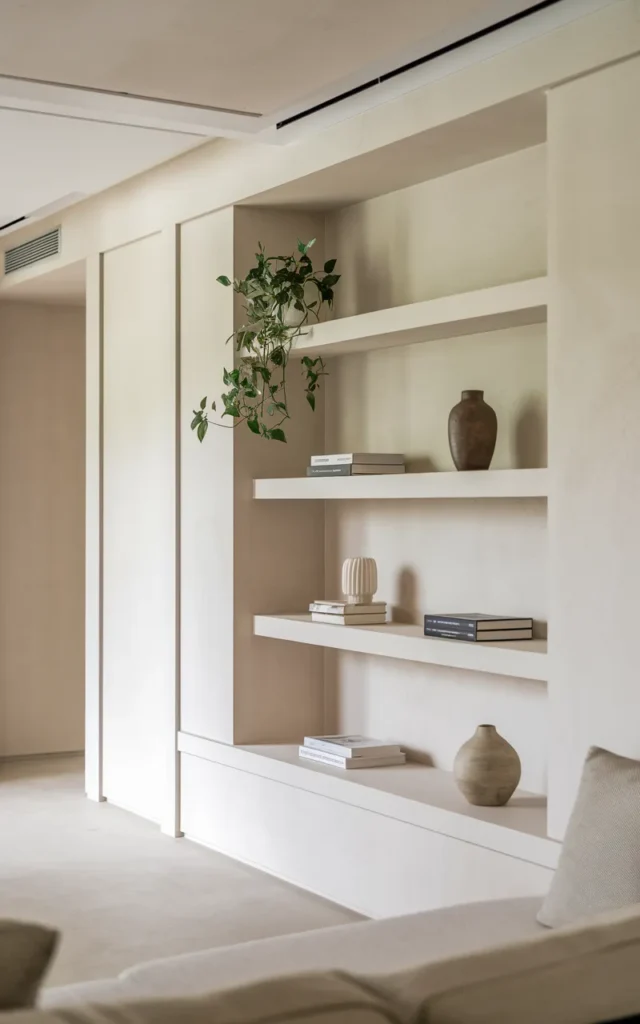
Built-ins are a minimalist dream.
They blend into the wall. No visual bulk. No heaviness.
Even if you can’t install custom ones, you can mimic the look with sleek, wall-mounted shelves.
Keep styling simple—like we discussed earlier.
Budget Alternatives:
- Floating shelves
- Modular wall units
- DIY recessed shelves
Use mirrors to open up the space
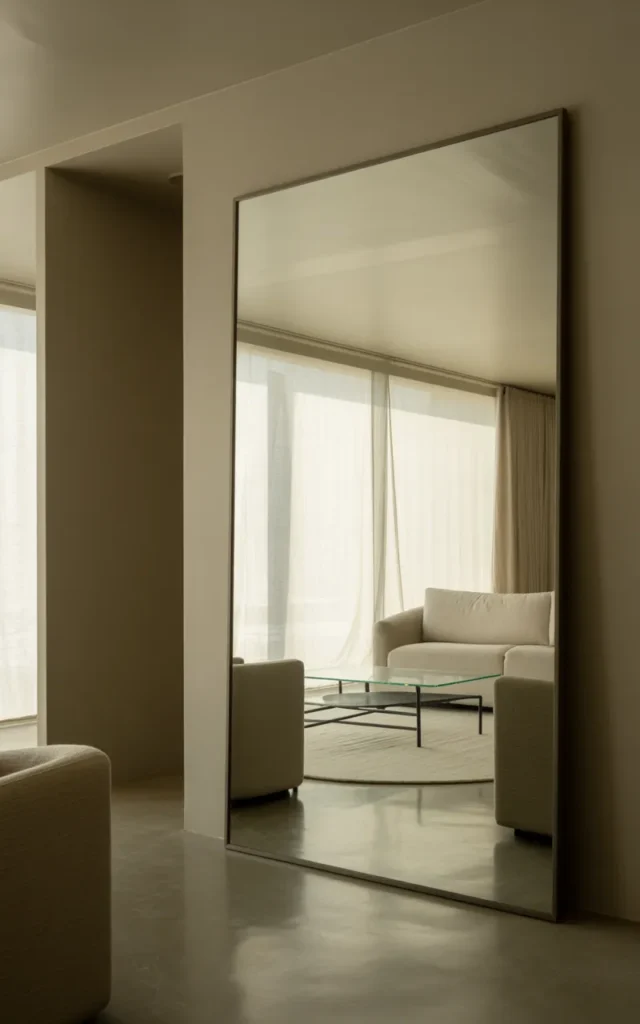
Mirrors aren’t just decorative—they’re strategic.
I place one large mirror where it can reflect light or a clean part of the room.
It makes everything feel bigger. Brighter.
But keep it simple. No ornate frames.
The psychology behind it:
Mirrors create the illusion of depth, which reduces the feeling of confinement.
Keep your TV wall clean and distraction-free
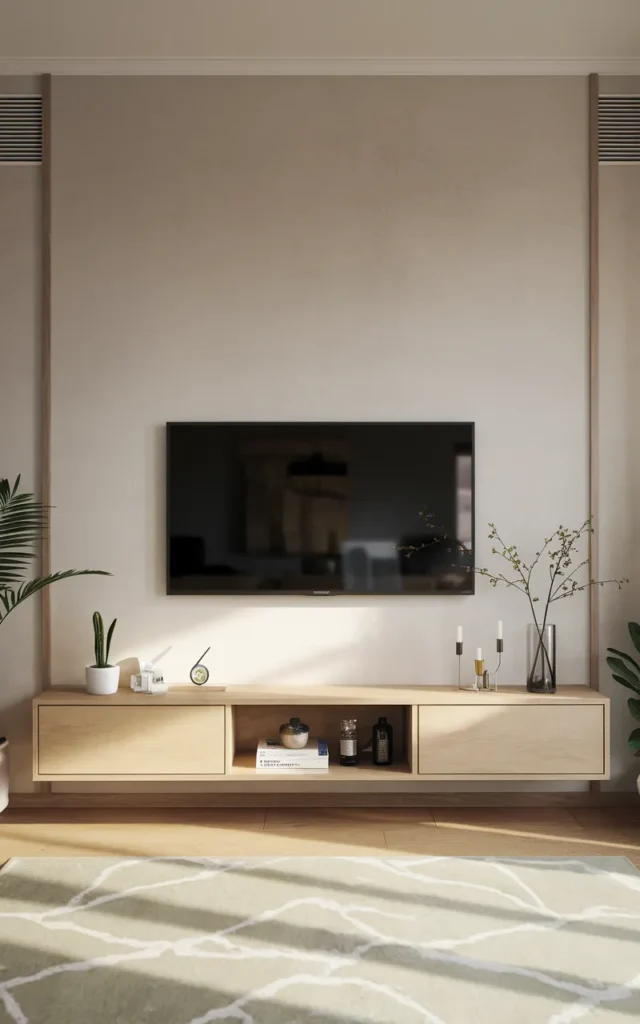
This one’s tough for a lot of people.
But trust me—skip the over-decorated TV unit.
I keep the wall simple. Maybe a floating console below. Nothing more.
It lets the room breathe.
What most people get wrong:
They treat the TV wall like a display shelf. It shouldn’t be.
Stick to matte finishes instead of glossy ones
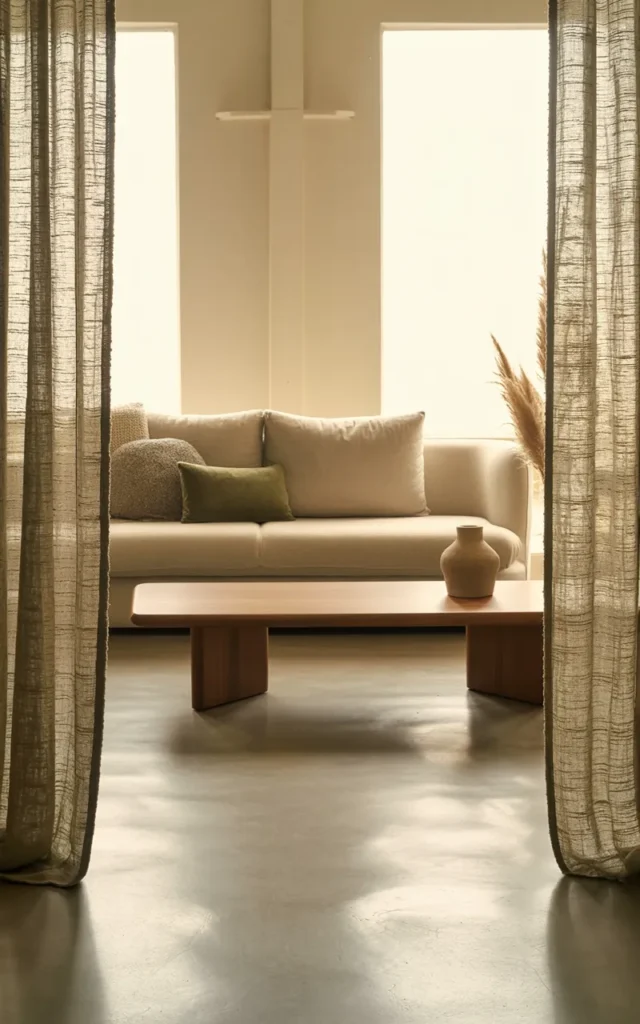
Glossy surfaces reflect too much light. It can feel… busy.
Matte finishes, on the other hand, absorb light softly.
They feel calm. Grounded.
I use matte wood, soft fabrics, and muted metals.
Vibe check:
- Calm ✔️
- Cozy ✔️
- Not flashy ✔️
Rotate décor seasonally instead of adding more
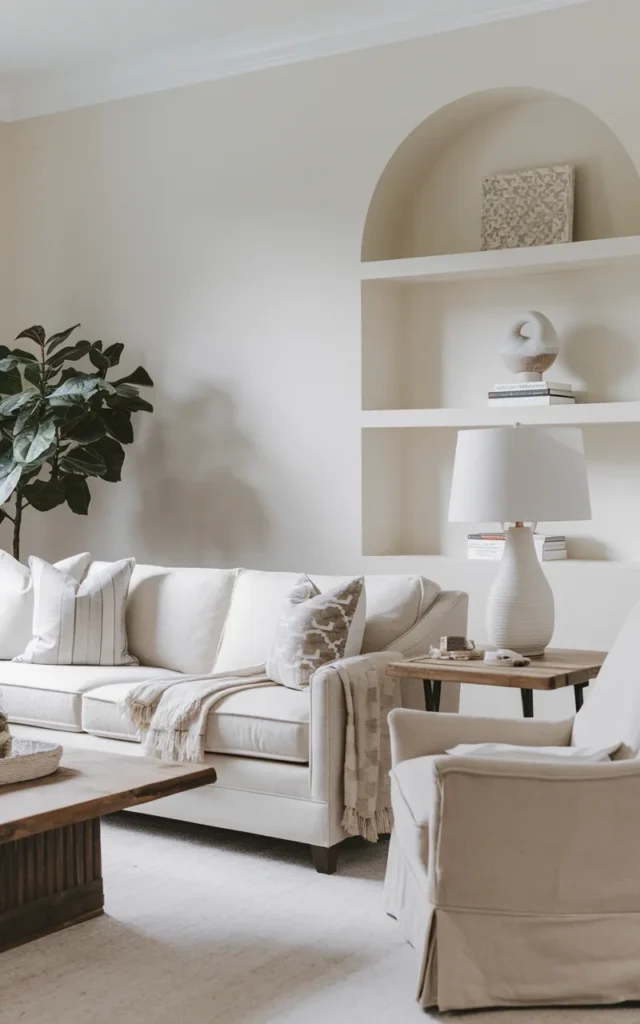
Here’s a trick I love.
Instead of buying new décor all the time, I rotate what I already have.
A different throw. A swapped vase. A new cushion.
It keeps things fresh without clutter.
Seasonal Switch:
| Season | Swap Idea |
| Summer | Light linens, soft whites |
| Winter | Chunky knits, warm tones |
Keep flooring simple and uninterrupted
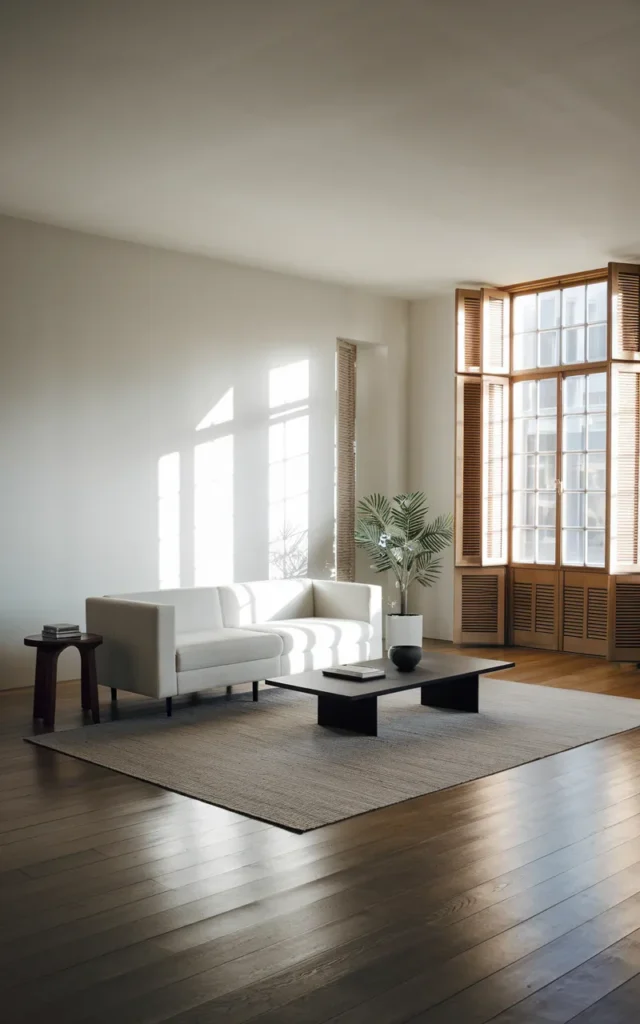
Too many rugs or patterns can break the flow.
I prefer clean, continuous flooring—wood, tiles, or polished concrete.
If I use a rug, it’s subtle (like we covered in idea #16).
One rule to remember:
Let the floor be a backdrop, not a focal point.
Use subtle scent as part of your design
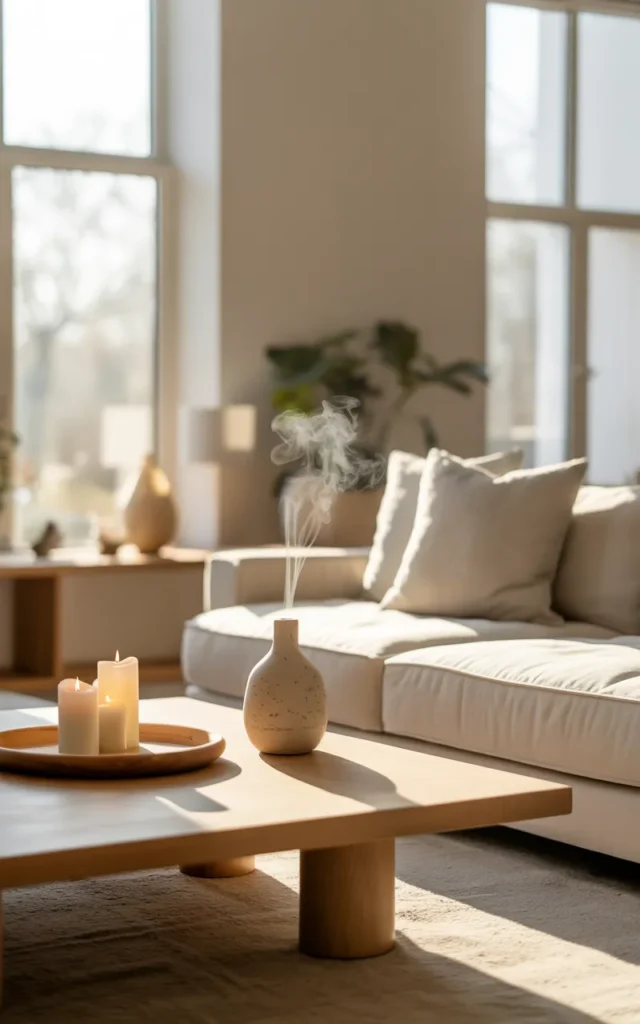
This might sound unexpected… but it matters.
Minimalism isn’t just visual. It’s sensory.
I use light, clean scents—nothing overpowering.
It completes the experience.
Surprise Fact:
A calm scent can actually make your space feel more organized and peaceful.
Edit your space regularly to keep it minimal
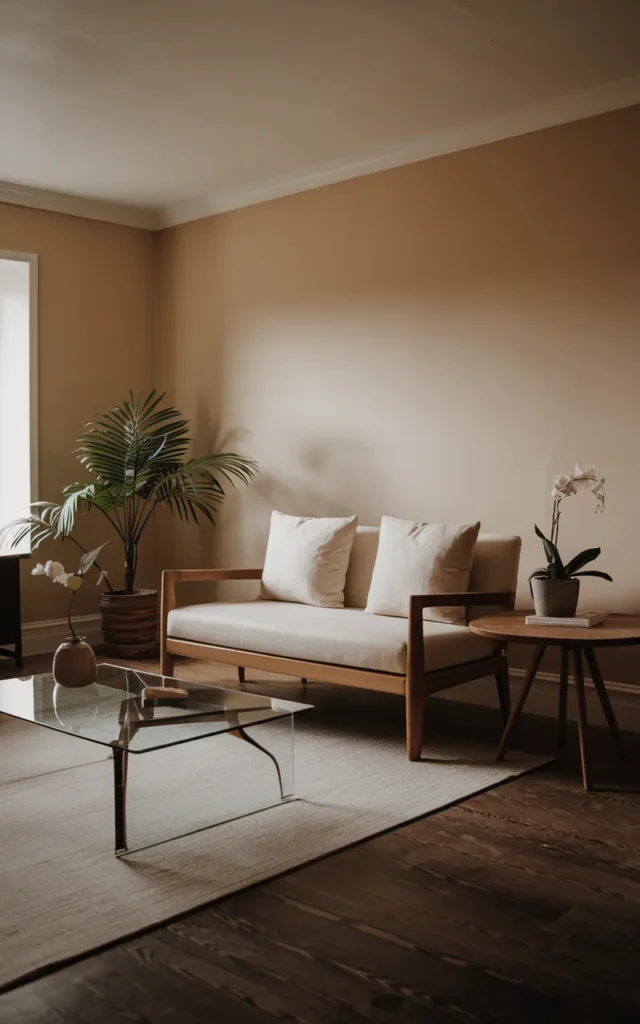
Minimalism isn’t a one-time thing.
It’s ongoing.
Every few weeks, I take a fresh look. Remove what’s crept in. Adjust what feels off.
Because clutter has a way of sneaking back.
And honestly? That’s okay. Just keep editing.
Final Thoughts
Minimalist living room ideas aren’t about strict rules.
They’re about intention.
About choosing calm over chaos. Space over clutter. Meaning over excess.
Start with one idea. Just one.
Maybe it’s decluttering. Maybe it’s changing your lighting.
And then build from there. Slowly. Naturally.
Your space doesn’t need to be perfect.
Just peaceful. 💛
