Let’s be honest—your living room sets the tone for your entire home.
It’s where you unwind. Where guests land first. Where life just… happens.
So if it feels a little off, a little flat, or just not you, it’s worth fixing. The good news? You don’t need a full renovation. Just smart, intentional tweaks.
I’m going to walk you through 30 living room inspo ideas that actually work in real homes. Simple shifts. Big impact. Ready? Let’s get into it.
Start with a calm, neutral base palette
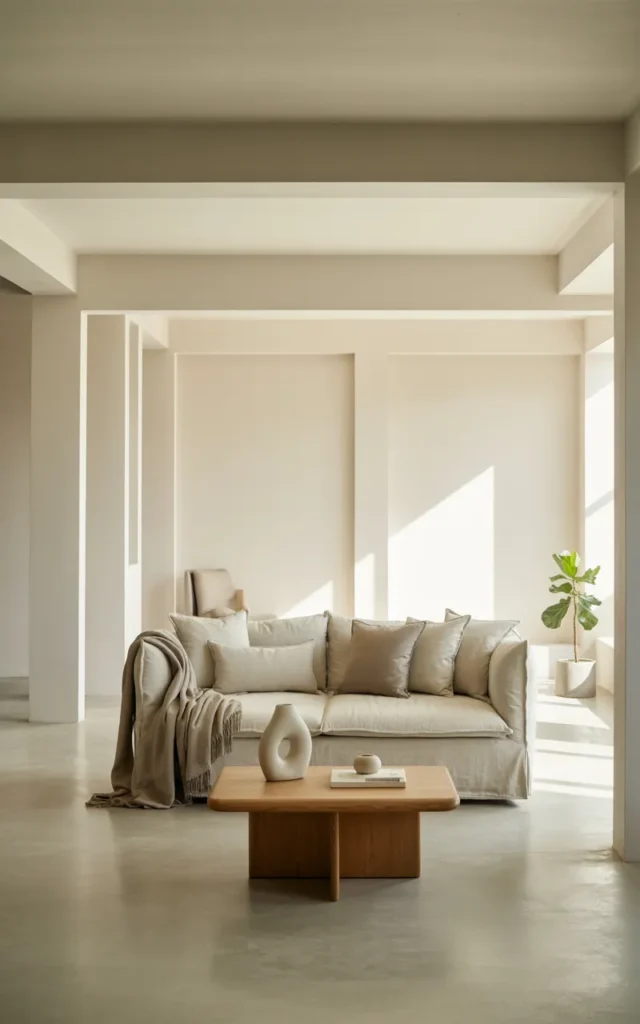
I always begin here. Always.
Soft whites. Warm beiges. Gentle greys. Nothing loud competing for attention.
When your base is calm, everything else feels intentional instead of chaotic. Your eye moves easily through the room. It just feels… effortless 🤍
And no, neutral doesn’t mean boring. It means flexible.
Why it works?
Neutrals create visual flow. They give your décor room to breathe and evolve over time.
Layer textured throws over your sofa
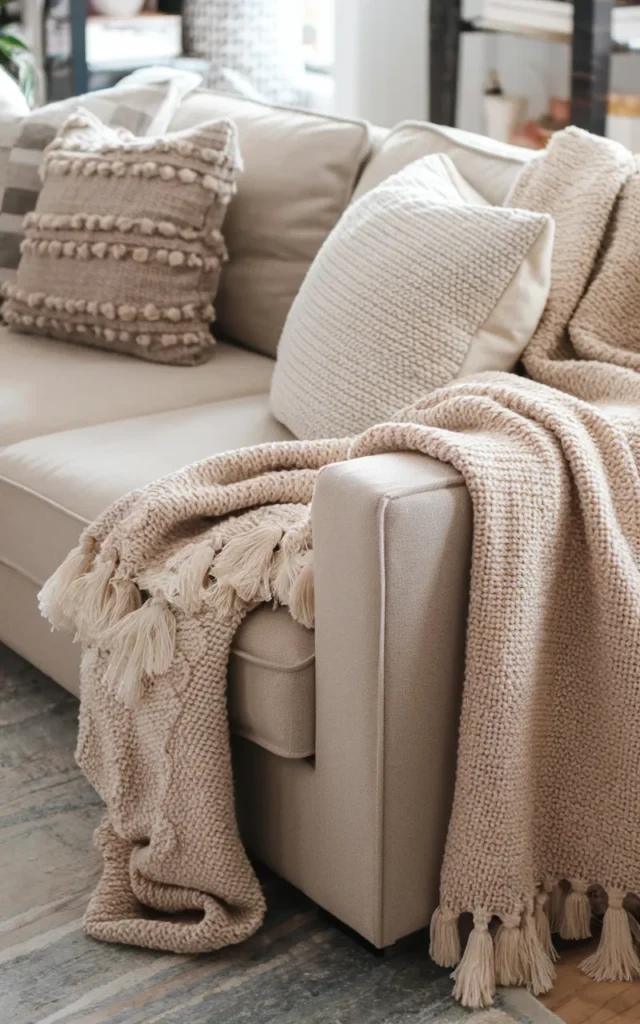
A sofa alone? Functional.
A sofa with a casually draped throw? Instantly inviting.
Go for knit, boucle, or soft cotton. Don’t fold it perfectly. Let it fall naturally—that’s where the magic is 🛋️
It adds depth without clutter.
Quick Tip:
Stick to 2–3 textures max so it feels curated, not messy.
Anchor your space with a large area rug
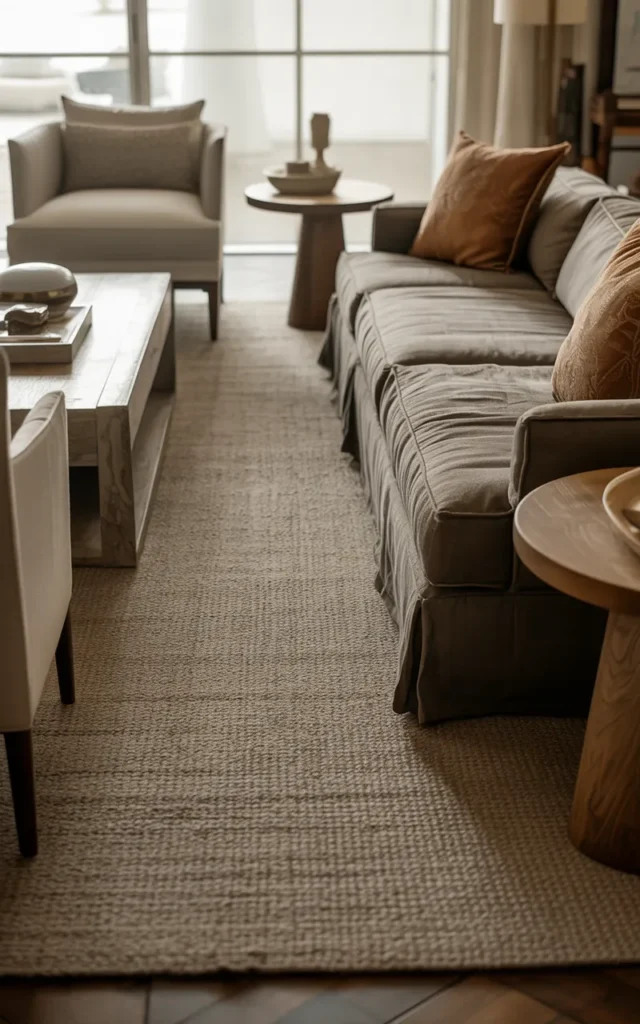
If your living room feels disconnected, this is probably why.
A rug pulls everything together. It defines the zone. It grounds your furniture.
Go bigger than you think you need. Tiny rugs are the fastest way to make a room feel awkward.
Common Mistakes to Avoid:
- Choosing a rug that’s too small
- Ignoring furniture placement
- Going too busy with patterns
Hang oversized artwork above the sofa
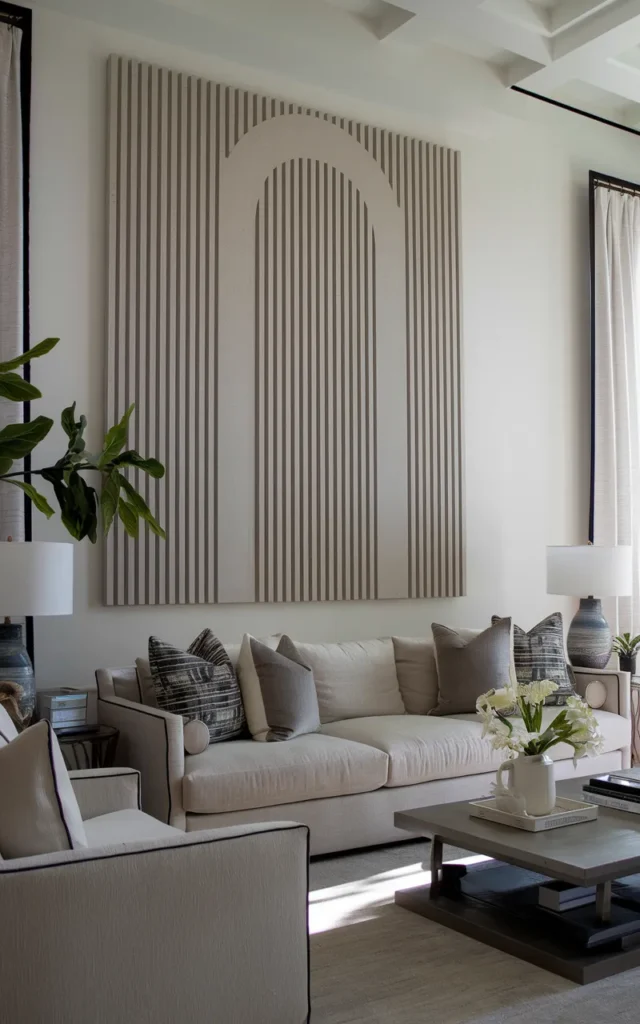
Skip the gallery wall for a second.
One large statement piece can do more than ten small frames combined.
It creates a focal point. A moment. Something your eye naturally settles on 🎨
And honestly? It makes your space feel expensive without actually spending a fortune.
Mix different seating styles
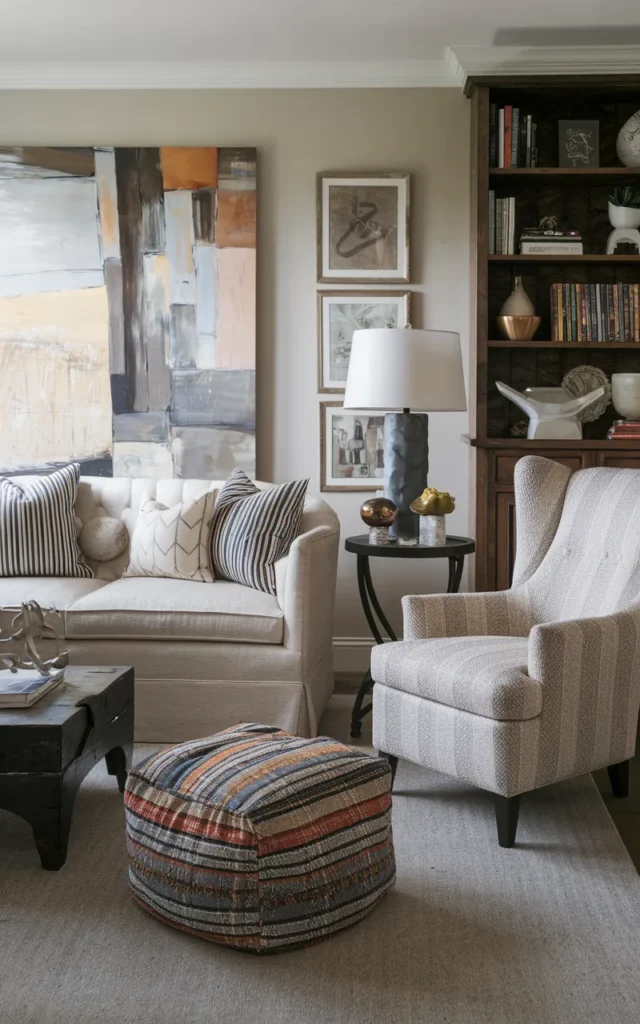
Matching furniture sets? Safe. But a little boring.
Try pairing a structured sofa with a relaxed accent chair. Or add a pouf.
It creates visual interest without overwhelming the room.
Why designers do this:
It breaks uniformity and makes a space feel more collected than bought.
Use cushions to introduce subtle color
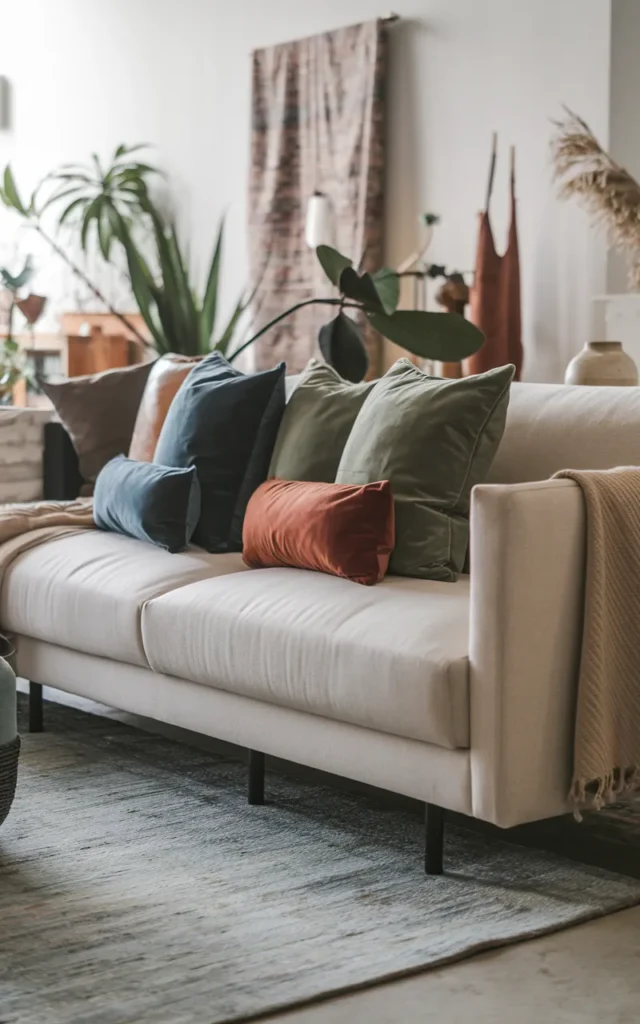
If your base is neutral (remember idea #1), this is where you play.
Muted blues. Earthy greens. Soft rust tones.
Nothing too loud—just enough to add warmth.
Thumb Rule:
Stick to a cohesive color story. 2–3 shades max.
Create a cozy reading corner by the window
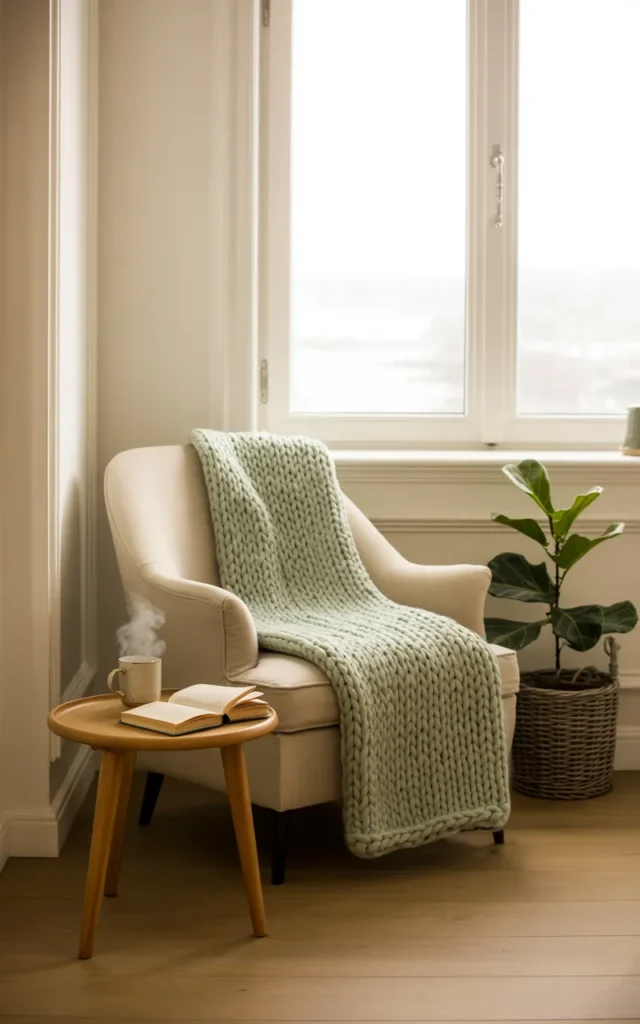
You don’t need a huge space for this.
Just a chair. A soft throw. A small side table. Done.
Place it near natural light if you can. It changes everything ☀️
And unlike the structured seating in idea #8, this one is all about comfort.
Who this is for:
- Book lovers
- Slow mornings
- Anyone craving a quiet corner
Add a bold accent chair for personality
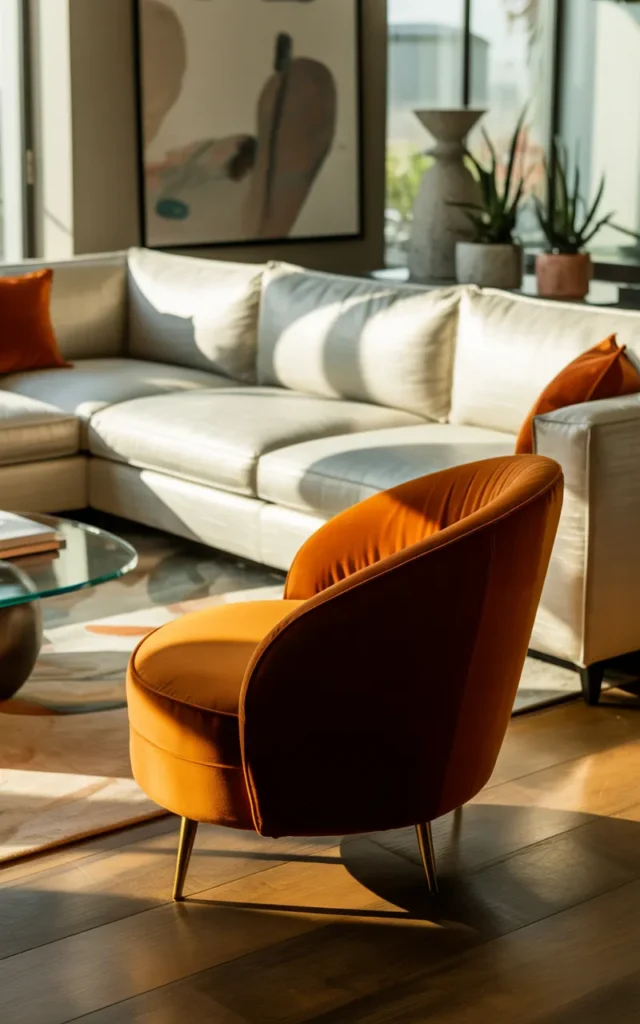
If your sofa is neutral, this is your moment.
A deep green. A burnt orange. Maybe even a patterned fabric.
It becomes the “fun” piece without overwhelming the room 😌
What most people get wrong:
They go bold everywhere. Instead, pick one hero piece.
Use wall molding for subtle architectural detail
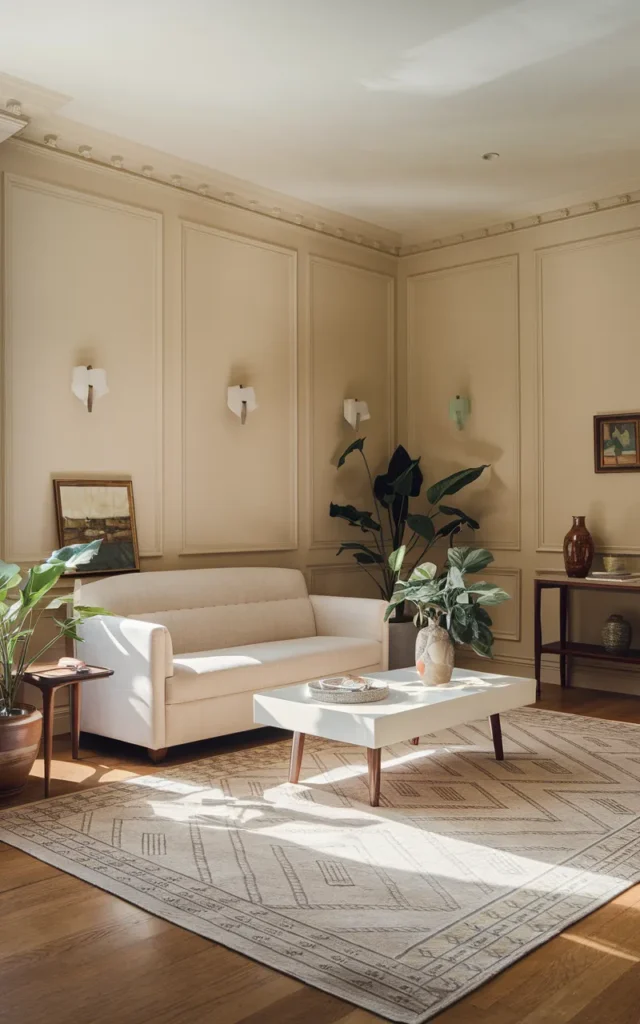
Even plain walls can feel elevated with molding.
It adds texture without adding clutter.
Paint it the same color as your wall for a soft, luxe effect.
Time required to implement:
A weekend project, honestly.
Layer different materials for depth
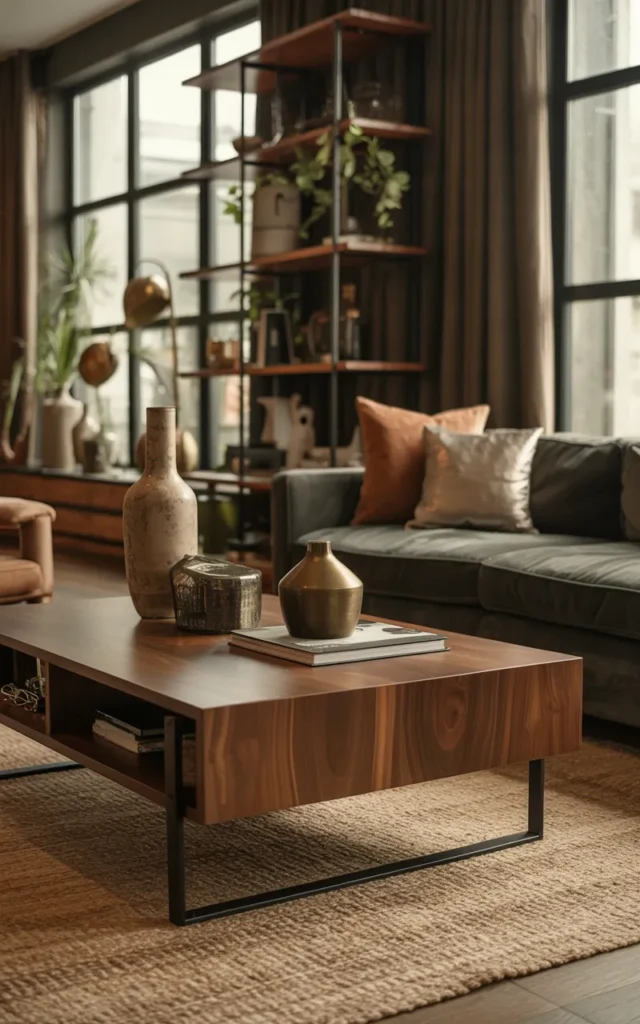
Wood. Metal. Fabric. Glass.
Mixing materials adds richness.
A wooden table with a metal lamp and a soft rug? That’s balance.
The psychology behind it:
Contrast keeps the eye engaged without overwhelming it.
Float your furniture away from walls
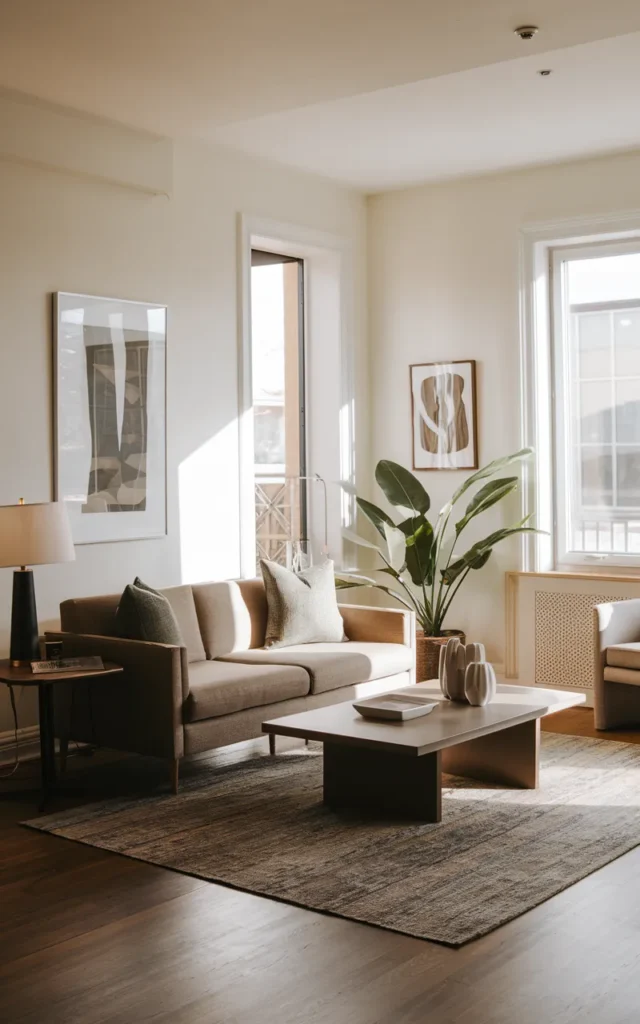
This one surprises people.
Pushing everything against the wall actually makes a room feel smaller.
Pull pieces inward slightly. Create a conversation zone.
Small space hack:
Even 6–8 inches away from the wall makes a difference.
Style shelves with intention, not clutter
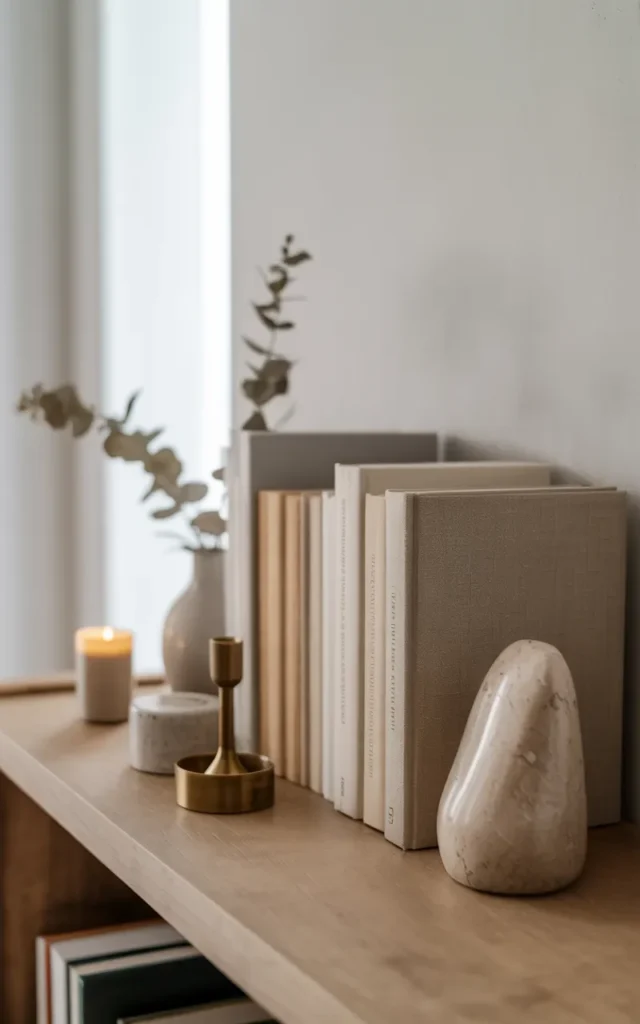
Less is more here.
Group items. Vary heights. Leave breathing space.
Think curated, not crowded.
Do’s & Don’ts:
✔ Mix books and décor
✔ Use odd-number groupings
❌ Overfill every shelf
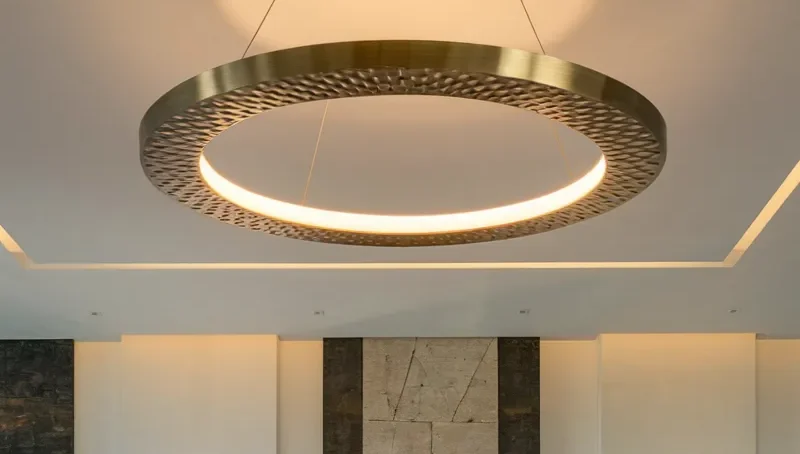
Add a statement ceiling light fixture
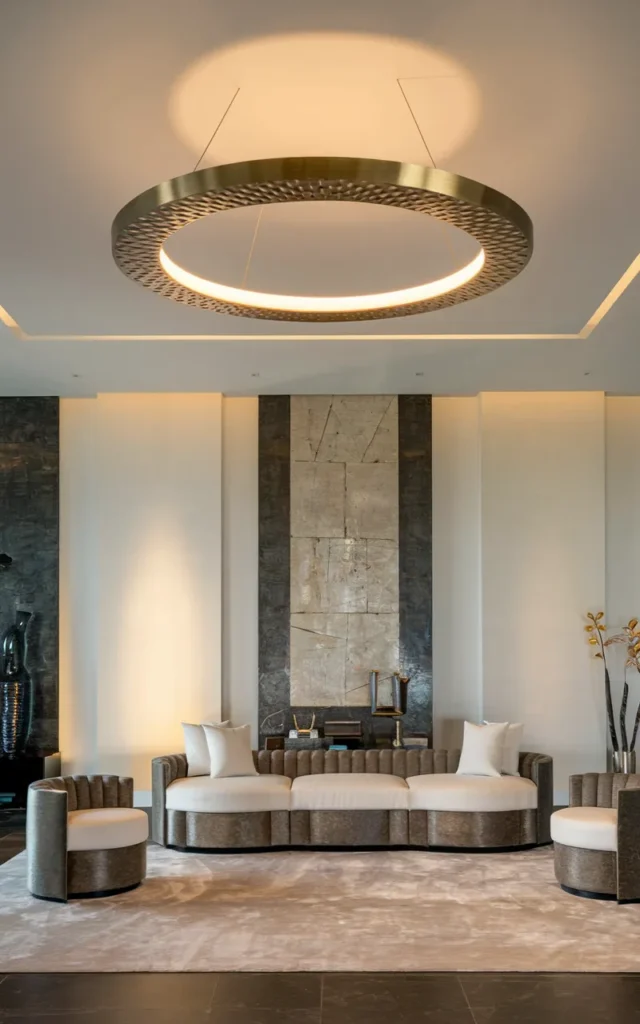
Don’t ignore your ceiling.
A bold pendant or chandelier can change the entire vibe.
It draws the eye upward and adds drama 💡
Upgrade for under $150:
Swap out a basic fixture for something sculptural.
Create a tonal color scheme for a calming effect
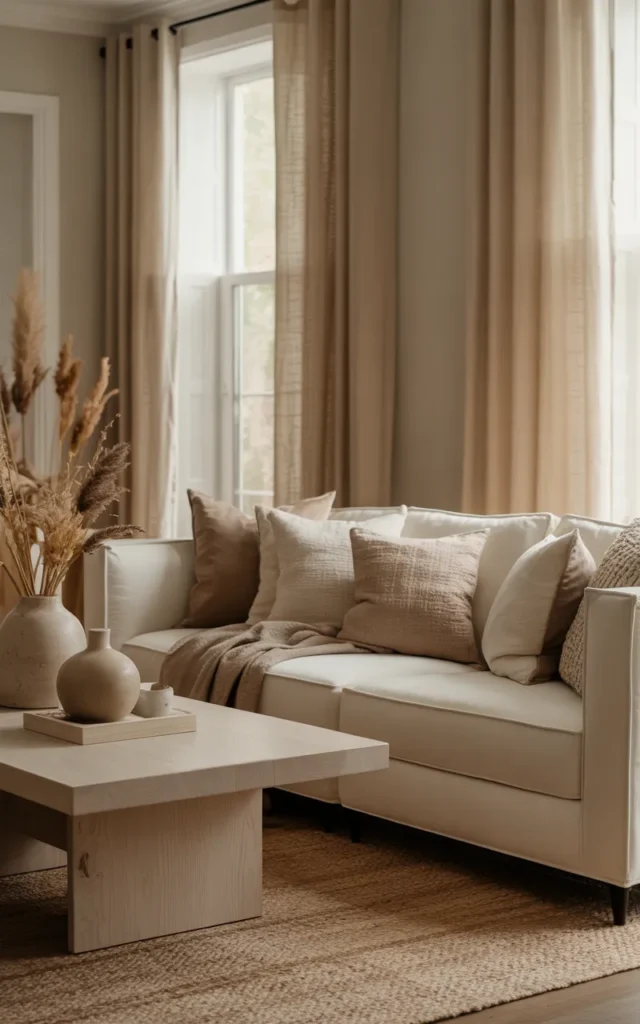
Instead of contrast, go tonal.
Different shades of the same color. Light beige, warm taupe, deeper brown.
It feels cohesive. Calm. Elevated.
And unlike idea #15 where we added contrast, this one is all about harmony.
Colour swap suggestion:
Beige → Taupe
Grey → Charcoal
White → Cream
Introduce subtle patterns through textiles
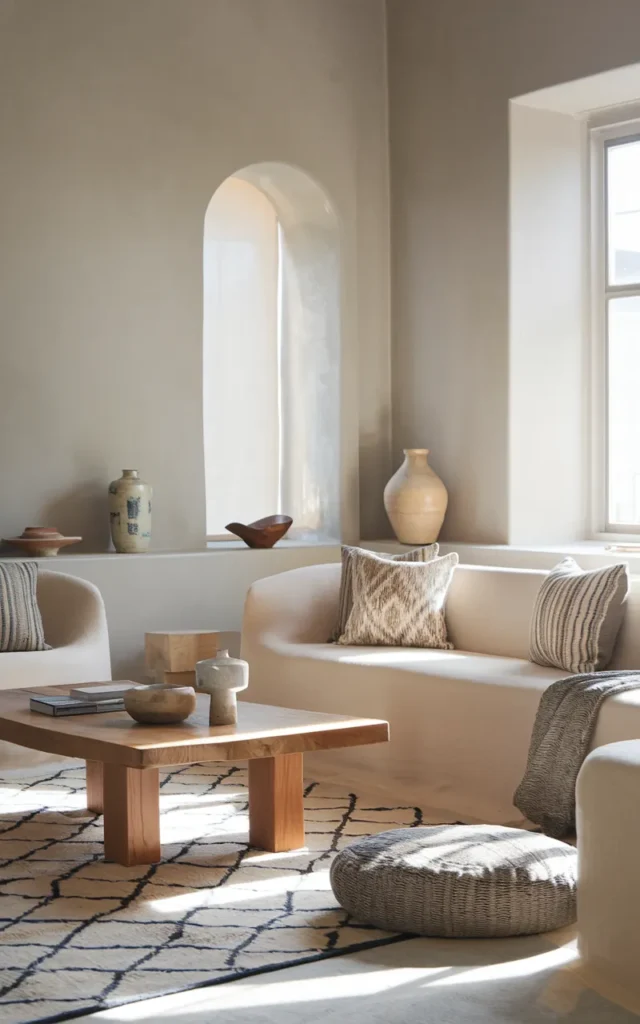
Think rugs, cushions, or throws.
Nothing loud. Just gentle patterns that add movement.
Stripes. Soft geometrics. Maybe a faded print.
Vibe check:
- Calm ✔
- Layered ✔
- Not overwhelming ✔
Add a personal gallery wall with meaning
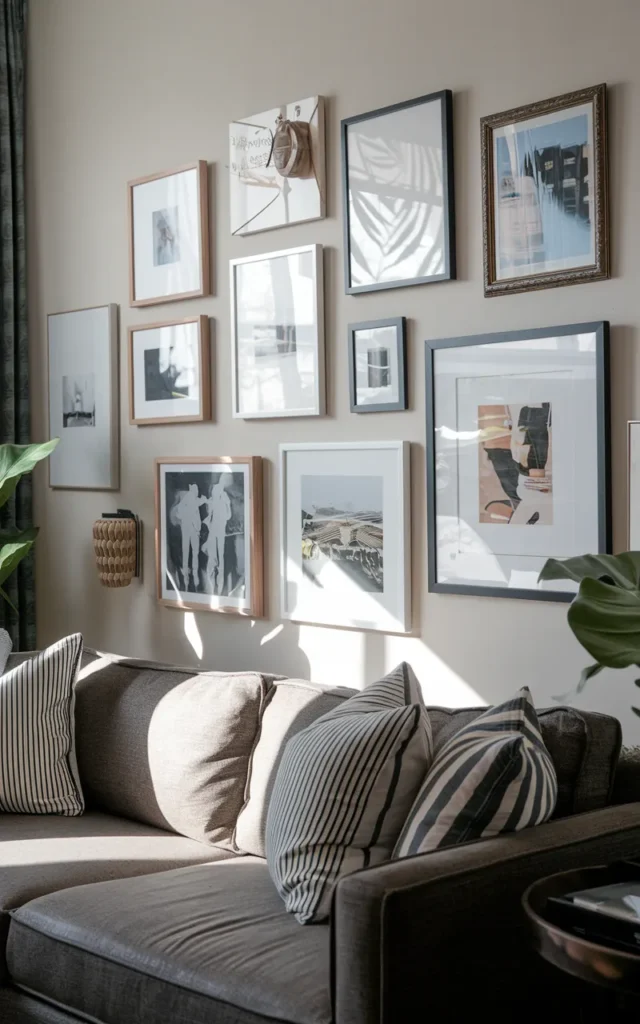
Photos. Travel memories. Art you love.
Make it yours.
Unlike idea #4’s single statement piece, this one tells a story 🖼️
Checklist:
- Choose a layout first
- Keep frame colors consistent
- Mix sizes thoughtfully
Create zones within your living room
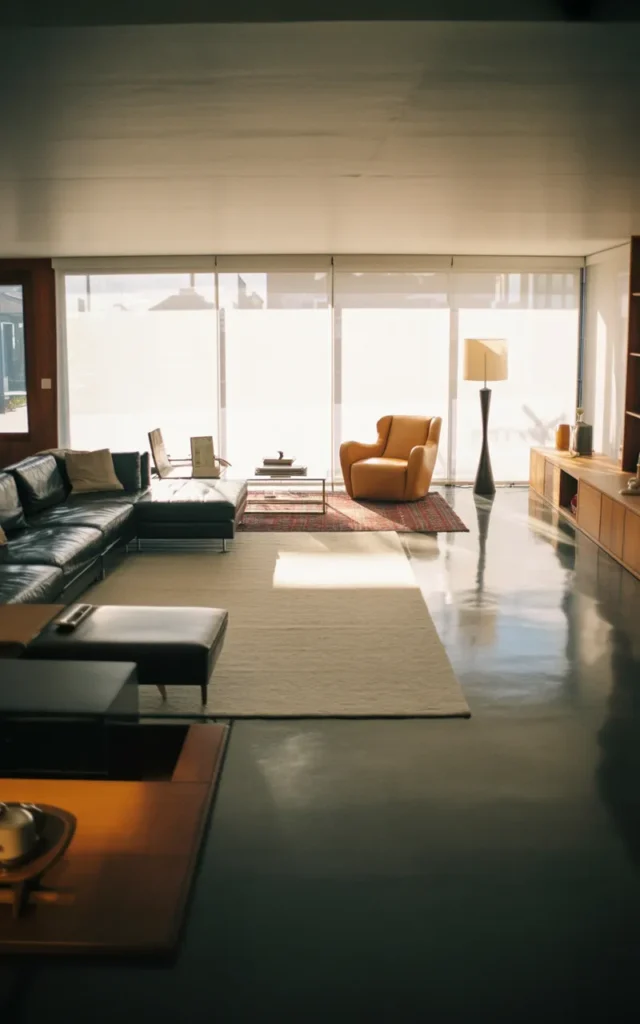
Especially if it’s open-plan.
Use rugs, lighting, or furniture placement to define areas.
Lounge zone. Reading zone. Maybe even a mini workspace.
Decision Fatigue?
Start with just one extra zone. Keep it simple.
Final Thoughts 🤍
You don’t need all 17 ideas. Not even close.
Pick 2–3 that resonate. Start there. Let your space evolve slowly.
Because a beautiful living room isn’t built overnight—it’s layered over time.
Try one idea this weekend. Just one. You’ll feel the difference immediately.
