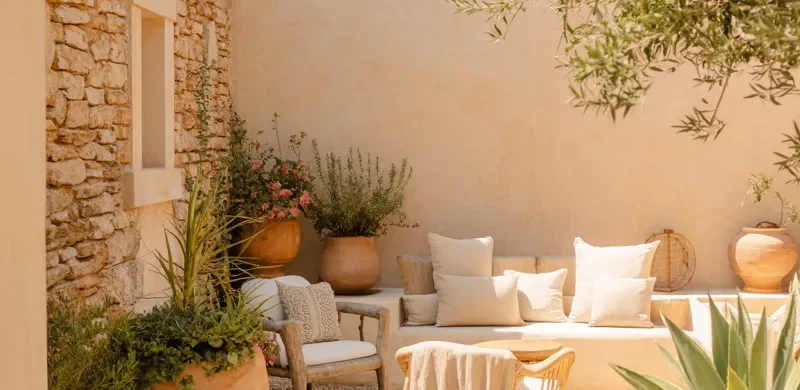
A beautiful backyard does not have to look like it came straight from a luxury resort. Sometimes, the simplest landscaping choices make the biggest difference.
I love a backyard that feels intentional without looking overly perfect. A little greenery here, a defined pathway there, and suddenly the whole space feels more inviting. 🌿
Whether you have a tiny yard or plenty of room to experiment, these 24 backyard landscaping designs will give you practical ideas you can actually use. Some are quick updates, while others can become the foundation of a complete backyard makeover.
Create a Layered Greenery Border Around the Yard
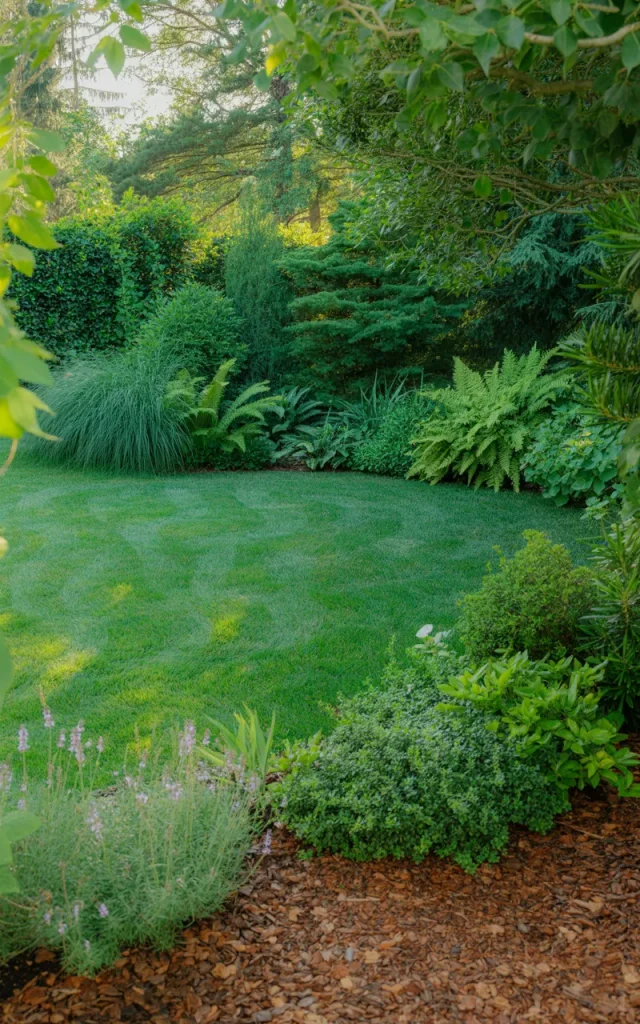
Start by creating a planting border around the edges of your backyard. I love this approach because it makes the entire space feel greener without taking away too much usable lawn.
Place taller shrubs or ornamental grasses toward the back, medium-sized plants in the middle, and low-growing flowers or ground covers toward the front. The different heights create depth and keep the landscape from looking flat.
You can repeat a few plants throughout the border for a cohesive appearance. Add mulch around the plants to give everything a neat finish. 🌱
Why it works?
Layered planting creates a fuller landscape while making even an ordinary backyard feel thoughtfully designed.
Line a Backyard Pathway With Flower Beds
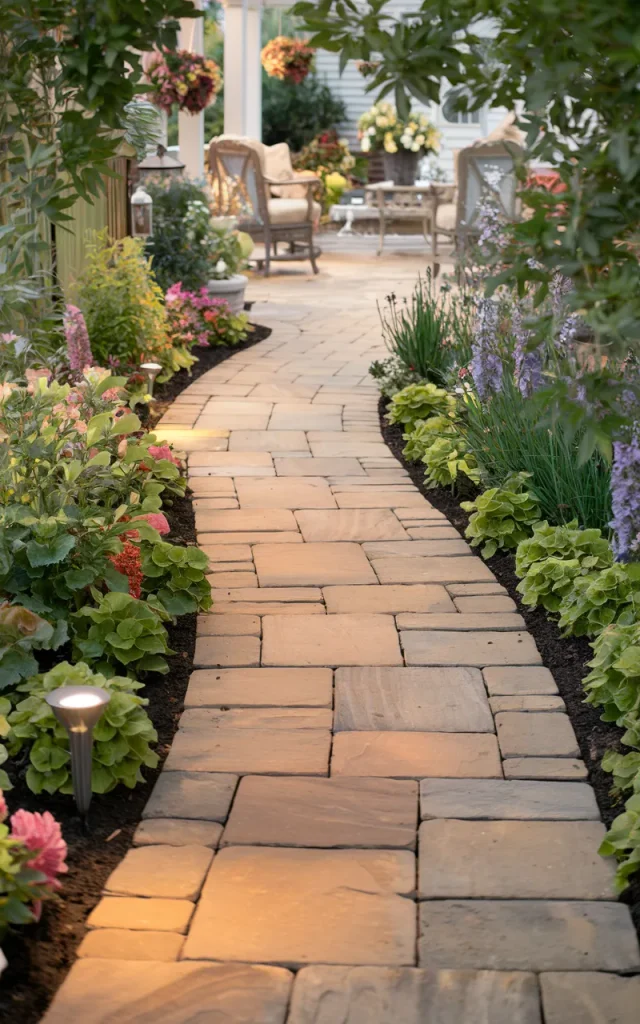
Give your backyard a clear sense of direction by adding a pathway through the landscape. Pavers, stepping stones, gravel, or brick can all work beautifully.
I like placing flower beds along both sides of the path instead of leaving the edges completely bare. Mix leafy plants with seasonal flowers for a relaxed, colorful effect.
Keep the pathway wide enough for comfortable walking, especially if it leads to a patio, shed, seating area, or outdoor kitchen. A few solar path lights can make the route feel magical after sunset. ✨
Quick Tip:

Repeat one flower color along the pathway to make the landscaping feel more connected.
Plant a Small Backyard Tree as a Focal Point
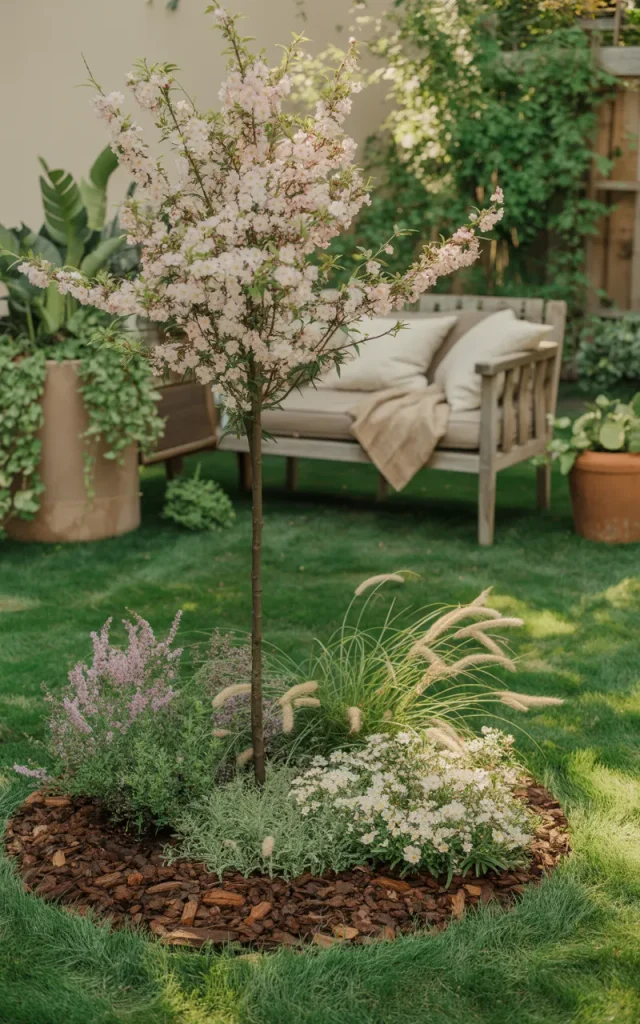
Choose one attractive tree and let it become the star of your backyard. A small ornamental tree can add height, shade, seasonal interest, and personality without overwhelming the space.
I recommend considering the tree’s mature size before planting. That tiny sapling may eventually become much larger than you expect!
Surround the base with low plants, ornamental grasses, or a simple mulch bed. Leave enough open space around the trunk so the tree does not look crowded.
This design is especially lovely when you want your backyard to feel natural rather than heavily landscaped.
A Micro-tip:

Position the tree where you can see it from inside the house. That way, you enjoy the view all year.
Add Curved Garden Beds for a Softer Look
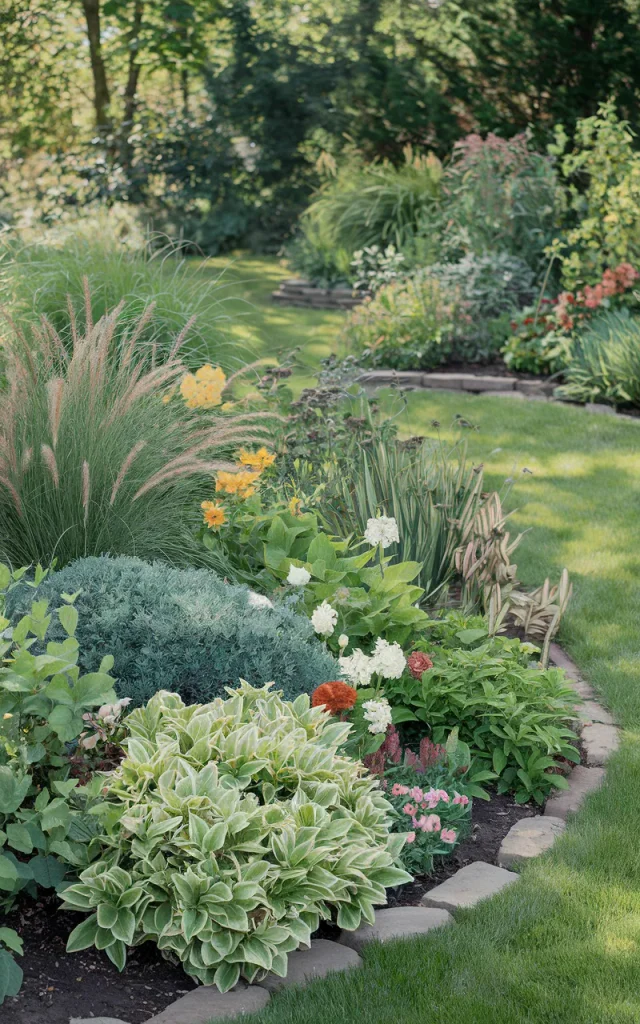
Instead of using straight planting lines everywhere, introduce a few gentle curves. Curved garden beds can make a backyard feel more organic and relaxed.
I love using a flowing curve around a lawn, patio, or tree. You can define the edge with stone, brick, metal edging, or simply a clean soil boundary.
Fill the bed with a mix of shrubs, flowers, grasses, and foliage plants. Keep taller plants toward the rear so the curves remain visually open.
Unlike a very geometric landscape, this approach feels less rigid. It almost looks as though the garden naturally developed that way. 🌸
Who this is for:
Anyone who wants a softer, cottage-inspired backyard without completely redesigning the yard.
Build a Natural Stone Garden Feature
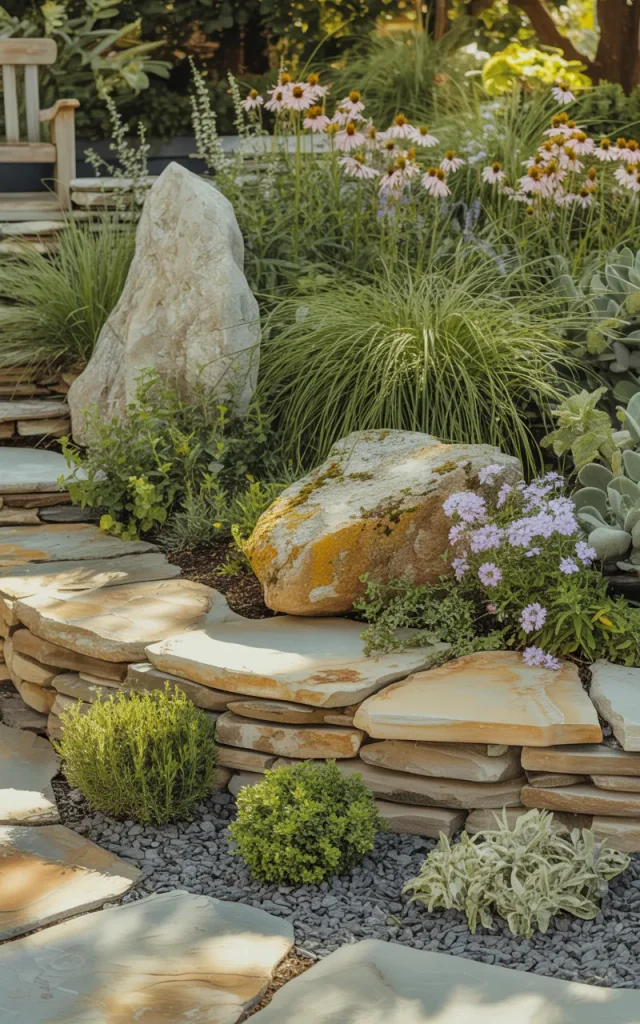
Bring some earthy texture into your backyard with a natural stone feature. This could be a low retaining wall, decorative rock garden, raised planting bed, or stone border.
I prefer mixing stone sizes rather than using identical pieces everywhere. Combine larger rocks with smaller gravel and greenery to create a more natural appearance.
Plants with interesting foliage work especially well against stone. Think ornamental grasses, succulents, low shrubs, or flowering perennials suited to your climate.
Keep the rest of the landscaping relatively simple. The stone should feel like part of the garden rather than an object randomly dropped into it.
Pro-tip:
Choose stone tones that already appear somewhere around your home for a more cohesive transition between house and yard.
Frame the Patio With Lush Planting
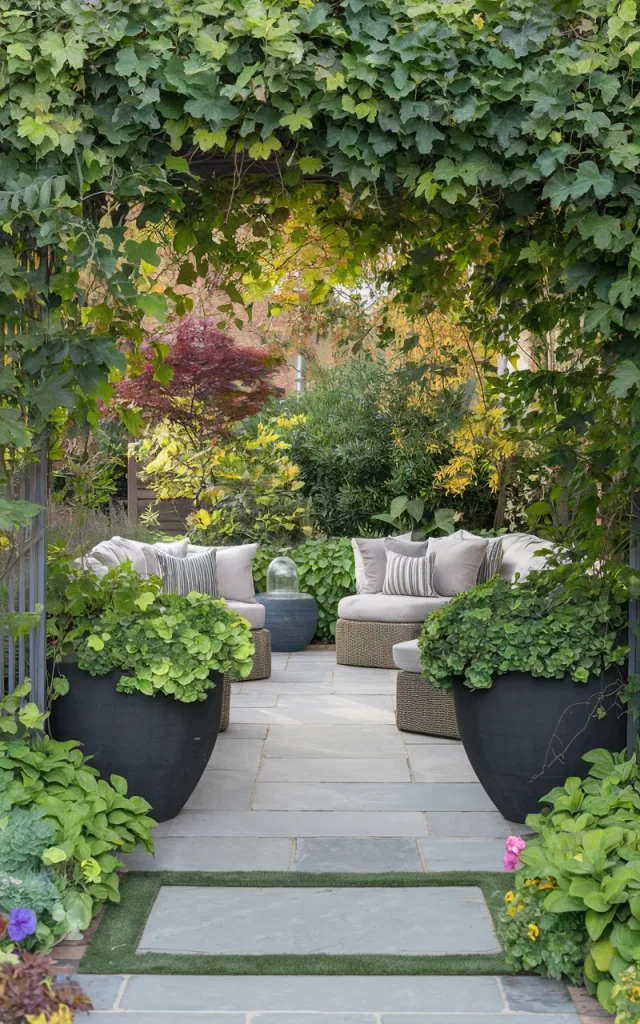
Make your patio feel like an outdoor room by surrounding it with greenery. Instead of placing plants randomly around the backyard, use them to visually frame the seating area.
Tall planters can define corners, while shrubs and flowering plants can soften the edges. If your patio feels exposed, taller greenery can also create a little privacy.
I especially like combining leafy plants with a few flowers for seasonal color. Add comfortable outdoor furniture in the middle and keep a clear walking route around it. 🪴
Instant Gratification Tip:

Even two large planters placed symmetrically beside a patio entrance can make the space look more finished immediately.
Create a Backyard Gravel Garden
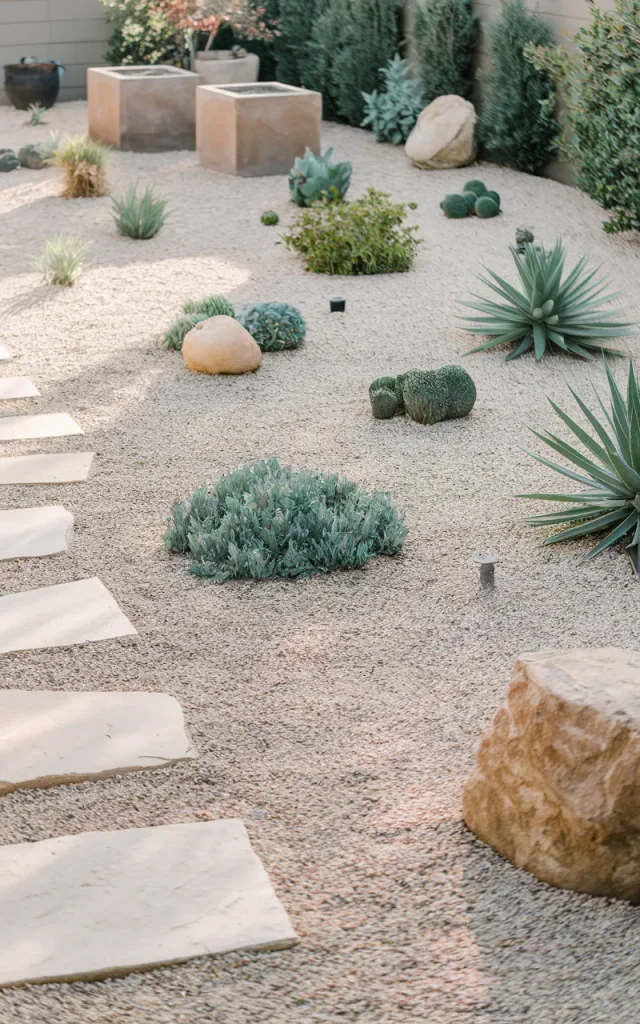
Give your backyard a relaxed, low-maintenance feel with a gravel garden. This works particularly well in areas where maintaining a large lawn is difficult.
Lay a suitable landscape fabric or prepared base where appropriate, then use decorative gravel as the surface. Add drought-tolerant plants, larger stones, and a few architectural planters.
I love the contrast between loose gravel and structured greenery. It feels modern but still earthy.
Keep a few larger stepping stones through the gravel if people need to walk across the space. The result can be practical, attractive, and pleasantly unfussy.
Small Space Hack:

Use gravel in only one corner rather than covering the entire yard.
Install Raised Garden Beds for Structure
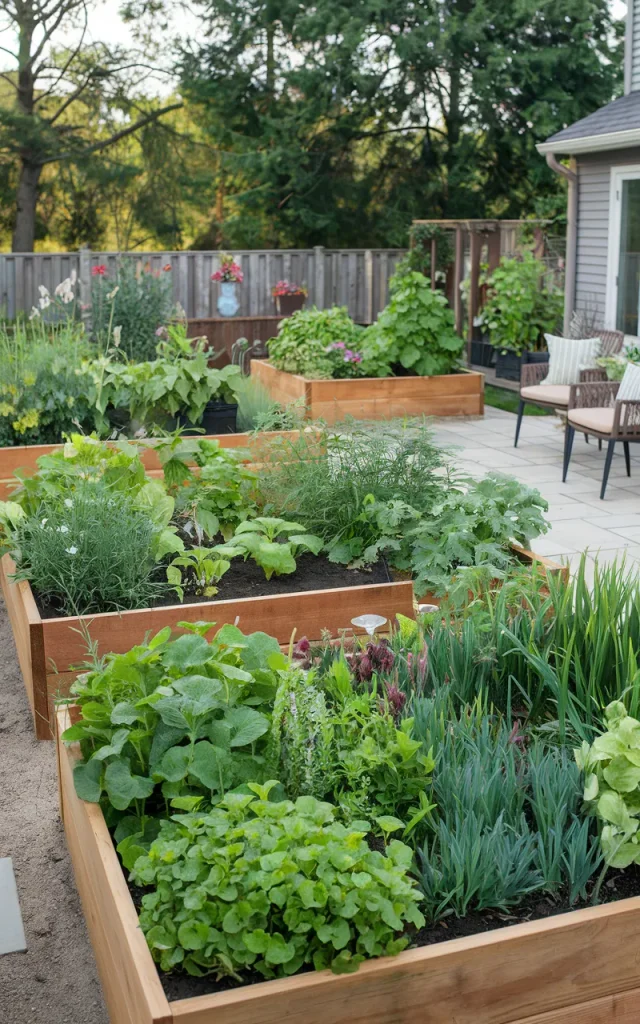
Bring structure into your backyard by installing raised garden beds. Timber, stone, brick, or composite materials can all create attractive frames for plants.
I love raised beds because they visually organize a yard while giving you dedicated spaces for flowers, herbs, vegetables, or ornamental plants.
Arrange several beds in a simple grid for a modern look, or use different sizes for a more relaxed garden feel. Keep enough room between them for walking and maintenance.
You can also position a raised bed beside a patio to make the transition between entertaining space and garden feel natural.
Budget Alternatives:
- Use reclaimed timber where suitable.
- Create one large bed instead of several small ones.
- Edge an existing planting area rather than rebuilding the whole garden.
Add a Backyard Privacy Screen With Greenery
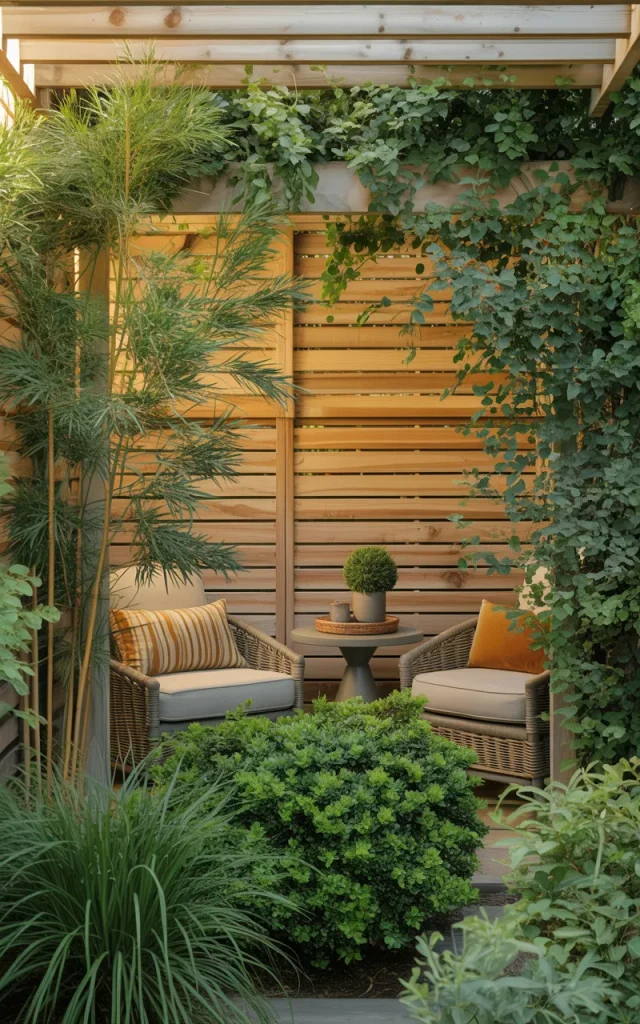
Create a more private outdoor retreat by combining a simple privacy screen with plants. A slatted wood screen, trellis, or attractive fence panel can provide the structure.
Then soften it with climbing plants, tall shrubs, or ornamental grasses. I prefer this layered approach because a completely solid fence can sometimes feel heavy.
Place the screen near a seating area, dining zone, hot tub, or property boundary where privacy matters most. 🌿
Think about what you actually want to hide before installing anything. You may only need to screen one sightline rather than the entire backyard.
Why designers do this:
Layering hardscape and planting creates privacy while keeping the landscape visually softer and more interesting.
Build a Low Retaining Wall Around a Garden
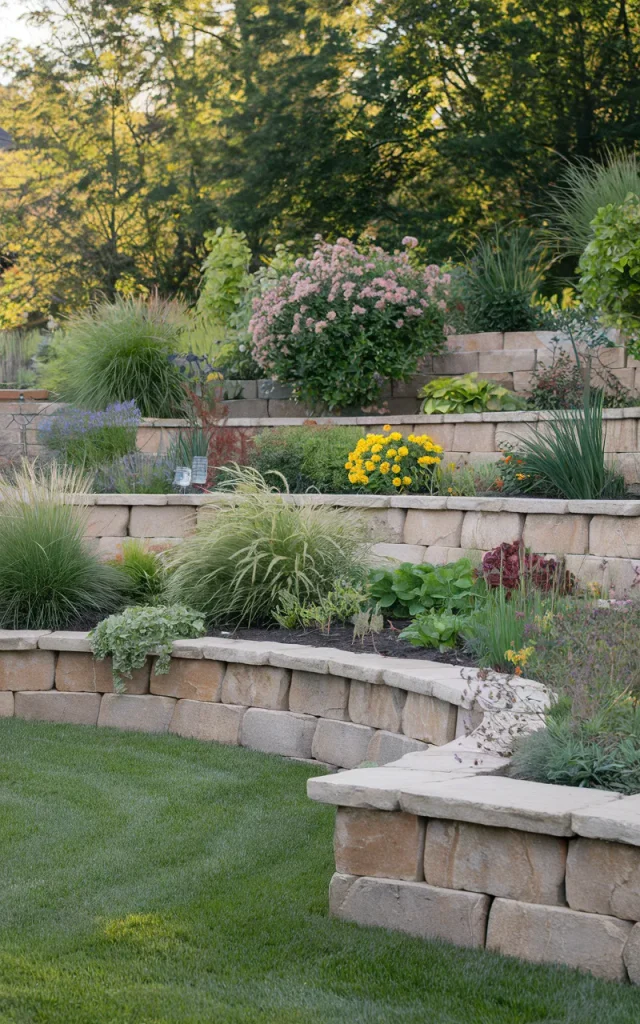
Give a sloped or uneven backyard more definition with a low retaining wall. Even a modest wall can separate planting zones and make the landscape feel more organized.
Use stone, brick, concrete blocks, or another suitable material that complements the architecture of your home. Then fill the upper area with shrubs, flowers, or ground-cover plants.
I like using the wall as both a practical feature and a visual border. It can frame a lawn, patio, pathway, or garden bed beautifully.
Common Mistakes to Avoid:
- Ignoring drainage requirements.
- Choosing materials that clash with the house.
- Making the wall unnecessarily tall.
- Planting species that outgrow the space.
For structural walls, proper construction and local requirements matter.
Connect Outdoor Zones With Stepping Stones
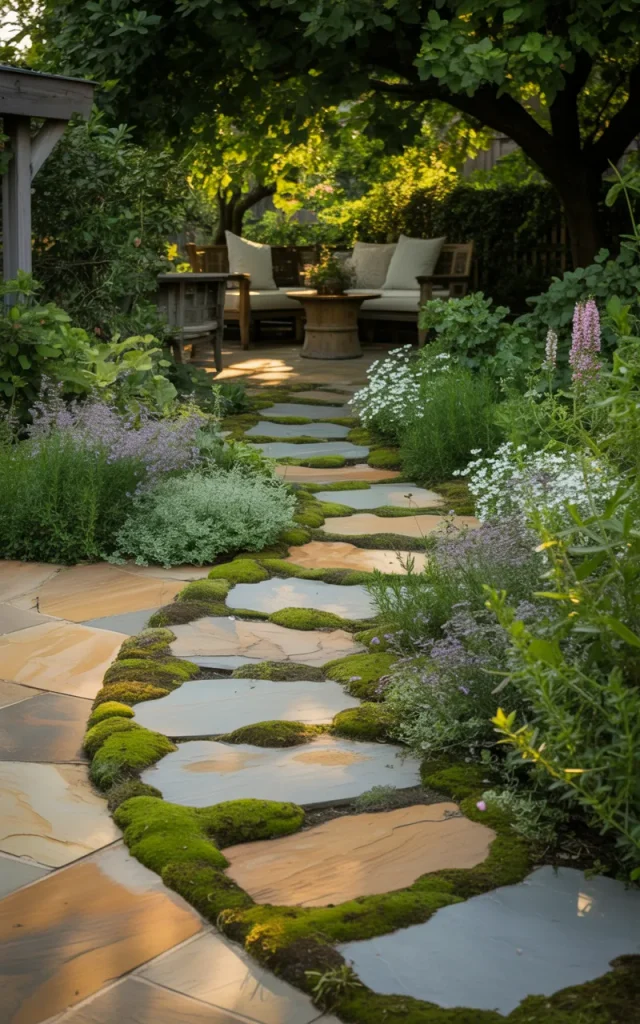
Create a more interesting journey through your backyard with stepping stones. Instead of one straight walkway, let the stones guide people naturally from one area to another.
They can connect the patio to a garden, lawn to a fire pit, or house to a secluded seating area. I love slightly irregular natural stones for relaxed landscapes and clean rectangular pavers for modern yards.
Space the stones for comfortable walking and keep their placement consistent with the path you want people to follow.
Step-by-step instructions:
- Mark the route first.
- Lay the stones loosely to test spacing.
- Adjust them for comfortable footsteps.
- Set them securely into the ground.
- Add low planting around the edges.
A little planning makes a huge difference.
Create a Backyard Fire Pit Garden
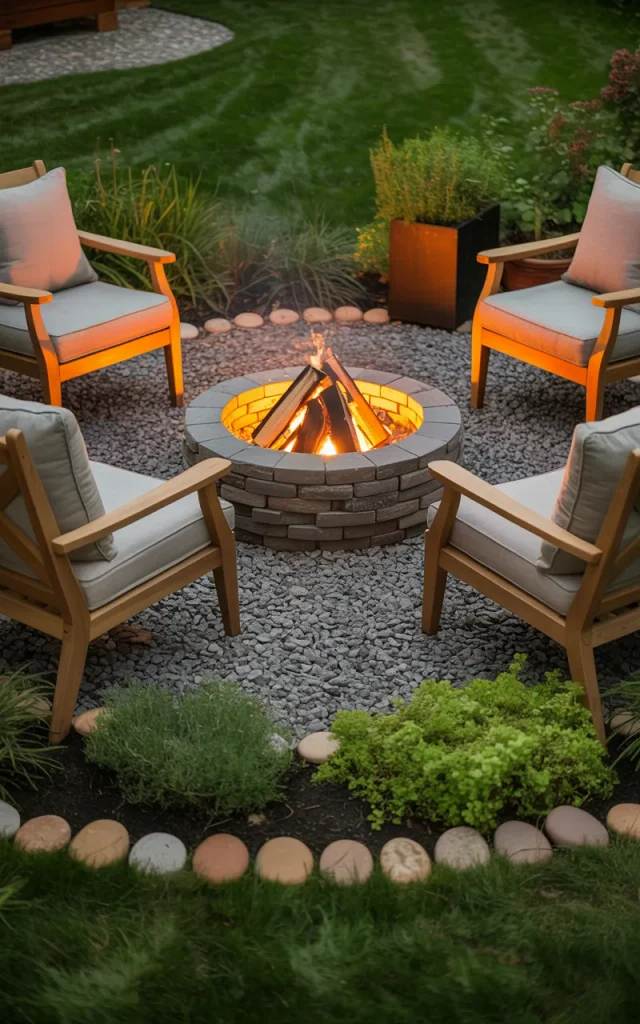
Turn a simple fire pit into the centerpiece of a dedicated outdoor zone. Surround it with comfortable seating and use landscaping to define the area.
Gravel, pavers, stone, or a properly constructed hardscape surface can visually separate the fire pit from the lawn. Add low plants around the perimeter while keeping appropriate clearance from heat and flames.
I would keep the planting fairly simple here. You want the seating and fire feature to remain accessible, not disappear inside a jungle of greenery. 🔥
Vibe check:
- Cozy evenings ✓
- Casual entertaining ✓
- Rustic atmosphere ✓
- Low-key outdoor gatherings ✓
Always follow local fire-safety rules and manufacturer clearances for your particular fire feature.
Design a Lush Tropical-Style Backyard
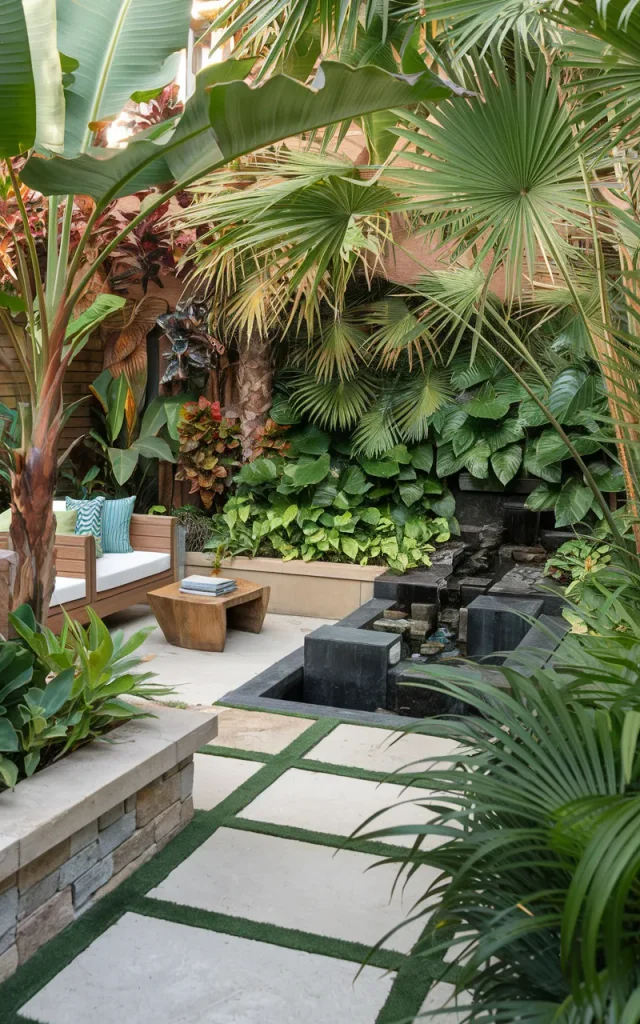
Bring vacation energy home by creating a lush tropical-inspired landscape. Large-leaf plants, layered greenery, palms where climate-appropriate, and bold foliage can instantly change the atmosphere.
The secret is abundance. Rather than spacing every plant far apart, create overlapping layers while still considering each plant’s mature size.
Use natural stone, wood, or earthy-toned outdoor furniture to support the theme. A small water feature can add another sensory element.
Trend callout:
Indoor-outdoor living continues to influence backyard design, and lush planting is an easy way to make an outdoor space feel like an extension of the home.
Surround a Water Feature With Planting
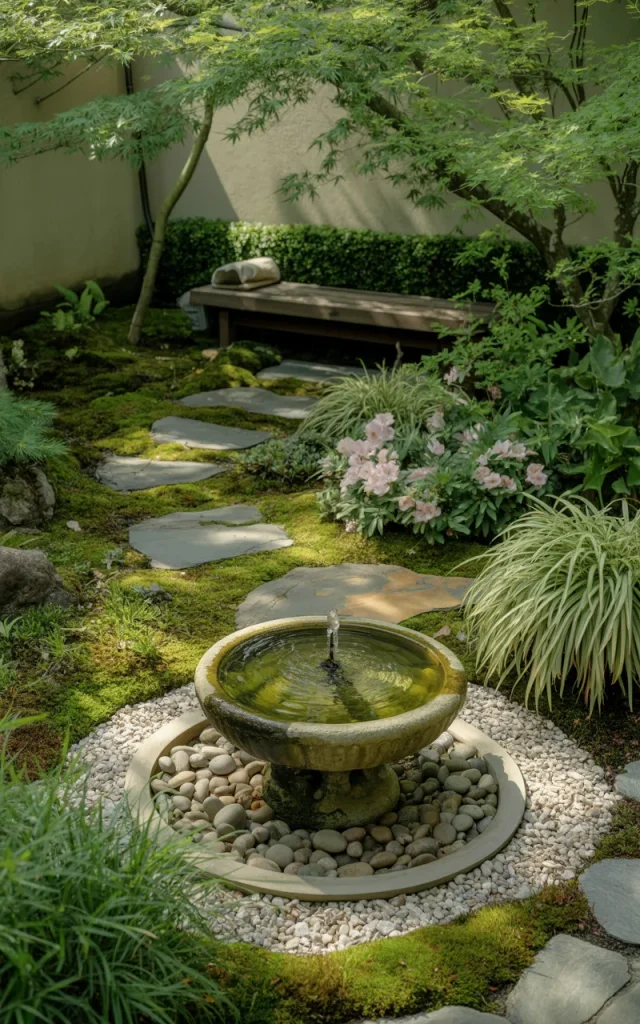
Make a small pond, fountain, or bubbling water feature feel integrated by surrounding it with appropriate greenery.
I prefer placing plants at varying heights around the feature rather than creating a perfect ring. Some plants can partially soften the edges while others frame the water from behind.
Add stone or gravel around the base to connect the feature to the rest of the landscape. The gentle sound of moving water can also make a seating area feel calmer. 💧
Works best in:
- Relaxed garden corners
- Patio edges
- Small meditation spaces
- Larger backyards needing a focal point
Keep maintenance access in mind. A beautiful water feature is much easier to enjoy when cleaning it does not require dismantling the garden.
Use Large Planters to Define Backyard Zones
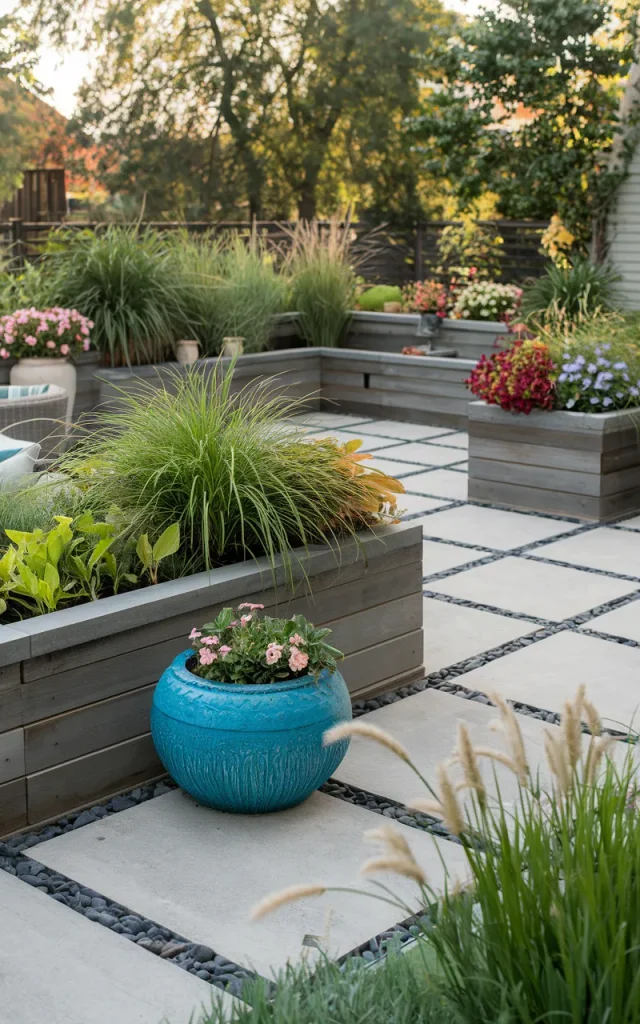
If you want flexible landscaping, bring in large planters. They are especially useful when you are renting, working with a paved backyard, or simply not ready for permanent planting.
Place matching planters around a patio entrance or use different sizes to define corners. Large containers can hold shrubs, ornamental grasses, flowers, or suitable small trees.
I love moving containers around when I want to refresh the layout. It gives you some of the freedom of furniture without completely reworking the garden.
Colour swap suggestion:
| Existing Look | Try Instead |
| Gray planters | Warm terracotta |
| Black planters | Soft stone |
| White planters | Natural wood tones |
Containers can also introduce color without committing to a permanent landscape palette.
Create a Modern Backyard With Clean Planting Lines
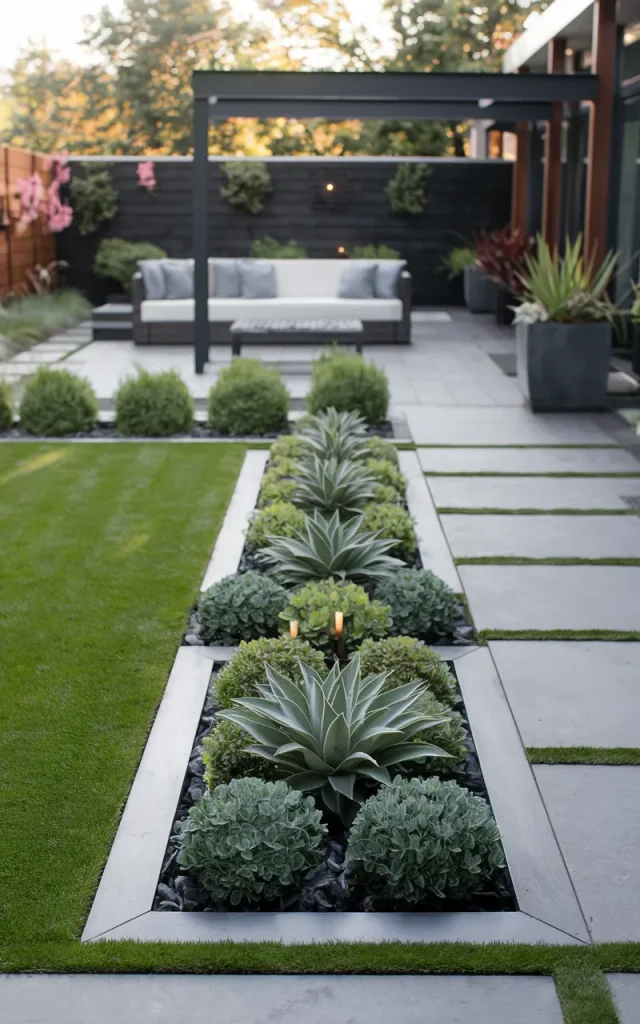
For a contemporary landscape, simplify the planting design. Use crisp edges, repeated plants, geometric beds, and restrained materials.
I like pairing a simple lawn with rectangular planting zones and a few sculptural plants. Gray stone, concrete, timber, and dark metal can reinforce the modern feel without making the backyard cold.
Avoid filling every available space. Negative space is part of the design.
What most people get wrong:
They think modern landscaping means adding lots of dramatic features. Usually, the cleaner approach is more effective. A few strong shapes can make the whole yard feel polished.
Transform a Corner Into a Secret Garden
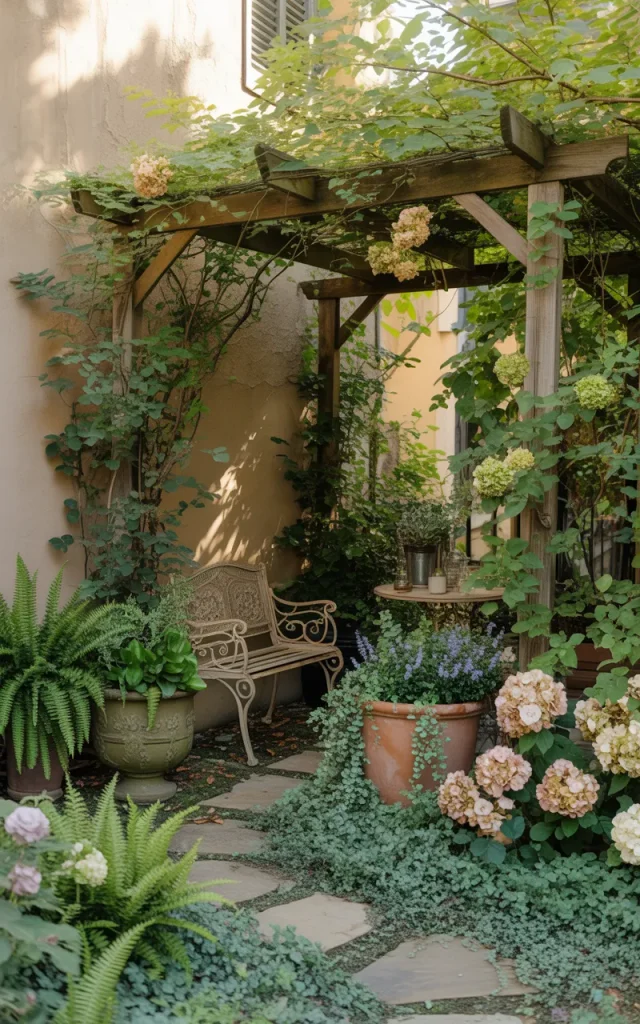
Give an overlooked backyard corner a completely different personality by turning it into a secret garden.
Start with a small pathway leading into the space. Add layered plants, a compact bench, climbing greenery, and perhaps an old-fashioned planter or decorative garden feature.
I love using taller plants near the outside edges and keeping the center slightly more open. It creates that tucked-away feeling without making the corner impossible to navigate.
You can even paint a small gate or trellis in a contrasting shade to make the entrance feel special. 🌺
How to steal this look:
- Pick the quietest corner of your yard.
- Create a narrow entrance path.
- Layer plants around the perimeter.
- Add one comfortable seat.
- Finish with a small decorative focal point.
It does not need to be large. The sense of discovery is what makes it charming.
Combine Lawn With Generous Planting Islands
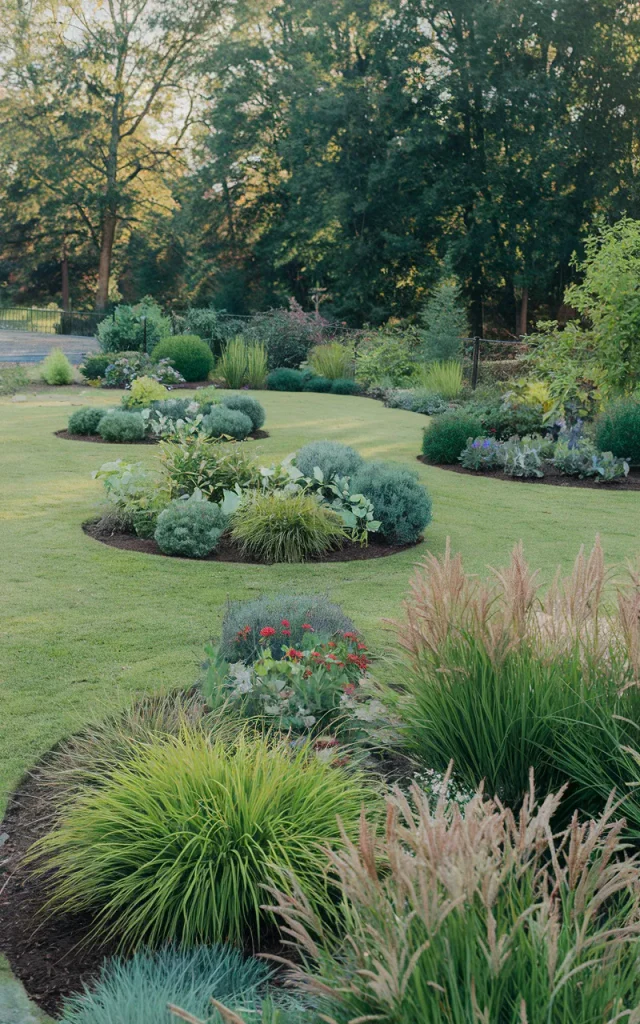
Instead of covering your entire backyard with lawn, break it up with large planting islands. This creates a more dynamic landscape while keeping plenty of open space for children, pets, or outdoor activities.
I recommend making the islands substantial enough to feel intentional. Tiny beds scattered randomly across a lawn can make the space look fragmented.
Use shrubs, grasses, trees, and flowers in coordinated groups. Repeat a few species between islands so the whole backyard still feels connected.
Small space hack:

Even one large planting island can have more impact than several tiny garden beds.
Build a Mediterranean-Inspired Backyard Garden
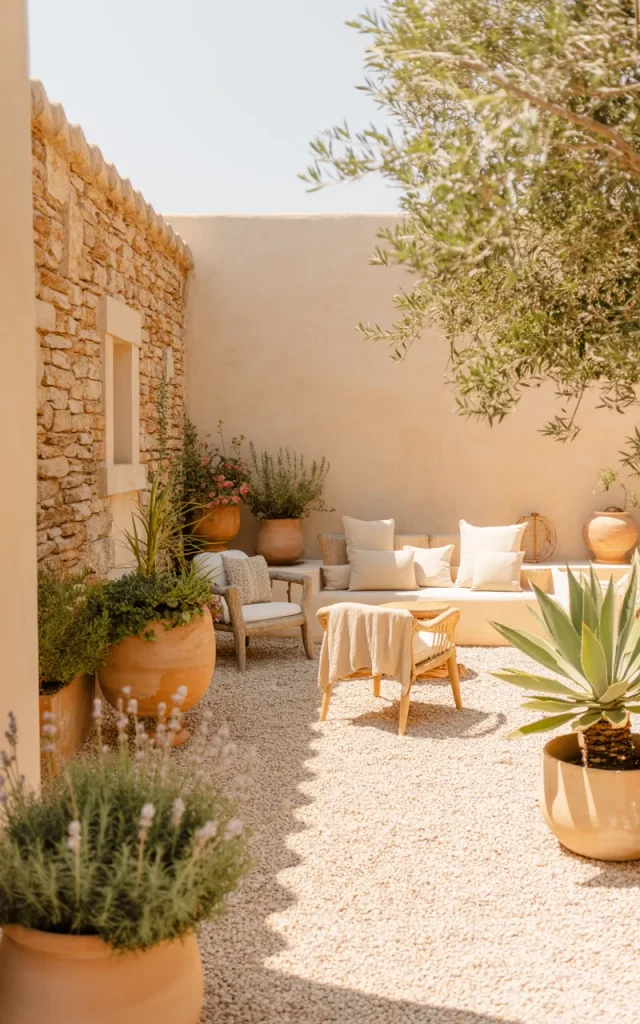
Create a warm, relaxed atmosphere with a Mediterranean-inspired landscape. Think textured stone, gravel, terracotta containers, sculptural plants, and soft earthy colors.
If your climate allows, incorporate plants commonly associated with Mediterranean gardens. Otherwise, choose locally suitable alternatives that create a similar visual effect.
I love combining a gravel surface with a few large planters and a simple seating area. Add a pergola or shade structure if the backyard gets strong sun.
One rule to remember:
The style comes from the combination of materials, planting, texture, and restraint—not from using one specific plant.
Landscape Around an Outdoor Dining Area
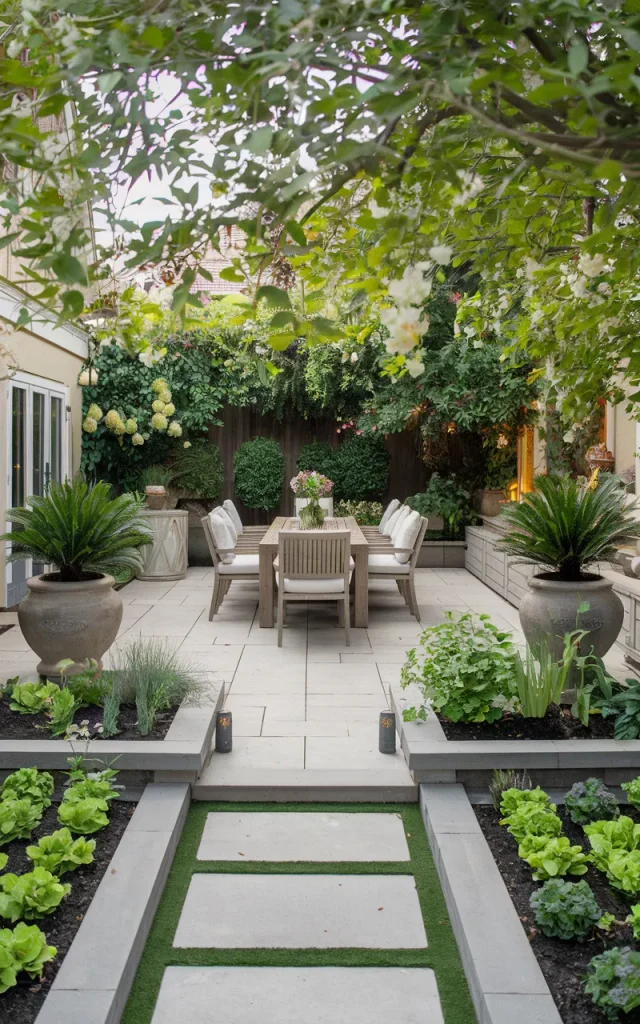
Make outdoor meals feel more inviting by landscaping around your dining area. Instead of simply placing a table on a patio, surround it with greenery that makes the zone feel intentional.
Use large planters at the corners, low planting along the edges, and perhaps a nearby herb garden for a practical touch.
I prefer keeping plants slightly away from the table itself so leaves, flowers, and insects do not become a constant nuisance.
Quick hack:
Add one tall planter at each end of the dining zone. It creates a visual frame without requiring permanent construction.
Add a Pergola With Climbing Plants
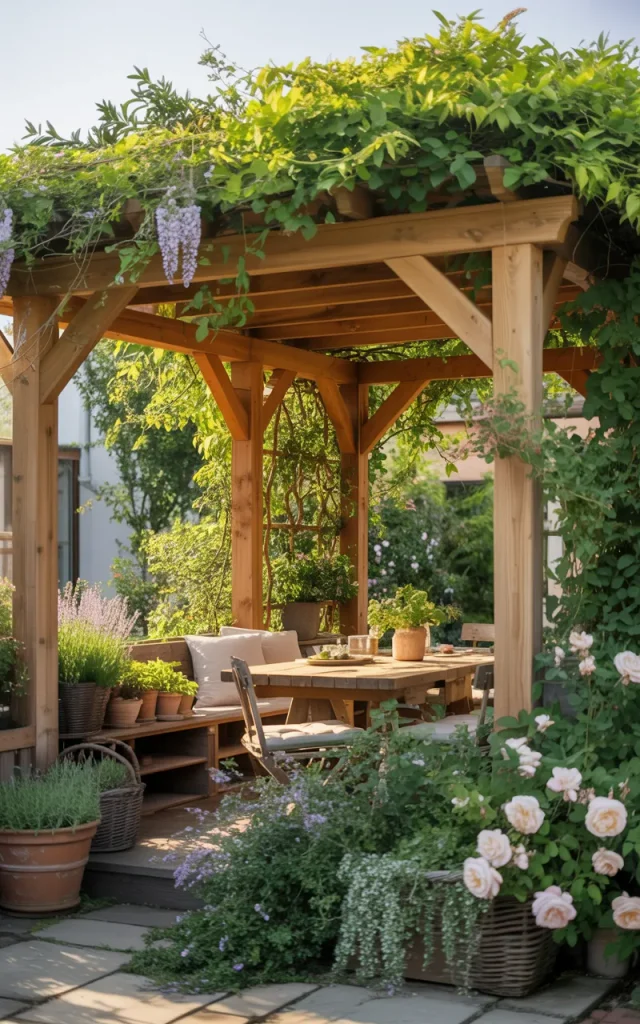
Give your backyard both architecture and greenery by adding a pergola covered with climbing plants. The structure can define a seating or dining area while providing a framework for vines.
Choose climbers that are suitable for your climate and make sure the pergola is strong enough for mature plant growth.
I love this design because it changes over time. At first, the structure may look quite bare. Eventually, the greenery becomes part of the architecture.
Time required to implement:

The structural installation can be relatively quick depending on the pergola, but establishing substantial plant coverage takes much longer.
Use a Repeated Plant Palette Throughout the Yard
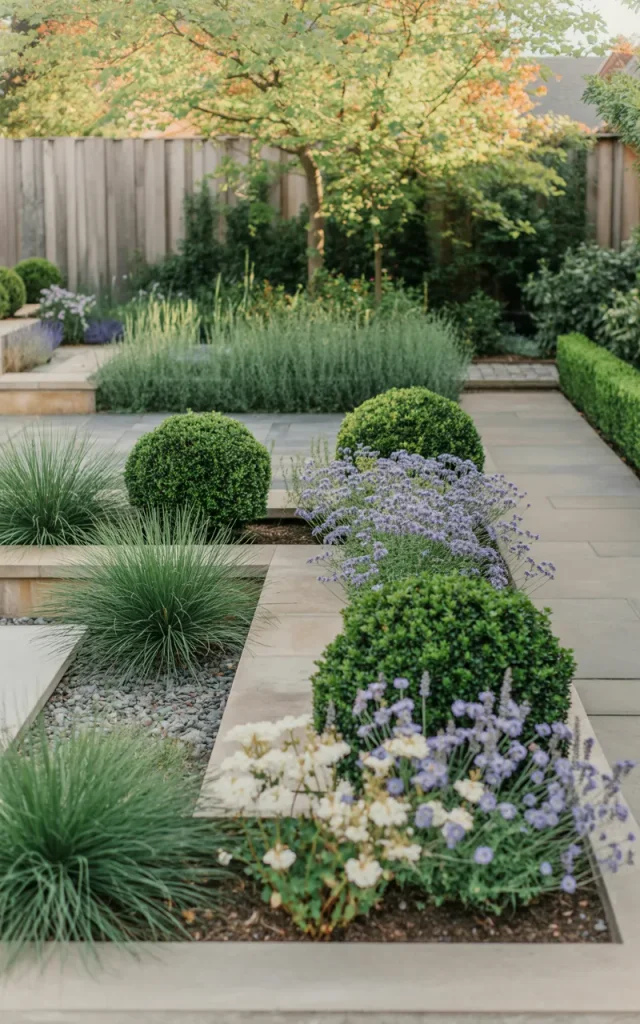
Create cohesion by choosing a small group of plants and repeating them throughout the backyard.
This is one of my favorite professional-looking tricks. You do not need an enormous plant collection. Repetition often makes a landscape feel more expensive and intentional.
For example, choose one evergreen shrub, one ornamental grass, and two flowering plants. Repeat those choices near the patio, pathway, fence, and garden beds.
Decision Fatigue? Keep it simple.
Pick three categories:
- One structural plant
- One textural plant
- One seasonal color
Then repeat them.
This approach is especially useful if you are starting from scratch and feel overwhelmed by the sheer number of garden options available.
Add a Backyard Rock Garden With Sculptural Plants
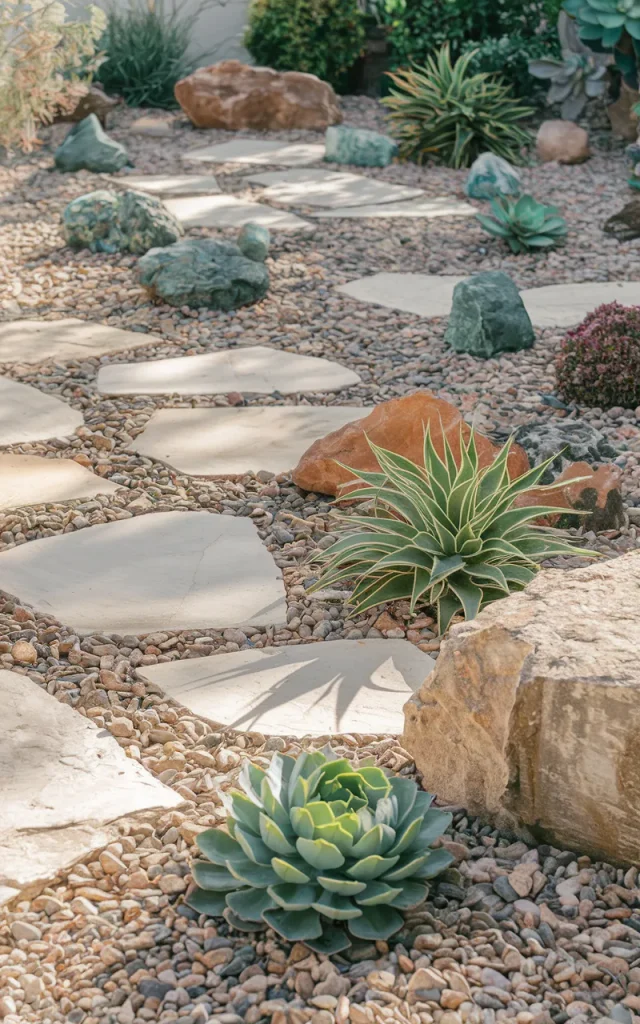
Give a sunny section of the yard a strong architectural look with a rock garden. Start with a carefully chosen collection of larger stones, then fill the gaps with suitable drought-tolerant or rock-loving plants.
I like arranging the rocks in uneven groups rather than lining them up. Vary their size and orientation so the composition feels natural.
Leave some open gravel or soil between plants. The empty spaces are important because they make the individual shapes stand out.
Myth-buster:

A rock garden does not mean dumping decorative stones across bare ground. The best versions balance rocks, plants, texture, and negative space.
Create a Backyard Woodland-Inspired Landscape
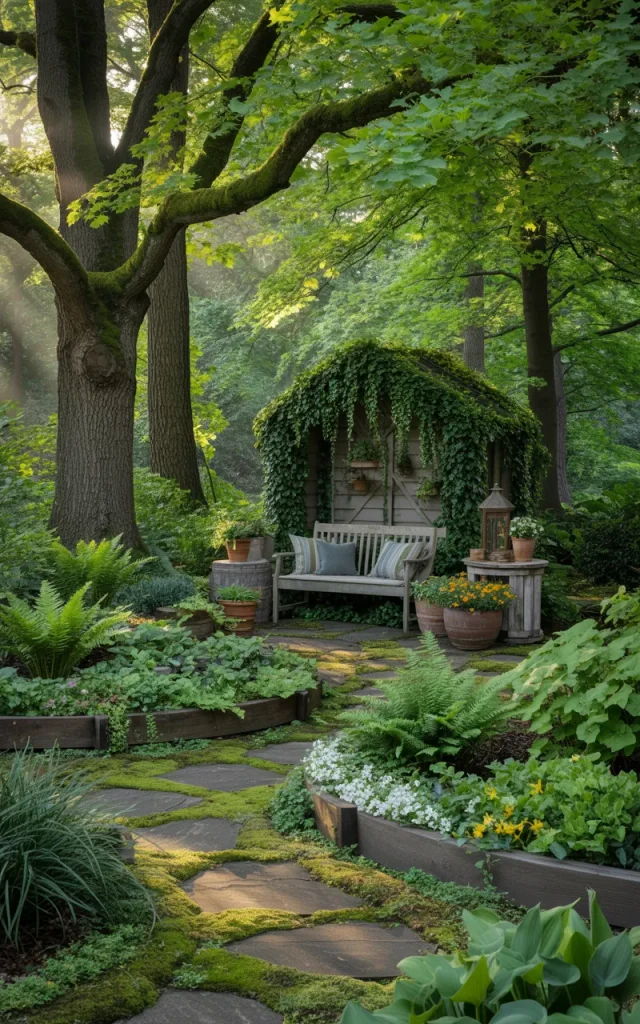
Give your backyard a peaceful woodland feeling by layering trees, shrubs, ground covers, and natural materials.
If you already have mature trees, work with them instead of removing them simply to create a completely new layout. Their existing canopy can become the foundation of the design.
Add a winding path, natural stone, weathered wood, and shade-tolerant plants appropriate to your conditions. Let the planting feel slightly informal.
Surprise Fact:
A woodland-inspired landscape often looks better when every inch is not perfectly controlled. A little variation creates the natural character you are trying to achieve.
Final Thoughts
The best backyard landscaping designs are not necessarily the biggest or most expensive ones. They are the designs that make your outdoor space easier to enjoy and more connected to the way you actually live.
Start with one manageable change. Add a planting border, create a pathway, frame your patio, or transform that forgotten corner into something beautiful.
Once you see how one improvement changes the whole backyard, the next idea usually becomes much easier to imagine. 🌱
