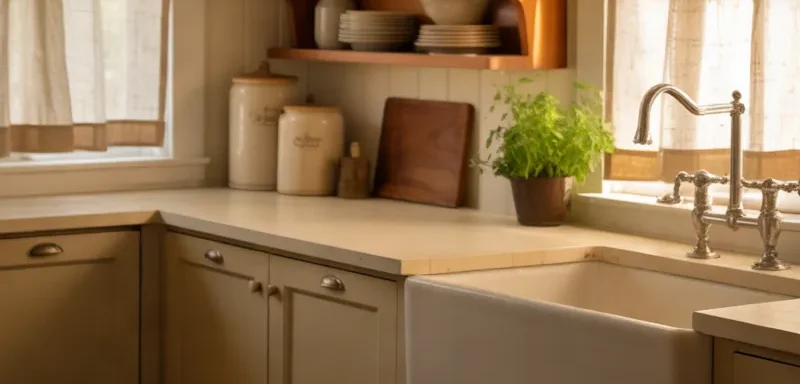
Kitchen cabinets do more than store dishes, cookware, and all those little things we somehow collect over the years. They also shape the entire look of your kitchen. The right cabinet color, finish, and design can make even a simple kitchen feel thoughtfully decorated. ✨
But here’s the thing. You don’t need a complete kitchen renovation to make your cabinets look beautiful. Sometimes, a fresh coat of paint is enough. Other times, swapping the hardware, adding glass doors, or choosing a more interesting finish can completely change the atmosphere.
If you’re looking for kitchen cabinet ideas that balance style and everyday practicality, I’ve gathered 23 options worth considering. Whether you love modern interiors, cozy farmhouse kitchens, timeless wood finishes, or bold colors, there’s something here for you.
Paint Your Kitchen Cabinets a Soft White
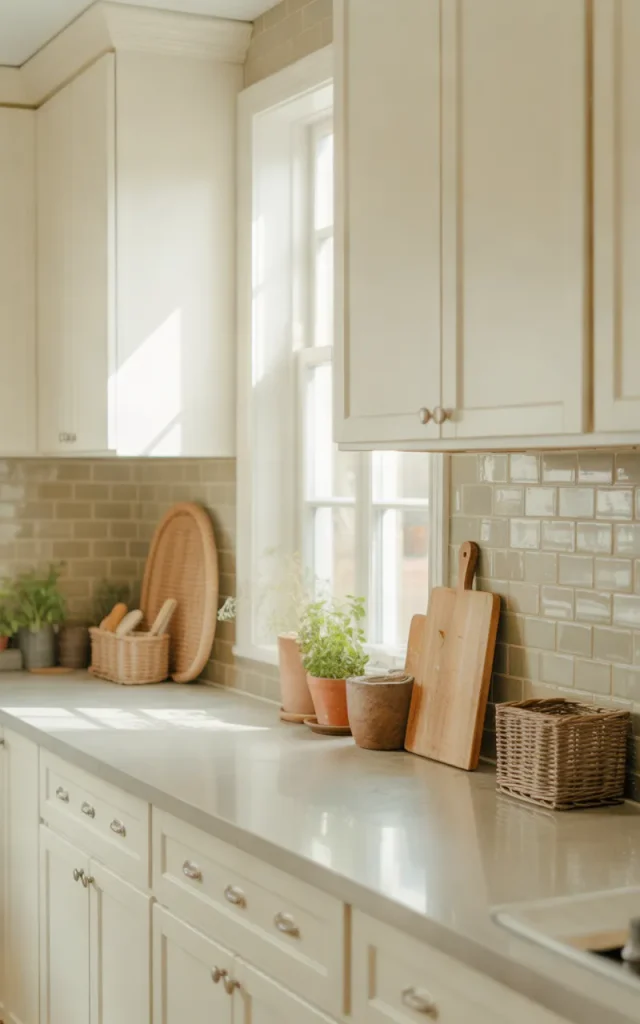
If you’re unsure where to start, I’d recommend soft white kitchen cabinets. They’re timeless, versatile, and make the entire kitchen feel brighter without requiring an elaborate design scheme.
Choose a warm white if your kitchen has wooden floors, beige walls, or brass hardware. Cooler whites work beautifully with gray countertops and stainless steel appliances. I especially love pairing white cabinets with a slightly contrasting backsplash to prevent the room from feeling too plain.
Why it works?

White reflects light and creates a clean backdrop for almost any decorating style. It's particularly helpful in smaller kitchens where darker colors might feel overwhelming.
Choose Deep Green Kitchen Cabinets
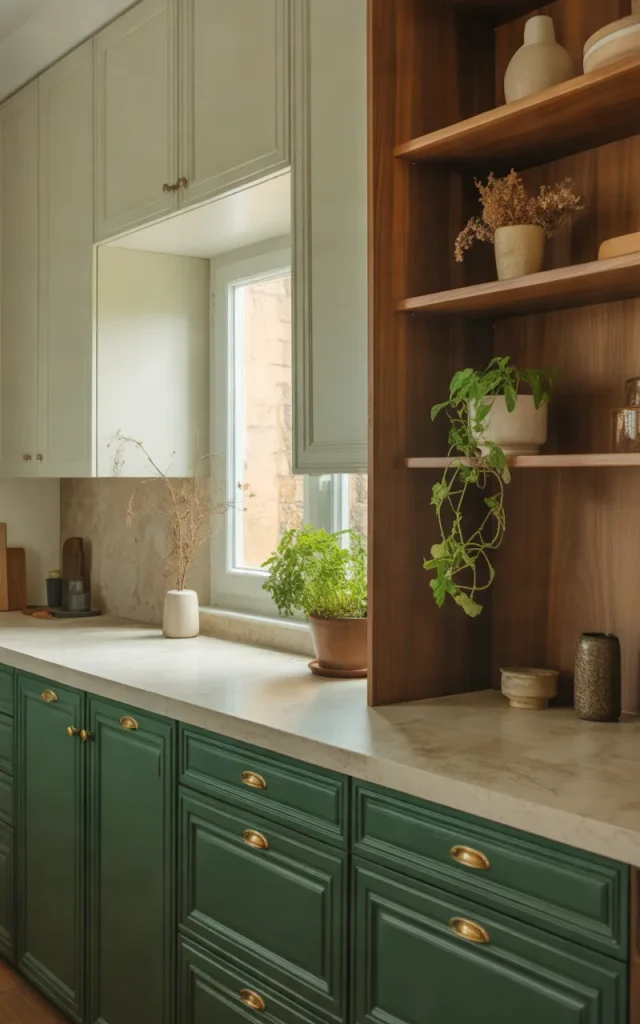
Deep green cabinets are perfect when you want your kitchen to feel rich, inviting, and a little different from the usual neutral interiors.
I love forest green, olive, and muted sage because each creates a distinct mood. Forest green feels dramatic, olive has an earthy character, and sage looks softer and more relaxed. Pair your chosen shade with creamy countertops, warm wood shelves, or brushed brass handles.
If you’re nervous about committing to a bold color, paint only the lower cabinets green and leave the upper cabinets white or cream. This creates contrast without making the entire kitchen feel dark.
A Micro-tip:
Test paint samples in both morning and evening light before choosing your final shade. Green can look surprisingly different throughout the day.
Add Glass-Front Kitchen Cabinet Doors
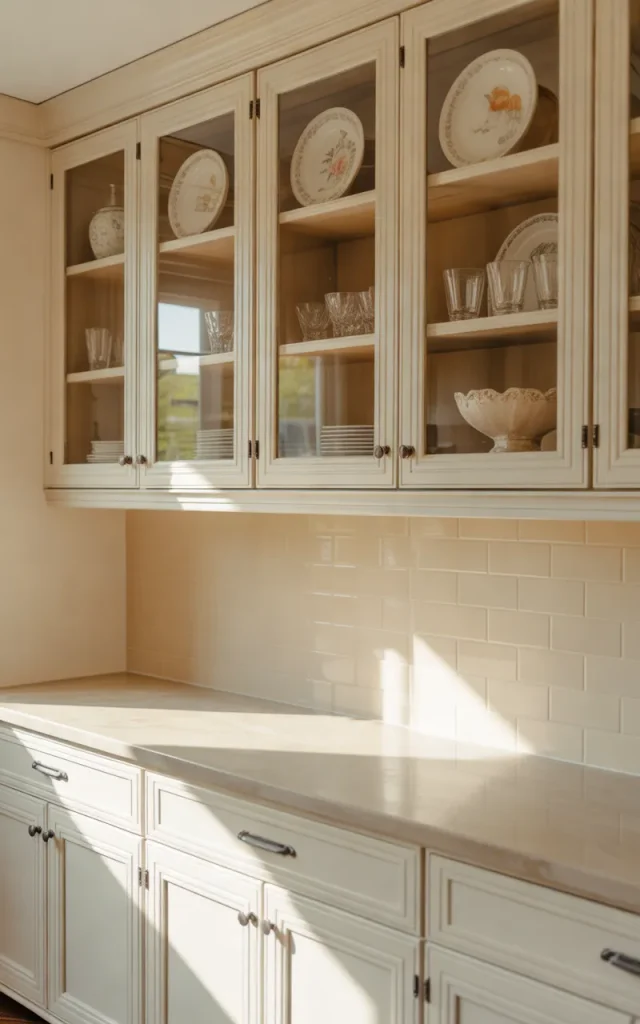
Glass-front cabinets are a lovely way to break up a long stretch of solid cabinetry. They make the kitchen feel lighter while giving you an opportunity to display attractive dishes, glassware, and decorative pieces.
I’d use them selectively rather than replacing every cabinet door. A few glass panels beside a range hood or above a serving counter can create a focal point without exposing all your storage.
Clear glass works well when you enjoy an organized display. Reeded or frosted glass offers a little privacy while still allowing light to pass through. This is especially useful if your everyday dishes aren’t perfectly coordinated.
Why it works?

The transparent surfaces create visual depth, making a row of cabinets feel less heavy.
Pair Two Cabinet Colors Together
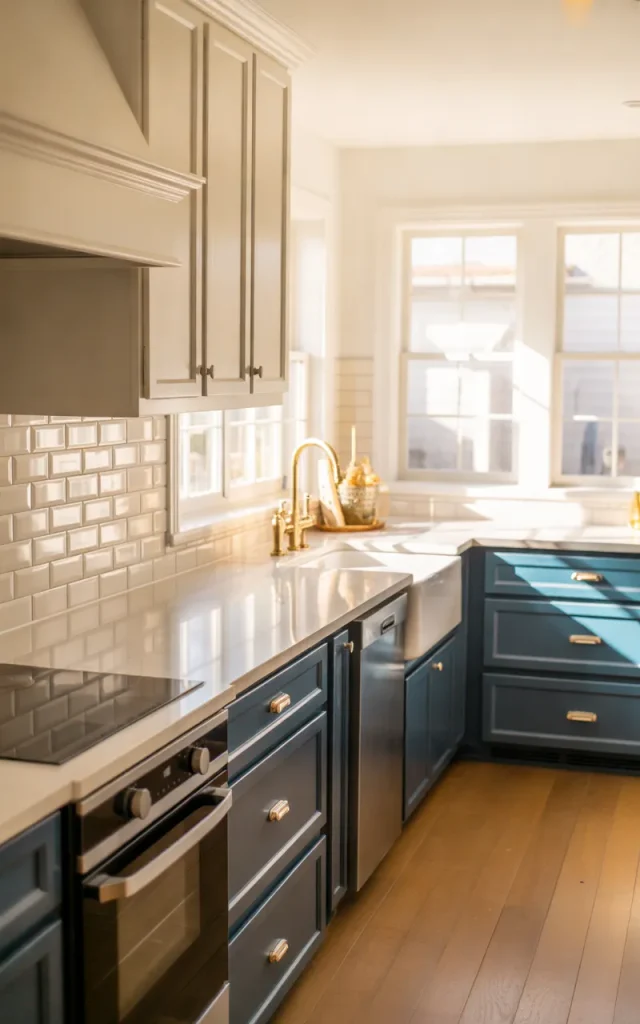
Who says every kitchen cabinet has to be the same color? Two-tone cabinetry is one of my favorite ways to introduce personality without making the design feel chaotic.
Try white upper cabinets with navy lower cabinets, cream uppers with olive lowers, or natural wood cabinets paired with warm gray. The lighter upper section helps maintain an open feeling, while the darker lower section adds depth.
If you have a kitchen island, you can use it as the second color instead. Imagine warm white cabinets surrounding a deep blue island. It’s subtle, but the island immediately becomes a design feature.
Pro-tip:
Choose colors that share a compatible undertone. Even contrasting shades look more intentional when their warmth or coolness works together.
Replace Standard Handles With Brass Hardware
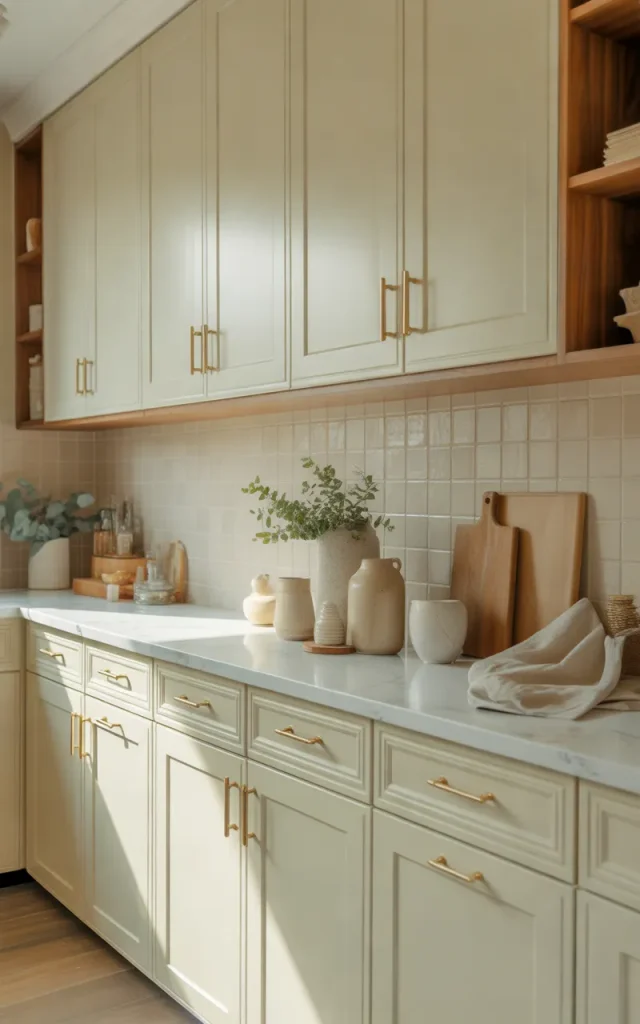
Sometimes, the smallest change makes the biggest difference. Replacing basic cabinet handles with brushed brass hardware can make an ordinary kitchen feel considerably more polished.
Brass looks beautiful against white, dark green, navy, charcoal, and natural wood cabinets. You can choose slim bar pulls for a modern appearance or rounded knobs for something more traditional.
I recommend keeping the hardware finish consistent across most cabinets, drawers, and pantry doors. You can mix shapes, but too many different metal finishes may make the kitchen feel disconnected.
Instant Gratification Tip:

If your existing handles use the same hole spacing as your new ones, you may be able to replace them without drilling new holes or repairing the cabinet fronts.
Create a Cozy Farmhouse Kitchen With Shaker Cabinets
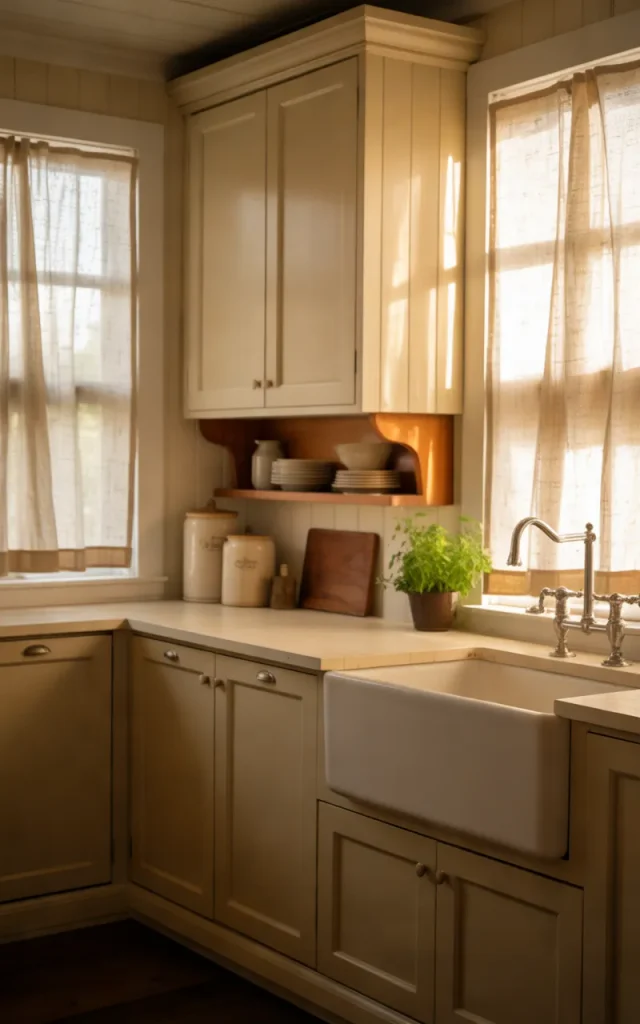
Shaker cabinets have a simple framed design that feels traditional without being overly decorative. That’s why I keep coming back to them when designing kitchens that need to feel welcoming and timeless.
White Shaker cabinets are a classic choice, but you can also explore cream, pale sage, dusty blue, or warm gray. Pair them with a farmhouse sink, natural wood accents, and understated metal hardware for a relaxed country-inspired atmosphere.
If you prefer something more contemporary, choose narrow-frame Shaker doors and simpler handles. The familiar panel detail remains, but the overall appearance feels lighter.
Who this is for:
Homeowners who want a versatile cabinet style that can evolve as their tastes change.
Choose Matte Black Kitchen Cabinets
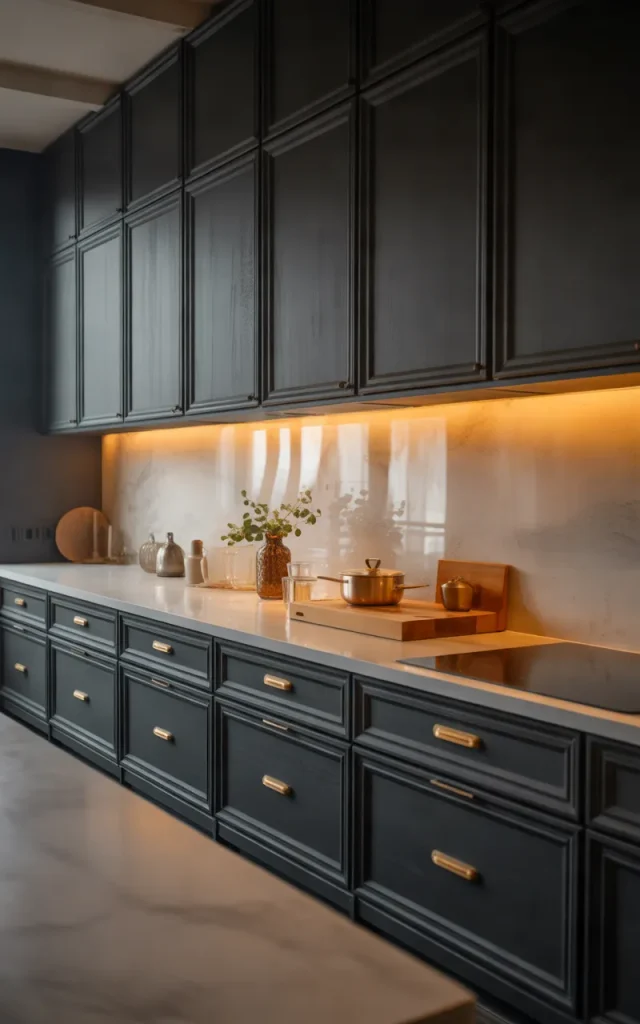
Matte black cabinets create a dramatic, contemporary look that feels sophisticated without needing lots of decoration.
I love them paired with warm wood countertops, creamy stone, brushed brass hardware, or a pale backsplash. These lighter materials prevent the dark cabinetry from swallowing the entire room. If your kitchen receives plenty of natural light, black cabinets can look particularly striking.
For smaller or darker kitchens, consider using black only on the lower cabinets or island. This gives you the bold effect without sacrificing too much brightness.
One rule to remember:

Balance dark cabinetry with lighter surfaces and thoughtful lighting.

Under-cabinet lights are especially useful because they illuminate worktops while highlighting the cabinet finish. 🖤
Add Fluted Details to Your Kitchen Cabinets
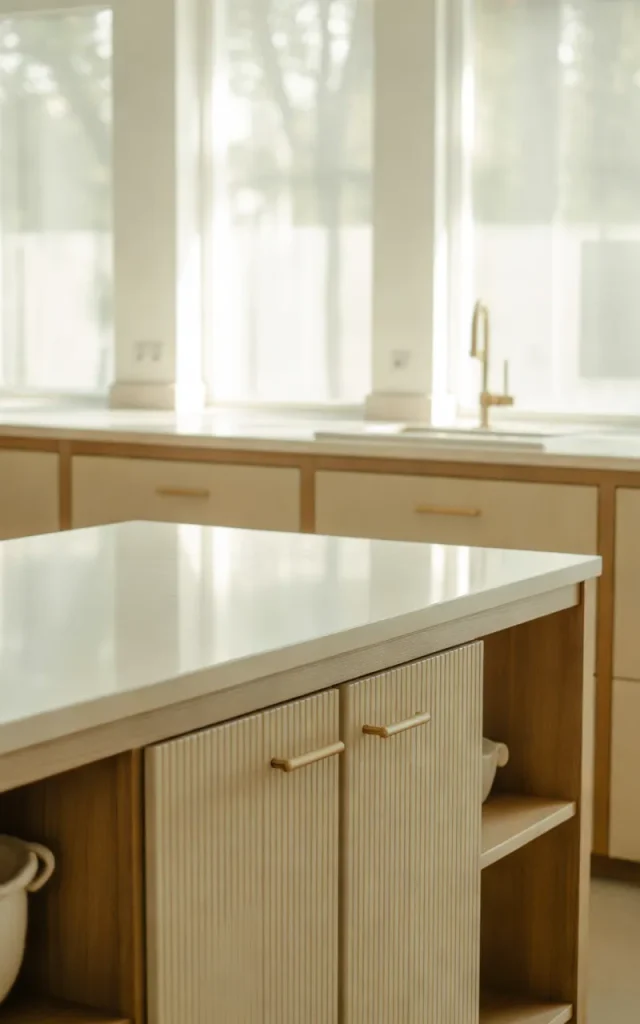
Fluted cabinet fronts introduce subtle texture through narrow, repeated grooves. They’re a wonderful option if you want your kitchen to feel more custom-designed without relying on bold colors or elaborate ornamentation.
I especially like fluted details on a kitchen island, a breakfast bar, or a small section of cabinetry beneath a countertop overhang. Using the treatment selectively helps it stand out without overwhelming the room.
You can choose painted fluted panels for a modern finish or natural wood for a warmer, more tactile appearance. Pair them with smooth countertops so the contrasting textures remain easy to appreciate.
Trend Alert:
Textured cabinetry adds depth to minimalist interiors, where color palettes are often deliberately restrained.
Incorporate Open Shelving Between Cabinets
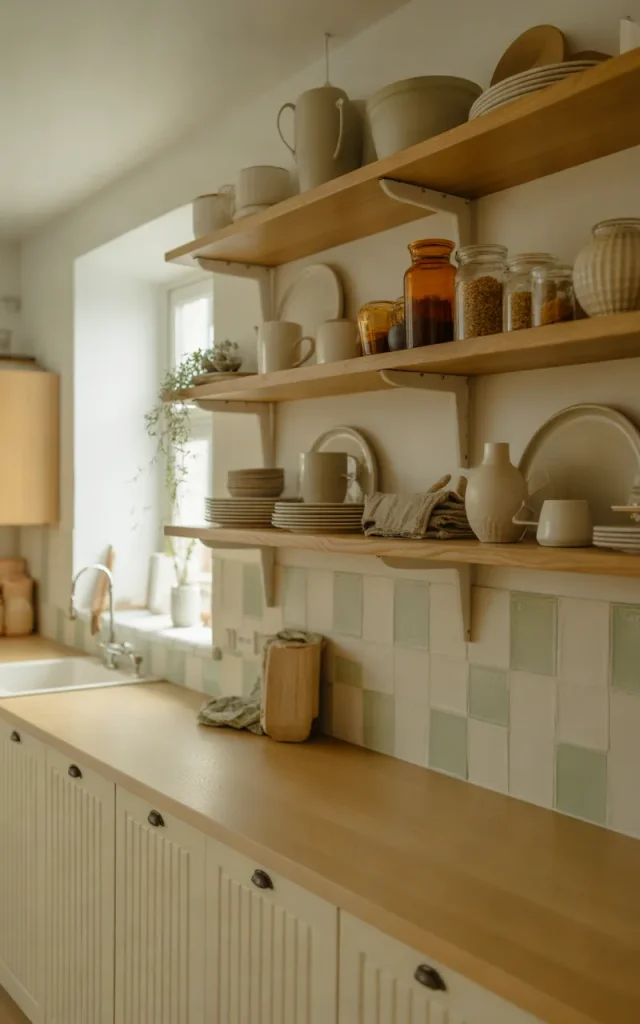
Open shelving can make a kitchen feel more relaxed and less dominated by cabinet doors. It also gives you a convenient place to store everyday plates, mugs, and attractive serving pieces.
I’d use open shelves between two sections of closed cabinetry rather than removing every upper cabinet. This approach maintains useful storage while creating a lighter visual break.
Natural wood shelves are particularly attractive against white or cream cabinets. For a more contemporary kitchen, try slim metal shelving or shelves painted to match the surrounding walls.
Checklist for Styling Open Shelves
- Choose dishes you use regularly.
- Leave some empty space between displayed objects.
- Group items by color or material.
- Keep heavy cookware on sturdy, properly anchored shelves.
Remember that open shelves collect dust and cooking residue more readily than closed cabinets. Store frequently used items there and reserve enclosed cupboards for anything that needs extra protection.
Use Navy Blue Cabinets for a Rich, Timeless Finish
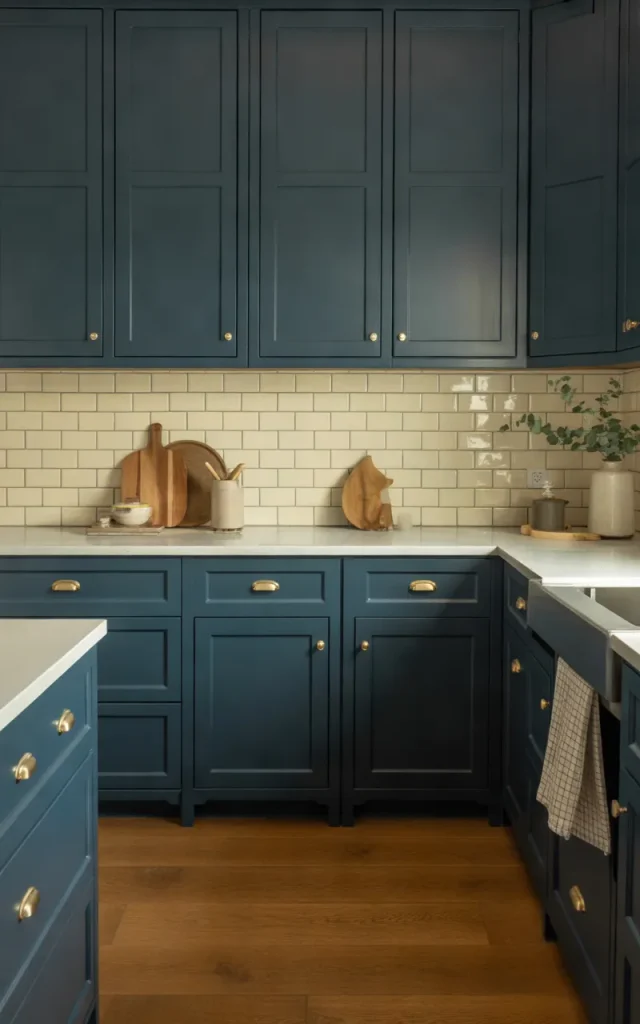
Navy blue cabinets offer a wonderful middle ground between traditional neutrals and dramatic black cabinetry. They’re bold enough to create character but versatile enough to work with many countertop and flooring choices.
I particularly like navy paired with white quartz, warm oak flooring, and brushed brass or polished nickel hardware. The combination feels classic without becoming predictable.
If a fully navy kitchen feels too intense, introduce the color through the lower cabinets or island. Keep the upper cabinets white or warm cream to preserve a sense of openness.
How to steal this look
- Choose a navy shade with a subtle gray undertone for a softer appearance.
- Add warm metallic hardware.
- Use a light backsplash to create contrast.
- Repeat navy in one or two small accessories for a connected look.
Good lighting matters here, too. Navy can appear almost black in poorly lit spaces, so test your paint sample before making a final decision.
Mix Walnut Cabinets With Cream Finishes
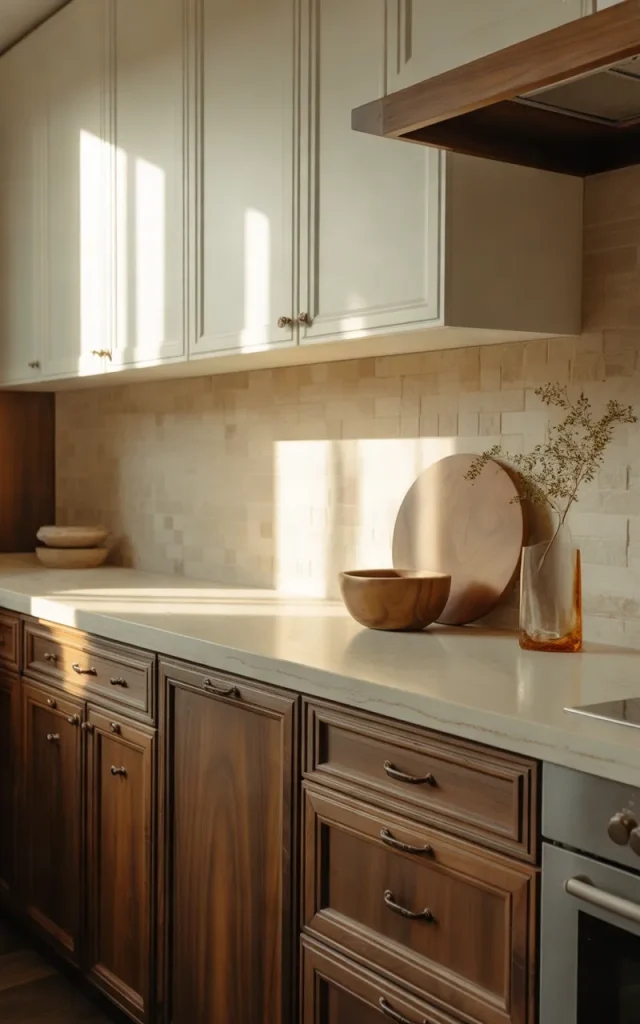
Walnut cabinetry has a depth and natural grain that make it feel luxurious, especially when paired with soft cream surfaces. This combination is ideal if you want warmth without creating a rustic or overly traditional kitchen.
Try walnut lower cabinets with cream upper cabinets, or use walnut throughout and introduce cream through the backsplash, walls, and countertops. I prefer a natural or lightly oiled finish that allows the wood’s character to remain visible.
Keep the surrounding finishes relatively simple. A busy backsplash, strongly patterned flooring, and heavily grained wood can compete for attention.
Why designers do this:

Darker wood grounds the kitchen, while cream softens the overall appearance and helps the room feel welcoming.
Replace Some Solid Doors With Reeded Glass
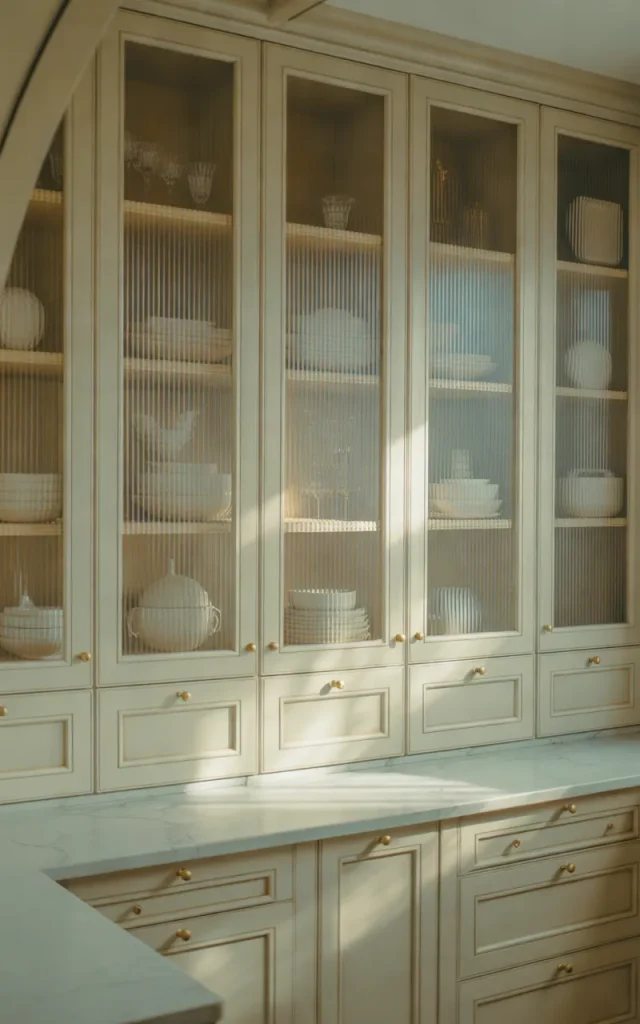
Reeded glass offers a beautiful alternative to ordinary clear cabinet glass. Its narrow vertical ridges distort what’s behind the doors slightly, allowing you to create a display without showing every detail.
I love this finish for cabinets holding glassware, decorative bowls, or serving dishes. It works particularly well in kitchens that combine modern cabinetry with vintage-inspired details.
Use reeded glass in a small section of upper cabinets, perhaps near a coffee station or dining area. Backlighting can make the glass especially attractive, although subtle internal lighting usually feels more refined than an overly bright display.
Colour swap suggestion
| Cabinet color | Overall effect |
| Warm white | Airy and timeless |
| Sage green | Soft and organic |
| Walnut brown | Rich and sophisticated |
| Charcoal gray | Modern and dramatic |
Choose the glass texture and cabinet color together. The combination should complement your kitchen rather than feel like two unrelated design decisions.
Choose Warm Beige Cabinets for a Softer Kitchen
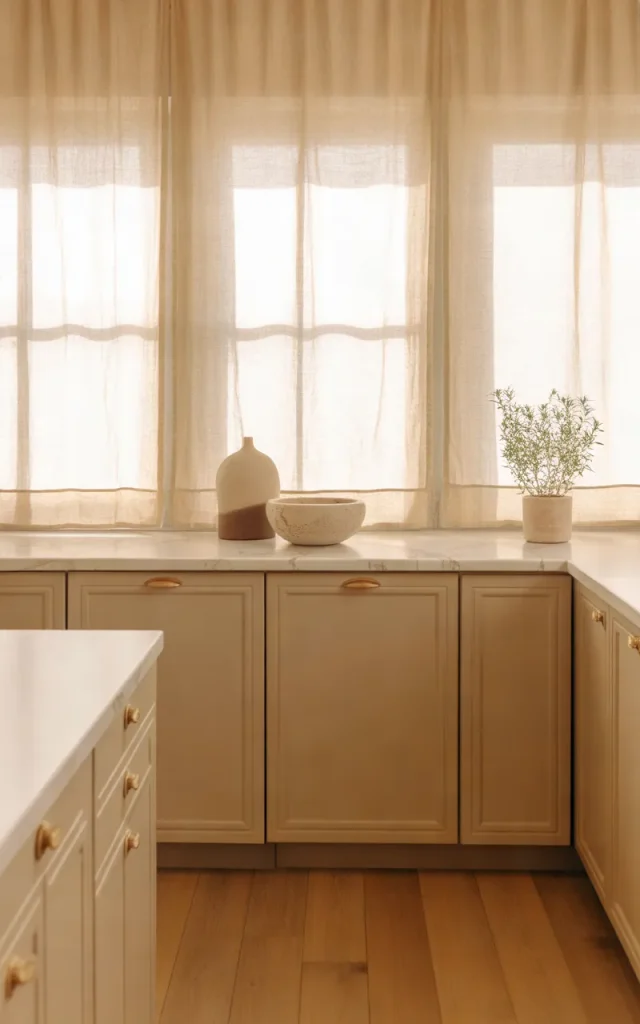
White isn’t the only way to create a light, neutral kitchen. Warm beige cabinets offer a softer alternative that feels comfortable, understated, and easy to decorate around.
Look for shades such as oatmeal, sand, mushroom, or creamy taupe. These colors work particularly well with natural wood, warm white countertops, textured backsplashes, and aged brass hardware.
I especially like beige cabinets in homes where the kitchen connects directly to a living or dining area. The muted palette helps the spaces feel connected rather than sharply divided.
Vibe check
- Want a calm, natural look? Pair beige with oak.
- Prefer a polished appearance? Add creamy stone and brass.
- Love contemporary interiors? Combine mushroom cabinets with charcoal accents.
- Want a cozy atmosphere? Introduce linen-colored walls and warm lighting.
The important thing is to choose a beige that complements your lighting and flooring. Some shades lean pink, others yellow or gray, and those differences become noticeable across an entire wall of cabinetry.
Create a Statement With a Contrasting Kitchen Island
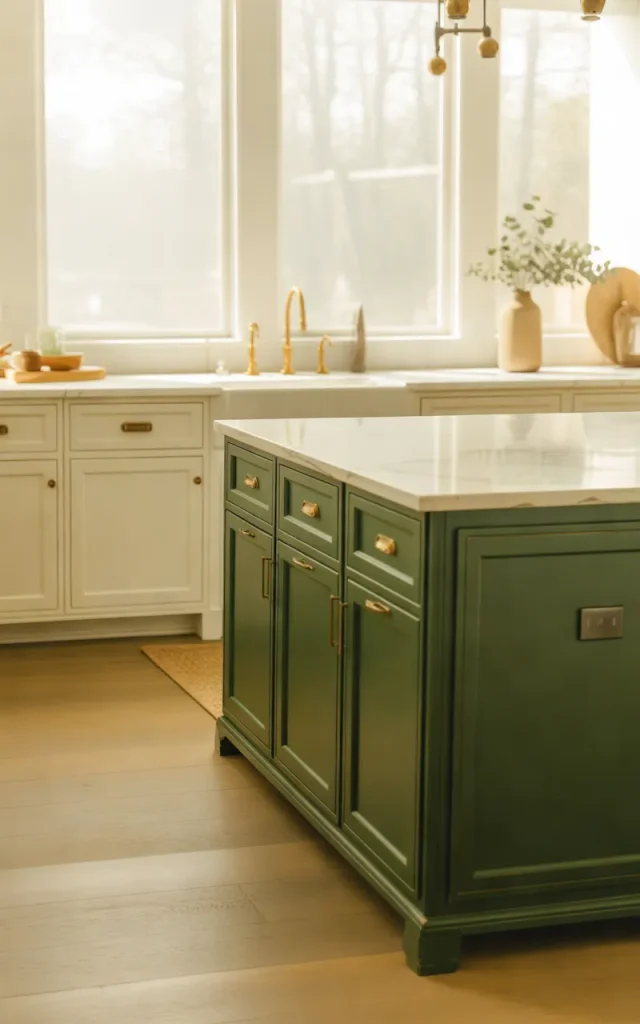
Your kitchen island doesn’t have to match every cabinet surrounding it. In fact, giving it a different finish can make the entire room feel more thoughtfully designed.
Imagine white perimeter cabinets with a forest green island, or pale oak cabinets surrounding a charcoal centerpiece. A contrasting island can also help define the kitchen in an open-plan layout.
I would choose the island color after deciding on the main cabinetry and countertop. This allows the contrast to feel intentional rather than introducing another competing color.
Upgrade for under $200:
If your island already has a suitable painted surface, a DIY repaint may fit within this budget, depending on its size, paint quality, preparation needs, and local prices.
Add Decorative Crown Molding Above Cabinets
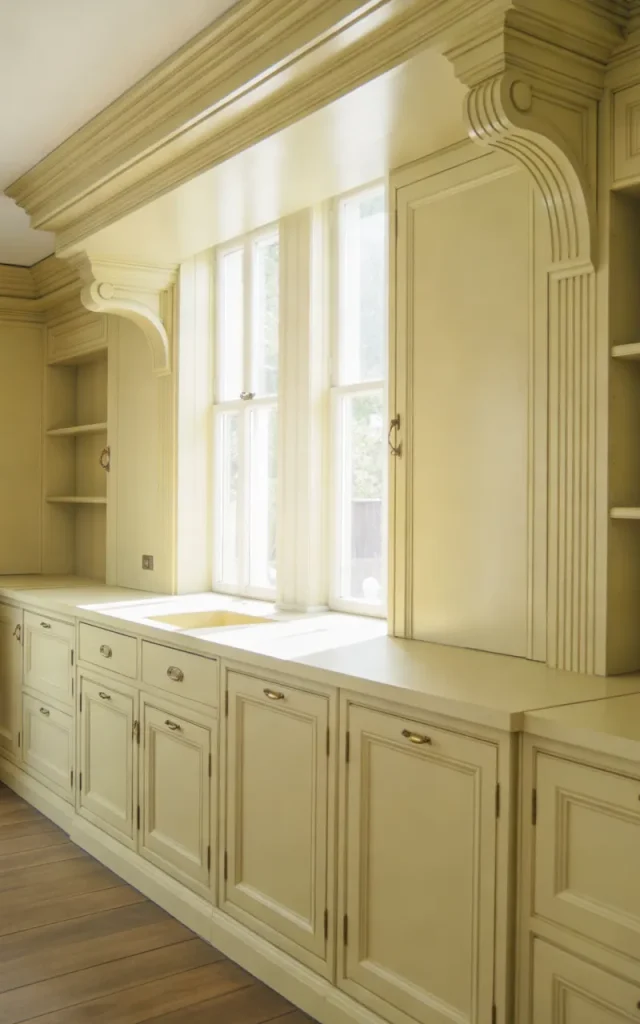
Crown molding can make kitchen cabinets feel more architectural and complete. It’s particularly effective in traditional, transitional, and farmhouse-inspired kitchens where a little extra detailing enhances the overall design.
You can choose simple molding for a restrained look or a more decorative profile for a classic interior. Painting it to match the cabinets creates a seamless appearance, while a contrasting finish makes the trim more noticeable.
I would also consider the ceiling height. Large, elaborate molding may look beautiful in a spacious kitchen but can feel heavy in a room with low ceilings.
What most people get wrong

They choose the molding before considering the cabinet proportions. The trim should complement the cabinetry, not look like an oversized afterthought.
Combine Dark Green Cabinets With Natural Wood
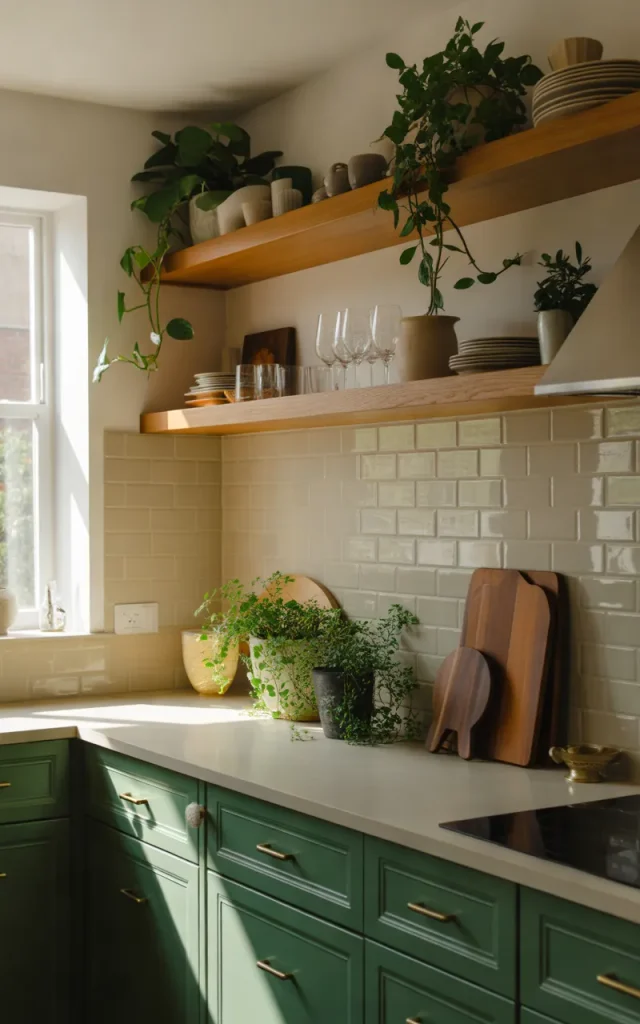
For a kitchen that feels earthy, sophisticated, and welcoming, try pairing dark green cabinets with natural wood. This combination brings together the depth of a rich color and the warmth of an organic material.
Forest green works beautifully with oak shelves, walnut accents, or a wooden breakfast bar. You can introduce the wood through the cabinet fronts themselves, or keep the cabinets painted and use wood for open shelving and countertop details.
I’d balance the darker surfaces with a pale backsplash and adequate task lighting. Cream stone or warm white walls can keep the overall design from feeling too heavy.
Layer it like this
- Start with deep green cabinetry.
- Add natural oak or walnut accents.
- Introduce a light-colored backsplash.
- Finish with brass hardware or understated black fittings.
- Bring in a small plant or two for extra freshness.
This look is especially appealing if you love nature-inspired interiors but want something more distinctive than an all-white kitchen.
One practical detail: wood near sinks and cooking areas needs an appropriate protective finish. Choose materials and treatments suited to the moisture and heat they’ll encounter.
Give Your Kitchen a Vintage Look With Inset Cabinets
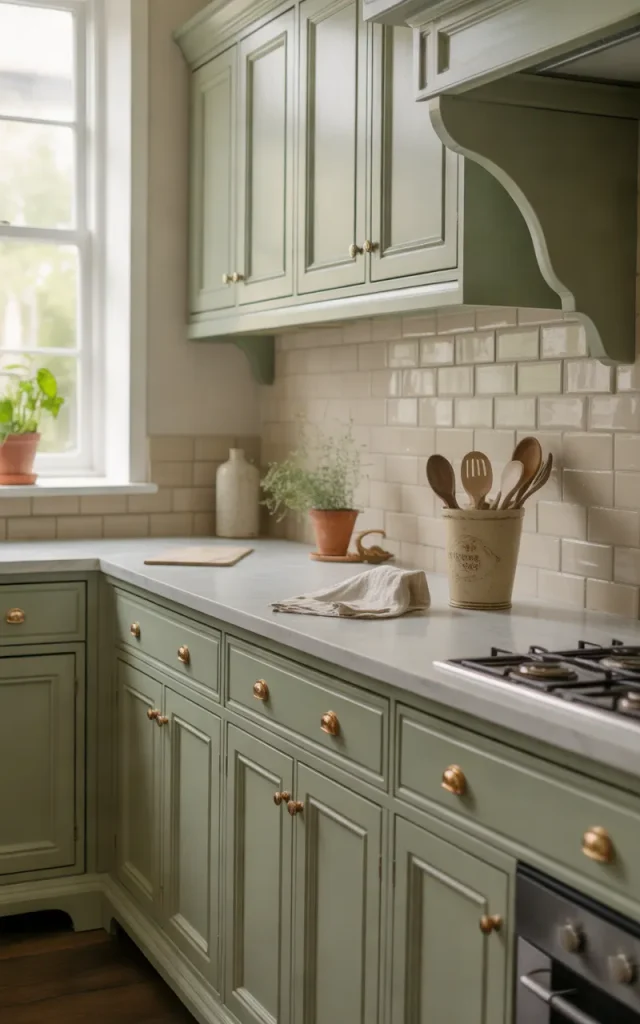
Inset cabinets have doors and drawer fronts that sit within the cabinet frame rather than overlapping it. The result is a precise, furniture-like appearance that feels especially beautiful in traditional and transitional kitchens.
I love inset cabinetry in muted colors such as cream, sage, dusty blue, and warm gray. Pair it with classic knobs, stone countertops, and a simple backsplash to emphasize the craftsmanship.
Because the doors sit inside the frame, accurate installation is essential. Gaps need to be consistent, and the cabinet structure must be carefully aligned.
Who this is for:
Homeowners who appreciate traditional detailing and want their cabinetry to feel custom-made.
Keep in mind that inset cabinets can cost more than standard overlay options. They also need careful adjustment in environments where humidity changes significantly, because wood movement can affect the clearances.
Choose Two-Tone Cabinets With a Wood Island
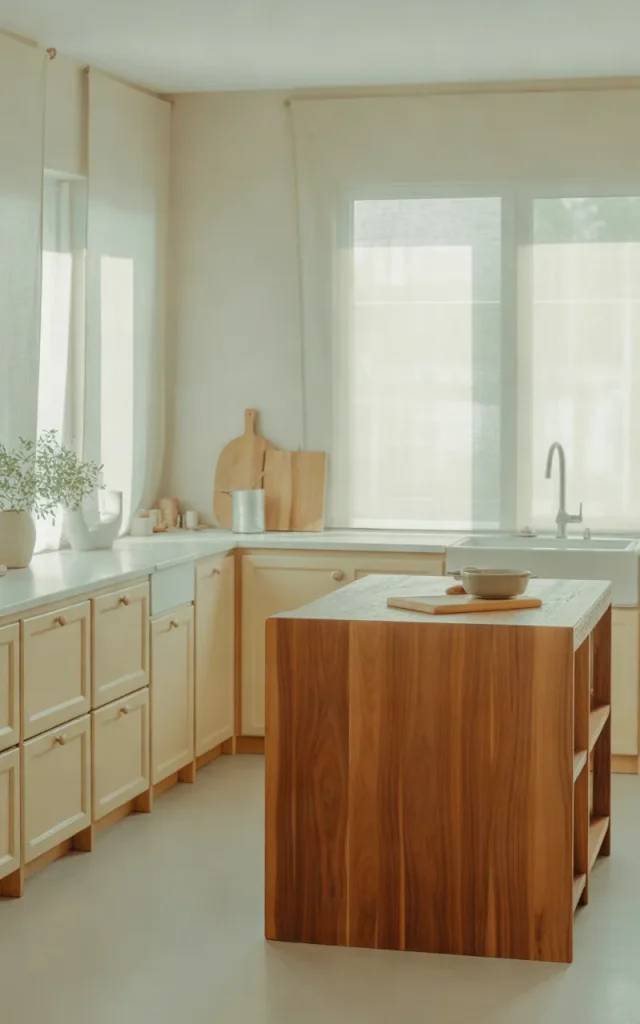
If you love two-tone cabinetry but want something warmer than a simple painted contrast, introduce natural wood through the island.
For example, pair creamy perimeter cabinets with a walnut island, or use pale gray cabinets around a white oak centerpiece. The wood adds texture and gives the room a focal point without requiring another bold paint color.
I find this approach particularly effective in kitchens that feel slightly cold because of stone countertops, stainless steel appliances, or large expanses of white. The wood softens those surfaces and creates a more balanced atmosphere.
Colour swap suggestion
| Main cabinets | Wood island |
| Soft white | Natural oak |
| Sage green | Light ash |
| Charcoal gray | Warm walnut |
| Cream | Smoked oak |
Try to coordinate the island wood with at least one other element, such as the flooring, bar stools, or open shelves. The finishes don’t need to match perfectly; they simply need to look as though they belong in the same room.
For busy kitchens, choose a durable island countertop that suits your cooking habits. The wood finish itself should also be protected against spills and frequent cleaning.
Refresh Old Cabinets With a Two-Tone Paint Makeover
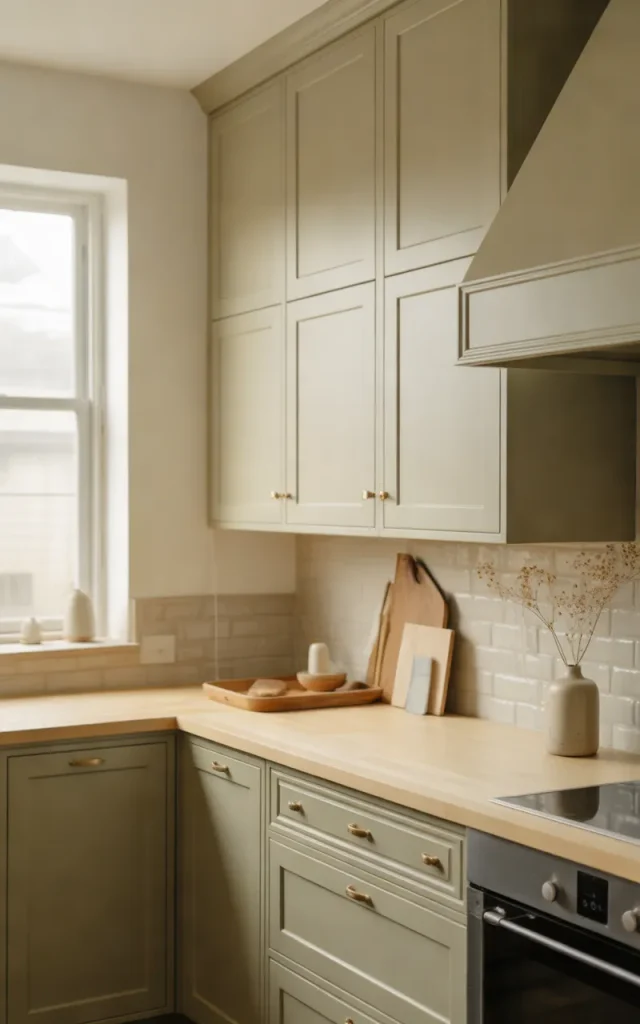
You don’t always need new cabinetry to get a kitchen that looks fresh. If your existing cabinet boxes and doors are in good condition, repainting them can be a practical way to transform the room.
I’d start by choosing one primary color and one complementary accent. Soft white with sage, beige with charcoal, and cream with muted blue are all lovely combinations.
You might paint the upper cabinets a lighter shade and the lower cabinets a darker one. Another option is to keep the perimeter cabinets neutral and paint only the island.
Step-by-step instructions
- Remove the doors, drawers, and hardware.
- Clean away grease and residue.
- Sand or prepare the surfaces according to the paint system.
- Apply a suitable primer when required.
- Add the recommended coats of cabinet paint.
- Allow the finish to cure before reinstalling the doors and using the cabinets heavily.
The preparation matters more than many people expect. Paint applied over grease or a poorly prepared glossy surface may peel or chip prematurely.
Install Glass Display Cabinets With Interior Lighting
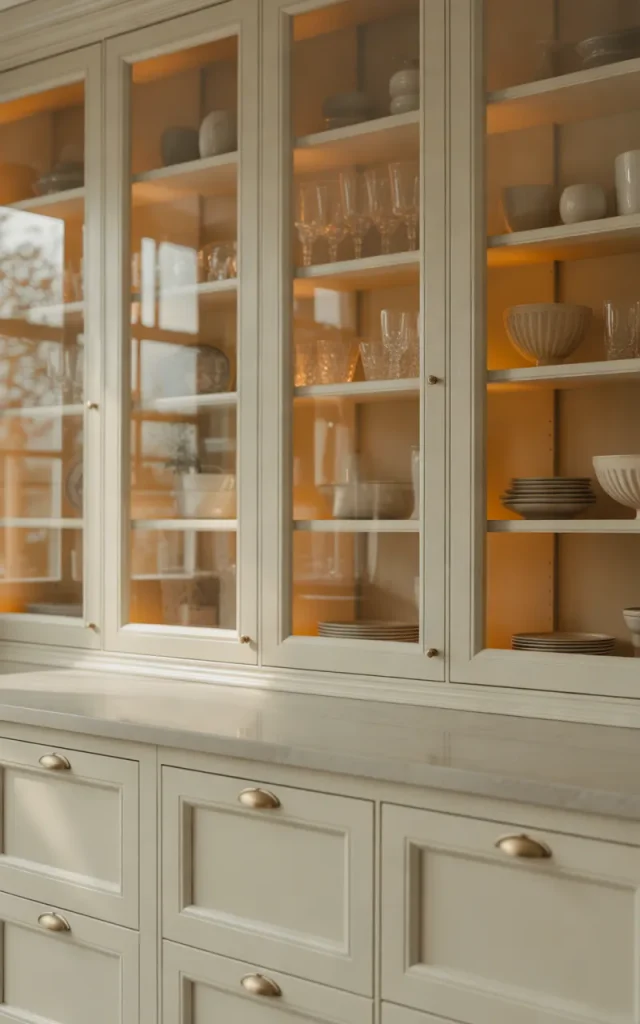
If you have beautiful glassware, ceramics, or serving dishes, consider turning a section of your cabinetry into a softly illuminated display.
Glass-front cabinets with integrated lighting create depth, especially in the evening. They can also make a kitchen feel more refined without requiring decorative objects on every countertop.
I prefer warm or neutral-white lighting rather than harsh, cool lighting. It creates a comfortable atmosphere and generally complements wood, cream, green, and brass finishes beautifully.
Place your display cabinets where the lighting will enhance the room without creating distracting glare. A section near a dining area or coffee station can work particularly well.
A Micro-tip:
Choose lighting designed for enclosed cabinetry and follow the manufacturer’s guidance for installation, ventilation, and electrical safety.
Choose Soft Blue Cabinets for a Fresh, Airy Kitchen
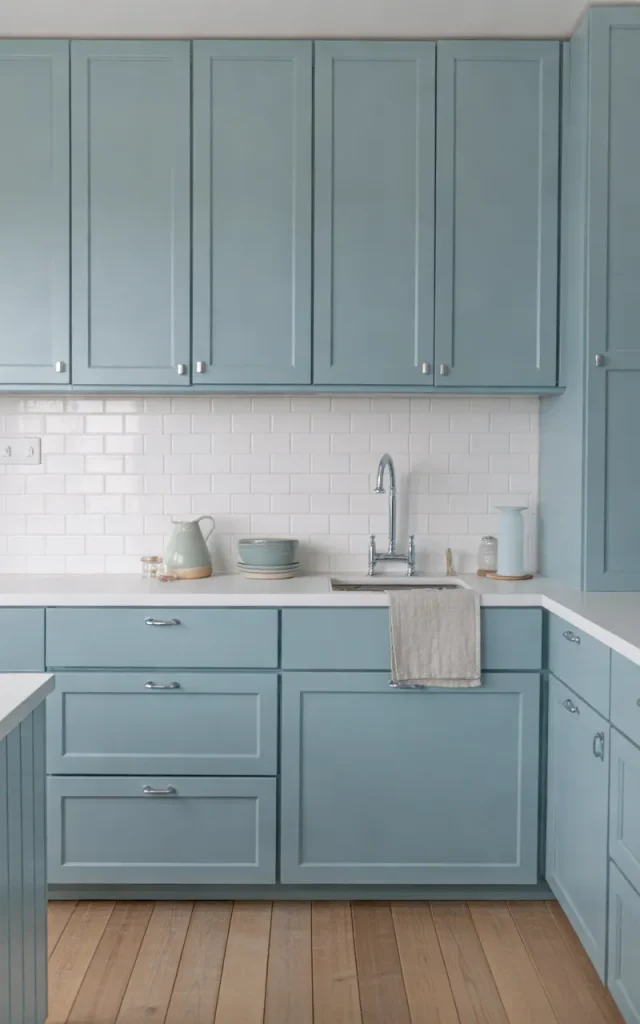
Soft blue cabinets bring a gentle touch of color into the kitchen without overwhelming the space. They’re a lovely alternative to white if you want something distinctive but still easy to live with.
Look at dusty blue, pale denim, muted blue-gray, or a soft coastal shade. Pair these colors with white countertops, natural wood flooring, and nickel or brushed brass hardware.
I particularly like soft blue in kitchens with plenty of daylight. The color feels fresh and relaxed, and it works well with simple Shaker doors or contemporary flat-panel cabinetry.
Style match guide
| Kitchen style | Suggested blue |
| Coastal | Pale sky blue |
| Modern | Blue-gray |
| Traditional | Dusty blue |
| Cottage | Muted cornflower blue |
If you’re using blue on all the cabinets, keep the backsplash and countertops relatively calm. Too many competing colors can make the kitchen feel busy.
For a smaller commitment, paint the island blue and leave the surrounding cabinetry white. This introduces color while keeping the overall room light and versatile.
Add a Dedicated Coffee Station With Matching Cabinets
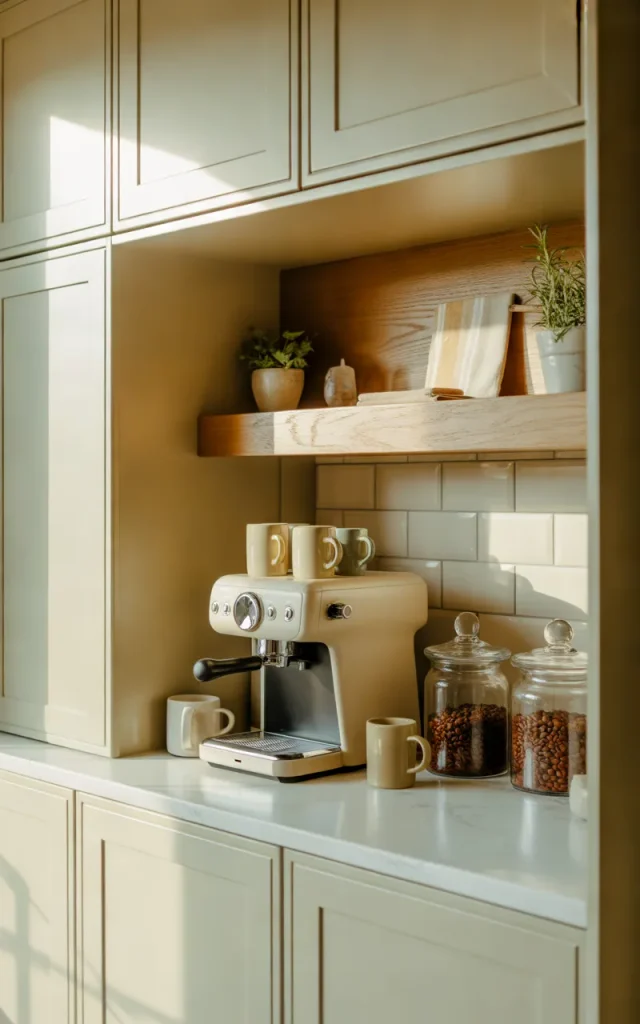
A built-in coffee station can make your kitchen feel more organized while giving a frequently used corner its own purpose.
Start with a section of countertop that can accommodate your coffee machine, mugs, and everyday supplies. Add drawers for accessories and upper cabinets or shelves for cups, beans, and tea.
I love using the same cabinet finish as the rest of the kitchen for a seamless appearance. If you’d prefer a little contrast, a wood shelf, a tiled backsplash, or a darker cabinet interior can create a subtle feature.
Works best in:
Kitchens with an underused counter corner, a spare stretch of wall, or an area near the breakfast table.
Think about the practical details before choosing the design. You’ll need convenient electrical outlets, enough clearance for the coffee machine, and room to refill water or remove components for cleaning.
Mix Open and Closed Cabinets for Flexible Storage
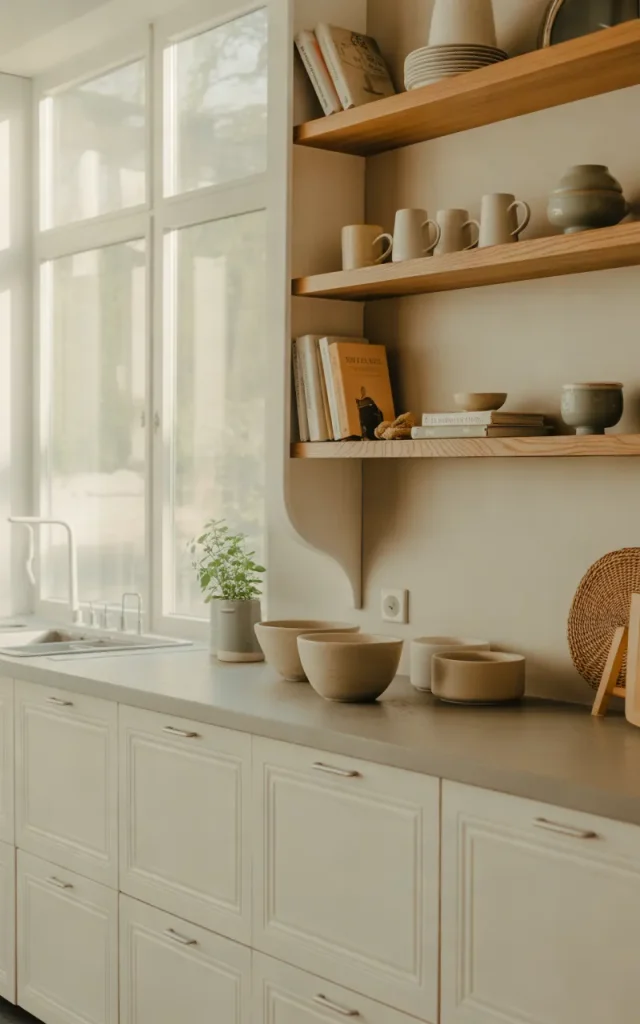
My final idea brings together two approaches we’ve already explored: attractive open shelving and practical enclosed storage.
Rather than choosing between the two, combine them. Keep dishes, food supplies, and less decorative kitchen essentials behind closed doors, while reserving open shelves for attractive bowls, cookbooks, mugs, and a few decorative accents.
This combination works with almost any cabinet style. White cabinets with oak shelves feel Scandinavian, green cabinets with walnut shelves feel earthy, and flat-panel cabinets with slim metal shelving create a more industrial look.
Decision Fatigue? Here’s a simple way to plan the layout:
- Put everyday dishes close to the dishwasher.
- Store cooking equipment near the stove.
- Keep food and pantry supplies together.
- Place decorative objects on shelves that are easy to maintain.
- Leave enough uninterrupted counter space for meal preparation.
The balance is important. Too many open shelves can make the kitchen feel cluttered, while too many solid cabinet fronts can create a heavy, repetitive appearance.
I recommend starting with one open-shelf section and living with it for a while before adding more. You’ll discover what you genuinely enjoy displaying and what you’d rather keep tucked away.
Final Thoughts
The best kitchen cabinet ideas aren’t necessarily the most expensive or the most dramatic. They’re the ones that suit your home, support your everyday routine, and make you happy to spend time in your kitchen.
You could start small with new brass hardware, experiment with a fresh paint color, or invest in pull-out storage that makes cooking easier. If you’re planning a larger renovation, think carefully about cabinet materials, lighting, storage needs, and the way your kitchen connects to the rest of your home.
My advice? Choose one idea that genuinely excites you and build from there. A thoughtful change, even a small one, can make your kitchen feel more personal, functional, and beautiful. 🏡
