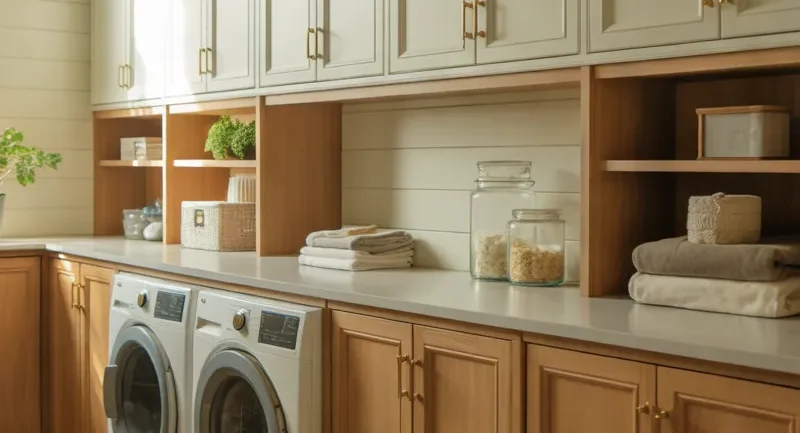
Your laundry room might not be the biggest room in your home, but keeping it organized can make everyday chores feel so much easier. A few smart changes can turn a cluttered corner into a functional, welcoming space where everything has its place. ✨
And no, you don’t need a huge laundry room, expensive cabinetry, or a complete renovation to make it happen. Sometimes, adding a few baskets, using vertical storage, or rethinking where you keep your detergents is enough to make a noticeable difference.
I’ve gathered 19 practical laundry room organization ideas that balance everyday convenience with beautiful design. Whether you’re working with a tiny laundry closet or a spacious utility room, you’ll find plenty of inspiration to create a space that works for you. 🧺
Install Floating Shelves Above Your Washing Machine
Why it works?
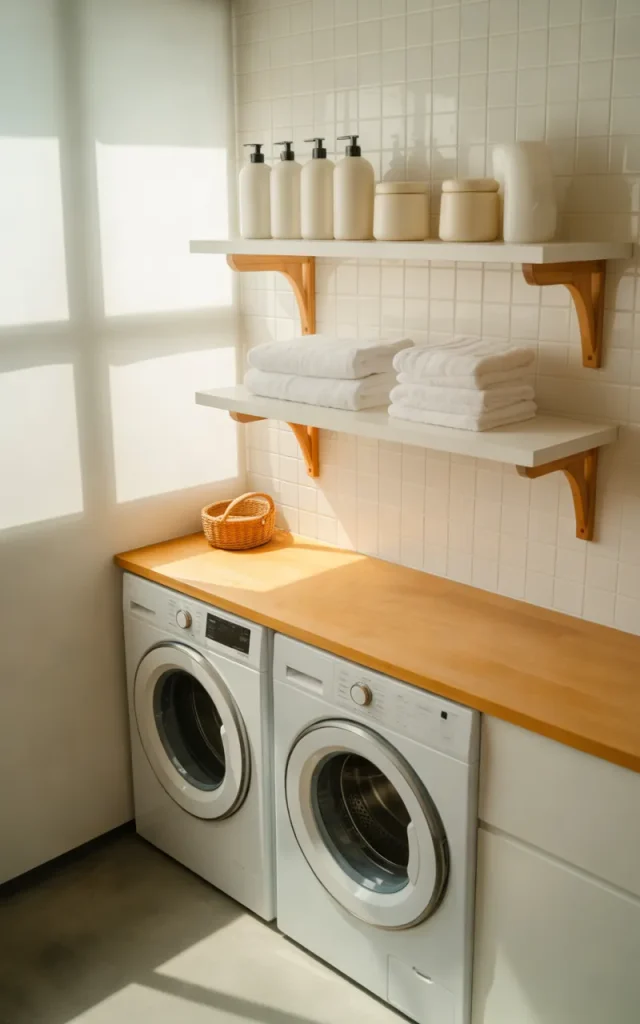
If you’re looking for a simple way to organize your laundry room without taking up valuable floor space, I’d start with floating shelves. The wall above your washing machine and dryer is often underused, making it the perfect spot for storing detergent, fabric softener, stain removers, and laundry essentials.
Choose white shelves for a clean, seamless appearance or natural wood shelves to introduce warmth. I especially love the look of two or three shelves arranged vertically, with everyday products on the lowest shelf for easy access.
Keep your most frequently used items within reach and reserve the upper shelves for extras. This small change can make your laundry routine feel much more organized.
Quick Tip: Use matching containers for powdered detergent and laundry pods to create a tidy, coordinated look.
Arrange Laundry Supplies in Matching Storage Baskets
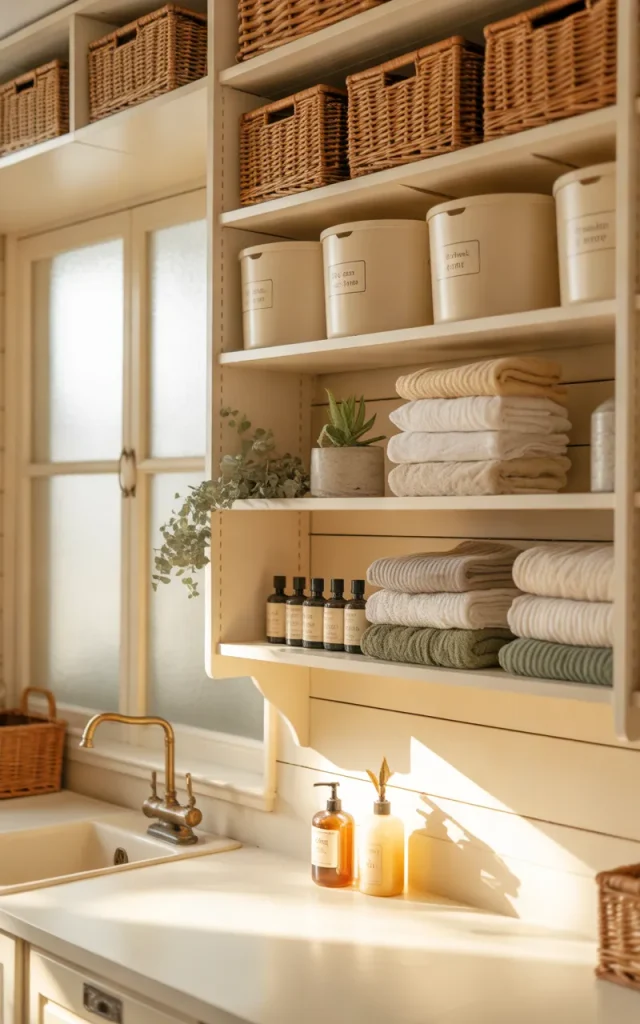
One of my favorite laundry room organization ideas is to use matching baskets to group similar products together. It’s a small detail, but it instantly makes open shelves look less cluttered.
Choose woven baskets for a warm, natural feel, or go with white plastic bins for a practical, easy-to-clean solution. You can dedicate separate baskets to cleaning supplies, stain treatments, spare clothespins, and miscellaneous laundry accessories.
Labels make everything even easier. Instead of digging through several containers whenever you need something, you’ll know exactly where to look.
A Micro-tip: Choose baskets with handles if you regularly move supplies between shelves or carry them to other rooms. Function matters just as much as appearance!
Add a Slim Rolling Cart Between Your Appliances
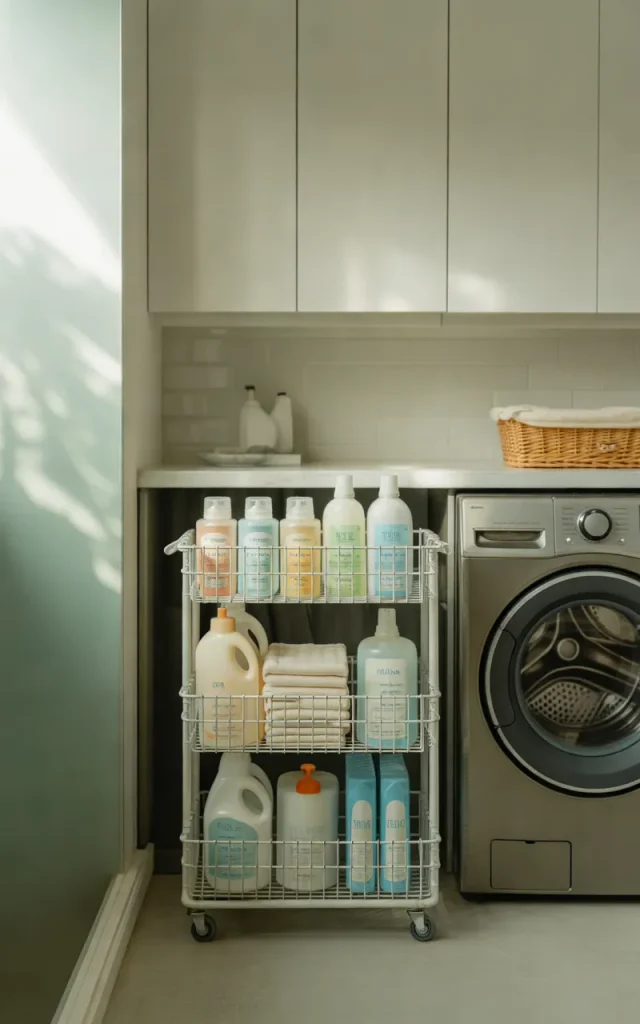
That narrow gap between your washer and dryer might seem useless, but it could be valuable storage space. A slim rolling cart can slide into the gap and hold products that would otherwise crowd your shelves.
Look for a three-tier cart with a sturdy frame and raised edges to help keep bottles secure. Use the top tier for detergent and stain removers, the middle for dryer sheets and cleaning cloths, and the bottom for refill bottles.
I recommend measuring the gap carefully before buying one. Leave enough room for the appliances to operate safely, and don’t block vents or access panels.
Small Space Hack: If your laundry area is part of a bathroom or hallway, a rolling cart can also hold spare towels and other household essentials.
Mount a Fold-Down Drying Rack on the Wall
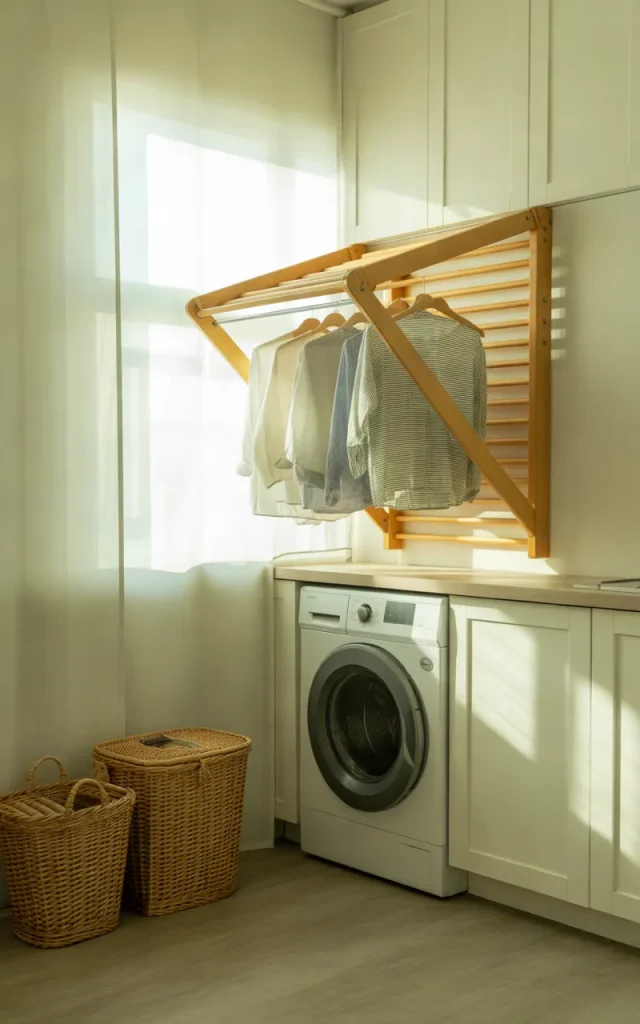
A traditional drying rack can occupy a surprising amount of floor space, especially in a small laundry room. A wall-mounted fold-down rack offers a clever alternative because it opens when needed and folds away when you’re finished.
Install one near a window or in a well-ventilated area where clothes can dry comfortably. It’s particularly useful for delicate tops, hand-washed garments, lightweight sweaters, and items that shouldn’t go in the dryer.
Choose a wooden rack for a softer, traditional look or a metal design for a more modern utility room. Just make sure the wall and mounting hardware can support the expected weight.
Instant Gratification Tip: Clear the area around the rack so you can open it fully without moving baskets or hampers first.
Build Storage Around Your Washer and Dryer
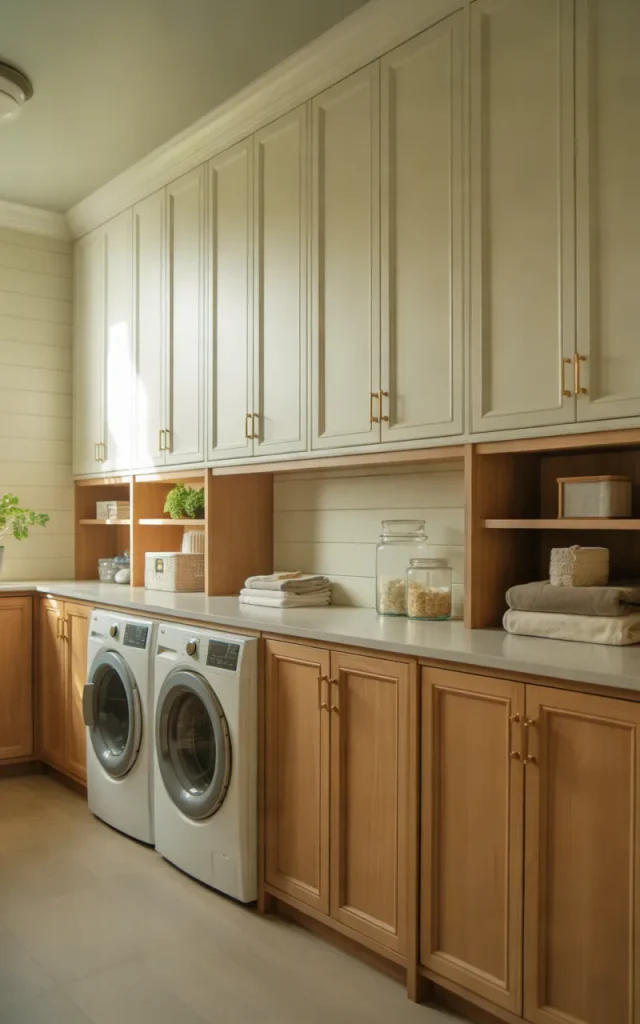
If you’re planning a laundry room makeover, consider using the space around your appliances more intentionally. Built-in cabinetry can create a cohesive appearance while providing room for detergents, towels, cleaning equipment, and household supplies.
Upper cabinets are useful for products you don’t need every day, while lower cabinets can hold heavier items. If you have front-loading machines, a countertop above them can create an additional surface for folding clothes or sorting clean laundry.
I love pairing simple white cabinetry with light wood accents for a fresh, timeless look. Matte black or brushed brass handles can add a little character without overwhelming the room.
Before installing anything, check appliance clearances, ventilation requirements, plumbing access, and manufacturer recommendations.
Hang a Pegboard for Small Laundry Essentials
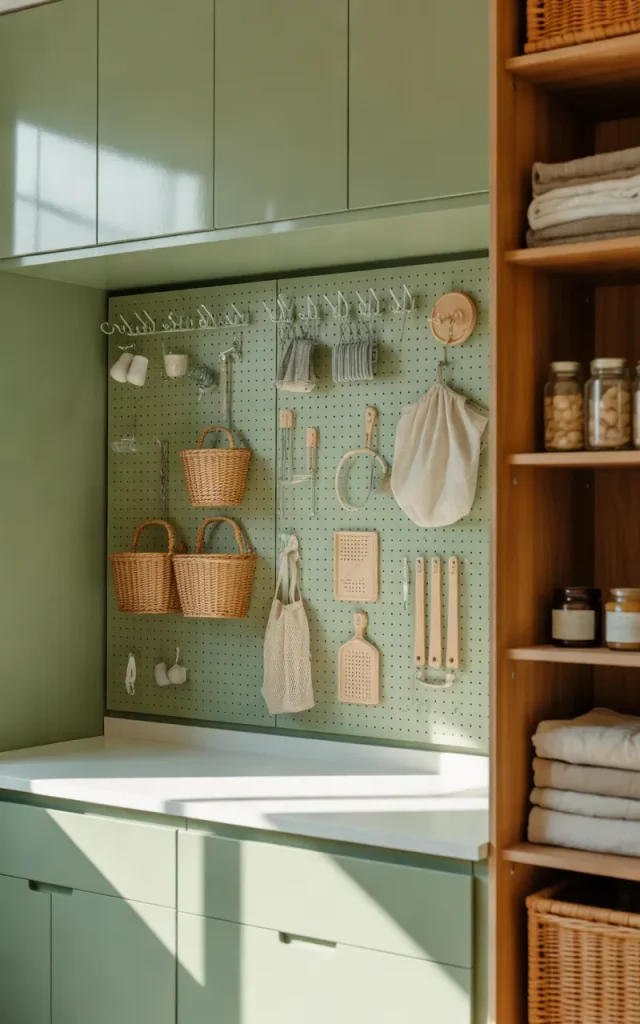
A pegboard isn’t just for garages and craft rooms. It can also be a surprisingly attractive way to organize a laundry area.
Mount one on an available wall and use hooks or small baskets to hold mesh laundry bags, lint brushes, measuring scoops, and clothespins. You can rearrange the accessories whenever your needs change, which makes this option especially flexible.
For a decorative finish, paint the board to match your cabinetry or choose a soft sage green, warm beige, or muted blue. Keep the arrangement relatively simple so it doesn’t look busy.
Pro-tip: Place frequently used accessories at eye level and reserve the higher hooks for items you only need occasionally.
Install a Hanging Rail for Everyday Clothing
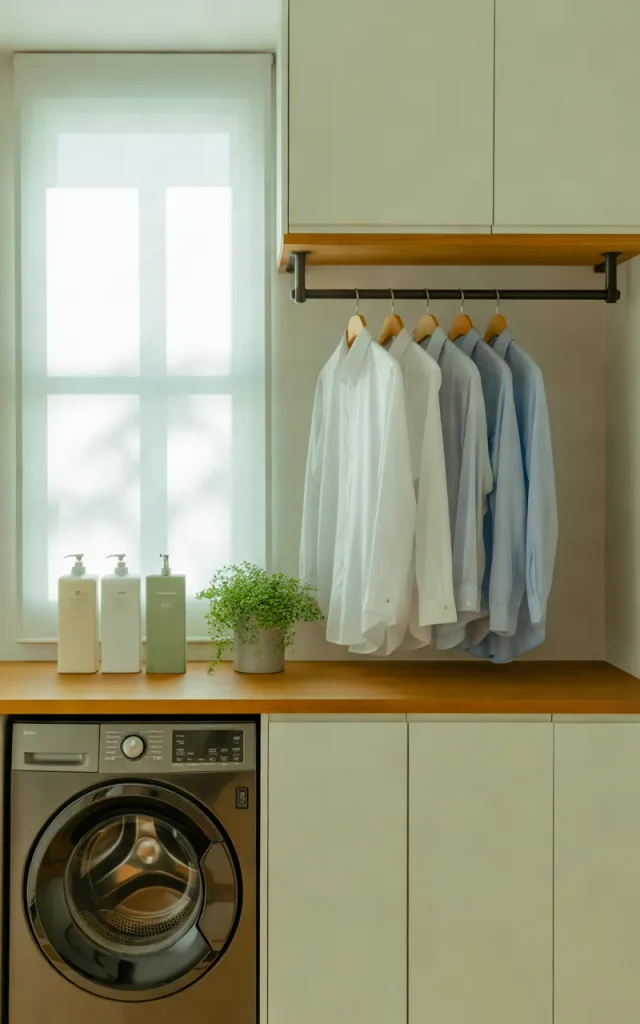
Sometimes, the biggest challenge isn’t washing clothes. It’s finding somewhere to hang them after they’ve been cleaned.
A hanging rail provides a convenient spot for freshly ironed shirts, air-drying garments, and clothes that need to stay wrinkle-free. Install it beneath a sturdy shelf or inside a designated section of cabinetry.
A simple metal rail suits a modern laundry room, while a wood rail can soften a more traditional space. Make sure it is securely mounted and positioned where hanging clothes won’t interfere with appliance doors or walkways.
One rule to remember: Leave enough room between garments for air to circulate, especially when they’re still damp. Overcrowding the rail defeats its purpose.
Label Every Basket, Bin, and Storage Container
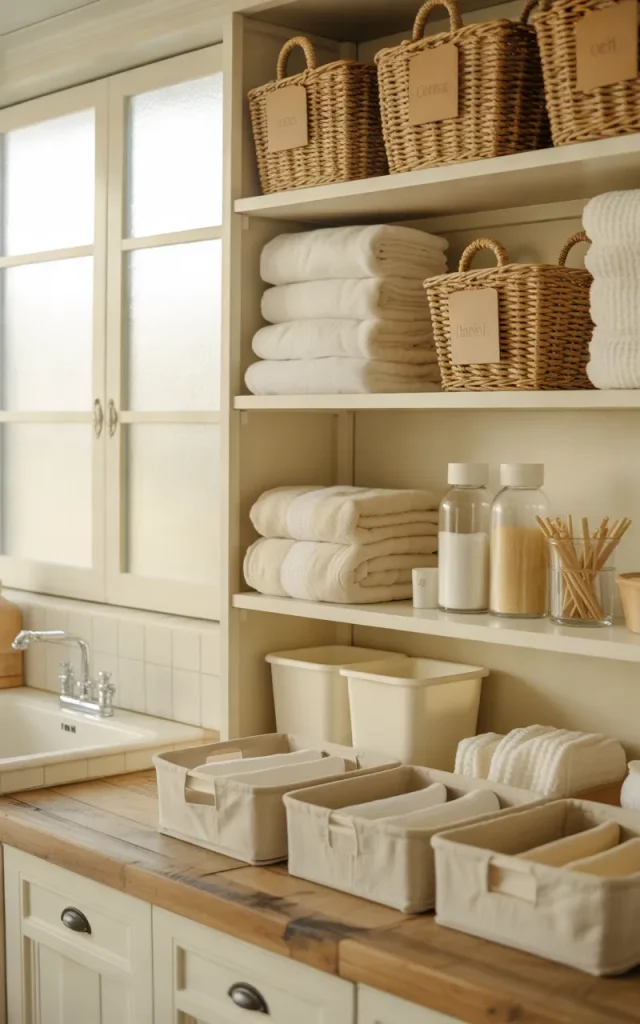
Labels may seem like a tiny detail, but they can make an organized laundry room much easier to maintain.
Use labels to identify clean towels, cleaning cloths, stain-removal supplies, laundry bags, and spare household essentials. If you share laundry duties with family members, clear labels help everyone return items to the right place.
For a minimalist look, choose black lettering on white labels. Kraft-paper labels look lovely with woven baskets, while clear labels work well with transparent containers.
You don’t have to label every single item. Focus on the categories that tend to become messy or get misplaced.
Once everything has a designated home, tidying up takes less time. And honestly, that’s the whole point of organizing in the first place!
Create a Folding Station With a Durable Countertop
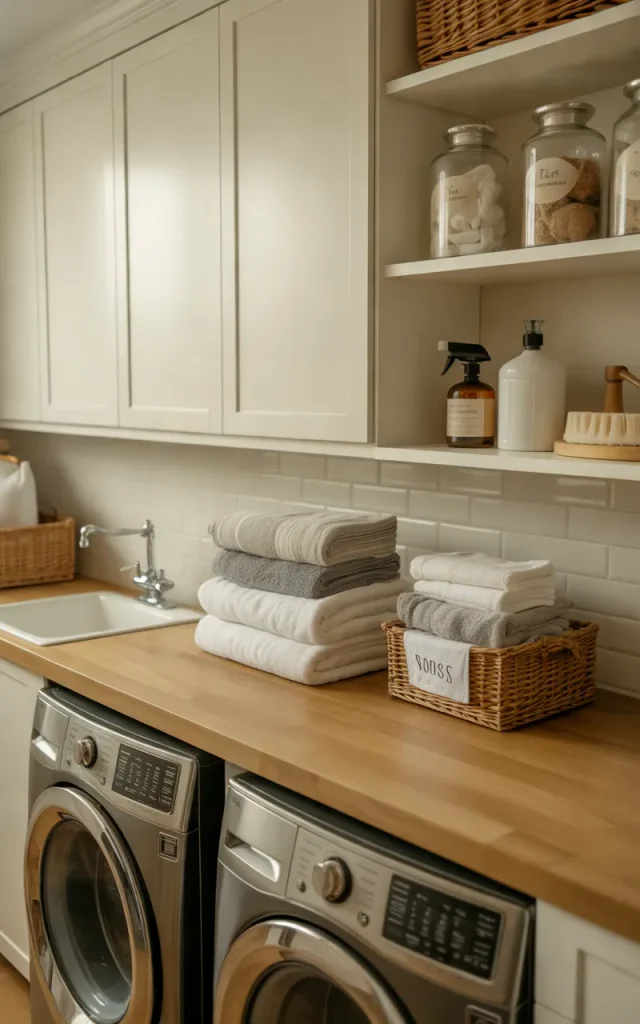
A dedicated folding station can make your laundry room significantly more functional. Instead of balancing clean clothes on top of a hamper or carrying them to another room, you’ll have a convenient surface right beside your appliances.
If you have front-loading machines, consider adding a countertop above them, provided the installation follows appliance clearance and vibration requirements. Alternatively, install a separate counter along an available wall.
Choose a durable, moisture-resistant material that’s easy to wipe clean. Laminate, properly sealed wood, and suitable solid-surface materials can all work, depending on your budget and design preferences.
Why designers do this: A continuous countertop visually connects separate appliances and storage areas, making the entire laundry room feel more intentional.
Keep a small basket nearby for socks that need pairing or garments that require special attention. The result is a more comfortable space for finishing laundry rather than simply washing it.
Store Cleaning Products in a Secure, Organized Cabinet
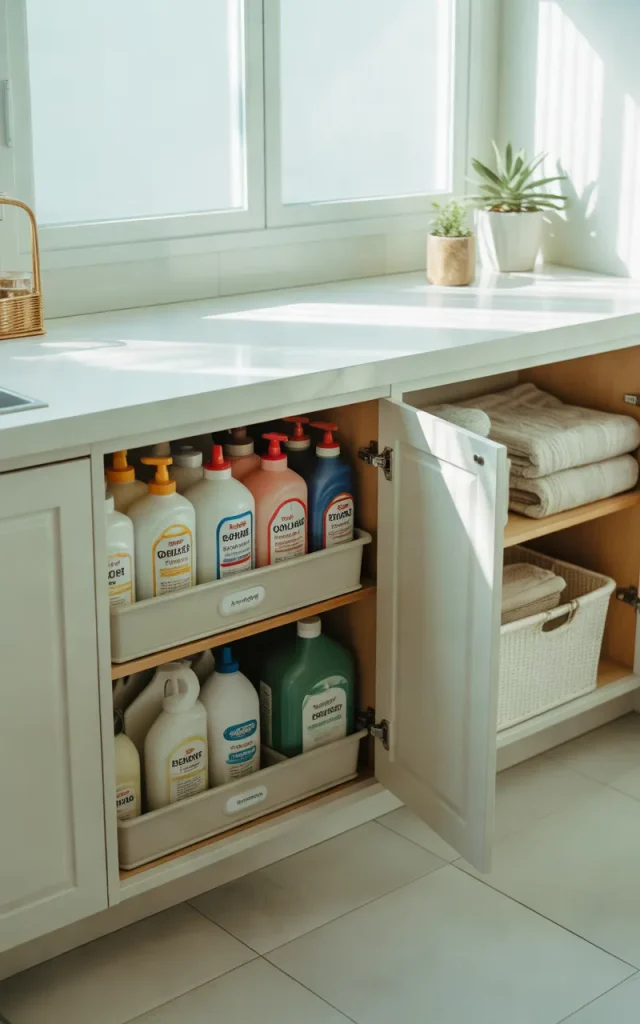
Laundry rooms often become the default storage spot for household cleaning products. The problem? Bottles accumulate quickly, and before long, you can barely find what you need.
I recommend dedicating one cabinet or a clearly defined shelf to cleaning supplies. Group laundry detergents together, place compatible cleaning accessories in another section, and keep less frequently used products toward the back.
Use sturdy, washable trays to contain small spills and make it easier to remove a group of items when cleaning the cabinet.
Common Mistakes to Avoid
- Storing cleaning products in unmarked containers.
- Keeping detergents within reach of young children or pets.
- Mixing incompatible chemicals or transferring products into food containers.
- Overloading shelves beyond their weight capacity.
For extra safety, use child-resistant storage where appropriate and follow each product’s storage instructions. An organized cabinet should make your laundry routine easier without compromising safety.
Make Use of the Space Above Your Appliances

The wall space above your washer and dryer can do more than hold a single shelf. With thoughtful planning, it can become an entire vertical storage zone.
Install a combination of shelves, cabinets, and a hanging rail to accommodate different needs. Keep everyday detergent and fabric care products at a comfortable height, place backup supplies in closed cabinets, and use the rail for freshly washed garments.
If you prefer a softer decorative style, combine white shelving with pale wood and a few woven baskets. For a contemporary look, try flat-front cabinets and understated hardware.
A Pro-tip: Store heavier items on lower shelves and lighter accessories higher up. Always secure wall-mounted storage properly, especially when it sits above frequently used appliances.
The goal is to use vertical space without making the room feel cramped or difficult to navigate.
Design a Small Laundry Closet With Space-Saving Storage
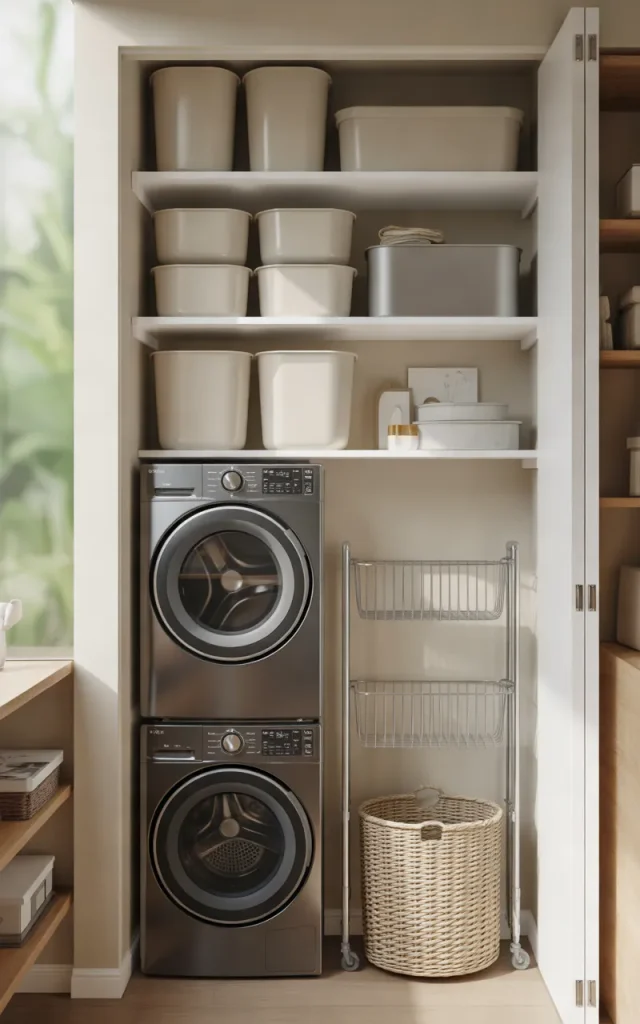
Not everyone has a separate laundry room. Sometimes, the washer and dryer live inside a hallway closet, a bathroom alcove, or a compact corner of the kitchen.
In these situations, every inch counts. Start by using the inside of the closet door for lightweight accessories, provided the door can close without obstruction. Add narrow shelves beside the machines where clearances allow, and choose stackable containers instead of bulky baskets.
If your appliances are designed for stacking, a compatible stacking kit can free up valuable floor space. Use the newly available area for a hamper or a small rolling cart.
Small Space Hack: Choose a collapsible laundry basket that can be stored flat when empty. It’s one less bulky item competing for space.
Keep ventilation, appliance access, and manufacturer clearances in mind. A compact laundry closet should be convenient, not crowded.
Organize Small Accessories With Drawer Dividers
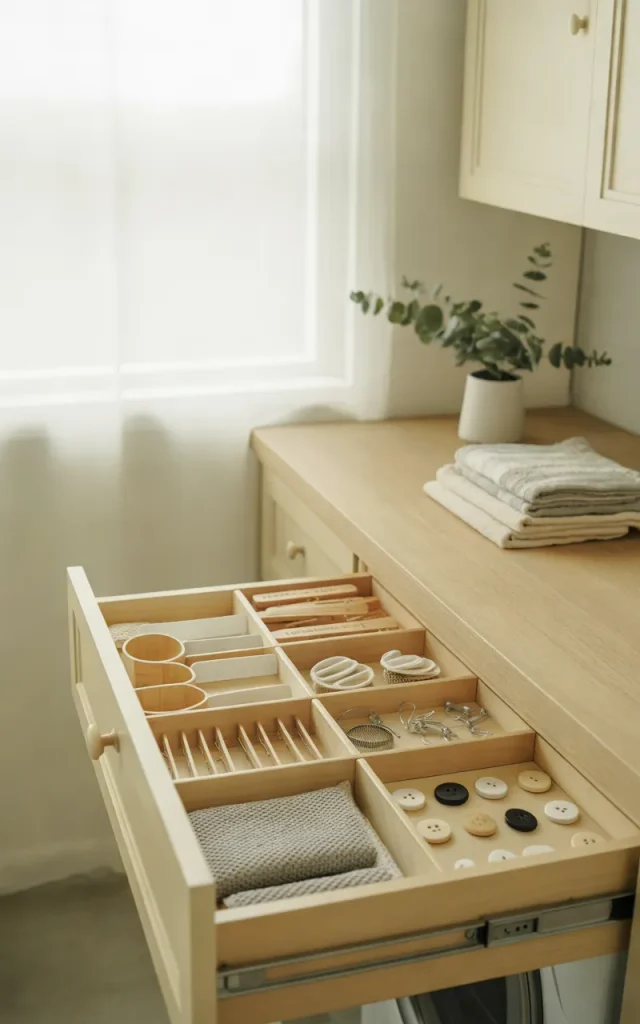
Laundry accessories have a habit of disappearing into drawers. Measuring scoops, spare buttons, mesh bags, lint brushes, and clothespins all seem to end up in the same messy pile.
Drawer dividers provide a simple solution. Use them to create separate compartments for the items you reach for regularly, making it easier to find everything without emptying the entire drawer.
Adjustable dividers are particularly useful because you can change the layout as your storage needs evolve. If you don’t have built-in drawers, a small desktop organizer inside a cabinet can serve the same purpose.
Actionable Tip: Empty the drawer first and remove anything you haven’t used in months. Group similar items together before choosing your dividers.
A few minutes of sorting can make a surprisingly big difference. And unlike an expensive renovation, this is an organization upgrade you can finish in an afternoon. 🧺
Set Up a Dedicated Station for Stain Removal
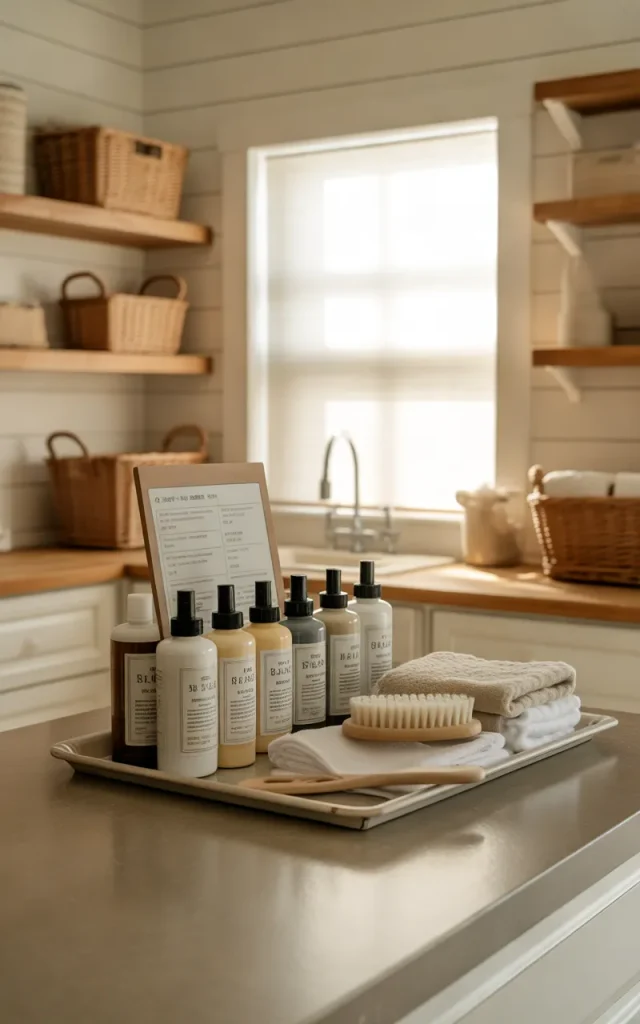
Stain treatments are easier to manage when everything you need is stored together. Rather than searching through several cabinets, create a small station with approved stain-removal products, a soft brush, and a washable cloth.
A shallow tray works well on a shelf or inside a cabinet. If you have counter space, place the tray near the sink or another suitable work surface so you can treat garments before washing them.
I recommend keeping a small reference card nearby with basic garment-care reminders, such as checking care labels and testing products on an inconspicuous area when appropriate.
What most people get wrong: They treat every stain the same way. Different stains and fabrics may need different methods, so check the garment’s care instructions and the treatment product’s label first.
Keep the station away from food-preparation areas and out of children’s reach. Never combine stain removers with other cleaning chemicals unless the manufacturer explicitly confirms that it’s safe.
Incorporate Closed Cabinets to Hide Everyday Clutter

Open shelving is beautiful, but it isn’t always the easiest storage solution to maintain. If you prefer a calmer, more streamlined laundry room, closed cabinetry can help conceal the everyday products that make shelves look busy.
Use cabinets for detergent refills, cleaning equipment, spare linens, and miscellaneous household supplies. Keep a few frequently used items on an accessible shelf or countertop so you aren’t opening multiple doors for every load.
For a light and airy aesthetic, try warm white or cream cabinets with simple hardware. If you want something more distinctive, muted sage or dusty blue can introduce color without feeling overwhelming.
Vibe check:
- Minimalist: flat-front cabinets and concealed handles.
- Farmhouse: shaker doors and natural wood accents.
- Contemporary: smooth finishes and matte black hardware.
- Traditional: framed cabinet doors and warm metallic details.
The best option is one that complements the rest of your home while making laundry supplies easy to access.
Install a Utility Sink With Organized Under-Sink Storage
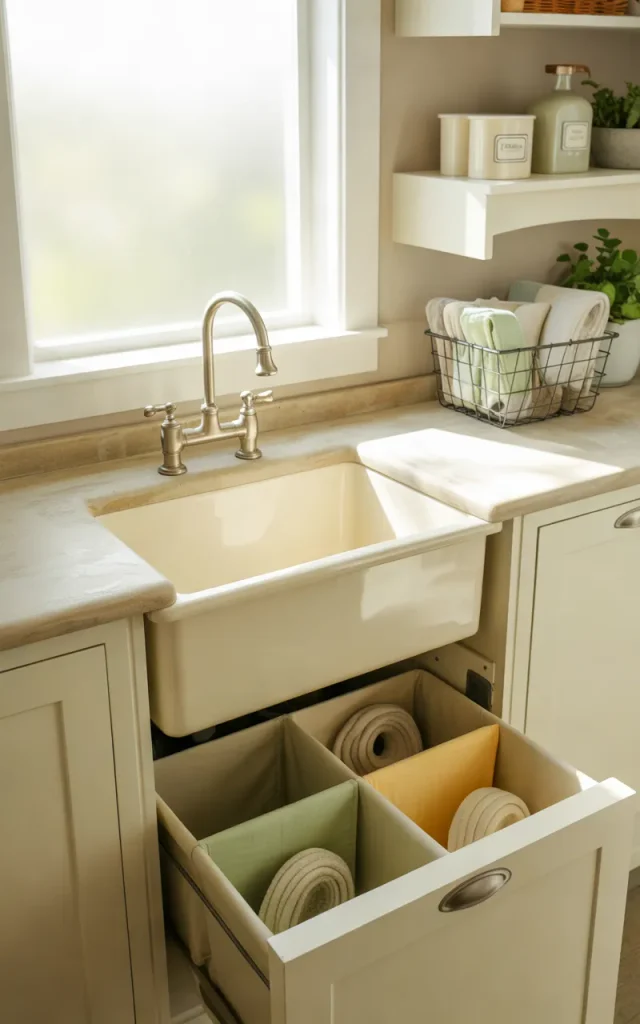
A utility sink can be incredibly useful for hand-washing delicate items, rinsing muddy clothes, and tackling messes before they reach the washing machine.
But the area beneath the sink can quickly become a cluttered collection of bottles and cleaning tools. To prevent this, use a moisture-resistant pull-out organizer or a few appropriately sized bins to group supplies together.
Choose storage that leaves plumbing connections accessible and allows you to spot leaks easily. If the cabinet is exposed to moisture, avoid untreated materials that can warp or develop damage.
I also recommend keeping a small, dedicated basket for cleaning cloths and a separate place for laundry tools. That way, you won’t have to move everything around whenever you need the sink.
Budget Alternatives
- Repurpose washable plastic bins you already own.
- Use a removable tray for frequently used products.
- Add inexpensive hooks to a suitable cabinet side for lightweight tools.
- Keep bulky backup supplies on a separate shelf instead of crowding the sink cabinet.
A well-organized sink area makes messy laundry jobs easier to handle and keeps the rest of your room looking neat.
Create a Family-Friendly Laundry Sorting System
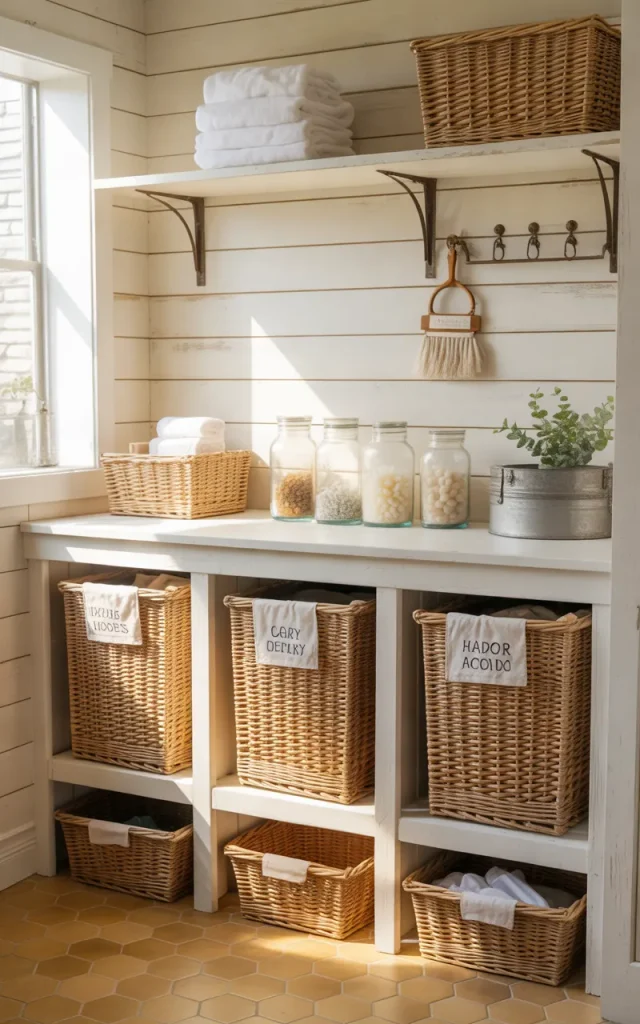
If laundry seems to multiply the moment you finish a load, a family-friendly sorting system can help distribute the work more evenly.
Start with clearly labeled hampers for different clothing categories or household members. In a larger laundry room, individual baskets can sit beneath a counter. In a smaller room, use a single hamper with removable compartments or washable sorting bags.
You can also designate a shelf or basket for clean clothes awaiting collection. That way, folded garments don’t end up scattered across the countertop.
Do this 👉
- Label hampers with simple words or symbols.
- Give each family member a clear place to collect clean clothes.
- Keep everyday laundry supplies within comfortable reach.
- Set a regular time to empty hampers and return items to their homes.
Not this ❌
- Mixing clean and dirty clothes in the same basket.
- Leaving wet garments in closed hampers.
- Creating so many categories that sorting becomes confusing.
Keep the system easy enough for everyone to follow. The less complicated it is, the more likely it is to stick.
Maximize Corner Spaces With Tiered Storage
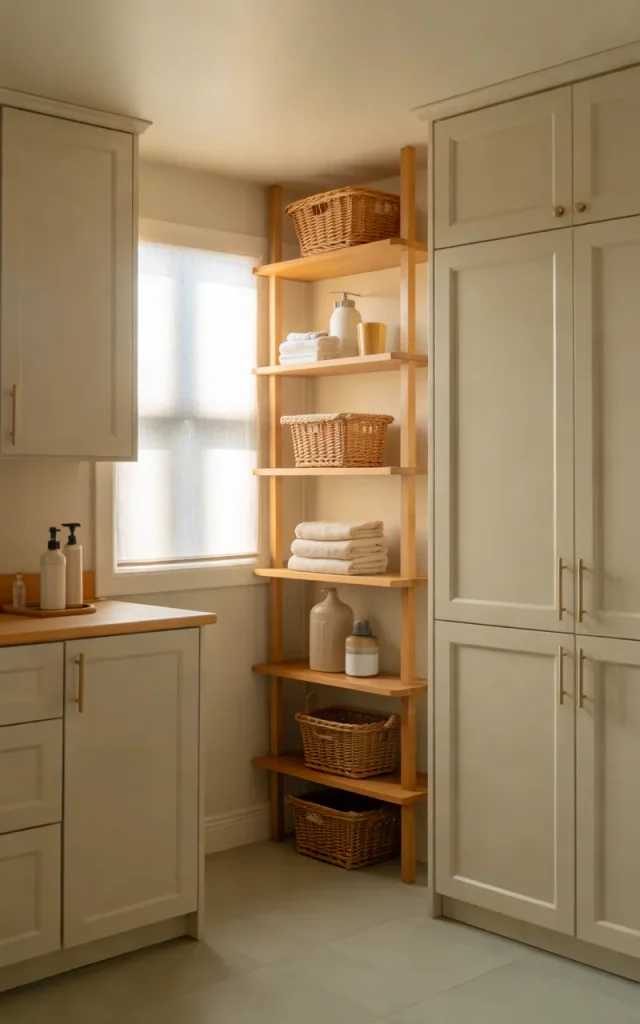
Corners often become neglected areas in a laundry room. They’re easy to overlook, especially when the main focus is on the washer, dryer, and countertop.
A tiered corner shelf can turn that unused space into practical storage for small baskets, laundry accessories, and lightweight supplies. If your room has a narrow layout, choose a compact unit that won’t obstruct doors or make it difficult to move laundry baskets around.
For a coordinated appearance, select shelves that complement your existing cabinetry. A white metal organizer works well in a bright utility room, while natural wood can bring warmth to a more relaxed design.
Quick hack: Before purchasing a corner organizer, measure the available floor or shelf area and check how much clearance you need to open appliance doors fully.
You can also use a corner shelf above the work surface for a few frequently used items. Keep the arrangement simple rather than filling every level with decorative objects.
The idea is to make forgotten spaces useful while keeping the room easy to clean and move around in.
Establish a Weekly Reset Routine for Lasting Organization
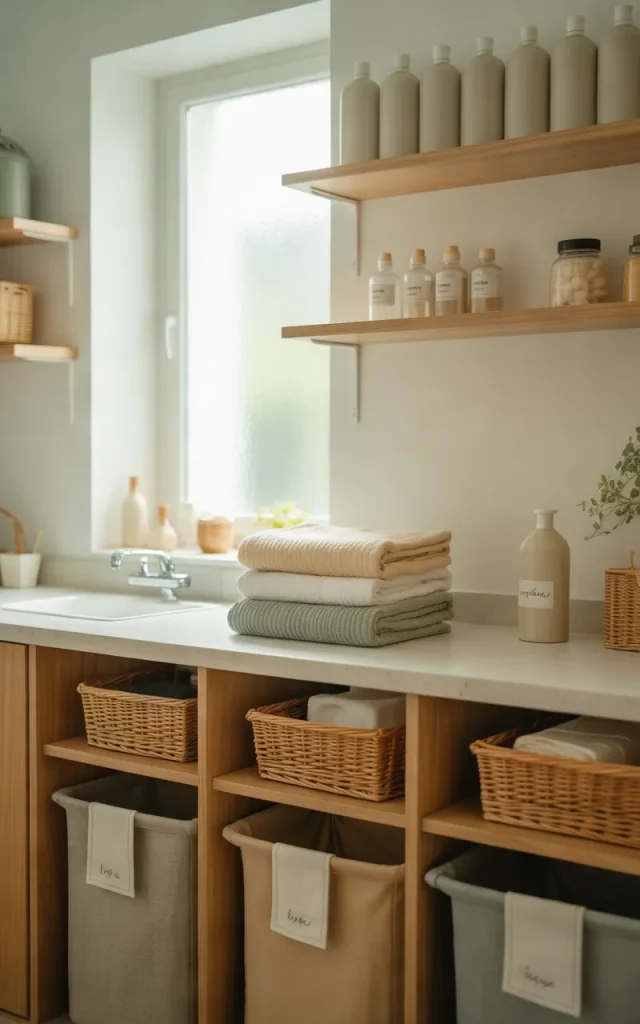
Even the most beautifully organized laundry room can become cluttered if there’s no simple system for maintaining it. That’s why I’d finish your organization project by creating a realistic weekly reset routine.
Set aside ten to fifteen minutes to return detergent bottles to their designated shelves, empty lint containers according to appliance instructions, collect stray socks, and put away clean laundry supplies. Check your hampers and clear the folding counter so it’s ready for the next load.
Once a month, review your products and remove empty packaging. Check which supplies are running low before shopping, and rearrange anything that no longer fits your routine.
The psychology behind it: Small, repeatable habits can make an overwhelming household task feel more manageable. Instead of waiting until the entire room becomes messy, you’re maintaining the progress you’ve already made.
Try pairing the reset with something you enjoy, such as listening to music or a favorite podcast. 🎵
Remember, your laundry room doesn’t have to look perfect every day. It simply needs a system that makes it easier to wash, dry, fold, and put away your clothes without unnecessary stress.
Final Thoughts
The best laundry room organization ideas aren’t necessarily the most expensive or elaborate. They’re the ones that solve the everyday problems you actually face, whether that’s finding detergent quickly, creating room to fold clothes, or keeping dirty laundry from taking over your floor.
I’d start with one or two changes that would make the biggest difference in your space. Add floating shelves, introduce a sorting station, or finally give those cleaning tools a proper home. You can build on your progress as your needs change. ✨
With a little planning and a few practical storage solutions, even a small laundry area can become more functional, attractive, and enjoyable to use. And that’s a worthwhile upgrade for any home!
