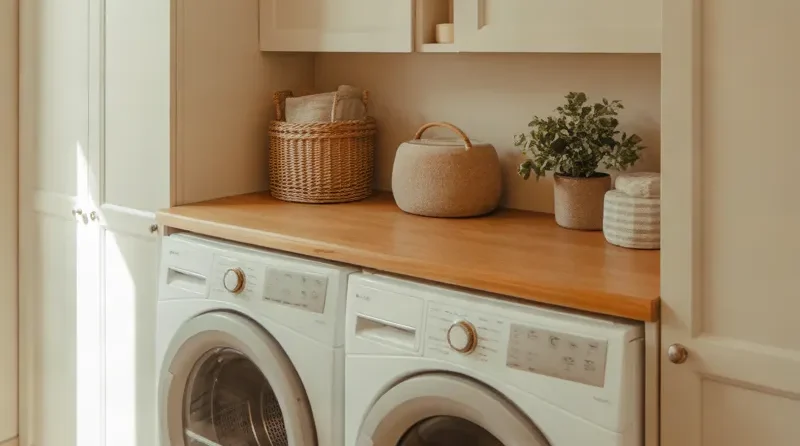
A tiny laundry room can be surprisingly charming. You don’t need a huge utility space, custom cabinetry everywhere, or a picture-perfect home to create a laundry area that feels organized and beautiful. Sometimes, a few clever changes are all it takes. 🏡
As a home décor enthusiast, I believe small laundry rooms deserve just as much attention as kitchens and bathrooms. After all, this is a space we use regularly, so why not make it practical, comfortable, and lovely to look at?
These 21 tiny laundry room ideas combine smart storage, space-saving layouts, beautiful finishes, and simple decorating tricks. Whether you’re working with a narrow closet, a small corner, or a compact room tucked behind a door, you’ll find something here that fits your home and budget.
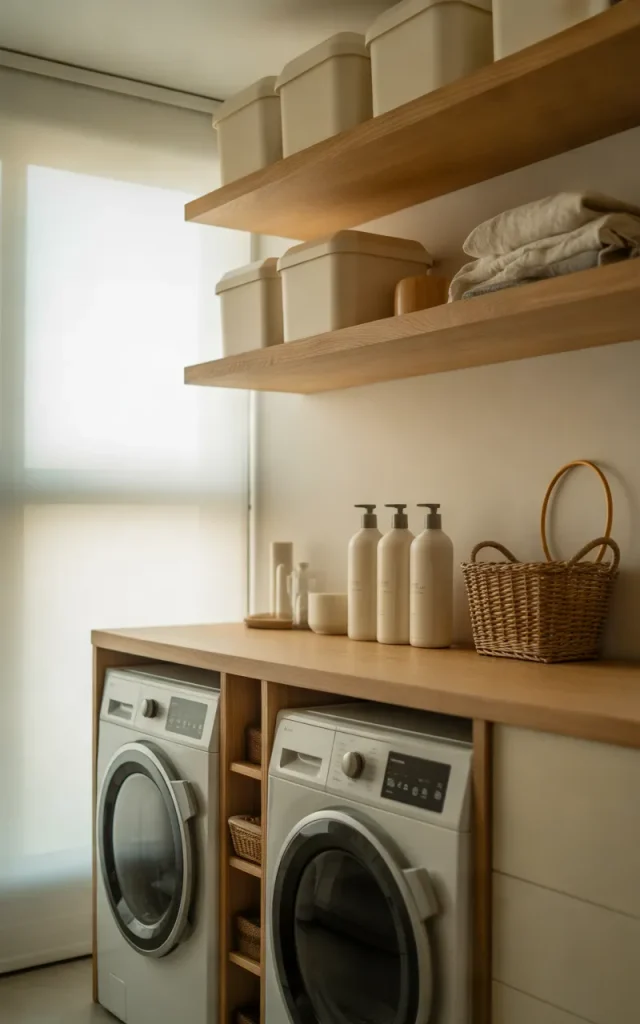
Install Floating Shelves Above Your Washer and Dryer
Smart storage · Budget-friendly
When floor space is limited, I always recommend looking upward. Floating shelves above your washer and dryer give you extra storage without making the room feel crowded. You can use them for detergent, fabric softener, laundry baskets, and everyday cleaning supplies.
Choose natural wood shelves for warmth or crisp white ones for a clean, minimalist appearance. I love adding a few matching containers to keep everything looking coordinated rather than cluttered.
Quick Tip:
Keep frequently used products on the lowest shelf and reserve the highest one for occasional supplies. Leave enough clearance above your machines to open lids, access controls, and safely move laundry around.
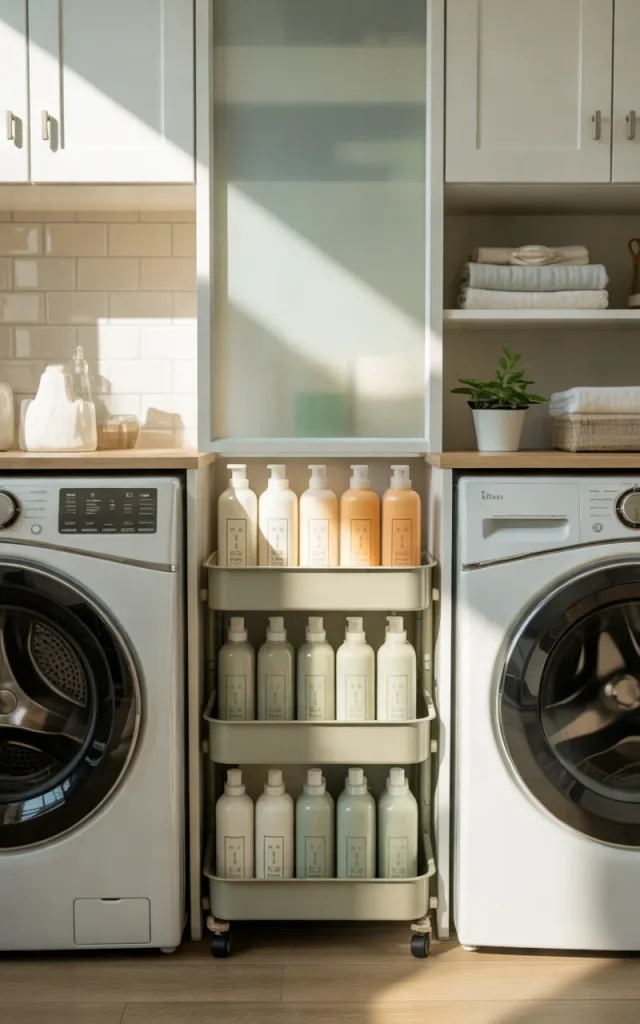
Choose a Slim Rolling Cart Between Your Appliances
Affordable organization · Flexible storage
That awkward gap between your washer and dryer might be more useful than you think. A slim rolling cart can turn it into a convenient home for detergent bottles, stain removers, dryer sheets, and other laundry essentials.
Look for a narrow design with several shelves and smooth-rolling wheels. White, black, or transparent finishes blend easily into most interiors, while a wooden handle can add a little decorative character.
Small Space Hack:

Measure the gap before buying your cart. Remember to account for hoses, appliance movement, and anything that might obstruct the wheels.
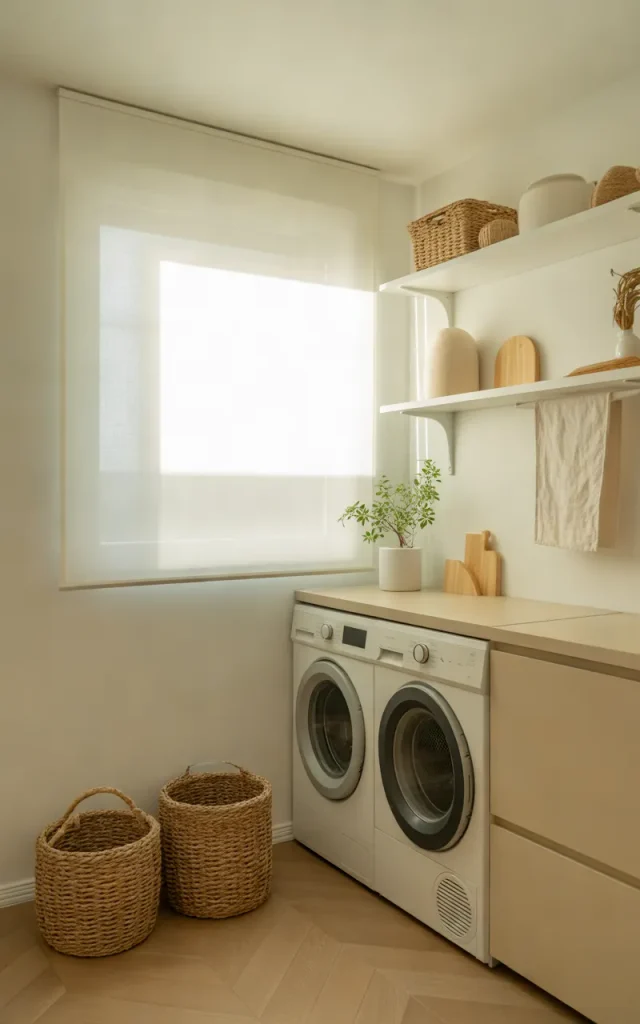
Paint the Walls a Soft, Light Colour
Easy makeover · Bright and airy
A fresh coat of paint can transform a tiny laundry room without requiring a major renovation. Soft white, warm cream, pale beige, and light greige are excellent choices if your space feels dark or cramped.
I often lean toward warm white because it reflects available light while keeping the room inviting. Pair it with natural wood accessories, simple white shelves, and a woven basket or two for a relaxed finish.
A Micro-tip:

Use the same light colour on the walls and larger built-in elements to create a more continuous appearance. Fewer strong visual breaks can help the room feel less busy.
Hang a Wall-Mounted Drying Rack
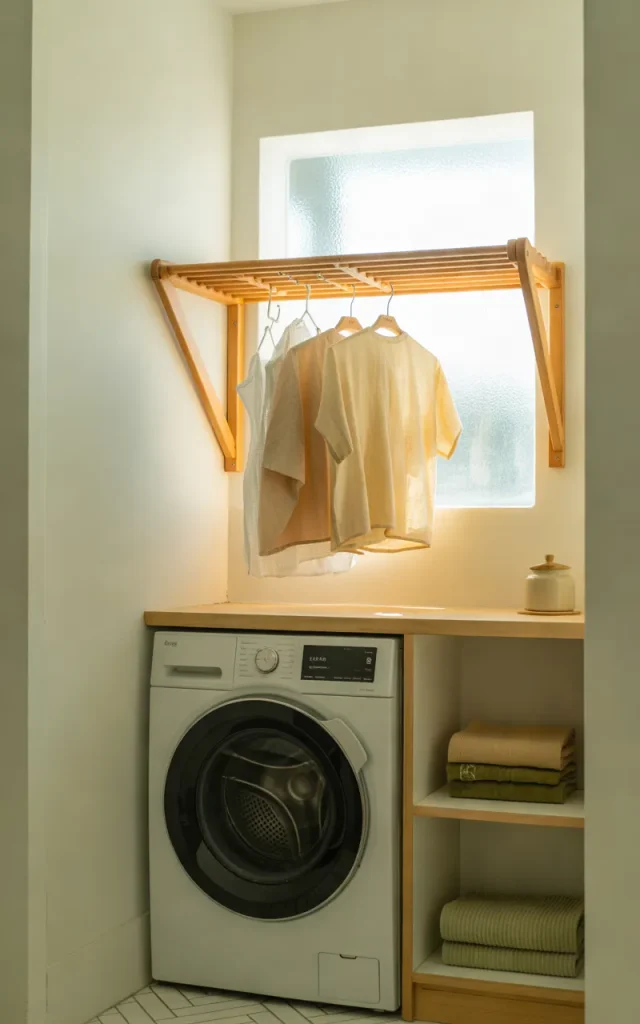
Everyday convenience · Fold-away design
A traditional floor-standing drying rack can consume a surprising amount of space. In a tiny laundry room, I’d replace it with a wall-mounted folding rack that opens when needed and folds flat afterward.
Install it on a suitable wall where damp clothes can hang without blocking the door, appliances, or walkways. Depending on your needs, you can choose a wooden accordion rack, a metal folding model, or a retractable clothesline.
Who this is for:
Anyone who air-dries delicate garments, lives in an apartment, or wants to reduce reliance on a tumble dryer.
I recommend placing the rack near a suitable source of airflow. Avoid overcrowding the bars, as clothes need room to dry properly. It’s a small change, but it can make your laundry routine much more comfortable.
Add a Countertop Over Front-Loading Machines
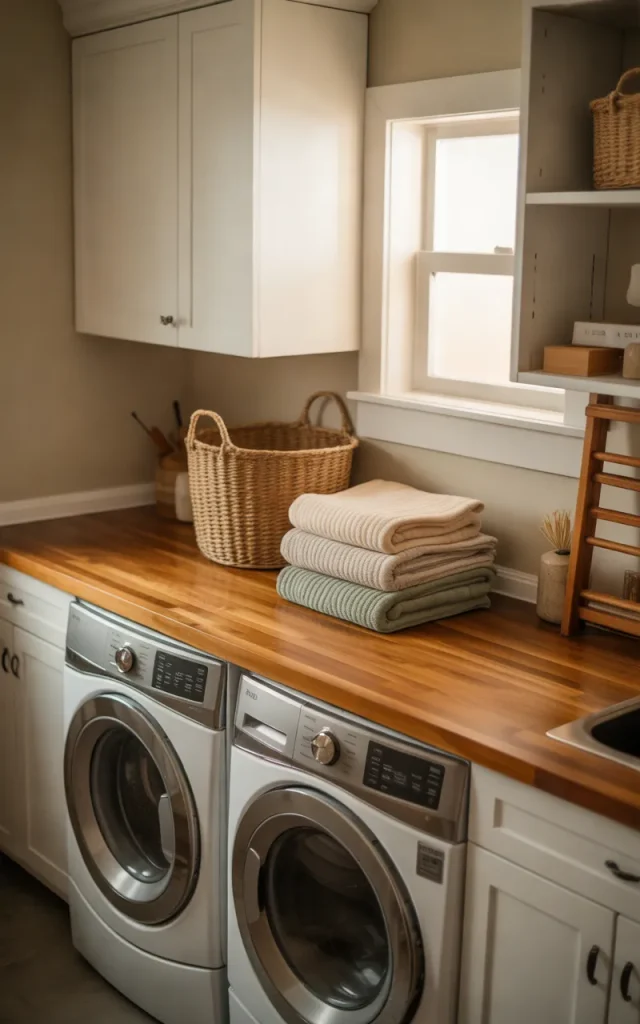
Extra workspace · Streamlined design
If you have front-loading appliances, consider installing a countertop across their tops. This gives you a dedicated surface for folding clothes, sorting laundry, or temporarily placing a basket.
Butcher-block wood creates a warm, natural look, while a white countertop feels crisp and contemporary. For a more polished appearance, choose a surface that coordinates with your cabinetry or flooring.
Why designers do this: A continuous horizontal surface makes separate appliances look more integrated, giving a small room a more finished appearance.
Make sure the countertop is properly supported and doesn’t interfere with appliance servicing, ventilation, or movement. Your washing machine may vibrate during a cycle, so the installation should accommodate manufacturer requirements.
Even a modest folding surface can make a big difference. No more balancing freshly washed T-shirts on top of detergent bottles! 😊
Install a Wall-Mounted Drying Rod
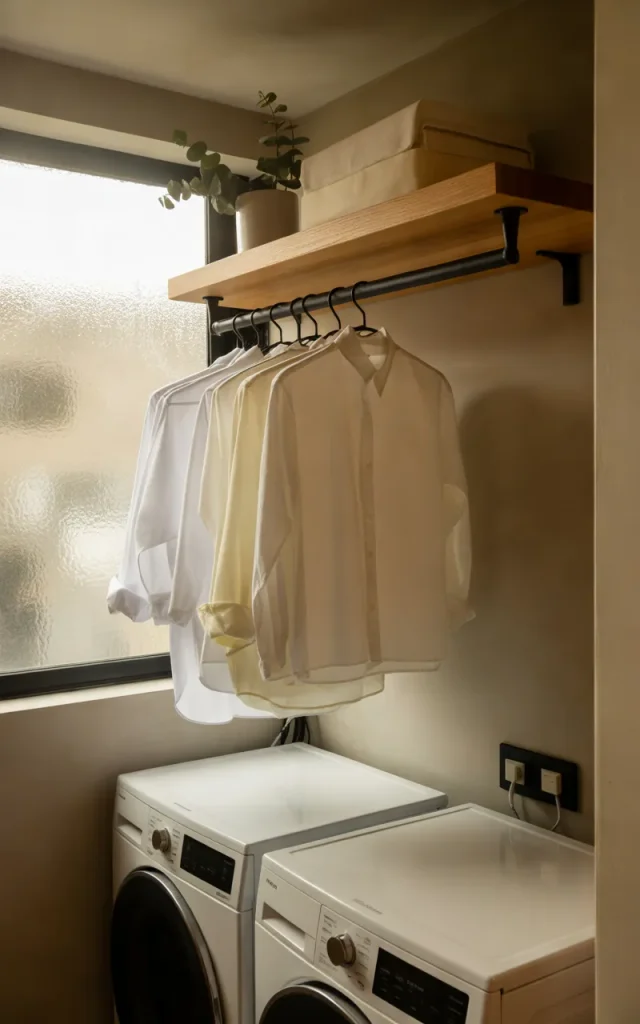
Vertical storage · Minimalist utility
Sometimes, a drying rack isn’t the most practical solution. If you frequently hang shirts, dresses, or freshly ironed clothes, a simple wall-mounted rod may be a better fit.
Position it above a folding counter or beneath a sturdy shelf, leaving enough room for garments to hang without touching the machines. A matte black rod creates a modern industrial look, while brushed brass can add a more decorative touch.
One rule to remember: Check the wall structure and use appropriate fixings for the expected load. Wet clothes can be surprisingly heavy, especially when several garments hang together.
You can also install matching hangers to create a neat, consistent appearance. This arrangement is particularly useful when you need to hang clothes straight from the washer before putting them away.
It’s practical, understated, and much less intrusive than a freestanding garment rack.
Build Storage Around Your Washer and Dryer
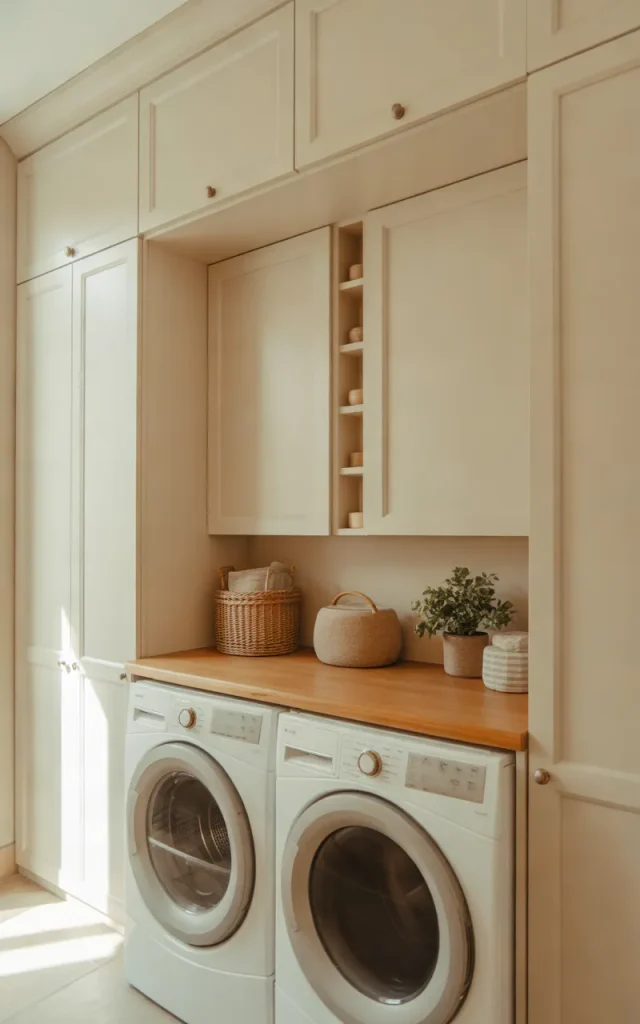
Customized organization · Built-in appearance
If you’re planning a more substantial makeover, consider adding cabinetry around your washer and dryer. Even in a tiny laundry room, a carefully designed arrangement can create storage without wasting valuable space.
Use a narrow vertical cabinet for cleaning supplies, shallow shelves for frequently used items, and overhead cupboards for extra detergent or seasonal bedding. If your machines are side by side, a countertop can connect the arrangement visually.
I prefer simple cabinet fronts in white, pale oak, or muted green. These finishes look timeless and can coordinate with other rooms in your home.
Pro-tip:
Plan the cabinetry around the actual appliance dimensions, plumbing, electrical connections, ventilation, and future maintenance needs. Don’t box machines in so tightly that they become difficult to service.
Hang Hooks on the Back of the Laundry Room Door
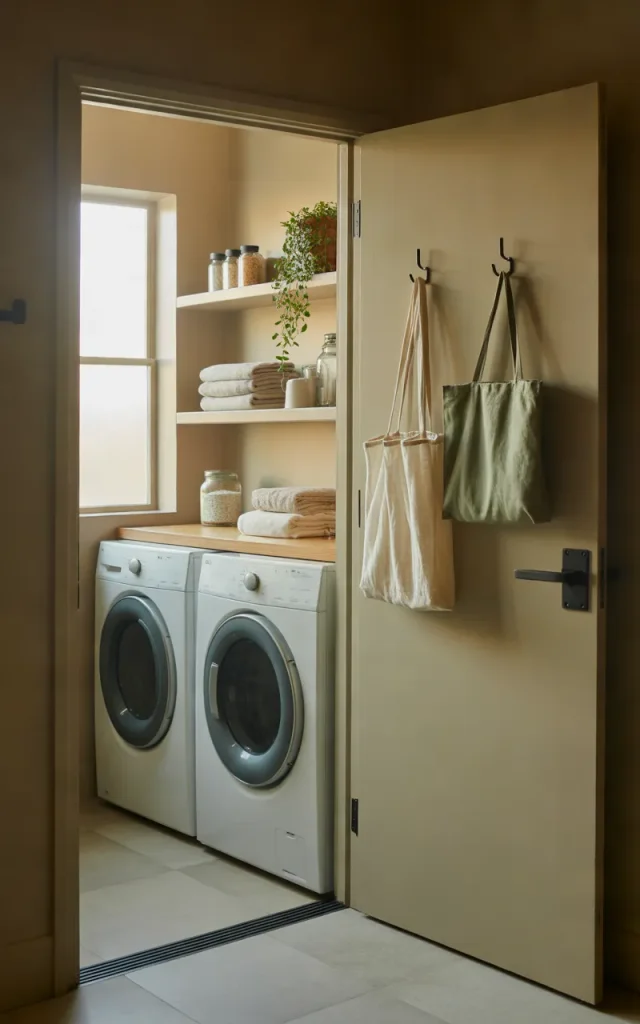
Hidden storage · Renter-friendly option
The back of your laundry room door is an excellent place to create storage without sacrificing wall or floor space. Over-door hooks can hold reusable shopping bags, lightweight laundry bags, cleaning cloths, or garments waiting to be washed.
For a more permanent arrangement, you could install a row of wall hooks on the door itself, provided the door material and installation allow it.
I like simple black hooks for a modern space and brushed metal for a softer, more polished finish. Keep the items you hang lightweight enough that the door remains easy to open and close.
Common Mistakes to Avoid:
- Hanging bulky items that prevent the door from closing.
- Blocking access to switches or nearby cabinets.
- Overloading hooks beyond their rated capacity.
This is one of those small changes that feels almost too simple to matter. Yet when your laundry room is tiny, reclaiming even a little space can improve the entire layout.
Install a Narrow Pull-Out Laundry Cabinet
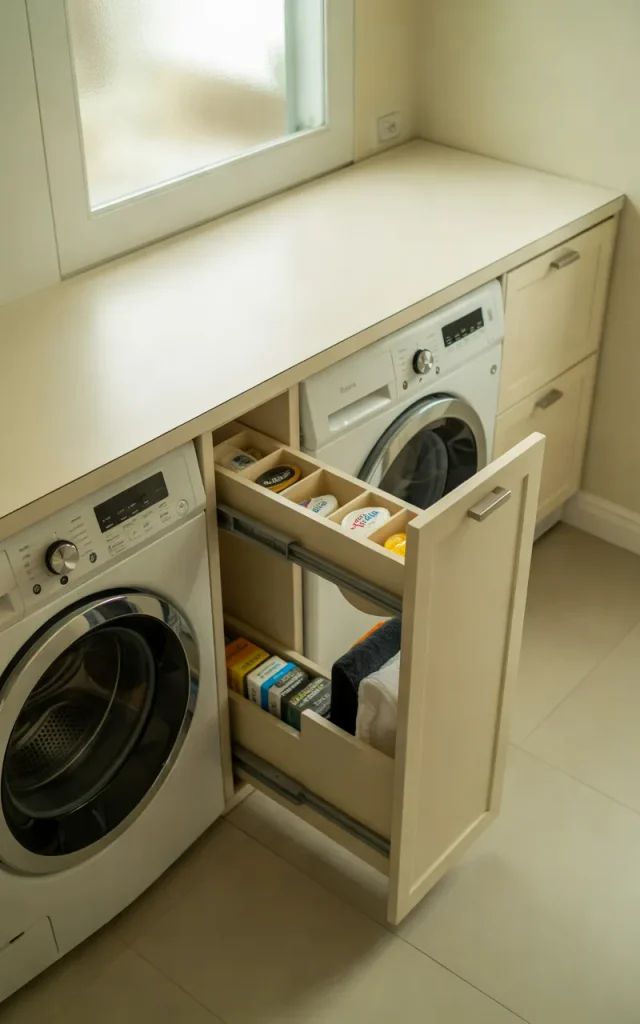
Concealed storage · Custom solution
If you have a little unused space beside your appliances or cabinetry, a narrow pull-out cabinet can be surprisingly useful. Think of it as a compact storage column that slides out when needed and disappears when you’re done.
Use it for suitable laundry accessories, spare cloths, or other small essentials. Depending on its dimensions and construction, you might also use it to organize ironing supplies or cleaning tools.
I recommend choosing a pull-out unit with smooth hardware and a design that matches the surrounding cabinets. A coordinated finish helps the storage blend into the room rather than look like an afterthought.
Actionable Tip:

Measure the available width, depth, and clearance before purchasing. Check whether the drawer or cabinet can open fully without colliding with the washer door.
Add a Decorative Tile Backsplash
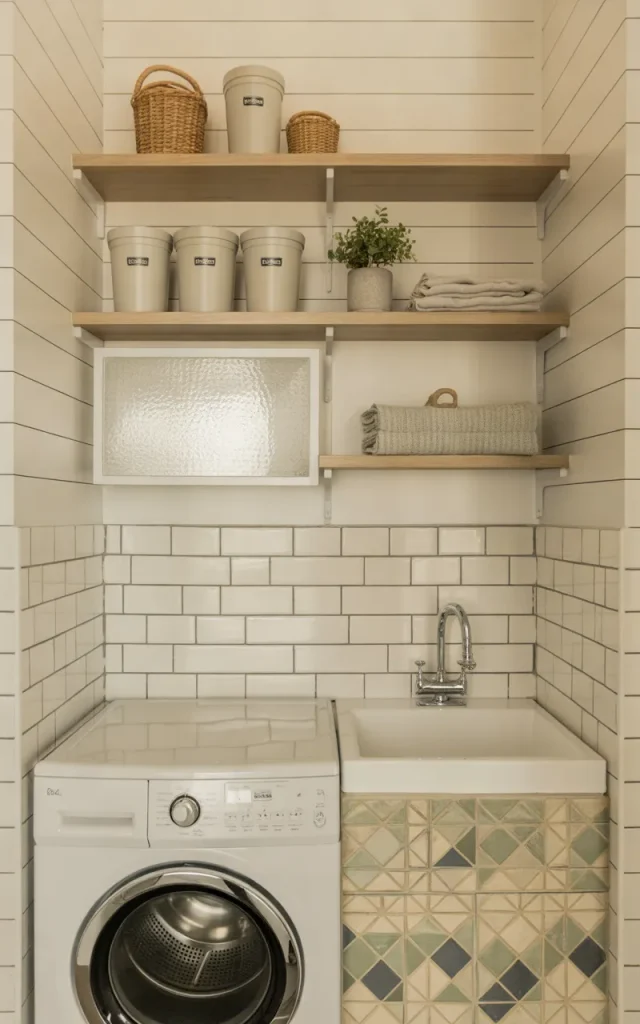
Decorative detail · Easy-to-clean finish
A tiny laundry room doesn’t have to look purely functional. A backsplash can introduce colour, texture, and personality without taking up any floor space.
Classic white subway tile creates a clean, timeless look. Soft sage tiles feel fresh and natural, while small patterned tiles can add a little character to an otherwise neutral room.
I particularly like the idea of installing a backsplash behind the sink or along the wall above the countertop. It helps protect the surface from splashes and gives the laundry area a more finished appearance.
How to steal this look:
- Choose one main tile colour that complements the walls.
- Keep grout colours coordinated for a calmer finish.
- Repeat a tile tone in towels, baskets, or small accessories.
If a full backsplash isn’t practical, consider a smaller tiled section or a suitable moisture-resistant wall finish. The idea is to introduce one thoughtful detail rather than overwhelm the room with competing patterns. 🎨
Brighten the Room With Layered Lighting
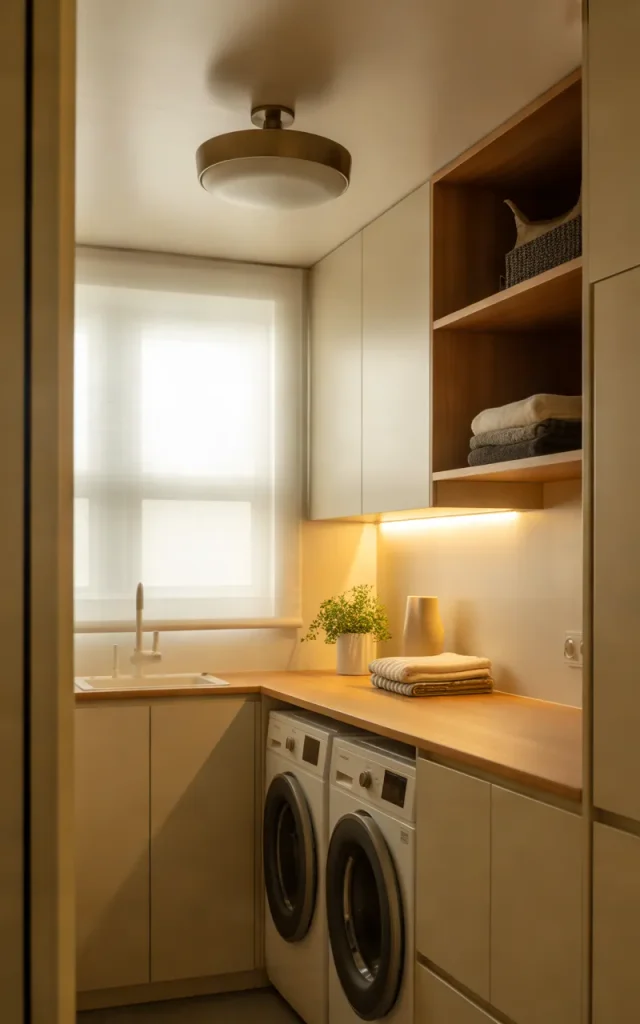
Better visibility · Welcoming atmosphere
Lighting can change the way a tiny laundry room looks and feels. A dim overhead bulb often leaves corners shadowy and makes everyday tasks more frustrating than necessary.
Start with a bright, evenly distributed ceiling light. Then, if the layout allows, add suitable task lighting above a folding counter or beneath overhead cabinets. This combination helps you see stains, sort colours, and handle small tasks more comfortably.
Warm-neutral lighting can make white cabinetry and natural wood look inviting. If your laundry room has no window, a well-planned lighting scheme becomes even more important.
Safety reminder:

Choose fixtures suitable for the room's moisture conditions and follow local electrical requirements. Keep lights and electrical connections appropriately separated from water sources.
Choose a Compact Utility Sink With Storage Below
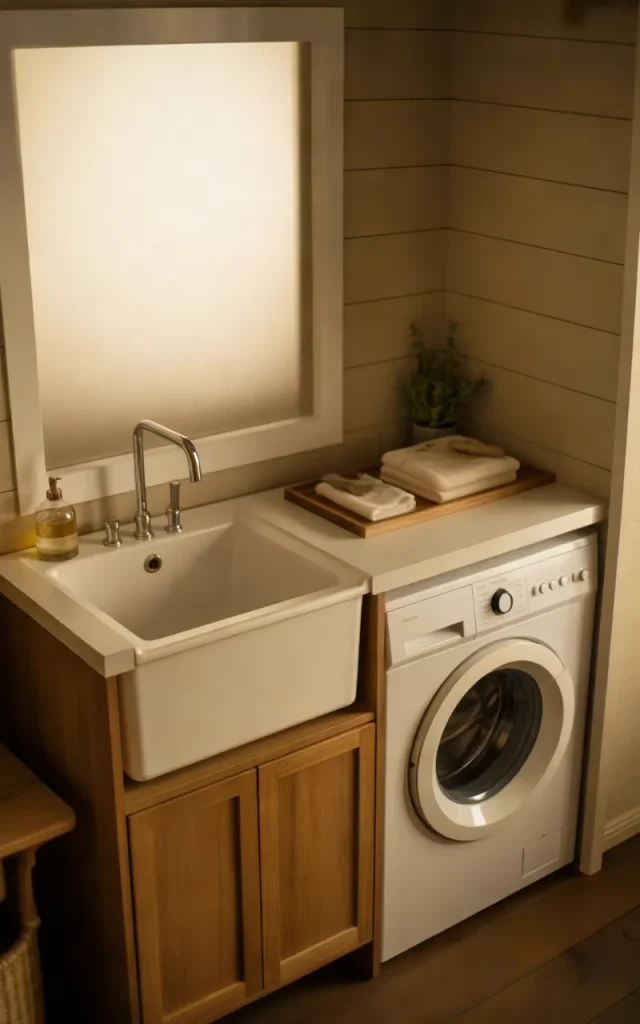
Practical upgrade · Multifunctional design
If you have room for a sink, choose a compact model that fits the way you actually do laundry. A small utility sink can be useful for rinsing stained clothes, washing delicate items, or cleaning tools before they go back into storage.
Rather than choosing an oversized basin, look for a space-efficient design with a practical depth. A cabinet beneath the sink can hold suitable cleaning accessories and spare supplies, while a simple countertop extension provides a little extra working space.
I love pairing a white sink with natural wood cabinetry or a muted green cabinet for a subtle decorative touch.
What most people get wrong: They choose the sink before checking how it affects the entire layout. Make sure you can still open appliance doors, move laundry baskets, and stand comfortably in front of the basin.
If plumbing changes are expensive or impractical, skip the sink and invest in better storage instead. The best laundry room is the one that suits your household’s real needs.
Use Vertical Cabinets for Cleaning Supplies
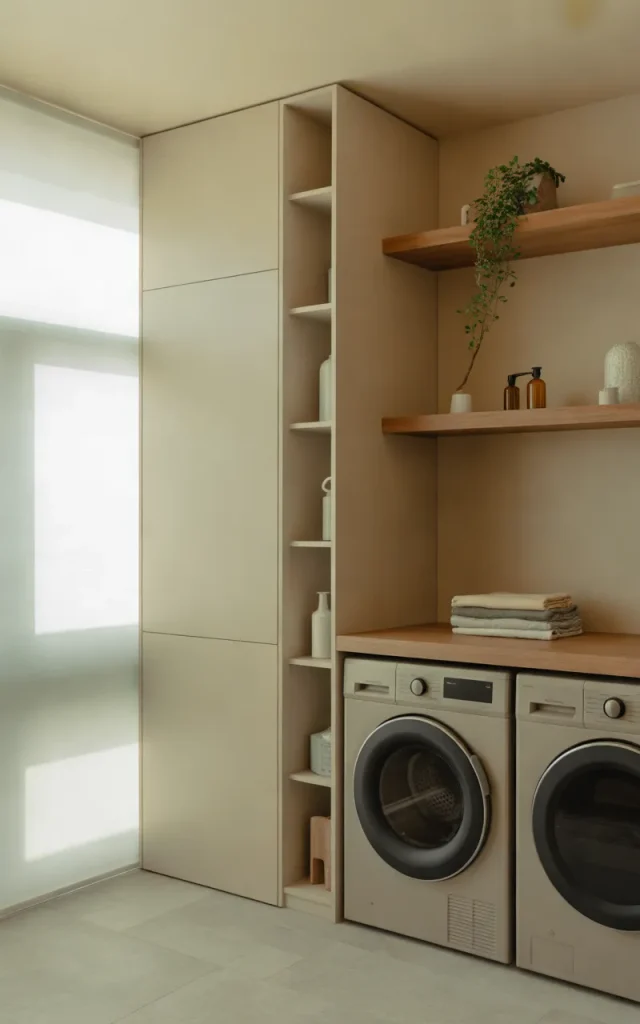
Tall storage · Clutter-free floors
When horizontal storage is limited, tall and narrow cabinets can help you make better use of the available wall space. Instead of spreading cleaning products across several surfaces, you can organize them vertically in one dedicated location.
Look for a slim cabinet with adjustable shelves so you can accommodate bottles, cloths, spare sponges, and other supplies. A closed design keeps everything out of sight and helps the room look calmer.
For a cohesive look, match the cabinet to your existing shelves or choose a neutral colour that blends with the walls.
Checklist:
- Measure the available height and width.
- Check that doors and drawers can open fully.
- Secure tall furniture appropriately to prevent tipping.
- Store chemicals according to their labels and keep them away from children and pets.
I especially recommend this approach when the laundry room doubles as a general cleaning station. Giving every category of supplies a designated home makes tidying up much easier.
Decorate With a Small Indoor Plant
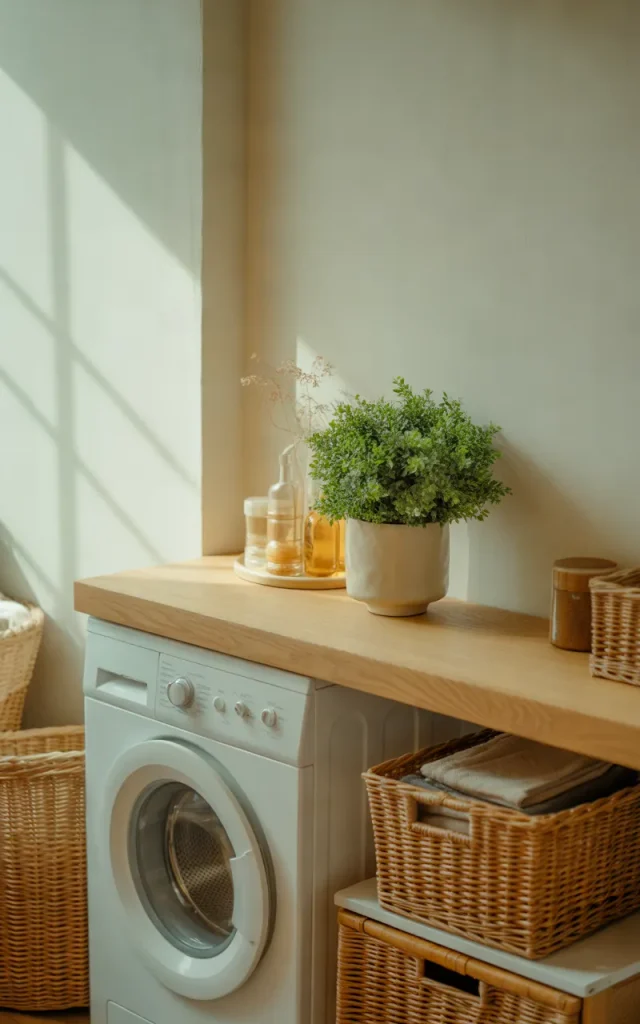
Natural accents · Simple styling
A tiny laundry room can benefit from a touch of greenery. One small plant adds colour and softness to a space that might otherwise be dominated by hard surfaces, appliances, and storage containers. 🌿
If you have a bright window, choose a plant suited to the amount of sunlight available. For a room with limited natural light, consider a realistic artificial plant or a suitable low-light variety.
Place it on a shelf or countertop where it won’t interfere with appliance controls, folding space, or ventilation. A small ceramic pot in white, terracotta, or muted green can tie the arrangement together.
Vibe check:
- Natural wood and greenery create a relaxed, organic feel.
- White pots suit a minimalist laundry room.
- Terracotta adds warmth to cream or beige interiors.
You don’t need several plants to make an impact. One thoughtfully placed accent can be enough to soften the room while keeping the overall design simple and uncluttered.
Transform an Unused Closet Into a Laundry Nook
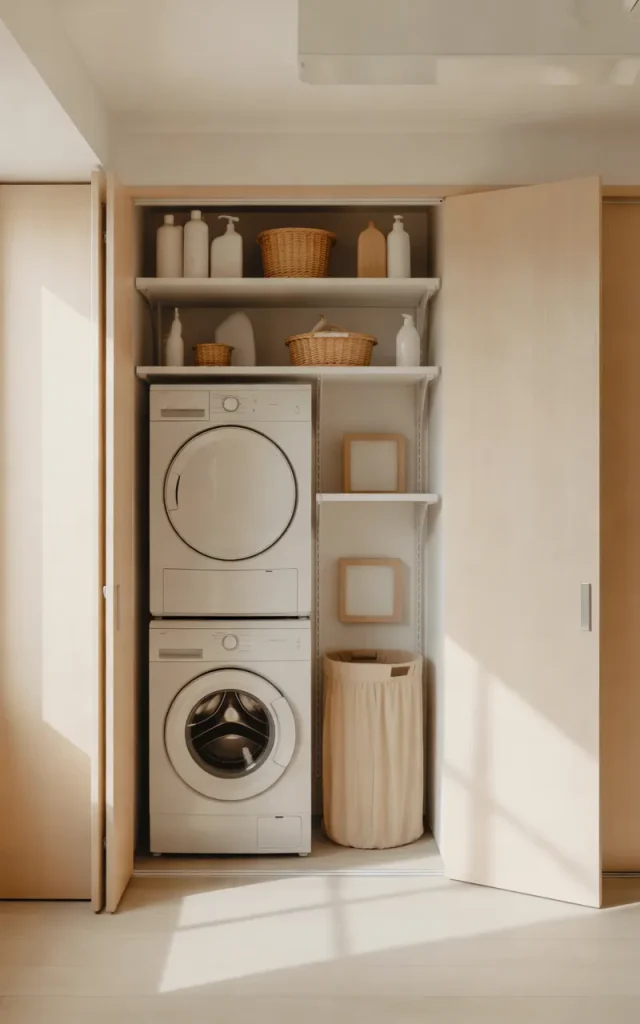
Space-saving conversion · Apartment-friendly
If you don’t have a dedicated laundry room, an unused closet might be the perfect place to create one. With suitable plumbing, electrical connections, ventilation, and access, a closet can accommodate a compact washer-dryer setup without requiring a completely separate room.
Measure the interior carefully before choosing appliances. Some homes can accommodate a stacked pair, while others may be better suited to a compact all-in-one machine.
I would keep the surrounding design simple: light walls, a shallow shelf for detergent, a small hamper, and a door that allows appropriate clearance. Bi-fold or sliding doors may help where a traditional swinging door would obstruct the room, provided the installation meets appliance ventilation requirements.
Step-by-step instructions:
- Measure the closet and confirm that suitable appliances will fit.
- Have a qualified professional assess plumbing, electrical service, drainage, and ventilation.
- Plan storage around appliance access and maintenance.
- Add suitable lighting and organize the remaining space with compact shelves.
A closet laundry nook can be wonderfully discreet. When the doors are closed, the room returns to its original purpose without sacrificing everyday convenience.
Install a Pegboard for Flexible Wall Storage
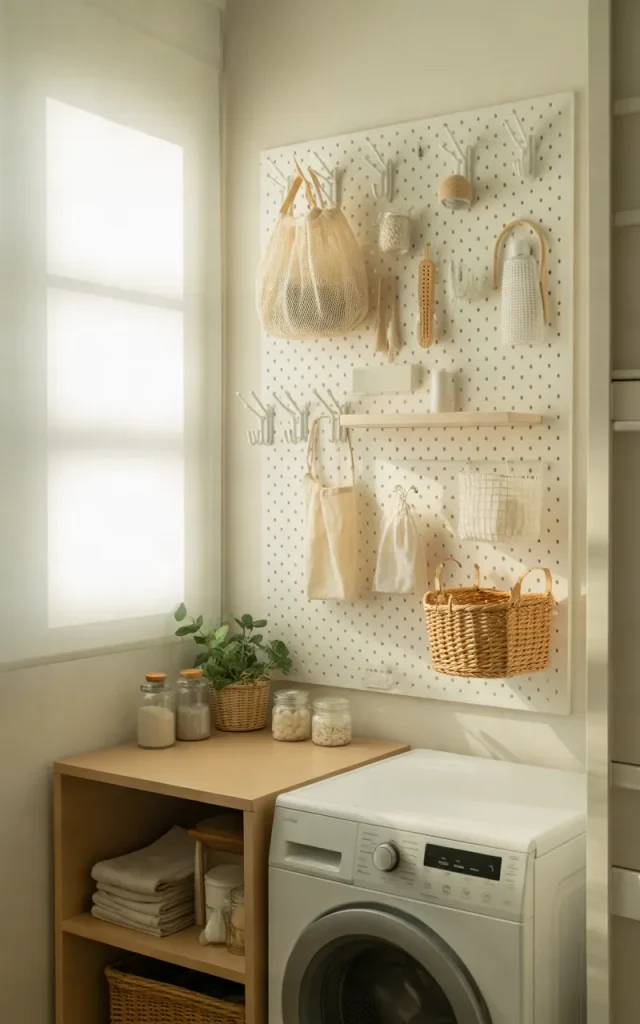
Customizable organization · Creative solution
A pegboard is a clever alternative to fixed shelving when you need storage that can change as your needs evolve. It uses vertical wall space and allows you to reposition hooks, small baskets, and holders whenever your routine changes.
I like white pegboards for a bright, minimalist laundry room, although natural wood and muted colours can look equally attractive. Use the board for lightweight items such as lint brushes, clothespins, mesh laundry bags, and small cleaning accessories.
Budget Alternatives:
- Repurpose an existing pegboard if you already own one.
- Add a few inexpensive hooks instead of buying a complete accessory set.
- Paint the board with a suitable finish to coordinate with your walls.
Before installing it, check the wall structure and use appropriate fixings. Keep the board away from areas where it could interfere with appliance operation or become exposed to excessive moisture.
The best part? You can rearrange the accessories as your laundry routine changes, rather than committing to a permanent storage layout.
Create a Cohesive Look With Natural Wood Accents
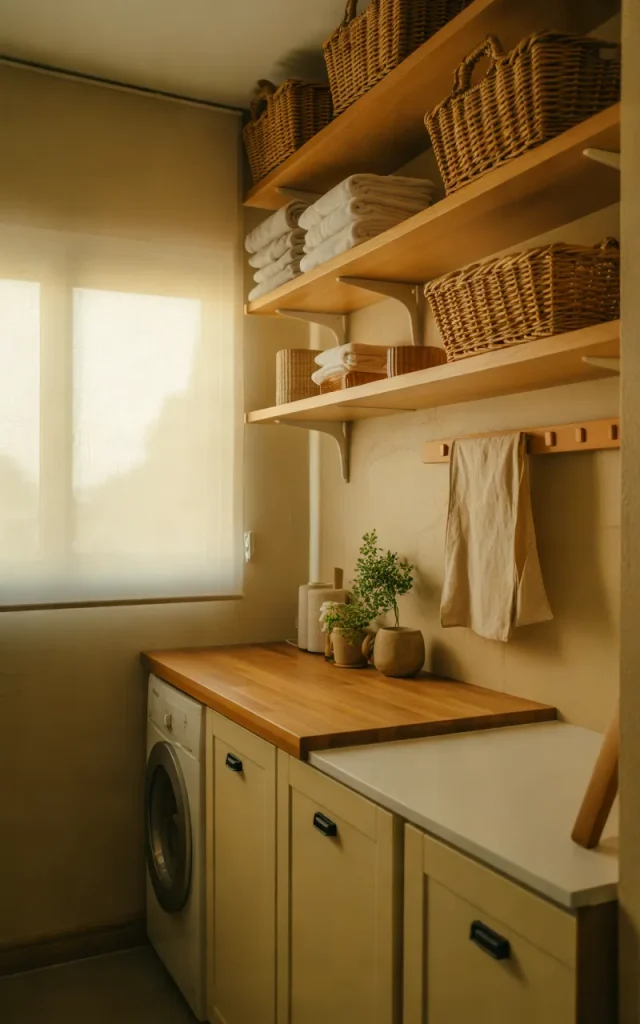
Warm minimalism · Timeless styling
Tiny laundry rooms can sometimes feel cold because they’re filled with metal appliances, smooth cabinetry, and hard flooring. Natural wood accents introduce warmth without taking up additional space.
You could use a wooden shelf, a butcher-block folding counter, a small framed print, or a few matching hangers. Even one or two wooden elements can soften the appearance of an all-white room.
I particularly love pale oak with warm white walls, woven baskets, and understated black hardware. For a more rustic look, choose richer wood tones and combine them with cream cabinetry and simple linen accessories.
Style match guide:
| Style | Wood and finish pairing |
| Scandinavian | Pale oak, white walls, simple lines |
| Modern farmhouse | Natural wood, cream, matte black |
| Minimalist | Light timber, white, hidden storage |
| Organic modern | Warm oak, beige, muted greenery |
One rule to remember: Repeat your chosen wood tone at least twice if you want the room to feel coordinated. A shelf and a small frame, for example, can establish a connection without making the space look overly decorated.
Make the Most of the Space Above the Door
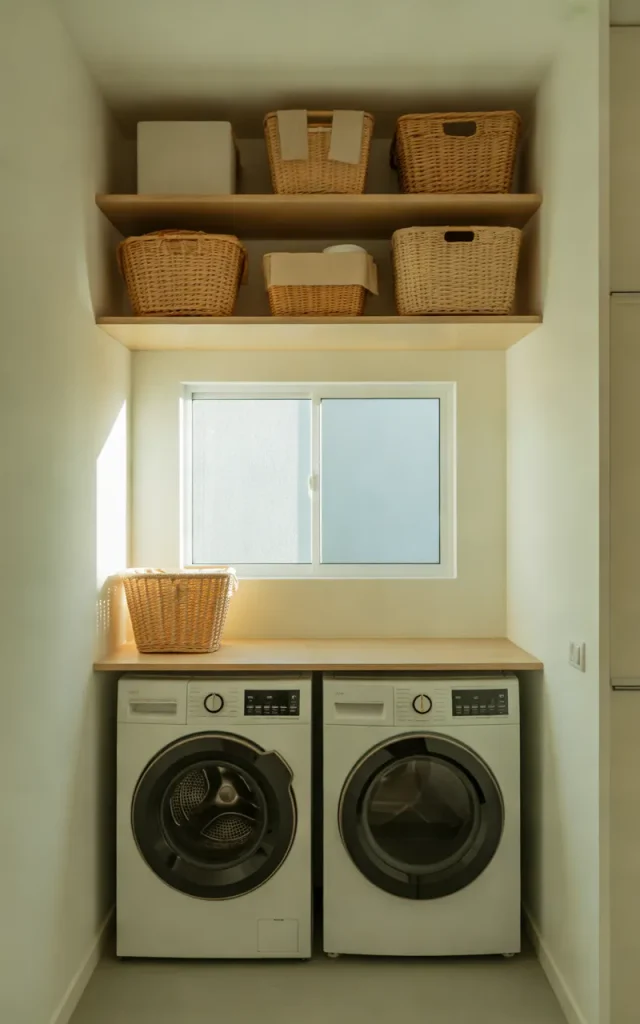
Often-overlooked storage · Vertical organization
In a tiny laundry room, the area above the door can provide useful storage that doesn’t compete with your everyday working space. A shallow shelf installed high on the wall can hold lightweight items you don’t need to access regularly.
Think spare cloths, extra rolls of suitable household supplies, or a small basket of seasonal laundry accessories. Keep heavier products elsewhere, especially if reaching the shelf would require climbing or stretching awkwardly.
I prefer a shelf that matches the wall colour so it feels discreet. You could also use matching labelled baskets to prevent small objects from becoming scattered.
Small space hack: Reserve this shelf for occasional-use items rather than products you reach for every day. This keeps the most convenient storage areas free for your regular routine.
Before installation, check the door frame, wall construction, ceiling clearance, and shelf depth. The shelf should never obstruct the door or create a hazard when people enter and leave.
It’s a practical way to use an overlooked area without crowding the main part of your laundry room.
Add a Stylish Runner to Make the Room Feel Finished
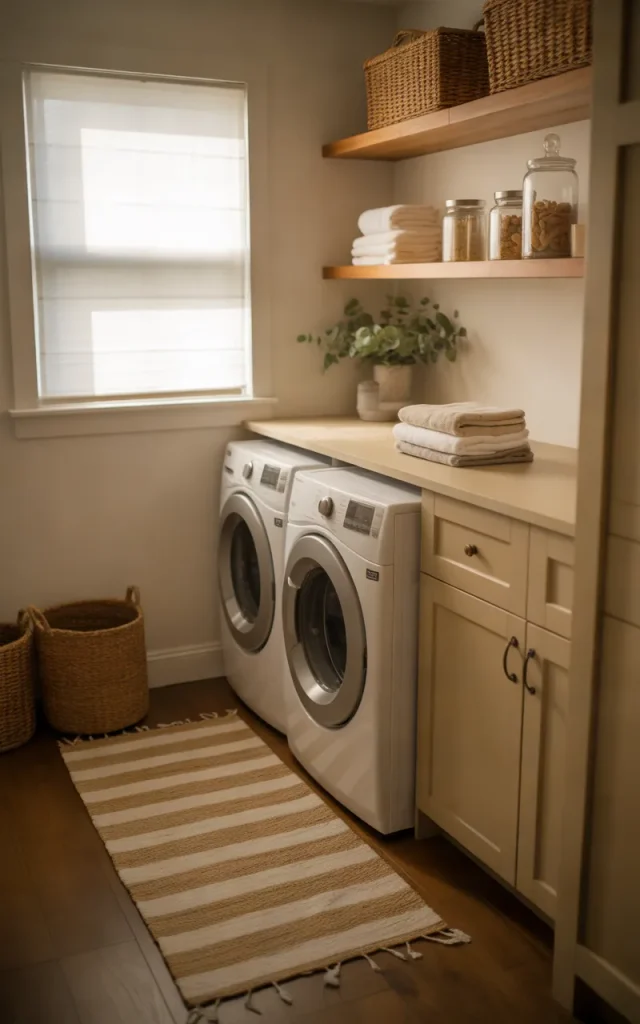
Soft texture · Decorative finishing touch
A runner can bring colour, pattern, and warmth to a small laundry room, particularly when the walls and cabinets are neutral. It visually defines the walking area and helps the room feel more like a considered part of your home.
Choose a washable rug or a low-pile runner suitable for the conditions in your laundry space. Subtle stripes can make the room feel longer, while a muted geometric pattern adds interest without demanding too much attention.
I would coordinate the runner with your towels, storage baskets, or wall colour rather than introducing several unrelated patterns. A beige-and-cream design looks soft and timeless, while navy or charcoal can create a stronger contrast.
Do this 👉
- Choose a washable design with a suitable backing.
- Leave enough clearance around appliance doors.
- Clean and dry the rug regularly.
Not this ❌
- Use a slippery rug near wet areas.
- Block access to appliance filters or maintenance panels.
- Place a damp rug over flooring that needs to remain dry.
A runner isn’t essential, but it’s an easy finishing touch that makes the room feel warmer and more inviting. Just prioritize safe footing and moisture management over appearance.
Use Wallpaper to Create a Beautiful Accent Wall
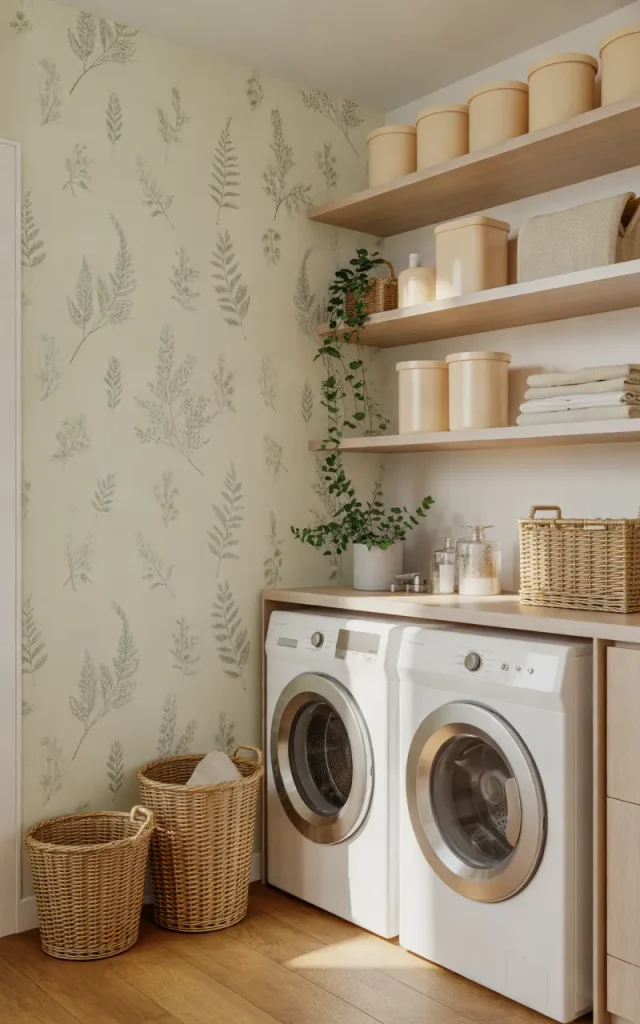
Decorative personality · Small-scale statement
Who says a laundry room has to be plain? Wallpaper can introduce a surprising amount of personality, even when you only have a narrow wall to decorate.
For a tiny space, I would choose a subtle botanical print, delicate stripes, a small geometric pattern, or a soft vintage-inspired design. These styles can make the room feel thoughtfully decorated without competing with the appliances.
If you prefer a calm interior, stick to a light background with one or two accent colours. Sage green, warm beige, muted blue, and soft charcoal all work beautifully with white cabinetry.
Colour swap suggestion:
| If your room has… | Try wallpaper in… |
| White cabinets | Sage and cream |
| Warm wood shelves | Beige botanical |
| Black hardware | Soft grey geometric |
| Pale blue walls | White with subtle stripes |
Choose wallpaper or a wall covering suitable for the room’s humidity and surface conditions. Keep it away from direct water exposure unless the product is designed for that application.
I love this idea for anyone who wants a tiny laundry room to have its own personality instead of feeling like a forgotten utility corner. 🌸
Design a Multifunctional Laundry Room With Hidden Storage
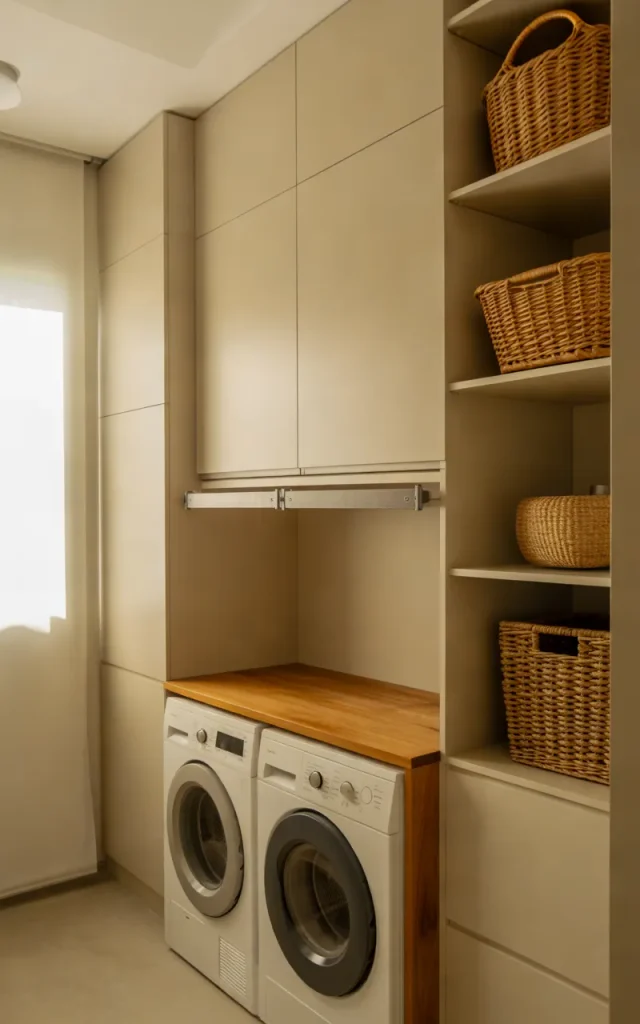
Complete room strategy · Smart and stylish
My favourite tiny laundry room designs are the ones where every element has a purpose. Instead of adding furniture and accessories one at a time, think about how the entire room can work together.
Start with the appliances, then plan a compact folding surface, concealed storage, and a designated place for sorting laundry. A slim pull-out hamper could sit beneath the counter, while overhead cabinets hold spare supplies. Wall hooks or a retractable drying rack can handle the tasks that don’t require permanent floor space.
For the décor, I would keep the main finishes simple. Warm white cabinetry, pale wood, a neutral backsplash, and coordinated baskets create a cohesive appearance without making the room feel overly styled.
What to prioritize first:
- Function: Make sure you can comfortably load, unload, and maintain your appliances.
- Storage: Give detergents, baskets, and cleaning tools designated places.
- Movement: Keep walkways clear and allow doors and drawers to open fully.
- Style: Repeat a few colours and materials for a polished finish.
- Flexibility: Choose fold-away or movable features where permanent fixtures aren’t practical.
Pro-tip: Don’t fill every empty corner just because space is available. Sometimes, leaving a little breathing room makes a tiny laundry room feel significantly more comfortable.
Final Thoughts
Creating a beautiful, functional laundry room isn’t about having more square footage. It’s about making thoughtful choices that help you use the space you already have. From floating shelves and slim hampers to clever folding stations and hidden storage, even small improvements can make everyday laundry feel less like a chore.
I’d start with one change that solves your biggest problem, whether that’s a lack of storage, nowhere to fold clothes, or a room that feels dark and cluttered. Once that improvement is in place, you can gradually build on it.
Your tiny laundry room deserves a little love, too. Choose an idea that suits your home, make it your own, and enjoy a space that works beautifully for you. ✨
