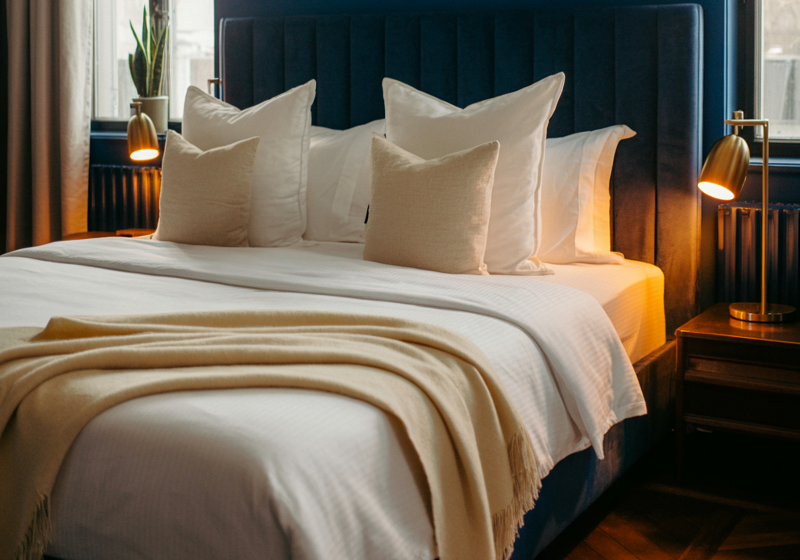
Your bedroom should feel like a deep breath you didn’t realize you were holding.
Not just somewhere you sleep, but somewhere you soften, reset, and feel grounded.
After helping reshape countless bedrooms over the years, one truth always stands out: the spaces people love most aren’t trend-driven or showroom-perfect. They’re calm, thoughtful, and deeply personal. They work with real life, not against it.
If your bedroom feels incomplete, uninspiring, or no longer reflects who you are, these 27 bedroom inspiration ideas are here to help you see it differently. Take what resonates. Leave the rest. Creating a space that feels like you is always the goal.
Anchor the room with a statement headboard

A headboard does more than hold pillows in place.
It sets the emotional tone of the entire room.
When I walk into a bedroom, the first thing I notice is the bed. And more specifically, the headboard. Upholstered headboards feel soft and inviting. Wood ones feel grounded and warm. Metal can feel romantic or modern depending on the shape.
If your bedroom feels bland, this is one of the fastest upgrades you can make. A tall headboard draws the eye up and makes the room feel intentional, even if everything else is simple.
Color and texture matter here. Linen, velvet, rattan, carved wood. Choose something that makes you want to lean back and stay awhile.
Everything else can be edited.
But the headboard?
That’s your anchor.
Layer bedding for depth, not perfection

Perfectly styled beds look great in photos.
Real beds need layers.
I always suggest starting with quality sheets. Something breathable. Something that feels good on your skin. Then add a duvet or quilt, a throw, and a few pillows you actually use.
The trick is contrast. Crisp sheets with a rumpled blanket. Smooth cotton with chunky knit. Light layers mixed with heavier ones.
Don’t overdo it. Too many pillows just create work at night.
Layering isn’t about styling for others.
It’s about comfort that looks good accidentally.
Choose a calming color palette that suits your energy

Color affects how you rest.
More than we realize.
Soft neutrals, muted blues, warm taupes, gentle greens. These shades slow the nervous system down. They help your body understand that it’s time to rest.
That doesn’t mean your bedroom has to be boring. Depth comes from undertones and layering. A warm gray feels very different from a cool one. A creamy white feels different from stark white.
If you love color, keep it muted or concentrated. One wall. One textile. One accent.
Remember this idea when we get to number 21. Color works best when it’s intentional.
Ground the space with a properly sized rug

A rug does more than warm your feet.
It grounds the entire room.
One of the most common mistakes I see is rugs that are too small. Ideally, your rug should extend under the bed and out on both sides. This creates balance and makes the room feel finished.
Texture matters here. Wool feels cozy. Flatweave feels clean. High-pile feels indulgent.
If your floors are cold or echo-y, this is a game changer.
Think of the rug as the quiet foundation everything else rests on.
Not an afterthought.
Upgrade your lighting beyond a single ceiling fixture

One overhead light is not enough.
Ever.
Bedrooms need layers of light just like kitchens do, maybe more. Ambient light for the room. Task lighting for reading. Soft accent lighting for evenings.
Bedside lamps are essential. Wall sconces free up nightstand space and feel intentional. Dimmer switches? Non-negotiable if you ask me.
Lighting sets mood faster than almost anything else. Warm bulbs always win in bedrooms. Always.
This idea connects beautifully with number 18 later on.
Light shapes how a room feels at night.
Style nightstands with purpose, not clutter

Nightstands should support your routine.
Not overwhelm it.
I like to keep it simple. A lamp. A book. Maybe a small dish or plant. That’s it.
Drawers matter. Hidden storage keeps surfaces calm. If your nightstand is always overflowing, it’s probably not working hard enough.
Matching nightstands aren’t required. Balance matters more than symmetry. Two different tables can work beautifully if they feel equal in visual weight.
This is a small area, but it affects how you start and end every day.
So make it count.
Use curtains to soften the room and control light

Bare windows can make a bedroom feel unfinished.
Curtains add softness instantly.
Even if you have blinds, fabric panels bring warmth and texture. Hang them high and wide to make ceilings feel taller and windows feel larger.
Blackout lining is worth it if light bothers you. Sleep quality improves dramatically when light is controlled.
Choose fabric that complements your bedding. Linen feels relaxed. Velvet feels dramatic. Cotton feels classic.
Curtains aren’t just functional.
They’re emotional.
Declutter ruthlessly to protect rest

Clutter steals rest.
Quietly.
Bedrooms collect everything. Laundry. Paperwork. Random items with no home. All of it adds mental noise.
Start small. Clear surfaces. Edit decor. Remove anything that doesn’t belong in a place meant for rest.
Storage matters here. Baskets. Drawers. Closets that actually work.
A calm bedroom isn’t styled.
It’s edited.
Design a seating area that invites slow moments

If space allows, add somewhere to sit that isn’t the bed.
This changes how the room functions.
A chair by the window. A bench at the foot of the bed. Even a small loveseat if the room allows.
This creates a place to read, journal, or just pause. It separates sleeping from everything else.
Choose something comfortable. Not decorative-only. A soft chair with a throw feels inviting without trying too hard.
Remember idea 6 about purposeful nightstands?
This is that idea, expanded.
The bedroom becomes more than a place to collapse.
It becomes a retreat.
Rethink the wall behind the bed

That wall matters.
A lot.
Paint it a slightly deeper shade. Add paneling. Wallpaper it subtly. Hang oversized art.
The wall behind the bed anchors the room visually. When it’s treated intentionally, everything else falls into place more easily.
I love soft, textured wallpaper here. Nothing too busy. Just enough to add depth.
If wallpaper feels like too much, painted trim or a simple mural effect can work beautifully.
This idea works especially well when paired with a strong headboard from idea 1.
Choose art that makes you feel something calm

Bedroom art should soothe.
Not stimulate.
This isn’t the place for loud colors or chaotic imagery. Choose pieces that slow you down. Landscapes. Abstracts. Soft photography.
Scale matters. One larger piece often works better than many small ones.
Hang art at eye level when standing near the bed. Not too high. Not floating awkwardly.
Art in a bedroom should feel like a deep breath.
If it doesn’t, keep looking.
Introduce symmetry for a sense of balance

Symmetry creates calm.
Our brains love it.
Matching lamps. Balanced nightstands. Even spacing around the bed. These details quietly settle the room.
This doesn’t mean everything has to match perfectly. Just that things feel evenly weighted.
If your room feels off but you can’t explain why, symmetry is often the missing piece.
This idea pairs beautifully with number 6 and number 15 coming up.
Upgrade storage so clutter stays hidden

Storage isn’t glamorous.
But it’s essential.
Dressers that fit the room. Closets with real systems. Under-bed storage that doesn’t feel chaotic.
When storage works, the room breathes. When it doesn’t, nothing else matters.
I always say: design storage before decor. It supports everything else.
This idea connects back to decluttering in idea 10.
One doesn’t work without the other.
Personalize the space with meaningful objects

Bedrooms should feel personal.
Not staged.
Photos you love. A book you return to. A souvenir that holds memory.
Keep it curated. One or two meaningful pieces go further than many random ones.
Personal doesn’t mean cluttered. It means intentional.
This is where your bedroom becomes yours, not a showroom.
Soften sound with textiles and layout

Sound affects rest more than we realize.
Rugs absorb echo. Curtains soften outside noise. Upholstered furniture reduces sharp acoustics.
If your bedroom feels noisy or hollow, this is often why.
Softness isn’t just visual.
It’s auditory too.
This idea works hand-in-hand with layering and textiles we talked about earlier.
Create a nighttime lighting ritual

How you light the room at night matters.
Overhead lights should be off in the evening. Use lamps. Low, warm light. Dim if possible.
This signals your body that it’s time to slow down.
Bedside lamps with warm bulbs. Soft accent lights. Even candles if that feels right for you.
Remember idea 5?
This is where layered lighting really shines.
Keep technology minimal and intentional

Bedrooms are for rest.
Not scrolling.
If possible, keep TVs and desks out. Or at least visually hidden.
Charging stations in drawers. Alarm clocks instead of phones. Small shifts make a big difference.
I’m not anti-tech. I’m pro-boundaries.
Your sleep will thank you.
Let negative space exist

Not every corner needs something.
Empty space gives the eye somewhere to rest. It makes everything else feel more intentional.
If a room feels crowded, remove one thing. Then another.
This is the quiet power of restraint.
Modern or traditional. Small or large.
Negative space works everywhere.
Use color strategically to shift mood

Remember idea 3 where we talked about calming palettes?
This is the bolder extension of that thought.
Color doesn’t have to cover every wall. A painted ceiling. A deep accent wall. A colored dresser.
Dark colors can be incredibly soothing in bedrooms when used intentionally. Navy. Charcoal. Forest green.
Balance is key. Pair deep colors with soft textures and warm light.
Color should support rest, not dominate it.
Design the room around your morning routine

Bedrooms aren’t just for sleep.
They’re where mornings begin.
Think about how you wake up. Light. Movement. Sound.
A chair to sit and stretch. A mirror placed where light hits. Space to breathe.
Designing for mornings improves nights too.
This idea connects beautifully with idea 11 about seating and idea 18 about lighting.
Upgrade your mattress and pillows before decor

No throw pillow can fix bad sleep.
If your mattress is uncomfortable, start there. Same with pillows.
Support matters. Comfort matters. Everything else is secondary.
Decor can wait. Sleep can’t.
This is the most practical bedroom inspiration idea on the list.
And the most important.
Add a bench at the foot of the bed

A bench changes how the room functions.
It gives you a place to sit. To lay clothes. To pause.
Upholstered benches add softness. Wood benches add structure.
Scale matters. It should complement the bed, not compete with it.
This idea pairs nicely with symmetry and seating concepts earlier.
Create visual calm with limited patterns

Patterns are fun.
But too many compete.
Choose one main pattern and support it with solids and textures.
This keeps the room feeling calm and cohesive.
If you love pattern, keep it to bedding or rugs. Let walls and furniture stay quieter.
Balance again. Always balance.
Refresh the room with scent and air quality

Bedrooms should smell good.
Not overpowering. Just clean and comforting.
Essential oil diffusers. Linen sprays. Fresh air when possible.
Scent anchors memory and emotion. Choose something that relaxes you.
This is an often-overlooked layer that makes a huge difference.
Reposition furniture to improve flow

Sometimes the room doesn’t need new things.
It needs a new layout.
Try moving the bed. Shifting nightstands. Clearing pathways.
Flow affects how a room feels instantly.
Before buying anything new, try rearranging what you already have.
Let the ceiling play a role

Ceilings are often ignored.
They shouldn’t be.
Paint them slightly darker. Add subtle texture. Install a statement light.
Ceilings can cocoon or lift a room depending on how they’re treated.
This works especially well in bedrooms where you want a sense of enclosure and calm.
Balance masculine and feminine elements

The most inviting bedrooms balance energies.
Soft fabrics with solid furniture. Curves with straight lines. Light with weight.
This balance creates harmony. Not too delicate. Not too stark.
If something feels off, look for imbalance.
Takeaway Message
If you take anything from these 27 bedroom inspiration ideas, let it be this:
Start with how you want to feel.
Everything else follows.
