A curved staircase doesn’t just connect floors—it creates a moment.
The kind that makes guests pause, look up, and quietly say wow.
There’s something undeniably captivating about how a curved staircase moves through a space. It can feel grand or subtle, modern or timeless, bold or beautifully understated. With the right mix of materials, lighting, and railing details, each design tells its own story.
In this collection of 23 curved staircase ideas, you’ll see how one architectural feature can transform a home in dozens of unexpected ways. Whether you’re planning a build, remodeling, or simply collecting inspiration, these designs are worth taking in—step by step.
Anchor the space with a grand entryway staircase

If you have the room, start bold.
A curved staircase in the entryway sets the tone for the entire house. It says, “Welcome, take your time.” I love designs that gently sweep upward instead of spiraling tightly.
Keep the curve wide and generous. It feels more architectural than decorative.
Pair it with neutral finishes at first—stone treads, soft wood tones, or light-painted risers. Then layer personality through lighting and art later.
This approach works beautifully in open foyers where the staircase becomes the visual anchor, not just a functional element.
Soften modern interiors with a floating curved staircase

Modern homes can feel sharp. Clean lines everywhere.
That’s why a floating curved staircase works so well. It introduces movement without clutter.
I usually recommend open risers paired with a hidden steel structure. The curve keeps things organic, while the floating design stays sleek.
Glass railings help maintain that airy feeling. Nothing blocks the flow.
If you loved the drama of the first idea but want something lighter, this is a great counterbalance.
Wrap natural wood around a sweeping curve

Wood and curves belong together. Always have.
A fully wrapped wooden staircase feels warm, intentional, and timeless. I’m talking about wood treads, wood risers, even a matching handrail that follows the curve perfectly.
Choose wood with visible grain. Oak and walnut are personal favorites.
This idea shines in homes that lean transitional or organic modern. It also ages beautifully, which I care about more than trends.
And yes, it creaks a little sometimes. That’s part of the charm.
Highlight the curve using statement stair railings

Sometimes the staircase itself is simple. And that’s okay.
The magic can live in the railing.
Think sculptural metal balusters, custom wrought iron, or even carved wood panels that bend with the curve. The railing becomes art.
I’ve seen this done in otherwise minimal homes, and it works every time.
Remember this idea—we’ll contrast it later when we talk about invisible railings.
Frame the staircase with dramatic overhead lighting

Lighting changes everything.
For curved staircases, I love a chandelier that mirrors the curve as it drops through the stairwell. Not necessarily crystal. Even modern linear fixtures work.
The key is scale. Too small feels timid.
Use warm lighting to soften shadows and enhance the curve at night. During the day, let natural light take over.
This idea pairs beautifully with the grand entryway from the first section.
Embrace minimalism with clean, uninterrupted curves

Sometimes less really is more.
A minimalist curved staircase focuses on form. No heavy detailing. No visual noise.
I suggest painted treads in soft white or muted beige, paired with ultra-thin railings. Or none at all, where code allows.
The curve becomes the star because nothing competes with it.
This approach works best in contemporary homes with open floor plans. And unlike the dramatic railing in idea four, this one whispers instead of shouts.
Blend the staircase into the wall for a sculptural look

This one feels almost futuristic.
The staircase appears to emerge from the wall itself. No visible stringers. No bulky supports.
Plaster or microcement finishes help create that seamless effect. The curve looks carved, not constructed.
It’s subtle. Quiet. And incredibly refined.
If minimalism speaks to you but you still want architectural impact, this is the sweet spot.
Contrast materials to make the curve pop

Contrast creates energy.
Pair dark wood treads with white risers. Or concrete steps with brass railings.
The curve becomes more visible when materials shift. Your eye follows the change naturally.
I often recommend this in homes where the staircase sits between two rooms. It becomes a bridge, visually and physically.
Unlike the blended approach in the previous idea, this one celebrates separation and definition.
Incorporate stone for timeless elegance

Stone curved staircases feel ancient in the best way.
Marble, limestone, or travertine adds weight and permanence. The curve softens what could otherwise feel cold.
I recommend honed finishes. Polished stone can feel slippery and too formal.
Pair stone steps with understated railings so the material can breathe.
This works beautifully in Mediterranean, classic, or European-inspired homes. And yes, it’s an investment—but one that never goes out of style.
Use a spiral-inspired curve for compact spaces

Not every home has room for a grand sweep.
A tighter, spiral-inspired curved staircase saves space while still delivering visual interest.
The trick is proportion. Keep risers comfortable and railings sturdy.
I love this solution for lofts or second-floor additions.
Unlike the wide curves earlier, this one feels intimate. Cozy. Almost secretive.
Add subtle LED lighting under each step

This one’s about mood.
Hidden LED strips under treads make curved staircases glow softly at night. The curve feels almost floating.
Choose warm light. Always warm.
It’s practical too. Nighttime visibility without harsh overhead lights.
Pair this with minimalist designs from ideas six or seven for a modern, hotel-like feel.
Pair curves with arched doorways nearby

Curves love company.
If you already have arched doorways or windows, a curved staircase completes the language of the home.
The repetition feels intentional, not accidental.
This idea is less about the staircase itself and more about harmony. Everything flows.
Homes with Mediterranean or Spanish influences especially benefit from this continuity.
Ground the staircase with textured runners

Runners add softness.
A curved runner follows the stair’s movement and adds grip, sound absorption, and comfort.
Choose subtle patterns. Let texture do the talking.
This works wonderfully with wood or stone stairs that feel a bit hard underfoot.
Unlike painted steps, runners introduce warmth without permanence.
Soften the curve using plaster finishes

Plaster adds soul.
A plastered staircase feels handmade. Slight imperfections make it human.
The curve becomes gentle, almost organic.
I love this for coastal or earthy homes where perfection isn’t the goal.
Pair it with simple wood railings or none at all.
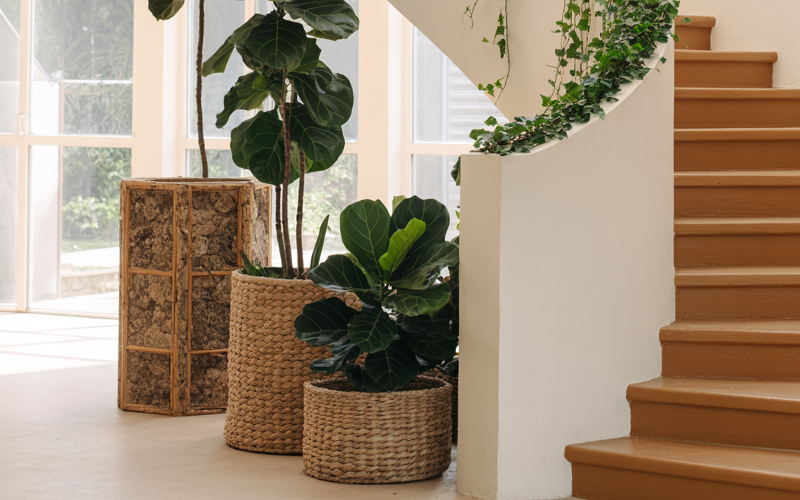
Frame the staircase with indoor plants

Greenery loves curves.
Place tall plants at the base or let trailing plants follow the railing upward.
It softens hard materials instantly.
This idea works especially well with glass railings from idea nine.
Life meets architecture. Always a good thing.
Use curved staircases to define open-plan zones

In open homes, staircases can feel awkward.
A curved staircase helps define spaces without walls.
It separates living from dining visually while keeping flow intact.
This idea is subtle but powerful. The curve becomes a natural divider.
Echo the curve in nearby furniture

Repetition creates harmony.
Curved sofas, round tables, or arched shelving nearby reinforce the staircase design.
Nothing feels random.
This works beautifully in living spaces that open onto the staircase.
Install a sculptural handrail that steals attention

Handrails matter more than people think.
A thick wood rail, a bronze curve, or even leather-wrapped designs add tactile interest.
Your hand notices before your eyes do.
This idea pairs well with simple stair structures.
Blend traditional details into curved designs

Curves aren’t just modern.
Add classic balusters, detailed newel posts, or carved details for a traditional feel.
The curve softens formality.
Perfect for historic homes or classic renovations.
Keep the curve subtle for understated elegance

Not all curves need drama.
A gentle bend feels refined and grown-up.
It whispers luxury instead of shouting it.
This is perfect for homes that value restraint.
Combine multiple materials for layered depth

This is where design gets fun.
Mix wood, metal, glass, and stone thoughtfully.
Each material highlights the curve differently.
Layering creates richness without chaos.
I often use this approach when homeowners want something unique but timeless.
Soften acoustics with curved stair design

Curves help sound travel differently.
Add runners, wood, or textured walls to absorb echo.
This makes homes feel calmer.
Especially useful in open-plan layouts.
Personalize curved staircases with storytelling details

This is my favorite.
Add meaningful art, heirloom materials, or custom details.
Let the staircase tell your story.
After all, it’s something you’ll walk past every day.
Make it yours.
Final Thoughts
Curved staircases aren’t just about getting upstairs.
They’re about movement. Flow. Emotion.
Whether you lean minimalist, dramatic, or somewhere in between, there’s inspiration here to get you thinking differently.
Pick one idea. Start there.
And let your home curve its way into something unforgettable.
