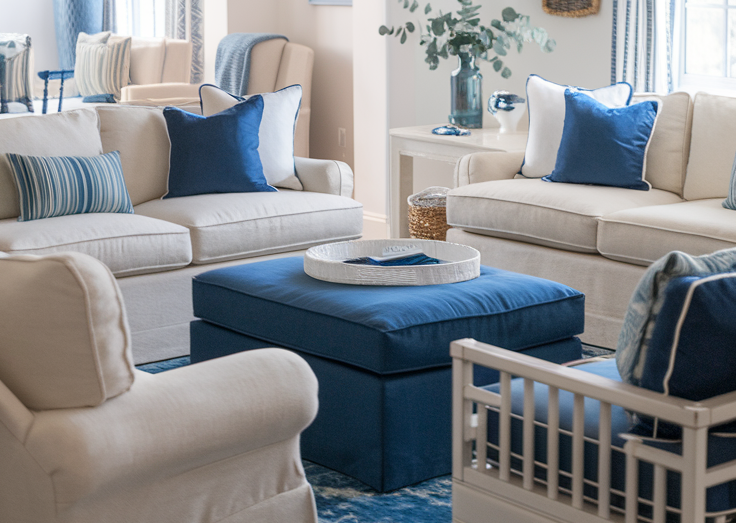
Your living room is the heart of your home. It’s where you unwind after long days, gather with friends, scroll endlessly on your phone, binge your favorite shows, and sometimes do absolutely nothing at all. When this space feels off, it affects your whole mood.
I’ve worked with living rooms of every kind—spacious, tiny, oddly shaped, and full of frustrating corners with nowhere to plug anything in. And one thing has become very clear over the years: you don’t need a dramatic renovation to make a living room feel right.
What you really need are smart, realistic Living room decor ideas—the kind that fit real life, real homes, and real habits. Below are 29 ideas that focus on comfort, function, and style that actually lasts beyond the photos.
Anchor the Room With a Statement Rug

I always start with the rug. Always. It sets the tone before anything else even has a chance.
A good rug grounds the furniture and tells the room where it begins and ends. Without it, everything feels like it’s floating around, unsure of itself.
Go bigger than you think. Too-small rugs are the most common mistake I see. At least the front legs of your sofa and chairs should sit on it.
Pattern adds energy. Neutrals add calm. Either way, the right rug makes the whole room feel intentional.
Layer Throw Pillows With Different Textures

Pillows aren’t just for comfort. They’re personality.
I like mixing fabrics more than colors. Linen, velvet, chunky knits, maybe something woven. That contrast makes even neutral spaces feel rich.
Don’t overthink symmetry. A little imbalance feels relaxed and lived-in. Which is the goal.
And yes, you can absolutely karate-chop them. It’s not a crime.
Hang Artwork at Eye Level

Art placement can make or break a room. I’ve seen beautiful pieces ruined by bad height.
Rule of thumb? Center of the artwork should hit around eye level. Not ceiling level. Not sofa-back level.
If you’re doing a gallery wall, treat it like one big piece. Lay it out on the floor first. Trust me.
Art doesn’t need to be expensive. It just needs to mean something to you.
Style a Coffee Table With Purpose

The coffee table is prime real estate. But it shouldn’t feel cluttered.
I stick to three things. Something tall. Something flat. Something personal.
A book stack, a tray, maybe a small object you love. Leave room for actual living—like drinks and feet.
If it feels too precious, it’s wrong.
Bring in Plants (Even Fake Ones)

Plants instantly soften a room. They add life. Even when they’re not technically alive.
A tall plant fills awkward corners beautifully. Smaller ones work on shelves and tables.
If you kill everything, go faux. No shame. Just choose good-quality ones.
Green balances out all the hard edges furniture brings.
Create Conversation Zones With Seating

Furniture shouldn’t just face the TV by default. I know. It’s tempting.
Pull chairs toward the sofa. Create a circle or soft U-shape. Make it easy to talk.
Even small rooms benefit from this. It makes the space feel warmer.
And yes, you can still watch TV comfortably.
Add a Floor Lamp for Ambient Light

Overhead lights are harsh. Necessary sometimes, but harsh.
A floor lamp creates glow. Mood. Comfort.
Place it near a chair or corner that feels dark. Instantly cozier.
Lighting changes everything. Seriously.
Mix Old and New Pieces

Rooms feel flat when everything is brand new. They need contrast.
Pair a modern sofa with a vintage side table. Or an old mirror with sleek lighting.
That mix tells a story. Like the room evolved over time.
Which makes it feel real.
Use Curtains to Add Height

Curtains should kiss the ceiling. Not hover awkwardly above the window.
Hang rods higher than the frame. It visually stretches the room upward.
Light fabrics keep things airy. Heavier ones add drama.
Either way, they soften the space instantly.
Style Built-Ins With Breathing Room

If you have built-ins, resist filling every inch.
Negative space matters. It lets the eye rest.
Mix books with objects. Stack some. Stand others upright.
And step back often. Balance happens when you pause.
Add a Statement Mirror

Mirrors bounce light like magic. Especially in darker rooms.
Place one across from a window if possible. You’ll double the brightness.
Frames matter. Choose something that fits your vibe.
It’s function and beauty in one piece.
Ground the Space With a Solid Sofa

Your sofa is the anchor. Choose wisely.
Neutral sofas last longer style-wise. You can always change the rest.
Comfort matters more than trend. Sit on it. Really sit.
This is where you’ll live.
Incorporate Personal Objects Thoughtfully

Photos, travel finds, heirlooms. These make the room yours.
But spread them out. Don’t pile them all on one shelf.
Give meaningful pieces space to breathe.
They deserve it.
Use Side Tables That Actually Fit

Side tables should be within easy reach. Not a stretch. Not a lean.
Height matters. Aim for sofa arm height or slightly lower.
Different shapes add interest. Round tables soften boxy rooms.
Function first. Style second.
Play With Accent Chairs

Accent chairs are where you can have fun.
Try a bold color. Or an interesting shape.
They don’t need to match the sofa. They just need to belong.
One good chair can change everything.
Add Warmth With Wood Tones

Wood brings warmth no fabric can.
Mix tones. Don’t match everything perfectly.
Coffee tables, shelves, frames—it all counts.
It keeps the room from feeling cold.
Frame the TV With Decor

A naked TV wall feels unfinished.
Add shelves. Art. Cabinets. Something.
It helps the TV blend instead of dominate.
And yes, it’s possible.
Define the Space With an Area Rug (Again, Yes)

Open-concept rooms need visual boundaries.
Rugs do that quietly and effectively.
They tell the room how to behave.
And they make things feel intentional.
Introduce Soft Textiles Beyond Pillows

Think throws. Poufs. Fabric ottomans.
Softness balances structure.
Drape a throw casually. Not folded like a hotel.
Relaxed is better.
Use a Console Table Behind the Sofa

Floating sofas feel lost sometimes.
A console grounds them. Adds storage. Adds style.
Great spot for lamps or decor.
And it defines the layout nicely.
Keep a Consistent Color Palette

Too many colors create chaos.
Pick two or three and repeat them.
That repetition brings calm.
Even eclectic rooms need cohesion.
Add Subtle Pattern Through Accessories

Pattern doesn’t need to scream.
A pillow. A rug. A piece of art.
Little moments add interest without overwhelm.
Balance is everything.
Style Shelves With Odd Numbers

Odd numbers feel natural. Even ones feel staged.
Three objects. Five books. One sculptural piece.
It’s a small trick that works every time.
Trust it.
Let Negative Space Exist

Not every wall needs something.
Empty space gives the room rhythm.
It lets special pieces shine.
Sometimes less really is more.
Add a Pouf or Ottoman for Flexibility

Extra seating without bulk? Yes please.
Poufs move easily. Ottomans multitask.
Footrest. Table. Seat.
They earn their keep.
Refresh the Room With Seasonal Swaps

You don’t need a full redo.
Change pillows. Throws. Maybe art.
Small swaps keep the room feeling fresh.
And it’s budget-friendly.
Use Lighting in Layers

Overhead. Table lamps. Floor lamps.
Each serves a purpose.
Together, they create warmth.
One light is never enough.
Add Architectural Interest With Molding or Panels

Even simple trim elevates a room.
It adds depth without clutter.
Paint it the same color for subtle impact.
It feels custom. Because it is.
Let the Room Reflect How You Actually Live

This matters most.
If you nap here, make it cozy. If you host, make it open.
Ignore trends that don’t fit your life.
The best living rooms feel honest.
Final Thoughts
Decorating your living room doesn’t have to be overwhelming. Start with one idea. Just one.
Try it. Live with it. Adjust.
That’s how real homes are made—slowly, intentionally, and with heart.
