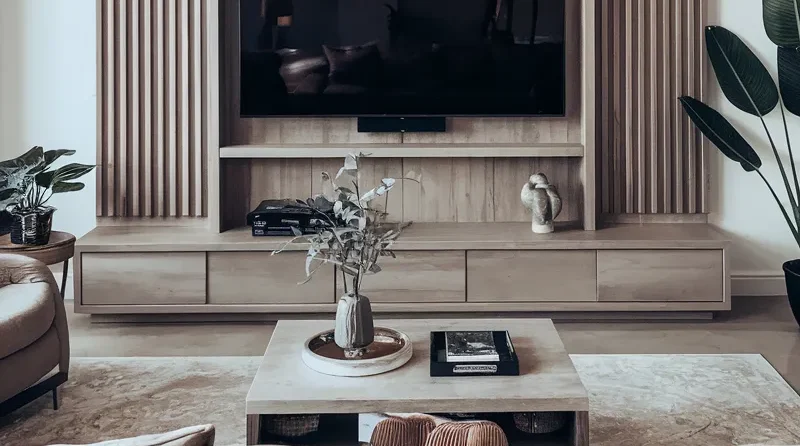
Your living room is where life happens. Movie nights. Lazy Sundays. Unexpected guests.
So it shouldn’t feel like an afterthought. It should feel intentional. Comfortable. A little bit you.
I’ve tried, tested, and tweaked dozens of setups over the years—and these are the ideas I keep coming back to. Some are simple swaps. Others take a bit more effort. But all of them? Worth it.
Let’s get into it. ✨
Create a cozy focal point with a statement sofa
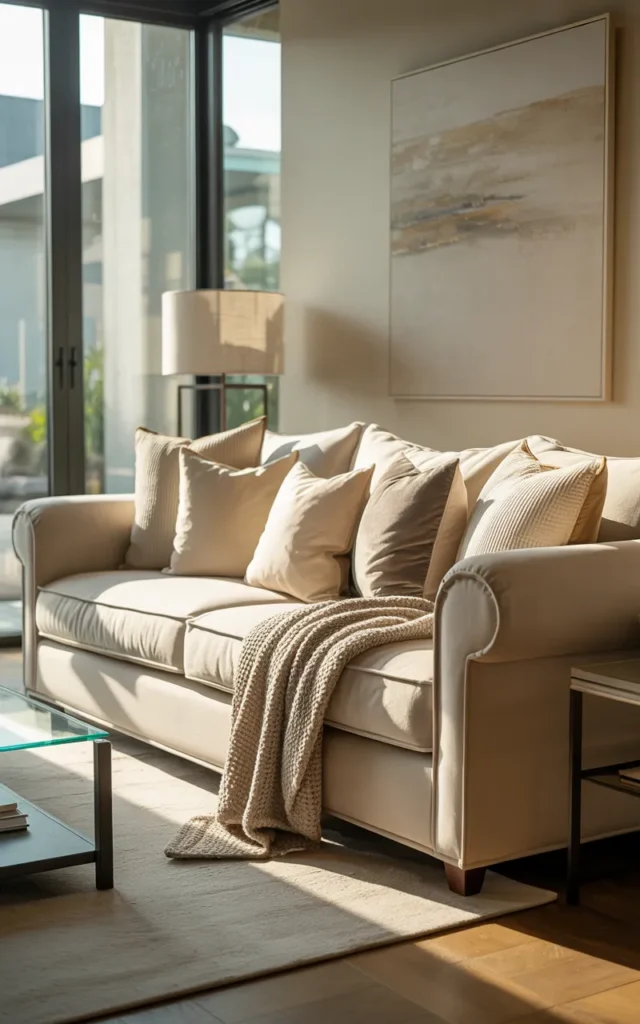
I always start with the sofa. Always.
Pick one that feels like you. Maybe a soft beige sectional. Maybe a bold emerald piece. This is where everything gathers around, so don’t play it too safe.
Then build around it. Add cushions. A throw. Let it look lived-in, not staged.
Why it works?
Because a strong anchor instantly gives direction to your entire room.
Layer different lighting for warmth and depth
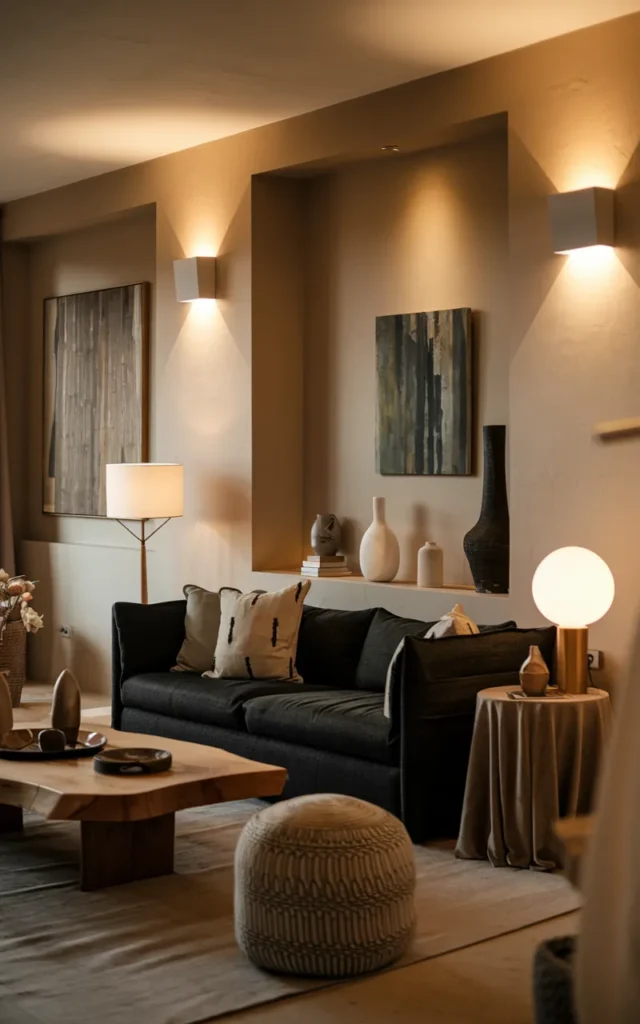
Overhead lighting alone? Not enough.
I like mixing floor lamps, table lamps, and maybe even a soft wall sconce. It changes everything after sunset 🌙
You’ll notice the room feels calmer. Softer. More inviting.
Quick Tip:
Warm white bulbs > cool white. Always.
Add a large area rug to define the space
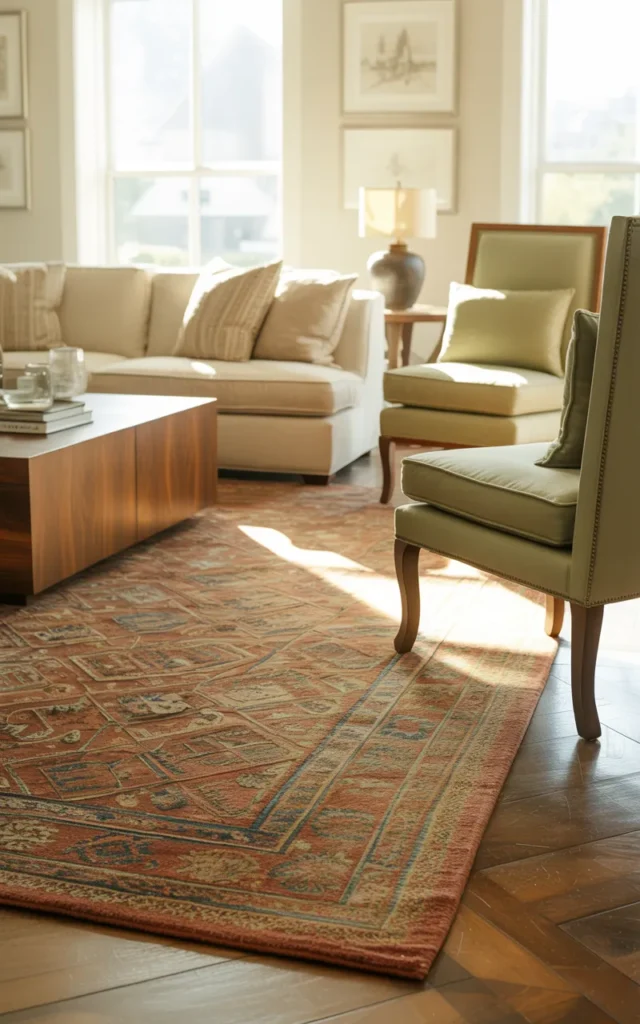
If your living room feels “floaty,” this is probably why.
A big rug pulls everything together. It visually connects your sofa, coffee table, and chairs into one cohesive zone.
Don’t go too small. That’s the most common mistake.
A Micro-tip:
At least the front legs of your furniture should sit on the rug.
Hang oversized artwork for instant personality
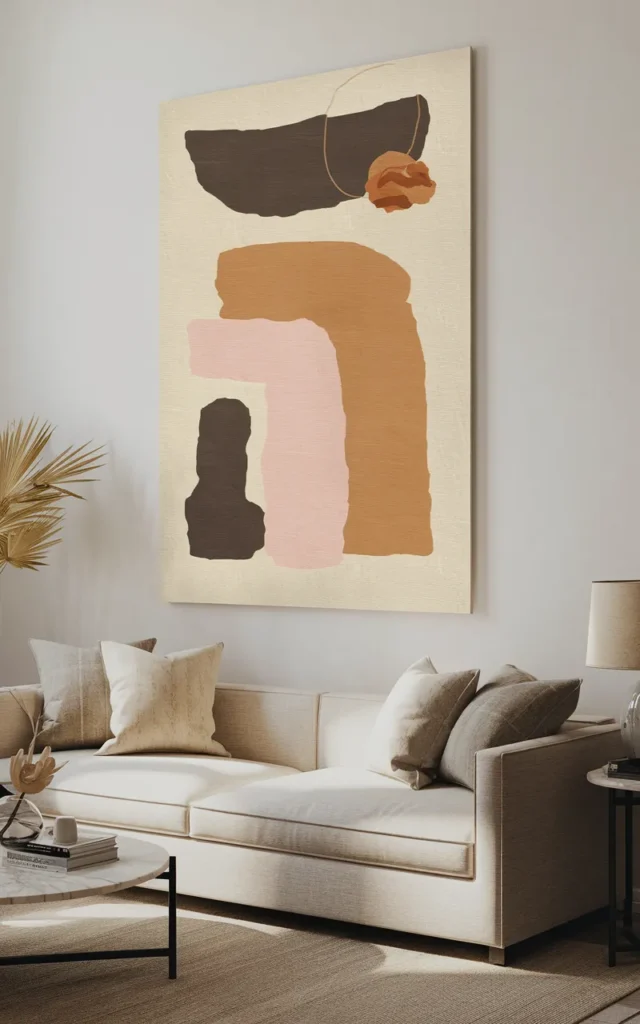
Blank walls can feel… unfinished.
One large artwork changes that immediately. I prefer one bold piece over a cluttered gallery wall. It feels cleaner and more intentional 🎨
You can go abstract, minimal, or even a framed textile.
Why designers do this:
Big art creates impact without visual chaos.
Use neutral tones as your base palette
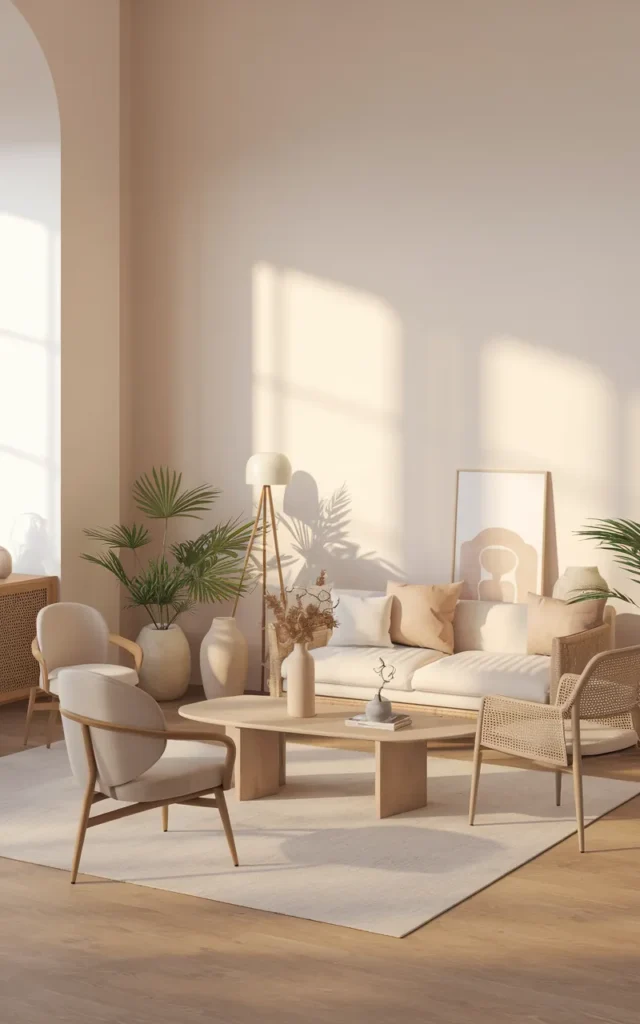
This is my go-to foundation.
Soft whites, warm beiges, gentle greys—they calm the space instantly. Then you can add color in small doses later.
Remember idea #1? A bold sofa pops even more against neutrals.
The psychology behind it:
Neutral tones reduce visual stress and make rooms feel bigger.
Add layered curtains for softness
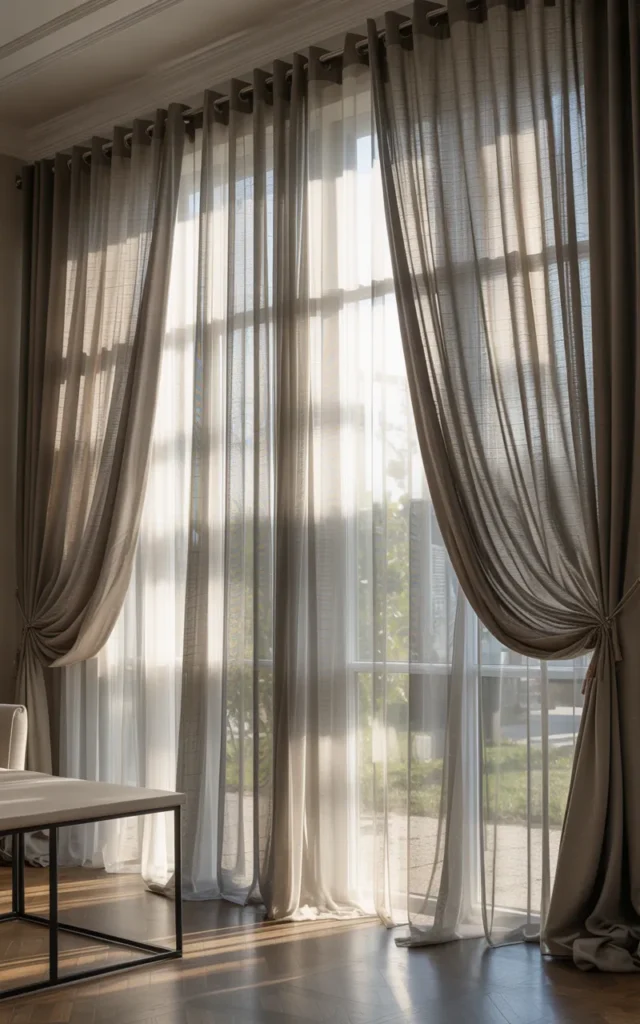
Bare windows feel harsh.
I love pairing sheer curtains with heavier drapes. It gives flexibility—light during the day, privacy at night.
And it softens the whole room instantly.
A Pro-tip:
Hang curtains higher than the window frame to make ceilings feel taller.
Use accent chairs to create conversation zones
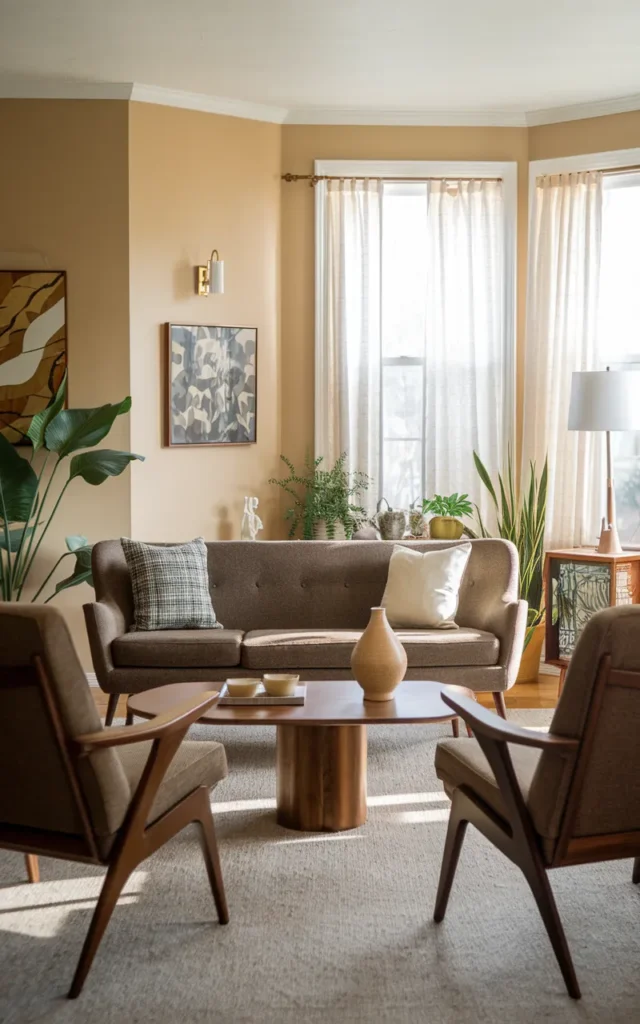
A sofa alone can feel one-directional.
Add one or two accent chairs facing inward. Suddenly, the room invites conversation ☕
You can mix styles here. It doesn’t have to match perfectly.
Who this is for:
Anyone who hosts or loves cozy chats.
Introduce a feature wall with subtle texture
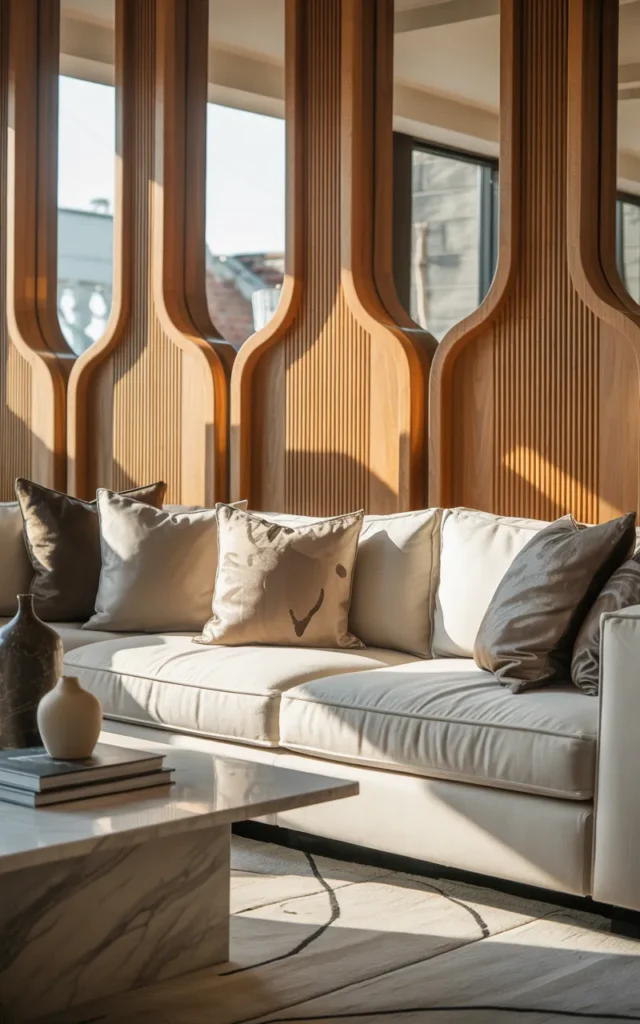
Not all feature walls need bold colors.
Try textured paint, wood panels, or even fluted designs. It adds depth without overwhelming the space.
Unlike the fourth idea where artwork takes center stage, this one quietly supports everything else.
Step-by-step instructions:
- Choose one wall (usually behind the TV or sofa)
- Select a subtle texture finish
- Keep the rest of the room minimal
- Add soft lighting to highlight texture
Use mirrors to make the room feel bigger
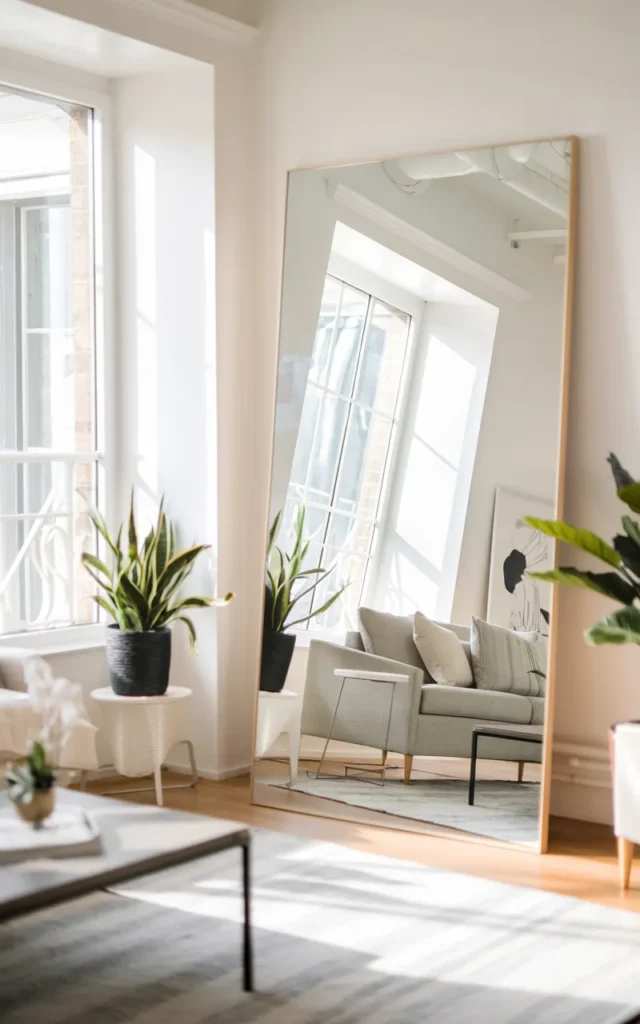
Mirrors are magic.
Place one opposite a window, and watch your space double in brightness. It’s especially helpful in smaller living rooms.
Small space hack:
Lean a tall mirror instead of mounting it. Adds height instantly.
Create a reading nook in one corner
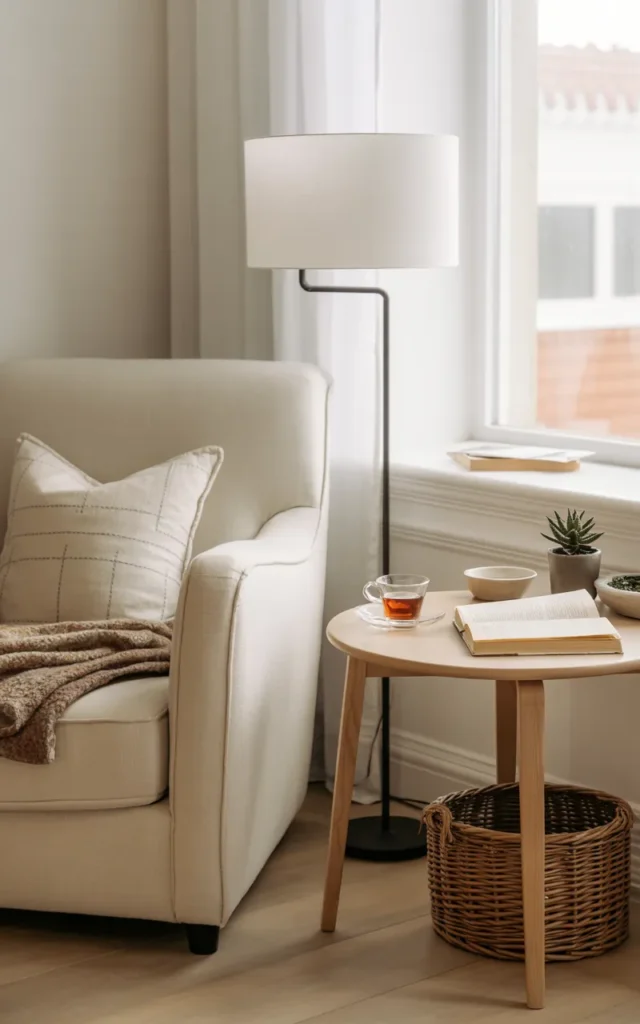
Even a small corner can become something special.
Add a comfy chair, a lamp, and a small table. That’s it. Your quiet zone 📖
Unlike the tenth idea (conversation seating), this one is just for you.
Time required to implement:
1–2 hours max.
Play with symmetry for a balanced look
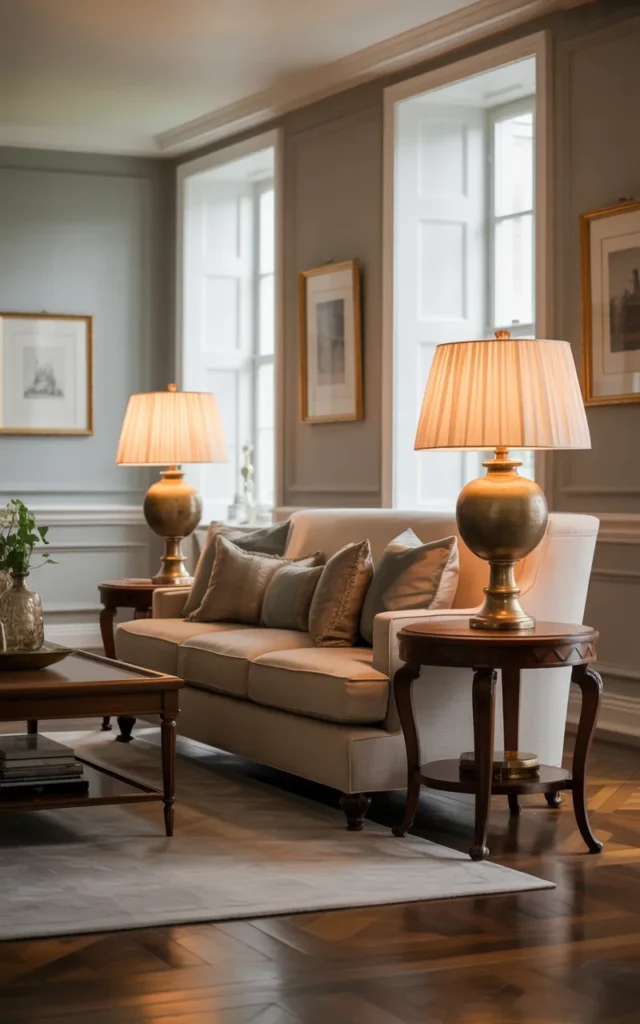
Sometimes, order feels calming.
Matching lamps. Identical side tables. Even cushions arranged evenly—it creates visual peace.
But don’t overdo it. Mix in a little imperfection.
Vibe check:
- Calm ✔
- Structured ✔
- Not too stiff ✔
Anchor the TV wall with built-in panels
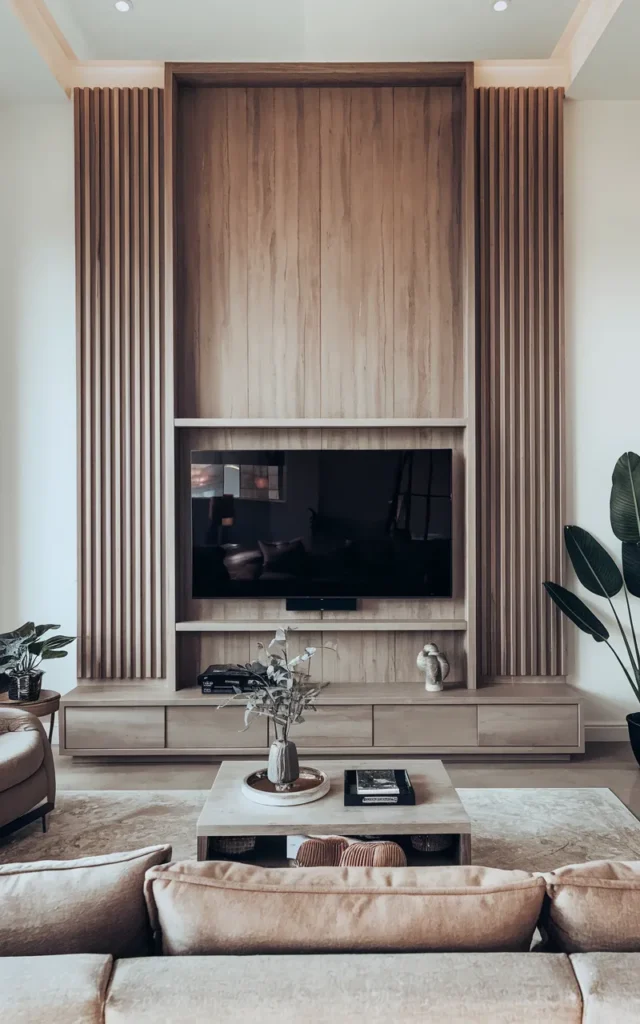
Floating TVs can feel disconnected.
Add a panel behind it—wood, laminate, or even painted MDF. It frames the TV beautifully.
This ties back to idea #3 about grounding the space.
How to steal this look:
Use peel-and-stick panels if you’re renting.
Create depth with layered wall decor
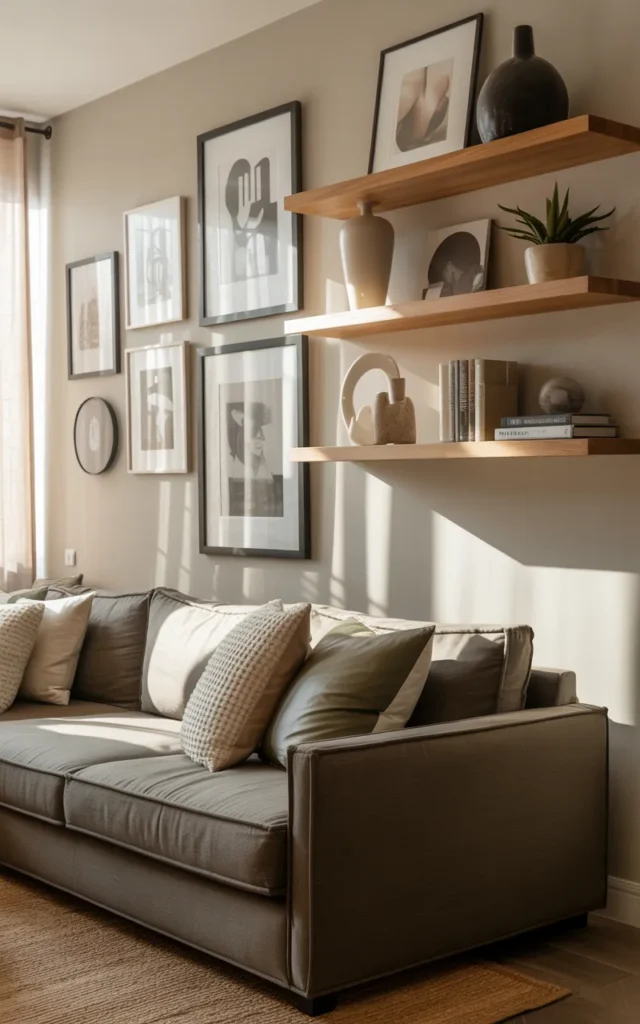
Instead of one flat wall, build layers.
Start with a base—maybe paint or paneling. Add artwork. Then maybe a sconce or floating shelf. Each layer adds dimension.
It’s not about filling space. It’s about building interest gradually.
I usually test layouts on the floor first. Saves a lot of regret later.
Do’s & Don’ts:
- Do mix frame sizes
- Do leave breathing space
- Don’t overcrowd
- Don’t align everything too perfectly
Design around a central colour story
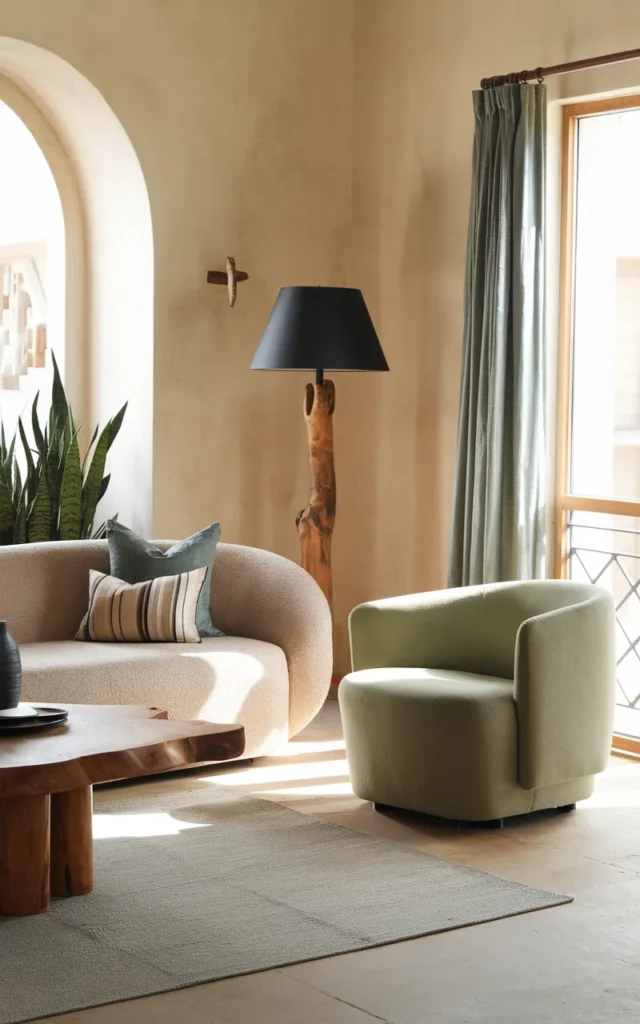
Pick 2–3 colors and stick to them.
This creates flow. Everything feels connected, even if pieces are different.
For example—beige, sage green, and black accents. Calm but defined.
Remember idea #13? This makes swapping accents super easy.
Colour swap suggestion:
- Summer → Soft pastels
- Winter → Deep earthy tones
Add a statement ceiling detail
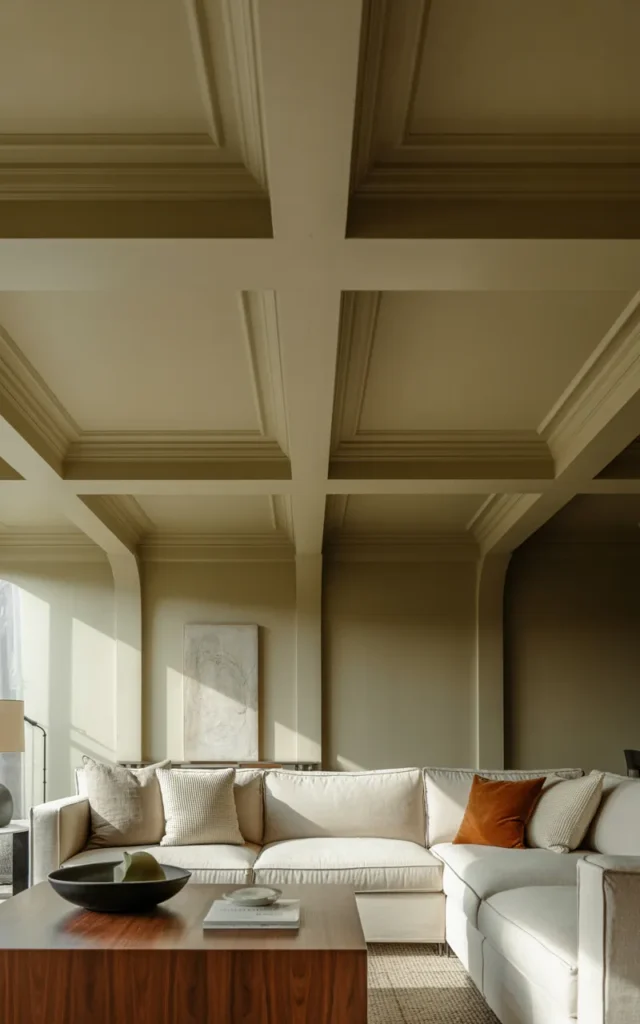
Most people ignore ceilings. Big mistake.
Try subtle molding, wooden beams, or even a bold paint color. It draws the eye upward and adds drama.
It’s unexpected. That’s why it works.
I once added a soft grey ceiling in a neutral room—completely changed the vibe.
Trend callout:
Painted ceilings are making a quiet comeback.
Use low furniture for a modern feel
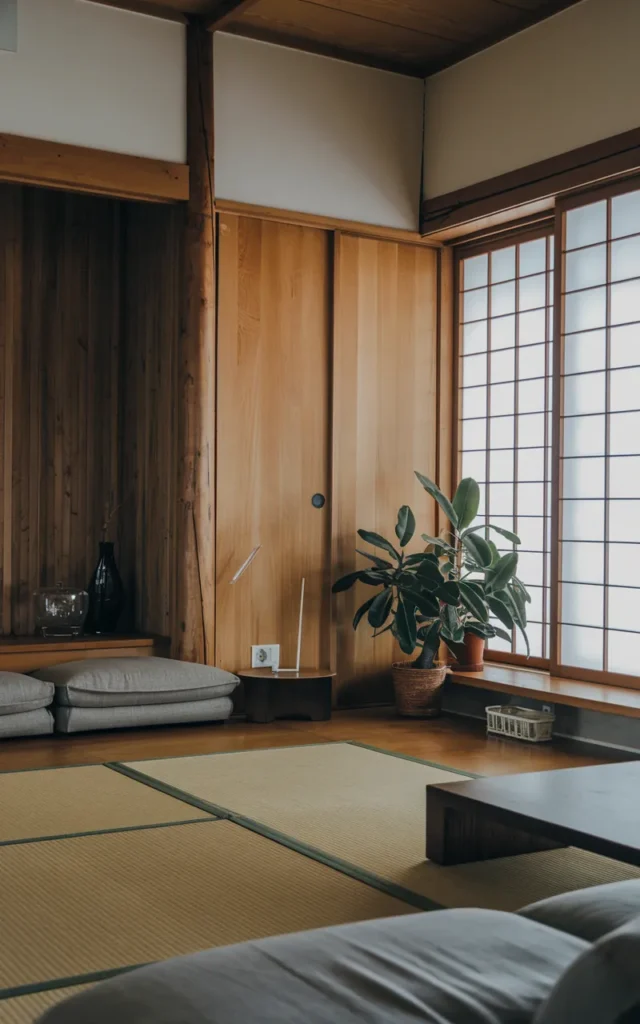
Lower sofas, low tables—it makes ceilings feel taller.
The room instantly feels more open and relaxed. Almost lounge-like.
Unlike the more structured setups earlier, this one leans casual.
One rule to remember:
Keep proportions consistent. Don’t mix very tall and very low pieces randomly.
Keep negative space intentionally
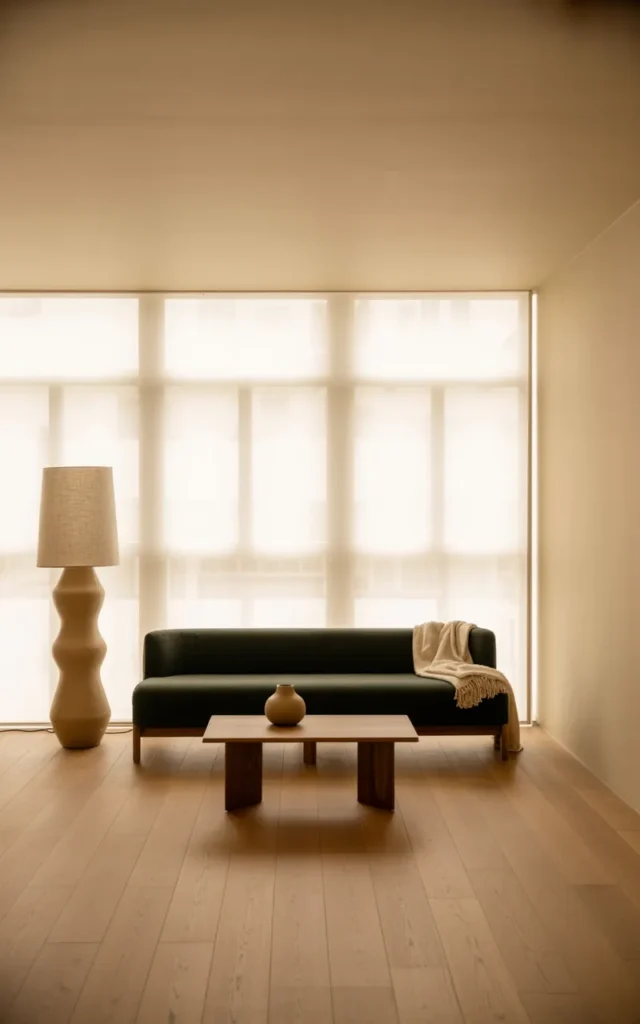
Not every corner needs something.
Empty space gives your eyes a break. It makes the decorated areas stand out more.
This is where restraint matters. Hard, but powerful.
Think of it as editing. Not decorating.
Myth-buster:
Empty space ≠ unfinished.
Add personal touches that tell your story
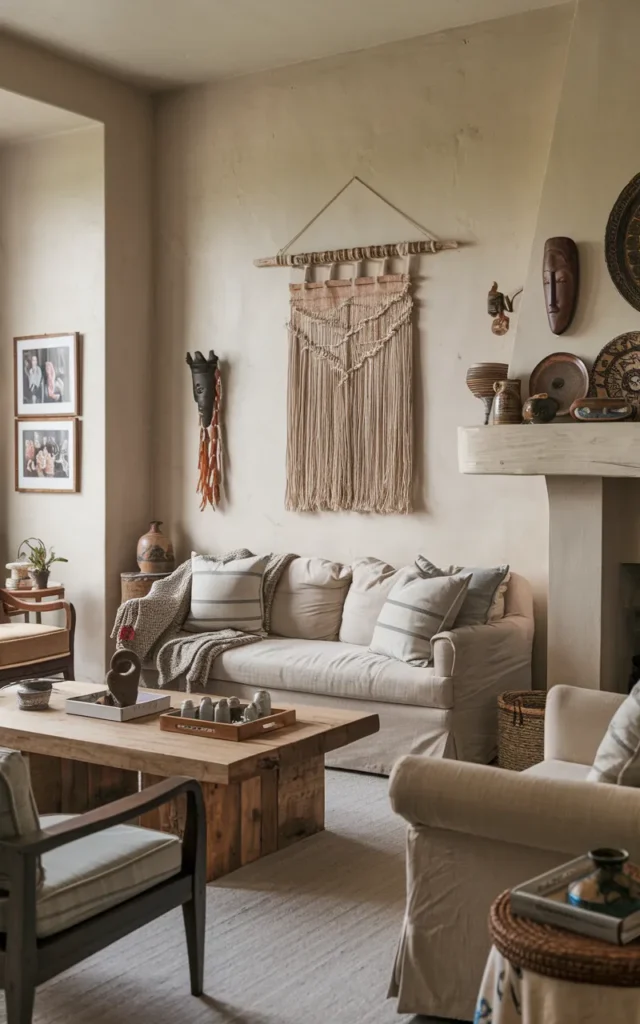
Photos. Travel finds. Handmade pieces.
These make your living room yours. Not just Pinterest-perfect.
I always include at least 3 personal elements. It adds soul ❤️
Refresh the room seasonally
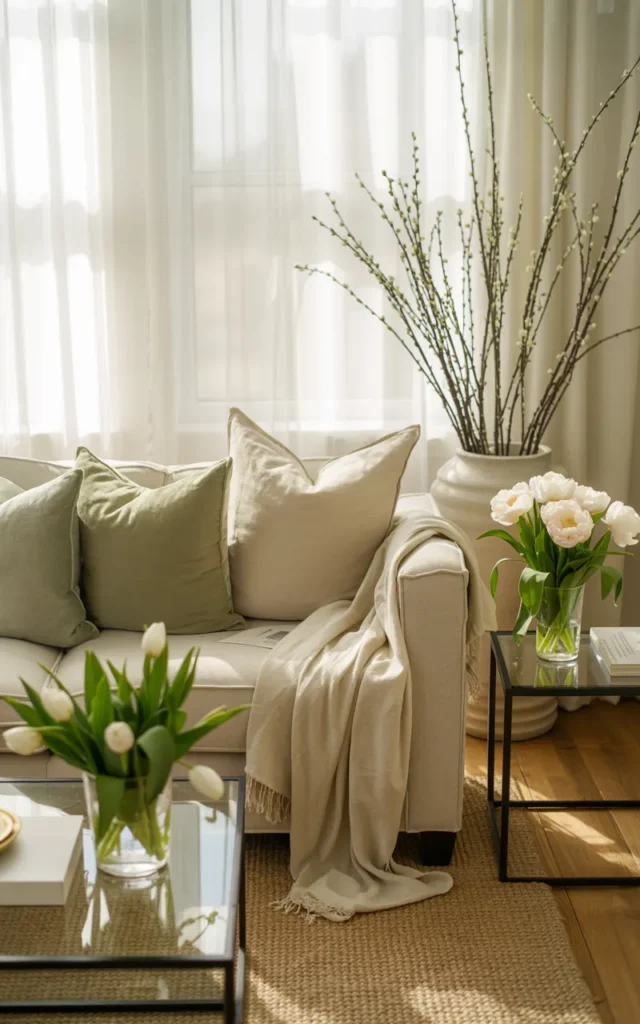
You don’t need a full makeover every time.
Swap cushion covers. Change throws. Update decor colors. Small shifts, big impact.
This ties beautifully with idea #13.
Seasonal Switch:
- Spring → Light fabrics, florals
- Winter → Cozy layers, deeper tones
Edit ruthlessly for a clean, elevated look
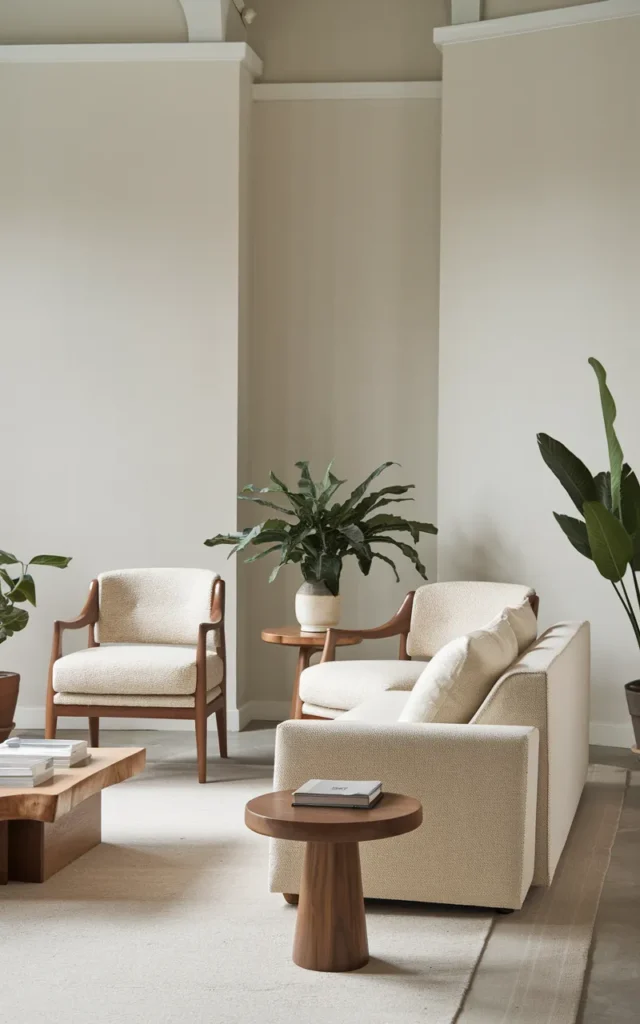
This is the final step. And honestly? The most important.
Remove what doesn’t belong. Too many pieces dilute the impact of good design.
Every item should earn its place.
I do a quick edit every few months. It keeps the room fresh and intentional.
Do this 👉:
- Keep meaningful pieces
- Maintain breathing space
Not this ❌:
- Hoarding decor
- Filling every surface
A Few Closing Notes
Designing a living room isn’t about following rules. It’s about creating a space that feels right when you walk in.
Start small. Maybe a rug. Maybe lighting. Maybe just clearing clutter.
Then build from there. One idea at a time.
And trust me—once it starts coming together, you’ll feel it instantly. ✨
