If you’re dealing with a tight hallway, a compact duplex, or a tiny loft, I get it.
Stairs can feel like they’re eating your square footage alive.
But here’s the thing.
With the right layout, materials, and a little creativity, your staircase can actually give space back instead of stealing it. 🙌
So let’s talk through my favorite small space staircase ideas — the kind that feel light, clever, and surprisingly stylish. Some are structural. Some are cosmetic. All are doable.
Build storage drawers into each stair tread
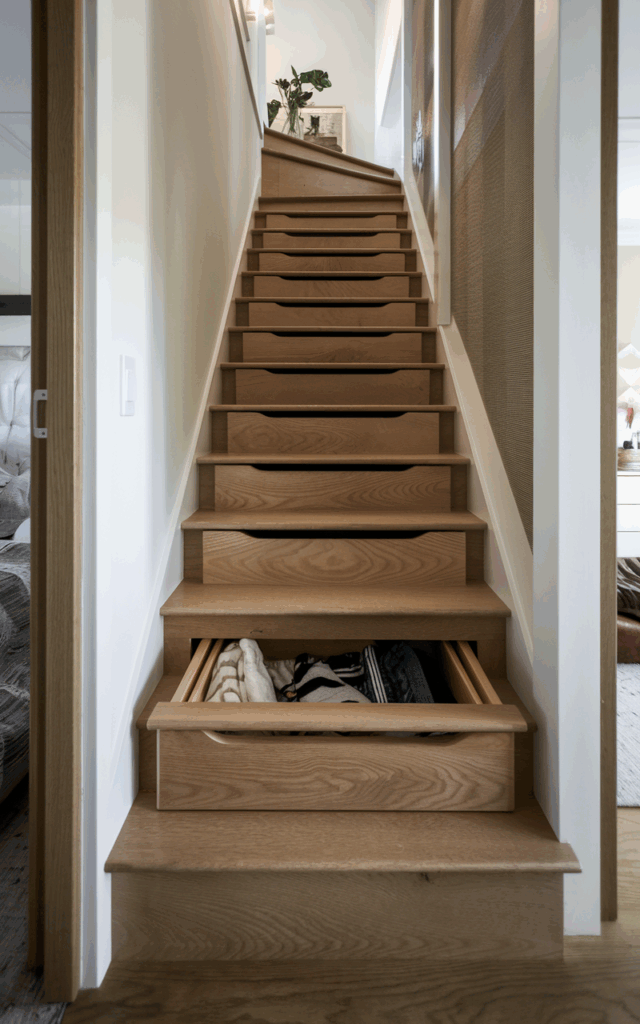
Why waste that cavity under your steps?
Deep stair drawers are one of the smartest small space staircase ideas out there. Shoes, winter scarves, board games — all hidden but accessible.
You’ll be shocked how much clutter disappears.
Small space hack:
Use push-to-open hardware instead of handles. No knobs sticking out. No visual noise. The result? A staircase that works overtime without looking bulky.
Paint the staircase the same color as the walls
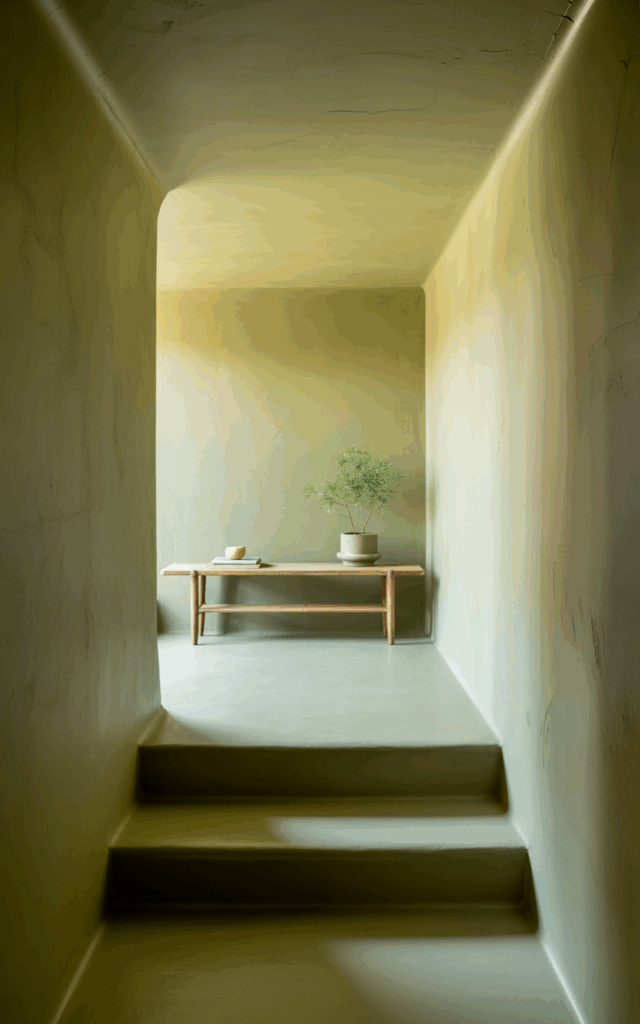
Sometimes the trick isn’t changing the structure — it’s softening the visual contrast.
When you paint treads, risers, and surrounding walls one cohesive color, the staircase blends instead of standing out. The eye stops breaking the space into chunks.
I love this in tiny entryways.
Quick Tip:
Use a durable satin or semi-gloss finish for durability without too much shine. This one’s subtle. But powerful.
Install a slim black metal railing
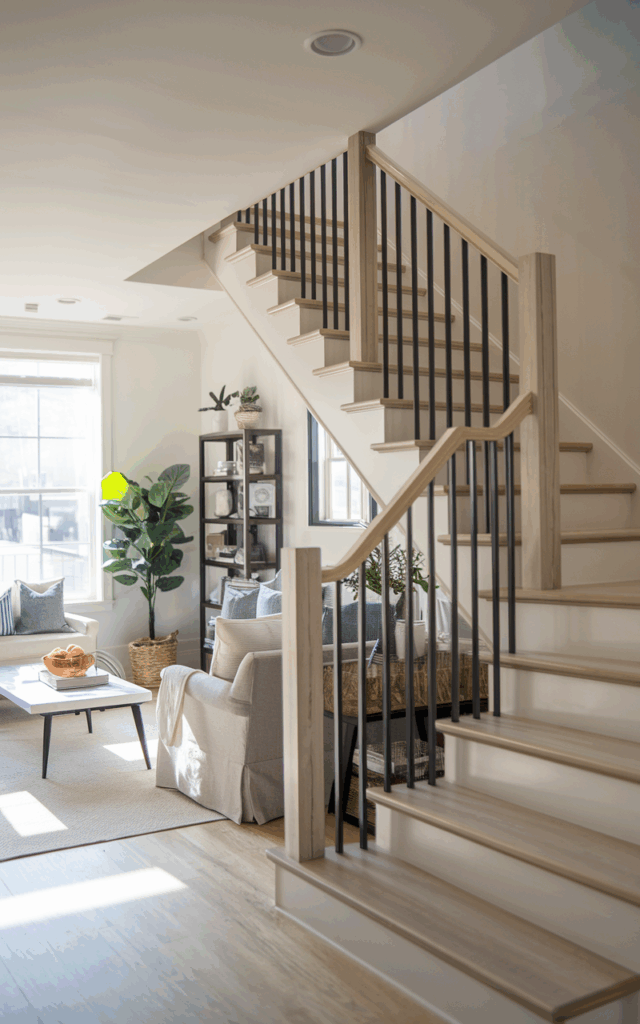
Bulky wooden balusters can feel heavy in tight areas.
Switch them out for slim black metal spindles or cable railings. The transparency keeps sight lines open, which makes everything feel bigger.
It’s clean. Modern. A little architectural. 🖤
Pair it with lighter treads for contrast without weight.
You’ll be surprised how much lighter the whole corner feels.
Frame the staircase with glass panels
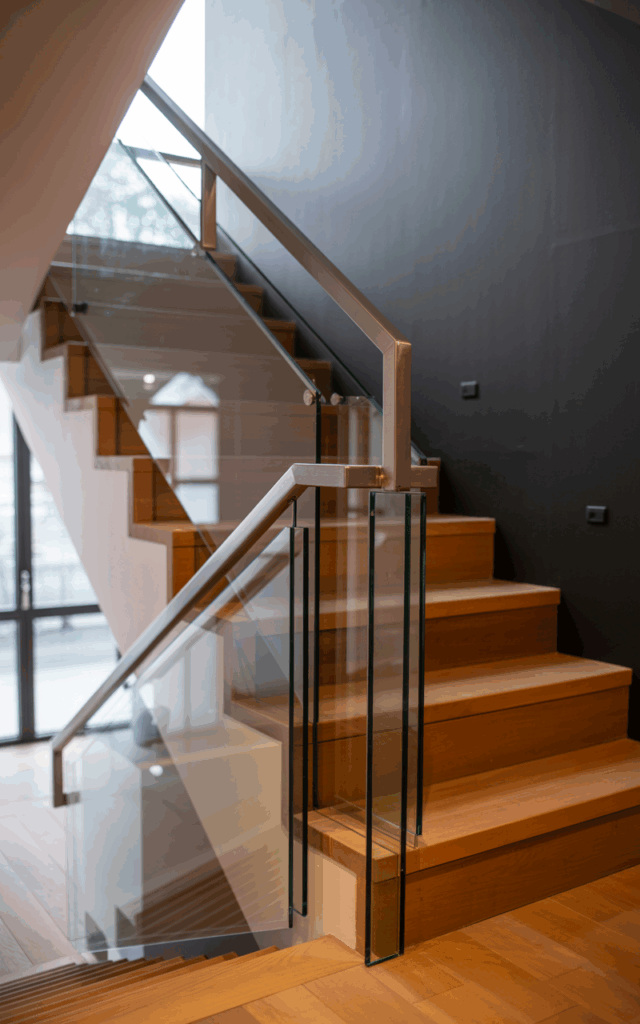
Instead of traditional balusters, use glass.
Tempered glass panels eliminate visual barriers completely. Light floods through. Views stay uninterrupted.
Especially in compact homes with windows nearby, this move keeps things from feeling segmented. 🌤️
Minimal hardware. Clean edges. Let the transparency do the heavy lifting.
Build a hidden closet beneath the staircase
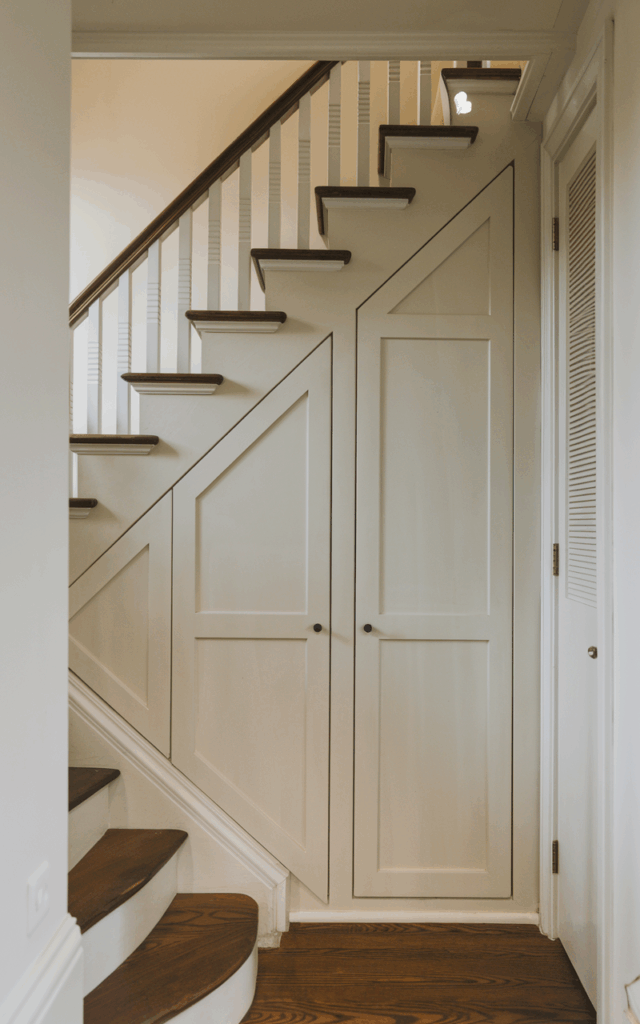
This one is classic. But so underused.
Instead of awkward open voids, close it off with seamless panel doors. Paint them the same shade as the wall for camouflage.
Inside? Store suitcases, cleaning supplies, or seasonal decor.
Checklist:
- Soft-close hinges
- Motion sensor lighting
- Adjustable shelving
- Ventilation slot
When done right, it looks like a solid wall — until you open it.
Maximum function. Minimal footprint.
Mount wall sconces along the stair wall
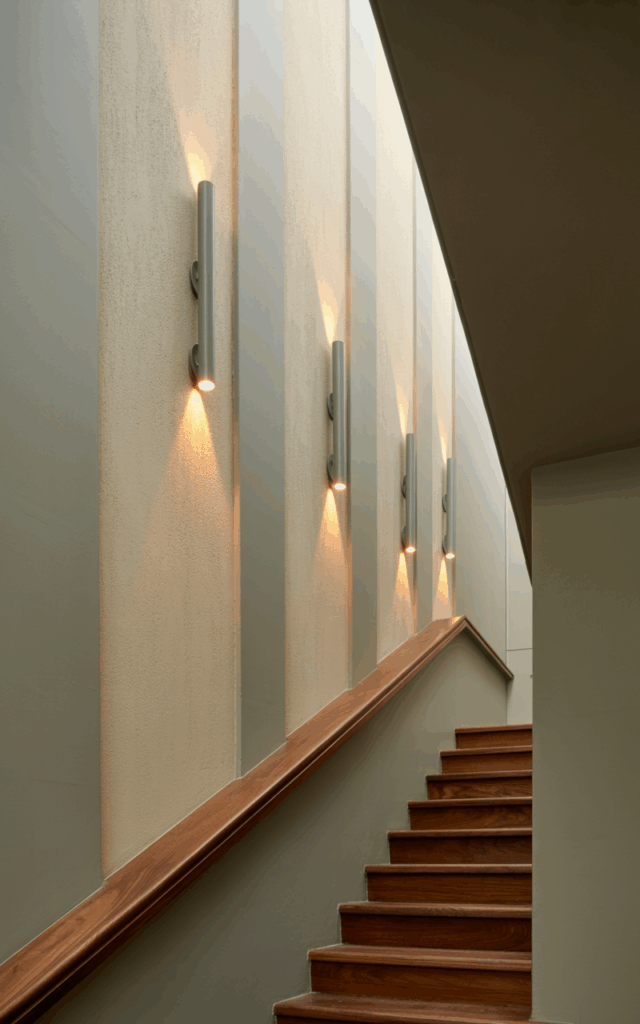
Overhead lighting can feel harsh in tight stairwells.
Wall sconces add glow without bulk. They also guide movement, which feels luxurious even in small homes.
Choose low-profile fixtures so they don’t protrude too much.
Why designers do this:
Layered lighting adds depth. Depth makes small spaces feel intentional instead of cramped. Warm bulbs (2700K–3000K) will soften everything beautifully. ✨
Replace traditional risers with clear acrylic panels
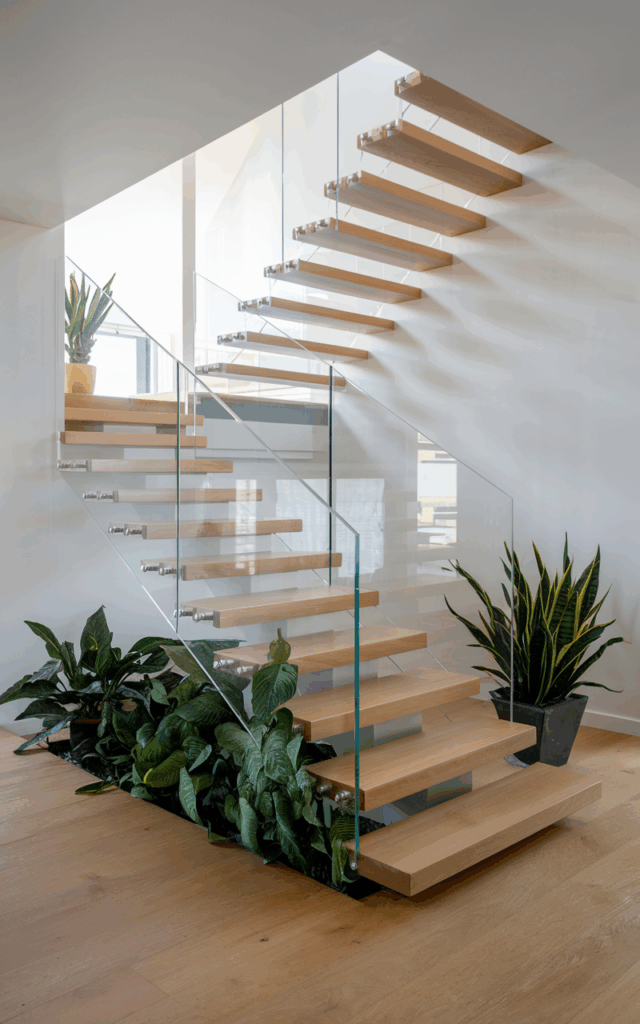
Want open risers but worried about safety?
Clear acrylic risers are a clever compromise. They maintain transparency while preventing toe slips.
Visually? They almost disappear.
Thumb Rule:
If you can see through it, the space feels larger. This detail works particularly well in contemporary interiors with clean lines. It’s modern without being cold. Subtle but impactful.
Convert under-stair space into a pet nook
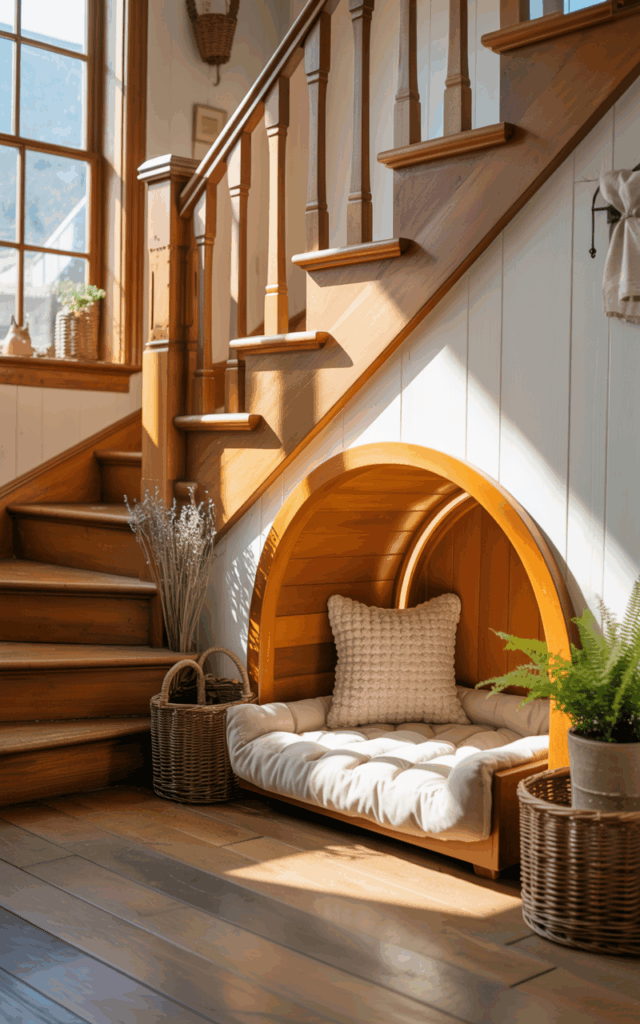
If you have a furry roommate, this is genius. 🐶
Build a small arched opening. Add a cushion. Soft lighting. Maybe a name plaque if you’re feeling cute.
You’re using dead space. And your pet gets a cozy retreat.
Time required to implement:
1–3 days depending on carpentry customization. It’s functional. Adorable. And keeps bulky pet beds off the main floor.
Use light-toned wood to brighten the staircase
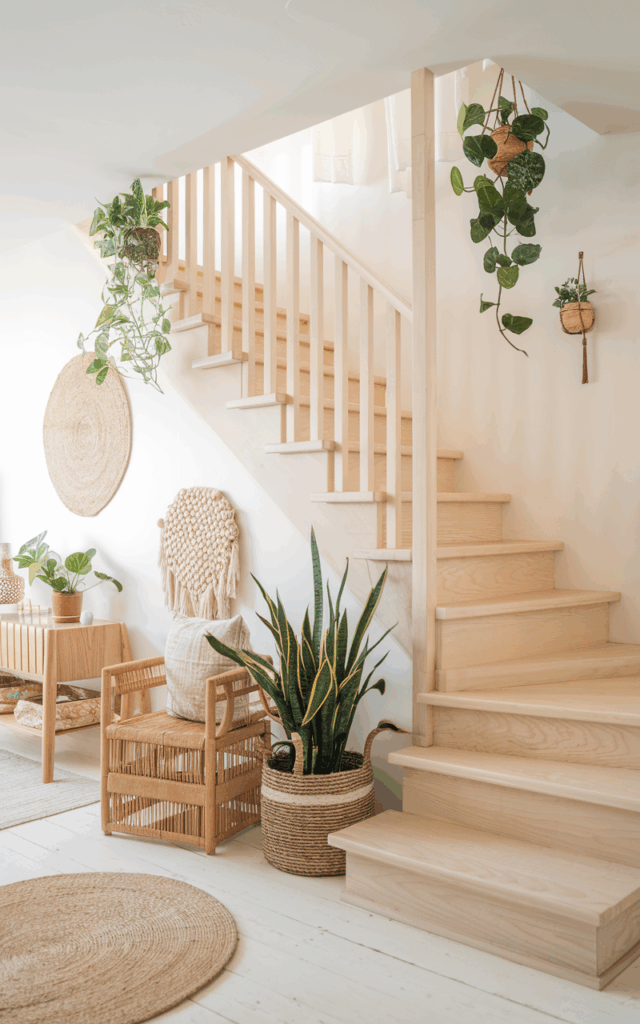
Dark stains can feel heavy in tight areas.
Switch to pale oak, maple, or ash. Light wood reflects more light and visually expands space.
Colour swap suggestion:
| Instead of | Try this |
| Dark walnut | Natural oak |
| Espresso stain | Soft ash |
| Red-toned cherry | Whitewashed pine |
You don’t always need a new layout. Sometimes the fix is just lightening the tone. 🌾
Install a narrow ladder-style staircase for loft access
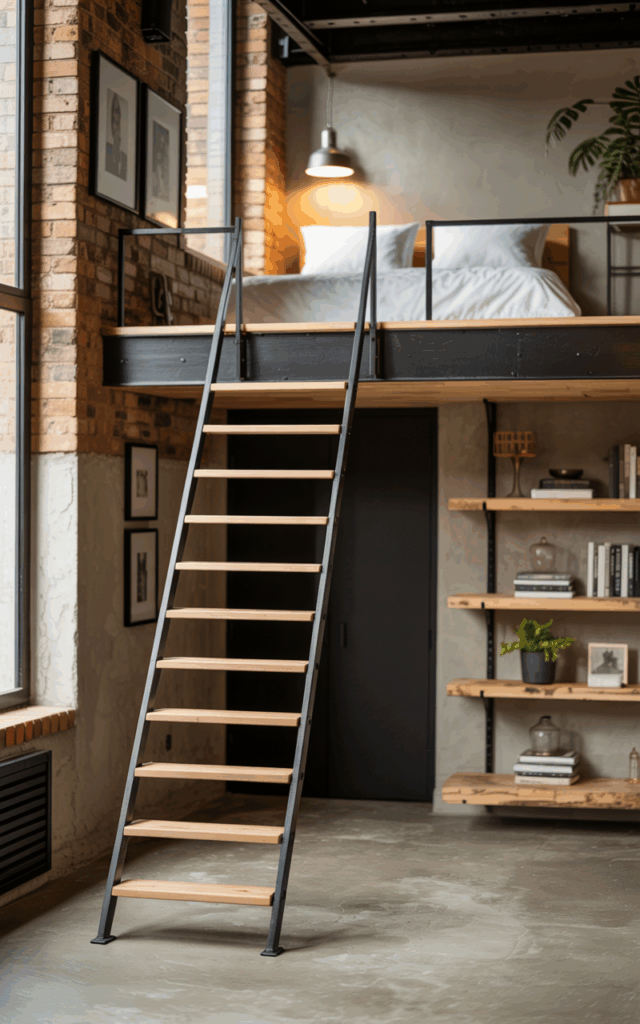
Not every staircase needs full traditional depth.
If you’re accessing a sleeping loft or storage mezzanine, a fixed ladder-style stair can save serious square footage.
Who this is for:
- Micro-apartments
- Studio lofts
- Guest loft areas
Keep rails slim and treads sturdy. It’s practical. And surprisingly chic if styled right.
Carve out a mini reading nook under the stairs
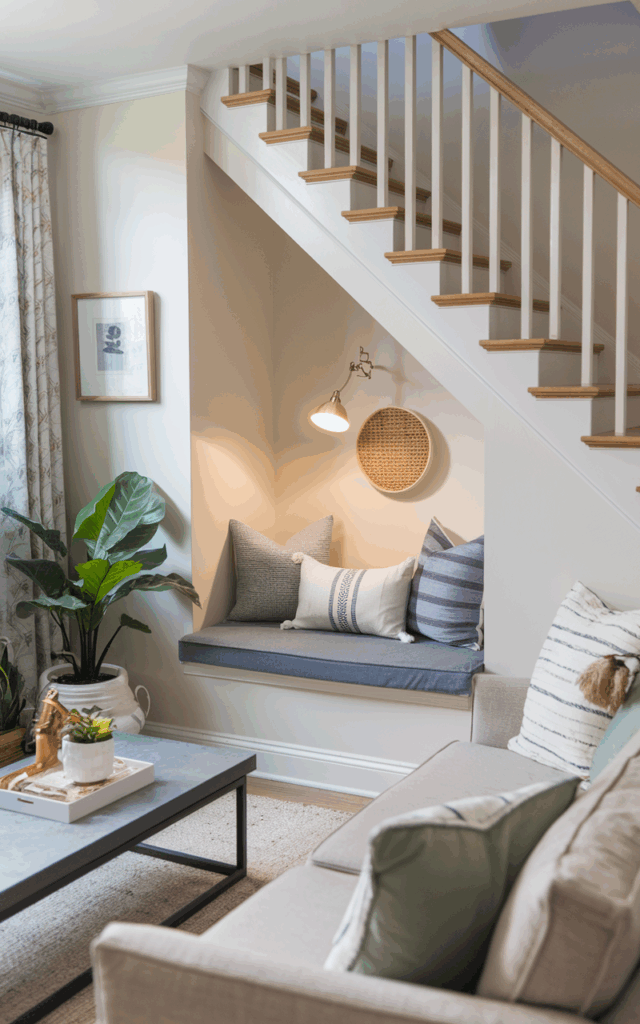
Unlike the desk idea from earlier, this one is all about comfort.
Add a built-in bench. Cushions. A small lamp. Maybe a curtain for softness. 📚
Keep the palette cohesive with the stairs so it doesn’t feel separate.
You’re not adding space. You’re redefining it.
And in small homes, that mindset shift changes everything.
Install stair lighting under each tread
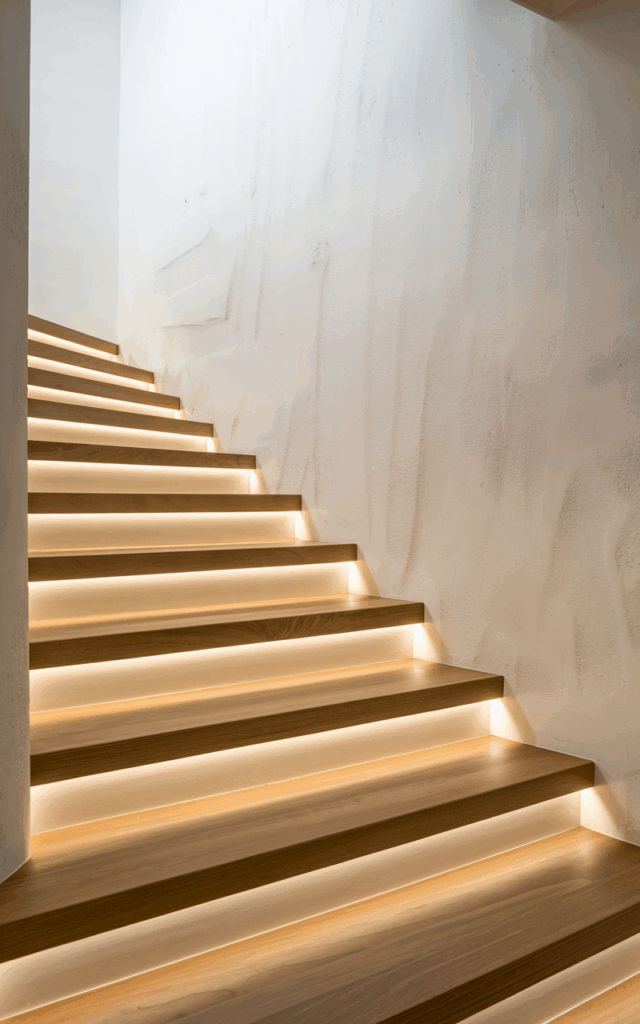
Under-tread LED strips are subtle and stunning.
They add glow without visual clutter. And at night? Pure ambiance.
Quick hack:
Choose warm white and hide the strip completely within the tread edge. It makes floating stairs even more dramatic — remember idea #1? Combine the two and you get functionality plus vibe. 🔥
Wrap the staircase with vertical wood slats
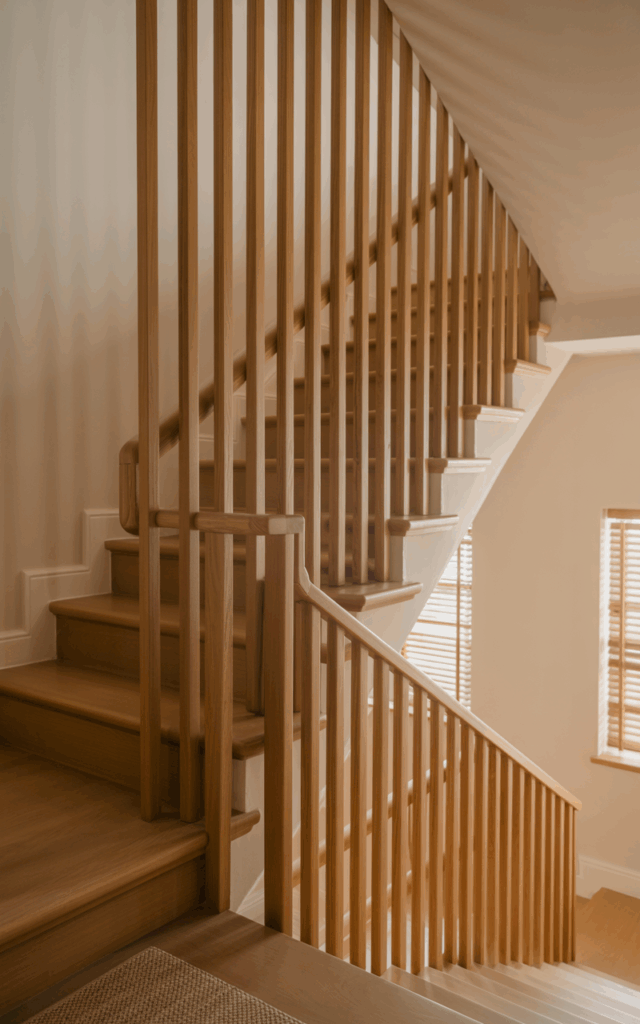
Instead of solid railings, try evenly spaced vertical slats.
They offer safety without blocking airflow or light. The repetition of lines draws the eye upward, which exaggerates ceiling height — always a win in compact spaces.
Keep spacing consistent. Not too tight. Not too wide.
Do’s & Don’ts:
Do this 👉
- Match slat tone with flooring
- Keep spacing symmetrical
- Use slim dimensions
Not this ❌
- Overcrowd the spacing
- Mix too many finishes
- Paint them overly dark
It’s architectural. Clean. And surprisingly warm if you use natural wood. 🌳
Combine staircase and bookshelf into one structure
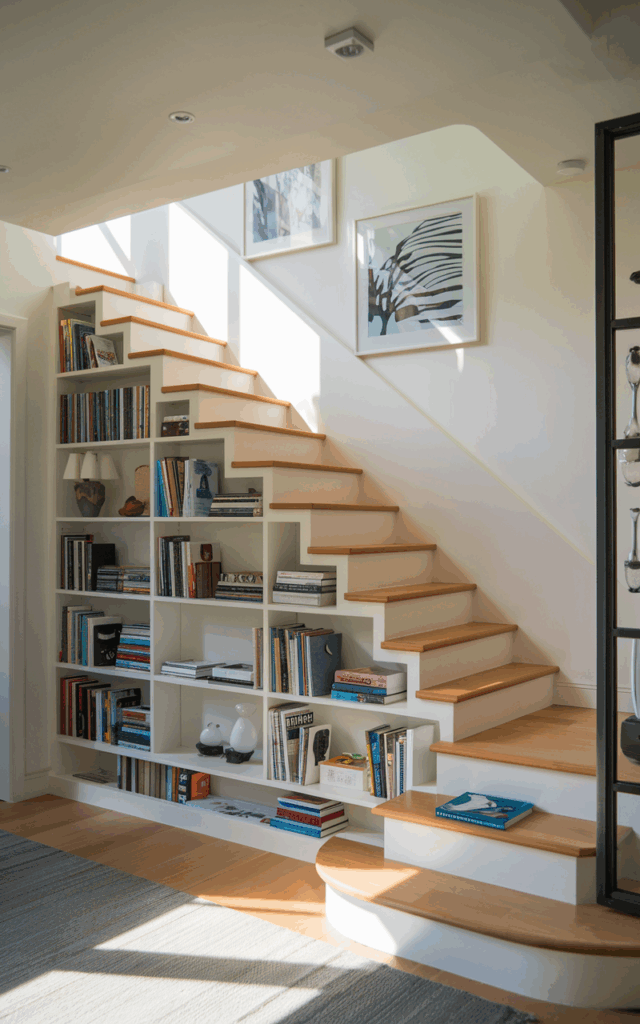
This one’s a showstopper.
Instead of a separate shelving unit, integrate shelves directly into the staircase structure. Treads extend. Sides become cubbies. Books become part of the architecture.
It saves space. And eliminates bulky standalone furniture.
Just keep weight distribution in mind if storing heavy items.
Style it lightly. A few books. Small decor. Nothing chaotic.
Suddenly, your staircase becomes both passage and personality. 📚✨
Close off the underside with vertical shiplap for clean lines
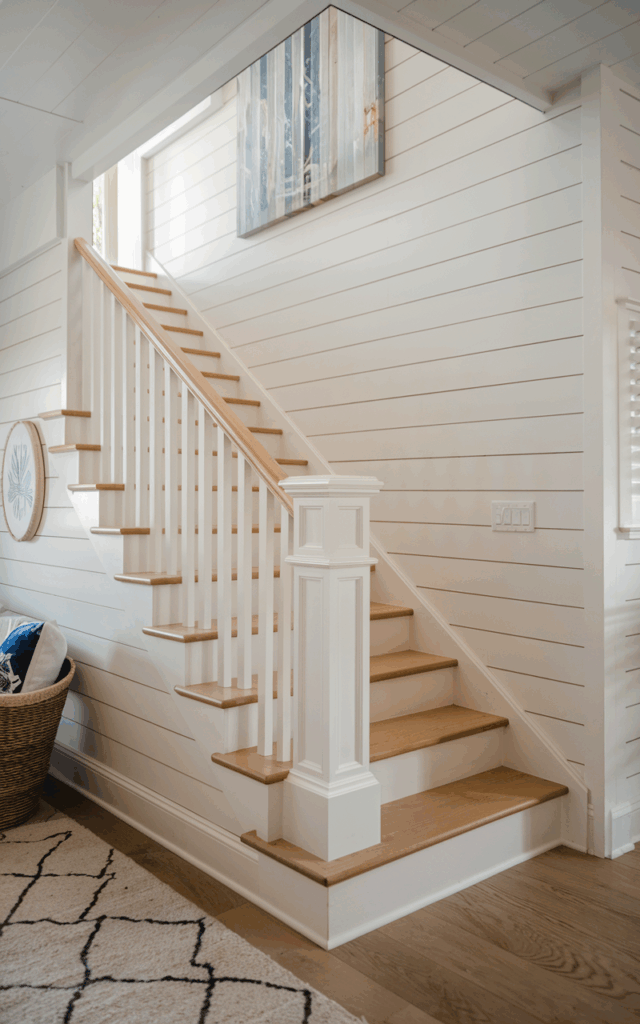
Open under-stair spaces can look messy fast.
Cladding the underside with vertical shiplap keeps it streamlined and cohesive.
The vertical direction subtly emphasizes height. Which, again, helps small spaces.
Keep it the same color as surrounding walls for a seamless look.
It’s calm. Organized. And gives the staircase a tailored feel. ✨
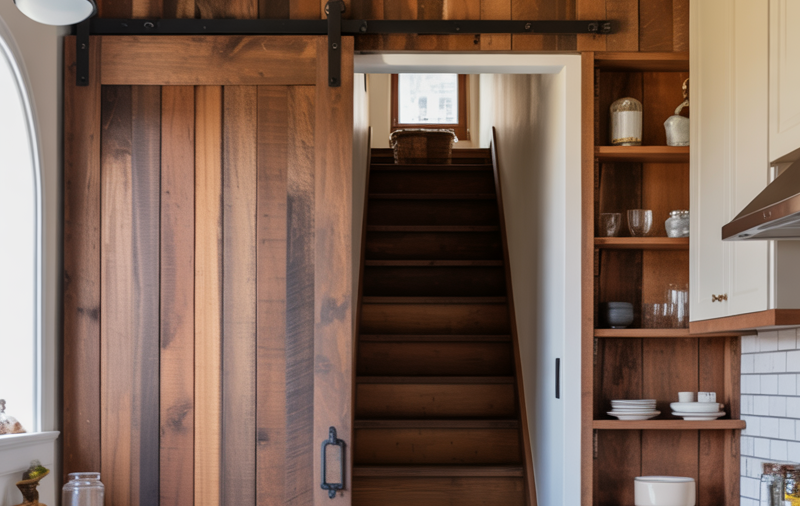
Install a sliding door to conceal steep stairs
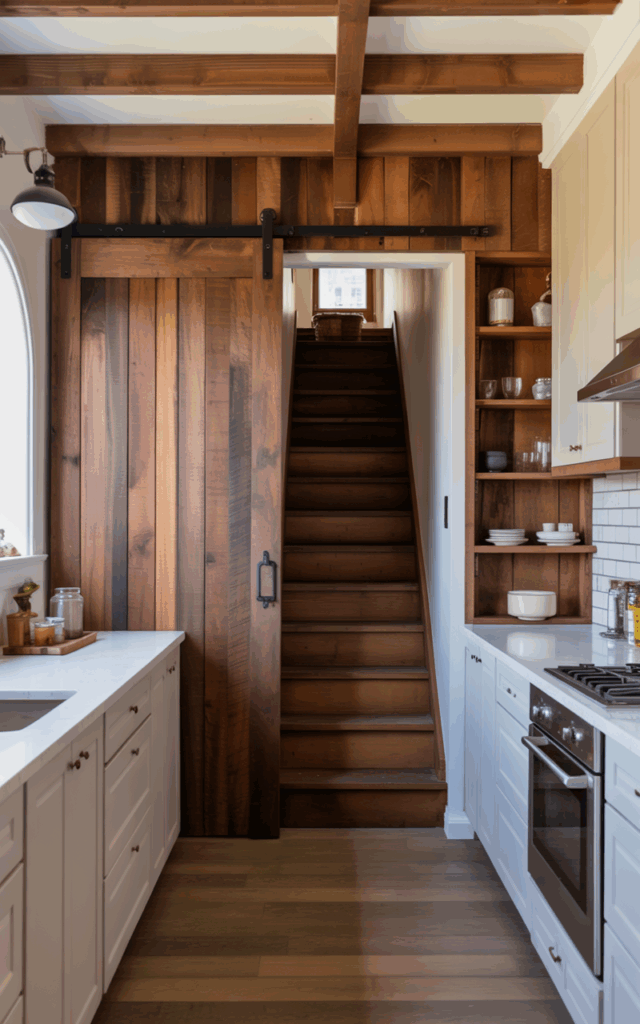
If you have a steeper staircase leading to a basement or loft, don’t let it dominate visually.
Add a sliding barn-style or pocket door.
When closed, the wall looks uninterrupted.
When open, the stairs function normally.
This trick works beautifully in small kitchens or hallways where you don’t want constant visual interruption. 🚪
It’s a boundary without permanence.
Use under-stair glass enclosures for micro storage rooms
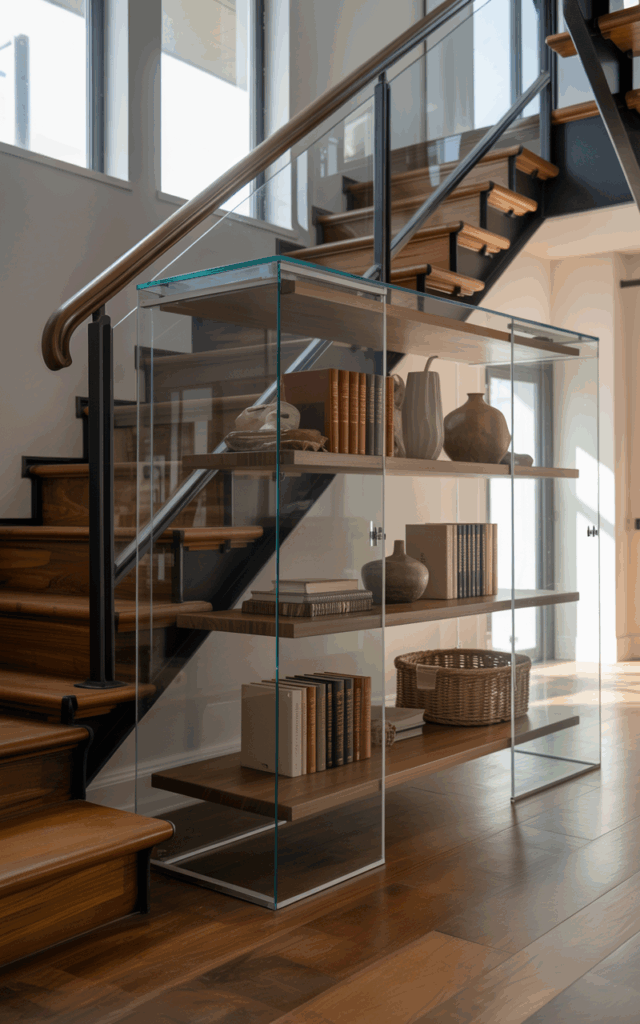
If ceiling height allows, consider enclosing the under-stair area in glass instead of drywall.
You’ll create a micro storage room that still feels open because it’s transparent.
Perfect for wine racks, display storage, or even a tiny reading corner like we discussed earlier.
The transparency keeps light traveling through the space.
Closed. But not heavy.
Final Thoughts
When it comes to small space staircase ideas, it’s not just about shrinking the footprint.
It’s about light. Flow. Visual weight. Smart storage. Thoughtful finishes.
Pick one idea. Try it. Even a small tweak — like lighting or paint — can transform how your entire room feels.
And once your staircase stops feeling like an obstacle?
It starts feeling like design.
