If your staircase is eating up precious square footage, you’re not alone.
I’ve seen beautiful homes lose so much usable space to bulky, outdated stair designs.
But here’s the thing — stairs don’t have to be space hogs.
With the right layout, storage tricks, and a little creativity, they can give space back instead of taking it away.
So let’s talk about 17 space saving staircase ideas that are practical, stylish, and completely doable. Some are subtle. Some are bold. All of them are clever. 🏡
Install a Spiral Staircase in Tight Corners
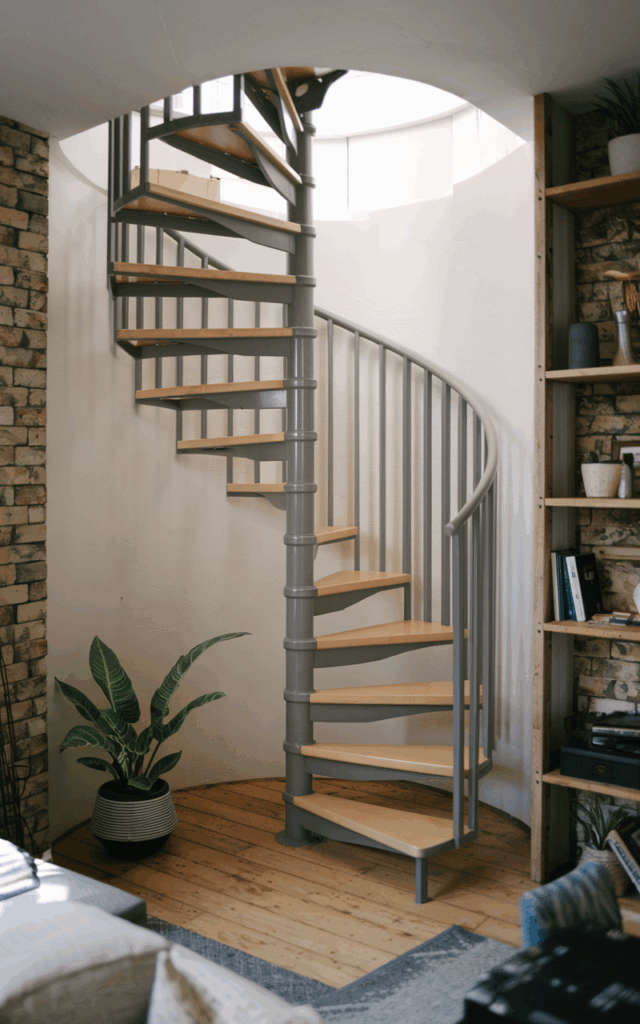
Spiral staircases are masters of space efficiency.
They take up significantly less floor area than traditional straight-run stairs. Perfect for loft access or mezzanines.
Yes, they’re bold. But in small homes, bold sometimes makes sense.
Common Mistakes to Avoid:
- Choosing too narrow a diameter
- Ignoring head clearance
- Skipping sturdy handrails
Done right, they’re compact and sculptural. 🌀
Build a Hidden Pantry Under the Stairs
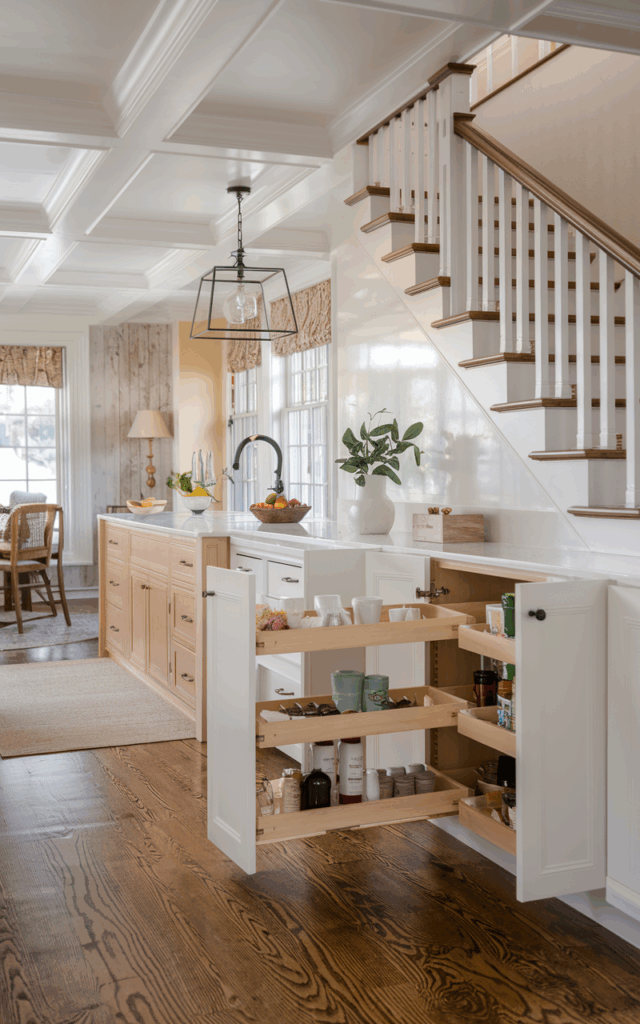
Kitchen nearby? Perfect.
Turn that under-stair void into a pantry with pull-out shelving. Add slim vertical dividers for baking trays and cutting boards.
It keeps clutter out of sight while freeing up valuable cabinet space.
Why designers do this:
Because vertical dead zones are wasted opportunity. Smart storage turns awkward architecture into functional magic. 🍽️
Add a Slim Glass Railing Instead of Wood Balusters
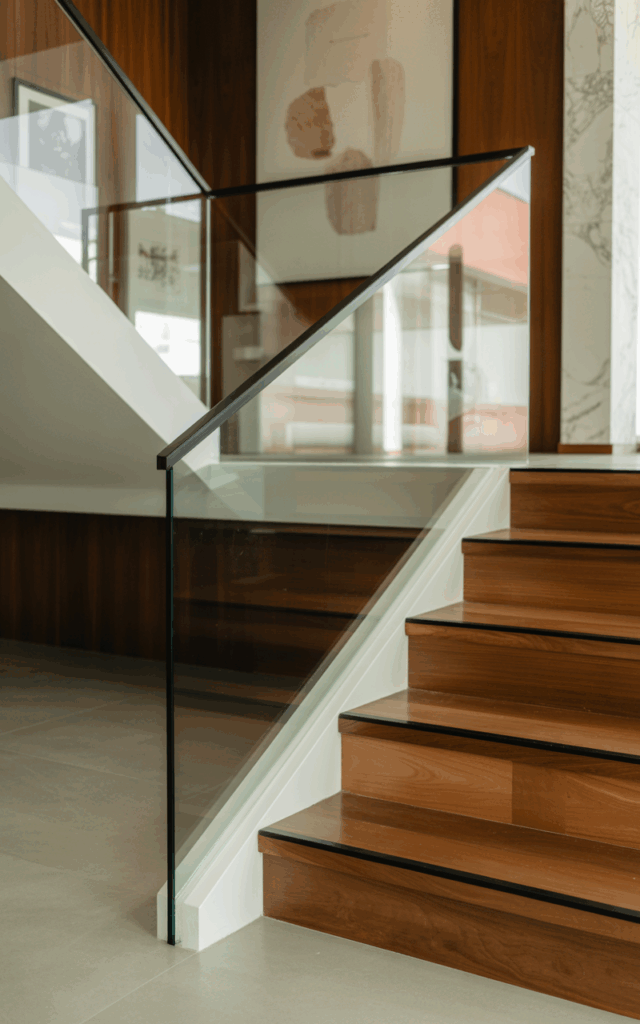
Chunky railings eat visual space.
Swap them for clear glass panels. The staircase remains safe, but the room feels bigger instantly.
It’s especially powerful in small entryways.
The psychology behind it:
Transparent materials reduce visual barriers, making spaces feel airy and continuous. Light equals space. Always. ✨
Tuck a Cozy Reading Bench Underneath
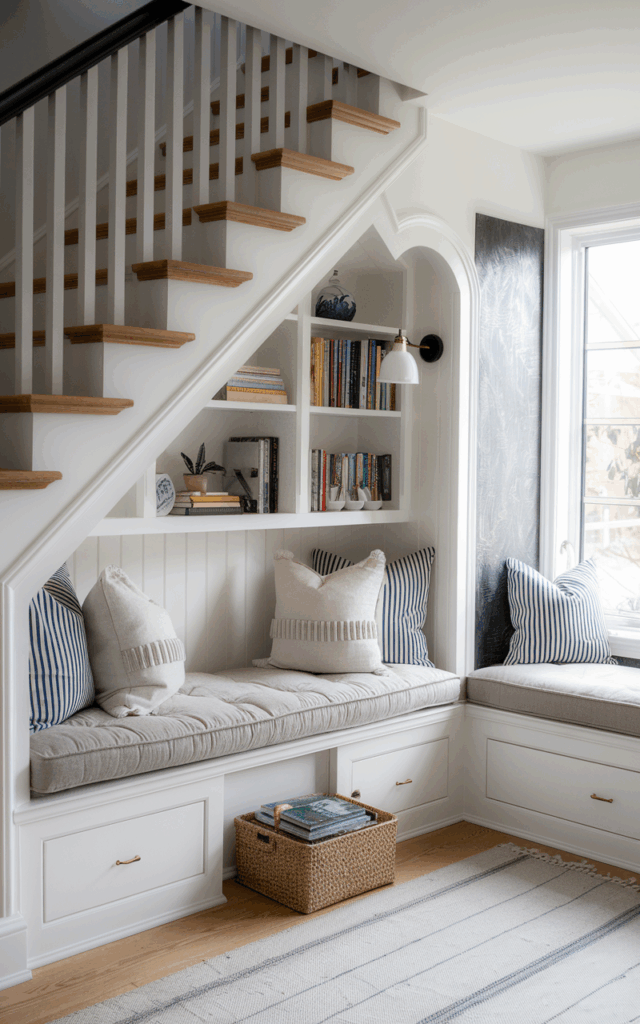
Instead of ignoring that awkward corner, embrace it.
Install a built-in bench with lift-up storage. Add cushions, a small sconce, and maybe a throw blanket.
You’ve now created functional seating without adding furniture elsewhere.
Instant Gratification Tip:
Even a ready-made storage bench from a home store works. Add two cushions. Done. 📖
Install Wall-Mounted Ladder Stairs for Loft Access
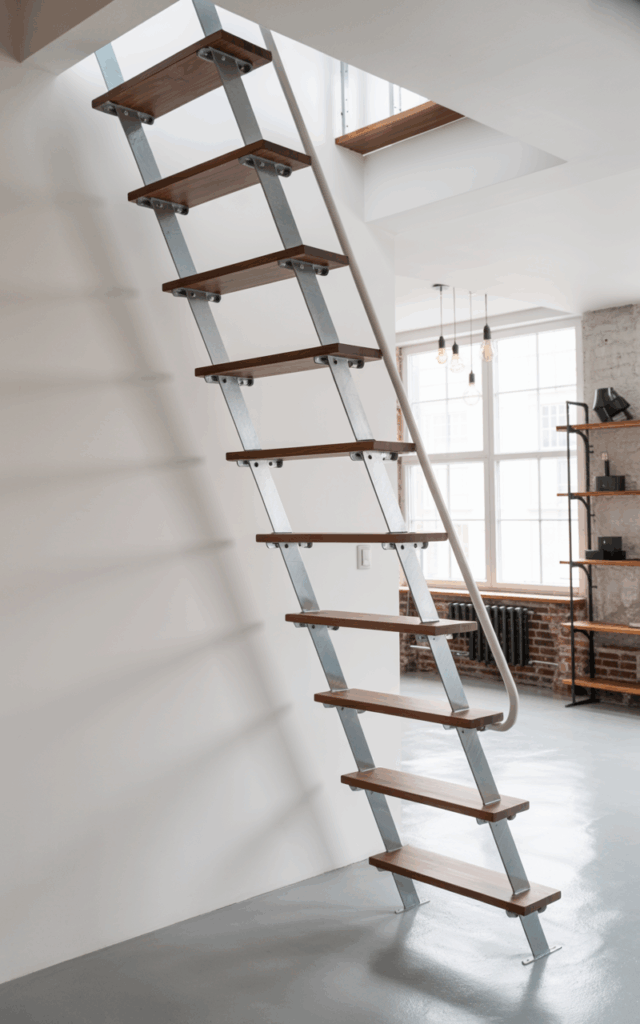
If you’re dealing with a micro-space, consider sleek ladder stairs bolted to the wall.
They take up barely any footprint compared to traditional stairs. And when designed with thicker, comfortable treads, they feel intentional instead of temporary.
Unlike the spiral staircase we mentioned earlier, this one hugs the wall tightly. No center pole required.
Use durable wood or metal depending on your style.
Tools you may need (checklist):
- Wall anchors
- Stud finder
- Level
- Heavy-duty brackets
Secure installation is everything here. Safety first. Always. 🔧
Build a Pull-Out Closet Underneath
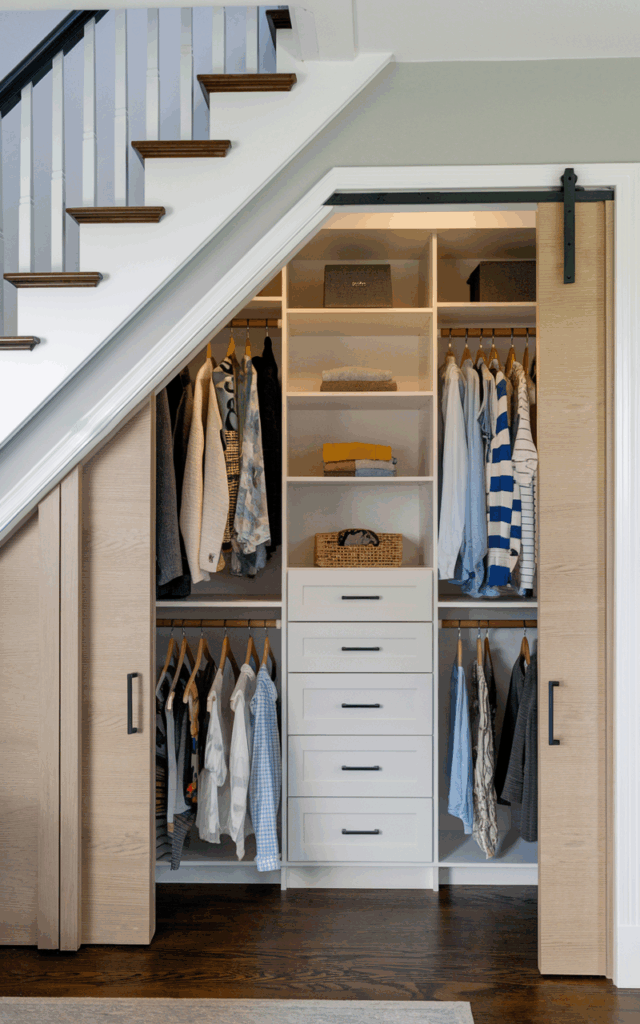
Think full wardrobe moment.
Add hanging rods, drawers, and hidden shoe compartments under the staircase. It’s shockingly spacious once you customize it.
Perfect for entryways with no coat closet.
Step-by-step instructions:
- Measure the full height gradient.
- Install framing that follows the stair angle.
- Add modular closet components.
- Finish with sliding doors.
You’ll gain storage without sacrificing any visible square footage. 🙌
Incorporate Vertical Slat Dividers Instead of Solid Walls
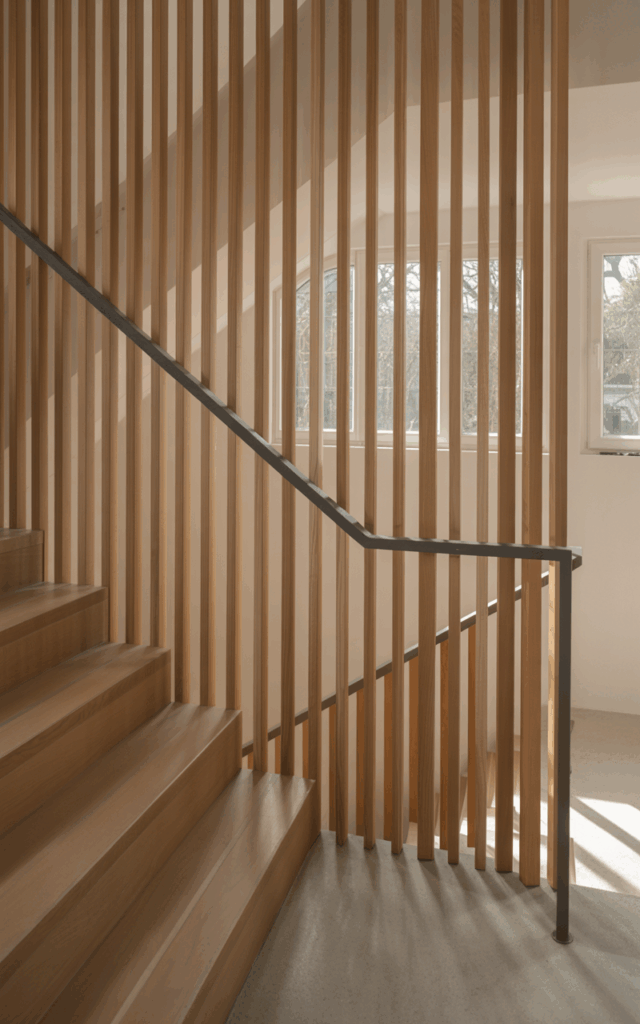
Solid sidewalls make stairs look bulky.
Swap them for vertical wooden or metal slats. They define space without boxing it in.
Light travels through. Air flows better. The room feels cohesive.
Trend Alert:
Minimal slatted partitions are dominating modern interiors right now — especially in compact urban homes. Airy but structured. Best of both worlds. 🌿
Position Stairs Along the Perimeter Wall
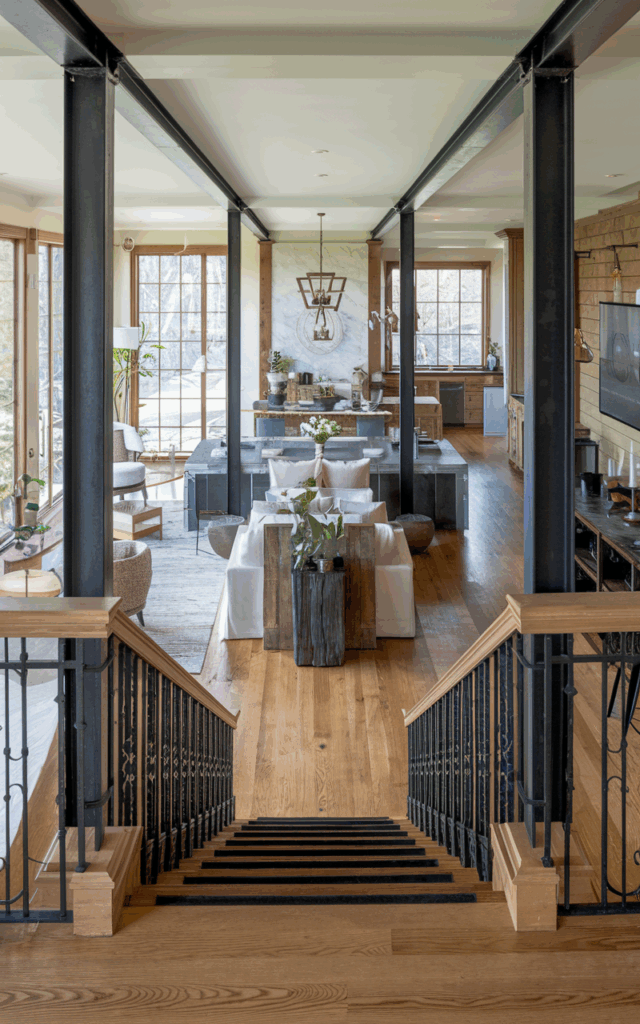
If you’re building or renovating, push the staircase to the outer wall instead of the center.
Central stairs interrupt circulation. Perimeter placement frees up an open floor plan.
This layout trick alone can make a small home feel twice as usable.
One rule to remember:
Let circulation hug walls whenever possible. Open core. Clear center. Always. 🏠
Install Fold-Down Attic Stairs
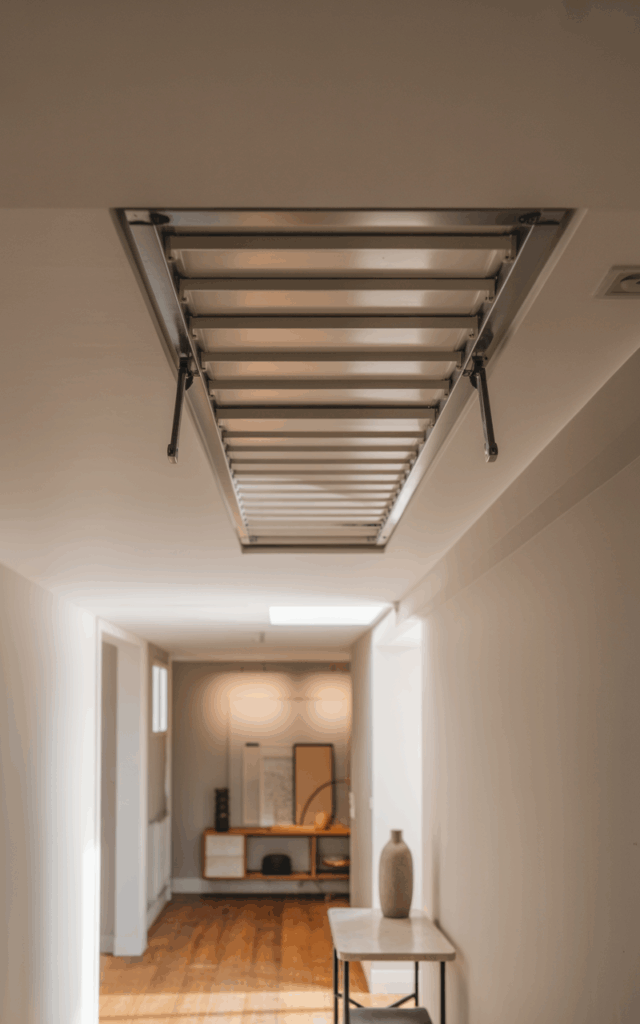
Not every staircase needs to be permanent.
If it’s for attic access, opt for retractable or fold-down stairs. They disappear into the ceiling when not in use.
That’s instant reclaimed floor space.
Time required to implement:
Usually a few hours with proper framing and support. Compact, practical, and ideal for storage-focused homes. 🔨
Use Light Colors to Make the Staircase Recede
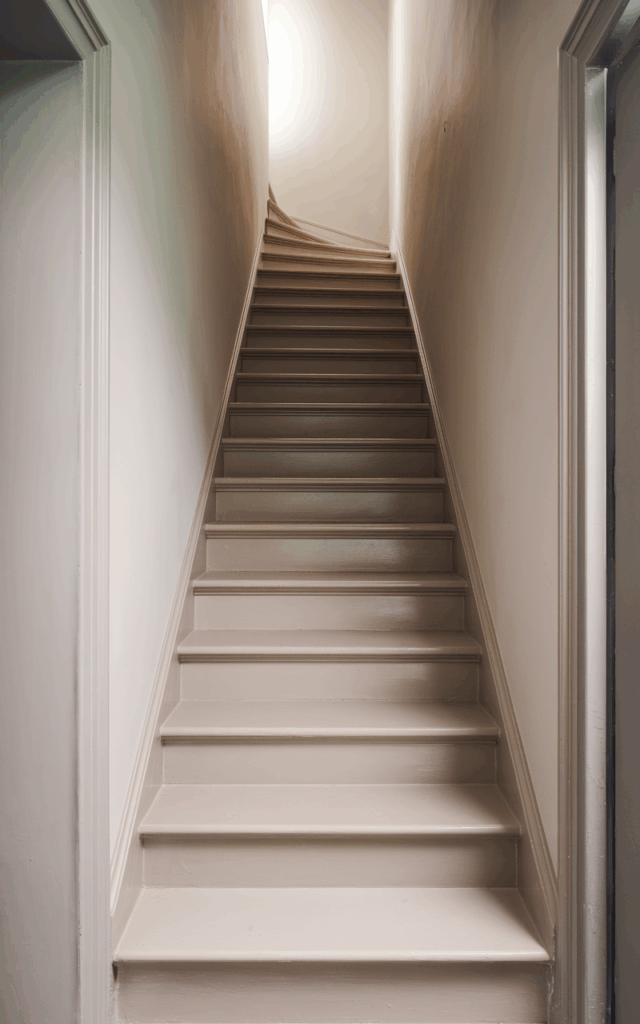
Color is sneaky.
Painting your staircase the same shade as surrounding walls makes it blend seamlessly. Especially powerful in tight hallways.
Dark, contrasting stairs demand attention. Light neutral tones let them fade gracefully.
Remember the fifth idea about open risers? Pair both together and you’ve got a staircase that nearly vanishes.
Colour swap suggestion:
| If your walls are | Try stairs in |
| Warm white | Soft greige |
| Light grey | Pale oak |
| Beige | Creamy ivory |
Simple swap. Massive impact. 🎨
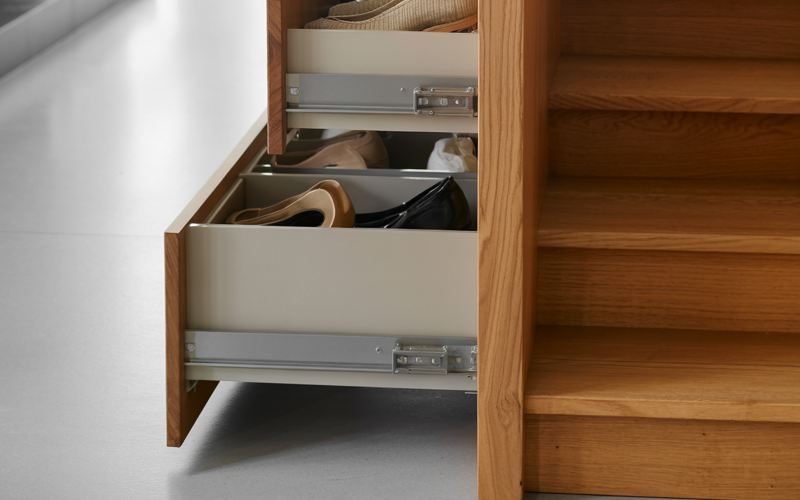
Integrate Slide-Out Shoe Drawers on the Side
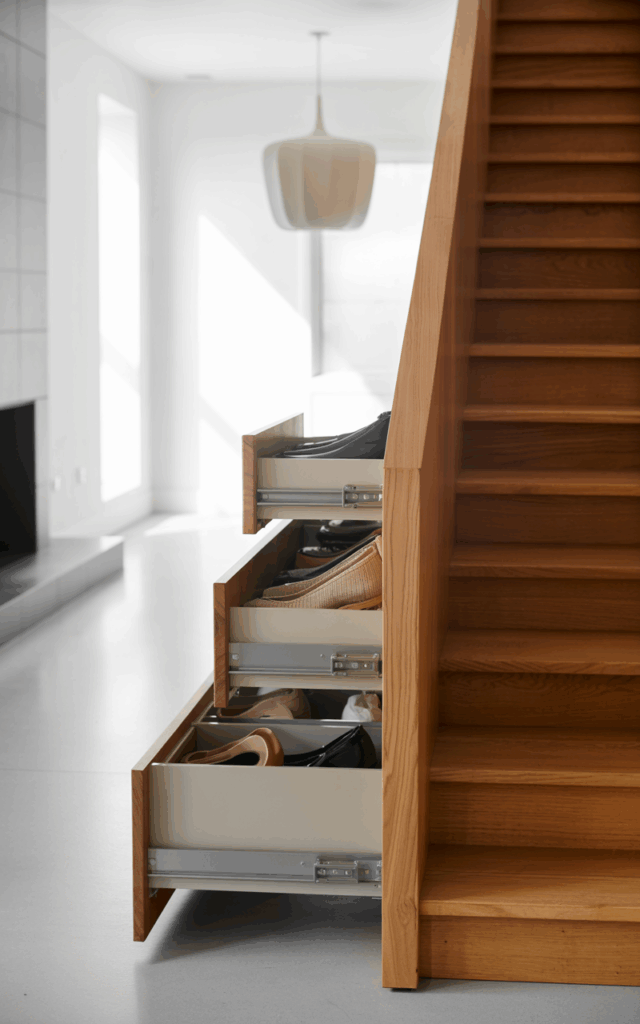
Not just inside steps — but along the side panels.
Slim horizontal compartments can hold flats, sandals, even kids’ sneakers.
This works especially well near entryways.
For people on a budget:
Use pre-made drawer systems and customize the facade yourself. No need for full bespoke carpentry. It keeps footwear off the floor — and makes mornings calmer. 👟
Add Hidden Lighting to Visually Expand
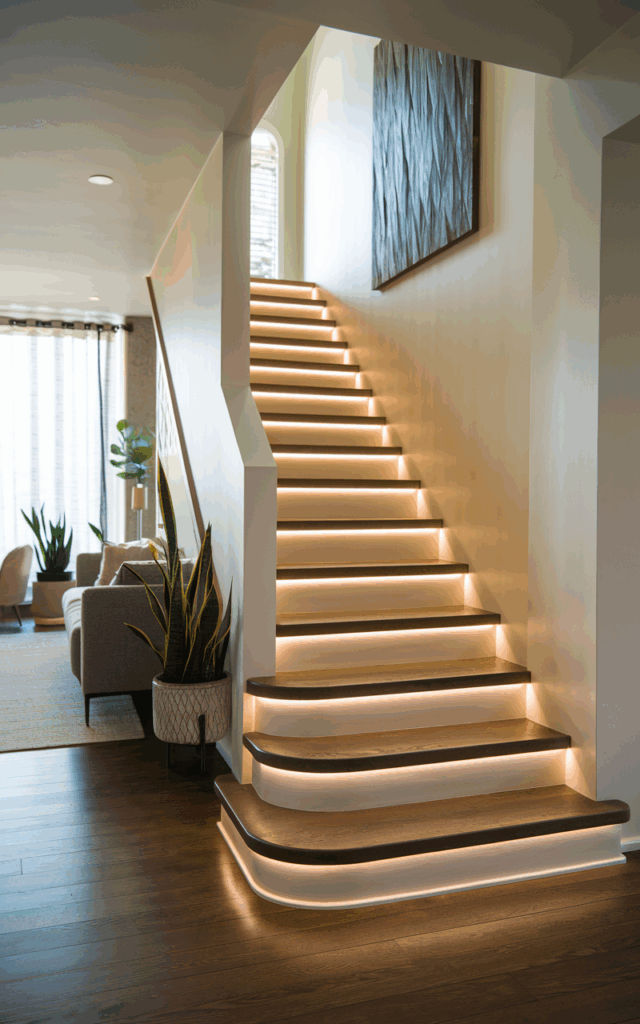
Lighting can change perception instantly.
Install LED strips under treads or along wall edges. It makes each step appear lighter and more defined without heaviness.
Unlike bulky pendant lights, concealed lighting doesn’t interrupt visual flow.
Upgrade for under $200:
Basic LED strip kits with motion sensors create that high-end glow without a huge investment. Soft light. Soft shadows. Bigger-feeling space. 💡
Design a Staircase With Built-In Pull-Out Desk
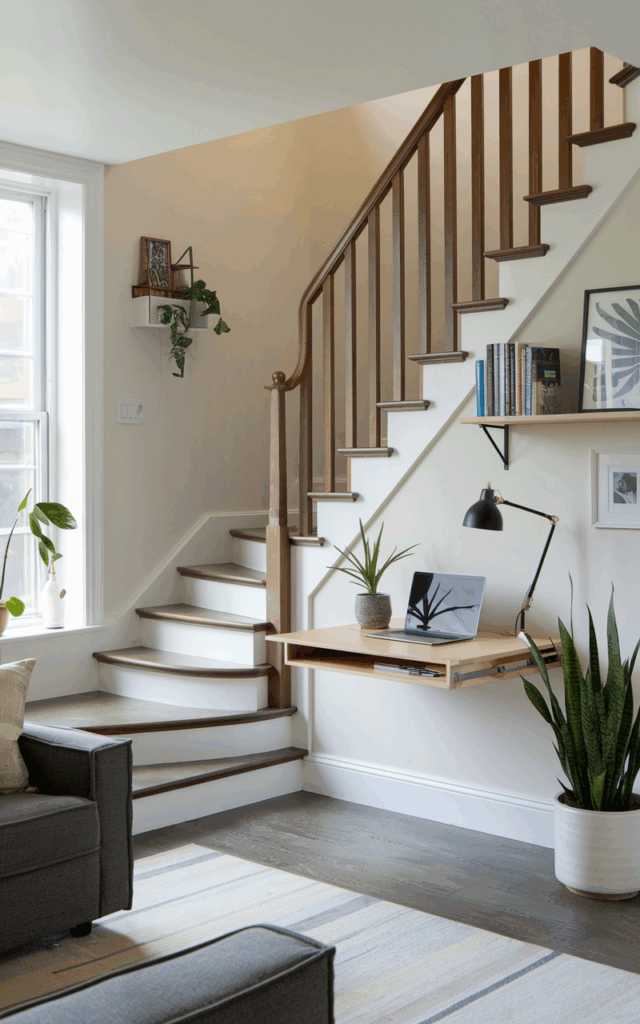
This one feels like a magic trick.
One section of the staircase slides out into a compact desk when needed — then tucks back in.
Perfect for kids’ homework or quick laptop sessions.
It’s similar to idea three (the under-stair office), but this time the workspace is integrated within the steps themselves.
A Pro-tip:
Use heavy-duty concealed runners rated for weight. Cheap hardware will wobble over time. Tiny homes thrive on transformable furniture. This is exactly that. ✨
Install Cable Railings for a Thin Profile
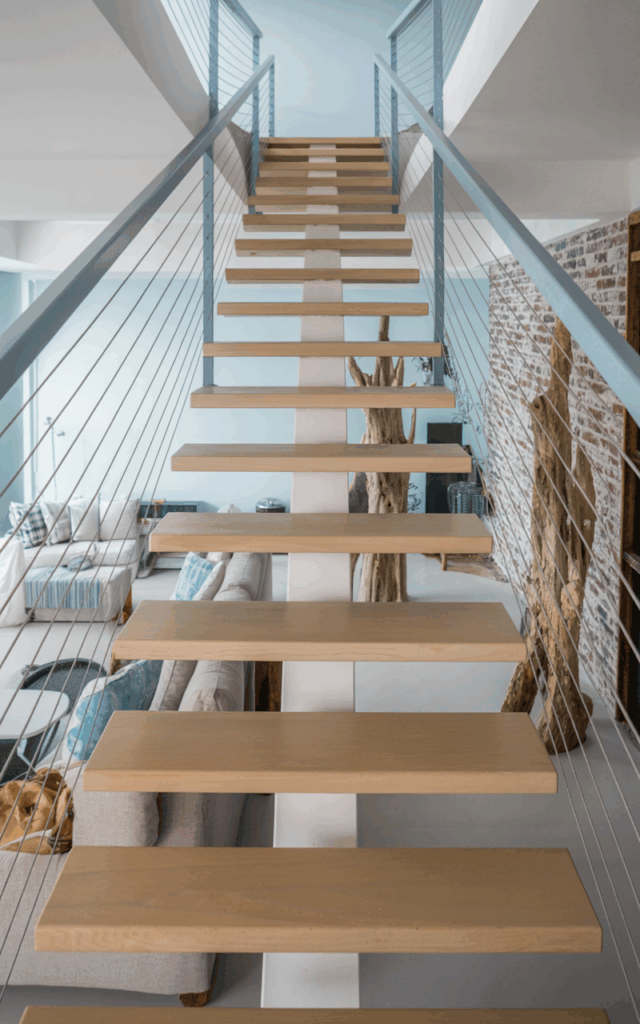
If glass feels too modern and wood feels too bulky, try cable railing.
Stainless steel cables stretch horizontally, providing safety without blocking views.
It keeps the staircase visually light. Almost invisible from a distance.
Works best in:
- Industrial interiors
- Coastal homes
- Contemporary lofts
Pair with light wood treads and white walls. The space instantly feels bigger and cleaner. 🌊
Use Metal Frame Stairs With Slim Profiles
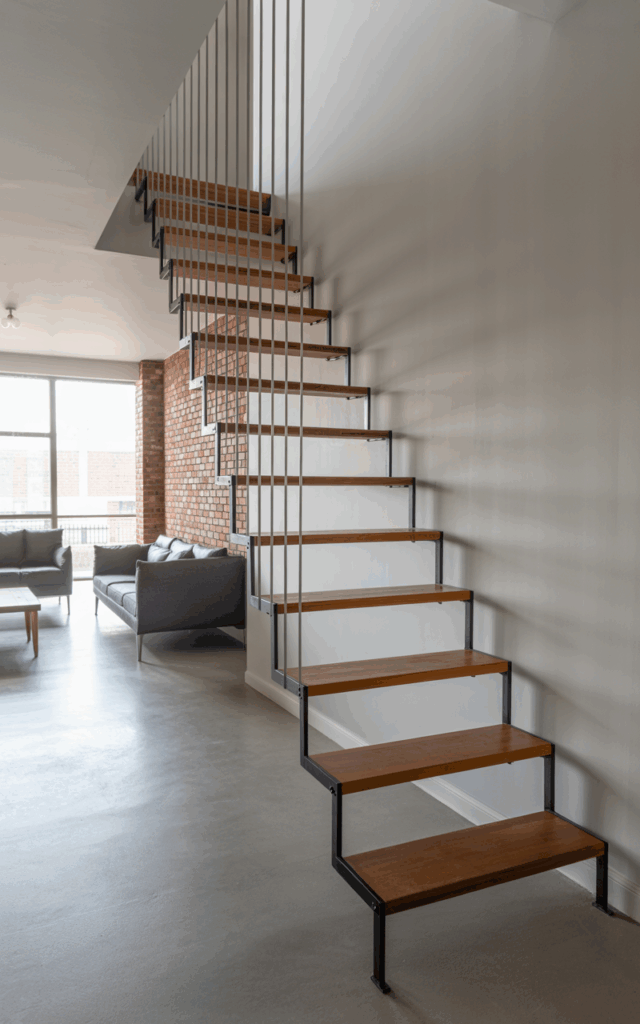
Chunky wooden supports add weight — visually and physically.
A slim metal frame, powder-coated in black or white, can reduce bulk dramatically.
The treads appear to float more easily.
It’s subtle. But when square footage is limited, subtle shifts matter.
Why it works?
Thin structural elements reduce perceived mass. The eye reads more negative space, which equals openness. Clean. Sharp. Efficient. 🖤
Stack Storage Cabinets Along the Stair Angle
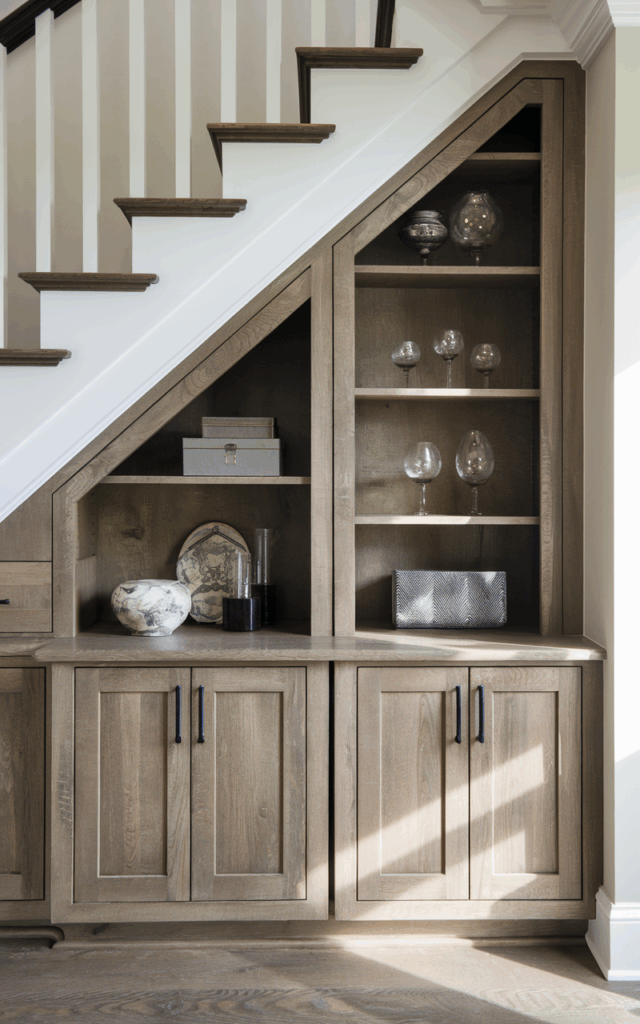
Follow the slope.
Install custom cabinetry that mirrors the exact angle of the staircase underside. It looks built-in, intentional, and polished.
You can alternate open cubbies with closed cabinets to avoid heaviness.
Remember idea six about the pantry? Same principle. Different room.
Checklist:
- Measure slope precisely
- Decide open vs. closed storage
- Choose handle-less fronts for minimal look
It’s one of my favorite practical solutions. Hidden capacity everywhere. 📦
Combine Storage, Light, and Minimal Railings in One Design
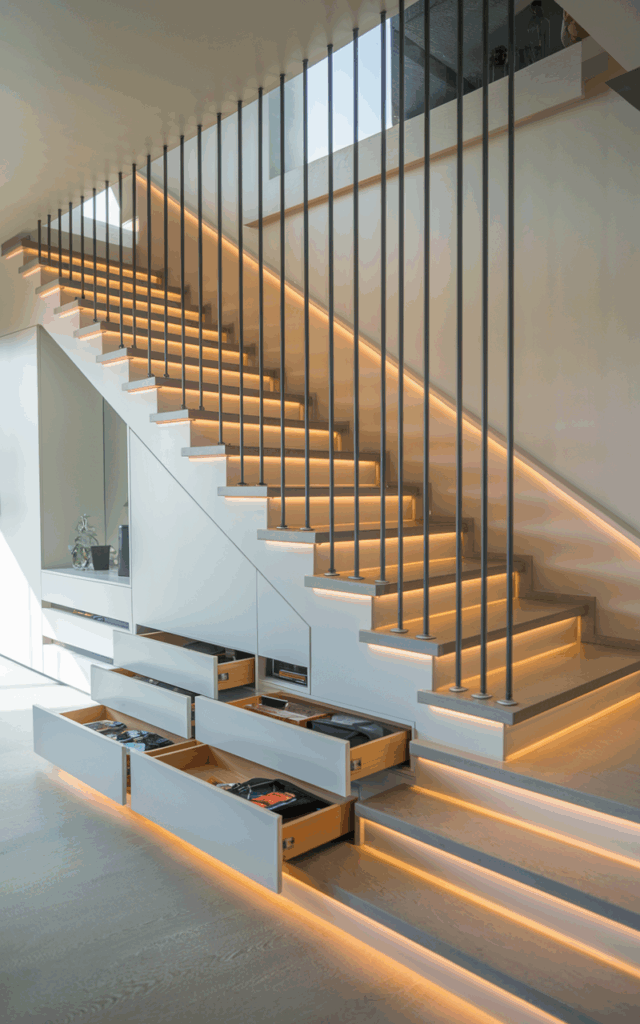
If you take anything from these 30 space saving staircase ideas, let it be this: layering matters.
Use slim railings (like cable or glass), open risers for airflow, integrated drawer storage, and subtle lighting together.
No single trick transforms a small home. But combining three or four? That’s magic.
Remember the floating treads from idea one, the lighting from idea twenty, and the storage from idea two? Blend them.
Design smarter, not bigger.
And suddenly your staircase isn’t stealing space anymore. It’s giving it back. 🏡✨
Final Thoughts
A staircase doesn’t have to dominate your home. It can work harder. Smarter. More beautifully.
Try one small upgrade first — maybe lighting or storage drawers. See the shift. Feel the difference.
Then build from there.
Because good design isn’t about having more space.
It’s about using the space you already have — brilliantly. 💛
