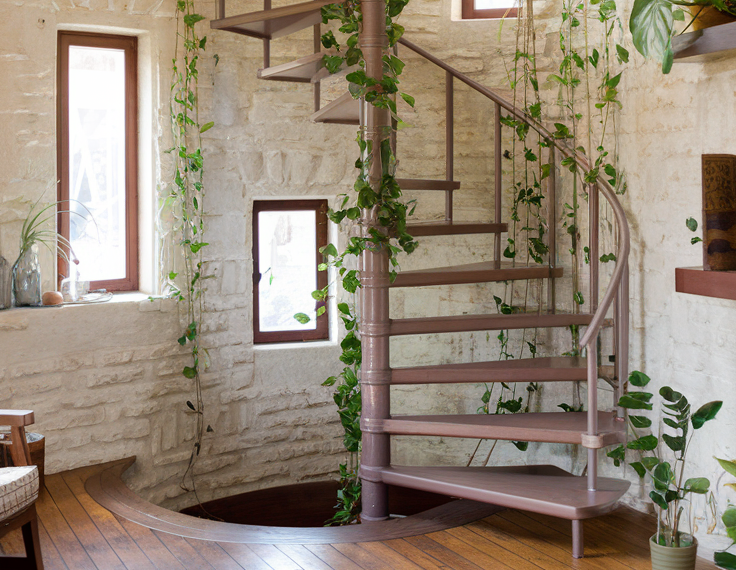
The spiral staircase tends to get underestimated.
It’s often labeled as cramped, dated, or reserved for lofts and quiet corners of old buildings.
I couldn’t disagree more.
I’ve seen a spiral staircase shine in compact city apartments, spacious family homes, coastal retreats, and even rustic barns converted into creative studios. When thoughtfully designed, it does far more than save square footage. It becomes a sculptural feature—adding movement, character, and a sense of intention to the space. Ahead, you’ll find 22 spiral staircase ideas I’ve watched work beautifully in real homes, each one blending function with undeniable style.
Let’s take a closer look.
Embrace a minimalist metal spiral staircase

If you love clean lines and uncluttered spaces, this one’s for you.
A minimalist metal spiral staircase feels light even when it’s made of steel. Thin railings. Open risers. No heavy ornamentation pulling the eye down. It almost disappears, in the best way.
I like using this style in modern homes where you don’t want the stairs to dominate the room. Black metal is the classic move, but white or soft gray works beautifully too. Especially with pale floors.
Pair it with concrete, polished wood, or large windows. Let the staircase become part of the architecture instead of the décor. Quiet. Confident. Timeless.
Install a wooden spiral staircase with natural grain

Nothing warms a space like real wood.
A wooden spiral staircase brings in texture, softness, and a sense of age—even in a brand-new home. I always recommend letting the grain show. Skip heavy stains. Skip paint if you can.
Oak, maple, walnut. They each tell a different story. The curve of the steps highlights the grain in a way straight stairs never can. It feels organic. Almost sculptural.
This works especially well in homes with open layouts. The staircase becomes a centerpiece without shouting. Just calm, honest beauty.
Paint a spiral staircase in a bold color

If your house feels a little too safe, this is your moment.
A bold-colored spiral staircase instantly injects personality. I’m talking deep navy, emerald green, matte black, or even burnt orange if you’re brave. It’s a commitment—but a fun one.
I’ve seen this work best when everything else stays neutral. White walls. Simple furniture. Let the staircase be the surprise.
It turns a functional necessity into art. People notice. They always do.
Add glass railings for a lighter look

Spiral staircases can sometimes feel visually heavy.
Glass railings fix that. Instantly.
They let light pass through. They open up small rooms. And they make the staircase feel more modern without changing the structure itself.
I love this idea in homes with limited natural light. Or in spaces where the staircase sits right in the middle of the room. The transparency keeps everything airy.
It’s clean, elegant, and surprisingly low-drama once installed.
Anchor a rustic space with reclaimed wood steps

Rustic doesn’t have to mean rough.
Reclaimed wood spiral staircases bring history into your home. Every nick and knot tells a story. And when paired with simple metal supports, the contrast is stunning.
I recommend this style for farmhouse interiors, cabins, or converted industrial spaces. It grounds the room. Makes everything feel intentional.
Let the imperfections shine. That’s the whole point.
Highlight the staircase with integrated LED lighting

Lighting changes everything.
Integrated LED strips under each tread or along the railing make a spiral staircase safer and more dramatic. Especially at night. Especially in darker homes.
I prefer warm light over cool. It feels inviting instead of clinical. Subtle is key here. This shouldn’t look like a nightclub.
The glow follows the curve of the stairs. Soft. Elegant. A little magical, honestly.
Soften the look with a carpeted spiral runner

Yes, you can carpet a spiral staircase.
A slim runner down the center of each step adds comfort, sound insulation, and visual softness. This is especially helpful in family homes or older houses.
Choose a neutral weave if you want timeless. Or a subtle pattern if you want personality without chaos.
It feels welcoming. And your feet will thank you.
Position a spiral staircase near large windows

Light matters.
Placing a spiral staircase near tall windows turns it into a moving sculpture. The shadows shift throughout the day. Morning feels different from afternoon. Evening feels calm.
I love this setup in homes with two or more floors where the stairs are visible from multiple rooms. It creates connection between levels.
Natural light elevates everything. Especially curves.
Use white paint to blend the staircase into the room

White spiral staircases don’t demand attention.
They quietly blend. Especially in small spaces where visual clutter becomes overwhelming. White makes the staircase feel lighter and less intrusive.
This works beautifully in coastal homes, Scandinavian interiors, or minimal apartments. Keep the railings slim. Let the lines stay crisp.
It’s subtle. But incredibly effective.
Combine metal and wood for balanced contrast

This is my go-to recommendation when clients can’t decide.
Metal for structure. Wood for warmth. Together, they create balance. Neither feels too cold or too traditional.
I’ve used black steel with light oak, dark iron with walnut, even brushed metal with reclaimed pine. It always works.
It’s flexible. Future-proof. And easy to style around.
Tuck a spiral staircase into a compact corner

Spiral staircases are space-saving champions.
When tucked into a corner, they free up floor space without sacrificing function. Perfect for small homes, studios, or mezzanines.
The key is access. Make sure the entrance feels natural, not hidden. Lighting helps. So does a simple rug nearby.
It’s practical. Quietly smart. And incredibly efficient.
Elevate a beach house with a breezy spiral design

Beach houses need flow.
Light materials. Soft colors. Airy railings. A spiral staircase fits beautifully when done right.
I lean toward white-painted wood or pale metal. Keep the steps open if possible. Let sand, sun, and salt air feel welcome.
This staircase style feels relaxed. Unforced. Like summer should.
Install a spiral staircase with wide, comfortable treads

Not all spiral staircases are narrow.
Wider treads make a huge difference in comfort. Especially if the staircase gets daily use. Kids. Pets. Groceries. All of it.
This is more about planning than style. But it pays off in how the space feels long-term.
Comfort matters. Always.
Add decorative railings for a touch of elegance

Railings aren’t just safety features.
Ornamental metalwork, curved balusters, or subtle detailing can transform a spiral staircase into something classic and refined.
I’ve seen this work beautifully in older homes and traditional interiors. It adds romance without feeling dated.
Details count. Especially when repeated with restraint.
Contrast dark stairs against light flooring

Contrast creates drama.
Dark spiral stairs against pale floors draw the eye upward. It creates depth and movement without adding clutter.
This works best when the color palette stays simple. Two or three tones max. Let contrast do the work.
It’s bold. But controlled.
Turn the staircase into a gallery backdrop

Walls around a spiral staircase are prime gallery space.
Photos. Art prints. Sculptural lighting. The curve naturally guides the eye upward through the display.
Keep frames consistent. Vary sizes slightly. Let the staircase become a storytelling path.
It feels personal. And deeply lived-in.
Incorporate a spiral staircase into a home office

Spiral staircases add vertical movement.
In home offices, that matters. Especially if you’re short on square footage. A stair leading to a loft workspace feels dynamic and creative.
I like keeping this setup simple. Clean materials. Good lighting. Minimal distractions.
It inspires focus. And a little imagination.
Introduce color through stair risers

If fully painted stairs feel overwhelming, start smaller.
Colored risers add personality without dominating the room. Soft blues. Muted greens. Even patterned tiles.
It’s playful. Easy to update later. And surprisingly impactful.
Small changes count.
Make the staircase child-friendly without losing style

Form still matters when function changes.
Add non-slip treads. Slightly wider steps. Rounded railings. All while keeping the design intact.
A spiral staircase can be family-friendly. It just takes thoughtful choices.
Safety and beauty can coexist.
Let plants climb alongside the staircase

Green softens structure.
Tall plants near or winding along a spiral staircase bring life and movement. Think trailing vines or slim potted trees.
This works beautifully in sunlit spaces. Nature plus curves feels effortless.
Calm. Fresh. Alive.
Use open risers to keep sightlines clear

Open risers reduce visual bulk.
They let light through. Keep spaces connected. Especially useful in small or dark homes.
I recommend this for modern interiors where openness matters.
Light flows. Space breathes.
Blend the staircase into the home’s overall palette

Harmony matters.
Matching the staircase to your home’s color palette keeps everything cohesive. Nothing feels accidental. Nothing competes.
It becomes part of the story. Not a standalone piece.
Quiet cohesion always wins.
Final Thoughts
Spiral staircases aren’t just about going up or down.
They shape how a home feels, flows, and connects.
Whether you lean modern, rustic, playful, or classic, there’s room to make one of these 22 spiral staircase ideas your own. Start with one. Adjust it to fit your space. Trust your instincts.
Your staircase can be functional.
And unforgettable.
