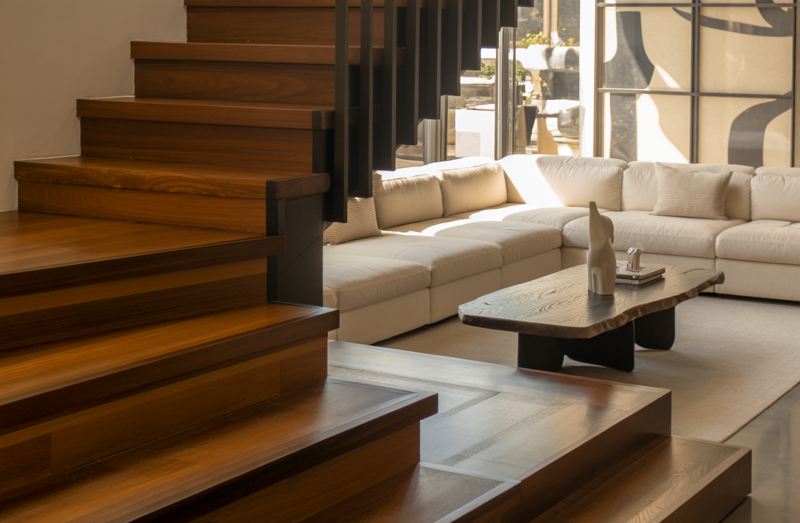
A staircase in living room design does far more than connect floors.
It shapes first impressions, anchors the space, and subtly reflects your home’s personality.
Some staircases fade quietly into the background.
Others become the feature everyone remembers.
If yours feels more functional than fabulous, you’re in the right place.
These 21 staircase in living room ideas will help you turn a once-ignored space into a true showstopper.
Anchor the Living Room With a Statement Staircase

Start by letting the staircase take up space visually.
Not physically. Visually.
A bold railing, thicker treads, or a darker finish can instantly ground the room.
It gives the living room a sense of structure.
I like this approach in open layouts.
It keeps everything from feeling floaty.
You don’t need to go overboard.
Just make sure the staircase doesn’t whisper when it should speak.
Think of it as furniture you walk on.
Once you see it that way, everything changes.
Frame the Staircase With Coordinated Railings

Railings matter more than people think.
They’re eye-level design.
Matching the railing finish to nearby furniture or lighting pulls the whole room together.
Black metal. Warm wood. Brushed brass.
I usually decide this after the sofa and coffee table are chosen.
Not before.
Unlike painting (remember idea two), this is about texture.
Material does the talking here.
Small change.
Big visual payoff.
Use the Staircase Wall as a Design Feature

That wall next to your stairs?
It’s prime real estate.
Gallery wall.
Textured paint.
Tall artwork.
I love a staircase wall that evolves as you climb.
It feels dynamic.
This idea plays beautifully with neutral stairs.
Let the wall shine.
Later, when we talk about lighting, you’ll see how powerful this combo can be.
One feeds the other.
Add a Stair Runner That Connects the Living Room

Runners aren’t just practical.
They’re emotional.
A runner that echoes your living room rug ties the spaces together.
Color, pattern, texture—it all matters.
I prefer low-pile runners in living rooms.
Clean and durable.
This works especially well if your staircase cuts through the room.
It softens the transition.
Remember this idea.
We’ll build on it when storage and lighting come into play.
Match Stair Materials With Living Room Furniture

Consistency creates calm.
If your living room leans wood-heavy, carry that material into the stairs.
Same tone. Same grain.
Metal-heavy room?
Echo it in the railing.
This isn’t about copying.
It’s about conversation between pieces.
I’ve seen this make average rooms feel designer-level.
Because it feels planned.
Nothing random.
Nothing accidental.
Turn the Staircase Into a Sculptural Element

Sometimes the staircase is the art.
Curved railings.
Chunky treads.
Unexpected angles.
This works best when the rest of the living room stays simple.
Let one thing shine.
Unlike idea seven’s lightness, this is about presence.
Drama.
If people comment on your stairs before your sofa, you did it right.
And yes—that’s a compliment.
Create Contrast Between the Staircase and Living Room

Contrast keeps things interesting.
Light living room?
Go darker on the stairs.
Dark walls?
Lighten the staircase.
I love this because it adds definition without clutter.
Everything still feels clean.
This idea works especially well after idea ten.
Sculptural stairs plus contrast? Stunning.
Just don’t overdo it.
One strong contrast is enough.
Blend the Staircase Seamlessly Into the Living Room

Now let’s go the opposite direction.
Instead of contrast, blend.
Same wall color. Same trim. Same vibe.
The staircase almost disappears.
In a good way.
This is perfect for minimalist or calming spaces.
Nothing interrupts the flow.
Remember idea eleven?
This is its quieter sibling.
Different personality.
Same intention.
Emphasize Vertical Space With Tall Stair Design

Living rooms with high ceilings deserve vertical drama.
Tall railings.
Extended wall art.
Oversized lighting.
The staircase naturally pulls the eye up.
Lean into it.
I love doing this after idea four’s feature wall.
Add height, then highlight it.
It makes the room feel grand.
Even if the footprint is small.
Vertical space is often ignored.
Don’t ignore it.
Soften the Staircase for a Cozy Living Room Feel

Not every living room wants drama.
Soft wood tones.
Rounded railings.
Plush runners.
This approach feels welcoming.
Almost hug-like.
I recommend this if your living room already feels cozy.
Lean in.
It’s the opposite of idea ten.
But just as intentional.
Comfort is a design choice too.
Frame the Staircase With Architectural Details

Trim changes everything.
Box the staircase with molding.
Add paneling along the wall.
Suddenly, the stairs feel custom.
Built-in. Permanent.
I love this in traditional or transitional living rooms.
It adds quiet elegance.
Unlike the softness of idea fifteen, this one adds structure.
Refinement.
Paint it to match the walls or highlight it slightly.
Either works.
Details matter.
Always have.
Use Glass to Keep the Living Room Open

Glass railings are magic in living rooms.
They protect without blocking.
Define without closing off.
I recommend tempered glass with minimal hardware.
Let it disappear.
This idea builds beautifully on floating stairs from idea seven.
Double the openness.
If your living room gets great light, don’t block it.
Let it travel.
Airy spaces feel larger.
And calmer.
Create a Flow Between Staircase and Seating Area

Your seating should acknowledge the stairs.
Angle a chair toward them.
Align a sofa parallel.
It creates harmony.
Movement feels natural.
This works especially well in open-plan spaces.
Everything feels connected.
Unlike idea eight’s storage focus, this is about layout.
How people move.
Good flow is invisible.
But you feel it.
Use Color to Define the Staircase Zone

Color can separate spaces without walls.
Paint the staircase wall a slightly different shade.
Not bold. Just intentional.
It creates a visual zone.
Without cutting off the living room.
I love this in shared spaces.
Living room, stairs, hallway all together.
Subtle boundaries matter.
They bring calm.
Incorporate Natural Elements Around the Staircase

Plants soften everything.
Tall plants near the stairs.
Wood accents nearby.
This works beautifully with neutral living rooms.
Nature brings warmth.
I often place a plant where the stairs meet the floor.
It feels grounding.
This idea plays nicely with idea fifteen’s coziness.
Soft on soft.
Natural always feels right.
Keep the Staircase Minimal for Calm Living Rooms

Minimal doesn’t mean boring.
Clean lines.
Simple railings.
Neutral tones.
The staircase fades into the background.
And that’s the goal.
This idea pairs well with layered living rooms.
Lots of texture elsewhere.
Sometimes, the best design choice is restraint.
Let other elements breathe.
Balance the Staircase With Symmetry

Symmetry feels comforting.
Matching lamps near the base.
Balanced furniture placement.
The staircase becomes the center point.
Everything else responds.
This works well in traditional living rooms.
Order feels good.
It’s quiet design.
But powerful.
Customize the Staircase to Reflect Your Style

This is where personality shows.
Unique railings.
Custom colors.
Unexpected materials.
Your staircase should feel like you.
Not a catalog.
Look back at ideas you loved earlier.
Mix them.
Design isn’t linear.
It’s personal.
If it makes you smile every time you walk up, you nailed it.
Use the Staircase to Guide the Eye Through the Room

Lines matter.
Angle the stairs so they lead toward a window or fireplace.
Movement feels intentional.
I love this in long living rooms.
It breaks the tunnel effect.
This idea connects with idea fourteen’s vertical thinking.
But horizontal now.
Guide the eye.
Guide the experience.
Let the Staircase Evolve With the Living Room

Design changes.
Your staircase can too.
Swap runners.
Update lighting.
Change wall decor.
The structure stays.
The styling evolves.
I always design staircases to be flexible.
Future-proof.
This makes long-term living easier.
And more fun.
Treat the Staircase as a Living Room Feature—Not an Afterthought

This is the big takeaway.
Your staircase deserves intention.
Just like your sofa or rug.
When you design it with the living room, not after it, everything clicks.
Flow. Balance. Style.
Try one idea.
Then build.
Design grows over time.
And that’s the beauty of it.
Final Thoughts
Living room staircases don’t need to be dramatic to be beautiful.
They just need attention.
Pick one idea that feels right.
Start there.
Your staircase has been waiting for its moment.
Now it’s ready.
