Staircase railings are one of the most underestimated design features in a home.
They may be built for safety, but visually? They carry serious weight.
I’ve watched a simple railing soften a modern space, add drama to a neutral home, or completely redefine the personality of an entryway. When a staircase feels underwhelming, the railing is often the missing piece.
If your stairs look fine—but not wow—this is where the transformation begins.
These 26 staircase railing design ideas combine function with style, turning everyday staircases into true design statements.
Swap traditional spindles for sleek black metal balusters

This is one of the easiest upgrades with the biggest payoff.
And I recommend it all the time.
Black metal balusters instantly modernize a staircase. Even if the rest of the house leans traditional. They add contrast without screaming for attention.
I love how slim metal spindles visually open up the space. Light passes through. Sightlines improve. The staircase feels lighter.
Pair them with a warm wood handrail to keep things balanced. That mix of black and wood? Always a win.
It’s a clean look. Timeless. And surprisingly affordable compared to a full railing replacement.
Install horizontal railings for a modern edge

Horizontal railings bring a totally different energy.
Clean. Linear. Architectural.
They work especially well in contemporary homes or open floor plans where you want the staircase to feel intentional, not decorative.
Metal rods or cables are common here. Stainless steel feels sleek. Black-coated metal feels bold.
One thing to keep in mind: spacing matters. Safety first. Especially with kids.
When done right, horizontal railings feel crisp and confident.
They say, “Yes, this was designed.”
Warm up the space with a chunky wood handrail

Sometimes it’s not about changing everything.
Sometimes it’s about upgrading one detail.
A chunky wood handrail adds instant warmth and substance. It feels good in your hand. Solid. Grounded.
I love natural finishes here. Oak. Maple. Walnut. Let the grain show.
Even paired with simple white spindles, a thicker handrail elevates the entire staircase.
It’s subtle. But you feel it every time you walk by.
Paint existing railings for a budget-friendly refresh

If replacing the railing isn’t in the cards, paint can do wonders.
Seriously.
Painting railings black, charcoal, or even a deep green gives them new life. Especially against light walls.
Prep matters. Clean well. Sand lightly. Use the right paint.
This is one of those changes that looks expensive but isn’t.
My favorite kind.
Replace spindles with glass panels for openness

Glass railings are stunning when done right.
They practically disappear.
If your staircase blocks light or chops up the space, glass is your friend. It keeps everything open and airy.
Use tempered glass for safety. Always.
Pair it with a wood or metal handrail to ground the look. Too much glass can feel cold.
The result feels modern, clean, and incredibly spacious.
Add character with turned wood balusters

Classic never really goes out of style.
It just evolves.
Turned wood balusters bring charm and detail. Especially in traditional or cottage-style homes.
Paint them white for a clean look. Or stain them to match the handrail for a richer feel.
They add rhythm. Texture. Quiet elegance.
Sometimes familiar is exactly what a space needs.
Extend the railing higher for drama

Most railings stop where the stairs end.
But they don’t have to.
Extending the railing upward creates a dramatic vertical line. It draws the eye up and makes ceilings feel taller.
This works beautifully in entryways or open stairwells.
Keep the design simple so it doesn’t overwhelm.
It’s a small change with big visual impact.
Curve the handrail for a softer flow

Straight lines are fine.
Curves feel special.
A curved handrail adds elegance and movement. Especially on staircases with landings or gentle turns.
It feels custom. Crafted. Almost sculptural.
Yes, it costs more. But if the staircase is a focal point, it’s worth it.
Every time you run your hand along it, you’ll notice.
Match the railing to your home’s architecture

This sounds obvious. But it’s often overlooked.
Modern homes want clean lines. Farmhouses want warmth. Traditional homes like detail.
When the railing matches the architecture, everything feels right. Nothing fights.
Take cues from your doors, trim, and hardware.
The staircase should belong.
Not feel like it wandered in from another house.
Introduce cable railing for a light, coastal feel

Cable railings have a relaxed confidence.
Not flashy. Just cool.
They’re perfect for homes that want openness without going full glass. Coastal, modern, or mountain homes especially.
Thin steel cables stretch horizontally or vertically, keeping views clear while adding structure.
Pair them with wood posts to soften the industrial edge.
They feel casual. Airy.
Like a deep breath.
Paint the railing and wall the same color

This trick is quietly powerful.
When the railing blends into the wall color, it visually disappears. The staircase feels calmer and more cohesive.
This works best with soft neutrals or mid-tone colors. Nothing too dark.
It’s especially helpful in small spaces where visual clutter overwhelms.
The staircase becomes part of the architecture.
Not a distraction.
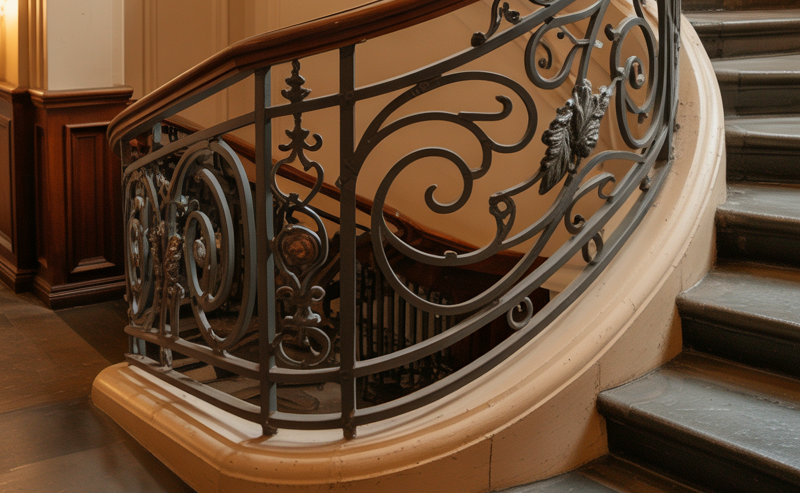
Use ironwork for old-world charm

Wrought iron railings bring drama.
And history.
Intricate scrolls or simple forged designs add weight and romance. Perfect for Mediterranean, Spanish, or European-inspired homes.
Keep the surrounding space simple so the iron can shine.
Black is classic. Aged bronze is beautiful too.
This kind of railing feels timeless.
Like it’s always been there.
Frame the stairs with a solid half-wall railing

Not every railing has to be open.
A half-wall railing creates a sense of enclosure without closing things off completely. It feels sturdy and safe.
Top it with a wood cap for warmth. Or paint it to match the walls.
This option works well for families or traditional homes.
It’s practical.
And quietly elegant.
Add decorative newel posts for personality

Newel posts are the bookends of a staircase.
And they deserve attention.
Oversized, carved, or uniquely shaped posts anchor the railing and add character.
You can keep spindles simple and let the newels shine.
It’s a great way to add detail without overwhelming the space.
Small change.
Big personality.
Use rope railing for casual charm

Rope railings aren’t for everyone.
But when they work, they really work.
They bring a relaxed, coastal vibe that feels playful and unexpected. Great for beach houses or rustic cabins.
Choose thick, natural rope and sturdy hardware. Safety still matters.
Keep everything else simple so it doesn’t feel kitschy.
It’s casual.
And full of character.
Highlight the railing with integrated lighting

Lighting and railings are a powerful duo.
LED strips under the handrail or along the base create a soft glow. Especially beautiful at night.
It improves safety and adds ambiance. Two birds. One stone.
Keep the light warm. Always.
It makes the staircase feel thoughtful.
And a little magical.
Create contrast by pairing dark railings with light stairs

Contrast adds drama.
In the best way.
Dark railings against light stairs create definition and structure. The staircase feels grounded and bold.
Black railings with white risers are classic. Dark wood with pale stone is stunning too.
This approach works well when the staircase is visible from main living areas.
It commands attention.
Without being loud.
Add a continuous handrail for seamless flow

A continuous handrail runs uninterrupted from top to bottom.
No breaks. No awkward stops.
It feels smooth and intentional. Especially on long staircases.
This is both a design and functional win. Easier to use. Easier on the eyes.
Choose a shape that’s comfortable to grip. Rounded edges matter.
The flow feels natural.
Effortless.
Turn the railing into a sculptural focal point

This is where railings stop being background elements.
And start being art.
Think custom metalwork. Curved forms. Laser-cut panels. Organic shapes.
A sculptural railing turns the staircase into a moment. Something people noti
ce and remember.
The rest of the space should support it. Not compete.
Neutral walls. Simple stairs. Let the railing lead.
It’s bold.
But unforgettable.
Embrace asymmetry for a custom feel

Perfect symmetry is safe.
Asymmetry is interesting.
Vary post spacing. Mix solid sections with open ones. Change materials subtly as the staircase rises.
This approach feels intentional when done thoughtfully. Not chaotic.
It works well in modern or artistic homes where uniqueness matters.
The staircase feels one-of-a-kind.
Because it is.
Use reclaimed wood for rustic warmth

Reclaimed wood railings tell a story.
You can feel it.
Weathered grain. Old nail holes. Natural imperfections. All welcome.
Pair with simple metal balusters to keep it balanced.
This look adds instant soul. Especially in farmhouse or cottage-style homes.
It’s warm.
Honest.
And full of character.
Play with color on the railing only

If painting walls feels scary, paint the railing instead.
A deep green. Navy. Even muted terracotta.
It adds personality without overwhelming the space.
Keep the rest neutral so the railing stands out.
It’s playful.
But controlled.
Use minimalist wire railings for an airy look

Wire railings are ultra-light visually.
Thin vertical or horizontal wires keep everything open while still providing safety.
They work beautifully in modern or industrial homes.
Pair with wood to soften the look.
The staircase feels weightless.
Almost floating.
Highlight craftsmanship with custom joinery

Sometimes it’s all about the details.
Custom joinery at connection points, corners, and posts elevates the entire railing.
You notice it up close. The care. The precision.
This is subtle luxury.
It doesn’t shout.
It whispers quality.
Extend the railing into adjacent spaces

Let the railing design continue beyond the stairs.
Into hallways. Along loft edges. Around landings.
This creates flow and cohesion throughout the home.
The design feels intentional. Connected.
Everything works together.
Not in isolation.
Design the railing as part of the home’s story

This is the big picture moment.
A staircase railing isn’t just a safety feature. It’s part of how your home feels.
Does it feel warm? Bold? Calm? Playful?
Let the railing reflect that.
When the design aligns with how you live, it always feels right.
And that’s the goal.
Summing Things Up
A staircase railing may seem like a small detail, but it has the power to anchor your entire home’s design. The right choice can add warmth, drama, texture, or quiet elegance, turning an everyday staircase into a true focal point.
Whether you love clean modern lines, timeless traditional details, or bold artistic statements, there’s a railing style that fits your space and lifestyle. Think of your railing as functional art—something you touch daily and see constantly.
Invest a little thought here, and your staircase won’t just connect floors; it will connect style, personality, and purpose beautifully for years to come.
