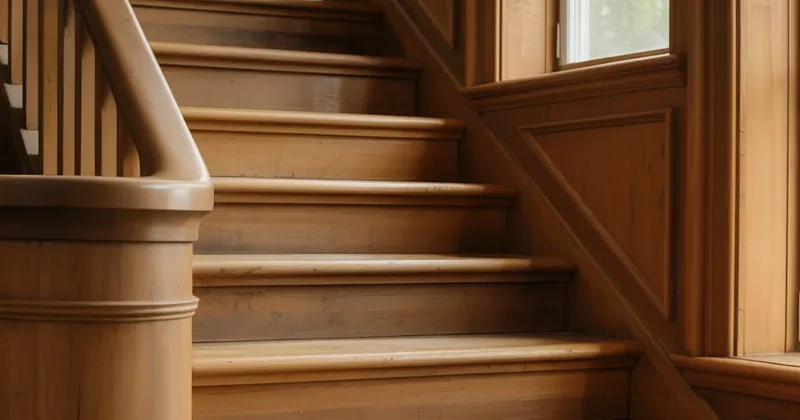
There’s something deeply comforting about a traditional staircase. I always feel it the moment I step into a home that has one. It’s not just a structure connecting floors—it’s a visual story of heritage, warmth, and lived-in beauty.
Unlike ultra-modern designs that sometimes feel cold, traditional staircases carry texture, detail, and soul. Wood grains, carved railings, patterned tiles… they all speak in a softer language.
So if you’re planning to design or refresh your staircase, I’ve gathered 21 traditional staircase ideas that feel practical, beautiful, and honestly… very homey.
Install rich wooden handrails with carved detailing
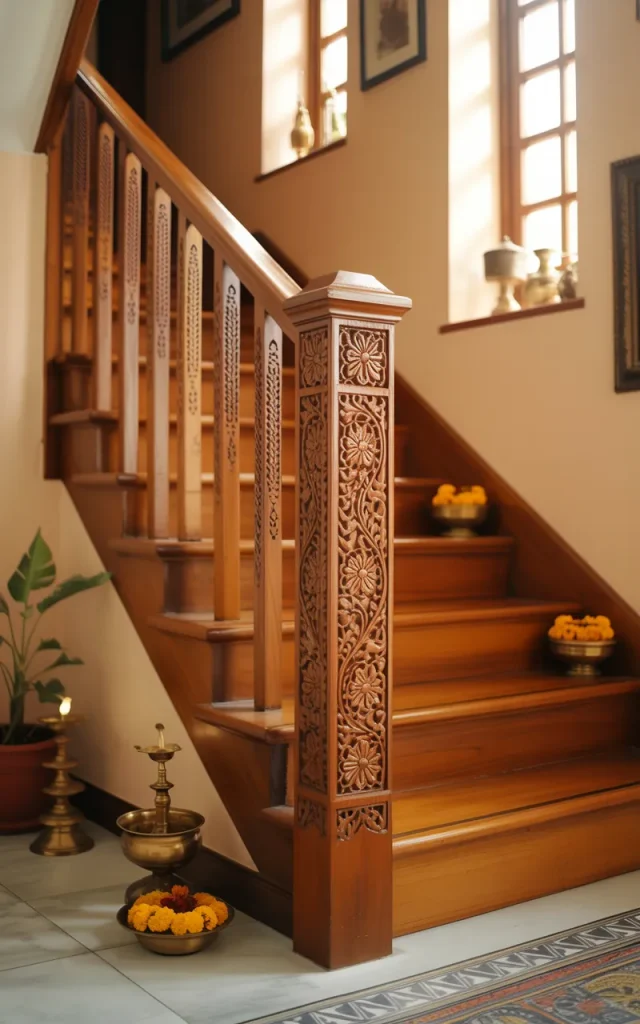
I always start with wood when someone asks me about traditional staircases. There’s just no substitute for that warm, carved handrail feel. It instantly makes the space look rooted and grounded.
I usually recommend teak or mahogany if the budget allows. The deeper tones age beautifully over time. Even simple carvings along the edges can elevate the entire staircase without making it feel heavy.
Pair it with neutral walls so the wood becomes the star. It’s simple, but it feels like a heritage home instantly.
Why it works?
It brings timeless warmth and natural texture into the space.
Add patterned encaustic tile risers
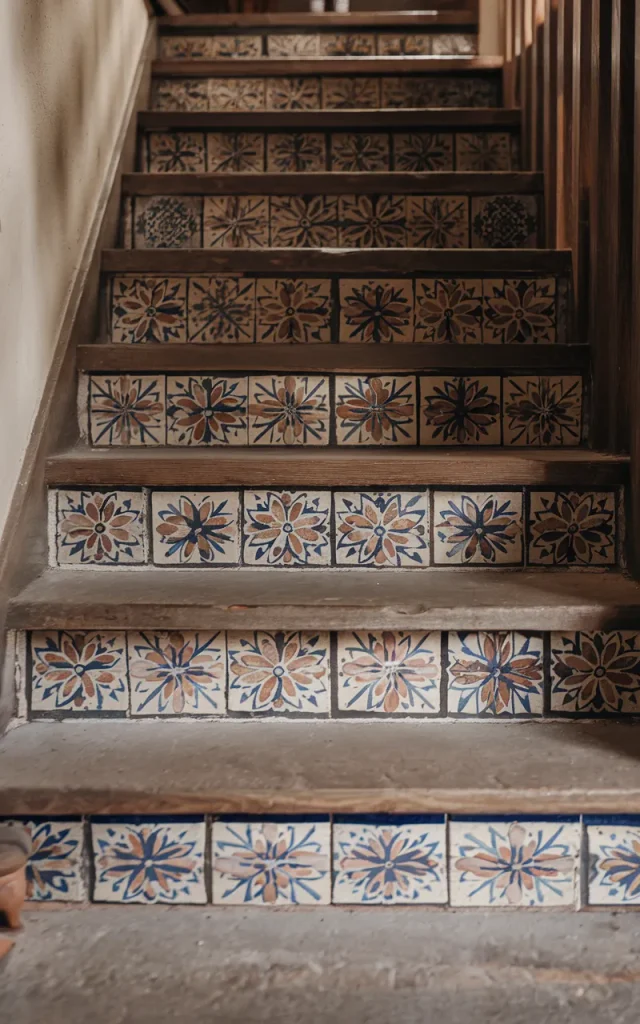
This is one of my favourite traditional tricks. I love adding patterned tiles just on the risers while keeping the treads simple wood or stone.
It creates a subtle surprise as you walk up the stairs. Nothing too loud, just a soft decorative rhythm.
I once saw this in an old Chennai home, and it stayed in my mind forever. The patterns felt almost like storytelling steps.
If you’re unsure, start with muted blues or earthy terracotta patterns.
Quick Tip:

Keep wall colours plain so the tiles don’t compete visually. ✨
Install wrought iron railings with floral motifs
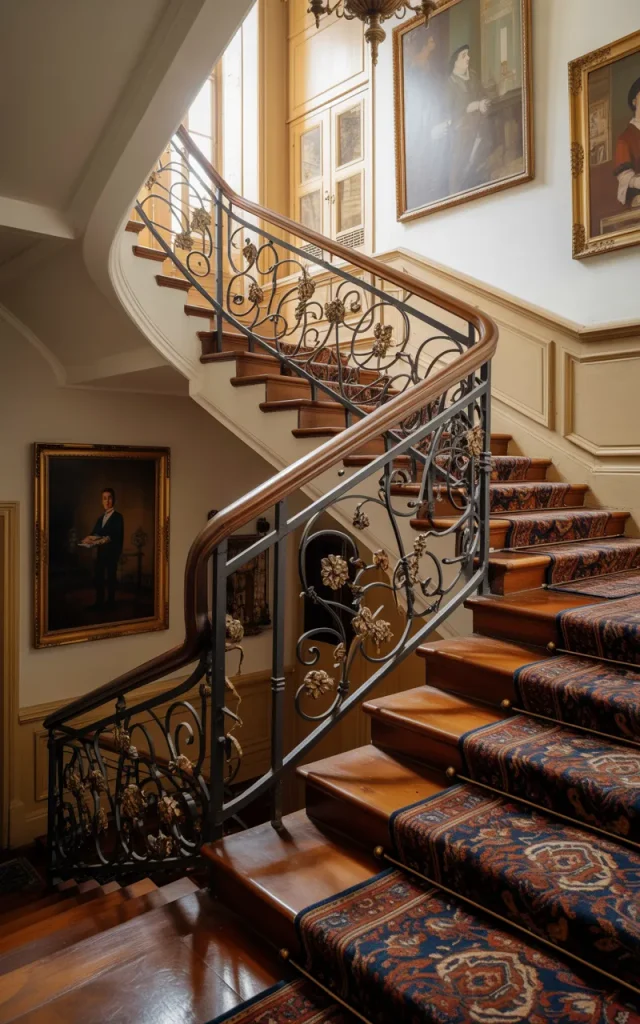
I always think wrought iron railings bring a slightly romantic old-world charm. Especially when they have floral or vine-inspired designs.
Unlike plain metal railings, these feel handcrafted and personal. I’ve noticed they work beautifully in homes with arched doorways or vintage furniture.
Pair them with wooden steps for that perfect balance of strength and softness.
Don’t go overly intricate though—too much detailing can feel heavy. Keep it airy and flowing.
Why it works?

It blends durability with artistic tradition.
Create a terracotta staircase base for earthy warmth
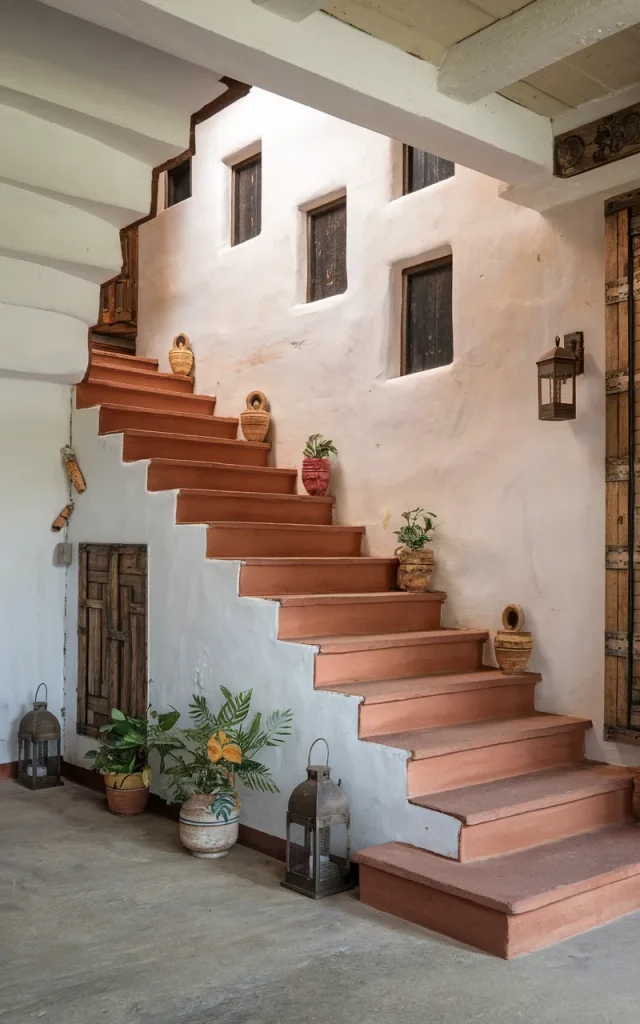
I love terracotta for traditional homes. It has that earthy, grounding feel that instantly makes a staircase feel rooted.
Using terracotta tiles or cladding on the base walls of the staircase creates a rustic Indian aesthetic that feels warm and welcoming.
I usually pair it with whitewashed walls to balance the richness.
Remember the second idea with patterned risers? This one complements it beautifully if you want a stronger traditional palette.
Instant Gratification Tip:
Even a small terracotta accent strip can change the vibe.
Hang brass wall sconces along the stair wall
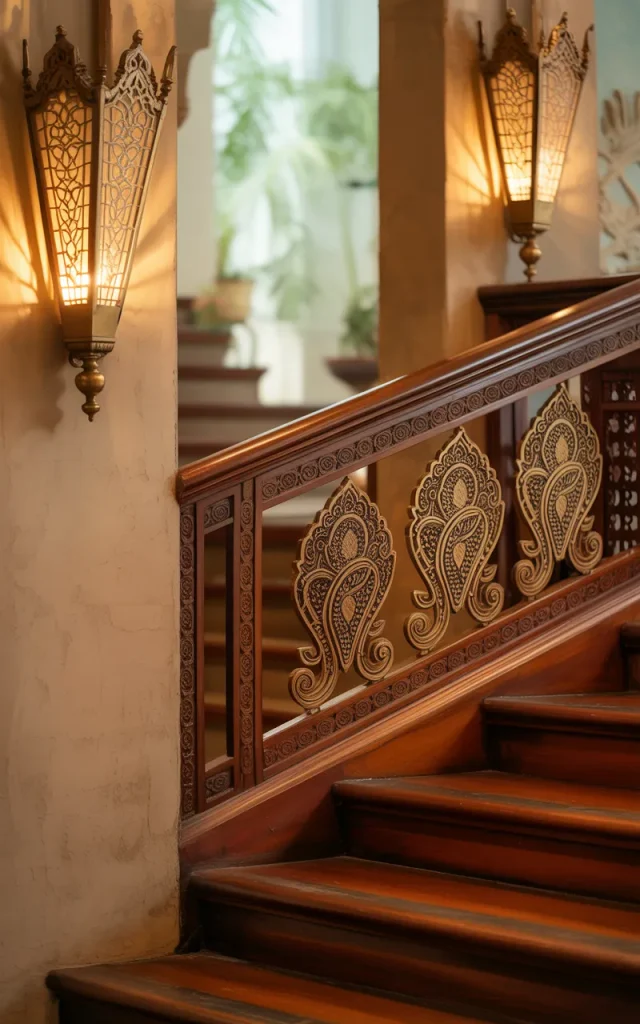
Lighting changes everything. I always say this, and staircase lighting is no exception.
Brass sconces along a traditional staircase wall instantly bring a heritage feel. The warm glow reflects beautifully on wood and stone.
I like placing them in pairs, spaced evenly as the staircase rises. It feels intentional but not overwhelming.
If you’re layering this with carved railings from Idea 1, the combination feels almost royal.
Why it works?
Warm metals + soft light = instant traditional elegance.
Install polished stone steps with natural veining
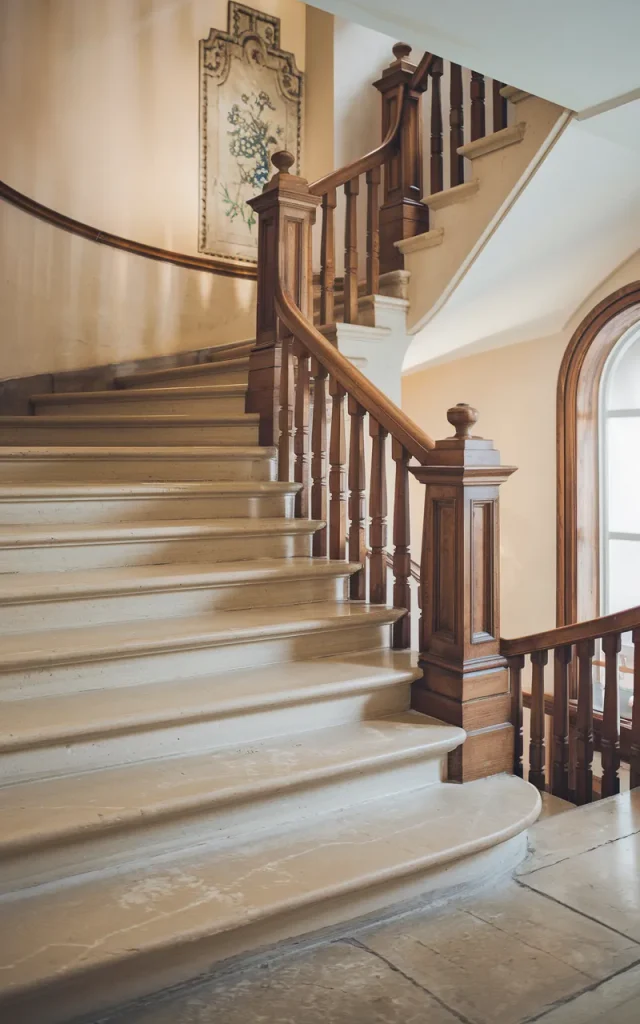
Stone staircases have this quiet confidence I really admire. Especially when you choose marble or granite with natural veining.
I prefer soft beige or grey tones for traditional homes. They don’t shout—they whisper elegance.
Pairing stone steps with wooden handrails creates a beautiful contrast that feels balanced.
Unlike fully wooden stairs, stone feels more permanent and grounded.
Pro-tip:

Add a matte finish instead of high gloss for a more authentic traditional look.
Design a staircase gallery wall with heritage frames
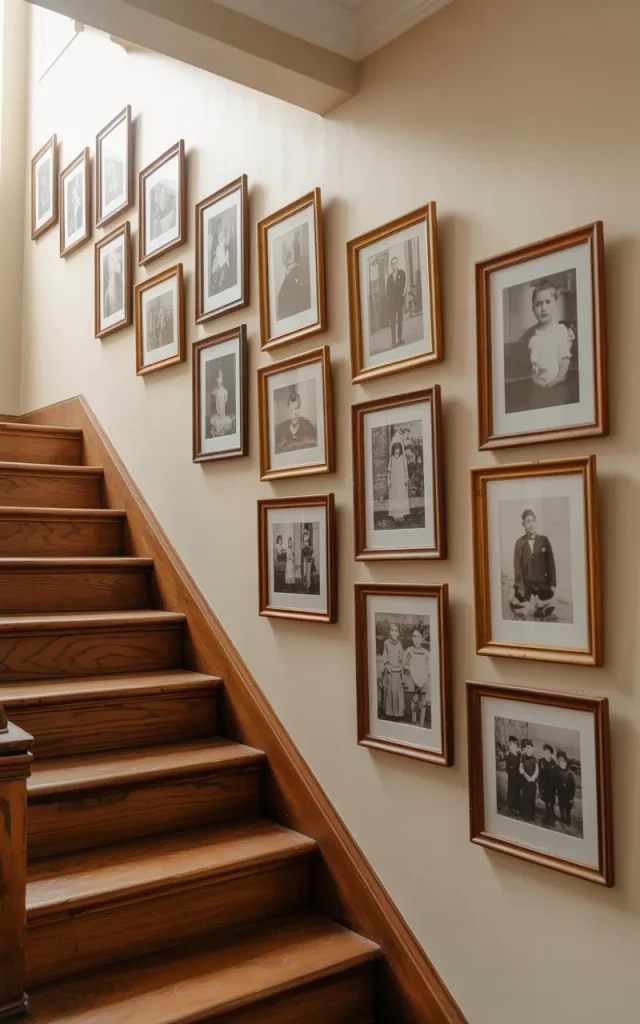
I know gallery walls are often seen as modern, but trust me—they work beautifully in traditional homes too.
The trick is choosing the right frames. Think carved wood, antique gold, or distressed finishes.
I usually line them along the stair slope, mixing old family photos with vintage art prints.
It feels like walking through memory lanes every time you go upstairs.
Why it works?

It blends storytelling with architecture. 📸
Use patterned runner rugs on wooden stairs
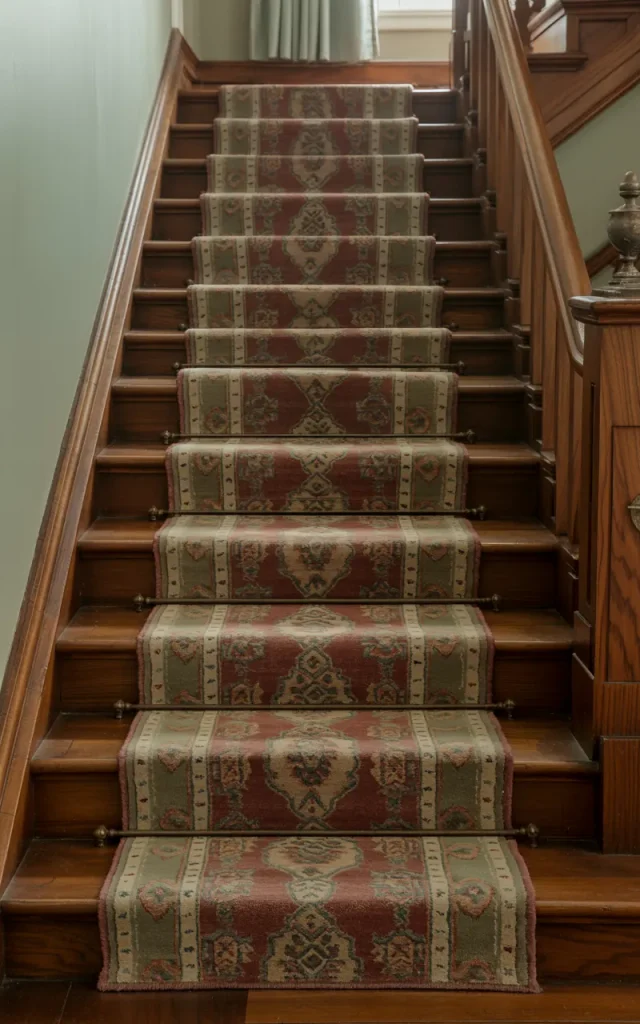
Adding a runner rug is such a simple traditional upgrade, but it changes everything.
I love using muted Persian-style patterns. They soften the wood and add texture without overwhelming the staircase.
It also makes the stairs quieter, which is a bonus in busy homes.
I once paired a deep red runner with brass accents, and the result felt like an old heritage mansion.
Why it works?

 It adds warmth, safety, and visual rhythm.
Build arched stairwell openings for old-world charm
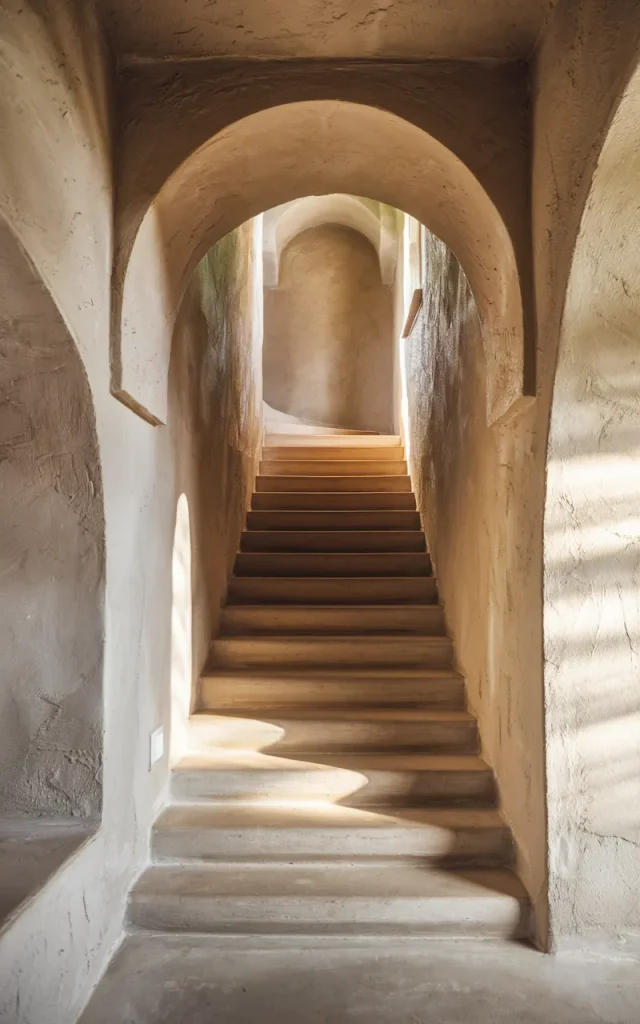
Arches instantly transport me to older architecture styles. I always recommend them if you want a strong traditional identity.
Even a simple arch framing the staircase entrance can soften the structure beautifully.
I like pairing this with textured plaster walls for authenticity.
It makes the staircase feel like part of a larger architectural story, not just a functional element.
Small Space Hack:
Even a shallow arch detail works if full arches aren’t possible.
Incorporate carved stone balusters for grandeur
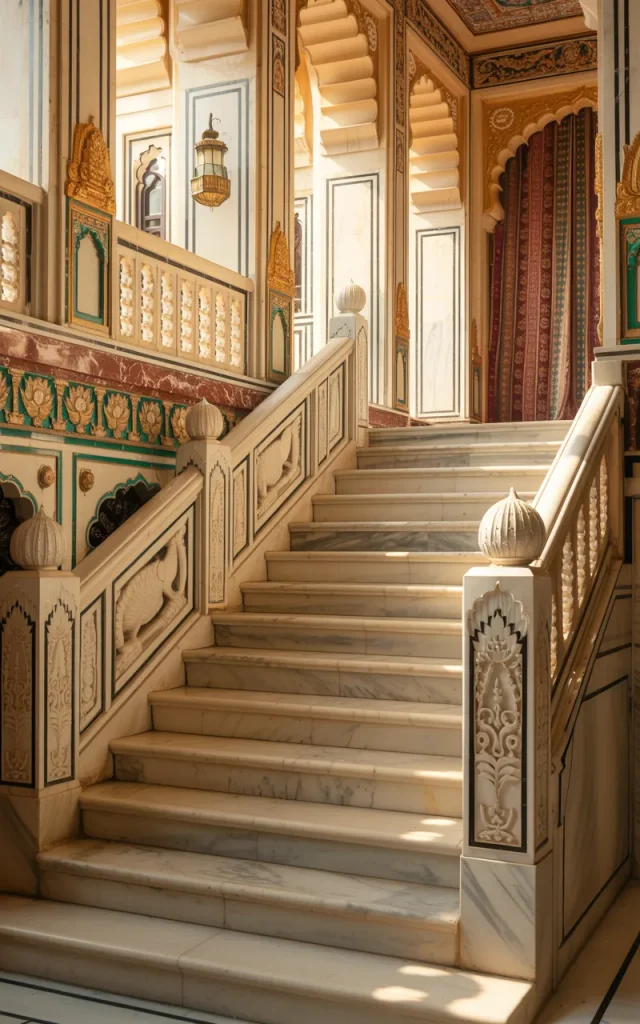
Carved stone balusters are something I associate with palaces and old estates. They immediately elevate a staircase into something grand and permanent.
I usually recommend limestone or sandstone for a softer traditional feel. The carvings don’t need to be overly intricate—simple geometric or floral patterns work best.
When paired with stone steps, the entire staircase feels unified and powerful.
Unlike Idea 3’s wrought iron, this version feels more grounded and monumental.
Why designers do this?

It creates architectural continuity and visual weight that anchors large entry spaces.
Paint the stair risers in muted heritage tones
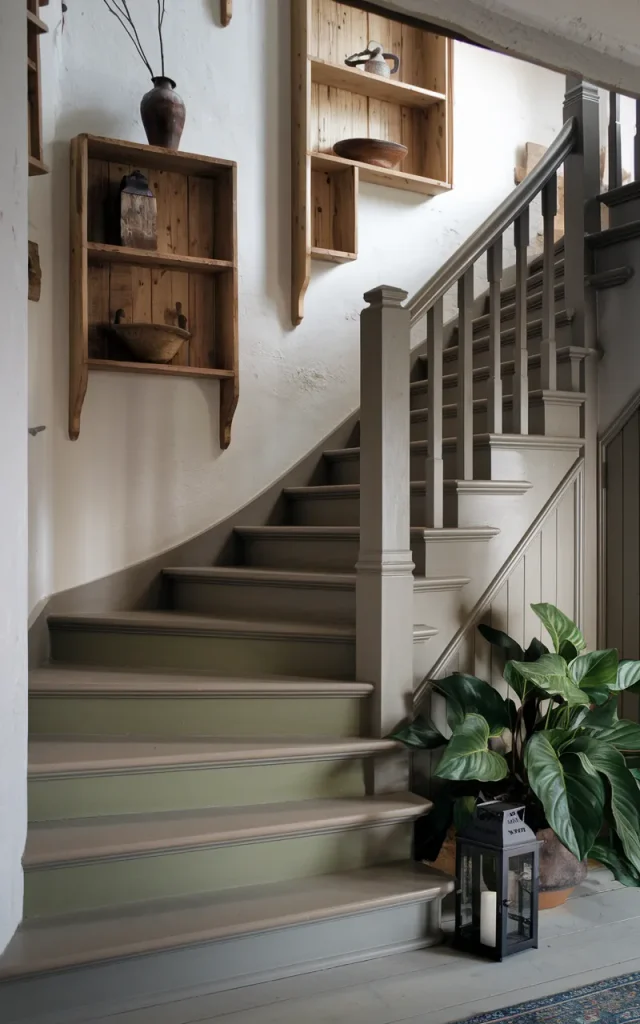
I often suggest this when people want tradition without heavy renovation. Painting risers in muted heritage tones like olive, rust, or indigo instantly changes the staircase personality.
Keep the treads neutral so the colour pops gently without overwhelming the space.
I once worked on a home where we used faded blue risers, and it completely transformed a plain wooden staircase into something artistic.
Do this 👉
- Use soft matte paint
- Stick to earthy tones
- Keep treads neutral
Not this ❌
- Neon colours
- Glossy finishes
- Random mismatched shades
It’s a subtle but powerful traditional upgrade.
Install wooden paneling along the staircase wall
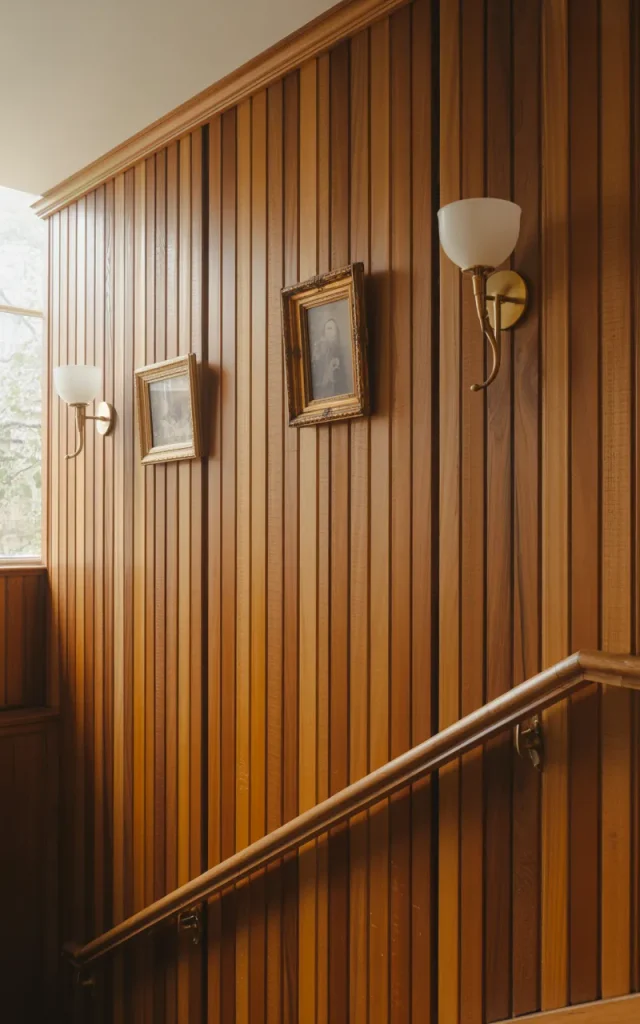
Wall paneling is one of those traditional tricks that always feels rich without being loud. I love using vertical wooden panels along staircase walls.
It creates structure and depth, especially in narrow staircases where plain walls feel flat.
I usually match the panel wood tone with the handrail for cohesion. It ties everything together visually.
Tools you may need:
- Wooden panels
- Adhesive or framing tools
- Matte varnish
Install clay tile staircases for rustic authenticity
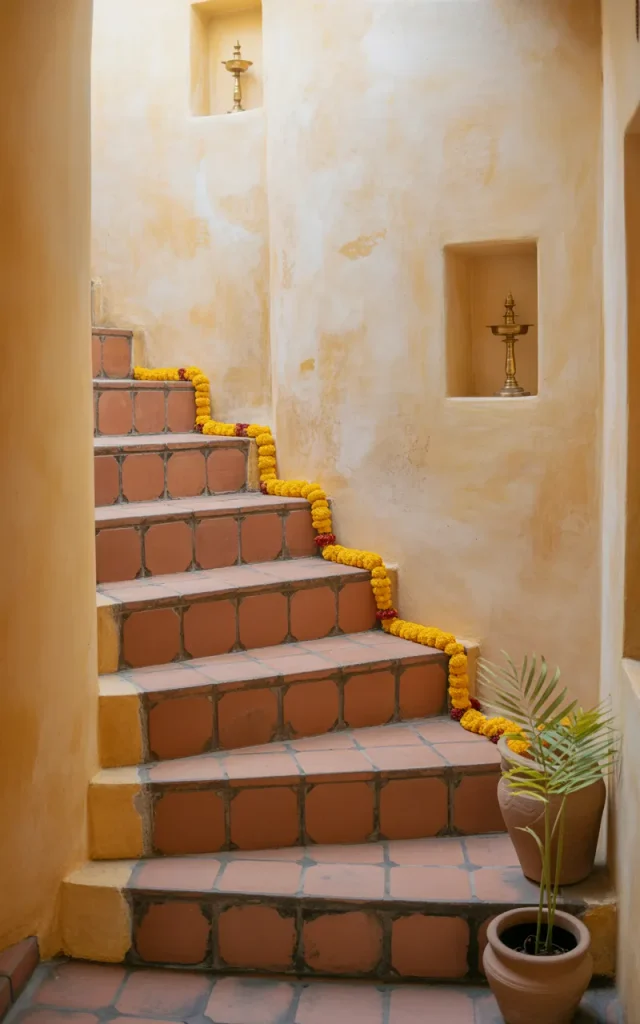
Clay tiles bring that unmistakable earthy charm. I always think of traditional South Indian homes when I see them.
They work beautifully for outdoor staircases or semi-covered stairwells.
The texture adds grip too, which is practical and aesthetic at the same time.
I like pairing clay tiles with lime-washed walls for a full rustic look.
Trend Alert:

More designers are returning to natural materials like clay because they age beautifully.
Create wooden riser carvings with symbolic patterns
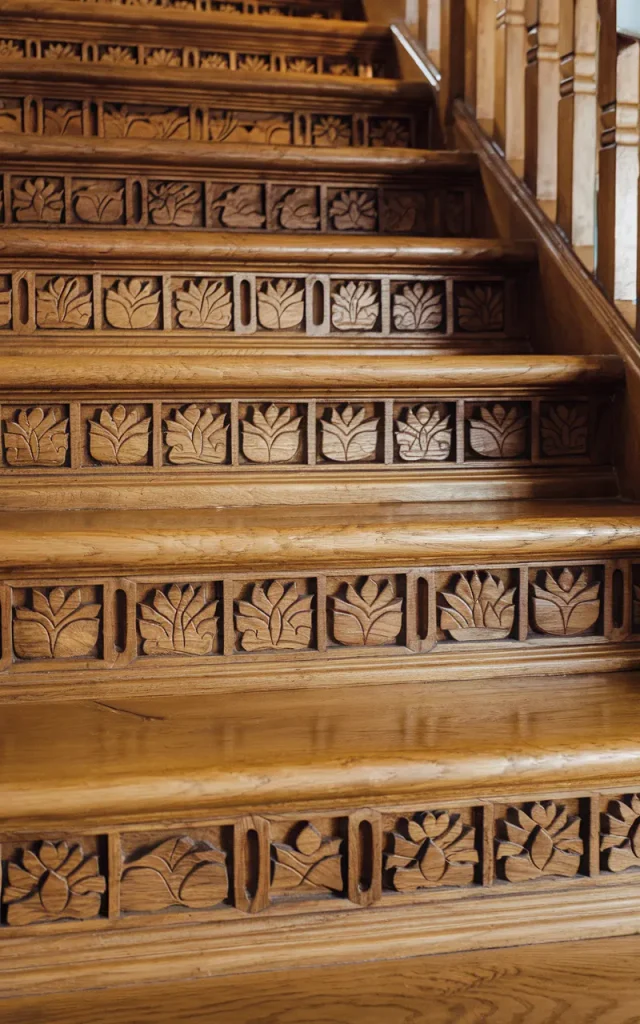
This idea feels deeply cultural. I’ve seen homes where each riser has small symbolic carvings—lotus motifs, geometric patterns, or even family emblems.
It turns the staircase into a storytelling element.
Unlike painted risers, this is more permanent and tactile.
Pro-tip:

Keep carvings shallow so they don’t collect dust easily.

Walking up such stairs feels intentional, almost ceremonial.
Design mosaic tile stair accents for artistic tradition
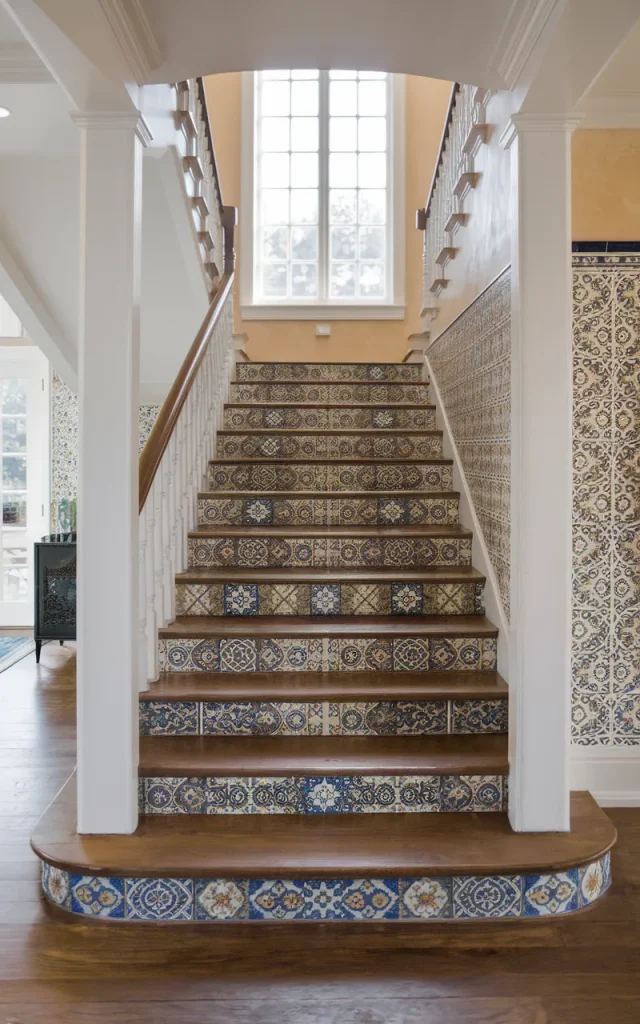
Mosaic tiles always remind me of Mediterranean and Indian fusion homes.
I like using them in small accent sections—maybe the landing or side borders of the stairs.
It adds colour without overwhelming the traditional base.
Common mistakes to avoid:
- Too many patterns together
- Overly glossy finishes
- Lack of colour balance
This idea pairs well with Idea 2’s encaustic risers for a more expressive staircase.
It’s artistic but still rooted in tradition.
Install heritage-style wooden stair treads with matte finish
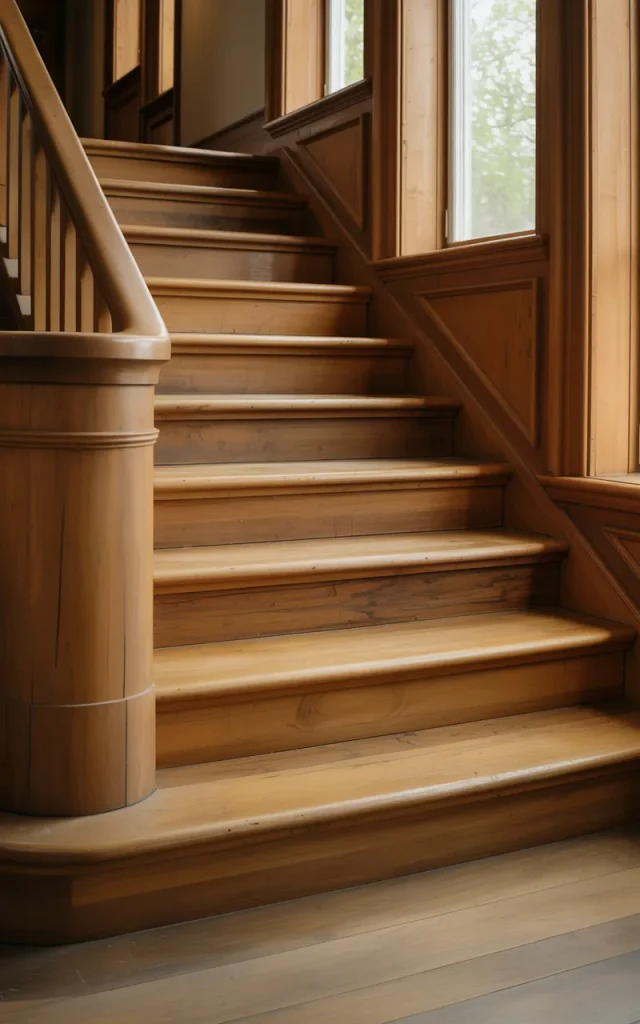
This is one of the most grounding traditional staircase upgrades I recommend. Wooden treads with a matte finish feel authentic and lived-in.
I always prefer natural wood grains to be visible. They tell a story over time.
Unlike glossy modern finishes, matte wood feels softer under light and ages gracefully.
Layer it like this:
- Wooden treads
- Subtle grain finish
- Matching handrails
It pairs beautifully with Idea 13’s wooden wall paneling for a cohesive look.
Combine jali screens along staircase walls
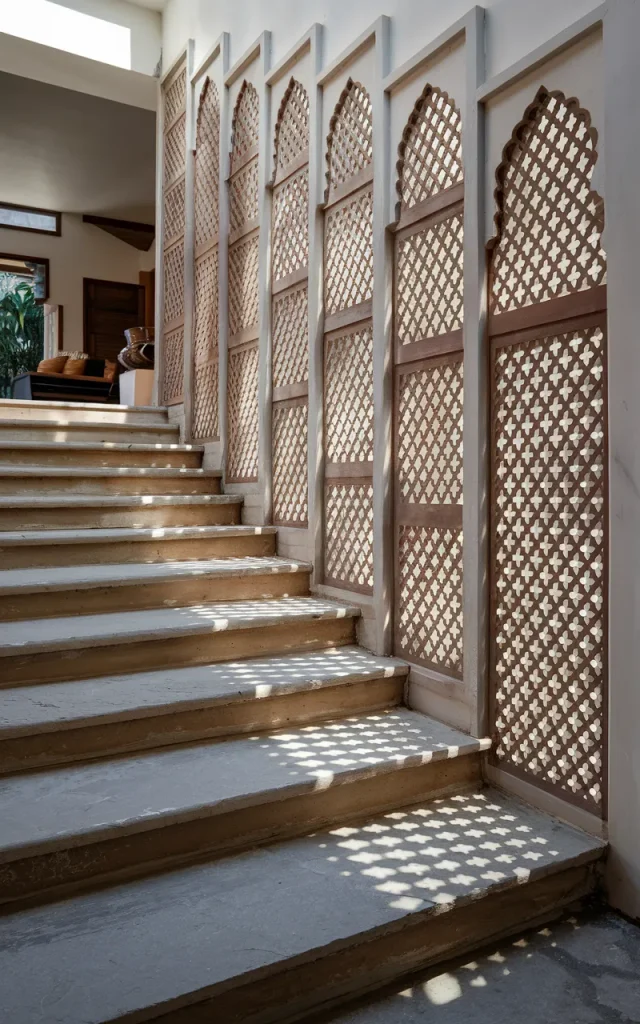
Jali screens are one of the most beautiful traditional elements I’ve worked with. They filter light in such a poetic way.
I often install them along staircase walls or as partial partitions.
The shadows they create shift throughout the day, which makes the staircase feel alive.
Style match guide:
- Stone stairs → carved stone jali
- Wood stairs → wooden jali panels
It connects beautifully with Idea 18’s double-height stair hall because natural light becomes essential.
Build a traditional staircase landing seating nook
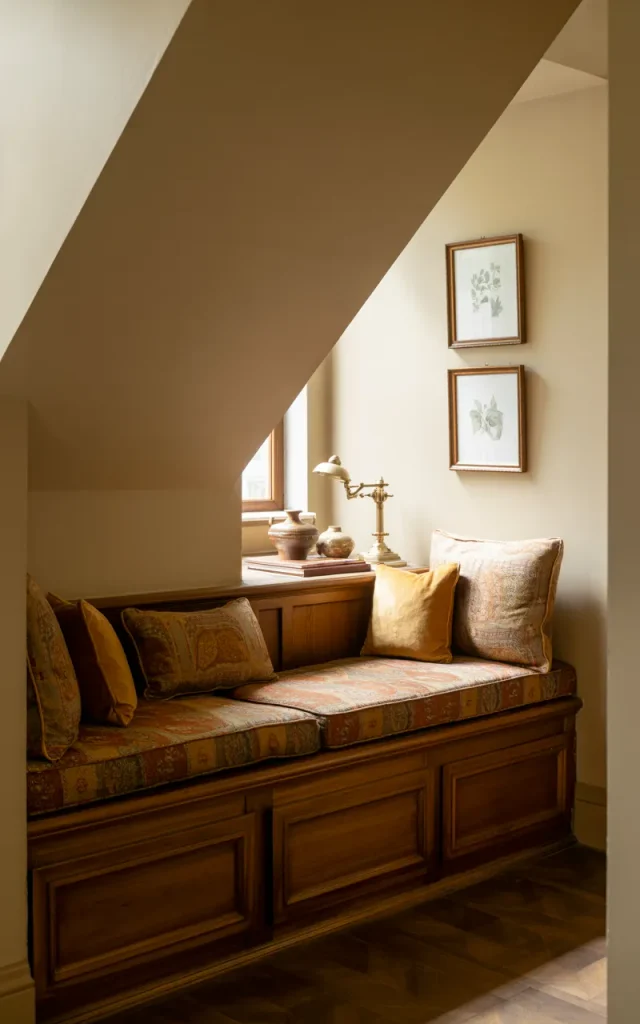
I love turning staircase landings into something useful. A small seating nook completely changes the energy.
Add a wooden bench, soft cushions, and maybe a side lamp. It becomes a quiet pause point.
Unlike Idea 7’s gallery wall, this idea is more functional and intimate.
Layer it like this:
- Wooden bench
- Traditional patterned cushions
- Warm lighting
It works especially well in larger homes with wide staircases.
Add carved stone step edges for subtle detailing
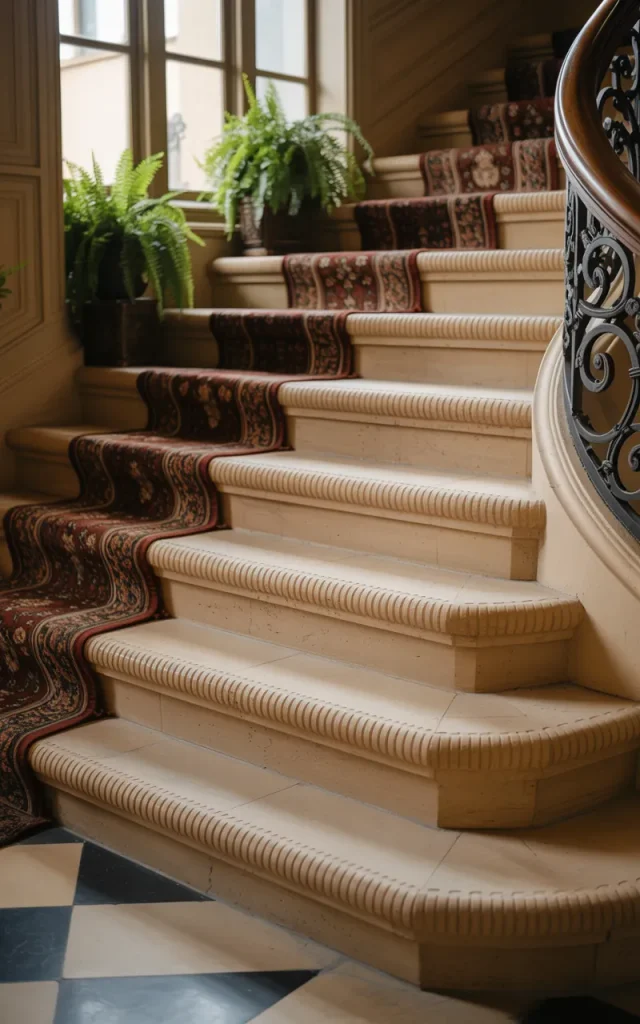
This is a detail most people miss, but I absolutely love it. Carving only the edges of stone steps adds refinement without overpowering the staircase.
It creates a soft shadow line that looks incredibly elegant.
Do this 👉
- Keep carvings shallow
- Maintain uniform spacing
- Use natural stone tones
Not this ❌
- Deep aggressive carvings
- Over-patterning every step
It works beautifully with Idea 6’s stone staircase base.
It feels subtle but luxurious, like something you notice only when you slow down.
That’s what makes it so special.
Design a full wooden spiral traditional staircase
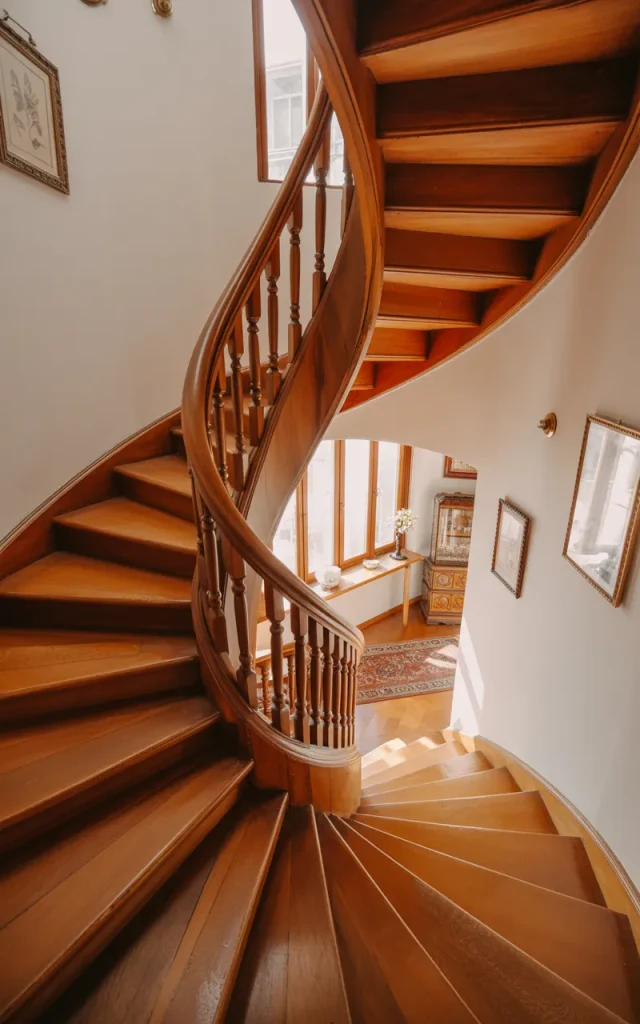
Spiral staircases always feel a bit magical to me. When done in wood, they become deeply traditional and sculptural.
I love how they save space while still making a strong design statement.
Works best in:
- Compact homes
- Duplex apartments
- Library corners
Add carved railings or turned spindles to enhance tradition.
It connects nicely with Idea 8’s spindle detailing for a cohesive wooden narrative.
Use stone jharokha-style stair windows
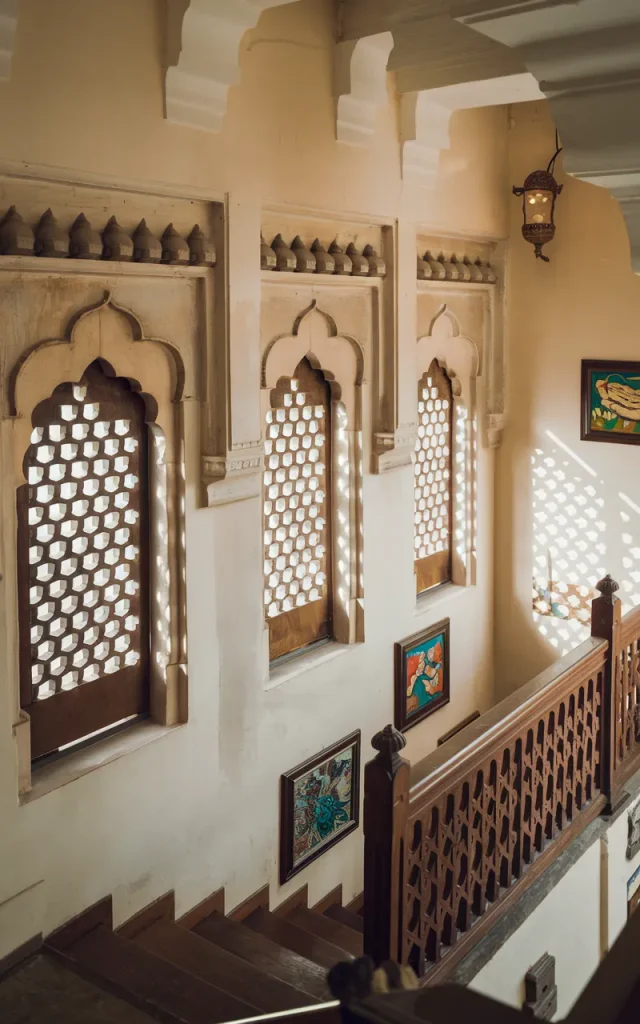
Jharokha-style windows bring royal Indian architecture into modern homes.
I love placing them along staircase walls to let in filtered light.
They create beautiful shadow patterns that change throughout the day.
Layer it like this:
- Stone frames
- Decorative lattice work
- Warm interior lighting
It pairs beautifully with Idea 22’s jali screens for a fully traditional lighting experience.
It makes even a simple staircase feel like part of a palace corridor.
There’s something timeless about this approach that never gets old.
Final Thoughts
Traditional staircases are never just about moving between floors. They carry memory, material, and meaning.
When you layer textures like wood, stone, brass, and fabric thoughtfully, the staircase becomes something emotional, not just functional.
I always say this—don’t rush it. Build it slowly. Let each detail speak.
Try even one or two ideas from above, and you’ll instantly feel the shift in your home’s personality. 🏡
