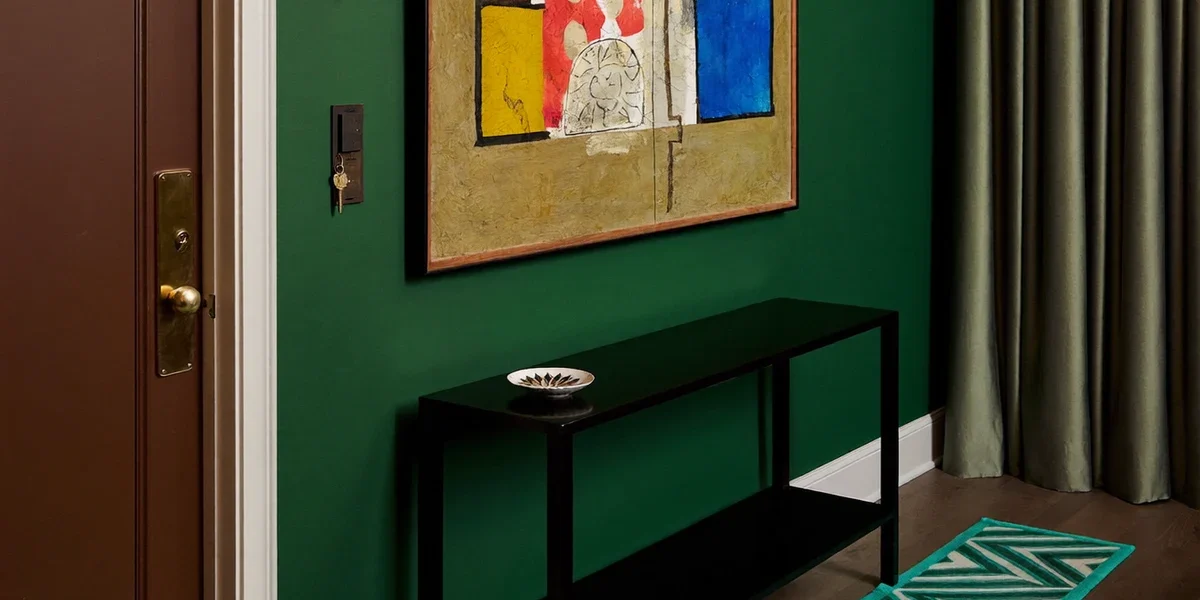
Some homes greet you with a proper hallway. Mine never did. You open the front door and boom, you’re standing next to the sofa, holding the groceries, with your keys and the mail and a wet umbrella all looking for somewhere to land.
If that sounds familiar, you’re in the right place. These small entryway ideas are for homes with no real foyer at all: doors that open right into the living room, the kitchen, the dining area or the bottom of the stairs. The trick isn’t finding space you don’t have. It’s telling the eye where the entry starts and stops. 🚪
Below are 21 ways to do exactly that, from a single rug to a half wall, with plenty of renter-friendly options mixed in.
Float a Slim Console Behind the Sofa
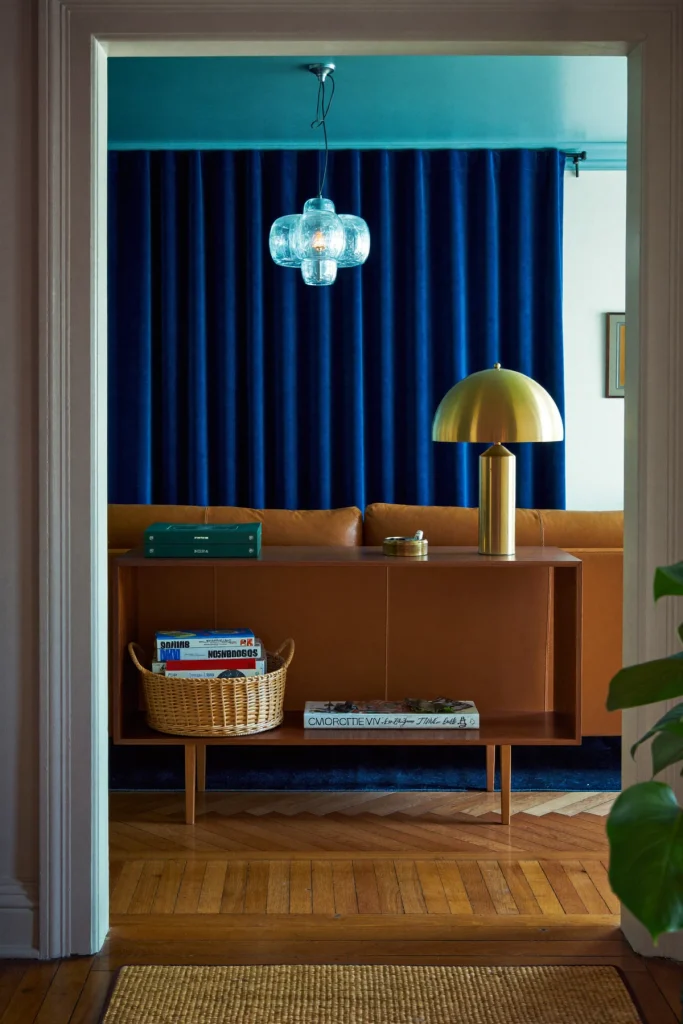
If your sofa faces away from the door, the back of it is prime real estate. A console table about 10 to 14 inches deep tucks right behind it and becomes your drop spot.
Add a lamp, a shallow tray for keys and a small basket underneath for the mail you’ll deal with later. 🗝️ From the door, it looks like a tiny entry table. From the sofa, you barely notice it. Keep the console a few inches lower than the sofa back so it tucks in neatly and never looks like it’s competing with the seating.
Cost Breakdown
| Item | Typical range |
|---|---|
| Slim console table | around $120 to 350 |
| Table lamp | around $40 to 120 |
| Tray and basket | around $25 to 60 |
Paint a Color Block Around the Front Door
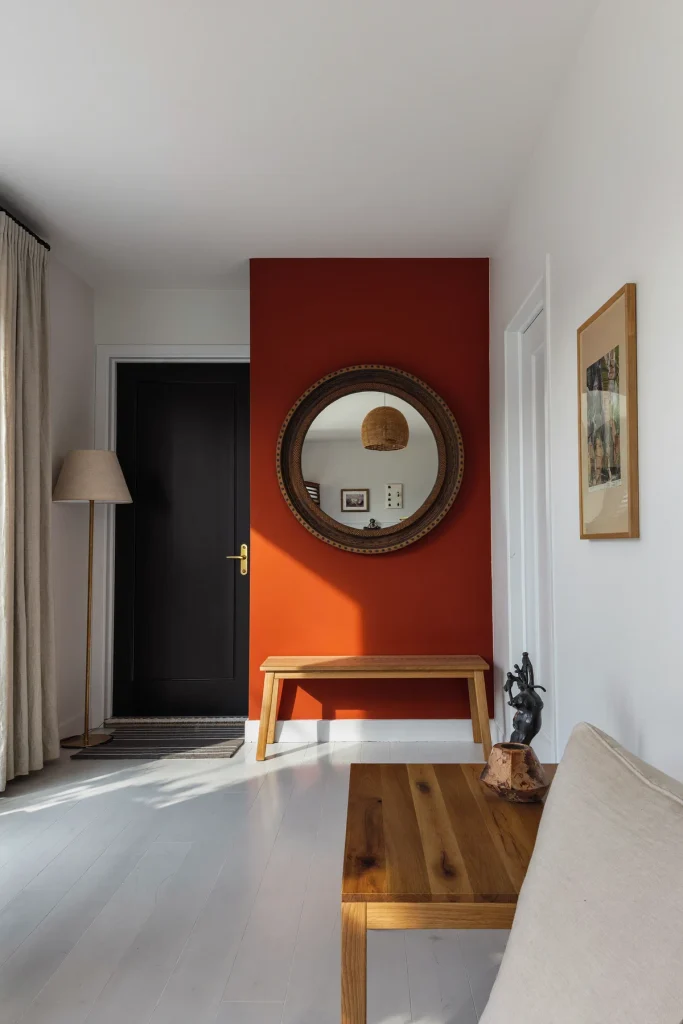
Paint is the cheapest wall you’ll ever build. Choose a section around the front door, maybe the door wall plus a strip on either side, and paint it a deeper or warmer shade than the rest of the room.
A muted terracotta, olive or inky blue works beautifully against white or cream walls. Run the color all the way to the ceiling for a crisp edge, or stop it at a chair-rail height for something softer. Either way, your brain reads it as a separate little room. Glossy or eggshell finishes wipe clean, which matters on the wall that takes every bag, umbrella and backpack bump.
Tools You’ll Need
- Painter’s tape and a level
- A sample pot to test the shade first
- An angled brush and a small roller
Hang a Pendant Right Where You Walk In
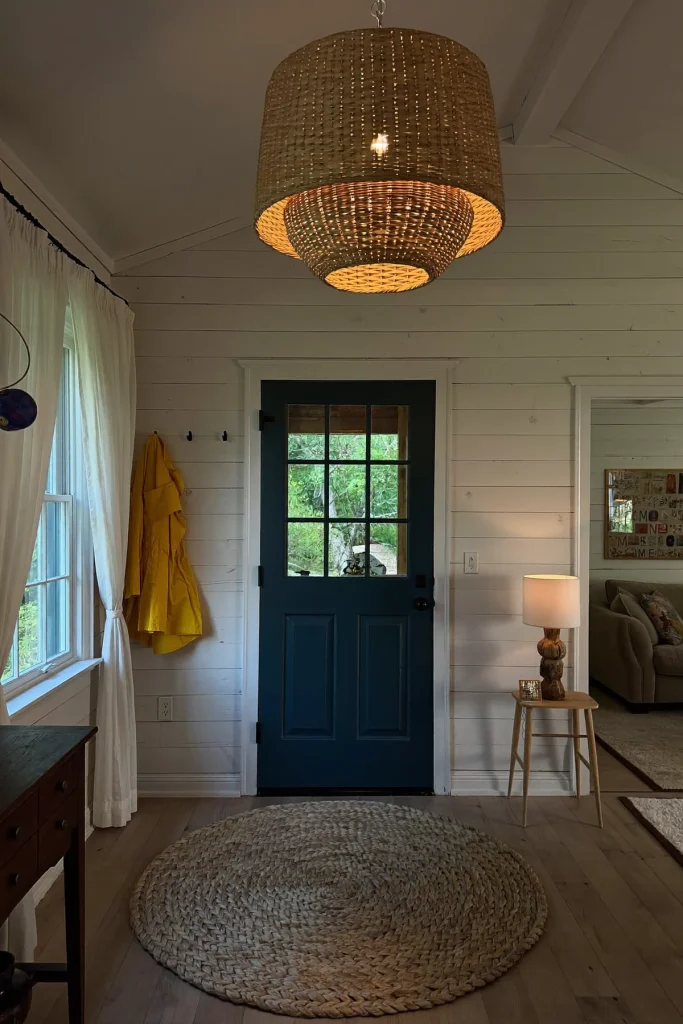
Light marks territory. A pendant or semi-flush fixture hung right over the entry rug tells everyone “this is a spot,” the same way a chandelier defines a dining table.
If there’s no junction box there, a plug-in pendant swagged from a ceiling hook works fine. Choose a shape that’s different from your living room fixture, like a woven drum, a glass globe or a little lantern, so it reads as its own zone. Bonus: no more fumbling for keys in the dark. ✨ Hang it so the bottom sits about 7 feet off the floor, and the door will clear it easily.
Build a Half Wall With a Ledge on Top
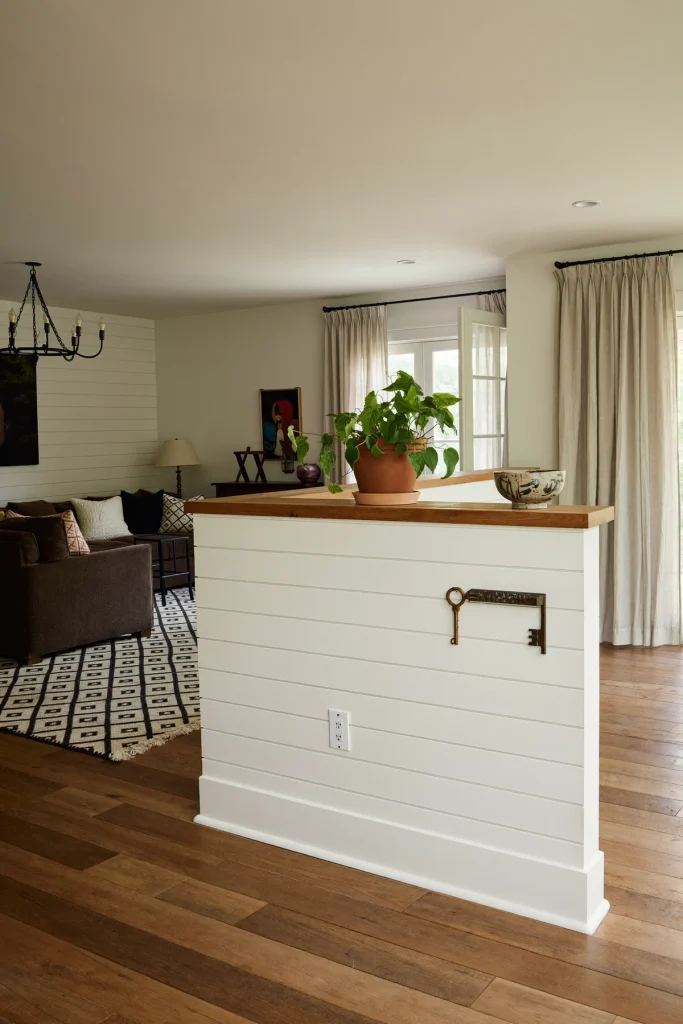
When you want real separation without losing light, a half wall about 36 to 42 inches tall is a lovely middle ground. It blocks the view of the sofa from the doorway and gives you a ledge on top.
That ledge is gold. It holds keys, a small plant, a stack of mail and maybe a lamp. On the living room side, you can push a sofa or a bench right up against it. Paneling or a painted finish on the entry side helps it feel built in, like it was always meant to be there.
Why Designers Do This
A low wall gives you the feeling of arriving somewhere without chopping a small room into two dark boxes. You keep the sight lines and the daylight but gain a clear threshold.
Mount a Peg Rail Beside the Door
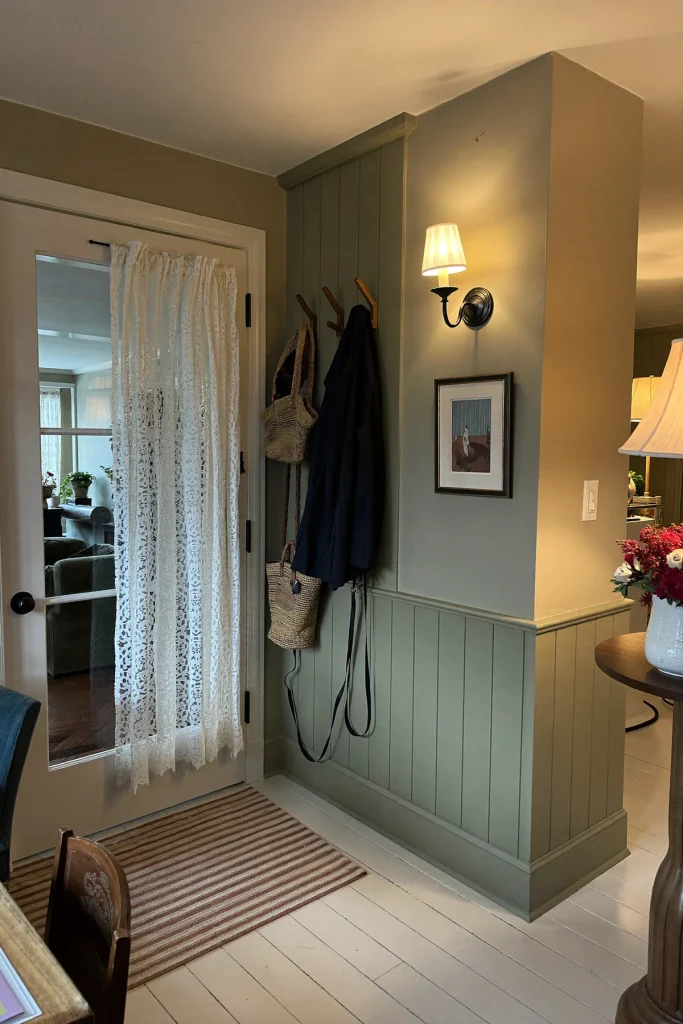
No closet? No problem. A Shaker-style peg rail mounted at about 60 to 66 inches high gives coats, bags and the dog leash a place to live that isn’t the back of a dining chair.
Run it along the wall closest to the door and keep it to five or six pegs so it doesn’t swallow the room. A painted rail that matches the wall feels calm. A natural wood one adds warmth. Hang one pretty item, like a straw tote or a scarf, so it looks styled even on a tidy day. Leave a little breathing room between pegs so coats don’t pile into one lumpy heap.
Hang a Ceiling-Track Curtain to Close Off the Door Area
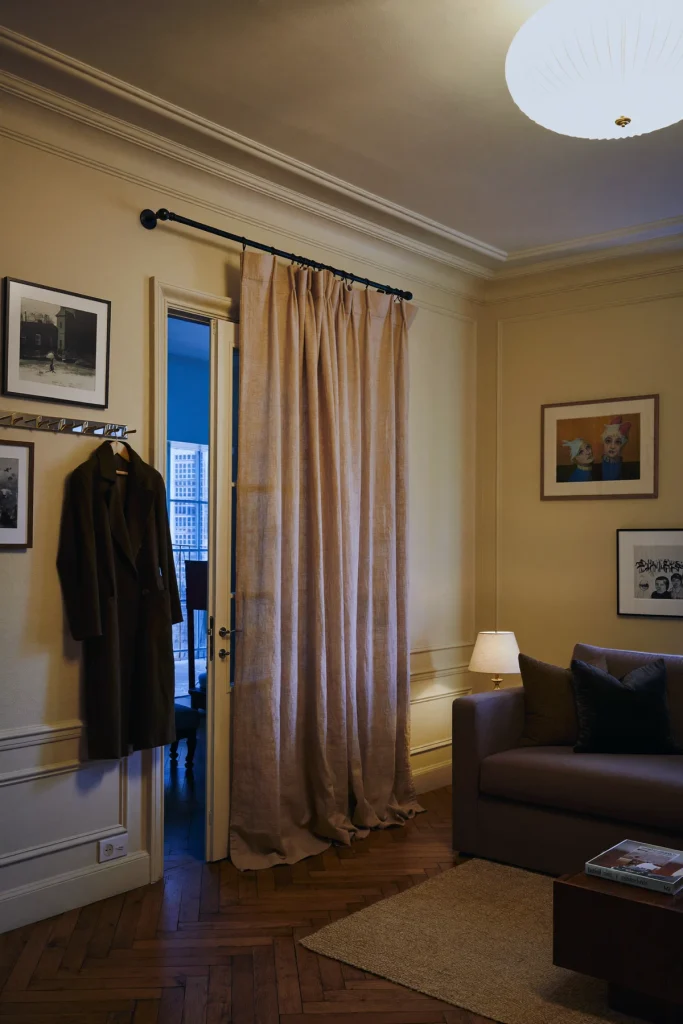
A curtain is the softest wall there is. Mount a ceiling track in a gentle L or a straight line a few feet in from the door, and hang a linen or wool curtain that you can pull across when it’s cold or when guests arrive.
In winter, it blocks drafts every time the door opens. The rest of the time, it stays tied back and frames the entry like a little stage. Go a touch longer than floor length so the curtain just kisses the floor and blocks the draft at the bottom.
Renter-Friendly Version
Use a tension rod between two walls or a ceiling track with adhesive mounts rated for the curtain’s weight. Both come down without a single patch job.
Wallpaper Just the Entry Wall
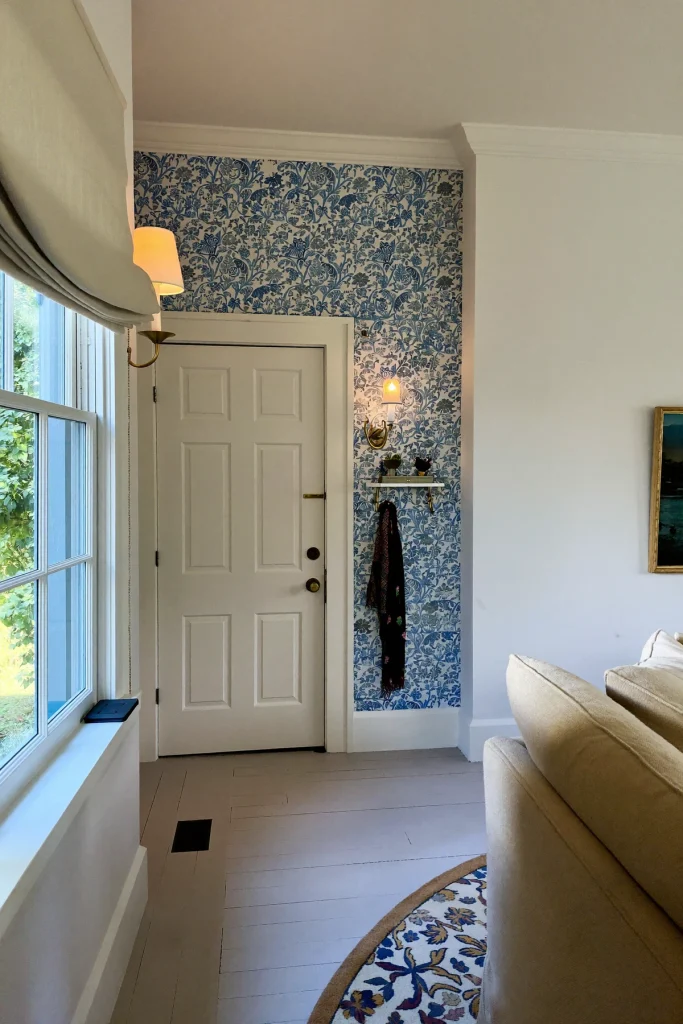
Paint whispers. Wallpaper announces. Cover only the wall around the front door with a small-scale floral, a stripe or a grasscloth, and the entry gets an identity of its own.
Because it’s just one wall, you can afford a pattern you’d never use in a whole room. Peel-and-stick versions have gotten much better too, so even renters can try this. Pair it with a simple hook and a small shelf, and the zone feels finished. Grasscloth adds texture that hides little scuffs, and stripes can make a low ceiling feel taller.
Common Mistakes to Avoid
- Choosing a huge pattern that gets chopped off by the door frame
- Skipping a sample and getting surprised by the color in evening light
- Papering two walls and losing the “one zone” effect
Turn the Back of a Bookcase Into Your Entry Wall
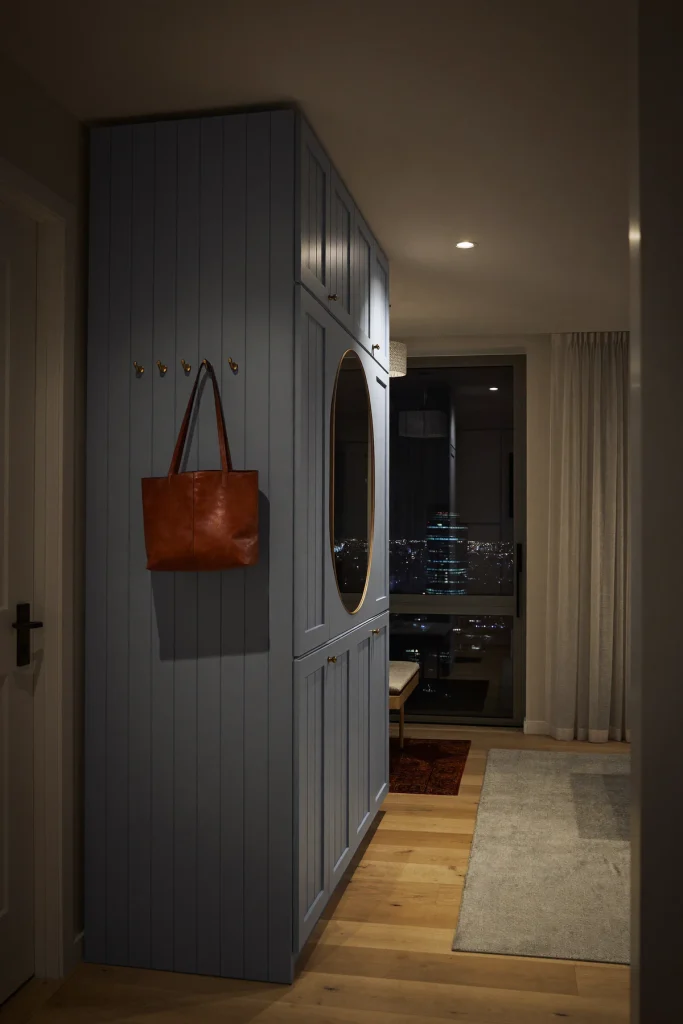
Remember the open shelf divider from idea 7? This one works the same way but goes fully solid. Position a closed-back bookcase so its back faces the door, and treat that back panel like a real wall.
Paint it, panel it with thin beadboard or wallpaper it, then hang a mirror and a couple of hooks on it. From the door, it feels like you’ve walked into a tiny vestibule. From the living room side, the shelves face you, filled with books and baskets.
Make sure it’s anchored well and tall enough to block the main view of the sofa, around 6 feet usually does it. Add a small runner along the vestibule side, and the illusion is complete.
Kid- and Pet-Proof It
Anchor the bookcase to the floor or ceiling with furniture straps, keep heavy items on the bottom shelves and skip anything breakable at tail-wagging height.
Lean a Tall Mirror Next to the Door
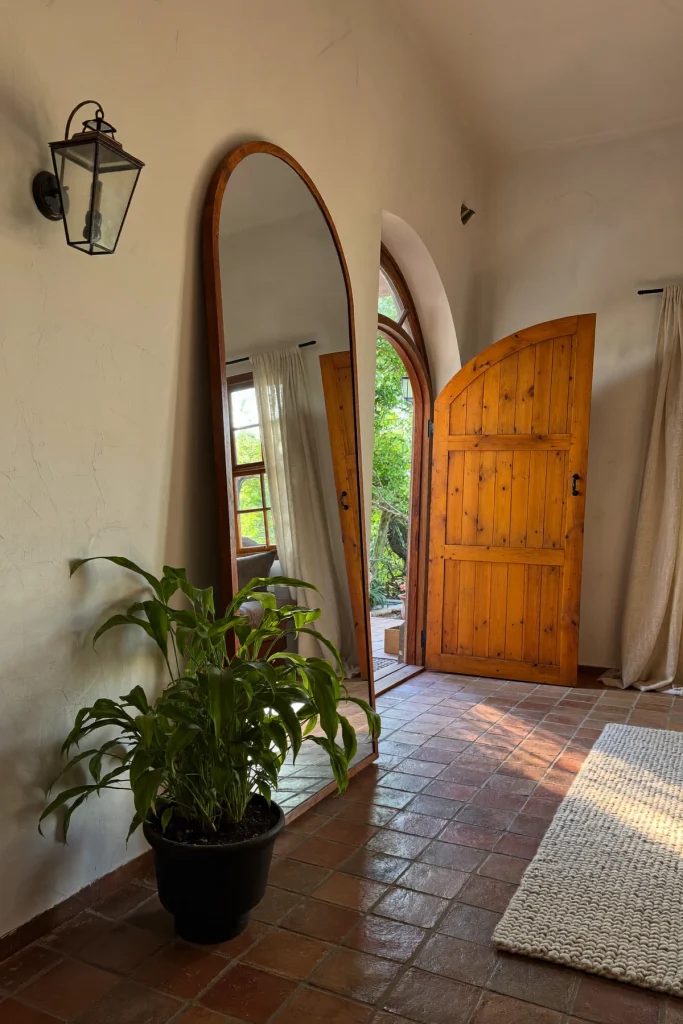
A floor mirror next to the door does three jobs at once. It bounces light into a dim corner, it makes the entry feel twice as deep, and it gives you one last outfit check before you head out.
Choose an arched or rounded frame to soften all the straight lines of door, walls and furniture. Lean it against the wall closest to the hinge side so it doesn’t get bumped every time the door swings.
If the space is tight, a slim mirror about 20 inches wide is plenty. A small plant at its foot makes the whole corner feel intentional. 🪞 Brass, black metal and warm wood frames all work; just match one other metal in the room so it feels connected.
Add a Wall-Mounted Drop Shelf for Keys and Mail
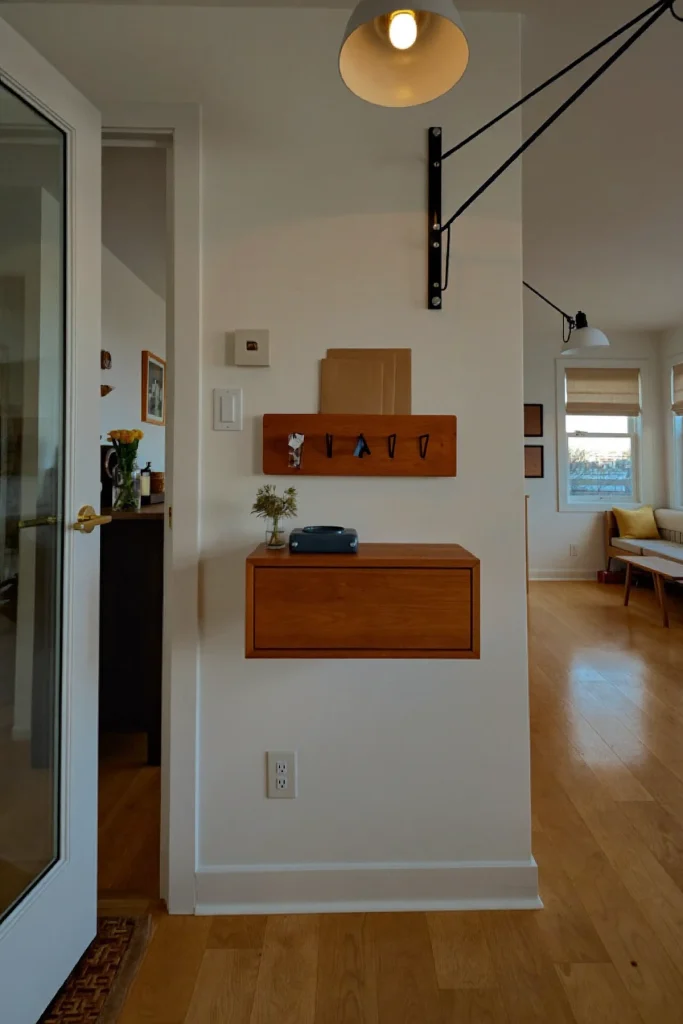
When there isn’t floor space for a console, go up. A floating shelf or small wall cabinet mounted beside the door, roughly at hip height, holds everything you grab on the way out.
Look for one with a lip or a small drawer so keys don’t slide off. A mail slot or a little divided pocket on the front helps paper stay sorted instead of drifting onto the kitchen counter.
Keep the top for one pretty thing, like a bud vase or a small candle, and one practical thing, like a dish for keys. Two objects is the sweet spot. Mount it with wall anchors rated for more weight than you think you’ll need, since bags always end up on it eventually.
Quick Hack
Stick a small adhesive hook to the underside of the shelf for sunglasses or the dog’s leash. It’s invisible from across the room but always right there.
Lay a Tile Inset Into the Wood Floor
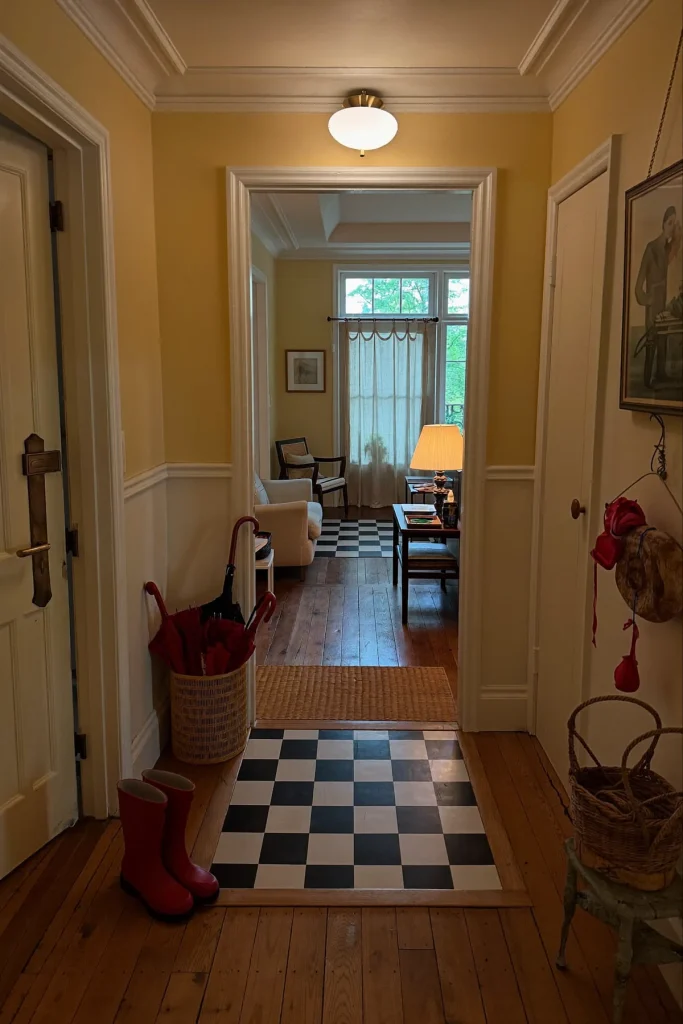
This is the most permanent idea on the list, but it’s also the most convincing. Replace a small rectangle of flooring inside the door with tile, slate or brick pavers, and you’ve built a proper landing pad.
It handles wet boots and snow far better than wood, and it’s how many older homes marked their entries before hallways were common. A checkerboard, a herringbone brick or a simple encaustic pattern all look lovely.
If you’re replacing floors anyway, this costs very little extra. Ask your installer to set the tile flush with the wood so no one trips on the edge. Finish with a doormat on top so the tile still gets a soft spot underfoot.
Time Needed
A pro can usually cut out and tile a small entry inset in two to three days, including curing time.
Frame the Door With a Painted Arch
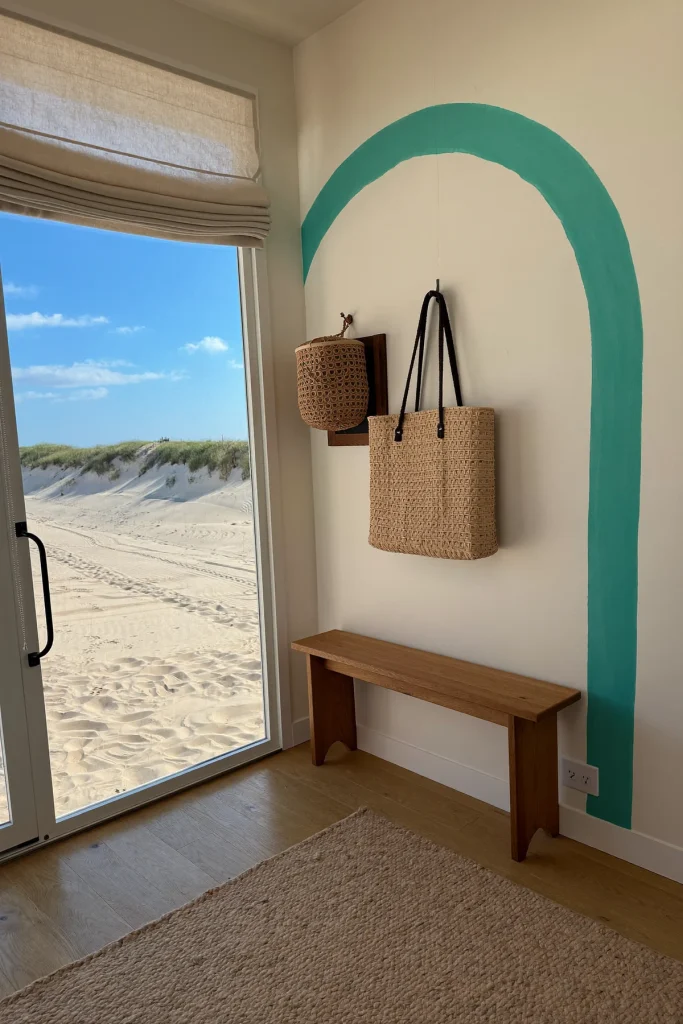
Paint a soft arch shape on the wall around or beside the front door, and it instantly feels like an architectural feature, not a door that just happens to be there.
Trace the curve with a string and pencil pinned at the center point, then tape the straight sides. A warm clay, sage or dusty pink against a cream wall is gentle but clearly separate from the living room.
The arch can wrap the door itself or sit to one side and frame a hook, mirror and small bench. Either way, it gives your eye a “doorway” even when there isn’t one. 🎨 It’s a one-afternoon project that looks like it took a contractor.
Claim the Corner by the Door With a Chair and Lamp
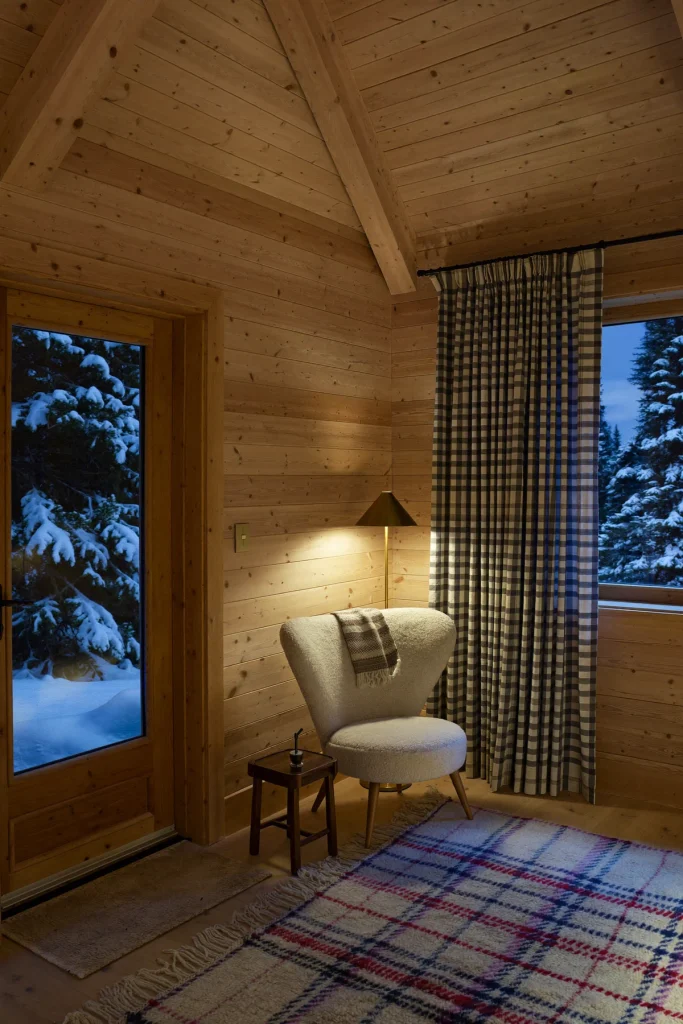
Every room has that awkward corner next to the front door. Instead of letting it collect bags, give it a job.
A small armless chair, a floor lamp and a tiny side table turn it into a welcome spot. It’s where you sit to tie shoes, where a guest perches while waiting for a ride and where your tote lands at the end of the day.
Keep the chair small, around 20 to 24 inches wide, and choose a fabric that hides wear. A warm lamp left on at dusk makes the whole entry feel inviting from the street side too. 💡 A small rug under the chair helps the corner feel like its own little room.
Use the End of the Kitchen Island as a Landing Spot
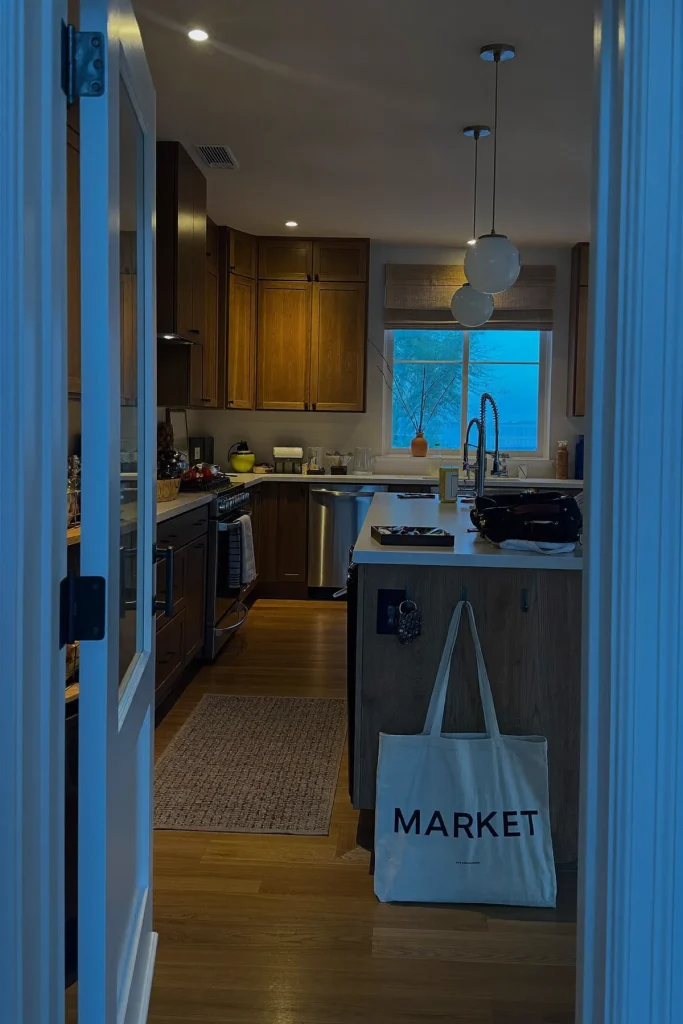
When the front door opens into the kitchen, the island is usually the first surface you reach, which is exactly why it fills up with clutter.
Give the island end nearest the door an official role. Add a small tray for keys, a hook underneath for a tote, and maybe a low cabinet on the end panel for mail. That keeps the rest of the island clear for cooking.
A runner from the door to the island end makes the path read as an entry, and a pendant above the island marks it after dark. If you have the space, a small stool at the end gives you a spot to drop and sort the day’s bags.
Do This 👉 / Not This ❌
- Do this: one tray, one hook, one basket at the island end
- Not this: a pile of mail, keys and lunch bags across the whole counter
Slide a Narrow Shoe Tray Under the Window

If the wall beside your door has a window, the space under it is perfect for a low shoe tray. Window walls are hard to use for much else, so this feels like found space.
Choose a boot tray in rubber, metal or woven seagrass about 30 inches long. It catches mud and melting snow, and it keeps the everyday shoes corralled in one tidy row instead of scattered on the doormat. Two or three pairs per person is the limit; the rest go to closets.
For a softer look, set a low, open bench over the tray so the shoes sit underneath and the top holds a plant or a folded throw. With a pretty shade on the window above, the whole wall reads as a calm, intentional entry instead of a shoe pile by the door.
Install Wainscoting Only Around the Entry Zone
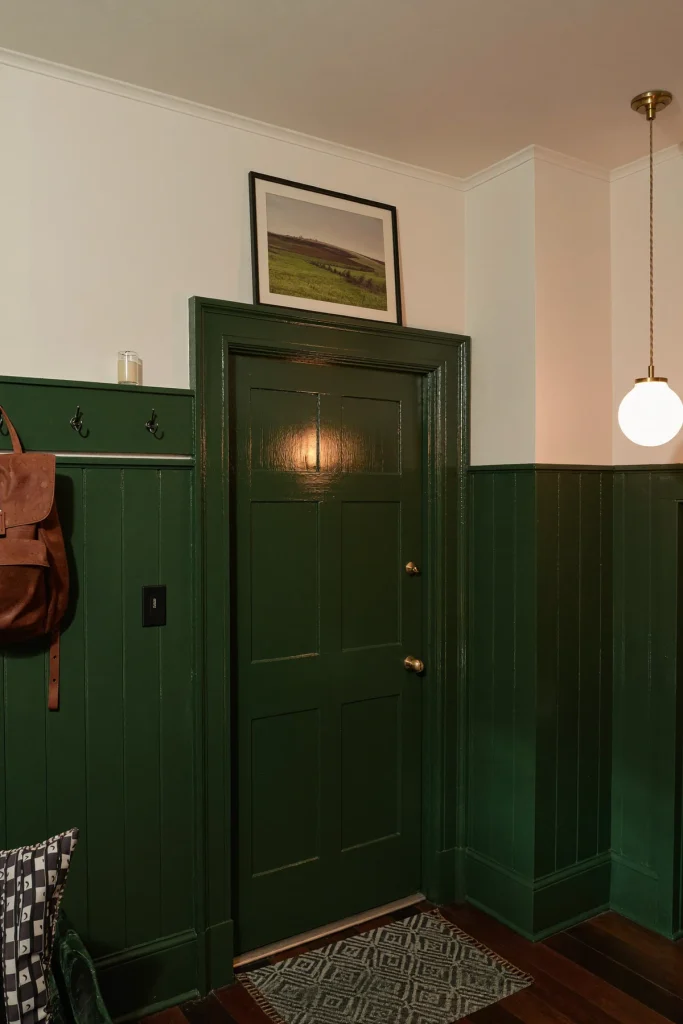
Wainscoting is one of the most classic ways to say “this part is different.” When it wraps only the walls around your front door, it defines an entry the way a rug defines a seating area.
Beadboard, board and batten or simple picture-frame molding all work. Run it about one-third of the way up the wall and finish it with a ledge cap. Paint it a shade deeper than the walls, or go bold with a glossy green or navy.
The ledge on top is handy for propping a small piece of art or a candle. The paneling below takes the bumps and scuffs from bags and kids, so it’s practical as well as pretty. It’s one of the best weekend projects for adding character to a plain, builder-grade room.
Weekend Project
- Measure and mark a level line about 32 to 36 inches high.
- Attach a top rail, then vertical battens about 12 to 16 inches apart.
- Fill nail holes, caulk the seams and paint everything one color.
Mount a Pair of Sconces Flanking the Door
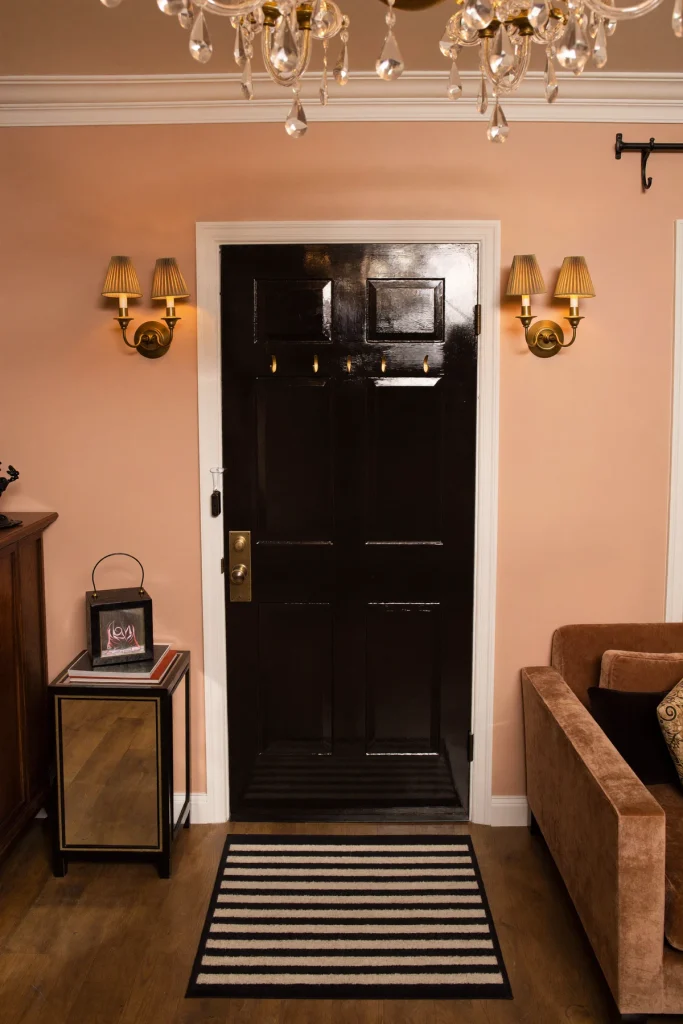
Two wall sconces, one on each side of the front door, do what a pendant does in idea 4, only with more symmetry. Your eye sees the pair and immediately reads “entrance.”
Hardwired sconces look the cleanest, but plug-in versions with a cord cover are a great option for renters. Choose fixtures with fabric shades or frosted glass so the light is soft, and set them at about 66 inches from the floor.
Add a small doormat below and a simple hook or two to one side, and the whole wall reads as an entry even if the sofa is just a few feet away. In the evening, the warm glow makes coming home feel like a little ceremony.
If you only have one side clear, a single sconce plus a mirror on the other side balances it nicely.
Carve a Lit Niche for a Plant and a Little Art
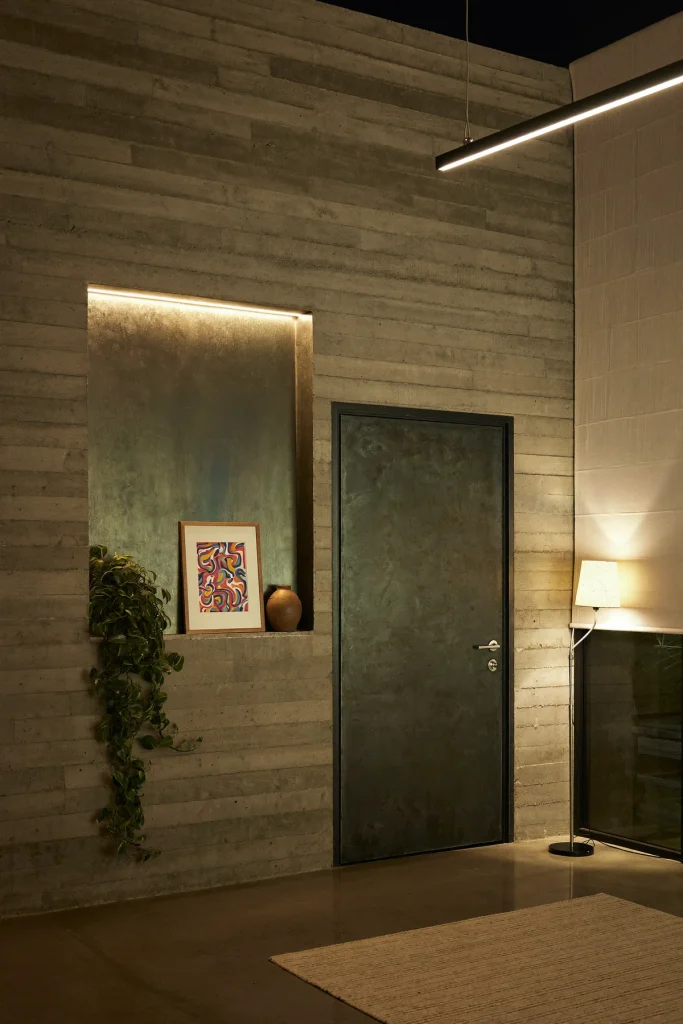
If the wall beside the door is a non-load-bearing stud wall, a shallow recessed niche can give you a spot to display without taking up any floor space at all.
Frame an opening between studs, about 14 inches wide and as tall as you like. Finish it with plaster or tile, and run a small LED strip along the top inside edge. Place a trailing plant, a small ceramic and a tiny framed print inside.
That warm glow at night makes the entry feel finished, and it pulls the eye toward the door rather than the sofa. It’s a little splurge, but it reads like custom architecture.
No construction allowed? A shallow wall-mounted box shelf with a puck light underneath fakes it surprisingly well. 🕯️ Keep the niche shallow, about 3 to 4 inches, so it fits between studs without any structural work.
Paint the Ceiling Above the Entry a Different Color
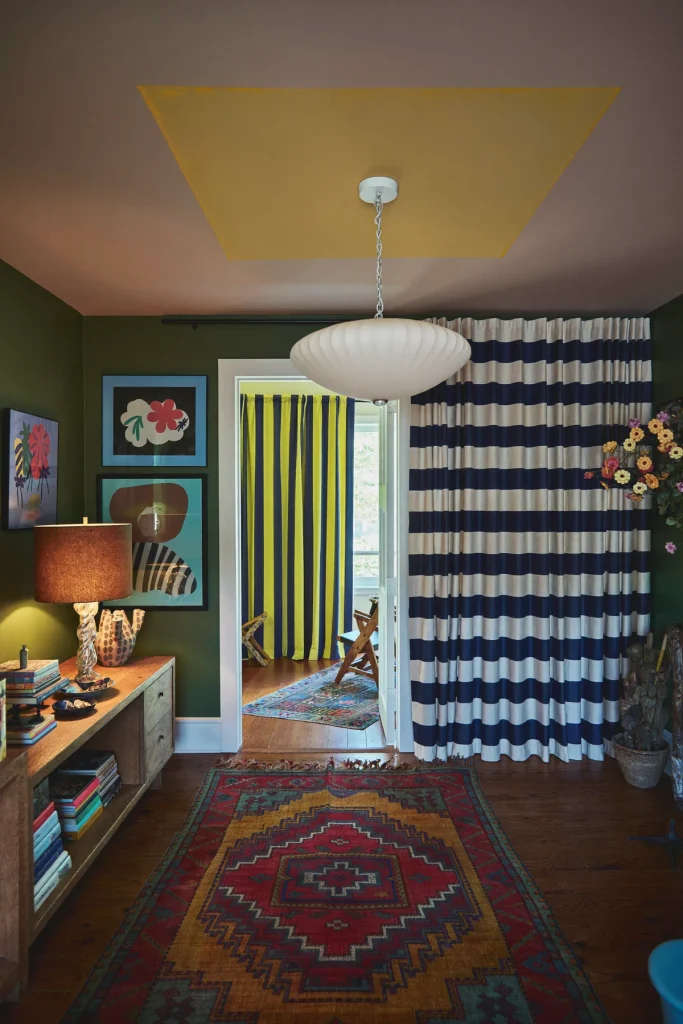
Look up. Painting just the section of ceiling above the door zone is a clever, quiet way to create a separate space. It works especially well in homes with low ceilings, where a half wall or screen would feel too heavy.
Choose a soft color like blush, butter yellow or pale blue that contrasts gently with the main ceiling. Mask off a rectangle that matches the size of your entry rug, and paint inside the lines.
This one creates a “room” without anything on the floor. And you’ll be surprised how many guests notice it. They might not know why the entry feels special, but they will feel it.
For a fun upgrade, add a pendant right in the middle of the painted rectangle. The color plus the light double down on the zone.
Hang Art With a Picture Light to Greet You at the Door
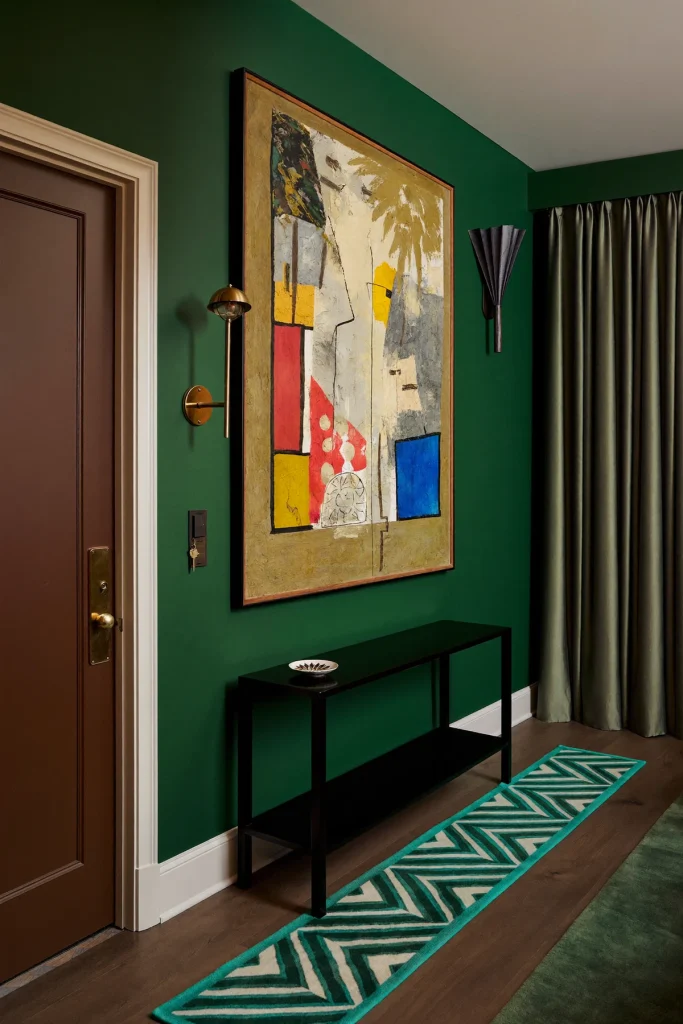
A single piece of art hung on the wall facing or beside the front door gives the entry a focal point. Add a small picture light above it, and it becomes the first thing you see when you walk in.
Choose something you love: a landscape, a vintage print or an abstract painting. Hang it at eye level, about 57 to 60 inches to the center. A plug-in picture light with a cord cover works if you can’t hardwire.
That glow at night makes the entry feel finished and calm, and it’s a quiet signal that you’ve arrived somewhere. Add a small console or shelf below for keys, and the art and the light do the rest. Swap the art with the seasons if you like a change, and the entry will always feel fresh.
The Psychology Behind It
Our eyes go to the brightest spot in a room first. A lit piece of art by the door pulls attention away from clutter and makes walking in feel like a small ritual.
Build a Slatted Wood Screen From Floor to Ceiling
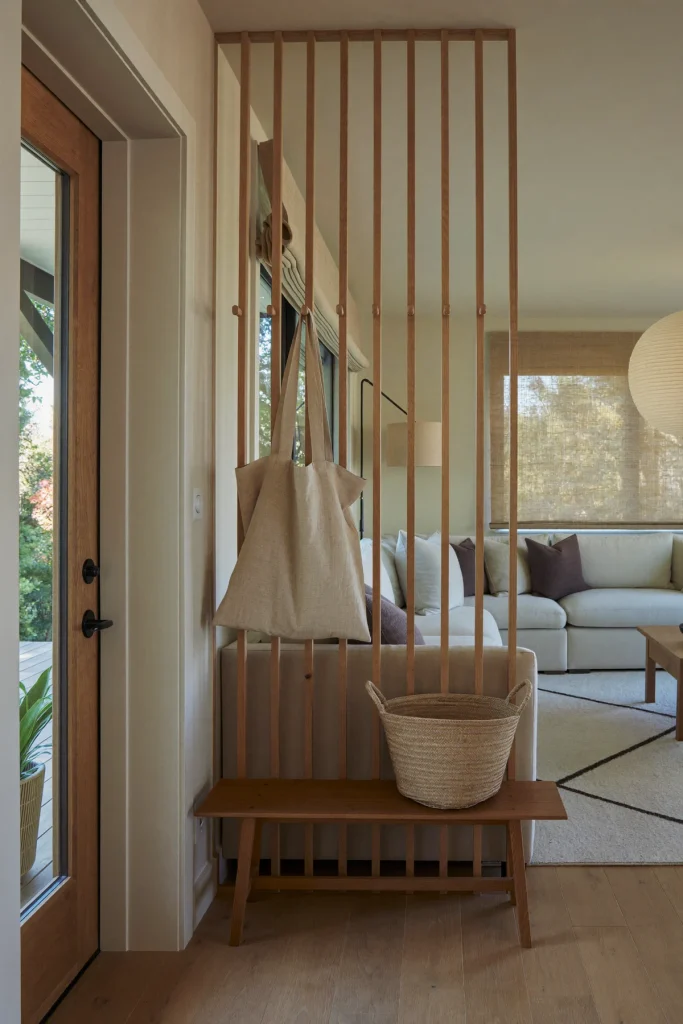
For a more permanent, architectural divider, a slatted wood screen is hard to beat. Vertical slats mounted floor to ceiling, with gaps between each one, create a clear entry while letting light and conversation pass through.
Oak, walnut or painted pine all work. Keep slats about 2 inches wide with 2-inch gaps for a balanced look. The screen can be as short as 3 feet wide and still make a big difference.
On the entry side, add a hook or two on the screen itself and a small bench beneath. On the living side, it becomes a backdrop for a chair or plant.
This is the idea for anyone who likes Japandi or modern style. It feels light, but it reads like a real wall. 🌲 Ask a carpenter to anchor the slats top and bottom so the screen stays rock solid.
Your Door, Your Welcome
A missing foyer isn’t a design flaw. It’s a puzzle, and the answer usually costs less than you’d think. One rug, one light, one hook or one line of paint can turn “the door opens into the living room” into “you walk into a lovely little entry.”
Start with whatever bothers you most. Is it the coats on the chair? Try the peg rail. Is it the view straight to the sofa? Try the screen or the half wall. Then layer from there.
And remember, an entry is really just a promise that someone thought about you coming home. Give yours that little bit of thought, and the whole house will feel warmer the moment you step inside. 🏡
