I bought my first sit-stand desk because my lower back was sending me daily complaints. I assumed the hard part would be the desk. It wasn’t. The hard part was making a standing desk look like it belonged in my home instead of a corporate cubicle. 🪴
A standing desk is only half the story. The room around it decides whether you actually use it: the rug under your feet, the light on your keyboard, the cables behind the legs, the spot where your mug lands. Get those right and you’ll switch positions without thinking. Get them wrong and the desk becomes a very expensive shelf.
So here are 19 ways to build a home office around a standing desk, in real family homes with real quirks. Some use a full electric desk. Some use a crank, a converter that sits on a table you already own, or a shelf you hang yourself for next to nothing. You’ll find closets, alcoves, hallways, attics and sunrooms, plus ideas for rugs, mats, lighting, storage and tidy cables. Pick the one that fits your space, and borrow shamelessly from the rest.
Anchor a Hand-Crank Desk in a Warm Walnut Study
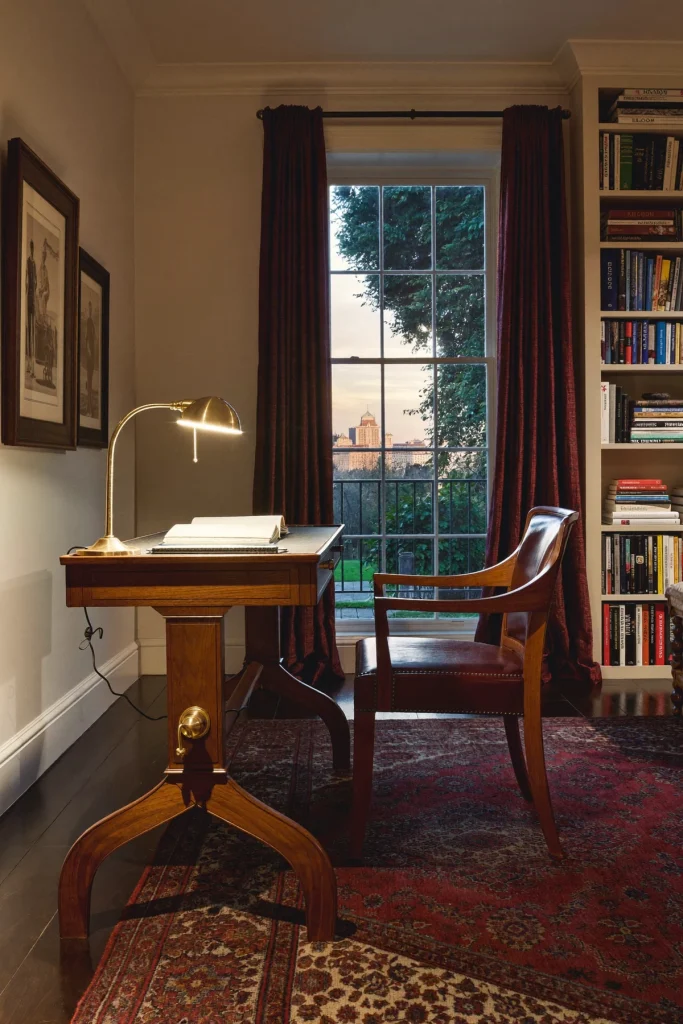
Not every standing desk needs a motor. A hand-crank model costs less, has fewer parts to fail, and has a lovely old-fashioned feel when you turn the brass handle. In a brownstone study with built-in bookcases, a walnut top with a crank looks like it came with the house.
Pair it with a leather chair you can push fully out of the way, and a banker’s lamp for evening work. The crank takes about thirty seconds to raise, which is just slow enough that you’ll plan your standing stretches instead of fidgeting. Set the height once for standing, once for sitting, and write both numbers on a sticky note under the desktop.
Slide an Electric Sit-Stand Desk Under the Biggest Window
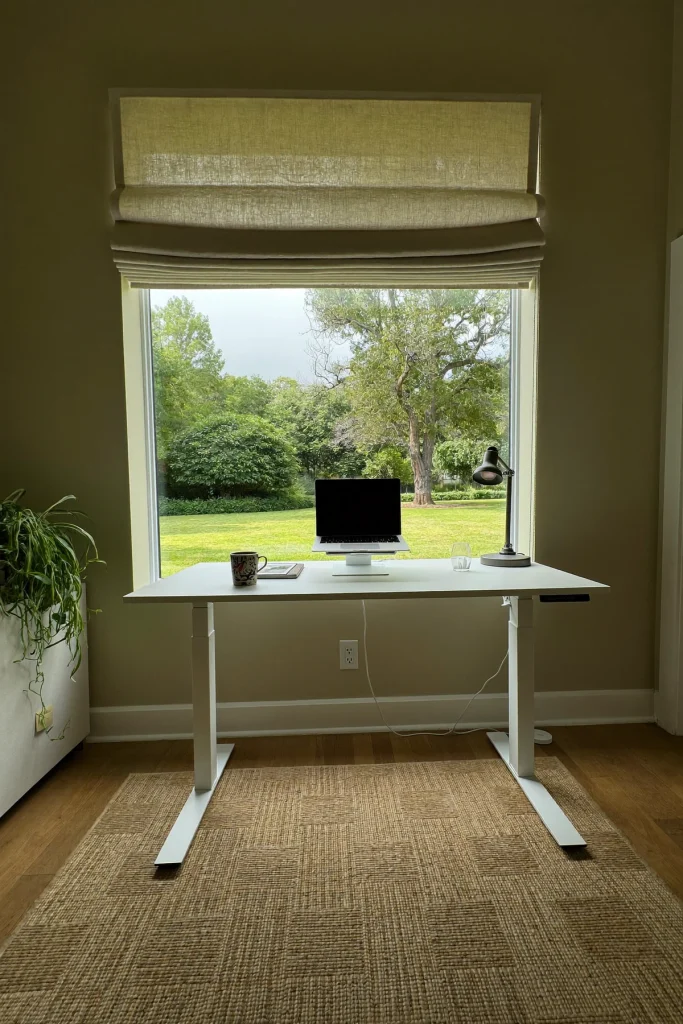
If you only do one thing from this post, put the desk where the daylight is. A white electric sit-stand desk beneath a wide window gives you a view to rest your eyes on, which matters more than you’d think when you’re standing for twenty minutes at a time. ☀️
Keep the window dressed with a roman shade you can lower against screen glare. Add a flat-weave jute rug under the desk and a small lamp for gray days. A trailing pothos on the sill softens the hard lines of the desk frame.
The memory presets on an electric desk are the real win here. One button, and you’re up. One button, and you’re down. That low effort is exactly why people keep using them.
Set a Desktop Converter on the Desk You Already Own
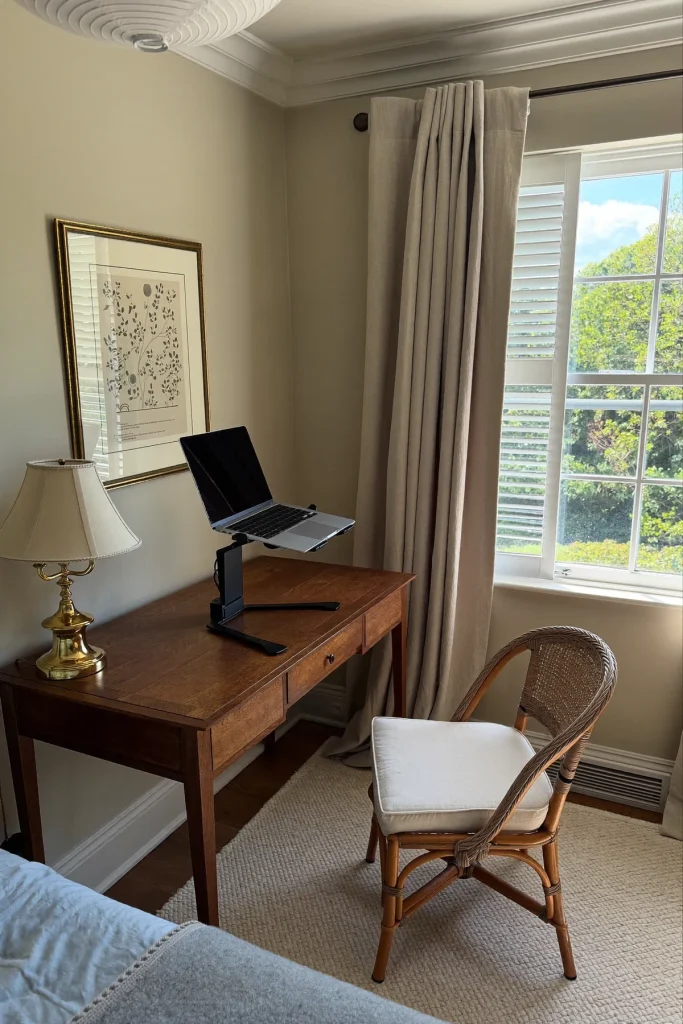
Love your current desk? Keep it. A desktop converter is a sturdy lifting tray that sits on top of any table and raises your laptop and keyboard to standing height. In a Cape Cod bedroom corner with an oak writing desk, it’s an easy way to try standing without replacing a piece you adore.
Look for a model with a wide, flat keyboard tray so you aren’t typing at a slant. Put the desk where it gets morning light, and keep a wool rug or runner beneath it. When you’re done, lower it flat and the desk goes back to being a pretty desk. 🌿
The downside is a little less surface area, so keep the extras, like a mug and notebook, on a side table.
Build a Counter-Height Shelf Desk Along a Wall
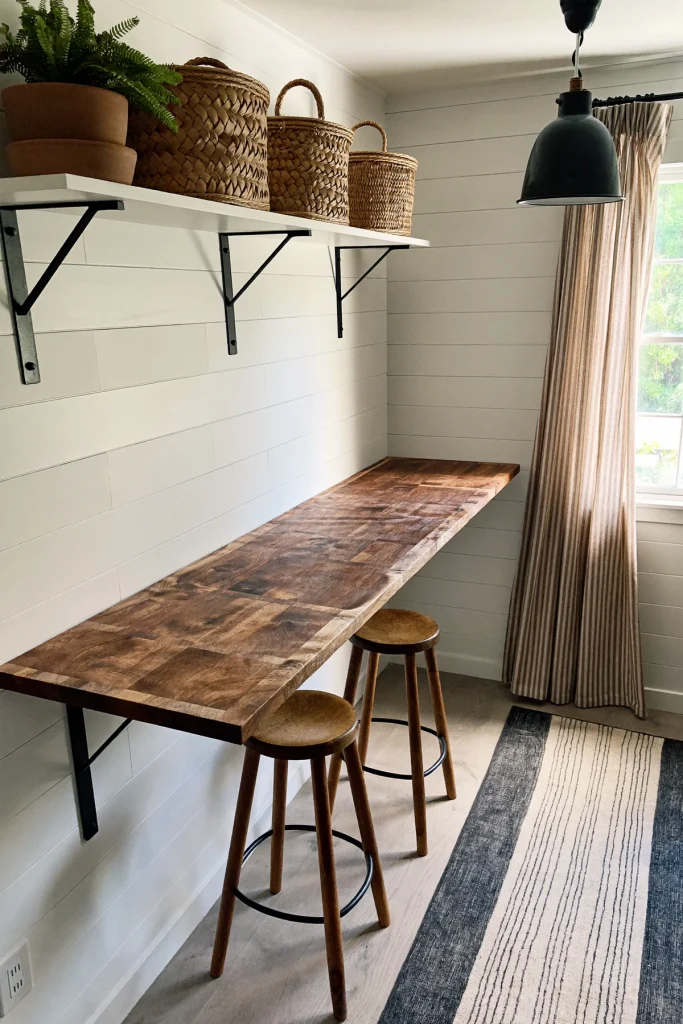
This is the budget move. Mount a long butcher-block board on two iron brackets at standing height, add two bar stools underneath, and you have a standing desk that doubles as a perch. In a farmhouse mudroom or hallway wall, it takes an afternoon and costs far less than a motorized frame.
The board should sit about 38 to 42 inches from the floor, depending on your height. Elbows should bend at roughly 90 degrees when you type. Hang a shelf of woven baskets above it for papers and chargers, and put a striped runner underfoot.
Because the height is fixed, the stools are your sitting option. Tuck them away when you’re standing.
Weekend Project

Mark stud locations first, mount the brackets, then test the height with a book on the board before you commit to the final screws. It takes about three hours.
Lay an Anti-Fatigue Mat in Front of the Desk
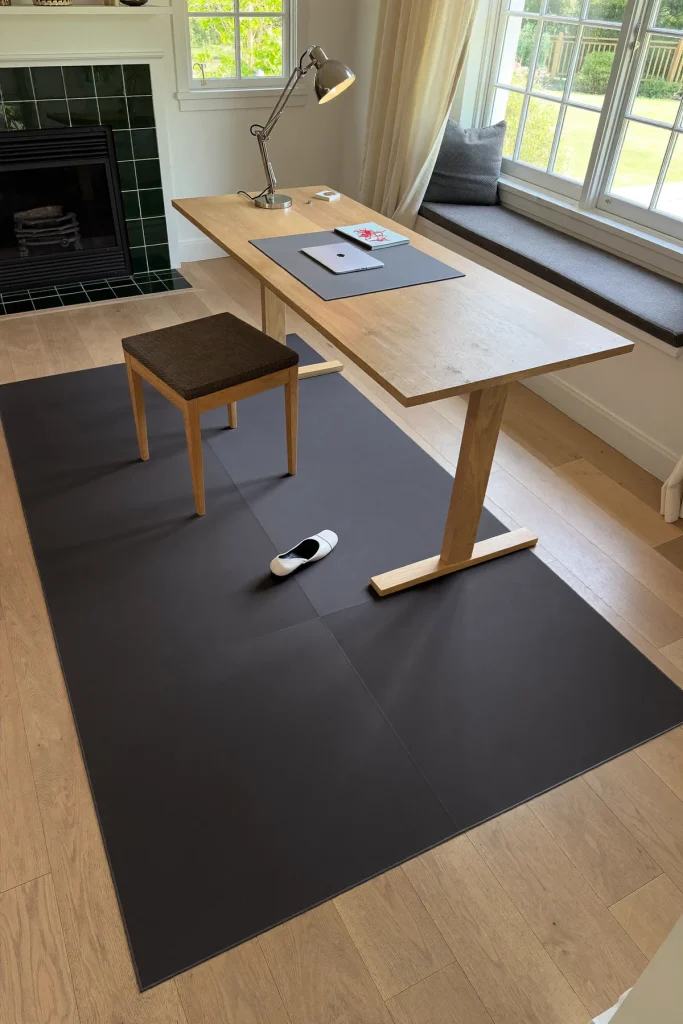
Standing on hard floors for an hour is a good way to hate your new desk. A thick anti-fatigue mat takes the pressure off your heels and knees, and in a Craftsman bungalow with hardwood floors, a charcoal mat looks surprisingly neat.
Pick a mat about three-quarters of an inch thick with beveled edges so you don’t trip. Park a pair of comfortable shoes beside it for days when you want more support. If a thick mat clashes with your decor, layer a thin rug on top of a low-profile mat. Nobody will notice.
Shift your weight, step on and off, and use a small footrest now and then. Moving is the point.
Common Mistakes to Avoid
- Buying a mat that is too soft. You want gentle bounce, not sinking.
- Choosing a tiny mat. You need room to shift side to side.
- Forgetting the edges. Curled corners are tripping hazards.
Pair the Standing Desk With a Reading Corner
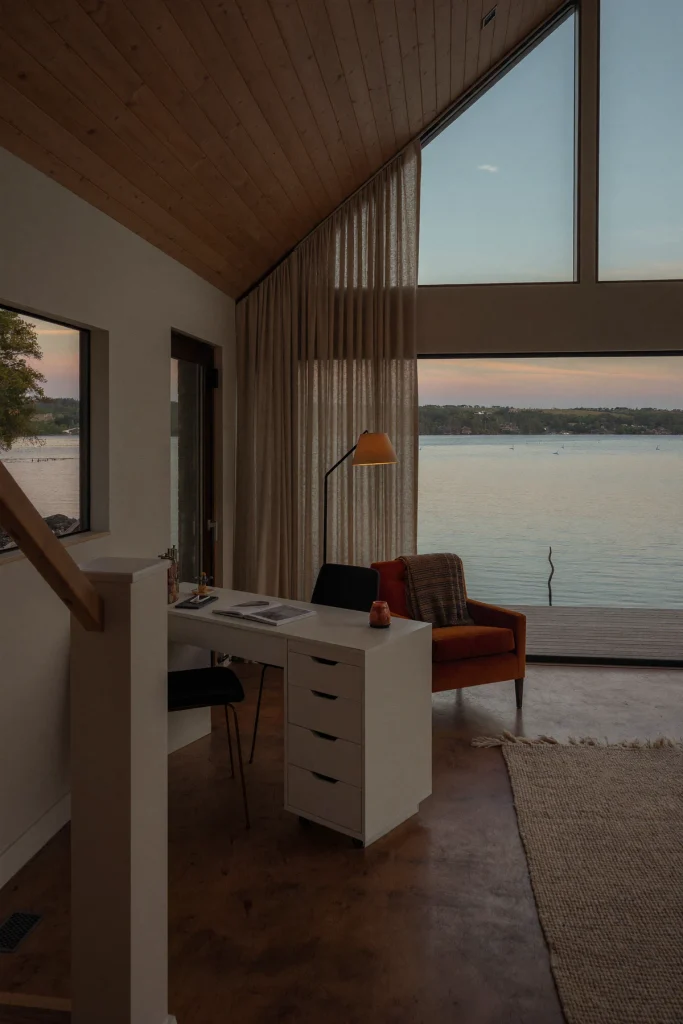
A standing desk is for part of the day. For the other part, you need a comfortable place to sit that isn’t the desk chair. A deep velvet armchair, a floor lamp and a soft throw in the same room give you a real alternative when your legs are tired but you aren’t done thinking.
In a lake house loft, with pine ceilings and a dusky lake in the window, the corner becomes the reason you stay in the office. Take calls from the armchair, read documents there, and save the standing desk for typing.
The two spots together also create a natural rhythm. Stand to work, sit to think, and the day stops feeling like one long slump. Remember the closet office from idea 3? The same trick of giving the room two jobs works here too.
Choose a Black Steel Frame for an Industrial Loft Look
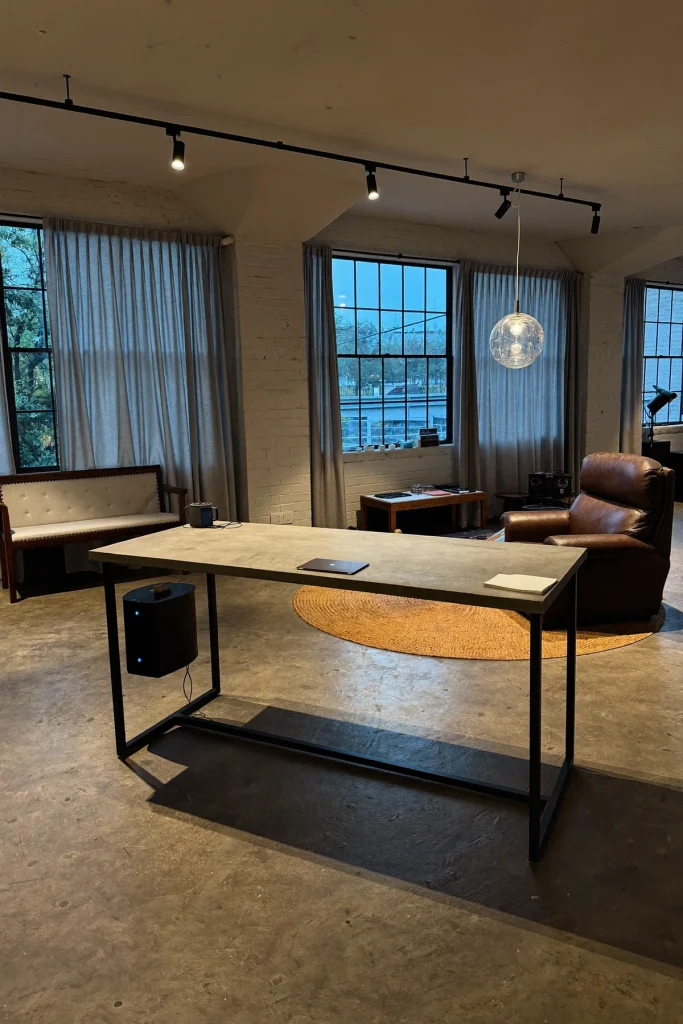
A black steel electric frame is the quiet workhorse of industrial design. Pair it with a concrete-look desktop and you get a surface that is tough, cool to the touch and unbothered by coffee rings. In a warehouse loft with exposed brick and steel windows, it feels like it was built there.
Counter all that hardness with a soft jute rug and a big dark leather chair. Track spotlights aim at the wall, and a glass globe pendant gives the desk a gentle pool of light. Gray linen curtains soften the big windows and cut glare. 🏭
A concrete-look top is heavy, so check the frame’s lifting capacity before you order. Most good frames handle 200 pounds or more.
Style Match Guide
- Concrete top: pairs with black steel, leather and brick.
- Reclaimed wood top: pairs with iron, canvas and warm bulbs.
- Glass top: pairs with chrome, velvet and mirrors.
Match the Desktop to a Mid-Century Credenza Wall
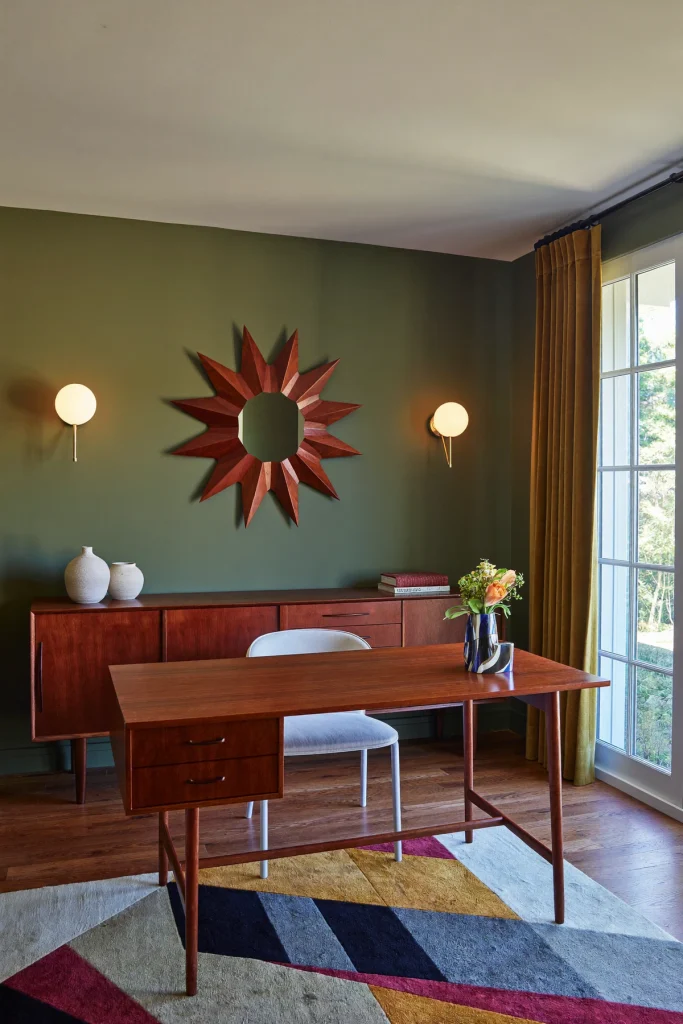
Standing desks don’t have to look like furniture-store office equipment. A teak top with slim tapered legs fits right in beside a long mid-century credenza, and the two together feel like a designed wall instead of a workspace. A sunburst mirror above ties it together.
Use warm olive or mustard in the room, like a painted olive wall and mustard curtains, and add two ceramic lamps on the credenza for evening glow. A geometric rug in earthy tones grounds the setup. Put three ceramic vases on the credenza and leave the desktop clear.
The credenza earns its keep too, holding files, printers and chargers behind closed doors, so the desk stays calm and the cables stay hidden.
Warm the Floor With a Persian Runner Under the Desk
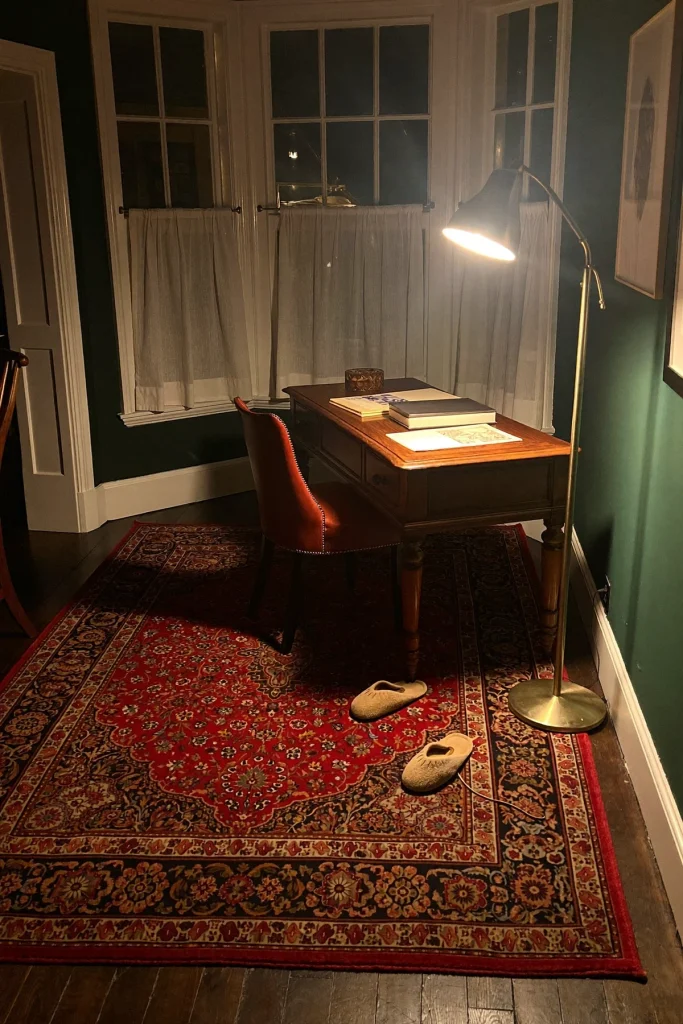
Rugs and standing desks do get along, but a few rules help. A thin, flat-weave runner in rich reds, like an antique Persian, adds warmth and gives your feet a soft surface. In a Victorian home with dark green walls and brass lamps, it makes a modern desk feel at home. 🏛️
Choose a rug with a low pile and a rug pad, so the desk’s feet and your chair slide easily, and so the edge doesn’t curl. A pair of wool slippers on the rug makes a nice habit, because standing in socks on a wool rug is genuinely comfortable.
Make sure the rug extends beyond both sides of the chair so rolling over the edge doesn’t snag it. A good rule is about 6 inches of rug beyond the desk on every side.
Rule of Thumb
If the chair wheels climb the rug edge, the rug is too thick for a rolling chair. Switch to a thinner weave.
Light the Desk at Night With a Swing-Arm Lamp
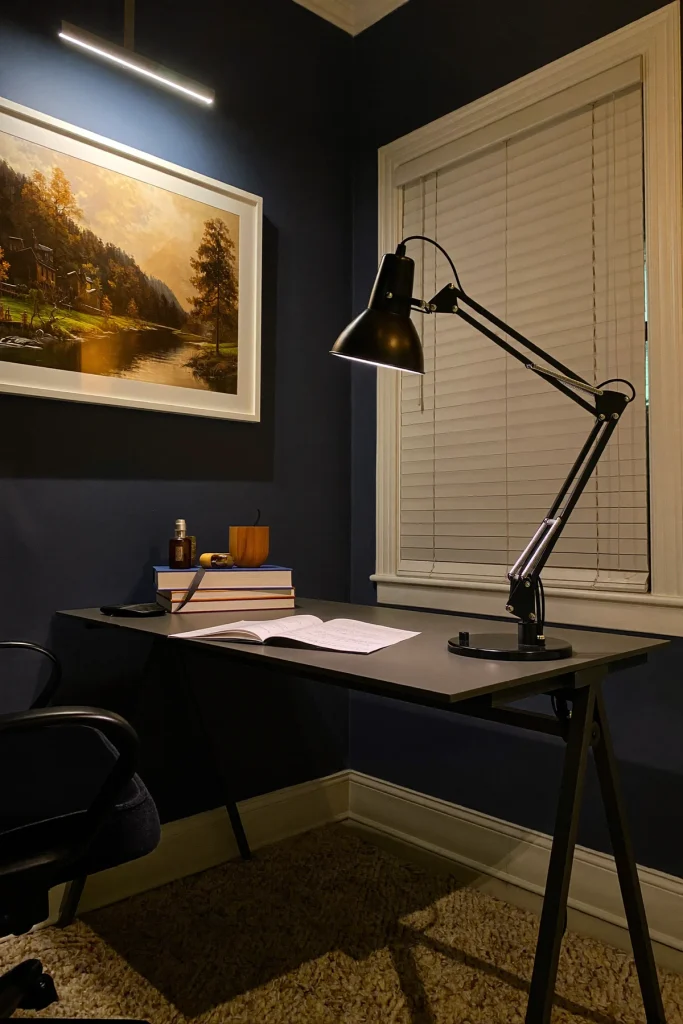
Ceiling lights flatten everything and throw shadows on your keyboard. A black swing-arm lamp clamped to the desk edge puts a warm, directional glow right where you work, and it moves with you as the desk rises. In a townhouse study with dark navy walls, it feels like a reading room.
Add a picture light over a painting to give the wall a soft glow, so the room isn’t pitch black beyond the lamp. Closed linen blinds keep the street out of your reflections at night. Choose a warm bulb around 2700 to 3000 Kelvin so your evenings stay restful.
A clamp lamp doesn’t care how high the desk goes. That’s the big advantage over a lamp that sits on the desktop and has to be moved when the desk rises.
Fit a Standing Desk Between Built-In Bookcases
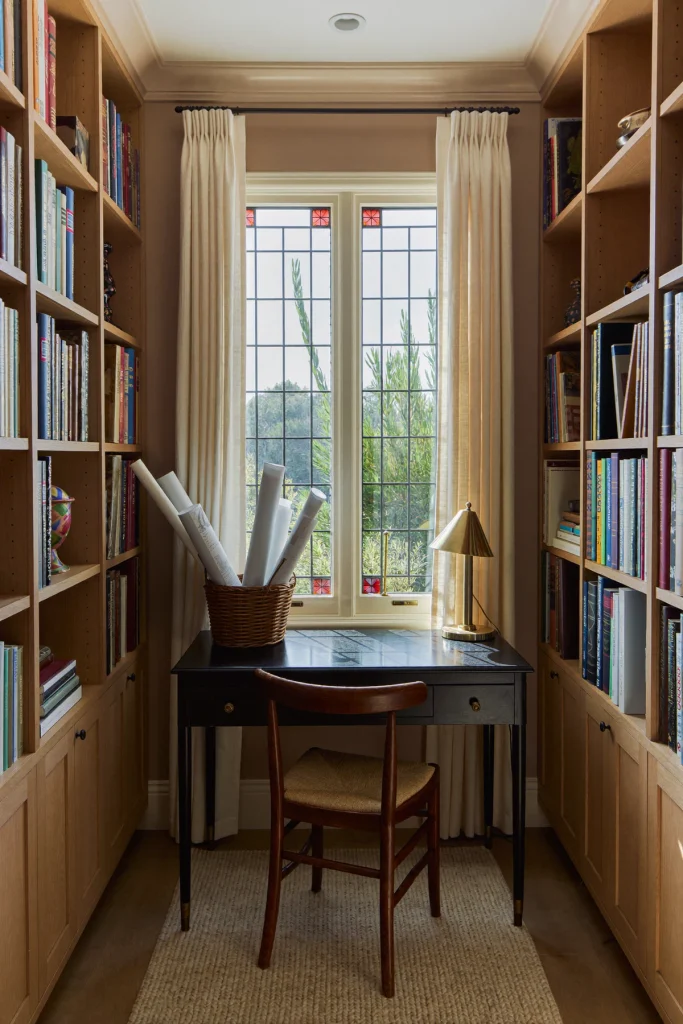
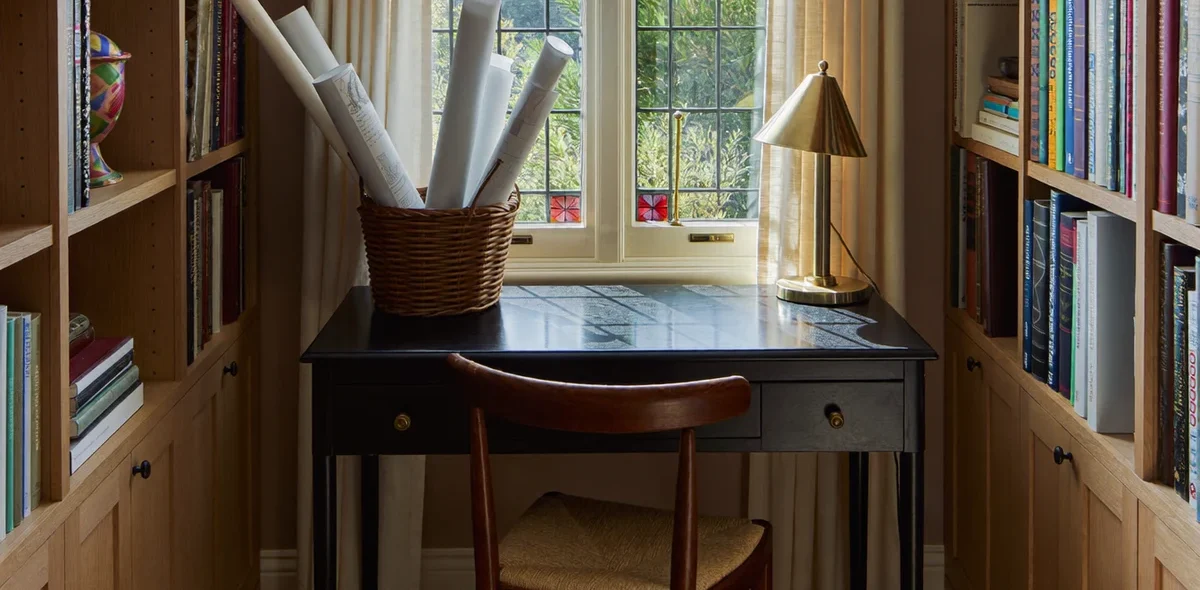
If your house has built-ins, you’re halfway to a great office. Slide a standing desk into the gap between two oak bookcases, and the shelves frame the work area on both sides, ready with books, binders and baskets. In a Craftsman bungalow, with its art-glass window above, the whole nook feels designed for the purpose.
Brass lamps on the desk add a soft glow. A rug under the chair keeps the room cozy. Use a basket to hold rolled documents, which keeps the clutter you can’t file off the desk.
Measure carefully before buying a desk. You want an inch or two of space on each side so the desk can rise and fall without scraping the shelves. Check that the bookcase lower shelves won’t collide with the desk when raised.
Choose a Bamboo Top for a Japandi Calm
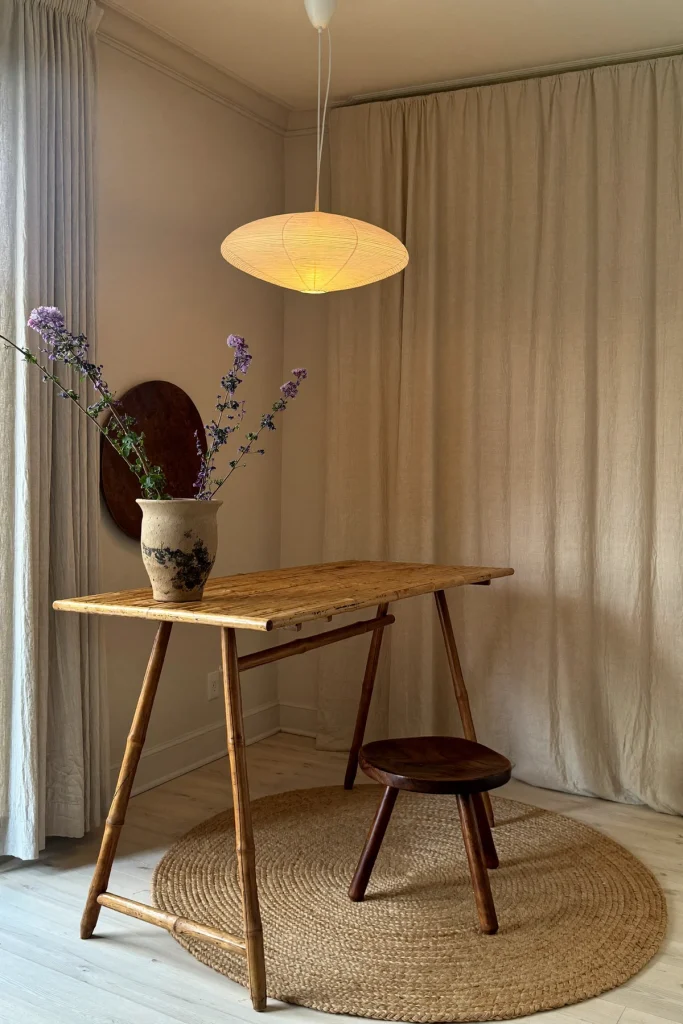
Bamboo is light, strong and gentle on the eye, which makes it a natural fit for a Japandi-inspired room. A bamboo-top standing desk with pale ash walls and a paper lantern pendant has a quiet, sanctuary feel that makes you want to focus. 🎋
Keep the styling spare: one ceramic vase with three branches, a low wooden stool and a round jute rug. Linen curtains filter daylight softly. A desk this simple works best with very little on top, so tuck cables and chargers under the desk, and let the wood grain do the decorating.
Bamboo is also a sustainable material that handles daily wear well. Wipe it with a damp cloth and apply a light coat of oil once a year to keep it looking fresh.
Works Best In
Rooms with pale walls, natural light and a love of empty space.
Go Dark and Dramatic With Charcoal Walls
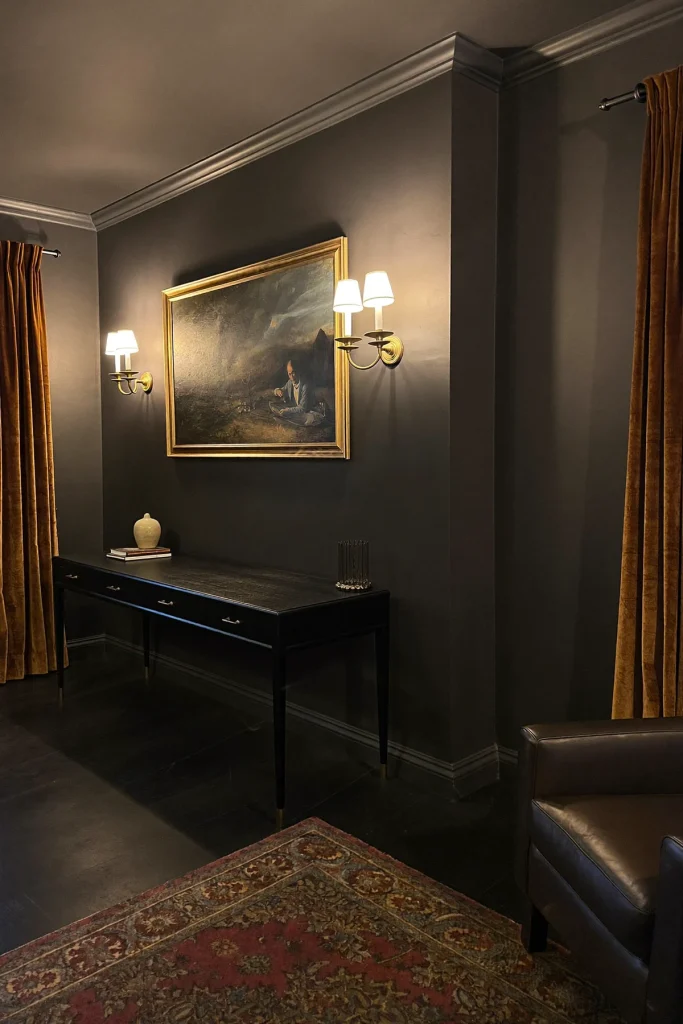
Standing desks look sharp against a moody backdrop. A black desk raised against charcoal walls in a Victorian room, with oxblood velvet curtains and brass wall sconces, feels like a private study. Dark rooms hide cables, shadows and clutter beautifully. 🖤
The key is layered light. Sconces on the wall, a small lamp on the desk, and a picture light on a painting give you pools of warm light, so the darkness feels deliberate and not gloomy. A patterned rug over dark wood adds richness underfoot.
Use matte paint to cut screen reflections, and choose a warm bulb so your skin tones look good on video calls. A leather chair rounds out the look, and the whole room becomes the place you want to be after dinner.
Seasonal Switch
- Winter: add a chunky knit throw and a candle in a brass holder.
- Summer: swap velvet for linen and open the window.
Share One Wide Desk Between Two People
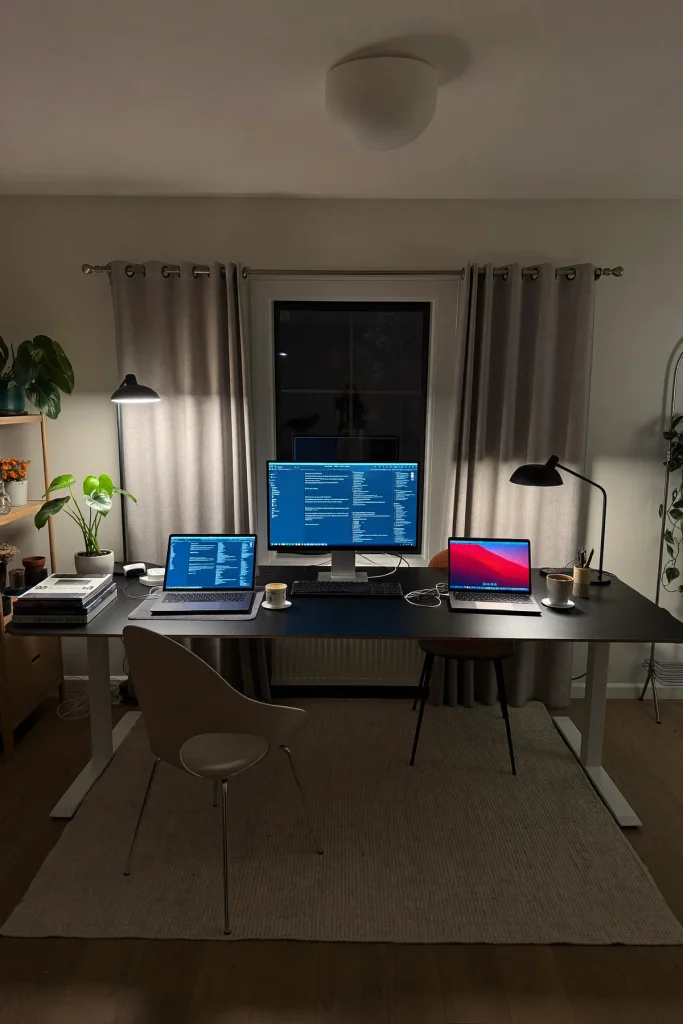
Two adults, one spare room? A single 72-inch standing desk can serve both of you, with two chairs, two laptops and two lamps. The desk rises for whoever wants to stand, and the other person simply stays seated at their end, which works better than you’d think.
Choose a dual-motor frame, which runs smoothly and handles a wide, heavy top. Symmetry makes the room feel calm: two lamps, two chairs and a shelf of plants in the middle. In a suburban family home with gray curtains and a wool rug, it looks like a deliberate partnership office.
Set memory presets for each person. One button for your height, another for theirs. That tiny feature prevents most arguments about whose turn it is to adjust.
Who This Is For

Couples working from home, or a parent and a teen sharing a study space in the evenings.
Squeeze a Standing Desk Into the Kitchen Nook
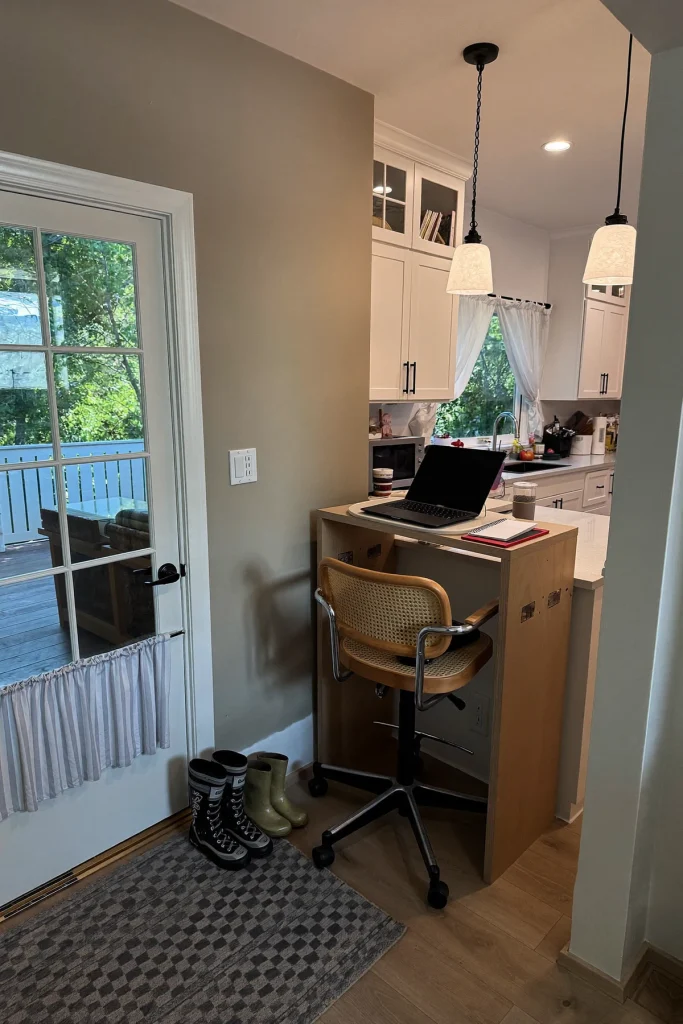
The family hub of the house is the kitchen, and a standing desk right next to it is practical for parents. Stir the sauce, answer an email, check the oven timer, all within a few steps. A white shaker-cabinet kitchen with a standing nook beside the mudroom door feels natural. 🍳
Keep the setup light: a laptop, a notepad and a small lamp. Use café curtains on the window for privacy and light. Kids’ rain boots by the door add life. A runner rug between the desk and the island softens the floor where you stand.
Wipe the desktop with a damp cloth, since kitchens get greasy. Choose a laminate or sealed wood top that handles splashes, and keep the cables tucked away from the stove side of the room.
Kid- and Pet-Proof It
Choose a desk with a lock function so little fingers can’t send it up or down.
Hang Floating Shelves at Eye Level Above the Desk
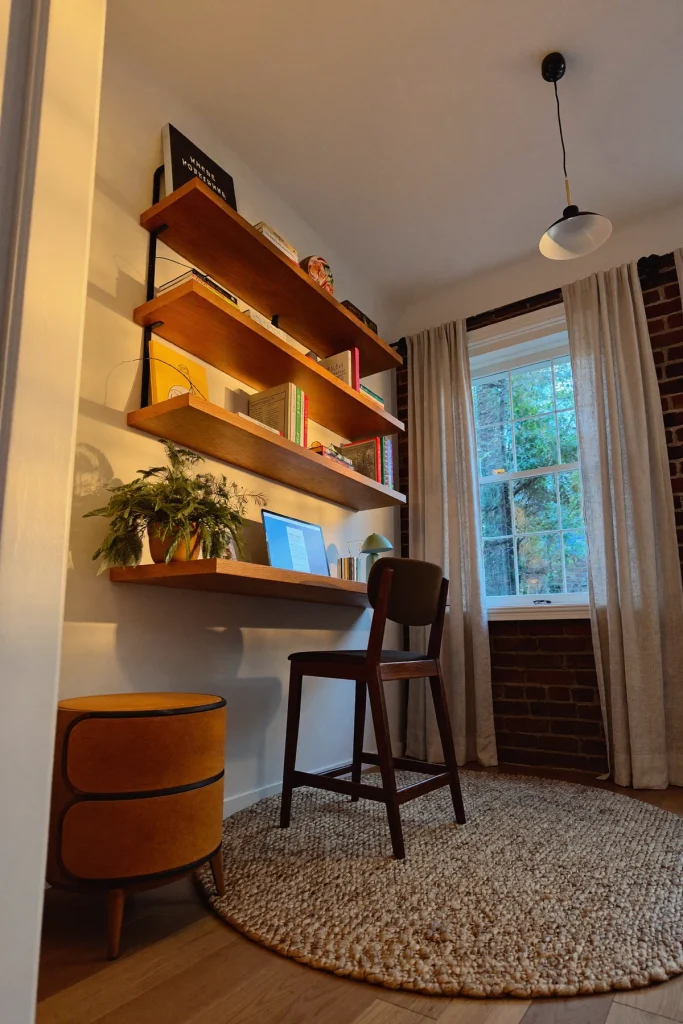
A standing desk sits tall, so storage above it should sit at the right height too. Three oak floating shelves, hung so the lowest one clears the desk’s highest position by about 15 inches, give you a place for plants, books and a small lamp without eating desktop space. In a brick row house, they add warmth to a plain wall.
Keep the lowest shelf free of heavy items so you don’t hit your head when you stand up. Put the books you use often on the middle shelf and decorative items higher. A pendant light overhead and linen drapes at the window keep the whole nook soft.
A window right beside the desk makes golden-hour work a treat.
Fold a Wall-Mounted Desk Down to Standing Height
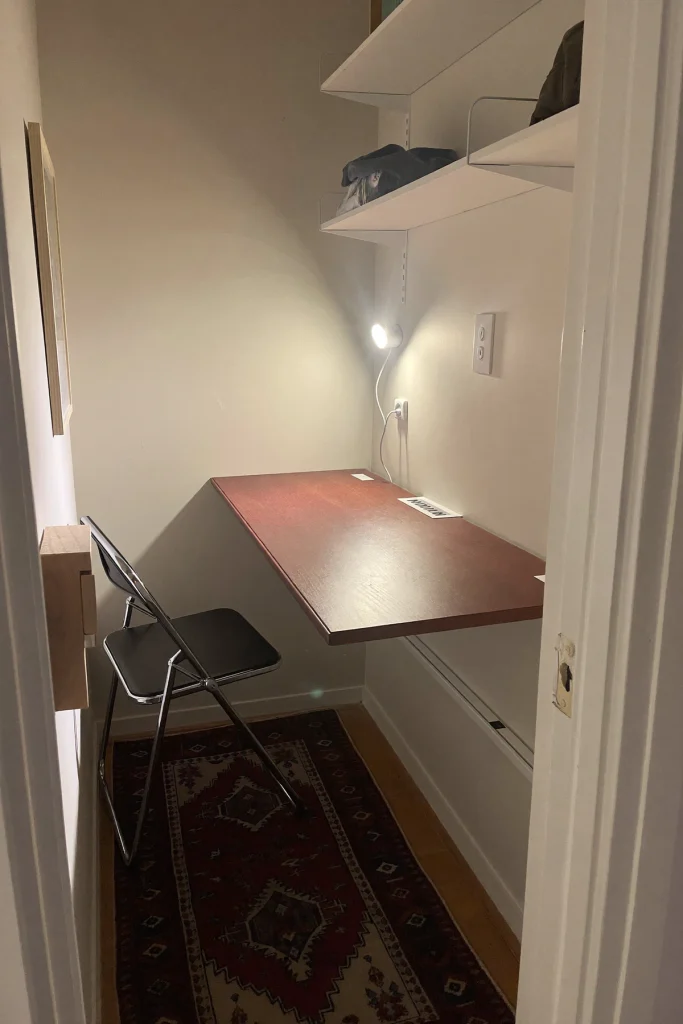
When space is tight, a wall-mounted fold-down desk lowers to standing height and folds flat when you’re done. In a hallway niche of a small apartment, it turns a few square feet into an office that vanishes the moment you finish. 🚪
Mount it into studs at about 38 inches high, and hang a plug-in sconce beside it so you have light without wiring. Add a single shelf above for supplies and a folding chair stored against the wall. A runner rug underfoot keeps the niche cozy.
A fold-down desk is perfect for short work sessions, like checking email, paying bills or planning the week. If you’re working eight hours, choose something sturdier. For a few focused hours, it’s perfect and almost invisible.
Time Needed
About two hours to install, plus ten minutes to patch the wall if you ever move.
Bring a Standing Desk Into the Sunroom
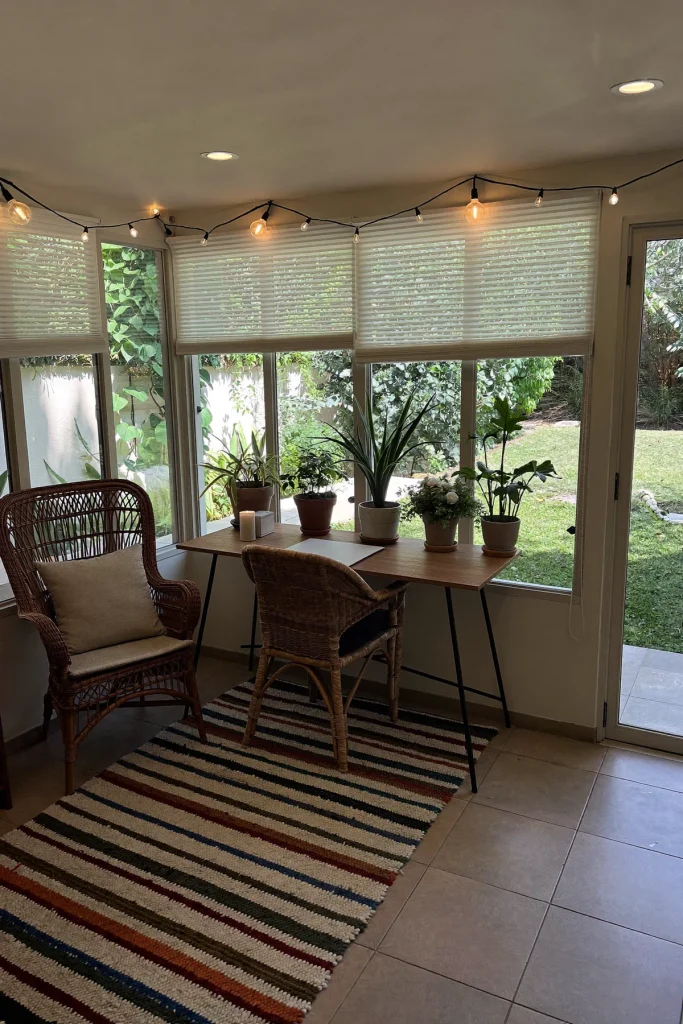
Sunrooms are ideal for standing desks, because the light is great, the views are lovely and you can stand with your feet in sunshine. A glass-walled sunroom with five potted plants and a wicker armchair makes a beautiful office, especially in the morning.
Dress the glass with linen shades you can draw half-way when the sun hits your screen. A striped cotton rug over tile makes standing comfortable. String lights overhead mean the room still works at dusk, and a tile floor handles muddy shoes.
Watch for temperature swings. Sunrooms get hot in summer and cold in winter, so keep a fan and a small heater handy. Laptops don’t enjoy extremes either, so move yours inside on very hot afternoons.
Tuck a Standing Desk Under the Attic Eaves
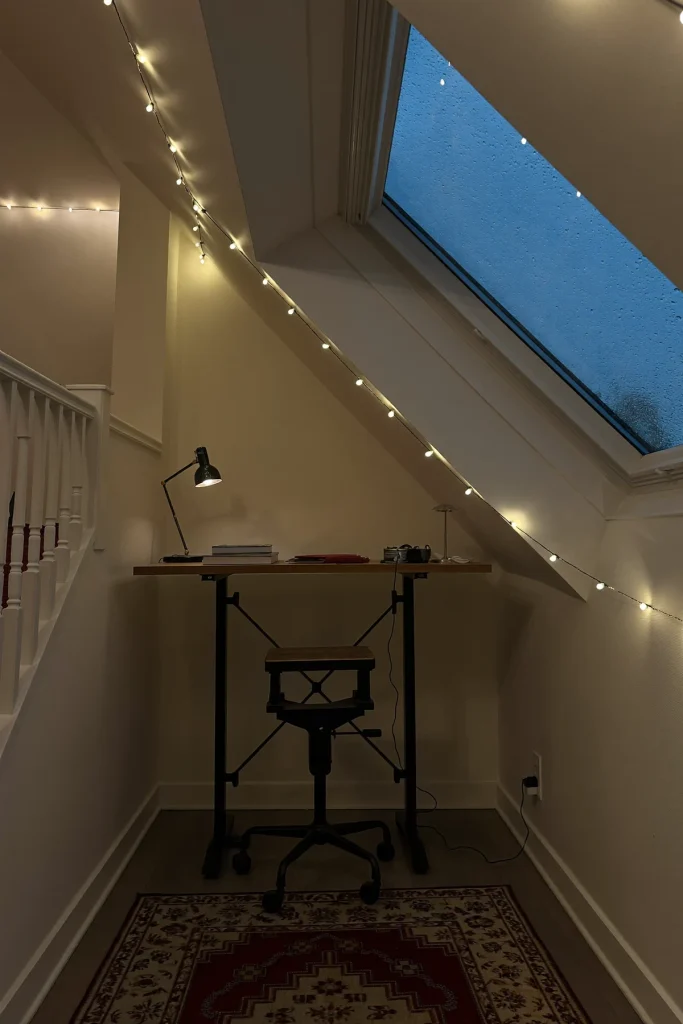
Attics have awkward ceilings, but a standing desk placed where the ceiling is tallest turns that quirk into a feature. In a Victorian attic with a skylight, rain on the glass and string lights along the eaves, it feels like a writer’s hideaway. 🌙
Check headroom before you commit. You need at least 7 feet above the desk’s highest position. A braided rug softens the wood floor, and a small lamp gives you gentle light for late nights. Keep the lower, sloped parts of the room for storage, like boxes and baskets.
Sound travels differently in attics, and rain is a lovely soundtrack, but a rug and some soft textiles keep the echo down for video calls.
Finding Your Standing Rhythm
If you’ve read this far, you’ve already seen that a standing desk is only the beginning. The rug, the lamp, the cables and the chair all decide whether you’ll still love it in six months. Start with one or two changes, live with them for a week, and adjust.
A good rule is to alternate positions every thirty to sixty minutes, and to treat movement as the goal, not standing for its own sake. Shift your weight, take a short walk, stretch. Your desk is a tool for variety.
Pick the idea that feels most like your home, and make it yours. A desk that suits your space is a desk you’ll actually use, and that’s the whole secret.
