
Most attic stairs get treated like a fire escape. Steep, narrow, a little dark, tucked behind a door nobody thinks about. And then you finish the attic, put a bed or a desk up there, and suddenly that awkward little climb is something you do ten times a day.
Here’s what I’ve learned from loving a few top-floor rooms: the stair is the welcome. If it feels cramped and forgotten, the room upstairs feels like an afterthought too. If it feels warm, bright and on purpose, the whole top of the house starts to feel like the best spot you own. 🏡
So I pulled together my favorite attic staircase ideas, from tiny paint tweaks and clever storage to full conversions that look like they’ve always been there. Some are a weekend job. Some need a carpenter. All of them make the trip up feel a lot less like climbing into storage.
Fit an Alternating-Tread Stair Where Space Is Tight
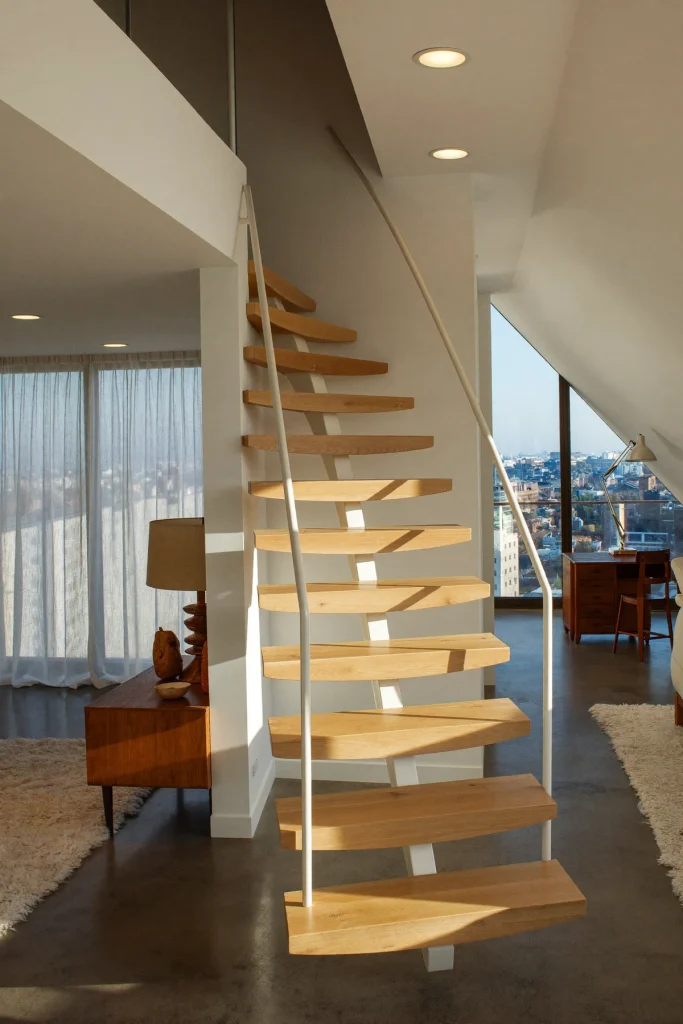
When there’s no room for a normal stair, an alternating-tread stair (sometimes called a paddle stair) can be the clever middle ground. Each step is cut to half width and staggered left and right, so you get a steep climb in a fraction of the floor space.
They look sculptural, especially in pale oak or painted steel. And they leave room below for a desk or a reading chair.
Codes treat these stairs differently from place to place, and some only allow them for certain rooms. Ask before you build.
Who This Is For
Adults heading up to a small loft office or a reading room. If you’ve got toddlers or an older dog, keep scrolling.
Open the Stairwell to the Sky With a Skylight
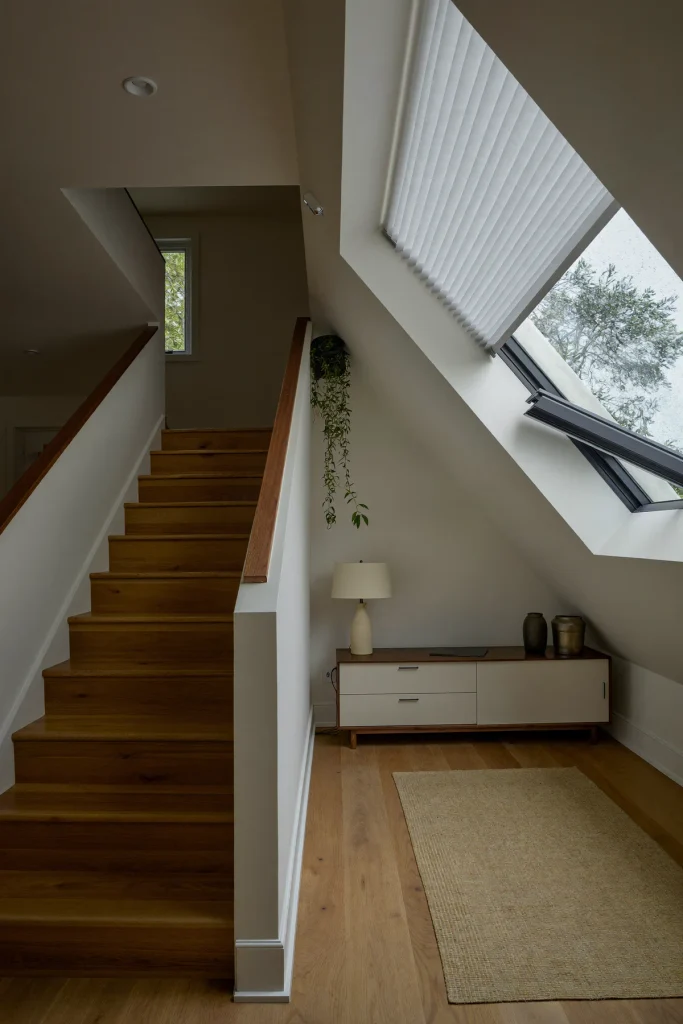
Attic stairs are often the darkest part of the house. A skylight right over the stairwell changes that in one move.
Daylight pours straight down the steps, the walls look brighter, and the climb up feels like heading toward something good. On a rainy afternoon it’s honestly one of the nicest places to stand. ☁️
Pick a model with a built-in shade or blackout blind so the attic bedroom stays dark when you need it to. And plan a soft flush-mount light for evenings, because a skylight does nothing at 9 p.m.
Build Drawers Into the Risers
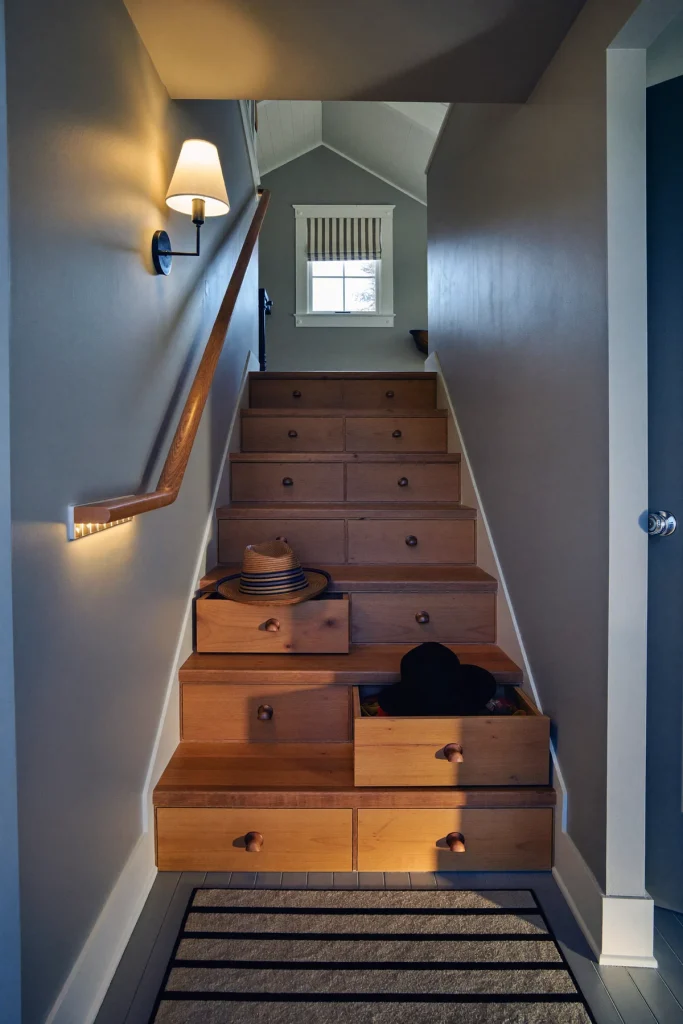
Under-eave space is gold in an attic, and the stair itself can hold some of it. Build shallow drawers into the risers, each one with a simple finger pull or a small leather tab.
They’re perfect for flip-flops, winter hats, board games or extra sheets for the guest bed upstairs. Nothing deep, nothing heavy. Paint the drawer fronts the same color as the risers and they almost vanish until you need them.
This is a job for a confident DIYer or a finish carpenter, since the stair structure has to stay solid.
Works Best In
Box-style stairs with closed stringers on both sides, where there’s real hollow space behind each riser. Open stairs don’t have room for it.
Line the Stairwell in Beadboard
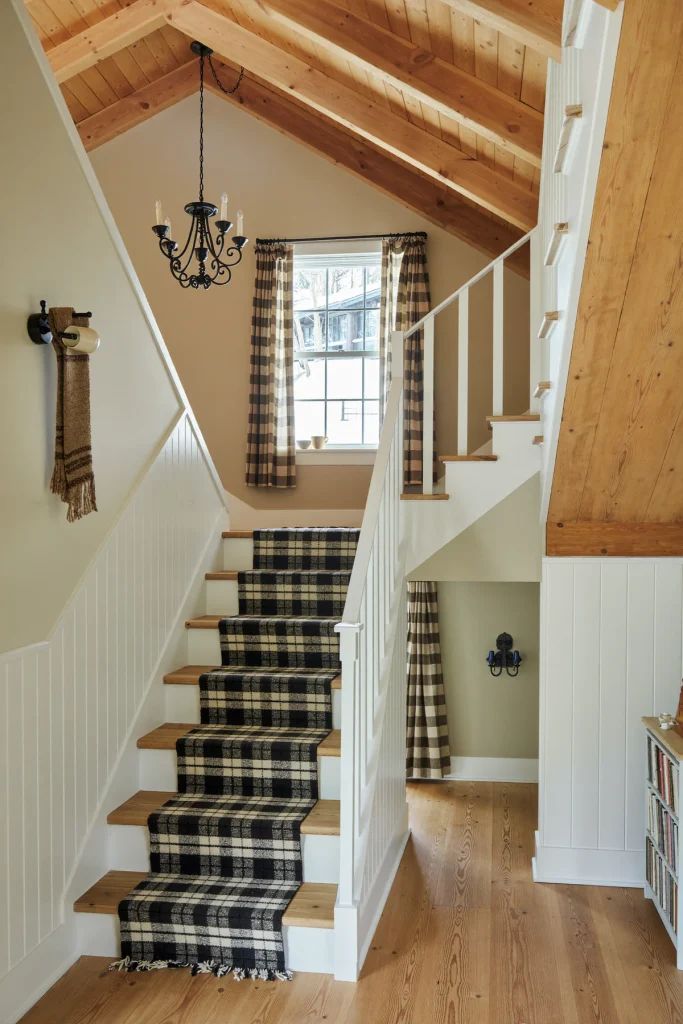
Narrow attic stairwells can feel like a tunnel. Beadboard up the walls adds texture and a little cottage charm without eating any space.
Run it to chair-rail height and paint the wall above a softer shade, or take it all the way up for a cabin-like feel. Remember the oat-and-white treads from idea 1? Beadboard in the same white ties the whole look together.
It’s also tough. Shoulders, laundry baskets and bumped suitcases don’t scar it the way plain drywall gets scuffed. A satin or semi-gloss finish wipes clean in seconds.
Budget Alternatives
- Beadboard-look panels in large sheets instead of single planks
- Simple vertical battens nailed over drywall
- Peel-and-stick wood-look planks for renters
Tuck a Daybed Under the Eaves at the Top
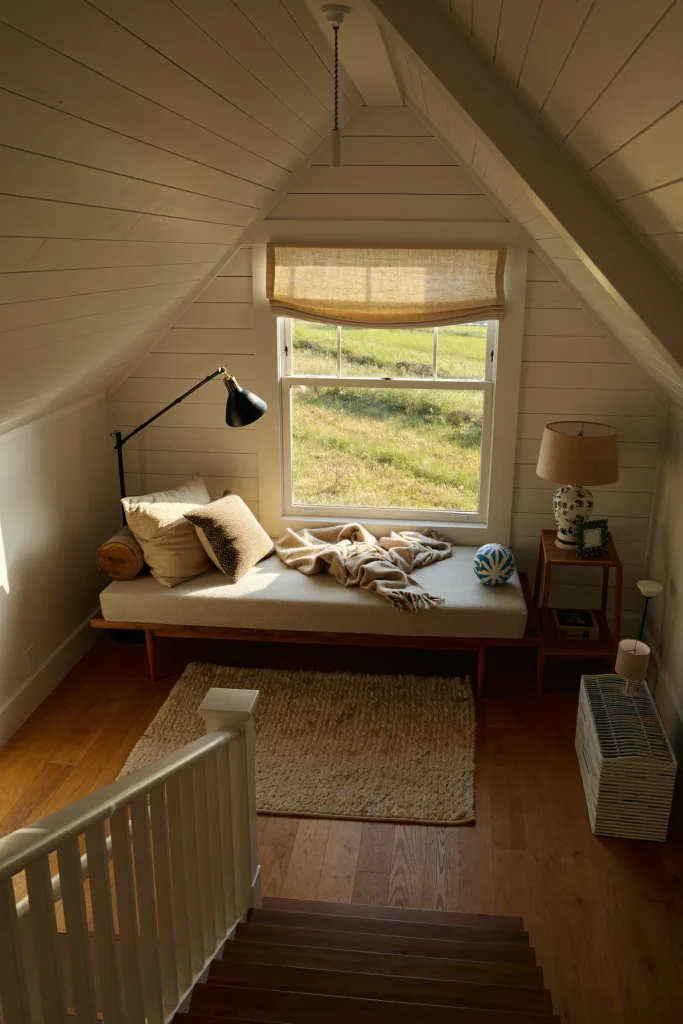
If your stair lands in a wide-open attic, use that first view well. A low daybed tucked under the slope, right where the stair arrives, gives the whole top floor an instant sense of welcome.
Pile on a linen throw and two or three pillows, add a small wall sconce for reading, and dress the dormer window with a simple roman shade. Suddenly the climb ends somewhere you actually want to be.
Kids will claim it for reading. Guests will nap there. You’ll find yourself sneaking up with a coffee. ☕
Run a Striped Runner That Pulls the Eye Upward
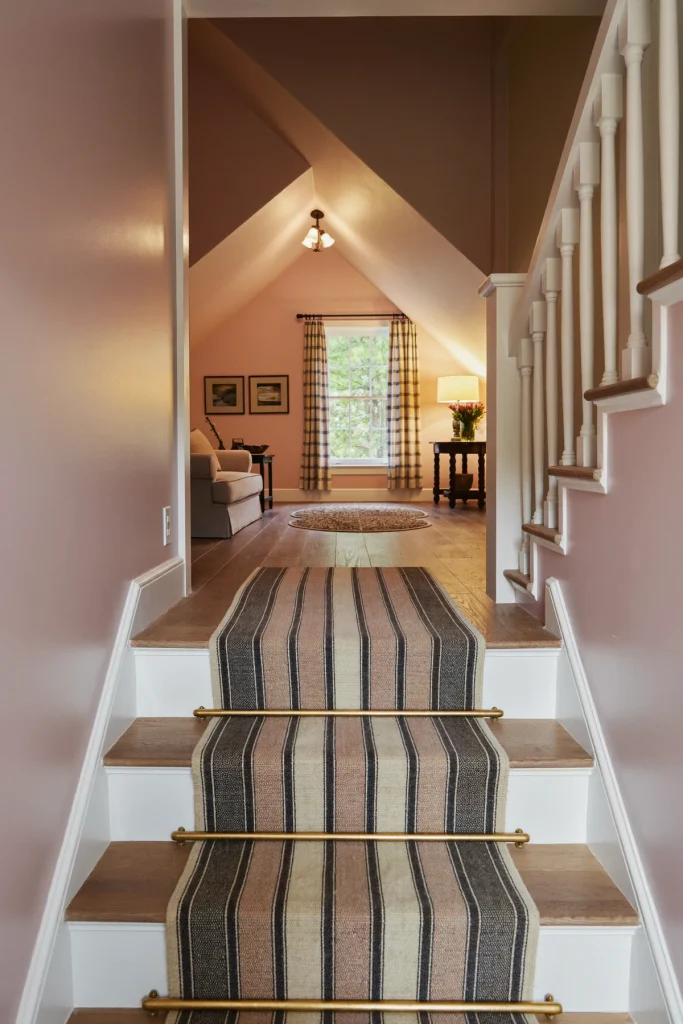
Stripes running in the direction of travel are a sneaky little trick. On a steep attic stair, a striped runner draws your eye up toward the room above and makes the climb feel purposeful.
Go for a cotton or wool flat-weave in two or three soft colors, like cream with thin bands of blush and charcoal. A border of painted wood on either side keeps it from feeling wall-to-wall.
If you’ve already done the winder runner from idea 4, this works on straight runs the same way. Just pick a stripe that’s forgiving on a turn, or switch to a small allover pattern for the winders. 🌸
Brass stair rods are optional but so pretty.
Open the Risers and Let the Light Pour Through
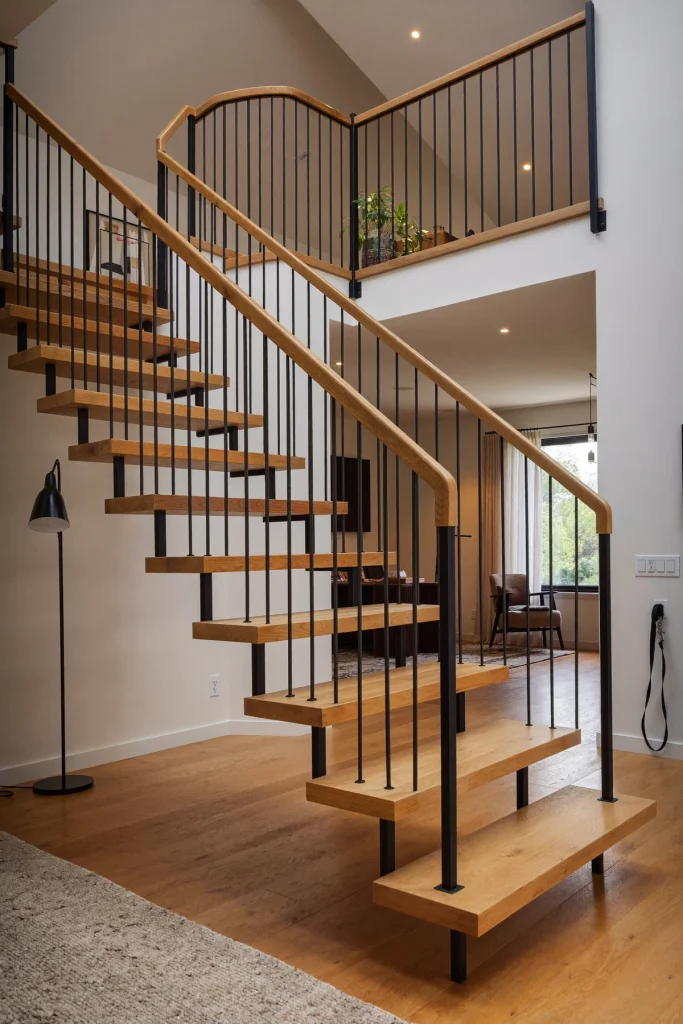
A closed-in attic stair can make a hallway feel heavy. Switch to open risers, chunky oak treads on slim steel or timber stringers, and the stair becomes almost see-through.
Light from the window behind it flows into the room. You can see the floor beneath. Even a narrow hall suddenly feels wider.
This one changes the structure, so you’ll need a pro and likely a permit. Open riser gaps also have size limits in many places for child safety, so let your builder guide the spacing.
Pair it with a simple wall-mounted handrail and a code-compliant railing on the open side and it reads clean and modern.
The Sock-Foot Test
Before you commit, walk a sample stair in socks, carrying a laundry basket. If you feel uneasy, add a grip strip to the tread nosing or choose a deeper tread. Small kids and pets should be supervised until they’re used to the gaps.
Add a Rope Handrail Along the Wall of a Steep Cottage Stair
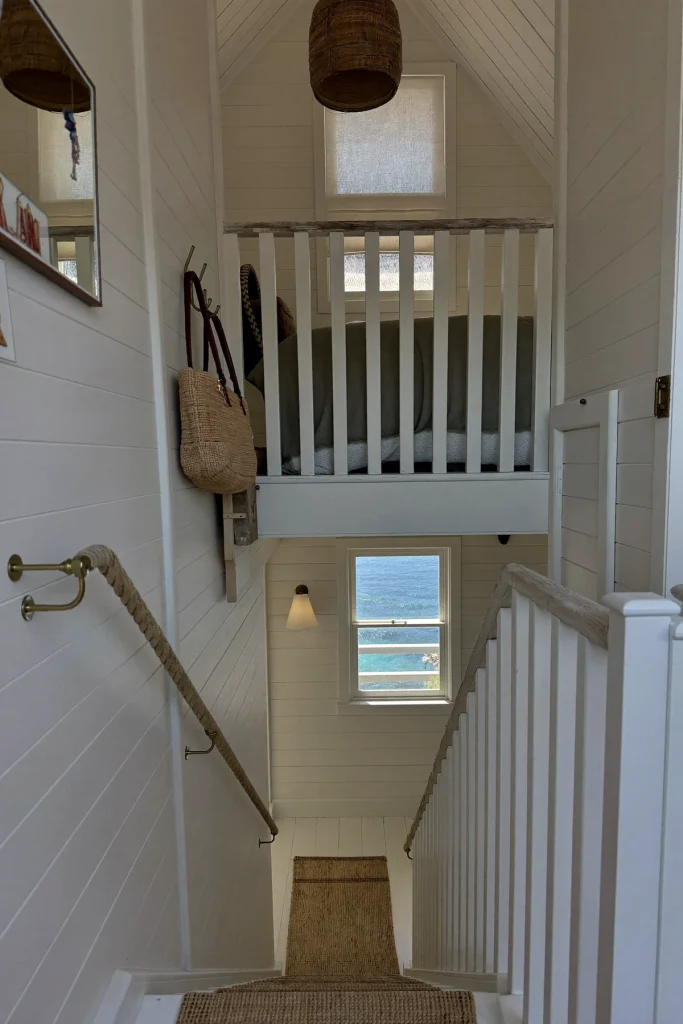
Steep attic stairs in older cottages often have a handrail on one side only. A thick rope rail on the wall side gives you something to hold on both sides and looks wonderful doing it.
Use a chunky natural or manila-look rope through brass or blackened iron brackets, mounted firmly into studs. Keep any existing code-required railing in place on the open side; the rope is an extra, not a replacement.
It’s especially charming in a beach house, where it nods to boats and docks without leaning into theme-park nautical. 🌊
The texture is lovely under the hand, too. Soft, a little rough, warm even on chilly mornings.
Drop a Sculptural Pendant Through the Stair Opening
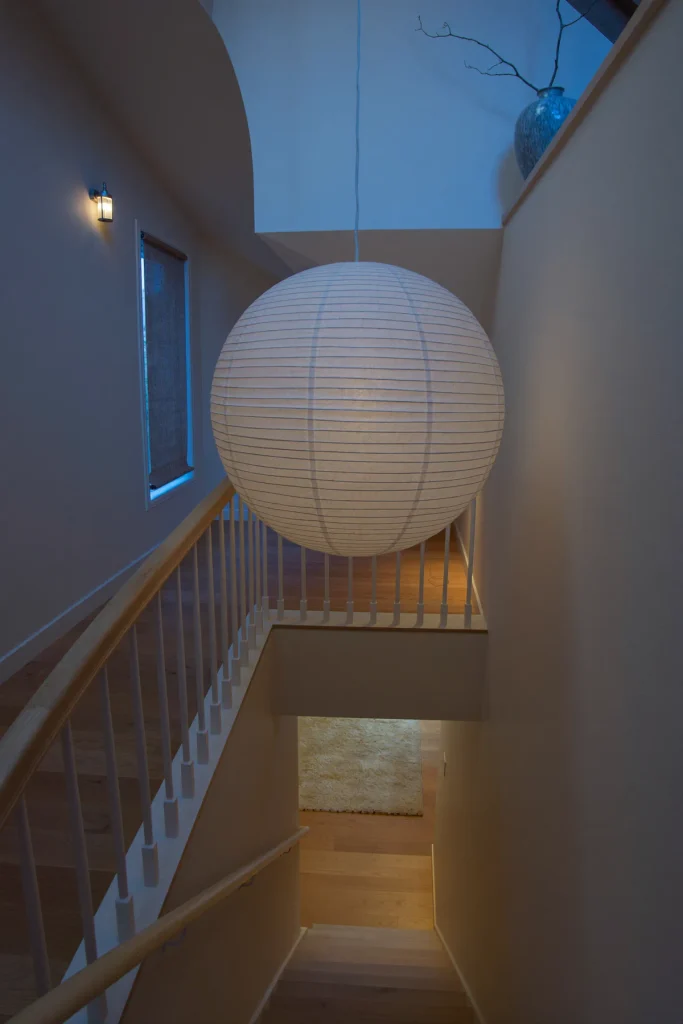
When an attic stair rises through a ceiling opening, you get a tall, narrow shaft of space that’s perfect for one statement light. Hang a sculptural pendant right down the middle so you see it from the hall below and from the top landing.
A paper lantern, a woven rattan globe or a cluster of handblown glass bulbs all work. Just keep it high enough that nobody bumps it while carrying a box.
At night it becomes the first thing you see when you look up the stair. It quietly says, there’s a real room up there.
Add a small wall sconce at the top for practical light, and you’re set. ✨
Paper the Stairwell in a Small Botanical Print
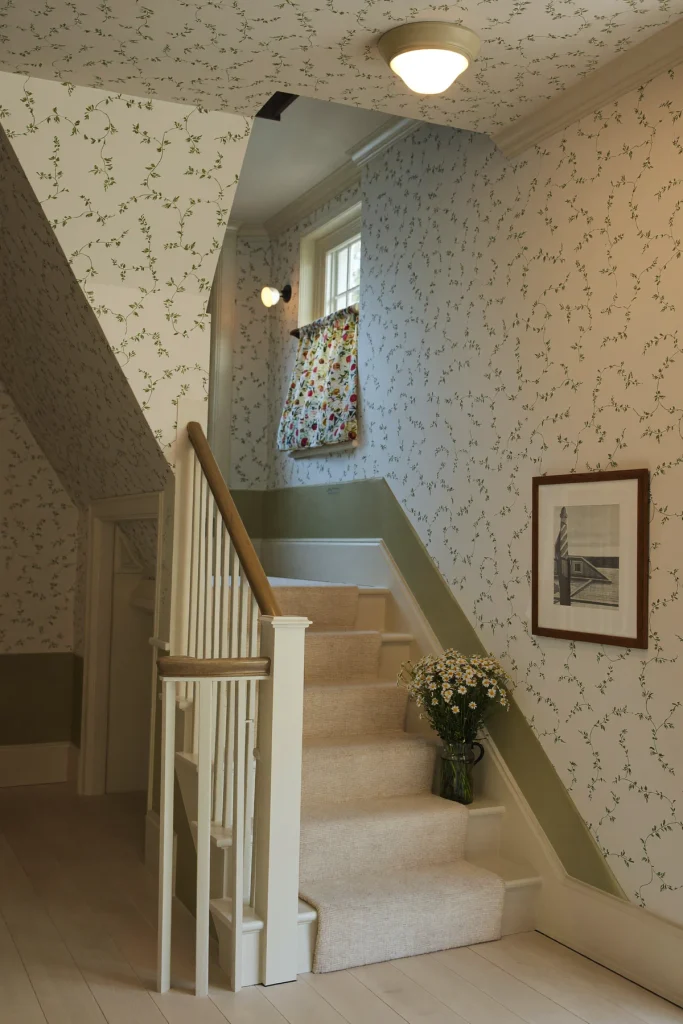
Wallpaper on an attic stair is a gentle way to add personality, and the stairwell is a small enough area that you won’t need many rolls.
A small-scale botanical, like tiny trailing vines or delicate wildflowers, suits the cozy, cottage feel of a top floor. It also hides the odd angles of a sloped ceiling better than a big pattern would.
Ask your installer to match the pattern carefully along the slope, since that’s where mistakes show most. Pair it with white trim and a pale painted stair so the paper is the star. A soft flush-mount at the top and a small sconce at the turn keep the print readable after dark, which is when you’ll appreciate it most.
Do This 👉 / Not This ❌
- 👉 Choose a print you’d happily look at every day
- ❌ Go for an oversized motif that gets chopped up by the slope
- 👉 Wrap the paper onto the sloped ceiling for a cozy cocoon
- ❌ Skip primer on old plaster walls
Paint the Whole Stair a Soft Sage Green
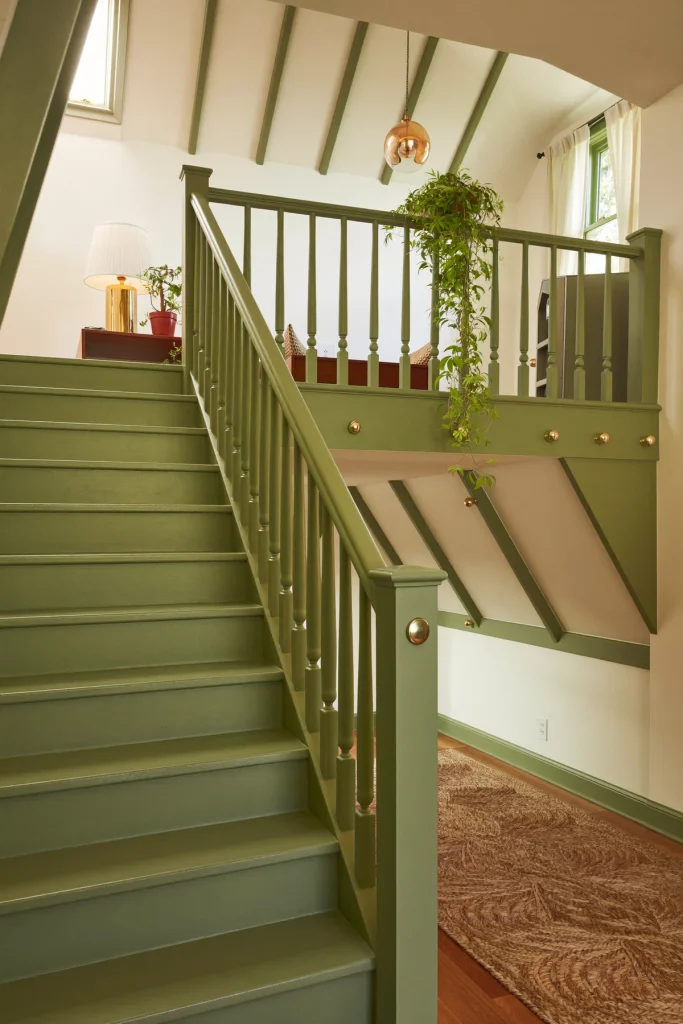
If you want color without drama, sage is the calmest pick out there. Paint the treads, risers, stringers and spindles in one soft, grayed sage and let the walls stay creamy white.
It feels fresh, a little garden-y, and it plays really well with oak floors, brass hardware and natural linen. It also hides everyday scuffs better than white does, which matters on a stair everyone uses.
Top it with a natural jute or sisal runner and a pot of trailing pothos on the landing. 🌿
It’s the kind of color you’ll still love in ten years, and that’s saying something.
Hang a Gallery of Botanical Prints Along the Slope
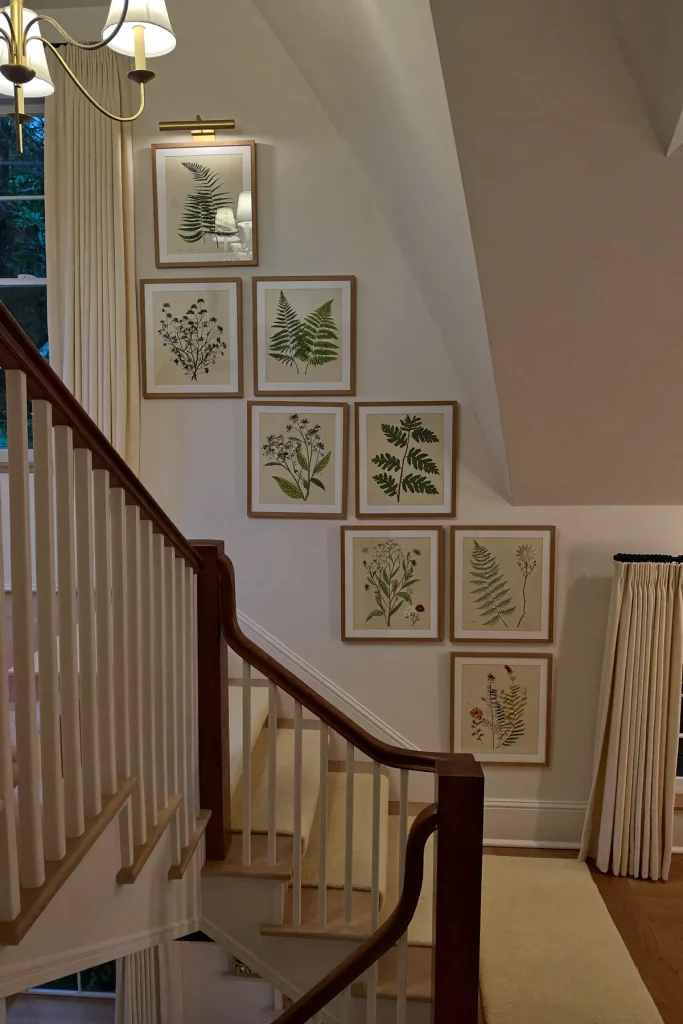
Attic stairwells often have one long, sloping wall that begs for something. A gallery of botanical prints, climbing at the same angle as the stair, is a calm and pretty answer.
Stick with a single theme (ferns, wildflowers, old seed-packet style art) and matching frames, like thin oak or simple black, so it feels collected rather than chaotic. Keep the bottom edge of each frame roughly the same distance above the stair nosing.
If you’ve wallpapered the stairwell like in idea 17, skip this one. Pick one or the other.
A picture light over the top frame adds a lovely glow in the evening, and makes the gallery feel like a real feature. 🖼️
Restore an Original Victorian Attic Stair
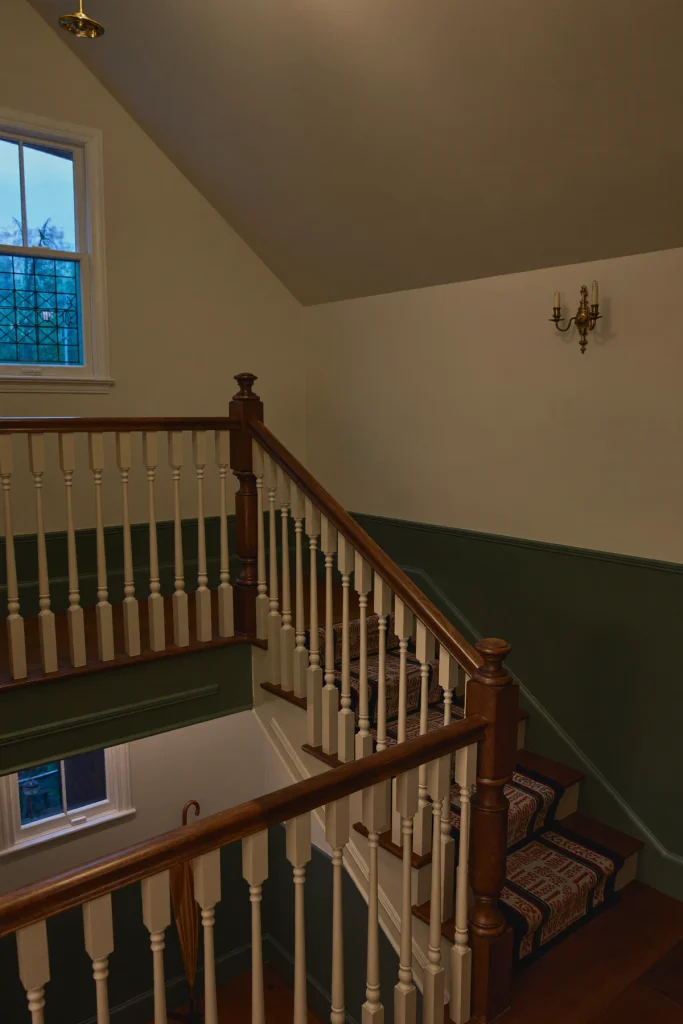
Some old houses have attic stairs that were simply neglected for decades: painted over five times, missing a baluster or two, with a newel post that wobbles. Don’t rip it out. Restore it.
Strip the handrail back to its original wood, replace missing turned balusters with matching replicas (many millwork shops can copy one from a sample), and tighten that newel properly. Paint the balusters a soft cream and leave the rail in warm stained wood.
It’s slow work, but there’s something special about climbing a stair that’s been carrying people up for a hundred years. Add a narrow wool runner and a small brass pendant at the top, and it’ll feel like the most loved part of the house.
What Most People Get Wrong
They treat the attic stair as less important than the main one and use cheaper, chunkier replacement parts. Matching the original profiles, even if it costs a little more, is what makes the restoration feel right.
Copy the Old Trim So a New Attic Stair Looks Original
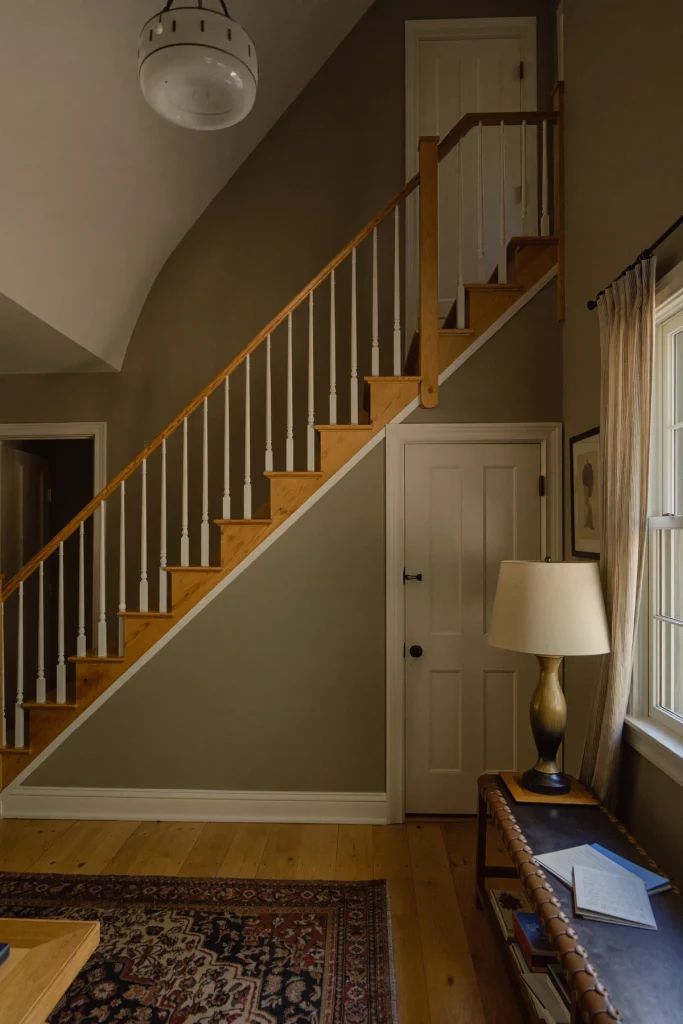
When you’re adding a brand-new stair for an attic conversion, the biggest giveaway is trim that doesn’t match the rest of the house. A sleek modern stair in a 1920s Craftsman bungalow can look like a stranger moved in.
The fix is to borrow from what you already have. Copy the baseboard profile, the door casing style, the wood species and even the stain color from your main floor. Use square Craftsman-style balusters if that’s what your porch has, or a simple tapered newel to echo your existing woodwork.
When it’s done well, guests will assume the attic was always finished. That’s the goal. 🪵
New stairs mean structural work, permits and inspections, so bring in your builder early and let them handle what your local code requires.
Before You Call the Contractor
- Photograph your existing trim, newels and casings
- Note the wood species and stain if you can
- Measure ceiling height where the stair will land
- Think about what the attic will be used for, since that affects code
Pour a Brutalist Concrete Stair Up to a Loft Studio
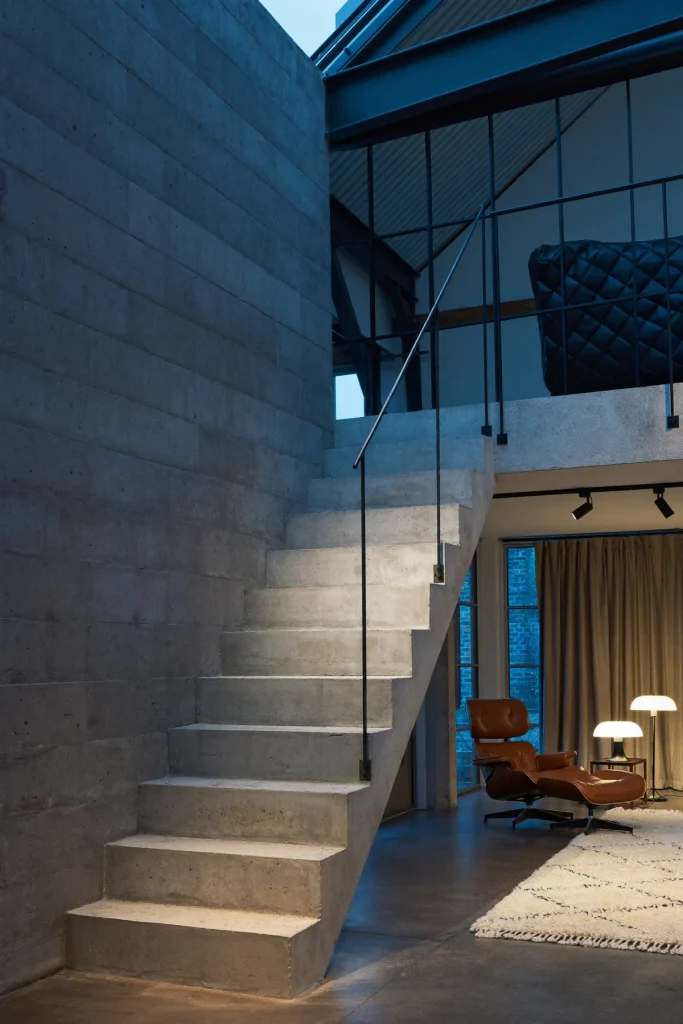
If you live in a warehouse loft or a very modern home, a raw concrete stair rising up to a loft studio under the roof is pure drama in the best way. Think chunky cast steps, a simple steel rail and a wall of smooth board-formed concrete.
The trick to keeping it homey rather than cold is softness everywhere else. A big wool rug at the base, linen curtains on the tall windows, a leather lounge chair and a couple of warm table lamps all bring it back to human scale.
Concrete is heavy, so this is a structural project with engineering, permits and a professional crew. Not a weekend idea.
But the result is a stair that feels like a piece of sculpture you get to walk on every day.
Myth-Buster
Concrete stairs aren’t automatically cold underfoot. Radiant heat, a sealed honed finish and a well-placed runner at the landing can make them surprisingly cozy.
Clad the Risers in Hand-Painted Tiles for a Maximalist Climb
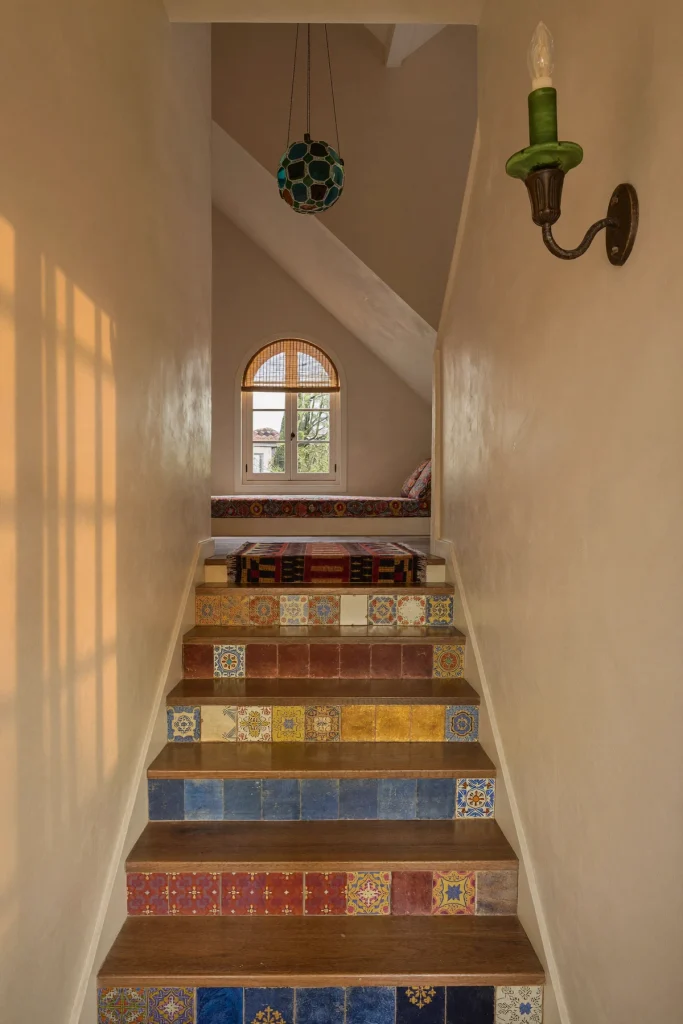
Tiled risers are one of my favorite ways to add color and pattern without touching the walls. On an attic stair, they turn a narrow climb into something joyful.
Go all in with a mix of hand-painted tiles: blue and white, terracotta and mustard, little florals and geometric stars, each riser different. Keep the treads in warm wood and the walls a simple cream so the tiles get all the attention.
Add a vintage kilim runner on the landing, a colorful glass pendant and a stack of patterned pillows on a window seat at the turn. It’s maximalist, but it’s maximalist with a plan. 🎨
Use a strong tile adhesive and grout suited to wood substrates, or hire a tiler, since stair risers flex a little with foot traffic. Cracked tiles on a stair are no fun.
Lacquer the Stairwell for Hollywood Regency Glamour
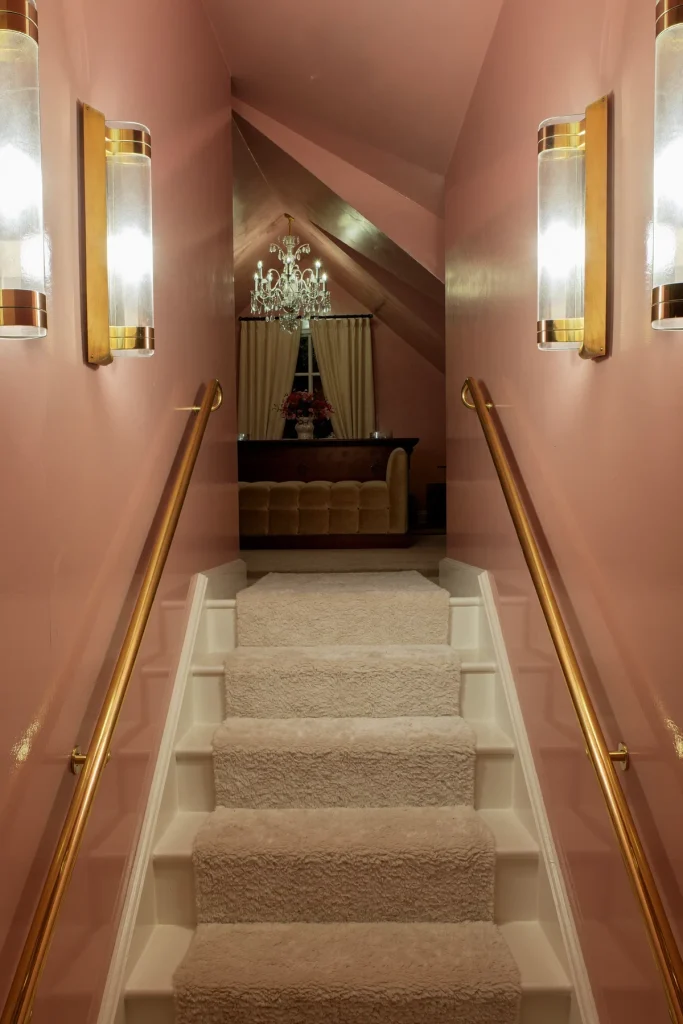
This one is for the woman who has always wanted a little Old Hollywood in her life. Paint the attic stairwell walls in a high-gloss lacquer, think blush pink, peacock blue or deep jade, and let it reflect every bit of light.
Add a polished brass handrail, a mirrored sconce or two, and a white-painted stair with a plush runner in a soft pink or cream. At the top, a tufted velvet bench under the slope finishes the scene.
High-gloss shows every bump in the wall, so it’s worth the prep: fill, sand, prime and sand again. Or hire a painter who specializes in lacquer finishes.
At night, with the sconces on, the whole stairwell glows like the inside of a jewelry box. 💎
Vibe Check
Glossy, glamorous, a little cheeky. If you’d happily wear red lipstick to the grocery store, this is your stair.
Carve a Mini Office Into the Top Landing
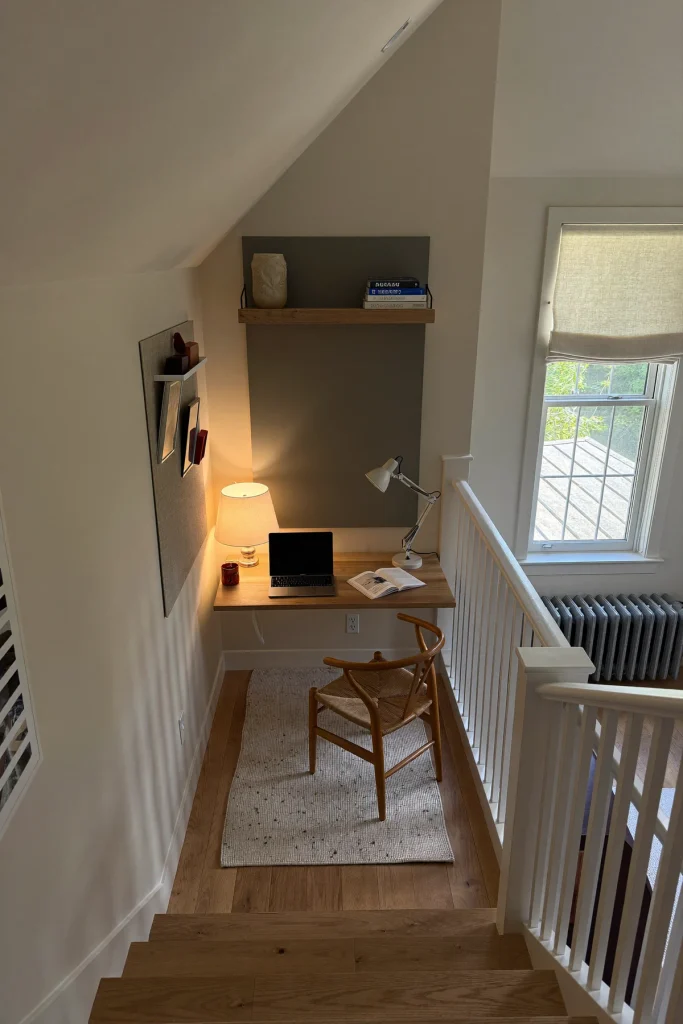
A wide landing at the top of an attic stair is prime real estate. Instead of leaving it empty, tuck a slim desk against the low wall under the slope, add a comfy chair and a swing-arm lamp, and you’ve got a little office with a view down the stair.
It’s ideal if the attic is a bedroom or a playroom and you need somewhere to work that’s a little apart from the main house. Close enough to keep an eye on things. Far enough to concentrate.
A small floating shelf above the desk and a pinboard in the same color as the wall keep it practical without clutter. Dress the window with a light linen shade so you get daylight without glare on the screen.
Add a railing or half wall along the open edge of the landing if you don’t have one. Safety first, desk second. 💻
Welcome Guests With a Little Landing Station at the Top
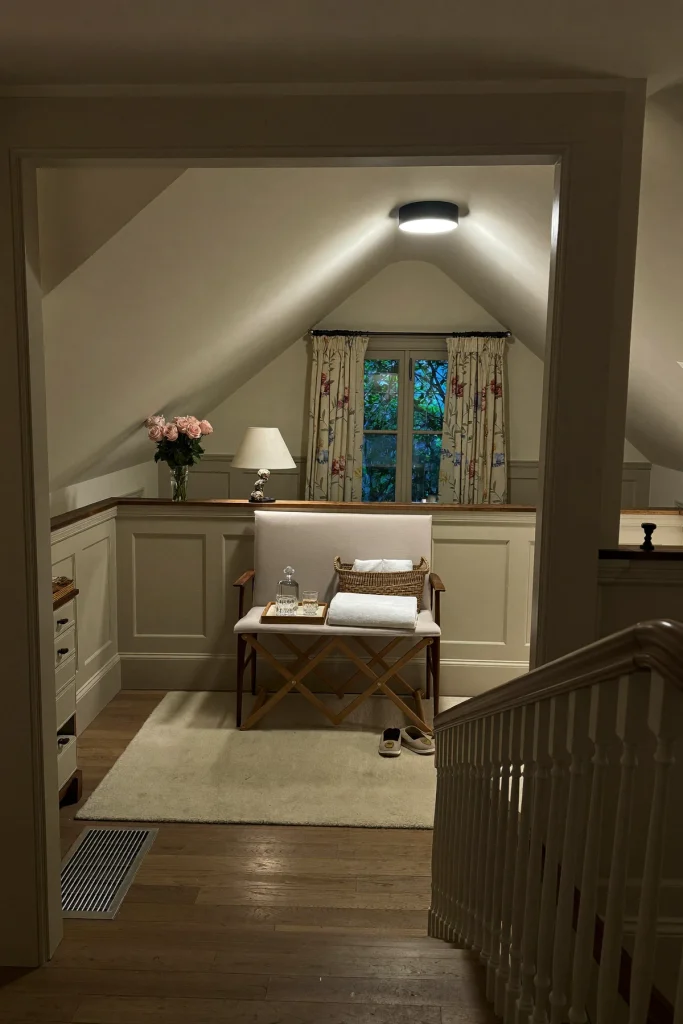
If your attic is a guest suite, the top of the stair is where your welcome starts. Set up a small station right where guests arrive: a slim bench, a folding luggage rack, a basket of fresh towels and a little tray with a carafe and two glasses.
It’s thoughtful, but it’s also practical. Nobody has to drag a suitcase across the room, and nobody has to come back downstairs for a towel at midnight.
A soft rug, a table lamp left on low and a small vase of flowers make it feel like you planned for them, because you did. If you’ve got room, the daybed idea from idea 9 makes a perfect companion.
And yes, a pair of cozy slippers on the bench is a sweet extra. 🛏️
Fit a Safety Gate That Matches the Woodwork at the Top
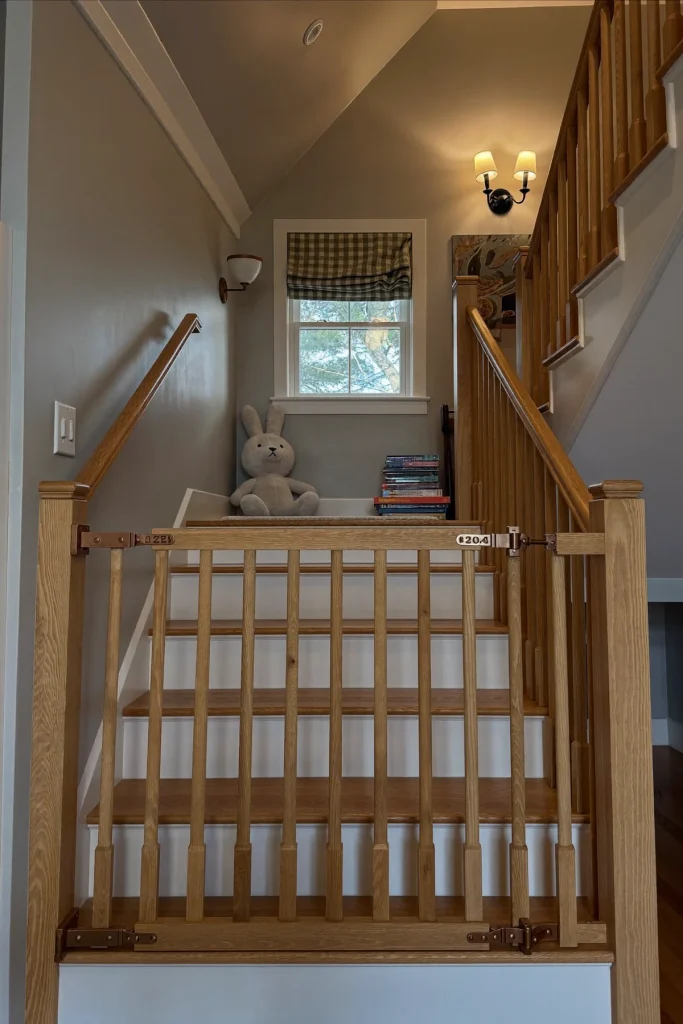
A steep attic stair and a crawling baby (or a curious puppy) don’t mix. A safety gate at the top is a must, but it doesn’t have to look like a plastic eyesore.
Look for a hardware-mounted wooden gate in a finish that matches your stair, like natural oak, painted white or a soft stained walnut. At the top of a stair, always choose hardware-mounted rather than pressure-mounted so it can’t be pushed out.
Some carpenters will build a custom gate with the same balusters as your railing, which looks completely built-in. Pricier, but beautiful. Either way, it should swing away from the stair, never over it.
Pair it with a small rug at the top for little knees and you’re set.
Cost Breakdown
| Option | Typical range |
|---|---|
| Basic hardware-mounted wood gate | Around $60 to 150 |
| Premium wood or metal gate | Around $150 to 300 |
| Custom carpenter-built gate | Around $400 to 1,200 |
The View From the Top Step
An attic stair doesn’t have to be the forgotten part of the house. With a little paint, some light and a few thoughtful details, it can be the climb you look forward to, the one that ends in your favorite room.
Start with one idea that fits your home and your budget. Maybe it’s fresh paint on the treads this weekend. Maybe it’s a skylight next spring. Either way, you’ll notice the difference every single time you head up.
And when someone stops halfway up the stairs and says, “Wait, when did you do this?” Take the compliment. You earned it. 💛
