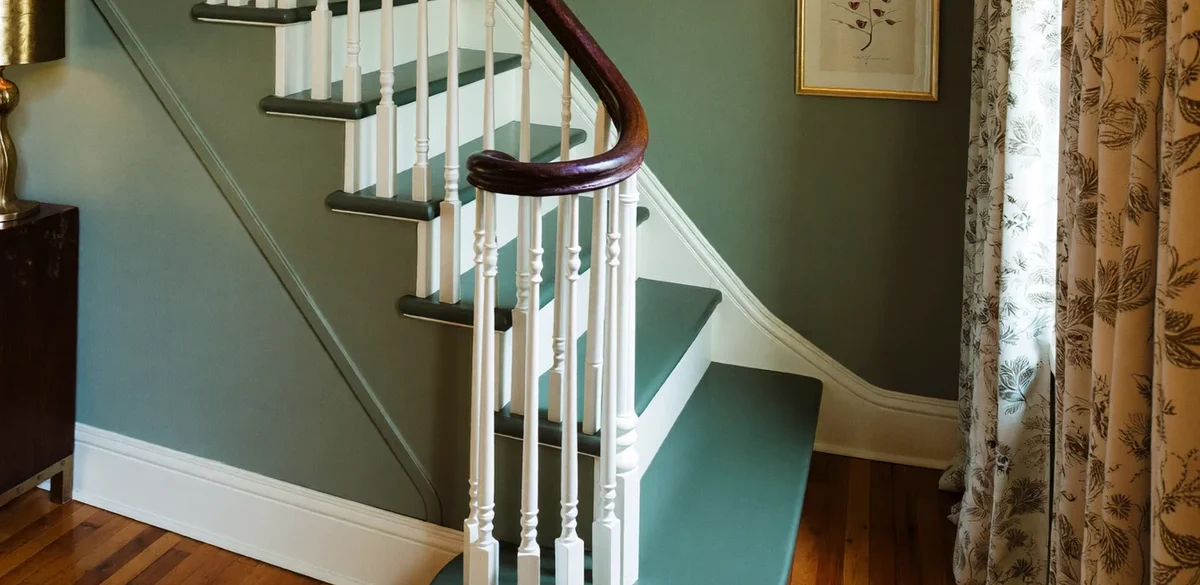
Most staircases get the leftover paint. Whatever white was on sale, a dab of the hallway color, done. I get it. Stairs feel like a pass-through, not a room. But you climb them ten, twenty times a day, and that’s exactly why they deserve a little love.
Green is my favorite answer. It feels like stepping out into the garden, even in February. Sage calms a busy entry, olive warms up cold light, emerald adds a bit of drama after dark, and mint makes a tight stairwell feel like it can breathe. 🌿
These green staircase ideas cover every shade and every budget, from a single coat on the risers to a stairwell painted top to bottom. Pick one, pick five, mix and match. Your stairs are about to become the prettiest walk in the house.
Paint the Risers a Soft Sage
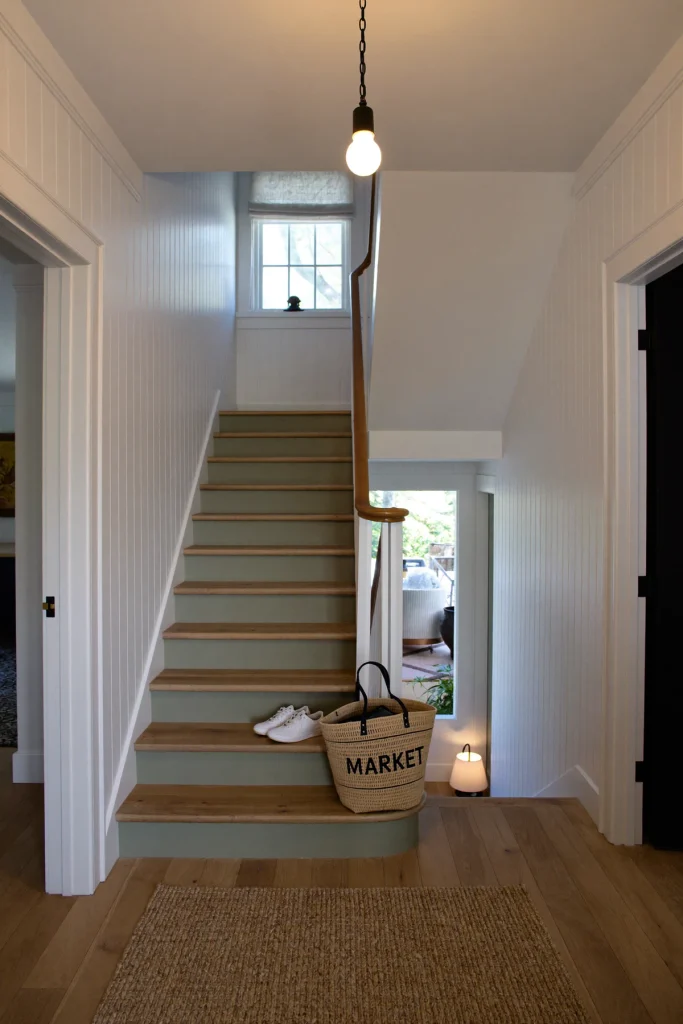
If you only try one thing, start here. Leave the treads in their natural wood and paint just the risers, the vertical part of each step, in a soft sage green.
It’s the easiest way to test green without committing a whole wall to it. The wood keeps things warm, the sage adds a quiet stripe of color every time you look up the stairs, and the whole look feels fresh rather than loud.
Use a durable satin or semi-gloss enamel. Risers take a beating from toes and vacuum heads, and a wipeable finish saves you touch-ups.
Micro-Tip
Paint every other riser first, let it dry overnight, then do the rest. You can still use the stairs the whole time.
Dip the Whole Staircase in Forest Green
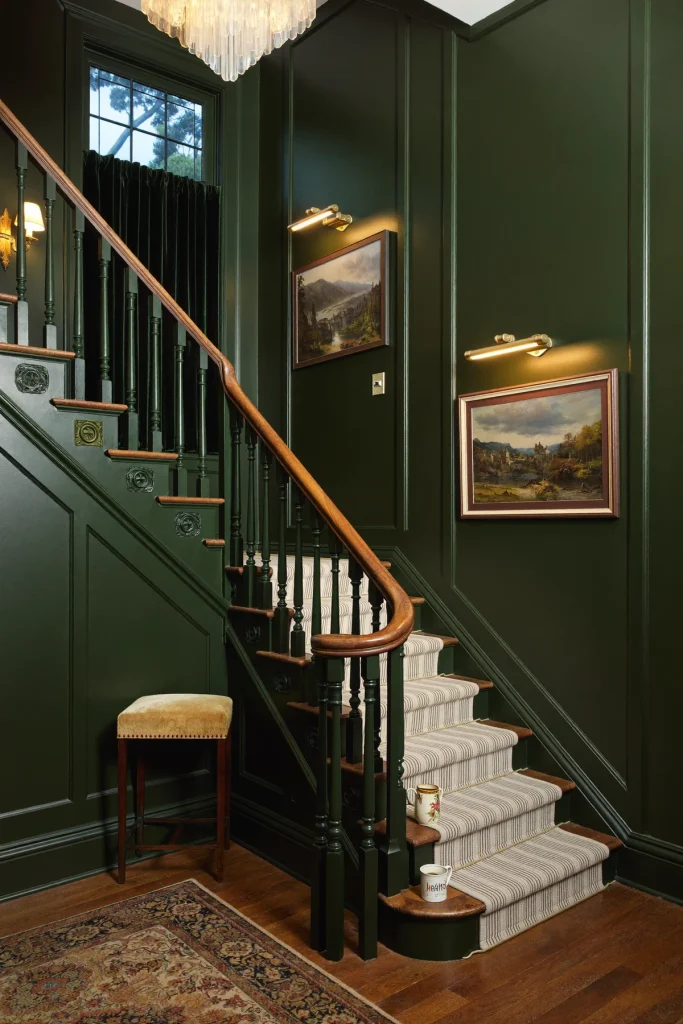
Color drenching sounds scary. It isn’t. You paint the walls, the stringer, the spindles, the handrail and the trim all in the same deep forest green, and suddenly the stairwell feels wrapped and cozy instead of chopped up.
It works especially well in older homes with lots of trim, because all those fussy moldings stop competing and start looking rich. Keep the treads wood or add a runner so it doesn’t feel like a cave. 🌲
Warm bulbs are a must. Forest green under cool light can turn gray and flat.
Sheen Guide
| Surface | Best finish |
|---|---|
| Walls | Matte or eggshell |
| Trim and stringer | Satin |
| Handrail and spindles | Semi-gloss |
| Painted treads | Floor enamel |
Color the Spindles Mint Against Natural Oak
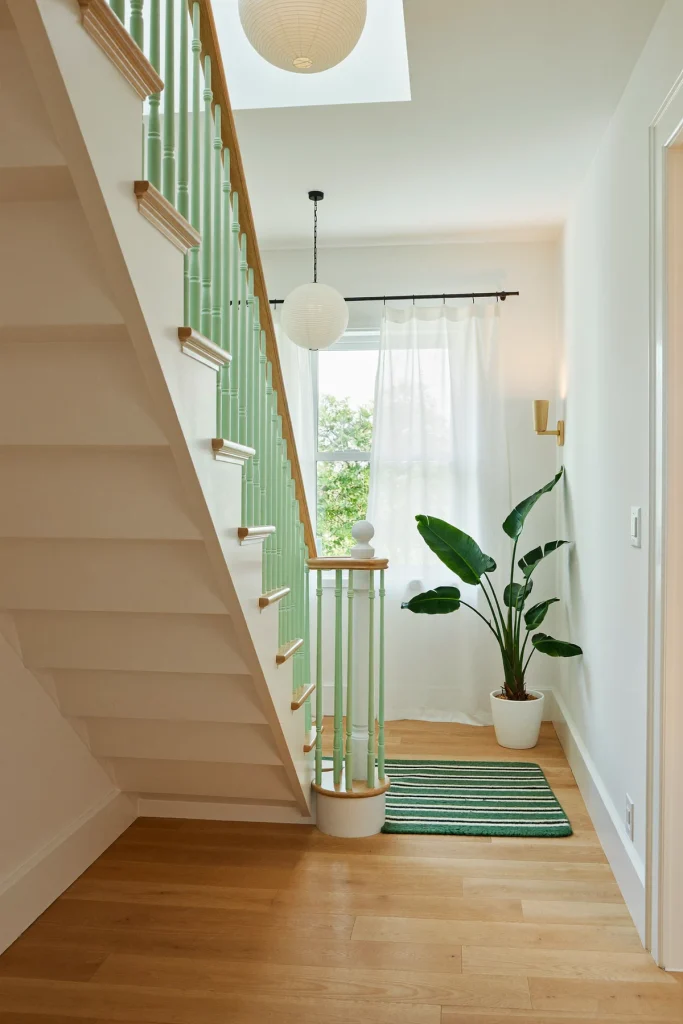
Here’s a playful one. Keep the handrail and treads in pale oak and paint only the spindles a fresh mint green. It reads Scandinavian, a little bit cheerful and very light on its feet.
Mint works best in a bright hall with white walls. The spindles become a row of soft color that catches the eye without taking over the room, and they look especially sweet against a white-painted newel post.
Prep matters. Sand lightly, use a bonding primer, then two thin coats with a small angled brush.
Why It Works
Spindles repeat. Any color you put on them becomes a rhythm, so even a pale shade like mint gets noticed without needing to be bold.
Lacquer the Newel Post and Handrail Emerald
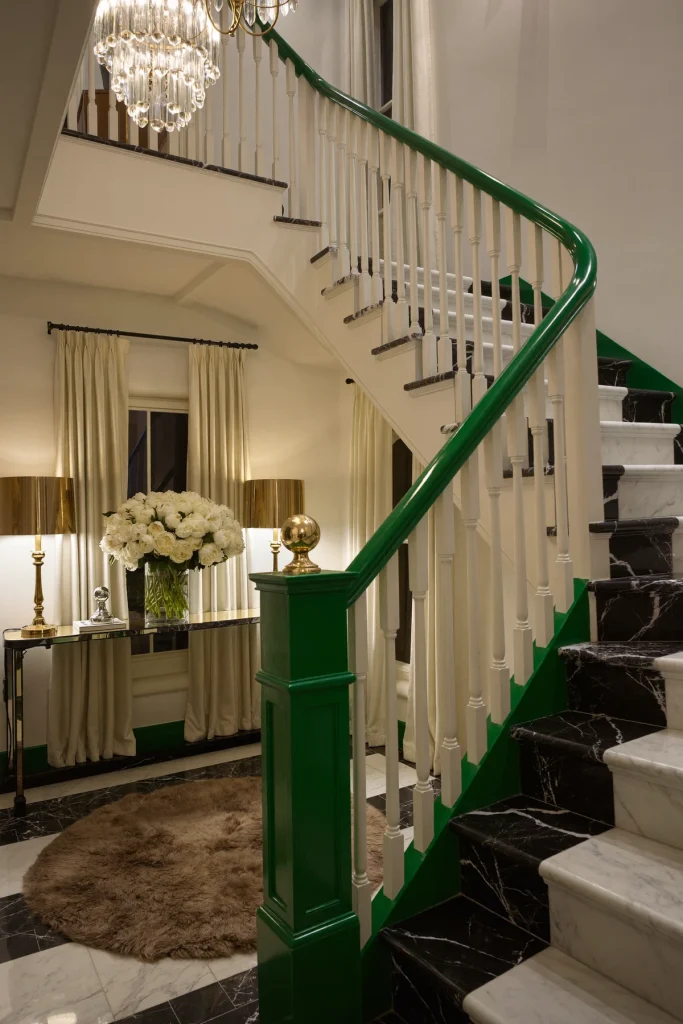
Want a little glamour? Paint the newel post and handrail a high-gloss emerald and leave the rest of the staircase white. It’s jewelry for your stairs. ✨
This Hollywood Regency trick looks best with a few brass touches nearby, like a brass finial cap, a mirrored console at the bottom or a glamorous little chandelier overhead. The glossy green bounces light around and looks almost wet in the evening.
High gloss shows every bump, so sand the rail smooth first. Your hand will feel the difference every time you head up to bed.
Tile the Risers in Green Zellige
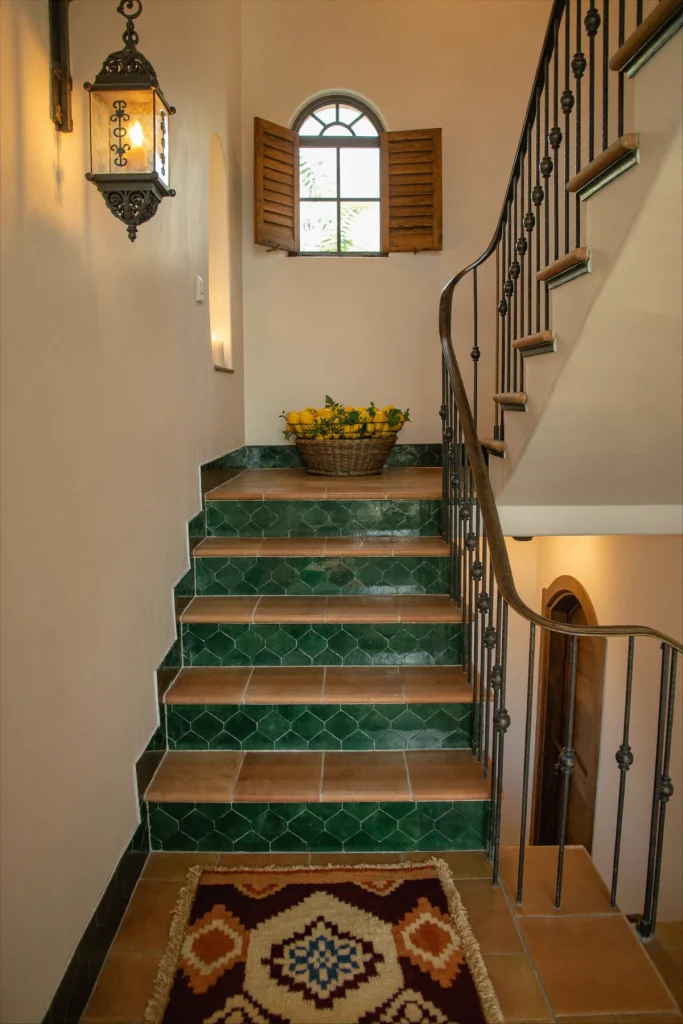
Handmade green tiles on the risers make a staircase feel like it belongs in a sunny Spanish Colonial home. Every tile is slightly different, so the glaze shimmers in shades from bottle green to seafoam.
Pair the tile with terracotta or dark wood treads and keep the walls a creamy white plaster. A wrought-iron rail finishes the look.
Tile only the risers, never the treads. Glossy tile underfoot is slippery, and nobody needs a tumble on the way to breakfast.
Budget Alternatives
- Peel-and-stick tile decals in green, around $30 to 60 for a short run of stairs
- Hand-painted stencils on painted risers
- Machine-made green subway tile instead of handmade zellige
Lay an Olive Wool Runner Over Pale Oak Treads
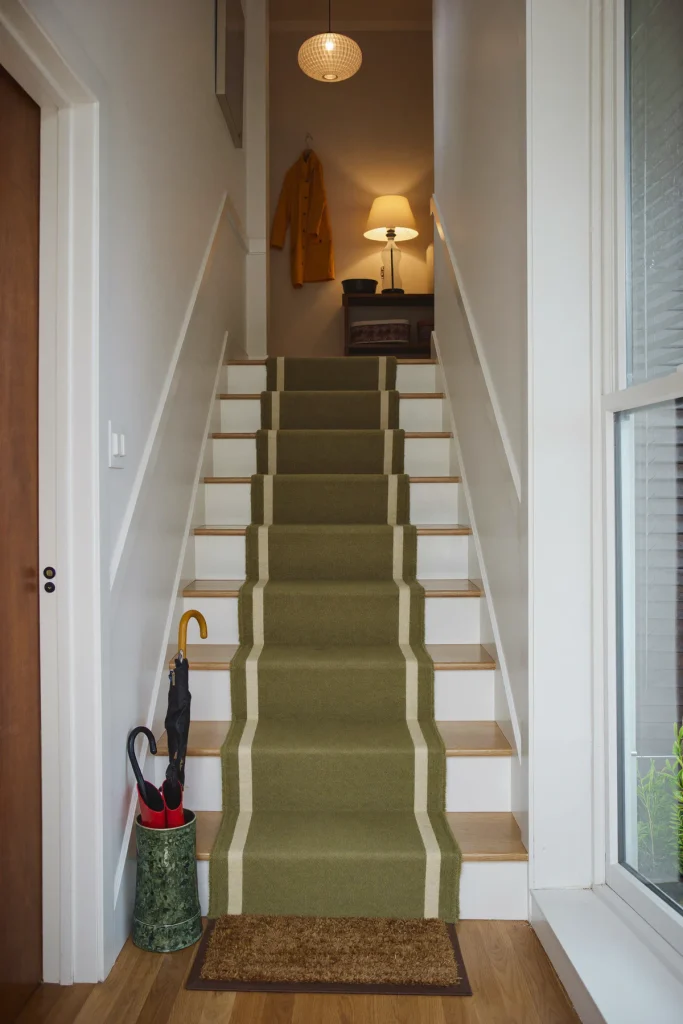
Not ready to paint? Let the runner bring the green. An olive wool runner with a narrow cream border looks tailored and earthy against pale oak, and it softens footsteps in a busy house.
Wool is worth it here. It’s tough, it bounces back and it hides the odd muddy paw print better than synthetics do. 🐾
Choose a flat weave or low pile so heels don’t catch. Then match a few accents at the bottom, maybe a green ceramic umbrella stand or an olive throw on the bench by the door.
Paint the Stairwell Ceiling Pistachio
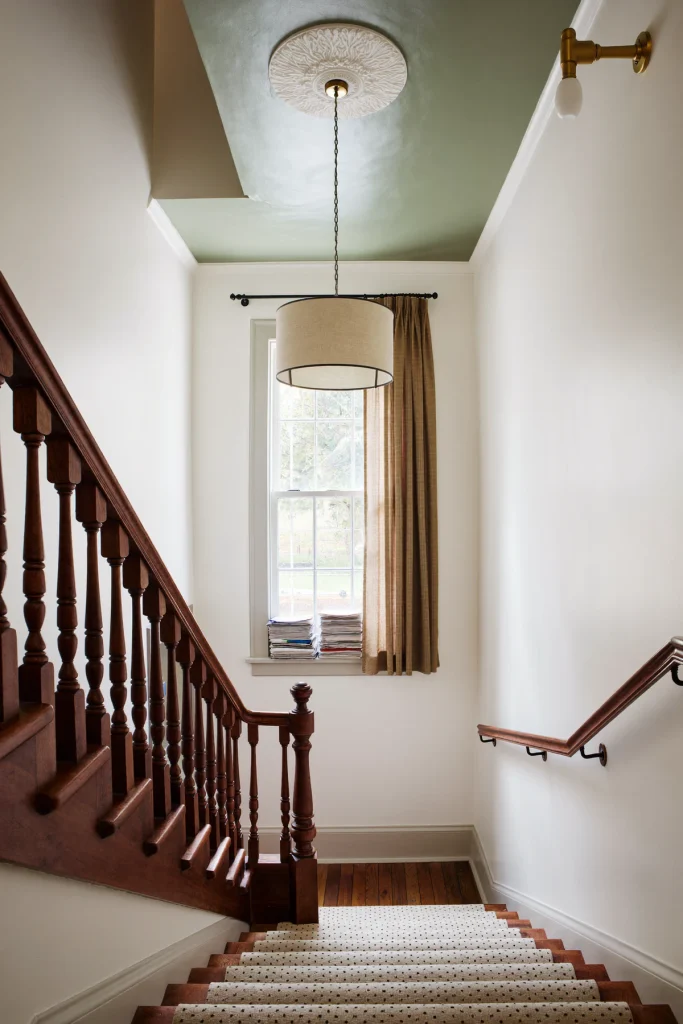
We forget the ceiling. In a stairwell, though, it’s the thing you see most as you climb. Paint it a soft pistachio and leave the walls white, and the whole stair feels sunlit and a little whimsical.
This is a great move for a tall, narrow brownstone stair where the walls already have plenty going on. The green overhead adds color without crowding you.
Bring a pendant or flush mount with a pretty shade into the picture. It gives the ceiling a focal point. ☁️
The Psychology Behind It
Pale greens read as calm and restorative to most people. Overhead, they feel a bit like a canopy of leaves, which is why a green ceiling makes a stairwell feel gentler.
Pair Hunter Green With Warm Walnut
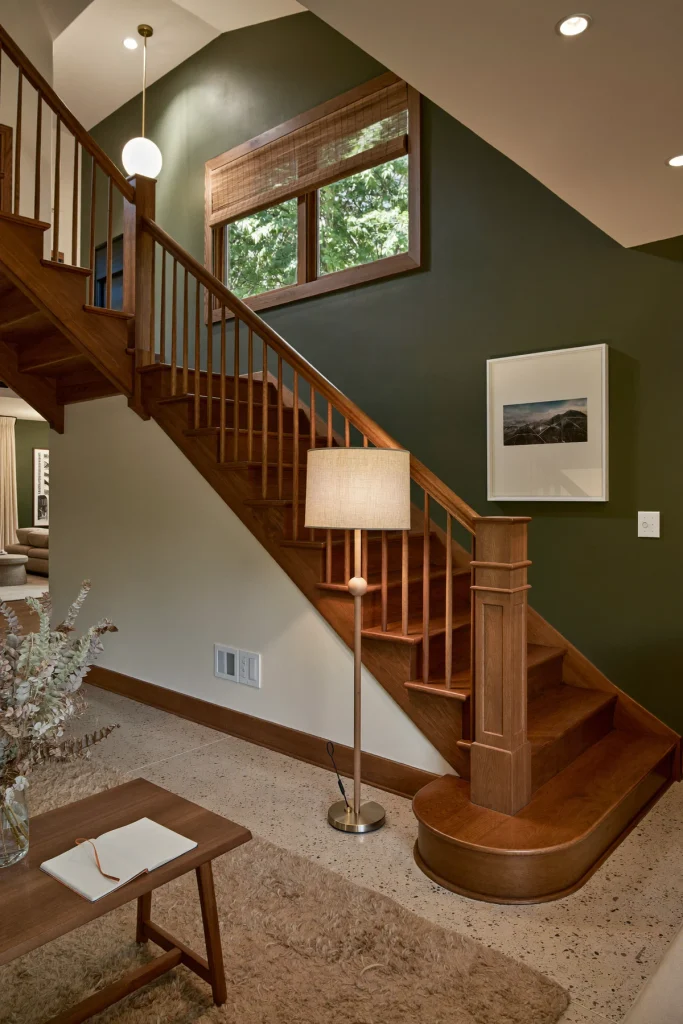
Hunter green and walnut are an old-school pairing that feels right again. Paint the stair wall or wainscot hunter green and let rich walnut treads and handrail carry the warmth.
It’s a great fit for a mid-century ranch or any home with lots of wood already. The green makes the walnut glow, and the walnut keeps the green from feeling too serious.
Add one warm floor lamp at the bottom and a small vase of something dried on the first landing. At night it’s the coziest corner in the house. 🍂
Split the Stair Wall Into Two Greens

Run a chair rail along the staircase and paint the lower half a deeper moss green and the upper half a pale celadon. Two greens, one wall, and suddenly a plain stair looks considered.
The darker shade at the bottom hides scuffs from bags, kids and the vacuum. The lighter shade above keeps the stairwell bright and airy.
Follow the angle of the stairs with the chair rail so the line stays parallel to the treads. It looks crisp and tailored, and it works beautifully in a classic colonial.
Color Swap
| Lower half | Upper half |
|---|---|
| Moss green | Celadon |
| Forest green | Warm white |
| Olive | Oat or linen |
| Emerald | Pale blush |
Wrap the Stairwell in Leafy Green Wallpaper
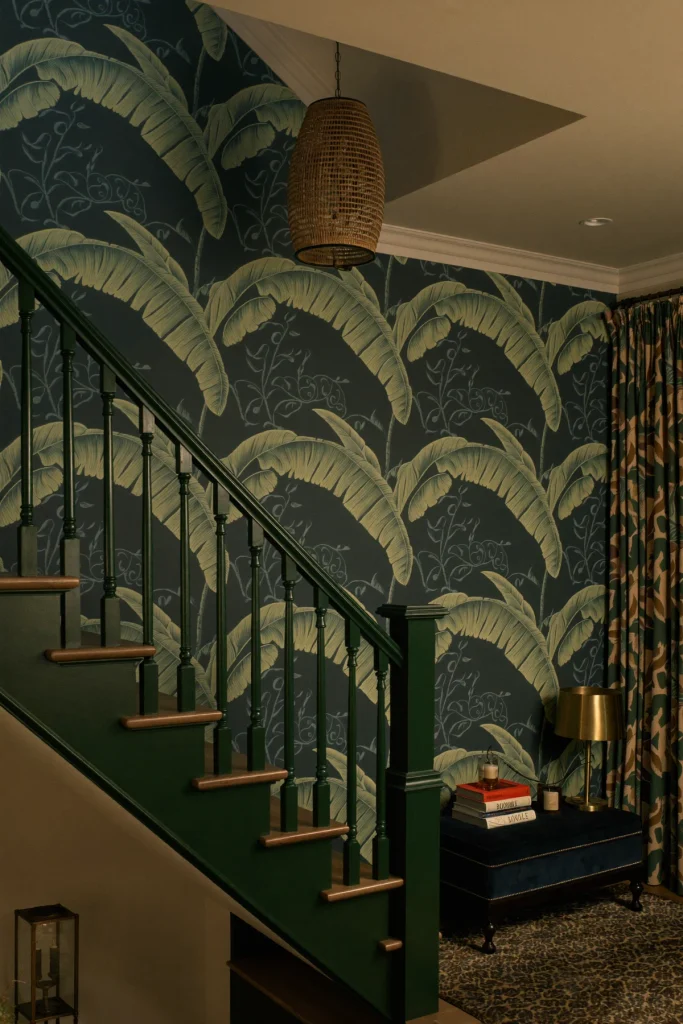
If your heart beats a little faster for bold rooms, this is your idea. Cover the stair wall in a big-scale botanical wallpaper, think banana leaves or climbing vines on a deep green ground, and let it be the main event.
A stairwell is actually a smart place to go big. You pass through it, so it never gets tiring, and the tall wall shows off a large pattern in a way a small room can’t. 🌴
Paint the stringer and spindles a matching dark green so the paper is the star. Choose a scrubbable vinyl or a washable paper, since hands will touch it all day.
Mix Moss Green With Blush Pink
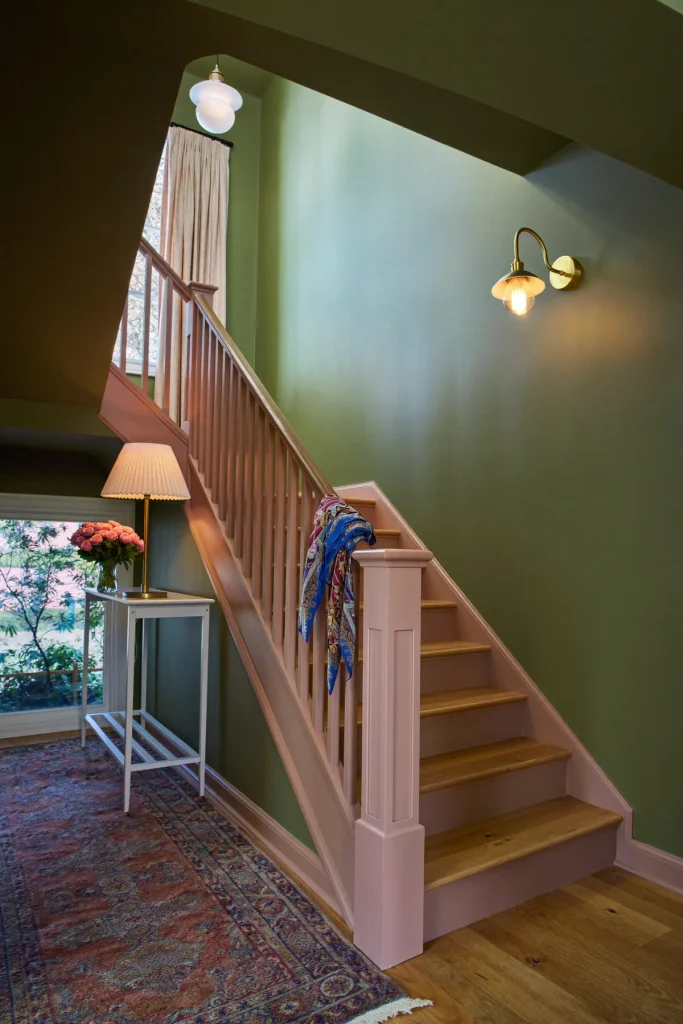
Green and pink are cousins on the color wheel, and together they feel romantic and grown-up at the same time. Try moss green on the stair wall with blush pink painted on the risers, or flip it: blush walls with a moss green runner.
The trick is choosing muted versions of both. A dusty, earthy moss and a pink with a little beige in it look calm and sophisticated. Bright kelly green and bubblegum pink tend to look like a nursery.
Pull the pair together with warm brass and natural wood. A brass sconce on the landing and a blush lampshade make it feel finished. 🌸
Vibe Check
Soft, a little vintage and very pretty. Think English garden in late spring, not candy shop.
Go Bold With Black Treads and Emerald Walls
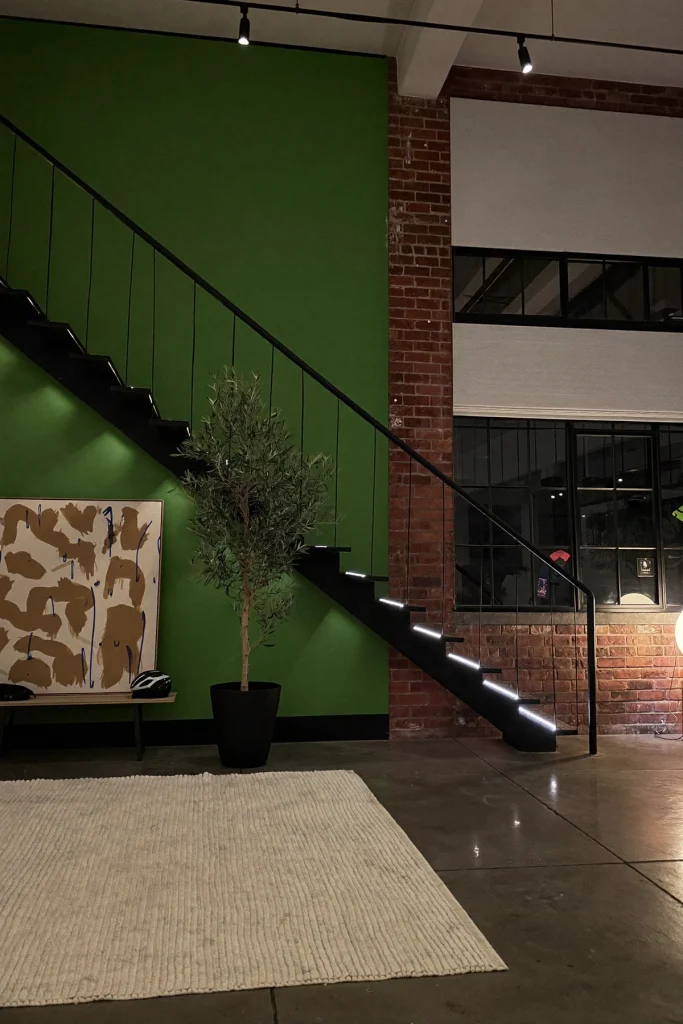
For a loft or a modern home with a steel stair, emerald walls behind black treads make a strong, graphic statement. The black keeps it modern, the emerald stops it from feeling cold.
This combination loves texture. Think a limewashed emerald wall that has soft movement in the color, or a glossy lacquer that reflects the lights at night. Either way the black stair reads like a sculpture against it.
Keep accessories minimal: one tall plant, one big piece of art and a good light. LED strips under the treads or along the wall make the stair glow after dark and help anyone heading down for a midnight glass of water. Too many props would muddy the contrast, so let the color do the work. 🖤
Anchor a Forest Green Runner With Brass Stair Rods
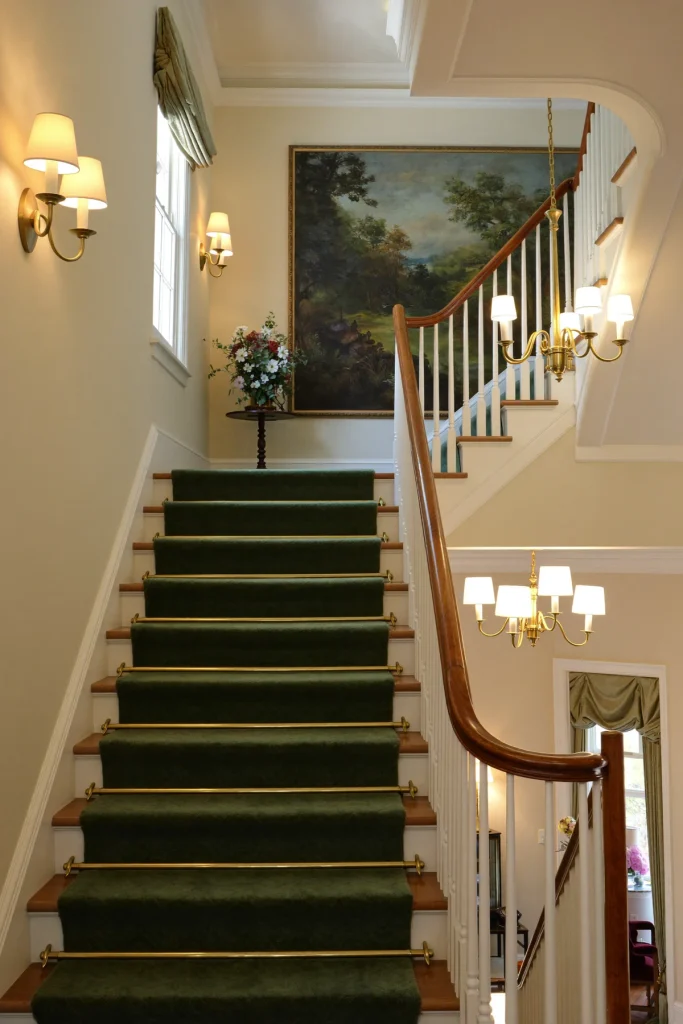
This is the classic, grand version of a green runner. A deep forest green runner held in place with polished brass stair rods looks timeless on a wide, traditional staircase.
Rods are mostly decorative these days since the runner is tacked or stapled underneath, but they add sparkle at every step and catch the light from a chandelier above. Choose a runner with a subtle pattern, like a small herringbone or a fine border, so foot traffic and pet hair don’t show as quickly.
Keep the walls a warm white or soft cream and frame a large landscape painting on the landing. A pair of brass sconces mirrors the rods and ties it all together.
Paint the Stringer a Contrasting Olive
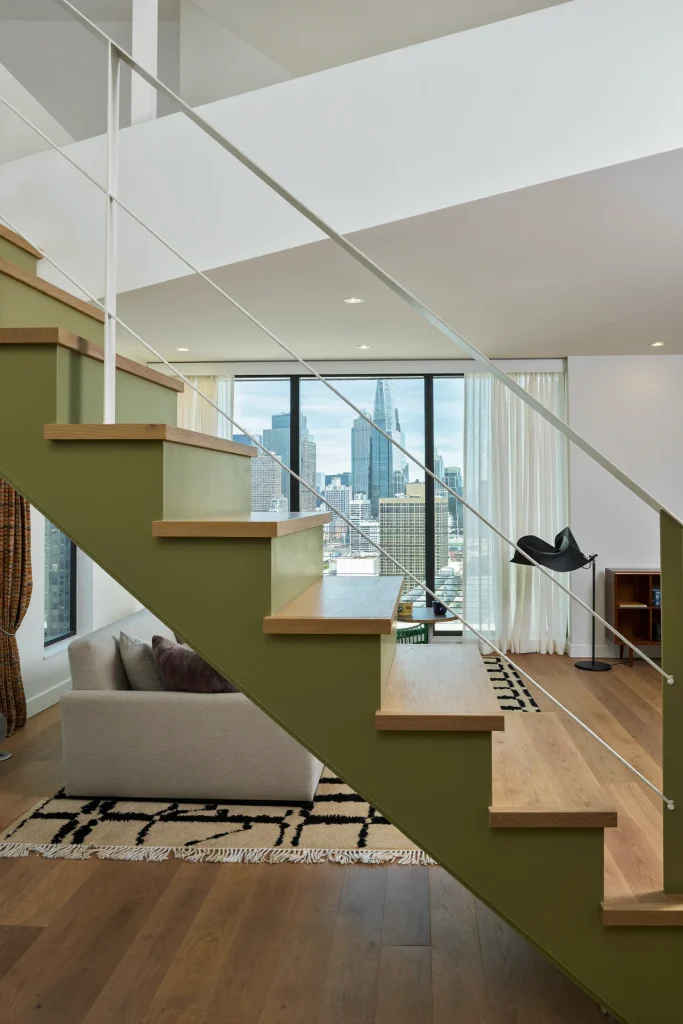
The stringer is the long board that runs along the side of the staircase, right where the treads meet the wall. Painting just that board olive gives a white stair a fine, graphic outline.
It’s subtle, which is the point. The olive line traces the shape of the stairs and draws the eye up, and it looks especially sharp in a modern duplex apartment or any home with clean lines and lots of white.
If you have an open stringer, where you can see the step profiles, paint the zigzag edge too. It turns into a crisp sawtooth pattern of olive against white.
Tape carefully along the wall and treads with a delicate-surface painter’s tape. Clean edges make this idea.
Light a Green Stairwell With Brass Picture Sconces
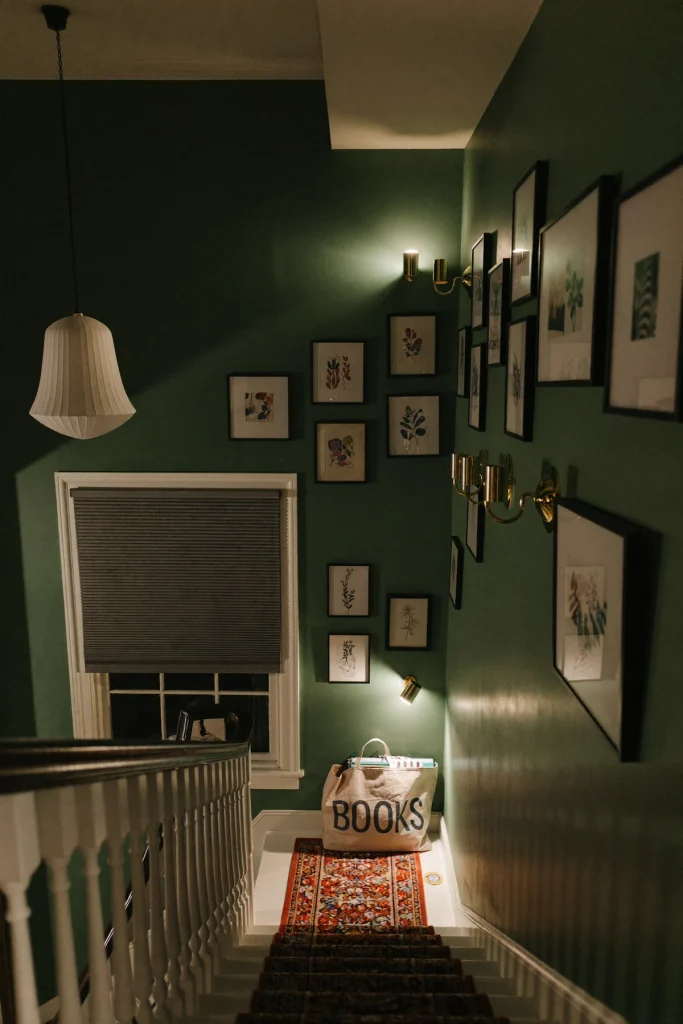
A dark green stairwell can look a little gloomy at night unless you plan the lighting. My favorite fix is a row of small brass picture lights or wall sconces stepping up the wall with the stairs.
The warm pools of light make deep green look like velvet. Hang a few framed botanical prints or small paintings under them and the climb starts to feel like walking through a quiet little gallery.
Plug-in or battery sconces work if you can’t run new wiring, which makes this renter-friendly. Hide cords with paintable cord covers in the same green as the walls.
Space the lights evenly along a line parallel to the handrail. Uneven spacing is the first thing your eye notices on a staircase. Pair this with the forest green drench from idea 2 and you’ll want to sit on the steps with a cup of tea.
Rule of Thumb
Mount sconces around 5 to 6 feet above the tread directly below, and space them evenly so the light steps up with the stairs.
Clad the Stair Wall in Olive Beadboard
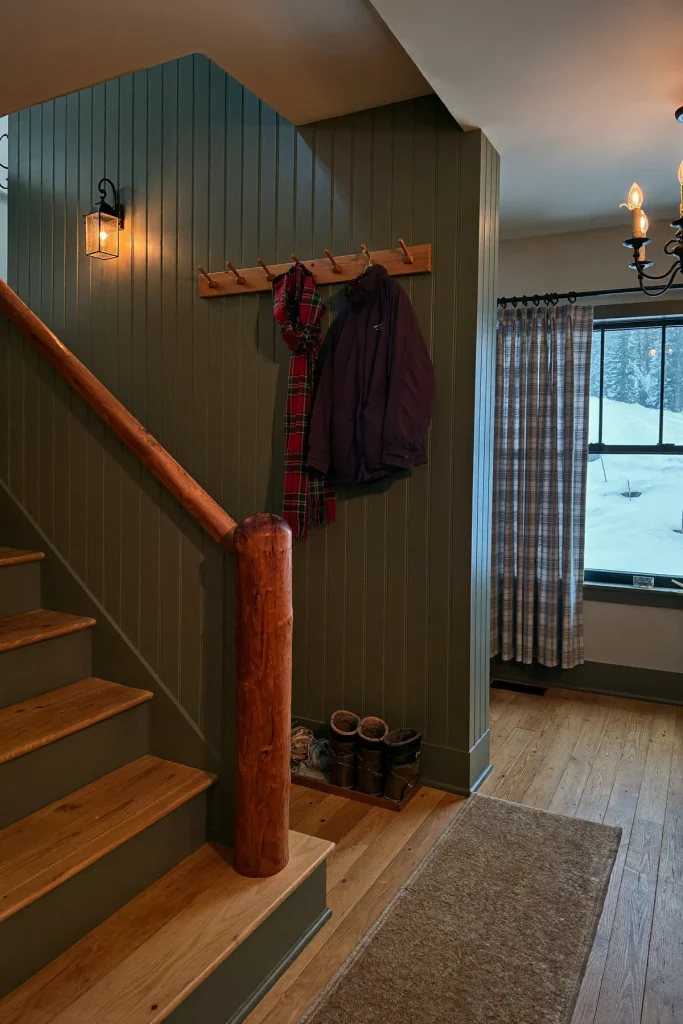
Beadboard brings instant cabin charm, and painting it olive makes it feel rich instead of cutesy. Run it floor to ceiling along the stair wall in a mountain home or chalet, and the stairwell turns into the coziest part of the house.
Olive is a perfect partner for knotty pine or rustic oak treads. It picks up the warm yellow in the wood and makes both look more expensive.
Add pegs or hooks at the bottom for coats and scarves, and a bench or boot tray beside the first step. In snowy months that little corner works overtime, and the olive hides drips and splashes better than white ever could.
Choose a satin finish so the grooves wipe clean. Dust collects in beadboard lines, and a quick swipe with a damp cloth every few weeks keeps it fresh. Use the same olive on the window trim nearby to make the whole space feel designed.
Create an Art Deco Moment in Emerald and Gold
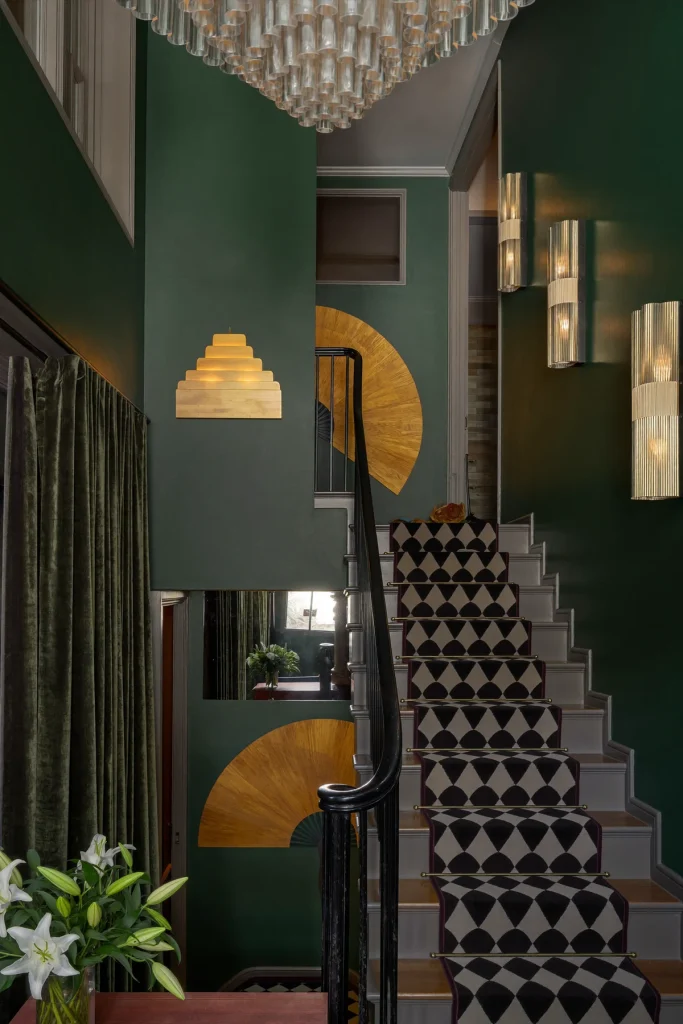
Go all in on glamour with emerald walls, gold accents and geometric shapes. Paint the stairwell a deep emerald, then add a gold-painted fan or sunburst motif at the landing, a fluted brass light and maybe a mirrored panel at the bottom.
Art Deco is all about symmetry and strong lines, so a straight staircase is the perfect canvas. A black-and-white geometric runner or black lacquered handrail sharpens it even more.
It’s bold and theatrical, but the green keeps it from feeling cold. At night, under warm light, it glows like a jewel box. ✨
Pick one or two Deco moments rather than ten. The fan motif and one statement light are enough to set the mood. Everything else can stay simple, so it still feels like a family home and not a hotel bar. Remember the glossy emerald rail from idea 4? This is its bigger, bolder sister.
Turn the Under-Stair Nook Into a Deep Green Hideaway
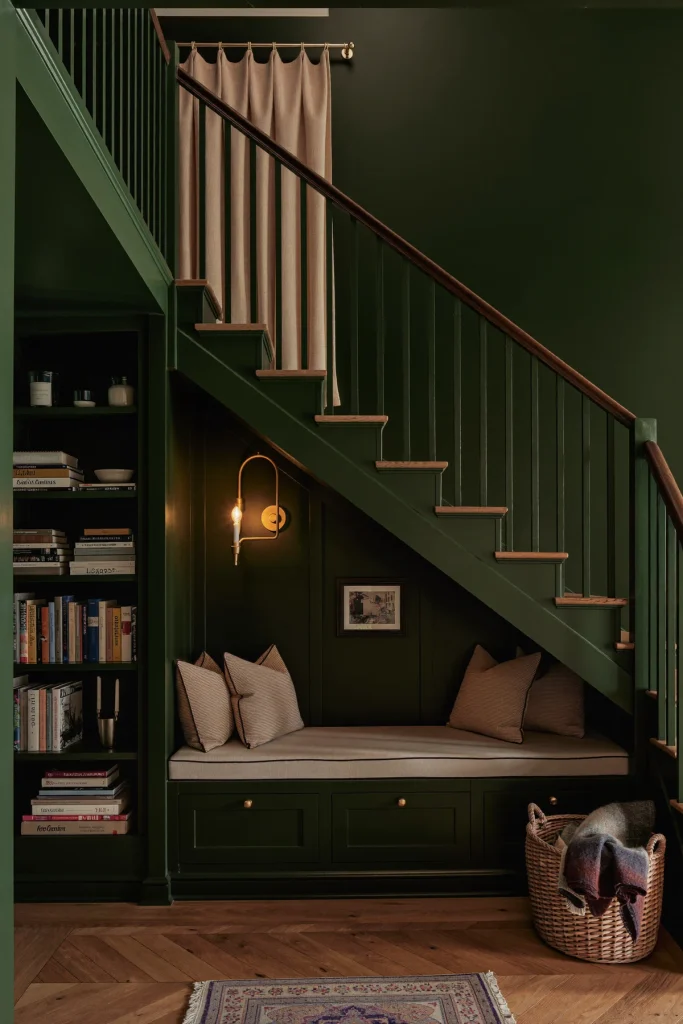
That odd space under the stairs is begging for color. Paint the walls and ceiling of the nook a deep forest green and build in a cushioned bench, a few shelves and a small wall lamp. Now it’s a reading corner, a phone-call spot or the place the kids beg to sit.
Dark green makes a small nook feel intentional and snug rather than cramped. Keep the cushion lighter, maybe oat linen or a soft check, so it stands out.
A swing-arm sconce or picture light gives you a pool of reading light, and a basket under the bench holds blankets or toys. Hang a small curtain on a tension rod if you want it to feel like a secret hideout.
Run the same green up the stair wall, or just keep it inside the nook as a surprise you discover from the hall. Either way it turns wasted space into everyone’s favorite corner. 📚
Hang Botanical Prints Above Sage Green Treads
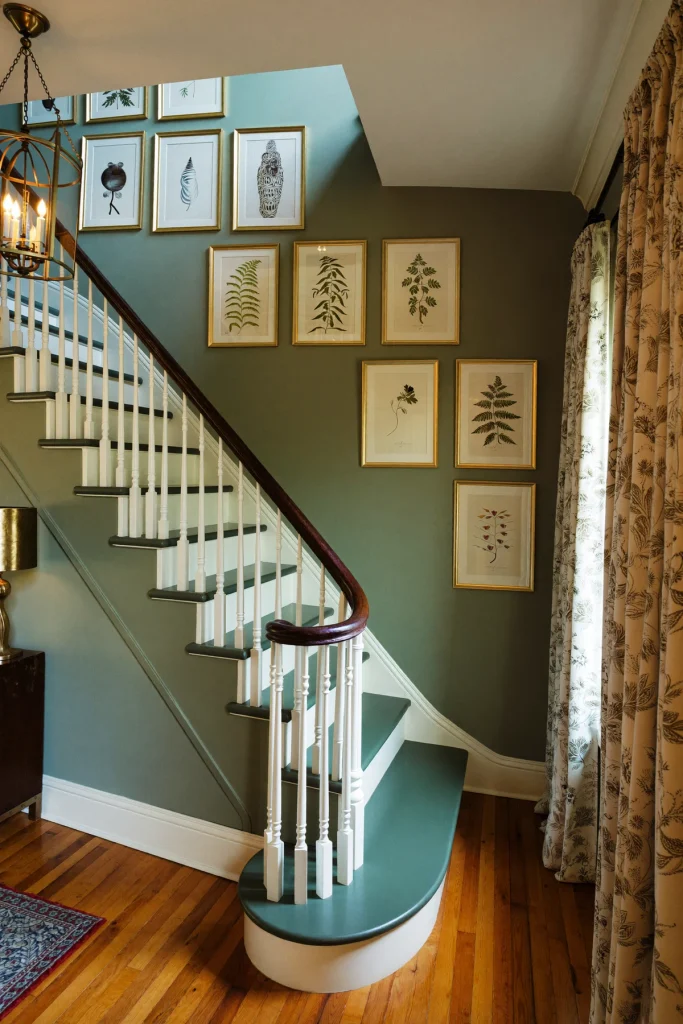
Painted sage treads with crisp white risers feel fresh and a little Southern. Make it even prettier by hanging a gallery of botanical prints up the stair wall.
Choose prints in green and cream so they talk to the treads: ferns, herbs, leaves, a few pressed-flower frames. Matching thin wood or gold frames keep it calm even with a dozen pieces.
Lay the arrangement out on the floor first, then mark the stair angle on the wall with painter’s tape and hang the frames along that line. The centers of the frames should follow the slope of the stairs, roughly at eye level as you climb.
Use picture hangers with two hooks per frame so nothing tilts every time someone thunders up the stairs. Seal painted treads with a floor-grade clear coat, and add clear grip strips if socks slip.
Pull Quote
“Treat the staircase wall like the side of a garden path. Something green to look at every few steps.”
Paint a Sage Arch on the Landing Wall
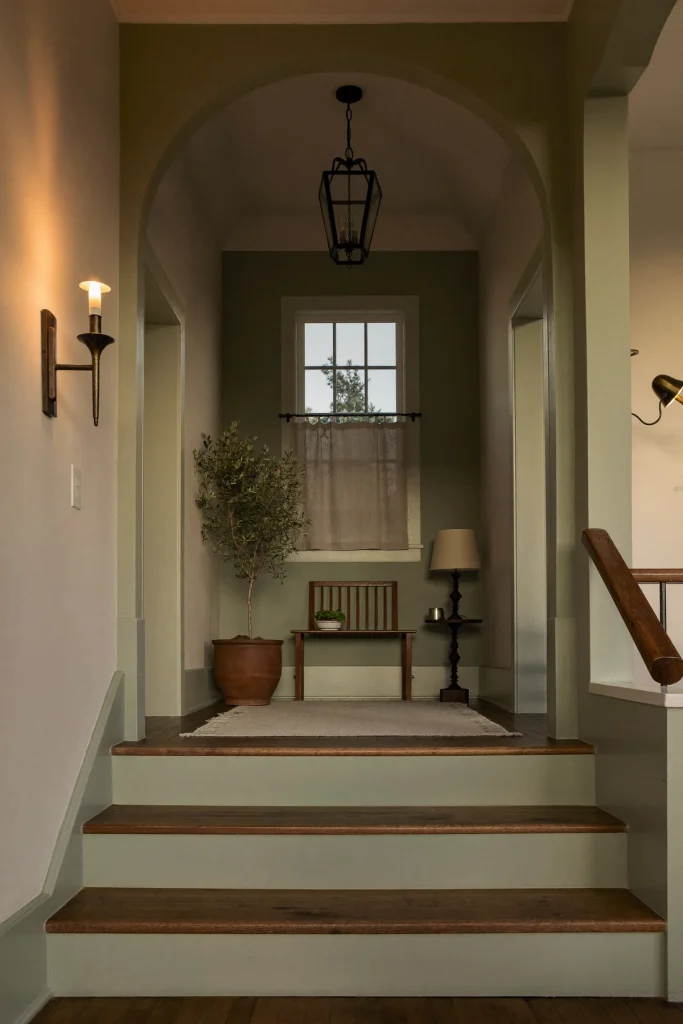
Painted arches are the easiest architecture you’ll ever add. Draw a tall arch on the landing wall and paint it sage green, and suddenly the stairs climb toward something beautiful.
It works with almost any style, but it feels especially lovely with Mediterranean-inspired touches: limewashed walls, a terracotta pot, a small iron sconce and an olive tree or two in the corner.
To draw a clean curve, tie a pencil to a string, pin the other end at the center point and swing it like a compass. Tape the straight sides, then paint the curve freehand with a small angled brush.
Place a little console or bench inside the arch so it frames a real spot to pause. Add a lamp and the arch glows like a doorway at night. This is also a nice way to tie in the green zellige from idea 5 if your home has that sunny, sun-baked feel.
Build Green Drawer Steps for Everyday Clutter
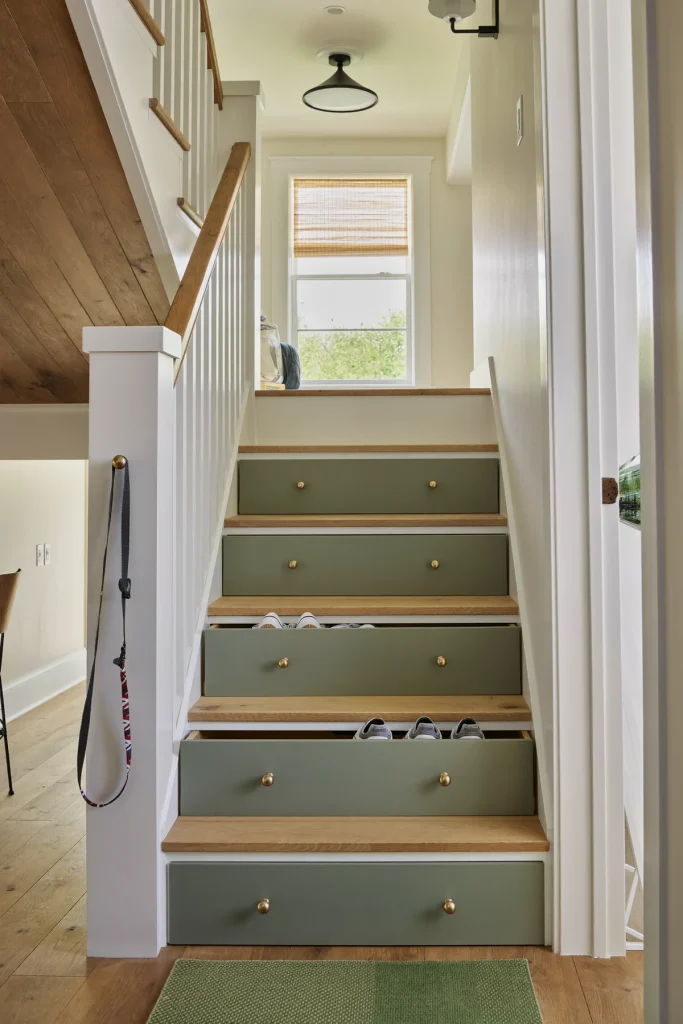
Turn the bottom few stairs into drawers and paint the drawer fronts a fresh green. Shoes, hats, dog leashes and the endless pile of charging cables finally have somewhere to go.
A soft green like sage or eucalyptus keeps the stair looking calm, and simple brass or wood knobs make each drawer easy for kids to open. Paint the treads above in wood stain or keep them natural for a nice contrast.
This is a carpentry job, so hire a pro or follow a reliable plan if you’re handy. Each drawer has to work around the stair framing, and the treads need to stay solid. If structural framing is involved, check local codes first.
A small green rug at the bottom step and a basket on the landing for overflow complete the look. It’s the most practical green idea in the post, and it’s a great match for the board-and-batten wainscot in idea 11 if you’re doing a full stair refresh.
Your Stairs, Your Shade of Green
Green is forgiving. It works with wood, white, black, brass and even pink, and there’s a shade for every kind of light and every kind of home. Start small with painted risers or a garland if you’re nervous, or go all the way with a forest green drench if you’re ready.
Whatever you choose, think about how the stairs feel at night as much as during the day. A warm lamp, a sconce or a soft glow from under the treads makes any green look its best.
Pick the idea that made you smile first. That’s usually the right one. Happy painting! 💚
