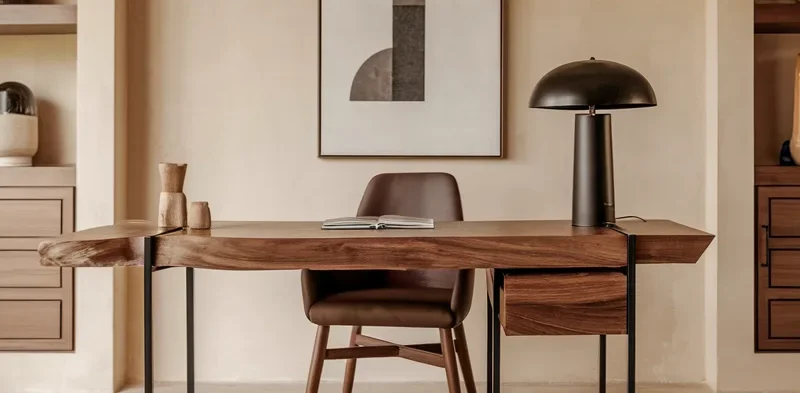
A modern home office doesn’t have to look cold, sterile, or like a corporate cubicle dropped into your house. In fact, some of my favorite workspaces are the opposite. They feel warm, personal, uncluttered, and incredibly easy to work in.
The secret is choosing pieces that do more than one job. A beautiful desk can become the focal point. Open shelving can provide storage while displaying your favorite objects. Even the right lamp can make a plain corner feel intentional. ✨
Whether you have an entire room or a tiny corner beside your bedroom, these modern home office ideas can help you create a workspace that feels current without chasing every passing trend.
Choose a streamlined desk with clean lines.
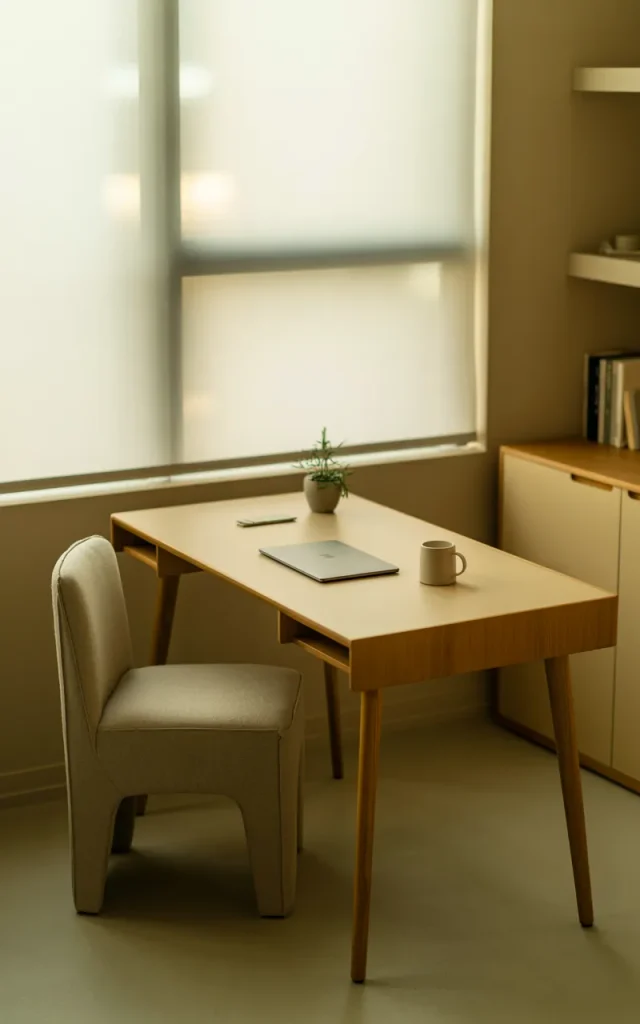
Start with the desk because it usually becomes the visual anchor of a home office. For a modern look, I recommend choosing a design with a simple silhouette, straight edges, and minimal decorative details.
A slim rectangular desk works beautifully in smaller rooms. If you have more space, a wider desk with drawers can give you room to spread out without looking bulky.
I especially love desks in light oak, walnut, matte black, or soft white. Keep the desktop relatively clear, too. Modern design looks its best when there is breathing room.
Why it works?
Clean lines immediately make the room feel more organized and contemporary. 🖥️
Paint the walls in a sophisticated neutral.
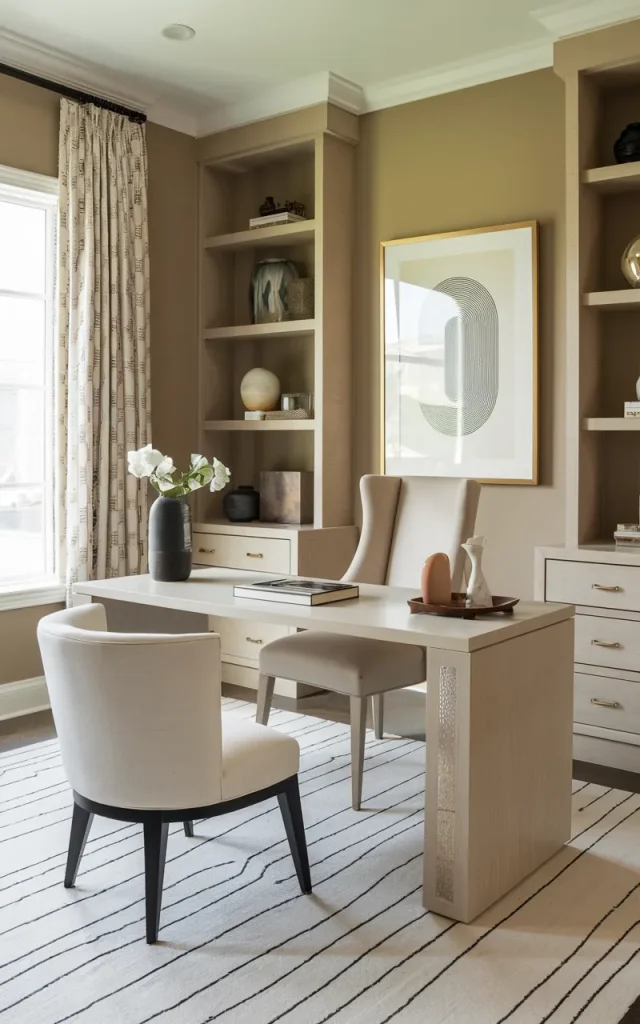
A fresh wall color can completely change the personality of your office. Instead of defaulting to bright white, consider warm greige, soft taupe, muted beige, pale gray, or even a creamy off-white.
I like these shades because they create a calm backdrop without competing with your furniture. They also make it much easier to introduce wood, metal, greenery, and artwork later.
If the office feels visually flat, don’t repaint everything. Try adding one deeper wall behind the desk instead. Charcoal, deep olive, muted navy, or warm brown can create a beautiful focal point.
Quick Tip:

Test your paint during both daylight and evening hours before committing. 🎨
Install floating shelves above the desk.
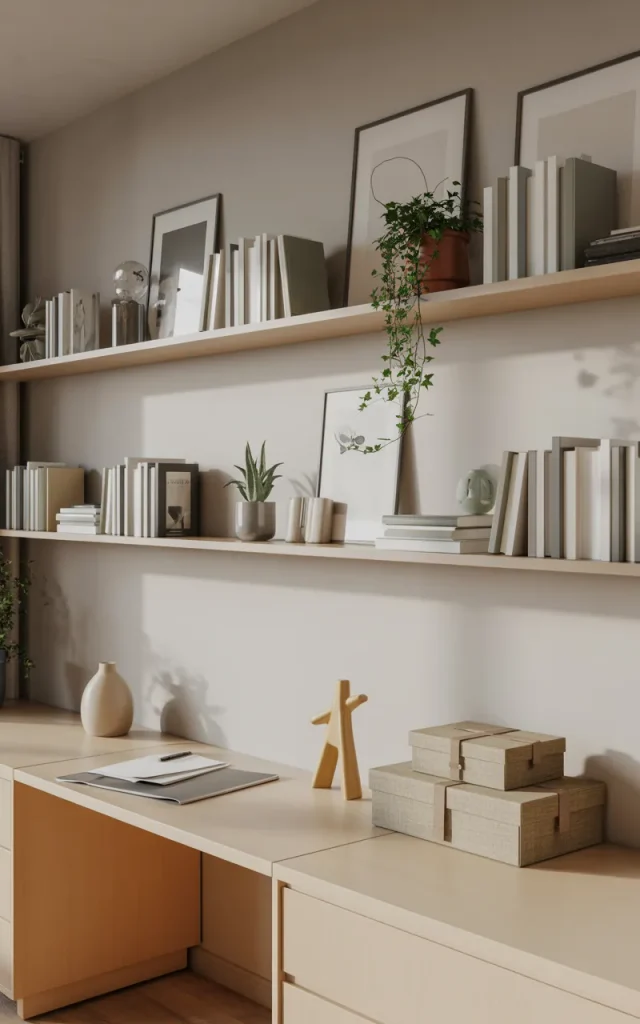
When floor space is limited, look upward. Floating shelves can provide useful storage without taking up valuable walking space, and they fit naturally into a modern office.
I prefer installing two or three long shelves rather than filling an entire wall with small individual shelves. The longer lines look calmer and give the room a more intentional appearance.
Use them for books, a few framed prints, small plants, storage boxes, and one or two decorative objects. Resist the temptation to fill every inch.
A Micro-tip:

Leave some empty shelf space. That little bit of negative space makes everything around it look more expensive. 🌿
Bring in one statement chair.
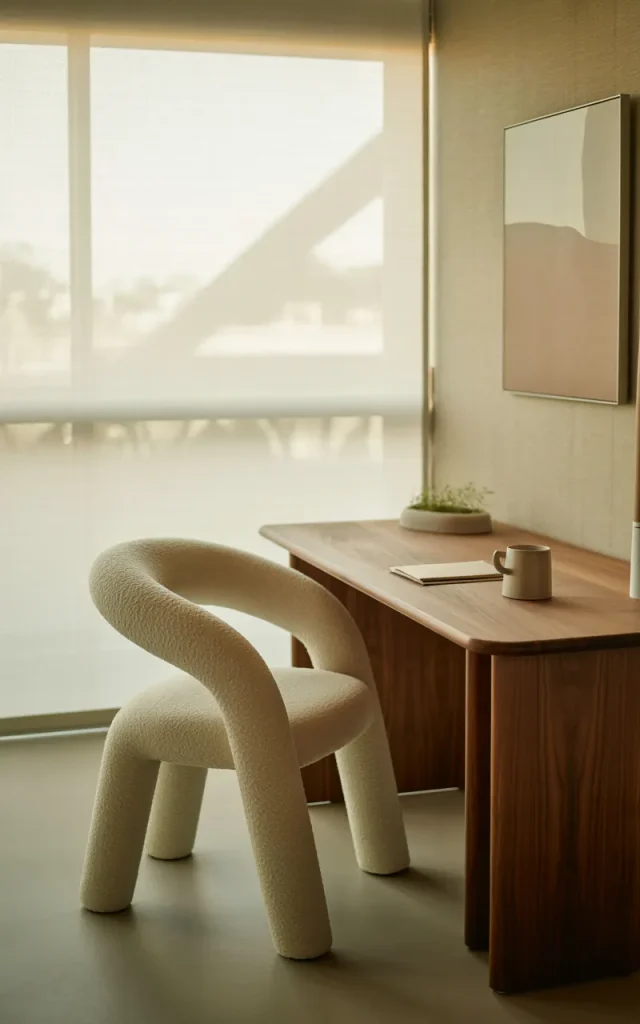
Your office chair doesn’t have to scream “office chair.” That’s one of my favorite opportunities to make a modern workspace feel more like part of the home.
Look for a chair with comfortable cushioning, supportive proportions, and an elegant shape. Bouclé, leather, woven fabric, and smooth upholstery can all work beautifully depending on the rest of the room.
If you’re working long hours, comfort comes first. There is no point choosing a gorgeous chair that leaves your back unhappy by lunchtime.
Who this is for:
Anyone who wants a workspace that looks polished enough for video calls but still feels comfortable and residential. 😊
Add greenery in sculptural planters.
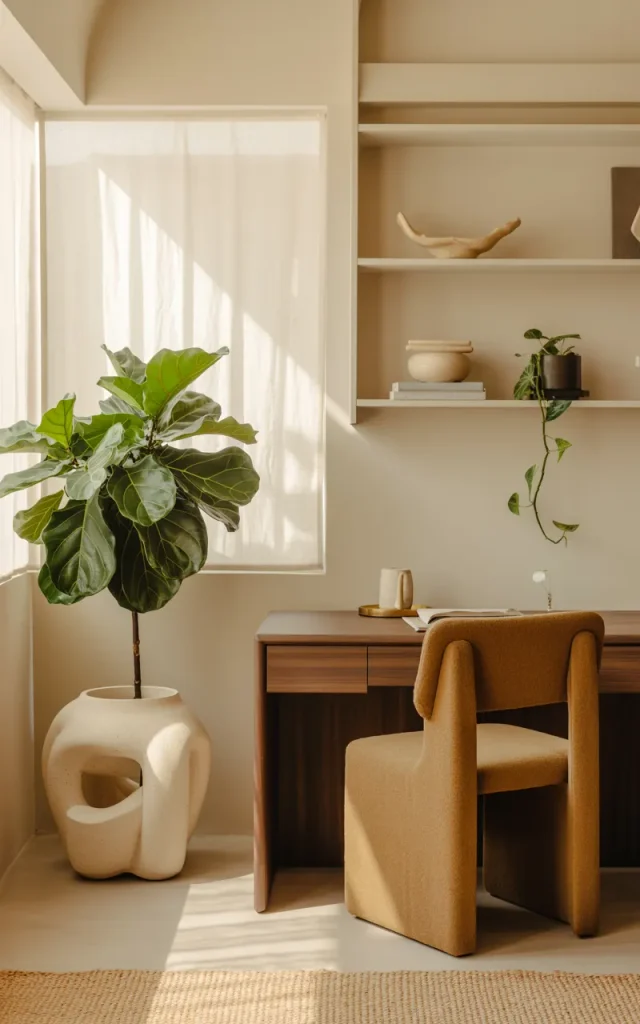
Plants are one of the easiest ways to soften a modern home office. They introduce texture and life without requiring you to abandon a minimalist aesthetic.
Instead of scattering tiny plants everywhere, consider one larger floor plant beside the desk or a medium-sized plant on a shelf.
Choose a planter with a simple silhouette. Concrete, ceramic, matte black, terracotta, and woven planters can all work depending on your palette.
Works best in:
Modern, Scandinavian, Japandi, contemporary, and warm minimalist offices.
Create a dedicated charging station.
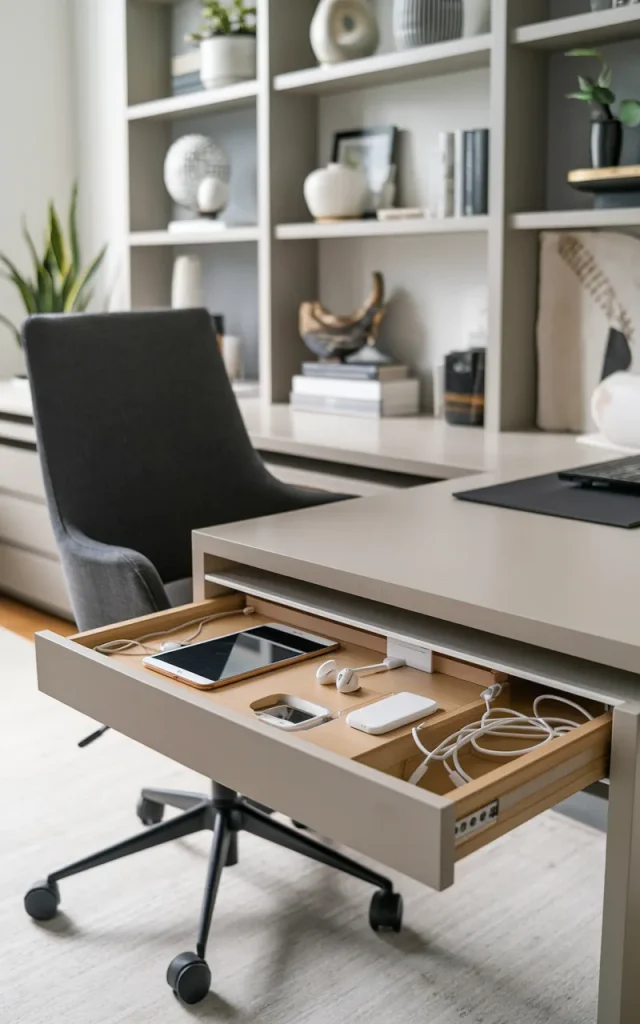
Give your everyday electronics a permanent home. A small charging station can prevent your desk from becoming a pile of phones, tablets, earbuds, and tangled wires.
You could use a shallow tray, a drawer with cable access, or a small box designed to hide chargers. If you work from home, keep only the devices you actively use on your desktop.
This is one of those tiny improvements that doesn’t photograph as dramatically as a beautiful desk or chair, but you’ll notice the difference every morning.
One rule to remember:

If an electronic item doesn't need to live on your desk, find somewhere else for it.
Install a sleek wall-mounted desk.
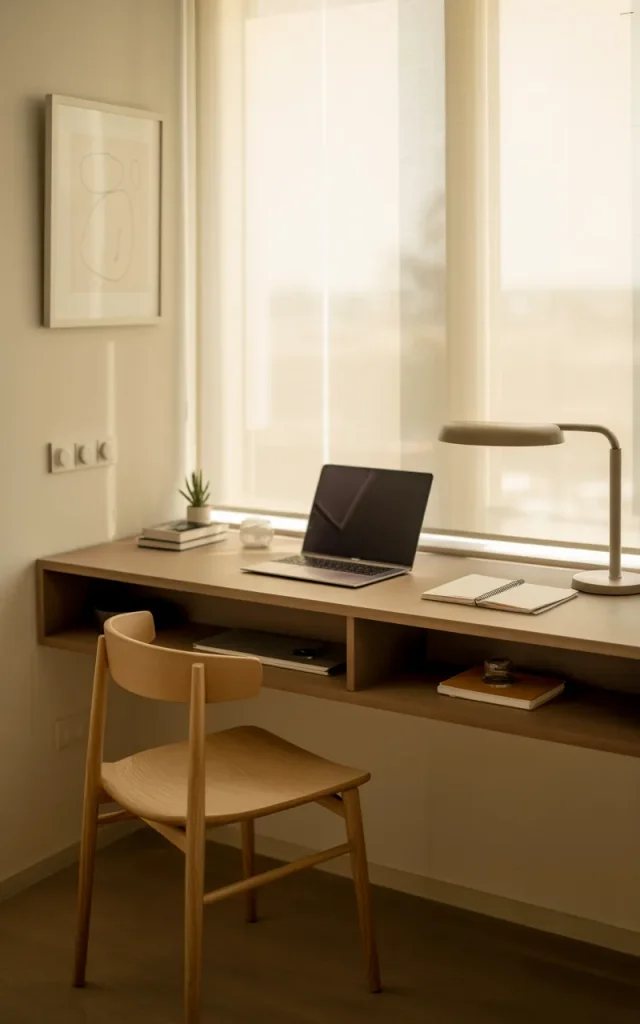
A wall-mounted desk is a brilliant option when you want a modern workspace without sacrificing much floor space. It creates a crisp, architectural appearance and can work surprisingly well in bedrooms, hallways, and compact apartments.
Choose a simple floating surface with enough depth for your laptop, keyboard, notebook, and a small lamp. Add one shelf above it for essentials and keep the surrounding wall relatively uncluttered.
I particularly like this approach when the office needs to disappear visually after work. Add a drawer or cabinet nearby, tuck away the chair, and the room can quickly return to its original purpose.
For people on a budget:
- Use a sturdy wooden shelf as the desktop.
- Choose simple wall brackets.
- Paint the brackets to blend into the wall.
- Add one inexpensive floating shelf above.
Layer warm wood into the workspace.
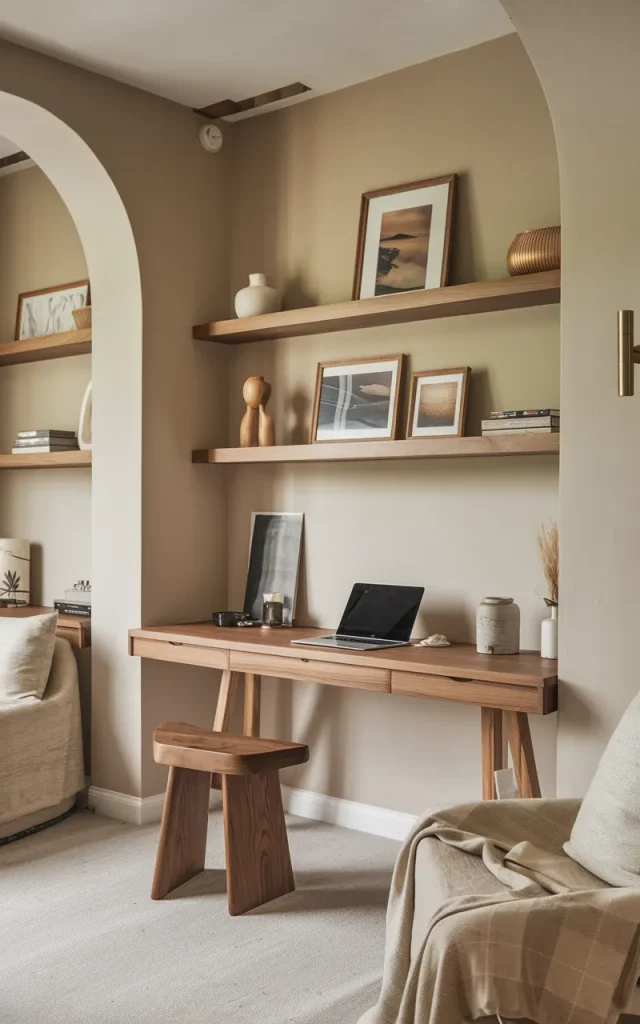
Modern doesn’t automatically mean metal, glass, and white surfaces. In fact, too many cool finishes can make an office feel surprisingly harsh.
Warm wood is my favorite way to bring balance into a contemporary workspace. Try a walnut desk, oak shelving, a wooden picture frame, or even a small wood stool.
The trick is not matching every wooden piece perfectly. Similar undertones are usually enough. A few variations actually make the room feel more natural.
Colour swap suggestion:
| If you have… | Try adding… |
| Cool white walls | Warm oak |
| Gray furniture | Medium walnut |
| Black accents | Honey-toned wood |
| Beige walls | Deep walnut |
The contrast creates warmth without losing that modern edge.
Choose built-in cabinetry for a seamless look.
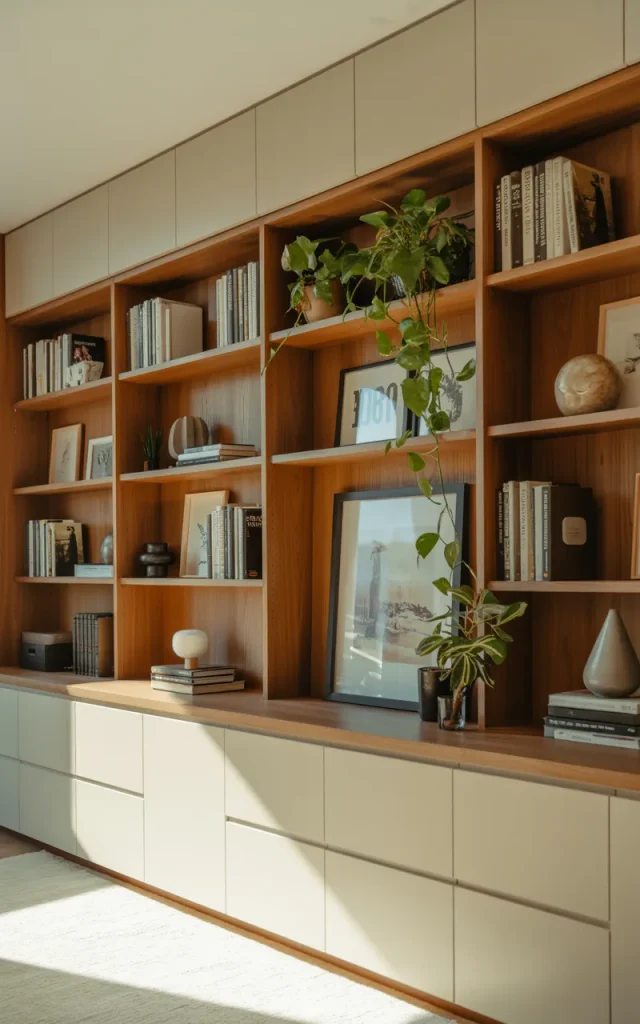
If you’re designing a home office from scratch or planning a serious renovation, consider built-in cabinetry around the desk.
This approach can make an entire wall work harder. Closed cabinets hide paperwork and equipment, while open sections provide room for books and decorative objects.
I recommend combining both. Too many open shelves create visual noise, while an entire wall of closed doors can feel heavy.
What most people get wrong:
They design storage around how much stuff they currently own. Instead, think about what you actually use and how you want the room to function five years from now.
Introduce a textured area rug.
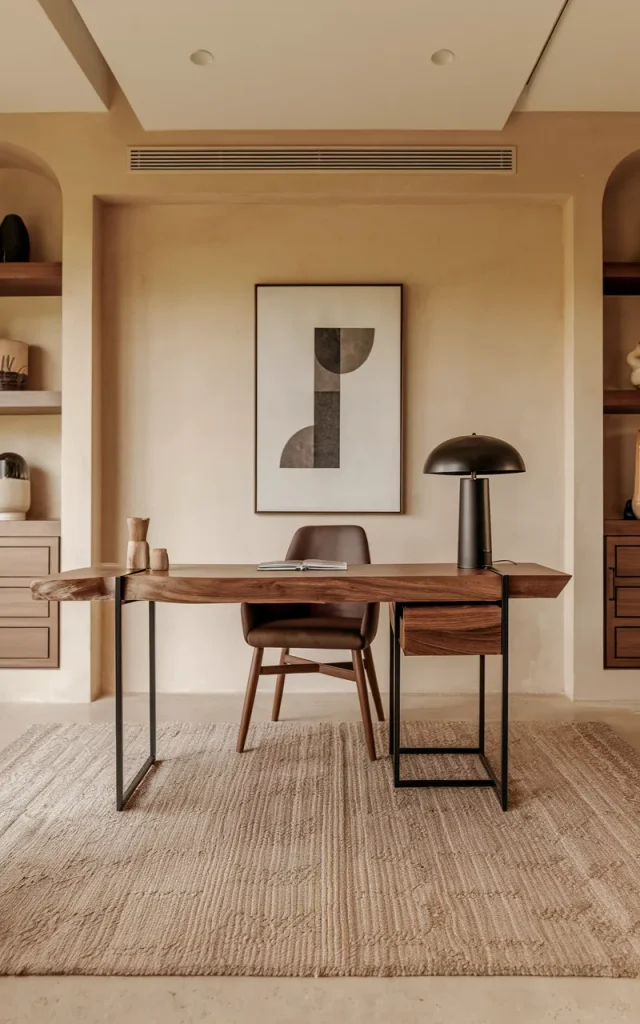
A rug can make a modern office feel warmer and more finished, especially when the room contains lots of hard surfaces.
Choose a low-pile design that allows your office chair to move easily. Subtle geometric patterns, tonal designs, faded motifs, or solid neutral rugs can all work beautifully.
I like rugs that connect several elements at once. For example, a beige rug can bridge a walnut desk, cream chair, and black lamp without making the room feel overly coordinated.
Quick hack: If you have a very small office, choose a rug that extends beyond the desk and chair rather than one that barely fits underneath them. It creates a more intentional zone.
Add a compact reading or relaxation corner.
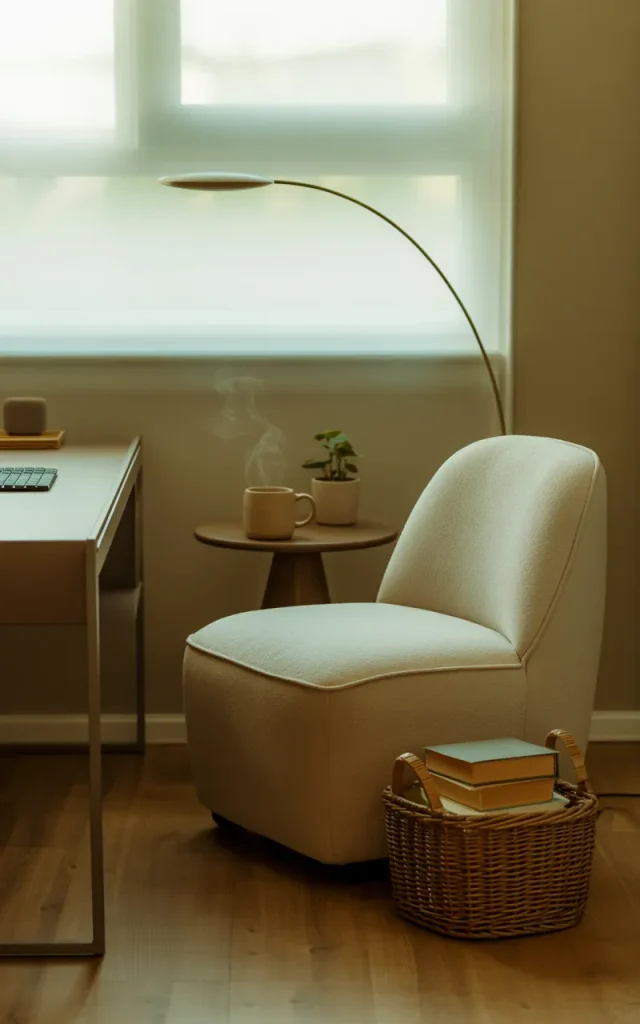
A home office doesn’t have to be exclusively about sitting at your computer. If you have enough space, create a small corner where you can read, brainstorm, or simply step away from your screen.
A comfortable accent chair and a small side table are usually enough. Add a floor lamp and perhaps a small basket for books.
This is especially helpful if your work involves creative thinking. Sometimes the best ideas arrive when you’re not staring at the monitor.
Time required to implement:

About an afternoon if you're working with furniture you already own.
Frame the desk with matching vertical storage.
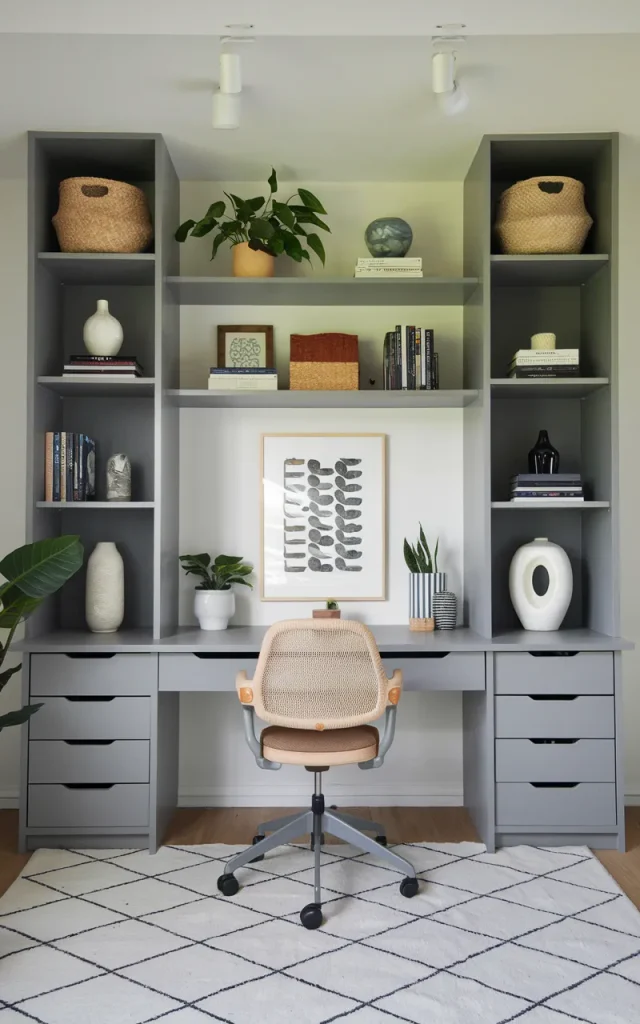
Instead of placing random shelves around your desk, create a balanced composition by framing the workspace with two vertical storage units.
They don’t have to be identical, but similar proportions create a strong sense of order. Place books, baskets, files, and decorative objects inside while leaving a little breathing room.
This works particularly well for people who need significant storage but still want a modern appearance.
How to steal this look:
- Start with a simple desk.
- Add one tall storage unit on each side.
- Keep the finishes consistent.
- Mix open and closed storage.
- Repeat one accent color throughout.
The result feels intentional rather than assembled piece by piece.
Install discreet recessed or track lighting.
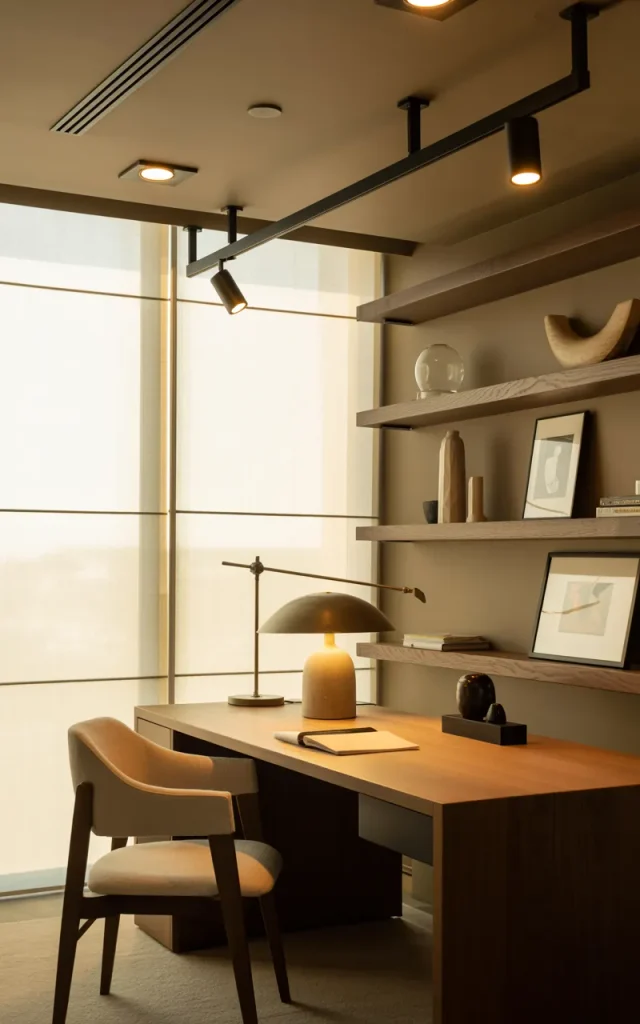
Don’t rely entirely on a desk lamp to illuminate your workspace. A modern office benefits from layered lighting.
Recessed ceiling lights provide general illumination, while a desk lamp handles focused tasks. Track lighting can be useful if you want flexibility or need to highlight artwork and shelving.
I prefer warmer bulbs for a home office because they make the room feel inviting after dark. If you regularly work with color-sensitive projects, though, choose lighting with good color rendering.
Why it works?
Layered lighting gives you control. Brighten the whole room when you’re working, soften it when you’re winding down, and spotlight the areas you want to notice.
Add a glass desk for a lighter visual footprint.
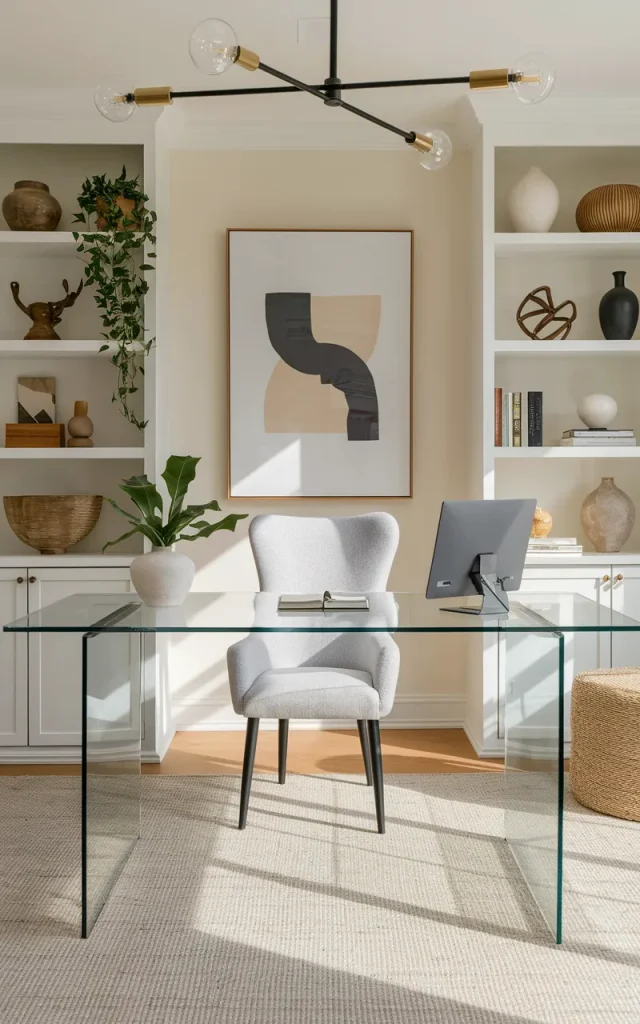
A glass desktop can be a smart choice when you want a contemporary office to feel visually spacious.
Because you can see through the surface, it doesn’t create the same heavy block that a solid desk sometimes does. Pair it with slim metal legs or a minimalist base for an especially sleek look.
I wouldn’t recommend glass if you have young children, dislike fingerprints, or prefer a warmer traditional atmosphere. But in the right room, it can look incredibly elegant.
Myth-buster:

Modern design isn't about making everything cold and glossy. A glass desk can actually feel warm when paired with wood, woven textures, plants, and soft textiles.
Create a dramatic accent wall behind the desk.
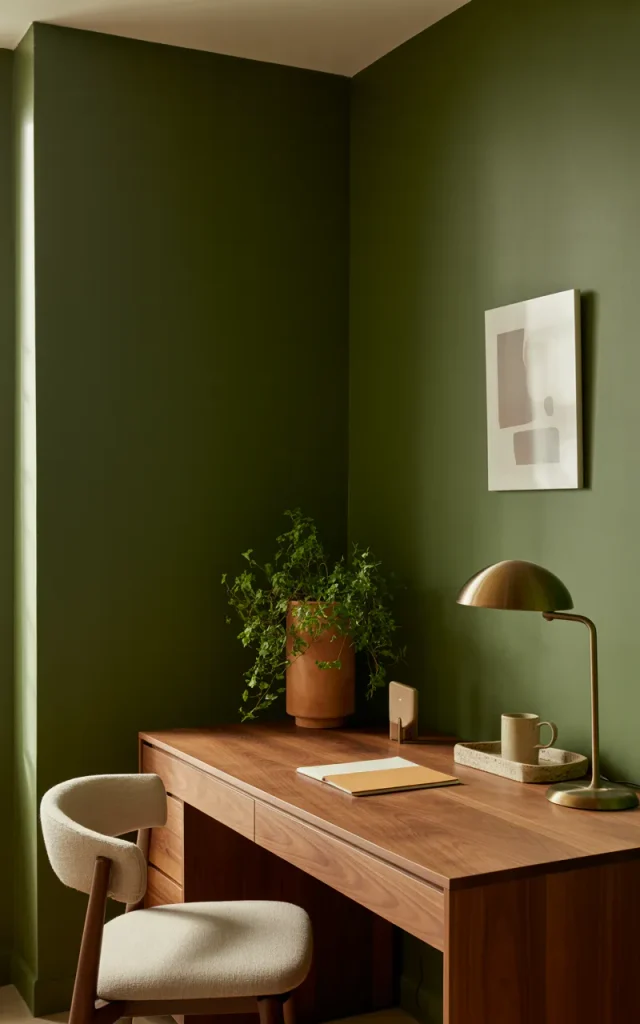
If your office feels a little too safe, this is where I’d add some personality.
Paint the wall behind your desk in a deeper shade such as olive green, charcoal, navy, chocolate brown, or muted terracotta. You could also use textured wallpaper, vertical wood slats, or a subtle geometric pattern.
The key is keeping the rest of the room relatively restrained. Let that wall do the talking.
I especially like this technique because the accent wall becomes a natural backdrop during video calls. It gives the frame depth without requiring a complicated arrangement behind you.
Trend callout:
Rich earthy shades are particularly effective when you want a modern office to feel sophisticated rather than stark.
Build a minimalist gallery wall.
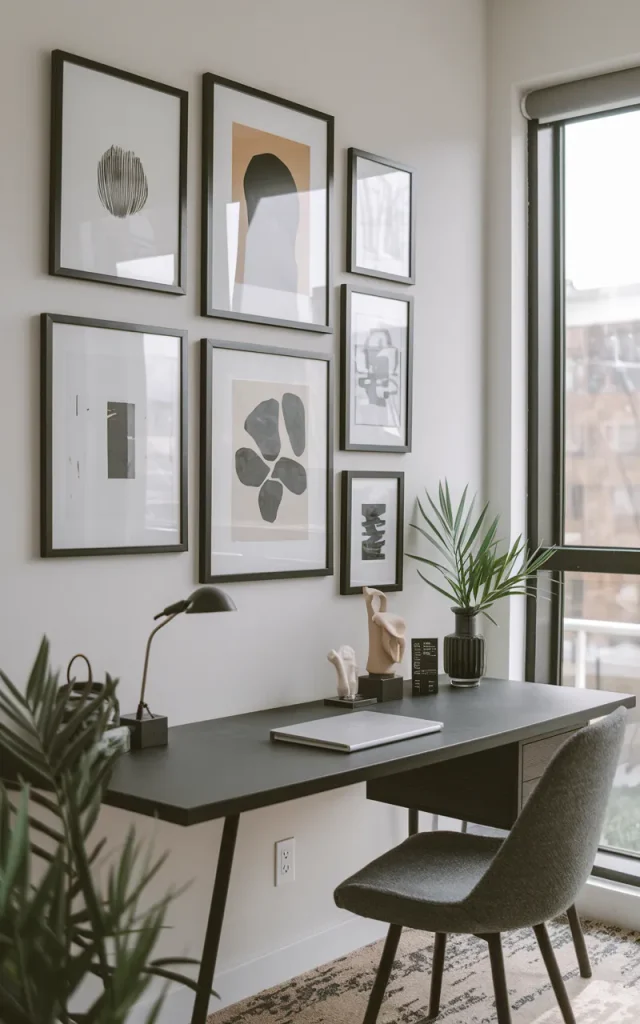
If one oversized artwork feels too formal, create a gallery wall with a restrained collection of prints.
Modern gallery walls usually look best when there is some consistency. You could use identical black frames, a single color palette, or artwork with a similar visual style.
Don’t worry about making every frame perfectly symmetrical. A little movement can make the arrangement feel more relaxed.
One rule to remember:
Repeat something. Repeat the frame finish. Repeat a color. Repeat a shape. That repetition creates cohesion even when the artwork itself is different.
Add a soft upholstered bench beneath the window.
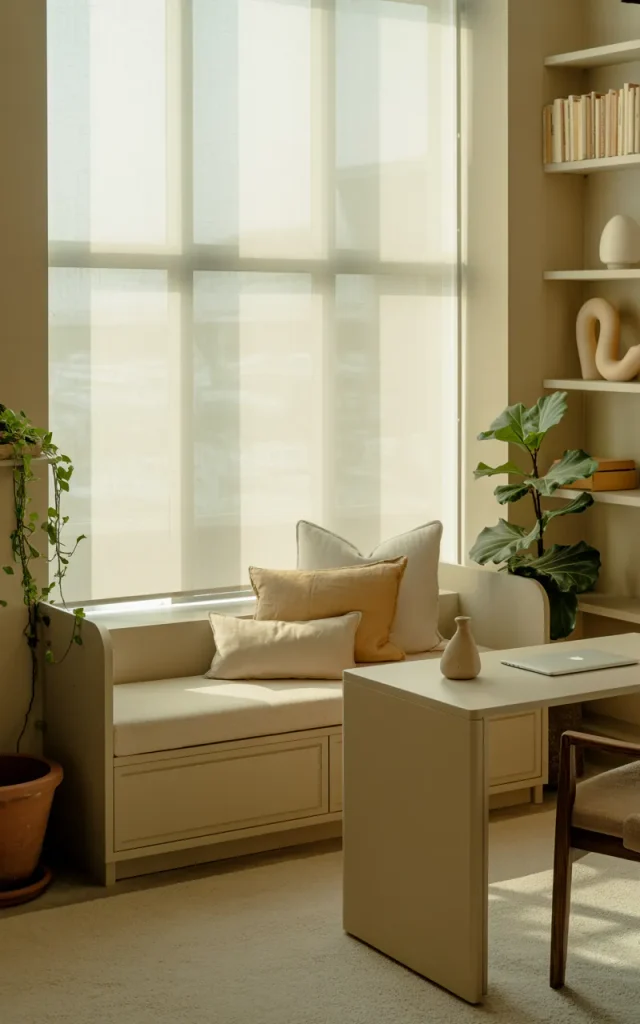
A window bench can turn an underused section of your office into a genuinely useful space.
Use it as a place to read, take phone calls, sort paperwork, or simply sit for five minutes after staring at your computer. Choose a slim upholstered bench with hidden storage if possible.
This idea is especially useful in offices with awkward window walls where a traditional desk or cabinet would feel crowded.
Small space hack:

Choose a storage bench with a lift-up seat. Blankets, extra notebooks, cables, and office supplies can disappear underneath it.
Introduce black accents for definition.
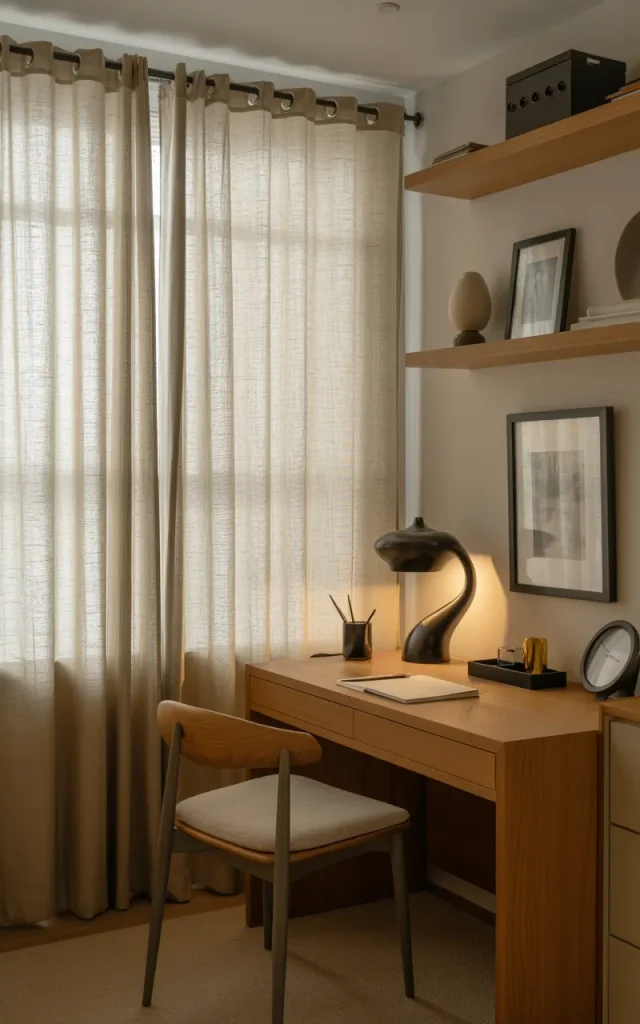
If your office feels washed out or overly soft, black accents can sharpen it instantly.
You don’t need much. A black desk lamp, picture frames, cabinet handles, chair legs, curtain rod, or small accessories may be enough.
I like using black as visual punctuation. Your eye moves naturally from one black element to another, creating a subtle thread throughout the room.
Colour swap suggestion:
| Instead of… | Try… |
| Chrome | Matte black |
| Bright white frames | Black frames |
| Pale metal legs | Black legs |
| Silver hardware | Black hardware |
The beauty of this idea is that you can introduce it gradually. You don’t need to replace all your furniture.
Create a hidden printer and supply station.
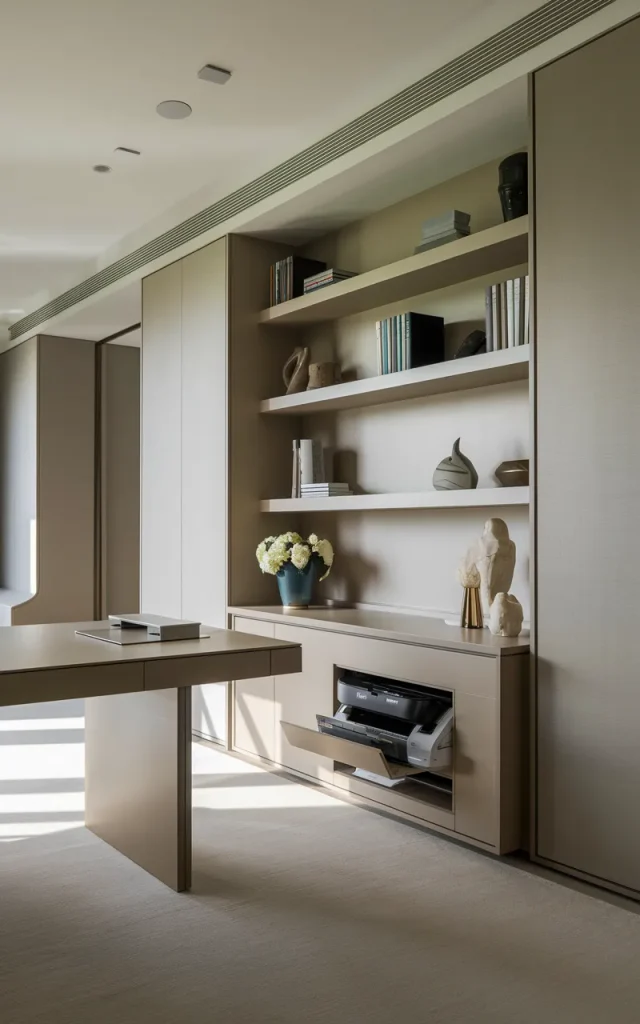
Printers are useful. Attractive? Usually not.
Instead of allowing one to dominate your office, create a dedicated station where it can live discreetly. A cabinet with ventilation and enough clearance can hide the printer while keeping paper and supplies nearby.
If the printer must remain visible, place it on a low cabinet rather than directly beside your monitor. This helps keep the main work zone visually calm.
Surprise Fact:

One of the easiest ways to make a home office feel more expensive isn't buying expensive furniture. It's simply hiding the objects that create visual noise.
Mix modern furniture with vintage accents.
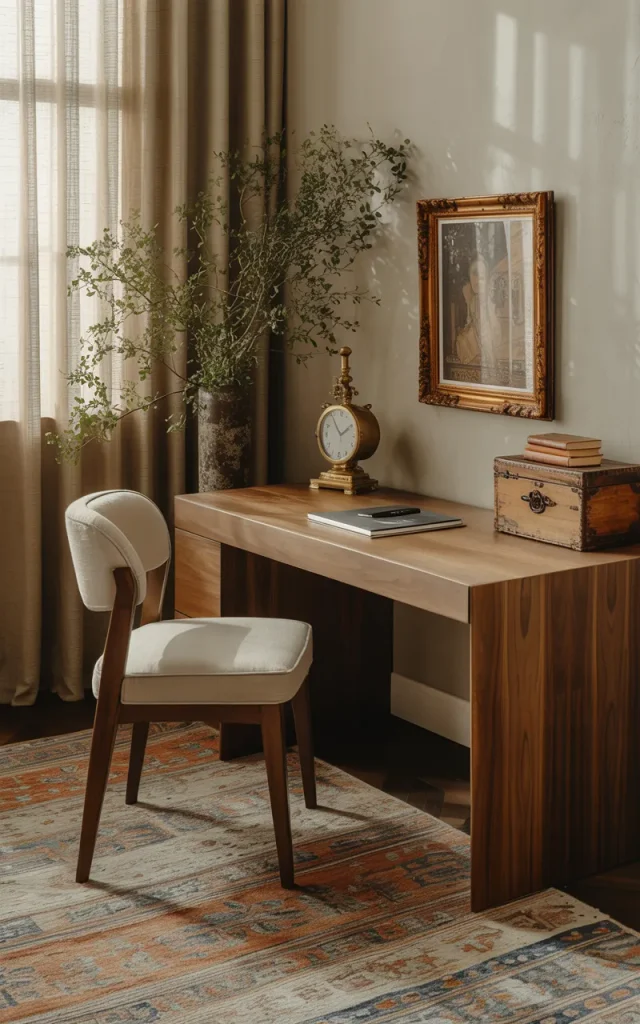
A modern office doesn’t have to be made entirely from contemporary pieces. In fact, adding one vintage or antique-inspired element can make the room feel much more personal.
Try a vintage-style desk clock, an old framed print, a secondhand wooden chair, a traditional rug, or a decorative box with some history.
The contrast is what makes it interesting.
I wouldn’t turn the room into a time capsule, though. Keep the main furniture modern and let one or two older-looking pieces provide character.
Trend Alert:
Modern interiors are increasingly embracing collected, lived-in details rather than looking perfectly matched.
Finish the office with a layered modern look.
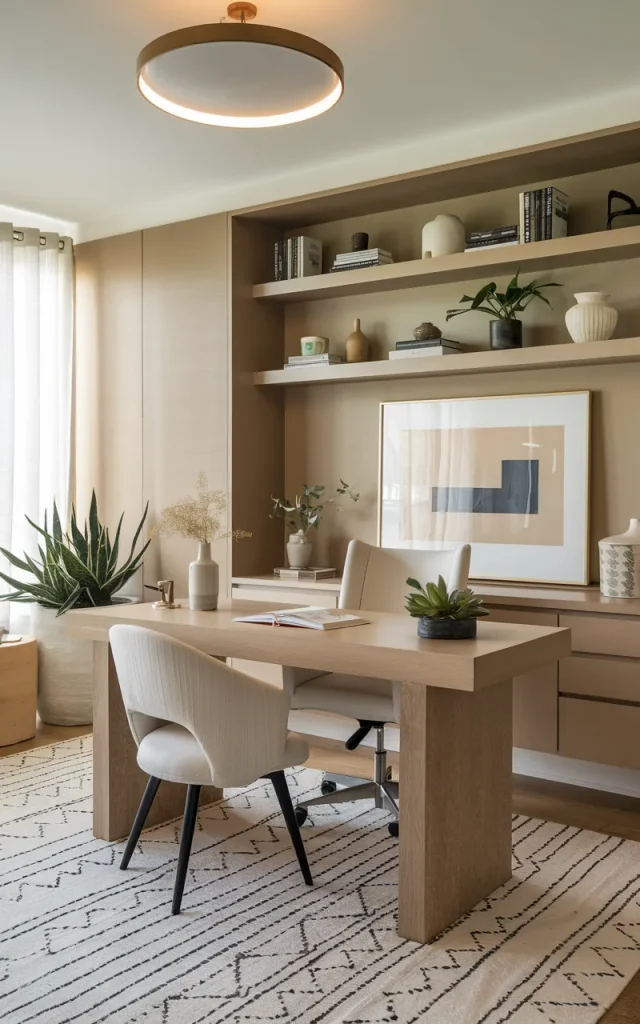
Finally, bring everything together rather than treating each idea as a separate decorating rule.
Start with your main foundation: the desk, chair, and wall color. Then add practical storage. After that, introduce lighting, greenery, artwork, textiles, and a few personal objects.
I like to think in layers. The first layer should make the office functional. The second should make it comfortable. The final layer should make it feel like you.
Layer it like this:
- Foundation: Desk, chair, and wall color.
- Function: Storage, lighting, and cable management.
- Texture: Rug, curtains, upholstery, and wood.
- Personality: Artwork, books, plants, and collected objects.
- Final edit: Remove anything that feels unnecessary.
Don’t feel pressured to finish everything in one weekend. A modern office often looks better when it evolves naturally.
Final Thoughts
Creating a modern home office isn’t really about buying the trendiest desk or copying a perfectly styled room online. It’s about building a space that makes everyday work feel easier, calmer, and a little more enjoyable.
Start with one change. Maybe it’s the desk. Maybe it’s better lighting, hidden cables, a fresh wall color, or a plant beside the window. 🌿
Then let the room grow from there. When your workspace functions well and reflects your personality, that’s when modern design really starts to feel like home.
