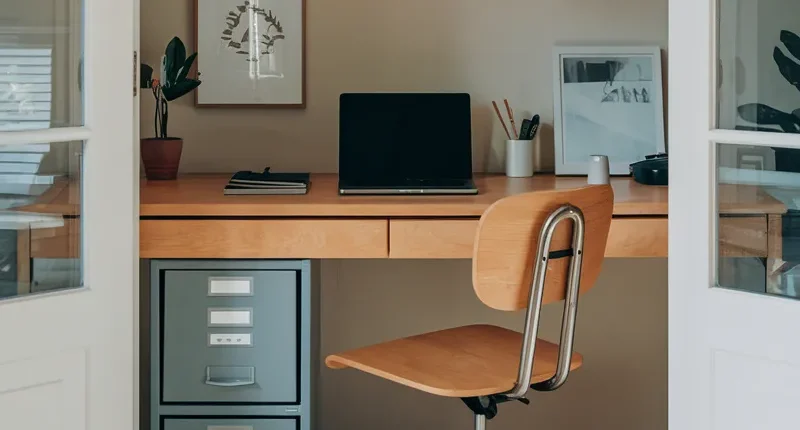
A small home office doesn’t have to feel like you’re working from the corner of a storage closet. With the right layout, furniture, colors, and a few clever tricks, even the tiniest nook can become a space you actually enjoy using. ✨
I’ve always believed that a productive office is less about square footage and more about how thoughtfully you use what you have. A narrow wall, an unused corner, or even a section of your bedroom can work beautifully.
So, if you’re looking for 22 Small Home Office Ideas, you’re in the right place. Let’s make that little workspace feel intentional, comfortable, and completely yours. 🏡
Choose a slim desk for your workspace.
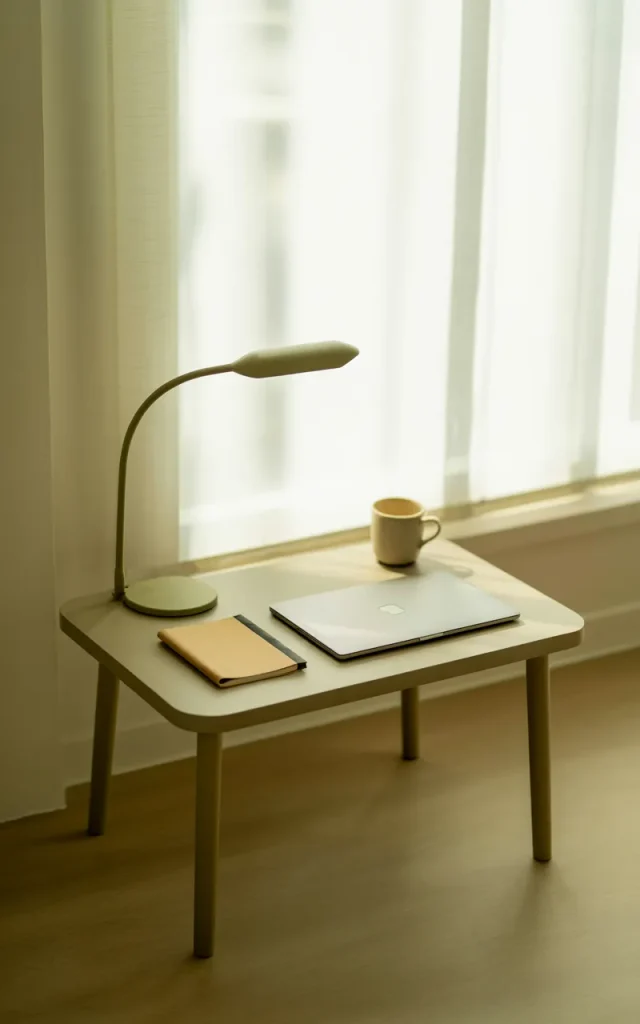
Start with the desk because it usually takes up the largest amount of floor space. For a small office, I recommend choosing a slim desk with a shallow profile rather than squeezing in a bulky traditional workstation.
A desk around 16 to 20 inches deep can still give you enough room for a laptop, notebook, lamp, and coffee cup without swallowing the entire room.
Look for clean lines and simple legs, too. The lighter the visual footprint, the more spacious your office will feel.
Why it works?
A streamlined desk gives you the workspace you need while leaving valuable floor area open. ✨
Tuck a desk into an empty corner.
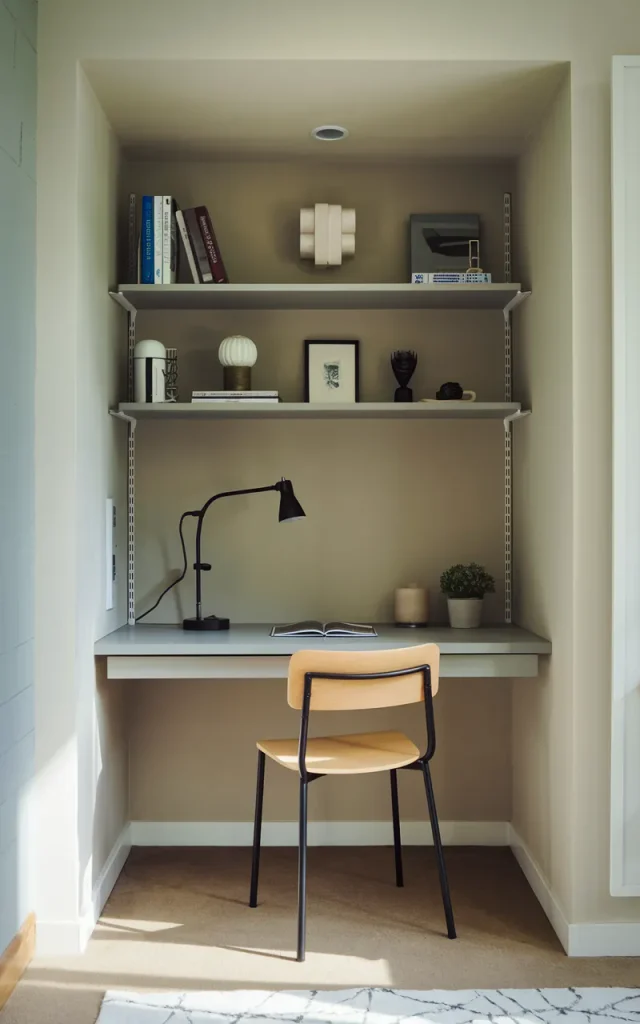
That awkward corner you’ve been ignoring might actually be the perfect home office location. Instead of trying to furnish the entire room, place a compact desk directly into an unused corner.
I love this approach because it turns dead space into something genuinely useful. Add a small chair, a wall-mounted lamp, and perhaps one floating shelf above the desk.
Keep the surrounding area relatively uncluttered. You don’t need a lot of décor here.
Small Space Hack:

Choose furniture with similar tones to the surrounding walls. When the desk visually blends in, the corner feels less crowded.
Install floating shelves above the desk.
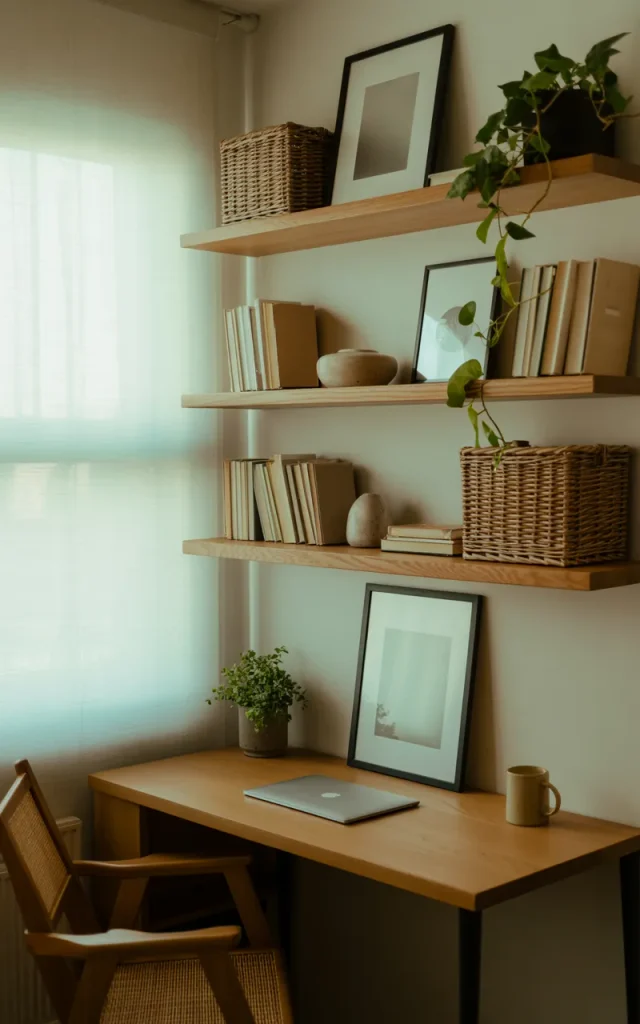
When floor space is precious, look upward. Floating shelves give you storage and display space without requiring another piece of furniture. 🌿
Install one or two shelves directly above your desk for books, small baskets, framed artwork, and a few carefully chosen accessories.
I wouldn’t fill every inch. Leave some empty space between objects so the shelves feel curated rather than crammed.
If your desk is already visually simple, you can use the shelves to introduce warmth through wood, woven baskets, or greenery.
Quick Tip:
Keep frequently used items within easy reach and decorative pieces toward the outer edges.
Mount a fold-down desk to the wall.
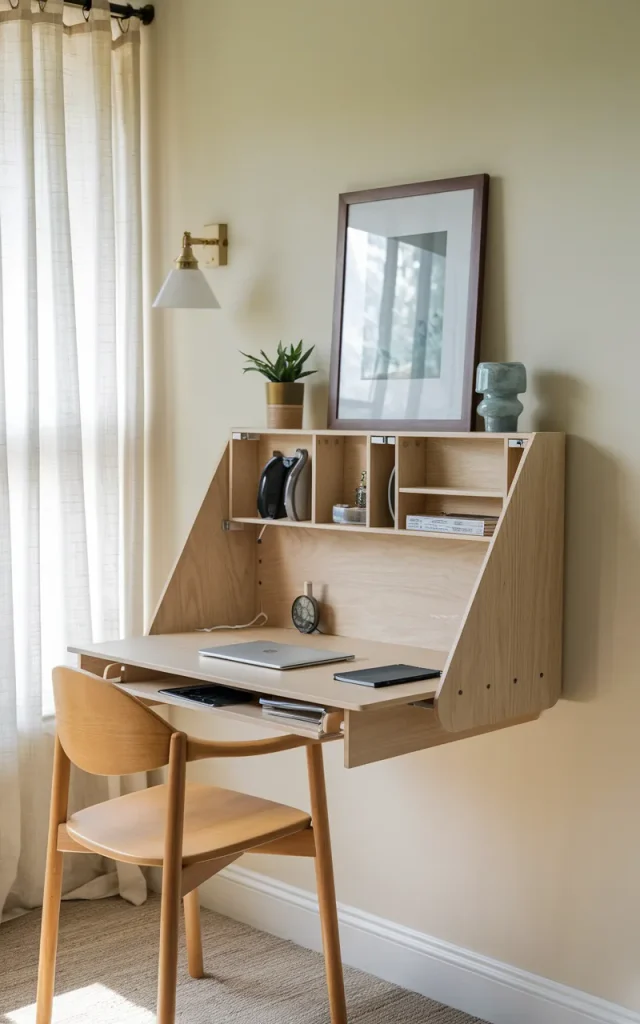
A wall-mounted fold-down desk is one of my favorite solutions for truly tiny rooms. When you’re working, it gives you a legitimate surface for your laptop and paperwork. When you’re finished, simply fold it away.
This works particularly well in bedrooms, hallways, guest rooms, and studio apartments where one area needs to perform several jobs.
Choose a model with built-in compartments if you need somewhere to hide notebooks and chargers.
Instant Gratification Tip:
Add a small framed print above the closed desk. When the desk is folded away, it can almost look like part of the wall décor.
Bring in a compact task chair.
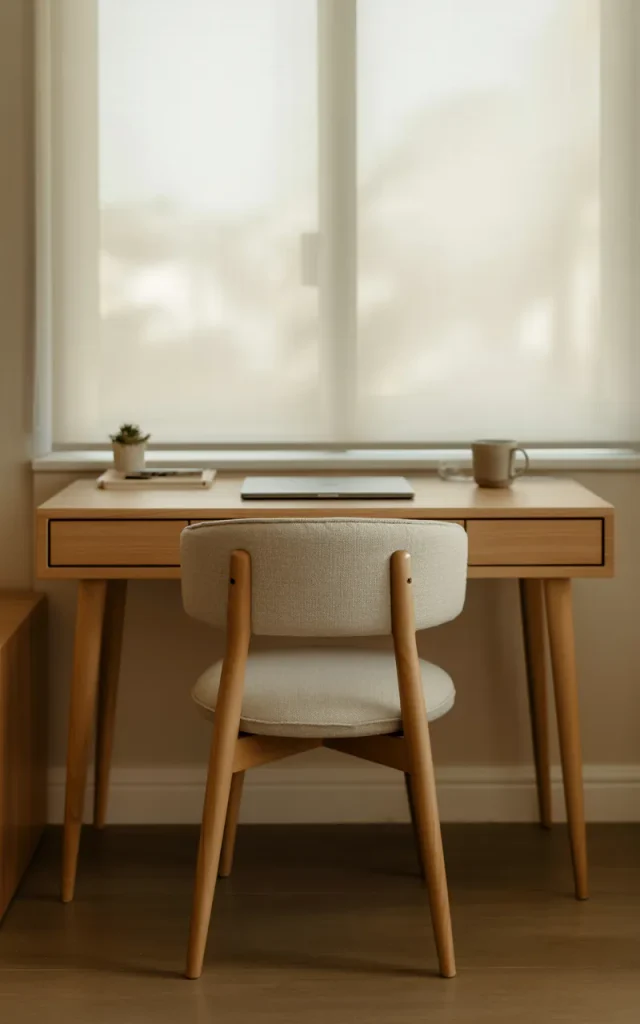
Don’t sacrifice comfort just because your office is small. Instead, look for a compact chair that provides proper support without the oversized silhouette of a traditional executive chair.
A slim upholstered chair can make the office feel softer and more residential. A simple wooden or molded chair can work beautifully in a minimalist setting.
I also like chairs that can tuck completely underneath the desk. That tiny detail makes a surprisingly big difference when you’re trying to keep walkways clear.
A Micro-tip:

Measure the desk opening before buying the chair. A chair that slides neatly underneath will make the whole room feel more organized.
Paint the office in a light neutral shade.
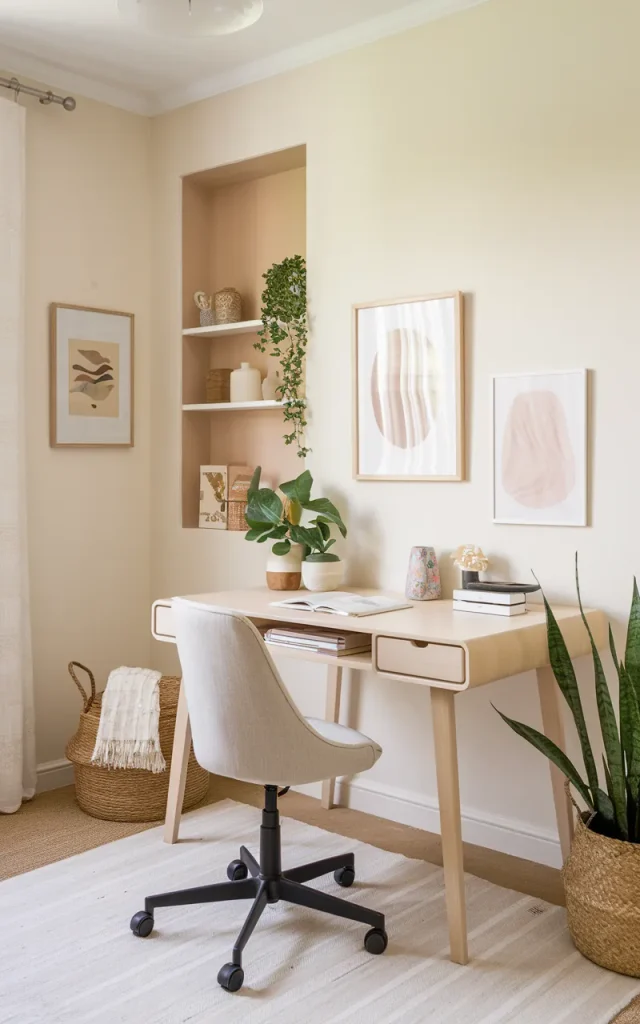
Color can completely change how a small office feels. Warm white, soft beige, pale greige, muted taupe, and gentle gray are all excellent choices when you want the room to feel open and calm.
I especially like using the same or a closely related color on the walls and larger furniture pieces. This creates visual continuity instead of chopping the room into separate blocks.
That doesn’t mean your office has to be boring.
Bring personality through artwork, textiles, plants, or a colorful desk accessory. 🎨
Why it works?
Lighter colors reflect more available light and create a quieter visual backdrop for work.
Use a narrow rolling storage cart.
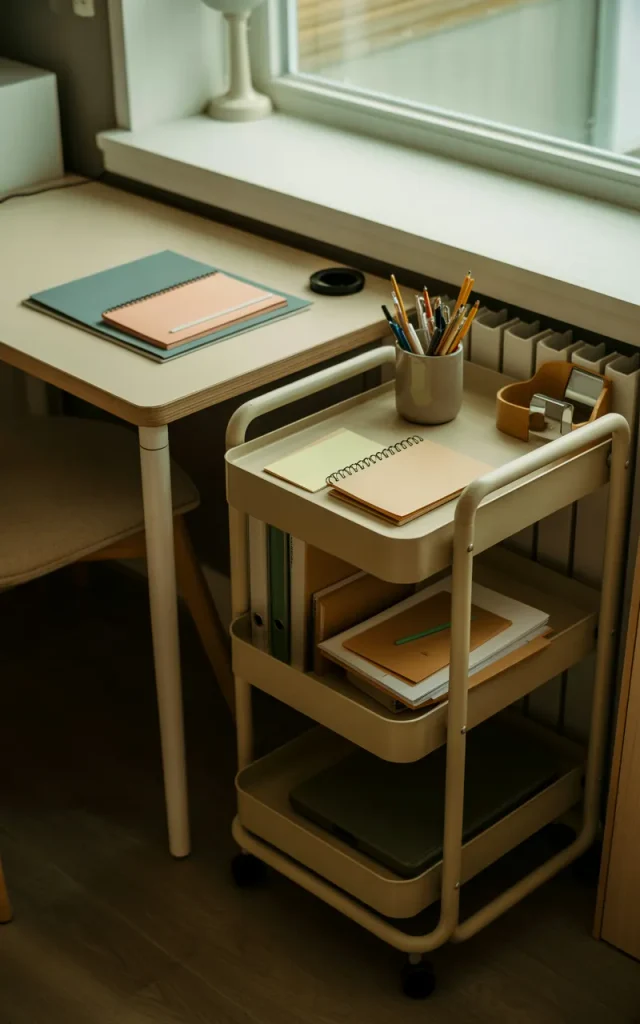
A slim rolling cart can provide surprisingly generous storage without permanently occupying one spot. Slide it beside your desk for notebooks, stationery, files, or craft supplies.
When you need extra room, simply roll it away.
This is especially useful if your home office doubles as another room. You can move the supplies out of sight when work is finished.
Who this is for:

This setup is ideal for renters, students, apartment dwellers, and anyone whose office needs to disappear after working hours. Choose a cart in a finish that complements your desk so it feels intentional rather than temporary.
Hang a large mirror to reflect light.
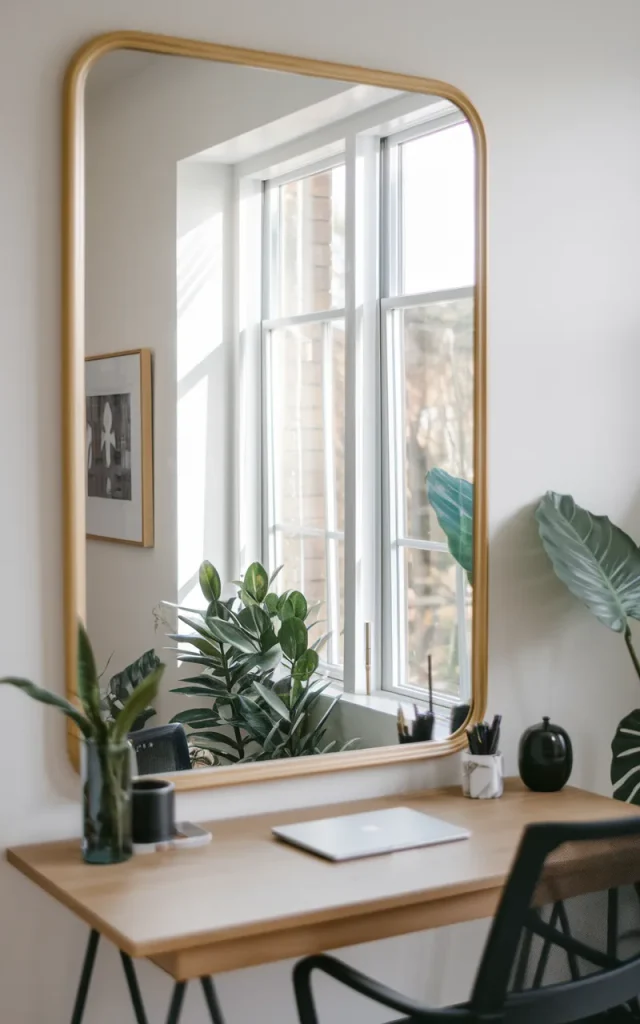
A mirror isn’t just for checking your appearance before a video call. In a small office, it can help bounce light around the room and create the impression of additional space.
Hang a generously sized mirror opposite or near a window whenever possible. A simple rectangular frame works well for modern offices, while an arched design can soften a more traditional room.
I wouldn’t cover every wall with mirrors. One strategically placed piece is usually enough.
Small Space Hack:
Use the mirror to reflect something attractive, such as a window, artwork, or greenery, rather than a cluttered storage area.
Create a built-in desk between cabinets.
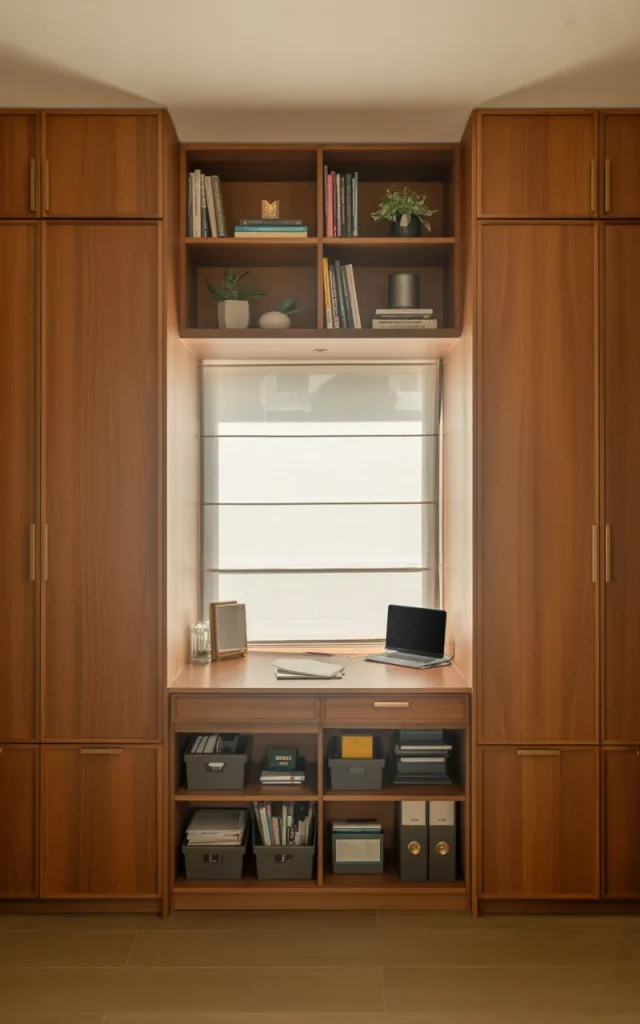
If you have a little more room to work with, consider creating a built-in-style workspace between two storage cabinets. The result feels polished and makes excellent use of vertical space.
Place a compact desktop between the units and install shelves or cabinets above it. You can then store office supplies, paperwork, and equipment without adding separate furniture.
This idea also creates a wonderfully cohesive look. Everything belongs to the same visual system.
Why designers do this:

Built-in arrangements make awkward dimensions feel intentional. Instead of fighting the shape of the room, you design around it. You don't necessarily need expensive custom cabinetry, either. Modular storage units can create a similar appearance for considerably less money.
Choose a glass-topped desk for visual lightness.
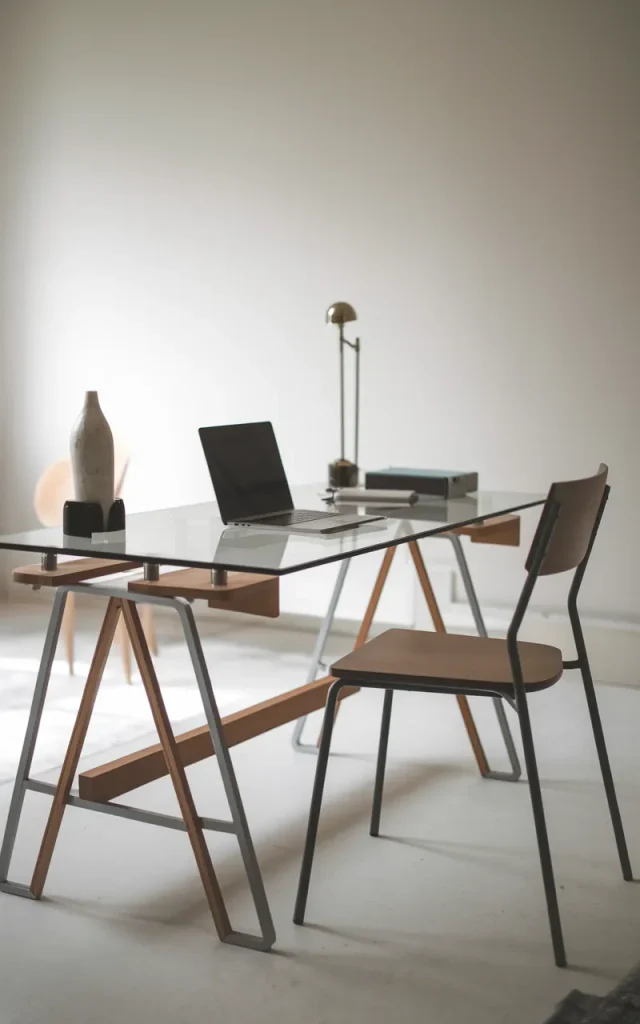
Glass can be a clever choice when a small office feels visually heavy. Because you can see through the desktop, the furniture doesn’t create such a solid visual block.
Pair a glass top with slim metal or wood legs for an airy appearance. Keep the rest of the room relatively simple so the desk doesn’t compete with too many textures.
Budget Alternatives
- Choose a clear acrylic desktop instead of glass.
- Repurpose a slim console table as a desk.
- Look for a secondhand glass table with simple legs.
This approach isn’t right for every household, especially if you need lots of heavy equipment. But for a laptop-based workspace, it can look wonderfully effortless.
Convert a closet into an office nook.
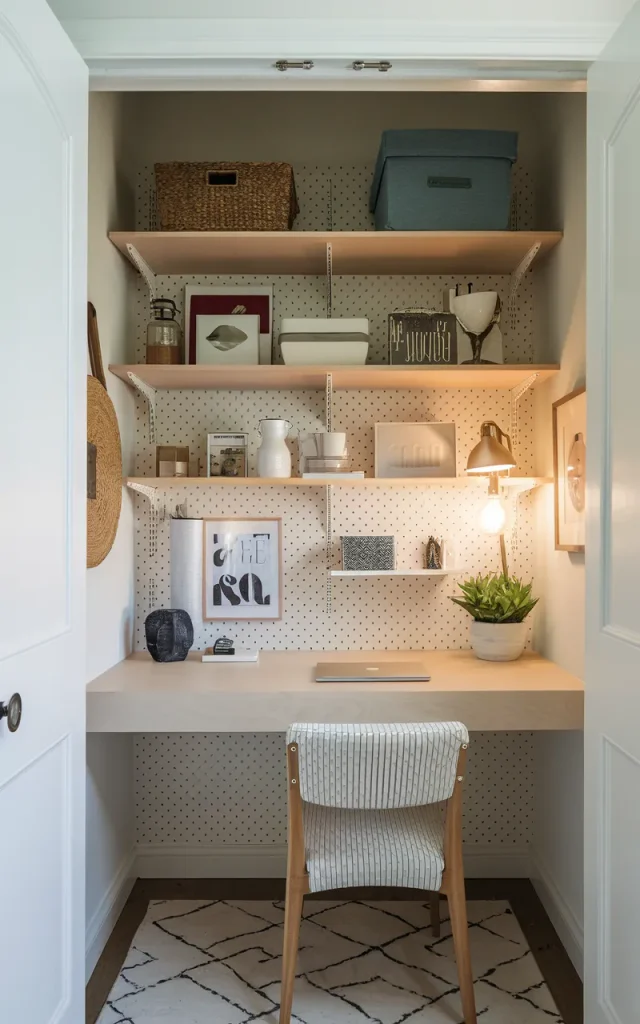
If you’re lucky enough to have an underused closet, you may already have the bones of a tiny office.
Remove unnecessary shelving, install a compact desktop, add lighting, and use the existing walls for storage. When your workday ends, you can close the doors and hide the entire office.
This is one of those ideas that makes a small home feel much more functional.
Step-by-step instructions:
- Empty and measure the closet.
- Determine the best desk height.
- Install adequate lighting.
- Add shelves or pegboard storage.
- Hide cords along the side or rear.
- Finish with one or two decorative touches.
Just like that, an overlooked storage zone becomes a dedicated workspace.
Place the desk directly beside a window.
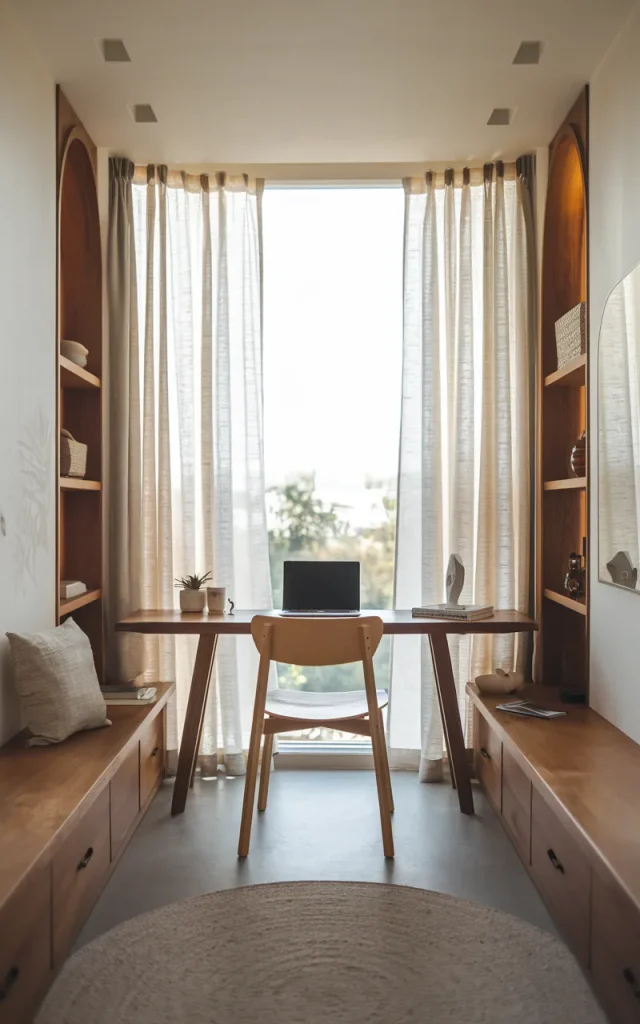
Natural light can make a small office feel dramatically more pleasant. If your room allows it, position the desk near a window so you can take advantage of daylight.
I prefer placing the desk perpendicular to the window rather than directly facing it. This can reduce glare on computer screens while still giving you plenty of natural light.
Add lightweight curtains if privacy is an issue.
Trend Callout:
Soft, natural-looking offices with daylight, warm wood, and simple textiles continue to be a beautiful choice because they feel calm without becoming sterile. And honestly, a little sunlight can make Monday morning feel slightly less offensive. ☀️
Use a console table as a desk.
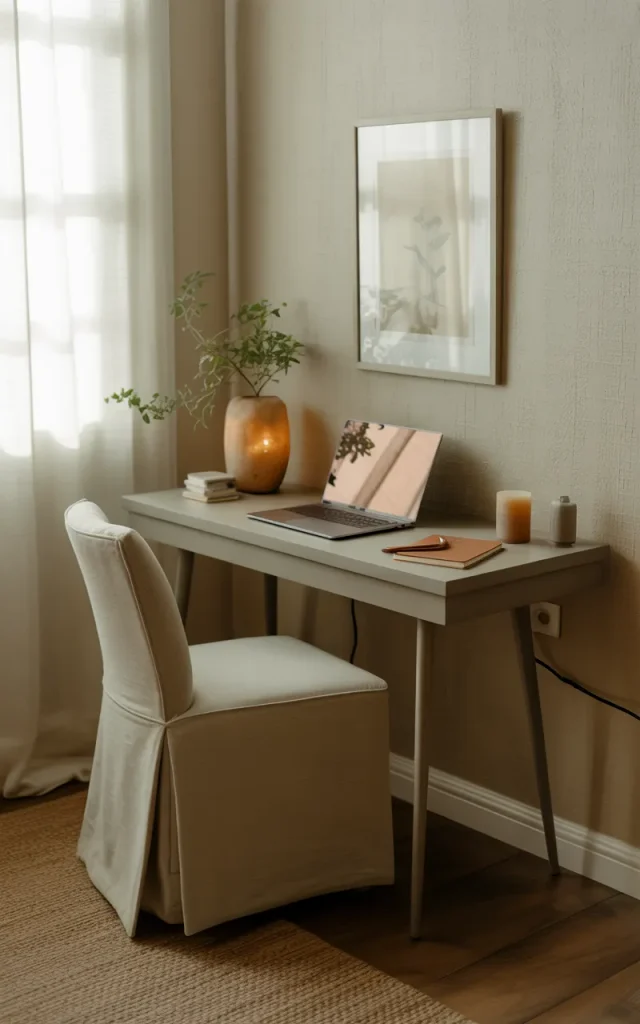
You don’t always need to buy something labeled “home office desk.” A narrow console table can work beautifully, especially if your workspace sits in a living room, hallway, or bedroom.
Choose one with enough depth for your laptop and basic supplies. If it has drawers, even better.
The biggest advantage is visual. A console often looks more like residential furniture than office furniture, which helps your workspace blend naturally into the rest of your home.
How to steal this look:

Pair a slim console with an upholstered dining chair, a table lamp, one framed artwork, and a small plant. It will feel like décor first and an office second.
Add closed storage to hide office clutter.
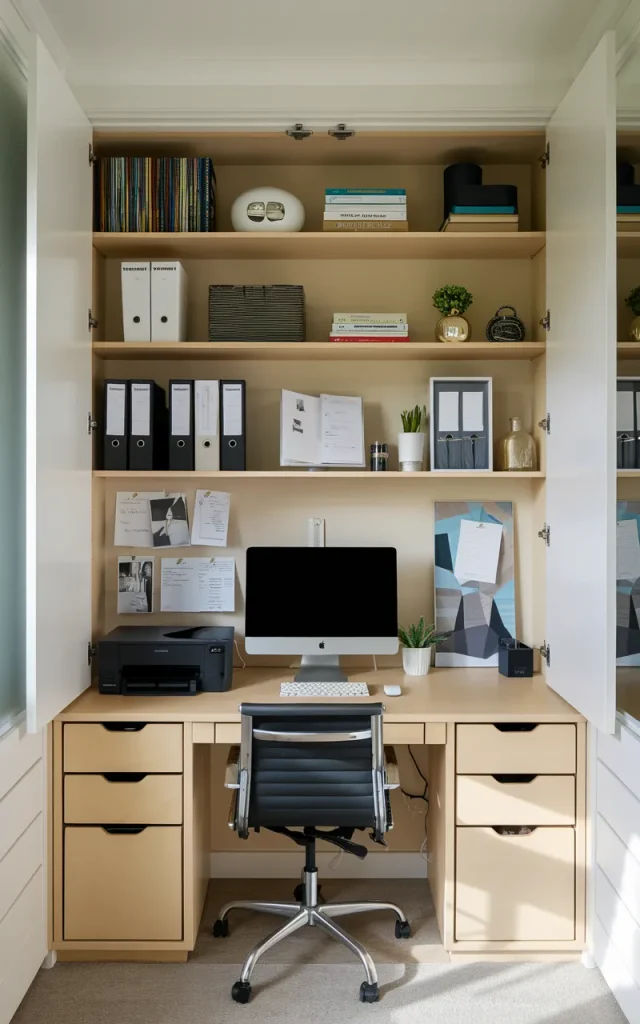
Open shelving looks lovely, but not every office supply deserves to be on display. Printers, paperwork, spare cables, notebooks, and miscellaneous bits can make even a thoughtfully decorated office feel chaotic.
That’s where closed storage earns its place.
Use a small cabinet beneath the desk or a wall-mounted cupboard above it. Keep everyday essentials accessible while hiding the visual clutter behind doors.
What most people get wrong:

They try to make every item attractive instead of simply hiding the items that don't need to be seen. Your office doesn't have to look perfect. It just needs a system that makes tidying easy.
Install a wall-mounted monitor shelf.
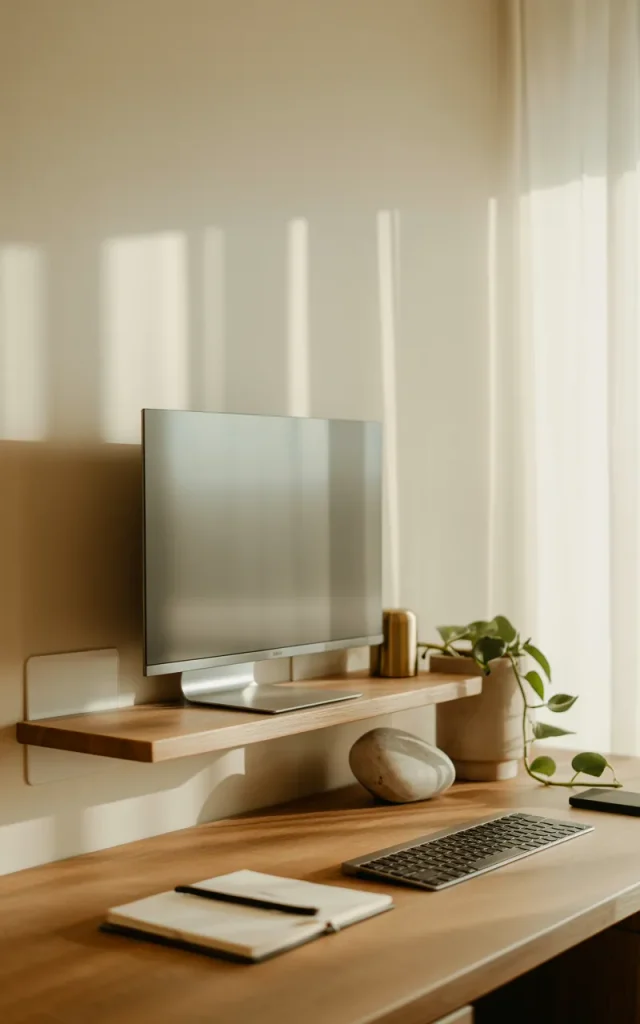
If you work with a desktop computer or monitor, reclaim some valuable desk space by raising the screen onto a wall-mounted shelf.
This gives you room underneath for a keyboard, notebook, or small storage boxes. It also creates a more intentional workstation.
Make sure the shelf is properly secured and rated for the weight of your equipment.
A Pro-tip:
Keep the shelf slightly wider than the monitor. The extra space gives you room for a small lamp, plant, or decorative object without making the setup feel crowded. It’s a small adjustment, but you’ll notice the difference every day.
Style the desk with one statement piece.
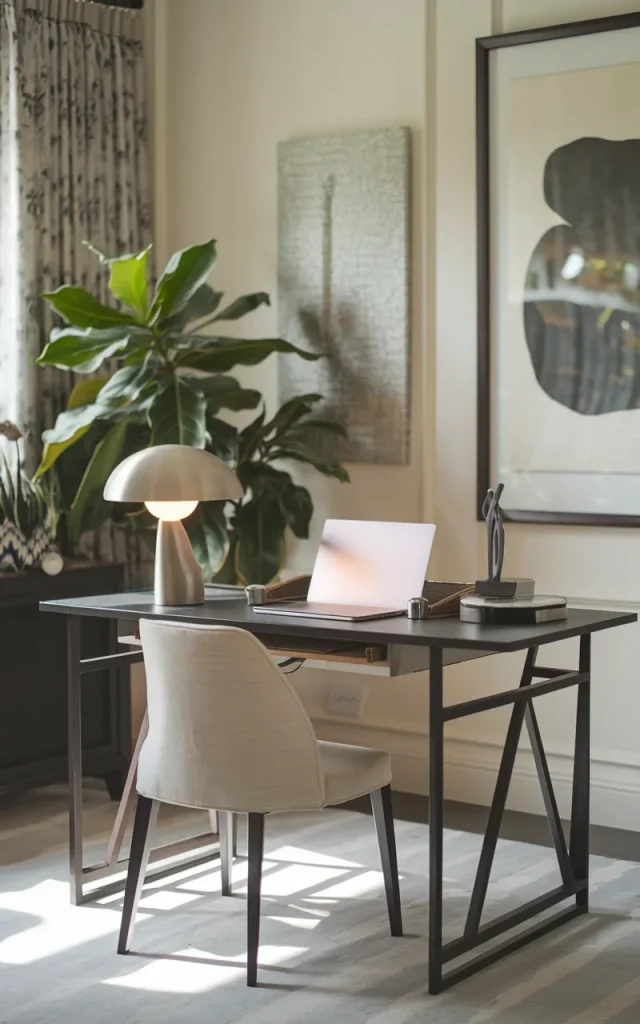
Small offices don’t need dozens of accessories to feel finished. In fact, too many decorative objects can quickly eat up your working surface.
Instead, choose one statement piece. It could be a sculptural lamp, oversized artwork, beautiful vase, unusual clock, or striking desk organizer.
Then keep the supporting pieces quiet.
Vibe check
- Minimal and calm? Choose sculptural ceramics.
- Warm and traditional? Try a vintage lamp.
- Modern? Pick a bold geometric accessory.
- Natural? Add a substantial leafy plant.
I find this approach much easier than trying to decorate every available inch.
Create a dual-purpose office behind curtains.
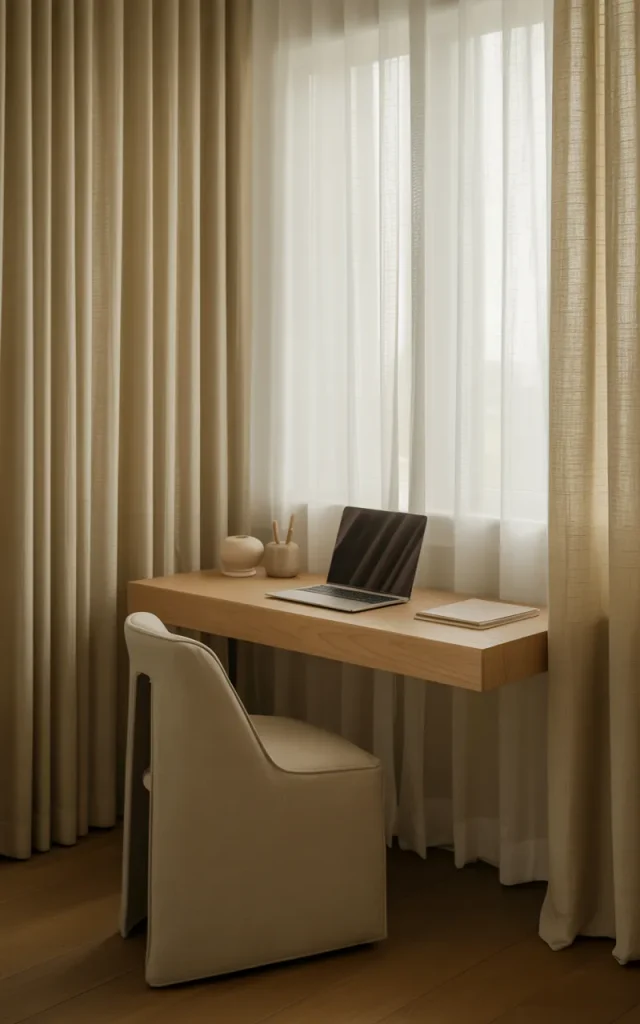
If you don’t have a dedicated room, create a workspace that can disappear when you’re finished. A shallow desk placed against the wall can be concealed behind full-height curtains.
Choose curtains that coordinate with the room so the office becomes part of the overall design rather than looking like a temporary workstation.
This is especially useful in living rooms and bedrooms where work equipment can otherwise dominate the space.
Small Space Hack:
Mount the curtain rod close to the ceiling and let the fabric reach the floor. The vertical line draws the eye upward and can make the room feel taller. When it’s time to work, open the curtains. When it’s time to relax, close them. Simple. 😊
Add a compact filing cabinet under the desk.
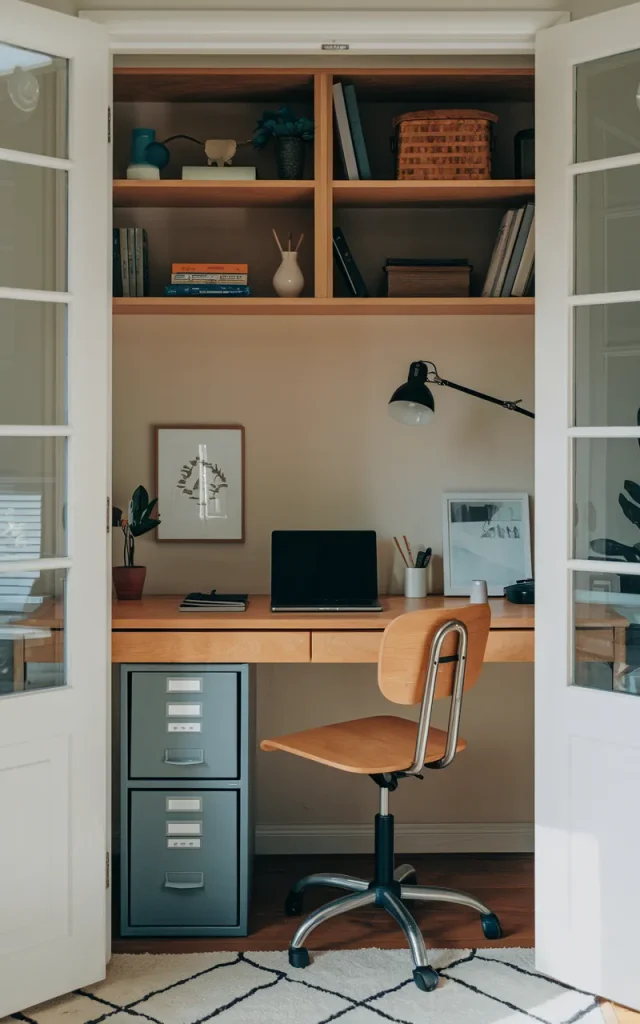
Paperwork can become a serious problem in a small office because piles have nowhere to hide. A compact filing cabinet gives documents a proper home without requiring another large storage unit.
Choose a cabinet that fits completely beneath or beside the desk.
I recommend sorting papers immediately rather than creating a “deal with it later” pile. That pile has a magical ability to become permanent.
Instant Gratification Tip:
Add simple labels to each drawer so filing takes seconds instead of becoming another chore. If most of your work is digital, you may only need one small drawer. Don’t buy storage for a paper collection you no longer have.
Choose furniture with hidden storage.
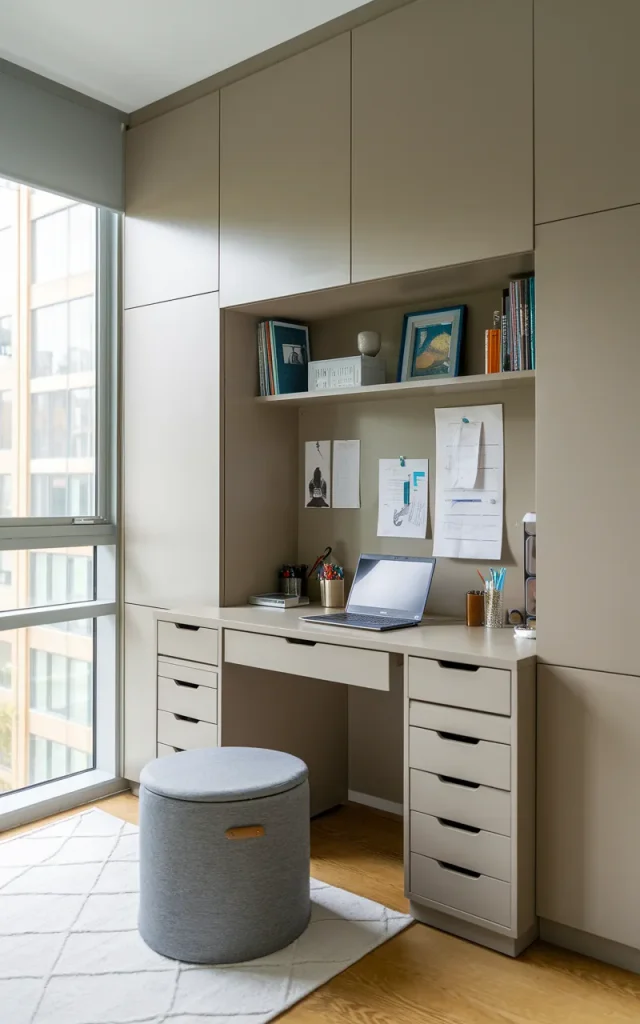
Every piece of furniture in a tiny office should ideally work a little harder. A desk with drawers, an ottoman with storage, or a cabinet with concealed compartments can help you maximize the room.
Look for multifunctional pieces instead of simply adding more furniture.
Why it works?

Hidden storage protects your visual calm. You can keep the things you need close without allowing them to dominate the room. I especially recommend this strategy if your office is located in a shared living space. The less visible office equipment there is, the easier it becomes to transition from work mode to home mode.
Use one continuous wall color.
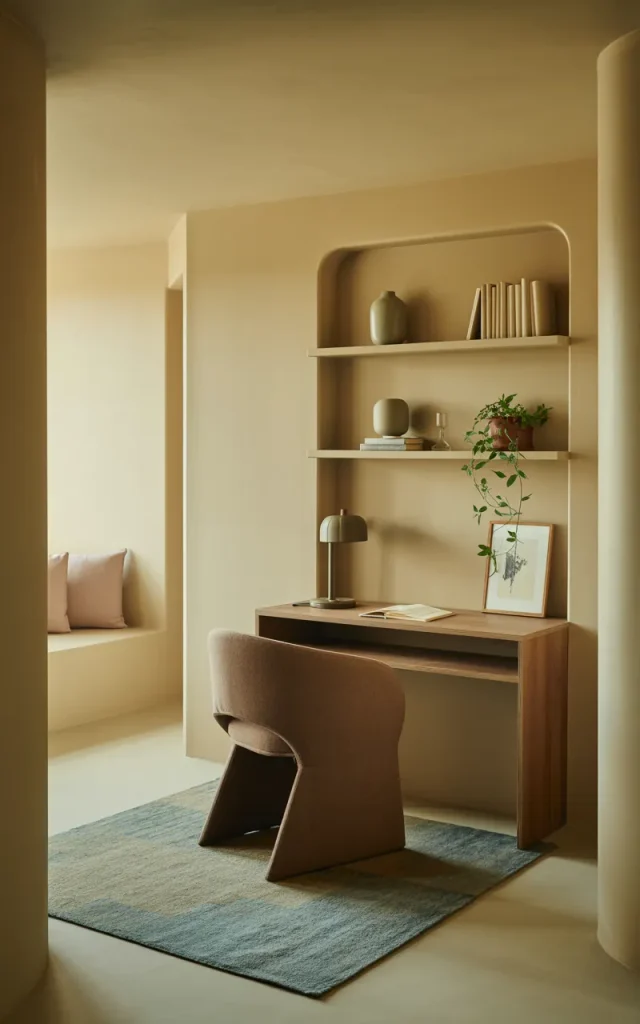
If your office occupies only part of a larger room, avoid visually chopping it up with too many contrasting colors.
Instead, keep the walls one continuous shade and define the office using furniture, lighting, and a rug.
This works beautifully in bedrooms, dining areas, and open-plan living spaces.
Colour swap suggestion:
| Instead of | Try |
| Cool white | Warm ivory |
| Dark gray | Soft greige |
| Stark beige | Mushroom taupe |
| Bright blue | Muted blue-gray |
The goal isn’t necessarily to make the office disappear. It’s to make it feel naturally connected to its surroundings.
Add a small rug to define the office zone.
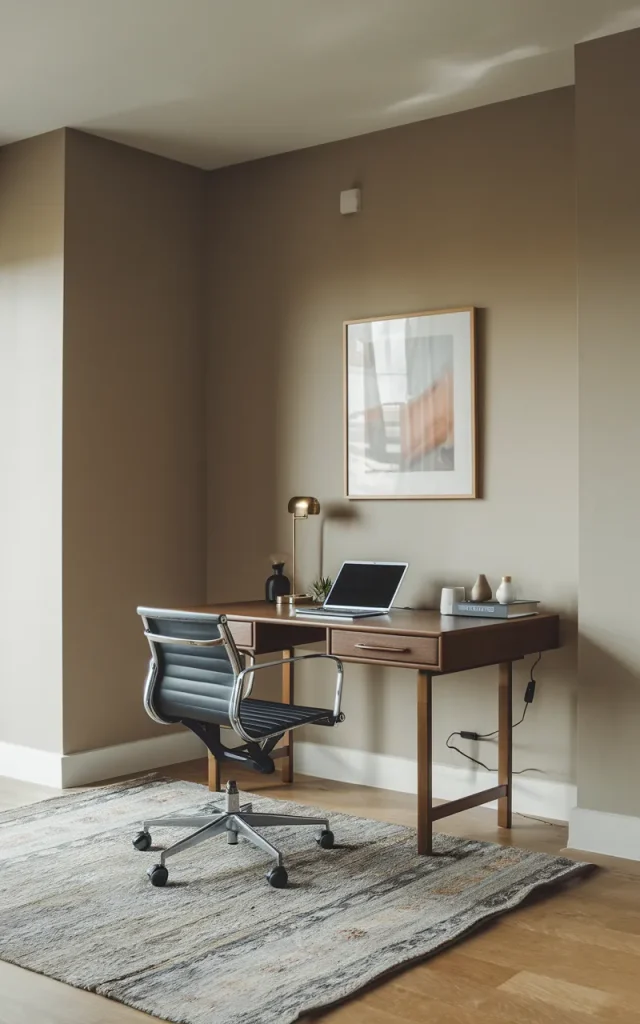
A rug can give a tiny workspace its own visual identity without needing walls or partitions.
Choose a rug that extends slightly beyond the desk and chair. This helps anchor the entire setup and makes the office feel like a deliberate zone.
I prefer low-pile rugs for work areas because office chairs can move more easily across them.
Works best in:

Open-plan living rooms, bedrooms, studio apartments, and multipurpose guest rooms. Keep the pattern relatively restrained if your office already contains colorful artwork or accessories. If everything is competing for attention, the small space will feel smaller.
Mount a narrow shelf above your monitor.
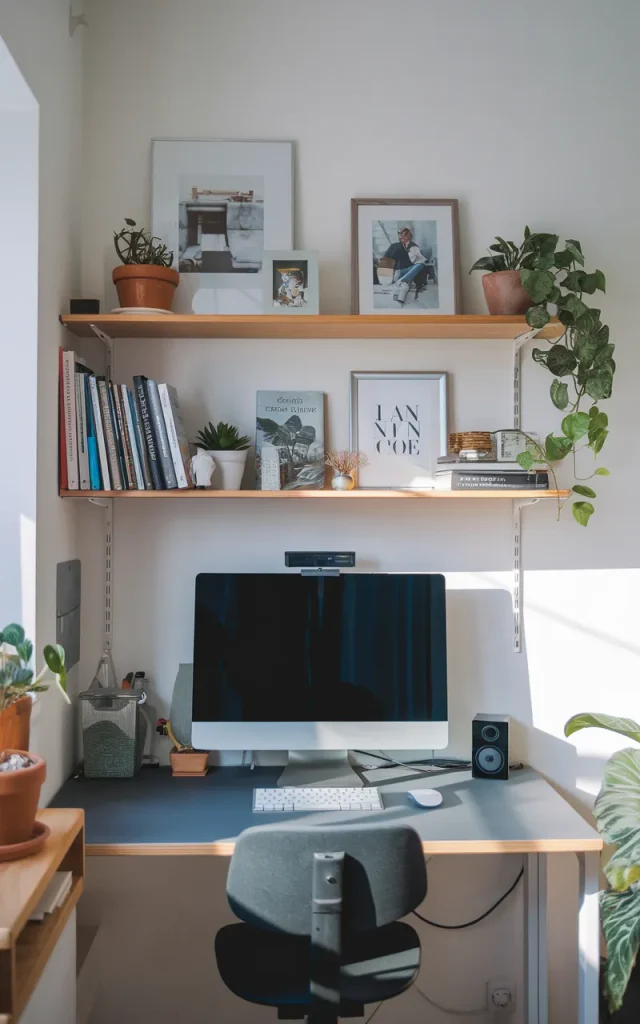
If you need a little extra display and storage space but don’t have room for deep shelving, install a narrow shelf above the monitor or desk.
Use it for lightweight objects such as framed photographs, small plants, books, or a compact speaker.
Keep the depth modest. A shelf that’s too deep can make the workstation feel top-heavy.
Do this 👉
- Display a few favorite objects.
- Leave gaps between pieces.
- Use small baskets for tiny supplies.
- Keep the visual weight balanced.
Not this ❌
- Stack everything together.
- Fill every inch.
- Store heavy equipment overhead.
- Let the shelf become a clutter zone.
Small storage works best when it’s edited.
Final Thoughts
Creating a small home office is really an exercise in making thoughtful choices. You don’t need a giant desk, an entire room, or an endless collection of storage furniture.
Start with one improvement. Maybe it’s the slim desk from idea one, the floating shelves from idea three, or simply better lighting. Then build from there.
Once you stop asking, “How can I fit everything in here?” and start asking, “How can I make this space work harder for me?” the possibilities become much more exciting. Pick one of these 22 Small Home Office Ideas and give your workspace a little upgrade this week. You might be surprised by how much difference a small change can make. ✨
