For years my patio was a slab with a table on it. Nice enough. But nobody wanted to sit out there for long, and I couldn’t figure out why. Then I dragged two pots of rosemary next to my chair one spring, and something shifted. I started brushing past them with my coffee. The whole space smelled green. I stayed.
That’s the secret behind every one of these patio garden ideas: plants don’t belong at the far end of the yard. They belong right where you sit, close enough to touch. Pots, raised beds, climbers, herbs, little trees. Bring them in close and the patio stops feeling like hardscape and starts feeling like a garden you happen to have chairs in. 🌿
Below are 21 ways to do it, from a single trough of grasses to a full edible garden. Pick one, start small, and let it grow on you. Literally.
Cluster Terracotta Pots in Odd-Numbered Groups
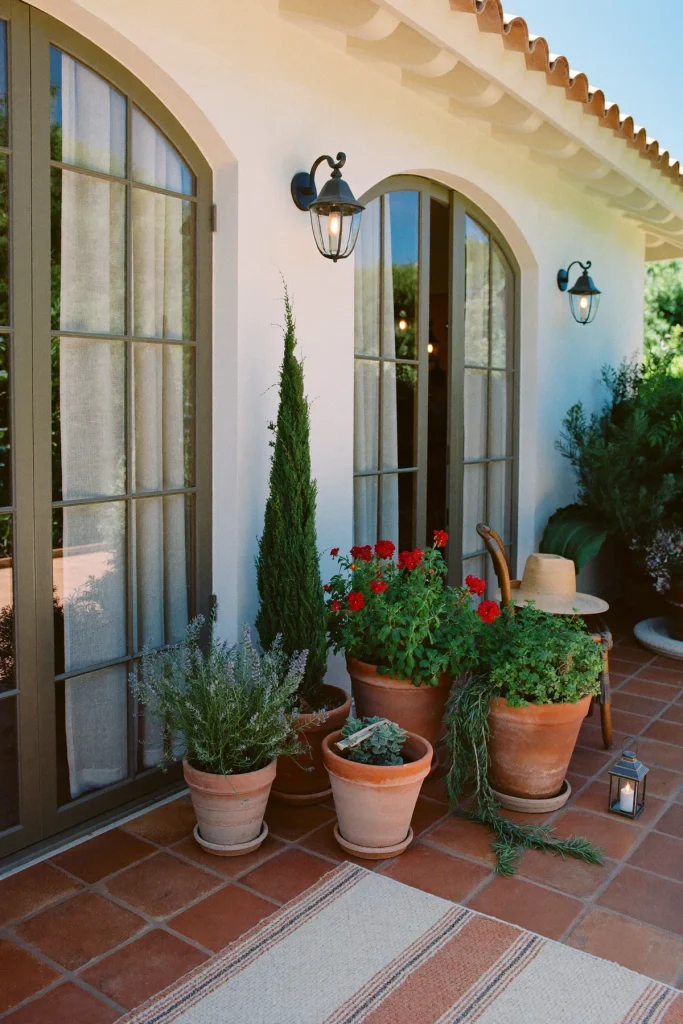
If you only try one thing this year, make it this. Grab three or five terracotta pots in different heights and group them tight in one corner of the patio, instead of lining them up like soldiers along the edge.
Plant the tallest with something upright, like a dwarf lemon cypress or a tall salvia. Fill the middle pots with geraniums or a mound of oregano, and let the smallest spill trailing rosemary over its rim. Odd numbers feel relaxed and natural to the eye, and the warm clay looks better every season as it weathers. 🪴
Build Cedar Raised Beds Along the Patio Edge
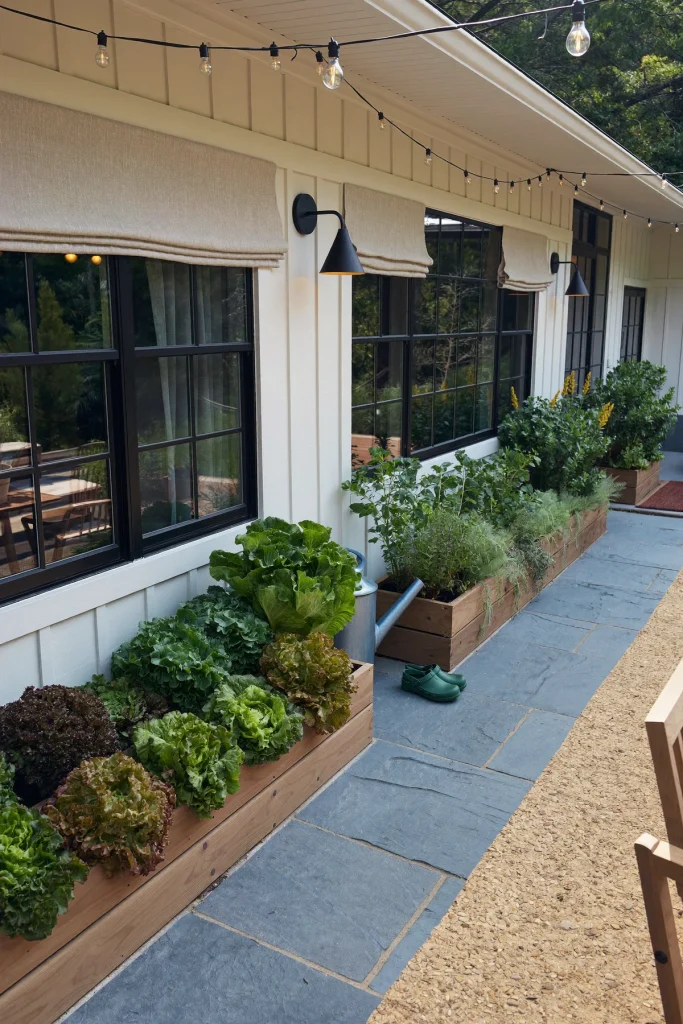
A raised bed right at the patio’s edge does two jobs. It defines the space like a low wall, and it puts lettuce, chard and herbs within arm’s reach of your dinner table.
Cedar is the easy pick because it resists rot without chemical treatment and fades to a soft silver. Keep beds around 18 to 24 inches tall so you can sit on the edge to weed. Long and narrow works best here; about two feet deep means you never have to step into the soil.
Tools You’ll Need
- Untreated cedar boards and exterior screws
- A drill, a level and a tape measure
- Hardware cloth for the base if you have burrowing critters
- A raised-bed soil mix (not plain garden soil)
Train Climbing Roses Up a Trellis on the House Wall
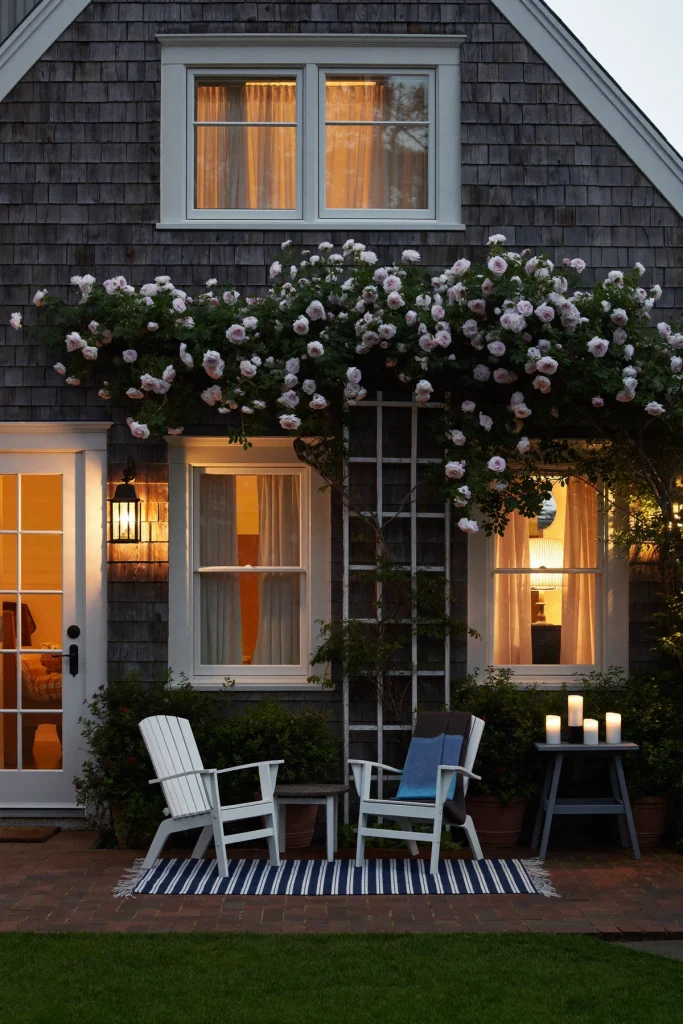
A bare wall behind the patio is a missed opportunity. Mount a simple wooden or metal trellis a couple of inches off the siding and plant a climbing rose at its base. In two or three summers you’ll have a wall of blooms right behind your seat.
Choose a repeat-blooming climber so you get flowers past June. Tie the canes sideways rather than straight up, because horizontal canes send up far more flowering shoots. Soft pink or creamy white roses against shingles or white clapboard? Pure classic charm. 🌹
Hang Wall Planters for Kitchen Herbs by the Back Door
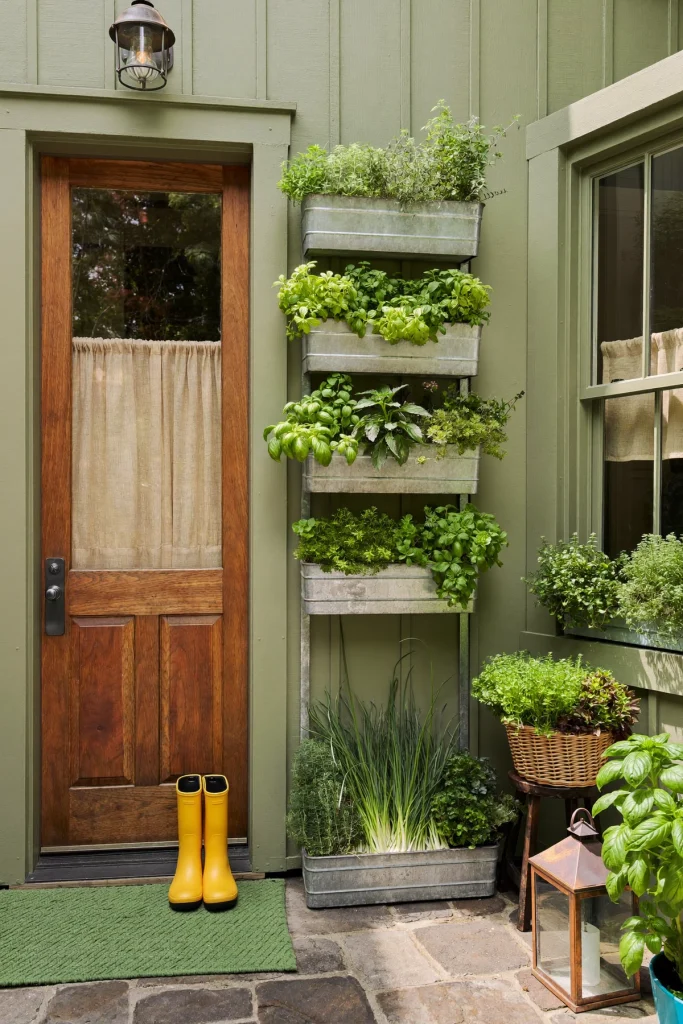
The best herb garden is the one you’ll actually use, and that usually means the one nearest the kitchen. Fix a row of wall planters or a slim wooden rack beside the back door and fill it with basil, chives, parsley, thyme and mint.
Snipping a handful while the pasta water boils becomes a little ritual. Keep the most-used herbs at eye level and the sprawlers, like mint, in their own pot so they don’t take over their neighbors.
Micro-Tip
Pinch basil just above a pair of leaves every week. It branches out and keeps you in pesto all summer instead of flowering and quitting.
Frame the Patio With a Lavender Border
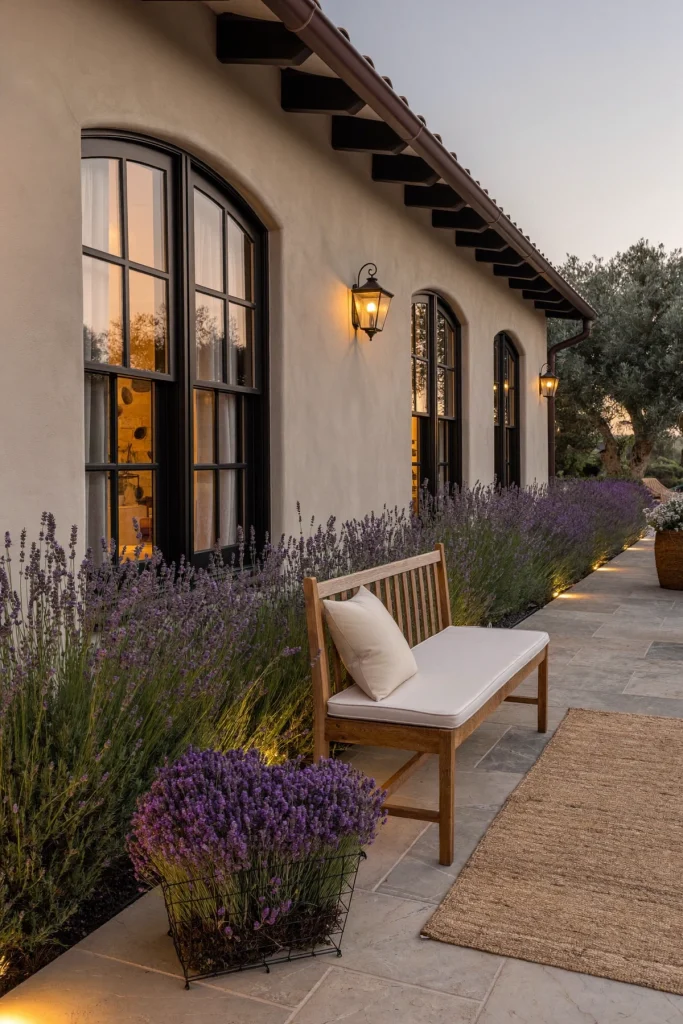
Few plants say “slow down” like lavender. Plant a single row along one or two sides of the patio and you get a soft purple edge, a hum of bees in summer and a scent that drifts up every time someone walks past.
Lavender wants sun and sharp drainage, so mix grit into heavy soil or mound the bed slightly. Space plants about 18 inches apart; they’ll knit into a continuous hedge by year two. Shear lightly after flowering to keep them tidy rather than woody. 💜
Anchor the Corners With Potted Olive Trees
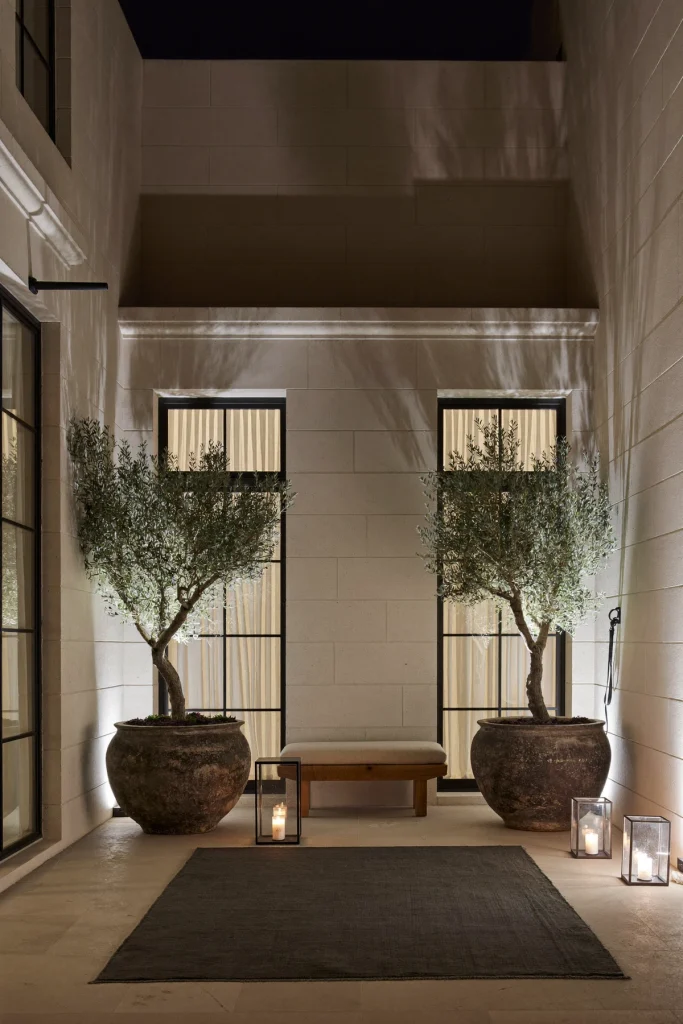
A pair of olive trees in big pots gives a patio instant structure. Their silvery leaves look calm next to almost any color, and they read as grown-up and established even when the rest of the garden is brand new.
Use the largest pots you can manage, at least 20 inches across, so the roots stay cool and you water less often. Place one on each side of a doorway or at two corners of the seating area, and uplight them at night for a quiet glow.
Common Mistakes to Avoid
- Pots with no drainage hole (olives hate wet feet)
- Overwatering through winter, when they barely drink
- Leaving them out in a hard freeze in colder zones
Let Wisteria Drape Over a Pergola
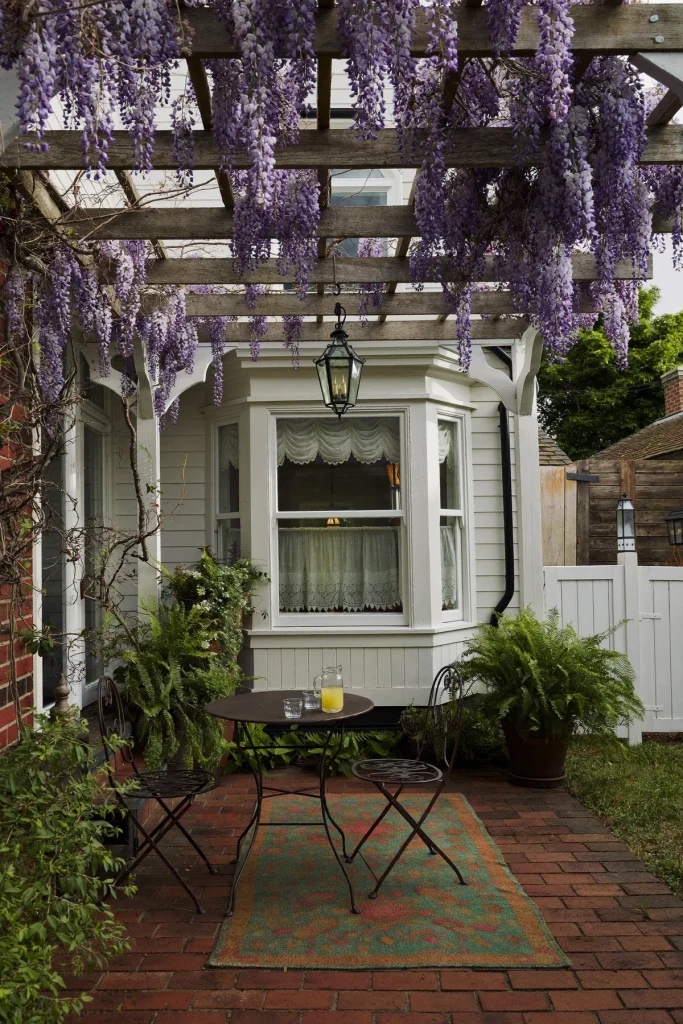
If you already have a pergola, planting it is the easiest upgrade there is. Wisteria is the showstopper: long hanging clusters of lilac flowers in spring, then a leafy ceiling that filters summer sun into dappled shade.
Be patient and be firm. It’s vigorous, so it needs a sturdy structure and two prunings a year, one in summer and one in winter, to keep blooms coming. Can’t wait years? Plant a fast climbing hydrangea or a grape vine alongside it for green in the meantime.
Myth-Buster

"Wisteria will tear down my house." Not if you grow it on a freestanding pergola away from gutters and siding, and keep up with pruning. The trouble only starts when it's left alone.
Fill Galvanized Troughs With Ornamental Grasses
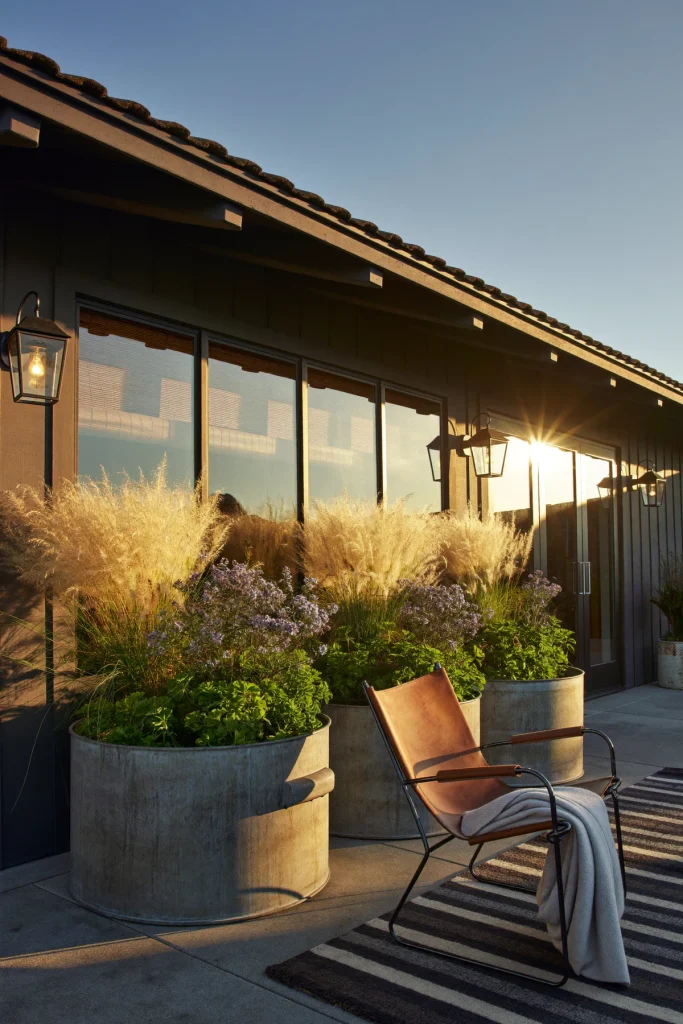
Stock tanks and galvanized troughs make generous planters that look right at home on a ranch-style patio. Fill two or three with ornamental grasses and you get movement, sound and that lovely golden glow when evening light hits the seed heads.
Drill drainage holes in the bottom, add a few inches of gravel, then a good potting mix. Grasses like feather reed grass, little bluestem or fountain grass stay upright and need almost nothing from you except a haircut in late winter. ✨
Plant a Moon Garden of White Flowers
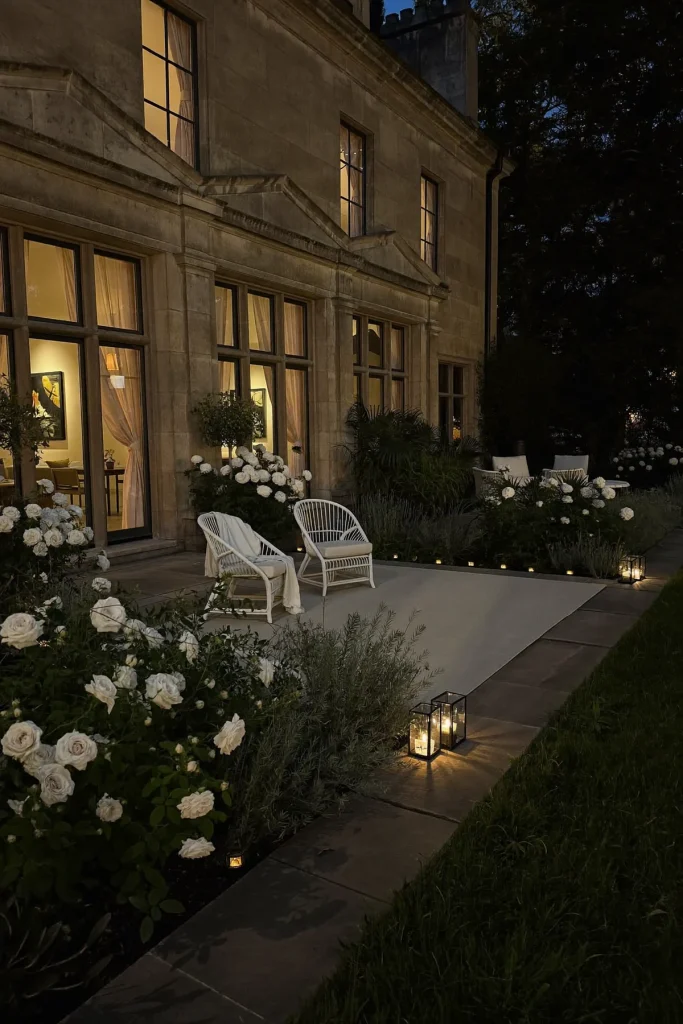
Most patio time happens after dinner, so why not plant for the dark? A moon garden uses white blooms and silver foliage that seem to glow once the sun goes down, right when you finally sit outside.
Ring the patio with white roses, hydrangeas and phlox, then tuck silvery lamb’s ear and dusty miller in front. Add a few path lights and a lantern or two and the whole bed shimmers in the blue hour. 🌙
Moon Garden Starter List
- White hydrangea or white roses for height
- Night-blooming moonflower vine for a trellis
- Lamb’s ear and dusty miller for silver edging
- White nicotiana for evening scent
Tuck a Cottage Garden Bed Right Up to the Patio
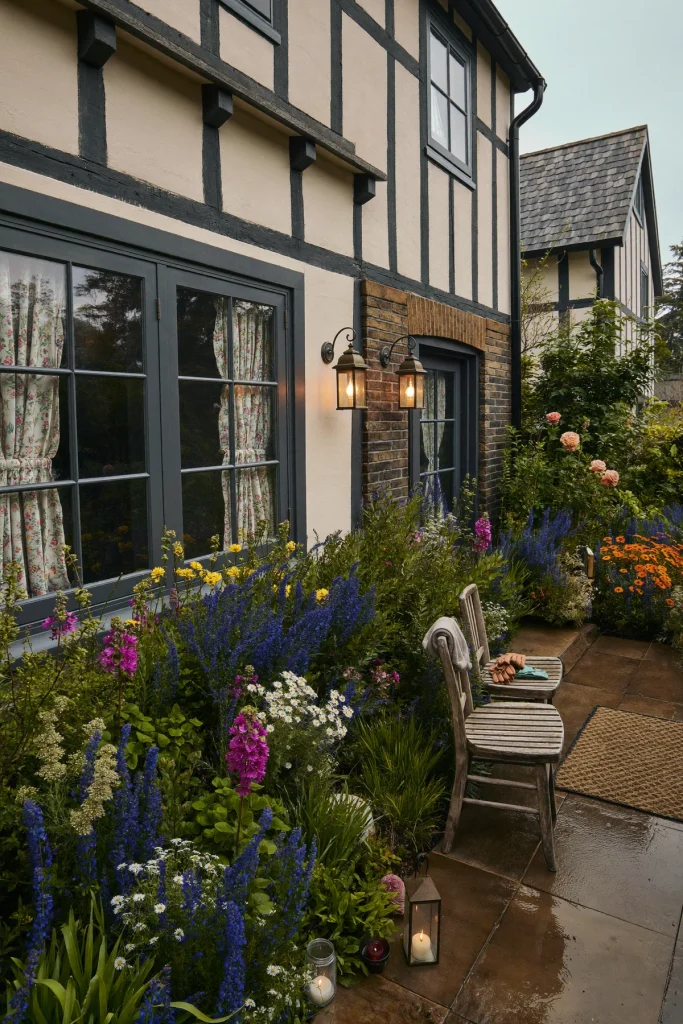
Here’s where I break the “neat edge” rule on purpose. Instead of a tidy strip between patio and lawn, let a cottage bed spill right up to the patio edge: foxgloves, hollyhocks, catmint, daisies and roses all jostling together.
The magic is in the layering. Tall spires at the back, mid-height mounds in the middle and low spillers in front that soften the hard edge with flowers. Plant in drifts of three or more of each so it looks abundant, not random.
After a summer rain, the colors deepen and the whole bed smells sweet. It looks like it’s been there for decades, even in its second season. 🌸
Create a Tropical Corner With Big-Leaf Plants
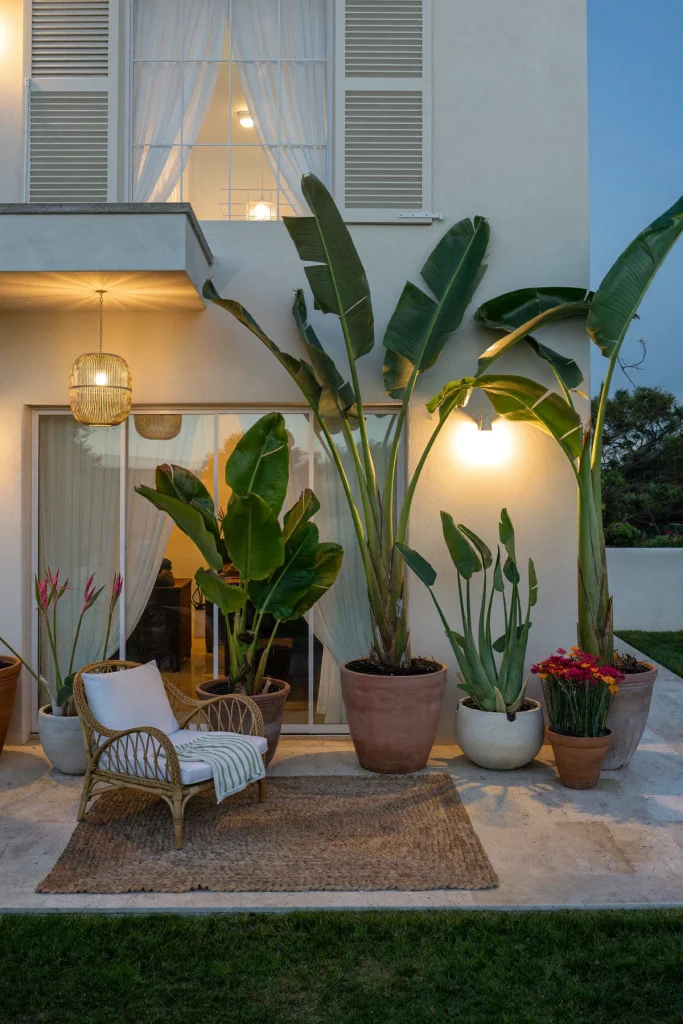
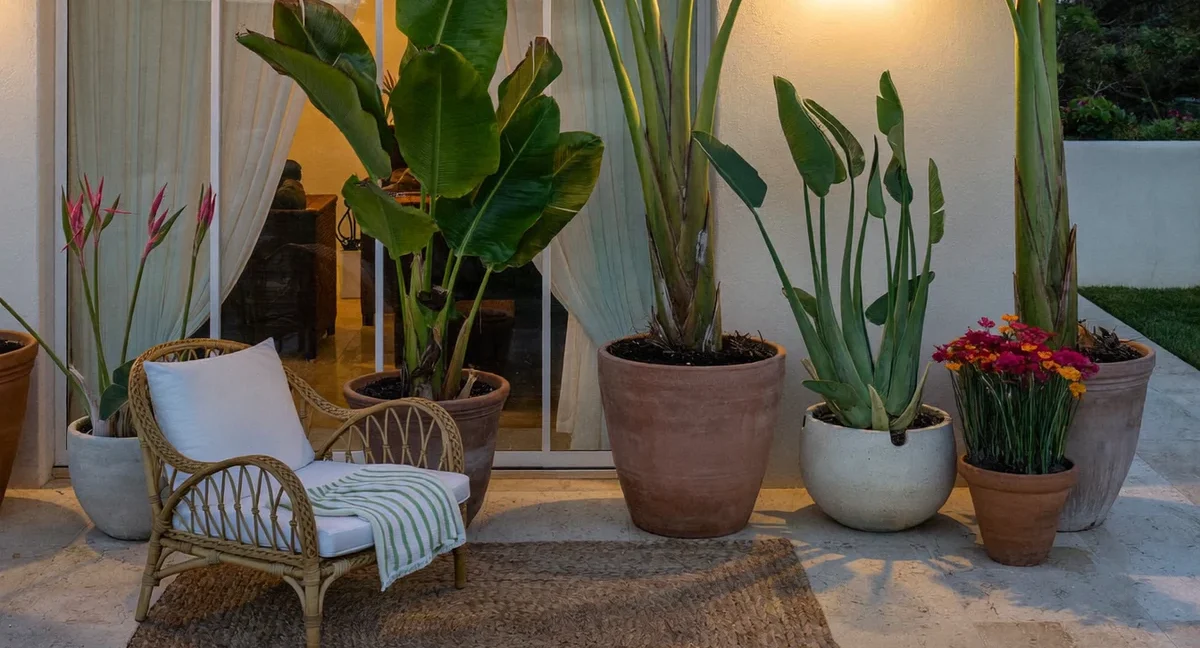
Want vacation vibes without leaving home? Big leaves do the heavy lifting. Group bananas, elephant ears, bird of paradise and a couple of potted palms in one corner and the patio instantly feels lush and coastal.
Layer them by height in a mix of ground beds and large pots, and repeat one leaf shape so it looks like a planned grouping rather than a plant sale. Underplant with caladiums or coleus for pops of pink and lime.
At dusk, an uplight behind the big leaves throws dramatic shadows across the house wall. It’s the cheapest mood lighting you’ll ever set up.
Overwintering Note
In colder zones, cut bananas and elephant ears back after the first frost and store the roots or tubers somewhere cool, dark and dry. Potted palms can come indoors next to a bright window.
Grow a Patio Vegetable Garden in Half-Barrels
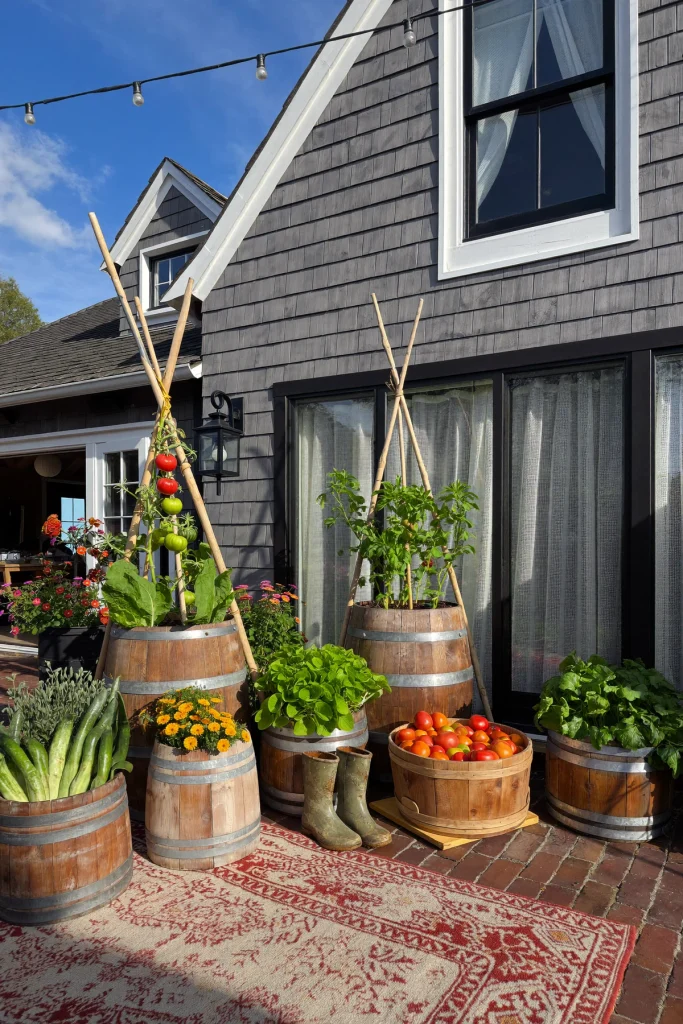
You don’t need a vegetable plot to grow real food. Wooden half-barrels hold enough soil for tomatoes, peppers, zucchini and pole beans, and they look charming grouped around the edge of a sunny patio.
Give each barrel one main crop plus a few companions: a tomato with basil and marigolds, a pepper with parsley. Set a sturdy cage or stake in as you plant, not later, so you don’t damage the roots.
The bonus? Barrels sit right where you’ll see them every day, so you notice thirsty plants and ripe tomatoes long before they’d catch your eye in a far-off bed. 🍅
Weekend Project
- Drill four or five drainage holes in each barrel base.
- Set barrels on pot feet so water can escape.
- Fill with a vegetable potting mix and a scoop of compost.
- Plant, stake and water deeply.
Plant a Japanese-Inspired Maple and Moss Corner
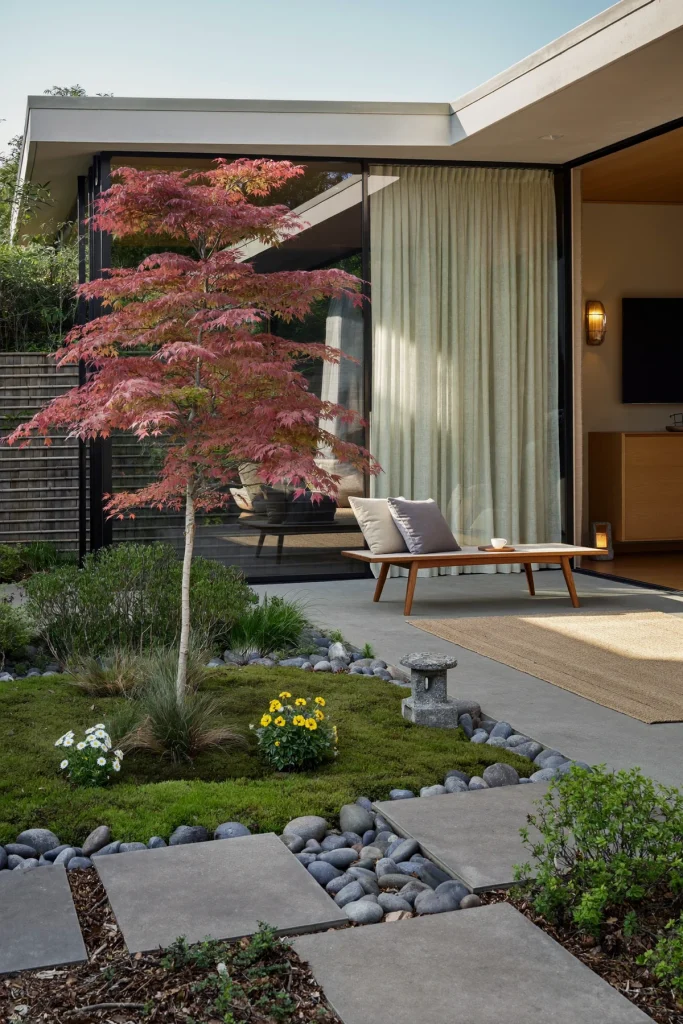
Sometimes a garden needs less, not more. One beautiful Japanese maple, a low carpet of moss or creeping groundcover, a few river stones and a simple stone lantern can give a corner of the patio a deeply peaceful feel.
Pick a maple with a graceful shape. A weeping laceleaf type stays small; an upright one gives more shade. Keep the palette tight with greens, grays and that one tree’s leaf color.
It’s the kind of corner you’ll sit near with tea and actually exhale. 🍵
Why Designers Do This
One specimen plant with space around it reads as intentional and calm. Crowd it with ten other things and the eye has nowhere to rest.
Plant a Pollinator Border That Opens Onto a Meadow
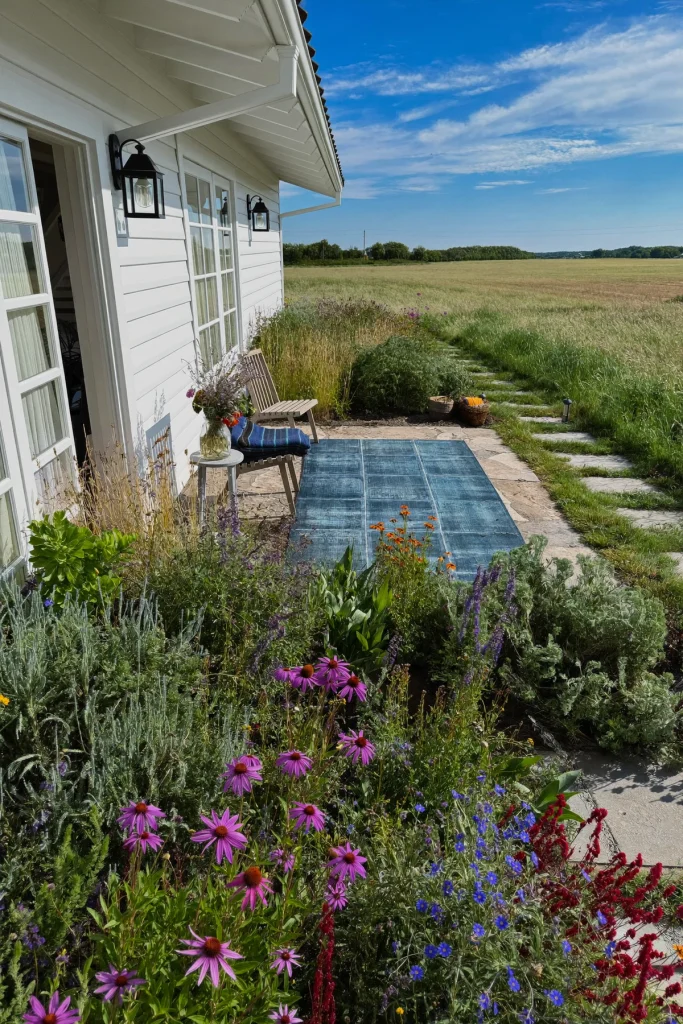
If your patio looks out over open land, let the garden blur into it. A border of coneflowers, black-eyed Susans, salvia, bee balm and asters creates a loose, buzzing edge that leads the eye right out to the meadow.
Plant in big, generous blocks and let some grasses weave between them. Native perennials are tough, handle drought once settled, and feed bees, butterflies and hummingbirds from early summer into fall.
Skip deadheading in autumn. The seed heads feed goldfinches and look wonderful with frost on them. 🦋
Grow a Citrus Collection in Glazed Pots
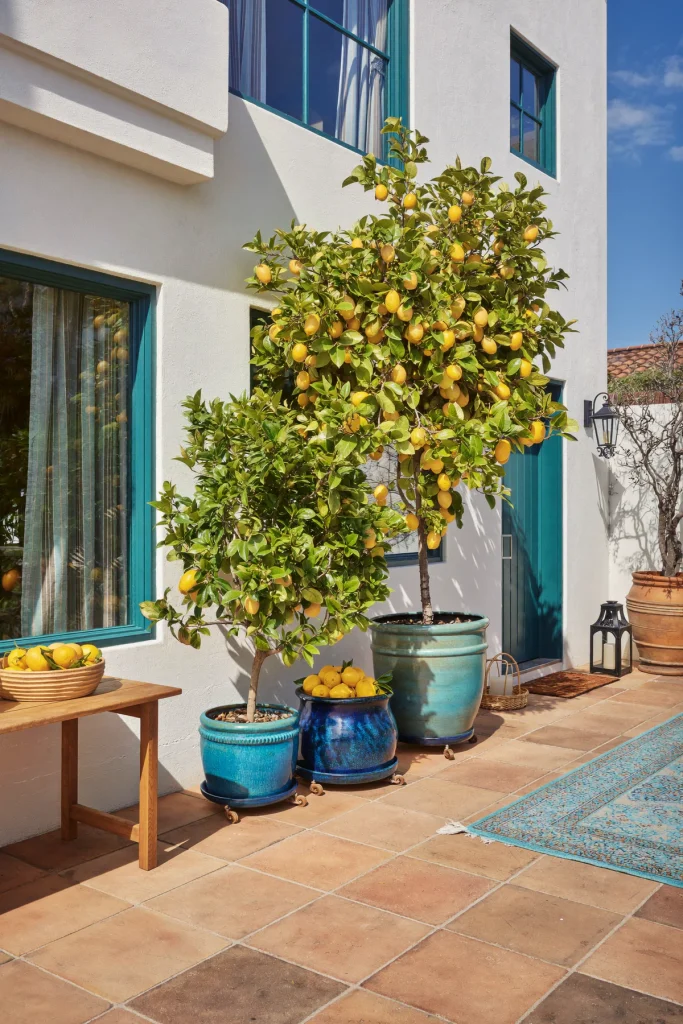
Few things are as cheerful as a lemon tree on the patio. Group a Meyer lemon, a kumquat and a dwarf orange in glazed pots, and you get glossy leaves all year, blossoms that smell like heaven and fruit you can actually use.
Citrus wants full sun, steady water and a pot with excellent drainage. Glazed ceramic holds moisture longer than bare clay, which helps in hot spells. Feed with a citrus fertilizer from spring through late summer.
Pick glaze colors that echo something nearby: a cobalt cushion, a teal door, a green shutter. Suddenly the trees look like they belong to the house.
In cooler regions, put the pots on rolling plant caddies so you can move them inside before the first frost. They’ll happily sit by a sunny window through winter and head back out in spring. 🍋
Stack a Tiered Plant Stand Into a Potted Garden
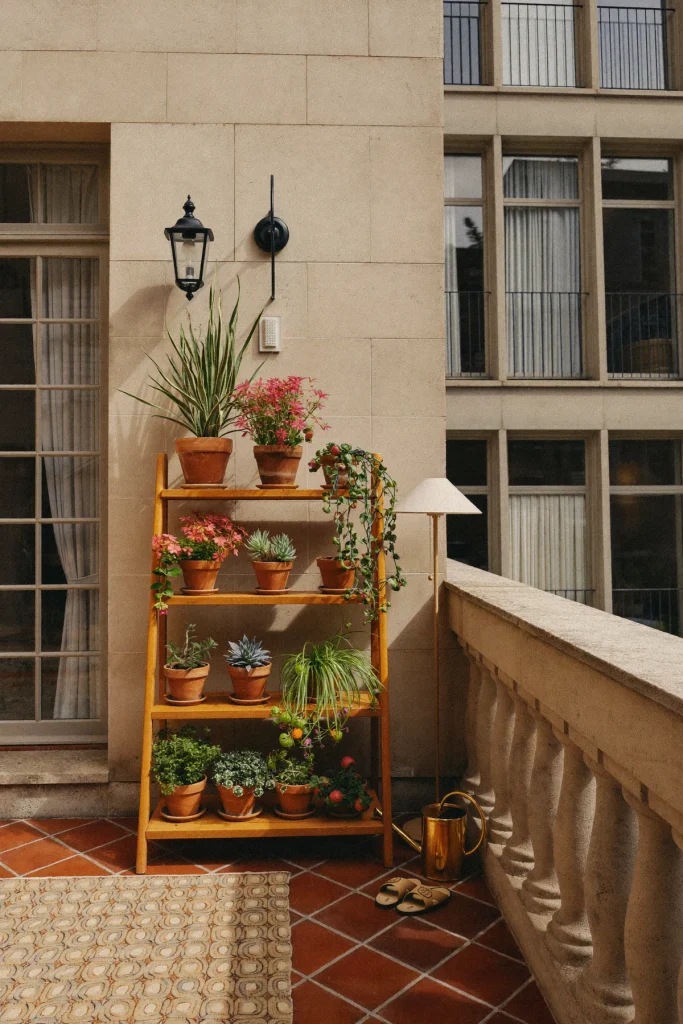
When floor space is limited but you crave a jungle, build up. A tiered wooden or metal plant stand holds a dozen small pots in the footprint of one big one, and it turns a blank wall of the patio into a lush display.
Put sun lovers on the top tier and shade-tolerant plants below, where the upper shelves cast shade. Mix herbs, trailing pothos for a covered spot, begonias, small succulents and a pot or two of strawberries.
Use pots in one material, all terracotta or all white ceramic, so the stand looks curated rather than cluttered. A drip tray on each shelf keeps water from raining down on the plants below.
It’s also the easiest garden to rearrange. Swap a pot or two each season and the whole stand feels new.
Surround Your Seats With Night-Scented Plants
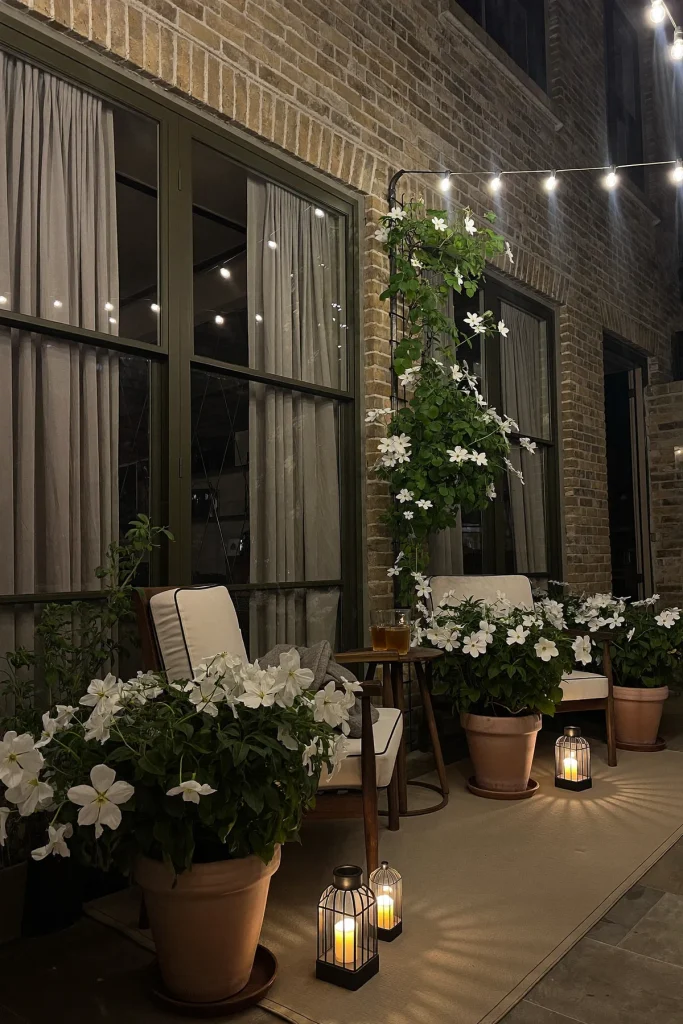
Have you ever walked past jasmine on a warm evening and just stopped? You can plan for that moment. Place potted star jasmine, night phlox, nicotiana and four o’clocks right beside your favorite seats, where the scent is strongest after dark.
Many fragrant plants save their perfume for evening to attract moths, which means they’re at their best exactly when you’re outside with a glass of something cold. Group the pots within a few feet of the chairs, not out at the edge of the yard.
Pair the scent with soft light from candle lanterns and a strand of bulbs overhead.
The Psychology Behind It
Scent is closely tied to memory and mood. A patio that smells the same way every summer evening quickly becomes the place your family associates with winding down.
Go Bold With Concrete Planters and Architectural Plants
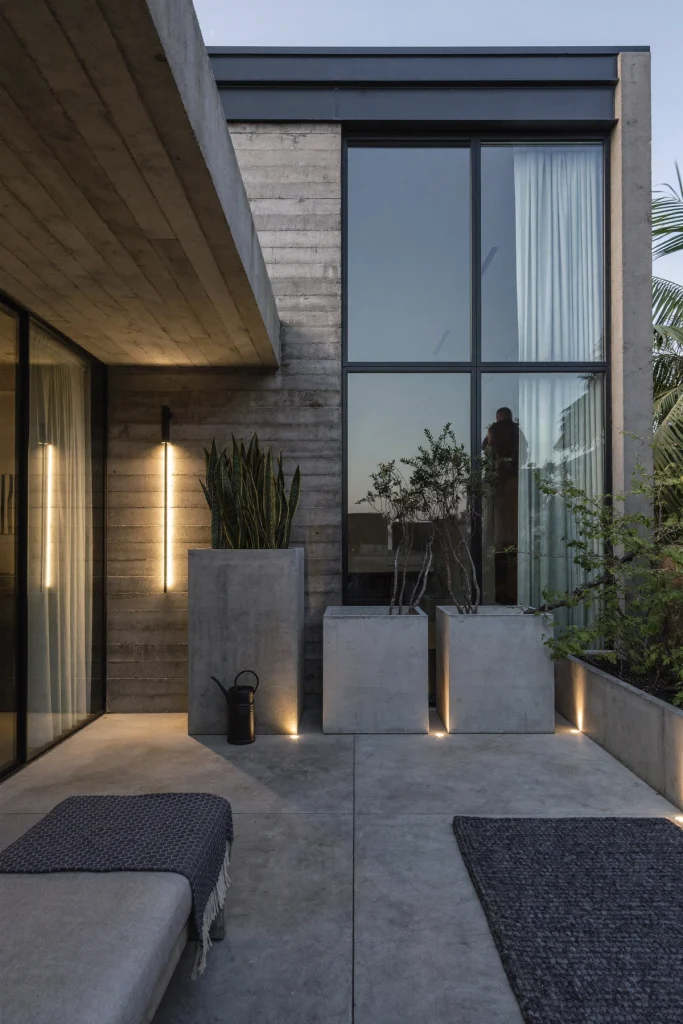
For a modern or brutalist home, soft cottage flowers can look out of place. Instead, choose oversized cast-concrete planters, chunky cubes and long troughs, and fill them with plants that have strong shapes: snake plant, phormium, horsetail, cordyline and clipped yew.
Keep the plant palette very tight, maybe three or four varieties, and repeat them. The contrast between rough gray concrete and sharp, glossy leaves is where the drama lives.
Light it like sculpture. Small in-ground spotlights angled up the face of each planter make the whole patio feel like a gallery at night, but a lived-in one, with a throw on the bench and a watering can by the door.
This style is surprisingly low-maintenance. Architectural plants don’t need deadheading, and concrete never needs painting.
Plant a Cut-Flower Bed Beside the Patio
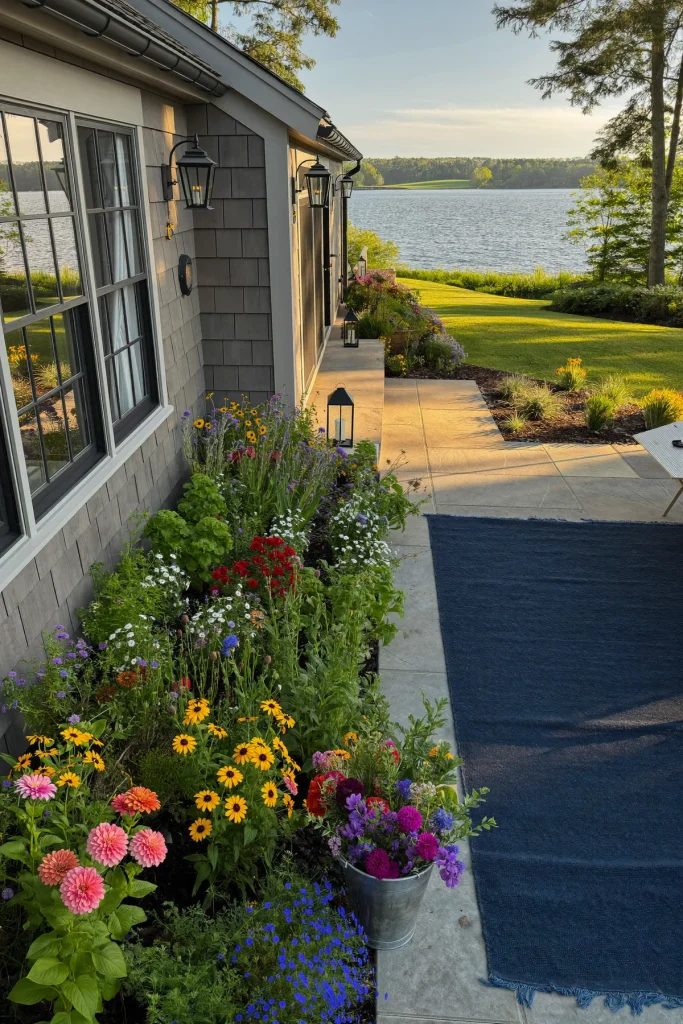
Imagine walking out with scissors and coming back with a full vase. A cut-flower bed next to the patio makes that a weekly habit. Dahlias, zinnias, cosmos, snapdragons and sunflowers all love being cut; the more you pick, the more they bloom.
Plant in straight rows rather than drifts, like a little farm, so it’s easy to reach in and harvest. Leave a narrow path of stepping stones or mulch so you never compact the soil.
Grow tall varieties on the side farthest from the patio so they don’t block your view, especially if you’ve got a lake or a field beyond. Keep a bucket of water and a pair of snips on a hook nearby so cutting takes thirty seconds.
Every bouquet on your kitchen table all summer will come from ten steps away. 💐
Cost Breakdown
| Item | Rough cost |
|---|---|
| Seeds for zinnias, cosmos and sunflowers | Around 15–30 |
| Dahlia tubers (a handful) | Around 30–80 |
| Compost and mulch | Around 40–100 |
| Stakes and twine | Around 15–30 |
Layer Pots in Bold Glazes for a Maximalist Garden
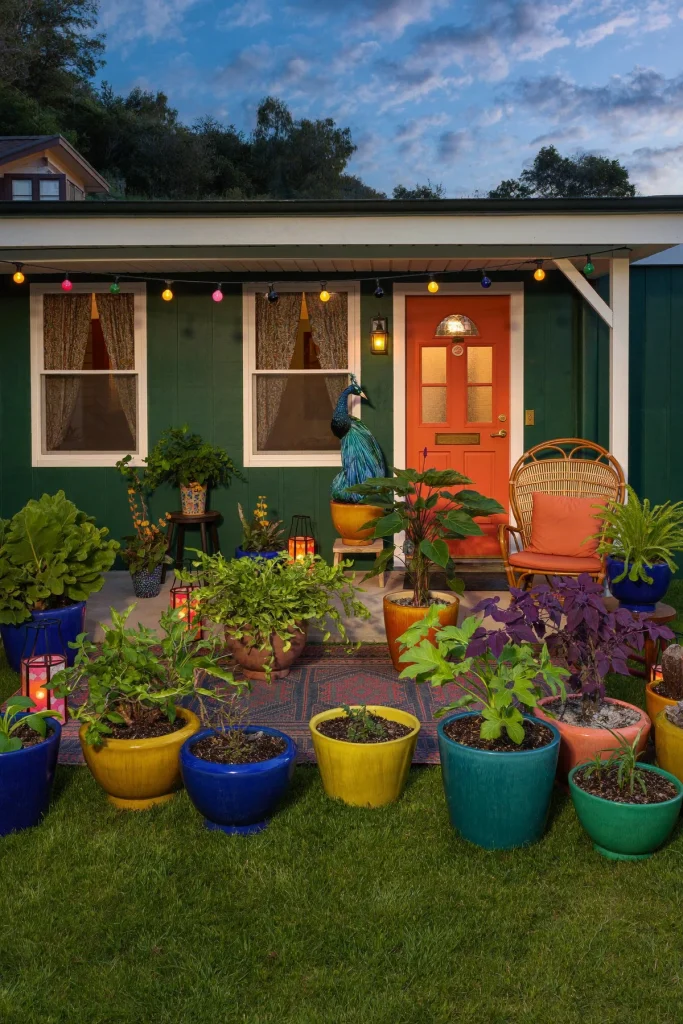
Who says a patio garden has to be calm? If you love color, gather pots in cobalt, emerald, mustard and coral and pack them in, mixing sizes and shapes on the ground, on stools and on low shelves.
The trick is to give the chaos a backbone. Repeat two or three pot colors throughout, and repeat a few plants, like coleus, canna and sweet potato vine, so the eye finds patterns among the abundance.
Use foliage as color too. Purple, lime and burgundy leaves add as much punch as any flower and keep looking good when blooms fade.
At dusk, with bulbs strung overhead and a few lanterns tucked between the pots, it feels like a joyful little party of plants. One of my favorite looks for a bungalow with a painted door. 🎨
Fill Containers With Evergreens for Year-Round Green
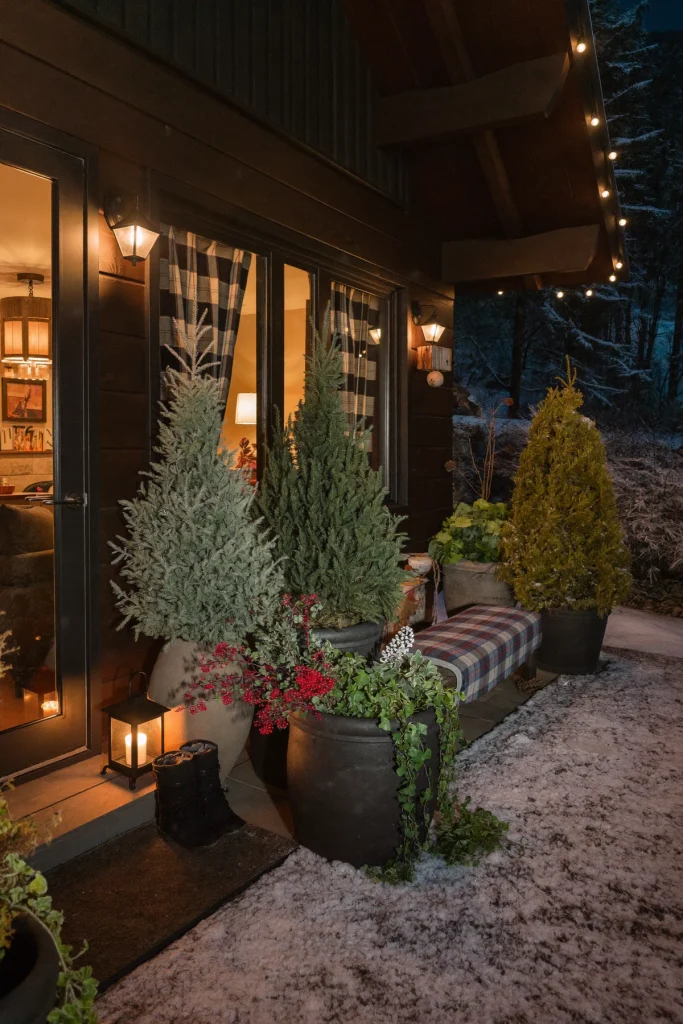
Most patio gardens vanish by November. Not this one. Plant big containers with dwarf conifers, boxwood, wintergreen, heather and trailing ivy, and your patio stays green straight through the snowy months.
Mix textures for interest: a soft blue spruce, a golden cypress, a dark green holly with berries. Tuck in cut branches of red twig dogwood and pinecones in late fall, then switch to tulips and pansies around the evergreens in spring.
This works especially well near a mountain home or anywhere with long winters, where an outdoor fire glow on a crisp evening makes those evergreens look magical.
Pick frost-proof pots, like fiberglass, thick concrete or high-fired stoneware. Ordinary terracotta can crack when wet soil freezes.
Thrill, Fill, Spill Formula
- Thrill: one tall conifer in the center or back
- Fill: mounding heather or wintergreen around it
- Spill: trailing ivy or creeping jenny over the edge
Bring the Garden Closer
You don’t need all thirty. Honestly, you don’t even need five. Pick one idea that makes you smile, maybe a cluster of pots, a lemon tree or a row of lavender, and put it right where you sit. Live with it for a season.
The best patio gardens grow slowly, one pot and one climber at a time. Soon you’ll catch yourself lingering outside a little longer, coffee in hand, poking at the basil and checking on the roses. That’s when you know it’s working. 🌼
