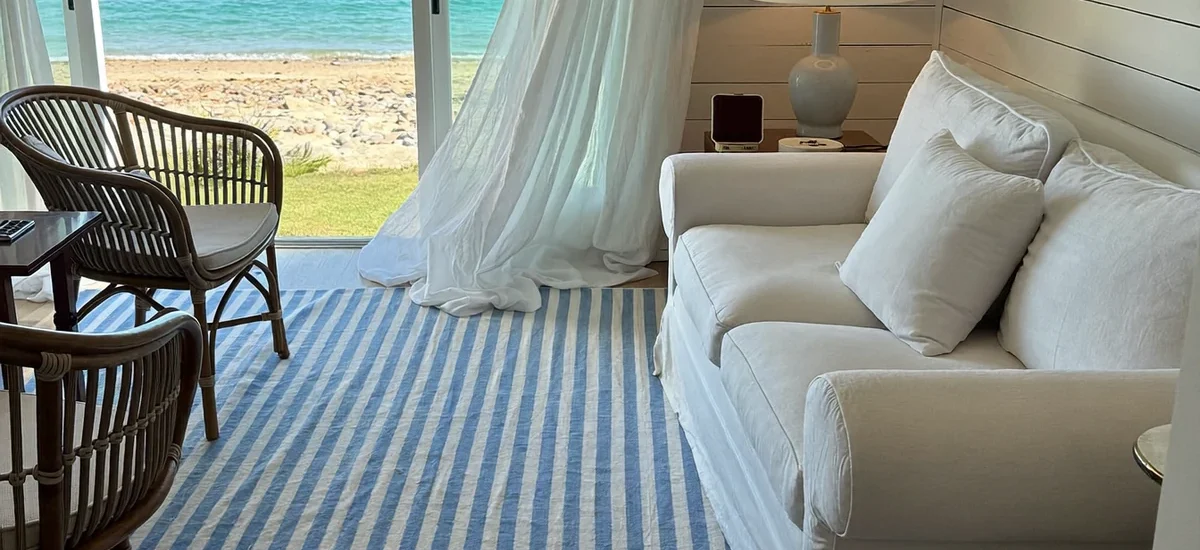
I’ll say it plainly: the rug is the piece that makes or breaks a living room. You can have the perfect sofa and gorgeous lamps, and if the rug is too small or the wrong texture, the whole room feels like it’s floating.
The good news? Rugs are one of the easiest fixes in the house. Get the size right, pick a material that fits how your family actually lives, and the furniture suddenly looks like it belongs together. 🧶
Below are 23 ideas I keep coming back to, from the sizing rules I wish someone had told me years ago to layering tricks, kid-proof picks, vintage finds and a few bold rugs for the brave. Grab a coffee and a tape measure.
Size Up to an 8×10 So the Front Legs Land on the Rug
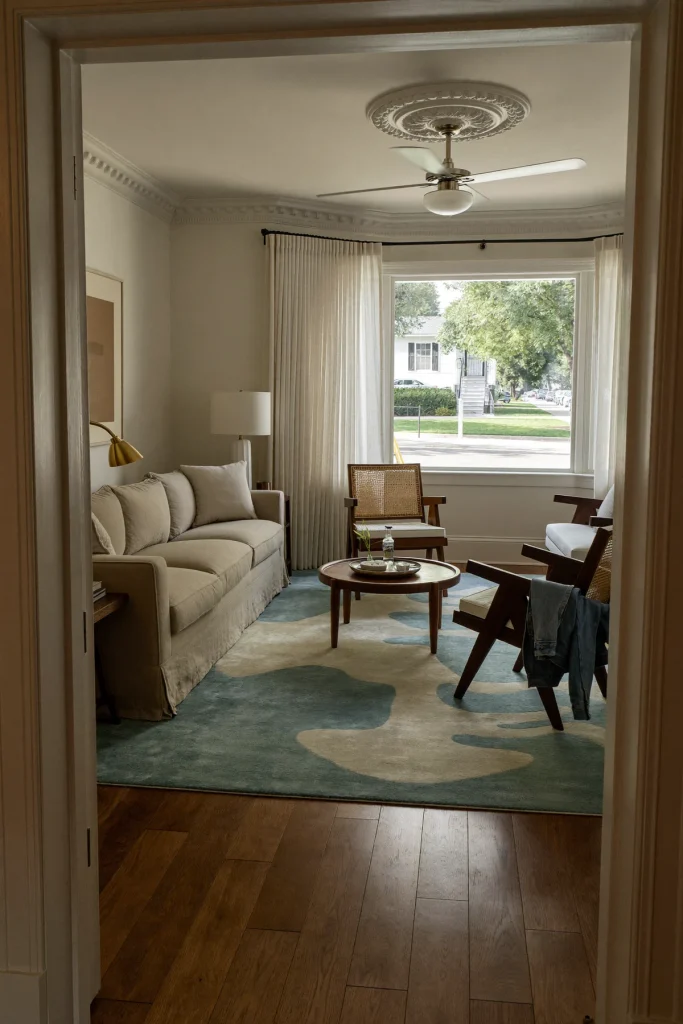
The most common rug mistake I see is a 5×8 floating in the middle of the seating area like a bath mat. For most family living rooms, an 8×10 is the sweet spot.
Here’s the rule: the front legs of the sofa and every chair should sit on the rug, with the back legs on the bare floor. That one move connects all the furniture into a single, cozy group.
Measure before you shop. Tape out the rug’s outline on the floor with painter’s tape and live with it for a day or two. You’ll know quickly whether it reaches far enough, and it’s much easier than hauling a giant rug back to the store.
Rule of Thumb
| Your seating | Rug size to try |
|---|---|
| Loveseat and one chair | 6×9 |
| Full sofa and two chairs | 8×10 |
| Sectional or sofa plus loveseat | 9×12 or larger |
Roll Out a Chunky Jute Rug for Earthy Texture
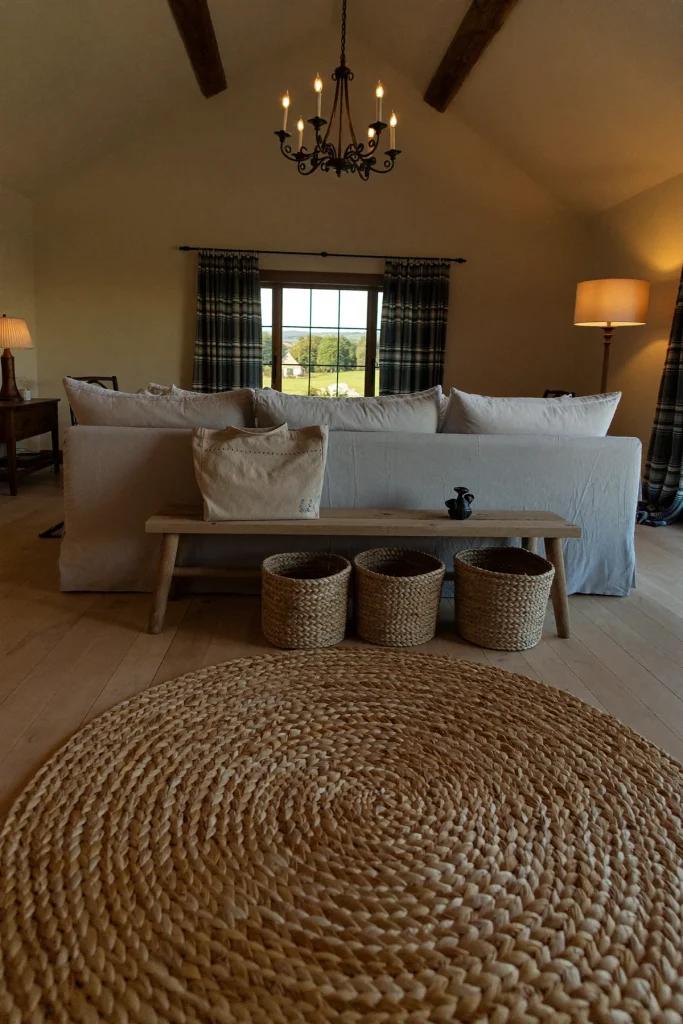
A thick, braided jute rug brings that relaxed, sun-baked texture that works in farmhouse rooms, coastal-inspired rooms and everything between. It’s also one of the most budget-friendly ways to cover a lot of floor. 🌾
I love it most in a lake house or farmhouse-inspired room with slipcovered seating, woven baskets and pale wood. The golden color warms up white walls and makes the whole room feel relaxed and barefoot-friendly.
Jute is best in living rooms with lighter foot traffic and no spill-happy toddlers, because it can stain and doesn’t love water.
Honest Shed Report
New jute sheds for the first few weeks. Vacuum it often without the beater bar and the fuzz settles down. A rug pad underneath helps it lie flat and stops the fibers rubbing on the floor.
Choose a Flat-Woven Sisal for the Busiest Room in the House
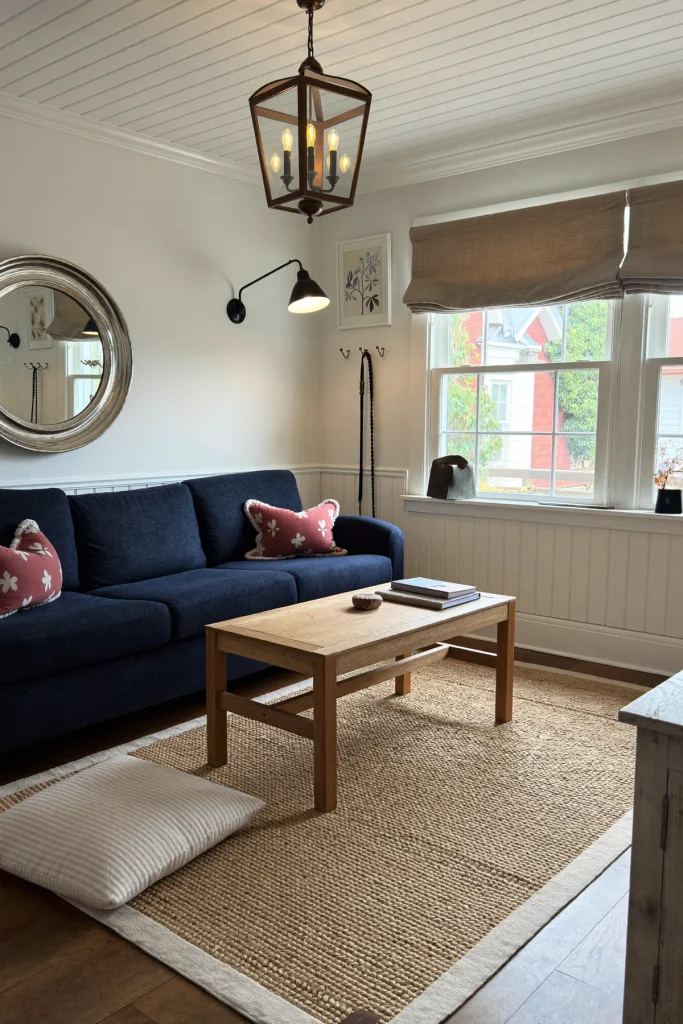
Sisal looks a lot like jute, but it’s tougher and tighter. If your living room is the main walkway from the front door to the kitchen, this is the natural fiber to choose.
The flat weave means crumbs sit on top for easy vacuuming, and the fibers stand up to constant traffic. It’s a bit firmer underfoot, so I like to soften it with a plush pouf or a floor cushion where the kids like to sit. Look for one bound in cotton or leather tape for a tailored edge.
Toss a Sheepskin by the Reading Chair
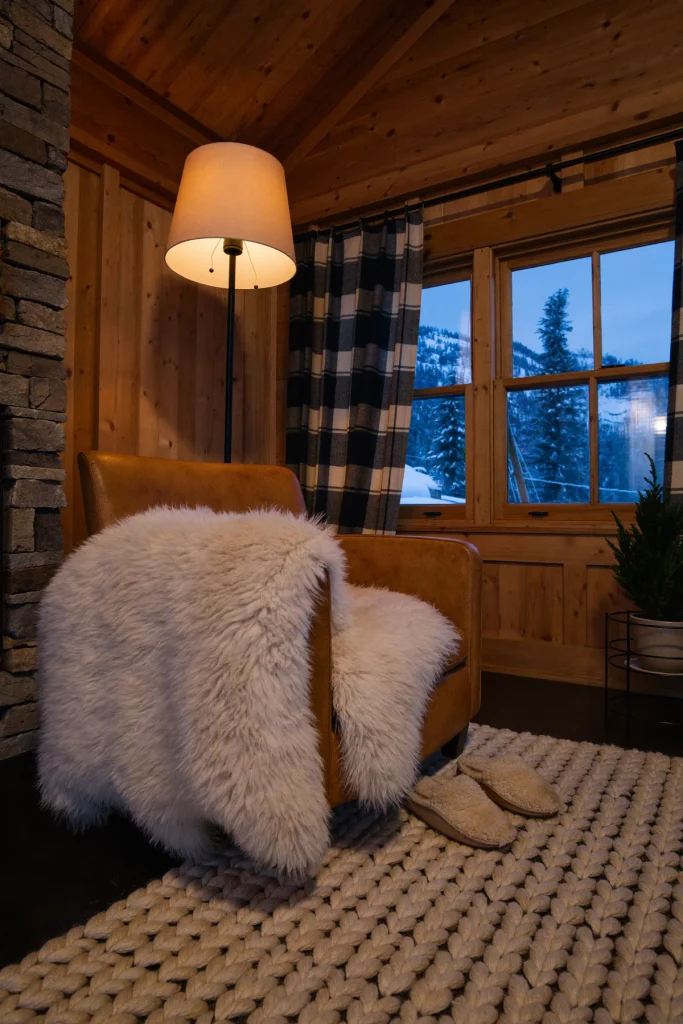
A sheepskin is the coziest little layer you can add, and it costs far less than a second full rug. Drape one in front of an armchair or half over the edge of the main rug.
Remember the chunky jute from idea 3? A creamy sheepskin on top of it is my favorite texture combination ever, rough and soft right next to each other. It’s the first spot everyone’s bare feet head to on a winter morning. ❄️ Faux versions are washable and very convincing these days.
Pick a Machine-Washable Rug for Kids and Pets
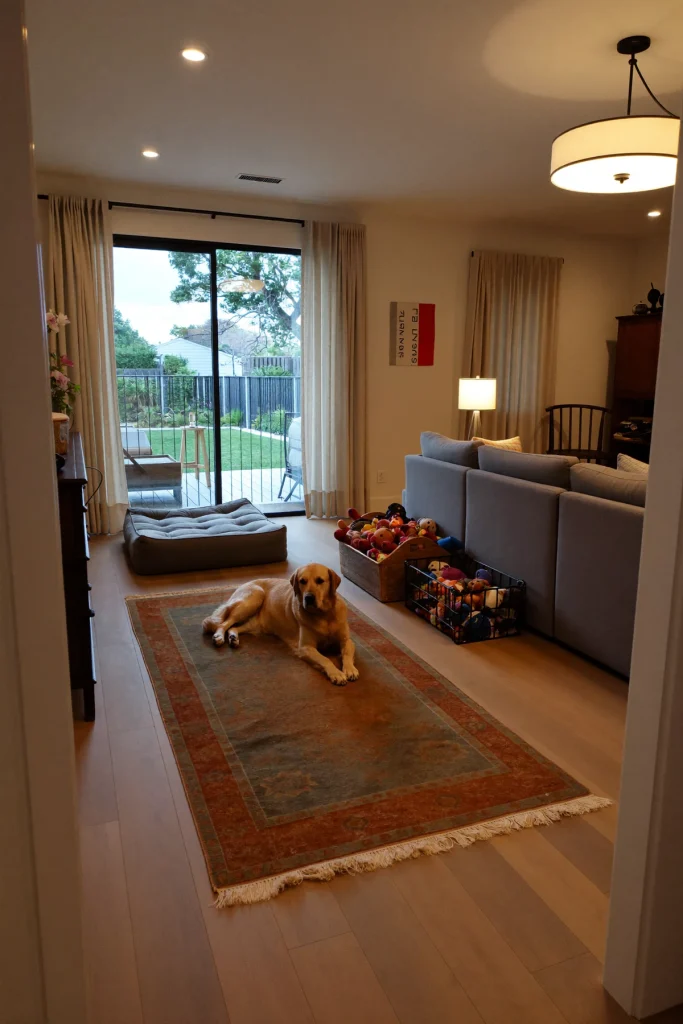
If you have little ones, a dog or a cat who occasionally gets sick at 2 a.m., a washable rug is a sanity saver. 🐾 Many now come with a thin top layer that peels off a grippy pad and goes straight into the washer.
They come in muted vintage-look patterns, which hide everyday mess far better than solid cream.
Most are low-pile or flat, so they’re easy for robot vacuums to cross and won’t trip toddlers who are still finding their feet. Just know they’re thinner than a traditional rug, so a cushioned pad underneath makes them feel much more substantial.
Kid- and Pet-Proof It
- Choose busy, mid-tone patterns over solids
- Check your washer’s capacity before buying a large size
- Skip loop piles if your pet has claws that snag
- Keep a second cover so one can dry while the other’s down
Set a Round Rug Under a Round Coffee Table
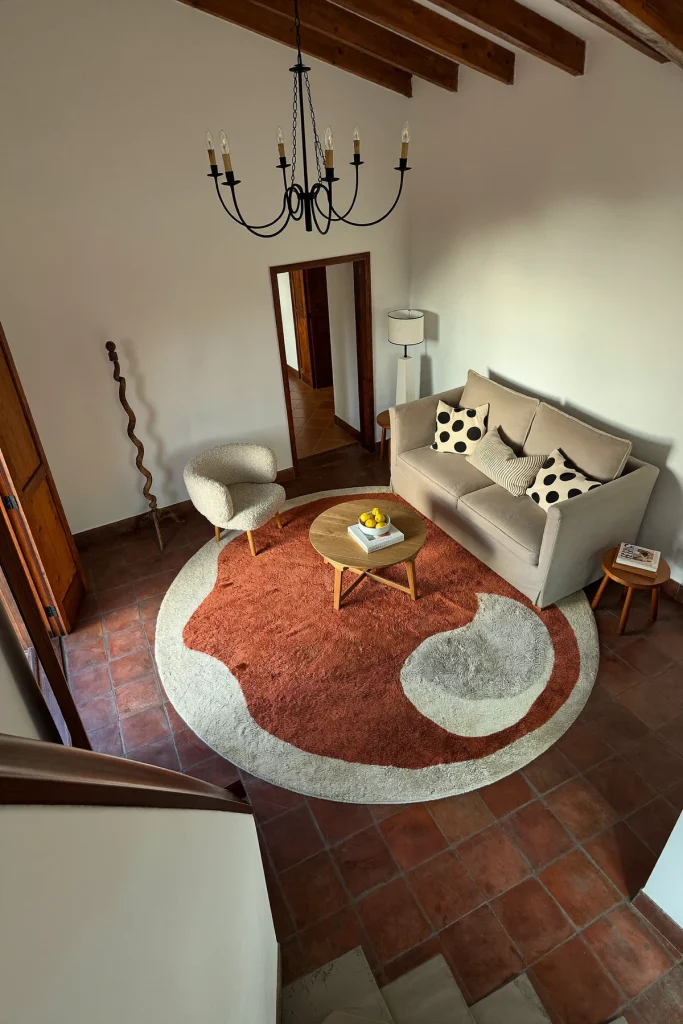
A round rug repeats the curve of a round coffee table and makes the seating area feel softer and more sociable. It’s especially lovely in square rooms or when chairs are arranged in a loose circle.
Size it so it reaches at least the front legs of the sofa and chairs, which usually means 8 feet across or more. A too-small round rug looks like a target on the floor. I love a round rug in a Spanish-inspired room with arched doorways that echo the shape.
Run a Long Runner Along the Walkway Behind the Sofa
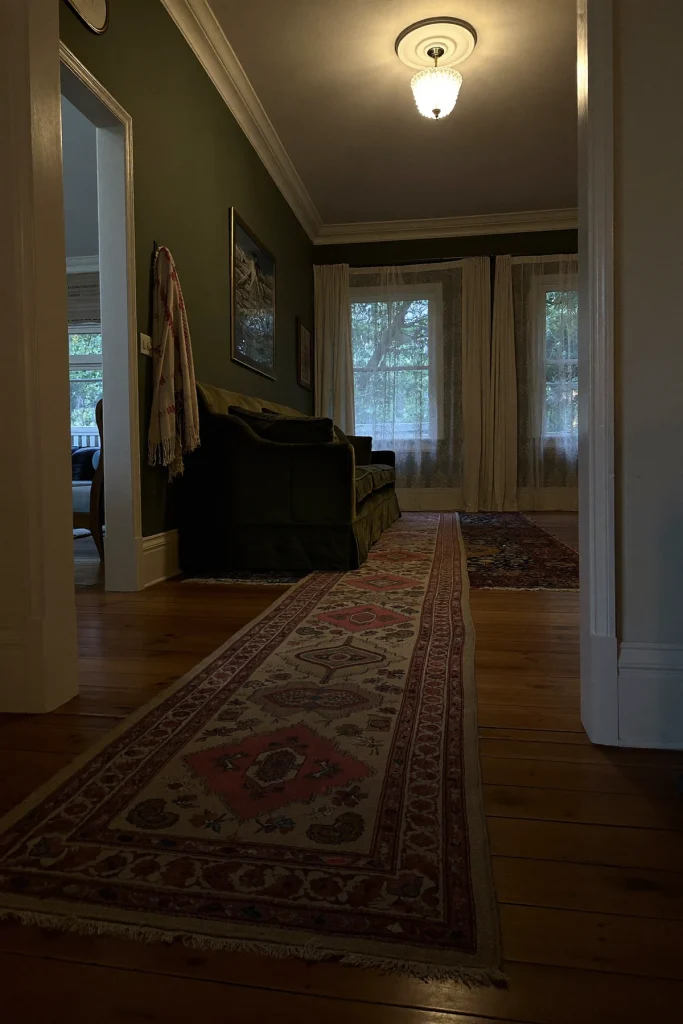
When the path through your living room runs behind the sofa, a runner turns that strip of floor into a proper hallway. It protects the wood from daily traffic and quietly guides people around the seating instead of through it.
Pick a runner that’s about 6 inches narrower than the walkway on each side, and long enough to cover most of the path. A slim vintage runner in faded reds or blues adds old-house charm, even in a newer home.
Make sure it doesn’t touch the main rug. A gap of at least 8 inches keeps the two from fighting and lets each one do its own job.
Bring Pattern and Warmth With a Colorful Kilim
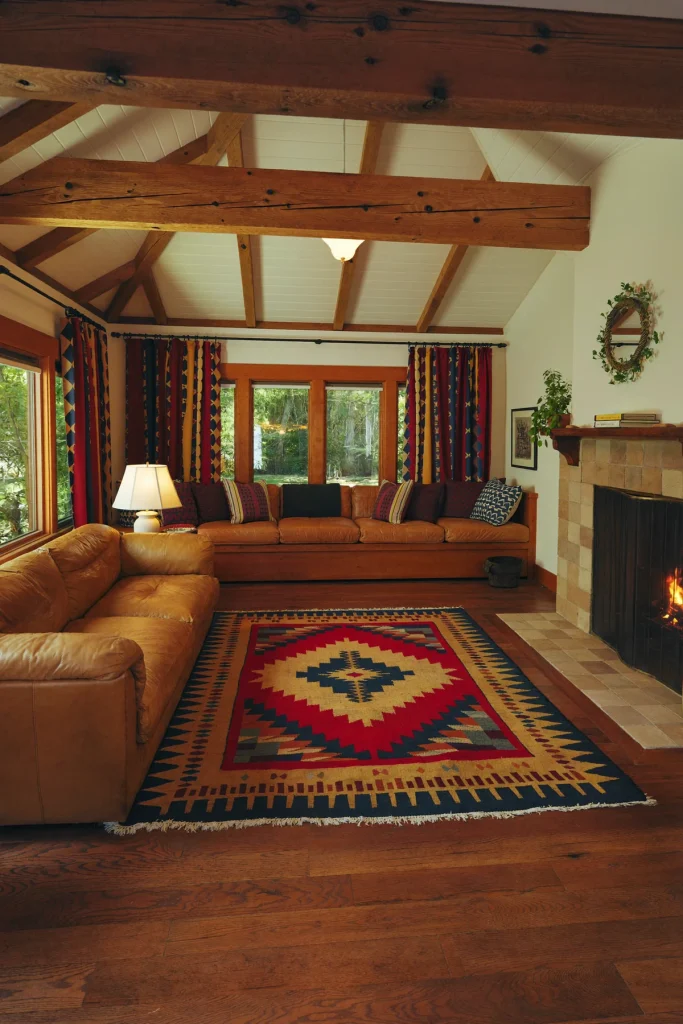
Kilims are flat-woven, usually wool, and full of geometric color. They’re thin enough that doors swing over them and furniture sits level, which makes them easy to live with.
Because they’re reversible, you can flip a kilim to spread the wear evenly. I love one in a Craftsman bungalow with warm oak trim, where the reds, ochres and indigos pick up the wood tones.
The one thing to know is that kilims slide around, so a thin rug pad is a must. Pair it with simple, solid upholstery and let the rug carry the pattern. 🎨
Go Soft and Graphic With a Berber-Style Rug
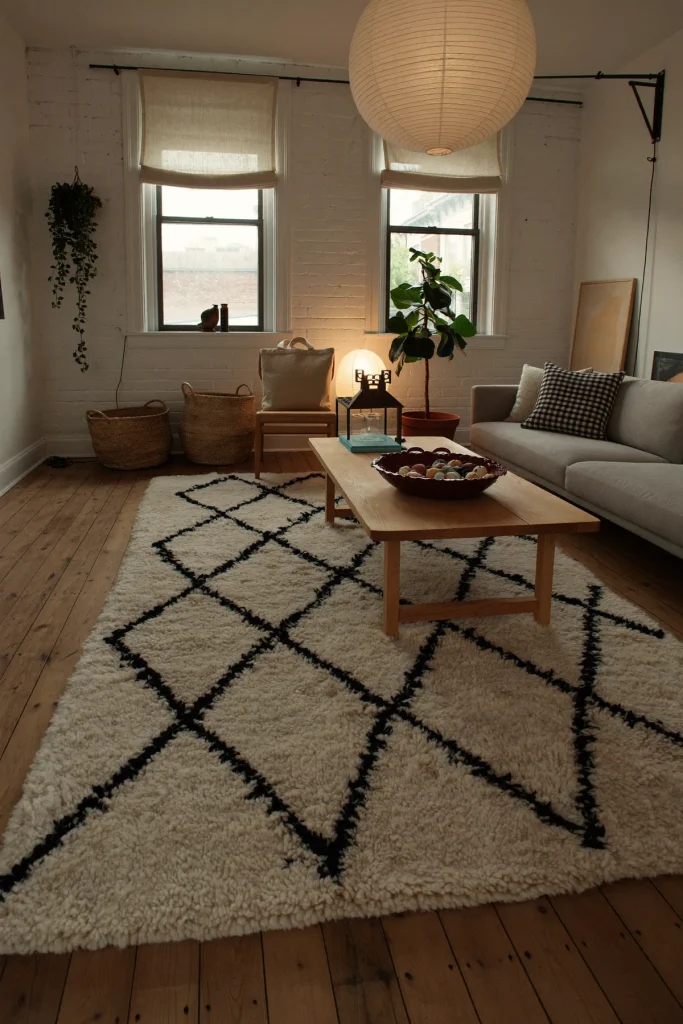
A thick, ivory wool rug with a hand-drawn black diamond pattern brings in texture and a touch of graphic interest at the same time. Berber-inspired rugs have a high, plush pile that’s lovely under bare feet.
They work in so many styles: modern farmhouse, Scandinavian, even a moody brownstone. The irregular lines feel handmade, which keeps a crisp room from looking cold.
Keep the rest of the room fairly calm so the pattern has room to shine. A wooden coffee table and a few woven baskets are all it needs. Shake it outside and vacuum on low suction to protect the pile.
Lay a Rug Right Over Wall-to-Wall Carpet
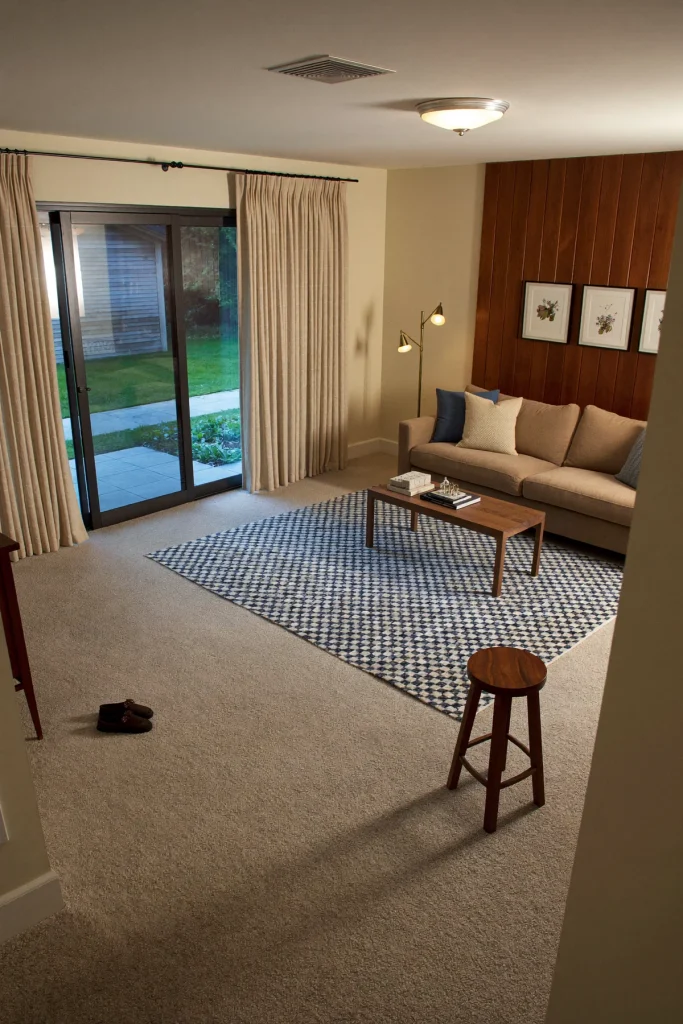
Yes, you can put a rug on carpet, and it’s one of the best ways to add personality to a room where you can’t pull up the carpet. It works brilliantly in rentals and older homes.
Choose a low-pile or flat-woven rug so it doesn’t ripple, and pick something that contrasts in color or texture with the carpet underneath. A patterned rug over plain beige carpet suddenly makes the room look intentional.
It also helps define a seating area in a room where the carpet runs on forever. Size it just like you would on a hard floor, following idea 1.
Common Mistakes to Avoid
- Laying a high-pile rug on high-pile carpet (it shifts and buckles)
- Matching the carpet color too closely so the rug disappears
- Skipping a carpet-to-rug pad that stops creeping
Use Two Matching Rugs in a Long Living Room
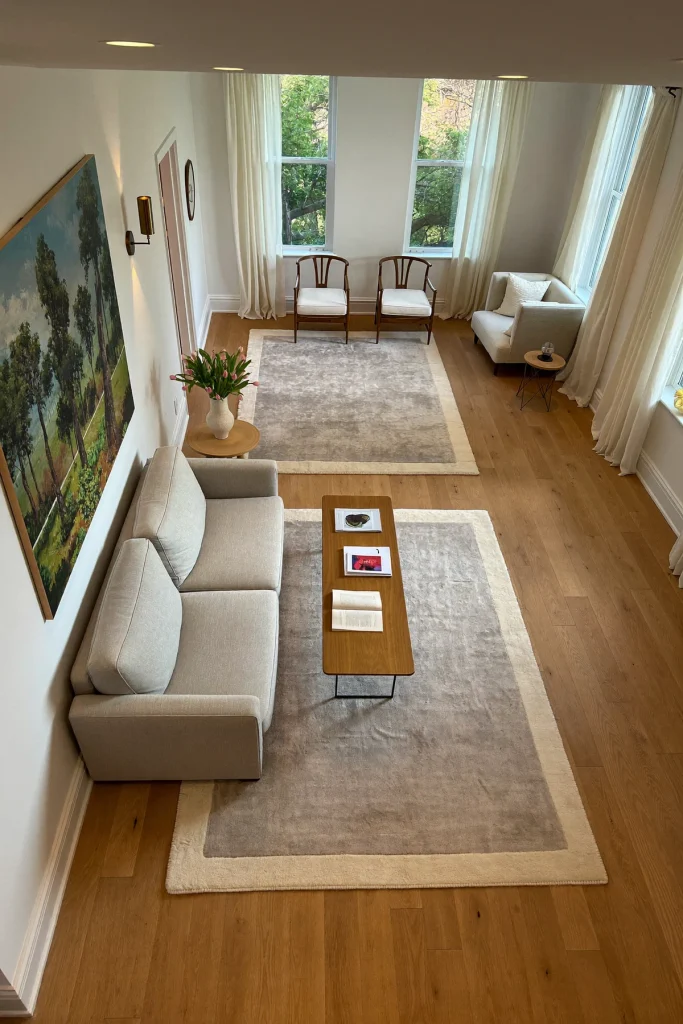
A long, narrow living room often needs two seating zones: one around the TV and one for conversation or reading. Two matching rugs tie both zones together, so the room reads as one calm space.
Use the sizing rule from idea 1 for each zone, then leave about 12 to 18 inches of bare floor between the two rugs. That gap is what makes them look planned rather than like one rug cut in half.
If identical feels too formal, buy two rugs from the same collection in different but related colorways. It’s a subtle trick that keeps the room interesting. ✨
Sink Into a Plush High-Pile Shag
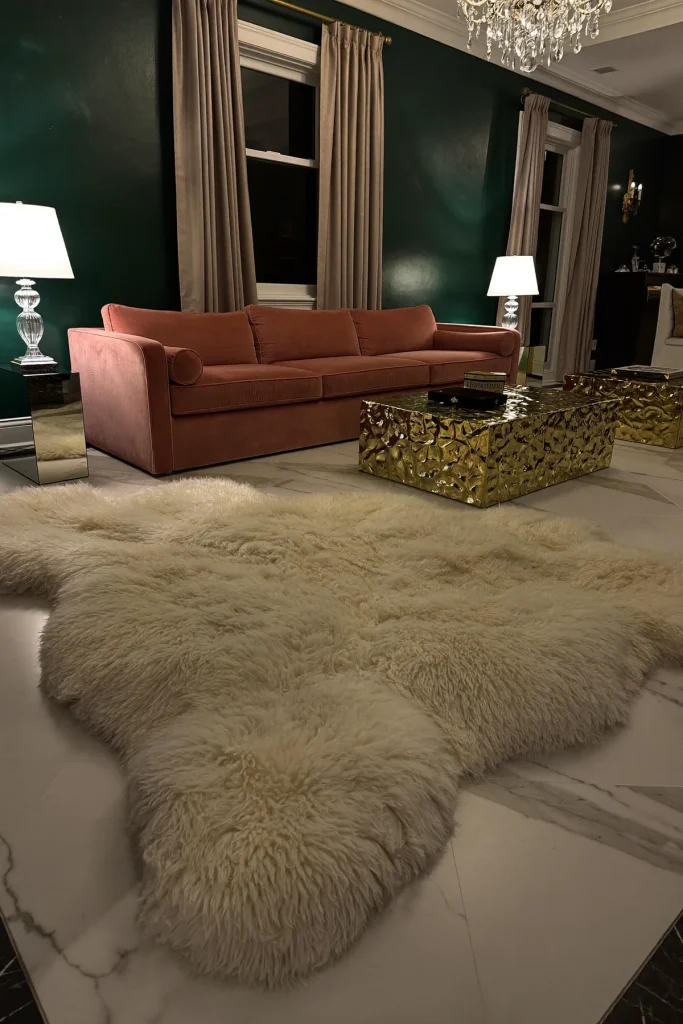
Nothing says “come sit on the floor” like a thick, shaggy rug. A plush shag adds softness, warms up a hard-floored room and muffles sound in a space with tall ceilings.
A glossy, glamorous room with mirrored side tables and velvet seating is the perfect home for a creamy shag. It softens all that shine.
Keep shags out of spots where crumbs and toys collect, because they’re harder to clean. A vacuum with an adjustable height setting makes life much easier. If you want guests kicking off their shoes and curling up on the floor for movie night, this is your rug.
Pull Your Accent Color Straight From the Rug
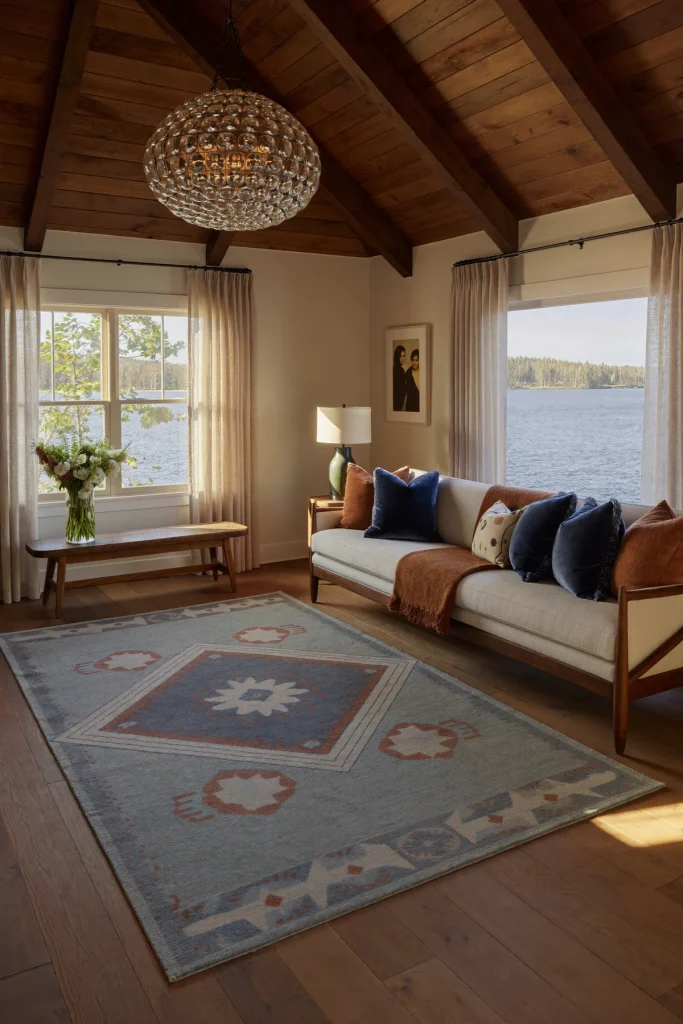
Here’s an easy way to build a color scheme: start with a rug you love, then choose two or three of its colors for pillows, throws and art. The rug becomes the thread that ties everything together.
A rug with a soft blue, rust and cream pattern, for instance, might give you blue velvet pillows, a rust throw and cream curtains. Nothing has to match exactly, just echo the tones.
I like to pick one bold color from the rug for small doses and one quieter color for bigger pieces. It keeps the room cohesive but not matchy. 🌿
Go Bold With Black-and-White Stripes
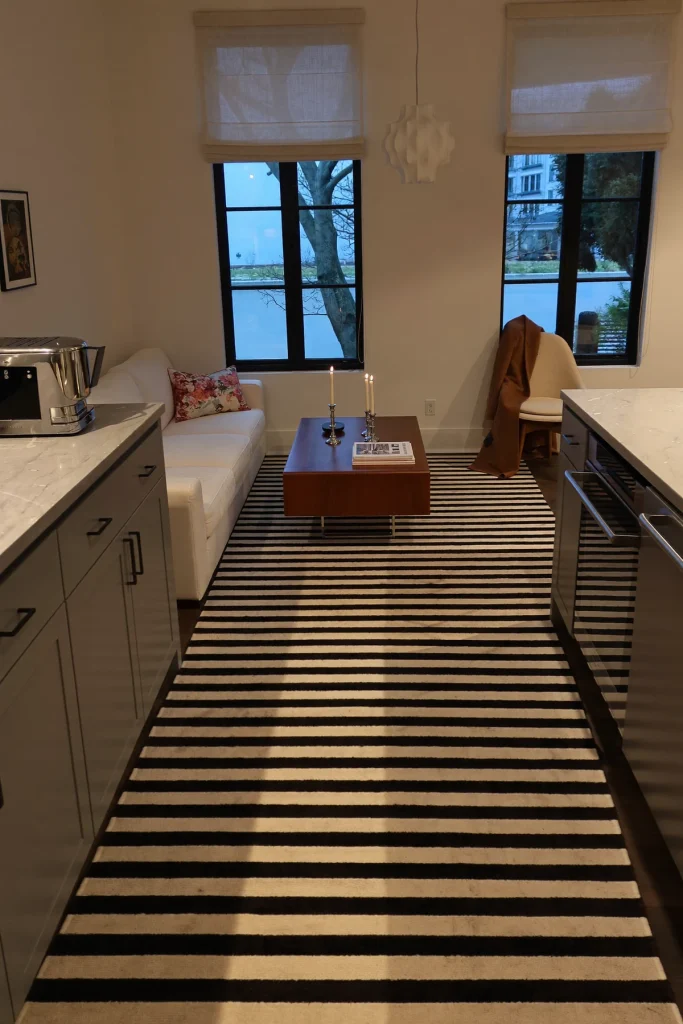
A black-and-white striped rug is crisp, graphic and surprisingly versatile. It can make a narrow room look wider when the stripes run across it, or longer when they run lengthwise.
Flat-woven cotton or wool striped rugs are easy to clean and usually affordable, which makes them a great pick for a playful room.
Stripes look especially sharp in a townhouse or modern row house with white walls and black window frames. Add warm wood furniture and a few plants so the room doesn’t feel too stark, and a soft throw or two to balance the crisp lines.
Do This 👉 / Not This ❌
- Do this 👉 Mix the stripes with one soft, organic pattern like a floral pillow
- Not this ❌ Pile on more hard geometrics until the room buzzes
- Do this 👉 Run stripes across a narrow room to widen it
- Not this ❌ Choose a stripe so thin it looks grey from across the room
Choose an Indoor-Outdoor Rug for a Sunny Garden Room
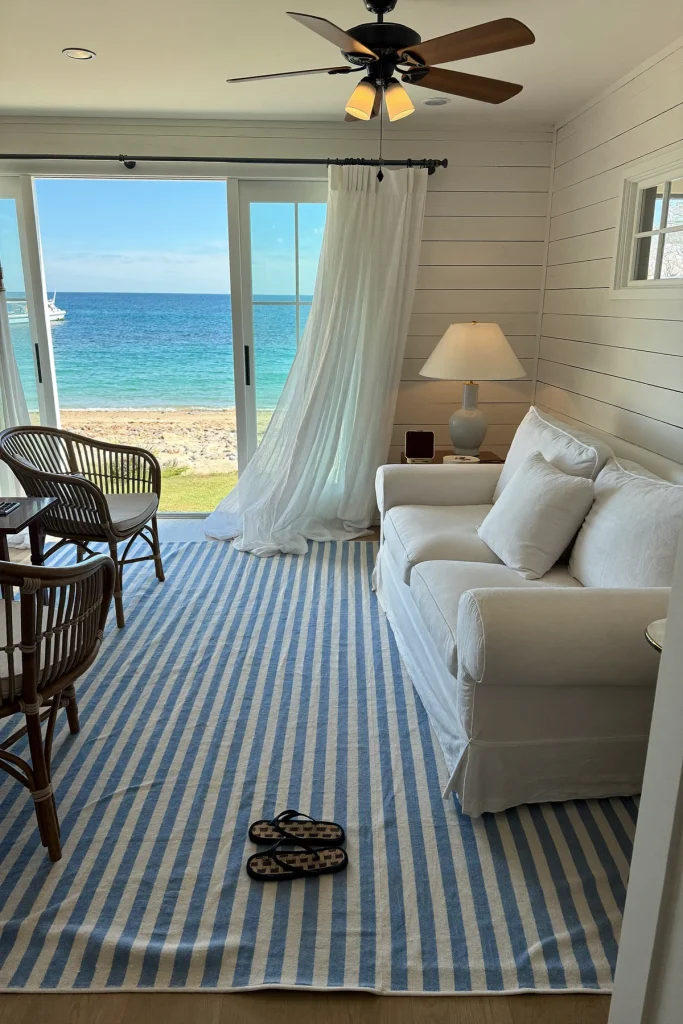
Indoor-outdoor rugs have come a long way. Many now look like woven wool or soft cotton but are made from tough synthetic fibers that shrug off spills, sun and sandy feet. ☀️
They’re ideal for a sun-filled living room, a beach house or a family room that opens straight onto the backyard. You can even hose them down outside when they get grimy.
Pick a soft, flat weave in a mid-tone color so it doesn’t show every footprint. Stripes, small diamonds and simple borders all look relaxed and fresh in a bright room.
Fading is the one thing to watch, even with sun-resistant fibers. Rotate the rug every few months so one side doesn’t bleach out faster than the other. Your floors will thank you, too, since the rug blocks the sun from fading the wood underneath.
Invest in a Hand-Knotted Wool Rug Built to Last
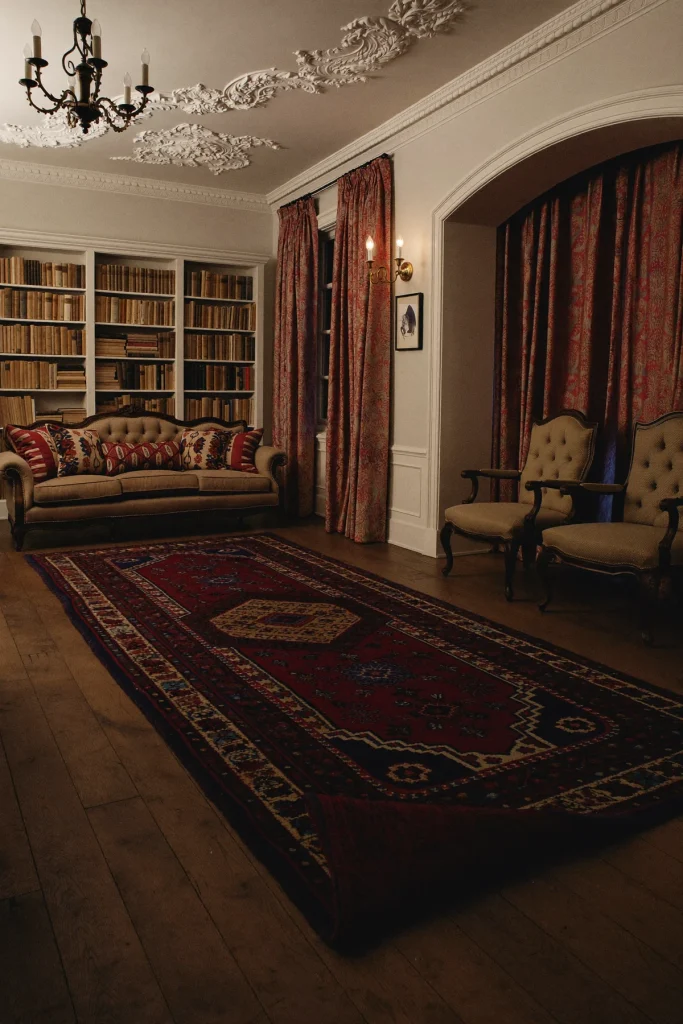
If you’re ready to buy the one rug you’ll keep for decades, hand-knotted wool is it. Each knot is tied by hand, which makes the rug dense, durable and repairable. Many of the rugs we call vintage today started life this way.
Machine-made rugs are great for budgets and busy seasons of life, but they usually wear out in a few years. A hand-knotted rug wears in, getting softer and richer with time.
Flip the corner over and look at the back. On a hand-knotted rug, you’ll see the pattern clearly, with slight irregularities. A perfectly uniform back or a canvas backing means it was made by machine or tufted.
Plan for this purchase like furniture, not décor. It deserves a good rug pad, a twice-yearly rotation and a professional wash every few years. Treat it right and it will outlast the sofa.
Who This Is For
Homeowners who plan to stay put for a while, love the idea of an heirloom and are ready to spend more once instead of replacing a rug every few years.
Make a Statement With an Overdyed Rug
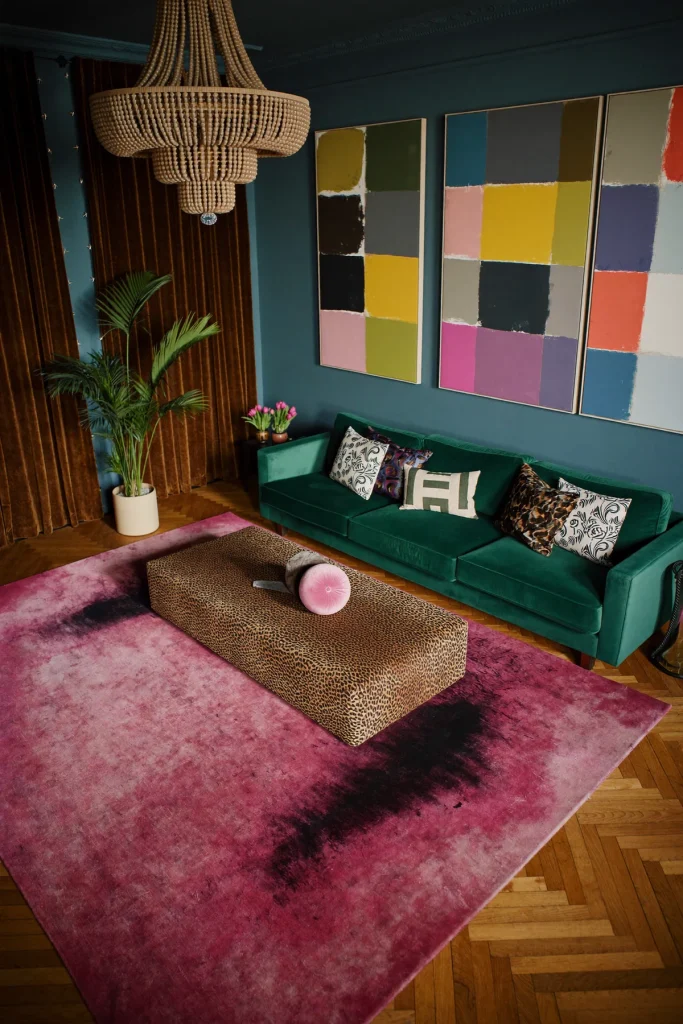
Overdyed rugs are old rugs that have been washed out and dyed a single saturated color, like fuchsia, cobalt or emerald. The original pattern still shows through as a ghostly shadow, which gives them amazing depth. 💖
They’re perfect for a maximalist room full of color, pattern and collected pieces, because the rug is bold but still reads as one solid tone.
If you love the look but feel nervous, try one in a softer shade like dusty teal or faded rose. It still adds plenty of character.
Ground all that saturation with some calm areas: a solid sofa, plain curtains and bare wood around the rug edges. The trick is letting the rug and maybe one other piece shout while everything else hums along. Overdyed rugs also hide wear and small stains incredibly well, since the color is so even and rich.
Center the Rug on the Fireplace, Not the Room
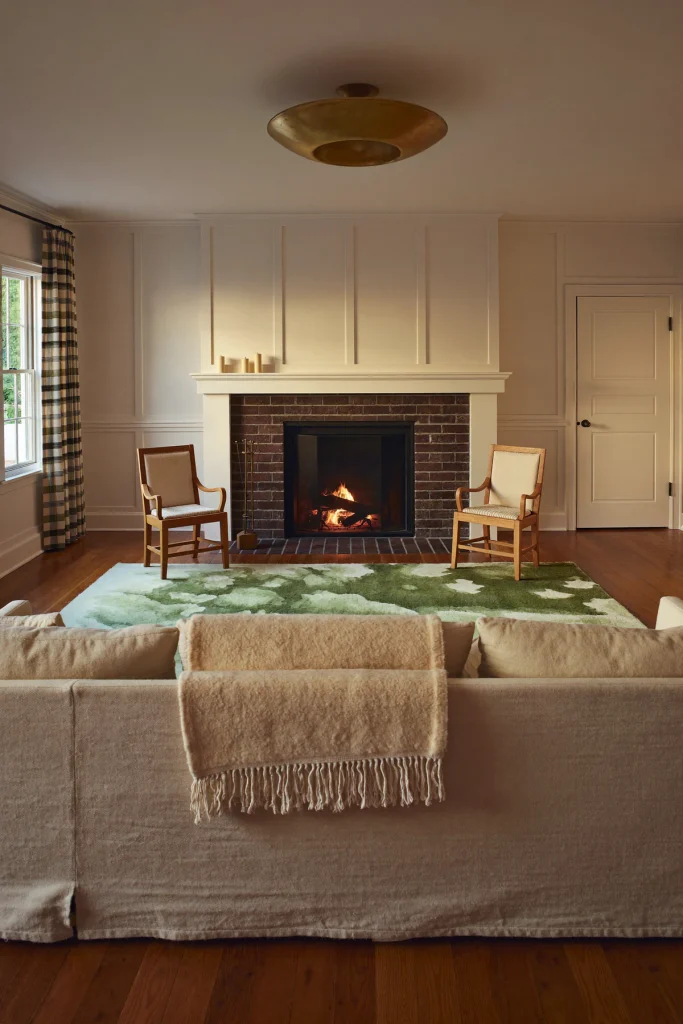
In a living room with a fireplace, your instinct might be to center the rug in the middle of the room. But often the fireplace is the real heart of the space, and that’s where the rug should line up.
Center the rug on the hearth, then arrange the sofa and chairs facing the fire with their front legs on the rug. Leave enough bare floor in front of the hearth for safety. A good minimum is about 18 inches between the firebox and the rug edge. 🔥
A big wool rug, like the one in idea 2, is the safest choice near a fireplace, since wool naturally resists flame and doesn’t melt like synthetics.
If the fireplace sits off-center on a long wall, don’t stress. Center the rug on the fireplace anyway and use a side table or tall plant to balance the leftover wall space. The room will feel organized around its focal point instead of fighting it.
Keep It Tonal With a Low-Contrast Rug in a Calm Room
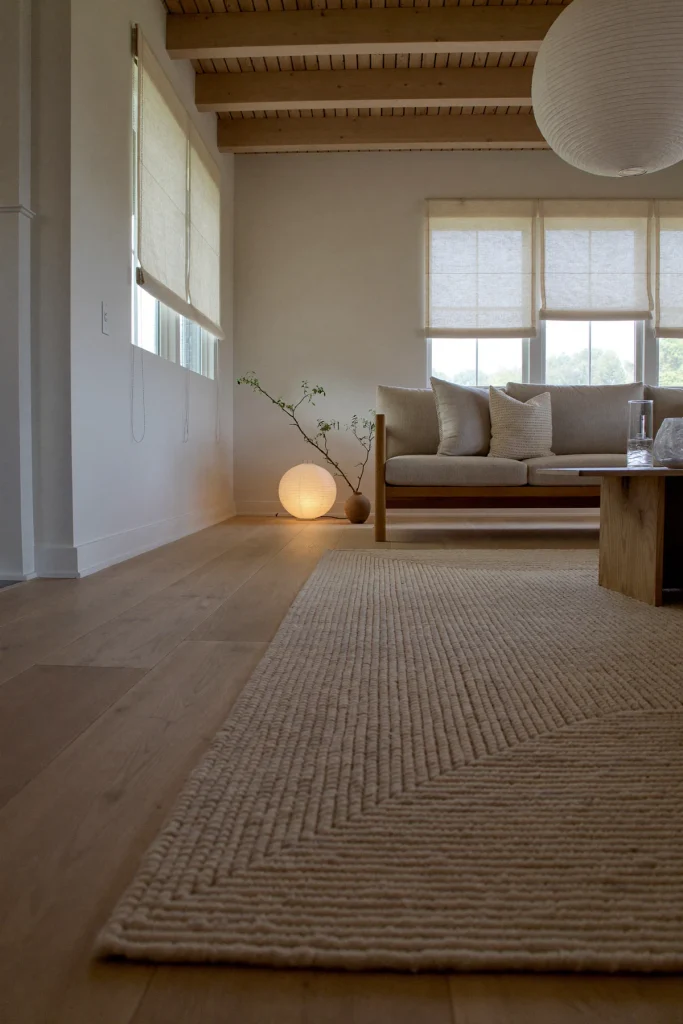
Not every rug needs to stand out. In a calm, minimalist room, a tonal rug in oatmeal, greige or soft stone adds texture without visual noise. It’s the rug equivalent of a cashmere sweater.
Look for subtle interest through weave rather than color: a ribbed pattern, a mix of loop and cut pile, or a hand-loomed wool with slight variations.
This approach works beautifully in Japandi-inspired rooms with light oak, linen and paper lanterns. The rug feels quiet and grounded, and lets the furniture’s shapes do the talking.
A tonal rug is also a smart choice if you like to change pillows and throws often. It’ll go with whatever color comes next, from deep winter rust to fresh spring green.
Color Swap
| If you love | Try a rug in |
|---|---|
| Warm whites and wood | Oatmeal or wheat |
| Cool greys and black | Soft stone or pebble |
| Earthy greens | Muted moss or lichen |
Try an Organic, Irregular-Shaped Rug
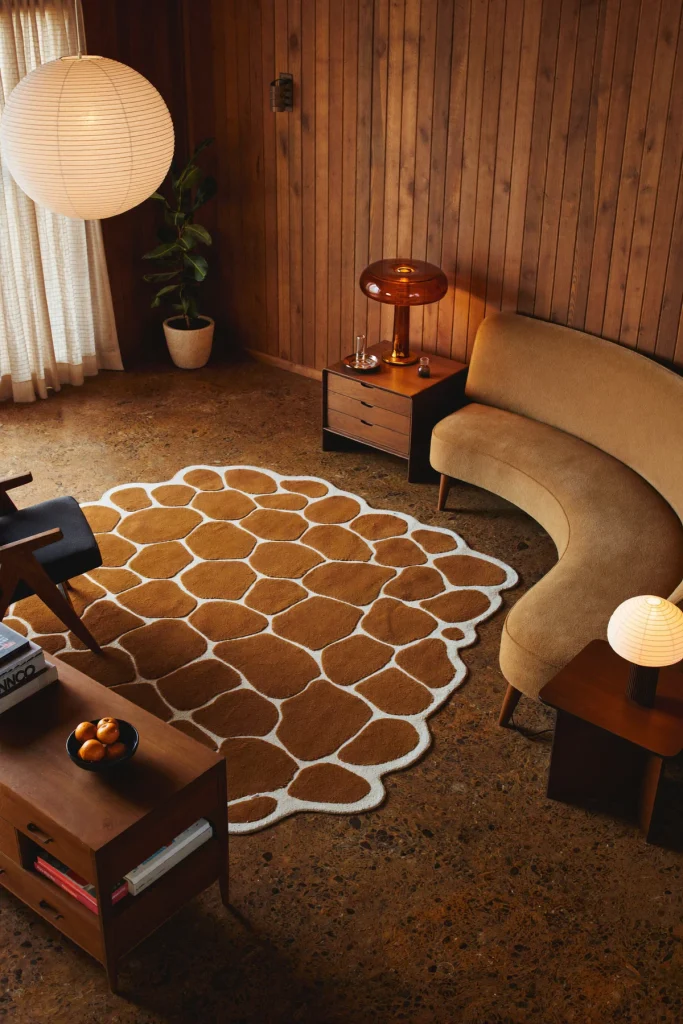
Rugs don’t have to be rectangles. Organic, pebble-like shapes are having a real moment, and they bring a playful, sculptural feel to a living room.
An irregular rug looks especially great in a 1970s-inspired room with a curved sofa, low furniture and warm wood paneling. The soft shape echoes the curves and keeps the space relaxed.
Because the outline is the star, give it some breathing room. Keep furniture placement loose so the edges aren’t hidden, and choose a solid or tonal color so the shape stands out.
These rugs also work well layered over a larger, neutral rectangle if you want the fun shape without giving up proper sizing. It’s a nice way to try the trend without a huge commitment. Think of it as wearable art for your floor.
Mix Two Different Rugs in One Open Room
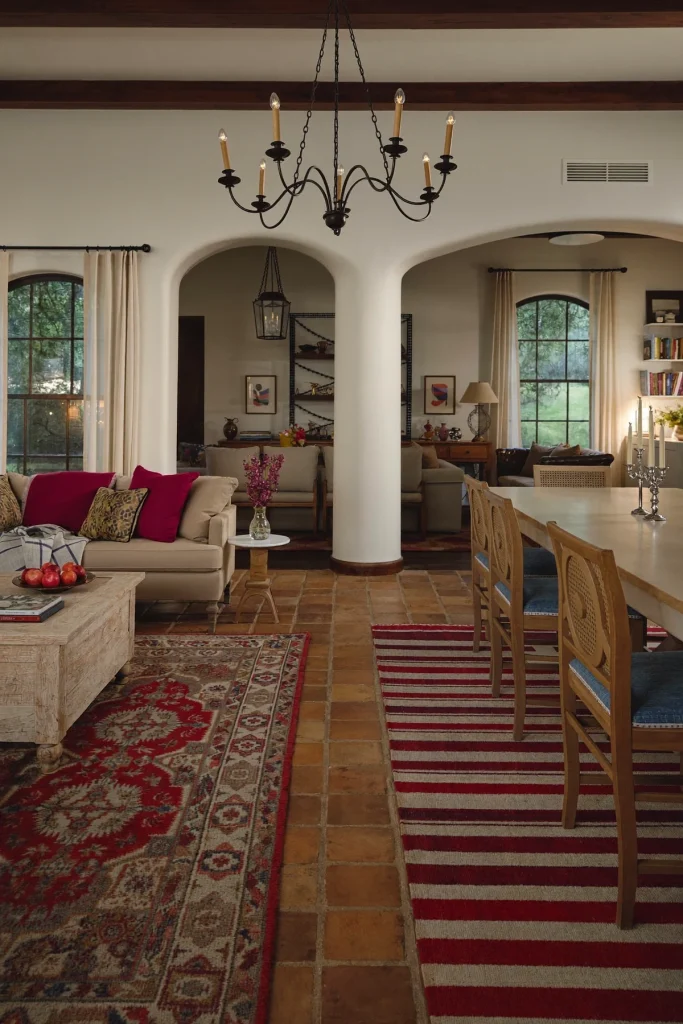
When your living and dining areas share one big room, the rugs don’t have to match. They just need to get along. The trick is to choose two rugs that share at least one color or a similar level of pattern.
For example, a large patterned rug in the living zone could pair with a simple striped flatweave under the dining table, both pulling the same warm red.
Keep the scale different, too. If one rug has a big, bold pattern, the other should be smaller and quieter. That contrast keeps them from competing.
And keep them clearly separate, with a band of floor between the two. The gap does the same work as a doorway, quietly signalling where one room ends and the next begins.
Pair It With Idea #10
Use the painter’s tape method from idea 10 to plan both zones at once. You’ll see right away whether the rugs give each area enough breathing room.
Stretch the Budget With a Big Basic and a Small Splurge
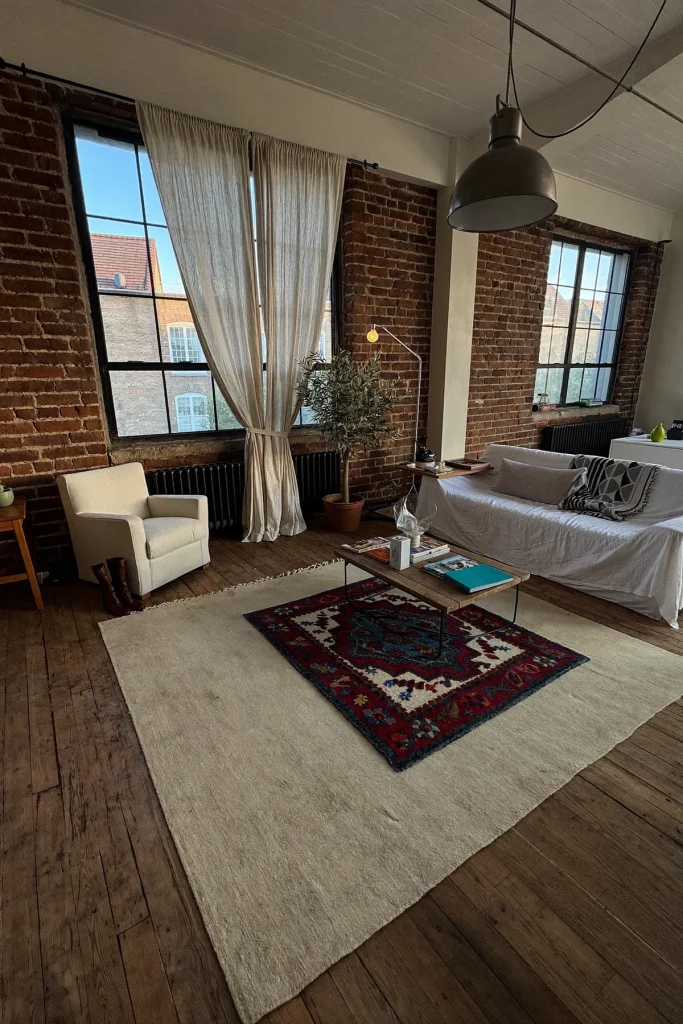
Large rugs get expensive fast. To get the right size without the sticker shock, buy a big, basic rug for the base and save your splurge for a smaller statement piece on top. It’s the layering idea from idea 5, but with a budget plan behind it.
A plain flatweave in a neutral color is often the most affordable way to cover a whole seating area. The small rug on top can be vintage, hand-knotted or something you’ve been eyeing for a while.
Over time you can swap the top rug for a different look without replacing the whole floor. It’s also a great way to try a bold color before committing to it in a large size. 💡
Budget Alternatives
- Shop end-of-season sales at big home stores
- Check estate sales and online resale groups for vintage pieces
- Have broadloom carpet remnants bound into a custom-size rug
- Choose machine-made wool blends over hand-knotted for the base
Start the Whole Room From the Rug
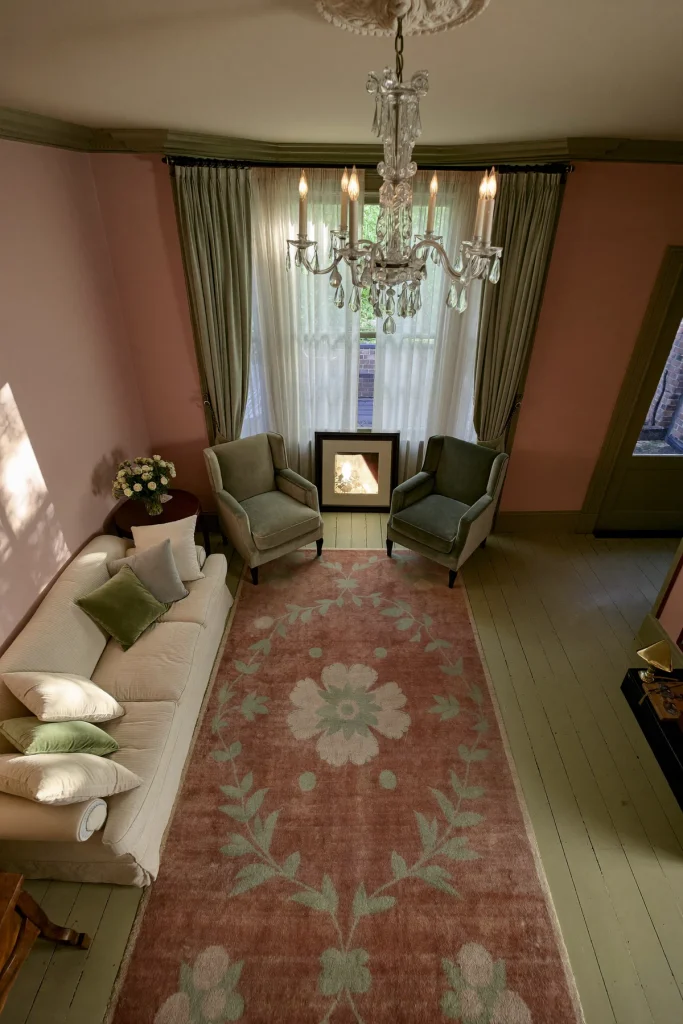
If you’re decorating a living room from scratch, try this: choose the rug first. Paint comes in thousands of colors and pillows are easy to swap, but rugs come in far fewer options. Pick the one you love, then build the room around it.
The rug gives you your color palette, your pattern level and your mood. A soft, faded rug points toward a gentle, collected room, while a bold one sets up something lively.
From there, choose wall colors pulled from the lightest tones in the rug and upholstery from the middle tones. Save the strongest colors for accents.
And don’t forget the pad from idea 22. A beautiful rug that slides every time the kids run across it won’t stay beautiful for long. 🏡
Checklist
- Measure the seating area and tape it out on the floor
- Decide on material based on traffic, kids and pets
- Choose your pattern level: quiet, medium or bold
- Order a rug pad cut one inch smaller all round
- Plan where it will get rotated every six months
Your Floor, Your Foundation
A good rug does so much more than cover the floor. It pulls your furniture together, softens sound, adds color and gives your family a cozy place to land at the end of the day.
Start with the right size, choose a material that suits real life in your home, and then have fun with pattern, layering and shape. Even one swap, like sizing up from a too-small rug, can make your living room feel brand new. 💛
Which of these ideas are you trying first? I’d love to hear if you’re team jute, team vintage or brave enough for an overdyed showstopper.
