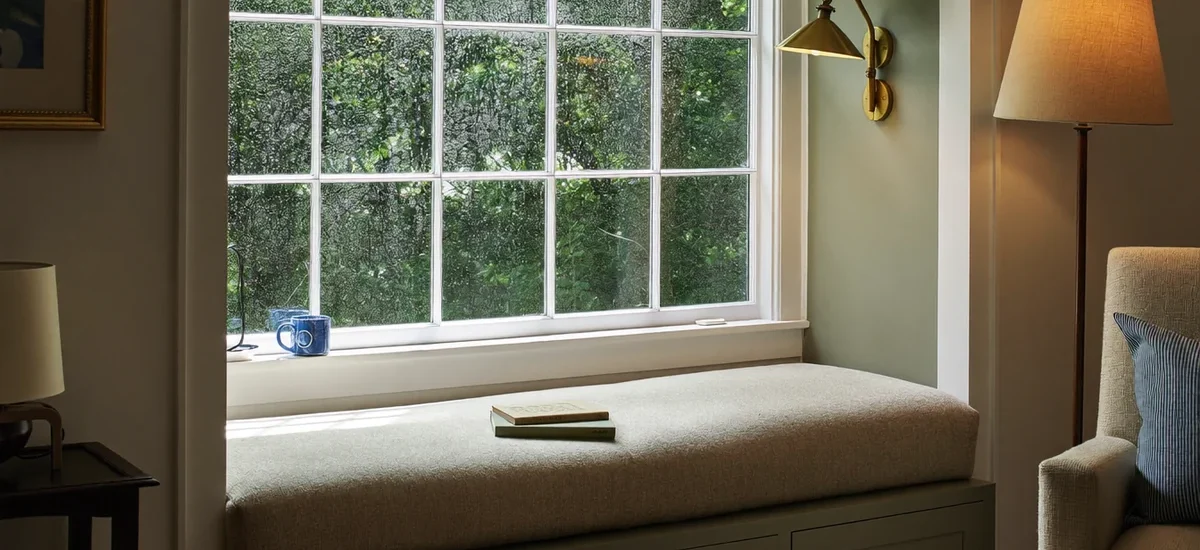
Here’s something I learned the slow way: you can pile on blankets and pillows until the sofa disappears, and a room can still feel cold. Real coziness starts earlier, with how the furniture is arranged, where the light comes from, and what the walls and ceiling are doing above your head.
So this list skips the accessories aisle. Instead, we’re talking layout, lighting plans, fireplaces, ceilings, paint, paneling, nooks and the sound of a room. Some ideas cost nothing but an afternoon of shoving furniture around. Others are weekend projects or bigger renovations you can plan for.
Grab a coffee ☕ and let’s make your living room the place everyone drifts toward at the end of the day.
Gather Four Armchairs Into a Conversation Circle
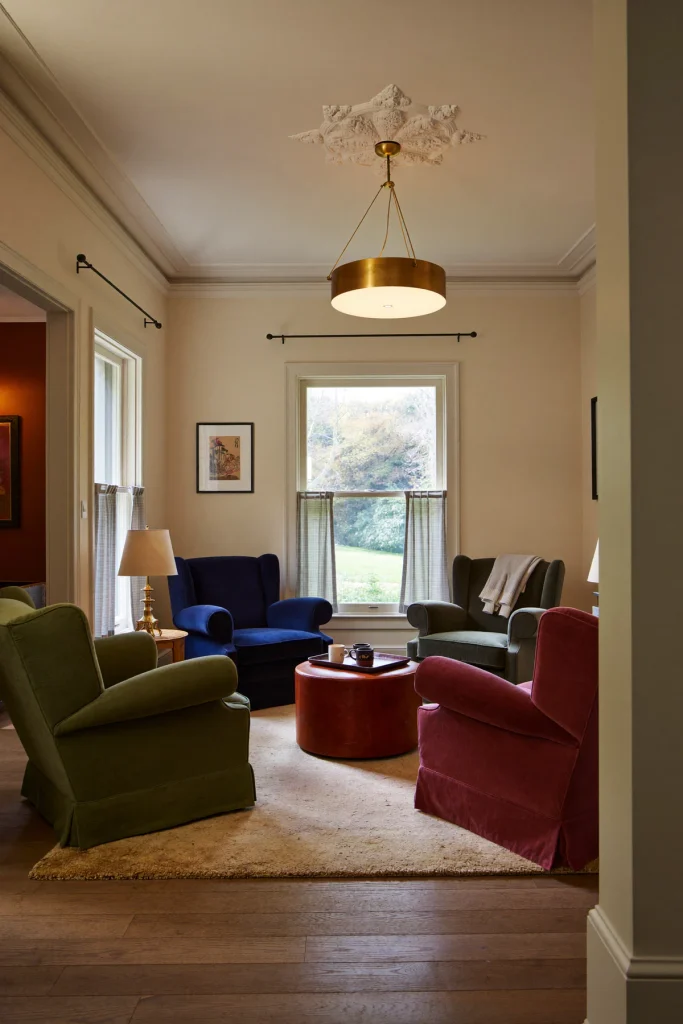
Nothing says “come sit and talk” like chairs that face each other. Pull four armchairs into a loose circle around a round coffee table or ottoman, close enough that you could pass a mug without standing up. About 8 feet across, chair to chair, is the sweet spot.
This works beautifully in a living room that doesn’t revolve around a TV. Mismatched chairs are fine, as long as their seat heights are within an inch or two of each other.
Swap Every Bulb for Warm White
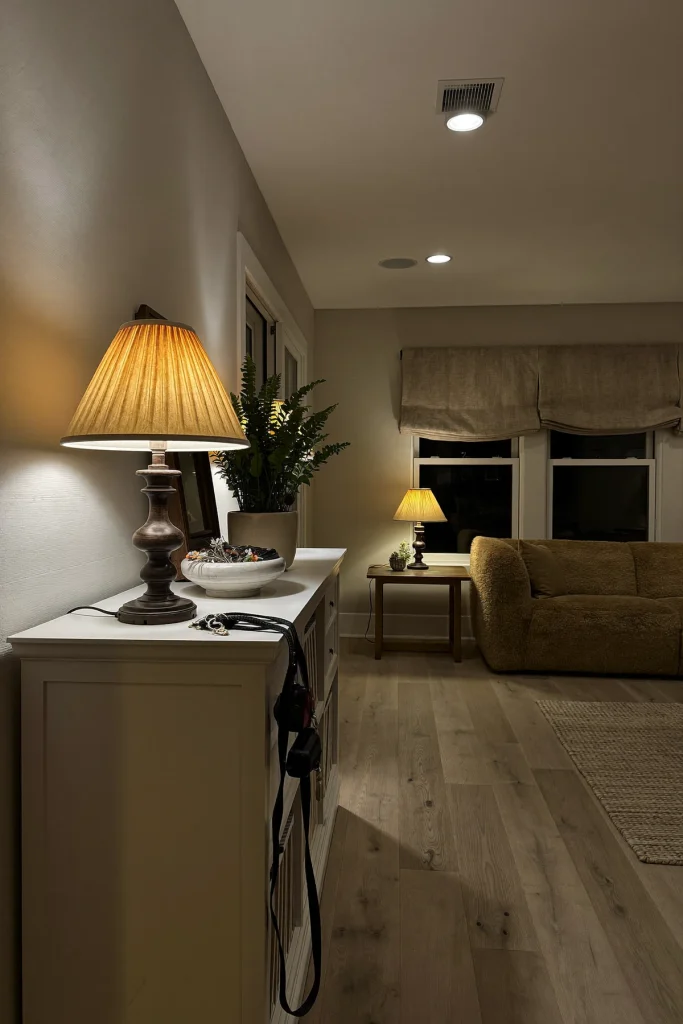
This is the cheapest cosy upgrade on the whole list. Check the boxes on your bulbs and look for 2700K, or even 2200K for lamps you only use at night. Anything labeled 3500K or “daylight” belongs in the garage, not the living room.
Warm bulbs make wood look richer, skin look healthier and paint colors look the way they did on the swatch. Do the whole room at once so you don’t end up with one icy lamp fighting the rest. 💡
Light the Room at Three Different Heights
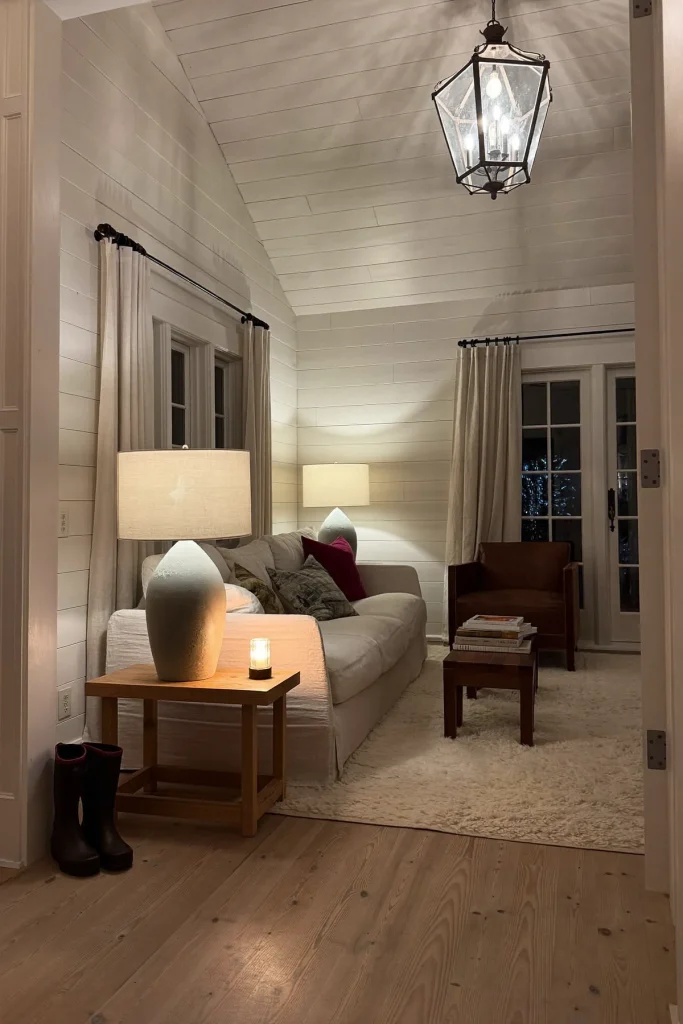
Designers talk about this one constantly, and once you notice it you’ll see it everywhere. A room feels cozy when light comes from low, middle and high points rather than one big source on the ceiling.
Think of a picture light or ceiling fixture up high, table lamps at seated height, and something low like a small lamp on a bench or a glowing fireplace. Your eye travels between those pools of light, and the corners stop feeling dark and forgotten.
Layer It Like This
- High: a dimmable pendant or flush mount
- Middle: two table lamps on opposite sides of the room
- Low: a lamp on a low shelf or the firebox glow
Color-Drench the Walls, Trim and Ceiling in One Warm Shade
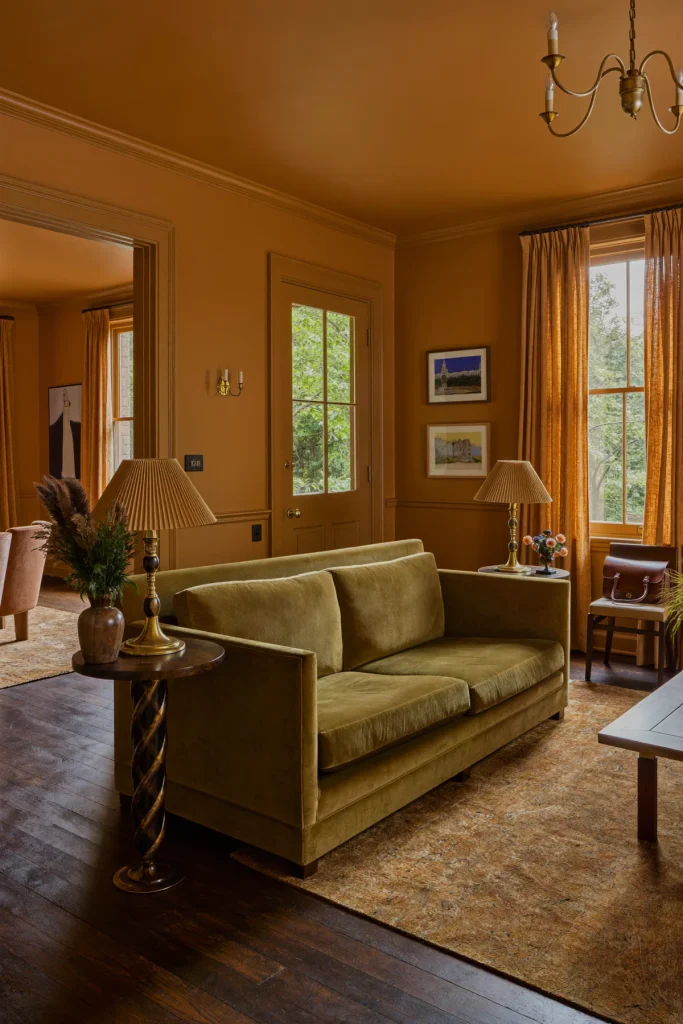
Color drenching means painting walls, trim, doors and sometimes the ceiling all in the same color. It sounds bold, but in warm shades like ochre, terracotta or a soft caramel, it wraps the room like a sweater.
Because there are no crisp white edges to stop your eye, the room’s corners blur and it feels snug rather than boxy. Use eggshell on walls and satin on trim in the exact same color for a subtle shift in sheen.
Color Swap
Not into orange tones? Try a muddy olive, a dusty plum or a warm mushroom brown. All three drench beautifully.
Add Faux Wood Beams to a Flat Ceiling
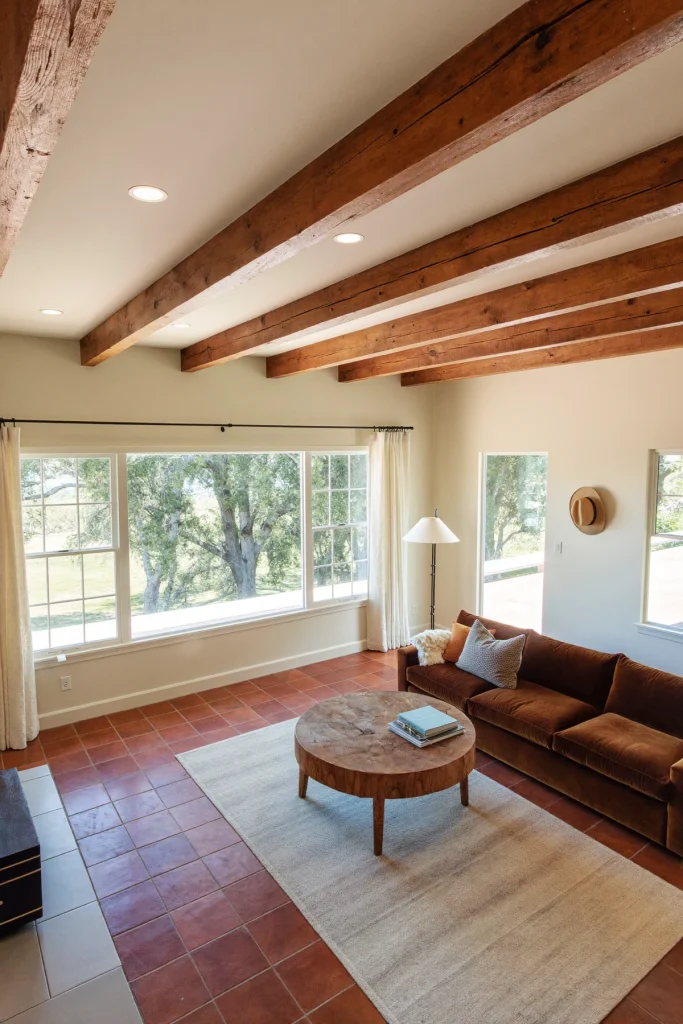
Beams bring instant character and a sense of shelter to plain builder-grade rooms. Lightweight faux beams made from high-density foam or hollow wood boxes go up without any structural work, and the good ones are convincingly textured.
Run them across the shorter width of the room and space them evenly, usually 3 to 5 feet apart. Stained a warm mid-brown, they look right in farmhouse, Craftsman and Spanish-inspired homes alike.
Common Mistakes to Avoid
- Beams that are too skinny for the room, which look like trim
- Spacing them so tightly the ceiling feels crowded
- A finish that’s too shiny or too orange
Clad the Ceiling in Warm Wood Planks
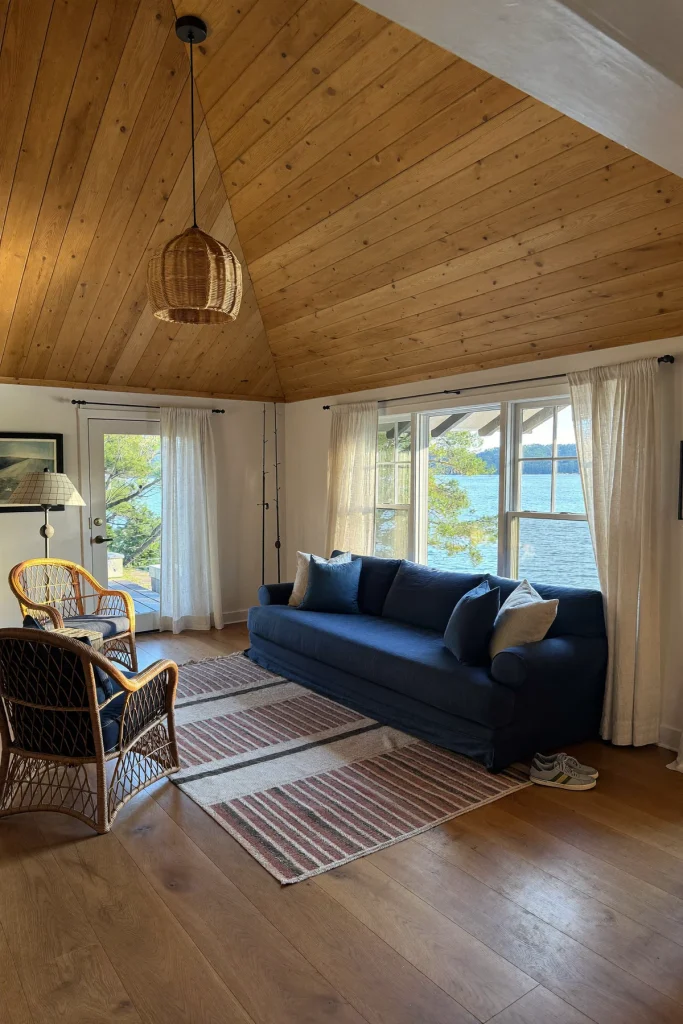
Tongue-and-groove pine, cedar or oak planks overhead feel like a cabin in the best way. Wood absorbs a bit of sound and reflects light back as a honey-colored glow, which is why rooms with wooden ceilings almost always feel calmer.
A whole ceiling is a solid weekend project for two people with a nail gun. Leave it natural with a clear matte finish, or whitewash it lightly if your room is already dark. In a lake house or mountain home, this one feels just right. 🌲
Wrap the Room in Warm Wood Paneling
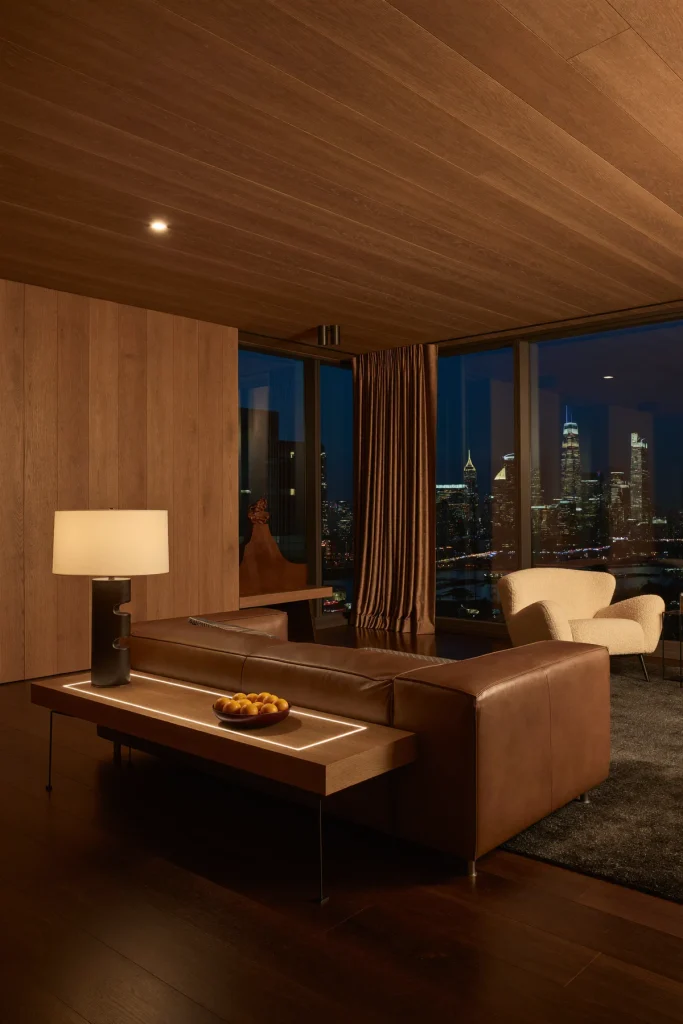
Wood paneling is back, and it’s nothing like the shiny 1970s sheets you might be picturing. Think rift-cut oak, reeded panels or simple vertical boards finished in a soft, matte stain.
Panel the whole room for a library-like den, or just one wall behind the sofa if you’re nervous. Wood brings warmth that paint can’t quite match because it carries real texture and grain. In the evening, with lamps glowing against it, the walls almost seem to give off heat.
Install Picture-Frame Wainscoting in a Muted Color
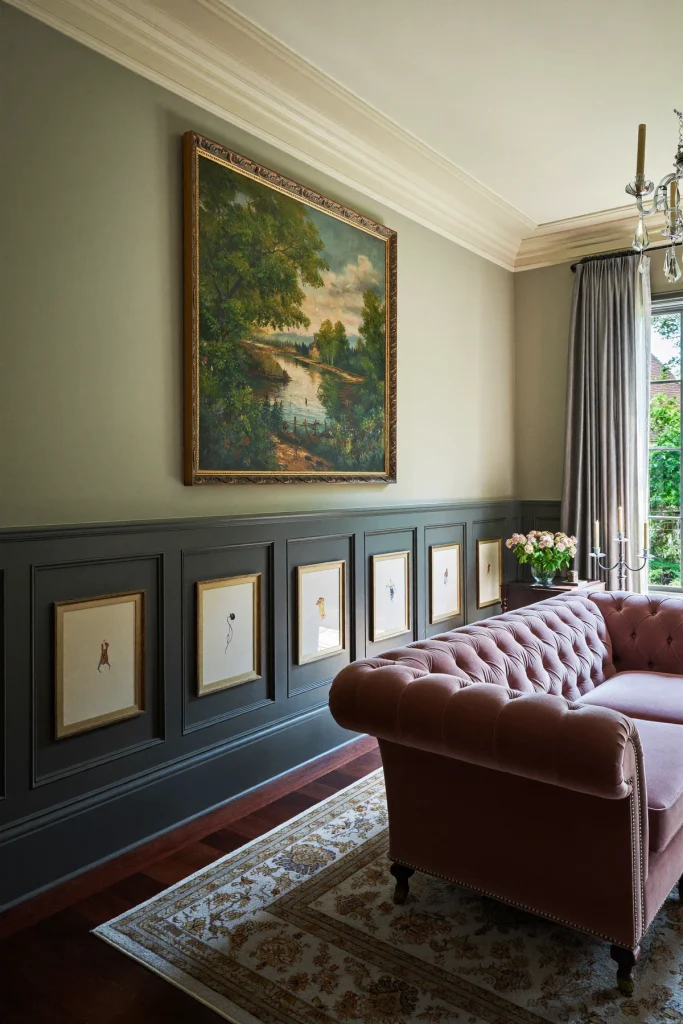
Picture-frame molding, those rectangular boxes of trim on the lower part of the wall, adds architecture to a plain room for very little money. Topped with a chair rail around 32–36 inches high, it gives the walls a sense of weight and age.
Here’s the cozy part: paint the molding and the wall inside it the same deep color, like mushroom, sage gray or warm taupe. Keep the upper wall a lighter version of the same family. The room feels grounded, a bit old-house, and much more finished.
Build a Window Seat Under Your Biggest Window
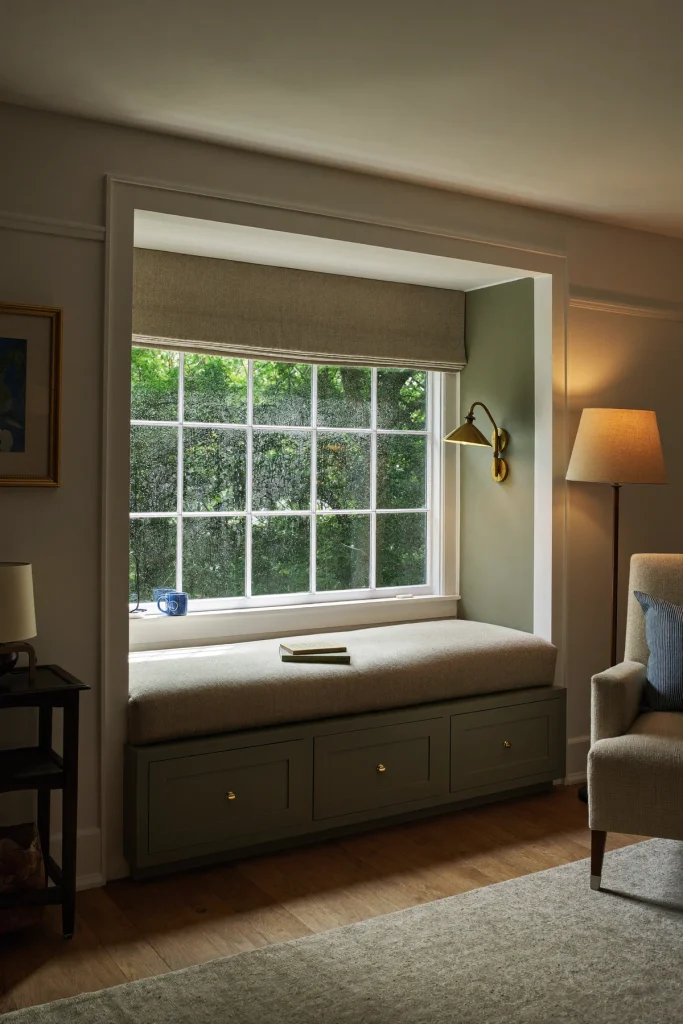
A window seat might be the most romantic thing you can add to a living room. It turns an ordinary window into a destination, the spot where you’ll actually sit with a book on a rainy Saturday. 🌧️
The simplest version is two or three stock kitchen base cabinets set under the window with a wood top and a custom cushion. Aim for a seat around 18 inches high and at least 20 inches deep. Drawers or doors underneath give you hidden storage for board games and blankets.
Add a wall-mounted reading light on one side and roman shades above, and you have a nook that feels built in from day one.
Weekend Project
Day one: set and level the cabinets, add a toe-kick and top. Day two: trim, caulk, paint and drop in the cushion.
Tuck a Built-In Banquette Into a Bay Window
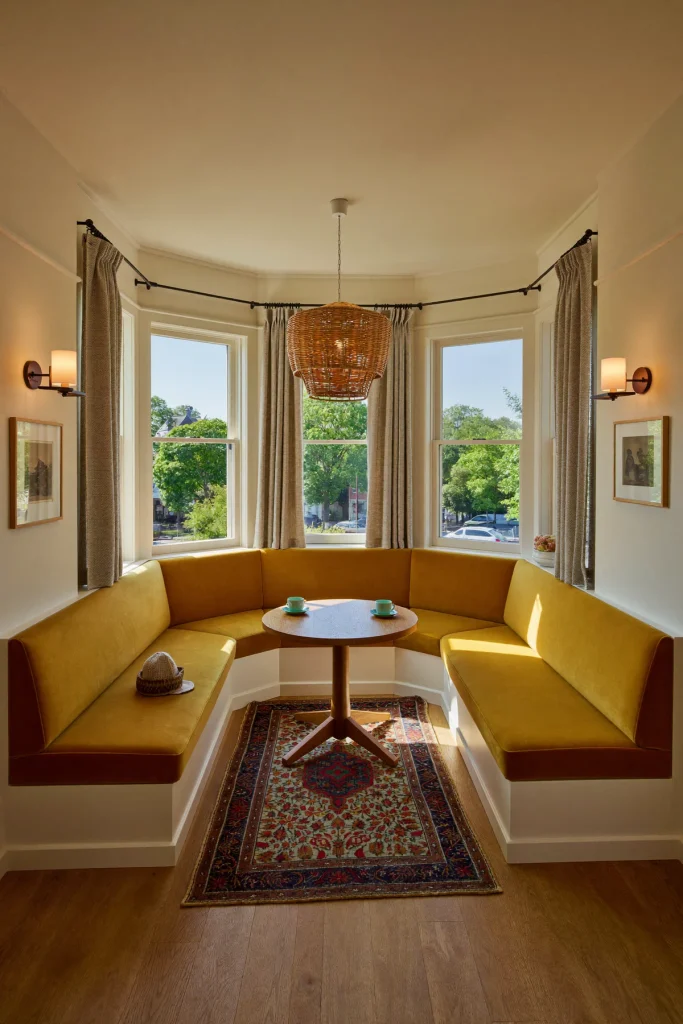
Bay windows are begging for built-in seating. A U-shaped or angled banquette following the shape of the bay creates a little room inside the room, perfect for morning coffee, puzzles or a chat while dinner cooks.
Pull a small round table or pedestal ottoman into the middle so everyone has somewhere to set a cup. Upholster the seat in a durable performance fabric, and keep the back cushions slightly reclined so it’s comfortable for more than ten minutes.
If your living room doesn’t have a bay, a corner banquette with two benches meeting at a right angle does the same job.
Soften a Doorway With an Arched Opening
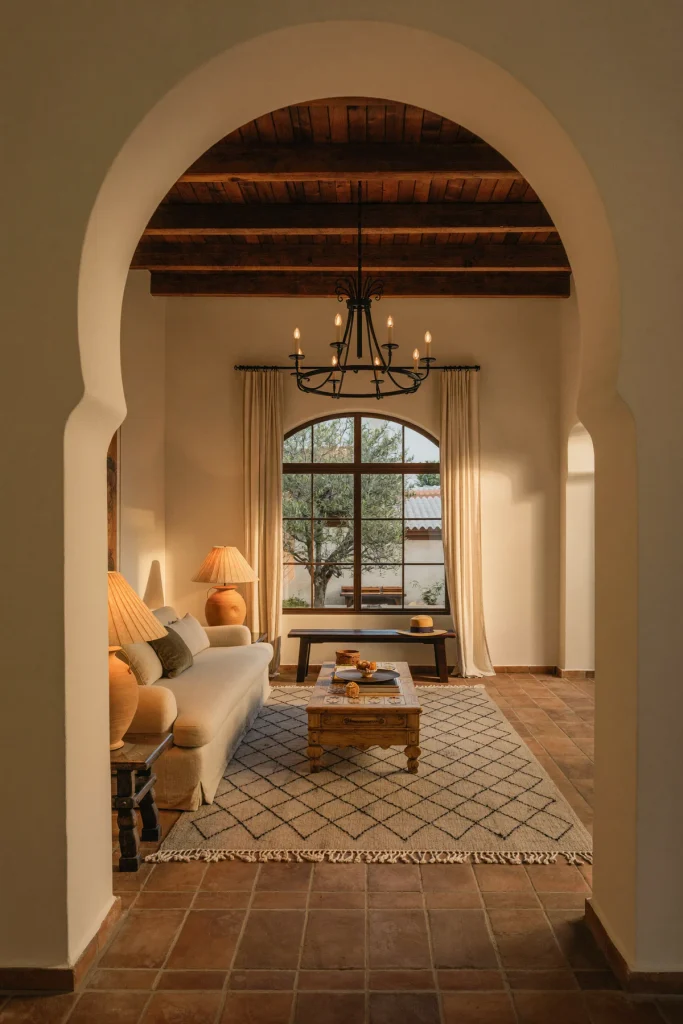
Hard square openings make a room feel like a box. Swap one for a gentle arch and suddenly the space feels softer and more welcoming, like an older home with a story. 🏛️
On a non-load-bearing opening, a contractor can often frame an arch in a day or two using a pre-made arch kit and drywall. If the opening is structural, get a pro to check before anyone picks up a saw. Plaster-look or limewash paint on the arch makes the curve feel even more organic.
Arches look especially right in Spanish Colonial, Mediterranean-inspired and transitional homes.
Wrap the Fireplace Surround in Handmade Tile
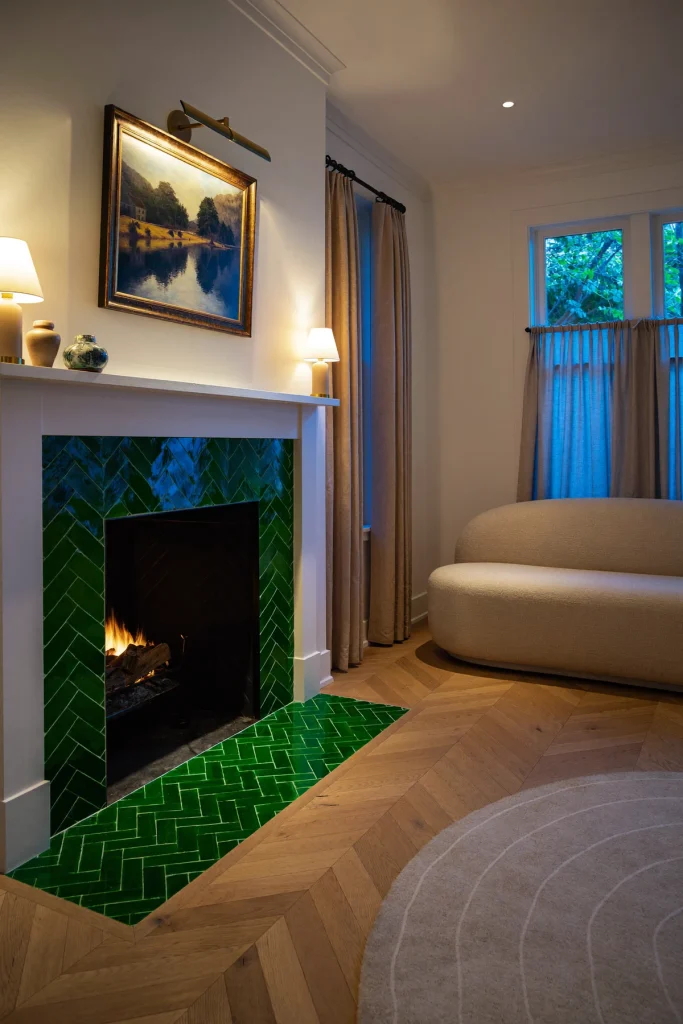
A plain painted fireplace can become the most beautiful thing in the room with a new tile surround. Handmade-look tiles, like glossy zellige, crackle-glaze squares or matte terracotta, catch firelight and lamp light in a way flat materials can’t.
Choose a warm color like deep green, oxblood, ochre or creamy white with irregular edges. Run the tile from the firebox opening out to the mantel legs, and up to the mantel shelf if you want more drama.
This is usually a two-day job for a confident DIYer, using heat-rated thinset and grout around the firebox.
Create a Faux Mantel in a Room Without a Fireplace
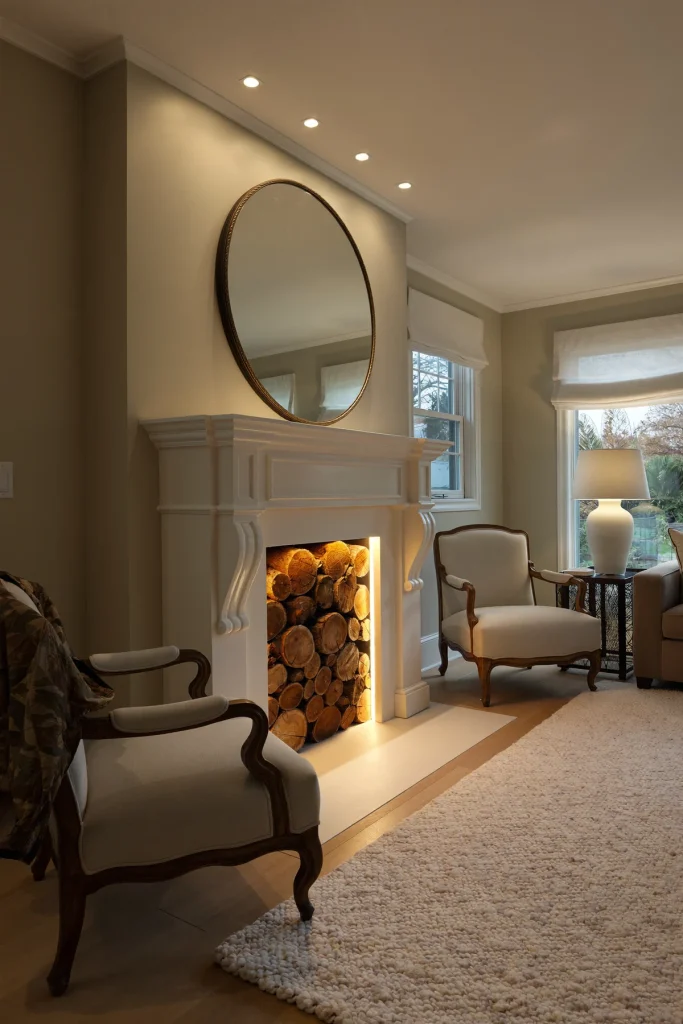
No fireplace? You can still have a focal point. A freestanding mantel surround, painted wood or a reclaimed salvage piece, gives the room the same anchor that a real hearth would.
Fill the opening with neatly stacked birch logs and tuck a warm LED strip behind them for a soft glow at night. Above, hang one large mirror or a single piece of art. Now arrange the seating to face it, just like you would with a working fireplace in idea 16.
Salvage yards and online marketplaces often have antique mantels for around 150–600.
Where to Find It
- Architectural salvage yards
- Estate sales and online marketplaces
- Home improvement stores that sell unfinished mantel kits
Choose a Linear Electric Fireplace for Apartment Living
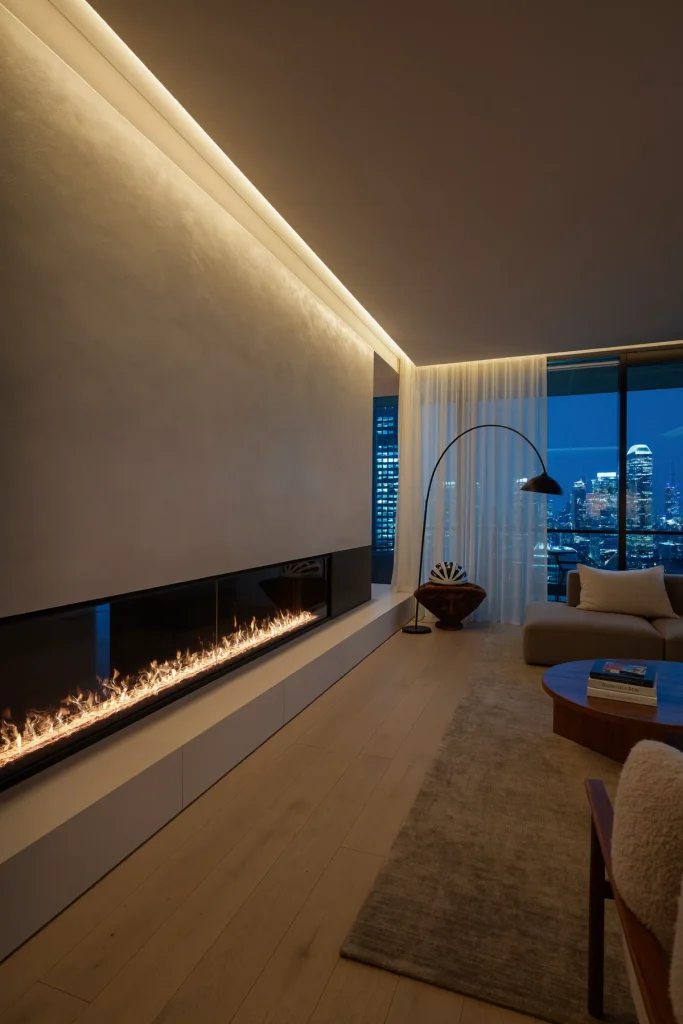
Apartment dwellers and anyone without a chimney can still sit by a glow. A linear electric fireplace, built into a wall or a low cabinet, gives you a long ribbon of flame-effect light with no venting, no smoke and no ashes.
The newer models have realistic flame effects, adjustable colors and a heater you can switch off in summer. Recess one into a simple drywall bump-out, plaster it to match the walls, and the whole thing looks architectural instead of like an appliance.
Set the flame color to the warmest amber setting. The blue options are fun for about five minutes.
Tuck a Wood Stove Into a Corner
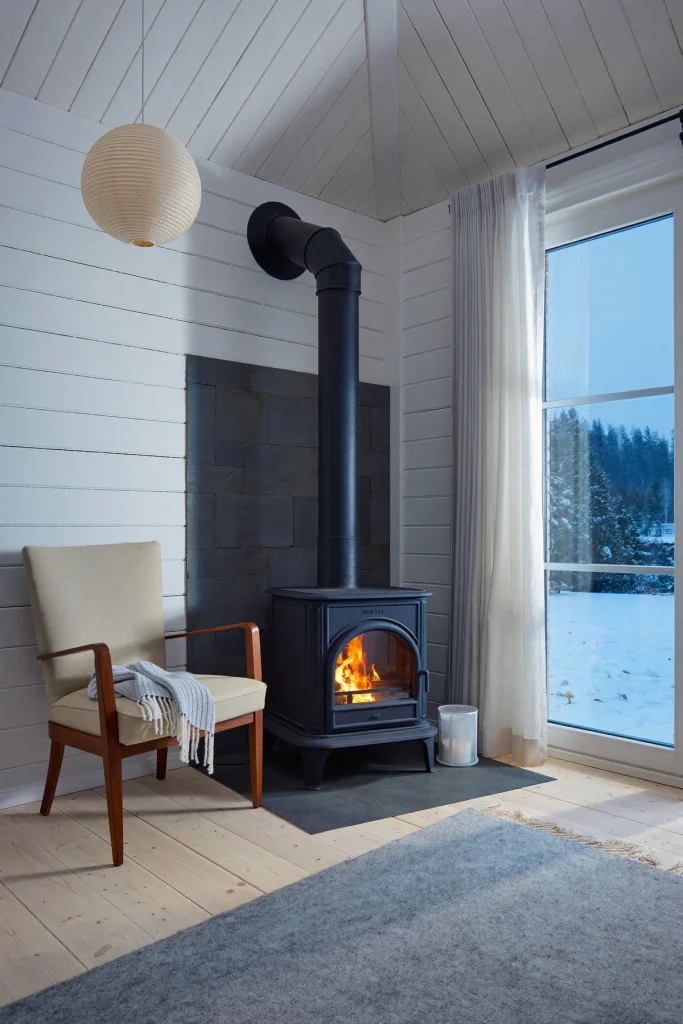
A wood stove is a wonderful option for rooms where a full fireplace isn’t practical. It throws far more heat than an open fireplace, and watching flames through the glass door is just as soothing.
Set the stove on a non-combustible pad of tile, slate or brick, and back the corner with a heat-shield wall in the same material. Keep the right clearances from walls and furniture, and have a certified installer handle the flue and permits. Rules vary by town, so check before you shop.
Once it’s in, place a sturdy armchair and a small table nearby. That corner will become the most coveted seat in the house on snowy evenings. ❄️ Cast-iron stoves in black, deep green or enamel red all look charming, from farmhouse to Scandinavian-inspired rooms.
Cost Breakdown
| Wood stove | around 1,000–3,500 |
| Hearth pad and heat shield | around 300–1,500 |
| Flue, chimney kit and install | around 1,500–4,000 |
Open the Room to a Covered Porch With French Doors
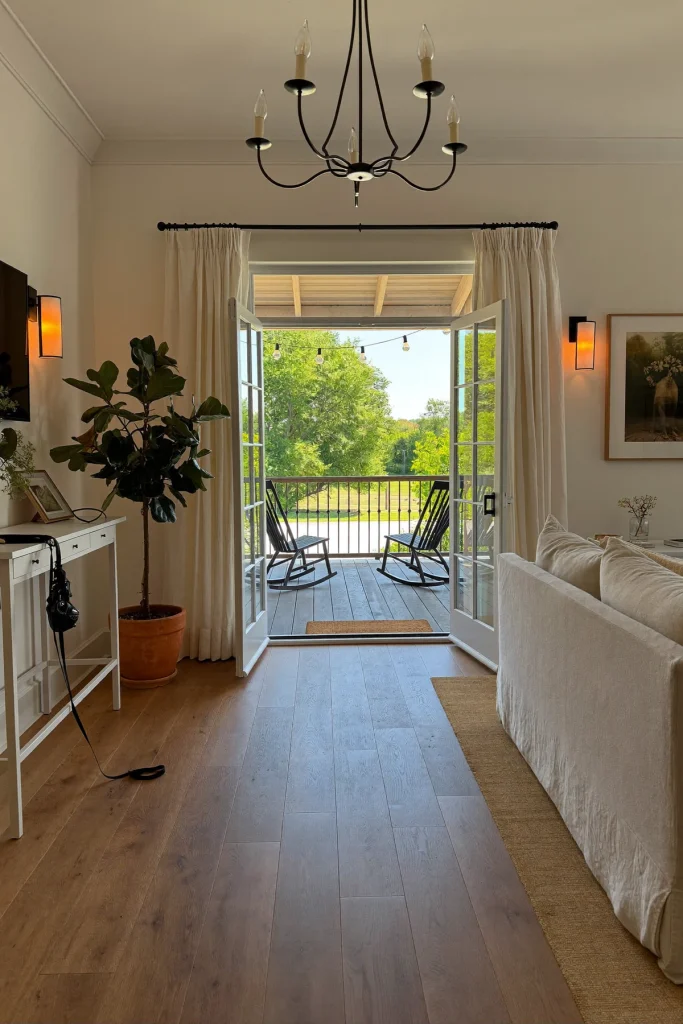
Bringing nature in doesn’t have to mean a jungle of plants. Sometimes it means opening a wall to the outdoors. A pair of glass French doors leading to a covered porch or patio lets in light, fresh air and the view of trees, rain and sky.
On summer evenings, open both doors and let the living room spill outside. In winter, close them, draw the curtains and enjoy the view of snow from a warm sofa. Dress the doors with curtains on a rod that extends past the frame so they don’t block the glass when open.
Light the porch too. A pair of warm wall lanterns and a string of café lights outside make the view glow at night, so the windows never turn into black mirrors. 🌿 Even a small covered patio with two chairs and a planter feels like an extension of the room when the doors are open.
Seasonal Switch
Summer: doors open, sheer panels drawn back. Winter: heavier lined curtains pulled across at dusk to stop drafts and keep heat in.
Turn a Small Living Room Into a Built-In Den
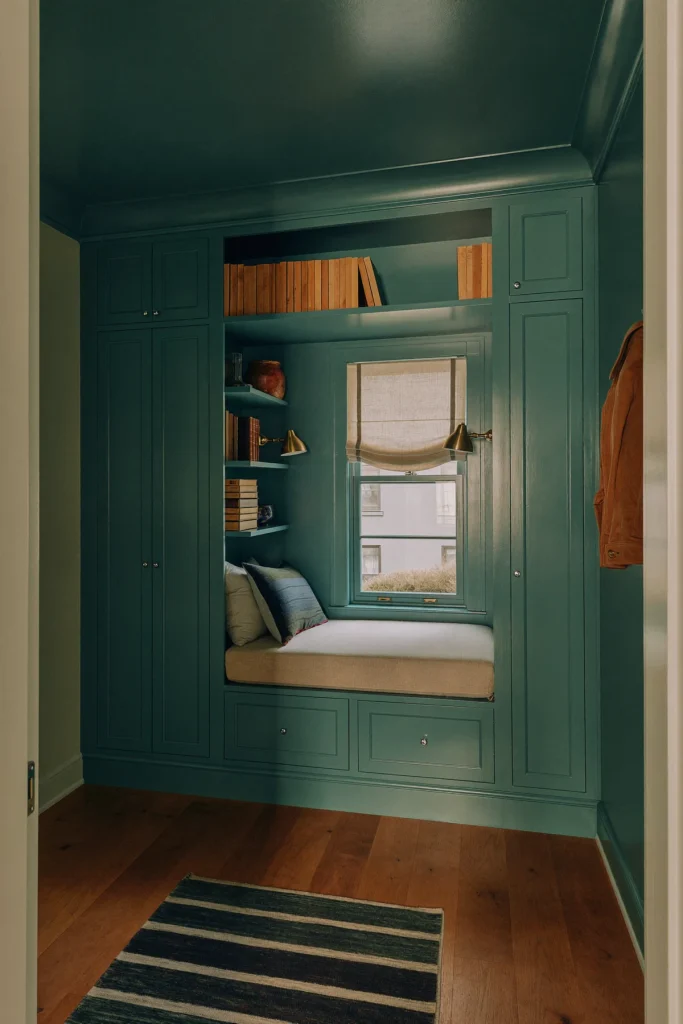
Small living rooms have a secret advantage: they’re naturally cozy. Instead of fighting the size, lean in. Fill one or two walls with full-height cabinetry and a built-in daybed or sofa niche, and the whole room starts to feel like a ship’s cabin or a library den.
Closed cabinets below keep clutter out of sight, while a few open shelves above hold books and a lamp or two. Paint the cabinetry and walls the same color, just like the color-drenching idea in idea 6, so everything reads as one calm surface rather than lots of separate pieces.
A built-in seat with a thick mattress-style cushion doubles as a guest bed. Add a small, wall-mounted reading light at each end and you won’t need floor lamps taking up precious space. In a city row house or prewar apartment, this kind of den makes a tiny room feel deliberate and treasured.
Who This Is For
Apartment dwellers, small-house families and anyone whose living room is under about 150 square feet.
Apartment dwellers, small-house families and anyone whose living room is under about 150 square feet.
Convert a Shallow Alcove Into a Lit Book Nook
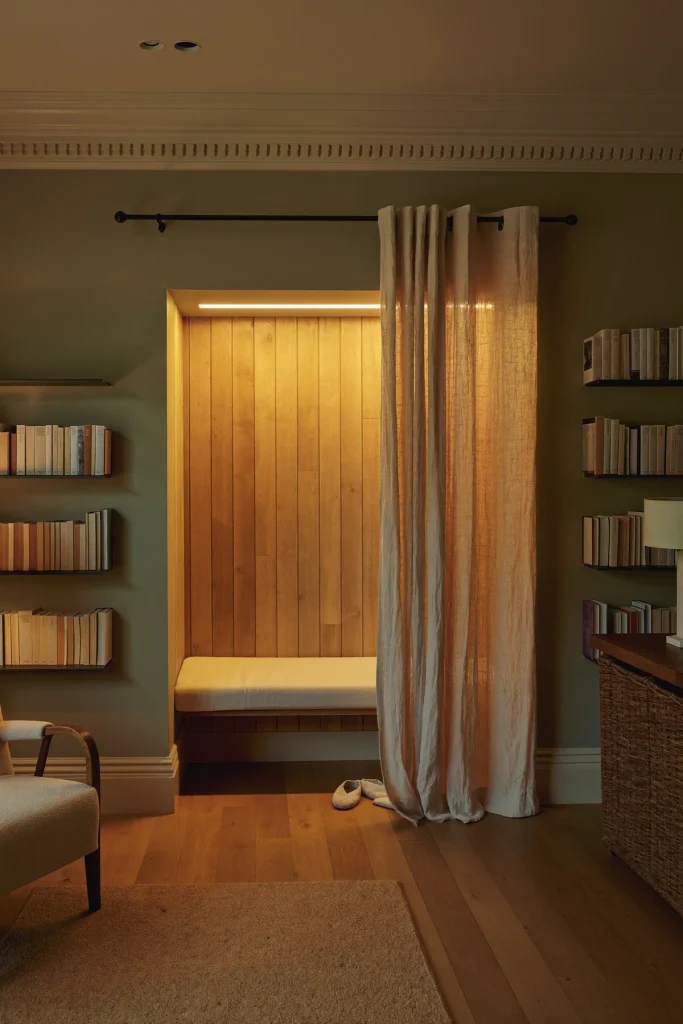
Almost every older house has an awkward alcove: a closet nobody uses, a recess beside a chimney, or the dead space under a staircase. Turn it into a tiny lit book nook, and it becomes the most charming spot in the house. 📚
Remove the door if there is one, line the back wall with wallpaper or wood boards, and fit a deep upholstered seat or bench cushion inside. Add shallow shelves on the side walls for books, and install a small sconce or LED strip inside the top so the nook glows even when the main room is dark.
The key is enclosure. The walls of the alcove wrap around you on three sides, which is exactly what makes a nook feel safe. Kids love these, and honestly, so do grown-ups who want a quiet spot during a busy family evening.
A simple curtain across the opening adds even more privacy and turns it into a hideout.
Sink a Conversation Pit Into the Floor
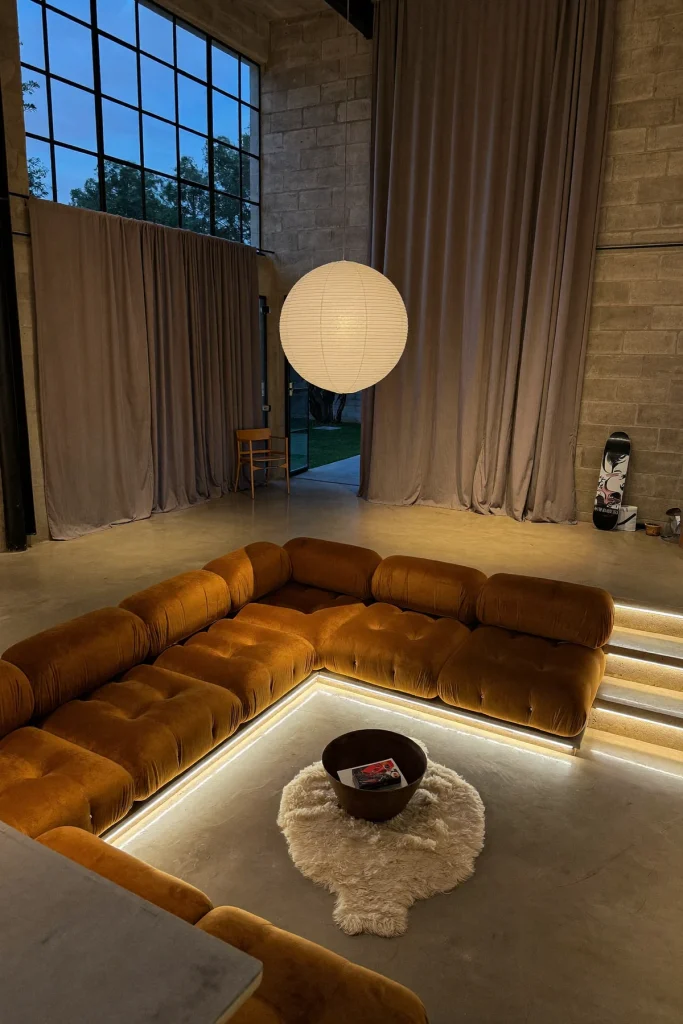
Here’s the boldest idea on the list. A sunken conversation pit, a seating area set a step or two below the main floor, is the ultimate in cozy architecture. Sitting inside one feels like being in a giant, cushioned bowl with your favorite people.
Built-in sofas line the edges of the pit, usually in a U or square shape, with a low table or even a fire feature in the middle. They were wildly popular in mid-century homes and are making a comeback in modern renovations, from concrete-lined brutalist houses to warm wood-paneled lake homes.
This is a real renovation, so it works best during a bigger project or new build, where the floor structure can be planned. Make sure there’s a clear handrail or edge treatment so nobody misses the step, and light the pit with recessed floor lights or soft LED strips along the step edges.
If a full pit isn’t possible, a raised platform around a lower central area can give a similar sense of enclosure. Either way, it becomes the heart of every gathering. 🛋️
Vibe Check
Retro, social and a little cinematic. Perfect for families who love movie nights, board games and long talks after dinner.
Warm Rooms Start With the Bones
Pillows and throws are lovely, but they’re the finishing touch. The truly cosy living room is built from the ground up: furniture that faces each other, light from several heights, warm walls and ceilings, a glowing hearth of some kind, and little nooks that make people want to linger.
You don’t have to do all thirty. Start with the easy wins, like warm bulbs and dimmers, then pick one bigger project for the year, maybe a window seat or a new fireplace surround. Small changes stack up quickly. 🏡
And the next time someone sinks into your sofa and sighs, “I could stay here all night,” you’ll know exactly why.
