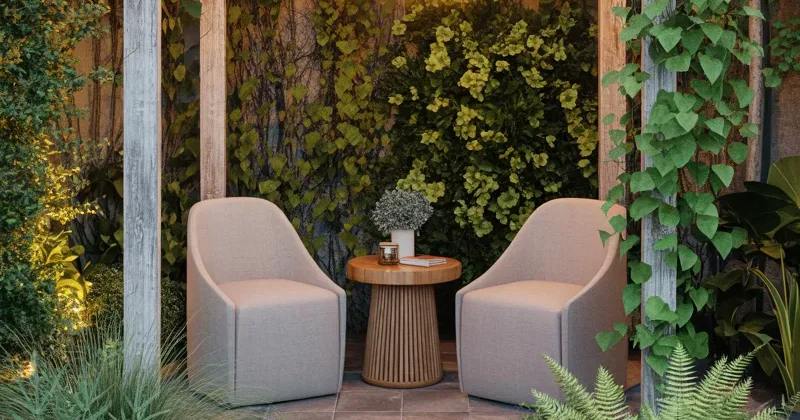
A small backyard does not have to feel like a landscaping compromise. In fact, I think smaller outdoor spaces can be some of the most charming because every plant, pathway, and seating area has a purpose. 🌿
When you work with limited square footage, the trick is not to squeeze more things into the yard. It is to make smarter choices about what deserves the space.
These 19 small backyard landscaping ideas will help you create a backyard that feels inviting, layered, and thoughtfully designed without making it feel crowded. Some are simple weekend projects, while others can completely change the way you use your outdoor space.
Lay a narrow stepping-stone path through the yard.
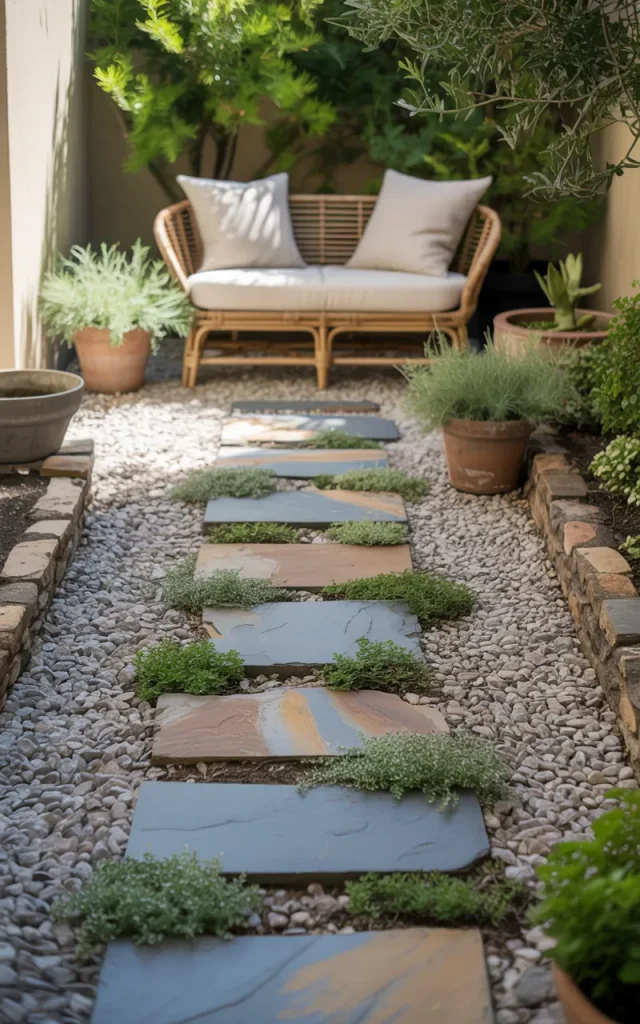
A pathway can make even a tiny backyard feel like it has different destinations. Instead of installing a wide walkway, use a narrow line of stepping stones leading toward a seating nook, garden bed, shed, or focal point.
I prefer slightly irregular natural-looking stones because they soften the geometry of a small space. Leave modest gaps between them and fill those spaces with gravel, creeping groundcover, or small pockets of greenery.
The path does not have to be long. Even a short journey across the yard adds movement.
A Micro-tip:

Keep the pathway slightly off-center. A centered path can make the backyard feel divided in half.
Add a small tree for vertical interest.
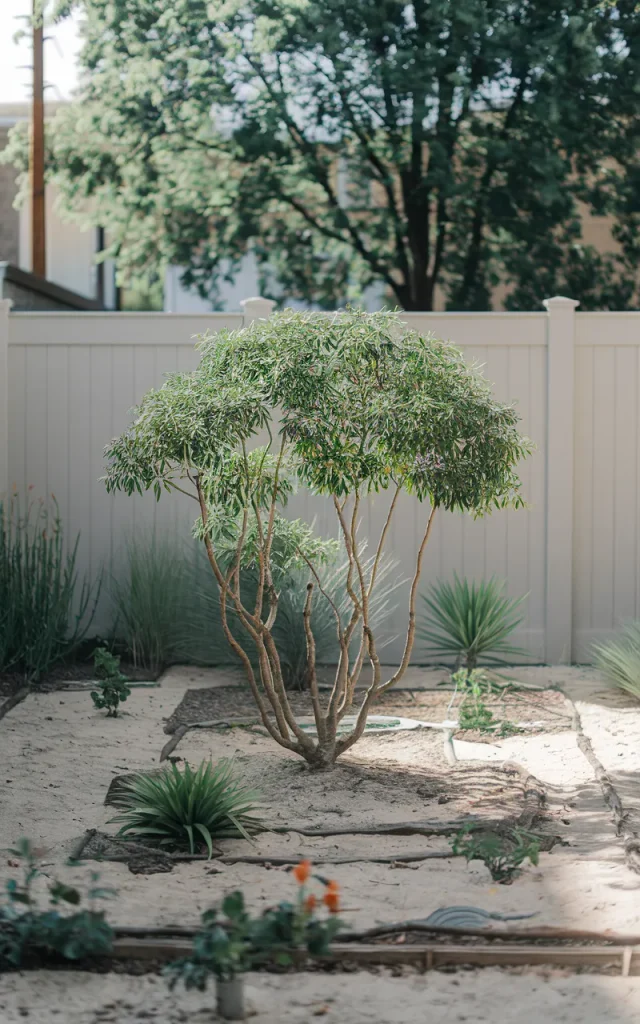
One carefully chosen tree can give a small backyard a surprisingly mature appearance. 🌳
Look for a species that fits your local climate and the eventual size of the space. You do not want a tree that will overwhelm the yard or create problems with roots, branches, or overhead structures later.
Position it where its canopy can provide some shade without blocking every bit of sunlight.
Unlike filling the yard with several large plants, one tree creates height while leaving plenty of open ground around it.
Why it works?
Your eyes naturally move upward, making the backyard feel taller and more layered.
Choose gravel instead of a large lawn.
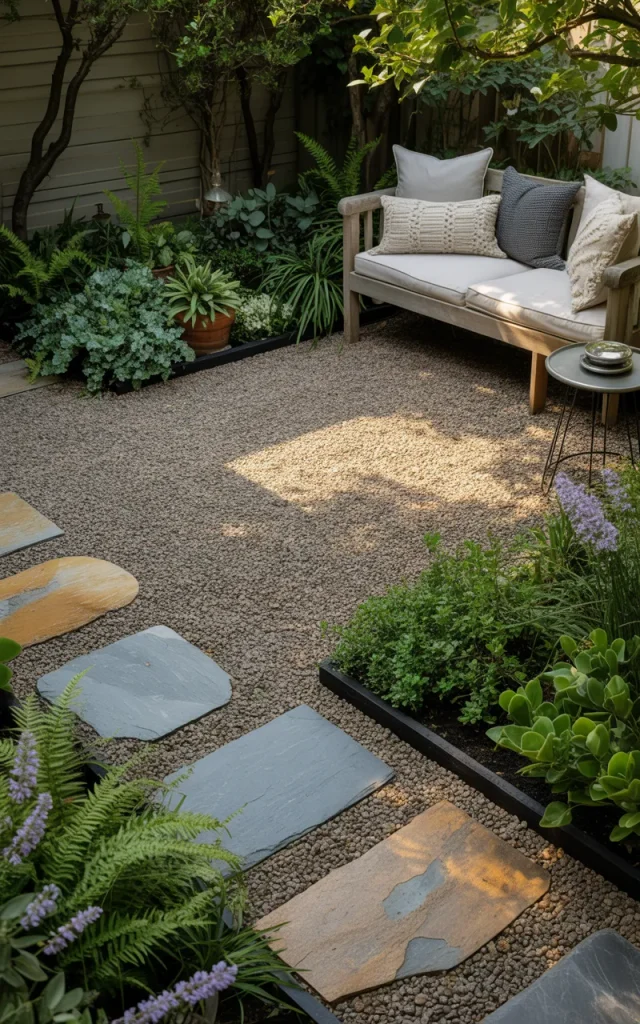
If maintaining a patch of grass feels impractical, consider replacing some of it with gravel. This is especially useful in a very small backyard where a lawn can require more maintenance than it is worth.
Create a defined gravel area and surround it with planting beds, stepping stones, or a compact seating arrangement. Choose furniture with enough visual weight to feel grounded against the loose texture.
I also like mixing gravel with large pavers. The combination feels more designed than a completely bare gravel surface.
For people on a budget:

Gravel can be an economical way to create a finished-looking ground surface without installing a large hardscape.
Hang planters from a sturdy fence.
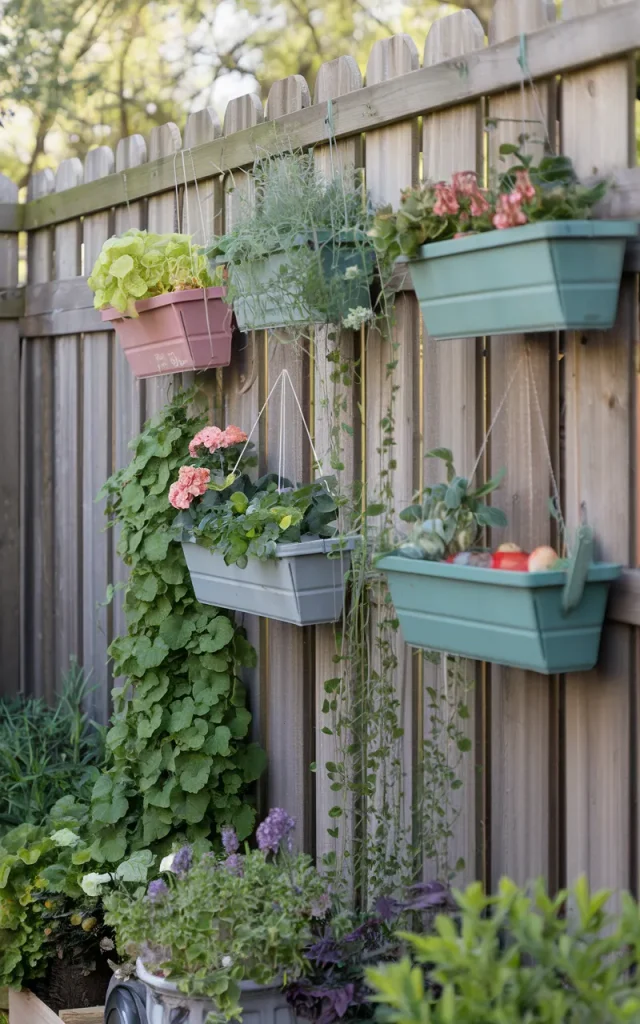
Use your fence as another layer of growing space. Hanging planters can hold flowers, herbs, trailing greenery, or even compact vegetables.
This is one of those changes I love because it requires very little ground space. You can place several planters at different heights to create a relaxed vertical arrangement.
Just make sure the fence and hardware can safely support the weight, especially after watering.
Small Space Hack:
Choose lightweight containers and repeat the same planter style. The repetition keeps the fence looking tidy while the plants provide the variety. 🌸
Build a raised garden bed along one side.
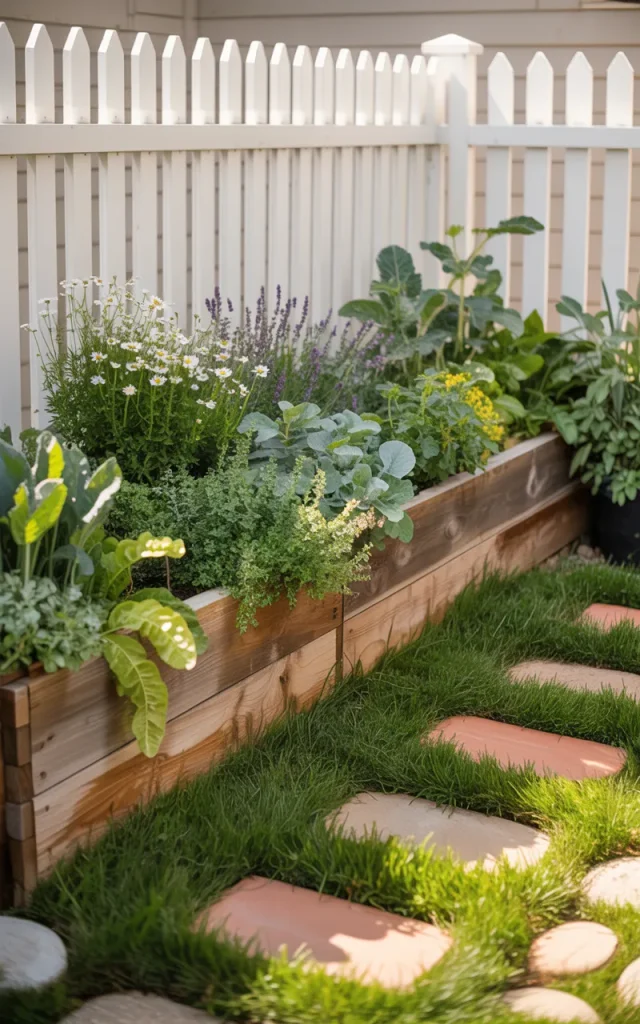
A raised garden bed can turn an awkward strip of backyard into a productive little garden. Instead of spreading plants randomly around the yard, keep them contained in one defined area.
I recommend placing the bed along a fence or wall so the middle remains open for movement and seating.
You can grow flowers, herbs, leafy greens, or a combination of all three. If the backyard is extremely small, keep the bed narrow enough that you can comfortably reach the center from either side.
Pro-tip:
A simple rectangular bed often looks more spacious than several tiny garden boxes scattered around the yard.
Frame the entrance with matching planters.
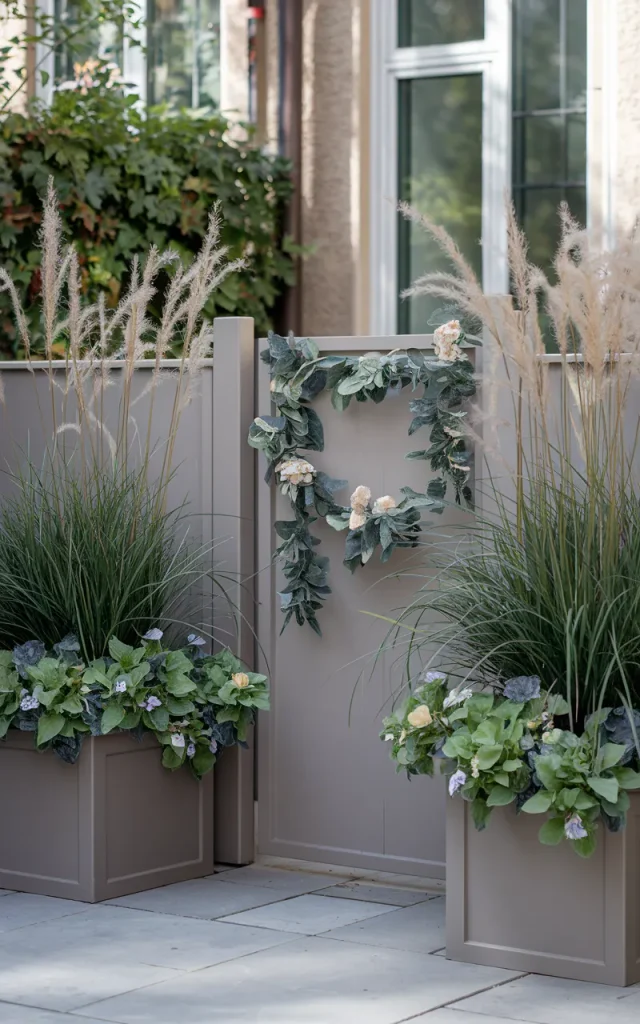
Give your backyard entrance a little ceremony by placing matching planters on either side of the gate, steps, or doorway.
This works particularly well when the rest of the yard is simple. Two identical containers immediately create symmetry and make the entrance feel deliberate.
You do not need enormous pots. Medium-sized planters with upright grasses, leafy plants, or flowering shrubs can create plenty of impact.
Choose containers that complement your home’s exterior rather than competing with it.
Vibe check:
- 🌿 Calm: use leafy green plants.
- 🌸 Cheerful: choose flowering varieties.
- 🪴 Modern: use simple geometric containers.
Add a trellis with a climbing plant.
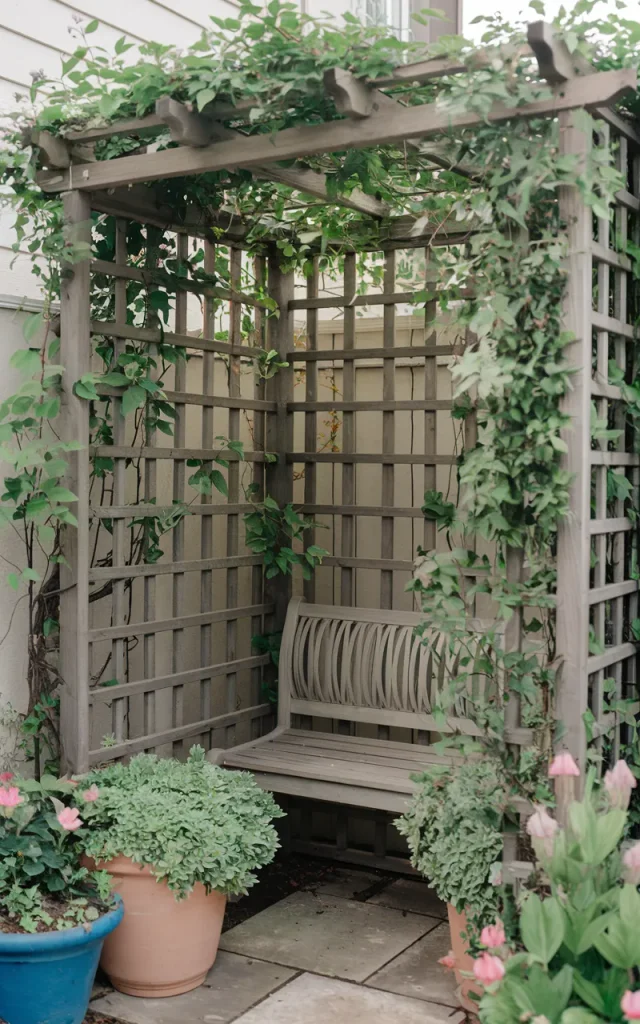
A trellis gives your backyard height without requiring much floor space. Place one against a fence or wall and train a suitable climbing plant upward.
The result can be beautiful even when the yard itself is tiny. Over time, the greenery creates a living backdrop that adds privacy and softness.
I like using a trellis behind a small bench because it creates the feeling of a separate garden destination without building a full structure.
Just choose climbers carefully for your climate and available sunlight.
Instant Gratification Tip:

Even before the plant fills out, you can make the trellis look finished by positioning a container plant or lantern nearby. ✨
Define a tiny seating area with pavers.
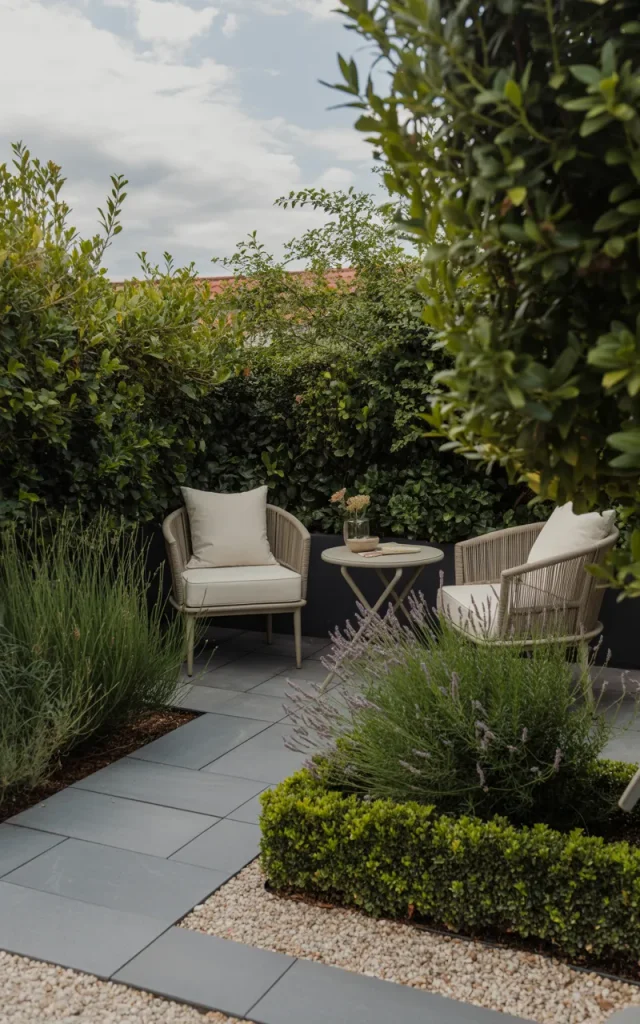
Give your backyard a destination instead of simply filling it with plants. A small paved seating area can become the visual anchor of the entire landscape.
You might only need enough room for two chairs and a little table. That is plenty for morning coffee, reading, or an evening conversation.
Choose pavers that relate to the exterior materials of your home. If your house has warm brick, for example, warmer-toned paving can help everything feel connected.
Why designers do this:

A defined seating zone makes the backyard feel like an outdoor room. It also prevents furniture from looking randomly placed. If you remember the gravel idea from earlier, you can even combine a small paved pad with a gravel border for extra texture.
Paint the fence a soft, receding shade.
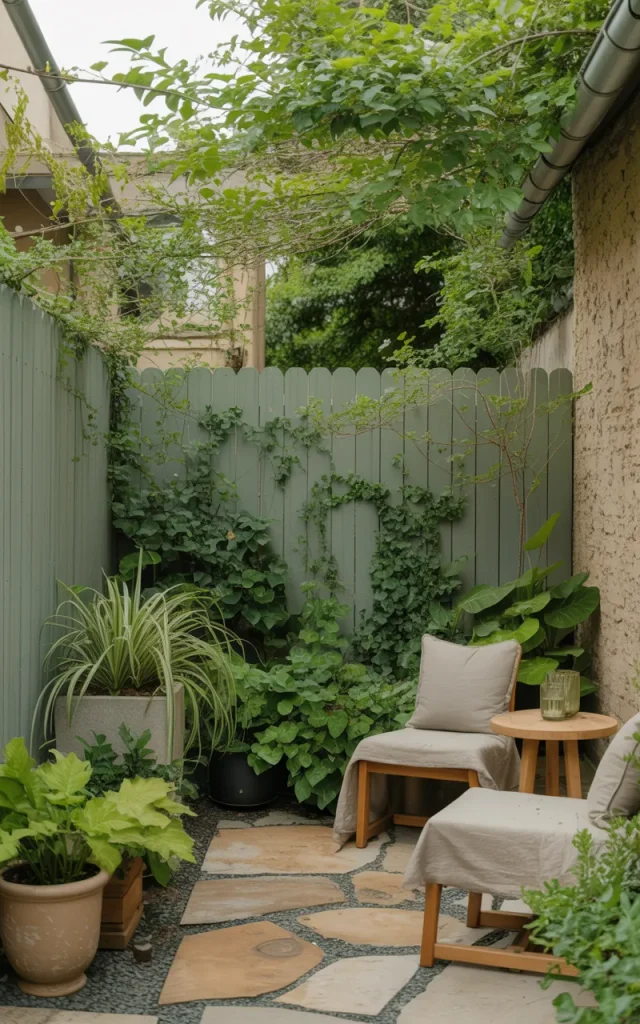
Your fence takes up a huge amount of visual space, so changing its color can have a surprisingly big effect.
A muted green, soft gray, warm brown, or another subdued outdoor-friendly shade can help the fence blend into the landscape. 🌿
I would avoid choosing a color simply because it looks dramatic in a paint sample. In a small backyard, strong colors can dominate quickly.
Thumb Rule:
Let the fence support the plants rather than compete with them. Once the background recedes, your greenery, flowers, furniture, and lighting become much more noticeable. It is a simple landscaping move, but the visual difference can be impressive.
Create a corner garden instead of filling the center.
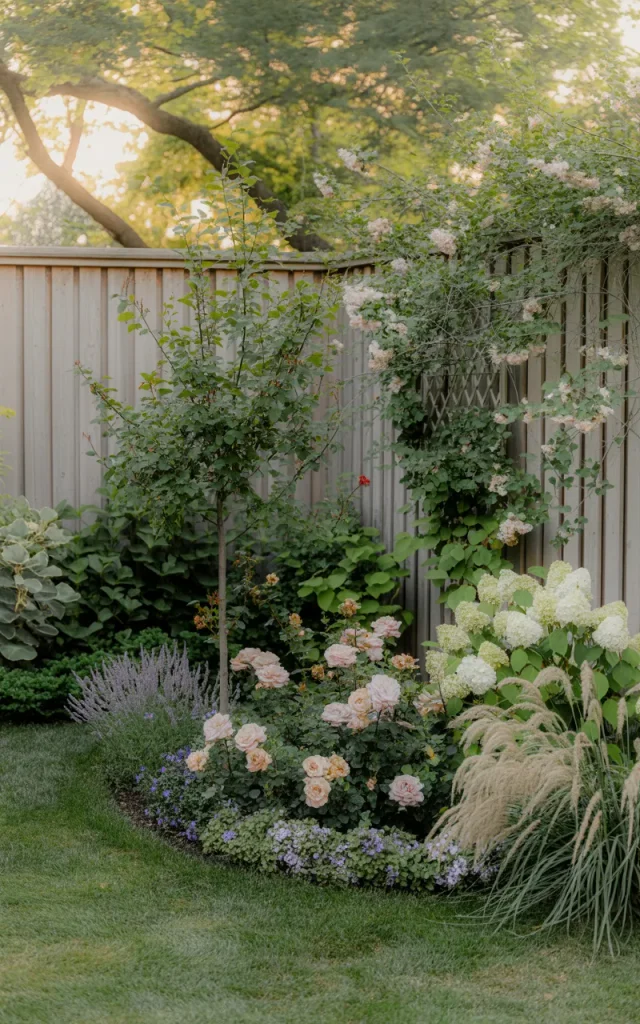
An unused corner is often the perfect place for a compact garden. 🌺
Rather than spreading plants across the entire backyard, concentrate them into one lush corner. Add a curved bed, a small tree, ornamental grasses, flowering plants, or a trellis behind the arrangement.
Then leave the center open.
This approach creates contrast between planted and unplanted areas, which makes both feel more intentional.
A Pro-tip:

Use the corner as your tallest planting zone. The gradual increase in height toward the corner can make the backyard feel deeper. It is a particularly useful strategy if you still want room for dining, entertaining, or children to play.
Add a curved planting bed.
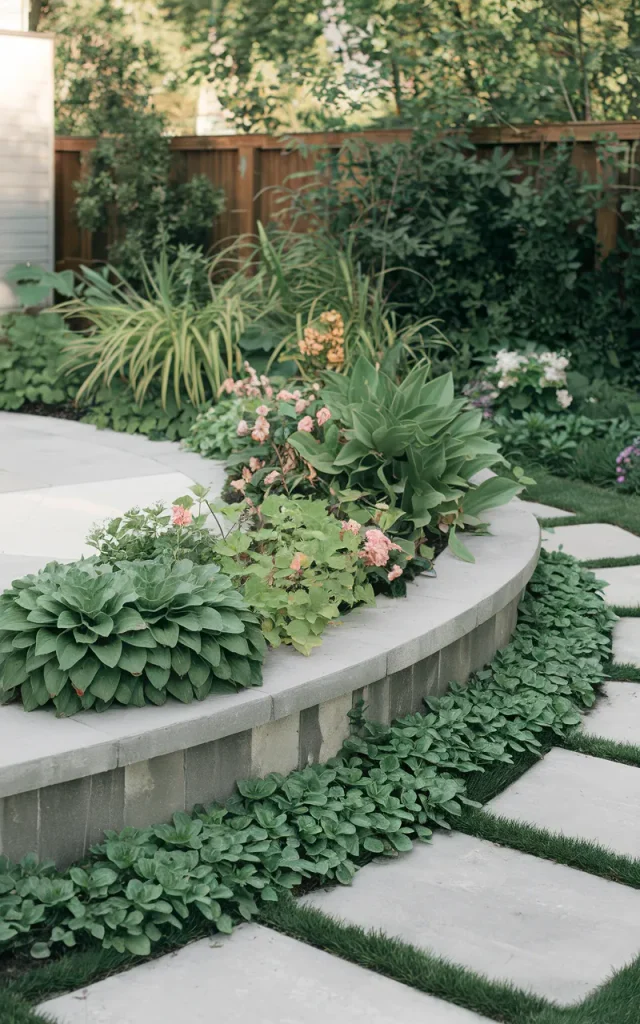
Straight lines are not your only option. A gently curved planting bed can soften a compact backyard and make the landscaping feel more organic.
The curve can follow the shape of a patio, wrap around a tree, or sweep along one edge of the yard.
Keep the curve broad and simple. A series of tiny bends can look fussy and actually emphasize how little space you have.
One rule to remember:
If you create a curved bed, repeat that curve somewhere else. Perhaps the edge of a pathway or the shape of a seating area can echo it. That repetition creates visual flow.
Build a multi-purpose gravel courtyard.
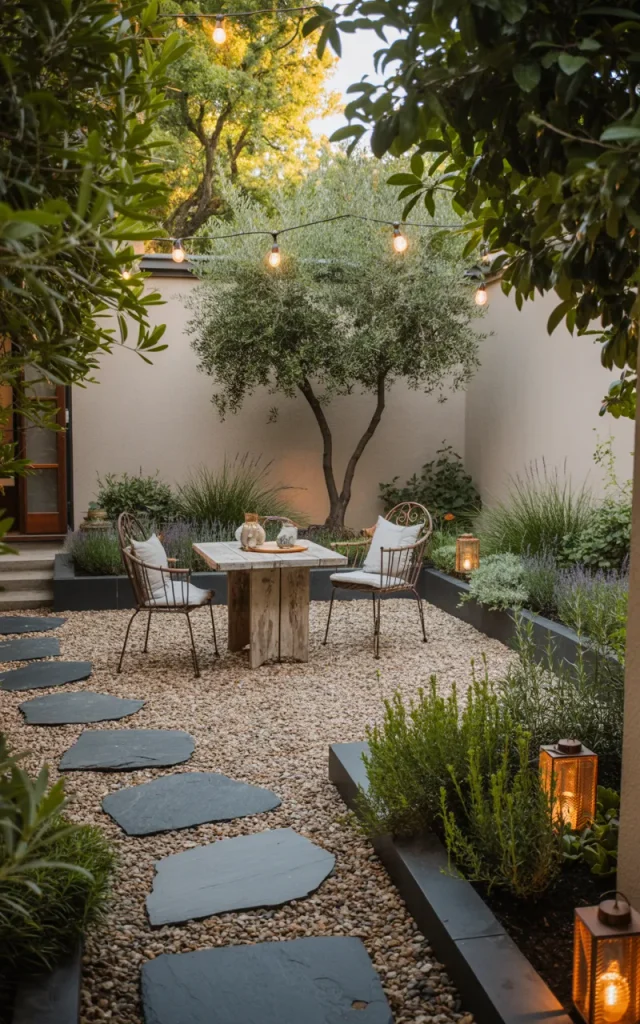
If you want your tiny backyard to feel like a proper outdoor retreat, create a compact gravel courtyard that can serve several purposes.
Lay a defined gravel surface and position a small table, two chairs, a bench, or even a couple of lounge chairs on top. Add planting beds around the edges rather than interrupting the central surface with too many pots.
I love this approach because the courtyard becomes the flexible heart of the yard. ☕ It can be a breakfast spot in the morning, a reading area in the afternoon, and a place for drinks at night.
Layer it like this:
- Gravel underfoot
- Pavers beneath frequently used furniture
- Greenery around the perimeter
- One focal plant or small tree
- Soft outdoor lighting
Keep the middle relatively open. That empty space is what makes the courtyard feel comfortable.
Frame a view with ornamental grasses.
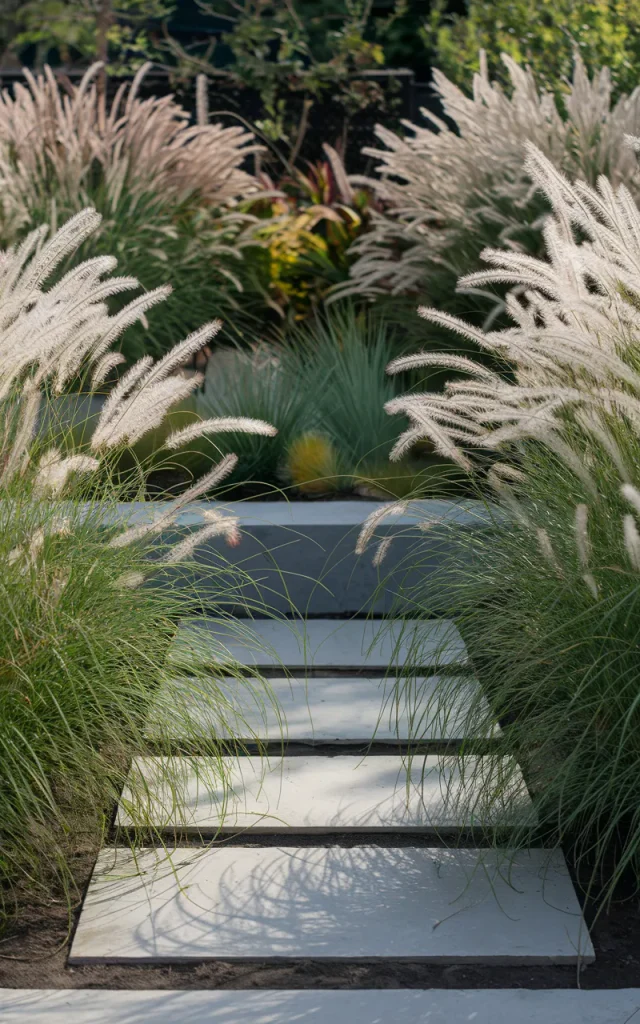
Use ornamental grasses to create a soft frame around a seating area, pathway, or garden feature.
Their movement is especially lovely in a small backyard. A little breeze can make the entire landscape feel alive.
Place taller grasses behind shorter plants and avoid planting them in every corner. A few repeated clusters are enough.
Surprise Fact: Plants that move in the wind can make a compact space feel more dynamic without adding more furniture or decorative objects.
If your yard already has a hardscape-heavy design, grasses can also soften concrete, brick, stone, and fencing.
I would repeat the same grass in two or three locations rather than collecting lots of different varieties.
Install layered outdoor lighting.
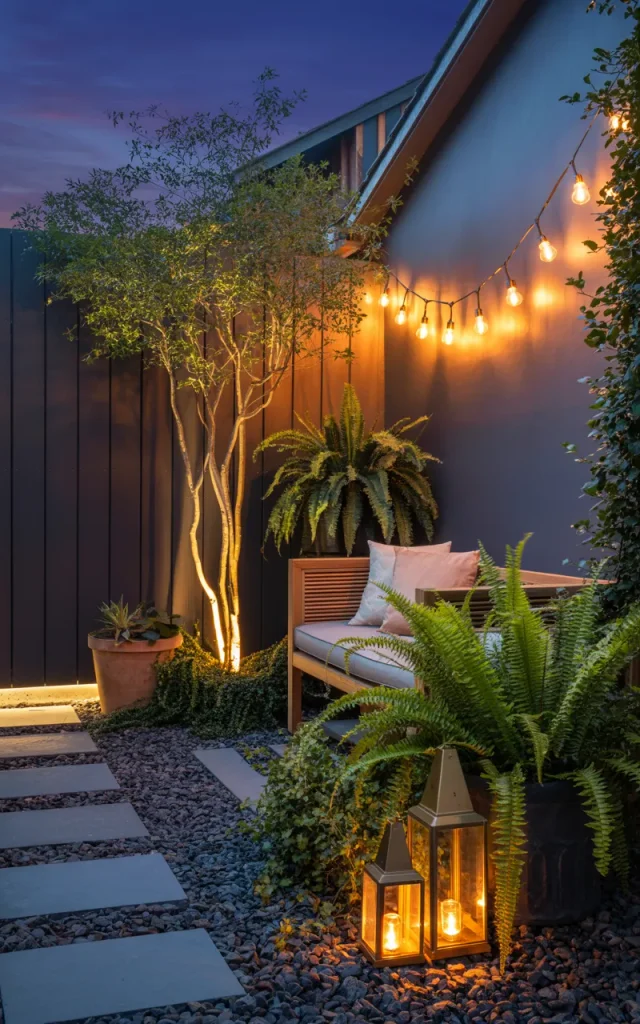
Good lighting can completely change a small backyard after sunset. ✨
Rather than relying on one bright fixture, layer several gentle sources. Add path lights near stepping stones, small uplights around a tree, string lights over a seating area, or warm lanterns on a table.
The key is restraint. You want pockets of light, not a backyard that looks like a parking lot.
Step-by-step instructions:
- Identify the main seating area.
- Highlight one plant or architectural feature.
- Add subtle pathway lighting where needed.
- Introduce ambient lighting overhead.
- Turn everything on at night and remove anything that feels too bright.
I especially recommend pointing some light toward foliage. The shadows can make even a tiny garden feel much more atmospheric.
Create a tiny outdoor dining nook.
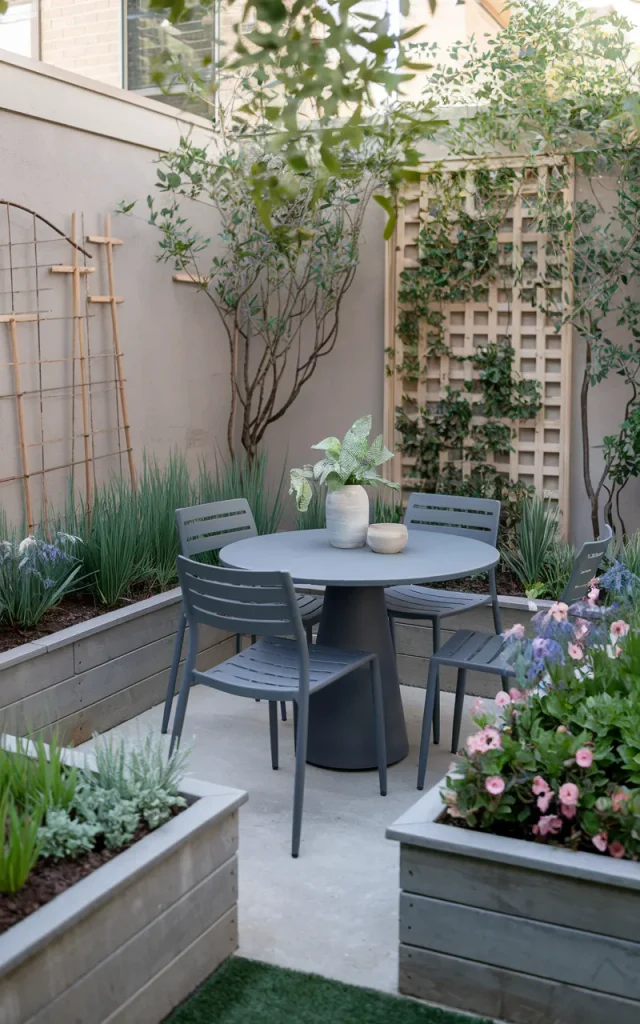
You do not need a full dining set to enjoy meals outdoors. A small round table and two or four slim chairs can turn an otherwise unused corner into a charming dining nook. 🍽️
Position the table close to the home if possible. That makes carrying food and drinks outside much easier.
Then add one layer of landscaping around it. A narrow planting bed, a couple of large containers, or a trellis behind the table can give the nook a sense of enclosure.
Vibe check:
- 🌿 Casual: wooden furniture and leafy plants.
- ✨ Modern: streamlined metal furniture and simple planters.
- 🌸 Romantic: flowering plants and soft lighting.
Keep the circulation path clear. A beautiful dining area is not useful if everyone has to squeeze around it.
Use one bold focal plant.
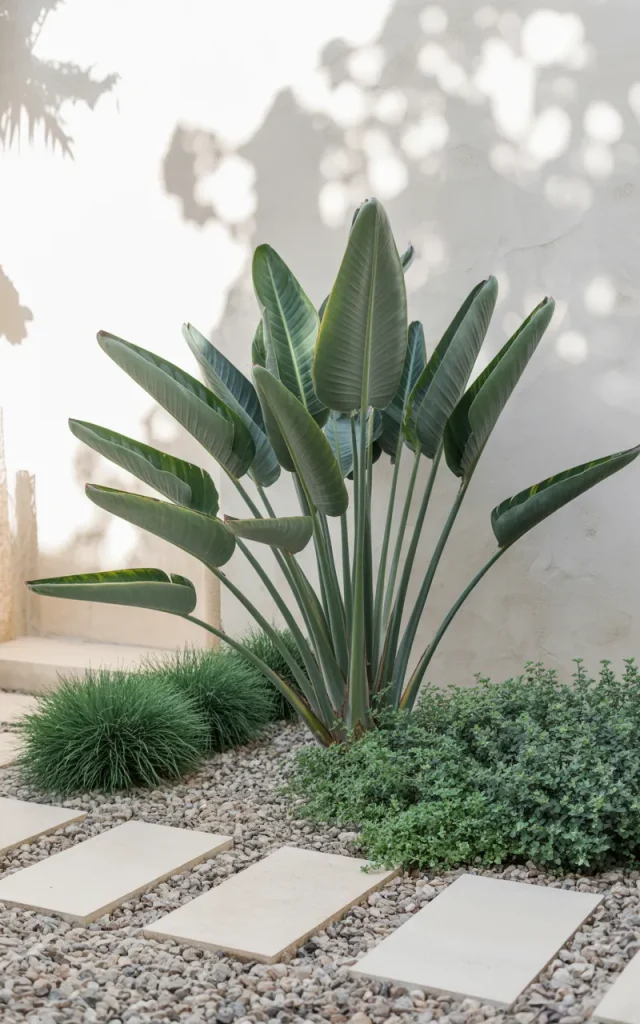
Sometimes the best way to landscape a small backyard is to stop adding things.
Choose one plant with a strong silhouette, unusual foliage, beautiful flowers, or an interesting trunk. Give it enough surrounding space to stand out.
A statement plant can become the backyard’s visual anchor while the rest of the landscape stays relatively simple.
Myth-buster: A small backyard does not need lots of different plants to look interesting.
In fact, too many competing focal points can make the space feel smaller. One memorable plant surrounded by supporting greenery often looks much more sophisticated.
You can position it at the end of a pathway, beside a seating area, or in a corner garden like the one from idea 17.
Add a built-in planter along the patio edge.
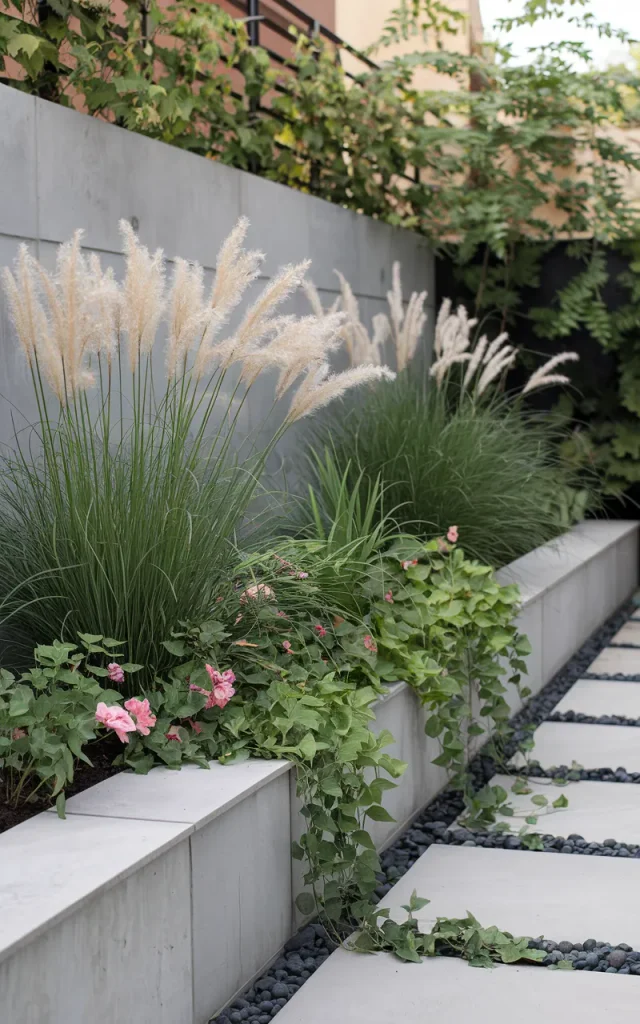
If you’re already planning a patio renovation, consider turning the patio edge into a built-in planter.
This creates a clean transition between hardscape and greenery while making use of space that might otherwise be wasted.
A narrow planter can hold grasses, shrubs, flowers, or trailing plants. It can also subtly define the patio without requiring a bulky privacy wall.
Do’s & Don’ts
- Do: Choose plants that suit the planter’s sunlight and drainage.
- Do: Leave enough room for mature growth.
- Don’t: Pack plants tightly just to make the bed look full immediately.
- Don’t: Forget access for watering and maintenance.
I love built-in planters because they make landscaping feel integrated into the architecture rather than added afterward.
Turn an awkward corner into a fire pit nook.
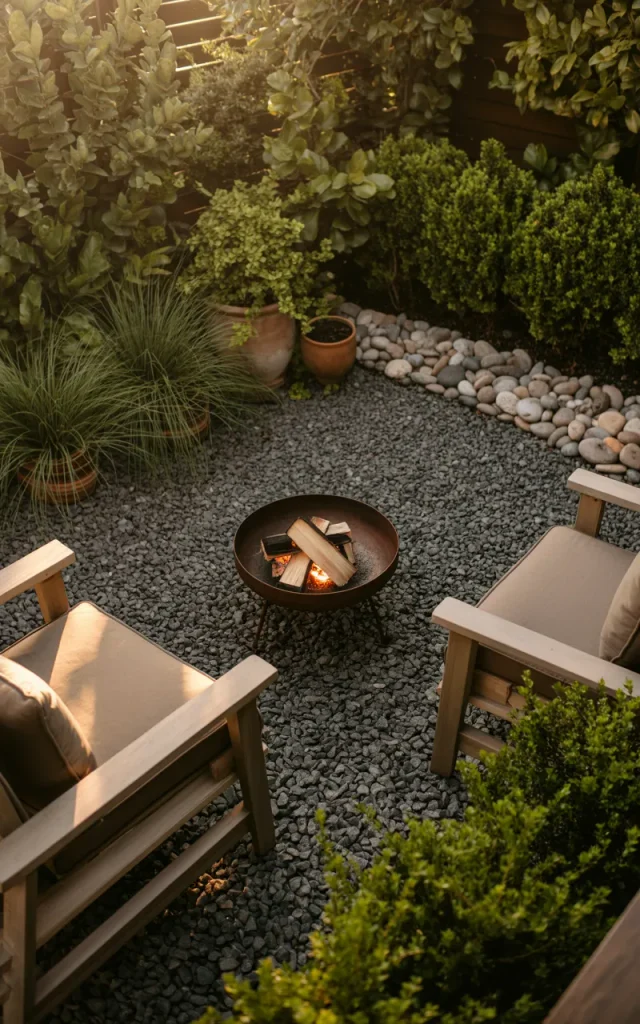
A small fire feature can give your backyard a strong sense of purpose. 🔥
If local regulations and safety conditions allow, create a compact fire pit area in a suitable corner, keeping the required clearances and safe surfaces in mind.
Use a few comfortable chairs rather than trying to recreate a huge outdoor lounge. Surround the area with low planting or gravel, leaving enough open space around the fire feature.
Common Mistakes to Avoid:
- Crowding furniture too close to the fire.
- Choosing plants that cannot tolerate the conditions.
- Ignoring local fire regulations.
- Blocking the main pathway.
The best small fire pit areas feel intimate. You are creating a destination for a few people, not an outdoor event venue.
Add a small pergola over the seating area.
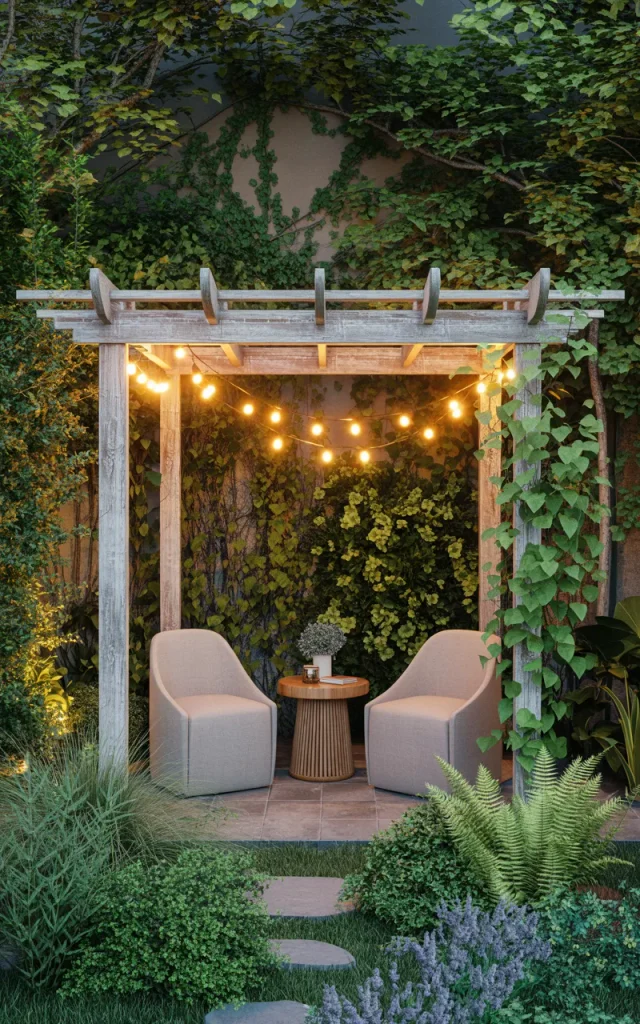
A petite pergola can give a tiny backyard an instant architectural focal point.
You do not need a huge structure. A compact pergola over two chairs or a small dining table can create a sense of enclosure while drawing the eye upward.
Train suitable climbing plants across the structure if your conditions allow, or keep it simple with hanging lights and lightweight outdoor décor.
Trend Alert:
Outdoor spaces are increasingly being treated like extensions of the home, and a small pergola helps create that indoor-outdoor feeling without requiring a massive backyard. Keep the structure proportionate. Oversized beams and a heavy roof can overwhelm a compact garden.
If you liked the trellis idea from earlier, think of this as its larger architectural cousin.
Final Thoughts
The best small backyard landscaping ideas are not necessarily the most complicated ones. Often, a carefully placed tree, a narrow planting bed, or two comfortable chairs can make a bigger difference than an expensive collection of outdoor features.
I recommend starting with the way you actually want to use the space. Do you want morning coffee outside? A little garden? A place for dinner? A private corner to unwind? 🌿
Once you know that, the landscaping becomes much easier. Pick one idea from this list and start there. Your small backyard does not need to be bigger to become one of your favorite spaces at home.
