Here’s the funny thing about working from home. Almost nobody has a spare room just sitting there, waiting to become an office. The guest room has guests. The basement has the treadmill. And the kitchen table has, well, everyone.
So these home office ideas aren’t about decorating a room you already have. They’re about finding one. A closet, a landing, the dead corner behind the sofa, the end of a hallway nobody notices. Most family homes are hiding at least three good desk spots in plain sight. 🏡
Below are 18 ways to claim a little territory of your own, from tiny cutouts to full conversions. Pick the one that fits your house and your budget, then make it yours.
Tuck a Desk Into the Hall Closet
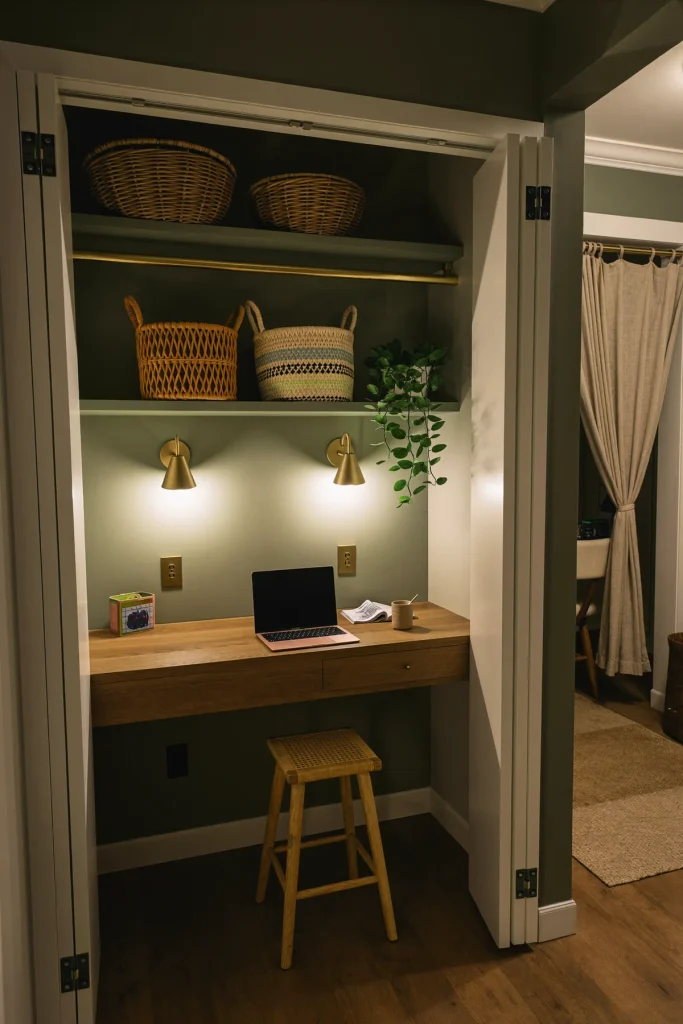
The “cloffice” is popular for a reason. Pull off the bifold doors, run a wood shelf wall to wall at desk height, and you’ve got a real workstation in a space that used to hold a vacuum and three tote bags.
Paint the inside a soft color so it feels like a little room of its own. Add a plug-in sconce on each side and a shelf above for baskets. When the day’s done, hang a linen curtain on a tension rod and draw it closed. Work, gone. ✨
Small Space Hack
Choose a stool or a slim armless chair that slides fully under the desk. If the chair sticks out into the hallway, the whole idea stops working.
Build a Desk Into the Bay Window
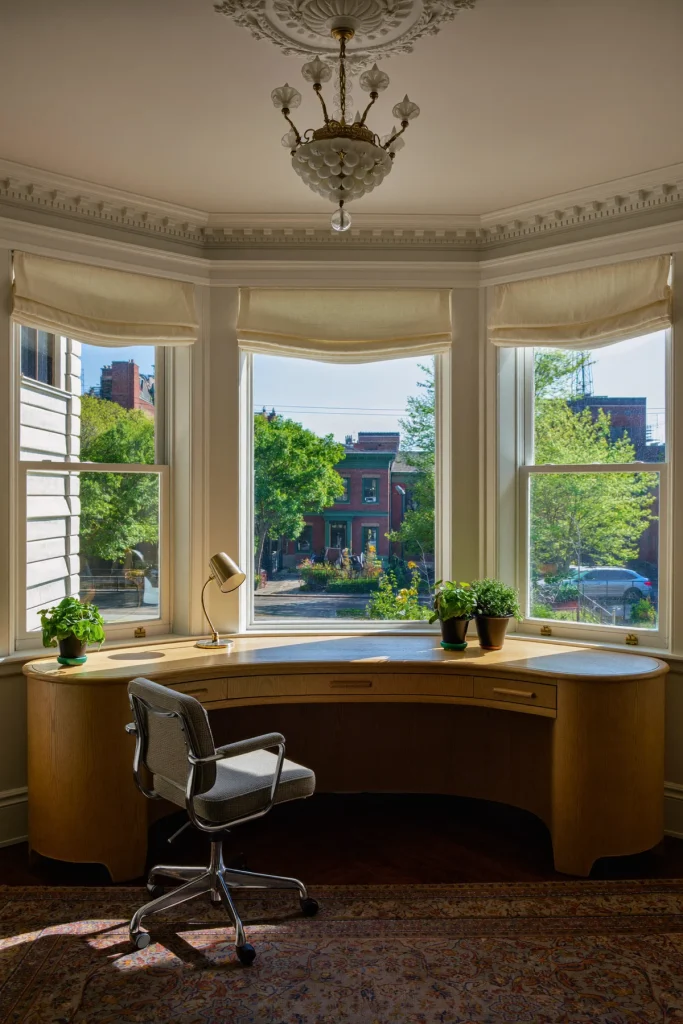
A bay window is basically a ready-made office. It has light on three sides and a built-in sense of being “somewhere.”
Fit a curved or angled desktop into the bay, add a cushioned chair, and dress the windows with Roman shades you can lower when the afternoon sun hits your screen. The rest of the room carries on as living or dining space, while your corner feels like its own little world. 🪟
Common Mistakes to Avoid
- Facing directly into the glass all day, which means glare on your screen. Angle the desk slightly.
- Skipping window treatments because “it’s such a nice view.”
- Forgetting an outlet. Plan the cord route before the desk goes in.
Slide a Desk Under the Attic Eaves
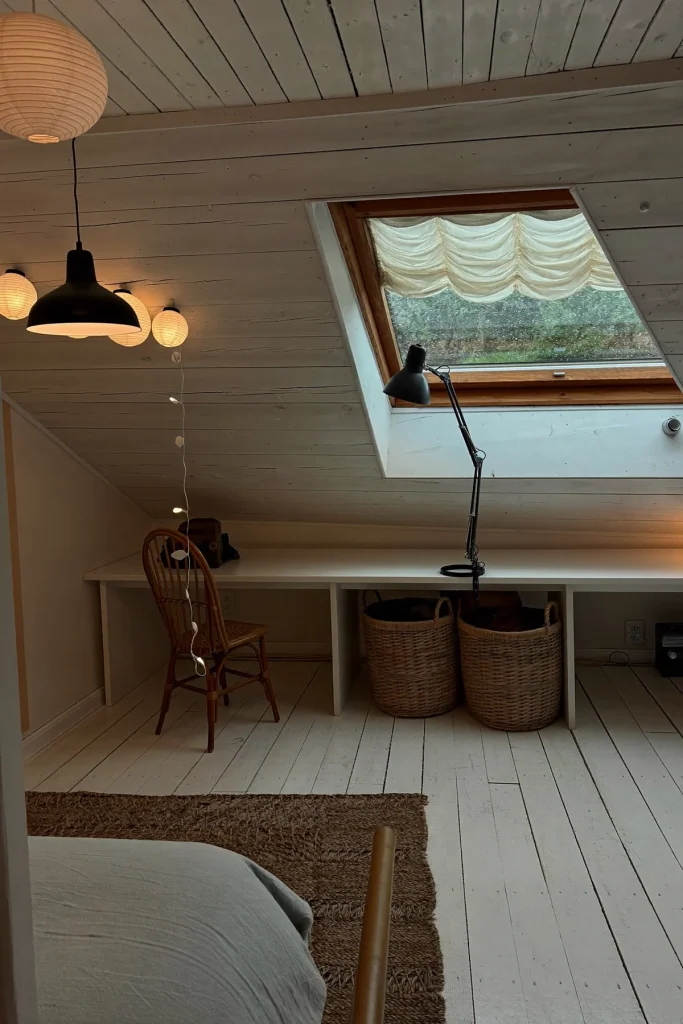
A finished attic with sloped ceilings can feel too low to use. But you don’t need standing height at a desk. You need sitting height.
Place a long, low desk right under the eaves where the ceiling dips, and keep the tall parts of the room for walking and storage. A skylight or dormer helps, but a good pendant and a desk lamp work just as well. The angles end up making the space feel cozy, like a reading loft that happens to have Wi-Fi.
Cost Breakdown
| Item | Rough range |
|---|---|
| Long low desk or built-in top | 150–600 |
| Pendant or desk lamp | 40–200 |
| Rug for the attic floor | 80–300 |
| Under-eave baskets for storage | 30–120 |
Carve a Work Nook Out of the Dining Room
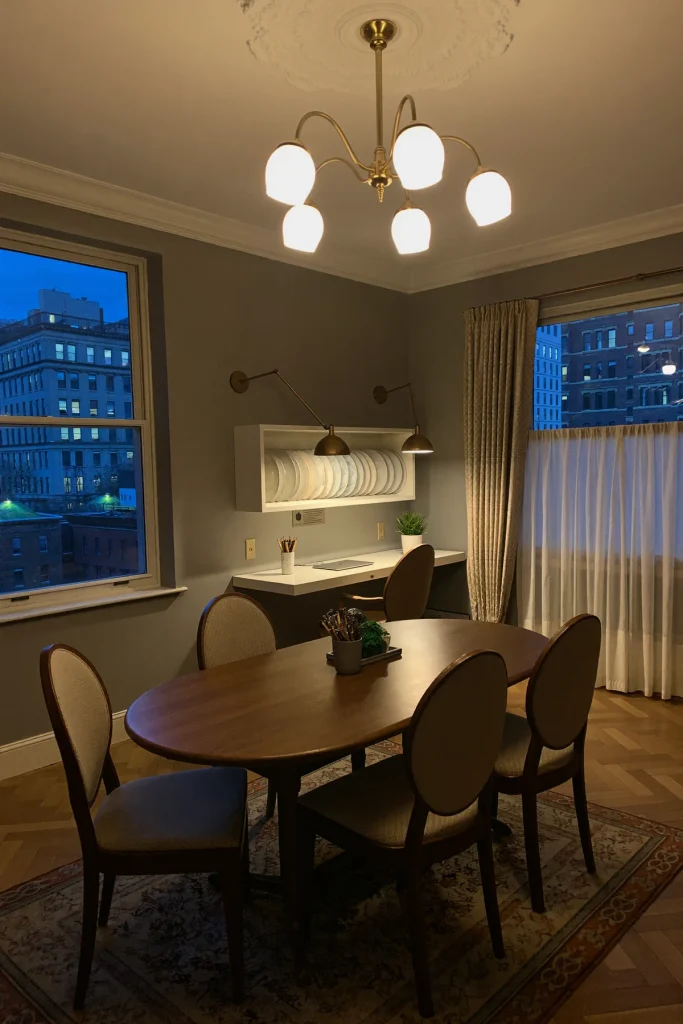
A lot of dining rooms get used a handful of times a year. You don’t need to give up the table, just borrow a wall.
Place a slim desk or a built-in counter along one side, with open shelves or a hutch above. Match the wood tone to your dining table so it all reads as one room. A plug-in sconce or two over the desk keeps it lit without competing with the chandelier.
Do This 👉 / Not This ❌
- 👉 Choose a desk chair that matches your dining chairs.
- ❌ Drag a black mesh office chair into a room full of upholstered seats.
- 👉 Use closed baskets for paperwork on the shelves.
Add a Desk to the Mudroom Drop Zone
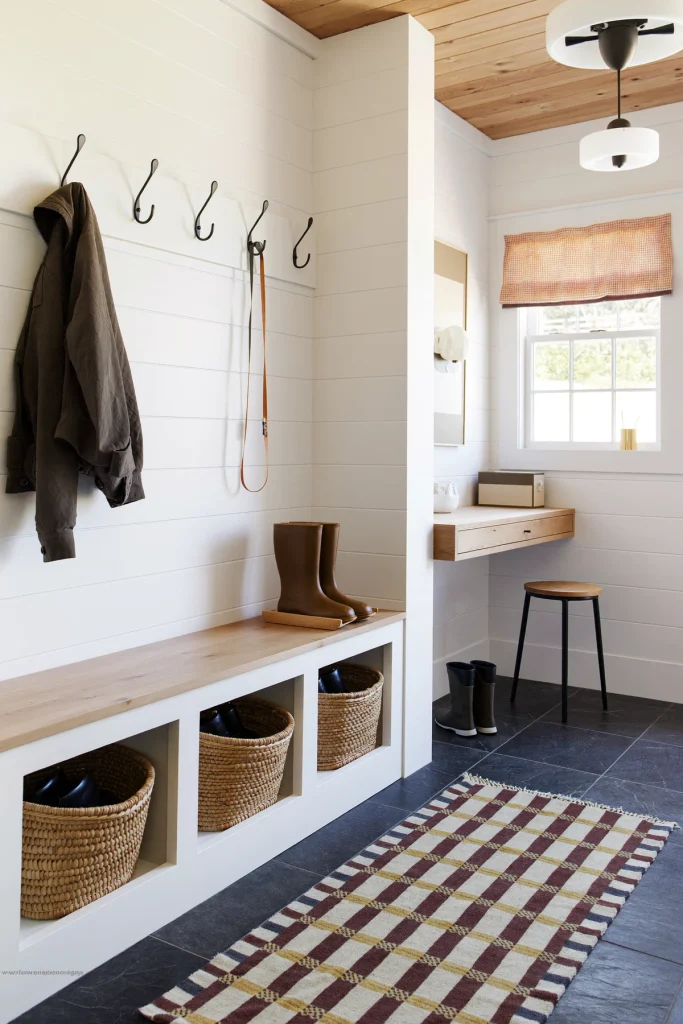
The mudroom is already where the family’s day begins and ends. Backpacks, keys, permission slips. It’s practically a command center.
Extend the bench or add a short counter at one end with a chair tucked under it. It becomes the place to pay bills, sign forms and plan the week, right where all the paper lands anyway. A wall of hooks, a woven basket per person and a durable runner keep it from tipping into chaos. 🎒
Kid- and Pet-Proof It

Pick a wipeable desktop, washable seat cushions, and a rug that can go in the washing machine. Mudrooms see mud. That's the whole point.
Borrow a Bedroom Corner
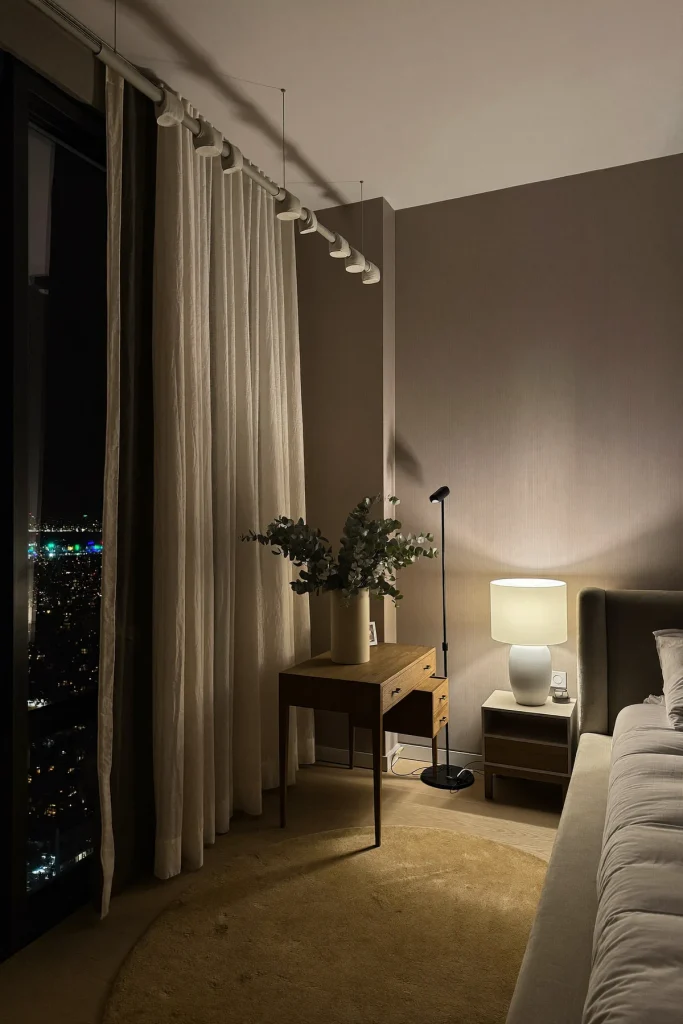
If your bedroom has a corner by a window, it can probably hold a small desk. The challenge is making sure work doesn’t follow you to bed.
Use a desk with drawers so you can hide the laptop at night, and pick a style that matches your nightstands. A folding screen or a ceiling-mounted curtain track around the corner gives you a soft divider you can close after hours. Keep it pretty and quiet, and the bedroom stays restful. 🌙
Move Your Work Into the Sunroom
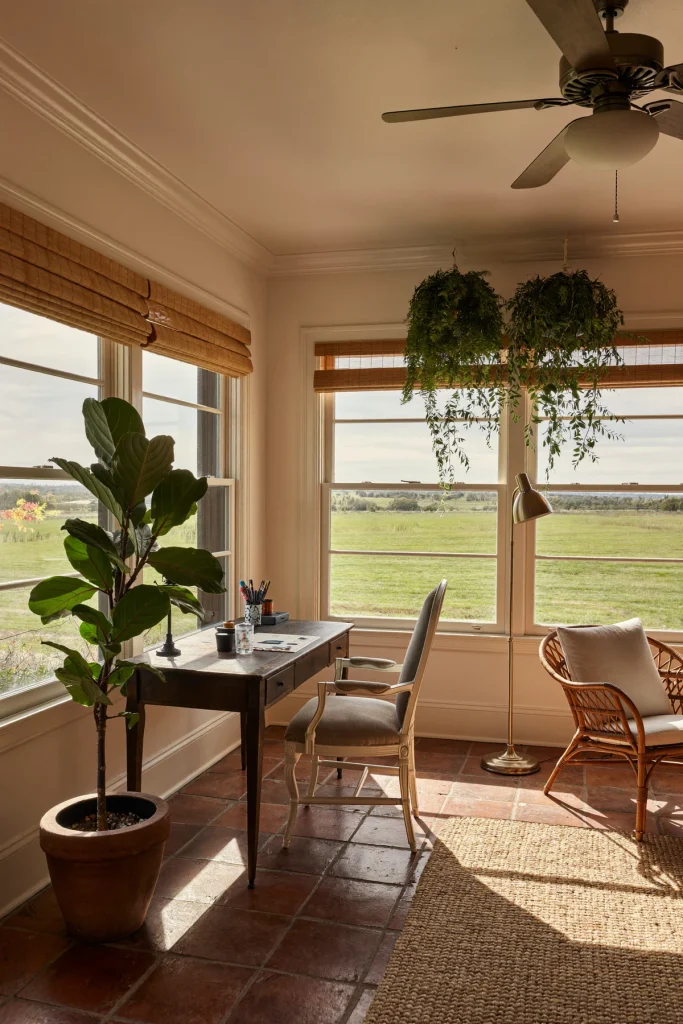
A sunroom is the dream office for anyone who struggles to focus inside four plain walls. All that glass and greenery does wonders for an afternoon slump.
Use a sturdy table as a desk, angled so the brightest windows sit beside you, not behind your screen. Add bamboo or linen shades to manage glare, and a reading lamp for gray days. Plants do double duty here as decor and a natural divider from the lounge chairs. 🌿
Finish the Space Above the Garage
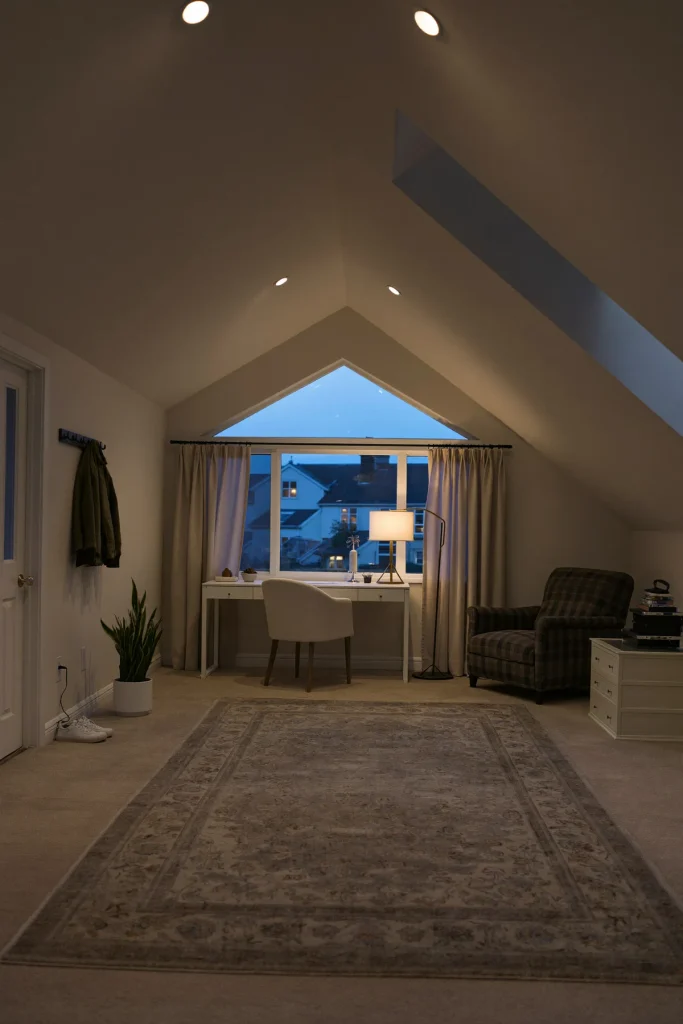
A bonus room over the garage is the closest thing to a commute that doesn’t involve a car. You walk out of the house, up a flight of stairs, and you’re at work.
If the space is already finished, it mostly needs good lighting and insulation from garage noise. Use a big rug to soften the floor, a long desk under the gable window, and a comfy chair in the corner for calls. Recessed lights plus a floor lamp keep it from feeling like an empty attic.
It’s especially great for anyone who takes a lot of video calls, since the rest of the house can be as loud as it likes. 📞
Rule of Thumb
If you can’t stand comfortably in at least half the room, plan the desk for the low half and keep walkways in the tall half
Fit a Floating Desk Into a Hallway Niche
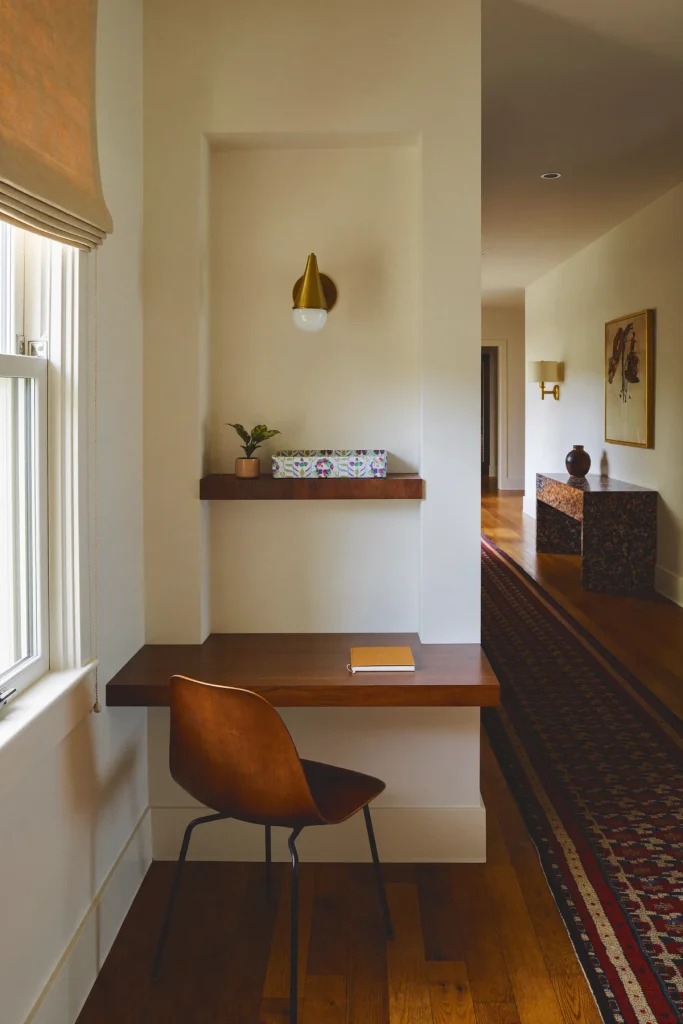
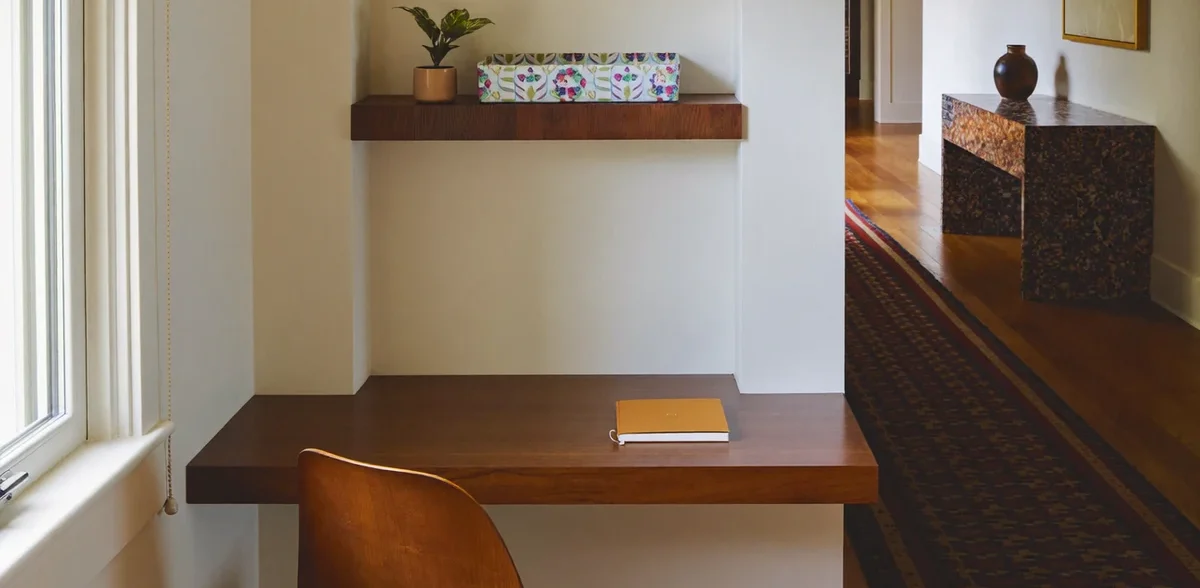
Older homes and newer builds alike often have a shallow niche in a hallway, maybe meant for a phone table or art. Even 20 inches deep can hold a floating desk.
Mount a wall shelf at desk height, add a wall-mounted lamp or a small sconce, and slide in a compact chair. Because a hallway is a walkway, keep the setup minimal: one tray, one plant, one notebook.
A runner down the hallway ties the nook into the rest of the space so it doesn’t look like an afterthought.
Checklist
- At least 36 inches of walkway left behind the chair
- An outlet within reach, or a cord cover planned
- A light source that isn’t the hallway ceiling fixture
- A chair that tucks fully under
Frame a Built-In Alcove Beside the Fireplace
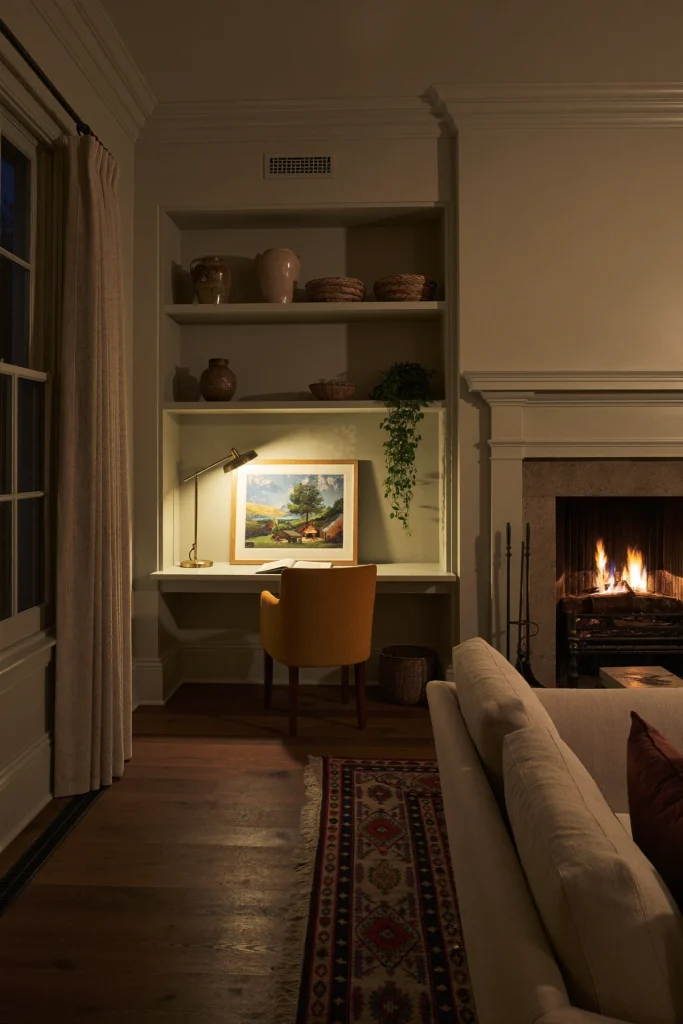
Living rooms with a fireplace often have two alcoves on either side of the chimney. One of them can hold your office without losing a bit of charm.
Build in a desk with shelves above, and paint it the same color as the walls so it disappears into the architecture. Add a picture light over a framed landscape and a brass desk lamp, and it looks like it’s always been there.
On winter evenings, working beside a crackling fire is about as cozy as office life gets. 🔥 The other alcove stays as display shelving, keeping the room balanced.
Enclose a Corner of the Back Porch
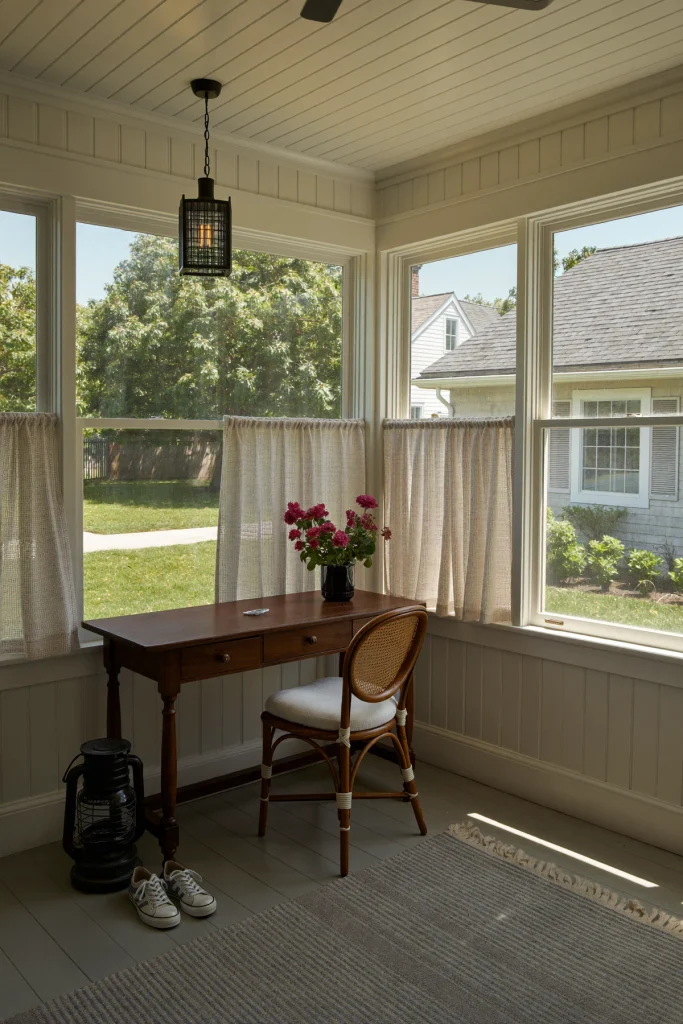
A covered back porch already has a roof, a floor and usually great light. Enclosing part of it with windows can give you a three-season or year-round office for less than an addition.
Keep the porch character: beadboard ceiling, painted floorboards, a woven rug. Bring in a simple wooden desk, a cushioned chair and a little heater for cool mornings. Hang café curtains or shades so passing neighbors aren’t watching you type.
It’s the kind of space that makes Monday feel a bit like a vacation.
The Sound Check
Before you commit to an enclosed porch, sit out there during a busy hour with your laptop. Lawn mowers, dogs and delivery trucks are louder than you’d think. Heavier curtains and a big rug help a lot.
Share the Laundry Room Counter
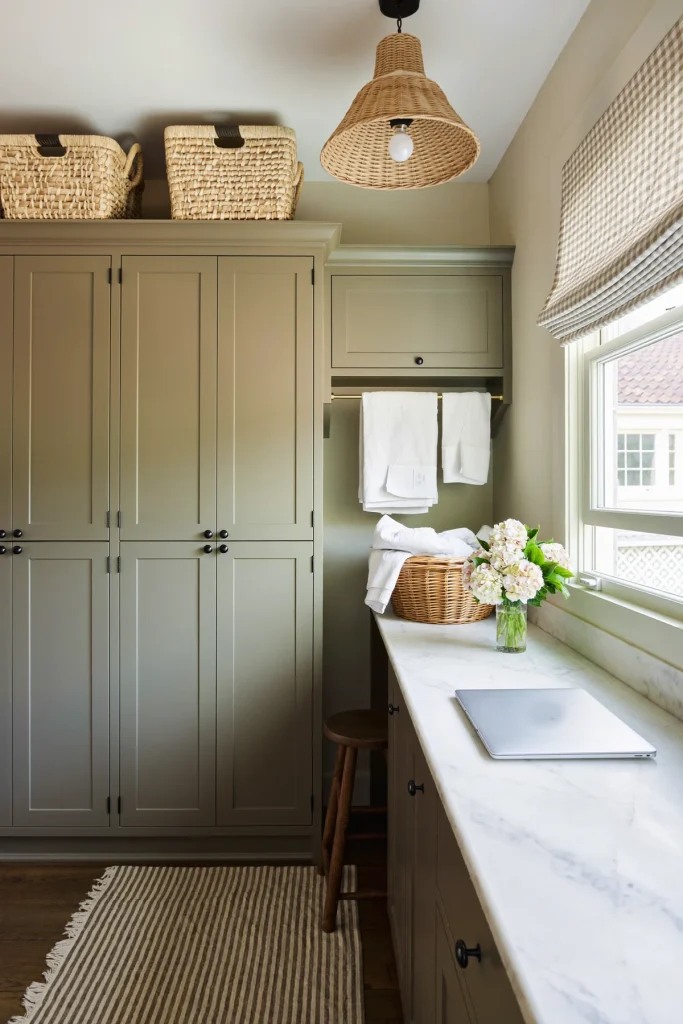
A long laundry room counter is already at a comfortable working height. Leave space for folding at one end and set up a laptop spot at the other with a stool.
This works best for household admin: bills, schedules, online orders. The washer hums along while you check off your list.
Add open shelves with baskets above, a pendant over the work end, and a washable runner underfoot. It’s an efficient corner for anyone who runs the home like a small business, because honestly, it is one. 🧺
Convert a Backyard Shed Into a Studio
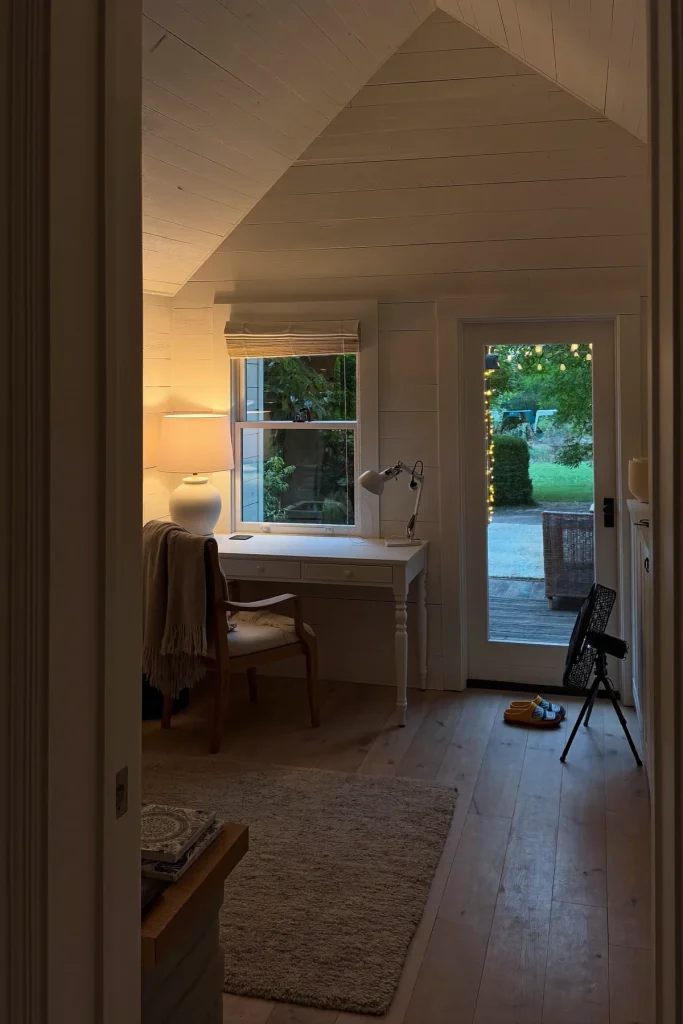
For a true separation between home and work, a backyard shed is hard to beat. Many prefab sheds can be insulated, wired and finished into a small studio.
Inside, keep it bright: white walls, light wood floors, one good window with a shade. Add a desk, a cozy chair and a small heater or fan depending on the season. String lights outside make the evening walk back to the house feel magical.
You’ll want permits and an electrician involved, so plan ahead.
Weekend Project
If the shed is already insulated and wired, you can paint, add a rug, a desk and a lamp in a single weekend. The heavy lifting is the electrical work before that. 🛠️
Carve an Office From a Loft With a Shelf Divider
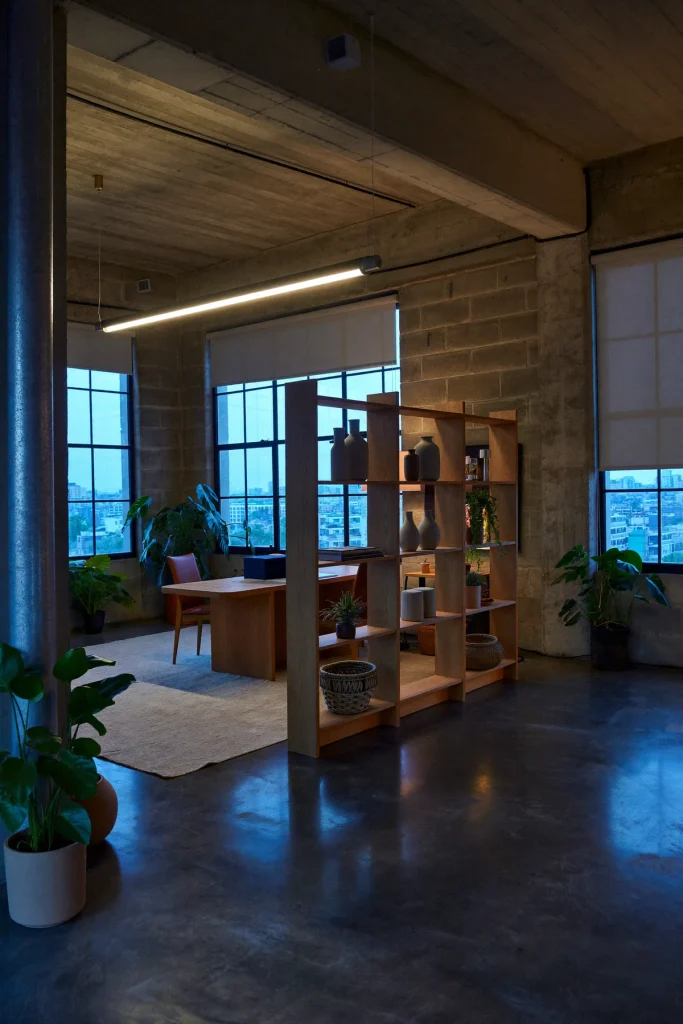
Open-plan lofts and big great rooms can make it hard to find a quiet corner. The answer is to create one with an open shelving unit as a room divider.
A tall, open-backed bookcase lets light through while marking off a clear “office” zone behind it. Style it with plants, ceramics and baskets on both sides so it looks good from the living area too.
Behind the divider, place your desk, a rug to anchor the space and a floor lamp. It’s not a closed office, but it gives you a sense of separation that really helps with focus.
This also works in a large primary bedroom or a big basement rec room. Anywhere with more square footage than walls.
Convert a Formal Living Room Nobody Uses
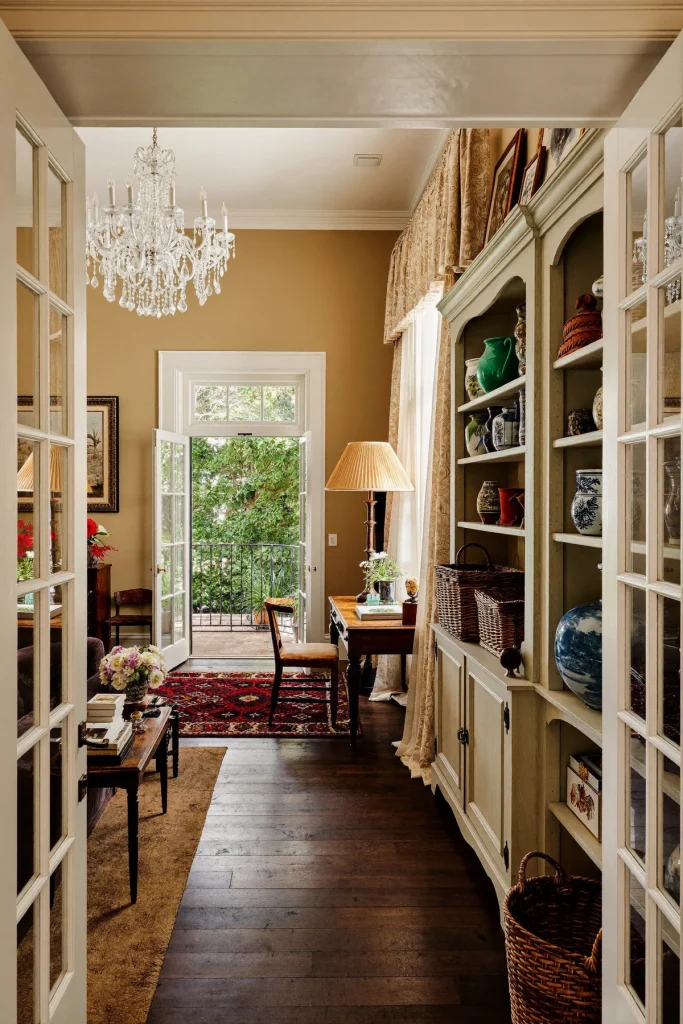
Many homes have a formal living room near the front door that sees action about twice a year. Turning it into a proper office is one of the smartest moves you can make.
Keep the elegance: a statement light fixture, curtains, a good rug. Then swap the stiff sofa for a desk facing into the room and a comfy reading chair by the window. Built-in cabinets or a pair of tall bookcases handle storage beautifully.
Because it’s usually right off the entry, it’s also perfect for meeting clients or neighbors without walking them through the whole house.
If you add French doors, you get privacy and still keep the light flowing.
Budget Alternatives
- Use a dining table you already own as the desk.
- Thrift a pair of bookcases and paint them the wall color.
- Swap glass French doors for heavy curtains on a ceiling track.
Work From a Mezzanine Overlooking the Living Room
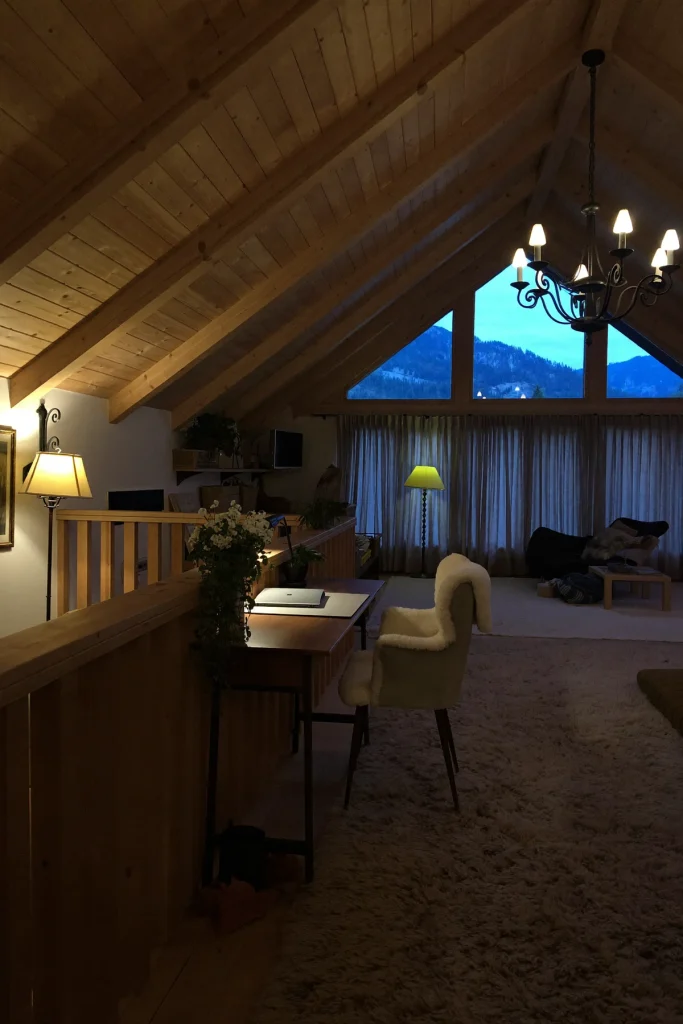
Homes with high ceilings sometimes have a balcony or mezzanine overlooking the main living space. These open landings are often just walkways, but they can make inspiring offices.
Run a desk along the railing or against the back wall, add a rug and a floor lamp, and you have a workspace with a view down into the heart of the home. It feels connected without being in the middle of the action.
Sound travels in open spaces, so add soft furnishings: curtains, a thick rug and upholstered seating. A wall of shelves behind the desk adds storage and absorbs noise.
Mountain homes and modern builds especially lend themselves to this. It’s the treehouse office you always wanted. 🌲
Fit a Desk Into the Turret Room
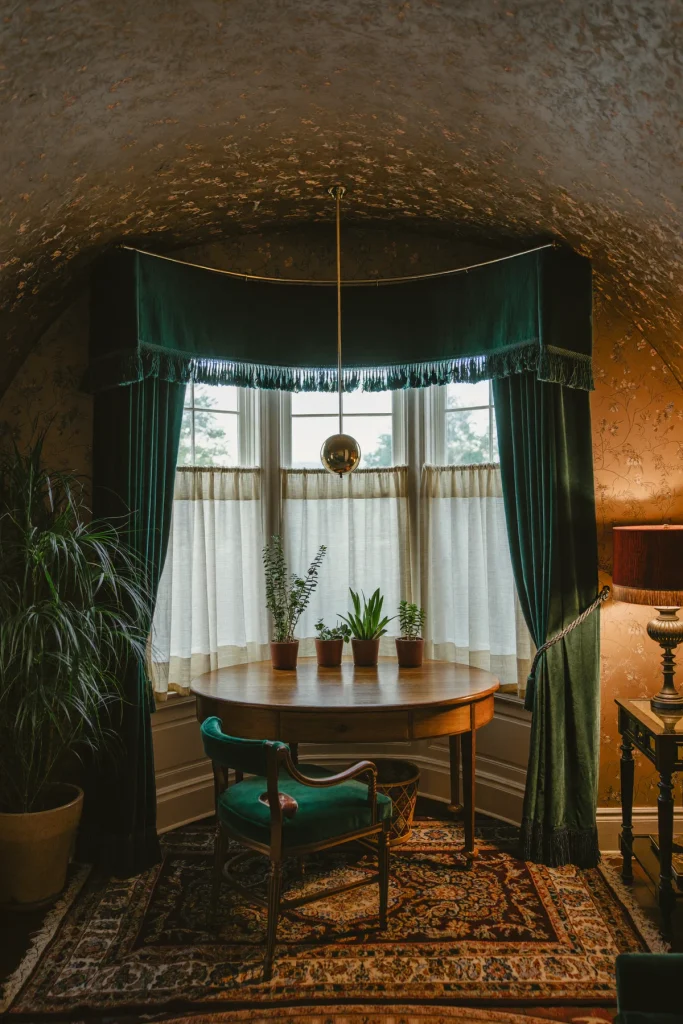
If you live in a Victorian with a turret, you already know it’s the most romantic room in the house. It’s also an ideal office.
The curved walls make a natural backdrop for a round table or a desk that hugs the windows. Layer in patterned wallpaper, a velvet chair and lots of plants for a maximalist feel. Curtains on each window let you control the light.
Because the room is round, a hanging pendant in the center ties everything together. Add a small table lamp on the desk for evenings.
It’s whimsical, but it works. When your office feels like a story, you’ll actually want to sit down and get things done. 🏰
Turn the Old Phone Nook Into a Mini Desk
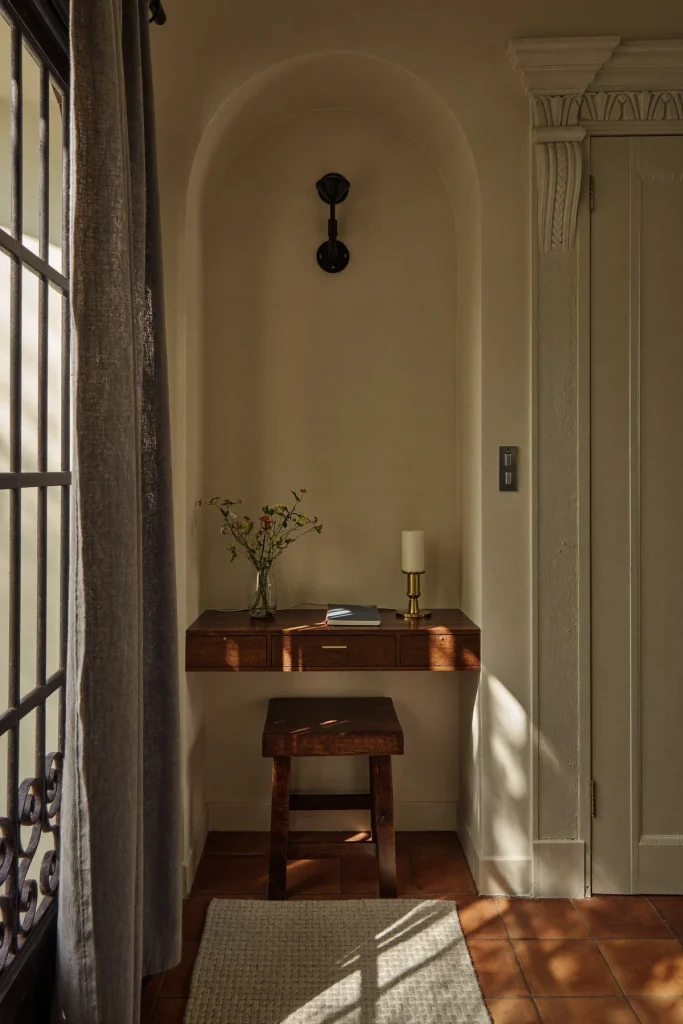
Older homes, especially 1920s builds, often have a little telephone niche in a hallway or under the stairs. Today it might hold a plant or nothing at all.
Add a tiny shelf desk, a small stool and a plug-in sconce, and it becomes a charming spot for writing notes, checking email or making calls. It’s not a full-time office, but it’s perfect as a second station.
Keep it simple and pretty: a small vase, a notebook, a candle. The arched shape of many phone nooks makes it feel like a little shrine to getting things done.
Remember the hallway niche in idea 13? This is its vintage cousin. 📝
Myth-Buster
You don’t need a whole room to work well. A small, well-lit, dedicated spot beats a big, cluttered one every time.
Your House Already Has an Office in It
Most of us are sitting on more usable space than we think. It’s just disguised as a closet, a landing, a corner or a room nobody uses.
Start by walking through your home and noticing where the light is good, where there’s a plug and where you feel calm. That’s probably your spot. Then give it a desk, a lamp and a little love.
Whichever one you choose, claim it. You deserve a place that’s yours. 💛
