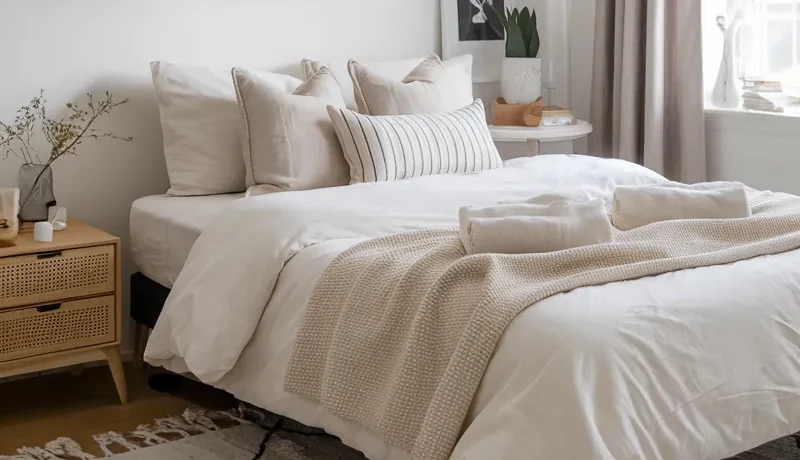
Small bedrooms can feel frustrating sometimes. I know because I’ve lived in a few where opening the wardrobe door basically blocked the entire room. 😅
But honestly? Tiny bedrooms can look incredibly stylish when you use the space intentionally. In some ways, smaller rooms actually feel cozier, calmer, and easier to decorate once you stop fighting the size.
The trick is making every corner work harder without making the room feel crowded. Light, texture, storage, layout… it all matters.
So if your bedroom feels cramped, dark, or impossible to style, these bedroom ideas for small rooms can completely change the vibe without needing a massive renovation. 🤍
Hang floor-to-ceiling curtains to fake taller ceilings
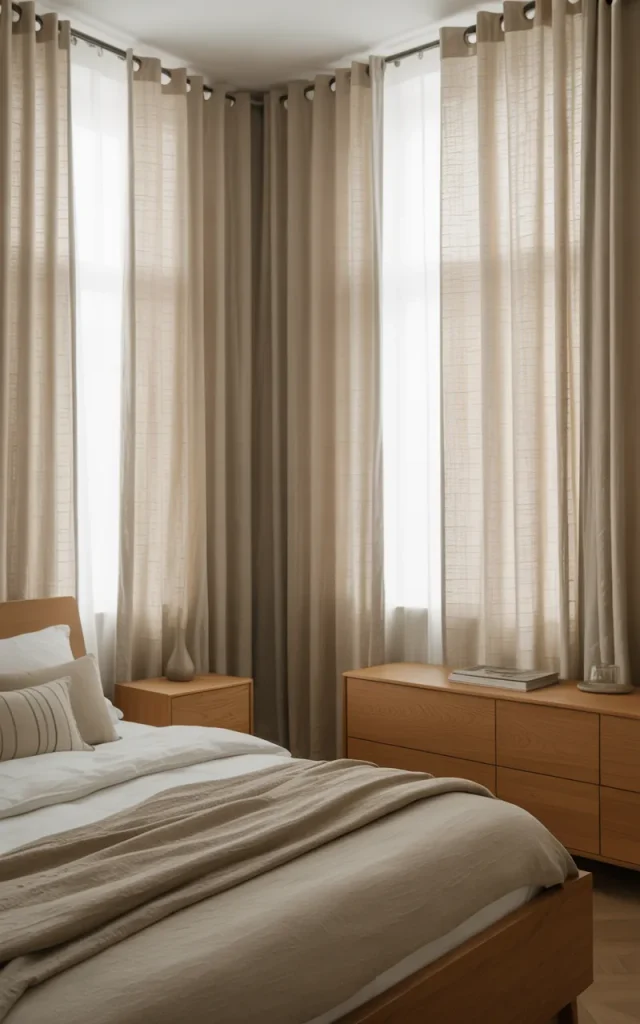
One of the easiest things I ever did in a tiny bedroom was mount curtains way above the window frame.
Almost near the ceiling. Instantly the room looked taller.
Short curtains usually cut the wall visually and make the room feel boxed in. Longer drapes create flow instead. Even cheap curtains can look expensive when they lightly touch the floor. ✨
I also love using softer fabrics like linen blends or airy cotton because they keep the room feeling relaxed instead of heavy.
Why it works?
Vertical lines naturally draw the eye upward, which tricks the brain into thinking the ceiling is higher than it actually is.
Use mirrored wardrobe doors to bounce light around
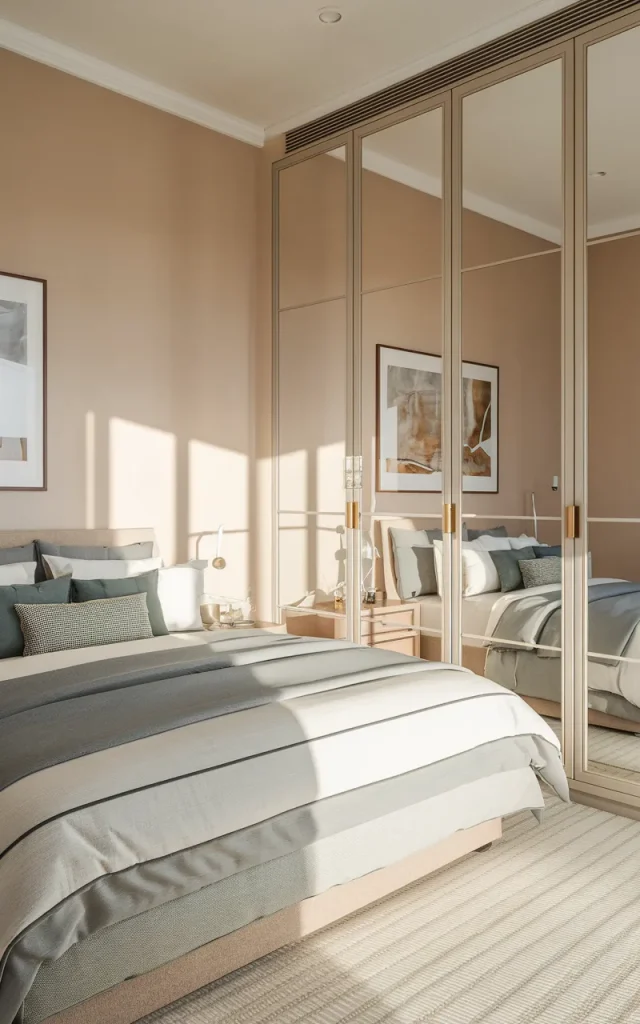
Mirrors are basically magic in small bedrooms.
I’m serious.
A large mirrored wardrobe reflects both natural and artificial light, which instantly opens the space visually. Instead of feeling like one giant bulky cabinet sitting in the room, the wardrobe almost disappears.
This works especially well if your bedroom doesn’t get much sunlight during the day.
I once tried this in a narrow apartment bedroom, and the difference felt immediate. The entire room looked twice as airy within hours. 🤍
Quick Tip

Avoid heavily tinted mirrors in tiny bedrooms. Clear mirrors reflect more light and feel cleaner visually.
Choose furniture with hidden storage inside
Small rooms get messy fast.
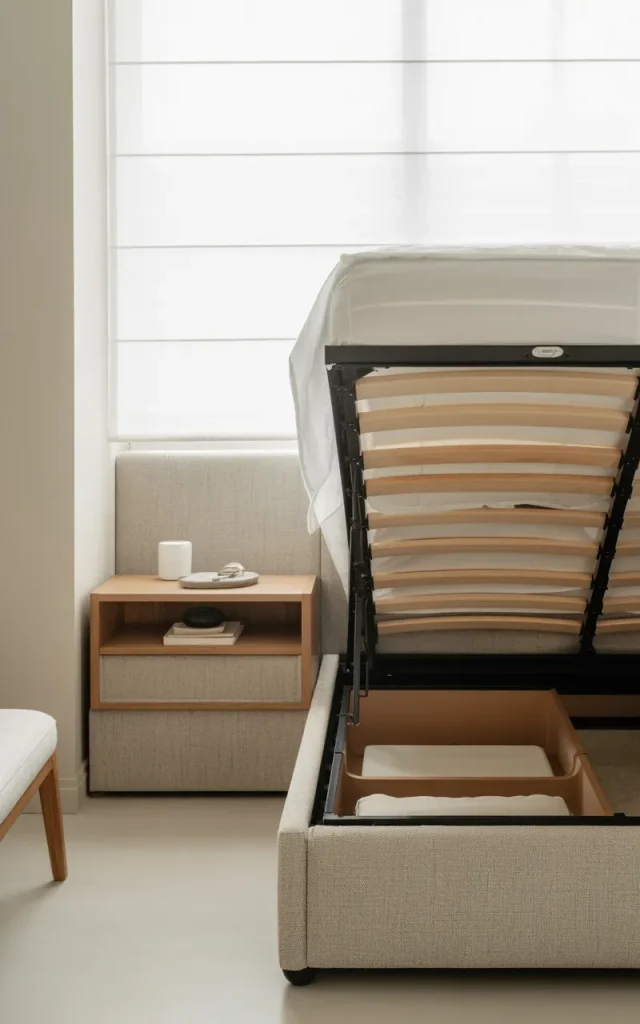
That’s why hidden storage becomes your best friend.
Storage ottomans, lift-up beds, benches with compartments, and under-bed drawers can hold way more than people realize. I especially love using hidden storage for extra bedding, winter clothes, or random clutter that doesn’t need daily access.
The room instantly feels calmer when everything has a place.
And unlike open shelves, concealed storage keeps visual clutter under control.
Common Mistakes to Avoid
- Buying oversized storage benches
- Using too many tiny baskets everywhere
- Leaving under-bed storage exposed
- Choosing dark bulky furniture in tiny rooms
Paint the walls and ceiling similar shades
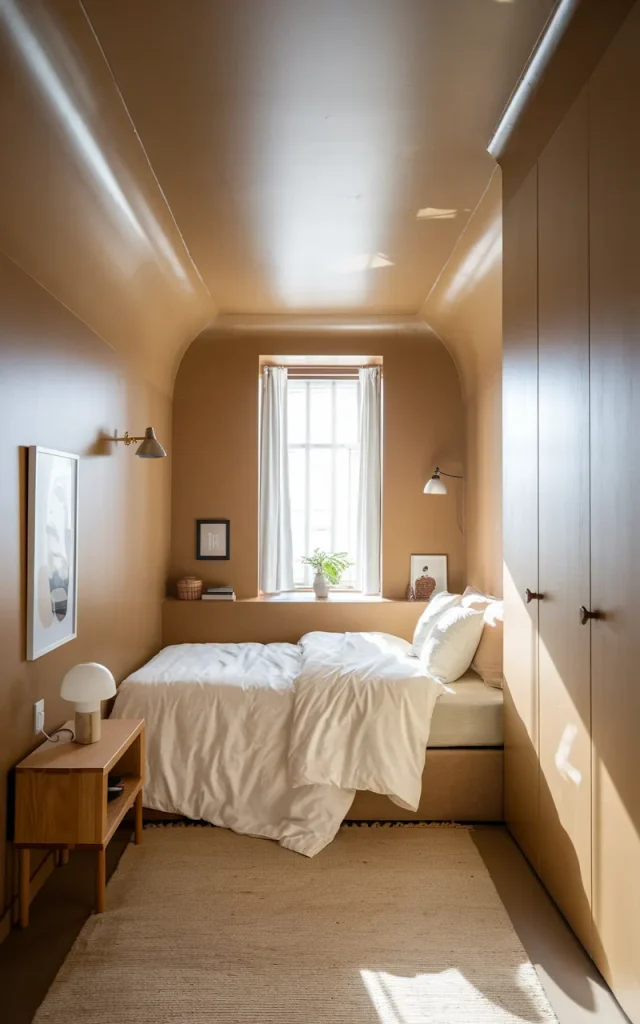
This trick changed how I decorate small rooms forever.
When walls and ceilings are dramatically different colors, the room feels visually chopped up. But when both are similar tones, the eye moves more smoothly around the space.
Soft warm white, pale beige, dusty greige, or muted sage all work beautifully. 🤍
The room suddenly feels taller and more cohesive without any structural changes.
Even better if you use satin or eggshell paint finishes because they softly reflect light.
Thumb Rule
The lower the contrast in a tiny room, the larger and calmer it tends to feel.
Add one oversized artwork instead of many tiny frames
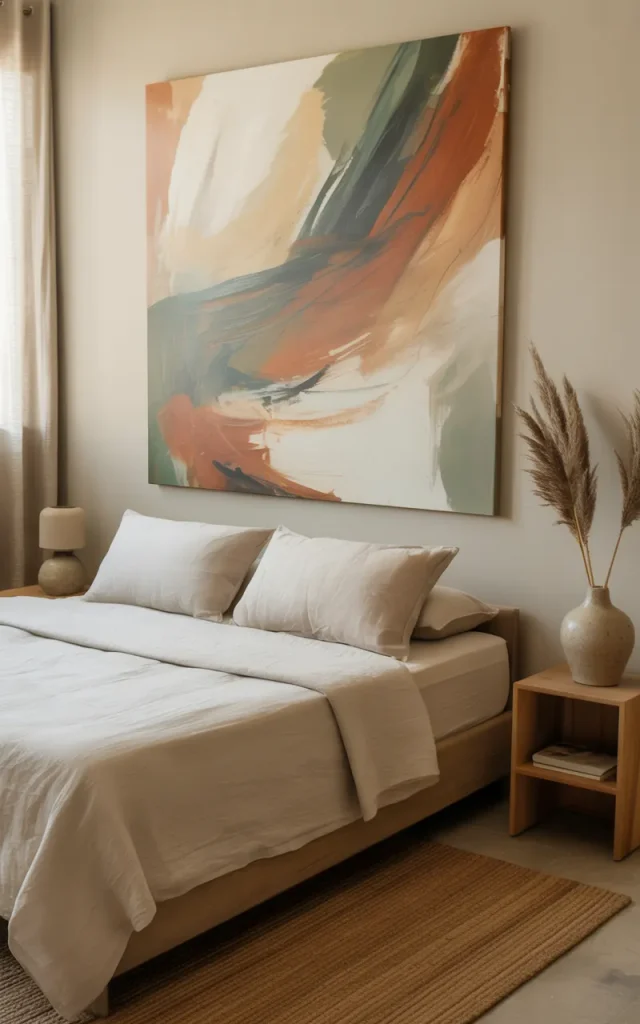
Lots of small décor pieces can make tiny bedrooms feel busy really quickly.
One larger statement piece usually works better.
I learned this after cluttering an entire wall with tiny frames that somehow made my room feel even smaller. 😅
Now I prefer one oversized art print above the bed or dresser. It creates focus without overwhelming the space.
Abstract art, calming landscapes, or soft minimalist prints work beautifully in compact bedrooms.
Trend callout

Oversized canvas art with soft earthy tones is everywhere right now for cozy modern bedrooms.
Stack your lighting at different heights
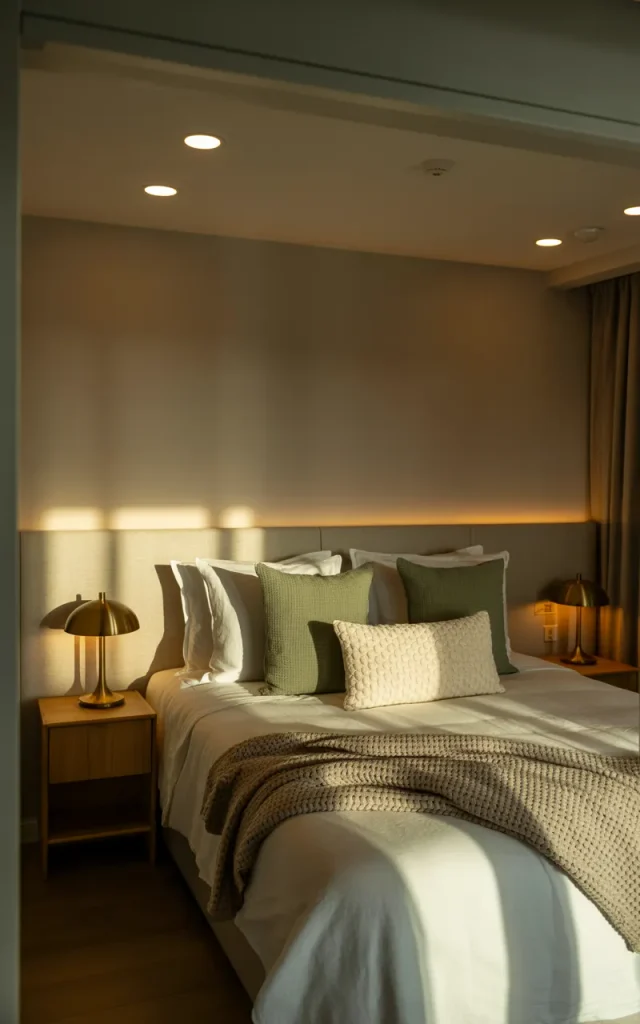
Small bedrooms often rely on one sad ceiling light. 😭
But layered lighting changes everything. I like mixing ceiling lights, bedside sconces, tiny lamps, and even soft LED strips behind the headboard. The room instantly feels warmer and more dimensional.
Different lighting heights also make the room feel larger because your eyes move around the space naturally instead of focusing on one harsh overhead source.
And no, you do not need expensive designer fixtures.
Even affordable warm-toned lighting can create that cozy boutique-hotel feeling. Unlike the sixth idea where wall sconces free up space, this approach focuses more on atmosphere and depth.
Layer it like this
- Ceiling light for overall brightness
- Warm bedside lighting for comfort
- Accent lighting behind mirrors or shelves
- Tiny reading lamp for functionality
Swap bulky headboards for upholstered panels
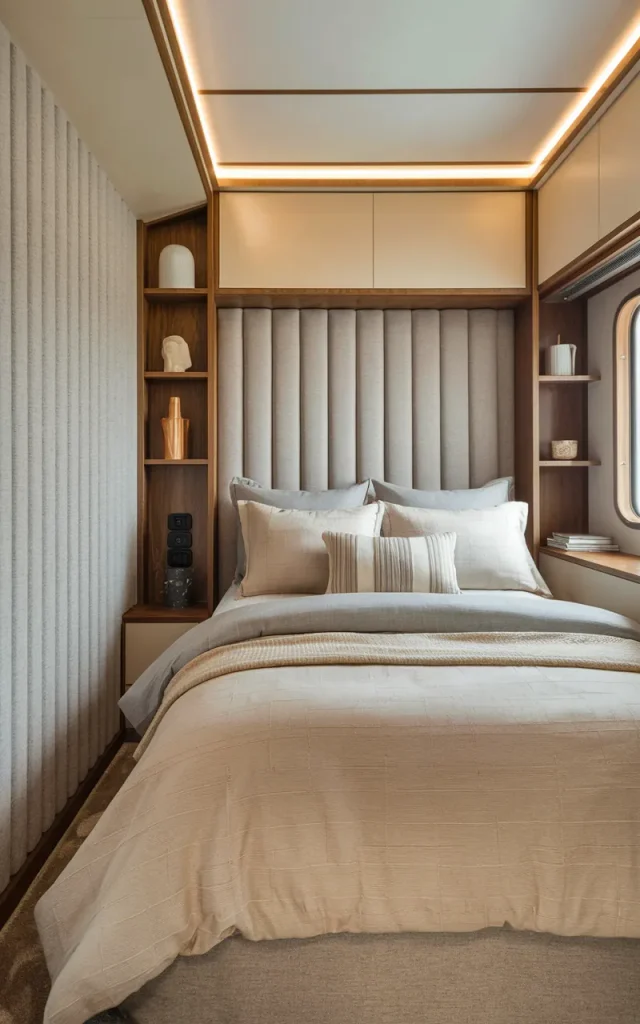
Large wooden headboards can visually overpower a tiny bedroom fast.
Soft upholstered panels feel lighter while still adding comfort and texture. I personally love vertically channeled panels because they subtly make ceilings appear taller too. ✨
This works beautifully if your room already feels crowded with storage furniture.
The padded texture also softens the overall look of the room, especially if you have lots of hard surfaces like wardrobes or desks nearby.
And honestly, reading in bed becomes way more comfortable.
Budget Alternatives
- Foam panels wrapped in fabric
- Peel-and-stick padded tiles
- DIY plywood headboards
- Oversized floor cushions behind the bed
Tuck storage baskets underneath the bed neatly
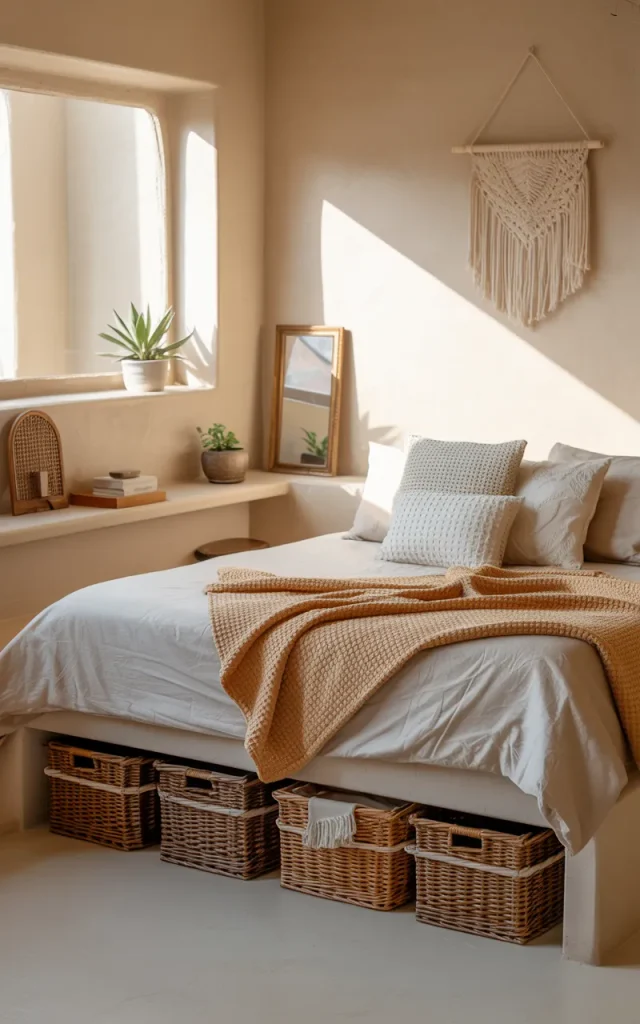
Under-bed space is criminally underused in most bedrooms.
I used to shove random things under there without any organization, which somehow made the room feel more chaotic. Once I switched to matching baskets and rolling bins, everything looked calmer instantly.
The key is making the storage feel intentional.
Use soft woven baskets for cozy bedrooms or low-profile clear containers if you need to maximize visibility. Seasonal clothes, extra blankets, shoes, and spare pillows fit perfectly underneath.
And unlike overstuffed wardrobes, this storage stays mostly invisible.
Checklist
- Matching baskets or bins
- Bed risers if extra height is needed
- Labels for seasonal items
- Dust covers for linens
Choose a low-profile bed frame to open the room visually
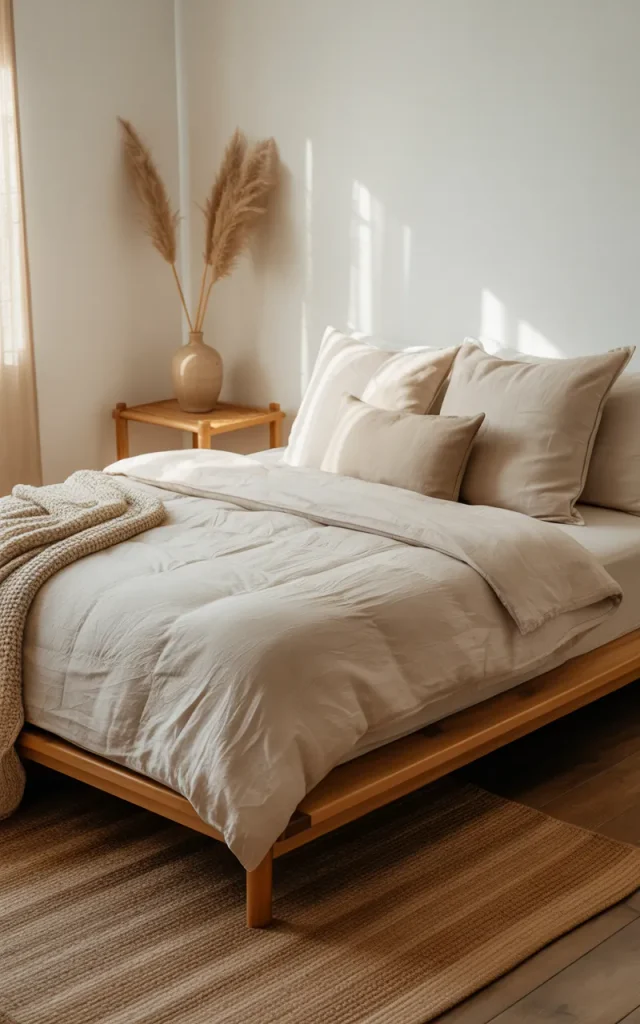
Tall bulky bed frames can make small bedrooms feel crowded incredibly fast.
Low-profile beds create more breathing room visually because they expose more wall area above the mattress. Strange little illusion, but it works beautifully.
This style also creates a relaxed modern vibe that feels calm and uncluttered. 🤍
Pair it with airy bedding and soft lighting, and suddenly the room feels way less boxed in.
I especially love this look in rooms with lower ceilings.
Style match guide
| Style | Best Bed Frame Type |
| Japandi | Light wood platform bed |
| Minimalist | Matte black low-profile frame |
| Cozy modern | Upholstered low bed |
| Scandinavian | Pale oak platform design |
Keep your color palette intentionally limited
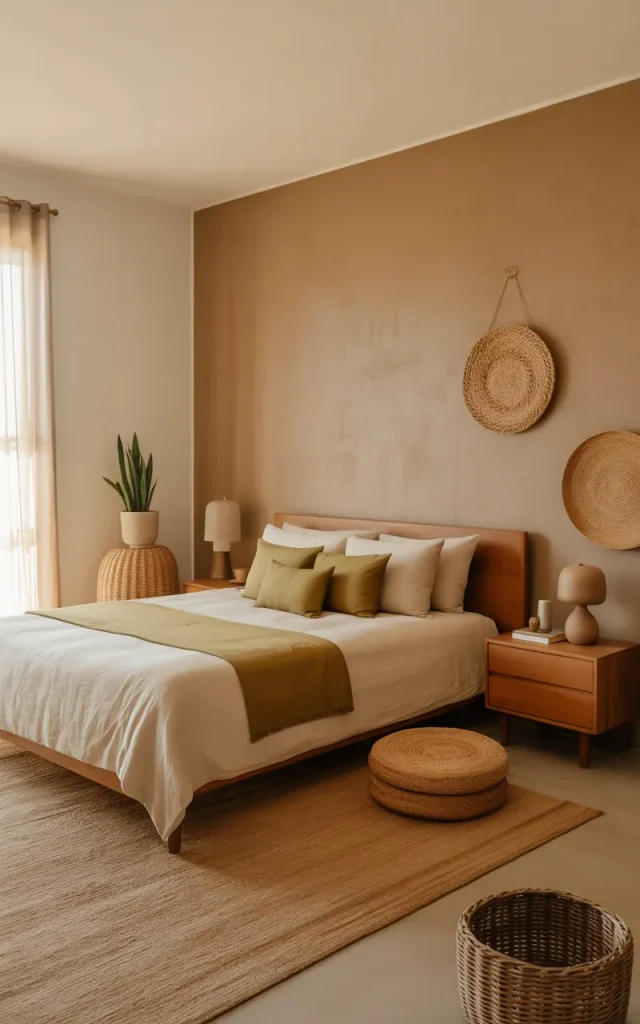
Tiny bedrooms feel calmer when colors stay cohesive.
That doesn’t mean everything must be beige. Not at all. But limiting your palette to two or three main tones keeps the room from feeling visually noisy.
I usually start with one base neutral, then add a softer accent color like muted olive, dusty blue, or warm clay. 🌿
Too many competing colors can make even beautifully decorated spaces feel chaotic.
This idea works especially well if your room already contains a lot of furniture.
Colour swap suggestion
| Instead of | Try this |
| Stark white | Warm ivory |
| Bright red | Muted terracotta |
| Dark black | Soft charcoal |
| Neon blue | Dusty slate blue |
Replace heavy wardrobes with open clothing racks
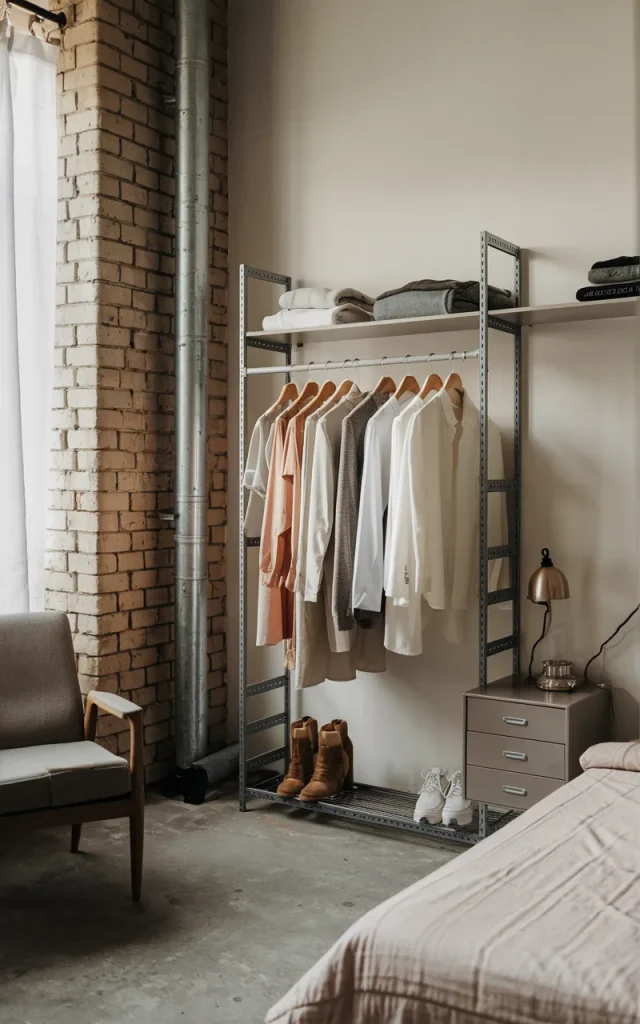
This definitely depends on your lifestyle.
But in ultra-small bedrooms, replacing a giant wardrobe with a sleek clothing rack can free up visual space dramatically. I’ve seen tiny bedrooms feel twice as open after removing bulky cabinetry.
The trick is keeping the rack curated instead of overcrowded.
Neutral hangers, coordinated clothing tones, and limited visible items make everything feel intentional rather than messy.
And honestly, it encourages better closet organization too.
Vibe check
This works best if you love:
- Minimalist bedrooms
- Airy apartment aesthetics
- Capsule wardrobes
- Modern industrial style
Create a cozy reading nook beside the bed
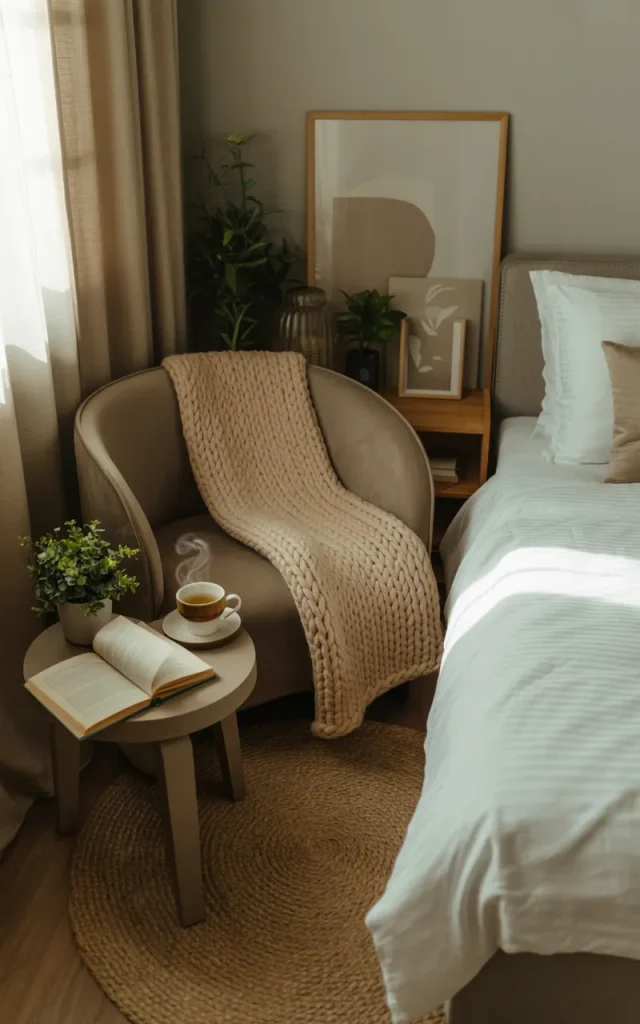
Tiny bedrooms can still feel layered and personal without overcrowding the space.
One of my favorite ways to do this is by creating a small reading corner using just a compact chair, soft throw blanket, and warm lighting. Nothing oversized. Nothing dramatic.
Even a tiny corner suddenly feels intentional when styled thoughtfully. 🤍
I especially love using curved accent chairs because they soften all the straight furniture lines typically found in small bedrooms. Add a tiny side table or floating shelf nearby, and the whole room starts feeling more lived-in and relaxing.
Remember the eleventh idea about layered lighting? This is exactly where that concept shines. A soft reading lamp instantly makes the nook feel inviting at night.
Seasonal Switch
| Summer | Winter |
| Lightweight cotton throw | Chunky knit blanket |
| Linen cushion covers | Velvet pillow covers |
| Light neutral tones | Warm earthy shades |
Add texture instead of adding more furniture
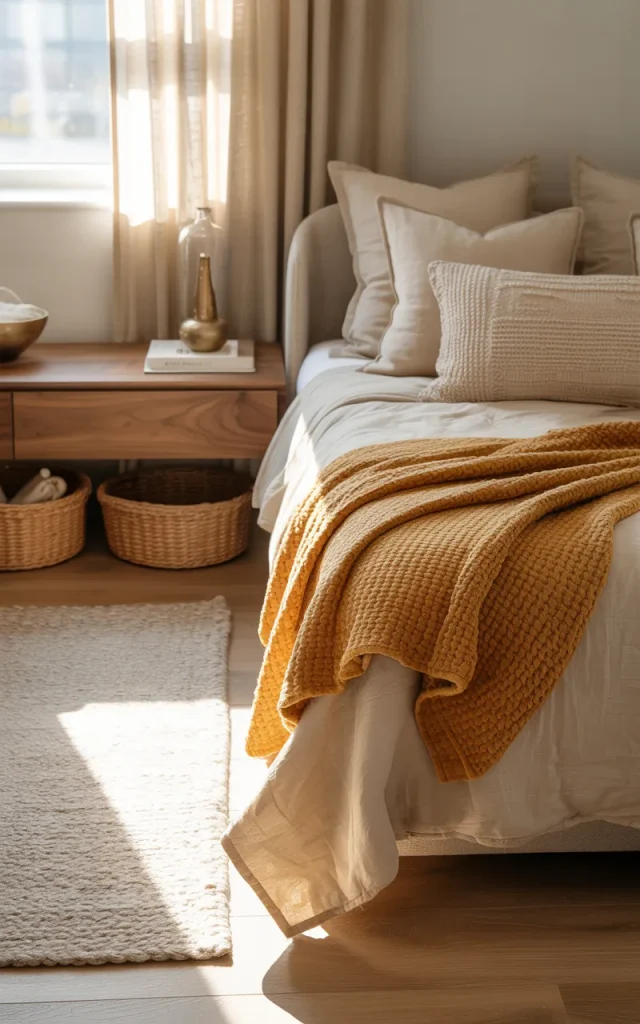
This might sound strange at first.
But when a small bedroom feels boring, most people try adding more stuff. Another chair. More shelves. Extra décor pieces. Usually that just makes the room feel tighter.
Texture works better.
Layered fabrics, woven baskets, soft rugs, linen bedding, boucle cushions, and subtle wood tones create richness without physically overcrowding the room. ✨
I’ve noticed tiny bedrooms feel dramatically cozier once texture becomes the focus instead of excessive furniture.
This works especially well if your room already has neutral colors. Texture keeps the space from feeling flat while maintaining that calm airy vibe.
And honestly, this approach photographs beautifully too if you love Pinterest-inspired interiors.
Cost breakdown box
| Item | Approximate Cost |
| Textured throw blanket | $25–$60 |
| Woven storage basket | $15–$40 |
| Neutral area rug | $50–$120 |
| Boucle cushion covers | $20–$50 |
Build symmetry even in awkward layouts
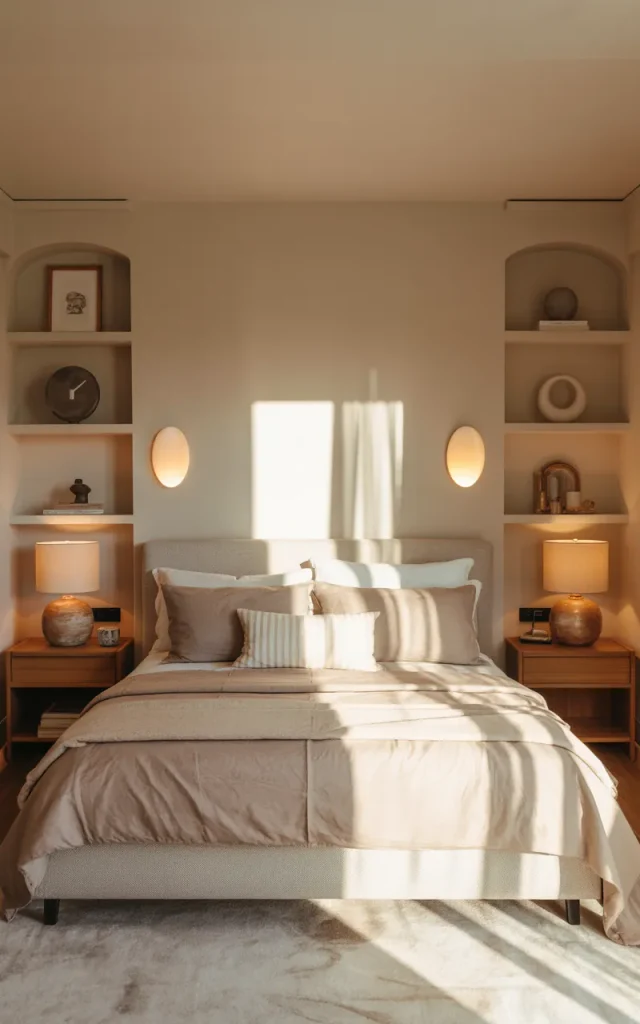
Small bedrooms often have weird layouts.
Off-center windows. Random closet placement. Tiny wall sections. It happens.
But creating small moments of symmetry helps the room feel calmer visually. Matching sconces, balanced pillows, or identical bedside shelves can create order even if the architecture itself feels uneven.
I love doing this because it subtly tricks the eye into seeing the room as more organized and intentional.
Unlike the fifth idea where functionality came first by pushing the bed against the wall, this strategy focuses more on visual balance.
And honestly, balance matters a lot in tight spaces because clutter already creates enough visual tension on its own.
Do’s & Don’ts
Do:
- Repeat shapes and materials
- Use matching bedside lighting
- Keep décor visually balanced
Don’t:
- Mix too many furniture styles
- Overdecorate one side of the room
- Use oversized mismatched furniture
Use multifunctional furniture wherever possible
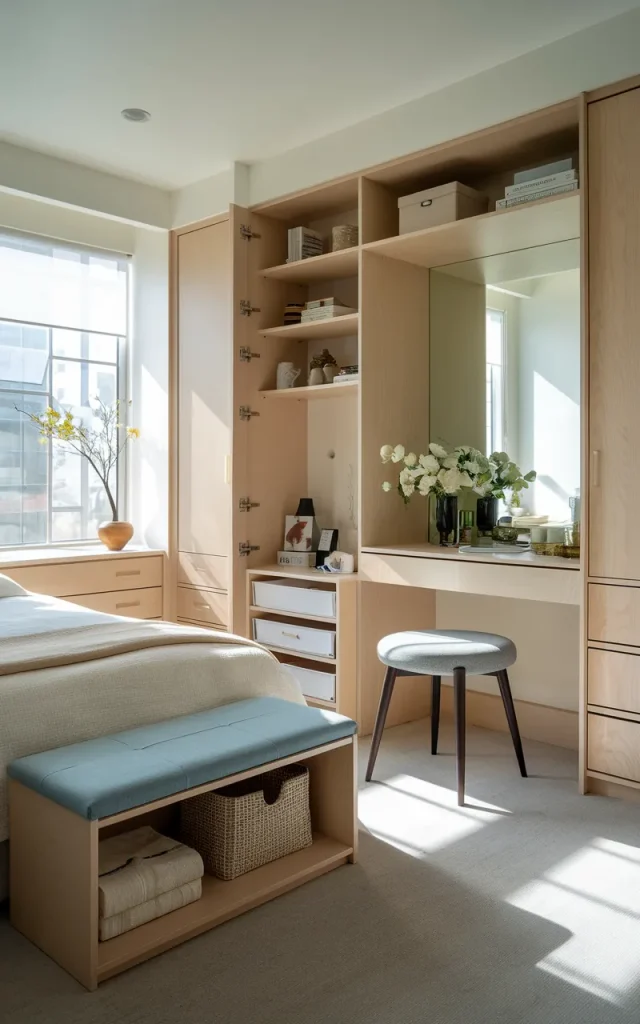
This is honestly non-negotiable in really small bedrooms.
Every furniture piece should ideally serve more than one purpose. Storage benches, desks doubling as vanities, ottomans with compartments, and beds with drawers underneath all make life easier without overcrowding the room.
I learned this the hard way after stuffing a tiny bedroom with single-purpose furniture that barely fit. 😭
Now I prioritize flexibility first.
And the best part? Multifunctional furniture often reduces visual clutter because fewer separate pieces are needed overall.
This strategy works especially well in apartments, dorms, and shared living situations where space disappears fast.
Works best in
- Studio apartments
- Shared bedrooms
- Tiny urban homes
- Multifunctional guest rooms
Declutter ruthlessly and leave breathing room
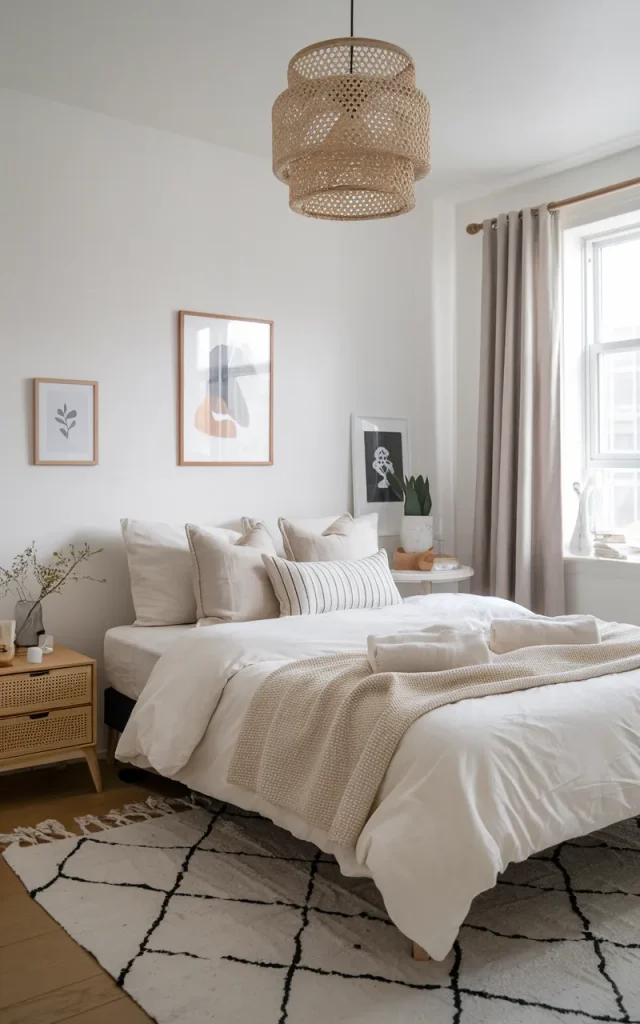
Honestly, this might be the most important idea of all.
No amount of decorating can fully fix a room that feels overcrowded with unnecessary stuff.
Small bedrooms need breathing room. Empty space is not wasted space. That took me years to understand. Once I stopped trying to fill every corner, my bedroom instantly felt calmer and bigger.
You do not need dozens of decorative objects for a room to feel beautiful.
In fact, a few meaningful pieces usually create far more impact.
I also like doing mini decluttering resets every few weeks because tiny bedrooms collect visual clutter fast. Clothes piles, random packaging, tangled chargers… it adds up quickly.
And unlike expensive renovations, decluttering costs absolutely nothing.
Step-by-step instructions:
- Remove everything you rarely use
- Clear visible surfaces first
- Store seasonal items elsewhere
- Limit decorative objects intentionally
- Keep pathways visually open
Final Thoughts
Small bedrooms do not have to feel limiting.
With the right layout, lighting, textures, and storage tricks, even the tiniest room can feel cozy, stylish, and surprisingly spacious. Sometimes the smallest changes create the biggest difference.
Start with just one idea that feels easiest for your space.
Maybe it’s layered lighting. Maybe it’s decluttering. Maybe it’s finally hanging those curtains higher. Little by little, the room starts feeling lighter, calmer, and more like you. ✨
