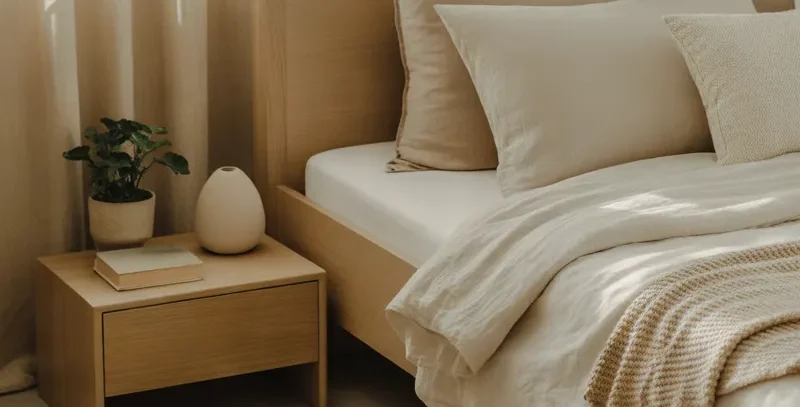
A bedroom should feel like a little escape from the outside world. Somewhere you can slow down, relax, and enjoy a peaceful moment without being surrounded by visual clutter. That’s exactly why I love minimalist bedroom designs!
The beauty of minimalism is that you don’t need an expensive makeover or a huge room to make it work. A few thoughtful furniture choices, a soothing colour palette, and carefully selected accessories can completely change how your bedroom feels.
And no, minimalist doesn’t mean boring, empty, or completely white. You can create a warm, cosy, modern, or even slightly luxurious bedroom while keeping things simple. 🏡
If you’re ready to create a bedroom that feels effortlessly beautiful, these 26 minimalist bedroom ideas will help you find a look that suits your space, budget, and personal style.
Choose a Soft Neutral Colour Palette
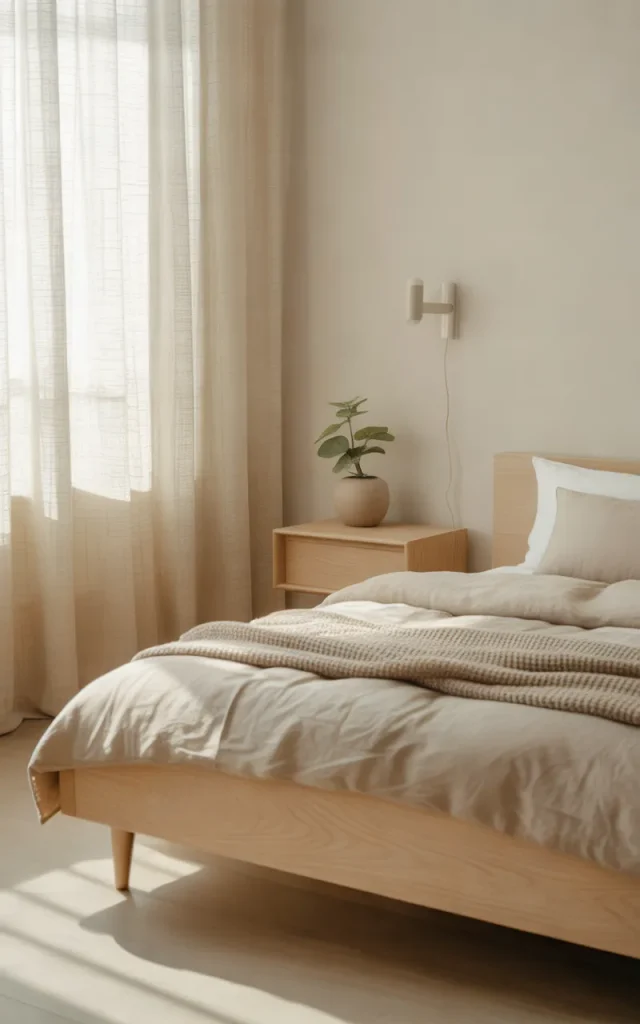
If you’re unsure where to begin with a minimalist bedroom, I recommend starting with the colours. Soft white, warm beige, pale grey, and creamy ivory create a peaceful foundation without making the room feel visually overwhelming.
You don’t have to paint everything the same shade, either. Try warm white walls with beige bedding and light wood furniture. The subtle differences add depth while keeping the overall appearance beautifully cohesive.
Why it works:
Neutral colours make it easier to coordinate furniture, textiles, and accessories. They also create a timeless backdrop that won’t feel outdated when decorating trends change.
Install a Simple Platform Bed
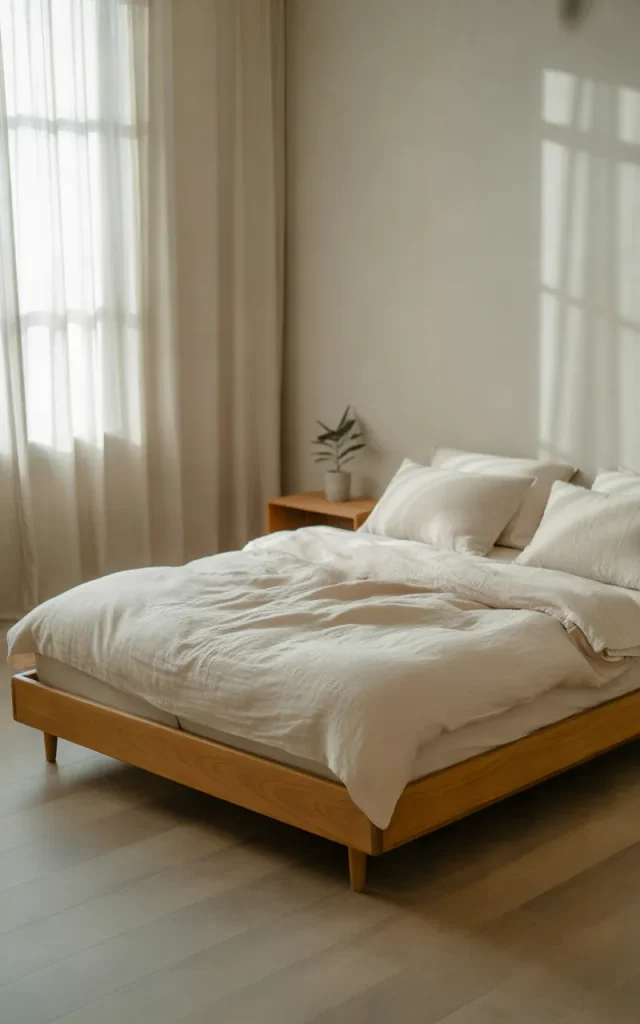
A platform bed is one of my favourite choices for a minimalist bedroom because its low profile creates a clean, grounded appearance. Look for a design with straight lines, a simple frame, and little or no decorative detailing.
Light oak works beautifully in Scandinavian-inspired spaces, while dark walnut adds a little richness to a contemporary bedroom. If you prefer an airy look, choose a frame with slim legs that allow you to see more of the floor.
A Micro-tip:

Match the bed frame to one or two other wooden elements in the room, such as a bedside table or dresser. They don't need to be identical, but keeping their undertones similar helps everything feel intentional.
Hang Minimalist Artwork Above the Bed
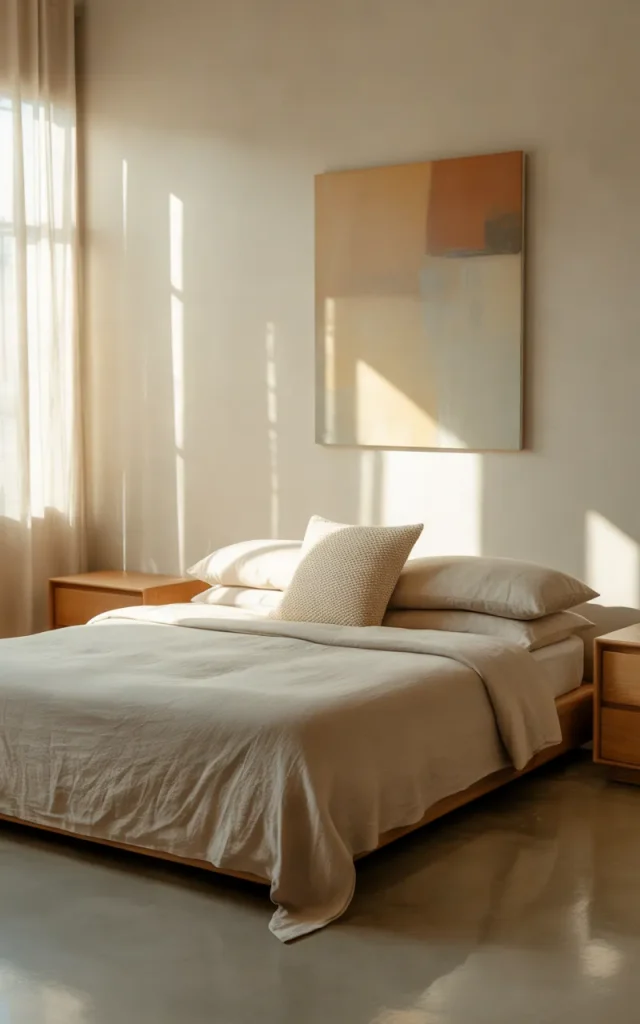
Bare walls can look beautiful in a minimalist bedroom, but a little artwork adds personality without creating clutter. I particularly love a single oversized print featuring abstract shapes, subtle line drawings, or a muted landscape.
Choose artwork that complements your bedding and wall colour. For example, a cream-and-taupe abstract print looks lovely above an upholstered beige headboard, while black line art creates a striking contrast against white walls.
Avoid filling every available wall with frames. One thoughtfully placed piece often creates a stronger focal point than a gallery wall filled with competing images.
Why it works:
A single artwork gives the eye somewhere to rest while making the bedroom feel personal rather than unfinished.
Layer White Bedding for a Hotel-Like Look
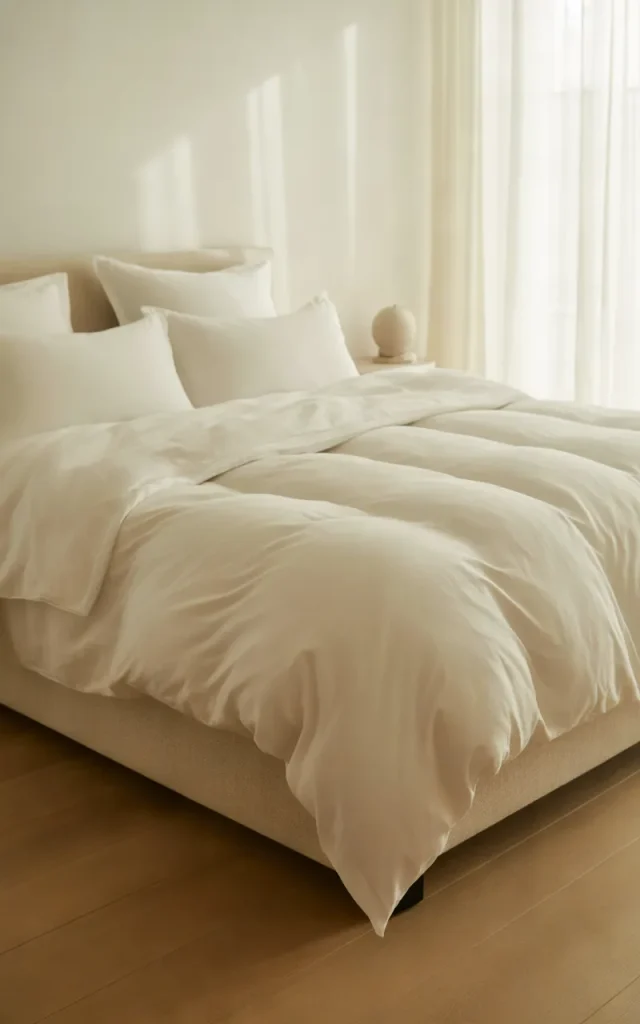
White bedding is a classic minimalist choice, and I love how effortlessly it makes a bedroom feel fresh and inviting. Start with white cotton sheets, add a lightweight duvet, and finish with two or three pillows in complementary neutral shades.
The secret is choosing different textures rather than introducing lots of colours. Crisp cotton, a softly quilted coverlet, and a chunky knitted throw can create plenty of visual interest without disrupting the simple palette.
You can also introduce a narrow beige or grey bed runner for a little contrast.
Instant Gratification Tip:
Make your bed neatly every morning and fold your throw at the foot of the bed. It takes only a minute, but the entire room immediately looks more polished. 🤍
Add Floating Bedside Shelves
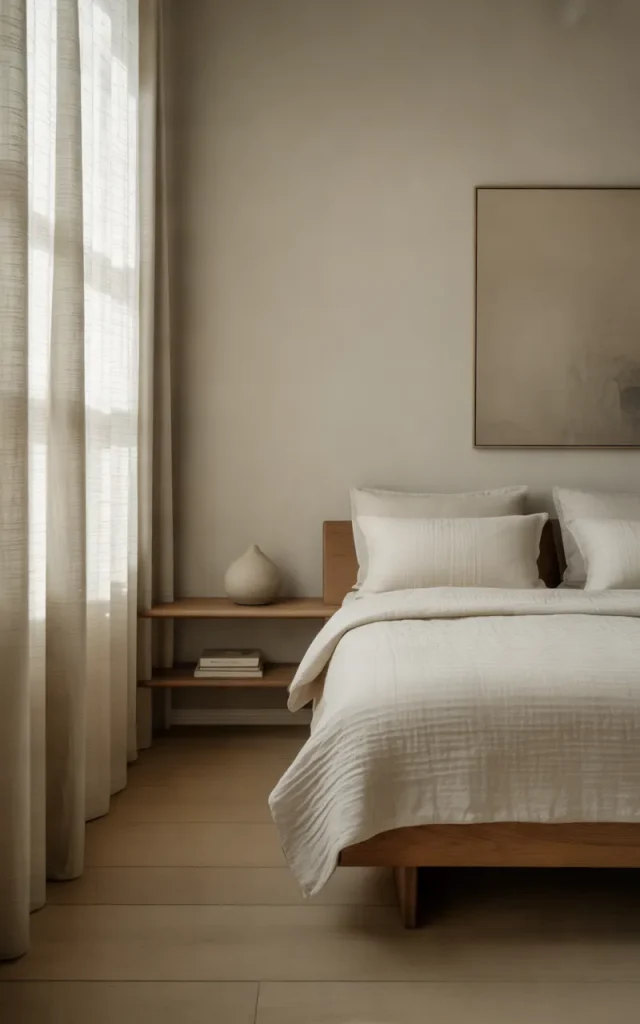
When floor space is limited, floating bedside shelves are a clever alternative to traditional nightstands. They provide somewhere to place your phone, a book, or a small lamp without adding bulky furniture beside the bed.
I recommend choosing shelves with clean edges in pale wood, white, or a finish that matches your bed frame. A shallow shelf is often sufficient, so there’s no need to install something oversized.
Before mounting anything, check the wall construction and choose suitable fixings. Position the shelf at a comfortable height for reaching while lying in bed.
Small Space Hack:

If your bedroom is particularly narrow, combine one floating shelf with a wall-mounted reading light. You'll free up valuable floor space while keeping your bedside essentials within reach.
Introduce Warm Wooden Accents
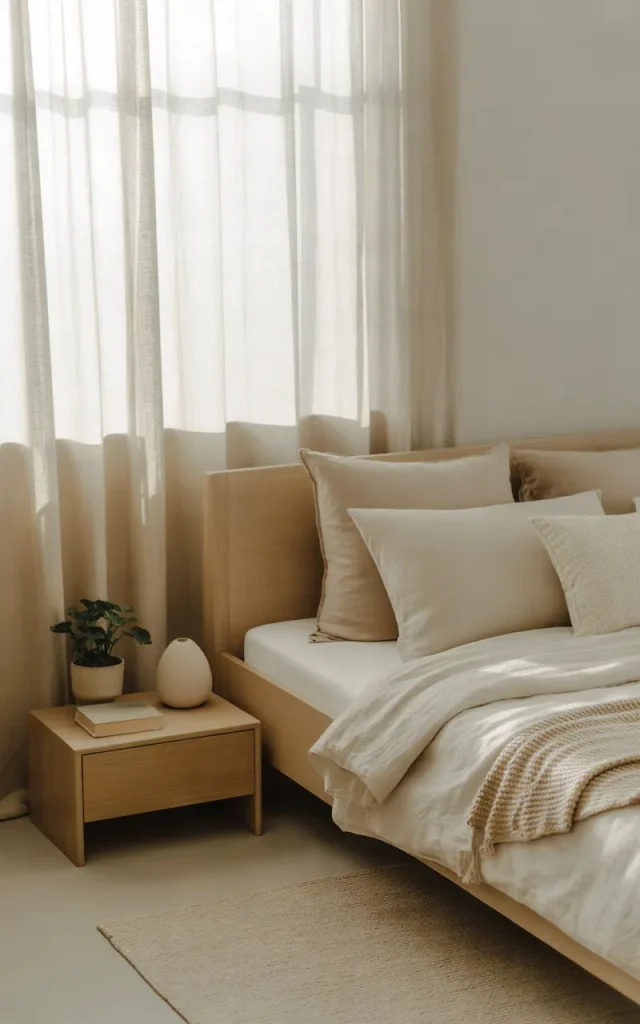
Minimalist bedrooms can sometimes feel too stark, especially when the walls, bedding, and furniture are all white. That’s where natural wood makes such a difference.
Try incorporating a pale oak bed frame, a walnut bedside table, or a simple wooden bench. Even a small wooden picture frame can soften a room dominated by cool colours.
I usually recommend sticking to one main wood tone and introducing a second only when there’s a clear reason for it. Too many competing finishes can make a simple room feel less cohesive.
Pro-tip:

Pair light wood with creamy whites for an airy Scandinavian look. For something moodier, combine walnut with warm grey bedding and soft ambient lighting.
Use Floor-Length Curtains in a Matching Shade
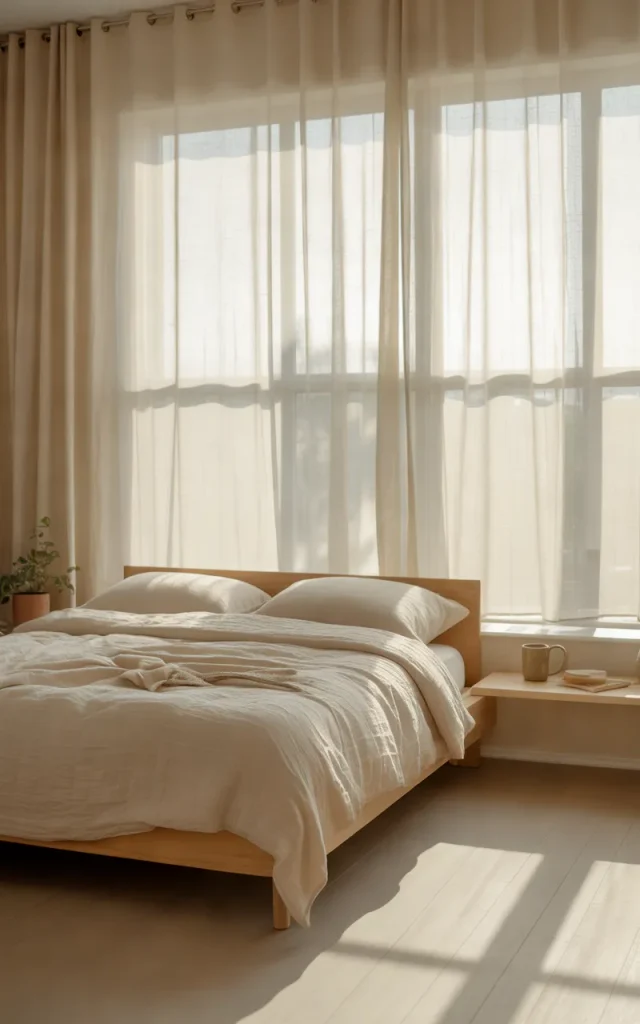
Curtains can have a surprisingly big impact on the appearance of a minimalist bedroom. I love floor-length panels in soft white, warm ivory, or pale taupe because they make the walls feel taller and the room more finished.
For a relaxed look, choose lightweight linen or linen-blend curtains that allow filtered daylight to enter. If you need stronger light control, install a discreet blackout roller blind behind the decorative panels.
Hang the curtain rod slightly above the window frame, extending it beyond the sides when space permits. This helps the window appear wider without adding any decorative clutter.
A Micro-tip:

Let the curtains just skim the floor for a clean finish. Avoid excessively long puddles of fabric if you want a streamlined, easy-to-maintain bedroom.
Keep the Floor Clear With Hidden Storage
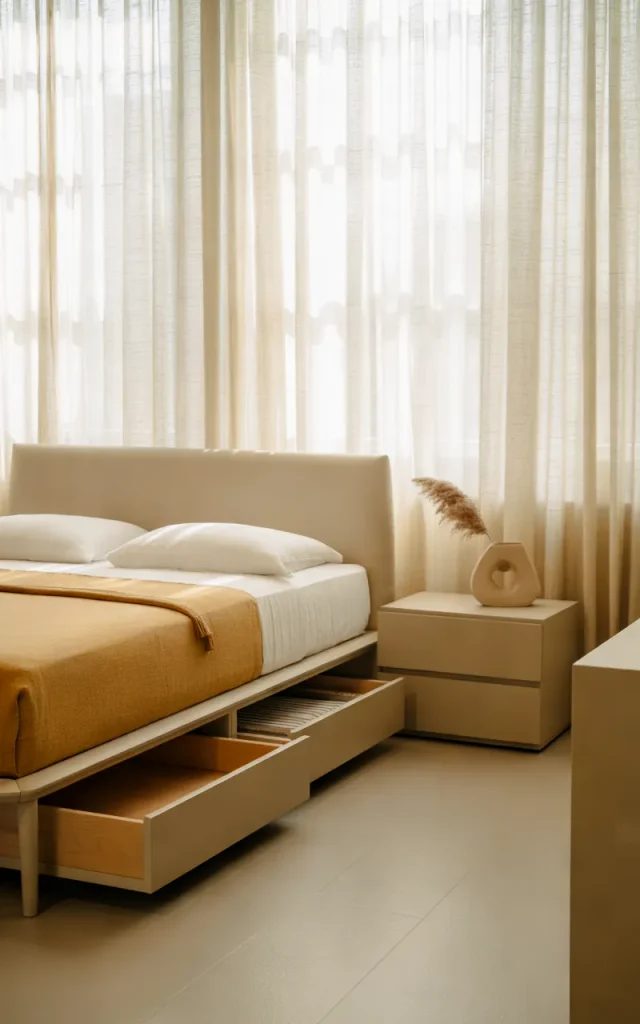
A minimalist bedroom feels much more spacious when the floor isn’t covered with baskets, loose clothing, and storage boxes. The easiest solution is to give everyday belongings a designated home.
Choose an ottoman bed with concealed storage, a dresser with deep drawers, or a wardrobe with adjustable internal shelves. Under-bed drawers are another useful option, especially if you don’t have room for additional cabinets.
Remember, hidden storage should make your daily routine easier. If you have to unpack half the bedroom to find a spare bedsheet, the system isn’t working.
Who this is for:
This idea is especially useful for small bedrooms, shared rooms, and anyone who wants a tidy space without getting rid of all their belongings.
Create a Minimalist Bedroom With Beige and Cream
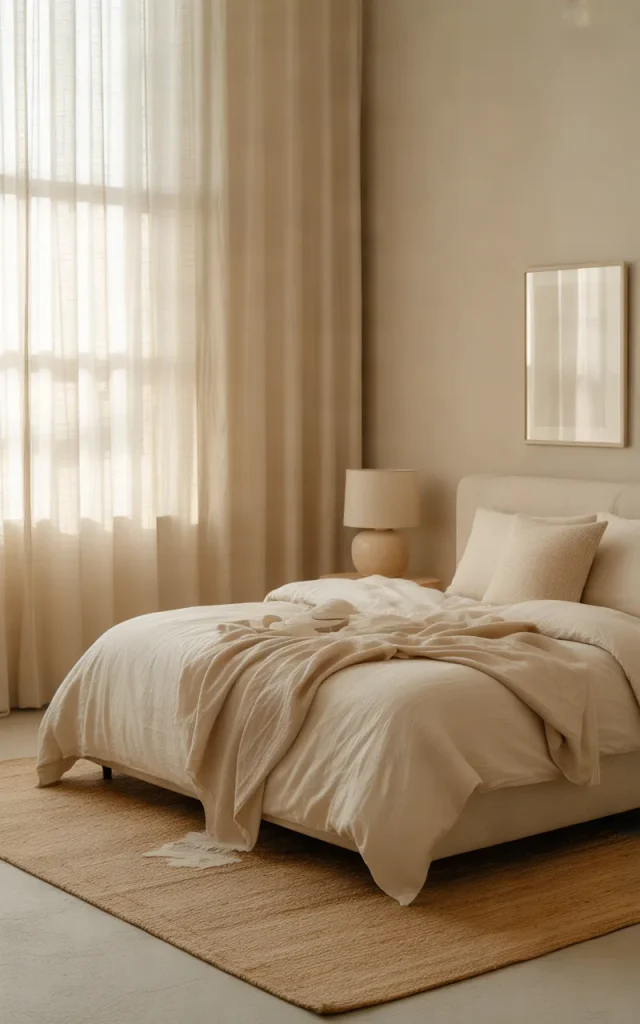
If you want minimalism with a softer, warmer personality, try decorating with beige and cream. Unlike an all-white room, this combination feels gentle and welcoming while maintaining the simplicity that makes minimalist interiors so appealing.
Start with creamy walls, beige bedding, and a pale wooden bed frame. Then introduce subtle variations through linen pillowcases, a textured rug, or a woven lampshade. These small differences prevent the room from looking flat.
I prefer using several related shades rather than trying to match every surface perfectly. A little variation makes the bedroom feel more natural and lived-in.
The psychology behind it:
Warm neutrals can create a visually restful environment, particularly when paired with uncluttered surfaces and soft lighting. 🌾
Install Wall-Mounted Reading Lights
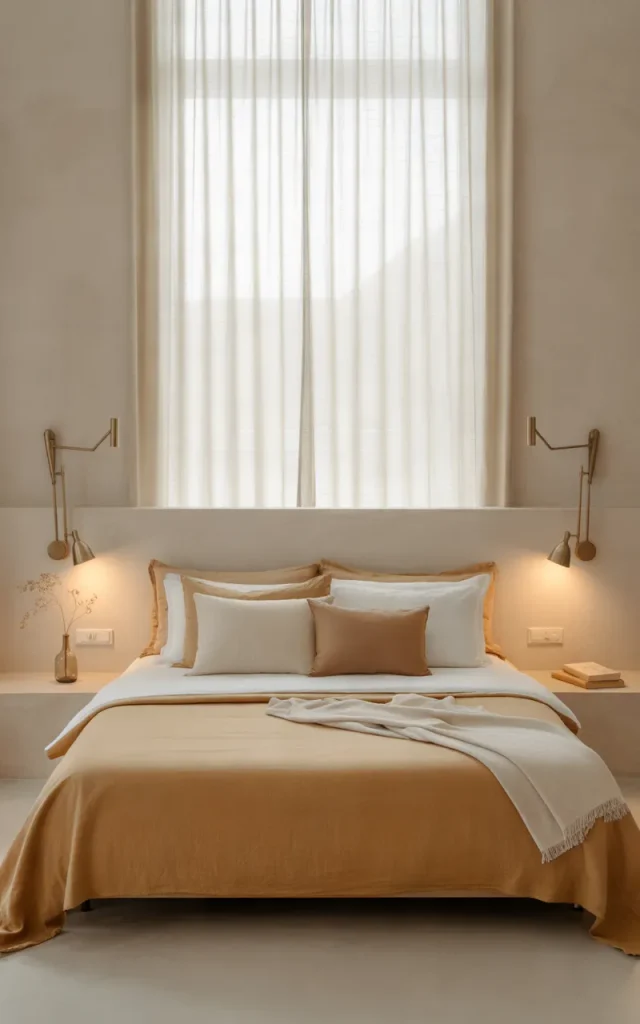
Bedside lamps are lovely, but they can take up precious space on your nightstands. Wall-mounted reading lights provide a practical alternative while giving the bedroom a more streamlined appearance.
Choose a simple black, brushed brass, white, or brushed nickel design. Adjustable fixtures are particularly useful because you can direct the light towards your book without illuminating the entire room.
For a coordinated look, install matching lights on both sides of the bed. If you’re decorating a smaller room, one well-positioned reading light may be enough.
Tools you may need
- A tape measure to check the mounting height.
- A pencil to mark the installation points.
- Suitable wall fixings for your wall type.
- A drill, if required for your chosen mounting method.
For hardwired fixtures, use a qualified electrician. If you rent or want to avoid electrical work, plug-in wall lights can achieve a similar look.
Add a Subtle Black Accent
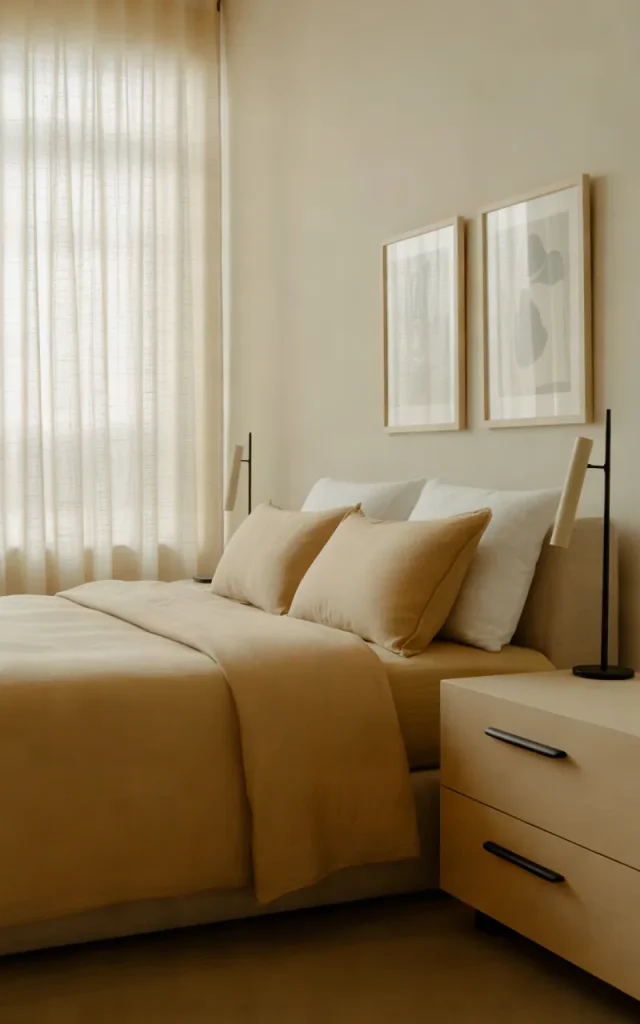
Minimalist bedrooms don’t have to rely entirely on pale colours. A few black accents can introduce contrast and make the overall design feel more defined.
Consider a slim black bedside lamp, a simple picture frame, dark cabinet handles, or a narrow metal bed frame. Against creamy walls and pale bedding, these details stand out without overwhelming the space.
The key is repetition. If you introduce black in one corner and nowhere else, it may feel disconnected. Echo the shade in two or three small details to create a more balanced result.
Thumb Rule:

Treat black as an accent rather than the dominant colour when your goal is a light, airy bedroom.
Style Your Bed With Just a Few Pillows
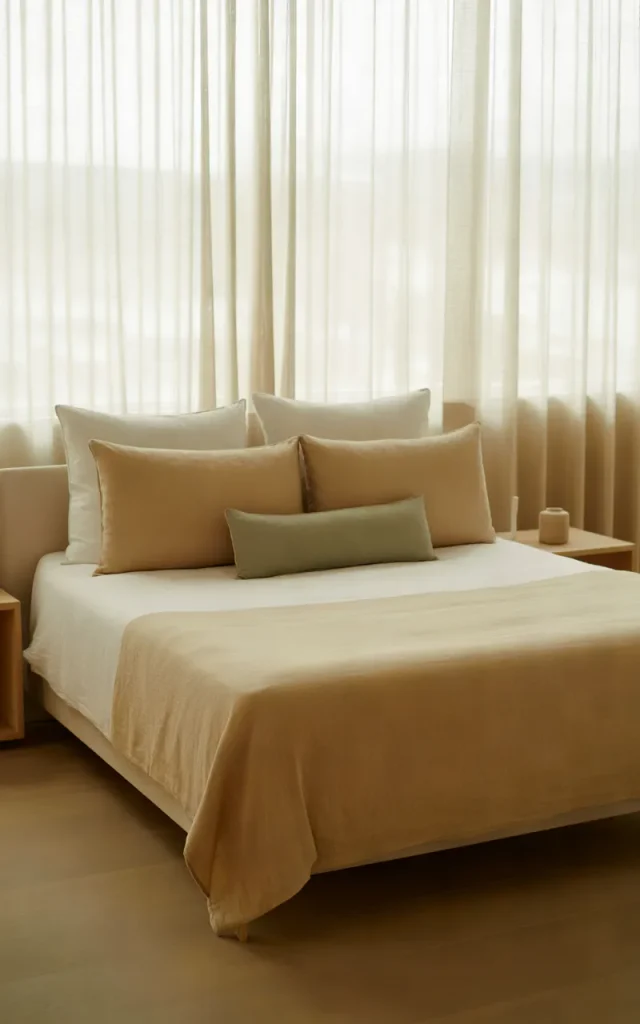
It’s tempting to pile the bed with decorative cushions, but too many pillows can make a minimalist bedroom feel unnecessarily busy. I prefer a simple arrangement that looks inviting and takes very little effort to maintain.
For a double bed, begin with your sleeping pillows and add one pair of decorative cushions if you enjoy the look. A single lumbar cushion can also create a neat finishing touch without requiring a complicated arrangement.
Choose pillow covers in complementary colours, such as white and oatmeal, or combine pale grey with warm ivory. If your duvet already has a noticeable texture, keep the pillows relatively simple.
Do this 👉
- Choose comfortable pillows you genuinely use.
- Limit decorative cushions to a manageable number.
- Repeat one colour from your bedding or curtains.
Not this ❌
- Covering the entire bed with cushions.
- Mixing too many unrelated patterns.
- Buying decorative pillows that become daily clutter.
A minimalist bed should look beautiful but still be easy to sleep in.
Bring in a Soft, Neutral Area Rug
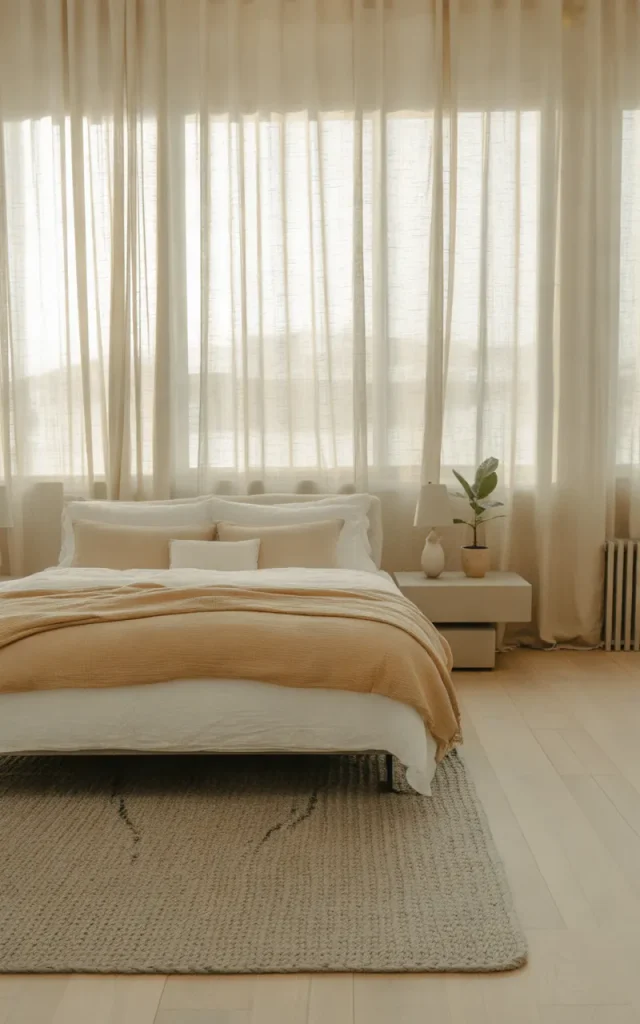
An area rug can make a minimalist bedroom feel warmer without introducing unnecessary decoration. I particularly like wool, cotton, and other tactile materials in cream, sand, or pale grey.
For the most balanced look, position the rug beneath the bed so it extends beyond the sides and foot. This creates a soft landing for your feet and visually anchors the sleeping area.
If your bedroom already has attractive timber flooring, you don’t need to cover everything. A rug placed partially under the bed can provide comfort while allowing the floor to remain visible.
Budget Alternatives
- Use a washable cotton rug beside the bed.
- Look for a simple flatweave design instead of a thick wool rug.
- Choose a smaller bedside rug if a large area rug is outside your budget.
Keep the pattern subtle, or choose a solid colour that complements the bedding. The rug should support the design rather than compete with it.
Choose a Wardrobe With Clean, Flat Doors
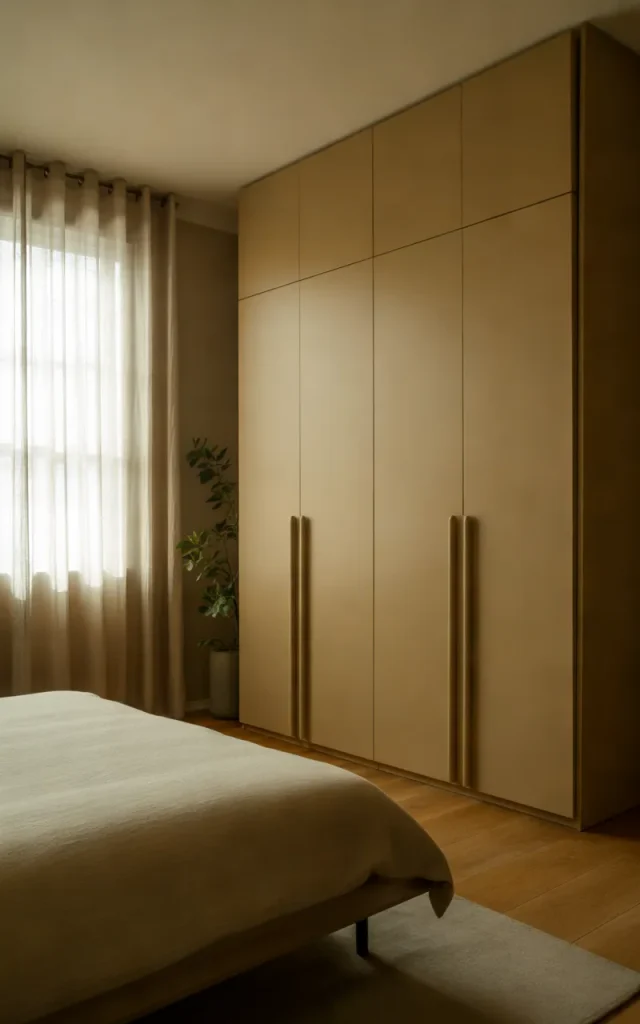
A wardrobe occupies a considerable amount of visual space, so its design can make or break a minimalist bedroom. I recommend flat-front doors in white, beige, soft grey, or natural wood.
If you’re planning a renovation, consider a built-in wardrobe that follows the wall’s proportions. A flush finish helps the storage blend into the room rather than looking like a separate, bulky object.
For an existing wardrobe, you can often achieve a similar effect by removing unnecessary decorations from its exterior and replacing ornate handles with simple hardware, provided the doors allow it.
How to steal this look
- Choose a wardrobe colour close to the wall colour.
- Keep the exterior free from decorative objects.
- Use matching hangers and organisers inside.
- Reserve one section for frequently worn clothing.
A well-organised wardrobe makes it easier to maintain a clutter-free bedroom because fewer belongings need to remain on display.
Decorate With One Beautiful Indoor Plant
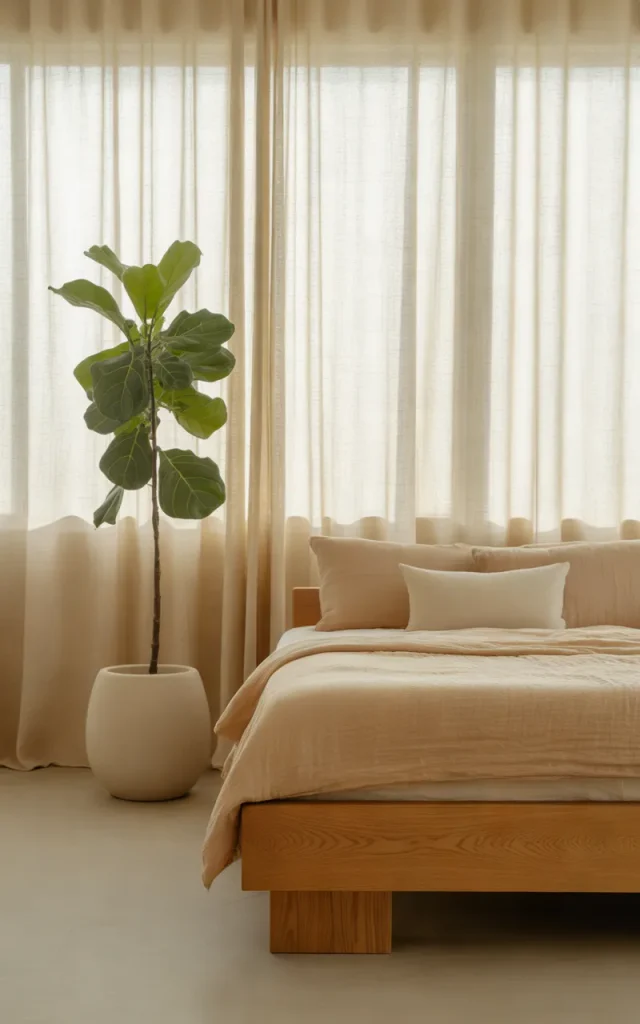
A touch of greenery can bring life to a minimalist bedroom without disturbing its calm atmosphere. Rather than filling every corner with plants, choose one healthy specimen that suits your lighting conditions.
A snake plant, for example, can work well in a range of indoor environments, while a small pothos may suit a shelf with appropriate indirect light. Always consider the actual light, temperature, and watering requirements of the plant you choose.
Use a simple ceramic planter in white, beige, or muted terracotta. Its shape should complement the room rather than become another major focal point.
Vibe check
- One leafy plant for a fresh, natural feel.
- A simple planter for a clean silhouette.
- A clear surface around the plant so it can stand out.
Keep plants away from areas where they obstruct movement, and check whether any plant is toxic to pets if you share your home with curious cats or dogs. 🌿
Create a Cosy Corner With a Simple Accent Chair
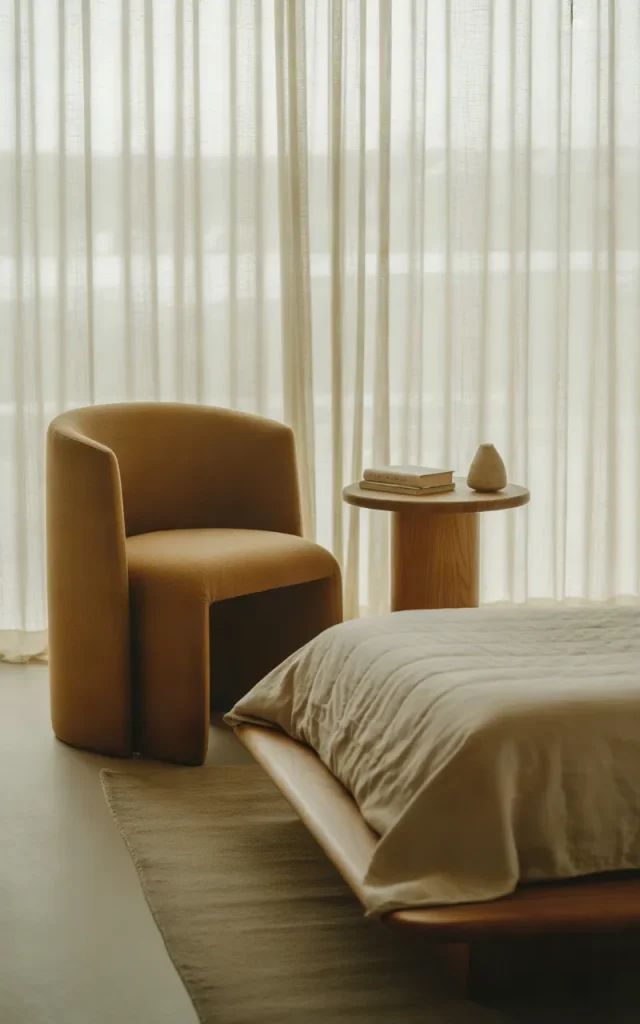
If you have enough space, an accent chair can turn an ordinary bedroom into a more relaxing retreat. The trick is choosing a chair with a light visual profile rather than something oversized and heavily upholstered.
Look for a compact wooden chair with a neutral cushion, a simple upholstered occasional chair, or a slim reading chair in a warm beige fabric. Position it near a window or in an unused corner where it won’t interrupt the main walking path.
Add a small side table only if you genuinely need one. A book and a soft throw can provide all the styling the corner requires.
Works best in:

Medium and large bedrooms, especially spaces with good natural light.
Use Matching Bedside Tables for a Balanced Look
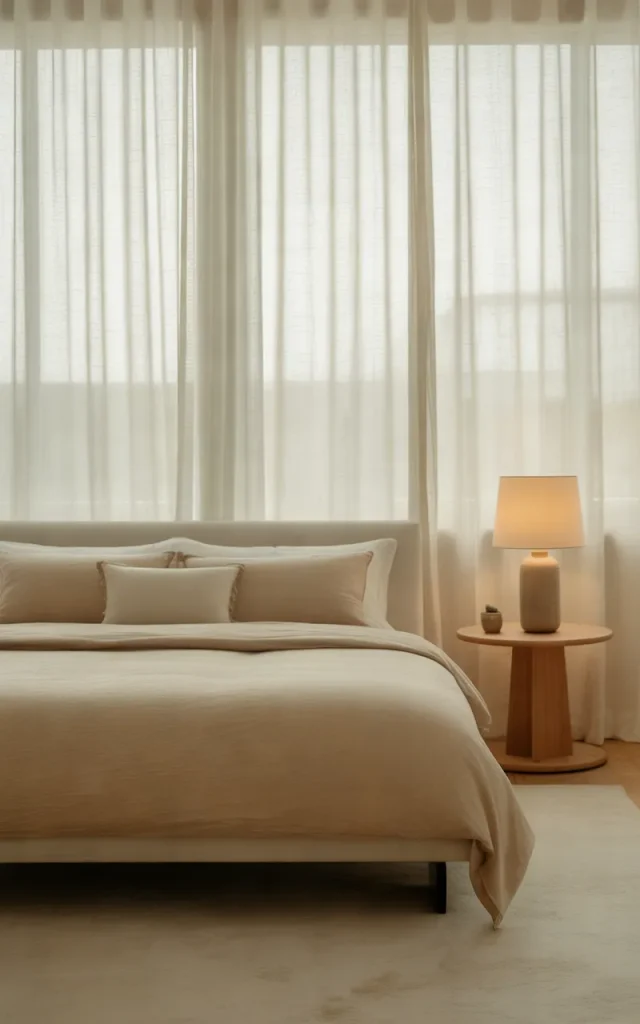
Matching bedside tables create a sense of order, particularly when they’re positioned on either side of a centred bed. I love this approach in minimalist bedrooms because the symmetry feels intentional without requiring much decoration.
Choose compact tables with clean lines and a finish that relates to the bed frame. They can be identical wooden units, simple white cabinets, or even matching floating shelves.
You don’t need to decorate both sides in exactly the same way. For example, place a reading lamp on one table and a small ceramic vase on the other while keeping the overall visual weight similar.
One rule to remember:

Symmetry works best when it supports the room's layout rather than forcing you to buy furniture you don't need.
Install a Large Mirror to Reflect Natural Light
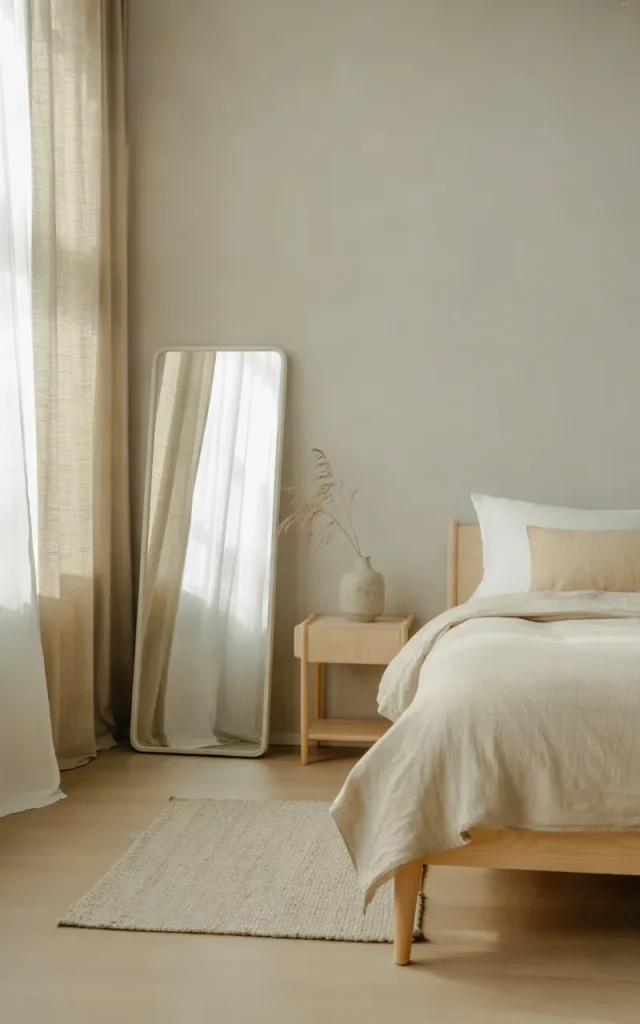
A large mirror can make a minimalist bedroom feel brighter and more open, particularly when the room is compact or receives limited daylight.
Consider a full-length mirror with a slim frame, or hang a simple rectangular mirror above a dresser. A frameless design creates an especially understated appearance, while a pale wooden frame introduces a little warmth.
Position the mirror where it reflects a window or another attractive part of the room. Simply adding a mirror won’t automatically brighten a dark corner if it faces a blank wall.
Quick hack:
Lean a full-length mirror securely against a suitable wall if you want a relaxed look and your space allows it. Make sure it is anchored safely, especially in homes with children or pets.
Paint the Ceiling and Walls in Similar Shades
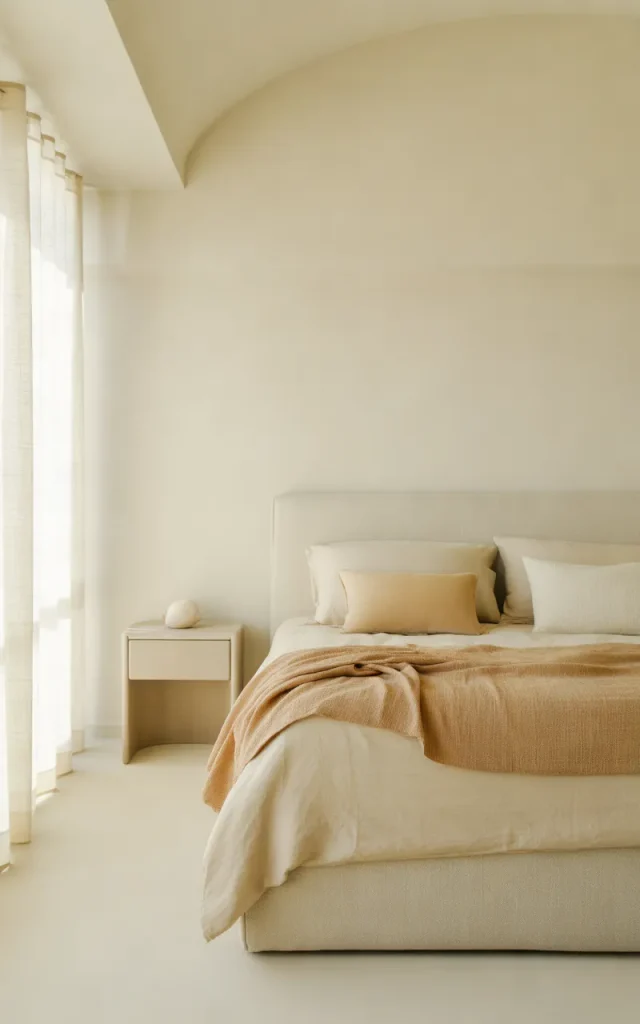
For a particularly seamless minimalist bedroom, try painting the walls and ceiling in closely related colours. This reduces the visual contrast between surfaces and can make the entire room feel more cohesive.
Soft white, warm ivory, pale greige, and light beige are all good starting points. You could use the same colour throughout or choose a slightly lighter ceiling shade if you prefer a subtle distinction.
I especially like this technique in rooms with simple architectural details. When the walls aren’t competing with a strong ceiling colour, your furniture, bedding, and natural textures become more noticeable.
Why designers do this:
A consistent palette reduces visual interruptions and helps the room feel unified. The result can be particularly effective when paired with minimal trim and uncomplicated window treatments.
Replace Decorative Hardware With Simple Finishes
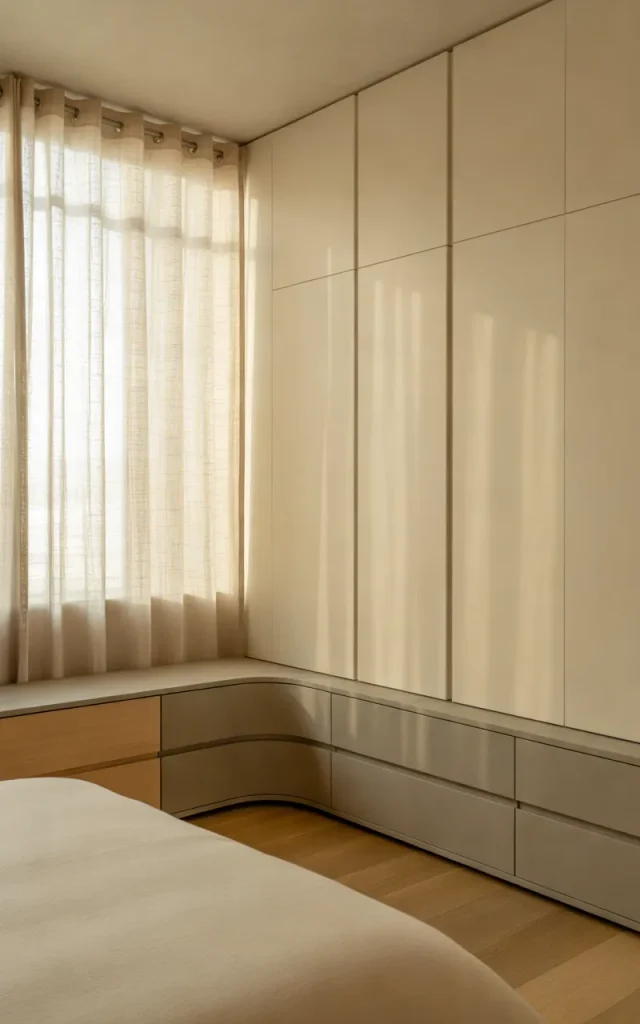
Small details matter in minimalist design. Ornate handles, decorative knobs, and highly detailed fittings can make otherwise simple furniture look busier than necessary.
Consider replacing suitable cabinet hardware with straight black pulls, brushed nickel handles, or understated brass knobs. The finish should complement the room’s other metal accents, including lighting, curtain rods, and mirror frames.
You don’t need to replace every handle in the bedroom. Start with the wardrobe or dresser and see how much cleaner the furniture looks afterward.
Colour swap suggestion
| Desired look | Hardware finish |
| Warm and natural | Brushed brass |
| Modern and graphic | Matte black |
| Cool and understated | Brushed nickel |
| Soft and understated | White or colour-matched hardware |
Before purchasing new hardware, measure the distance between existing screw holes. Choosing compatible fittings can save you time and prevent unnecessary drilling.
Introduce Linen Textures for Effortless Warmth
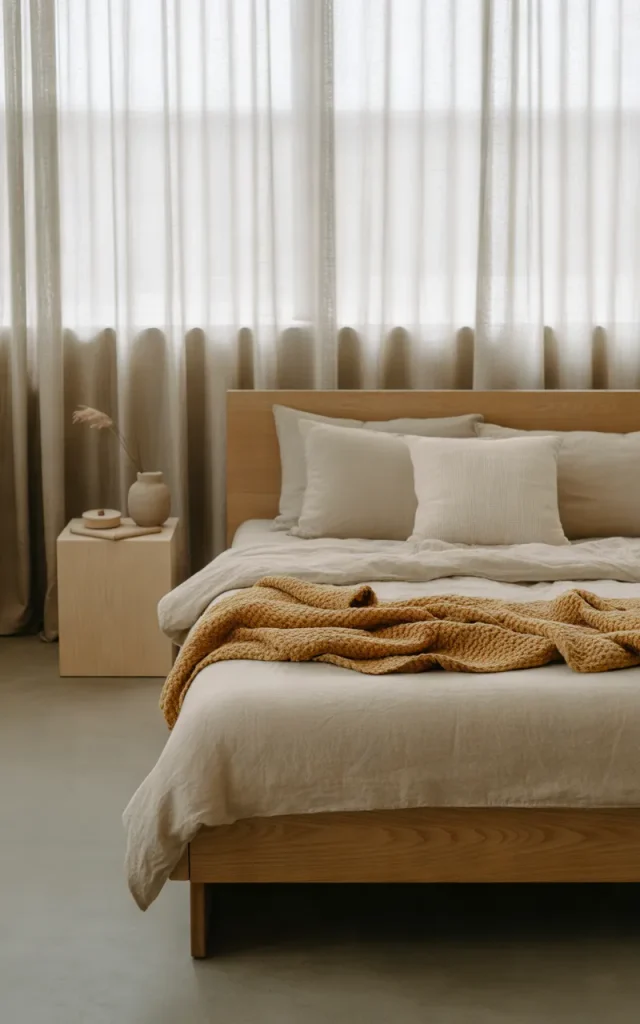
Minimalism doesn’t mean every surface needs to be smooth. In fact, texture is one of the easiest ways to make a simple bedroom feel inviting without adding more colours or decorations.
I love washed linen bedding, cotton waffle blankets, softly woven cushions, and lightweight curtains. Their natural irregularities give the room character while keeping the overall palette restrained.
Try layering a linen duvet cover over crisp cotton sheets, then add a lightweight throw at the foot of the bed. If your bedding already has a pronounced weave, choose smoother pillowcases to keep the combination balanced.
Layer it like this
- Start with simple cotton sheets.
- Add a linen duvet cover in a warm neutral.
- Fold a textured blanket across the foot of the bed.
- Finish with one or two understated pillows.
The result feels relaxed rather than overly styled. 😊
And remember, you don’t need expensive designer textiles to achieve this look. Affordable cotton and linen-blend fabrics can provide plenty of texture when chosen carefully.
Make a Small Bedroom Feel Larger With Vertical Storage
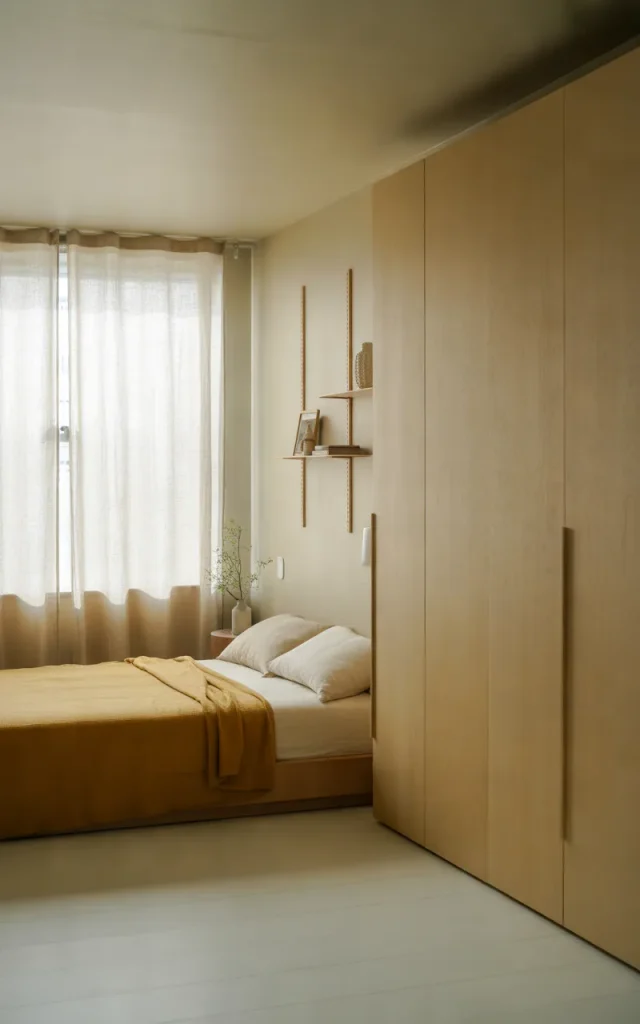
When you’re working with a small bedroom, the floor can quickly become crowded. One of my favourite solutions is to use vertical storage so that your belongings have a home without taking over the available walking space.
Install a few sturdy floating shelves, choose a tall narrow dresser, or use a wardrobe that extends towards the ceiling. Keep frequently used items within easy reach and reserve higher shelves for occasional-use belongings.
The trick is not to fill every inch of wall space. Too many shelves packed with objects can make a small room feel visually heavy, even if the floor is completely clear.
Small space hack:

Use matching storage boxes on higher shelves to hide small items and create a more uniform appearance.
Keep Your Dresser Styling Simple and Functional
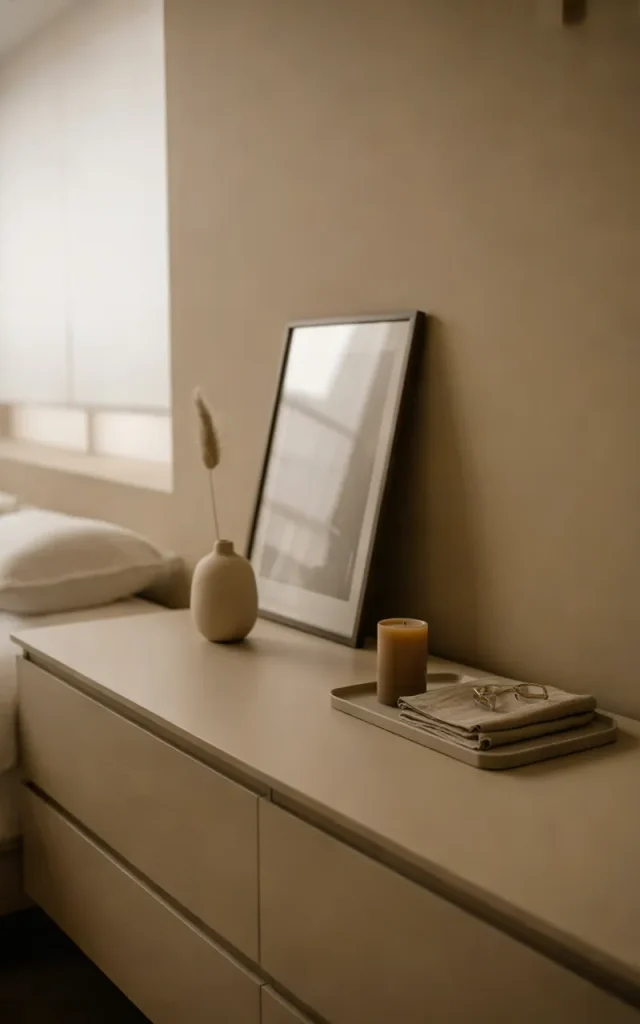
A dresser can easily become a dumping ground for perfume bottles, jewellery, folded clothes, and random everyday objects. To maintain a minimalist bedroom, I recommend styling the top with intention and storing the rest inside.
Begin with a clear surface. Then choose one or two items that serve a purpose, such as a jewellery tray and a small lamp. If you enjoy flowers, a simple vase can add softness without making the dresser feel crowded.
Try grouping smaller objects together rather than spreading them across the entire surface. This creates a defined arrangement and leaves enough room for everyday use.
Checklist
- Remove objects that belong elsewhere.
- Keep daily essentials together in a tray.
- Leave some of the surface completely empty.
- Store spare accessories inside the drawers.
The empty space is part of the design. You don’t have to fill it just because it’s there.
Add a Subtle Accent Wall Behind the Bed
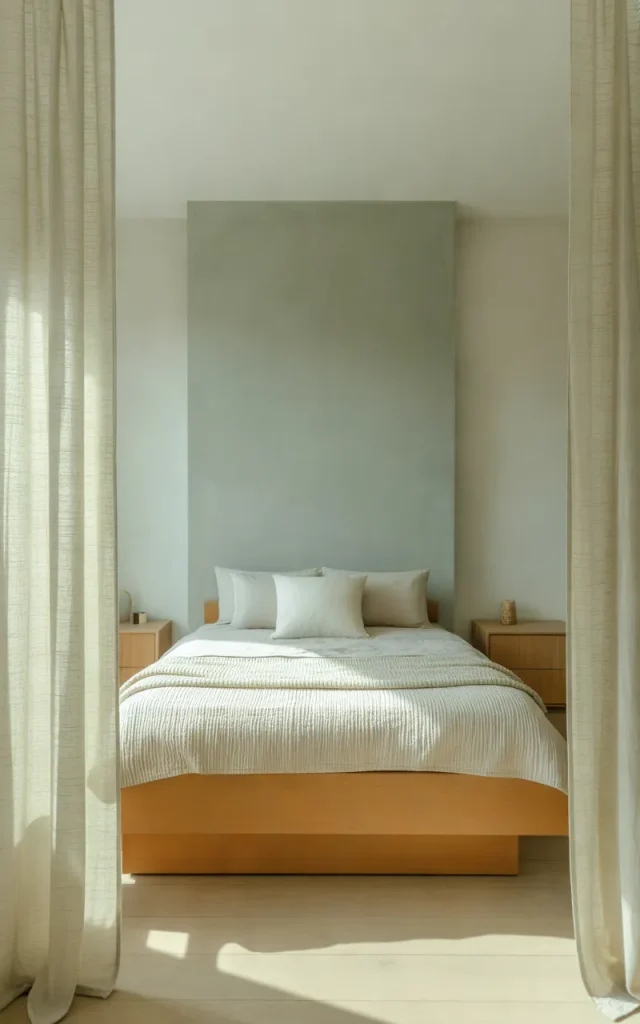
If you want a little visual interest without compromising the minimalist aesthetic, create a restrained accent wall behind the bed.
A muted sage green, warm taupe, soft clay, or deep olive can work beautifully against neutral bedding. If you prefer a very understated result, use a shade that’s only slightly darker than the other walls.
You could also consider simple vertical wood panelling or a clean-lined upholstered headboard that extends across part of the wall. Choose one main feature rather than combining several treatments in the same space.
Trend Alert:
Earthy colours and natural finishes are popular choices for creating bedrooms that feel warm and grounded. The important thing is choosing a shade you enjoy living with, rather than following a trend simply because it’s fashionable.
Create a Relaxing Atmosphere With Layered Lighting
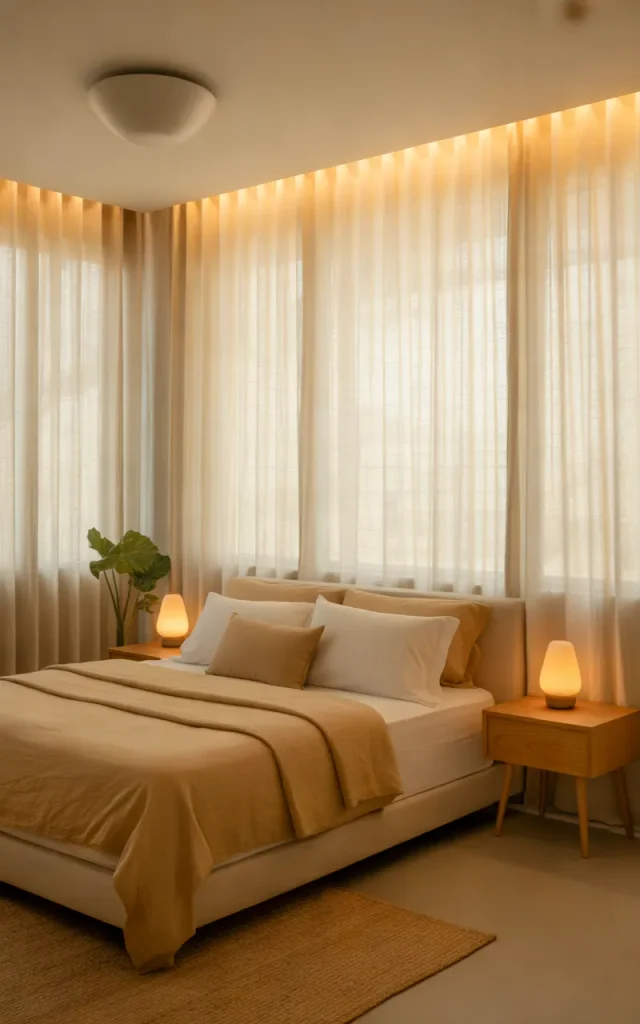
Good lighting can completely change the mood of a minimalist bedroom. A single bright ceiling light may be practical when cleaning, but it often feels too harsh when you’re trying to unwind.
I prefer combining three types of lighting: general illumination, focused task lighting, and soft ambient light. A ceiling fixture handles the overall brightness, bedside lights help with reading, and a small lamp or discreet indirect light creates a gentler evening atmosphere.
Choose fixtures with simple silhouettes so they complement the room instead of drawing attention away from the overall design.
Layer your lighting like this
- Use a ceiling light for general visibility.
- Add adjustable bedside lights for reading.
- Introduce a small table lamp for a softer glow.
- Choose warm-white bulbs for a relaxing evening feel.
You don’t need to switch on every light at once. Use the combination that suits the activity and time of day.
If you install dimmers, check that your bulbs and fixtures are compatible. This simple upgrade can make an ordinary bedroom feel much more comfortable.
Personalise Your Minimalist Bedroom With Meaningful Details
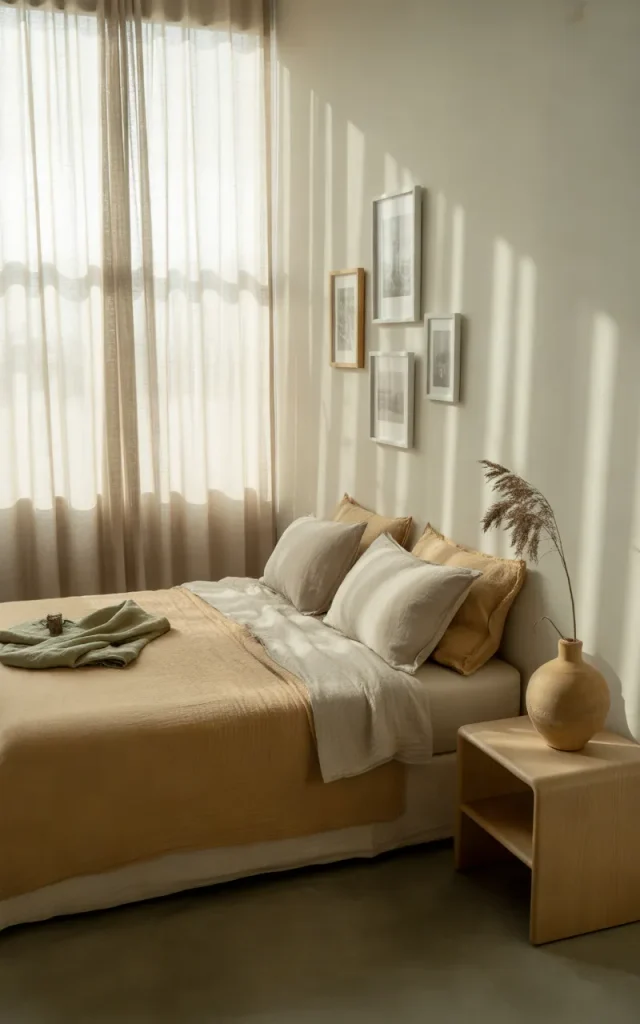
Here’s my favourite reminder about minimalist decorating: your bedroom should still feel like yours. A space can be beautifully simple without looking generic or stripped of personality.
Instead of filling shelves with random accessories, choose a few meaningful details. Perhaps it’s a framed photograph, a favourite piece of pottery, a handmade quilt, or a small artwork collected during a memorable trip.
Give these objects enough room to stand out. When every surface is crowded, even special items lose some of their impact. A carefully chosen piece surrounded by open space often feels more important and visually satisfying.
Myth-buster:

Minimalism doesn't require you to own as little as possible or remove every sentimental object. It's about being selective with what you display and creating an environment that supports the way you want to live.
Final Thoughts
Creating a minimalist bedroom doesn’t mean buying all-new furniture or removing everything you love. Sometimes, the biggest transformation comes from decluttering your nightstand, choosing softer bedding, or replacing a bulky piece of furniture with something more practical.
Start with one idea that feels achievable. Perhaps you’ll introduce warm wooden accents, improve your lighting, or create a calmer colour palette. Then build on those changes at your own pace.
Remember, the goal isn’t a perfectly empty bedroom. It’s a space that helps you relax, recharge, and feel at home. And that’s a beautiful place to start. 🤍
