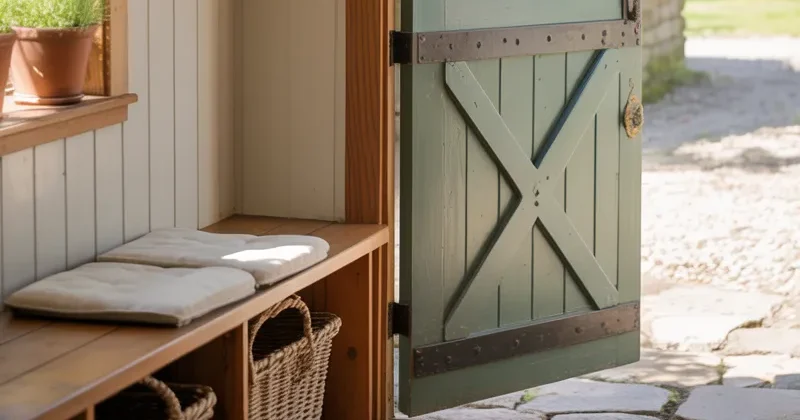
A mudroom entryway has a very specific job. It needs to catch shoes, bags, coats, keys, umbrellas, and all those little things that somehow end up scattered around the house.
But functional doesn’t have to mean boring. I love a mudroom that works hard and looks intentional. With the right storage, colors, lighting, and a few decorative touches, even a tiny entry can feel welcoming. 🏡
So, if you’re looking for practical 20 mudroom entryway ideas, I’ve gathered plenty of inspiration below. Some are simple weekend updates, while others can completely change how your entryway functions.
Install a built-in bench with hidden storage.
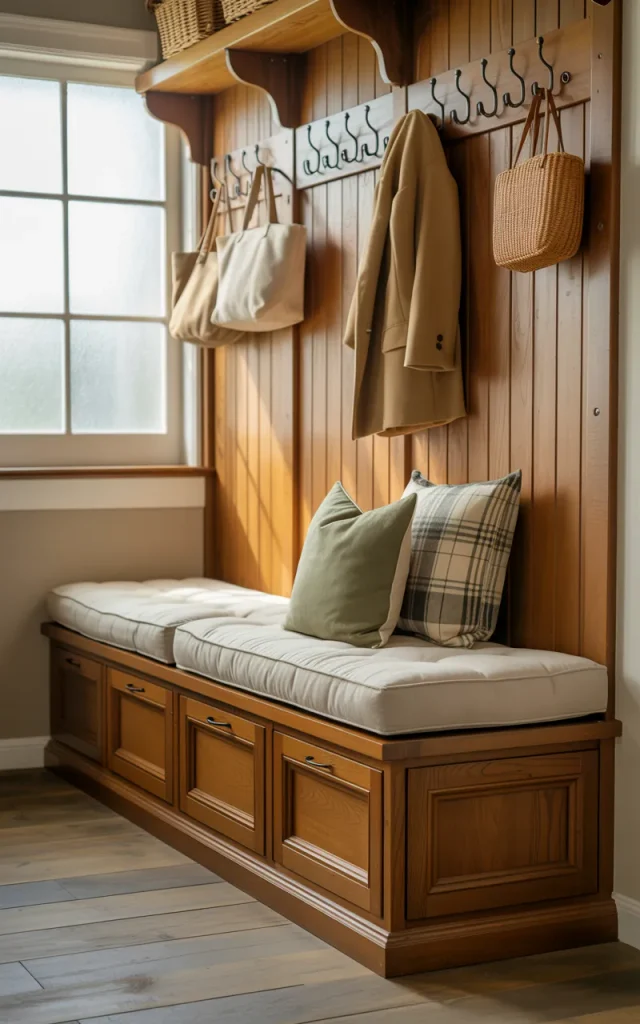
Start with a bench because it gives your mudroom entryway an instant purpose. I love a sturdy built-in bench with drawers, cabinets, or lift-up compartments underneath for shoes, bags, and seasonal accessories.
Keep the seat comfortable with a washable cushion. Add a few pillows if you want the space to feel softer and more welcoming.
Above the bench, install hooks for everyday coats and bags. Suddenly, everyone has a designated drop zone. ✨
Why it works?
You get seating and storage without using two separate pieces of furniture. That’s a big win in a busy entryway.
Add individual hooks for every family member.
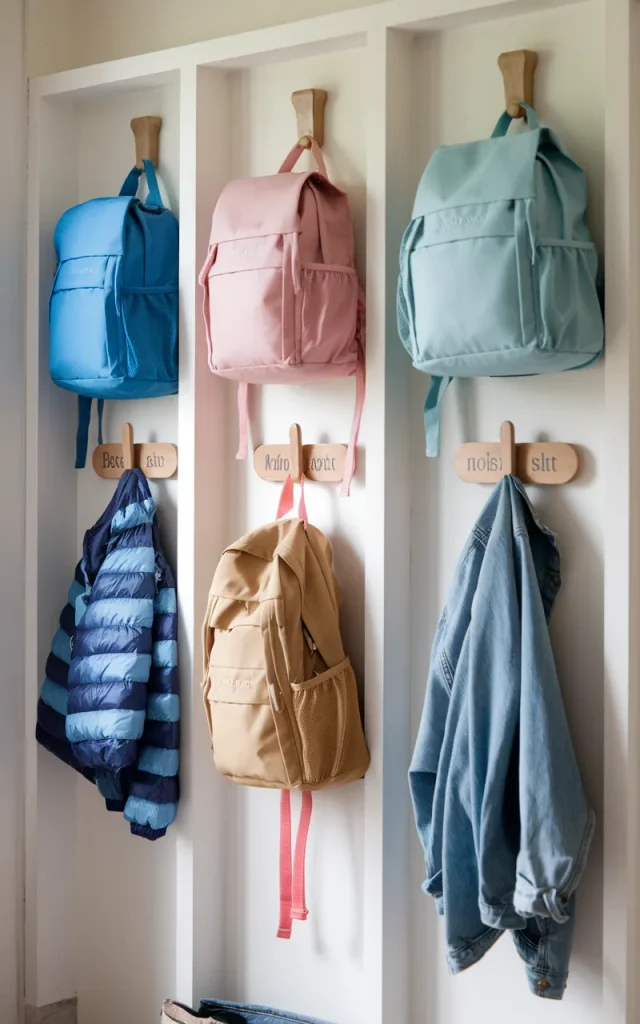
Give each person their own hook. It sounds simple, but this little change can make a surprisingly big difference.
I recommend mounting hooks at different heights if children use the mudroom. Adults can have higher hooks, while kids get easy-to-reach ones for backpacks and jackets.
You can even label each space with a small nameplate or decorative tag. It adds personality while making the storage system obvious.
Keep the hooks evenly spaced and avoid overcrowding them. A hook needs breathing room if you want coats and bags to hang neatly.
Quick Tip:

Choose sturdy hooks with rounded edges. They look better and are much kinder to delicate clothing.
Choose durable flooring that hides everyday messes.
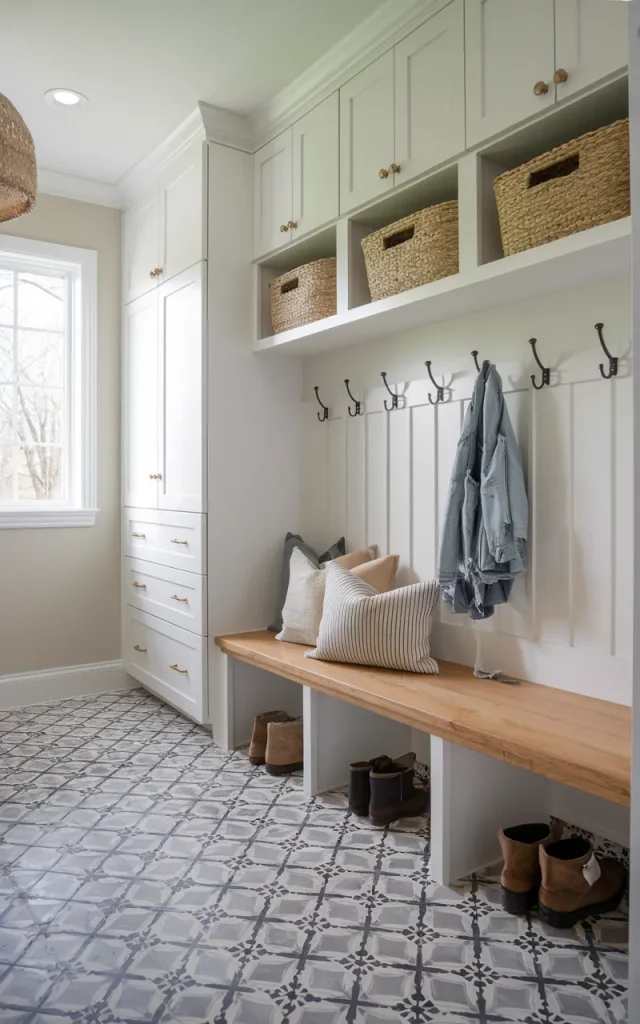
Your mudroom floor is going to work hard. Wet shoes, dirt, spilled drinks, and muddy paws happen. That’s just life. 🐾
For that reason, I recommend porcelain tile, slate, stone-look tile, or another hard-wearing surface that can handle frequent cleaning.
Patterned flooring can be especially useful because it disguises tiny bits of dirt between cleanings. Keep the rest of the room fairly simple so the floor doesn’t compete with everything else.
Unlike a delicate entryway rug, durable flooring gives you a foundation that doesn’t require constant worrying.
Why it works?
A practical floor lets the room stay beautiful without becoming precious.
Paint the cabinets in a rich, welcoming color.
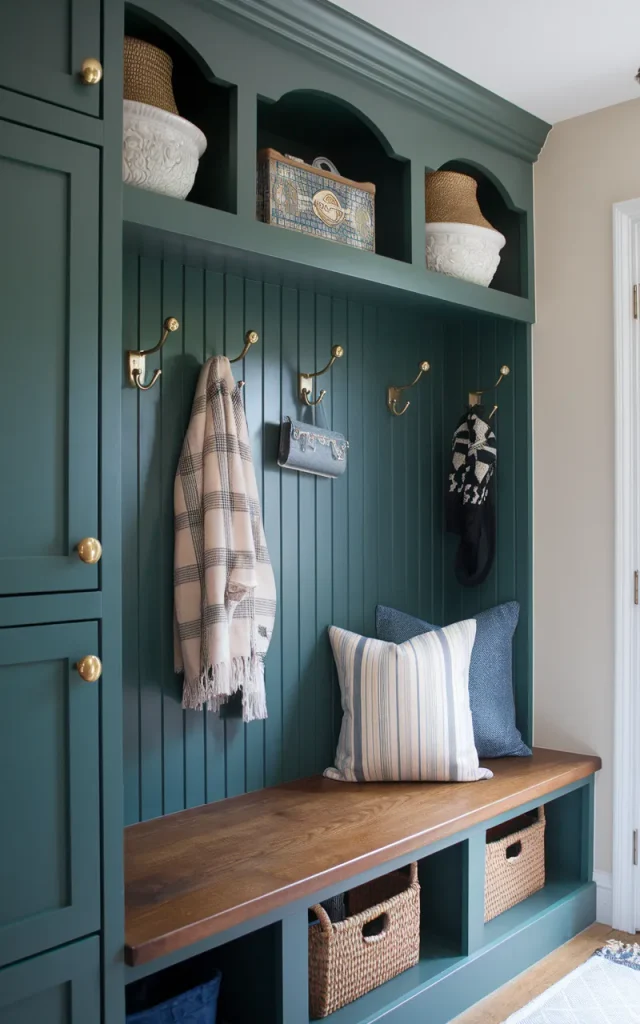
Don’t be afraid of color in a mudroom. In fact, this is one of my favorite places to experiment because the space can have personality without dictating the style of the whole house.
Try deep green, muted blue, warm olive, charcoal, dusty terracotta, or even a soft black for the cabinetry.
If your walls are already colorful, choose a quieter cabinet shade instead. The goal isn’t to make every surface compete.
Pro-tip:

Use a durable washable paint, especially on lower cabinets and doors. Mudrooms experience plenty of hands, bags, and accidental bumps.
Layer a washable runner over the floor.
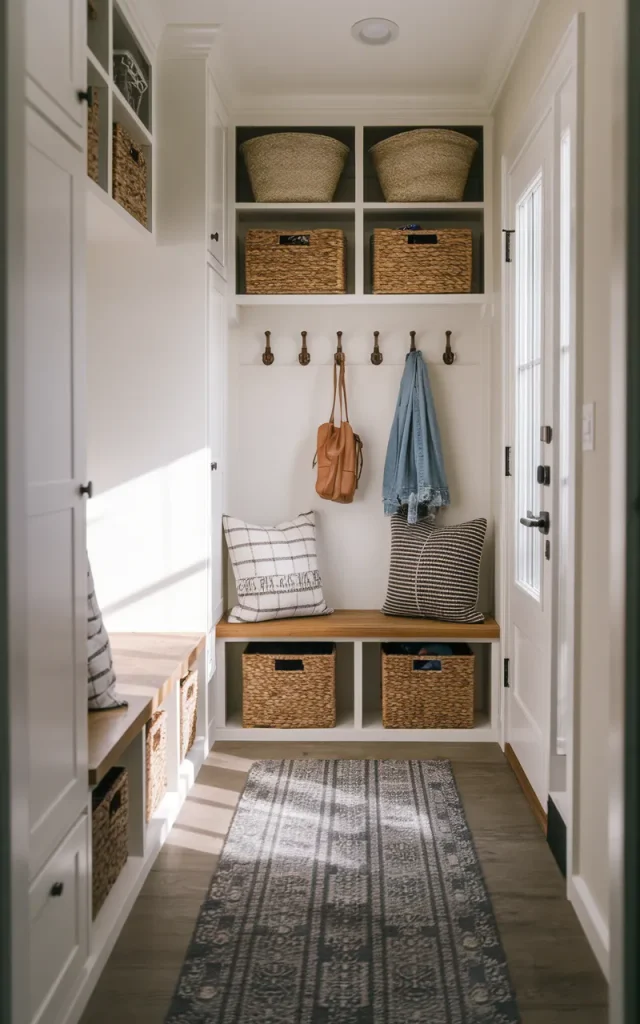
Soften a hard mudroom floor with a washable runner. It brings in pattern, color, and texture while giving your feet somewhere comfortable to land.
Choose a runner that fits the length of your main traffic path. I prefer low-pile styles because they are easier to vacuum and less likely to catch on shoes or doors.
Stripes, small geometrics, vintage-inspired patterns, and subtle checks are all great choices. They can disguise everyday dirt much better than a plain cream rug.
Small space hack:
In a narrow entryway, a long runner can visually stretch the room and make the space feel more intentional.
Frame the entry with wall paneling.
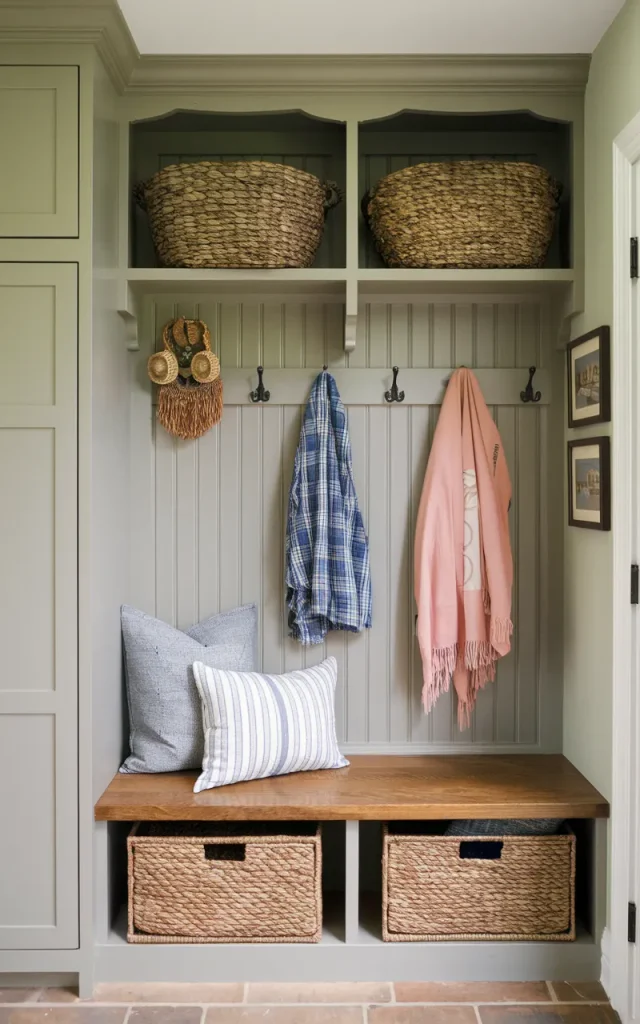
Give your mudroom entryway more architectural character by adding wall paneling behind the hooks or bench. Beadboard, board-and-batten, shiplap, and simple vertical panels can all work.
I especially like painted paneling because it protects the lower wall from everyday scuffs while creating visual interest.
For a classic room, try crisp white or warm cream. For something moodier, paint the paneling the same shade as the cabinetry.
Why designers do this:

Paneling makes practical storage look intentional. Instead of seeing a collection of hooks and cubbies, you see one cohesive built-in feature.
Use baskets to control the little things.
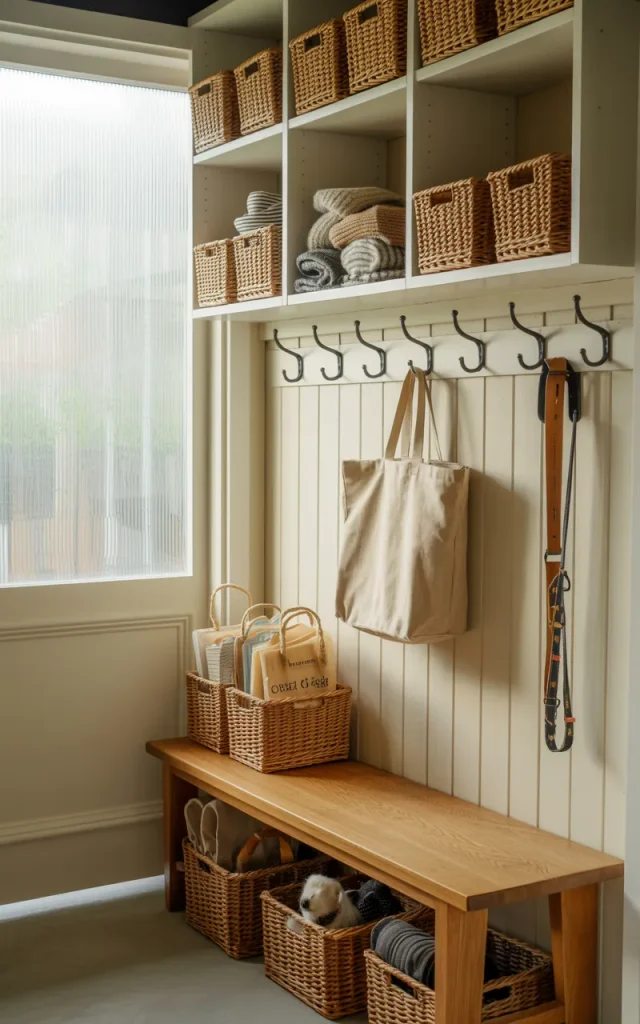
Introduce baskets wherever small objects tend to accumulate. One basket can hold hats. Another can handle scarves. A third might be perfect for dog accessories or reusable shopping bags.
I prefer baskets with a consistent material or color so the storage looks collected rather than random.
Place them on open shelves, inside cubbies, or beneath a bench. If you have children, choose sturdy baskets that can survive being pulled in and out every day.
Actionable Tip:
- Assign one basket to each category.
- Keep everyday items at waist height.
- Label baskets if multiple people share them.
- Avoid creating a basket for every tiny object.
The goal is fewer piles, not prettier piles.
Combine open hooks with closed cabinets.
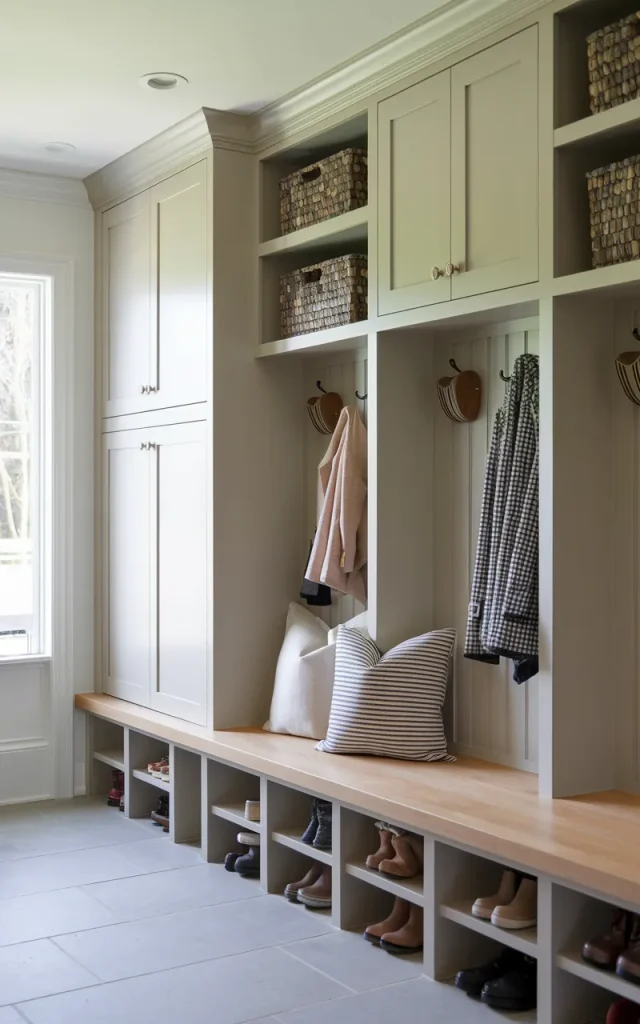
Create a balanced storage system by mixing open and closed storage. Open hooks make everyday coats easy to grab, while closed cabinets hide less attractive clutter.
This combination is one I recommend often because mudrooms need both convenience and visual calm.
Put frequently used jackets and bags on hooks. Store cleaning supplies, seasonal gear, extra shoes, and miscellaneous items behind doors.
One rule to remember:
If something looks messy when left out, give it a closed home. That single principle can keep a busy entryway from becoming visually overwhelming.
Add a statement pendant light.
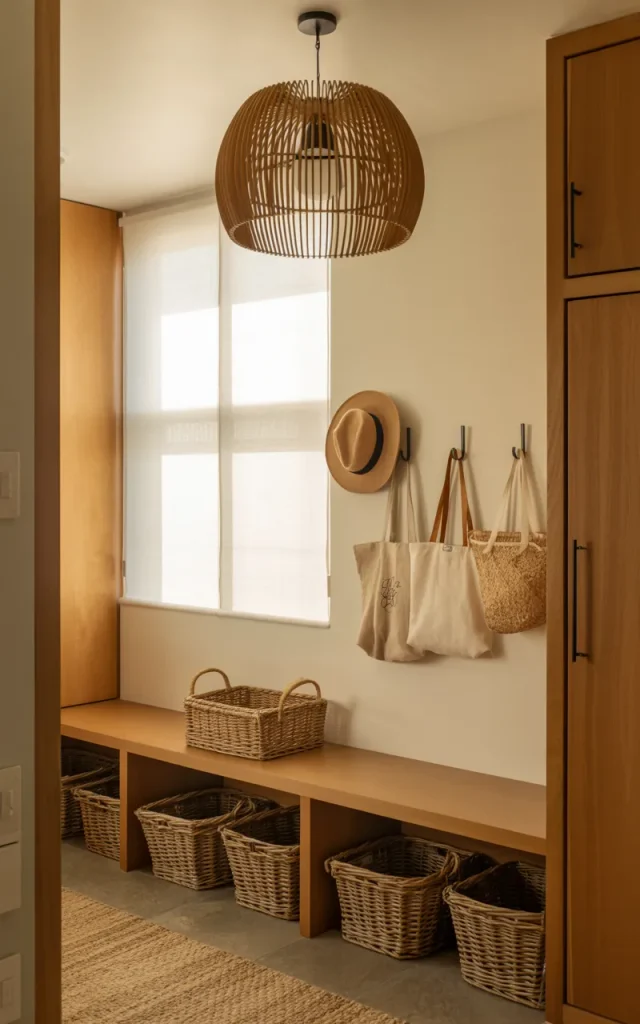
Give the ceiling some attention with a beautiful pendant or semi-flush fixture. 💡 A mudroom doesn’t need to rely on plain overhead lighting.
A woven pendant adds warmth. A black metal fixture feels modern. A traditional lantern brings a classic architectural touch.
Just make sure the fixture is appropriately scaled to the room and doesn’t interfere with doors, cabinets, or head clearance.
Vibe check:
- Woven fixture → relaxed and organic
- Black metal → modern and crisp
- Brass → warm and classic
- Glass → airy and elegant
Good lighting can make even practical storage feel decorative.
Make room for a tall umbrella stand.
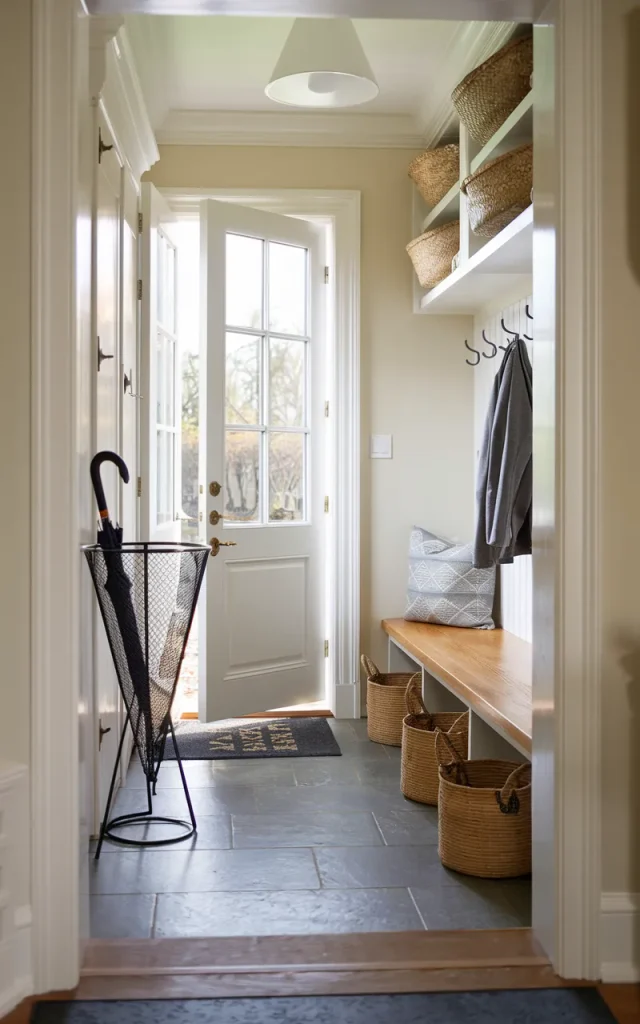
Don’t overlook umbrellas. They are awkward, wet, and somehow always end up leaning against a wall.
A slim umbrella stand near the entrance solves the problem beautifully. Choose one that is tall enough to keep umbrellas upright but narrow enough to avoid blocking the walkway.
I like ceramic, metal, or woven styles depending on the room’s overall aesthetic.
Place it beside the door rather than behind the bench, where wet umbrellas can drip onto shoes or stored belongings.
Surprise Fact:

Sometimes the smallest storage addition makes the biggest difference because it solves a very specific everyday problem.
Add a full-height cabinet for seasonal gear.
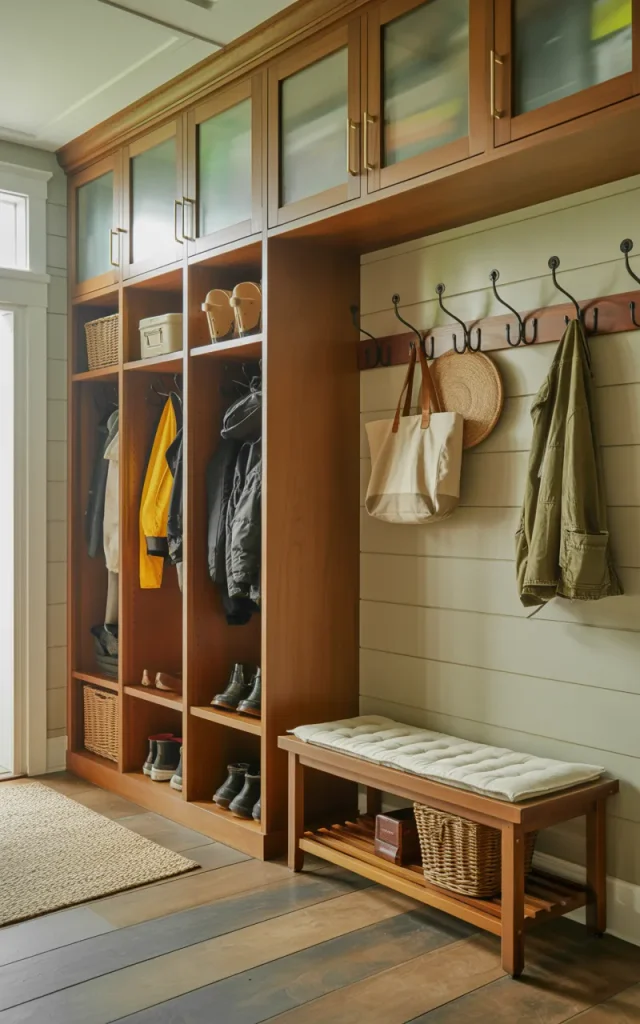
Use the height of the room by installing a tall cabinet. This is where you can hide bulky items that don’t need to stay visible every day.
Think winter coats, rain gear, beach bags, sports equipment, extra footwear, or seasonal decorations.
I recommend dividing the inside with adjustable shelves and hooks. That way, the cabinet can change as your storage needs change.
What most people get wrong:
They plan mudroom storage around today’s belongings instead of allowing room for future clutter. A little extra capacity is useful. Just don’t let the cabinet become an excuse to keep things you never use.
Bring in a narrow console table.
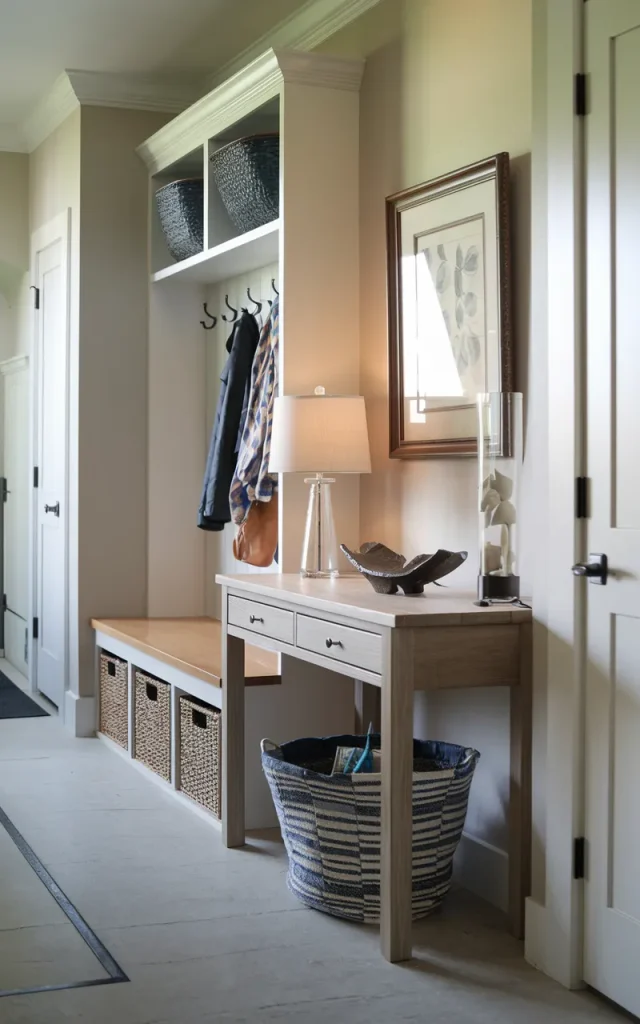
If your mudroom has enough floor space, add a slim console table. It creates a convenient surface for keys, mail, baskets, and decorative accessories.
Look for a shallow design so people can still walk comfortably through the room. Drawers are especially useful because they hide small items without requiring another storage cabinet.
Style the top with a lamp, bowl, artwork, or small plant. Keep the arrangement practical rather than overly precious.
A Pro-tip:
Measure your walkway before buying furniture. You want the entryway to feel easy to move through, not like an obstacle course.
Create a cozy bench nook with layered texture.
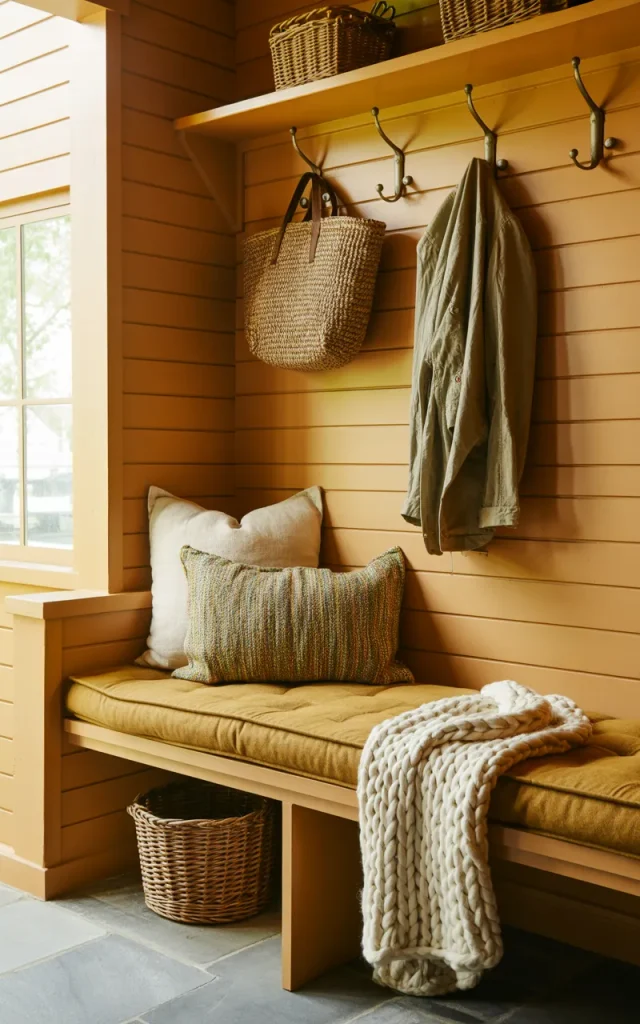
Turn the main mudroom seating area into a cozy little nook. Start with a built-in or freestanding bench, then layer a cushion, one or two pillows, and a soft throw.
I love using texture here because mudrooms can easily become dominated by hard surfaces. Wood cabinets, tile floors, metal hooks, and painted walls all benefit from something softer.
Keep your textiles washable or easy to clean. This isn’t the place for your most delicate linen cushion.
Layer it like this:
- Durable bench cushion
- Textured lumbar pillow
- Small washable throw
- Simple basket underneath
The result feels welcoming without sacrificing practicality. 🧺
Paint the ceiling for a subtle surprise.
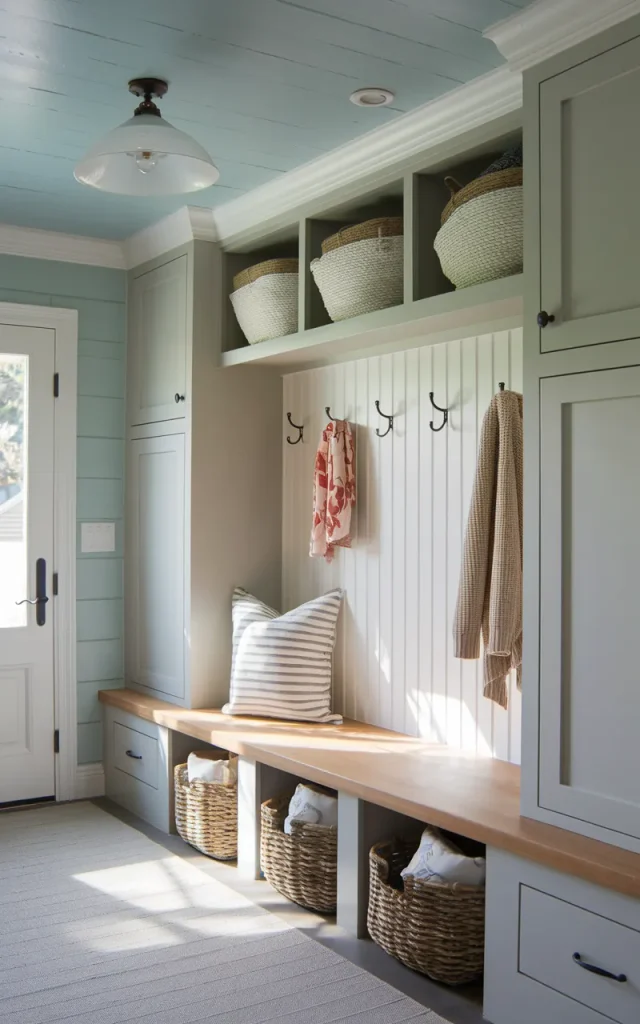
Give the fifth wall some personality. Instead of keeping the ceiling white, use a soft blue, warm beige, muted green, or another shade that complements the walls.
This works particularly well in smaller mudrooms because the color feels unexpected without taking up additional floor or wall space.
If your cabinets are colorful, choose a much quieter ceiling shade. If everything else is neutral, you can be slightly bolder.
Myth-buster:

A colored ceiling doesn't automatically make a small room feel smaller. When chosen thoughtfully, it can actually make the space feel more finished and enveloping.
Add artwork that makes the room feel personal.
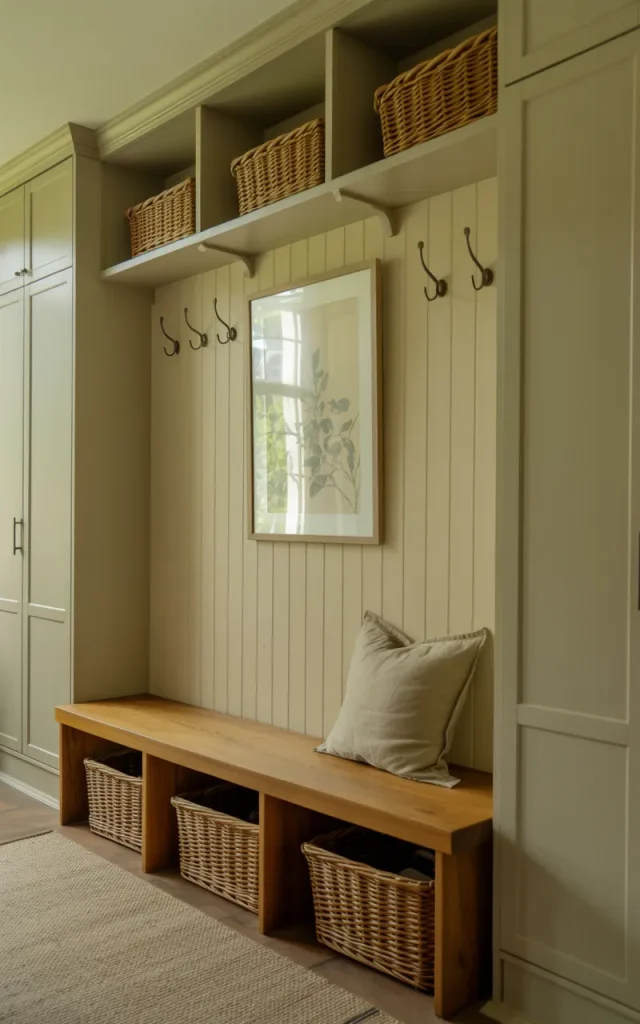
Don’t let practical storage take over every inch of the mudroom. Add artwork that makes you smile when you walk through the door. 🎨
A framed landscape, botanical print, vintage-inspired sign, or oversized abstract piece can soften the utilitarian feeling.
I like placing artwork above a console or on an empty wall opposite the main storage. If the room already has a lot of hooks and shelves, one larger piece usually looks calmer than several tiny frames.
Choose something that connects with colors already present in the space.
The psychology behind it:

Even a hardworking utility area feels more pleasant when it contains something visually meaningful rather than being treated purely as storage.
Design a hidden laundry-mudroom combination.
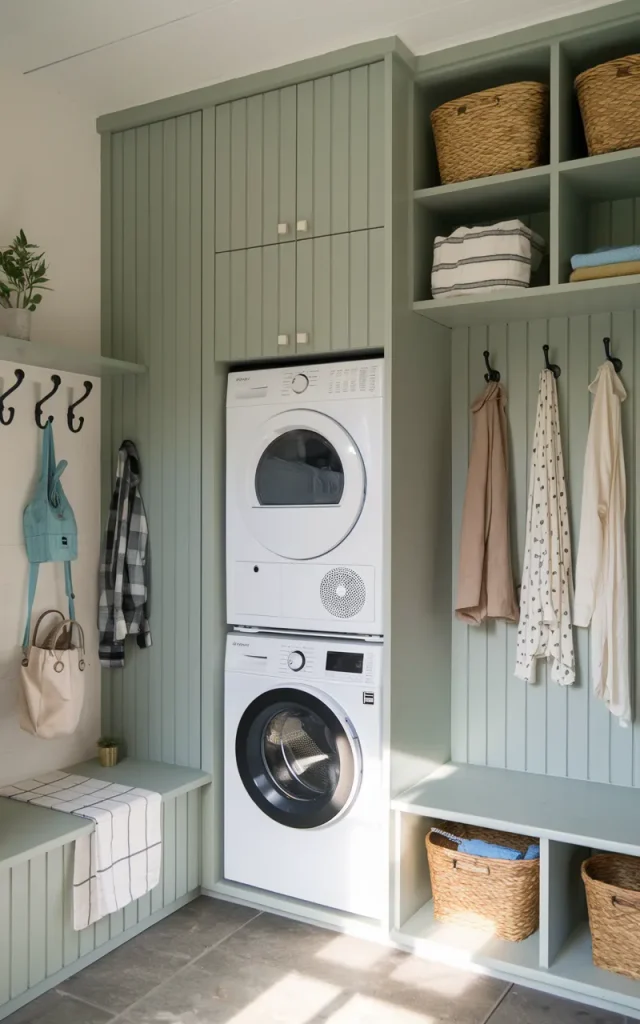
Combine laundry and entryway functions when you’re short on space. Stack the washer and dryer vertically, then use the remaining wall for hooks, shelves, and a compact bench.
I recommend visually separating the zones with cabinetry or a change in wall color. That way, the room feels organized rather than like two unrelated spaces squeezed together.
Add a hanging rail for clothes that need to air-dry and baskets for laundry sorting.
Do this 👉
- Use vertical storage.
- Hide laundry supplies behind doors.
- Keep entryway essentials near the entrance.
- Choose one consistent color palette.
Not this ❌
- Leave detergent bottles everywhere.
- Mix too many storage styles.
- Block the main walking path.
Install a Dutch door for character.
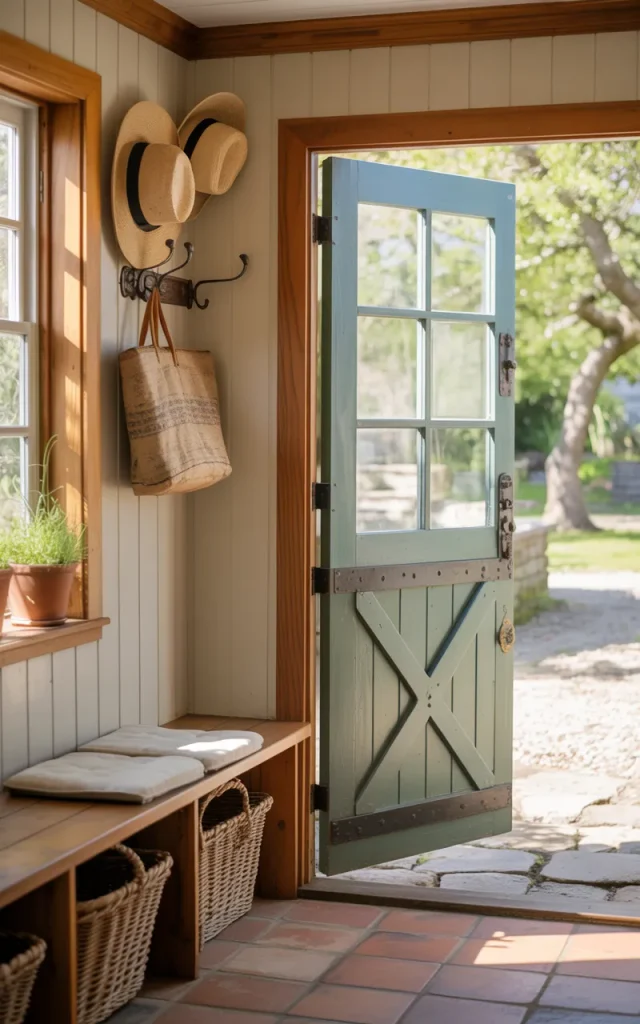
Add architectural charm with a Dutch door if your home’s layout and exterior allow it. The split design is especially charming for a side or back mudroom entrance.
I love the way the upper section can bring in light and fresh air while the lower portion remains closed. It also adds instant personality from both inside and outside.
Choose a traditional painted finish for a cottage feel or a simple natural wood finish for a more organic look.
Trend callout:
Character-rich architectural details are a lovely way to make practical spaces feel less generic. Pair the door with simple hardware so it remains the star.
Use vertical shiplap to visually stretch the room.
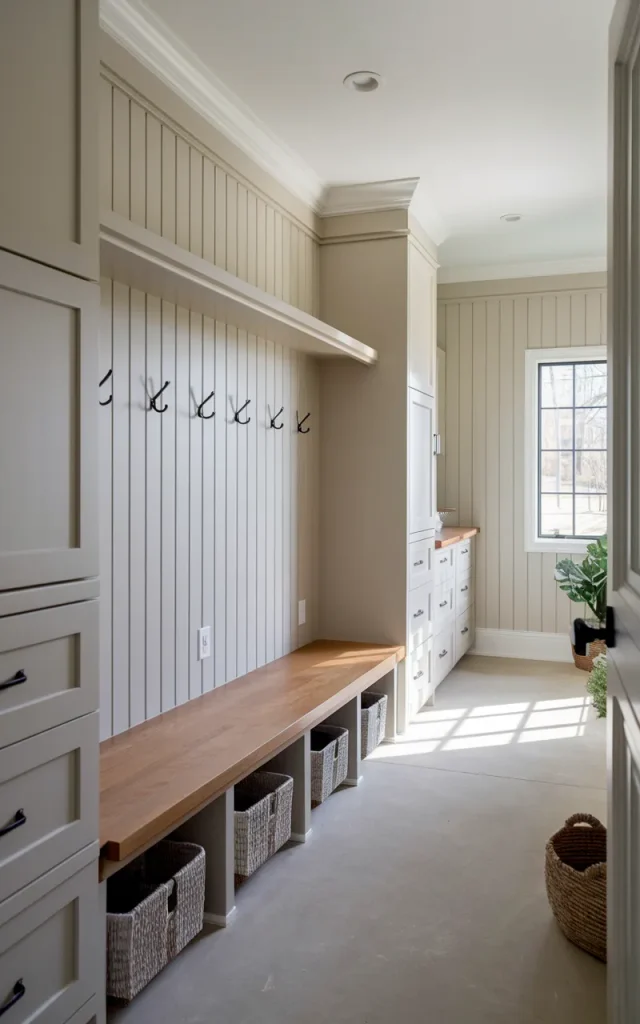
Make a narrow mudroom feel taller by installing vertical wall boards. The upward lines naturally draw the eye toward the ceiling.
Paint the boards in the same shade as the surrounding walls for a subtle effect, or choose a contrasting color if you want the wall to become a feature.
I would pair this with simple hooks and a clean-lined bench rather than lots of ornate storage. Let the vertical texture do some of the decorating.
Quick hack:

If a full wall installation isn't practical, use vertical paneling only behind the bench and hooks. You'll still get a strong architectural effect without remodeling the entire room.
Create a polished monochromatic mudroom.
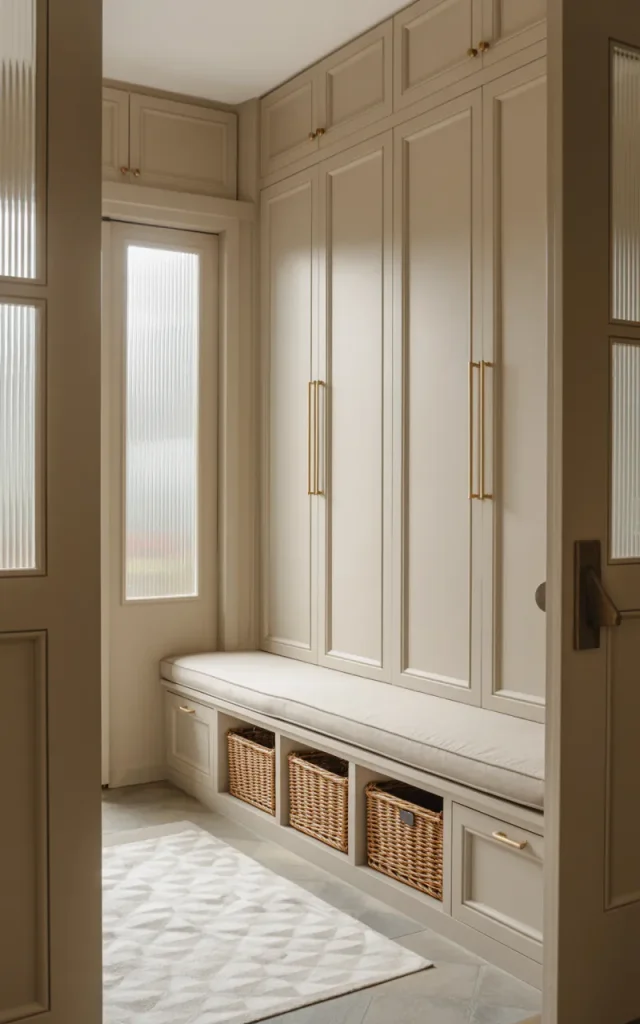
Choose one main color and let different shades of it carry the room. A soft white mudroom can feel airy and clean, while a deep green version can feel cozy and sophisticated.
The trick is layering textures rather than relying on multiple colors. Think painted cabinetry, woven baskets, wood accents, patterned flooring, and brushed hardware.
I love this approach when the mudroom is visible from another room. A restrained palette helps it blend naturally with the rest of the home.
One rule to remember:
Monochromatic doesn’t mean everything has to match exactly. Slightly different tones create depth and keep the room from looking flat.
Give the entire mudroom a welcoming entryway moment.
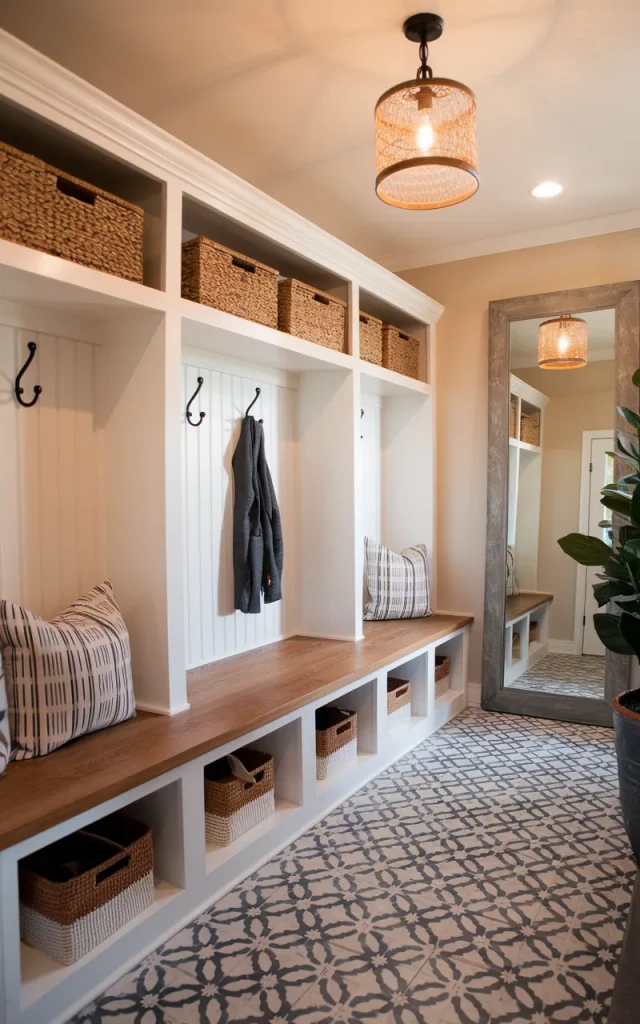
Finally, treat the mudroom like a real room rather than a storage closet. This is the idea I would come back to if you aren’t sure where to start.
Combine a comfortable bench, useful hooks, closed shoe storage, a durable floor, good lighting, and one or two decorative details. Then step back and ask yourself how the room feels when you actually use it.
Maybe you add a mirror from idea 5. Perhaps the baskets from idea 13 solve your daily clutter problem. Or you borrow the vertical paneling from idea 28 and combine it with colorful cabinetry.
Why it works?
The best mudroom entryway isn’t simply the prettiest one. It’s the one that makes leaving and coming home feel easier. 🌿
Final Thoughts
The best 20 mudroom entryway ideas aren’t about filling the room with more furniture or buying endless organizers. They’re about figuring out what your household actually drops, stores, wears, and needs every day.
Start with one problem. Maybe it’s shoes. Maybe it’s coats. Maybe it’s the mysterious pile of bags that appears beside the door every evening.
Solve that first, then build around it. Even one thoughtful change can make your mudroom feel calmer, prettier, and much easier to live with. ❤️
