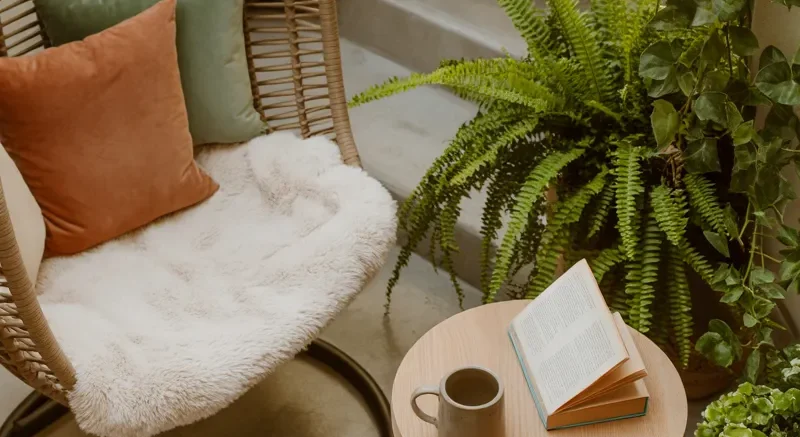
A concrete patio doesn’t have to look cold, plain, or overly basic. Honestly, I think concrete is one of the most versatile starting points for an outdoor space because you can dress it up in so many different ways.
Whether you’re working with a tiny backyard slab or a generous entertaining area, the right furniture, lighting, plants, and finishes can completely change the mood. 🌿
So, if your patio feels a little unfinished right now, don’t worry. These 21 concrete patio ideas will help you turn that practical surface into a space that feels intentional, comfortable, and very much like an extension of your home.
Add a compact bistro table for easy outdoor dining.
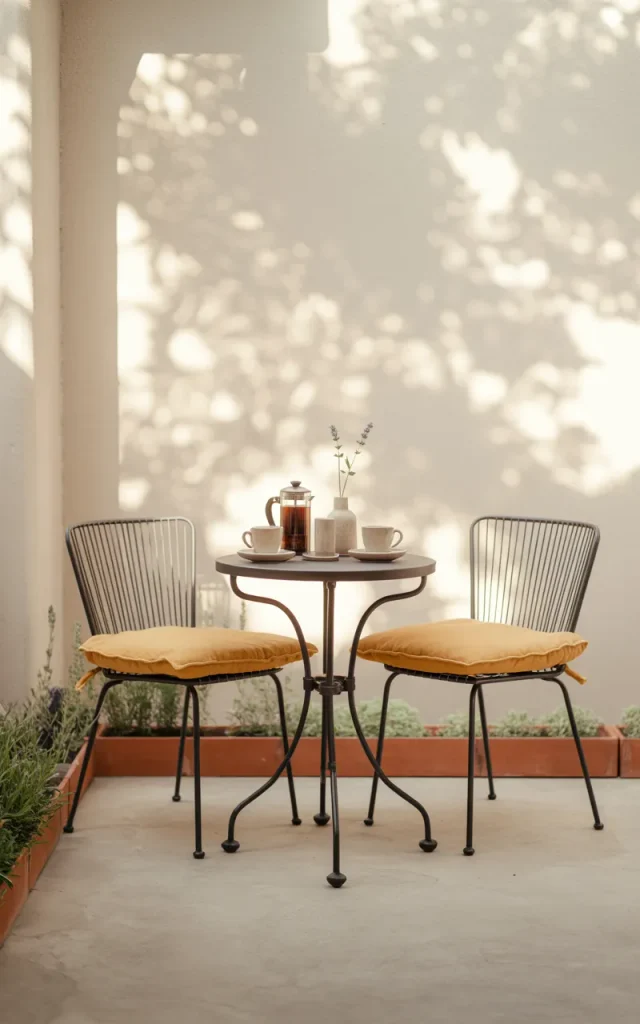
When floor space is limited, I love starting with a small round bistro table. It gives you a proper spot for morning coffee, lunch, or an evening drink without making the concrete patio feel crowded.
Choose a two-seater with slim legs and tuck the chairs underneath when you’re finished. A folding version is even better if your patio needs to serve several purposes.
Why it works?
A round table softens the hard lines of concrete while creating an instant dining zone. ☕Keep the rest of the patio fairly open. You don’t need much furniture to make a small concrete slab feel useful.
Paint the concrete in a soft neutral shade.
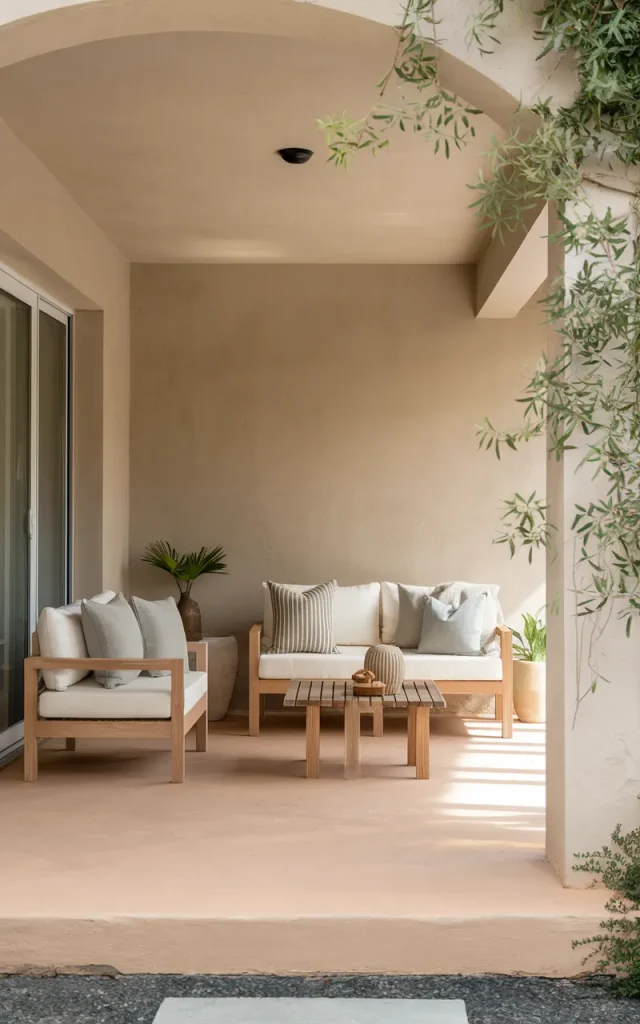
If your existing concrete looks tired, painting it can create a surprisingly dramatic transformation. I’m especially fond of warm white, sandy beige, greige, and soft taupe because these colors make concrete feel much more intentional.
Before painting, make sure the surface is properly cleaned and prepared. Choose a product specifically designed for exterior concrete and follow its application instructions.
Quick Tip:

Test your color in a small area first. Outdoor light can make a shade look completely different from how it appears on a sample card. Add natural wood furniture afterward. The combination feels relaxed rather than overly polished. 🎨
Install a pergola over the patio.
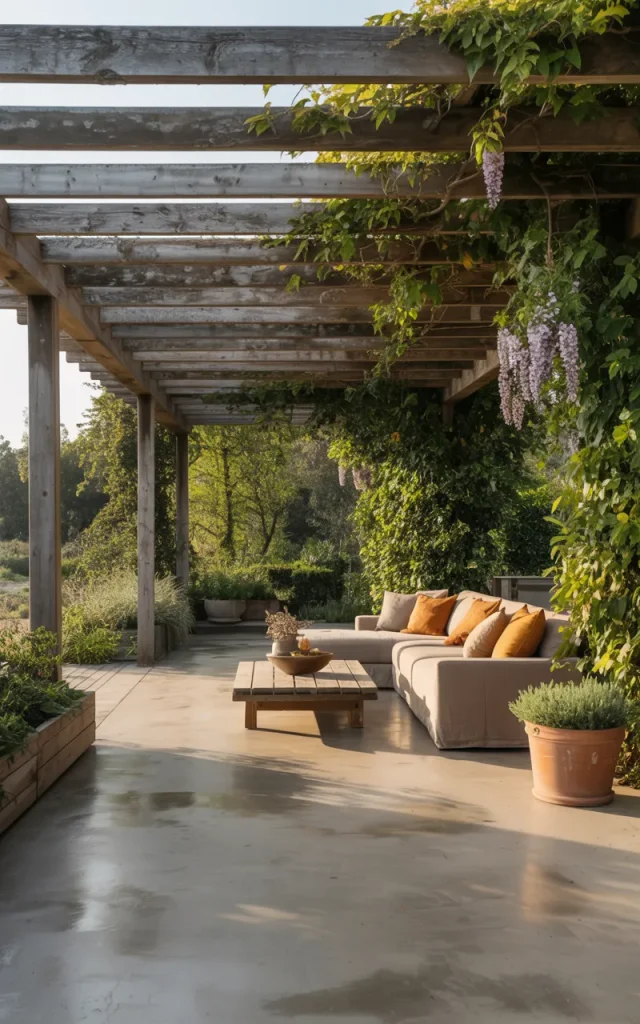
A pergola can turn a simple concrete slab into an outdoor room. I love this approach because it adds architectural interest without requiring you to rebuild the patio itself.
Choose a wood pergola for a warm, traditional look, or go with a simple modern structure if your home has cleaner lines. Then introduce comfortable seating underneath.
A Pro-tip:
Don’t automatically cover every inch of the pergola. Leaving some sections open allows sunlight to filter through and keeps the space feeling airy. You can always add climbing plants, outdoor curtains, or string lights later. Suddenly, that ordinary slab has a whole new personality. ✨
Layer an outdoor rug over the concrete.
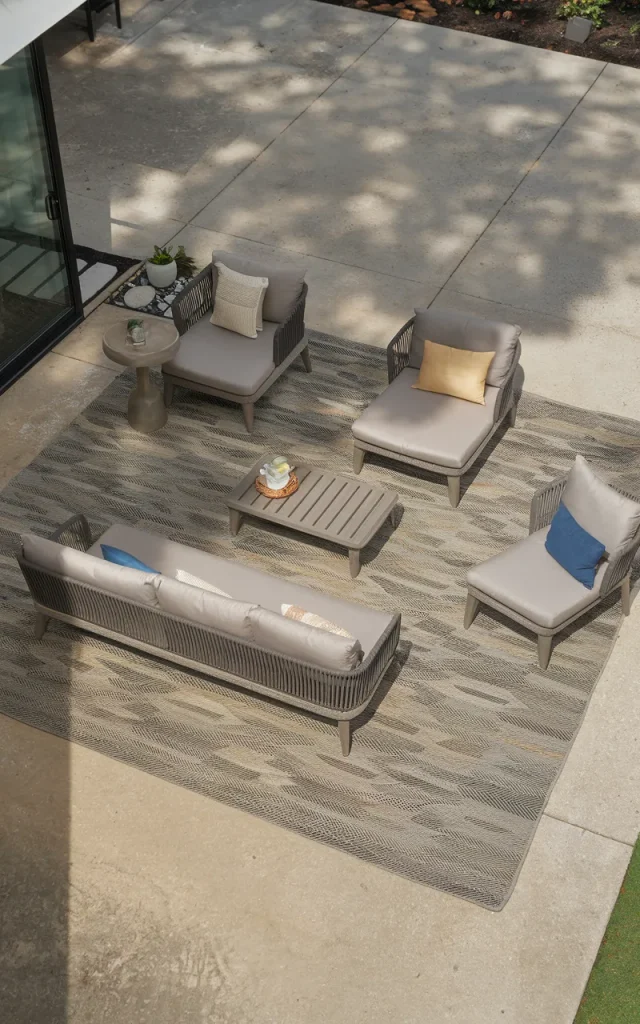
Concrete can sometimes feel visually hard, especially when you have a large uninterrupted surface. An outdoor rug is one of my favorite ways to soften it instantly.
Look for a weather-resistant rug with a pattern that complements your furniture. Stripes, subtle geometrics, faded traditional motifs, and natural-looking textures can all work beautifully.
Place the rug beneath your main seating arrangement so the furniture feels connected rather than scattered around the patio.
Small Space Hack:

Choose a rug large enough to sit beneath at least the front legs of your chairs or sofa. A tiny rug floating in the middle can actually make the area feel more disconnected. And yes, this is one of those changes you can make in an afternoon. 😊
Build a defined dining zone.
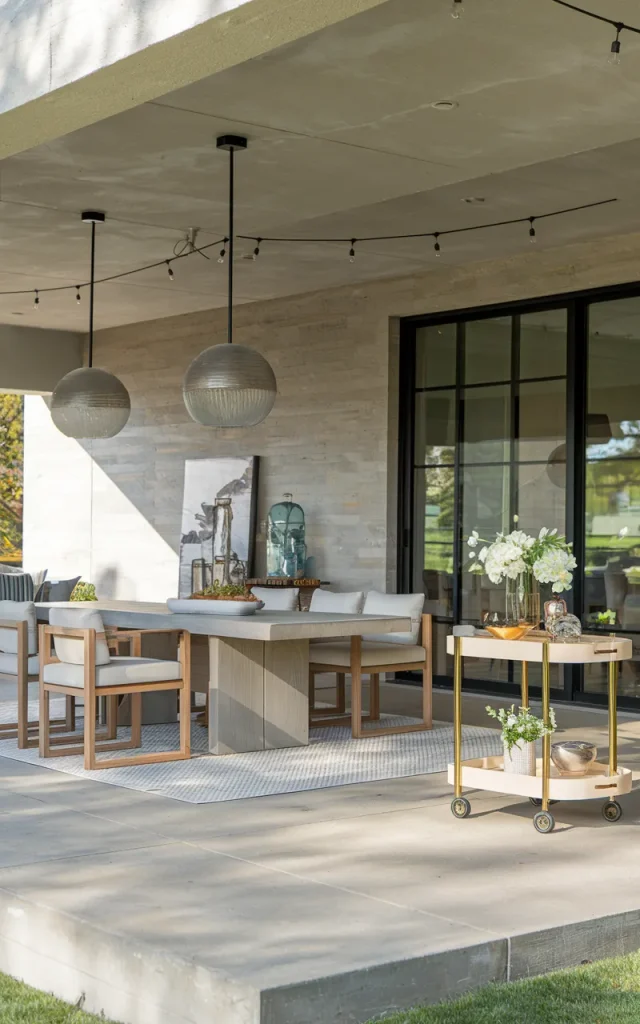
If you enjoy outdoor meals, give your concrete patio a dedicated dining area instead of squeezing a table wherever it happens to fit.
A rectangular table works particularly well on larger slabs. For smaller patios, try a round or square table with chairs that can slide underneath.
Keep the dining furniture visually connected with an outdoor rug or overhead light.
Actionable Tip:
Leave enough clearance around the table for chairs to pull out comfortably. A beautiful dining setup becomes frustrating very quickly when everyone has to squeeze sideways to sit down. I also love adding a small serving trolley nearby. It makes entertaining easier without requiring a bulky outdoor cabinet.
Soften the edges with a planting border.
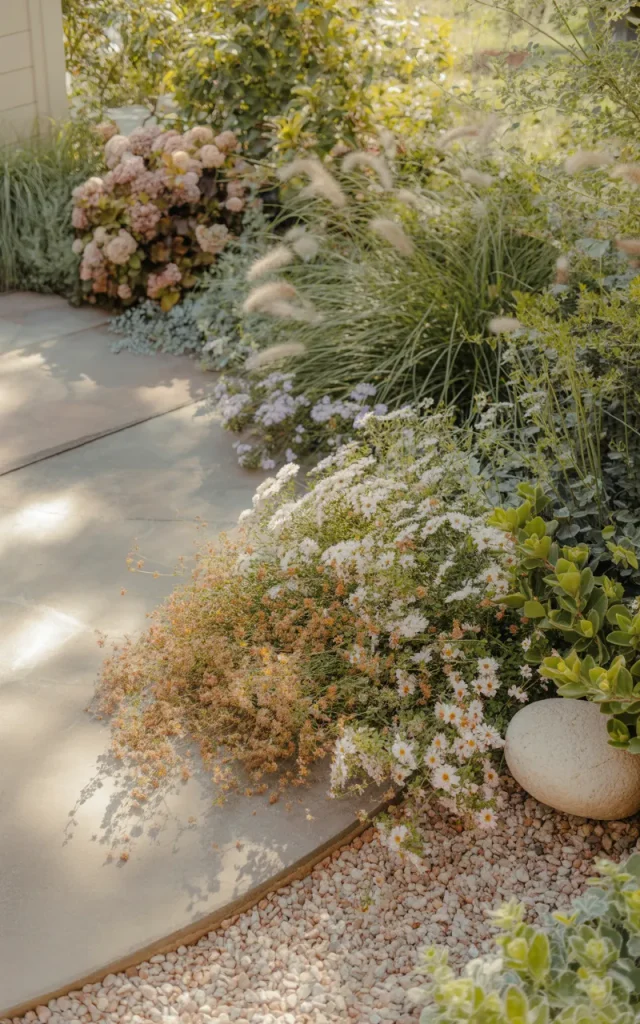
One of the easiest ways to make concrete look more integrated into the landscape is to soften its edges with planting.
Instead of allowing the slab to meet the lawn or soil in one hard line, create a border of ornamental grasses, shrubs, flowering plants, or low-growing ground cover.
A Micro-tip:
Repeat a few plant varieties rather than choosing ten completely different ones. Repetition gives the border a more cohesive, professionally designed appearance. You can also combine plants with gravel or decorative stones for a cleaner contemporary look. The concrete remains practical, but the greenery makes it feel like it belongs there. 🌱
Install a built-in concrete bench for permanent seating.
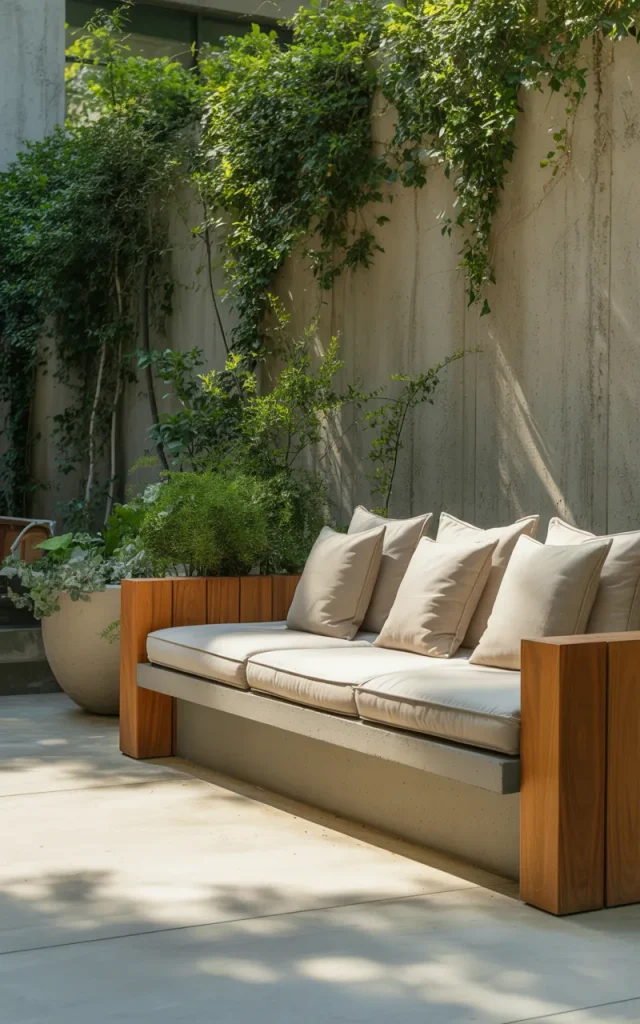
If you’re designing a patio from scratch, consider incorporating a built-in concrete bench. I particularly like this idea for modern homes because the bench can look architectural rather than like another piece of furniture.
Soften the hardness with thick outdoor cushions and several pillows. A timber seat top can also add warmth if you want a less monolithic appearance.
Budget Alternatives
- Use a freestanding outdoor bench instead of building one.
- Add a simple timber bench against an existing wall.
- Use a low retaining wall as informal seating.
The biggest advantage is that built-in seating doesn’t move around. Your patio layout stays visually tidy even when everyone is outside enjoying it.
Stain the surface for a richer finish.
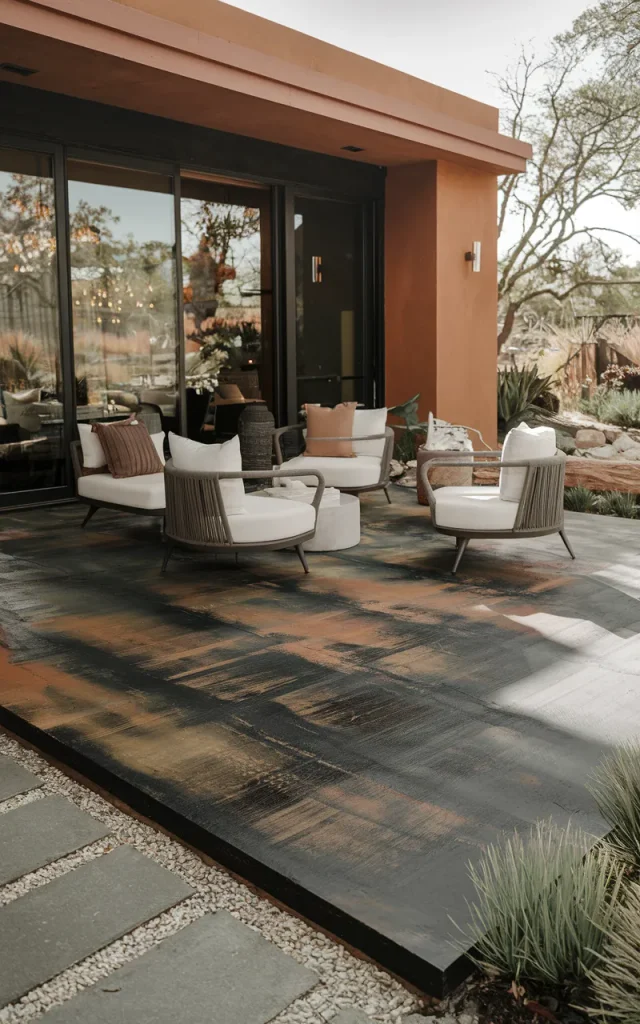
Plain gray concrete isn’t your only option. Concrete stain can introduce subtle color variation while allowing the texture of the surface to remain visible.
I like warm brown, charcoal, earthy terracotta, and muted stone tones depending on the surrounding architecture.
Unlike simply painting the patio, staining can create a more organic, less uniform appearance.
Common Mistakes to Avoid
- Skipping surface preparation.
- Choosing a color without testing it outdoors.
- Ignoring the surrounding walls and landscaping.
- Applying products unsuitable for exterior concrete.
Think of the stain as part of the overall color palette. Once you choose it, coordinate your furniture and textiles around those undertones.
Frame the patio with a low privacy screen.
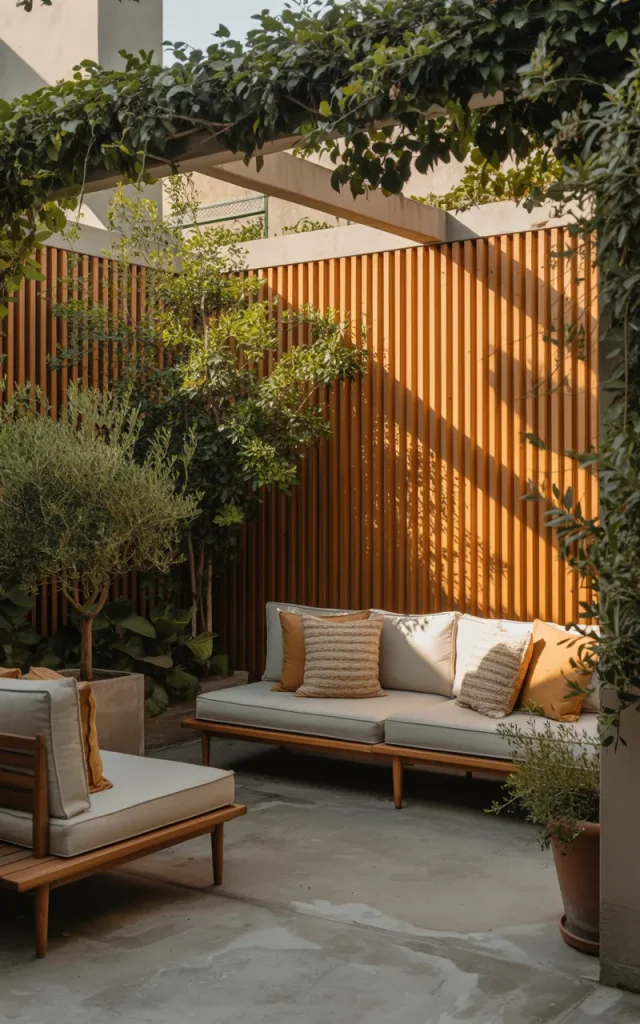
A concrete patio can feel exposed when it sits directly beside a neighbor, driveway, or open yard. A privacy screen can solve that problem while adding another design element.
Use vertical timber slats for a warm modern look, painted panels for a more traditional patio, or a combination of screening and climbing greenery.
Small Space Hack:

Choose a screen with narrow vertical lines. The upward direction can make the patio feel taller without visually consuming too much width. Don’t necessarily screen the entire patio. Even one strategically placed section can create a cozy sense of enclosure. Then place your seating with its back toward the screen. You’ll instantly create a more intimate outdoor room.
Add a fire pit for a natural gathering spot.
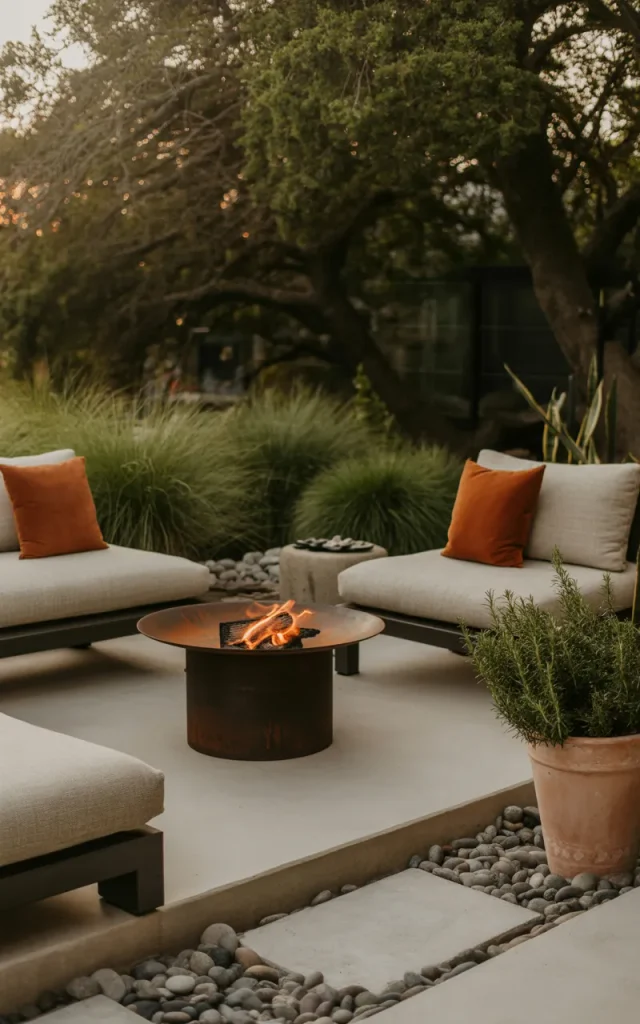
A fire pit can completely change how you use a concrete patio. Suddenly, the space isn’t only for daytime meals. It becomes somewhere to gather after sunset.
Place the fire pit in a central location with comfortable seating arranged around it. Keep the design simple if your patio is small.
Vibe Check
- 🔥 Cozy
- Relaxed
- Social
- Evening-friendly
Always follow the fire pit manufacturer’s safety requirements and local regulations, especially regarding placement and clearance.
If an open flame isn’t practical, a suitable outdoor heating feature can provide a similar focal point.
The important part is creating a reason for people to sit together.
Create a monochromatic gray patio scheme.
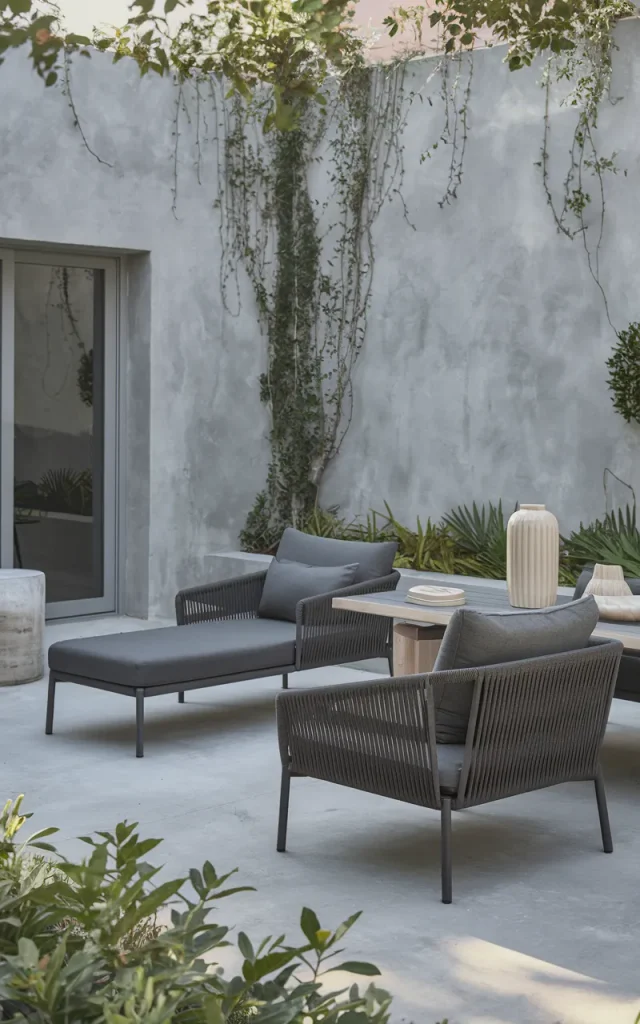
Instead of fighting the natural gray of concrete, embrace it.
Layer different shades of gray through furniture, cushions, planters, rugs, and accessories. Then introduce warm wood or greenery to keep the space from feeling sterile.
I love this approach for contemporary homes because it feels calm and sophisticated without being fussy.
Style Match Guide
| Concrete finish | Pair it with |
| Light gray | White, oak, sage |
| Medium gray | Charcoal, teak, cream |
| Dark gray | Natural wood, beige, greenery |
The secret is texture. Smooth concrete beside woven chairs, soft cushions, rough stone, and leafy plants creates enough variation to keep a monochromatic palette interesting.
Hang outdoor curtains around the seating area.
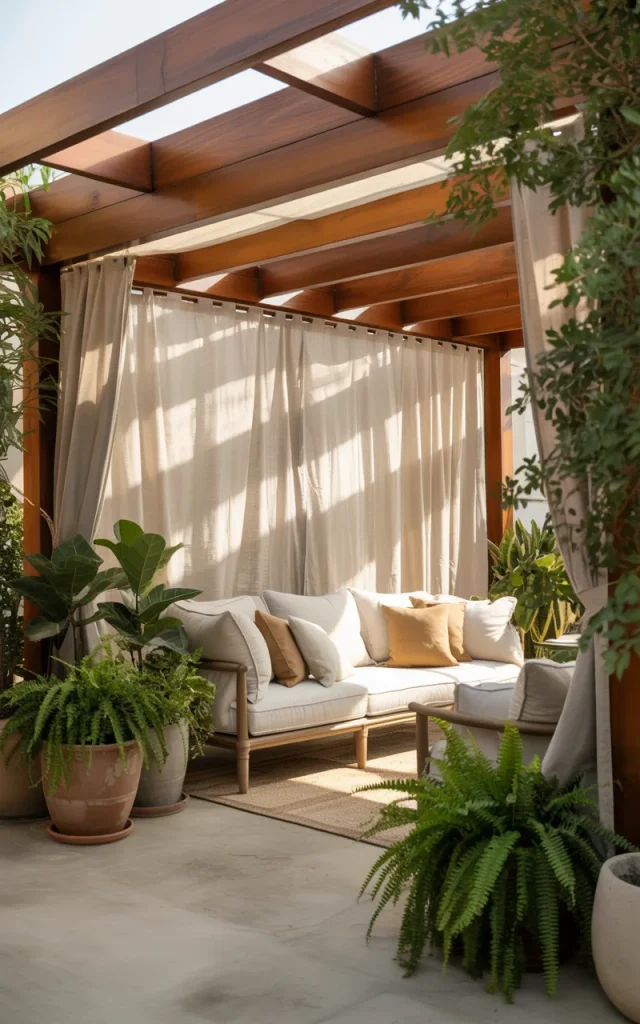
Outdoor curtains can make a concrete patio feel surprisingly luxurious. They add softness, movement, and a little privacy without permanently closing off the space.
Hang them from a pergola or covered structure and choose a weather-resistant fabric. White and cream create an airy resort-like feeling, while darker neutrals feel more dramatic.
Time required to implement: A simple curtain setup can often be installed in an afternoon once the supporting structure is ready.
I like leaving the curtains open during the day and pulling them partly closed in the evening.
There’s something wonderfully relaxing about fabric moving gently in the breeze. It makes the patio feel less like a hardscape and more like an outdoor room.
Build a small outdoor kitchen zone.
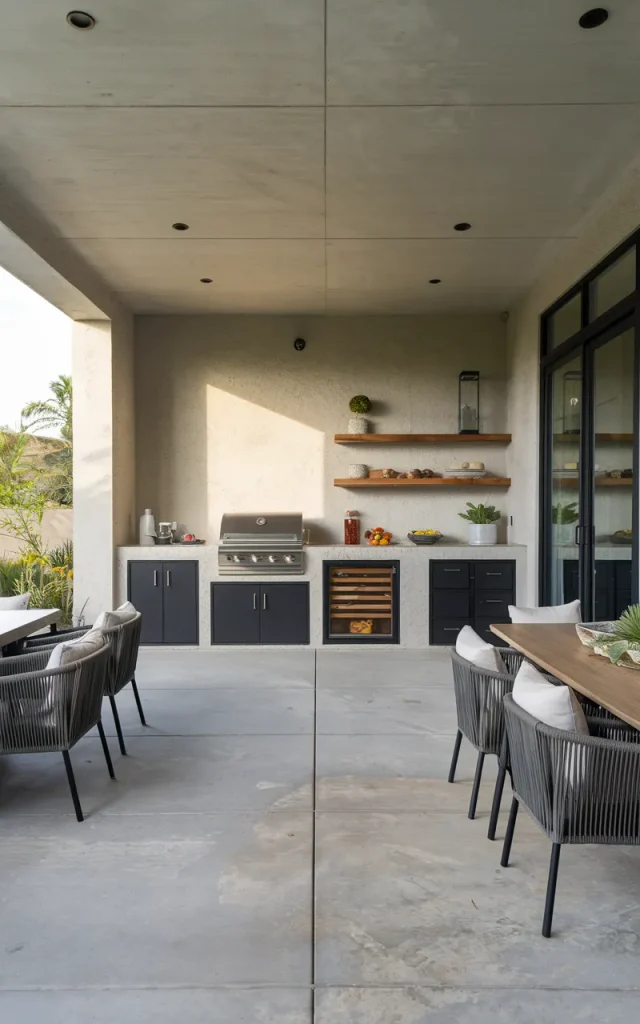
If your concrete patio is large enough, dedicate one side to food preparation.
You don’t need a huge outdoor kitchen. A compact grill, prep surface, storage cabinet, and serving area can be enough for everyday entertaining.
Tools you may need
- Measuring tape
- Level
- Drill
- Outdoor-rated hardware
- Protective equipment
Keep the cooking zone separate from the main seating area so smoke, heat, and activity don’t interfere with conversation.
I’d also keep the finishes simple. Stainless steel, natural wood, and dark neutral surfaces work particularly well against concrete.
The result feels practical but still polished.
Use a checkerboard rug for playful contrast.
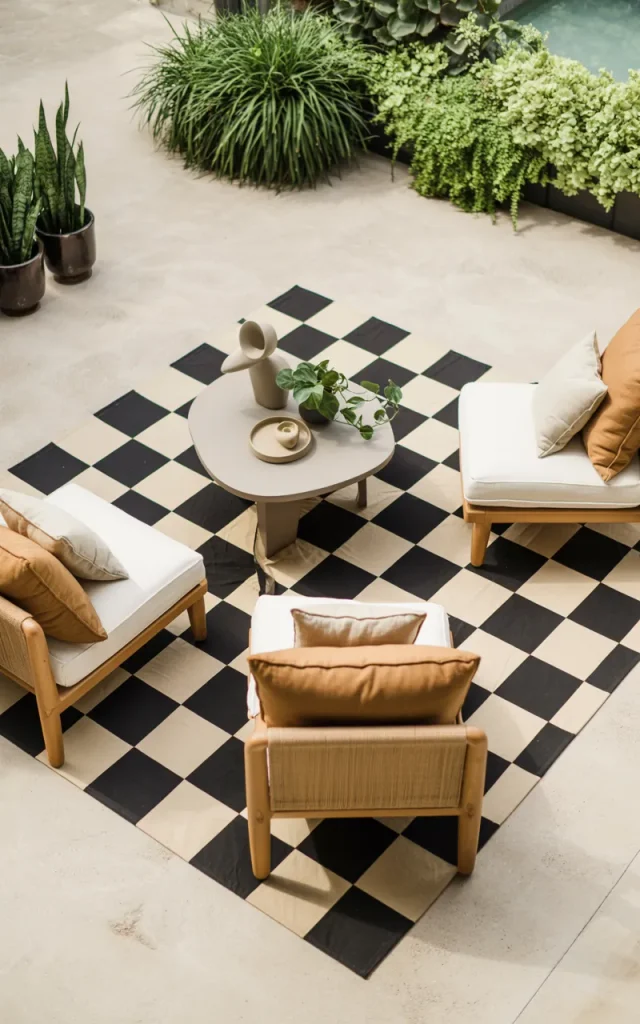
Want your concrete patio to feel less predictable? Introduce a bold checkerboard outdoor rug.
Black and cream is a classic, but you can also experiment with terracotta and ivory, olive and beige, or navy and white.
Trend Callout:

Graphic patterns are an easy way to give a simple patio more personality without permanently changing the hardscape. Keep the furniture relatively simple so the rug has room to shine. This is also a smart solution if you’re renting or working with an older patio you don’t want to renovate. The rug hides visual imperfections while adding a strong decorative layer.
And if you get tired of the pattern next season, simply replace it. Easy.
Add a water feature beside the patio.
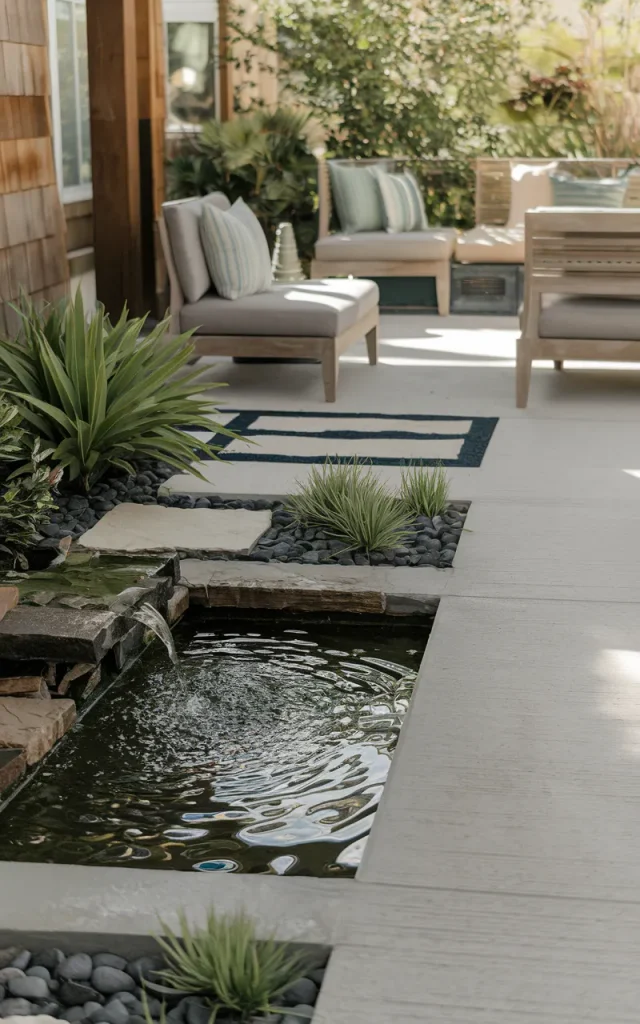
A small water feature can make a concrete patio feel calmer and more garden-like.
Try a wall-mounted fountain, compact bubbling feature, or small recirculating basin. Position it where you can hear the water while sitting down.
The psychology behind it:
Gentle, repetitive sounds can make an outdoor setting feel more relaxing and help create a stronger sense of separation from everyday surroundings. You don’t need a huge installation. In fact, a modest feature often works better on a smaller patio. Surround it with plants and natural stone for a softer transition between the hard concrete and the garden.
Arrange built-in planters along the perimeter.
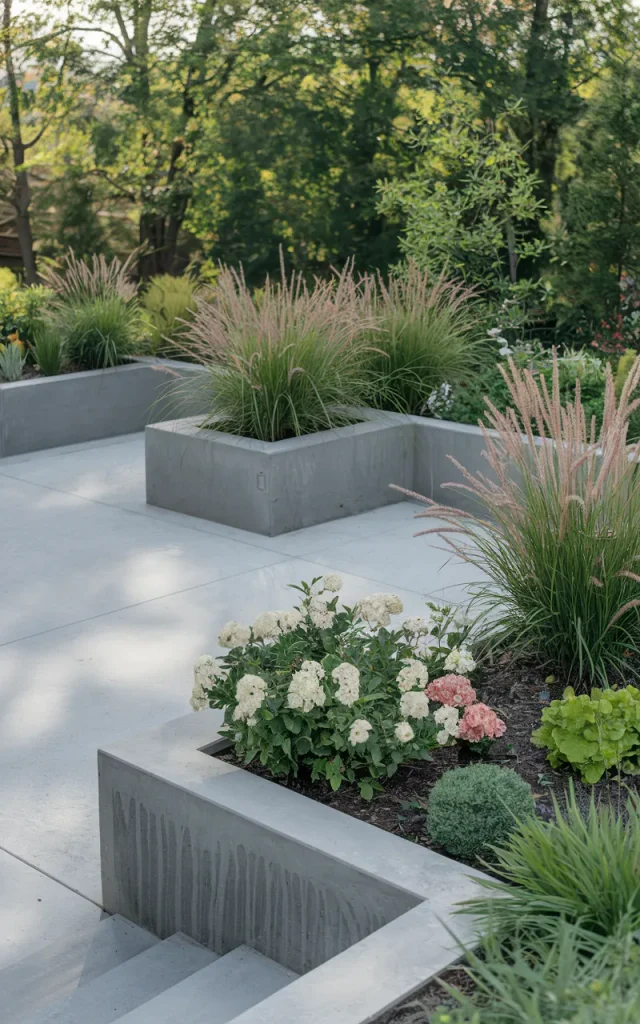
Built-in planters can give a concrete patio a custom-designed appearance while creating a clear boundary around the space.
You could build them from concrete, brick, rendered masonry, or another material that complements your home. Fill them with a combination of shrubs, grasses, flowers, and small trees where appropriate.
Do’s & Don’ts
- Do: Repeat plants for cohesion.
- Do: Consider mature plant size.
- Do: Leave enough room for maintenance.
- Don’t: Block essential pathways.
- Don’t: Choose plants without considering the local climate.
Unlike movable containers, these planters become part of the architecture. That’s exactly why I recommend keeping their shapes simple.
Let the plants provide the personality.
Install a shade sail for flexible coverage.
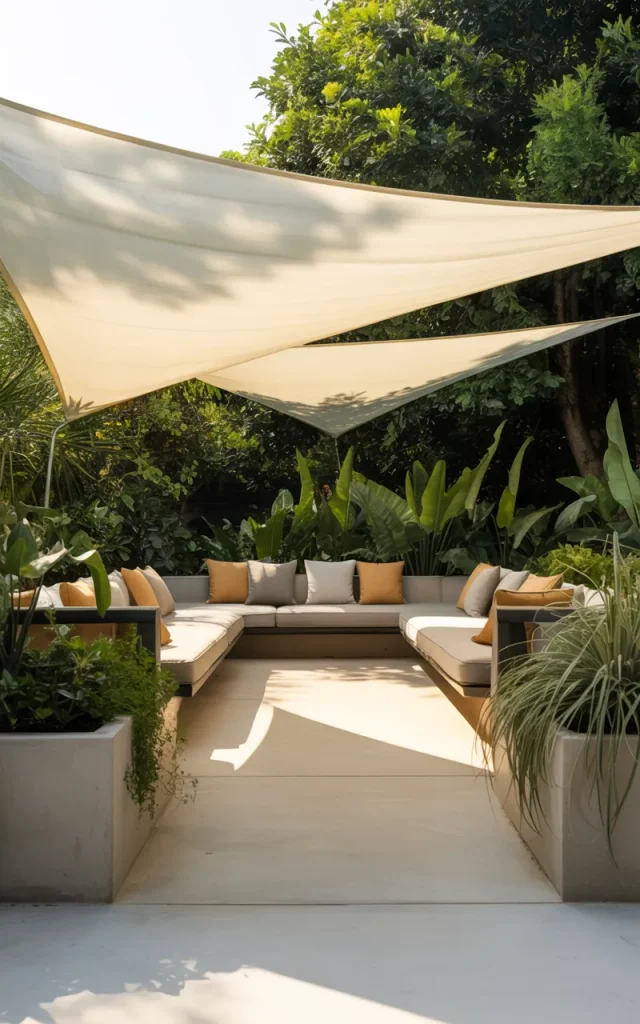
For a modern patio that needs shade without the visual weight of a full pergola, consider a shade sail.
Triangular and rectangular sails can create interesting geometric shapes overhead while keeping the space relatively open.
I love this solution when you want something practical but visually lightweight. The clean lines work beautifully with concrete.
Upgrade for under $300:
Depending on your patio size and local pricing, you may be able to create a basic shade setup with a modestly priced sail, suitable anchors, and supporting hardware. Choose a neutral fabric if you want the patio to feel timeless. If your furniture is simple, a muted color can also become a decorative focal point. Just make sure the structure is properly anchored and suitable for local weather conditions.
Create a cozy corner with a hanging chair.
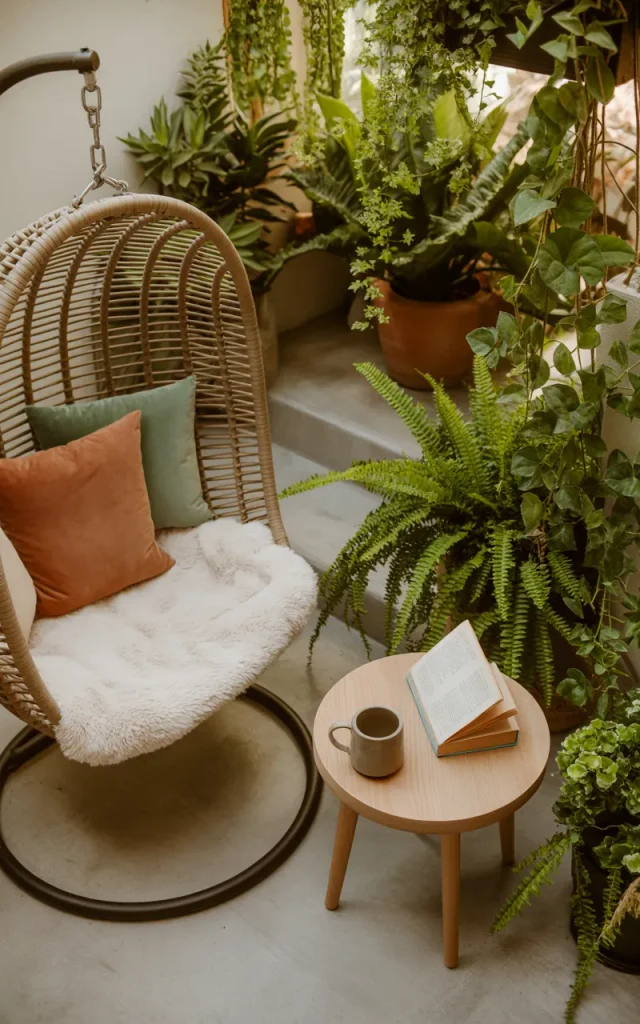
Every patio deserves at least one spot where you can disappear for twenty minutes with a book.
A hanging chair can provide exactly that.
Install one from a suitable structural support or use a freestanding frame designed for outdoor use. Then add a comfortable cushion and perhaps a small side table for drinks.
Who this is for:

Anyone who wants a patio that feels relaxing rather than purely functional. Unlike a traditional lounge chair, a hanging chair adds movement and a playful silhouette. It also creates a distinct little destination within a larger patio. Place it near greenery if possible. A few plants around the chair can make the corner feel wonderfully secluded. Just check the manufacturer's weight and installation requirements before hanging it.
Add a bold outdoor dining pendant.
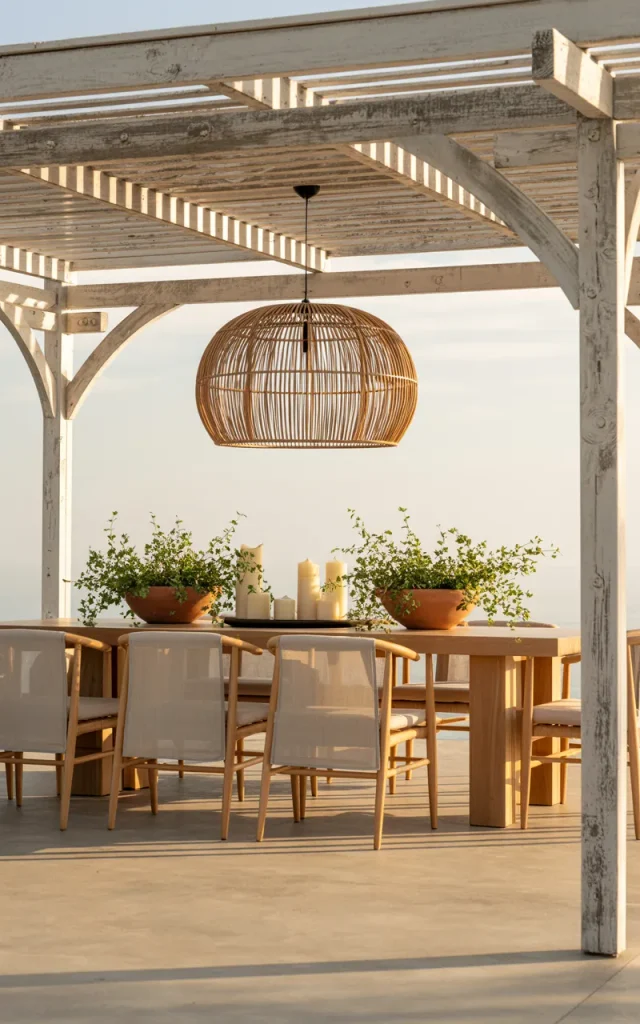
If your patio has a pergola or covered structure, take advantage of the ceiling and hang a statement light above the dining table.
A large woven pendant can create a relaxed coastal feeling. A simple black fixture feels modern. A lantern-style light works beautifully in traditional spaces.
Trend Alert:

Oversized lighting is a great way to make outdoor dining areas feel more intentional. Choose fixtures rated for the location and suitable for outdoor use. Lighting should look beautiful, but safety comes first. Then keep the tabletop relatively simple. A few branches in a vase, candles, or a small centerpiece are enough. The light should remain the star.
Incorporate a raised garden bed beside the patio.
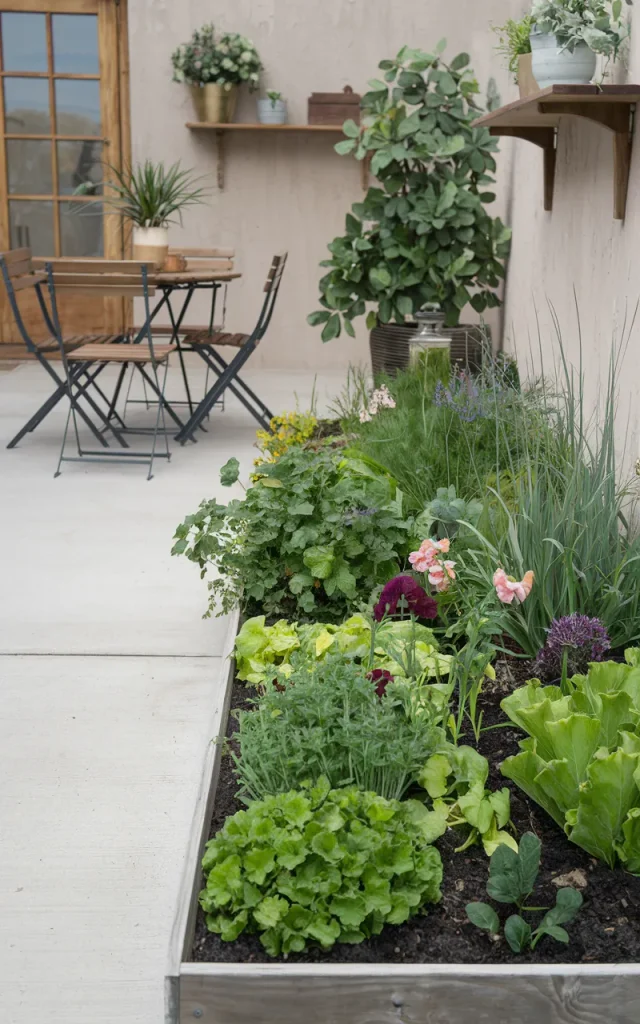
If you love gardening, let the patio and garden work together.
A raised garden bed positioned along one edge of the concrete can soften the transition while giving you space to grow herbs, vegetables, flowers, or ornamental plants.
Works best in: Patios beside kitchens, sunny backyard seating areas, family gardens, and homes where outdoor cooking is frequent.
I particularly love growing herbs near an outdoor dining area. Basil, rosemary, mint, thyme, and other useful plants can make the garden both pretty and practical.
Keep the raised bed’s proportions neat. A clearly defined rectangle usually looks more intentional beside a geometric concrete slab than a randomly shaped planting area.
Create a complete outdoor room with layered zones.
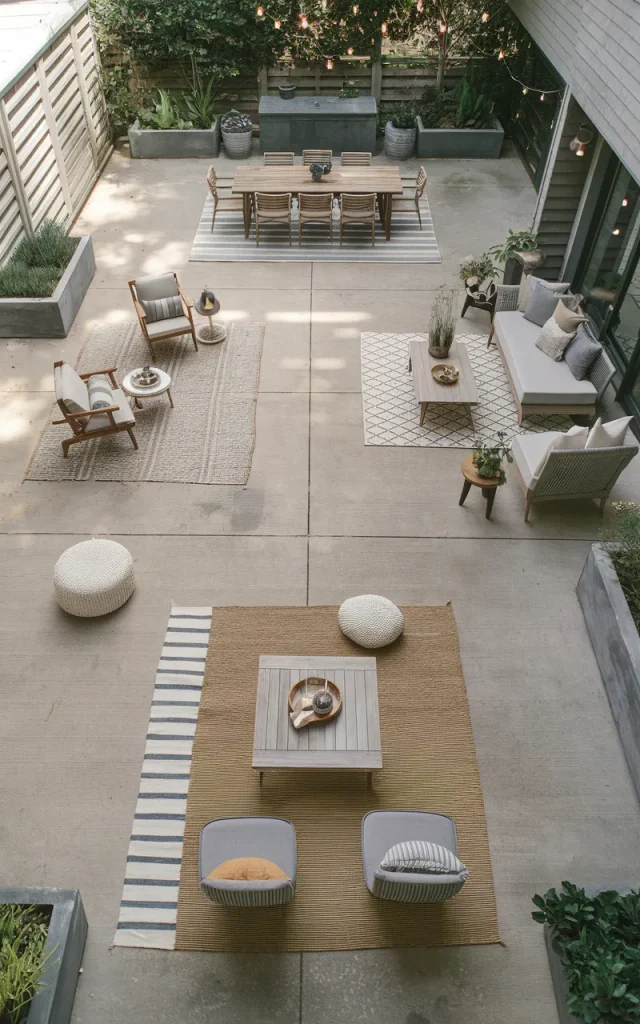
If you really want to make the most of your concrete patio, stop thinking of it as one large space.
Instead, divide it into zones.
Create a dining area on one side, a lounge area on another, and perhaps a small reading or planting corner at the edge. Use rugs, furniture orientation, lighting, and planters to visually separate each function without building walls.
What most people get wrong: They place every piece of furniture around the perimeter and leave a huge empty space in the middle. That can make even a large patio feel strangely disconnected.
Bring your furniture inward enough to encourage conversation, while maintaining comfortable walking paths.
Then layer in greenery, lighting, textiles, and accessories from the earlier ideas. 🌿 ✨
That’s when a concrete patio stops feeling like a slab and starts feeling like an outdoor living room.
Final Thoughts
The beauty of concrete is that you don’t have to start over to create something beautiful. Sometimes all it takes is an outdoor rug, a few plants, better lighting, or a well-placed piece of furniture to completely change the way the space feels.
Start with the idea that solves your biggest problem first. Maybe that’s shade. Maybe it’s privacy. Or perhaps your patio simply needs a little warmth and personality.
Whatever you choose, don’t try to do everything at once. Pick one idea, give it a little time, and let your concrete patio evolve into a space you genuinely enjoy using. 🏡
