There’s a moment every evening when the front door swings open and the whole household seems to explode across the entryway. Backpacks slide off shoulders. Keys disappear. Somebody’s scarf ends up on the dog. Sound familiar? 😅
Here’s the good news. That chaos usually isn’t a people problem. It’s a storage problem. When every coat, key, leash and lunch bag has an obvious place to land, the mess mostly takes care of itself.
So I’ve pulled together 26 entryway storage ideas that actually work in real family homes, from big built-ins to clever little fixes you can finish on a Saturday morning. Grab a coffee, look at the space by your door, and start picking favorites.
Build Floor-to-Ceiling Lockers Beside the Door
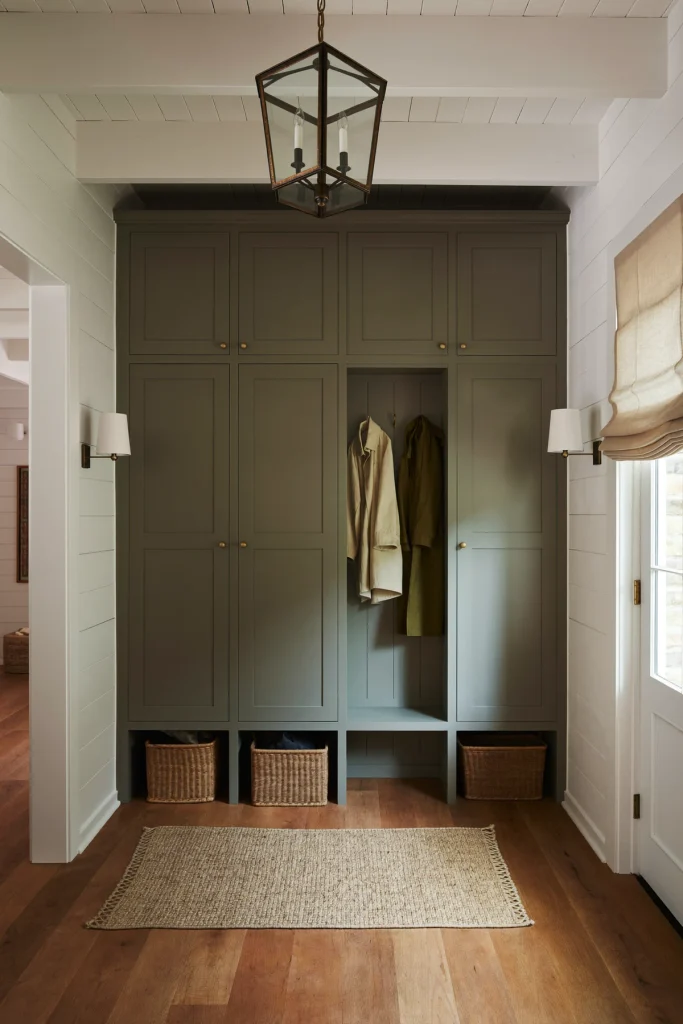
If your entryway has one blank wall, lockers might be the hardest-working thing you ever put there. Think tall, painted cabinets with an open hook section in the middle and closed storage above for the stuff you only grab once a season.
I love giving each person their own column. Coats go on a hook, bags go in a woven basket at the bottom, and hats live in the cabinet up top. Nobody has to ask where anything goes.
A soft sage or warm oat paint keeps a big built-in from feeling heavy. Add brass knobs and it looks like it was always meant to be there. 🌿
Hide Everything Behind Flat-Front Cabinets
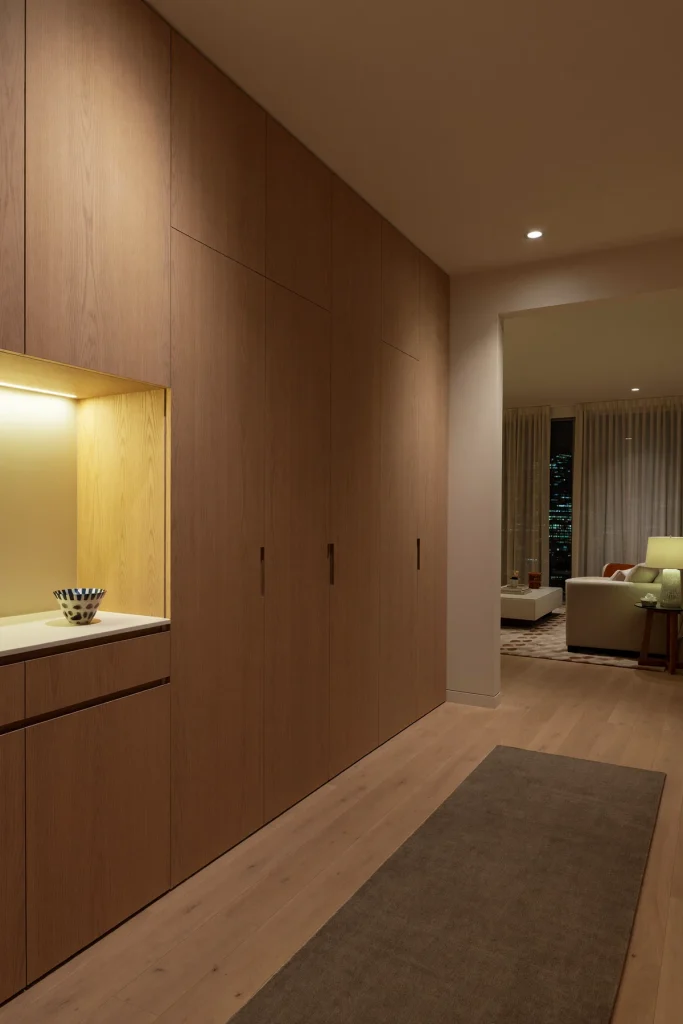
If visual calm matters most to you, go for a full wall of flat-front, handleless cabinets. Push-to-open doors in pale oak or soft white make the storage practically disappear.
Inside, you can hide everything: coats, the vacuum, reusable bags, sports gear, even the recycling. Outside, it’s just a quiet, smooth wall.
This works beautifully in apartments where the front door opens right into the living space. Leave one small open niche at waist height with a lamp and a ceramic bowl for keys, so the wall still feels warm and lived in.
Tuck Pull-Out Drawers Under the Stairs
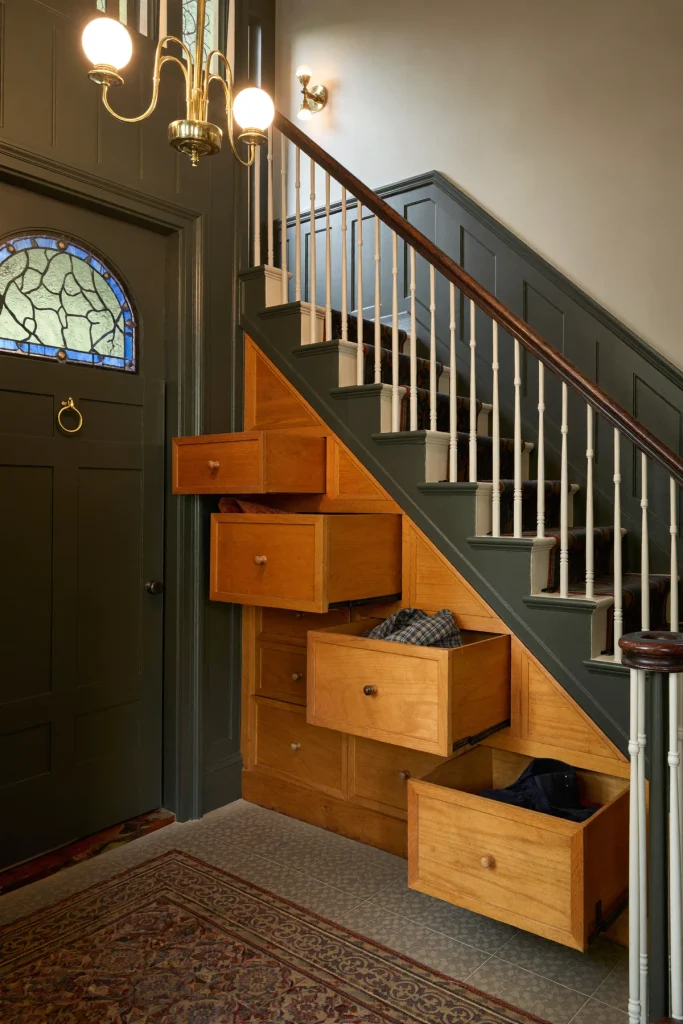
That awkward triangle under your staircase is begging to be useful. Deep pull-out drawers, cut to follow the slope of the stairs, can swallow an unbelievable amount of stuff.
Give each drawer one clear job, and stick to it. Within a week, everyone in the house will know exactly which drawer hides the dog’s things.
Use the tall drawers for coats on a little rail and the short ones for boots, umbrellas and the dog’s ball collection. Wooden knobs or recessed finger pulls keep it looking like furniture instead of a closet.
Time Needed
A carpenter can usually build these in two to four days. A confident DIYer working with ready-made drawer boxes should plan on a couple of weekends.
Stack Woven Baskets in an Open Cube Shelf
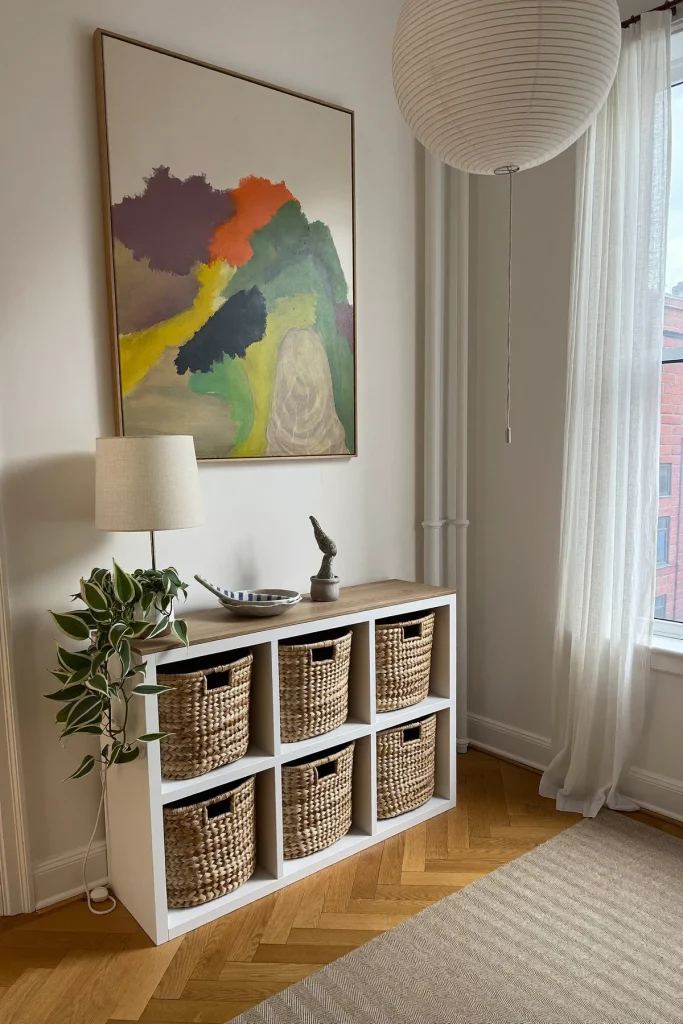
Cube shelves are cheap, easy to find and secretly brilliant in an entryway. Fill the cubes with matching woven baskets and you’ve got a dozen little drawers that look calm and natural.
If you can, pick a unit with legs or a plinth so it doesn’t look like a dorm room shelf.
Give each family member a basket or two for gloves, hats and sunglasses. The bottom row can hold a spare tote or the dog’s toys.
Top it with a lamp, a small plant and a catchall dish, and it doubles as a console. Easy, affordable, and everybody can reach it. 🧺
Mount a Wall Key and Mail Station
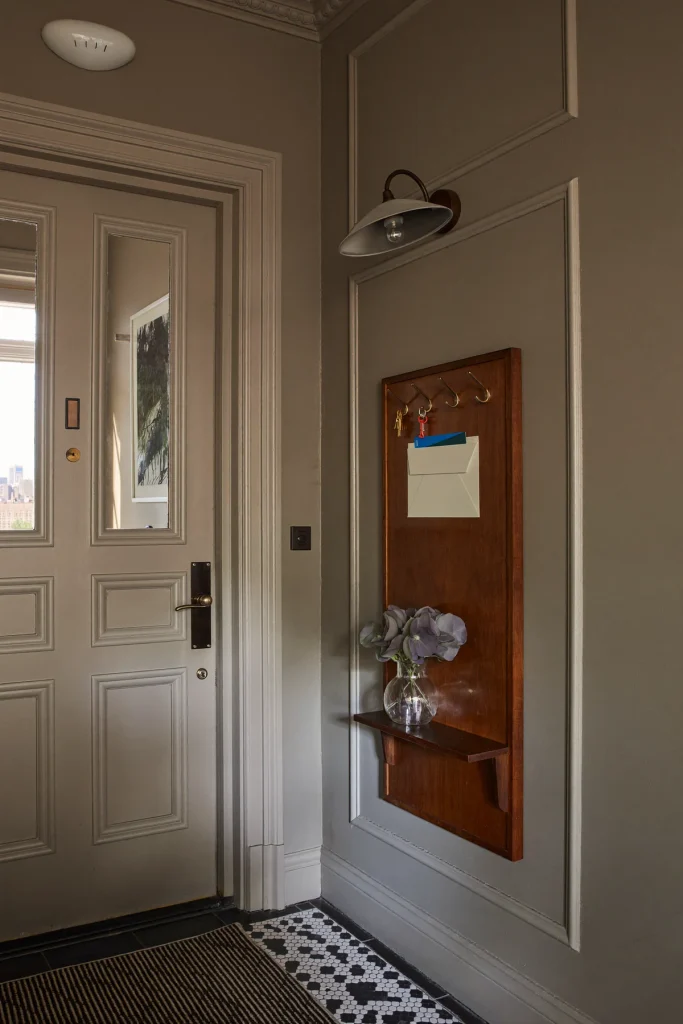
Lost keys and buried bills are the two most stressful things that happen near a front door. A small wall-mounted station fixes both.
Choose one that matches your door hardware, like warm brass or matte black, so it looks like part of the house rather than an afterthought.
Look for one with a little shelf, a slot or pocket for mail, and a row of tiny hooks underneath for keys. Hang it at eye level right next to the door so it’s the first thing your hand reaches for.
Quick Hack

Put a small tray on the shelf just for outgoing items: library books, returns, the permission slip. If it's in the tray, it leaves the house tomorrow.
Choose a Console Table With Deep Drawers
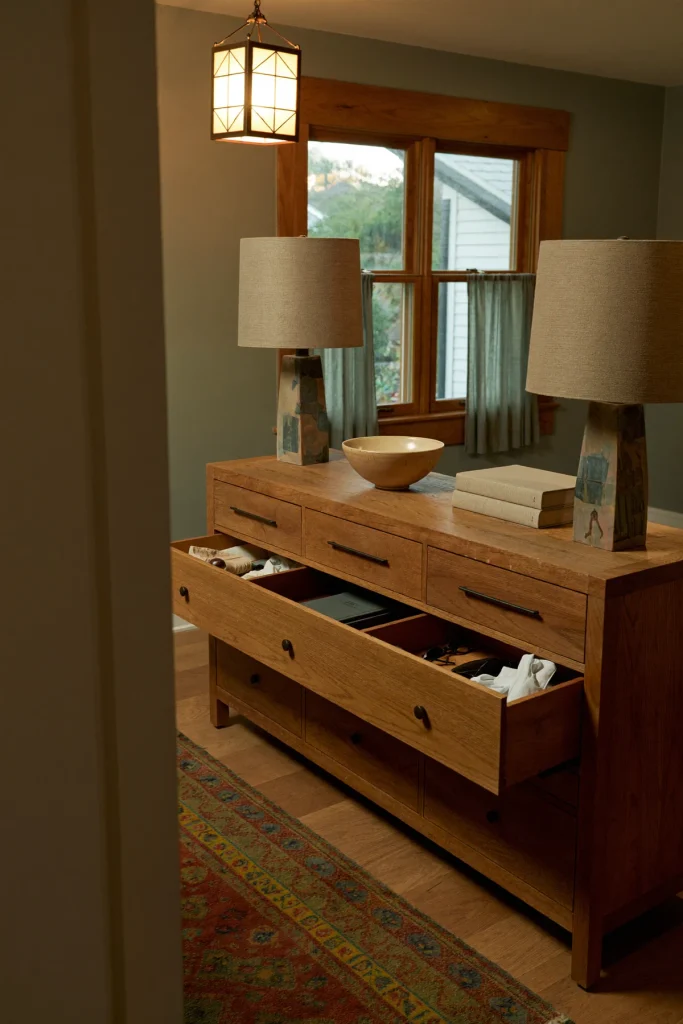
A pretty console is lovely. A pretty console with deep drawers is a lifesaver. Skip the skinny tables with one shallow drawer and look for a chest-style console with two or three generous ones.
The top drawer catches chargers, sunglasses and dog bags. The lower ones hold gloves and spare masks or whatever else you’re tired of seeing on the counter.
Keep the top light: a lamp, a bowl and maybe a stack of plain linen-bound books. That way it stays a place to drop things, not a place to pile things.
Add a Floating Shelf With Hooks Underneath
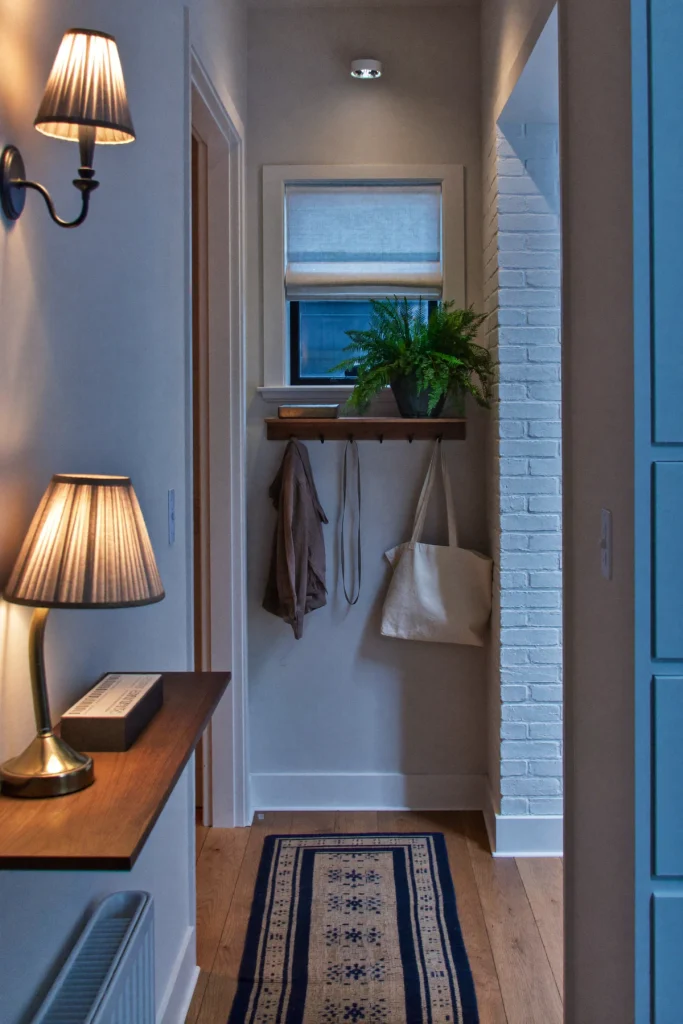
This is the small-space hero. One floating shelf with a row of hooks underneath gives you a landing spot on top and hanging storage below, all in about a foot of wall depth.
Choose a shelf at least 8 inches deep so a lamp actually fits, and mount the hooks about 6 inches below it so coats don’t bump the things on top.
Put a small lamp, a little tray and a plant on the shelf, then hang a jacket, a plain tote and the dog leash beneath it.
Renter-Friendly Version
Can’t drill into the walls? Look for a freestanding coat stand with a built-in shelf, or use heavy-duty adhesive hooks under a lightweight shelf that leans against the wall on a slim ledge. Zero holes, same look. 🏠
Build a Bench With Lift-Up Storage
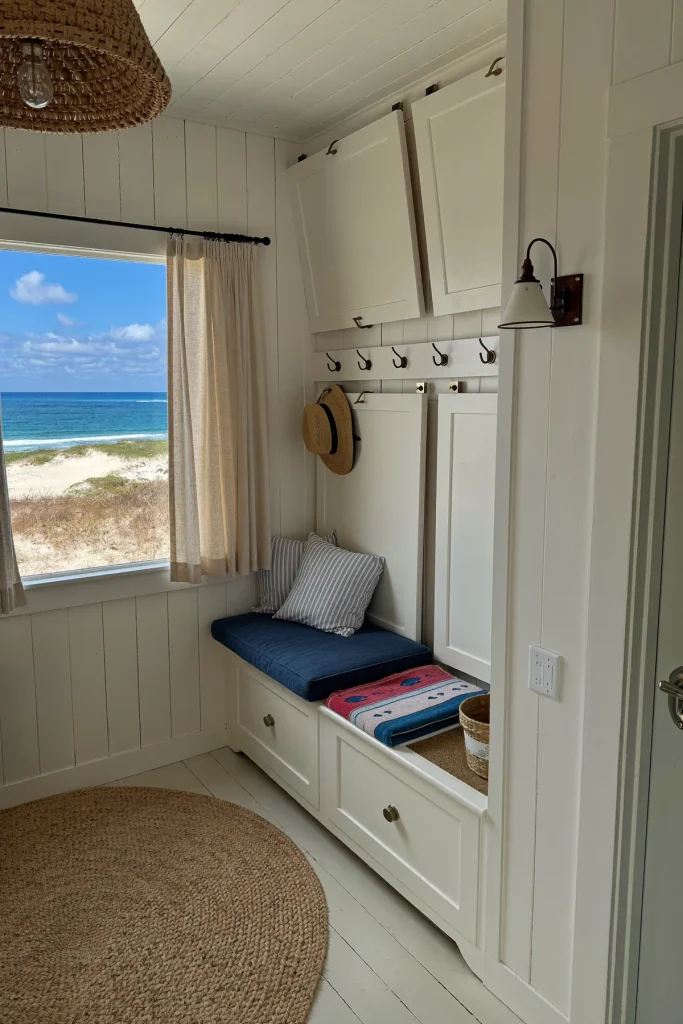
Yes, there’s a whole post on entryway benches, but a storage bench earns a spot here too. A built-in bench with hinged lids hides beach towels, sand toys, spare flip-flops and sunscreen right where you need them.
A soft basket on the floor nearby catches the overflow.
Add a soft cushion and a couple of pillows so it feels like a seat and not a trunk. Soft-close hinges protect little fingers.
This is especially handy in vacation homes and beach houses where gear comes and goes all day long. Ours would definitely smell like sunscreen. ☀️
Give Every Kid Their Own Cubby
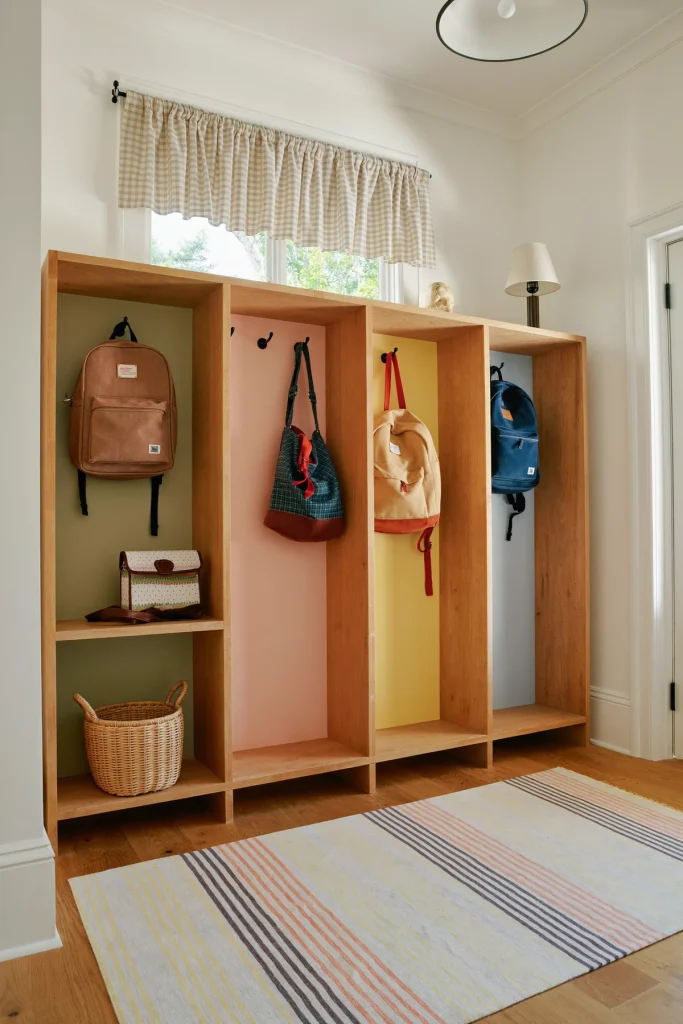
Kids are much more likely to put things away when the spot is clearly theirs. A row of open cubbies, one per child, makes that easy to see.
Each cubby gets a hook for a backpack, a shelf for a lunch bag and a basket at the bottom for hats and mittens. You can paint the back panel of each one a different soft color so even the littlest ones know which is theirs without reading anything.
Keep the hooks low. If they can’t reach it, they won’t use it, and the backpack ends up on the floor anyway.
Kid- and Pet-Proof It
- Choose wipeable satin or semi-gloss paint inside the cubbies.
- Round the shelf edges so nobody bumps a head.
- Anchor the whole unit to the wall, always.
- Pick baskets with handles small hands can grip.
Create a Dog Gear Station
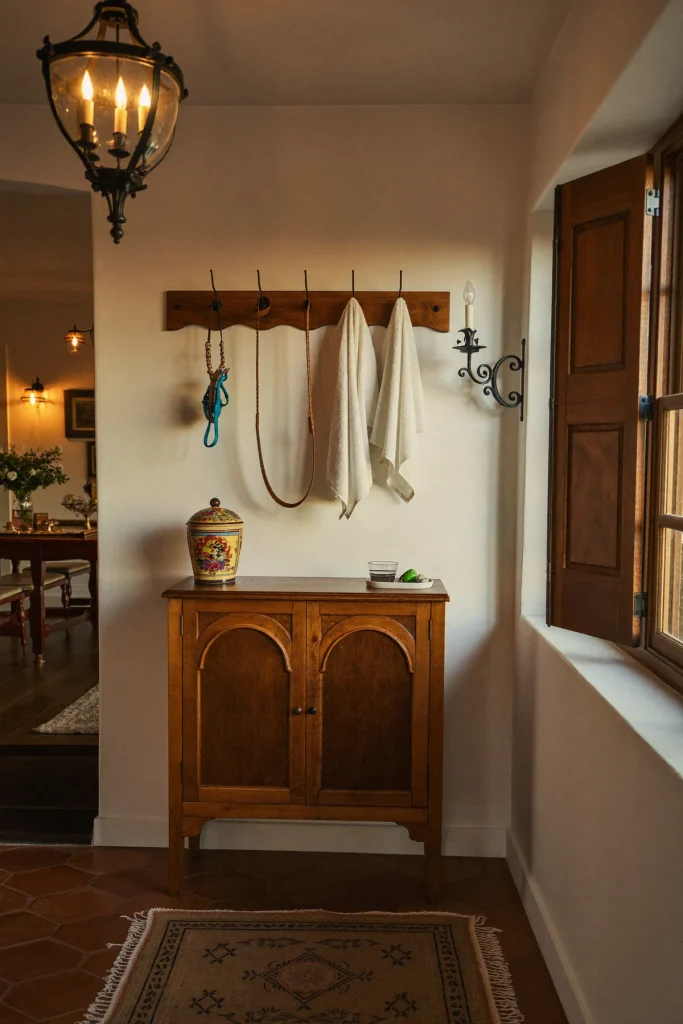
If you have a dog, you know the leash, harness, poop bags, treats and towel all need to be by the door. Not in a kitchen drawer. Not on the stairs. Right by the door. 🐾
A small wall cabinet or shelf with a few sturdy hooks underneath handles all of it. Hang the leash and harness on hooks, keep treats in a lidded ceramic jar, and stash a microfiber towel in a basket for muddy paws.
A washable runner or a low-pile rug under the station catches the inevitable dirt.
Want to level it up? Set the water bowl on a little tray below so splashes stay contained. Your future self, stepping in a puddle in socks, will thank you.
Set Up an Umbrella and Wet-Gear Corner
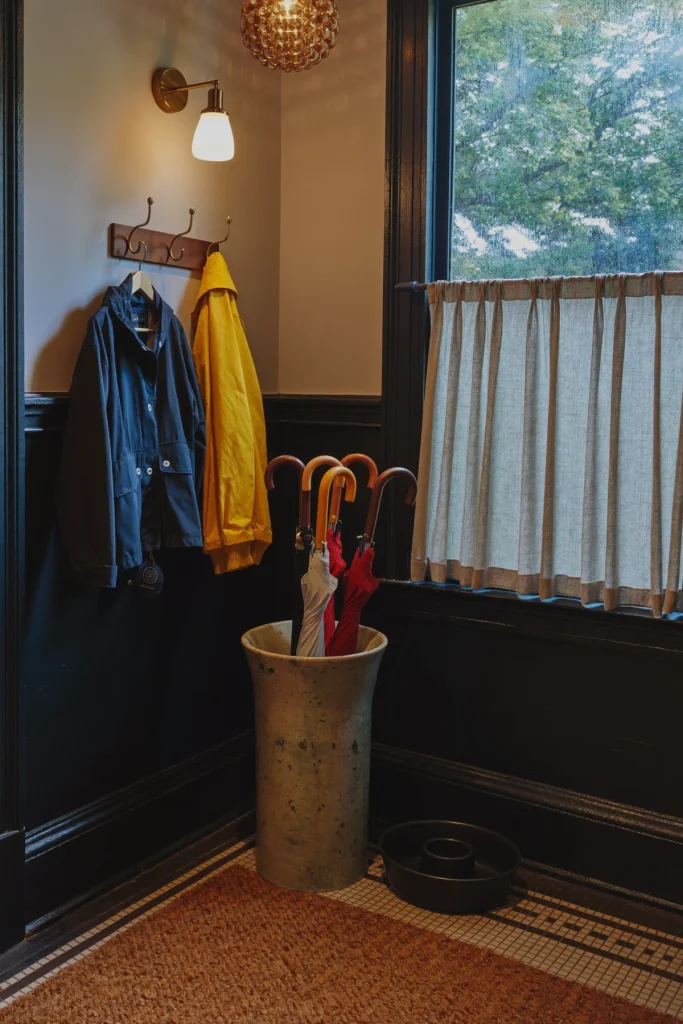
Rainy days create a special kind of entryway mess. Dripping umbrellas, soggy raincoats and wet boots all need somewhere to go that isn’t your hardwood floor.
Carve out one corner just for wet gear. A tall ceramic or metal umbrella stand, a couple of hooks for raincoats above it, and a boot tray or washable mat underneath turns a puddle problem into a simple routine.
A heavy cotton doormat at the threshold helps too, catching most of the water before it travels.
Over time, you’ll notice the rest of the entryway stays drier and cleaner, because the wet mess has one spot to go. Nobody has to think about it anymore.
Checklist
- A stand that’s heavy enough not to tip
- Two to three hooks at different heights
- A tray or mat with a lip to hold water
- A small towel within reach
Bring In a Vintage Hall Tree
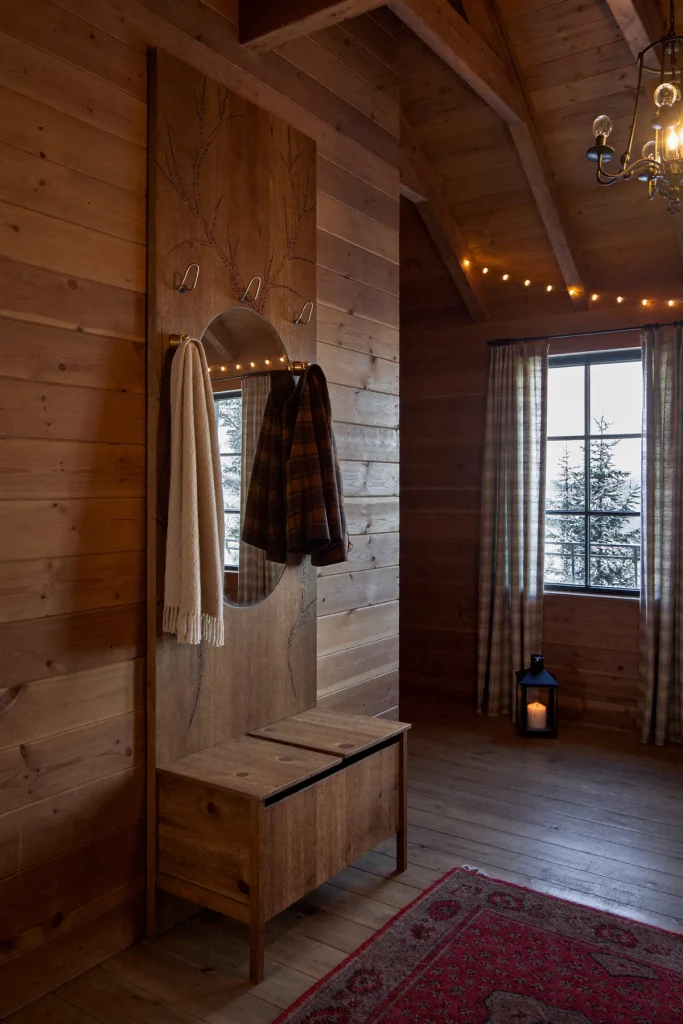
A hall tree is basically an entire entryway in one piece of furniture: hooks up top, a mirror in the middle, a small seat, and storage underneath. Old ones from flea markets and estate sales are often solid wood and surprisingly affordable.
If the finish is worn, that’s part of the charm. A gentle clean and some furniture wax often bring old wood back to life. Keep a small basket under the seat for gloves so the bench part stays usable, not buried.
The trick is to treat it like the star. Give it a little breathing room, light it with a nearby sconce, and keep the hooks from getting overloaded.
Common Mistakes to Avoid
- Hanging every coat the family owns on it. Rotate seasonally.
- Forgetting to anchor it. Tall pieces can tip.
- Choosing one too deep for a narrow hall. Measure walkway space first.
Hang Wall-Mounted Wire Baskets
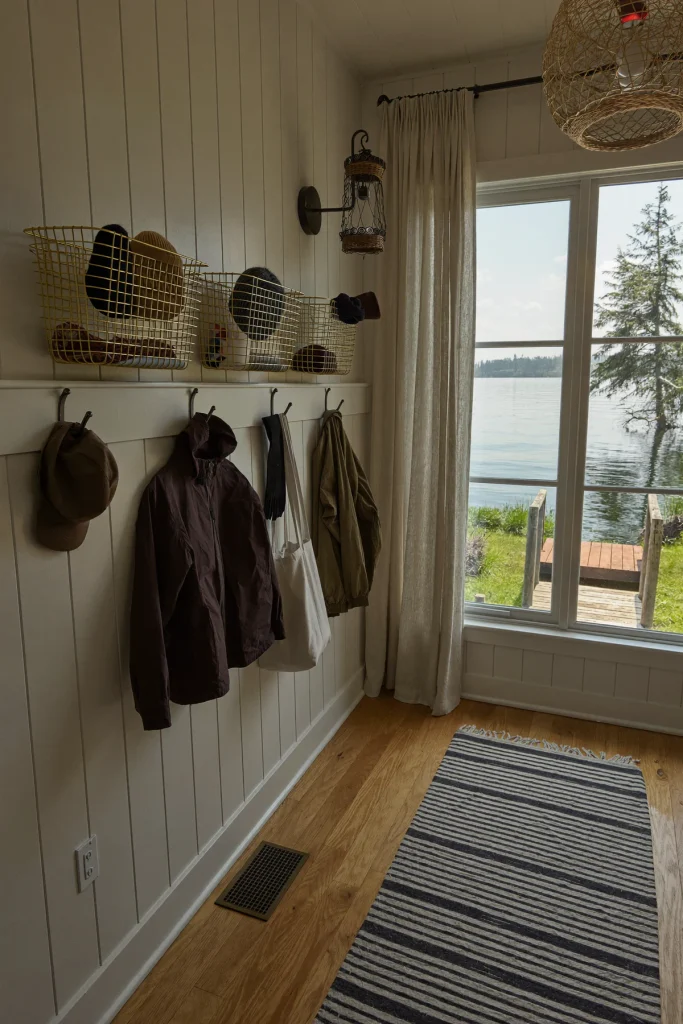
Wire baskets mounted right on the wall are such a fresh, airy way to store hats, gloves and beanies. You can see what’s inside at a glance, and they don’t take up any floor space at all.
Hang three or four in a neat row, at a height everyone can reach, and give each a job: one for winter gear, one for sun hats, one for dog stuff, one for the random things that need to go back to the car.
Brass or black wire both look great. A row of hooks underneath turns the whole wall into a mini mudroom.
Hide Storage Behind a Mirrored Cabinet
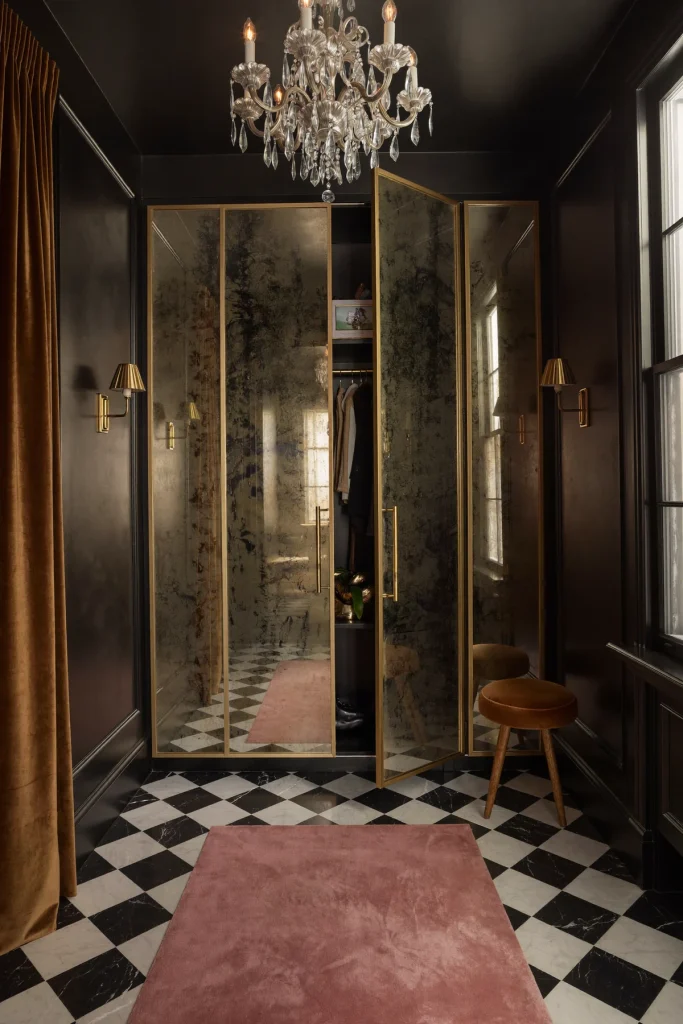
A big mirror is classic entryway decor. A big mirror that’s secretly a cabinet door? That’s sneaky in the very best way. 🪞
Mirrored cabinets bounce light around, make a small entryway feel larger, and hide everything from umbrellas to the vacuum behind the glass. Go glam with a beveled or antiqued mirror and polished brass trim, or keep it simple with a plain frameless one.
Lighting matters here. A pair of sconces on either side makes the mirror glow and keeps you from seeing your own shadow every time you check your lipstick on the way out.
Swap a Closet Door for a Linen Curtain
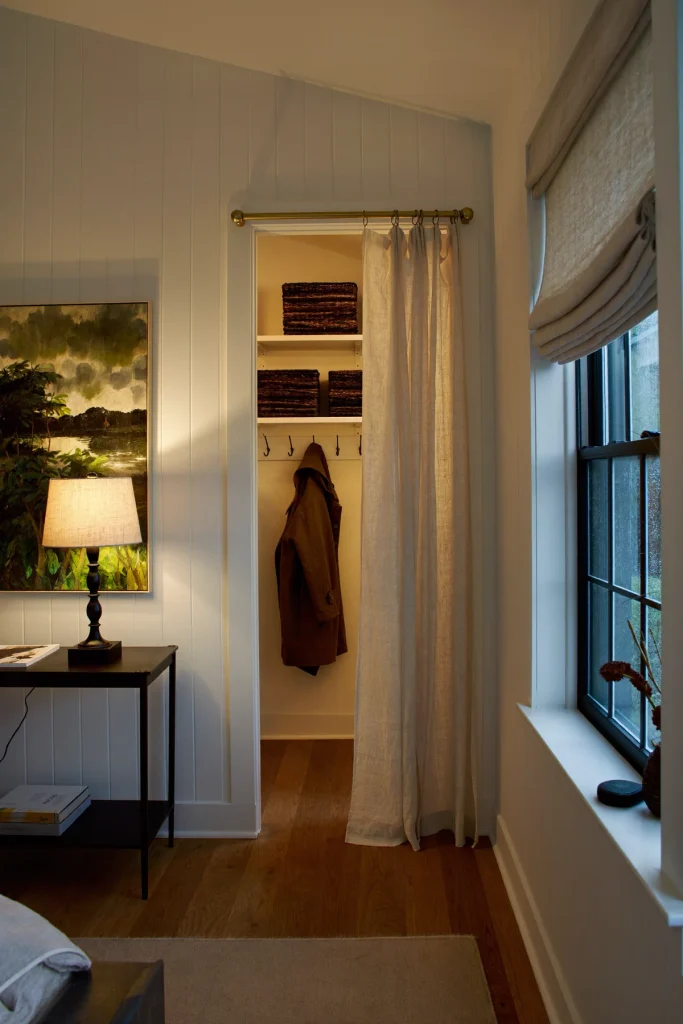
Sometimes the closet door is the problem. It swings into the walkway, it bangs into the wall, and you’re always leaving it half open anyway.
Replace it with a soft linen curtain on a simple rod. It instantly makes the space feel gentler and more relaxed, and you can slide it open with one hand while juggling groceries.
Choose a heavier linen in a warm oat or soft white so it hangs nicely and doesn’t look flimsy.
Inside, add hooks, a shelf of baskets and a small rail for the coats you actually wear this month. The curtain hides the rest.
Budget Alternatives
- Ready-made linen-look panels: around $20 to $50
- A tension rod instead of a mounted one
- A painted drop cloth with clip rings for a relaxed, farmhouse feel
Store Bikes and Helmets on the Wall
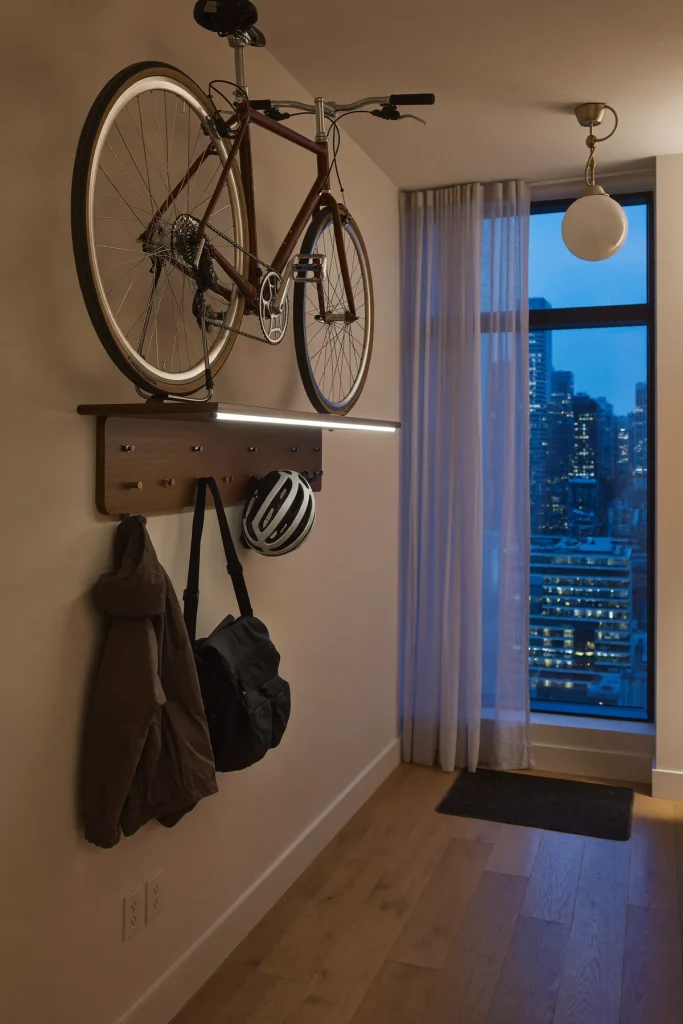
If your family rides, you already know how bikes take over a hallway. Getting them up on the wall frees an amazing amount of floor space, especially in apartments without a garage.
A wall-mounted bike hook or a wooden bike shelf holds the bike horizontally, almost like art. Below it, a row of hooks catches helmets, a plain backpack and a rain jacket. A small rug or runner underneath catches the drips and grit.
Mount it on a stud and use the hardware recommended for your bike’s weight. And if you’re in a building with thin walls, a freestanding leaning bike rack is a great no-drill option.
It turns a bulky, annoying thing into something that actually looks intentional.
Build an Art Deco Console With Fluted Doors
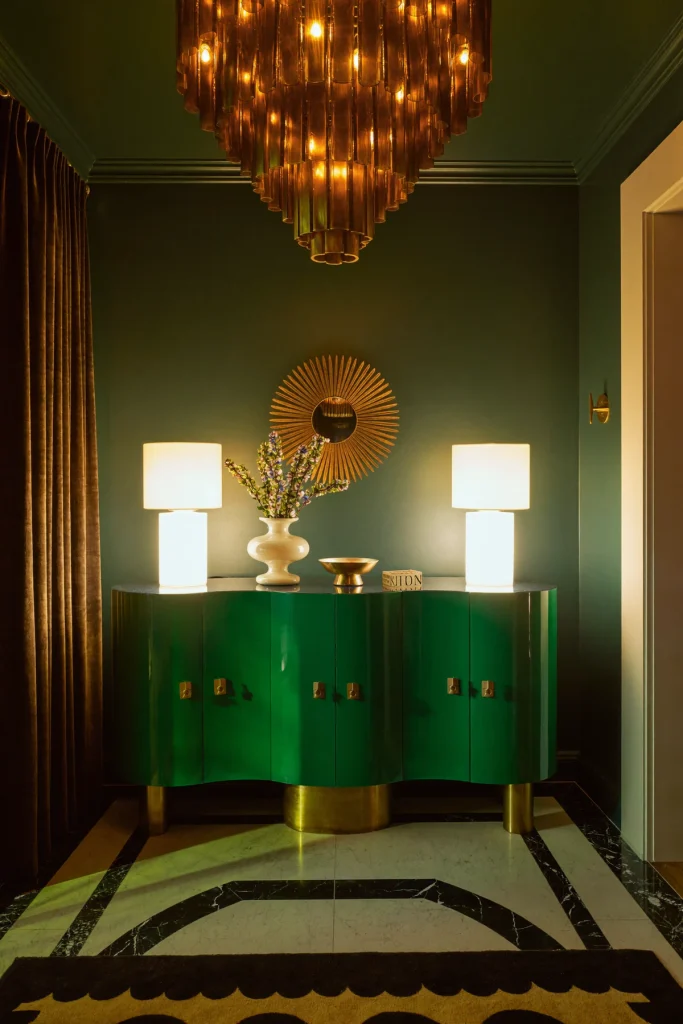
Storage doesn’t have to be quiet. A curved console with fluted doors, brass pulls and a stone top brings real drama to an entryway while hiding a surprising amount inside.
If a custom piece isn’t in the budget, look for a ready-made curved sideboard and simply swap the hardware for chunky brass pulls. The fluted texture adds so much depth and catches the lamplight beautifully in the evening.
Behind the doors: dog bags, gloves, spare chargers, extra lightbulbs. On top: a pair of glowing lamps, a sculptural vase and a bowl for keys. It’s glamorous and practical at once. 💛
A bold rug underneath and a statement mirror above complete the look.
Style Match Guide
| If your home is… | Try a console in… |
|---|---|
| Classic or traditional | Dark walnut with fluting |
| Modern | Lacquer in a deep color |
| Coastal-inspired | Whitewashed oak with rattan fronts |
| Glam | Mirrored or brass-trimmed |
Tuck Storage Poufs Under the Console
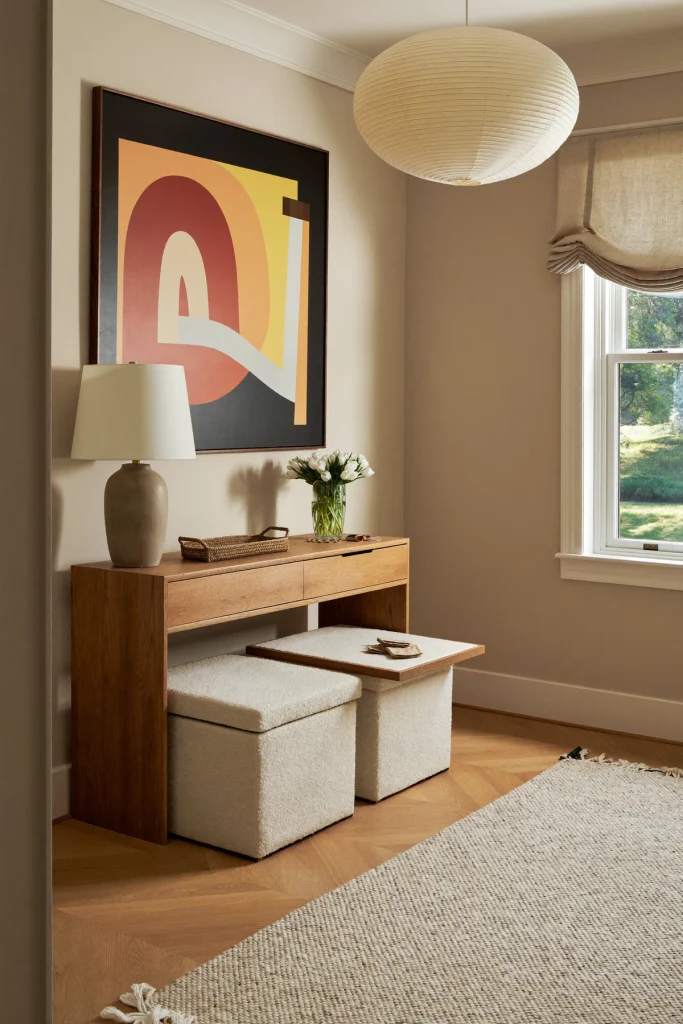
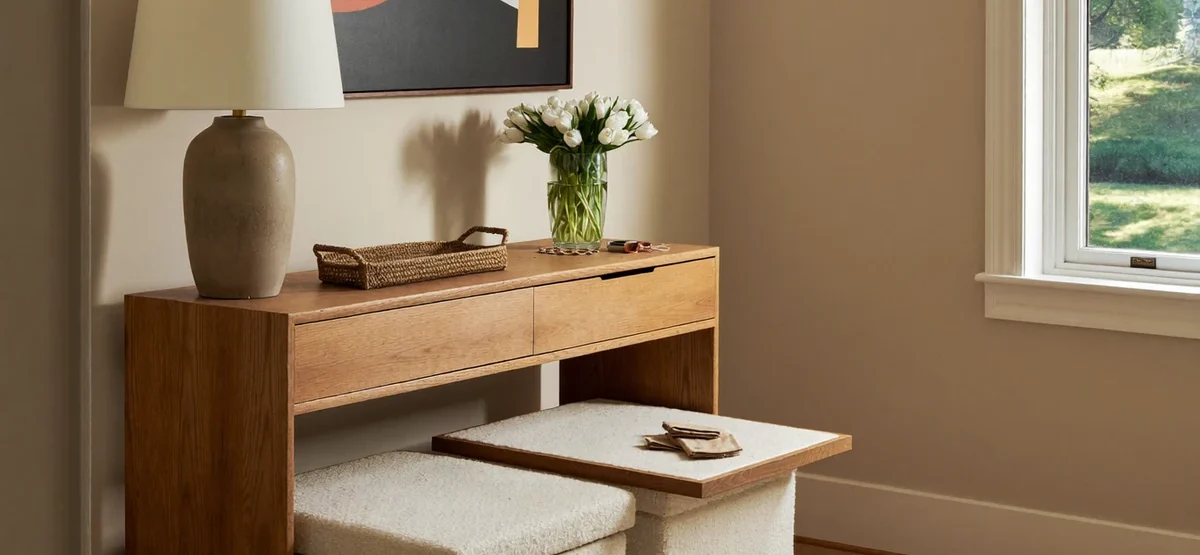
That empty space under your entryway table is wasted real estate. Slide two lidded storage poufs or cubes underneath and you suddenly have hidden storage plus extra seating when someone needs to sit down to deal with a zipper.
Fabric or leather poufs with lids work perfectly. Store gloves, spare scarves and sunglasses inside. They feel soft and cozy, not utilitarian, which is exactly what you want in a space guests see first.
Choose poufs that are an inch or two shorter than the clearance under your console so they slide out easily. Keep the colors close to your rug for a calm, pulled-together look.
Pair it with poufs below and you’ve basically doubled your storage without adding a single new piece of furniture to the walkway. Smart, right? It’s the kind of quiet fix you’ll be glad you made every single morning.
Store Seasonal Bins Up High
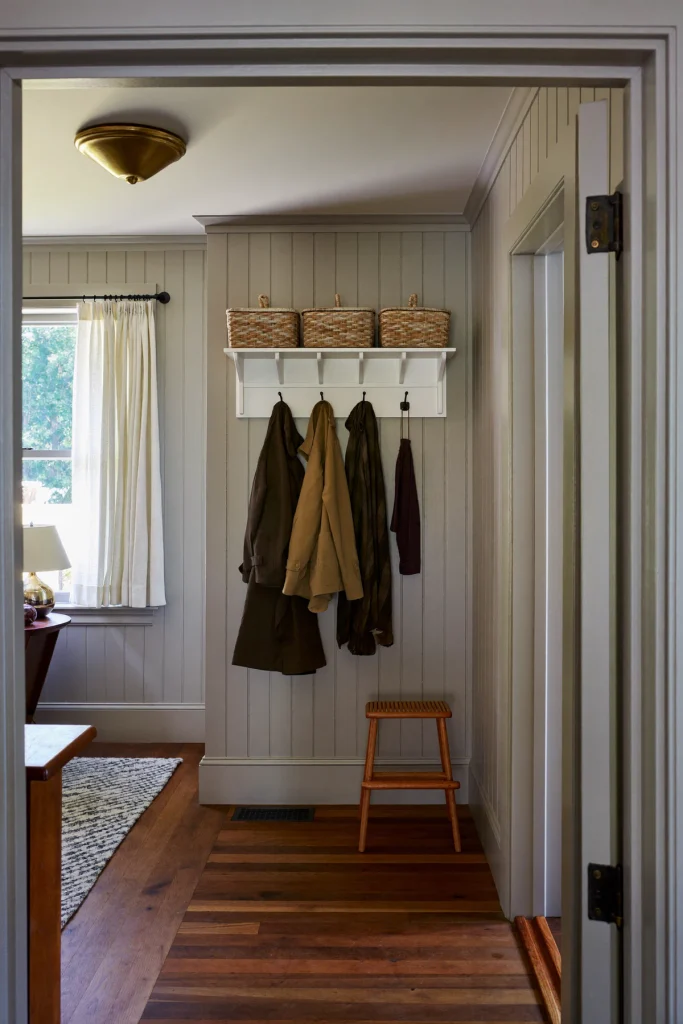
Here’s something I wish someone had told me years ago: the gear you use this month should be at arm level, and everything else should go up high. Your entryway gets so much calmer when you stop storing snow gear in July.
Install a sturdy shelf above your coat hooks, close to the ceiling, and line it with matching lidded woven bins. One for winter hats and mittens, one for summer sun hats and sunscreen, one for rain gear, one for sports stuff.
Keep a step stool nearby, and swap the bins twice a year. It takes about ten minutes, and it makes the everyday hooks below feel so much less crowded.
Seasonal Switch
| Season | Keep at arm level |
|---|---|
| Spring | Light jackets, umbrellas |
| Summer | Sun hats, totes, sunscreen |
| Fall | Scarves, rain boots, sweaters |
| Winter | Heavy coats, gloves, beanies |
Paint a Pegboard Wall
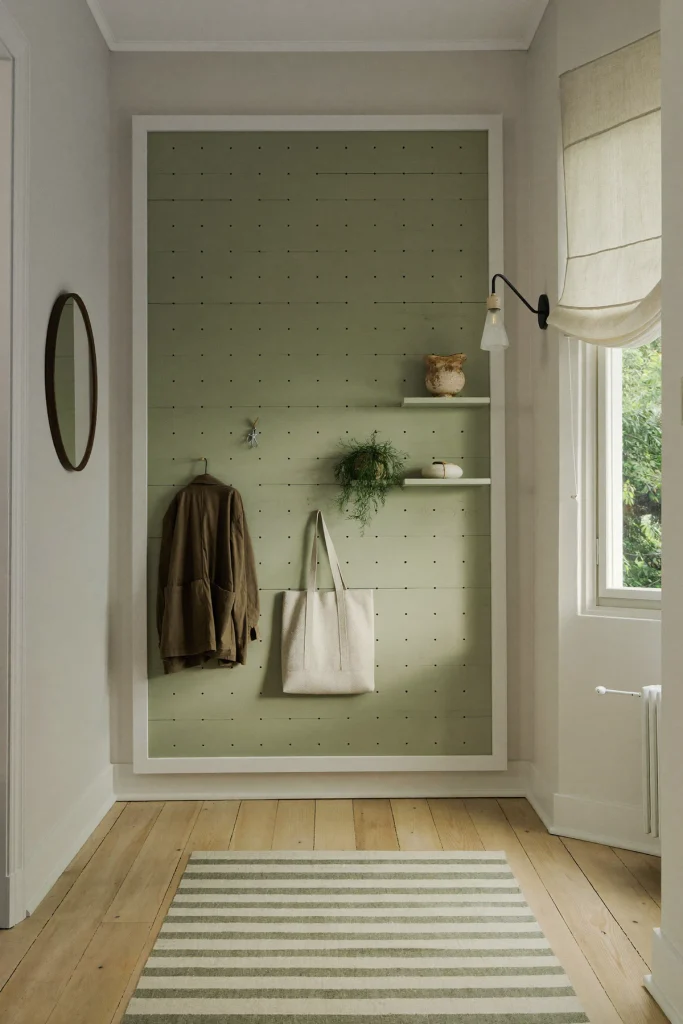
Pegboard isn’t only for the garage. Painted in a soft sage, blush or creamy white and framed with simple trim, it becomes a flexible storage wall that changes as your family does.
Pegs hold coats and bags. Little wooden shelves slot in for keys and sunglasses. You can add a small mirror, a hanging planter or a basket wherever you need it, and rearrange everything in seconds. 🌱
I love that kids can help set it up. Let them choose where their own pegs go, and they’ll actually use them.
Wooden pegboard looks warmer than metal in a living space. Seal it with a matte clear coat so it wipes clean easily. And if your walls are plaster or you rent, mount the panel on two horizontal cleats so you’re only making a few small holes. It’s honestly one of the most versatile ideas on this whole list.
Add Drawers to the Bottom Stairs
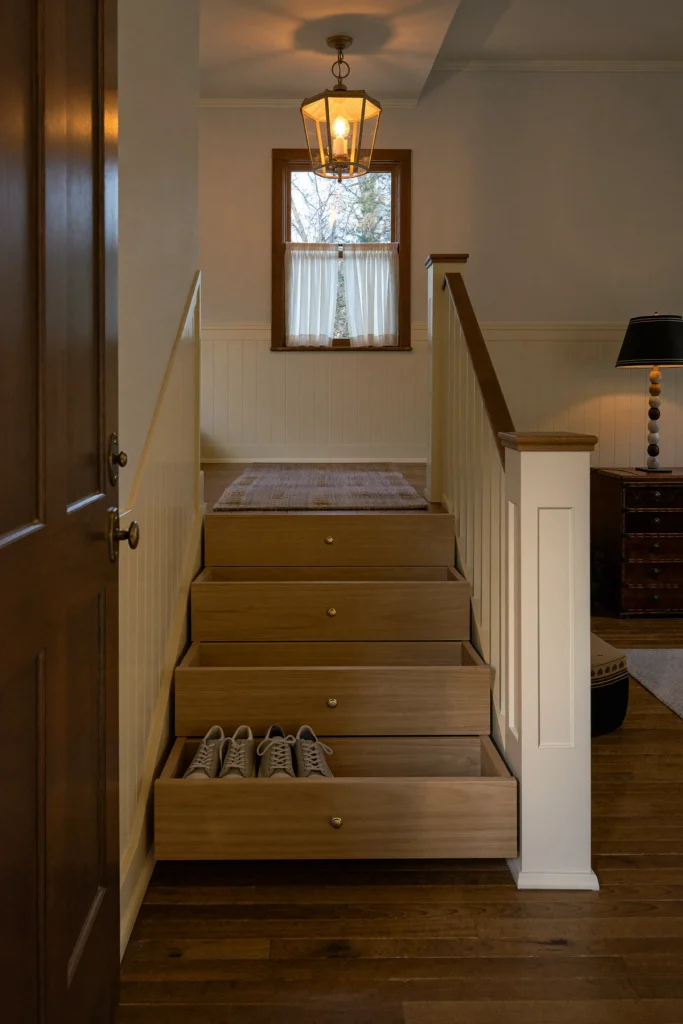
Okay, this one feels a bit like magic. If your front door opens near the staircase, the bottom two or three steps can be converted into pull-out drawers. The risers become drawer fronts, and nobody even notices until you open one.
Ask your carpenter to use soft-close, full-extension slides, so the drawers glide out all the way and don’t slam shut on little toes. Line the inside with a washable mat to catch dirt from the soles. One drawer can also hold slippers for guests, which feels like such a thoughtful little touch when friends come over.
These are the perfect spot for everyday shoes. Each family member gets one drawer for the pairs they wear most, which keeps the floor clear without needing a separate rack. 👟
It’s a project for a skilled carpenter, since the stairs still need to be safe and sturdy. But the result is one of the cleverest storage tricks around.
Weekend Project
Not ready for full stair drawers? Start simpler. Add a shallow open shelf under the first step, slide in a couple of low baskets, and see how much your family uses it. If it fills up in a week, you’ll know the drawers are worth it.
Repurpose a Vintage Armoire in a Bold Entry
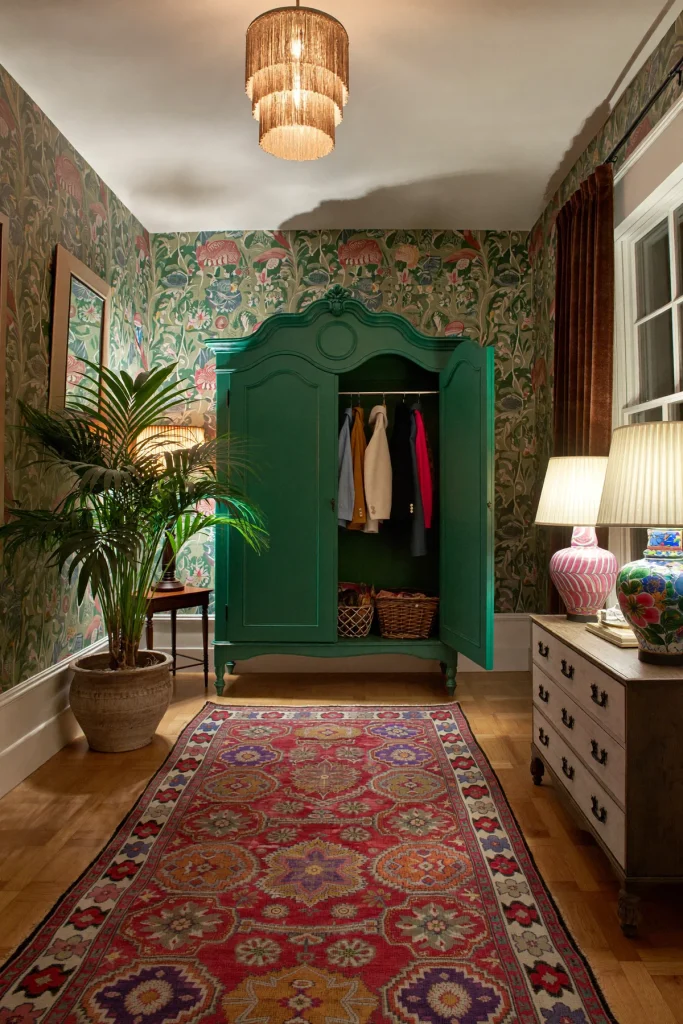
For anyone who loves color and pattern, a big vintage armoire against a wildly patterned wallpaper is such a fun way to add storage. It’s maximalist, it’s personal, and it holds a ton.
Inside, add a hanging rod for coats and a couple of baskets on the bottom for gloves and the dog’s ball collection. Outside, let it shine. Paint it a deep teal or keep the original wood.
Layer a vintage rug, a pair of colorful table lamps and a big potted plant around it. Stack a couple of decorative boxes on top for things you rarely need.
The trick with a maximalist entryway is repeating colors. Pull two or three shades from the wallpaper and repeat them in the rug, lamps and armoire. It looks collected, not chaotic. And honestly, it’s way more fun to come home to a space that feels this happy. 🎨
Carve Out Recessed Wall Niches
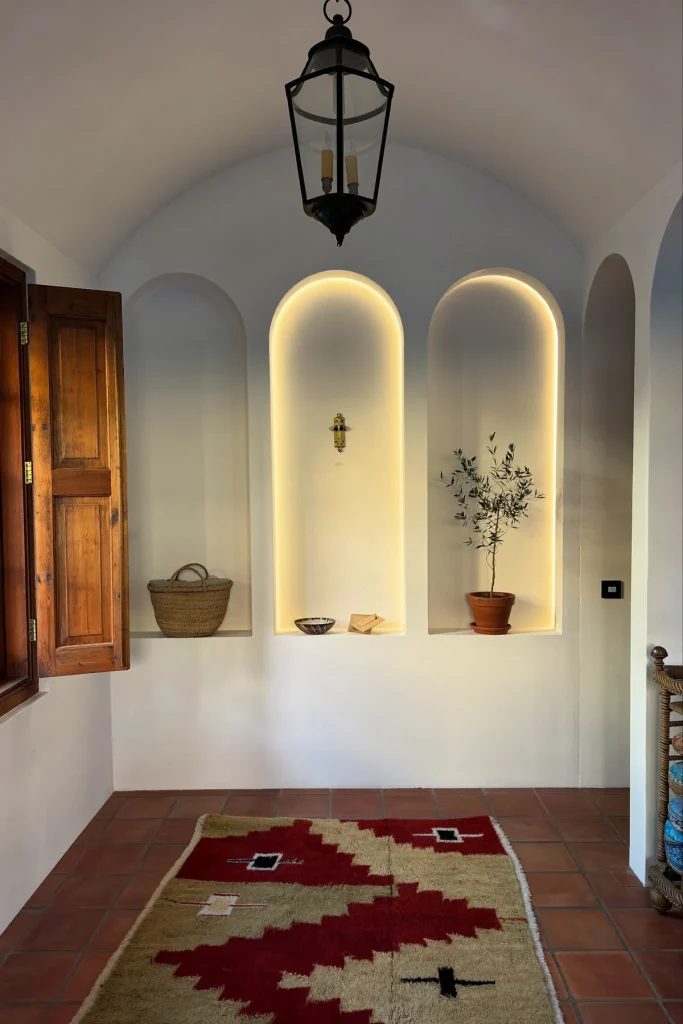
If you’re renovating, or you’ve got thick plaster walls, recessed niches are a gorgeous way to add storage without anything sticking out into the walkway.
Keep what you store in each one simple and pretty, so the niches always look calm.
Build two or three arched niches at different heights. The lower one can hold a basket for gloves. The middle one becomes your key and mail spot. The top one gets a little plant or a candle for a soft glow at night.
A Spanish Colonial home with smooth lime-washed walls is the perfect place for these. The curves soften everything, and the depth adds such lovely shadow and texture.
You can tuck a small LED strip along the top edge of each niche, so they light up gently after dark. 🕯️
Myth-Buster

Myth: niches only work in new builds. Truth: many interior walls are hollow between studs, so a shallow niche of about 3 to 4 inches is often possible in older homes too. Have a pro check for wiring and plumbing before cutting.
Build a Window Seat With Deep Drawers
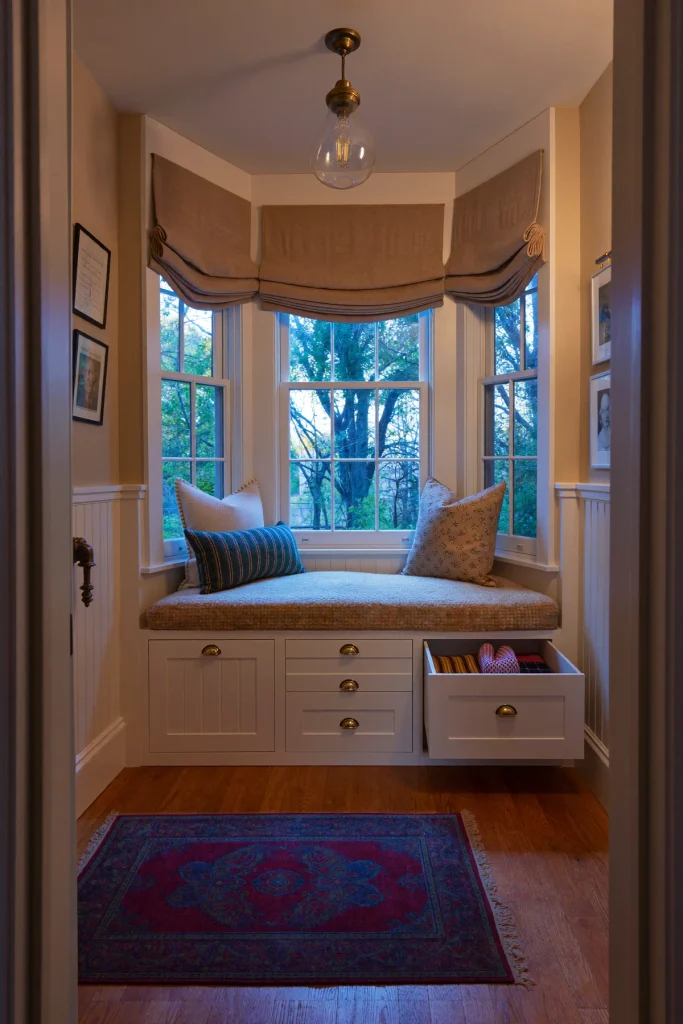
If your entryway has a window, the space below it is calling out for storage. A built-in window seat with two or three deep drawers underneath gives you a cozy perch and loads of hidden storage at the same time.
Use the drawers for things that tend to drift: scarves, umbrellas, reusable bags, dog toys. Top the seat with a thick cushion and a couple of throw pillows, and dress the window with soft Roman shades or linen curtains.
It quickly becomes everyone’s favorite spot to sit and pull boots on, or to wait for the school bus on a cold morning. ☕
That small difference matters a lot in a busy house. Match the drawer fronts to your trim so it feels original to the home.
Paint Your Built-Ins a Deep Glossy Color
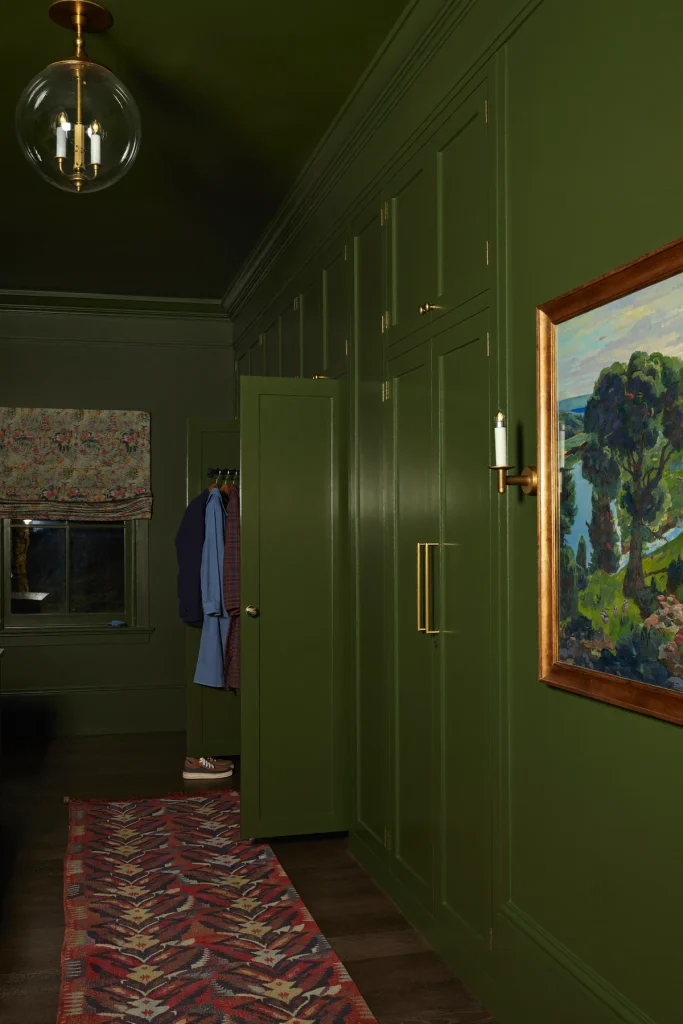
Here’s a bold one. Take a wall of built-in entryway cabinets and paint them, ceiling to floor, in a deep glossy color like forest green, ink blue or rich aubergine. The storage stops being background and becomes the whole personality of the room.
High-gloss paint is tough and wipeable, which is great for a high-traffic spot. Paired with brass hardware, a pendant light and a colorful runner, it feels moody and special.
The trick is commitment. Paint the cabinets, the trim and even the ceiling the same shade, so it feels like a jewel box rather than a dark corner.
Inside, everything stays organized: coats behind one door, bags behind another, a little drawer for keys.Proof that hidden storage can feel calm or completely wow, depending on the color you pick.
Turn a Vintage Dresser Into an Entry Storage Hub
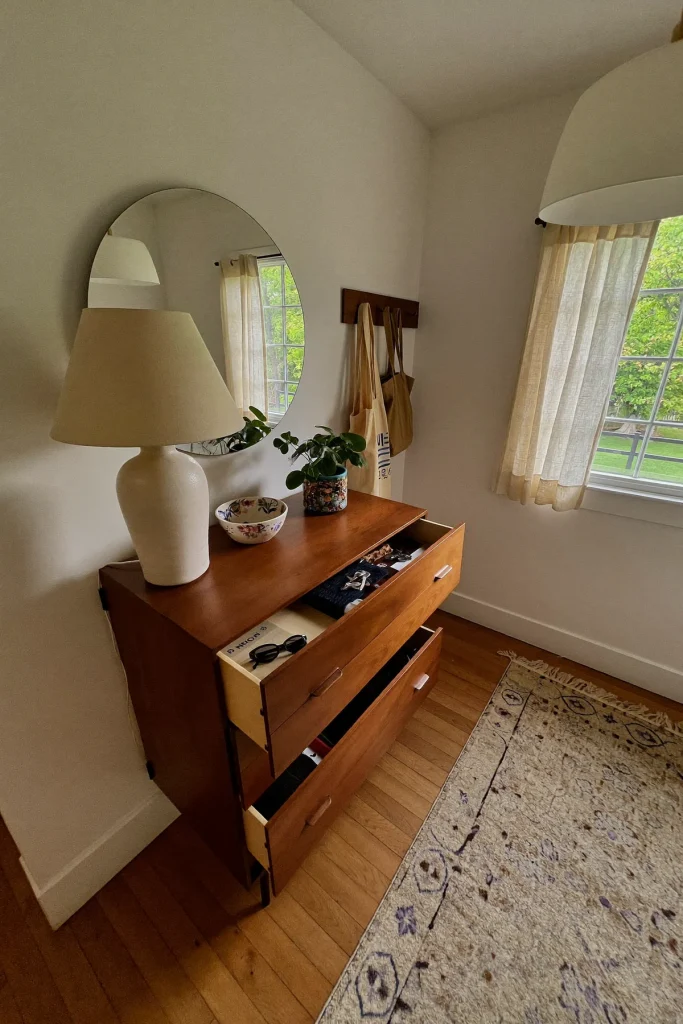
We’re ending with one of my favorite budget-friendly tricks. An old dresser, painted or left in its original wood, makes an incredible entryway storage hub. Way more storage than a console, and often cheaper.
Give each drawer a job. Top drawer for keys, sunglasses and chargers. Middle drawer for gloves and scarves. Bottom drawer for dog gear and reusable bags.
Above it, hang a round mirror and add a short row of hooks to one side. On top, a lamp, a small plant and a bowl. Done.
Look for solid wood dressers at thrift stores, estate sales and online marketplaces. A good scrub, a fresh coat of paint and new knobs can make even a tired piece look intentional. And because it’s freestanding, it moves with you if you change homes. 💛
One Rule to Remember
Measure your walkway before you buy. Leave at least 36 inches of clear space in front of the dresser so drawers can open and people can pass.
A Home for Everything, Starting at the Door
The best entryway storage isn’t about having the most cabinets. It’s about making it so easy to put things away that everyone actually does it. A hook at the right height. A basket that’s clearly someone’s own. A drawer that swallows the chaos.
Start with whatever bugs you most. Lost keys? Try the station from idea 7. Coats on the floor? A peg rail or lockers. Then build from there.
Your entryway is the first and last thing you see every day. Give it a little love, and it will give you calmer mornings and softer evenings in return. 🏡
