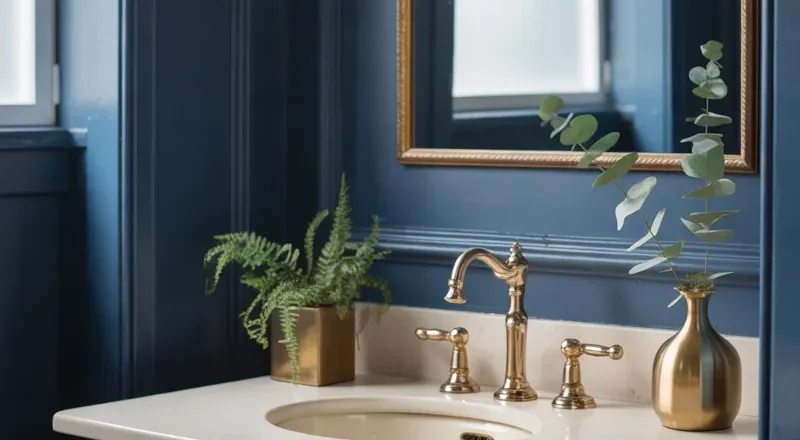
Dark bathrooms have a certain charm that lighter spaces sometimes struggle to capture. Think deep charcoal walls, dramatic black tiles, warm brass fixtures, rich wood finishes, and soft lighting that makes everything feel a little more luxurious. 🖤
And no, you don’t need a huge bathroom to pull off this look. Whether you’re decorating a tiny powder room, updating a family bathroom, or planning a complete renovation, the right combination of colors, textures, and finishes can make a dark bathroom feel inviting rather than gloomy.
I’ve gathered 21 dark bathroom ideas that balance drama with everyday comfort. Some are bold and modern, others feel rustic or vintage, and a few are perfect if you want to experiment without committing to an entirely dark space. Let’s find your favorite!
Paint the Walls in Deep Charcoal Gray
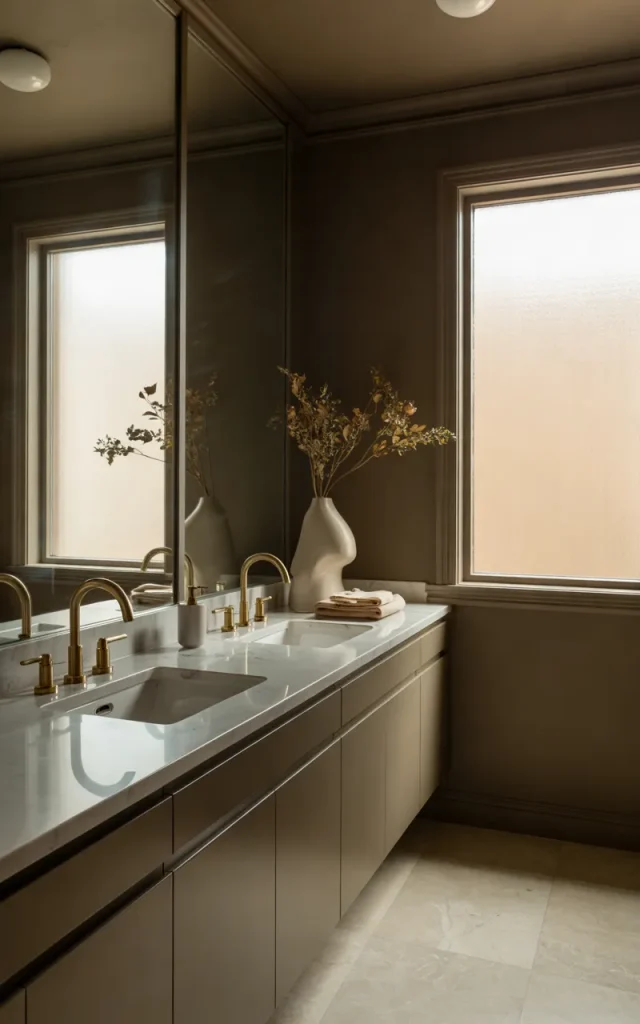
If you’re new to dark bathroom decorating, I’d start with charcoal gray walls. They’re dramatic enough to create that moody atmosphere, but they’re often easier to work with than completely black surfaces.
Choose a warm charcoal paint rather than a blue-toned gray if you want the room to feel cozy. Pair it with a white vanity top, brushed brass faucets, and a large mirror to keep the overall design balanced. A pale stone floor can also introduce a welcome contrast.
Why it works: Charcoal creates depth without demanding that every other element in the room be dark. It’s a lovely starting point for a sophisticated bathroom that won’t feel dated quickly. ✨
Pair Black Walls With a White Freestanding Bathtub
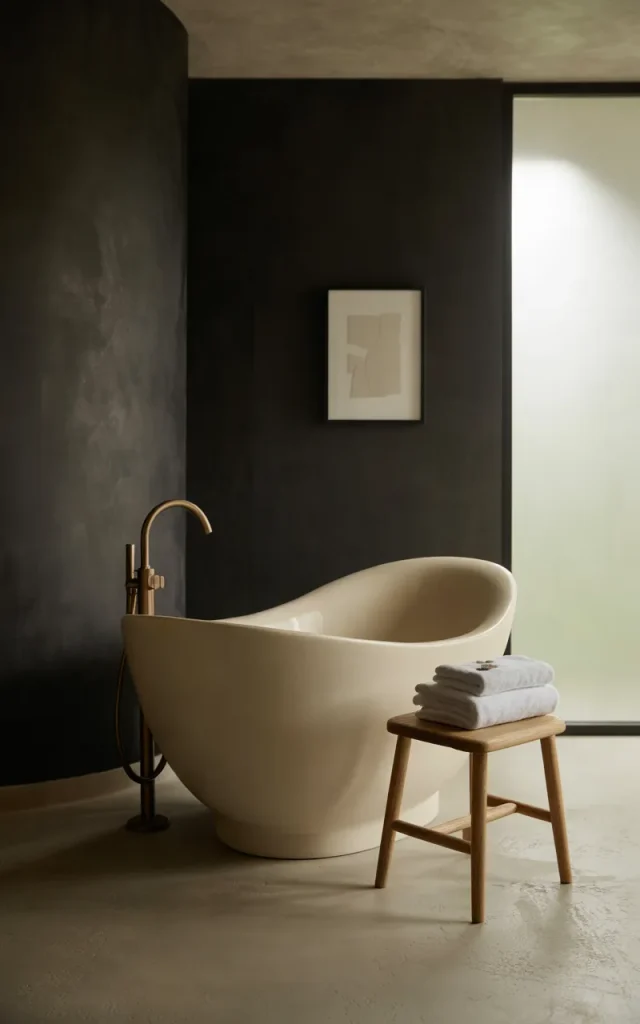
Want your bathroom to feel like a boutique hotel? Place a sculptural white freestanding bathtub against a black or deep charcoal wall.
I love this combination because the tub becomes an instant focal point. Its crisp white finish stands out beautifully against the darker background, especially when you add a floor-mounted faucet in brushed brass or polished chrome.
Keep the surrounding decor fairly simple. A small wooden stool, neatly folded white towels, and one understated piece of artwork are often enough. You don’t need dozens of accessories when the contrast is already doing so much work.
If you’re renovating, make sure the tub’s placement leaves enough room for comfortable access and cleaning.
Choose a Dramatic Black Vanity
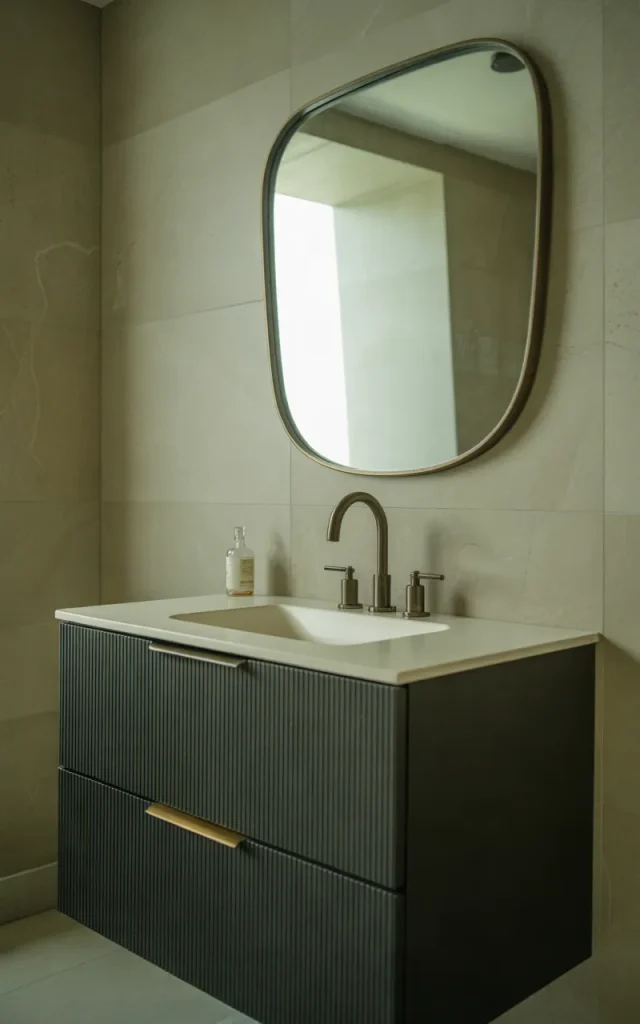
Sometimes, the easiest way to introduce dark bathroom style is to focus on one major piece of furniture.
A black vanity with clean lines looks especially striking against warm white walls or pale stone tiles. For a more luxurious effect, choose a floating vanity with flat-front drawers and slim brass handles. The open floor beneath it helps the room feel less crowded.
I’d finish the look with a white or beige countertop, a rounded mirror, and a matching dark faucet if you want a cohesive design. Alternatively, a brushed nickel faucet provides a cooler, more contemporary contrast.
This approach works beautifully if you’re renting or simply don’t want to repaint the entire bathroom. Keep the existing walls and flooring, then let the vanity do the heavy lifting.
Add Warmth With a Walnut Bathroom Vanity
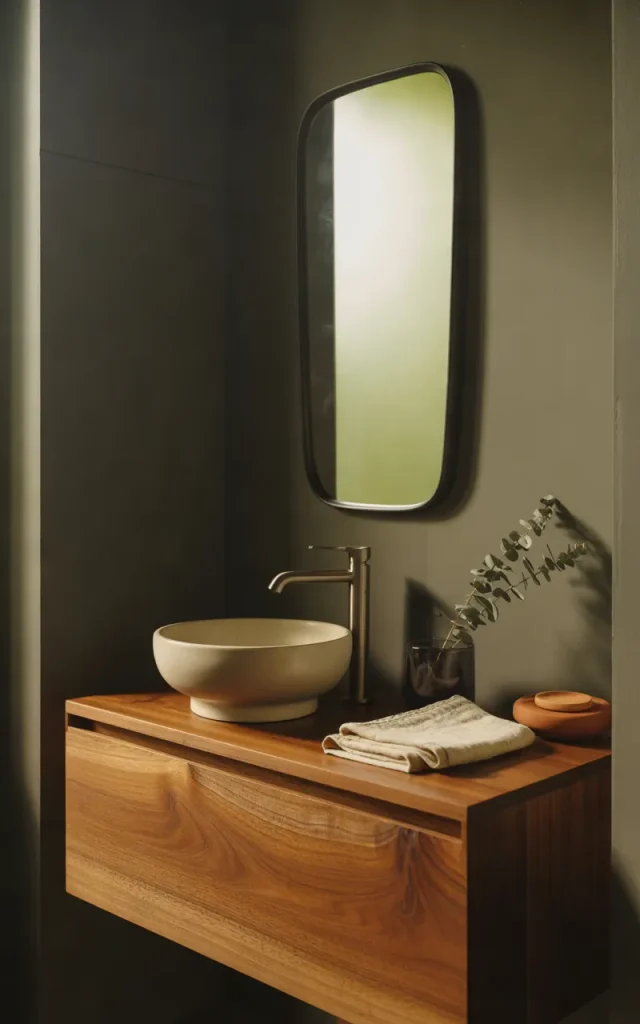
Dark bathrooms can sometimes feel cold, especially when every surface is black, gray, or polished stone. Natural wood is one of my favorite ways to bring back warmth.
A walnut vanity looks gorgeous against charcoal walls, dark green tiles, or a black shower enclosure. Its brown undertones soften the stronger colors while adding an organic texture that makes the room feel more welcoming.
Choose a simple vanity with visible wood grain and minimal hardware. Pair it with a white basin, warm lighting, and a mirror with a slim dark frame. If your bathroom is particularly small, a floating design can help maintain a sense of openness.
Why it works: Wood introduces a contrasting material rather than another color competing for attention. The result feels layered, intentional, and comfortable.
Install Brass Fixtures Against Dark Surfaces
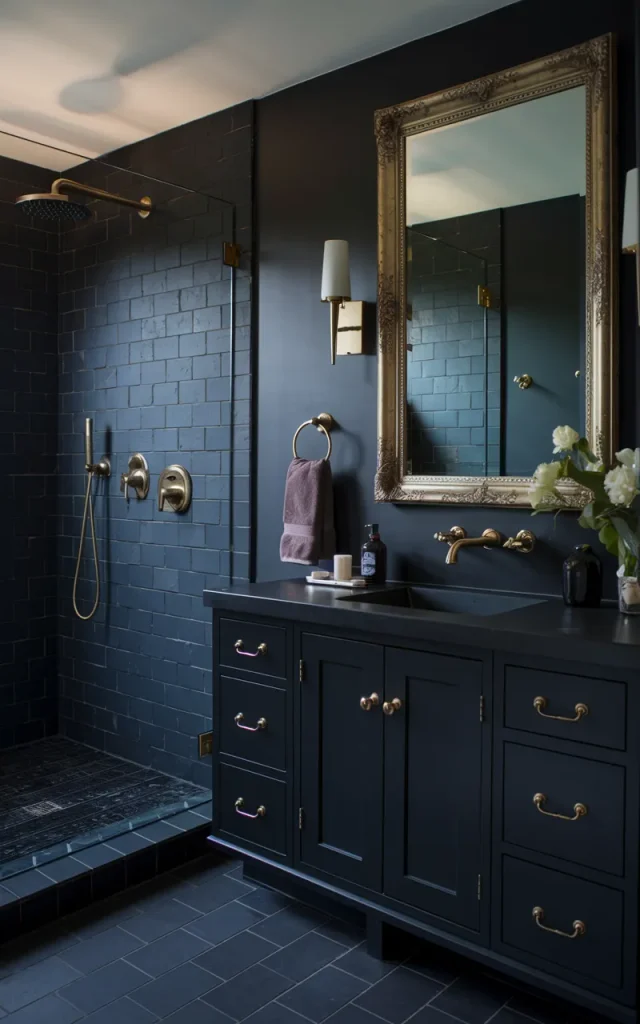
If you want a dark bathroom to feel luxurious without adding lots of decoration, try brushed brass fixtures.
Against black tiles, charcoal paint, or deep green walls, brass creates a warm metallic contrast. Consider using it for the shower controls, basin faucet, cabinet handles, towel rail, and mirror frame. Repeating the same finish in a few key places makes the design feel connected.
You don’t need to replace everything at once, either. Swapping an existing cabinet handle or towel ring can be a simple first step toward the look.
Quick tip: Choose one dominant metal finish and repeat it throughout the room. You can mix metals, but do so deliberately rather than introducing a different finish with every accessory.
Brass is especially lovely when paired with warm white lighting. It brings out the richness of the darker surroundings without making the space feel overly formal.
Create Contrast With Black and White Bathroom Decor
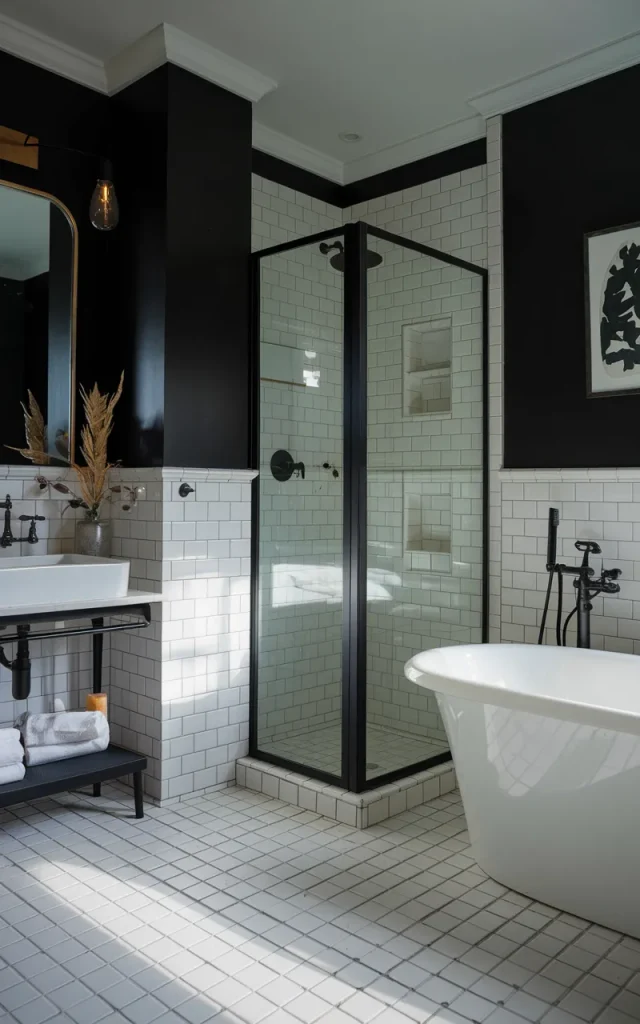
Black and white is a classic combination for a reason. It offers a crisp, graphic look that can feel vintage, modern, minimalist, or luxurious depending on the materials you choose.
Start with black walls or a dark vanity, then introduce white floor tiles, a white basin, or a bright bathtub. You can also reverse the proportions, using white walls and a dramatic black shower enclosure.
For a more interesting finish, combine matte black surfaces with glossy white tiles or textured stone. These subtle differences in sheen keep the design from looking flat.
I recommend adding one warm element, such as a wooden stool or brass faucet, to stop the contrast from feeling too stark. It’s a simple combination, but it leaves plenty of room for personality. 🖤
Install a Walk-In Shower With a Black Frame
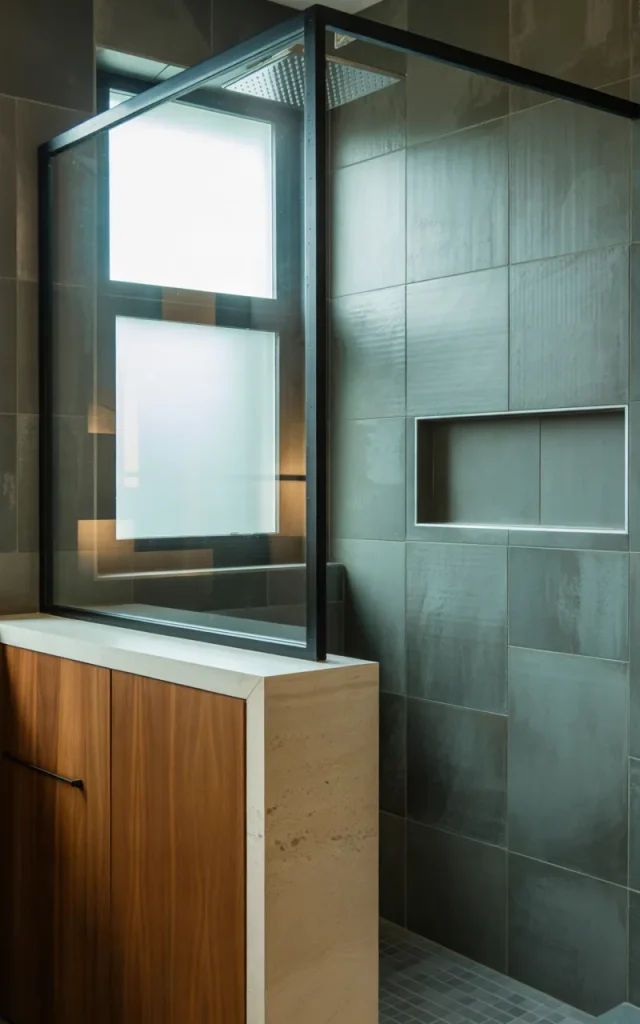
A walk-in shower with a black metal frame can give your bathroom a crisp, modern edge. It works particularly well with dark tiles because the frame becomes part of the overall color scheme rather than an isolated detail.
For a balanced design, use charcoal or deep gray tiles inside the shower and continue a similar shade onto one nearby wall. A clear glass panel keeps the room visually connected, while a recessed niche offers practical storage for shampoo and shower essentials.
Step-by-step instructions:
- Measure the shower area and confirm that the layout allows comfortable entry.
- Choose a suitable shower enclosure and coordinating dark tile.
- Plan the waterproofing, drainage, and niche placement before installation.
- Add layered lighting and organize everyday products in the shower niche.
I’d avoid adding too many black accessories just because the enclosure is black. A pale stone bench or warm wood vanity can create a much more interesting balance.
Decorate With Dark Floral Wallpaper
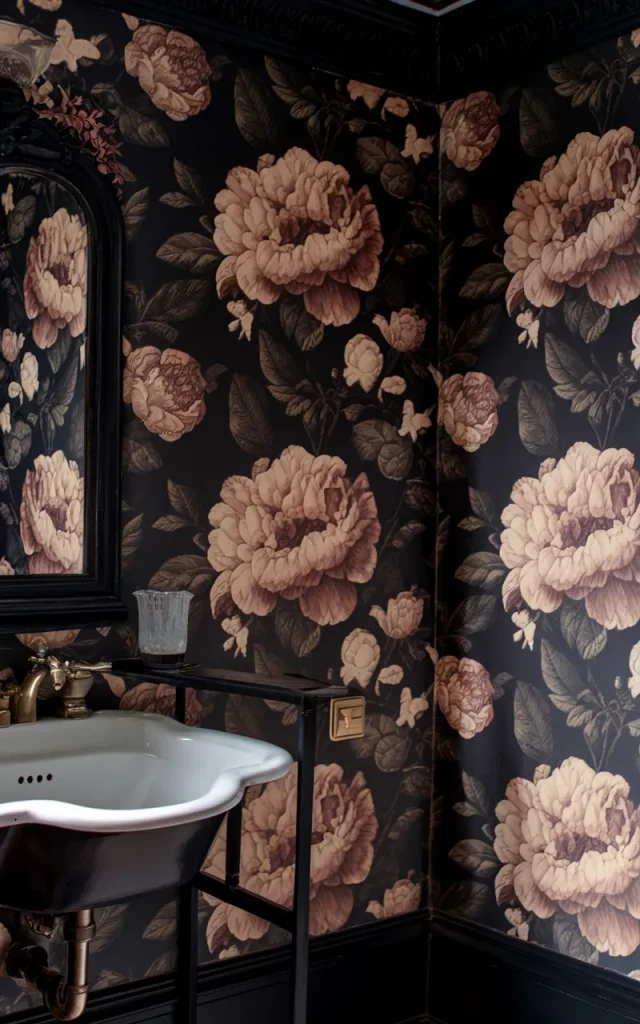
Dark floral wallpaper can give a bathroom a romantic, slightly dramatic personality. Think oversized flowers, delicate botanical sketches, or vintage-inspired patterns set against black, navy, deep plum, or forest green.
I’d use it on the wall behind a vanity or in a powder room where it can become the main decorative feature. Pair the pattern with a simple basin, a dark mirror frame, and warm metallic accents. The result can feel sophisticated without requiring elaborate furniture.
Who this is for: Anyone who enjoys traditional interiors, maximalist decorating, or a little vintage charm. It’s also ideal if you want a bathroom that feels distinctive rather than purely minimalist.
Choose wallpaper specifically suitable for the room’s moisture conditions, and follow the manufacturer’s installation guidance. A well-ventilated powder room may be easier to decorate with wallpaper than a shower-heavy bathroom.
Keep the surrounding surfaces relatively quiet. The floral pattern deserves room to breathe. 🌸
Highlight the Vanity With Backlit Mirrors
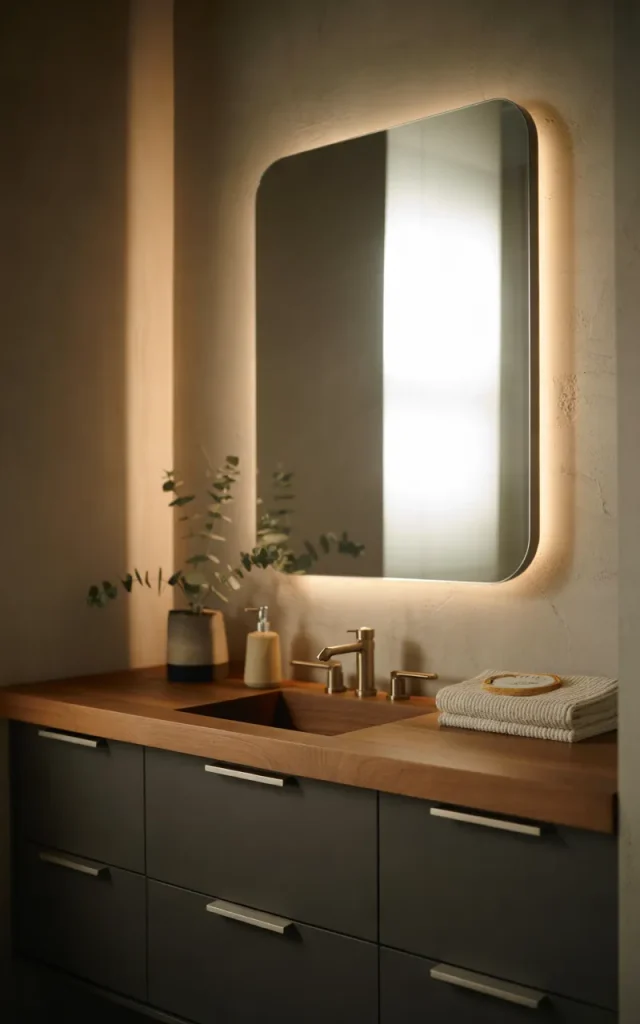
Lighting is especially important in dark bathrooms, and a backlit mirror can make the entire vanity area feel more polished.
Install an illuminated mirror above a charcoal, black, or deep green vanity. The soft glow creates separation between the mirror and the darker wall, while providing useful ambient light. I like pairing it with a warm wood vanity or brushed brass hardware for a more inviting finish.
Why designers do this: Light placed around or behind a mirror adds visual depth. Instead of looking like a flat reflective surface, the mirror becomes part of the room’s lighting design.
Choose a mirror with suitable illumination for grooming, and don’t rely on decorative backlighting alone. You may still need dedicated task lighting near the face to avoid unflattering shadows.
A dimmable option gives you flexibility, too. Bright light is helpful when getting ready in the morning, while a softer glow can make an evening bath feel much more relaxing.
Add Drama With a Black Vessel Sink
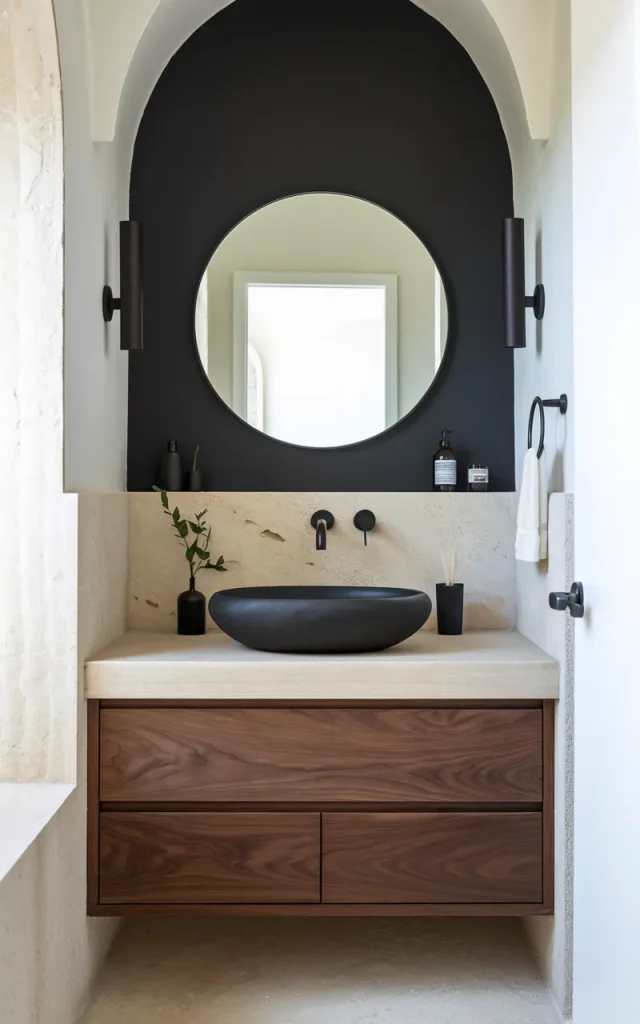
A black vessel sink can turn an ordinary vanity into a strong design feature. Its sculptural shape gives the bathroom a more curated feel, particularly when paired with a contrasting countertop.
For a modern look, choose a matte black basin with a simple cylindrical or gently rounded shape. Set it on a pale stone or warm wood vanity top. If you prefer a more dramatic palette, combine it with a charcoal wall and a coordinating dark faucet.
One rule to remember: Make sure the sink works with the faucet height, counter depth, and available splash area. A beautiful vessel basin can be inconvenient if the proportions aren’t right.
You can also use a black basin as a smaller accent in an otherwise neutral bathroom. Add a matching soap dispenser and dark mirror frame to tie the look together.
This idea is especially useful if you want a noticeable change without replacing the entire vanity or changing the wall color.
Create a Moody Powder Room With Navy Blue
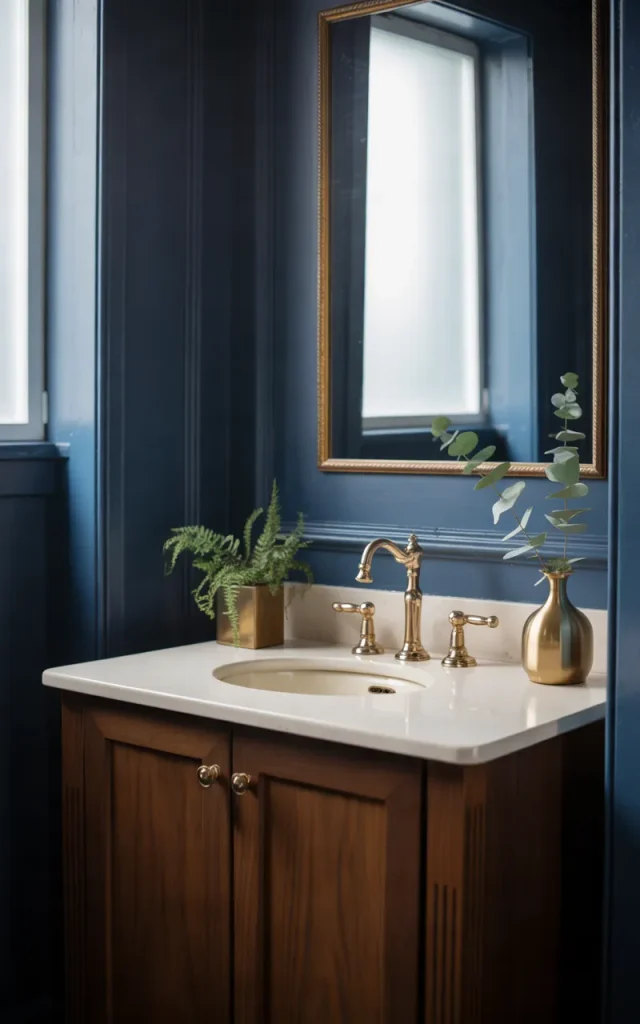
Deep navy is a beautiful alternative to black when you want a dark bathroom with a little color. It feels classic, slightly dramatic, and particularly elegant in a compact powder room.
Paint the walls navy and pair them with a white basin, dark cabinetry, or a stone countertop. Brass hardware adds warmth, while a framed mirror can make the space feel more finished. If you enjoy patterns, consider a navy wallpaper with subtle botanical or geometric details.
Budget alternatives:
- Paint the existing walls instead of replacing the tiles.
- Change cabinet handles to brass or matte black.
- Add a framed mirror rather than installing custom cabinetry.
- Replace a tired light fixture with a suitable decorative option.
- Introduce navy through washable accessories if painting isn’t possible.
A powder room is a lovely place to experiment because it is often used for shorter visits and can accommodate a more expressive design.
Make sure the lighting is bright enough for practical use. Dark navy can look nearly black in dim corners, so a well-lit mirror and suitable overhead light are worth planning.
Layer Warm Lighting Around Dark Bathroom Surfaces
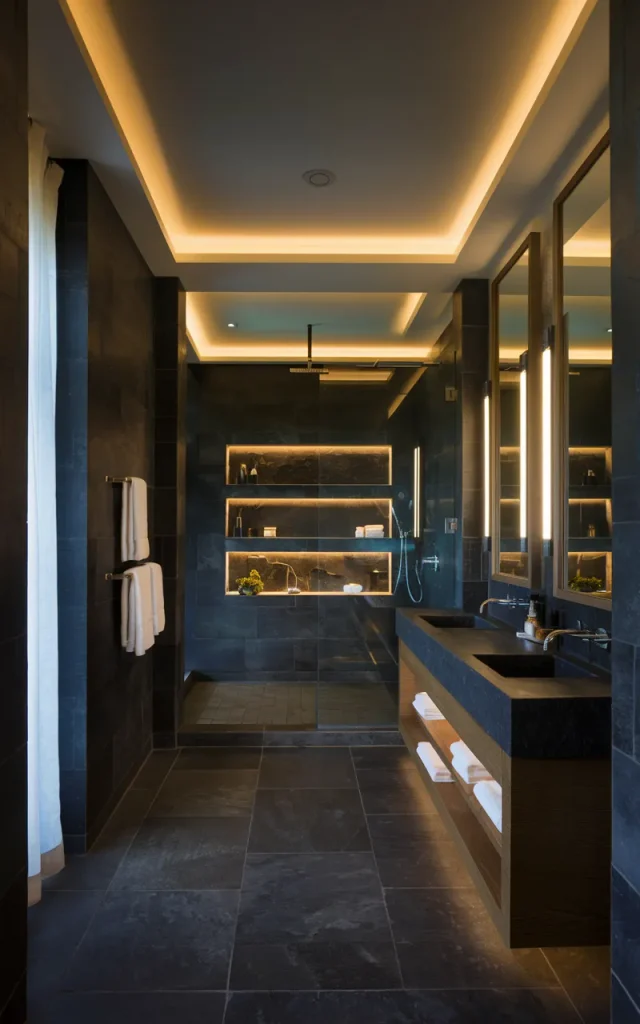
A dark bathroom can look incredible in photographs but disappointing in real life if the lighting isn’t planned properly. This is one area where I’d invest some thought before buying decorative accessories.
Combine general ceiling lighting with dedicated vanity lighting and, where appropriate, accent lighting in niches or under floating cabinetry. Warm or neutral-warm light can make charcoal, wood, and brass feel welcoming, while the correct color-rendering quality helps you see skin tones more naturally at the mirror.
Layer it like this:
- General lighting: Provide comfortable illumination throughout the room.
- Task lighting: Light the mirror and basin area for grooming.
- Accent lighting: Highlight a textured wall, niche, or architectural feature.
- Night lighting: Consider a gentle low-level light if you want safer nighttime movement.
Use fixtures rated for their intended bathroom locations, and have electrical work completed according to local requirements.
Remember, the goal isn’t to make every corner glow equally. It’s to create enough useful light while allowing the darker surfaces to retain their depth.
Embrace a Dark Bathroom With Industrial Details
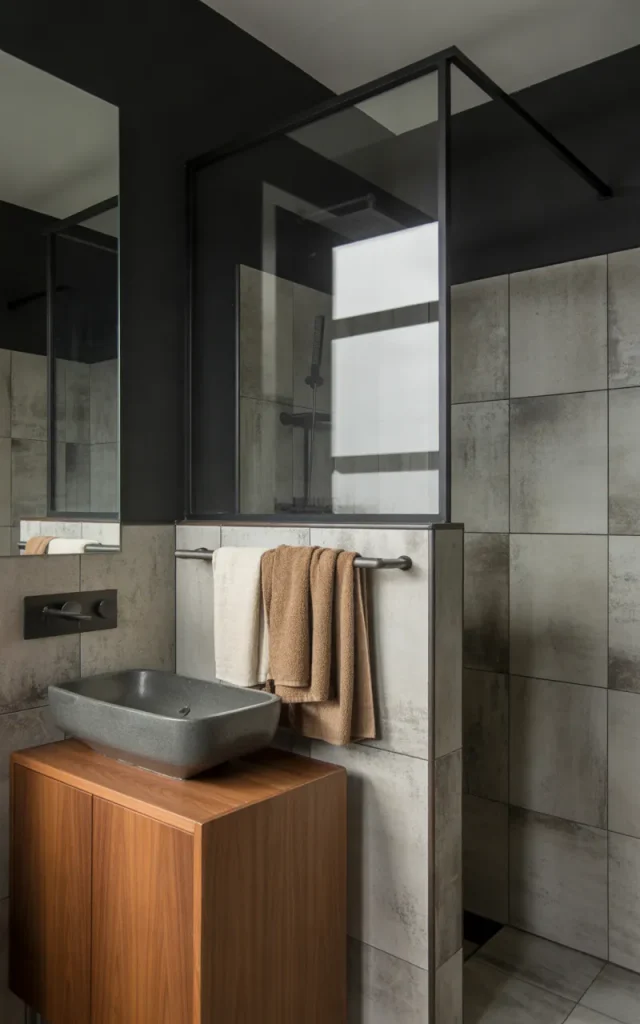
If you love interiors that feel a little edgy, try combining dark bathroom colors with industrial-inspired finishes. Think charcoal walls, black steel-framed shower screens, concrete-look tiles, and simple metal hardware.
I would balance those harder materials with a walnut vanity, warm lighting, and plush towels. Otherwise, the bathroom might start feeling more like a commercial changing room than a comfortable home.
What most people get wrong: They assume industrial design needs exposed pipes, unfinished surfaces, and lots of metal. In reality, just two or three carefully chosen industrial details can establish the style.
Consider a concrete-look basin, a black-framed mirror, or a simple metal shelf. You don’t need all three. Choose the elements that suit your bathroom’s size and existing features.
This approach works especially well in modern apartments and contemporary homes. It’s bold, practical, and easy to personalize with accessories over time. 🖤
Install Dark Herringbone Tiles for Visual Interest
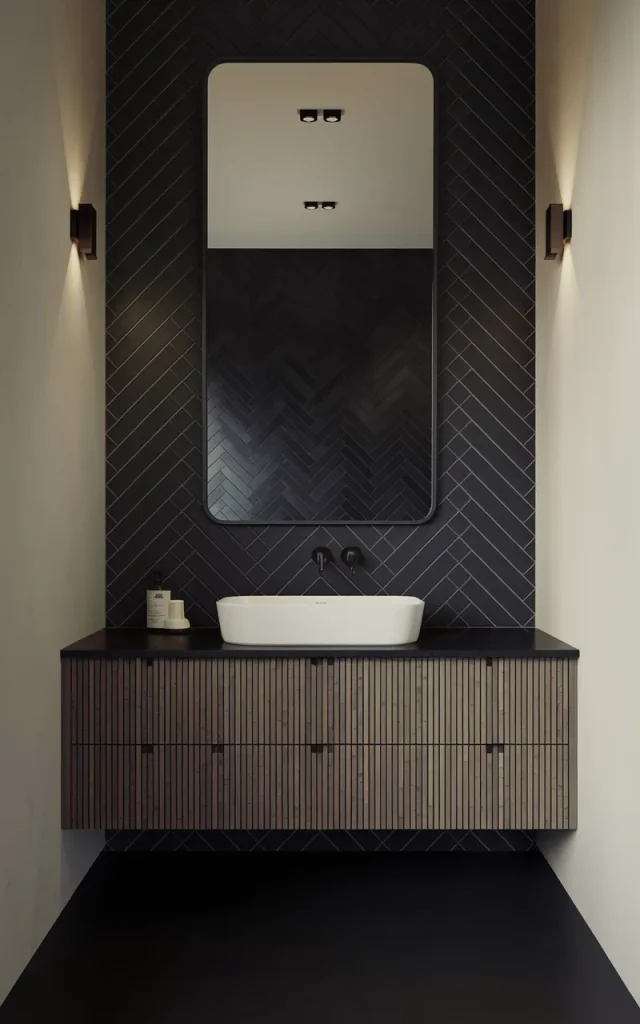
Herringbone tiles are a lovely way to introduce pattern without adding another color to your bathroom. The distinctive zigzag arrangement creates movement, even when the tiles themselves are a simple charcoal or black.
I’d use dark herringbone tiles on a shower feature wall or behind the vanity. Pair them with plain flooring, a clean-lined basin, and understated hardware. If you want more contrast, choose a slightly lighter grout to highlight the pattern.
Small space hack: Use herringbone on just one wall rather than across every surface. This gives the bathroom a focal point without making the design feel too busy.
You can also choose elongated tiles for a more contemporary effect or smaller tiles for a detailed, traditional appearance. Both can work beautifully.
Keep in mind that patterned tile layouts may require additional cutting and installation time. Ask your installer to plan the pattern carefully around corners, niches, and fixtures for a neat result.
Add Vintage Charm With Antique Brass and Dark Walls
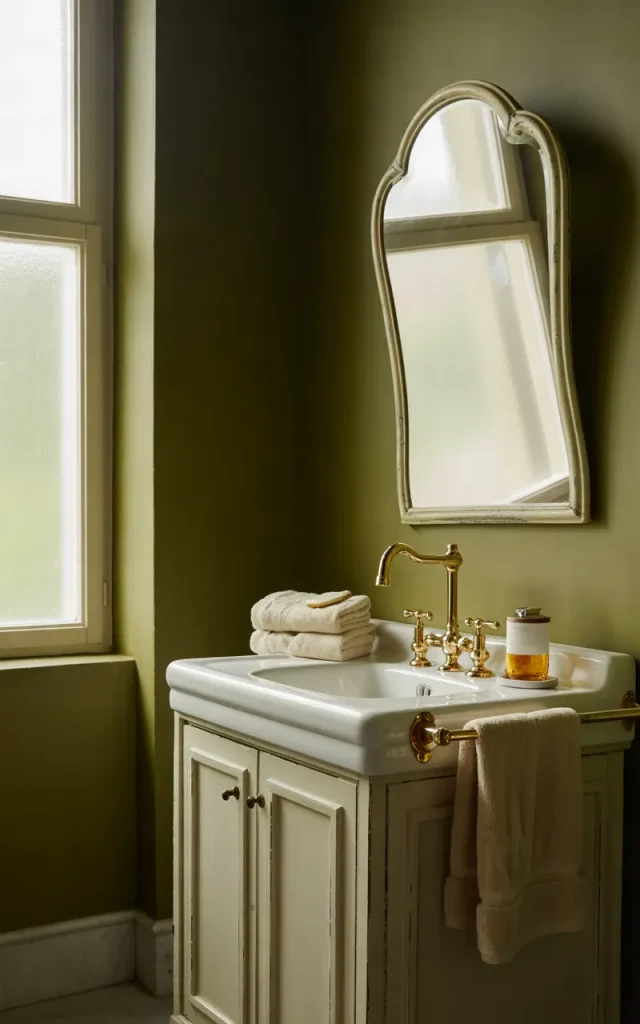
Dark bathroom decor doesn’t always have to look sleek and modern. If you love vintage interiors, combine deep paint colors with antique-inspired brass fixtures, traditional mirrors, and classic cabinetry.
A dark olive, charcoal, or inky blue wall makes a beautiful backdrop for aged-brass faucets and ornate mirror frames. Add a traditional vanity with panelled doors and a white porcelain basin to complete the look.
How to steal this look:
- Choose one deep wall color as your foundation.
- Add a mirror with a curved or decorative frame.
- Introduce warm metal hardware in a consistent finish.
- Choose classic white sanitaryware for contrast.
- Finish with folded linen towels and one understated decorative accessory.
I love this style because it feels collected rather than overly coordinated. A few traditional elements give the room character without making it feel like a themed space.
If you’re working with an older bathroom, consider retaining existing architectural details. Sometimes, original flooring, paneling, or a vintage mirror can become the most interesting feature in the entire room.
Combine Black Tiles With a Fluted Vanity
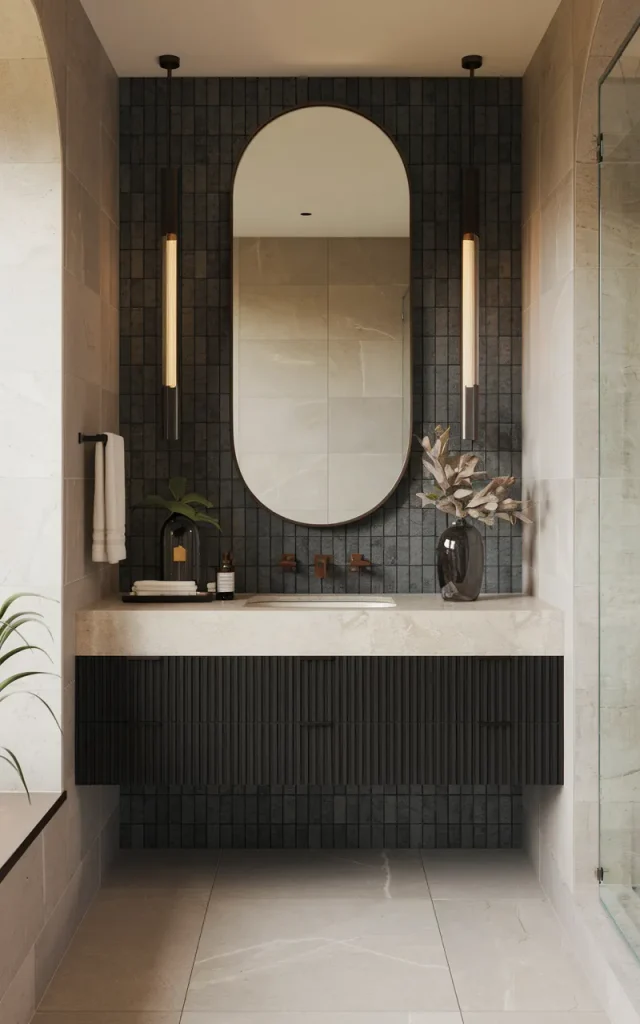
Fluted cabinetry adds texture to a dark bathroom without introducing a busy pattern. Its vertical grooves catch the light subtly, creating shadows that make the vanity feel more substantial and refined.
Choose a black or deep charcoal fluted vanity and pair it with a pale stone countertop. A simple oval mirror and minimal hardware will keep the focus on the cabinet’s texture. Alternatively, a walnut fluted vanity against dark walls can introduce warmth while maintaining the moody atmosphere.
Trend callout: Textured cabinetry is a useful alternative to elaborate decoration when you want a contemporary bathroom with depth.
Think carefully about the scale of the grooves. Fine fluting creates a delicate, tailored effect, while wider grooves feel bolder and more architectural.
For everyday practicality, check how easily the cabinet surface can be cleaned. Bathrooms collect dust, splashes, and product residue, so a beautiful finish should also be manageable to maintain.
This idea works particularly well with simple dark tiles because the different textures create interest without requiring multiple competing colors.
Transform the Shower Niche Into a Dark Feature
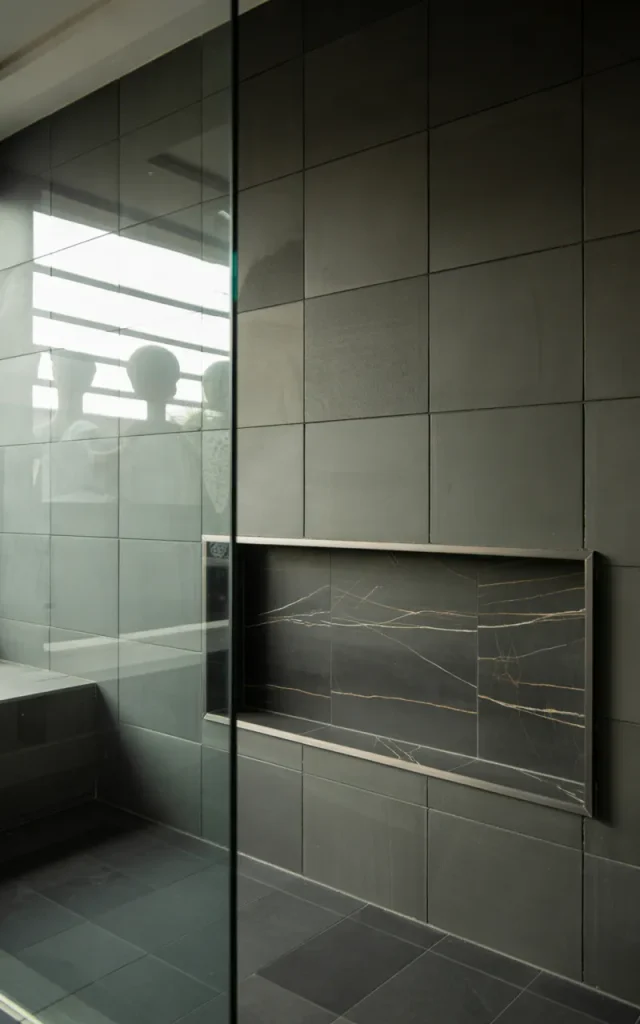
A shower niche is practical storage, but it can also become a small design statement. Instead of treating it as an invisible recess, use a contrasting tile or finish to make it part of the bathroom’s overall design.
For example, a black shower wall with a niche lined in dark marble creates subtle variation. If your shower already has charcoal tiles, consider a slightly lighter stone inside the recess. A slim metallic trim can provide another layer of detail.
Quick hack: Repeat the niche’s accent material somewhere else in the bathroom, such as on a vanity backsplash or a small shelf. This helps the design feel intentional rather than random.
Before installation, think about the size and height of the niche, the products you regularly use, and the waterproofing details. A well-planned recess is much more useful than one that’s too narrow for everyday bottles.
I particularly like this approach in compact bathrooms because it adds visual interest without taking up floor space or requiring extra furniture.
Introduce Deep Brown and Chocolate Bathroom Tones
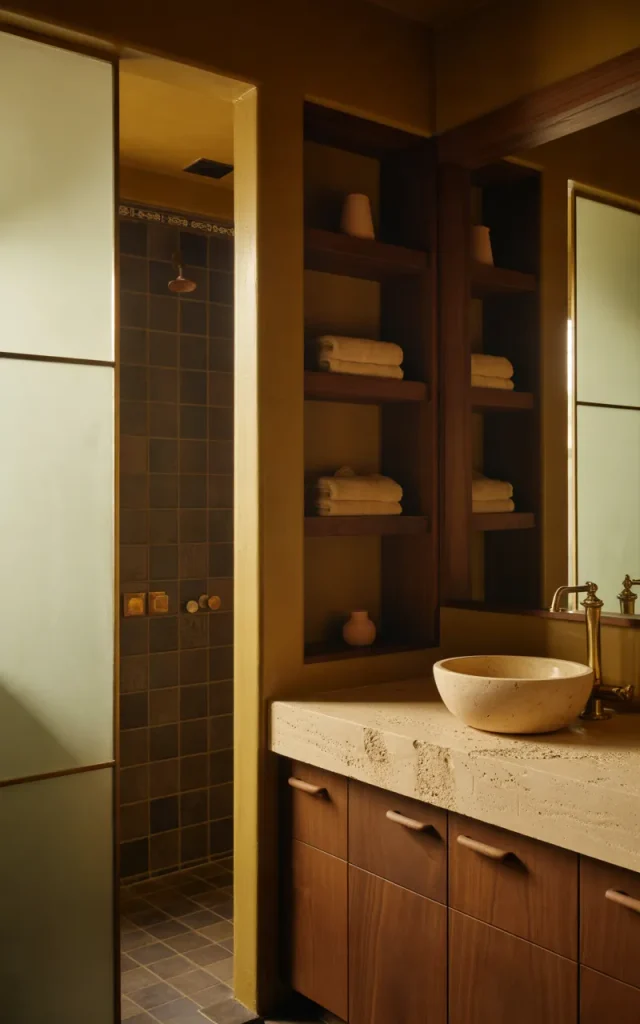
Black isn’t the only color that creates a moody atmosphere. Chocolate brown, espresso, and deep tobacco tones can make a bathroom feel rich, warm, and slightly unexpected.
Consider espresso cabinetry with dark brown walls, or use chocolate-colored tiles around the shower. Pair these shades with cream stone, brushed brass, and natural wood for a palette that feels layered rather than heavy.
Color combination to try:
- Chocolate brown walls with a cream vanity top.
- Espresso cabinetry with pale beige floor tiles.
- Deep brown tiles with brushed brass fixtures.
- Walnut wood with soft black accents.
I particularly like brown in bathrooms where you want a more organic atmosphere than a pure black-and-white scheme provides. The undertones feel warm, especially under suitable lighting.
You can introduce this palette gradually through a vanity, framed mirror, or small decorative accessories before committing to a full renovation. Choose moisture-appropriate finishes and test paint samples under your actual bathroom lighting.
The result can feel contemporary, understated, and wonderfully cozy. 🤎
Create a Dark Bathroom With Glossy Black Tiles
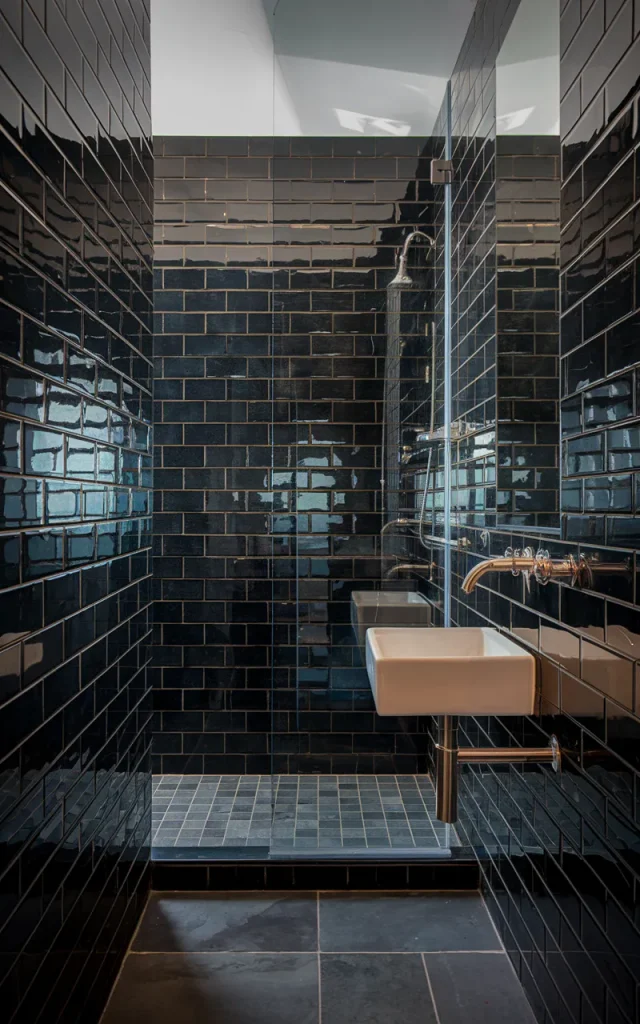
If matte black feels a little too understated, glossy black tiles offer another way to bring drama into your bathroom. Their reflective surface catches the light and creates subtle highlights that make the walls feel more dynamic.
I would use glossy tiles on a feature wall, inside the shower, or behind the vanity. Pair them with matte charcoal flooring to introduce contrast between finishes. A simple white basin and brushed metal hardware can provide additional definition.
Do this 👉
- Combine glossy walls with a more understated floor.
- Use appropriate lighting to emphasize the reflective surface.
- Choose grout that complements your desired visual effect.
Not this ❌
- Cover every surface in glossy black without considering glare.
- Ignore water spots and fingerprints when choosing finishes.
- Use a slippery glossy tile on the floor without confirming its suitability.
Glossy tiles can show smudges and water marks more readily than some matte finishes, so think about maintenance before choosing them for a busy family bathroom.
When used selectively, they create a beautiful sense of depth without requiring extra decoration.
Decorate a Dark Bathroom With Minimalist Accessories
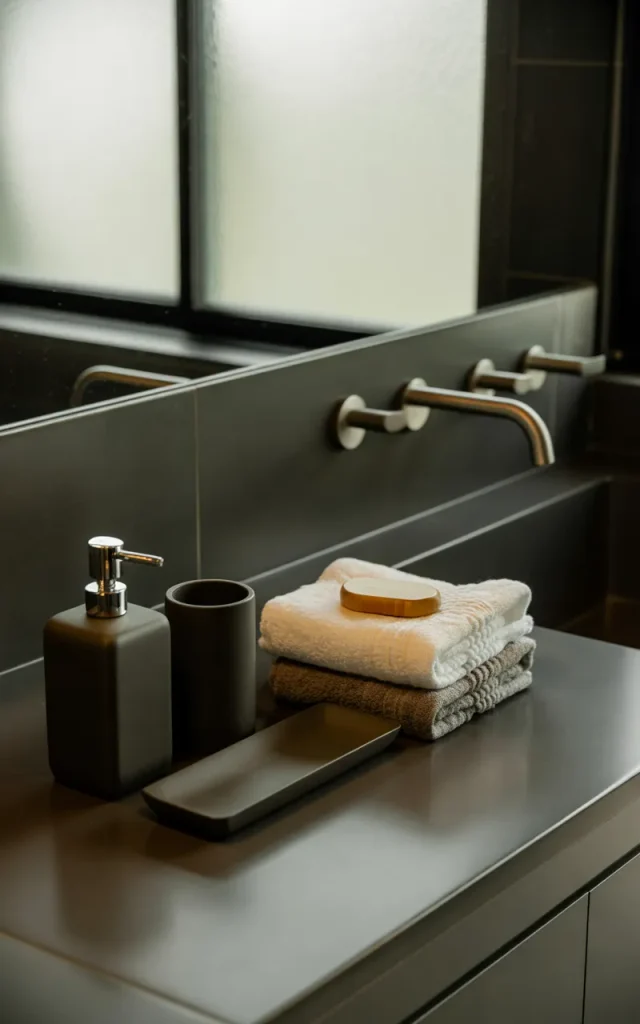
Sometimes, a dark bathroom needs less decoration rather than more. If you’ve already invested in beautiful tiles, a striking vanity, or dramatic wall colors, keeping the accessories simple can make the entire room look more sophisticated.
Start with a coordinated soap dispenser, a matching toothbrush holder, neatly folded towels, and a small tray for everyday essentials. Choose black, stone, wood, or brushed metal finishes that complement the main palette.
Decision fatigue? Use this easy formula:
- One practical countertop tray.
- Two or three coordinated everyday accessories.
- One soft textile accent.
- One small decorative detail, if space allows.
That’s enough to make the vanity feel finished without cluttering it.
I recommend keeping frequently used products accessible and storing backups inside drawers or cabinets. A clean countertop makes dark surfaces look more intentional, particularly when the room has dramatic lighting or patterned stone.
If you enjoy changing your decor seasonally, towels and small accessories are easy places to experiment. Swap warm beige textiles for crisp white ones, or introduce muted green for a softer botanical touch. Small changes can refresh the room without another renovation.
Balance Dark Bathroom Decor With Natural Light and Greenery
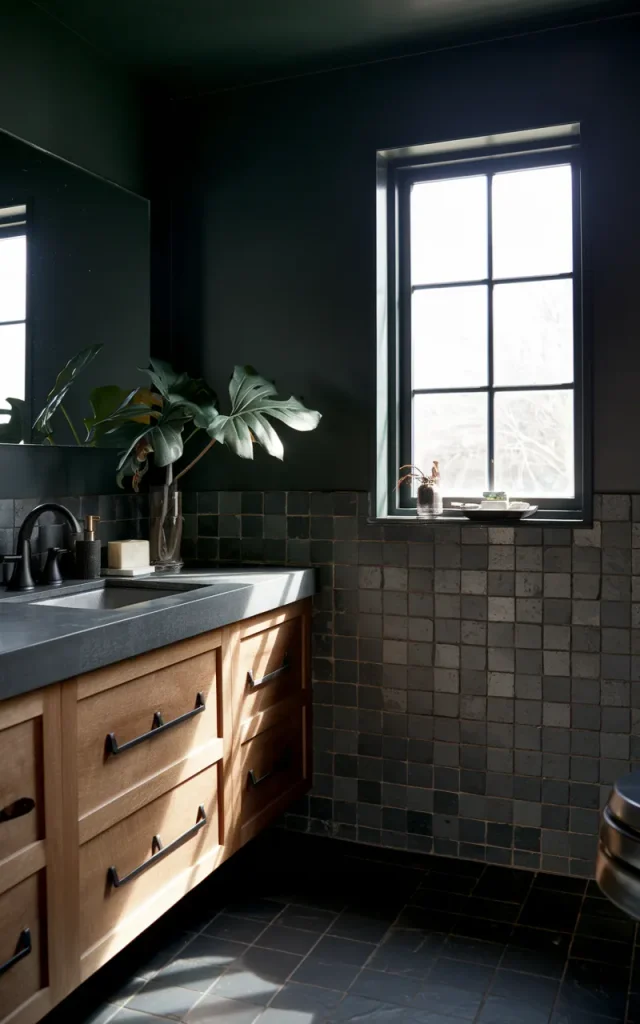
For my final idea, I’d bring together the elements that make dark bathroom design feel welcoming: deep colors, natural materials, thoughtful lighting, and a little greenery. 🌿
If your bathroom has a window, make the most of it. Dark green walls, charcoal tiles, or a black vanity can look beautiful beside natural daylight. Add a wood stool, a pale stone countertop, and a plant suited to the room’s actual light and humidity conditions.
In a windowless bathroom, focus instead on layered artificial lighting and a restrained mix of textures. A botanical print, natural wood accessories, or a stone-effect surface can introduce an organic feeling without relying on a live plant.
One final styling rule: Give the eye somewhere to rest. You can have dramatic walls, beautiful tiles, and statement hardware, but leave a few surfaces simple so the overall design feels balanced.
Dark bathrooms look their best when they combine contrast with comfort. The aim isn’t to make the room as dark as possible; it’s to create a space that feels considered, relaxing, and genuinely enjoyable to use.
Final thoughts on dark bathroom ideas
Dark bathrooms can be elegant, modern, cozy, or wonderfully dramatic. The secret is choosing the right balance of color, lighting, texture, and contrast for your particular space.
You don’t have to renovate everything at once, either. Start with a charcoal accent wall, a black vanity, brass hardware, or a dramatic mirror. Once you see how those changes work together, you can decide whether to take the look further.
My advice? Choose the idea that makes you excited to walk into your bathroom every morning. A little darkness, when styled thoughtfully, can create a room full of character. ✨
