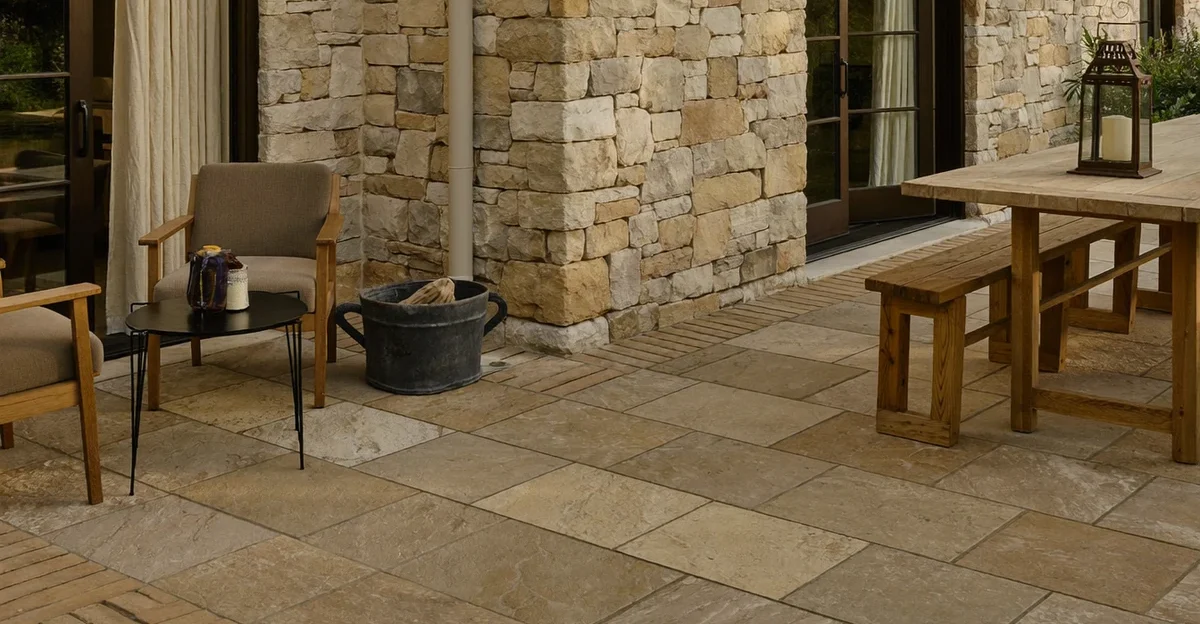
Some patios look brand new for about ten years. Others look like they’ve been part of the house forever, from the very first weekend. The difference is almost never the furniture. It’s the ground under your feet.
Pavers are the quiet hero of a good backyard. The material, the color, the laying pattern and the border do most of the heavy lifting, and they set the mood long before you add a single chair. Get those right and everything else feels easy.
So I pulled together my favorite paver patio ideas, from classic herringbone brick to bold checkerboards and soft gravel joints. Each one is about the surface itself, with practical notes on what to use and why it works. Grab a coffee ☕ and let’s look at some floors.
Lay Herringbone Brick for Instant Heritage Charm
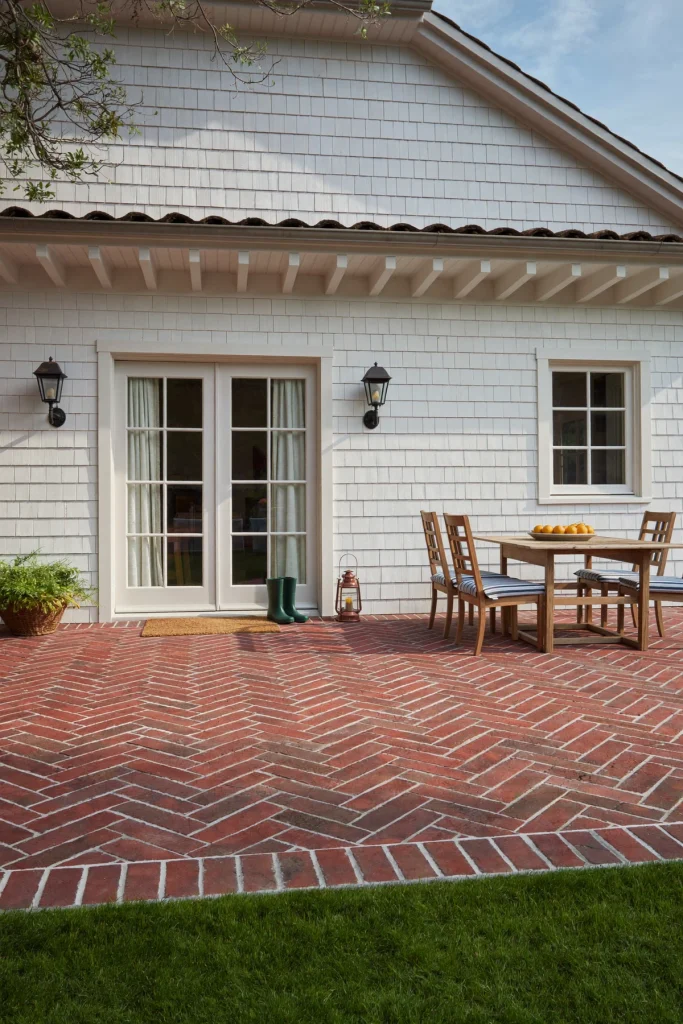
If I could only pick one pattern forever, it would be herringbone. Those zigzag rows of brick feel tailored and old-fashioned at the same time, and they hide small color differences beautifully.
Use clay brick pavers in a warm red or soft rose blend. Set them at 45 or 90 degrees to the house and the whole patio suddenly looks intentional, like it came with the home. 🧱
Herringbone is also one of the strongest patterns you can lay. The bricks lock into each other, so they shift less under heavy furniture and foot traffic.
Why It Works
The interlocking angles spread weight in every direction. That means fewer wobbly bricks and fewer weeds pushing up through tired joints.
Choose Bluestone in a Random Ashlar Pattern
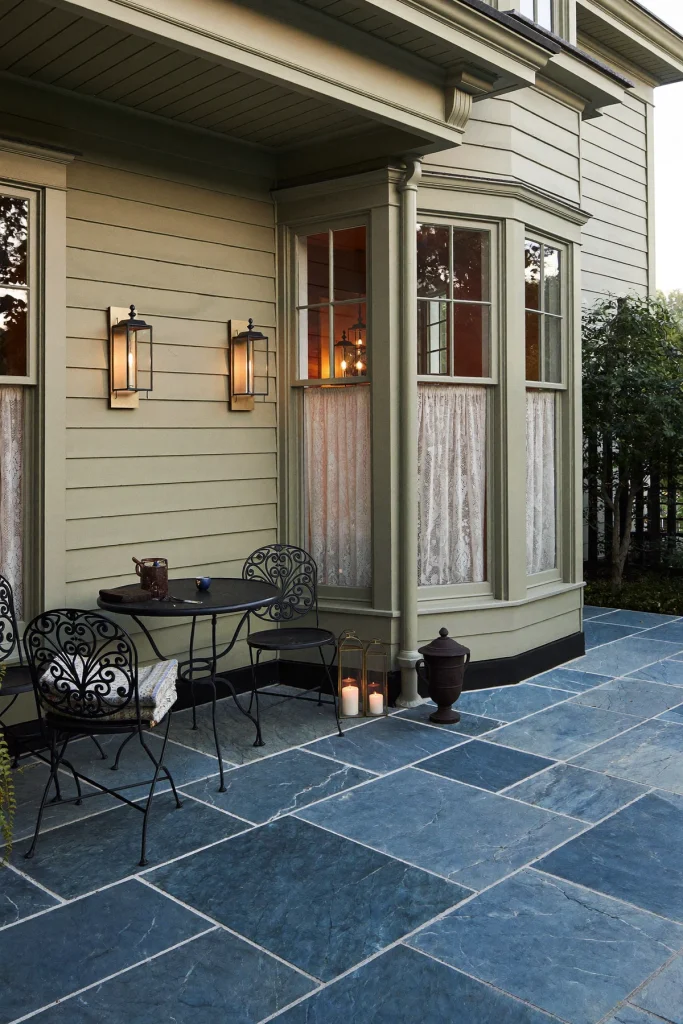
Bluestone has that cool, blue-grey tone you see on old East Coast terraces. Laid in a random ashlar pattern, with rectangles and squares of different sizes fitted together, it looks relaxed but still neat.
Ask for thermal-finished bluestone. The slightly textured surface is less slippery when wet, and it stays cooler underfoot than darker stone.
This one pairs well with painted clapboard and older homes. The mixed sizes keep the eye moving, so even a large patio never feels like a parking lot.
Go Warm With Tumbled Travertine
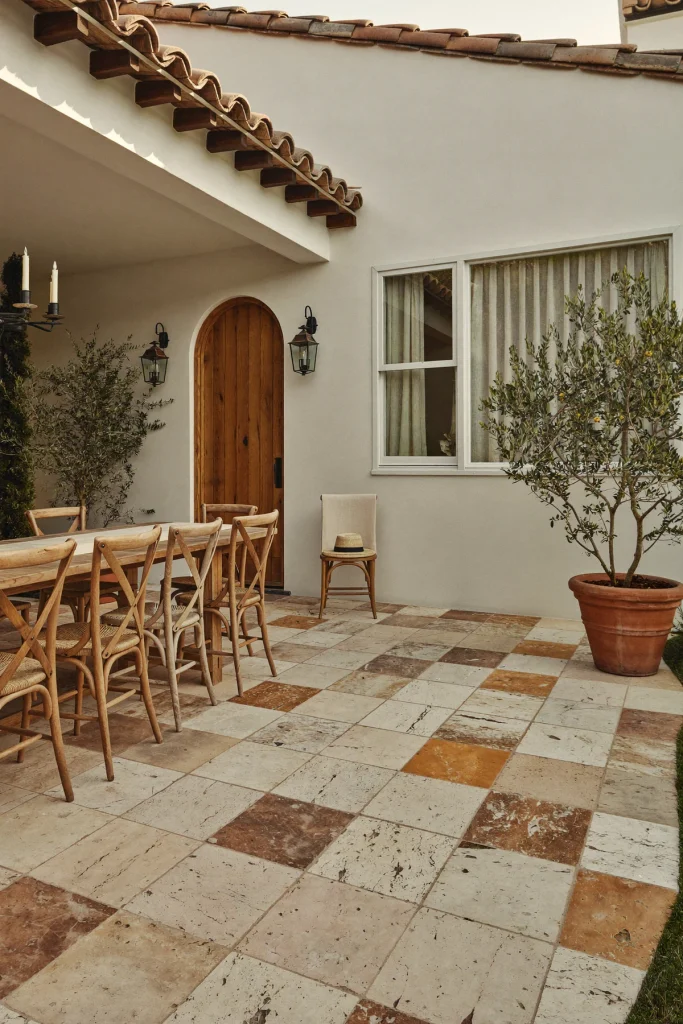
Travertine is my answer for anyone who wants a patio that feels sun-warmed and soft. The creamy, honey and walnut tones look gorgeous against stucco walls and terracotta roofs. ☀️
Choose tumbled travertine pavers. The rounded edges and slightly pitted face give you an aged, Mediterranean-inspired look on day one.
Bonus: light-colored travertine reflects heat, so bare feet are happy even in July. Lay it in a French pattern (a repeating mix of four sizes) for that classic villa look in an ordinary backyard.
Pro Tip

Ask for pavers that are at least 1¼ inches thick for a sand-set patio. Thinner travertine is meant for mortar over a concrete slab.
Center the Patio With a Circle Kit
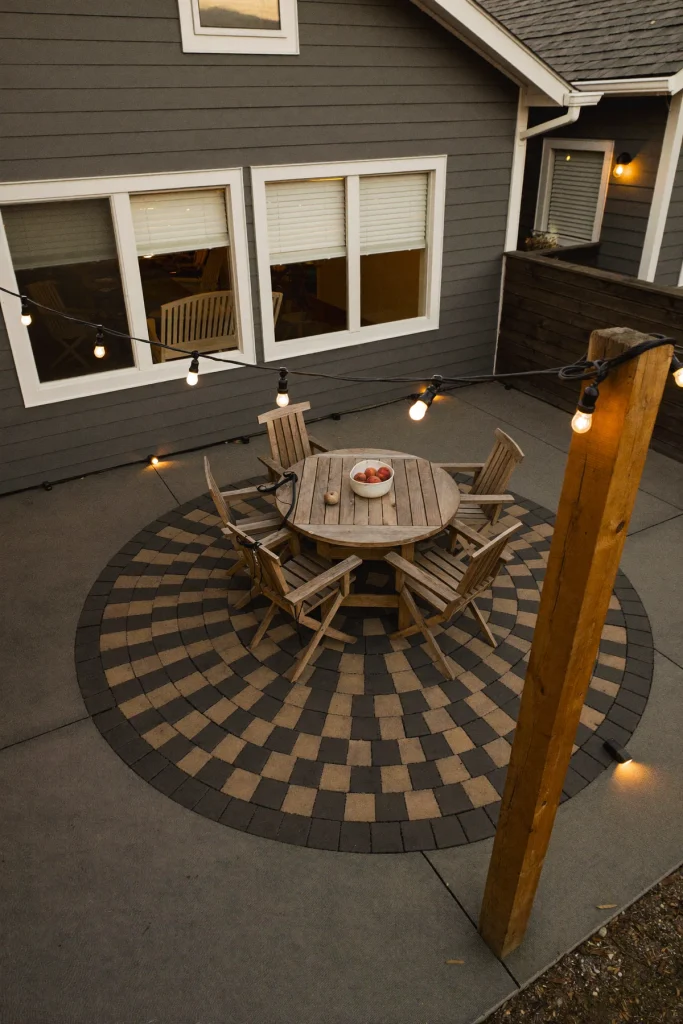
Circle kits are pre-cut pavers that fan out from a center point into rings. They turn a plain rectangle into something with a real focal point, and they’re surprisingly DIY-friendly.
Lay the circle in the middle of the patio and fill the corners with a simple running bond. Or let the circle stand alone in the lawn as a round sitting spot.
I love them in a two-tone blend, like charcoal and tan. The rings read clearly from an upstairs window, and a round table looks like it was made to sit there.
Time Needed
A 10-foot circle kit usually takes two people one long weekend, including digging, base prep and laying.
Try Basketweave Brick in a City Courtyard
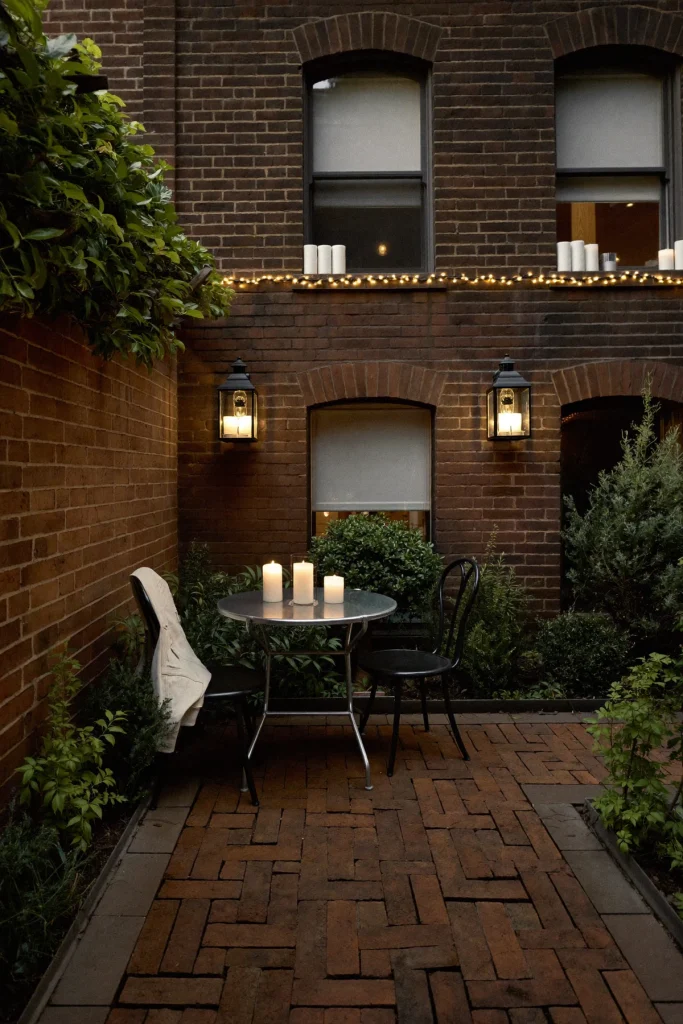
Basketweave is herringbone’s gentler cousin. Pairs of bricks sit side by side, then the next pair turns 90 degrees, like a woven placemat.
It’s perfect for small city back gardens behind brownstones and row houses. The pattern adds texture without busy angles, and it fits old brick walls like it grew there.
Use a slightly irregular, used-look brick. In the evening, with a couple of wall lanterns on and candles on the table, the pattern glows a deep rusty red. Cozy doesn’t begin to cover it. 🕯️
Leave Grass Joints Between Concrete Slabs
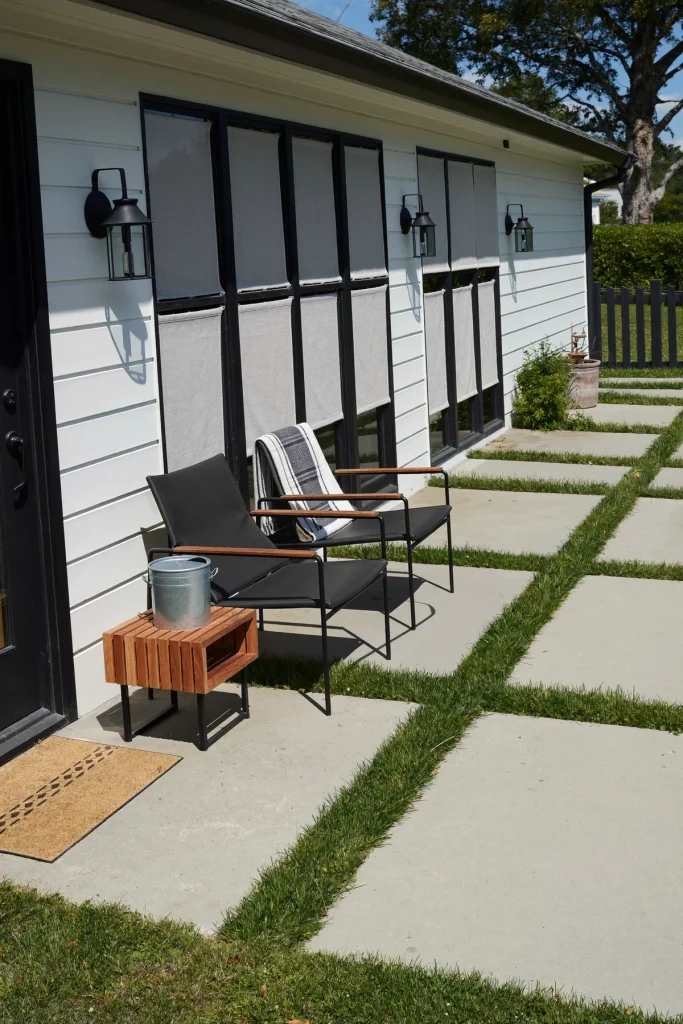
This is the patio for people who love a lawn but need a solid place for chairs. Large concrete slabs sit 3 to 4 inches apart, with strips of grass growing in between.
The result looks soft and modern, almost like a striped rug laid on the lawn. It drains beautifully too, because rain sinks into the grass joints.
Keep the slabs level with the soil so the mower rolls right over. Smooth grey slabs feel modern farmhouse. Exposed-aggregate slabs feel a bit more mid-century.
Frame Everything With a Soldier-Course Border
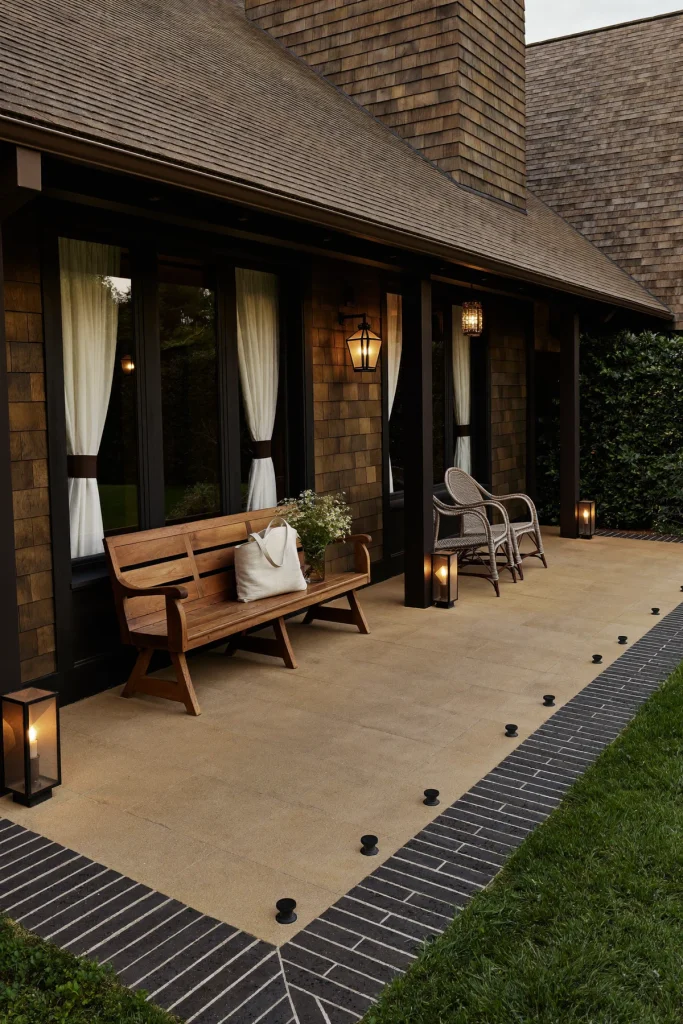
A border is the picture frame of a paver patio. A soldier course is a row of pavers standing shoulder to shoulder around the edge, usually in a contrasting color.
It hides small cuts in the main field, keeps the edge from creeping, and makes even an inexpensive concrete paver look custom.
Try charcoal around a tan field, or deep red brick around grey. A double border, two rows deep, looks especially polished around a bungalow porch.
Paver Pattern Cheat Sheet
| Pattern | Best for |
|---|---|
| Herringbone | Heavy use, classic homes, driveways that meet the patio |
| Basketweave | Small courtyards, cottage and brownstone gardens |
| Running bond | Modern homes, large-format pavers, quick installs |
| Random ashlar | Natural stone, relaxed and traditional looks |
| Circle or fan | Focal points, round seating areas, curved edges |
Curve the Patio Edge Into the Lawn
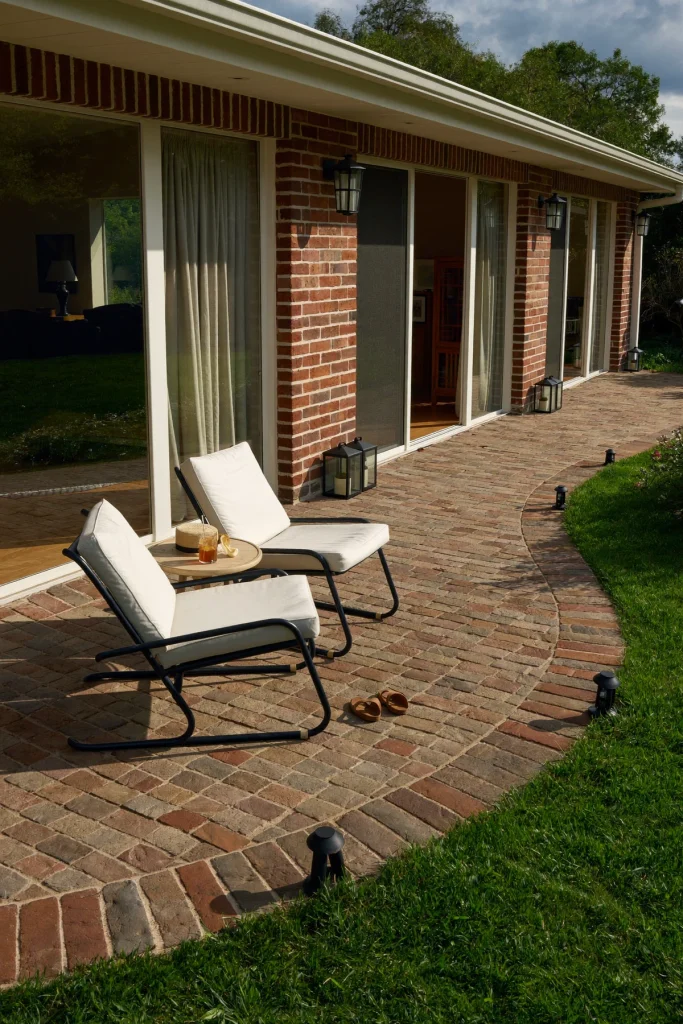
Straight edges are tidy. Curves are friendly. A soft, wavy patio edge makes a backyard feel more relaxed and helps the patio flow into the grass instead of stopping hard.
Mark the shape with a garden hose first, then live with it for a few days. Walk around it. Set chairs on it. Adjust until it feels natural. 🌀
Finish the curve with a flexible edge restraint and a border row of pavers. Smaller pavers, like cobble-size units, bend around curves with far fewer awkward cuts.
Build Wide Paver Steps Down From the Back Door
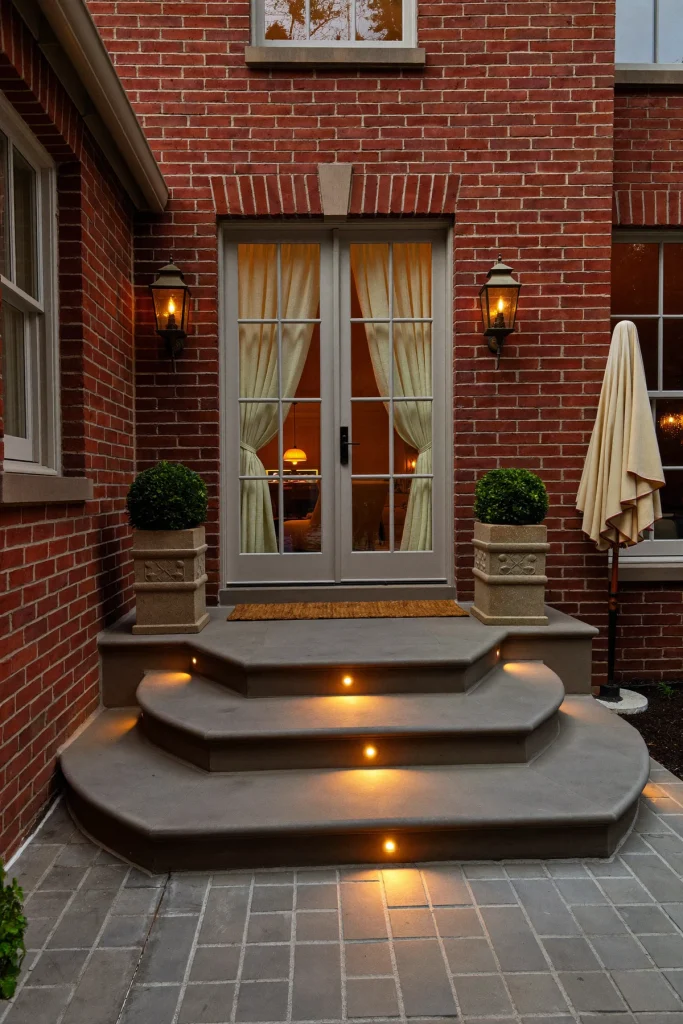
The steps from your back door are the first thing you touch outside, so make them generous. Wide, shallow paver steps feel welcoming and safe, and they connect the house to the patio like a grand entrance.
Use the same pavers as the patio on the treads, and finish each step with a smooth bullnose cap. Small LED lights tucked into the risers make evening trips outside easy.
Aim for a gentle rise so nobody has to think about where they’re stepping.
Common Mistakes to Avoid
- Steps that are too narrow for two people to pass
- Treads that tilt toward the house instead of away from it
- Skipping lighting, then tripping in the dark
- Uneven step heights, which catch people off guard
Wrap a Seat Wall Around the Patio Edge
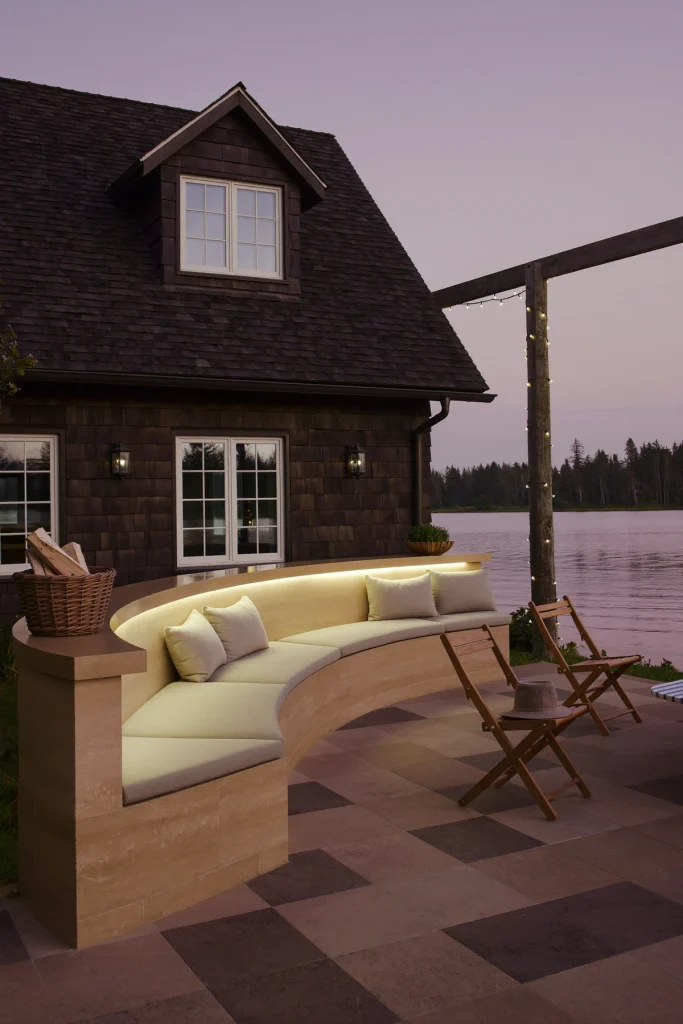
A seat wall is a low wall, about 18 to 20 inches tall, built from the same segmental blocks or pavers as the patio. It turns the edge of the patio into extra seating without adding a single chair.
I love one curving along the back of a patio, especially where the yard slopes away. It holds back the soil, frames the view and gives party guests somewhere to perch.
Top it with a smooth, wide cap so it’s comfortable to sit on. Then add a few plain cushions when friends come over. A couple of small lights tucked under the cap make the whole wall float after dark.
Pick a wall block in the same color family as your pavers, so it reads as one built piece and not two projects that happened to meet. 🏡
Sink a Fire Pit Into the Paver Floor
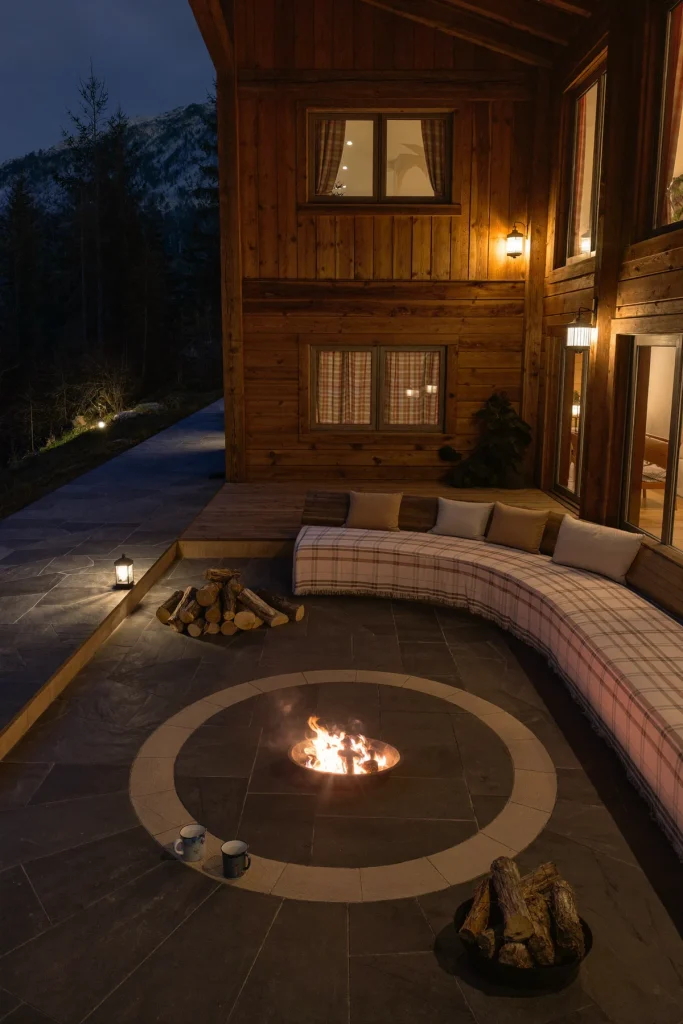
A built-in fire pit made from matching pavers feels like part of the architecture, not something you bought and plopped down. Build a ring of wall block, line it with a steel insert, and lay the patio in circles around it.
For a cozy, sunken feel, drop the fire pit area one step below the main patio. Everyone sits a little lower and closer, and the wind has less to say about it. 🔥
Keep the pavers right around the pit in a slightly darker shade. Soot and spark marks hide better, and the color change frames the fire like a rug.
Fire-Safe Checklist
- Check local rules on open fires before you build
- Keep at least 10 feet from the house and overhanging branches
- Use a fire-rated steel ring or firebrick lining
- Leave a clear paver zone of a few feet around the pit
Lay Hexagon Pavers for a Modern Honeycomb Floor
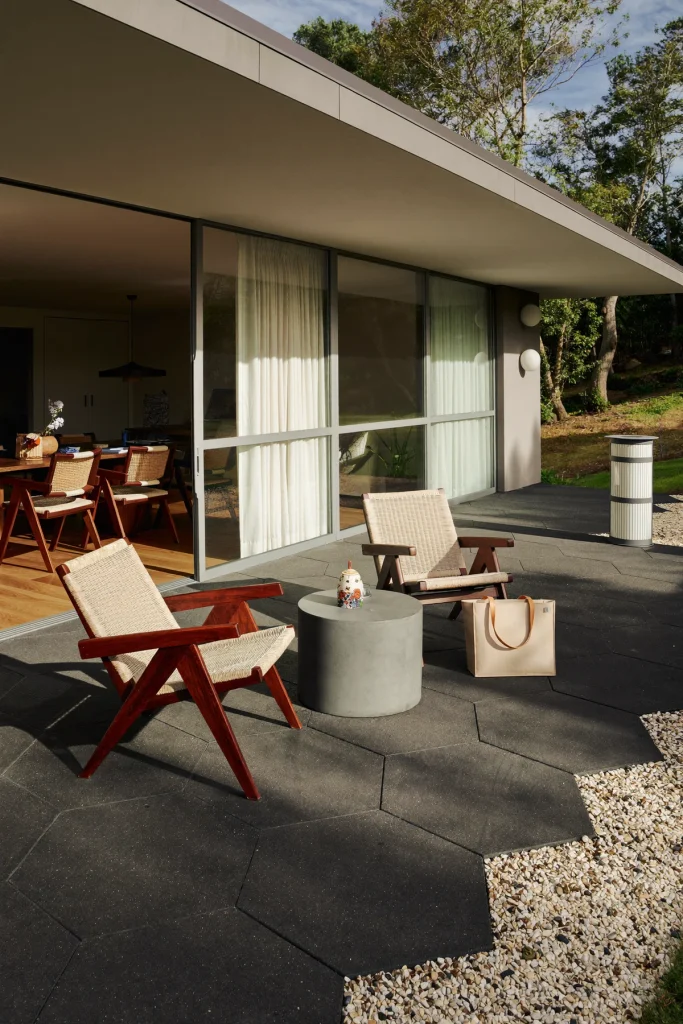
Hexagon pavers are such an easy way to make a patio feel fresh. The six-sided shape creates a honeycomb pattern that looks both modern and a little retro, especially on a mid-century home.
Large hexagons in charcoal or smooth concrete grey feel graphic and calm. Smaller ones in terracotta lean warm and playful.
One fun trick is to let the hexagons break apart at the edge of the patio, scattering into the gravel or lawn instead of stopping in a straight line. It softens the boundary and looks very designer.
Plan your layout carefully, because hexagons create a lot of cut pieces along straight edges. A border row tidies those up nicely, just like the soldier course from idea 8.
Wrap the Patio Around a Corner of the House
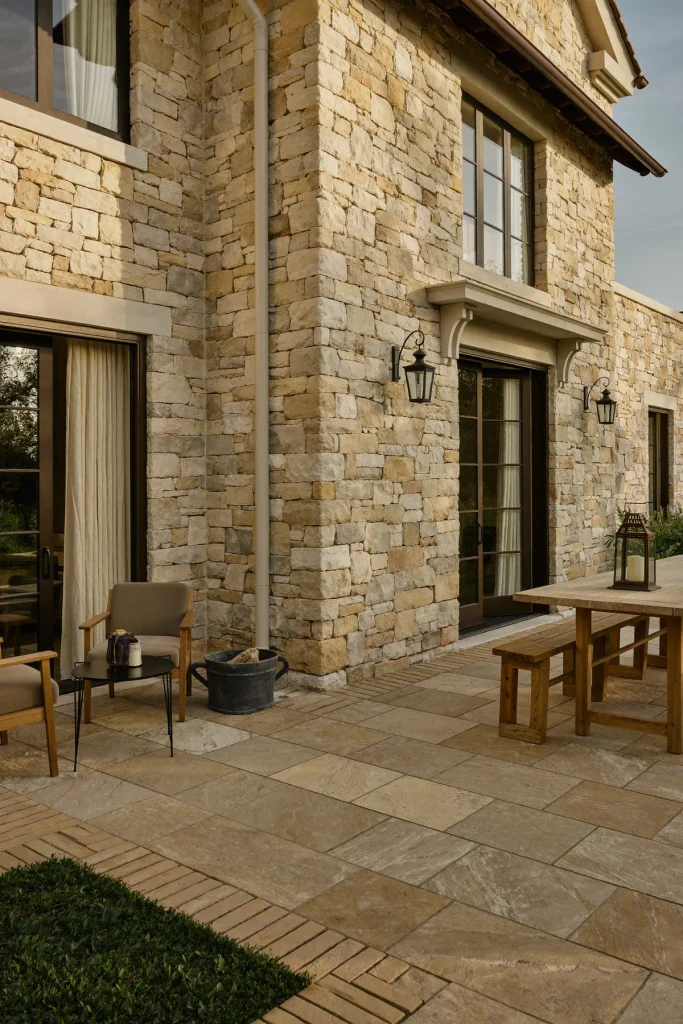
An L-shaped patio that wraps around the corner of the house gives you two outdoor rooms for the price of one paver order. One side catches morning sun for coffee. The other stays shady for long afternoon lunches.
Run the same paver and pattern all the way around so it reads as one continuous terrace. A wide soldier border along the house wall ties both sides together.
Wraparound patios look especially good on larger traditional homes with lots of doors. Each French door gets its own landing, and the whole back of the house suddenly feels open.
Turn the corner with a curve instead of a sharp right angle if you want it to feel softer.
Lead Guests In With a Paver Path
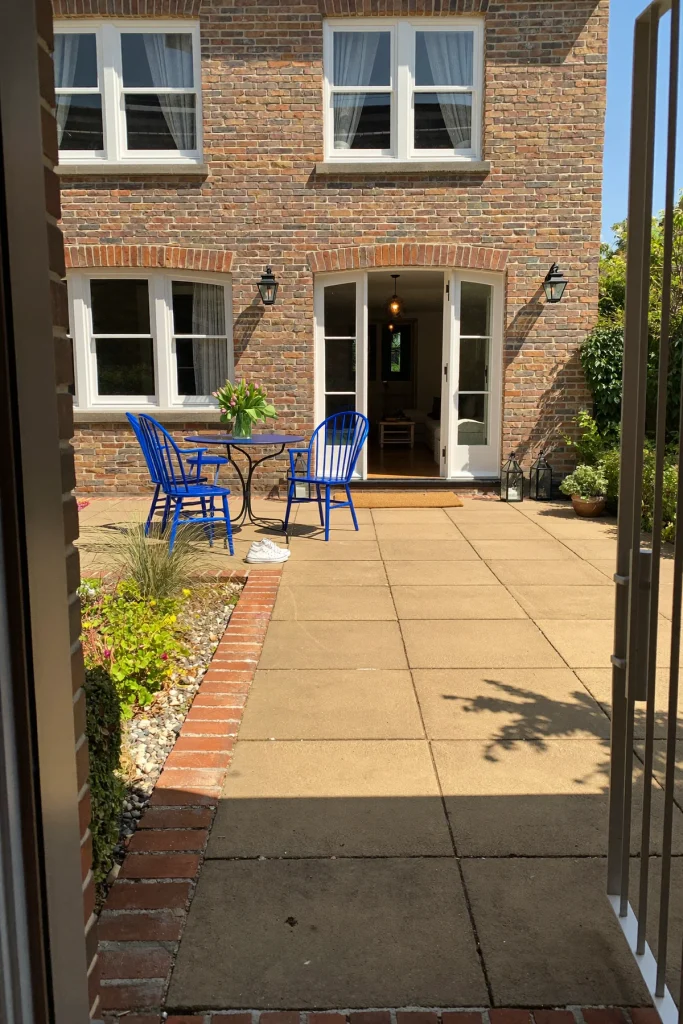
A patio feels more inviting when there’s a clear way to get there. A paver path from the side gate or driveway leads guests straight to the good part of the yard. 👣
Use the same paver as the patio, but change the pattern. A running bond path that opens into a herringbone patio feels like walking down a hallway into a room.
Make it at least 3 feet wide, or 4 feet if two people will walk side by side. Gentle curves feel relaxed. A straight line feels formal and fits symmetrical homes.
Edge both sides with a single border row to keep the lines crisp, and add a few low path lights for evenings.
Go Bold With a Black-and-White Checkerboard
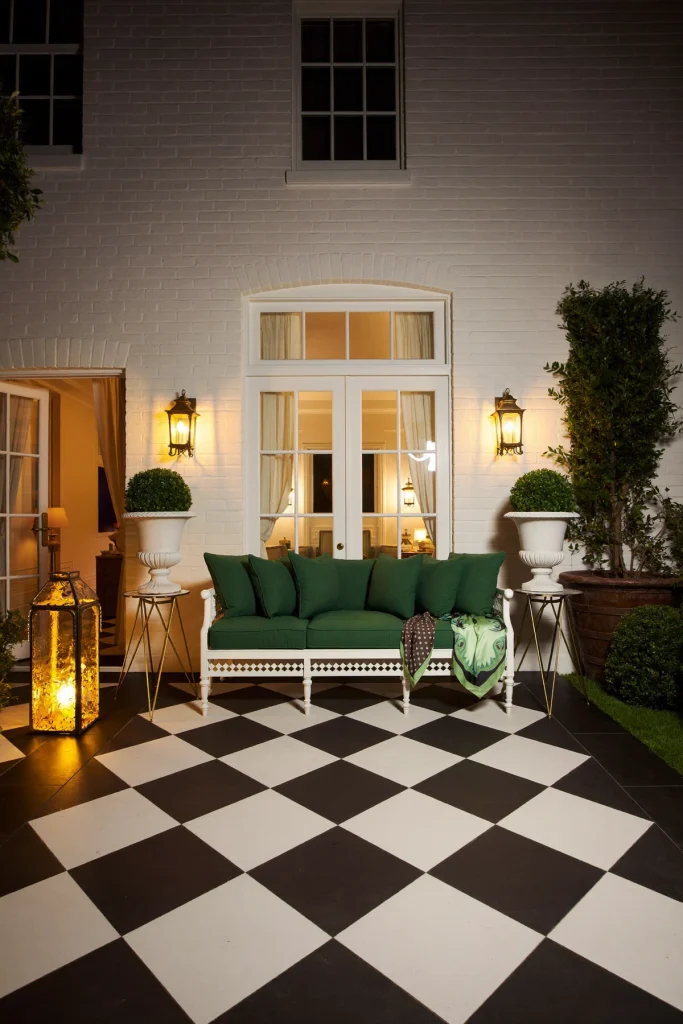
Want a patio people talk about? Lay black and white square pavers in a checkerboard. It’s dramatic, glamorous and a little bit cheeky, like a black-and-white tiled hallway moved outside. 🖤
Use porcelain or honed concrete squares in matte finishes. Glossy surfaces get slippery and show every scuff.
Lay the squares on the diagonal for even more drama, or square to the house for a cleaner, more classic look. Keep furniture simple and let the floor be the star.
Tiny joints make the pattern sharper, so this one looks best with porcelain on a well-prepared concrete slab.
Do This 👉 / Not This ❌
- 👉 Matte black and soft white squares. ❌ High-gloss tile.
- 👉 A plain border to frame the pattern. ❌ Letting the checks run into the lawn.
- 👉 Simple furniture shapes. ❌ Busy patterned cushions everywhere.
Soften the Look With Pea Gravel Joints
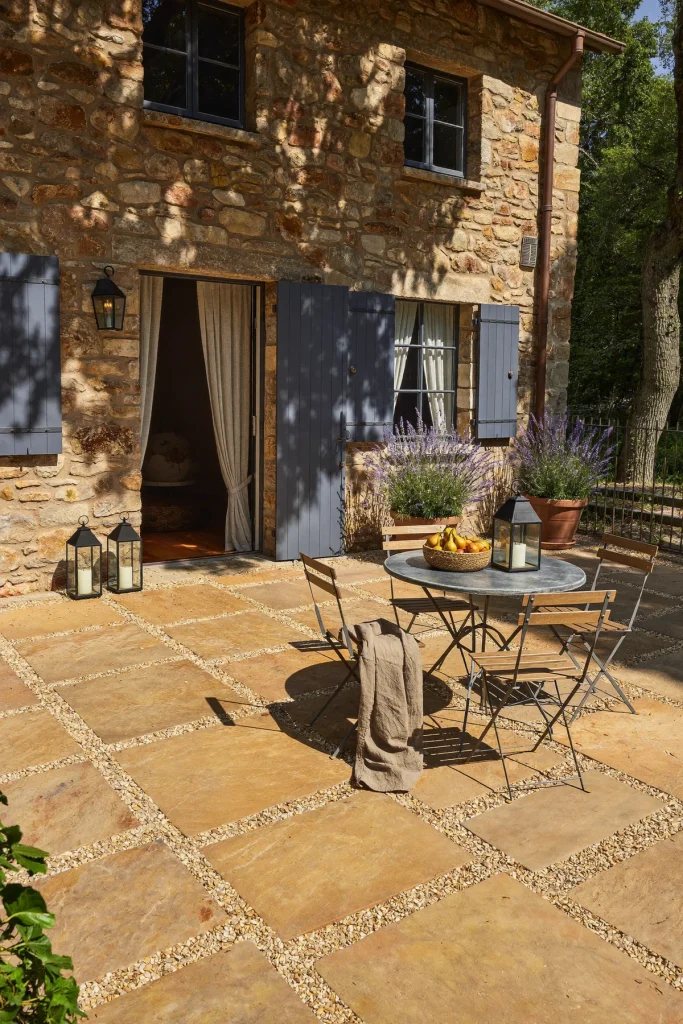
Instead of tight sand joints, leave 1 to 2 inch gaps between natural stone pavers and fill them with pea gravel. The patio instantly feels softer, more casual and a little European.
It’s an easy way to stretch your budget, because the gravel covers space you’d otherwise pay for in stone. The joints drain well, and the gravel crunches pleasantly underfoot.
Pick a gravel color that matches the stone. Buff gravel with sandstone, grey gravel with bluestone. Then the whole surface reads as one gentle texture.
Chairs with wider feet work best here so they don’t wobble in the joints.
Joint Filler Guide
| Filler | Best for |
|---|---|
| Polymeric sand | Tight joints, fewer weeds, a clean finish |
| Pea gravel | Wide joints, a relaxed European look |
| Stone chips | Permeable pavers and good drainage |
| Grass or low groundcover | Slab patios that blend into the lawn |
Lay Pavers on the Diagonal to Stretch a Narrow Yard
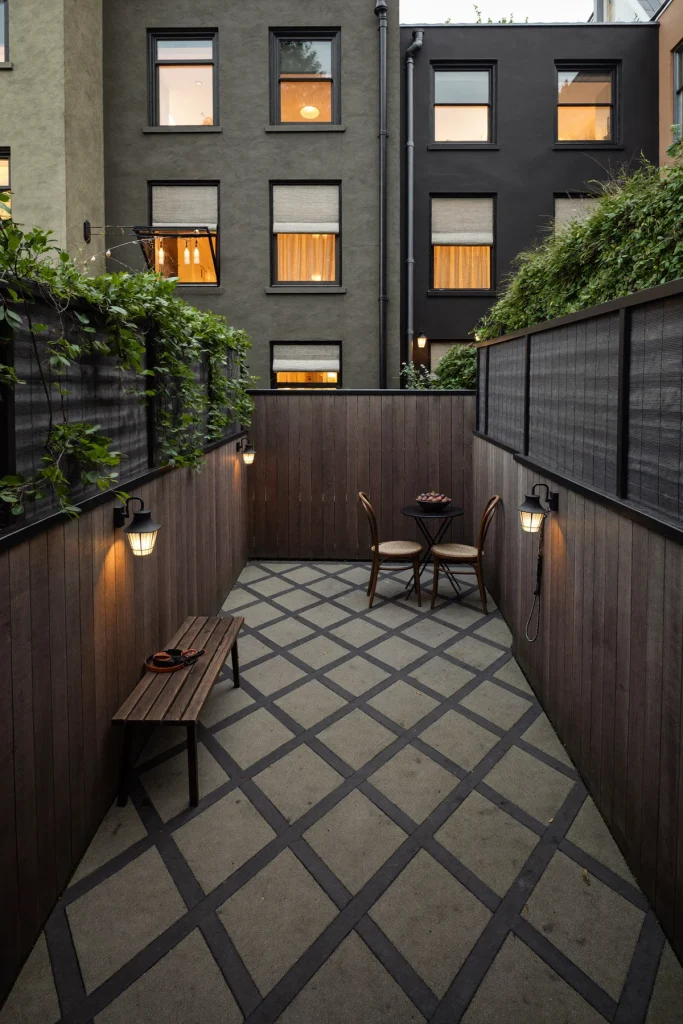
Townhouse yards are often long and skinny, like a bowling lane. Laying pavers at a 45-degree angle to the house pulls the eye across the space instead of straight down it, so the yard feels wider.
It works with almost any rectangular paver. Square pavers on the diagonal look especially smart, like a classic kitchen floor.
Finish with a straight border along the fences. The contrast between the angled field and the straight frame looks tidy and helps hide all those angled cuts.
With wall lights on the fence and a couple of lanterns glowing, a narrow courtyard starts to feel like a proper room. Remember the soldier course from idea 8? This is where it earns its keep.
Use Reclaimed Brick for Instant Old-World Character
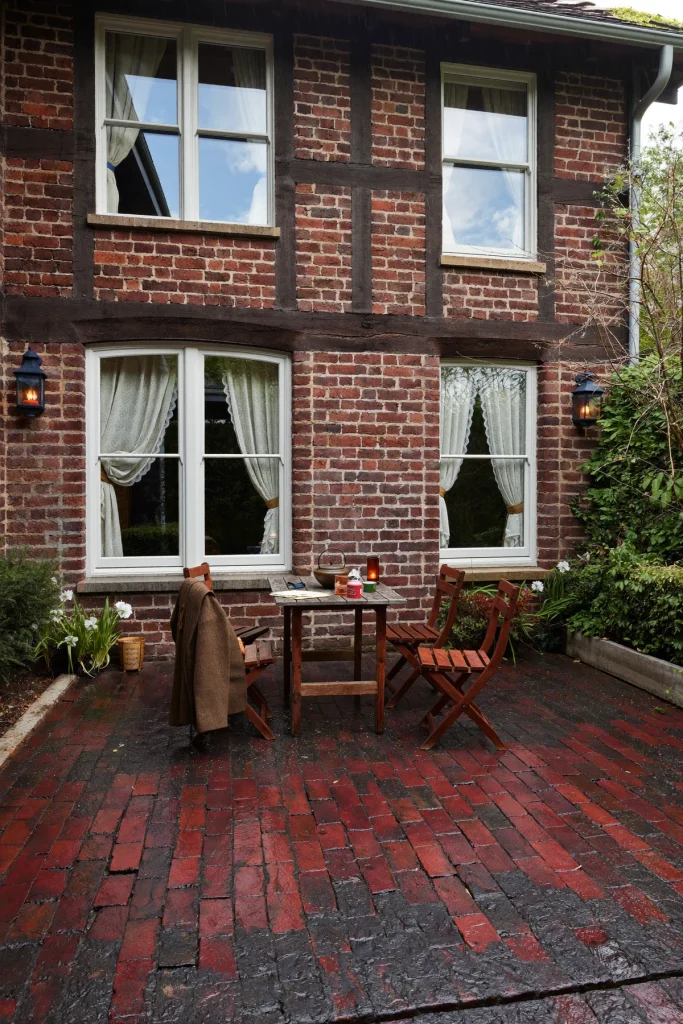
Nothing looks as lived-in as reclaimed brick. Salvaged from old buildings, each one carries chips, soot shadows and mortar ghosts that new brick can only try to copy.
A reclaimed brick patio looks wonderful next to older homes, especially Tudor, Colonial and cottage styles. It also feels good to reuse something with a past.
Lay it in herringbone or basketweave on a sand base. Expect some size variation, so leave slightly wider joints and work from several pallets at once to mix colors evenly.
After rain, reclaimed brick turns a deep, glowing red that looks almost polished. I could stand on a wet brick patio and stare at it for ages. 🧡
Old bricks can be softer than new pavers, so choose hard-fired ones meant for outdoor ground use, especially if you live where winters freeze.
Where to Find It
Look at local salvage yards, demolition companies, architectural salvage shops and online marketplaces. Ask whether the bricks are rated for paving, not just walls.
Choose Wood-Look Porcelain Pavers
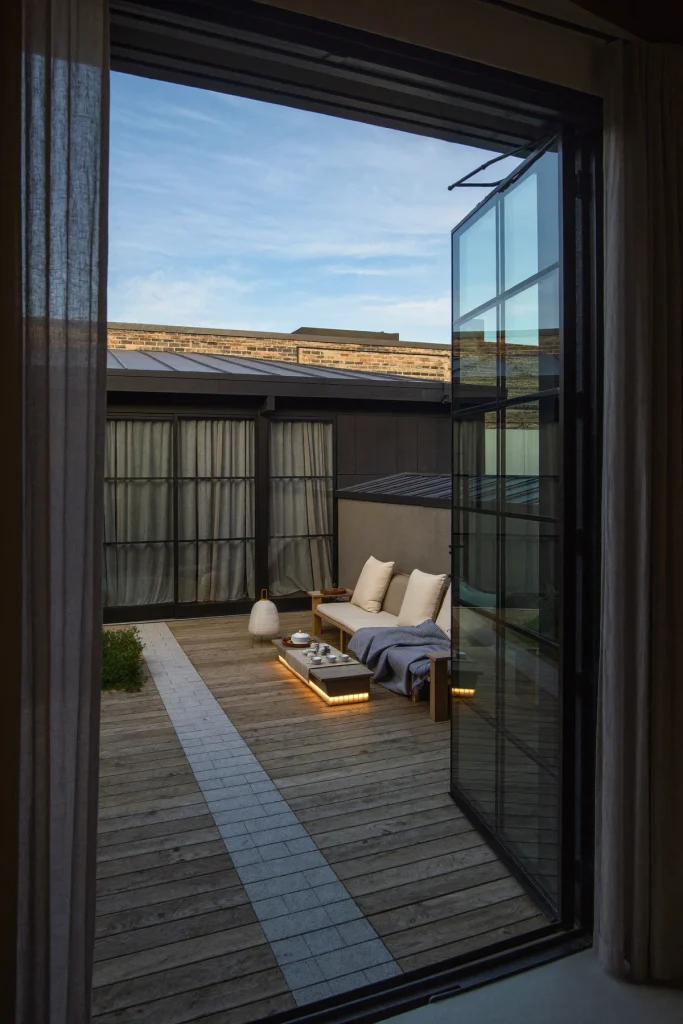
Love the look of a wood deck but not the sanding, staining and splinters? Wood-look porcelain pavers give you the warm grain of timber with the toughness of tile.
They come in long planks that can be laid in a straight plank pattern, a staggered running bond or even a herringbone. Light oak tones feel Japandi-inspired and calm. Deeper walnut tones feel richer and moodier.
They don’t rot, fade much or attract termites, and a quick rinse keeps them clean. They’re a natural fit for rooftop and loft terraces, where real wood can be a fire concern.
Mix them with a band of pale concrete pavers to mark a walkway or dining zone. The two textures look great side by side.
Cost Breakdown
| Material | Rough cost per sq ft (material only) |
|---|---|
| Concrete pavers | around 3–8 |
| Clay brick pavers | around 5–10 |
| Travertine or bluestone | around 6–15 |
| Outdoor porcelain pavers | around 6–15 |
Prices vary a lot by region, thickness and supplier, so get two or three local quotes.
Lay a Cobblestone Fan Pattern
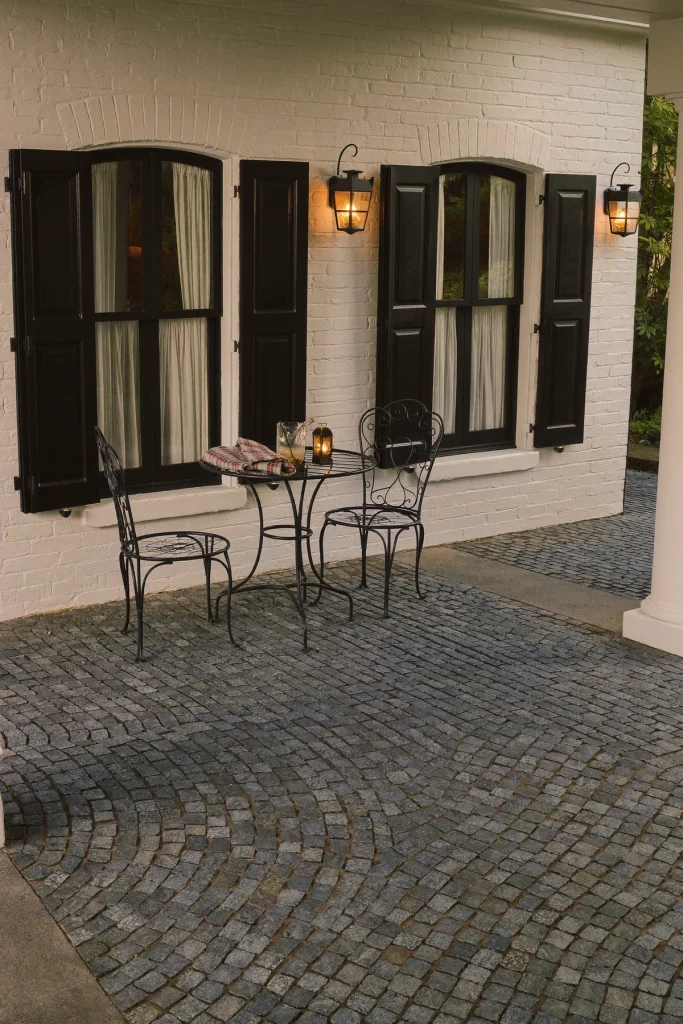
The fan pattern, sometimes called a European fan, uses small cobble-size pavers laid in overlapping arcs. It looks like the old streets of a historic town, and it adds instant charm to a courtyard.
Each fan is built from small squares that curve outward, so the pattern has a gentle rhythm that straight layouts can’t match. Use real granite cobbles for authenticity or tumbled concrete cobbles for an easier budget.
This works beautifully in a walled courtyard or the space between a house and garage.
It’s slower to lay than big pavers, so this one is usually best left to a pro. Smaller areas are worth the effort, though. The texture catches the light all day long.
Pair it with simple iron furniture and a pair of carriage lanterns on the wall, and the whole space feels like a little piece of the Old World.
Lay a Contrasting Paver “Rug” Under the Dining Table
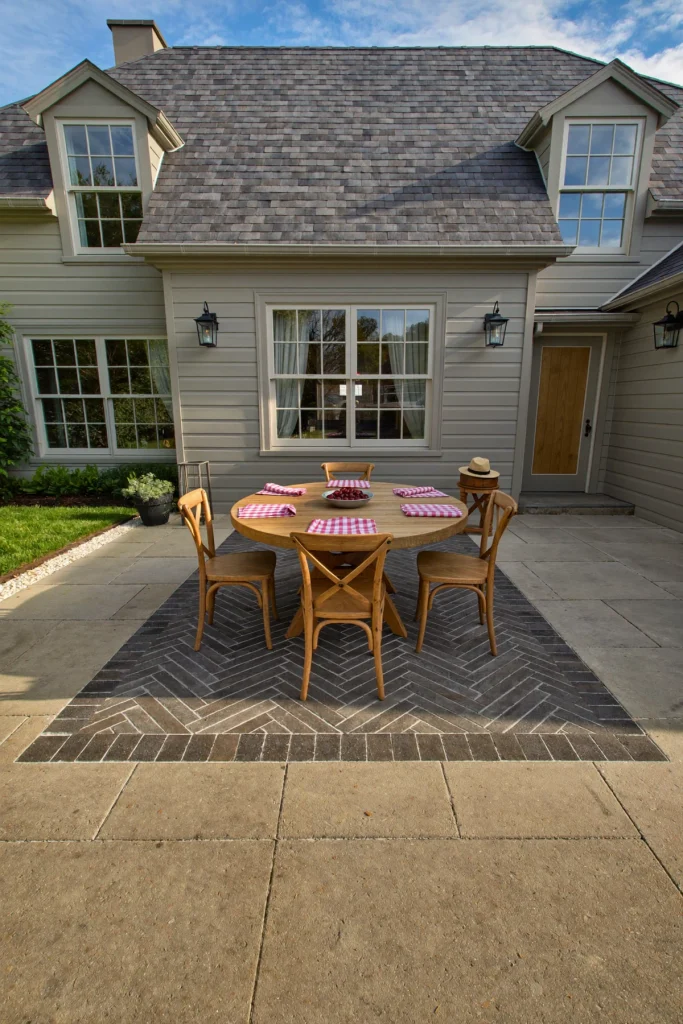
Here’s a trick I adore. Instead of buying an outdoor rug, build one into the patio. Lay a rectangle or circle of contrasting pavers right where the dining table will sit.
For example, run a tan running bond across the whole patio, then add a charcoal herringbone “rug” with a double border under the table. It defines the dining zone forever, and it never blows away or gets soggy.
Size it like a real rug. Leave at least 3 feet of paver rug around the table on every side so chairs can slide out without dropping off the edge.
It’s a clever way to use leftover pavers from another project, too. Two colors from the same paver line usually match in thickness, which makes installation simple.
If you love it, you can do the same under a lounge area or a fire pit, just like the darker ring around the fire in idea 12.
How to Steal This Look
- Pick two paver colors from the same product line
- Choose a different pattern for the “rug” than the main patio
- Frame the rug with a one- or two-row border
- Size it to the table plus 3 feet on every side
Wrap the Pool in Pale Coping Pavers
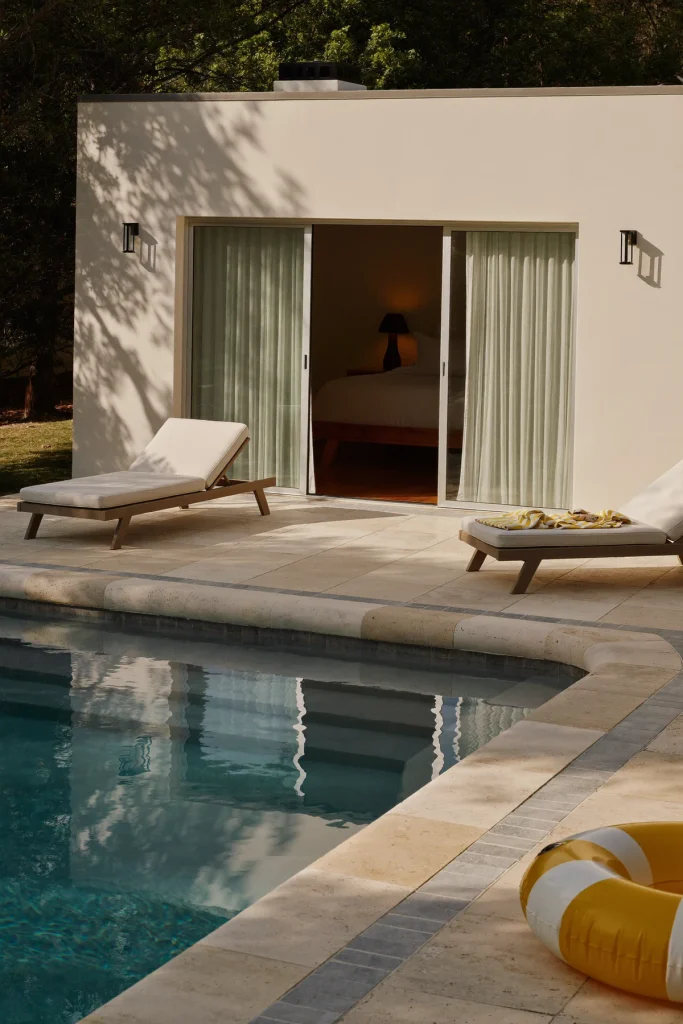
If you have a pool, the pavers around it matter just as much as the water. Pale coping pavers with a rounded bullnose edge make the pool look finished, and they feel smooth on wet hands and legs.
Choose light colors like ivory travertine, white limestone-look porcelain or pale concrete. They stay cooler in the sun, which little feet will thank you for.
Run the same pavers out into a wide pool deck so there’s room for loungers and towels. A slightly textured finish keeps things less slippery when splashed.
A contrasting band of darker pavers set a foot or two back from the coping adds a nice frame, like the border in idea 8, and stops the deck from feeling like one huge pale sheet.
Keep the drainage in mind. The deck should slope gently away from the pool so rain and splash water don’t flow back in with leaves and dirt.
Add an Art Deco Sunburst in Two-Tone Pavers
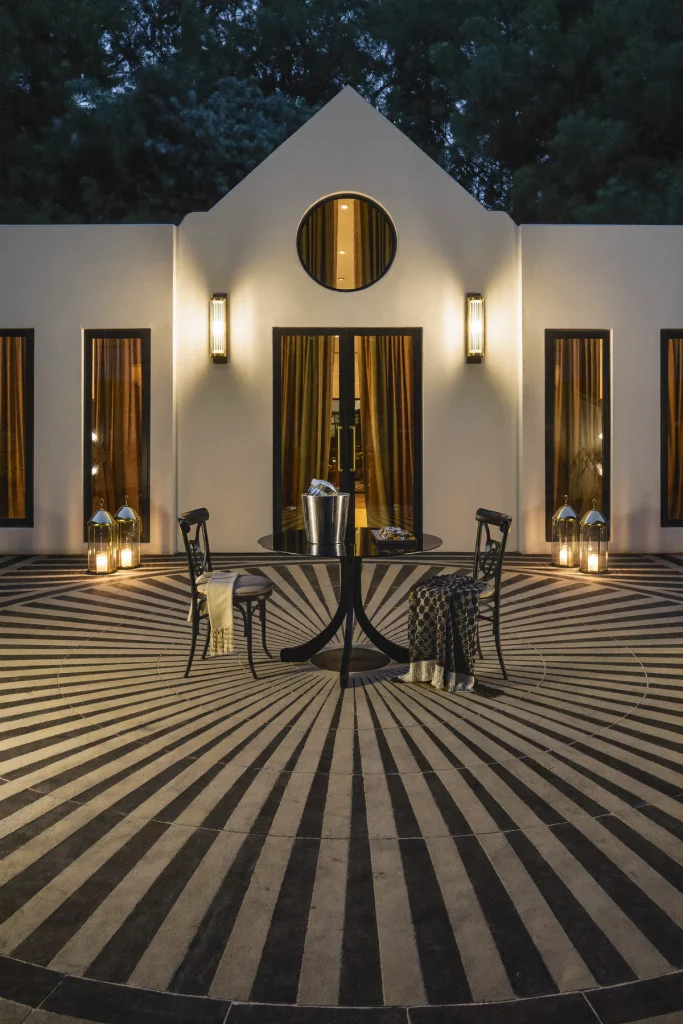
For the grand finale, a sunburst. Long, tapered pavers in two contrasting tones radiate out from a central circle, creating a bold Art Deco pattern that looks straight out of a 1920s mansion.
Cream and charcoal pavers keep it classic. Gold-toned travertine and deep green porcelain feel extra glamorous. Either way, the pattern turns your patio into a piece of art.
This one needs careful planning and precise cutting, so it’s usually a job for an experienced installer. Draw it to scale first and decide whether the rays will reach the edges or stop at a circular border.
At night, with sconces on the house and a few lanterns around the edge, the rays look almost like they’re glowing from the center. It’s dramatic in the best way. 🌟
Keep the furniture low and simple, so the sunburst stays visible from every angle.
Build It Once, Love It for Years
A great paver patio isn’t about following trends. It’s about choosing a material you love, a pattern that suits your home and a border that pulls it all together.
Start with the ground, and the rest falls into place. Pick a favorite idea, sketch it out and maybe call in a pro for the tricky parts. Then grab a chair, a cold drink and enjoy the patio you’ll be walking on for decades. 🌿
