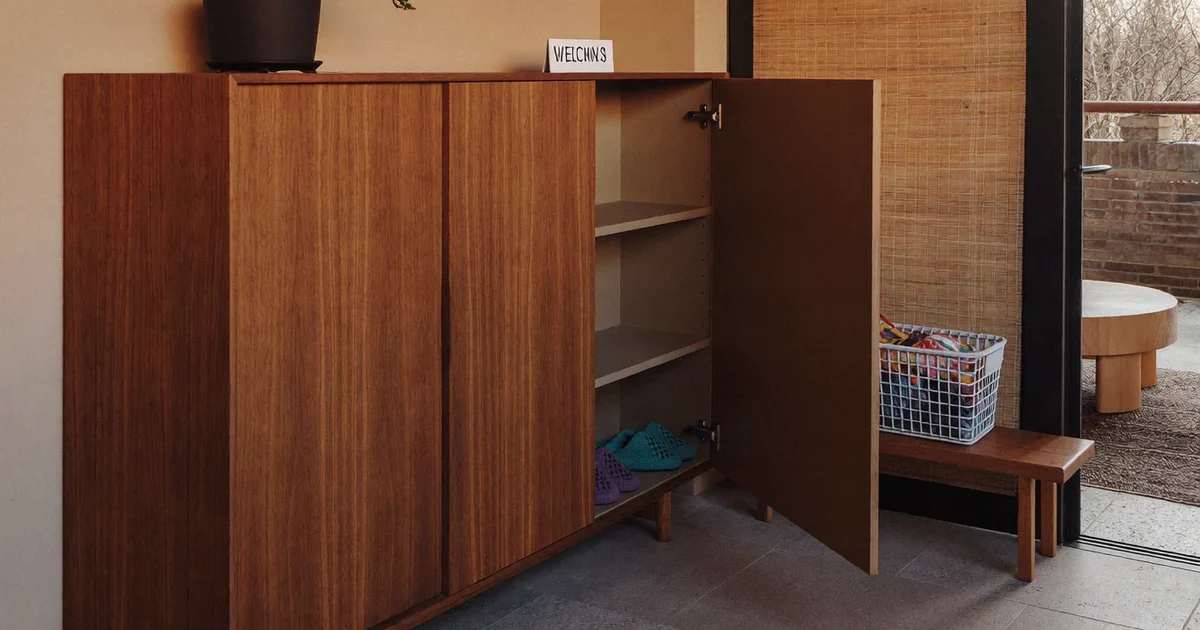
Open shoe racks look great in photos. Then real life walks in. Muddy sneakers, one flip-flop, a soccer cleat nobody claims, and suddenly the first thing you see when you come home is a pile.
That’s why I’m such a fan of entryway shoe cabinet ideas. Doors, drawers and tilt-out bins hide everything in one motion. The shoes are still right there by the door, ready for the school run, but your entry finally looks calm. 🙌
Below are 28 ways to do it, from slim tilt-out cabinets and floating units to repurposed sideboards, vintage armoires and full walls of built-ins. Every single one keeps the shoes out of sight.
Slip a Slim Tilt-Out Shoe Cabinet Behind the Front Door
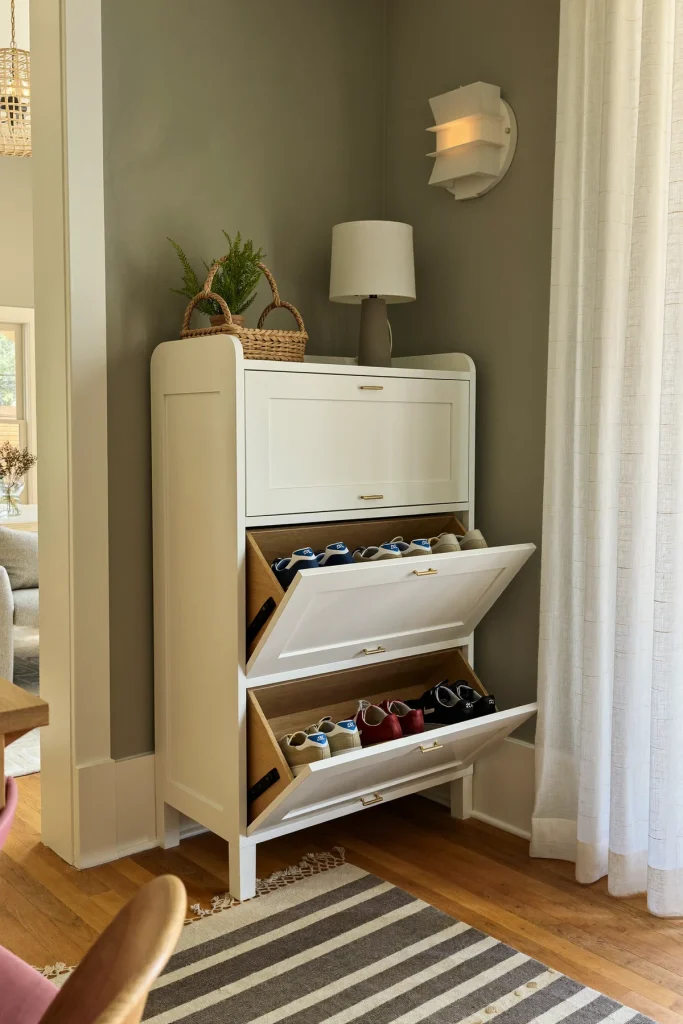
If your entry is tight, start here. Tilt-out cabinets are only about 7 to 9 inches deep, so they fit in the dead strip of wall behind the door swing that nobody uses.
Each bin flips forward and holds four to six pairs standing on their toes. Close it, and you’re left with a clean, flat front that reads like a slim console.
Put a small tray on top for keys and a plant for softness. Then anchor the cabinet to the wall, because tall, shallow pieces can tip when a little one pulls a bin open.
Why It Works
Shoes stored at an angle take up half the depth of shoes stored flat. That’s the whole trick, and it’s why these cabinets squeeze into spaces where nothing else will go.
Float a Wall-Hung Shoe Cabinet So the Floor Stays Clear
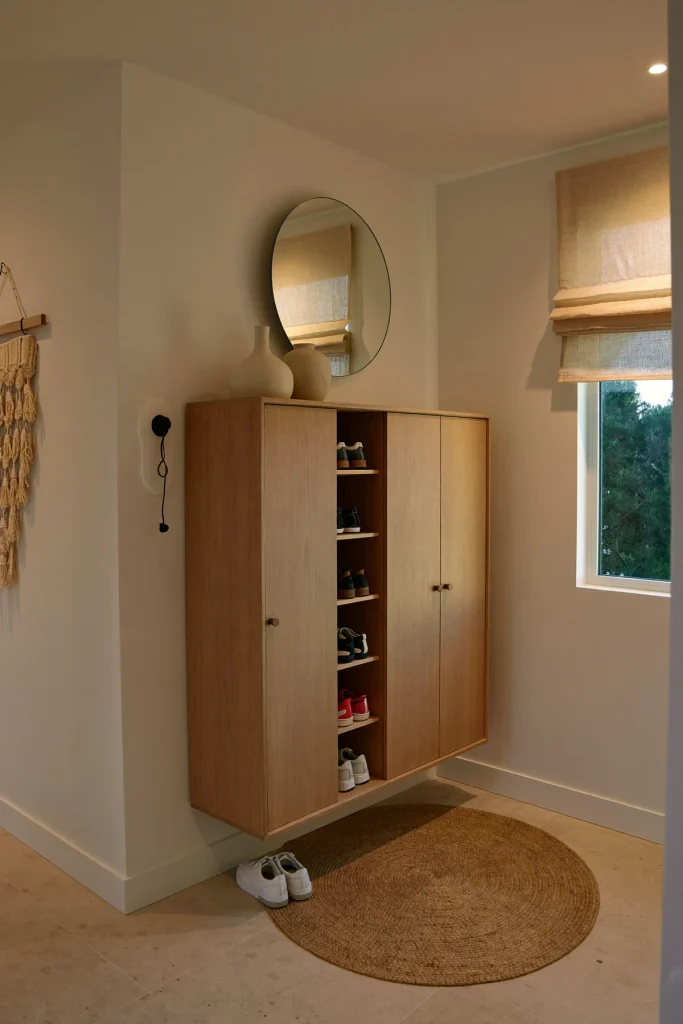
A cabinet mounted 10 to 12 inches off the floor does something sneaky: it makes the entry look bigger. You can see the floor running underneath it, and the eye reads that as space.
Light oak or a matte white front keeps it airy. The open gap below becomes a perfect spot for the pair you’ll wear tomorrow, or a low basket for slippers.
Mount it into studs or use a sturdy French cleat. Shoes are heavier than they look once you fill a whole cabinet.
Repurpose a Midcentury Credenza as a Shoe Sideboard
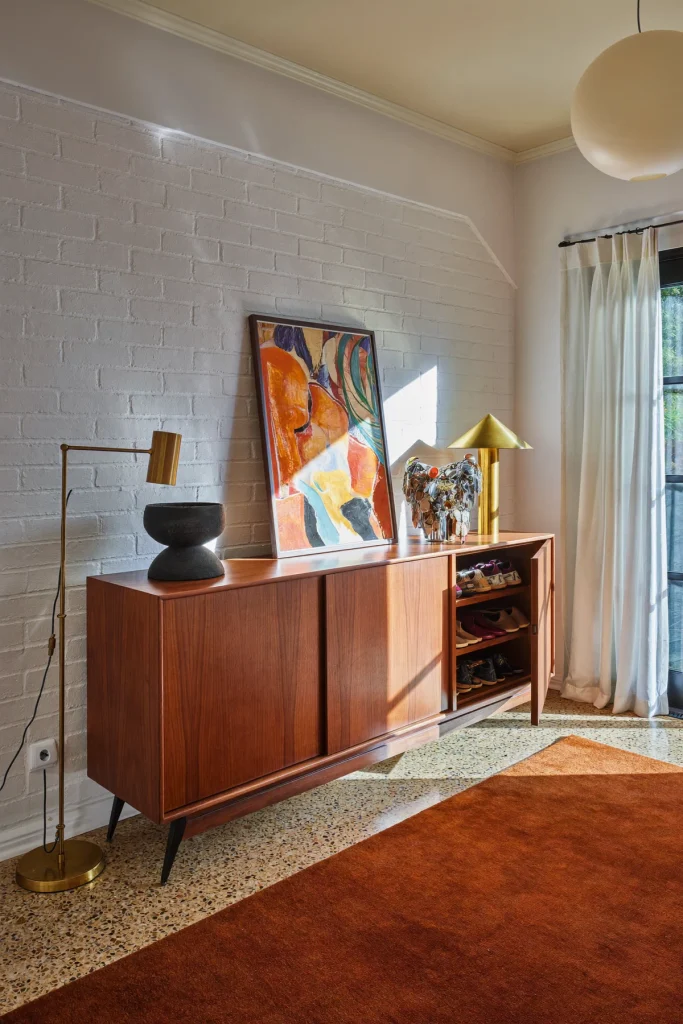
Some of the best shoe cabinets were never sold as shoe cabinets. A long walnut credenza with sliding doors holds a surprising number of pairs, and it looks like real furniture instead of storage.
Pull out one shelf if you need room for taller boots, and add a washable liner so dirt doesn’t scratch the wood. On top, a lamp, a bowl for keys and some art leaned against the wall make it feel finished.
Look for one around 16 inches deep. Anything deeper starts to crowd the walkway.
Where to Find It
- Estate sales and local vintage shops (best prices on solid wood)
- Facebook Marketplace and Craigslist, searching “credenza” and “sideboard”
- Etsy sellers who refinish midcentury pieces
- Big-box home stores for new versions with the same low, long shape
Build Floor-to-Ceiling Cabinetry Along One Entry Wall
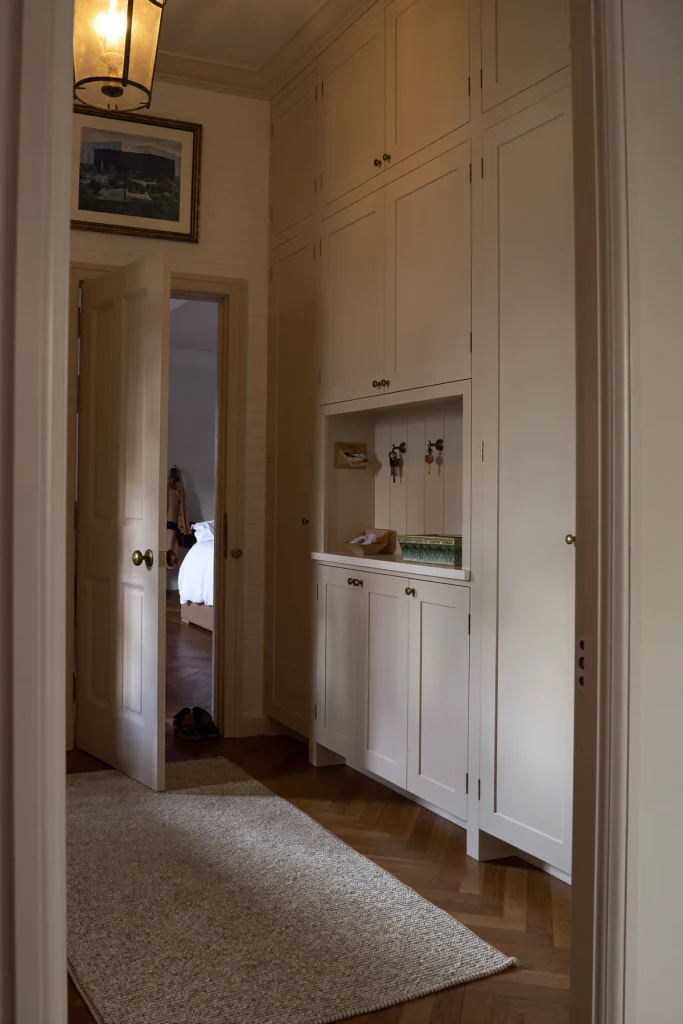
When a family of five lives by the front door, one small cabinet won’t cut it. A full wall of built-ins swallows everything: shoes down low, bags and hats up high, and off-season boots on the top shelves.
Paint the doors the same color as the walls and the whole wall almost disappears. Add simple brass knobs and a runner along the front, and it feels like part of the house rather than an add-on.
Leave one open niche at waist height for keys and mail. It breaks up the doors and gives you a landing spot.
Cost Breakdown
| Option | Typical range |
| Stock kitchen-style cabinets plus trim | about $1,500 to 3,500 |
| Semi-custom cabinetry | about $4,000 to 8,000 |
| Fully custom built-ins | about $8,000 and up |
Choose a Bench With Cabinet Doors Underneath
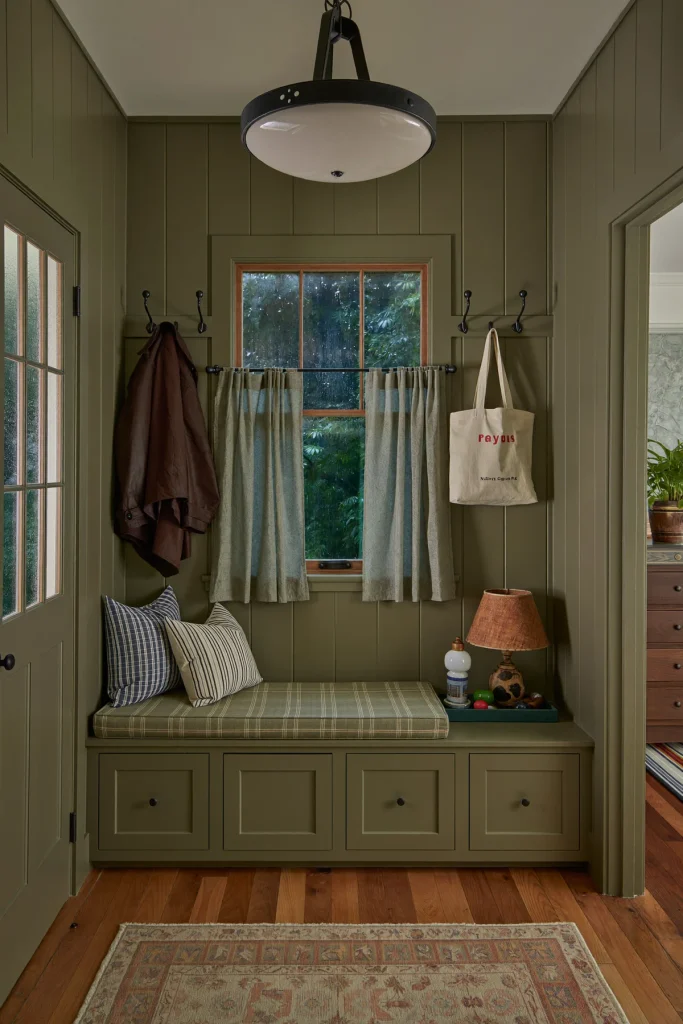
A bench is where shoes come off anyway, so let it swallow them too. Pick one with cabinet doors underneath instead of open cubbies, and the chaos disappears the moment you close them.
Add a thick cushion on top, a couple of pillows, and hooks above for coats. You get a place to sit, a place to stash, and a place to hang, all in one footprint.
Look for a bench about 18 inches high. That’s the sweet spot for tying laces without your knees in your chin.
Tuck a Shoe Cabinet Into the Space Under the Stairs
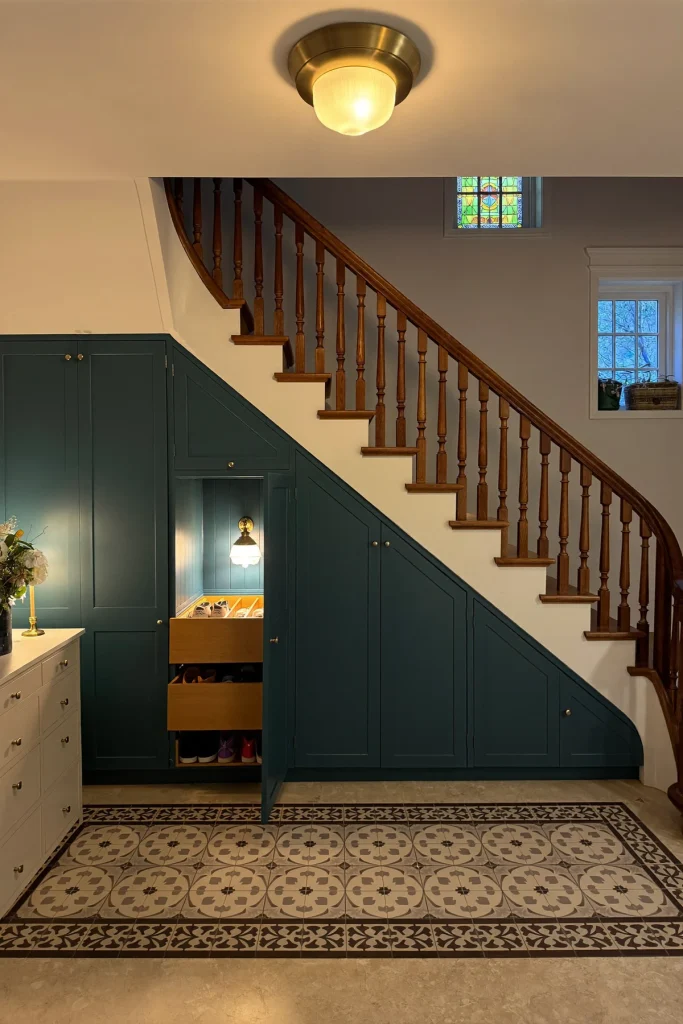
That angled pocket under the staircase is usually wasted, or worse, it’s where shoes pile up anyway. Fill it with cabinets cut to the slope and give every door a purpose.
Use the tall end for boots and umbrellas and the short end for kids’ shoes. Deep pull-out drawers work even better than doors here, since you can slide out the whole drawer instead of reaching into a dark corner.
A small light inside the tallest section helps on winter mornings.
Checklist: Measure These First
- Height at the tallest and shortest points
- Depth from the front edge of the stairs to the back wall
- Any outlets, vents or pipes you need to work around
- Door swing clearance in the hallway
Pick a Rattan-Front Cabinet for Breathable Shoe Storage
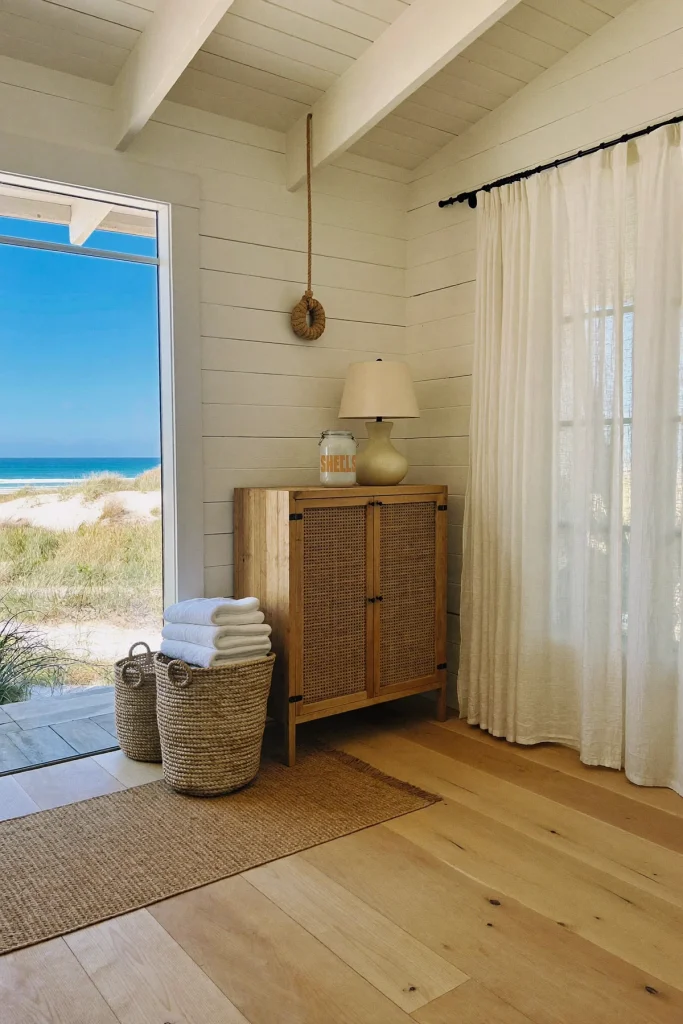
Woven cane and rattan fronts aren’t just pretty. They let air move through, which keeps sneakers from getting that closed-cabinet funk.
A rattan cabinet suits a coastal-inspired entry beautifully, especially with a jute rug and a big woven basket for beach towels. It also softens a room full of hard surfaces like tile and painted wood. 🌿
Keep a small boot tray on the bottom shelf for sandy or wet pairs, so the cane never gets soggy. And skip plastic bins inside; open shelves let the cane do its job.
Go Fluted for a Shoe Cabinet That Looks Like Furniture
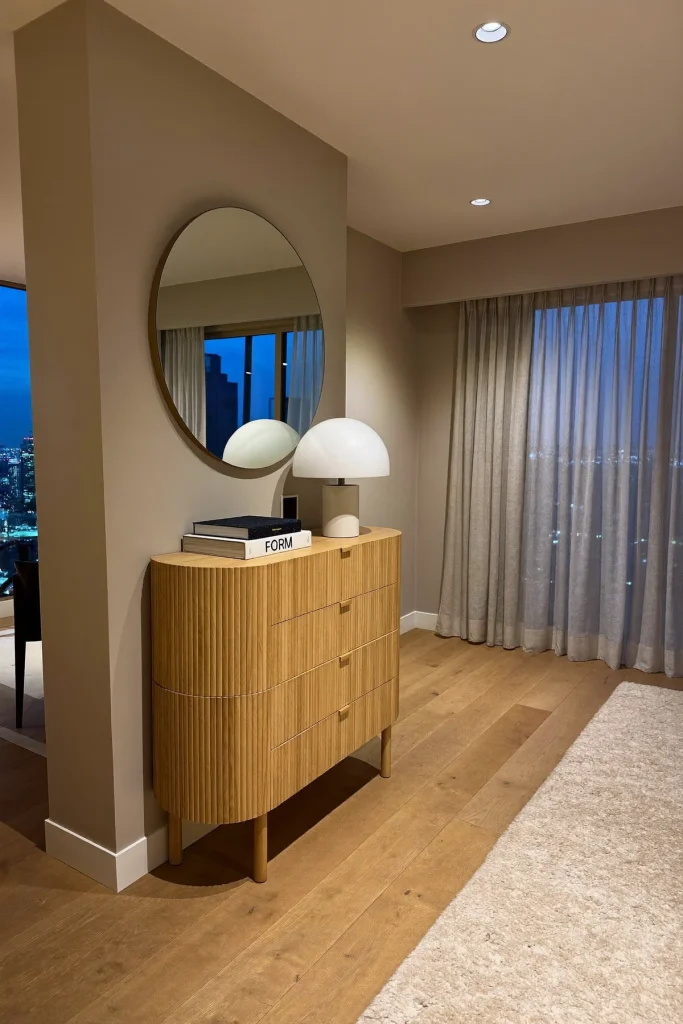
Fluted fronts, with their soft vertical ridges, turn a basic storage box into something that looks custom. They catch the light beautifully at night and hide fingerprints better than flat lacquer.
In a modern apartment, a fluted cabinet in pale oak or warm greige looks right at home next to a round mirror and a sculptural lamp. Nobody will guess there are twelve pairs of shoes inside.
Want the look for less? Peel-and-stick fluted panels or half-round trim can be added to a plain flat-pack cabinet in an afternoon.
Paint a Vintage Armoire and Fill It With Shoes
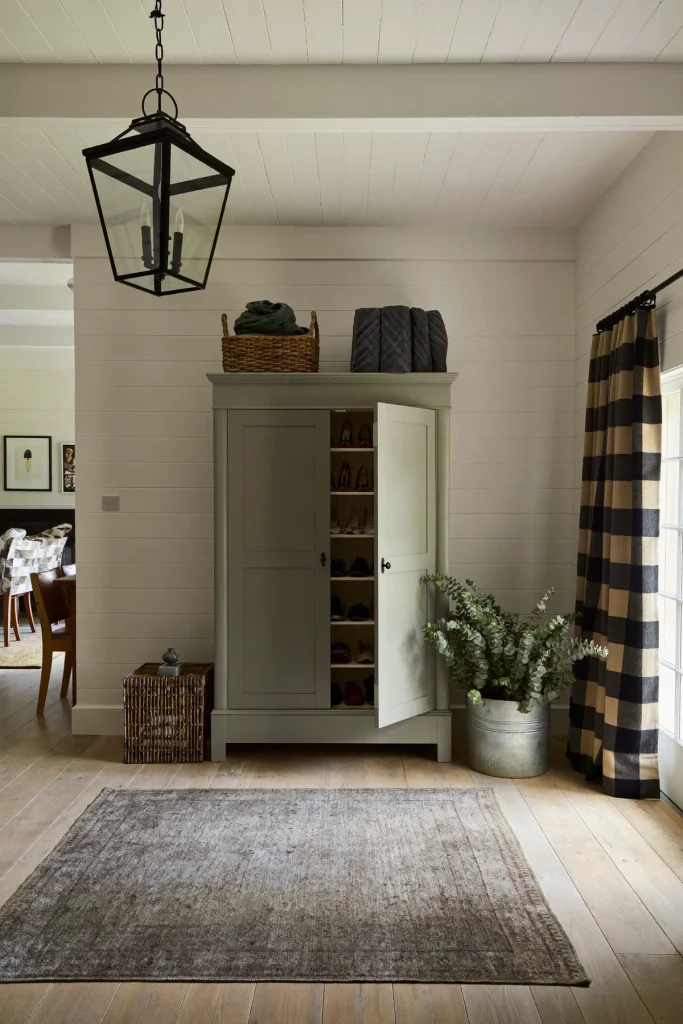
An old armoire is basically a giant shoe cabinet waiting to happen. Add a few shelves inside, and that tall wardrobe holds every pair in the house, plus coats on the rod above.
Paint changes everything here. A soft sage, a chalky blue or a warm cream turns a heavy brown piece into a farmhouse favorite. 🎨
Keep a few pairs visible with one door slightly open when you style it, and tuck a basket of scarves on the top shelf.
Weekend Project
- Clean and lightly sand the whole piece
- Prime with a bonding primer, then two coats of paint
- Add slatted or wire shelves inside so air can move
- Swap the hardware for something fresh
Mirror the Doors for a Last Look on the Way Out
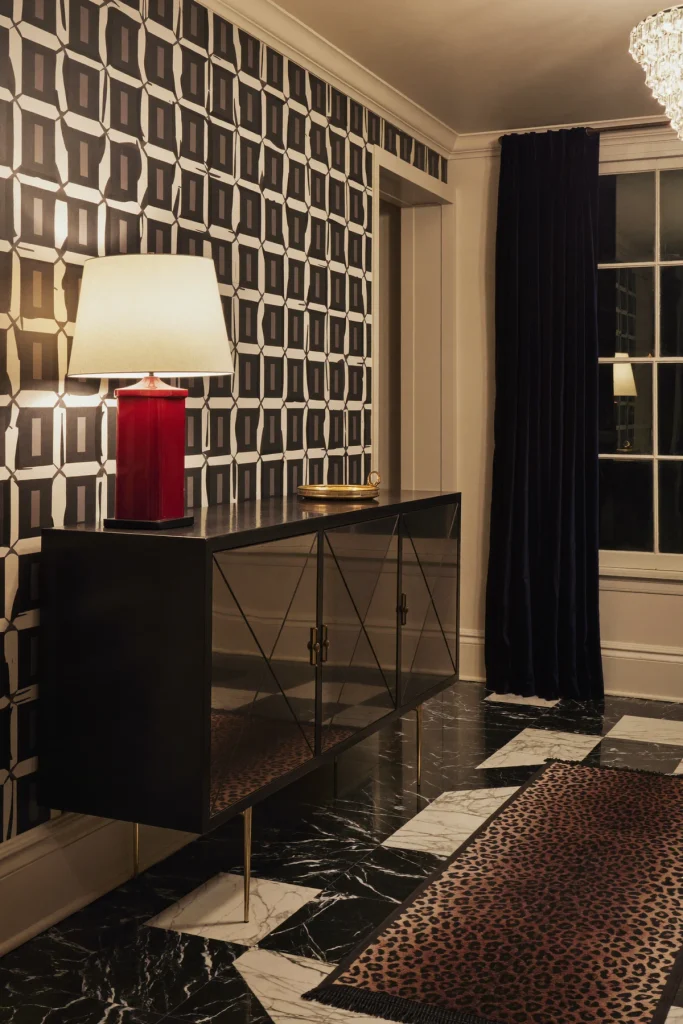
Here’s a two-for-one I love. A shoe cabinet with mirrored doors gives you that quick check before you leave, and it bounces light around a dark entry at the same time.
Antiqued or smoky mirror feels glamorous and hides smudges better than clear glass. In a Hollywood Regency-inspired entry, pair it with a lacquered lamp, a little brass tray and a bold rug. ✨
Make sure the mirror is tempered or backed with safety film, since little hands and swinging bags will meet it daily.
Install Louvered Doors So Wet Boots Can Dry
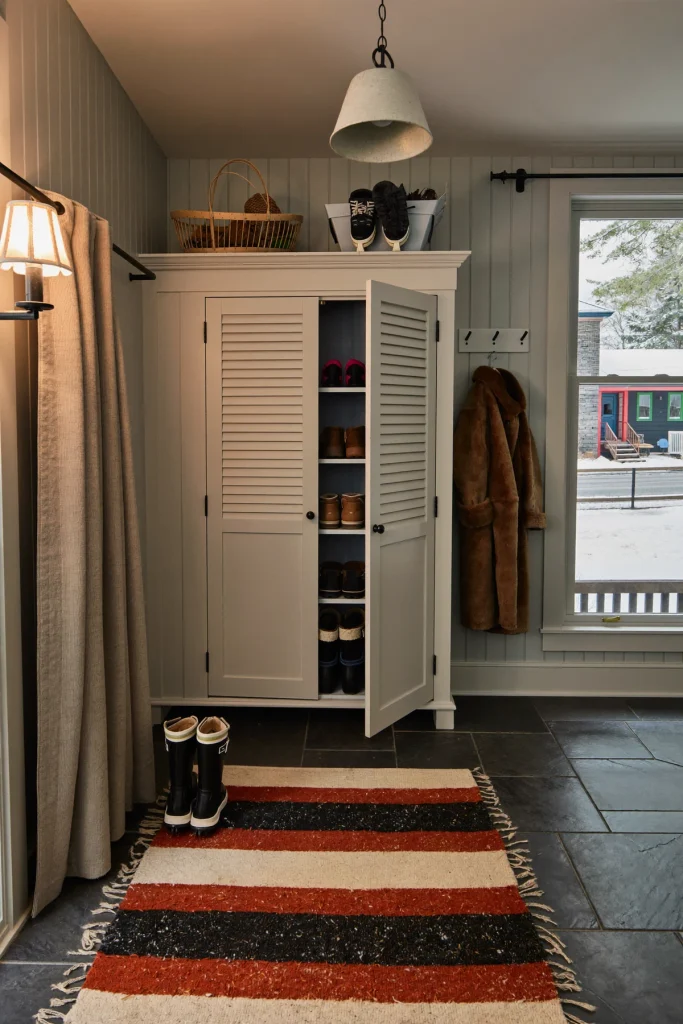
Snow boots and rain boots are the reason so many shoe cabinets smell. Louvered doors solve it. The slats let air flow through while still hiding everything behind a neat, classic front.
Line the bottom shelf with a rubber boot tray and add a small hook inside each door for damp gloves. In a Cape Cod home, louvered doors painted a crisp white or pale blue feel completely at home. ❄️
If you have a heat vent nearby, place the cabinet close to it so the warm air helps the drying. Just don’t block the vent itself.
Use the top as a landing zone for hats and mittens, ideally in a lidded basket so it stays tidy.
Smell Patrol
Tuck a cedar block or a small pouch of baking soda into each shelf and replace it every couple of months. Cheap, quiet and surprisingly effective.
Add a Charging Drawer on Top of the Shoe Cabinet
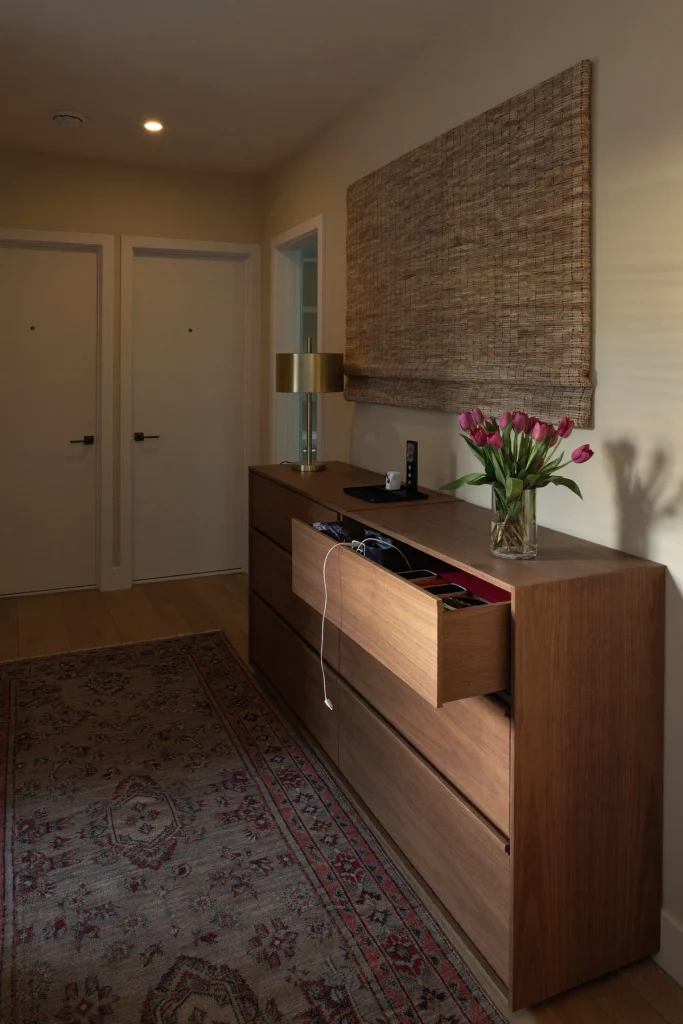
Shoes aren’t the only thing that collects by the front door. Phones, earbuds and smartwatches land there too. So give the top drawer of your shoe cabinet a second job as a charging station.
Drill a small cord hole in the back, run a power strip inside, and line the drawer with felt. Everything charges out of sight, and nobody leaves without their phone.
Below, two doors hide the family’s everyday pairs. The surface on top stays free for a lamp, a bowl and a small vase.
Check that the drawer has a little airflow, since chargers get warm. A few holes or a slatted bottom does the job.
Give the Kids Their Own Low Cabinet With Labeled Bins
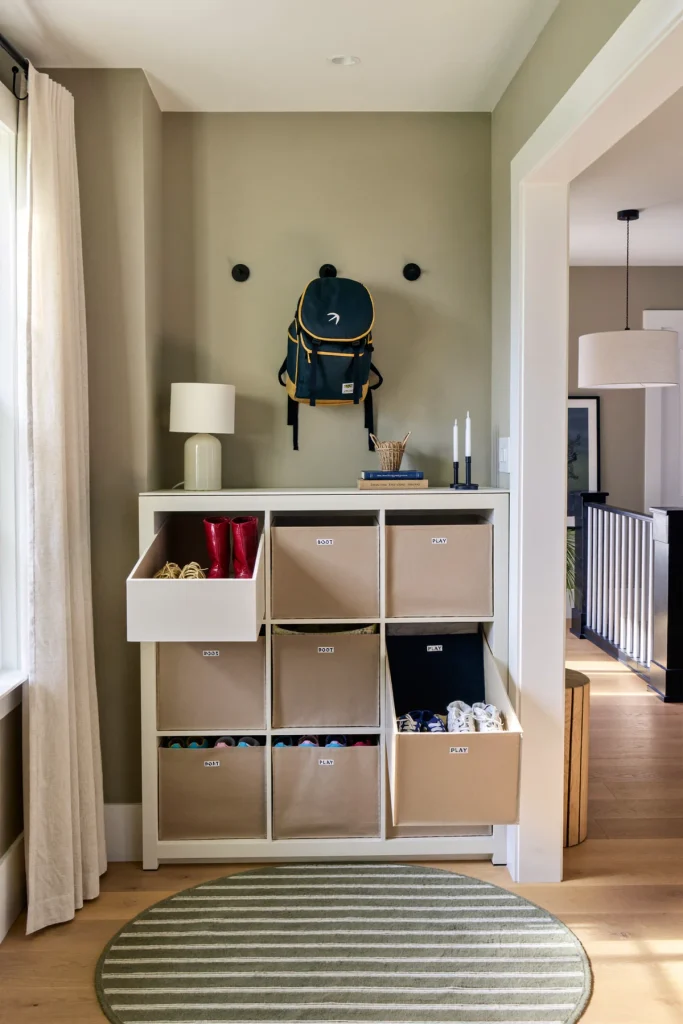
Kids will put their shoes away only if it’s easier than dropping them. A low cabinet at their height, with bins they can pull out themselves, makes that happen.
Label each bin with a name, or a simple word like “BOOTS” or “PLAY,” so there’s no arguing over whose sneakers go where. Bright knobs or colored bin fronts help little ones remember too.
Start them young and keep the system simple: one bin per child, no more. Keep it wide and short rather than tall and skinny. It’s safer, and you can use the top as a little seat for wiggling feet into rain boots. 👟
Kid- and Pet-Proof It
- Anchor every cabinet to the wall, even the low ones
- Choose soft-close hinges so fingers don’t get pinched
- Pick wipeable paint or laminate fronts
- Keep chew-worthy leather shoes on a higher shelf if you have a puppy
Make a Tall Boot Cabinet for Rain Boots and Riding Boots
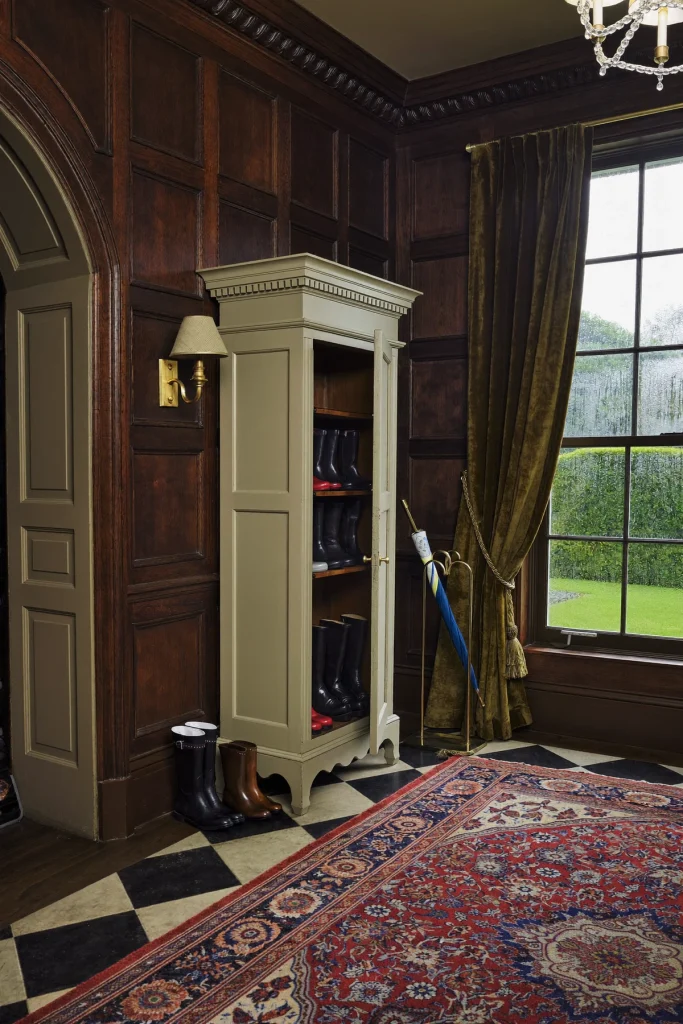
Most shoe cabinets are built for sneakers and flats. Tall boots get squashed, tipped over, or stuffed sideways. A dedicated boot cabinet, with at least 20 inches of clear height, fixes that.
Use a narrow tall cabinet with one adjustable shelf, or a wide cabinet with no shelves at all and a boot tray on the floor. Boot shapers or rolled-up magazines keep tall pairs standing upright.
In a classic estate-style entry with wood paneling, a tall painted cabinet looks like it’s been there for a hundred years. Add a brass umbrella stand beside it, and the rainy-day kit is done. ☔
Leave an inch or two of space between pairs so they can dry properly.
Hang a Shallow Cabinet in a Small Apartment Entry Hall
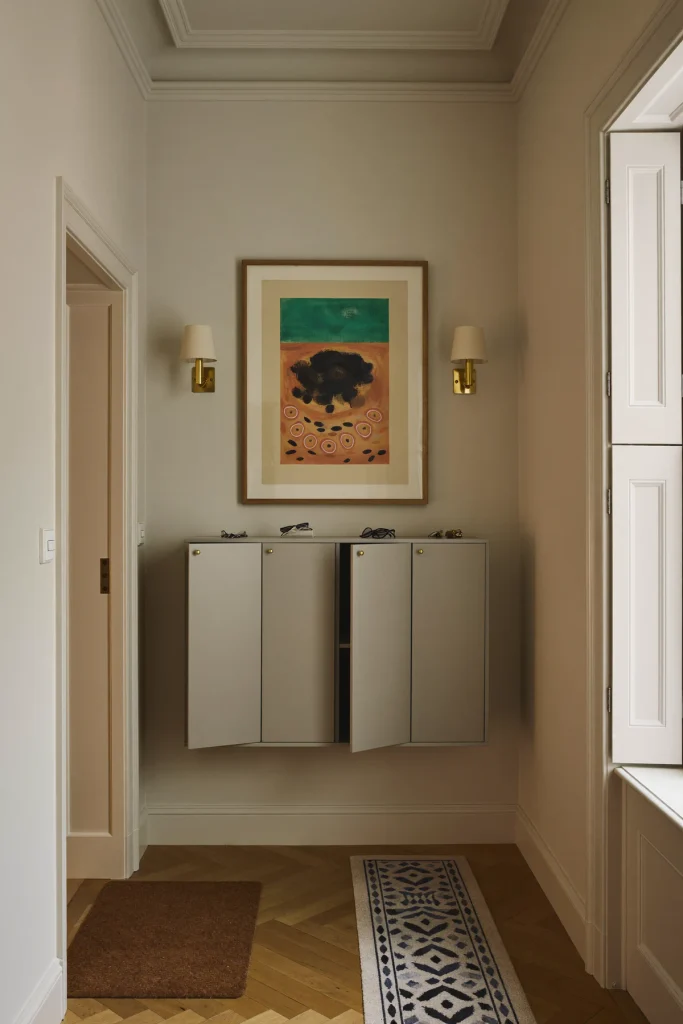
Apartment entry halls are often long and narrow, with no room for a bench or console. A shallow wall cabinet, around 8 to 10 inches deep, gives you real storage without stealing walkway.
Choose one with tilt-out compartments, like the slim cabinet from idea 1, or slim sliding doors. Mount it at a comfortable height with a little space beneath for a doormat and today’s shoes.
In a brownstone apartment with tall ceilings, hang a long mirror above it and add a small sconce on each side. Suddenly the hall feels intentional instead of cramped. 🏙️
A slim shelf on top catches keys, sunglasses and the mail you’ll deal with later.
Renter-Friendly Version
Skip wall mounting and pick a freestanding slim cabinet with an anti-tip strap that attaches with a single small screw. Easy to patch when you move out.
Turn a Long Console Cabinet Into a Drop Zone With Hidden Shoes
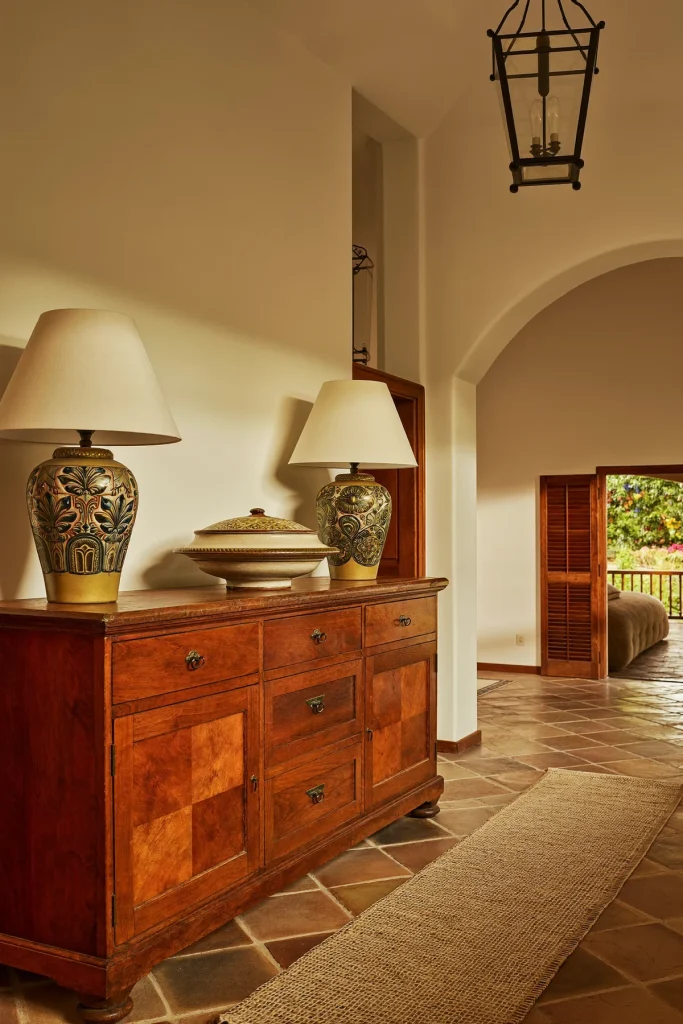
If you have a long stretch of wall, a low console cabinet does two jobs. The doors hide shoes, and the long top becomes the place where everything lands when you walk in.
In a Spanish Colonial home, look for carved wood or iron hardware that suits the arches and terracotta tile. Add a woven runner in front and a pair of lamps on top for symmetry.
Divide the inside with simple shelf risers so you can fit two rows of flats stacked above sneakers. Most consoles are taller inside than they look.
A large shallow bowl on top catches keys, and a lidded box hides the mail.
Color-Drench the Cabinet to Match the Walls
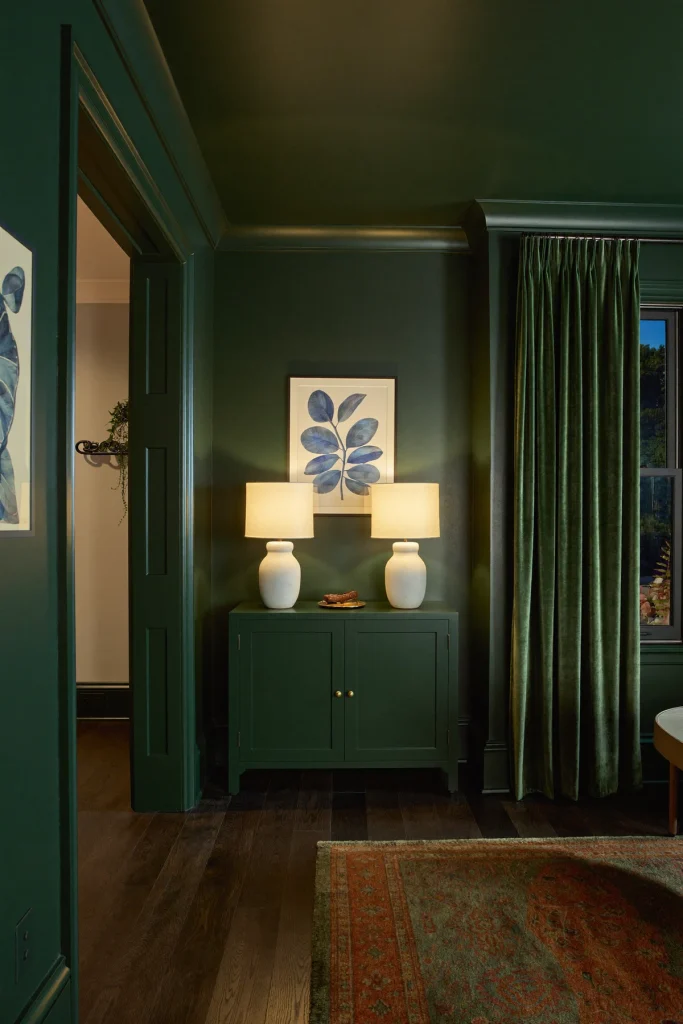
Want a bold look that still feels calm? Paint the shoe cabinet, the walls, the trim and even the ceiling in one deep color. The cabinet blends right into the room, so it looks bigger and far more expensive than it is.
Forest green, inky navy and rich oxblood all work beautifully in a townhouse entry, especially at night with a couple of warm lamps glowing. 🌲
Use a satin or eggshell finish on the cabinet so it wipes clean, and a matte finish on the walls. The subtle shift in sheen keeps it from looking flat.
Brass hardware pops against dark color and ties everything together.
Color Swap
| If you love… | Try this drench |
| Classic and calm | Deep navy with brass knobs |
| Earthy and cozy | Olive or forest green |
| Moody and dramatic | Oxblood or aubergine |
| Soft but grown-up | Mushroom or warm taupe |
Give Every Family Member a Closed Shoe Locker
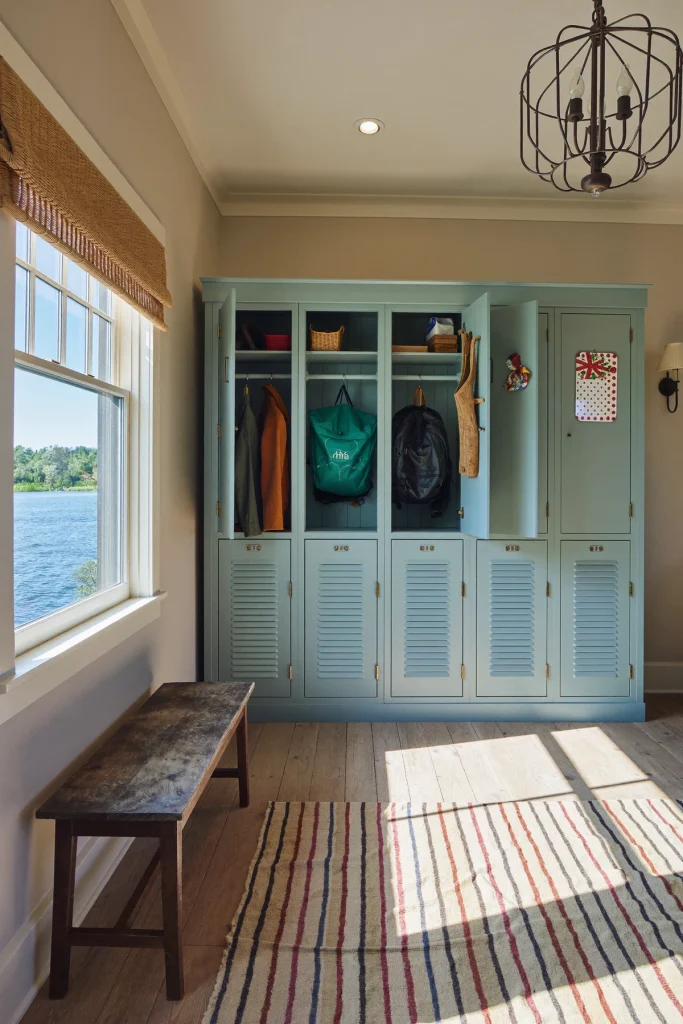
Lockers with open cubbies get messy fast. Add doors to the lower half, and each person gets a private shoe cabinet that only needs to be tidy enough to shut.
Paint the lockers a soft color, add a hook inside each door, and keep the upper section open for coats and backpacks. In a lake house that sees a lot of wet feet, this system keeps the beach shoes, hiking boots and water sandals sorted.
Use ventilated doors or leave a gap at the top for airflow. You’ll thank yourself in August.
Name tags or initials on each door make it easy for guests and grandkids to find a spot too.
Use Deep Drawers Instead of Doors
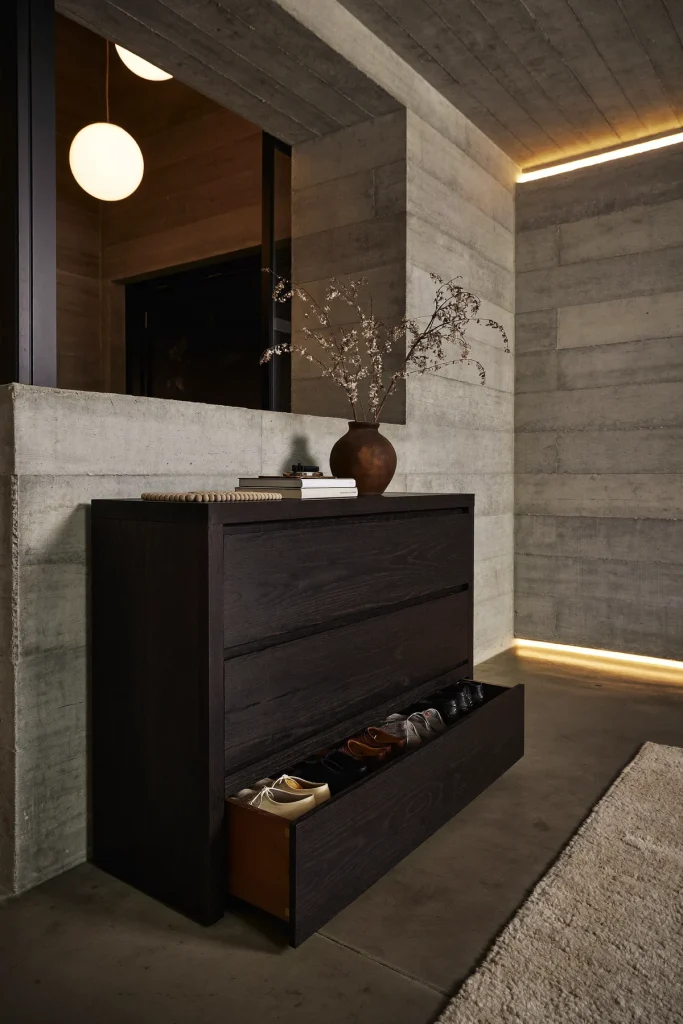
Doors are fine, but drawers are often better. A cabinet with three wide, deep drawers lets you see every pair at once from above, with no crouching and no reaching into dark corners.
In a concrete-and-steel brutalist home, a heavy drawer cabinet in blackened oak or raw steel feels sculptural. Add a single big ceramic vase on top and a warm pendant overhead to soften all that concrete.
Line each drawer with a ribbed rubber mat so shoes don’t slide around every time you open it.
Give each family member a drawer and the rule becomes simple: if it’s not in your drawer, it’s not your shoe.
Do This 👉 / Not This ❌
- Do: choose full-extension drawer slides. Not: cheap slides that only open halfway.
- Do: keep drawers at least 6 inches tall. Not: shallow drawers that crush sneakers.
Make a Lacquered Art Deco Cabinet the Entry Statement
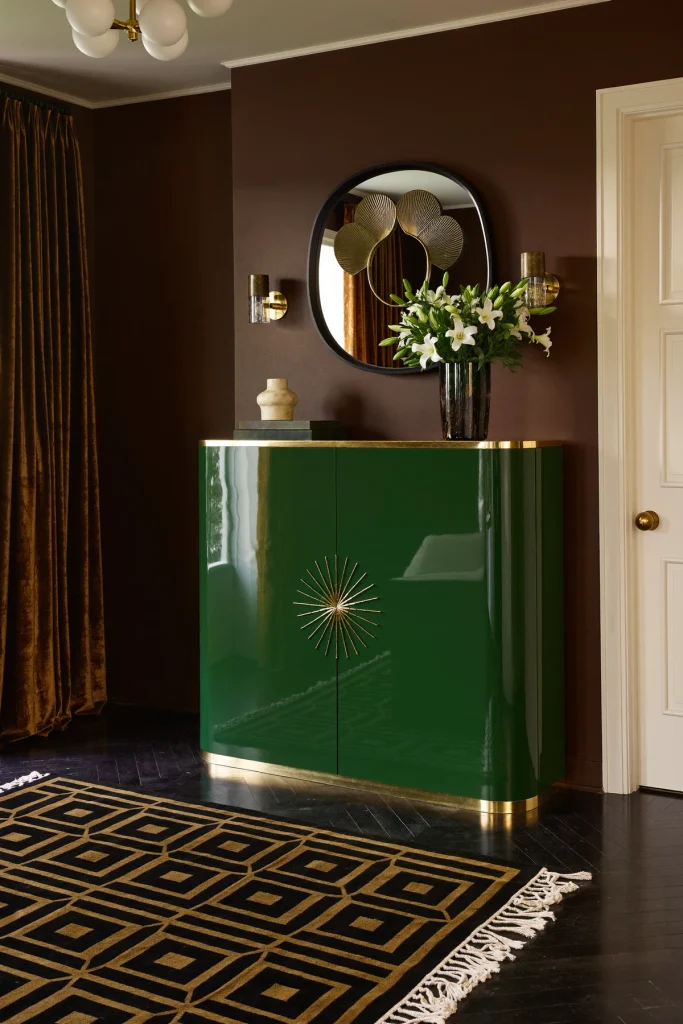
Who says a shoe cabinet has to be quiet? A glossy Art Deco cabinet with curved corners, brass trim and a sunburst inlay becomes the first thing guests notice, and nobody will guess it’s full of sneakers.
Lacquer in black, emerald or a deep jade looks incredible next to a geometric rug and a fan-shaped mirror. Add a pair of glass sconces and a vase of white flowers, and your entry feels like an old movie set. 🎬
The good news is that many Deco-style sideboards are just the right depth for shoes, so a vintage find can work without any changes. Check inside before you buy: you want at least 12 inches of depth and one removable shelf.
Glossy finishes show scuffs, so add felt bumpers to the doors and keep a microfiber cloth in a drawer. Treat it like jewelry, and it’ll shine for decades.
Hide Shoes Inside a Window Seat With Cabinet Doors
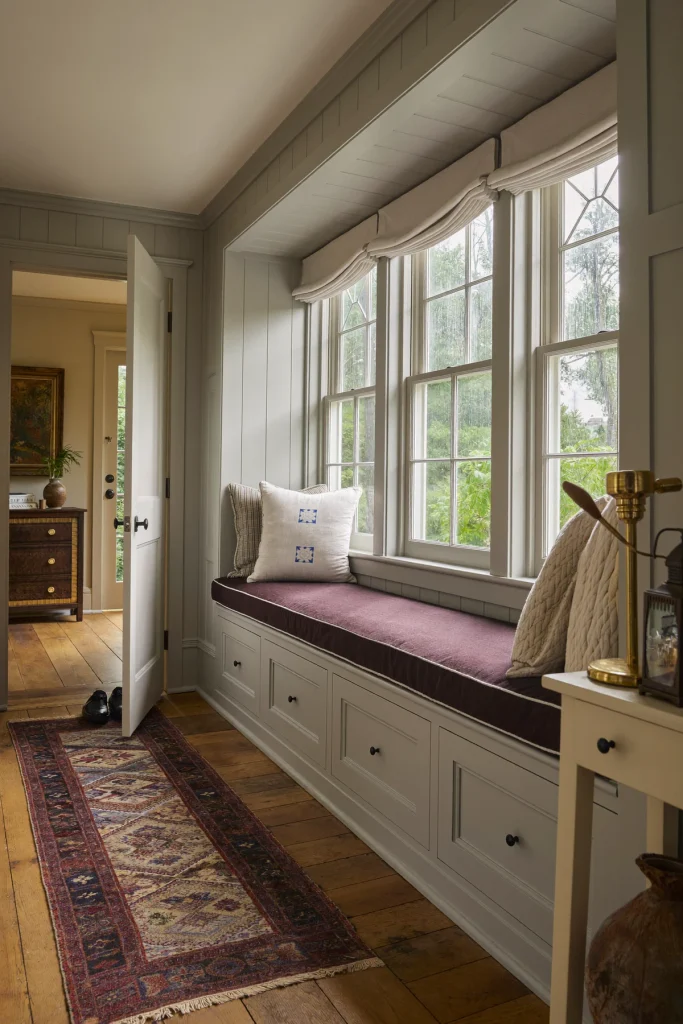
A window seat in the entry is a little bit of magic. Build one with cabinet doors along the front, and you get a sunny spot to sit and a big hidden shoe cabinet underneath.
Doors work better than a lift-up lid here. Nobody wants to clear off cushions every time they need their sneakers. Two or three doors across the front let everyone grab their pairs at once.
In a Tudor-style home with leaded windows, a window seat painted a soft putty color feels like it’s always been part of the house. Add a long cushion, a few pillows and a Roman shade for privacy. 🪟
Remember the bench from idea 5? This is its built-in big sister. It holds more, looks more custom and turns a plain window into the coziest spot in the house for pulling on boots.
Wrap a Radiator Cover and Shoe Cabinet Into One Piece
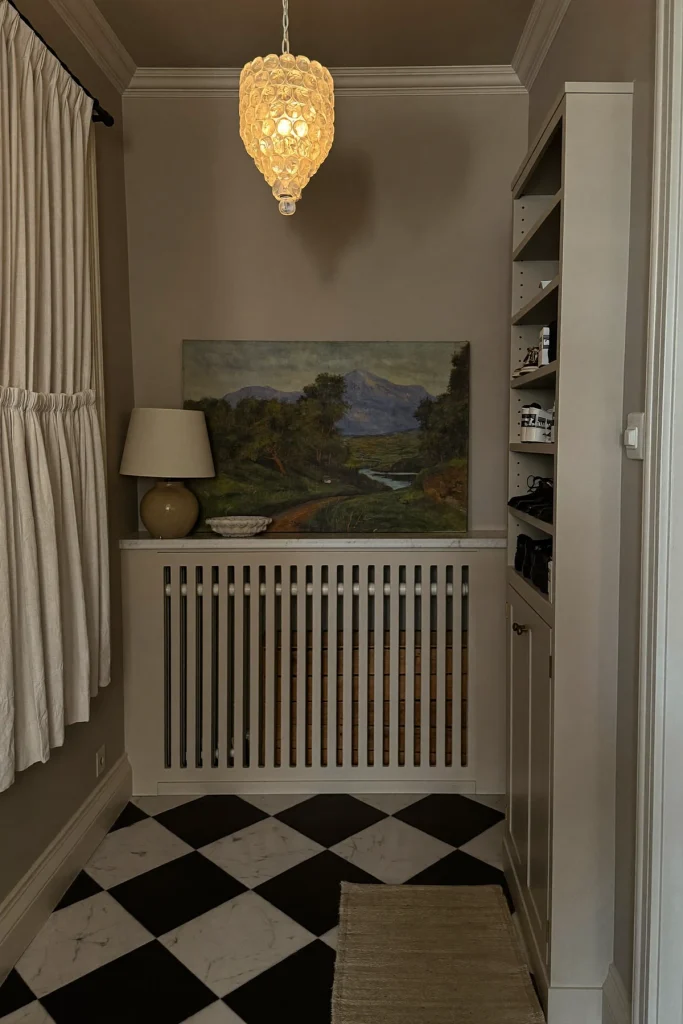
Old apartments often have a clunky radiator right by the door. Instead of fighting it, build a cabinet around it. One section covers the radiator with a slatted front, and the cabinets on either side hold shoes.
The bonus? Gentle warmth from the radiator dries damp shoes faster, doing the same job as the louvered doors in idea 11. Just keep shoes in the side sections, not directly on the heat, since direct heat can crack leather and warp soles.
In a prewar apartment with crown molding and a checkerboard floor, a painted radiator cabinet with a marble or wood top looks completely original. Lean a piece of art on top and add a lamp, and it becomes the prettiest corner of the entry.
Ask a carpenter for an even gap behind the cover so heat still circulates. It’s a small detail that keeps the room warm and the cabinet safe. 🔥
Paint the Cabinet Interior a Surprise Color
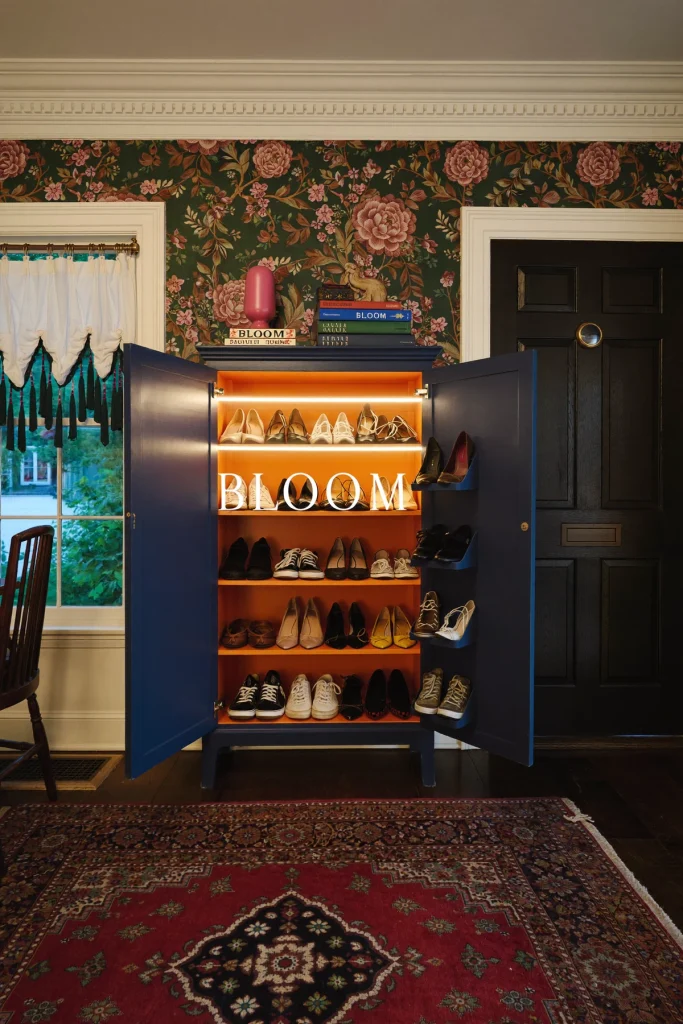
This one’s pure joy. Keep the outside of your shoe cabinet calm and simple, then paint the inside a wild color like coral, cobalt or chartreuse. Every time you open the doors, there’s a little burst of happy.
It’s perfect for a maximalist entry where pattern and color already live. Picture patterned wallpaper, a vintage rug and a cabinet that opens to reveal rows of shoes against bright tangerine.
Use a durable enamel or cabinet paint inside, since shoes scuff surfaces quickly. Two coats with good drying time between them will hold up to years of sneakers sliding in and out. 🧡
Add a strip of LED lighting along the inside top edge, and the color glows when the doors open. It feels a little like opening a jewelry box, except it’s full of running shoes.
Pair It With Idea #9
A painted armoire with a surprise-color interior is the best of both. Soft sage outside, hot pink inside: completely charming.
Pair a Hall Tree With a Closed Shoe Base
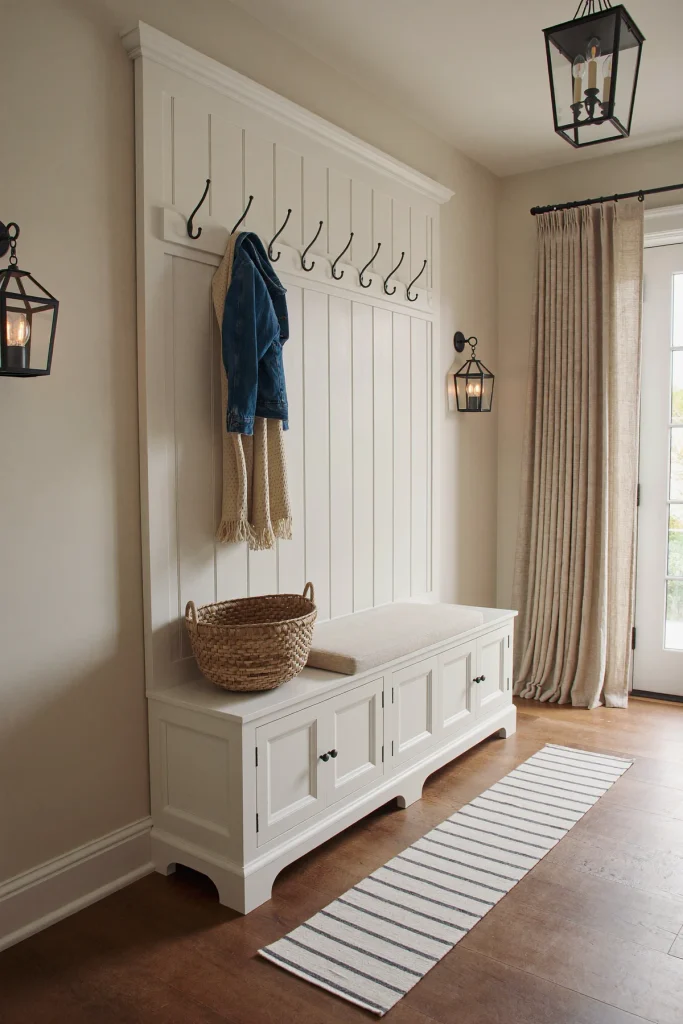
Classic hall trees usually have an open bench and cubbies at the bottom. Choose one with a closed cabinet base instead, and the top half can stay decorative while the bottom hides the mess.
In a modern farmhouse, a hall tree in warm white with black iron hooks and a beadboard back looks fresh and practical. Add a woven basket on the bench, a striped runner, and a pair of lanterns nearby for evening glow.
The hooks above handle jackets and bags, and the cabinet handles the shoes. Everything lives in one footprint, which keeps the rest of the entry open for walking.
If you already own an open hall tree, you can add cabinet doors yourself. Measure the openings, order simple shaker doors, and attach them with concealed hinges. It’s an easy afternoon project with a big payoff.
Build a Shoe Cabinet Into the Garage-Entry Hallway
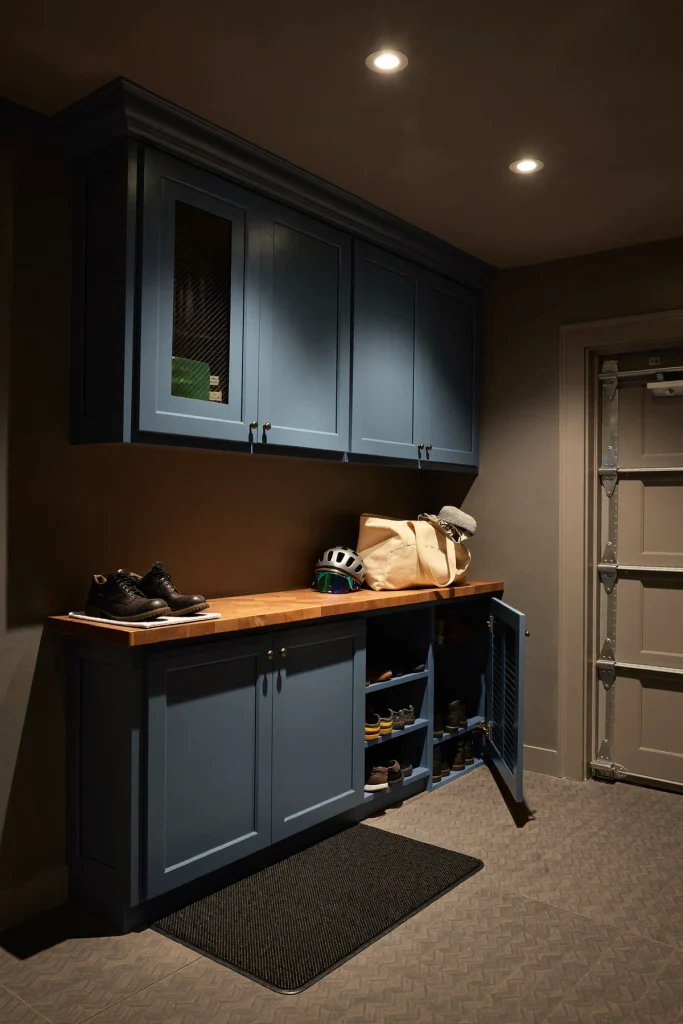
For many families, the front door is for guests. Everyone else comes in through the garage. That side hallway needs the hardest-working shoe cabinet in the house.
Go for sturdy cabinets with laminate or painted fronts, a durable countertop for bags and groceries, and a tile or vinyl floor that doesn’t mind dirt. A row of cabinets with doors keeps sports shoes, work boots and garden clogs out of sight.
Borrow the charging drawer from idea 12 for this hallway too, since phones and keys land here first. Put a motion-sensor light inside the cabinets and bright recessed lights overhead. Nobody should be fumbling for shoes in the dark at 6 a.m.
Leave one cabinet with ventilated doors for the really dirty pairs, and keep a boot brush and a small towel inside. It stops mud long before it reaches the kitchen.
The Shoe Math
Plan on roughly 7 to 9 inches of shelf width per adult pair and about 5 to 6 inches per kid pair. Multiply by the pairs each person wears each week, and you’ll know exactly how many feet of cabinet you need.
Stock a Guest Cabinet With Slippers for a Shoes-Off Home
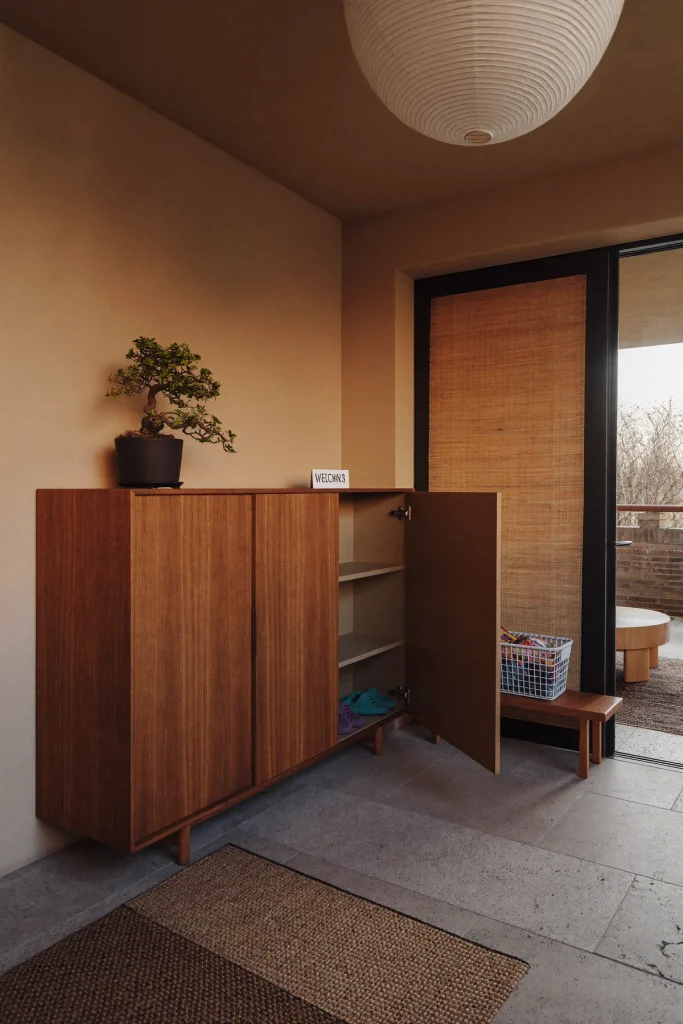
If your house is shoes-off, make it easy and welcoming. Dedicate one cabinet just for guests: an empty shelf for their shoes and a basket of soft slippers right beside it.
In a Japandi-inspired townhouse, a low oak cabinet with simple sliding doors feels calm and thoughtful. Keep a small bench nearby so guests can sit, and add a little sign or card that says “WELCOME” to set the tone. 🧦
Wash the slippers after each visit and store them in a lidded basket inside the cabinet. Felt or knit slippers in neutral colors look tidy and feel cozy underfoot.
Guests appreciate not having to ask what to do. It’s a small kindness that makes people feel at home the second they walk in. And it keeps the floors cleaner for longer, which you’ll notice every single week.
Install Push-to-Open Handleless Doors for a Smooth, Quiet Wall
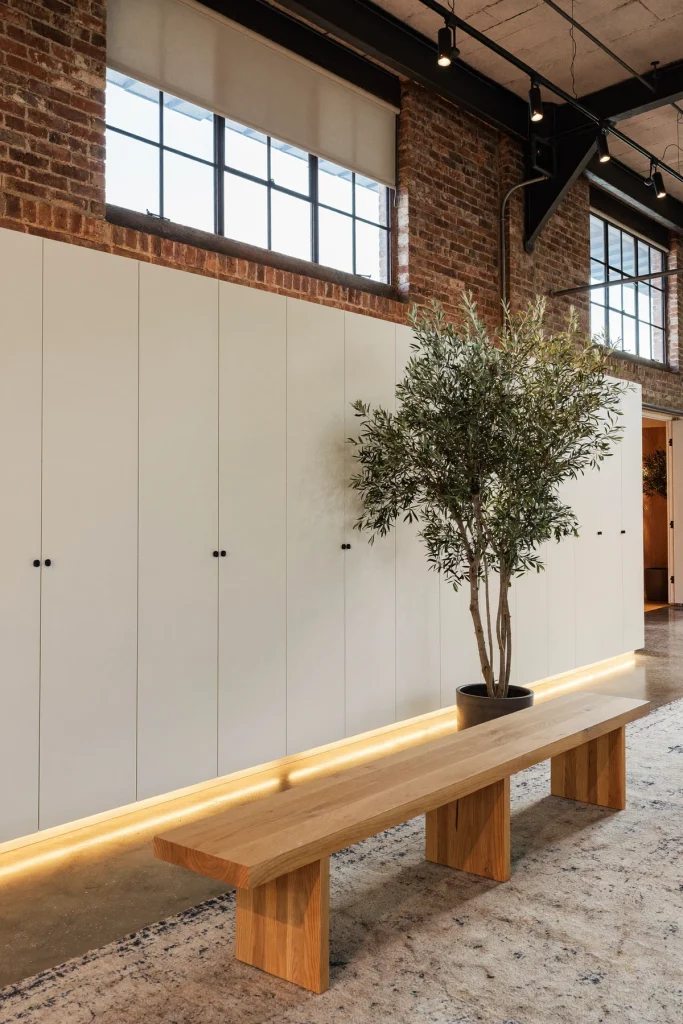
In a loft or modern home, hardware can feel fussy. Push-to-open latches let you skip knobs and pulls entirely, so a wall of shoe cabinets looks like smooth paneling.
Run the cabinets the full width of the entry wall in a matte finish, and add a strip of LED lighting along the bottom. It makes the cabinets look like they’re floating, and it doubles as a soft night-light when you come home late.
In a warehouse loft with brick walls and big windows, a sleek handleless cabinet in warm white or soft black balances all that raw texture. Add a long bench in front and a big plant to soften the lines. 🏢
Handleless fronts show fingerprints, so pick a matte, fingerprint-resistant finish. Your future self will be glad you did.
Myth-Buster
Push-to-open doors aren’t fragile. Good latches are rated for years of daily use, and they’re easier for kids than small knobs.
Light the Cabinet Top Like a Little Stage
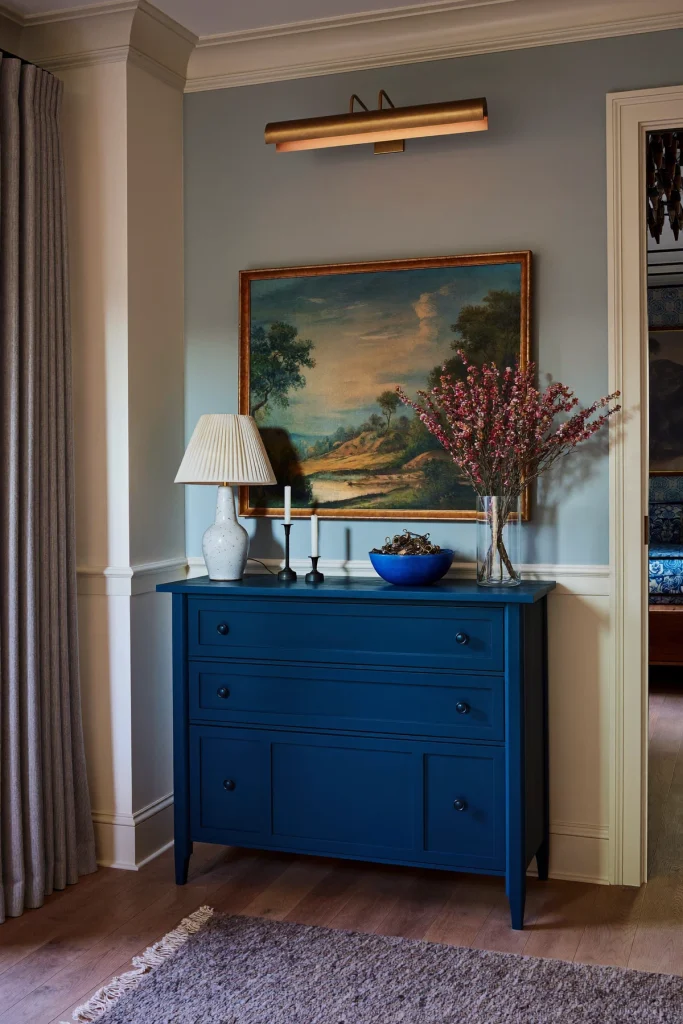
Once the shoes are hidden, the top of the cabinet becomes your chance to make the entry beautiful. Treat it like a little stage, with lighting doing most of the work.
A table lamp on one side, a picture light over a piece of art, and a candle or two make the whole entry glow. Add a bowl for keys and a vase of fresh branches, and it feels warm the moment you walk in.
In a classic suburban family home, a painted shoe cabinet with a lamp and art above creates a welcome that looks styled but still easy to live with. 🕯️
Keep the arrangement simple so it’s easy to dust and quick to clear when you need the surface. A few great pieces always beat a crowded top.
One Rule to Remember
Shoes in, clutter out, light on. If the cabinet is closed and the lamp is lit, your entry looks finished, even on the busiest days.
Close the Doors and Breathe
A shoe cabinet doesn’t have to be fancy to make a big difference. Even one slim tilt-out unit behind the door can change how your entry feels every single day.
Start with the problem you have right now. Maybe it’s wet boots, maybe it’s kids’ sneakers, maybe it’s a pile of flats by the stairs. Pick the idea that fixes that one thing, then build from there. 💛
And once the shoes are behind closed doors, enjoy that first calm look when you walk in. You earned it.
