
For one whole summer, nobody in my family sat outside. The sun baked the stones by two o’clock, and a surprise storm chased us in more than once. What we lacked wasn’t a nicer sofa. We lacked something overhead. 🌞
The right cover changes how a patio feels from morning to midnight. It shapes the glow, the sound of a downpour and the temperature on a cool autumn night. That’s why the material above your head deserves more thought than the pillows below it.
Here are Twenty options, from clear panels and ribbed metal to thatch, glass, copper and even a roof made of plants. Each one comes with notes on the weather it handles best and a few finishing touches so it blends with your house.
My suggestion: choose by climate, then by architecture, then by style. Doing it in that order protects your budget. ⛅
Welcome Daylight Under Clear Polycarbonate Sheets
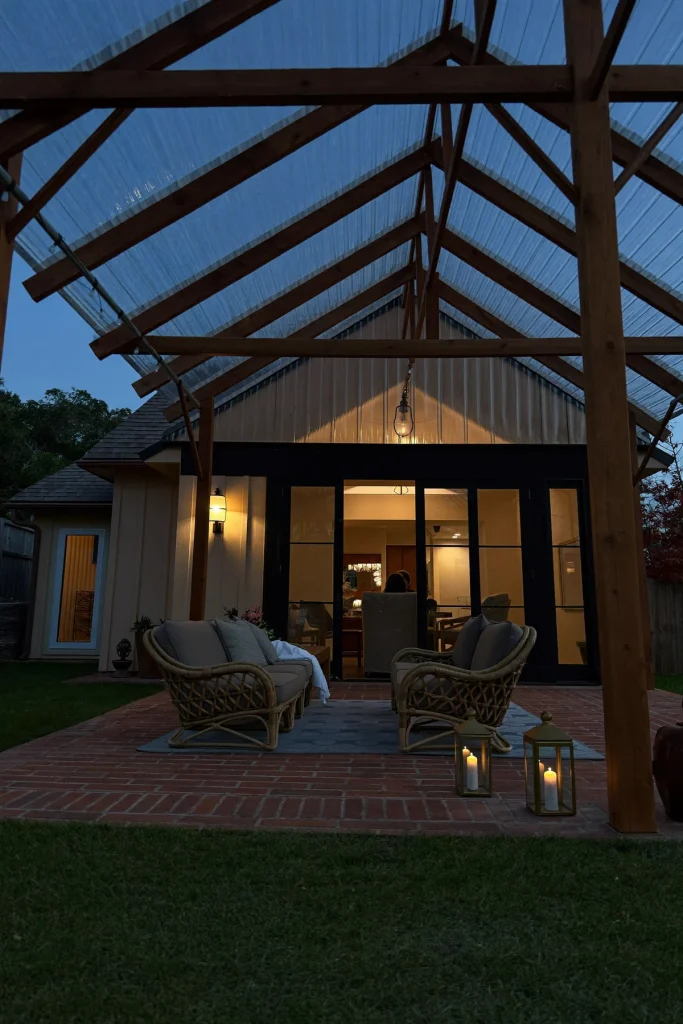
A covered patio can turn gloomy fast, and polycarbonate solves that. Twin-wall sheets sit inside a wooden or aluminum frame, keeping off rain and much of the heat while the sky still shows through.
A warm cedar frame stops the whole thing from looking like a greenhouse. As evening arrives, the roof takes on a soft blue glow, and lights strung along the rafters make it feel like a big lantern. The sheets weigh very little, so a confident DIYer can install them over a weekend. ✨
The Reason It Works
The hollow channels hold air, which insulates better than a single flat sheet and spreads sunlight softly instead of letting it pour straight down.
Pick Ribbed Standing-Seam Metal and Enjoy the Rain
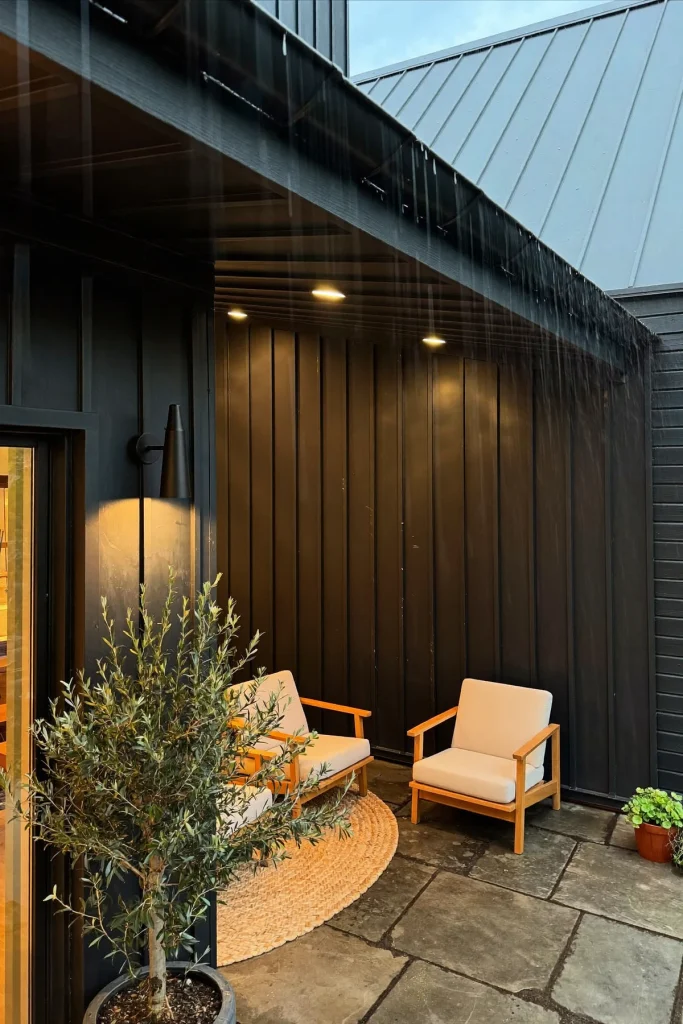
This metal roof has tall raised seams and hides its fasteners, which gives it a tidy look and lets water, leaves and snow slide right off. Charcoal is a dependable modern choice, especially beside a farmhouse with black window frames.
It does sound louder in a storm. Plenty of people love it, though, a bit like a gentle drum solo while the tea steeps.
Add a black gutter along the edge, plus two or three recessed lights, so the ceiling doesn’t vanish into darkness once the sun goes down. 🌧️
Repeat Your House Shingles Over the Patio
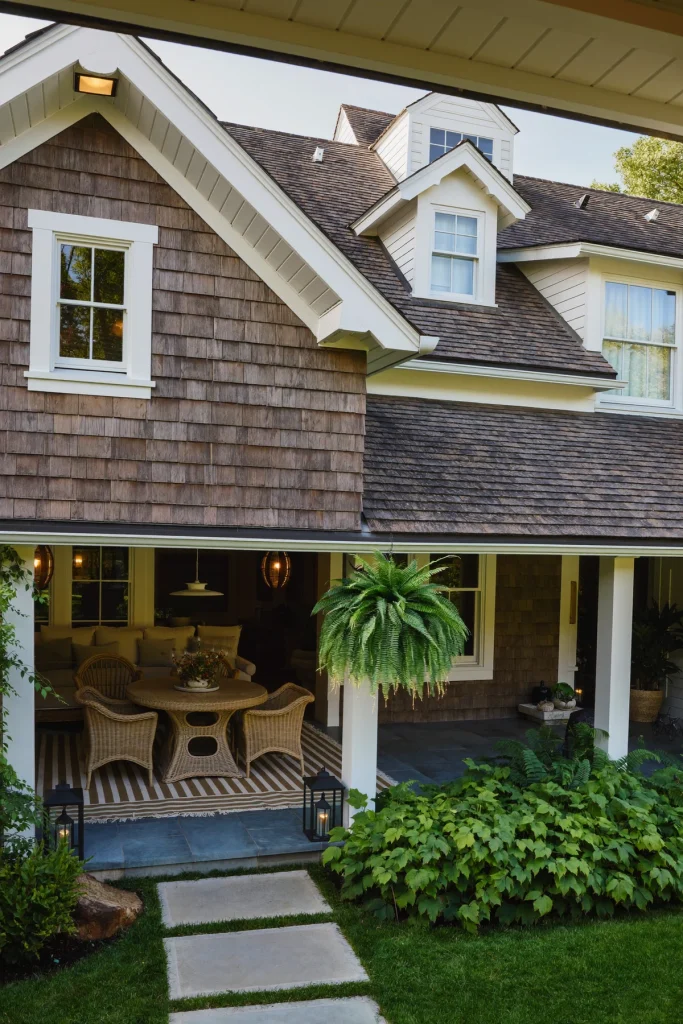
You can make a patio feel like it was built with the house by copying the main roof exactly: same shingle, same trim shade, same gutters. The addition then looks like one clean silhouette rather than a tack-on.
Have your roofer join the new section to the old one with proper flashing, which keeps water from slipping through the seam. White square posts and a flush-mount fixture overhead keep things classic, and a trailing fern relaxes the straight lines. 🌿
Slip-Ups to Skip
- Settling for a shingle that’s merely similar. Carry a leftover piece to the supplier.
- Leaving off the gutter, which drops runoff onto your chairs.
- Building a pitch that’s far shallower than the main roof.
Dress the Underside in Honey-Toned Wood Planks
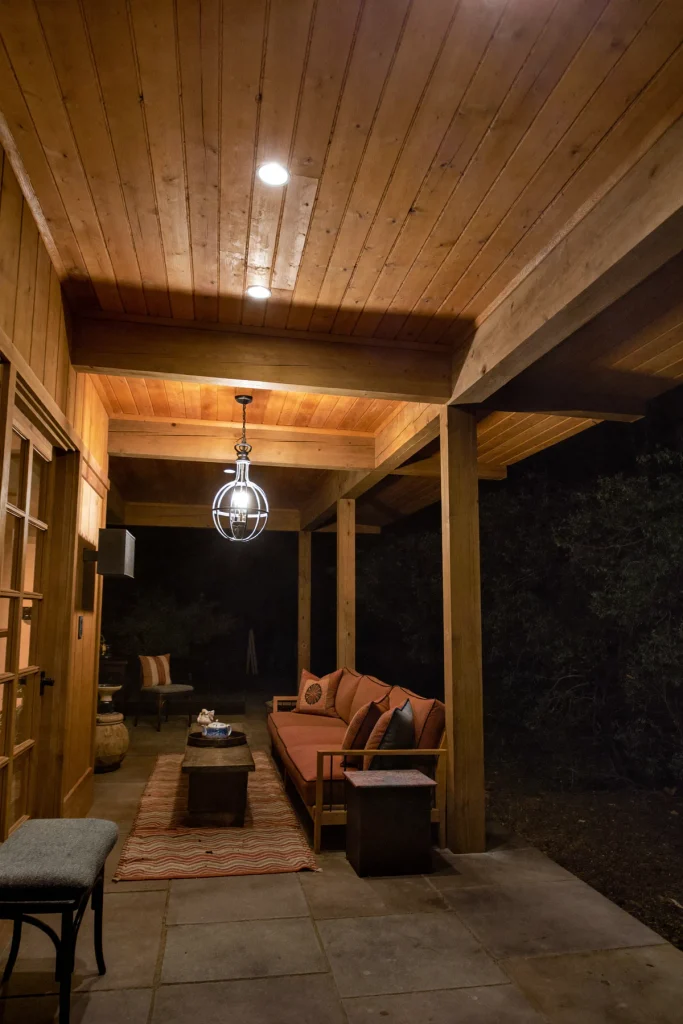
Glance up at a really good covered patio and chances are you’ll see timber. Interlocking planks stained honey or walnut make the ceiling feel finished and indoor-like, something plain drywall can’t match.
Run chunky square beams across, set recessed lights between them, and hang one wrought-iron pendant above the sofa. Suddenly it’s a true outdoor room. Finish the boards with an exterior-rated sealer so damp air won’t make them warp. 🪵
Tilt a Louvered Roof to Follow the Day
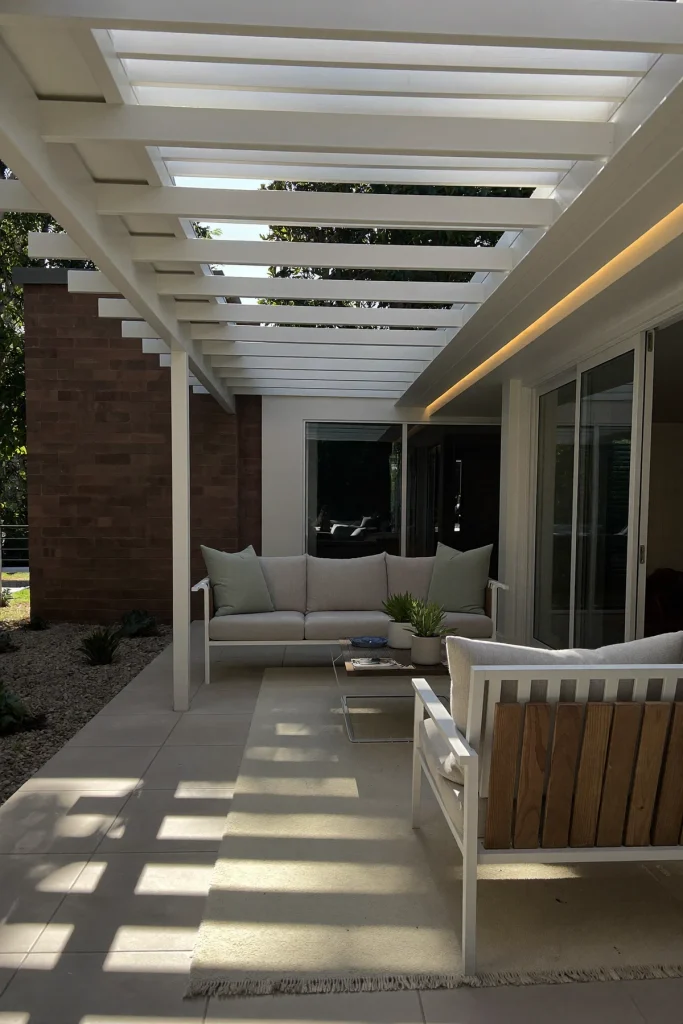
Picture a ceiling of aluminum slats that rotate with a remote or a hand crank. You can open them on a bright morning, angle them halfway for striped shade and shut them when clouds roll in.
This is the first of three pergola-style ideas here, and it costs the most, but no other roof gives you the same control. A white or soft grey finish keeps the floor shadows gentle, and an LED strip along the beams handles the evening shift.
Small Trick

Angle the slats so water drains away from the house wall and not toward your back door.
Roll Out an Awning Whenever the Sun Gets Strong
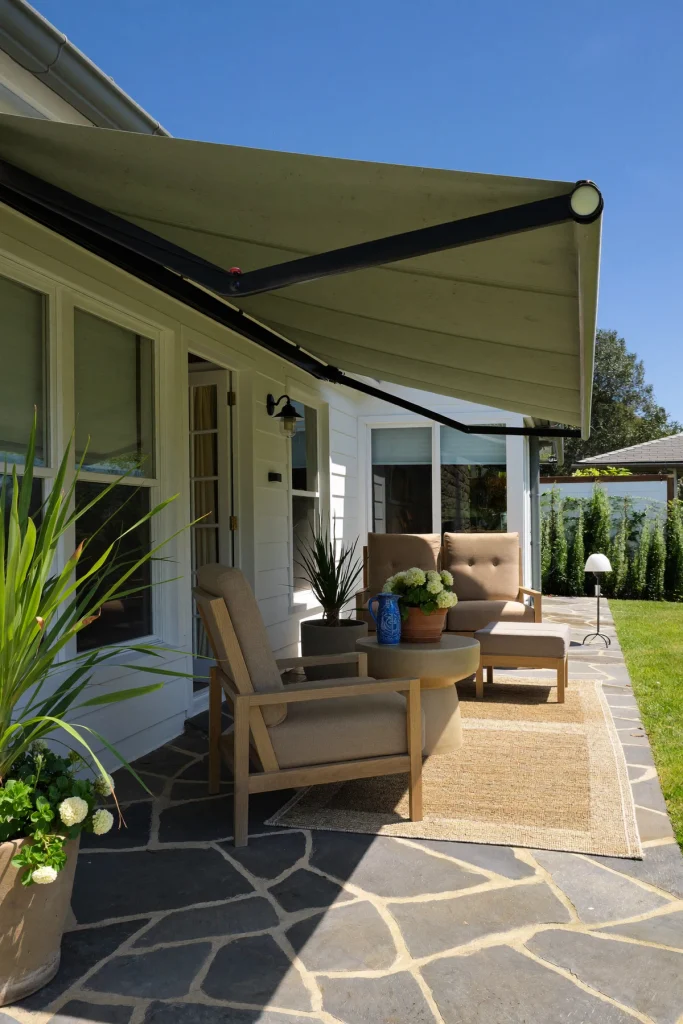
Think of an awning as a roof that retires when you don’t need it. Against the long, low wall of a ranch house, a sage or cream canvas on slim arms opens in about half a minute and drops shade over the seating. 🌤️
Look for a solution-dyed acrylic that fights fading and mildew, and consider a wind sensor if your area gets gusty. A single sconce by the door keeps the patio lit even when the canvas is rolled up.
If You Rent
No drilling allowed? Try an awning on its own freestanding posts, or a clamp-on balcony style, so the siding stays untouched.
Layer Two Shade Sails Over the Courtyard
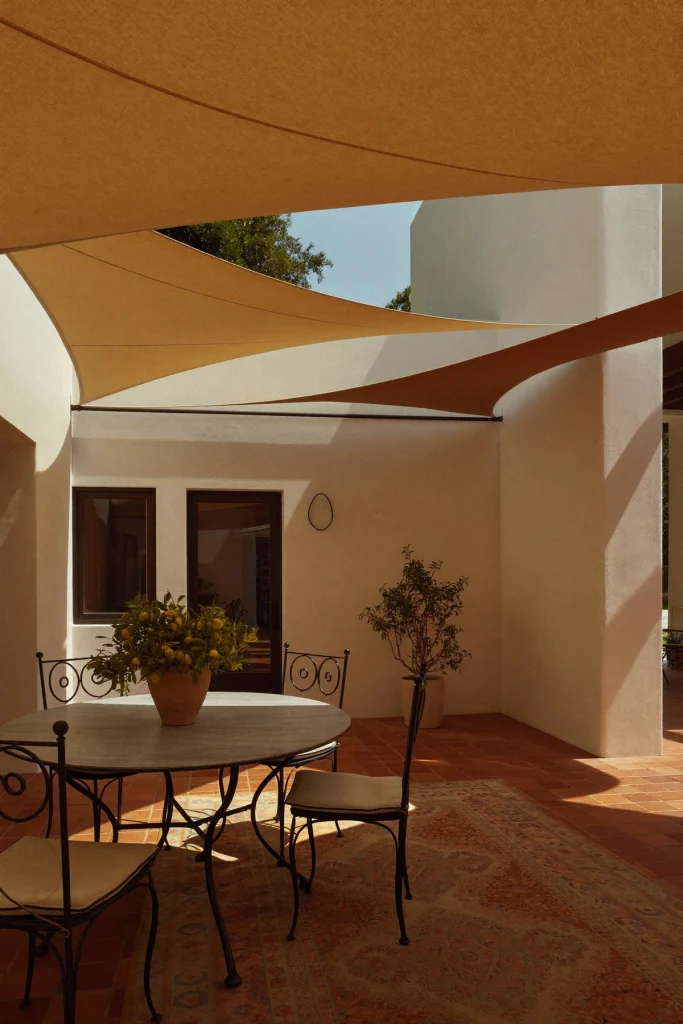
These tensioned fabric triangles float above a patio like sails on a boat. Two overlapping ones, in sand and terracotta, look wonderful on white stucco, and together they stop as much as 90 percent of UV while warm air drifts out.
Fix them to steel posts and the house wall, and set one corner lower than the rest so rain drains off. If heavy snow is common where you live, take them down for winter, because fabric can’t hold that weight.
Crown the Seating Area With Golden Reed Thatch
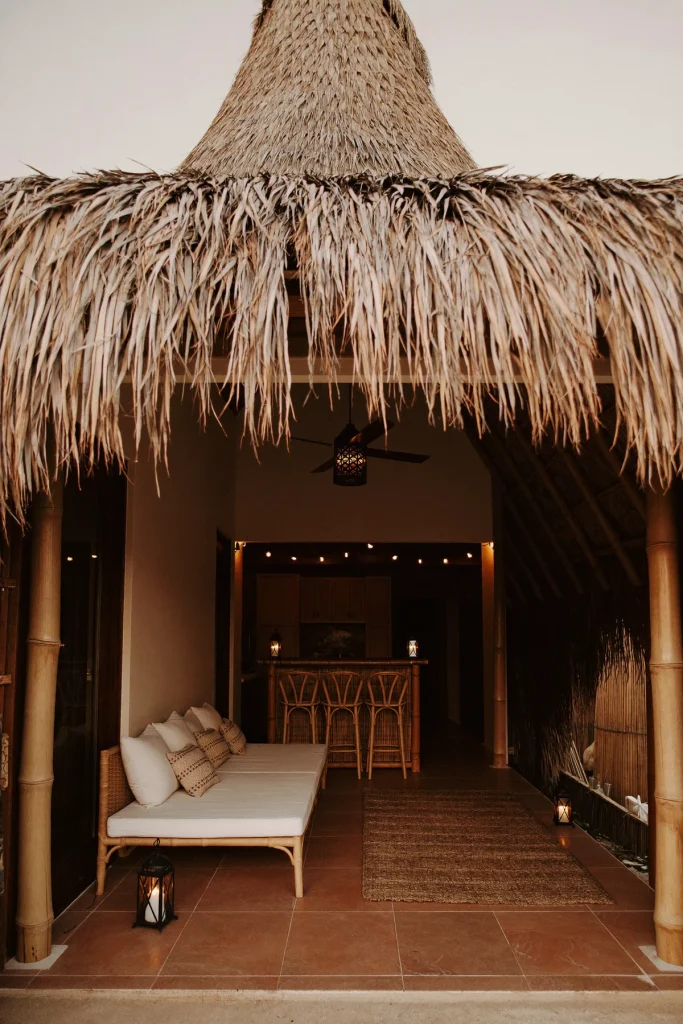
A thick thatched canopy with deep eaves feels like a holiday the moment you step under it. It keeps the area cool and shaded, and its texture pairs beautifully with bamboo posts and a rattan daybed. 🌴
It suits hot, dry regions and beachside homes best. Choose a fire-treated product, keep open flames well away and light the space with string lights and lanterns, not torches below the thatch.
Best Suited To
Beach bungalows, sunny backyards and anyone craving a tiki-bar mood. Leave it out if your winters are soggy and heavy.
Attach a Single-Slope Shelter to the Rear Wall
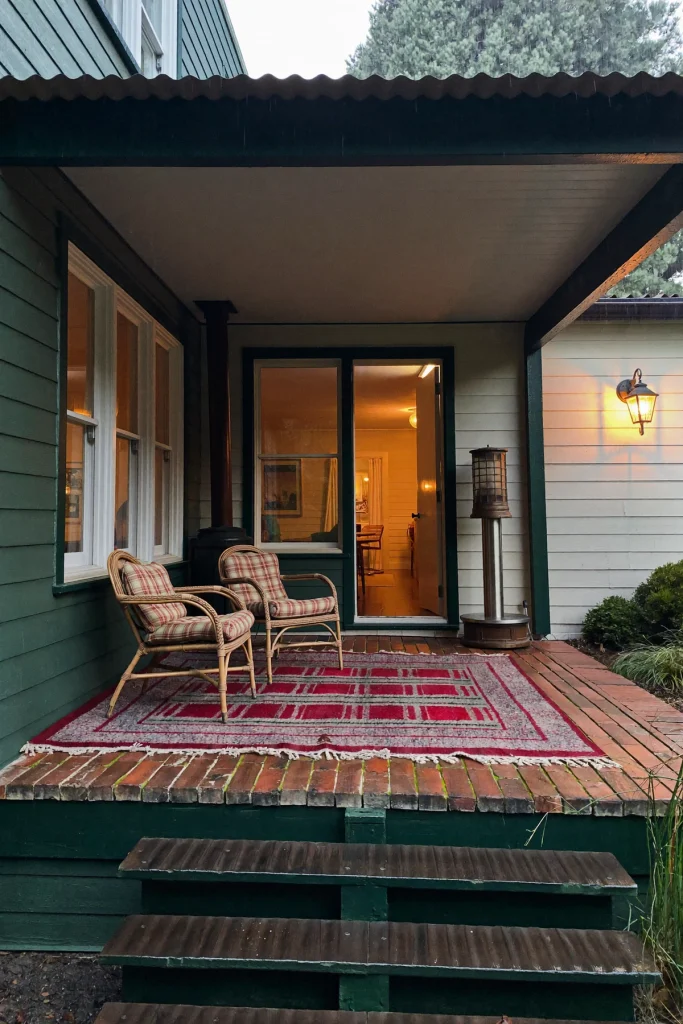
Simplest of all: one sloping plane fixed to the house. Corrugated metal on timber rafters costs little, goes up fast and suits an older house nicely.
Give the fascia a deep green or navy coat, hang a lantern and bring in a small heater for chilly nights. As a bonus, it keeps the doorway dry when you dash in from the rain. 🏡
Budget Snapshot
| Item | Rough range |
| Metal panels | Around $3 to 7 per square foot |
| Lumber frame | Around $800 to 2,000 |
| Lighting and heater | Around $150 to 500 |
Build a Sharp Gable Where the Snow Gets Deep
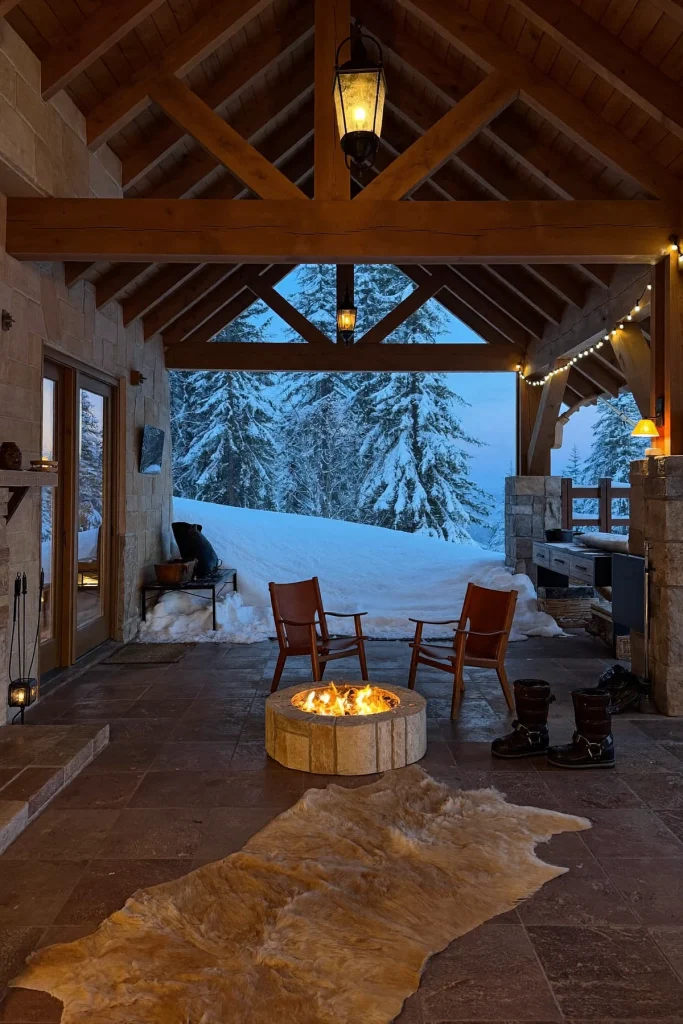
In snow country, a steeply pitched gable is the sensible choice. Snow slides off before it grows heavy, and timber trusses showing underneath give the space a lodge feeling. ❄️
Gather around a stone fire pit with two leather chairs and a thick sheepskin-style rug. Leave a pair of boots by the door, run string lights along the beams, and the patio becomes your favorite room come January.
Check the snow load for your region with a builder before choosing beam sizes. Guessing here isn’t wise.
Open a Flat Roof With a Square of Sky
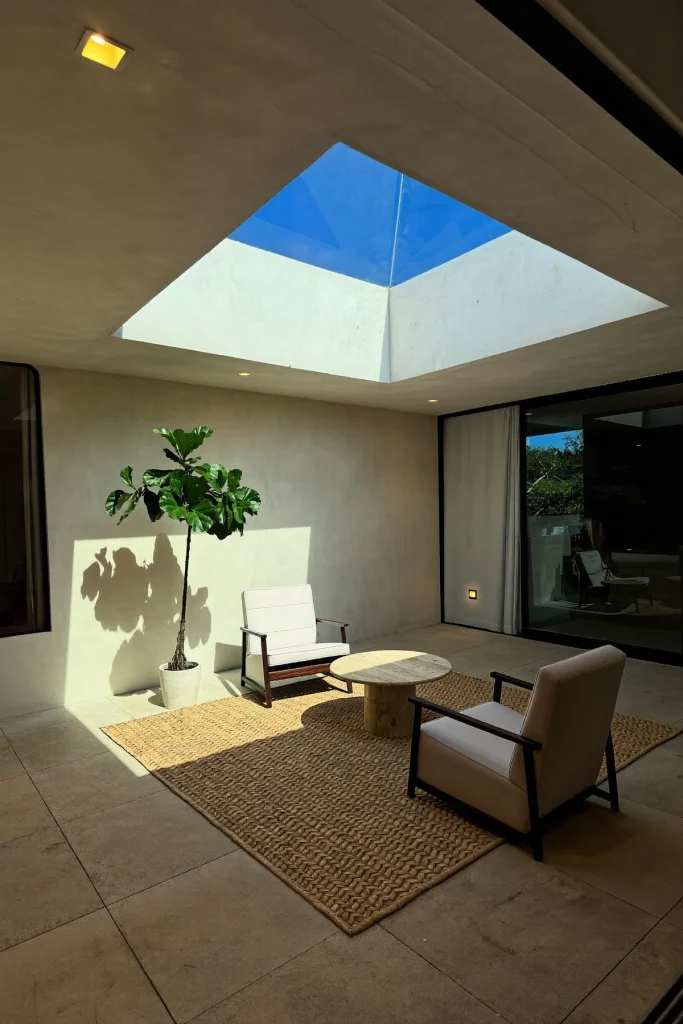
Flat roofs can make a courtyard dim, and a skylight brightens it instantly. One large glass pane sends a shaft of daylight down onto a rug and a round travertine table, like a sunbeam with seating.
It suits a modern townhouse courtyard well. Look for built-in shades or low-E glass to keep summer heat in check, and put a tall fiddle-leaf fig right where the light lands. 🌿
Give the roof a slight tilt toward a drain so puddles don’t gather around the skylight curb.
Leave the Cedar Rafters Open to View
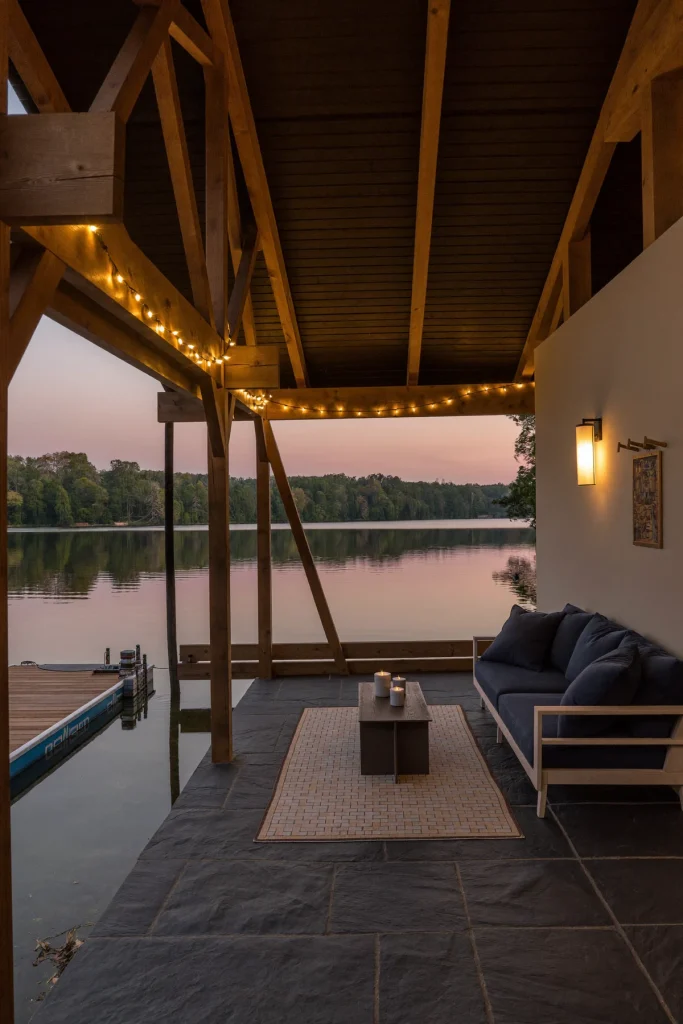
Uncovered rafters give a patio a breezy, warm feeling. Cedar smells pleasant, resists rot and turns rosy at sunset. Pair a dark wood ceiling with rafters stained a shade lighter for depth.
Loop string lights between the rafters and place two wall sconces nearby, and the roof becomes the heart of every gathering. Beside a lake, the beams even echo the shimmer on the water. 🌅
Keep cushions plain, in navy or cream, and let the timber be the star.
Add Fans and Several Light Sources Beneath the Roof
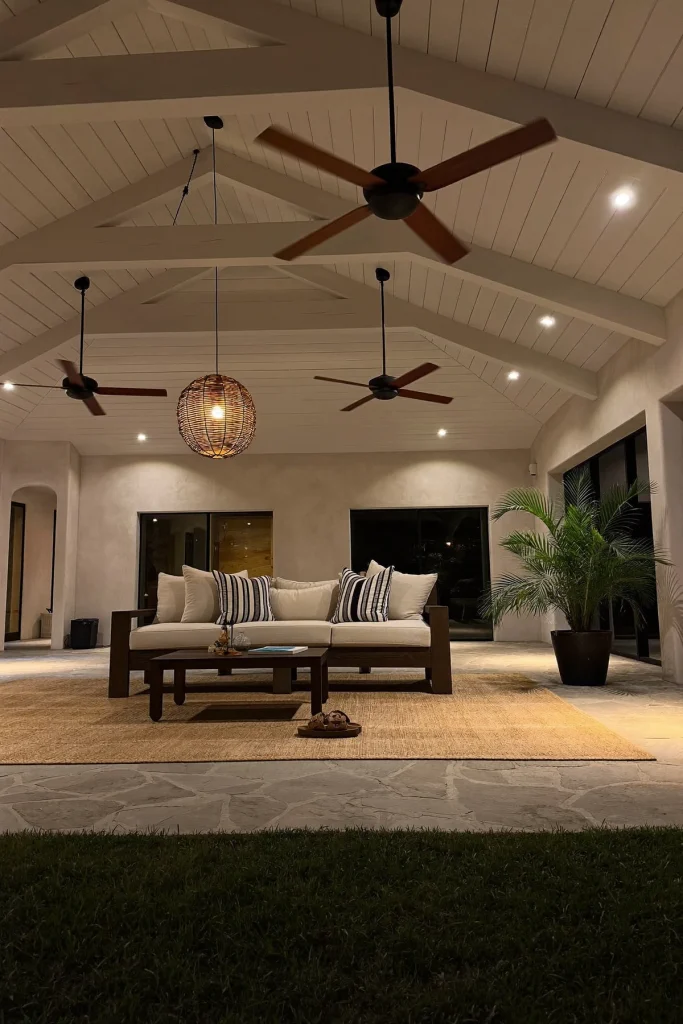
A roof means little if the space under it feels dark and airless. A damp-rated fan with wooden blades keeps air moving on a sticky night, and a white vaulted ceiling adds height.
Combine three kinds of light: recessed cans for general brightness, a rattan pendant for atmosphere and a floor lamp near the sofa for reading. How you layer them counts for more than which fixtures you buy. 💡
Build the Layers
- General: recessed lights with a dimmer
- Feature: a pendant above the table
- Reading: a lamp or sconce by the seating
Let a Copper Chain Carry the Rain
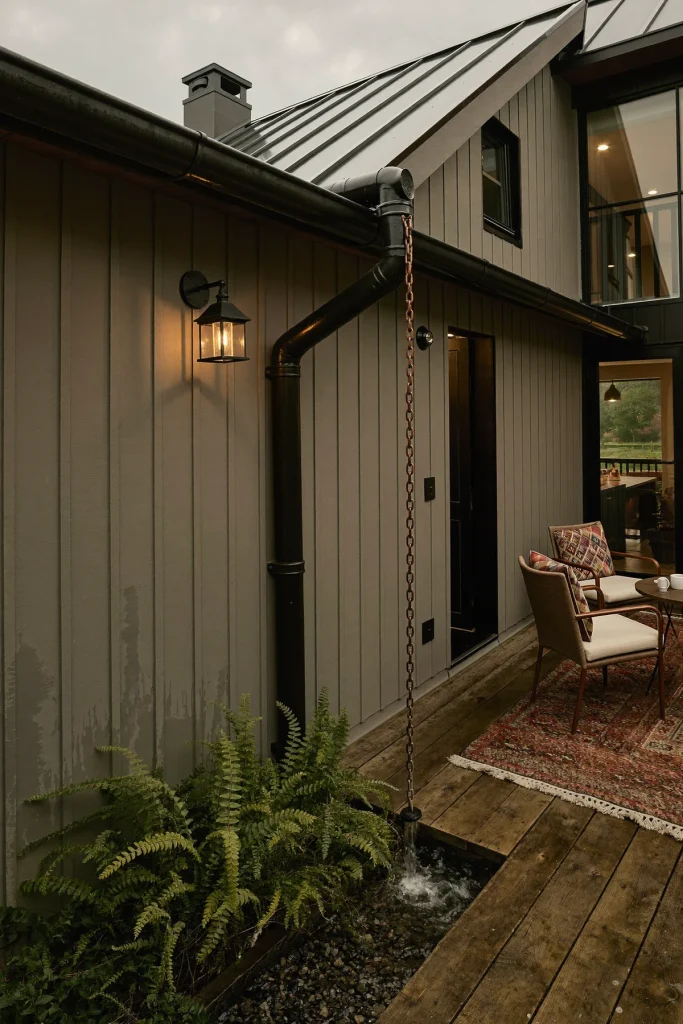
A rain chain swaps the ordinary downspout for a line of cups or links that water follows down. On a wet evening it’s wonderfully quiet. 🌧️
Attach it to the gutter at a roof corner and let it drop into a gravel bed planted with ferns. Against board-and-batten walls on a modern farmhouse, it works like a sculpture. Pull a table up beside it, bring a hot mug, and you’re set.
Expert Advice

Make the gravel basin at least a foot across, so splashes stay off your wooden floor.
Slide a Cloth Canopy Over a White Pergola
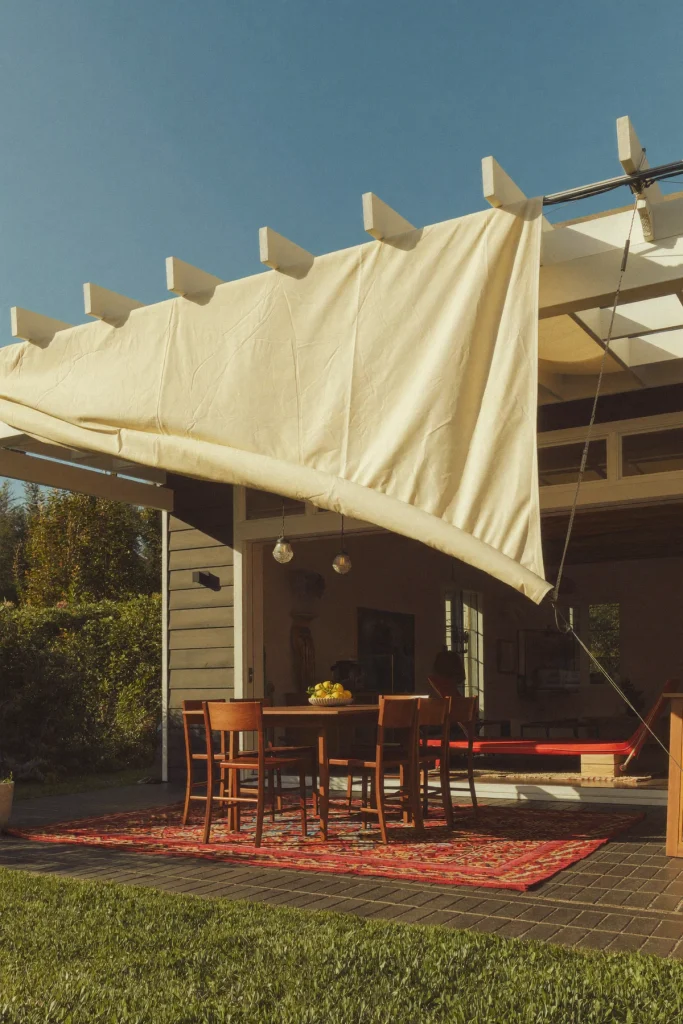
Here’s pergola number two: white beams topped with a cream canopy that glides on cords. Draw it halfway and sunshine filters through one side while the other stays open to the sky.
It costs less and weighs less than a louvered roof, and in a family yard it feels easygoing and friendly. Pick a water-resistant fabric, lay a bold outdoor rug below and hang two lights from the beams for after dark. 🍋
Retract the canopy before storms or strong wind. It handles sunshine, not a downpour.
Frame the Roof Around an Existing Tree
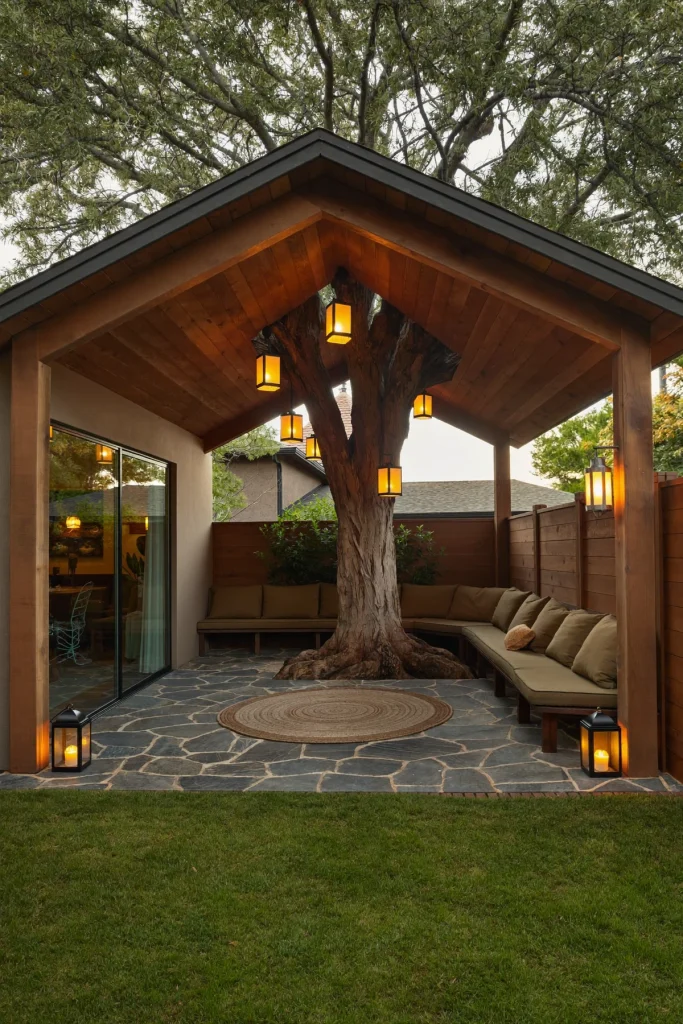
When a lovely tree already shades the patio, build the roof around it. Frame a square gap in the beams, let the trunk pass through and watch the branches spread overhead like a living ceiling. 🌳
Leave a few inches of clearance on every side so the trunk can move and grow, and seal the gap with flexible flashing. A curved bench around the base becomes the best seat in the yard.
Hang lanterns from the limbs and the area glows at twilight. Ask an arborist to check the tree before you commit, because you’ll live with this decision for years.
Finish the Loggia With Curved Terracotta Tiles
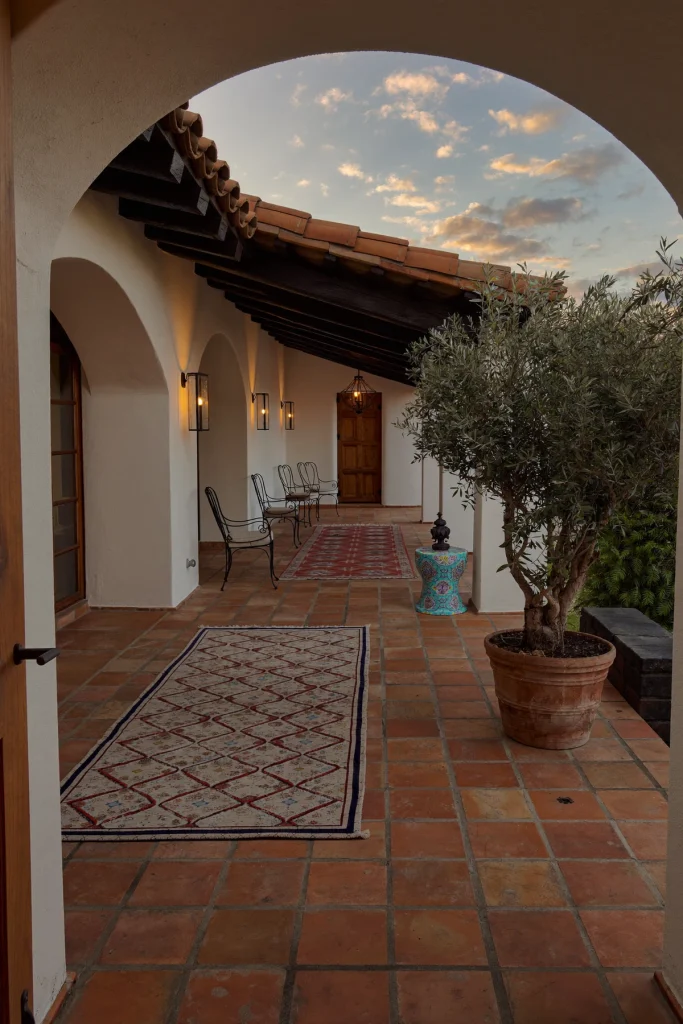
Rust and orange barrel tiles are the hallmark of a Spanish Colonial house. Put them over a loggia and the space appears to have stood for a century.
Because clay tile is heavy, the frame must be engineered for the load. The reward is a roof that lasts for generations, stays cool under the sun and glows at golden hour. Dark beams and thick white arches round out the picture. 🧡
Where It Shines
Hot, dry regions, stucco houses and any home whose main roof already wears tile.
Train Wisteria Across the Beams as Your Canopy
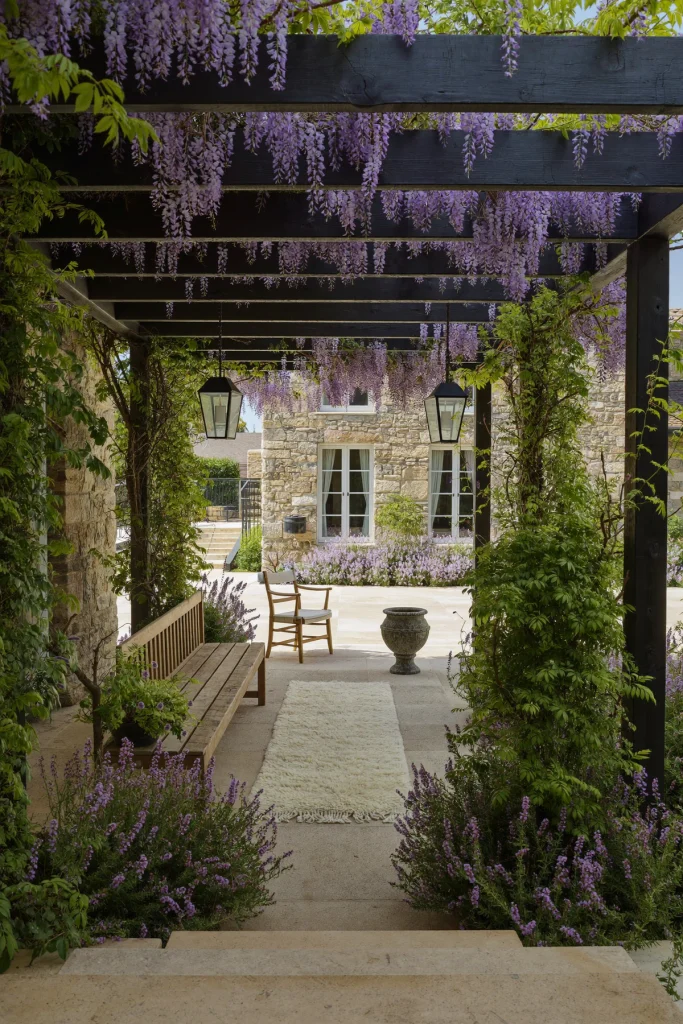
Pergola number three is the most romantic: dark-stained beams hung with wisteria. By late spring, long lavender clusters dangle and throw a lacy shade no store sells.
It doesn’t stop rain, so think of it as a roof for sun and scent. Build the frame extra strong, since the vine grows thick and powerful, and prune twice a year to keep the seating area neat. A stone urn and a long wooden bench complete the picture. 💜
Should you want rain protection later, clear panels can go above the vines without changing the look.
Vault the Ceiling With Beams Above an Outdoor Hearth
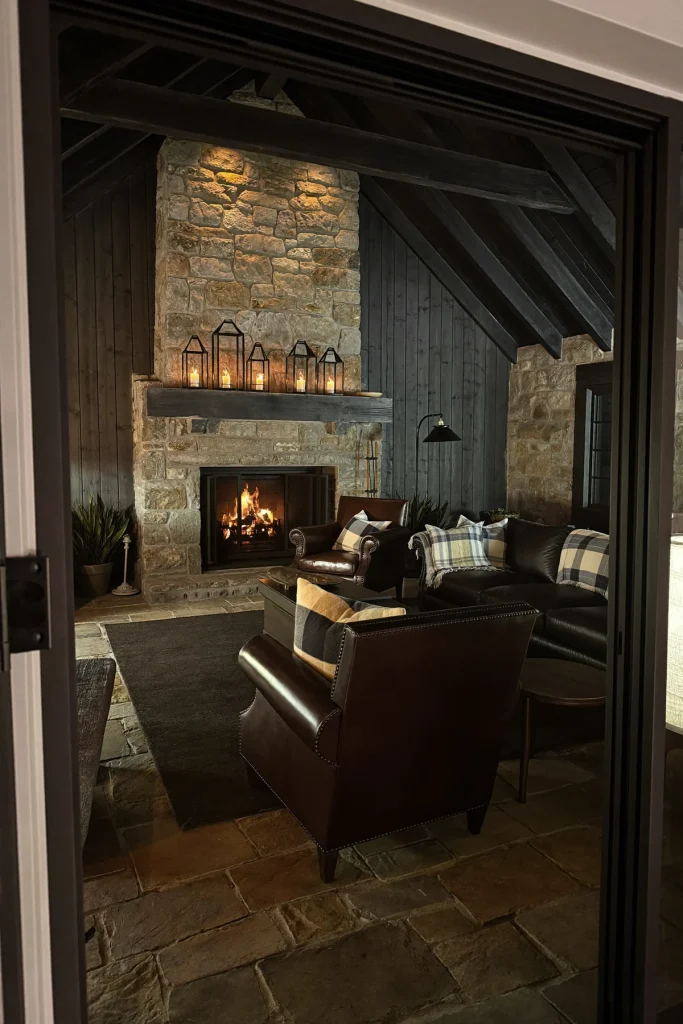
Hardly anything compares to a crackling fire beneath heavy timbers. A vaulted ceiling of dark planks gives a stone chimney space to breathe and bounces warmth back to the seats.
Choose a stone or brick hearth, a thick wool rug and two roomy leather armchairs. A row of candle lanterns on the mantel echoes the flames. 🔥
Safety List
- Confirm distances between flame and timber
- Install a spark screen
- Use a fireproof hearth floor
- Plan where smoke will escape
Warm the Roof Edge With Ceiling Heaters and Clear Curtains
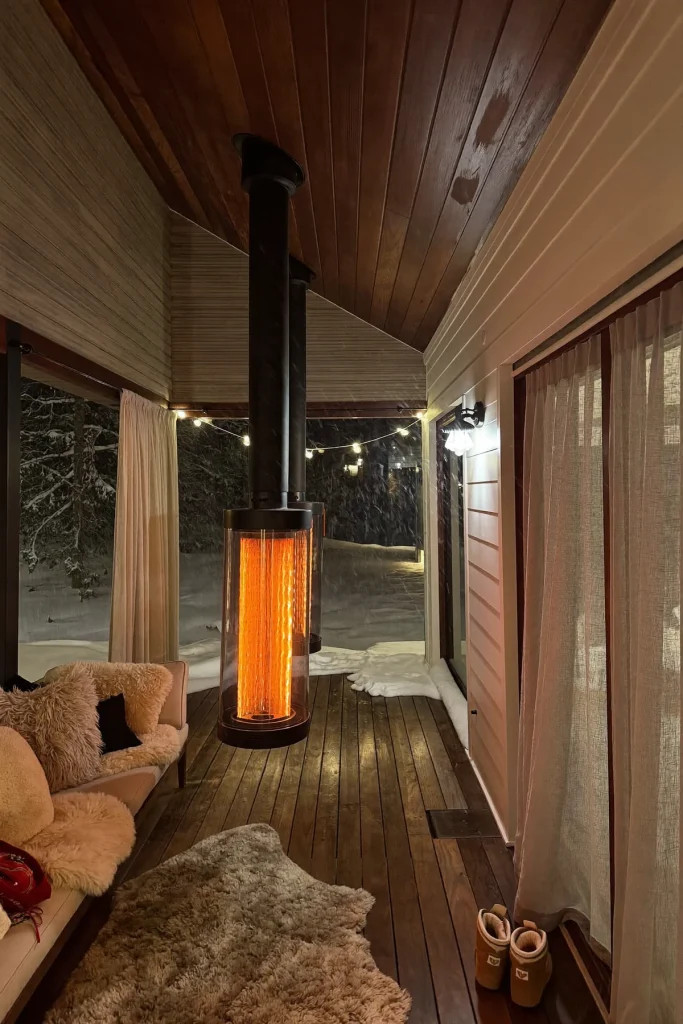
Hoping to sit outside all winter? Combine a generous overhang, two ceiling-mounted radiant heaters and heavy clear curtains, and the patio becomes a three-season space that copes with snow as well. ⛄
Drop the curtains on the windy side, leave the other open, and add a thick wool rug and sheepskin throws. A wall sconce and string lights add to the cozy orange glow of the heaters.
The Rule to Keep
Never seal the space completely while a heater runs. Leave one side open for airflow.
Follow the maker’s clearance guidelines, and let an electrician handle the wiring.
Choose the Roof That Matches Your Weather
If you remember a single thing, let it be this: start with the climate and let the looks follow. Heavy snow calls for a steep pitch and strong beams. Frequent rain needs clean drainage and maybe a rain chain. Hot sun welcomes sails, louvers and a roof that breathes.
Then look at your house. A roof that repeats your main roofline, whether it’s shingle, tile or metal, always seems to belong. Only after that should you think about the ceiling finish and the lighting.
Whatever you pick, add warm light overhead and a rug beneath your feet, and you’ll spend far more evenings outdoors than you planned. Step outside and look up. What’s over your head right now? 🏡
