I’ll be honest. For years I bought pretty curtains, hung them right above the window frame like the packaging showed, and wondered why my living room still looked a little unfinished. The fabric wasn’t the problem. The hanging was.
Curtains are one of the few things in a home that can change the apparent size of a window, the height of a ceiling and the whole mood of a room, all at once. But only if they’re the right width, the right length and hung in the right spot. Get those three things right and even budget panels look custom. 🪟
So these living room curtain ideas are all about the know-how: where the rod goes, how wide the panels should be, how to layer sheers and shades, which pleats and linings to pick, and how to handle the awkward windows nobody shows on Pinterest. Bay windows, sliding doors, corner windows, arched tops, radiators, the window right behind your sofa. Grab a tape measure. Let’s fix your windows.
Mount the Rod Just Below the Ceiling Line
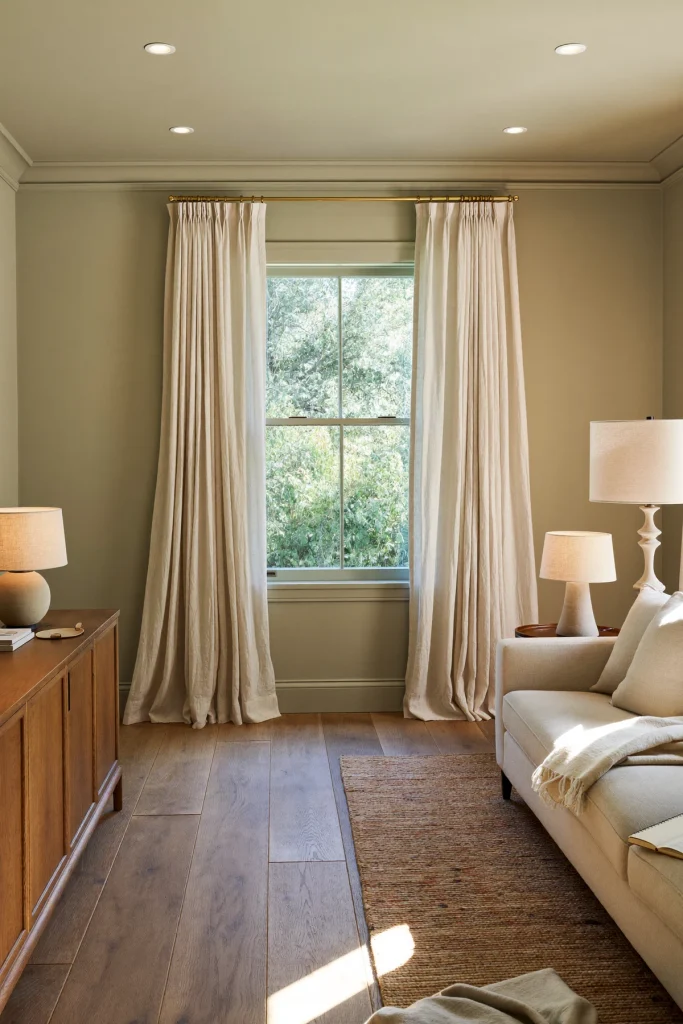
This is the single biggest trick in the whole post. Instead of hanging the rod 2 or 3 inches above the window frame, take it up to roughly 2 to 4 inches below the ceiling or crown molding. Your eye reads the curtain as the window, so a taller curtain means a taller window.
In a room with 8-foot ceilings, that small move can make the walls feel a good foot higher. If you can’t go all the way up, aim for at least halfway between the frame and the ceiling.
Rule of Thumb
Go high, but leave a little breathing room under the crown molding so the rod doesn’t look jammed in.
Extend the Rod Well Past the Window Frame
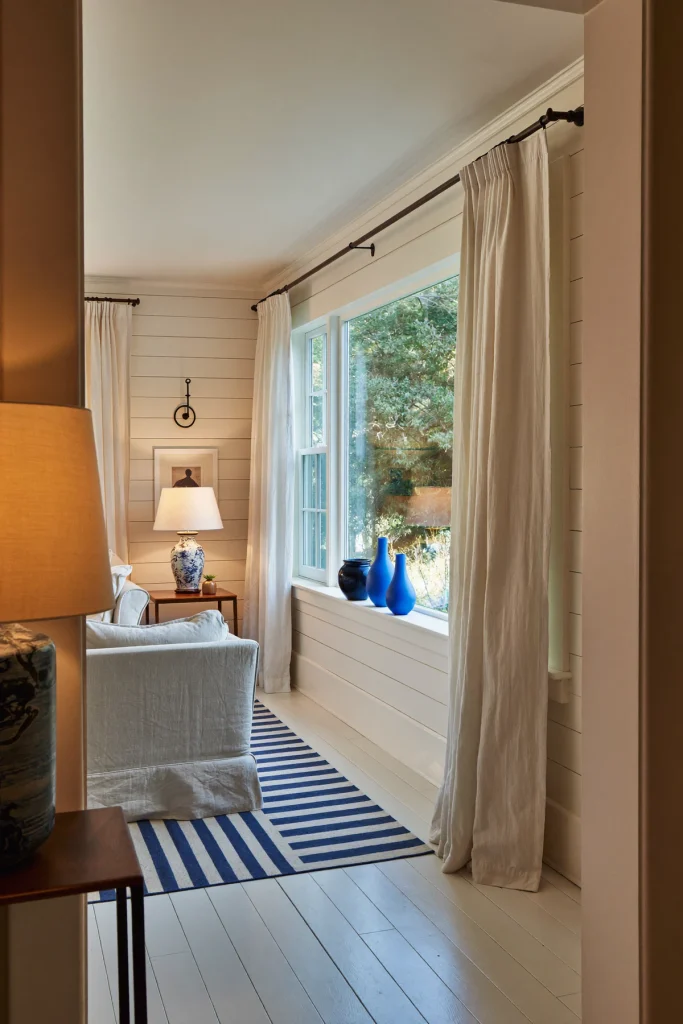
Width matters as much as height. Let the rod run 8 to 12 inches past each side of the frame (more for big windows) so the panels can stack back onto the wall when they’re open.
That way the glass stays fully uncovered, you get every bit of daylight, and the window looks wider than it really is. Squeezed-in curtains that cover a third of the glass make a window look smaller and the room darker. 🌤️
Bonus: a wider rod also hides a slightly narrow or off-center window, which comes in handy later in idea 21.
Buy Panels That Add Up to Twice the Window Width
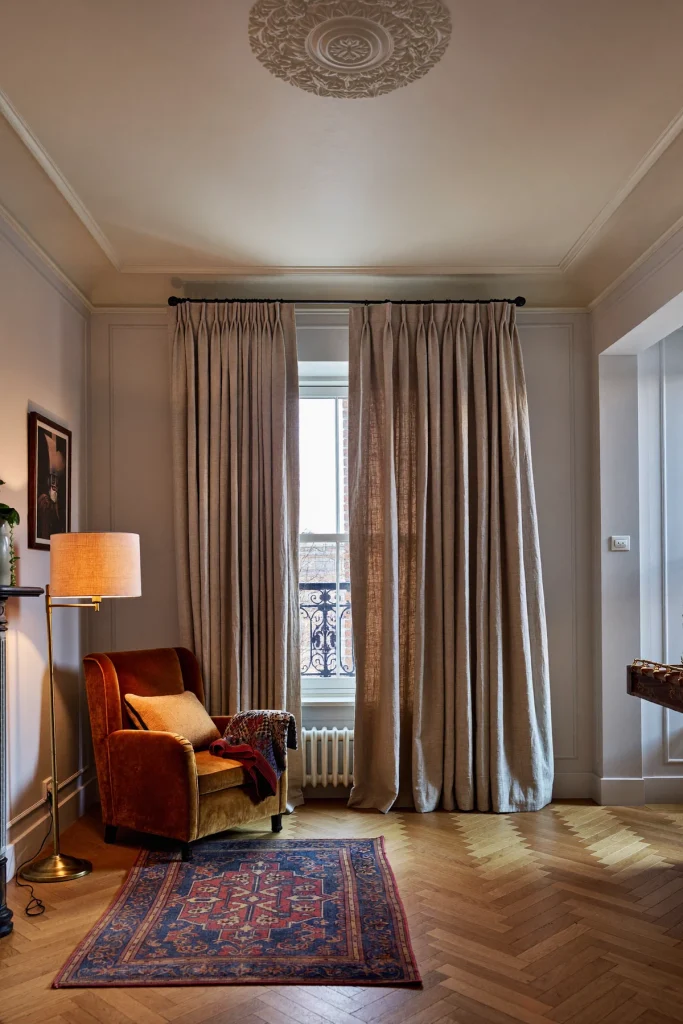
Here’s where most of us go wrong. One panel per side, each the width of half the window, looks flat and skimpy when closed. Curtains need fullness to fall into soft folds.
Aim for total fabric width of about two times the rod length for a full, gathered look, or 1.5 times for a lighter, more casual one. Sheers can go up to 2.5 or even 3 times.
Fabric Math
| Rod length | Total panel width to buy |
|---|---|
| 60 inches | About 100 to 120 inches |
| 84 inches | About 140 to 170 inches |
| 120 inches | About 200 to 240 inches |
Let the Hem Kiss the Floor
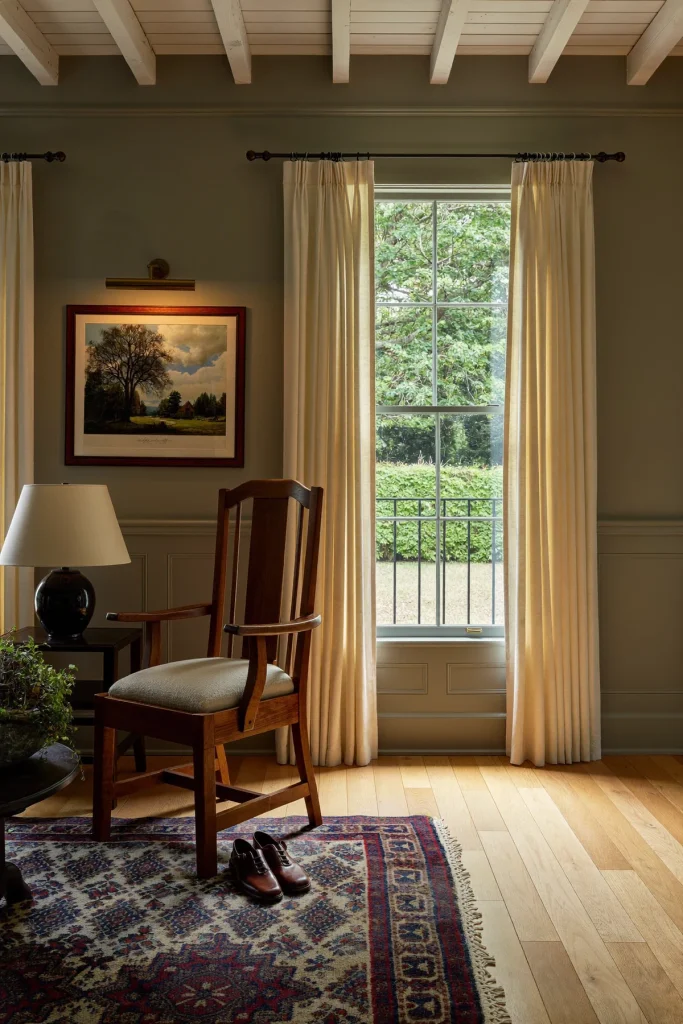
Length is where curtains go from “fine” to finished. A hem that stops 4 inches above the floor looks like trousers that shrank in the wash. 😅
For most living rooms, a “kiss” is perfect: the hem just touches the floor, or floats about half an inch above it. It looks tailored and it’s easy to vacuum around.
Hem Length Cheat Sheet
| Hem style | Best for |
|---|---|
| Float (half an inch up) | Busy family rooms, pets, robot vacuums |
| Kiss (just touching) | Almost every living room |
| Break (1 to 2 inches extra) | Relaxed linen, softer look |
| Puddle (4 to 6 inches extra) | Formal, romantic rooms that see little traffic |
Layer Sheers Behind Lined Drapes
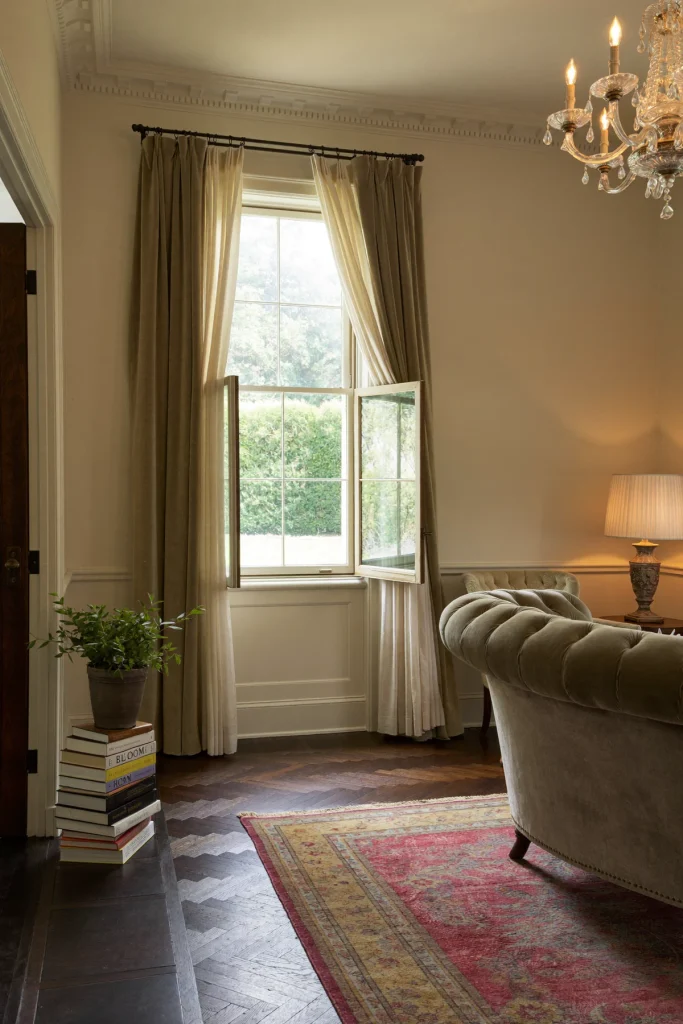
A double rod (or a double track) gives you two looks in one window. Sheers sit on the back rod for soft, filtered daylight and privacy during the day. Heavier lined drapes sit on the front rod to close at night for warmth and darkness.
It’s the classic designer combo, and it makes a window look dressed even when the main drapes are pulled right back.
Layer It Like This
- Back: white or ivory sheer, 2.5 times fullness
- Front: lined linen, cotton or velvet, 2 times fullness
- Same length for both, so the hems line up
- Keep the sheers a shade lighter than the drapes 🤍
Add a Blackout or Thermal Lining
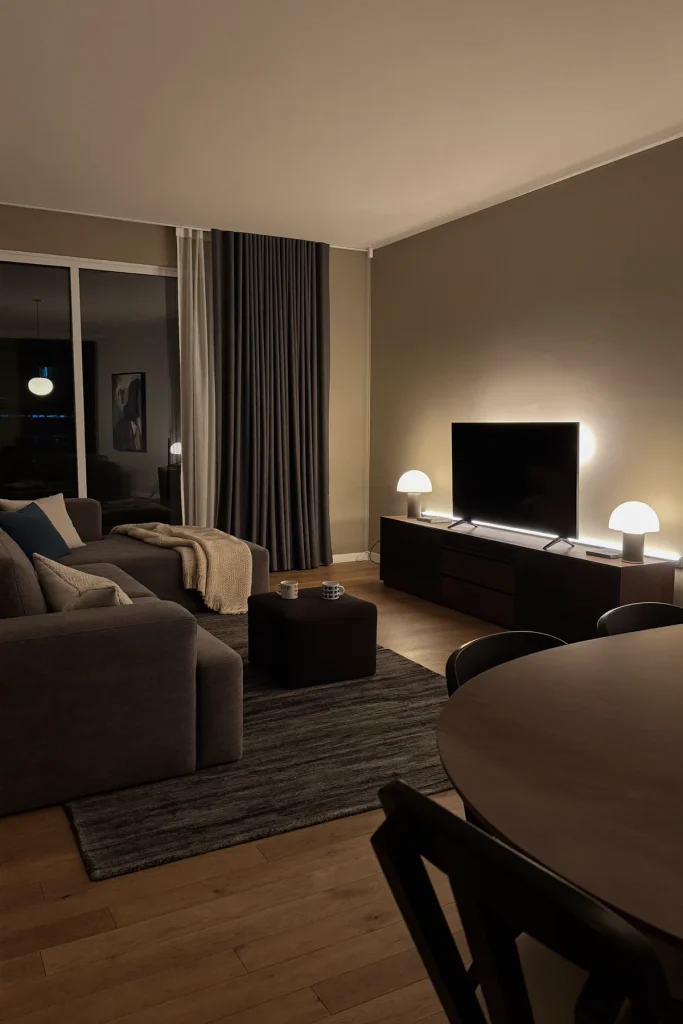
A lining is the difference between curtains that hang and curtains that drape. It gives the fabric weight and body, protects it from sun fading, and helps every fold fall straight.
For a living room that doubles as a movie room, choose a blackout lining. For drafty older windows, a thermal or interlined panel keeps the heat in during winter and the room cooler in summer.
Here’s a fun one: lined curtains often look more expensive than unlined ones in a pricier fabric, simply because they hang better.
Hang Grommet Panels for Easy Daily Gliding
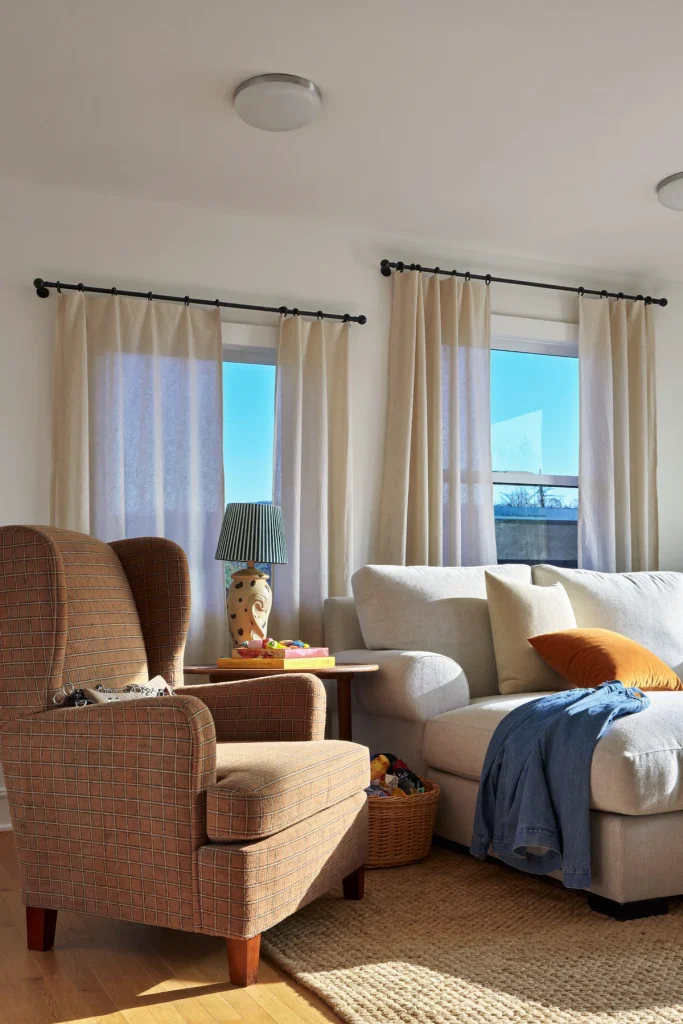
Grommet curtains have metal rings punched right through the top of the fabric. They slide easily along a rod, so they’re perfect for the windows you open and close every single day.
The folds they make are deep and casual, which suits relaxed family rooms, farmhouse living rooms and anywhere kids will be tugging on them. Choose a rod with a smooth, round profile so the grommets don’t catch.
One small tip: grommets show a bit of rod above the fabric, so pick hardware you actually like looking at.
Renter-Friendly Version
Pair grommet panels with a tension-free, no-drill rod that hooks over the window frame, or use heavy-duty adhesive brackets for lightweight panels. Nothing to patch when you move out.
Slip Drapery Rings Onto a Wooden Pole
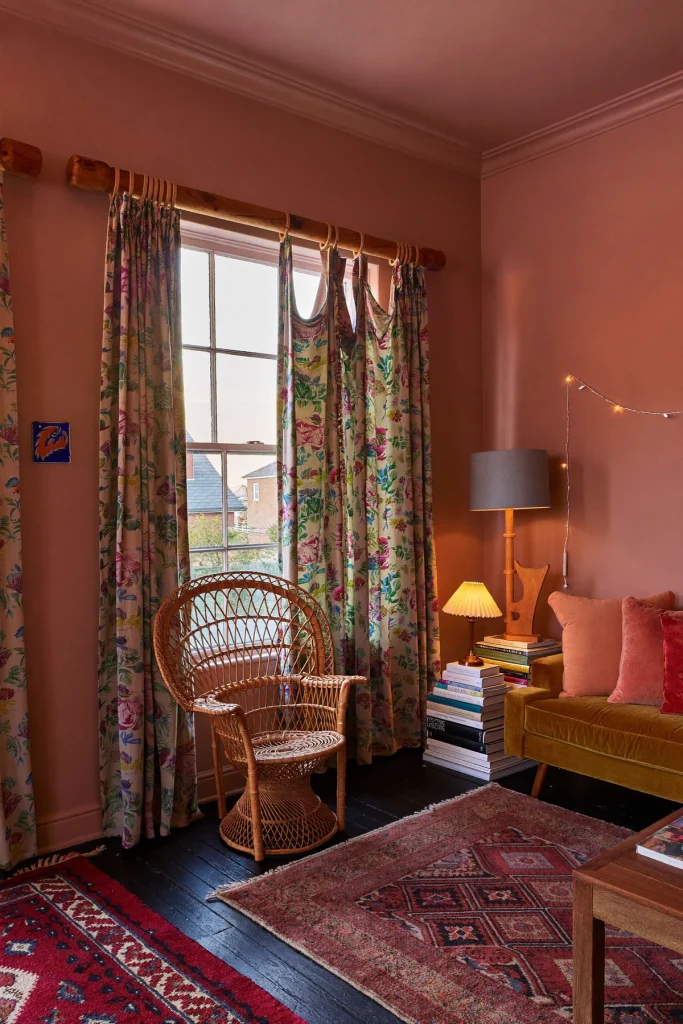
Rings with little clips are the easiest way to make any flat panel look custom. Clip them every 4 to 5 inches along the top edge and the fabric falls into soft, natural pleats.
A chunky wooden pole with matching rings and simple ball finials feels warm and traditional. Thin brass or matte black rods feel lighter and more modern. Either way, it’s an easy upgrade that costs far less than custom drapery.
I love this approach for vintage or thrifted fabrics too, because you don’t need to sew a rod pocket. Clip and hang. Done. 🙌
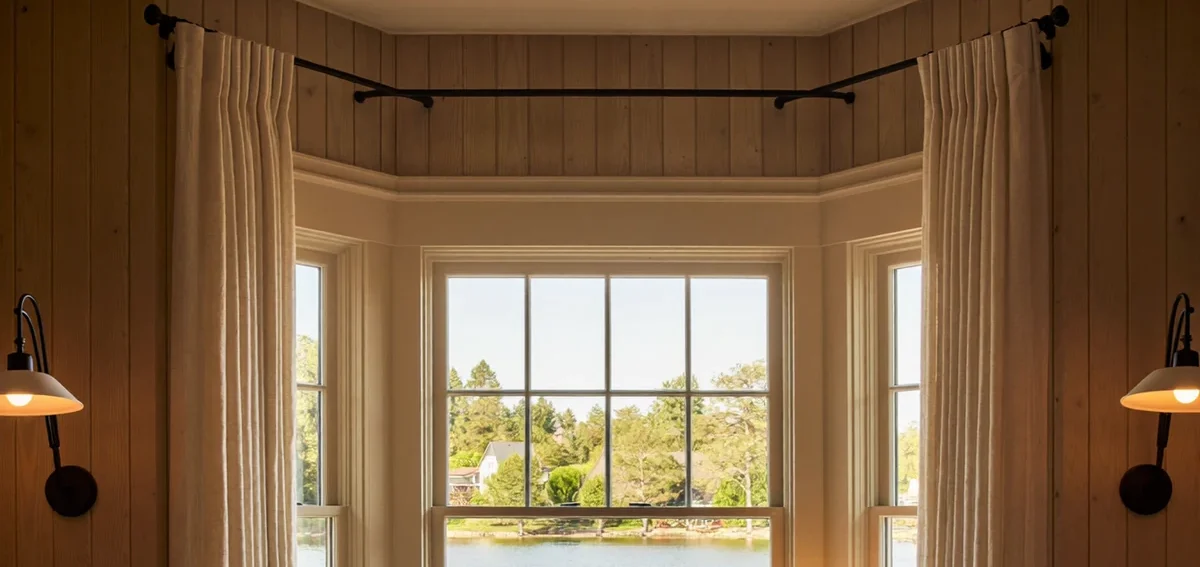
Wrap a Bay Window With a Bendable Rod
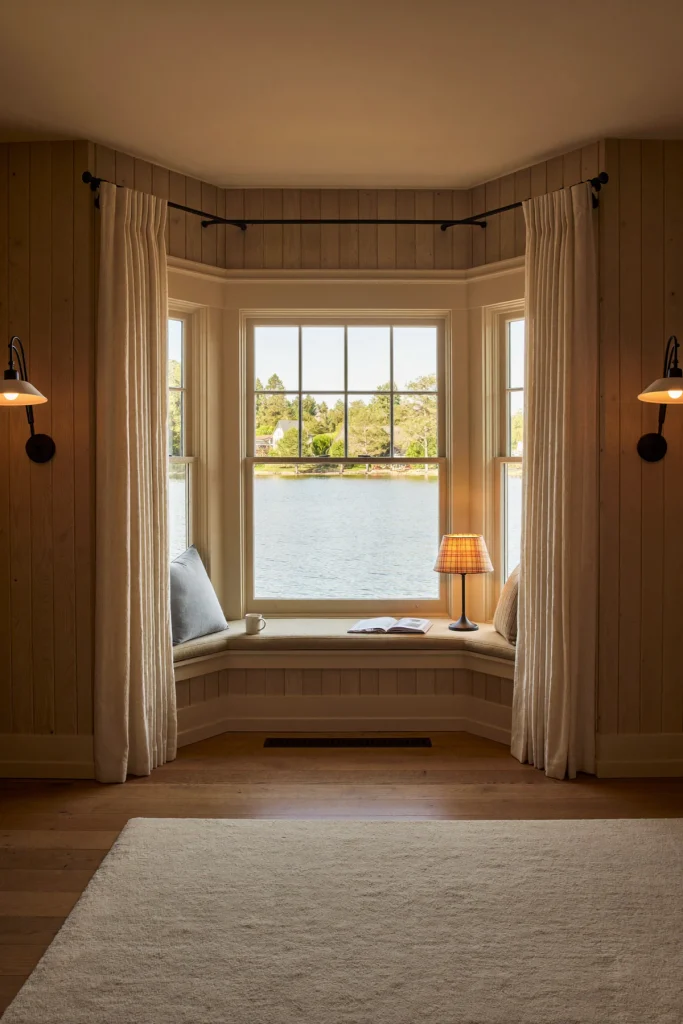
Bay windows are gorgeous and a little intimidating. The easiest fix is a bay window rod with adjustable corner connectors, or a bendable track that follows the exact shape of the bay.
Hang panels at both outer ends and at each corner, so the curtains frame every section of glass without blocking it. If the bay holds a window seat, keep the curtains short or use shades inside each window instead.
Step-by-Step
- Measure each window section separately, plus the angle at each corner
- Buy a bay rod or track with matching connector pieces
- Fix brackets near both ends and at every angle
- Hang one panel per corner and one at each outer end
Dress a Sliding Glass Door With a Traverse Rod
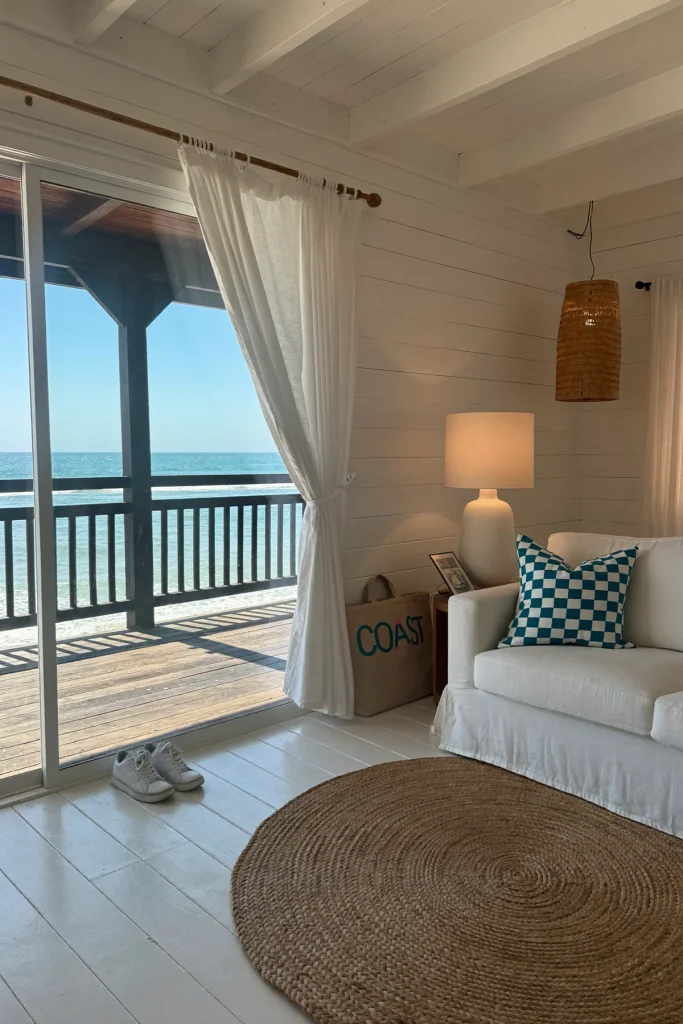
Sliding doors need curtains that move out of the way fast. A traverse rod or a smooth track lets one wide panel glide across the full door with a wand or cord, then stack neatly to one side.
Stack the curtain on the fixed glass side, not the side people walk through, and make sure the rod extends far enough that the fabric clears the opening completely. A float hem from idea 4 keeps the bottom away from dirty shoes and paws.
Kid- and Pet-Proof It
Choose a washable performance fabric, skip puddled hems, and use a wand instead of a looping cord for safety.
Bridge Corner Windows With a Corner Connector
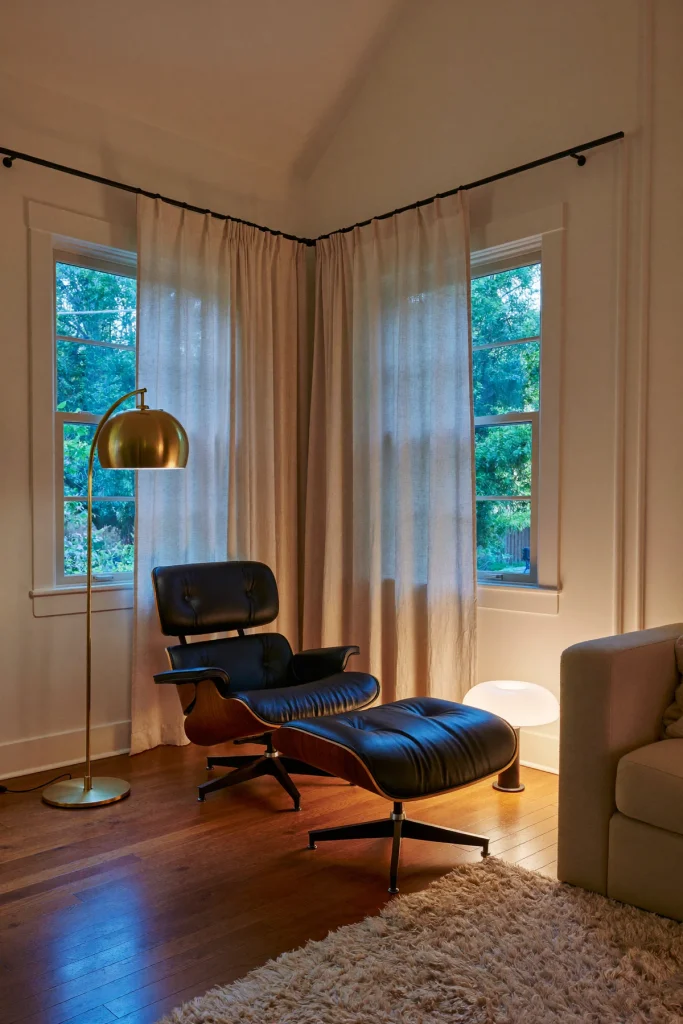
Two windows meeting at a corner can feel awkward because a straight rod can’t reach both. A 90-degree corner connector joins two rods (or two tracks) so the curtains turn the corner as one continuous line.
Hang panels at the two outer ends and one shared panel or pair in the corner itself. That corner panel softens the angle and makes the whole corner feel like one big window. Corner windows often frame the best view in the room, so keep the stack-back generous.
It’s a lovely spot for a reading chair, too. 📚
Frame an Arched Window Without Hiding the Arch
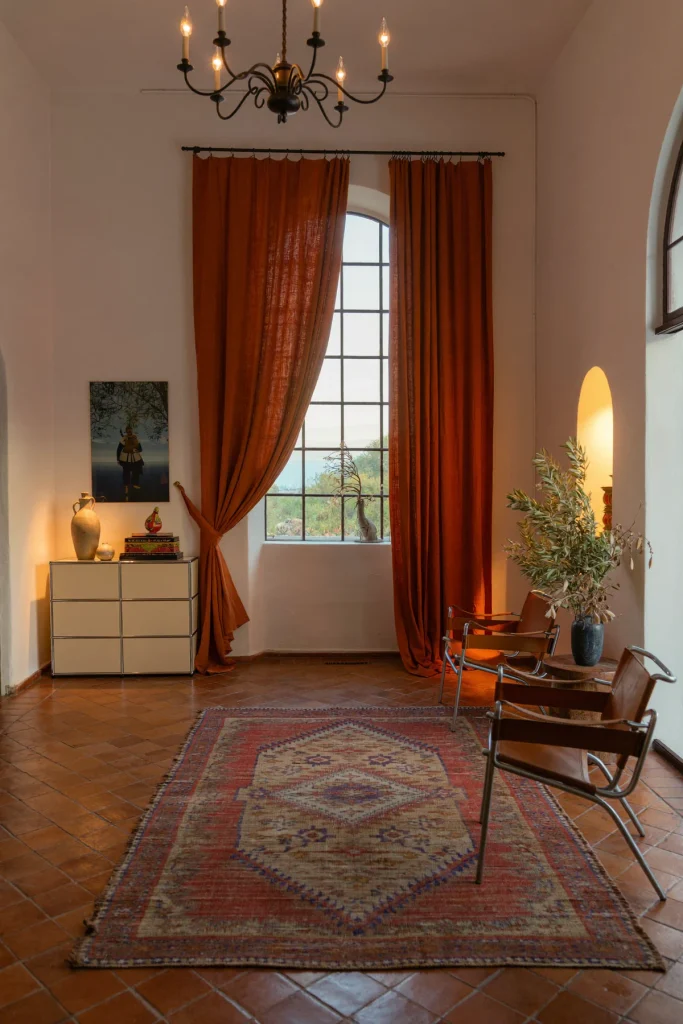
An arched window is a feature. Don’t cover it. Mount the rod above the very top of the arch, close to the ceiling, and let the panels hang well outside the frame so the curve stays visible.
If you need privacy, add a shade or café curtain on the rectangular part below the arch only. Leave the arch itself bare.
Avoid the old trick of shaping a curtain into the arch. It looks fussy and it’s almost impossible to open. Stationary side panels are prettier and far simpler.
This approach shines in Spanish Colonial, Mediterranean-inspired and traditional homes where the architecture already does the talking. ☀️
Stretch Short, Wide Windows With Floor-Length Panels
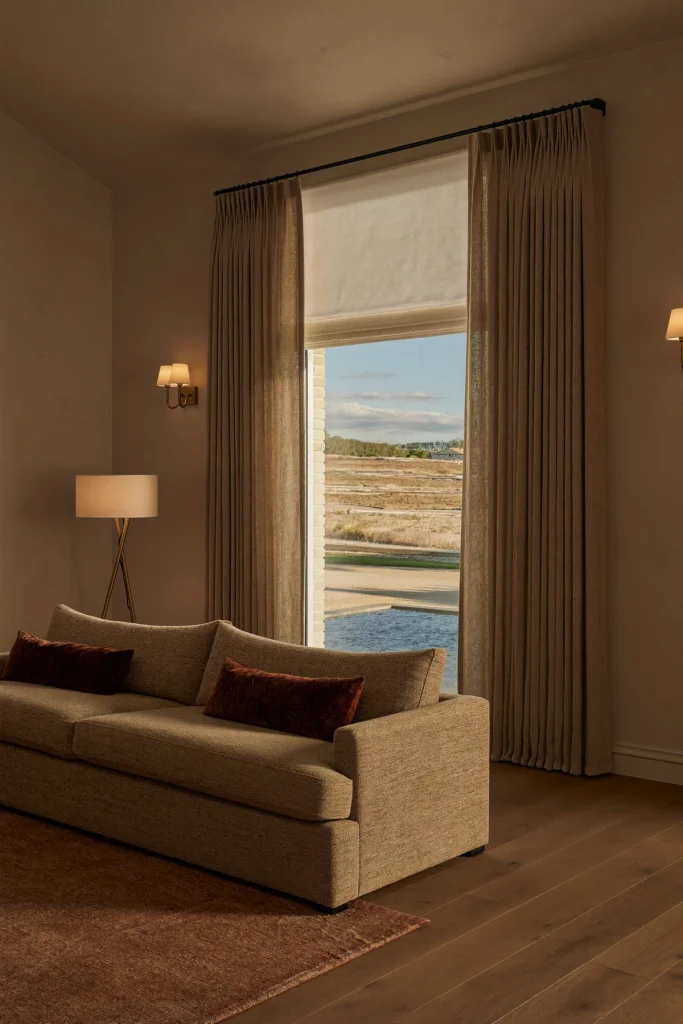
Ranch houses and older homes often have windows that are wide but short, sitting high above the floor. Hanging curtains to the sill makes them look even squatter.
Instead, mount the rod high and hang full floor-length panels. Your eye fills in the missing glass, so the window looks like it runs from ceiling to floor. Add an inside-mount shade if the gap below the sill bothers you when the curtains are open.
Common Mistakes to Avoid
- Sill-length curtains on a short window
- Rods mounted right on the frame
- Panels that cover half the glass when open
- Busy patterns that make the window look choppy
Flank the TV Wall With Blackout Drapes
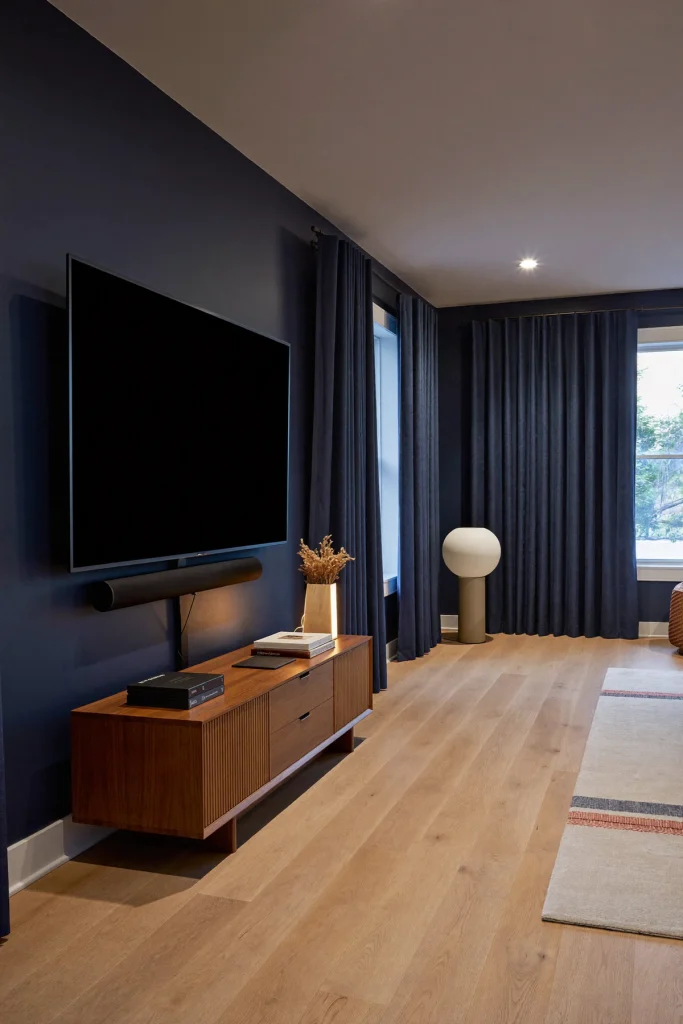
A window beside the TV is the reason so many of us watch movies squinting. Blackout drapes on either side fix the glare without blocking daylight for the rest of the day.
Match the curtain color to the wall behind the TV so the screen sits inside a calm, unbroken backdrop. Deep charcoal, navy or warm taupe works beautifully. 🎬
If the TV sits between two windows, run one long rod across the whole wall, TV included, so the curtains frame the screen like a stage and the wall feels deliberate instead of busy.
Unify Mismatched Windows With One Continuous Rod
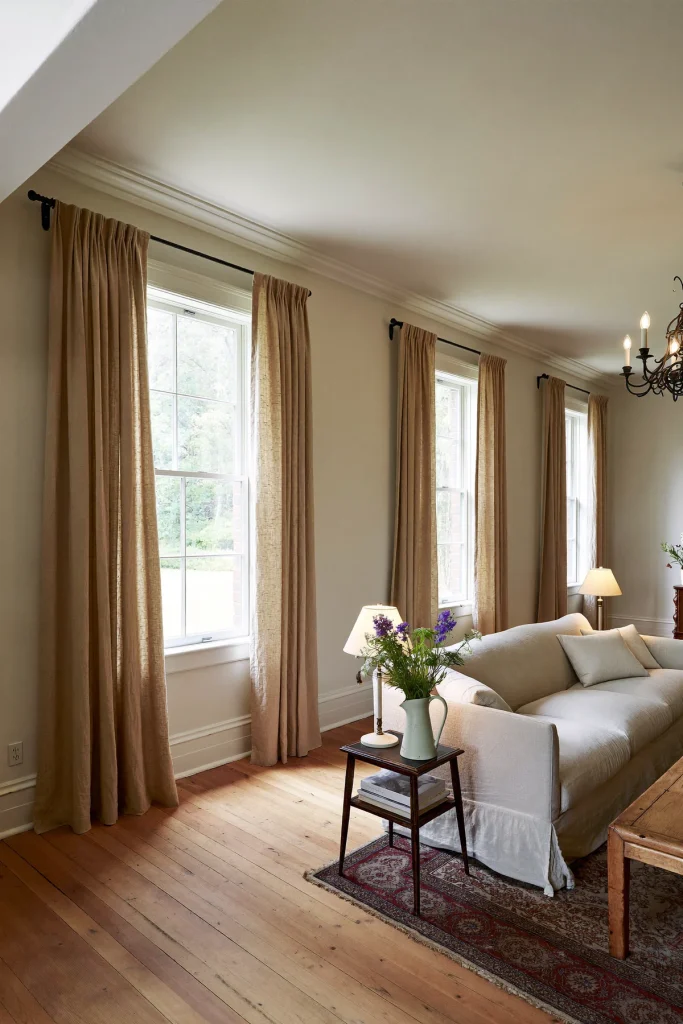
Older homes are full of windows that don’t line up. Different heights, different widths, one squeezed into a corner. Curtains can make them look intentional.
Run one long rod (or a ceiling track) across the whole wall, mounted at the same height above all the windows. Hang every panel to the same length. Suddenly the eye reads one tidy band of fabric instead of three windows arguing with each other. 🧩
Remember the wide rod from idea 2? Here it’s doing double duty. You can shift panels a little to the left or right to fake symmetry, so an off-center window looks perfectly placed when the curtains are open.
Pick a solid or softly textured fabric. Large patterns tend to highlight the very differences you’re trying to hide.
Curtain an Entire Window Wall to Fake a Bigger Window
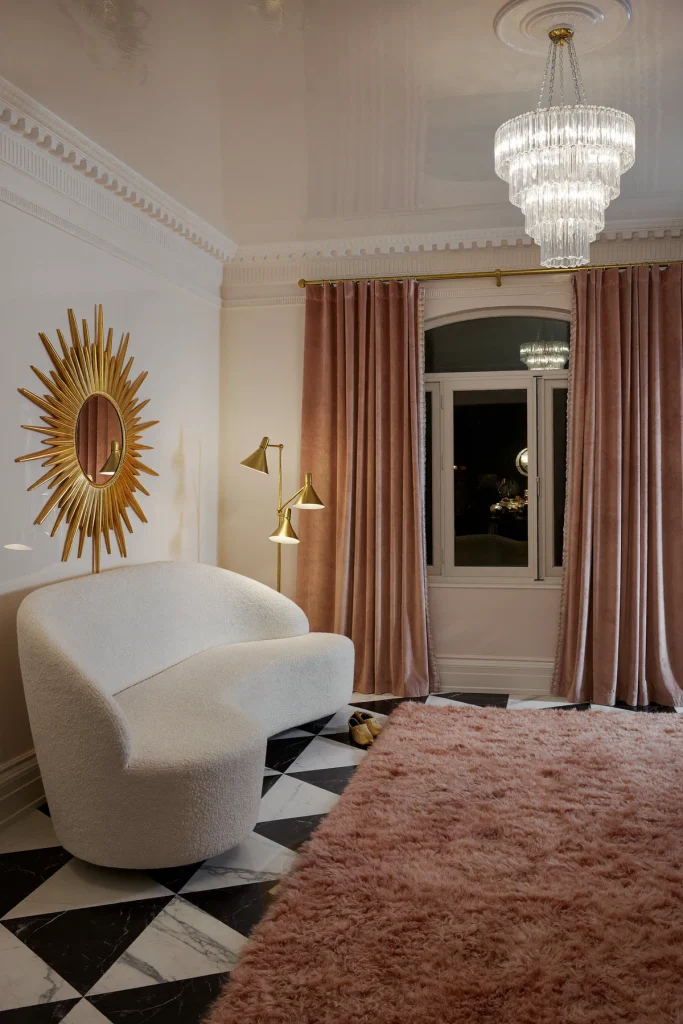
This one feels like a magic trick. If you have one modest window on a long wall, curtain the whole wall from corner to corner. When the drapes are open, they stack on the solid wall either side, and the window looks huge because nobody can tell where it ends.
It also softens hard surfaces, absorbs echo and makes a big living room feel cozier at night. 🛋️
Use a ceiling track (idea 5) and lightweight lined linen or cotton so the fabric doesn’t overwhelm the room. Keep the color close to the wall color for a calm, gallery-like backdrop, or go a shade or two deeper for a cocooning feel.
For budget reasons, choose affordable ready-made panels in bulk rather than custom drapes. Across this much wall, fullness matters more than fabric price.
Hide the Hardware With a Cornice Box
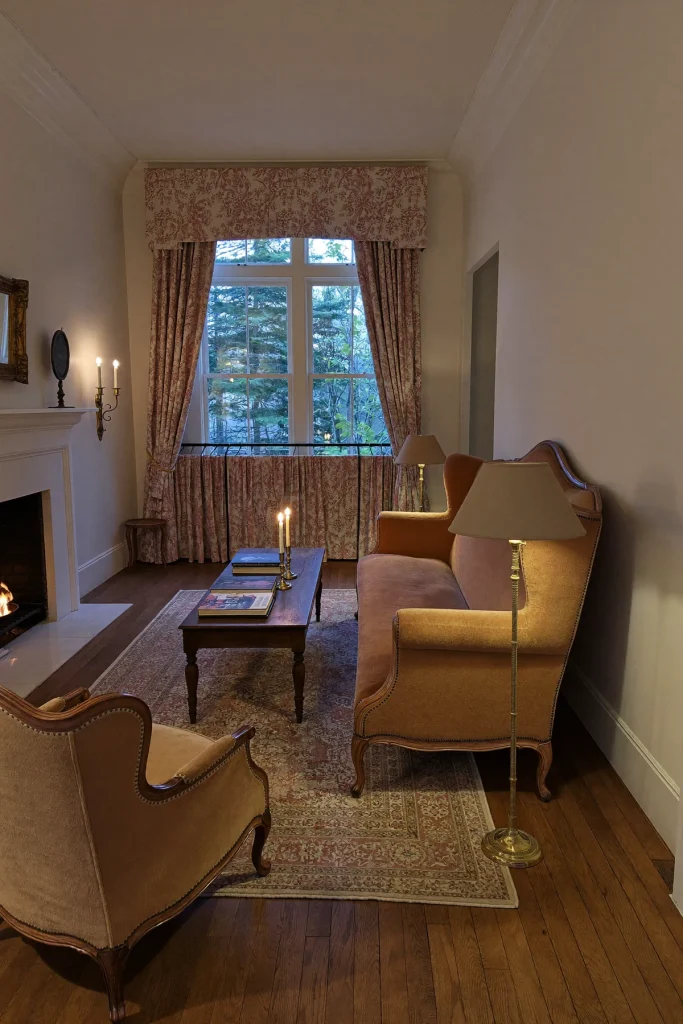
A cornice (sometimes called a pelmet box) is a shallow, boxed frame mounted above the window that hides the rod, track or shade mechanism behind it. It gives a crisp architectural line at the top of the window.
Upholstered cornices feel traditional and soft. Painted wooden ones, the same color as the walls, feel cleaner and more modern. Either way, they’re great for windows with ugly old blinds or mismatched hardware you’d rather not see.
Mount the cornice high, just like the rod in idea 1, and the window gains instant height.
Weekend Project
- Cut a simple three-sided box from plywood or MDF
- Wrap it in thin batting and fabric, stapled at the back
- Fix it to the wall with L-brackets above the window
- Hang your curtains or shade behind it as usual
Add a Contrast Leading Edge to Plain Panels
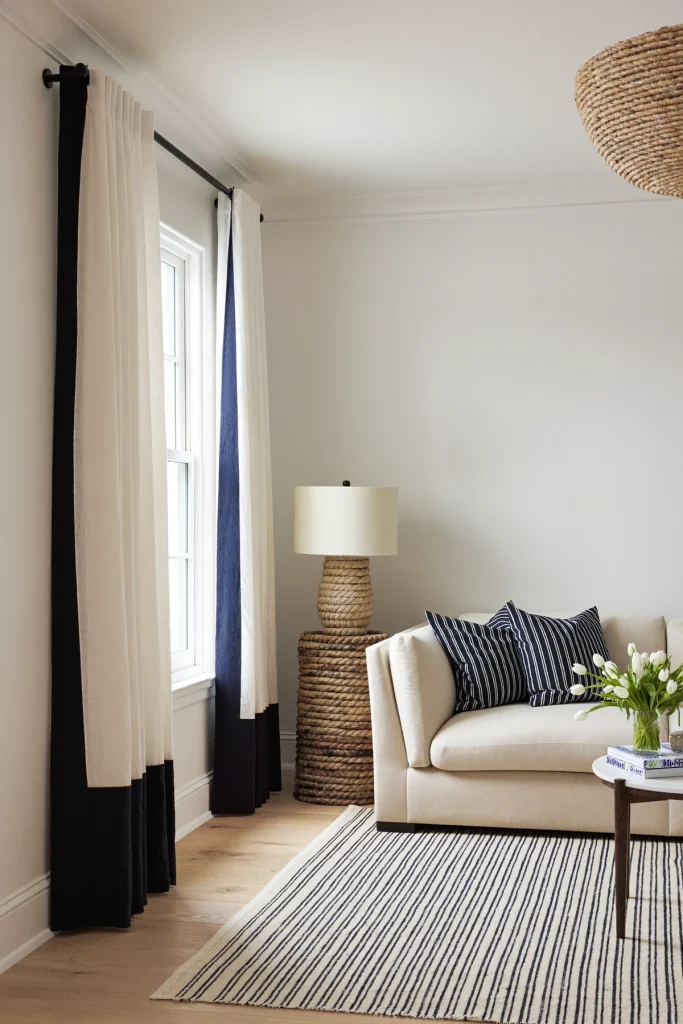
The leading edge is the inside vertical edge of each panel, the one that meets in the middle when you close the curtains. Add a band of contrast fabric or trim there and plain curtains suddenly look custom.
A 2 to 4 inch band works for most panels. Try navy on white linen, rust on oatmeal, or a tiny pattern on a solid. Pom-pom or tape trim gives a softer, playful look.
The trim draws a strong vertical line from rod to floor, which makes the window look taller too. It’s a simple way to tie in a color from a rug or a cushion without buying new curtains.
No sewing machine? Iron-on hemming tape or fabric glue holds trim surprisingly well on lightweight panels. Test a small section first.
Match the Curtains to the Wall Color for a Taller Room
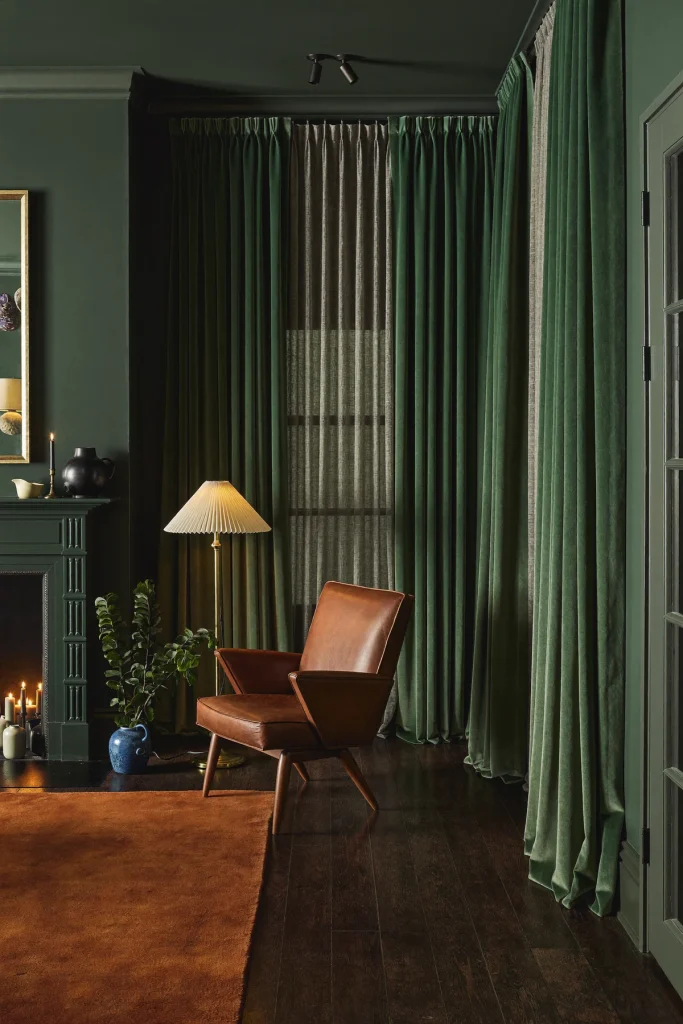
When curtains contrast sharply with the wall, they cut the wall into blocks. When they match, or sit just a shade deeper, the whole wall reads as one tall surface and the ceiling seems to lift.
This works beautifully in small living rooms and low-ceilinged homes. Think warm white curtains on warm white walls, sage on soft sage, or deep green drapes against a deep green wall for a moody, wrapped look. 🌲
Texture keeps it from going flat: pair smooth painted walls with nubby linen, ribbed velvet or a subtle woven stripe.
Myth-Buster
Matching curtains to walls isn’t boring. It’s what lets your furniture, art and rug take center stage while the windows quietly do their job of making the room feel bigger.
Motorize Curtains in a Double-Height Living Room
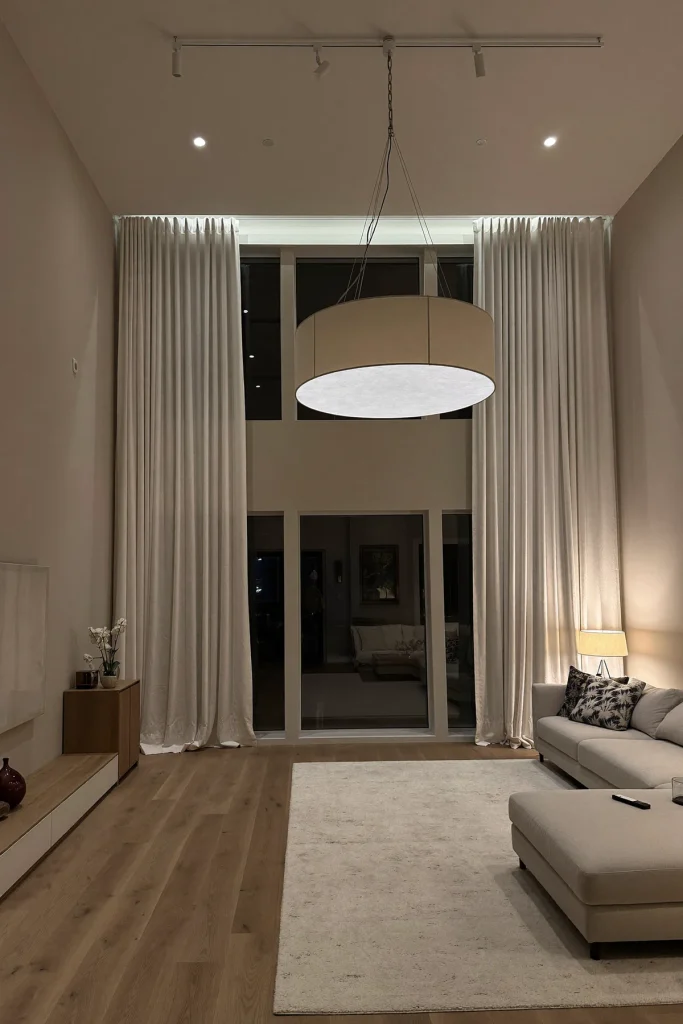
Tall windows in a two-story living room look stunning with full-height drapes. They’re also nearly impossible to open by hand. A motorized track solves it with a remote, a wall switch or a phone app.
Many systems let you set schedules too, so the curtains open in the morning and close at sunset to keep heat in. That protects floors and furniture from fading as a bonus.
Use a lined, mid-weight fabric so the long drop hangs straight, and add a sheer layer if the windows face the street. Ripple fold from idea 10 is a great match here because it stacks back tightly at the edges of very wide glass.
Budget Alternatives
- A battery-powered retrofit motor that clips onto an existing rod, often around $100 to 250
- A long baton or wand fixed to the leading edge
- Stationary panels plus motorized shades on the lower windows only
- A cord-operated traverse rod for the tallest drops
Small Changes, Bigger Windows
If you only take one thing from this post, make it this: hang your curtains higher and wider than feels natural. That one shift does more for a living room than almost any purchase.
After that, it’s all about fullness, the right length and a little patience training those pleats. Tricky windows aren’t problems, just puzzles with a known answer. A bendable rod here, a ceiling track there, a shade tucked under side panels.
Start with the window you look at the most. Fix that one, step back, and I promise you’ll want to do the rest of the room by the weekend. 💛
