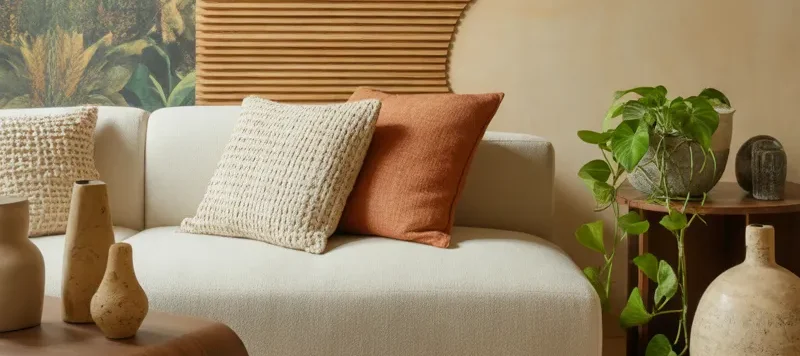
Your living room doesn’t need a complete makeover to feel fresh, stylish, and full of personality. Sometimes, all it takes is one beautiful wall to change the entire mood of the space.
That’s exactly why I love living room accent wall ideas. They give you the freedom to experiment with colour, texture, patterns, and architectural details without redecorating the entire room. Whether you love warm neutrals, bold colours, modern designs, or cozy farmhouse interiors, there’s an accent wall that can work beautifully in your home.
And the best part? You don’t always need a huge budget or professional help to create something special. From a simple painted wall to elegant wood paneling, let’s explore 21 ideas that can make your living room feel more intentional and inviting. 🏡
Install Vertical Wood Slats for a Modern Statement
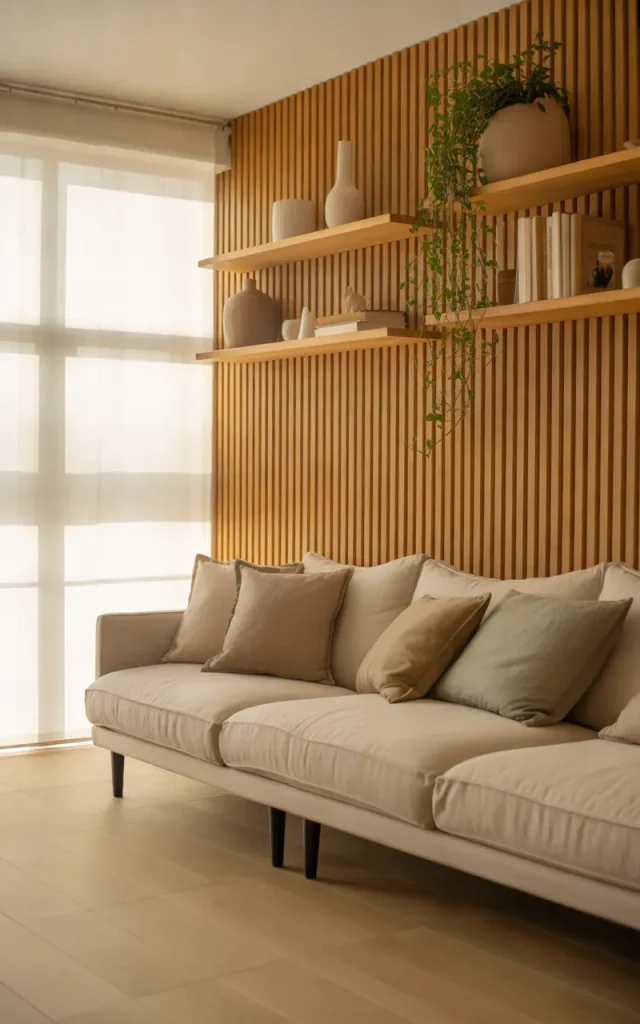
Contemporary · Architectural and warm
Vertical wood slats are a wonderful choice when you want your living room to feel modern without making it look cold. Their clean lines introduce texture, while the natural wood finish adds warmth to an otherwise simple interior.
I especially like this design behind a television or along the wall behind a low-profile sofa. Choose light oak for a Scandinavian-inspired look, walnut for a richer atmosphere, or medium-toned wood for something in between.
A Pro-tip: Plan the spacing carefully before installing the slats. Consistent gaps create a polished appearance, while uneven spacing can make the entire wall feel distracting. You can cover the full wall or create a smaller feature panel to save money and materials.
For a cohesive finish, repeat the wood tone in your coffee table, sideboard, or floating shelves. The result feels thoughtfully designed rather than like a single decorative feature added at random.
Add Picture Frame Molding for Timeless Elegance
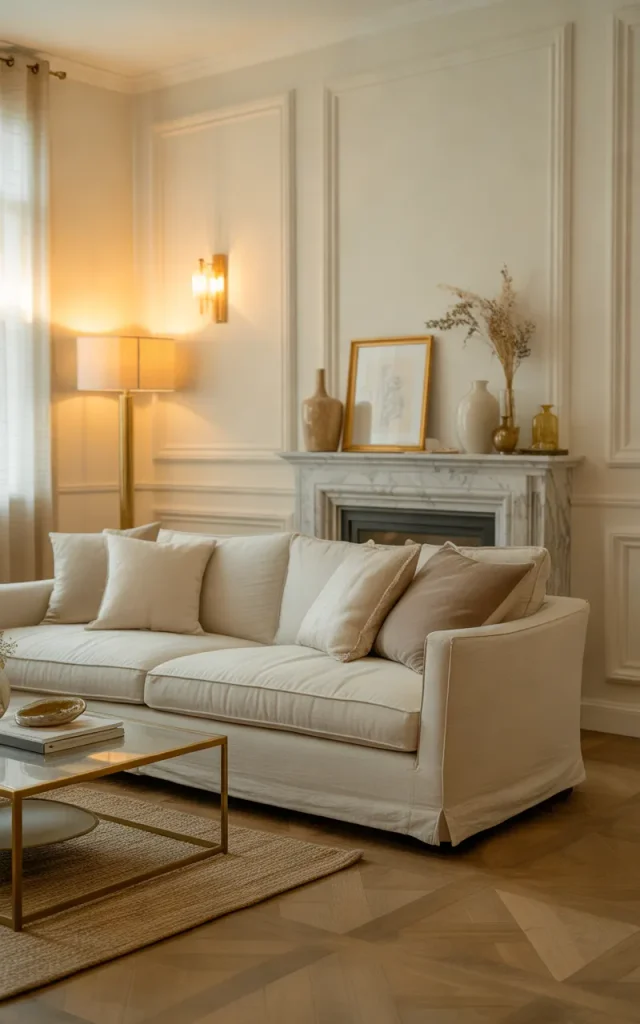
Classic contemporary · Refined and elegant
Picture frame molding is one of my favourite ways to make an ordinary living room feel more expensive. These decorative rectangular frames add architectural interest without requiring bold colours or elaborate patterns.
You can paint the molding the same colour as the wall for a subtle, sophisticated effect. Warm white, greige, pale taupe, and dusty blue are all lovely choices. For something more dramatic, try deep navy or forest green.
I particularly recommend this idea behind a sofa or around a fireplace. It creates a natural framework for furniture and artwork, helping everything feel more balanced.
Quick Tip: Measure the wall and sketch your panel layout before purchasing materials. Leave consistent spacing between the frames and around the edges of the wall.
If you prefer understated interiors, this is an excellent way to add character without compromising your minimalist aesthetic.
Design a Stone Accent Wall for Natural Texture
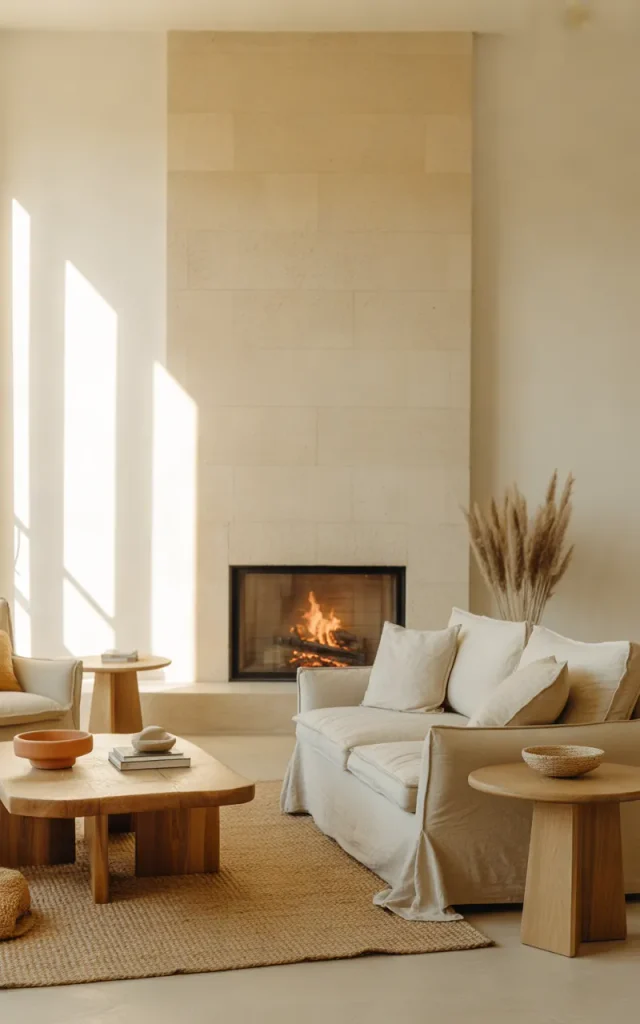
Rustic modern · Organic and luxurious
A stone accent wall introduces an earthy, substantial quality that paint alone cannot replicate. Depending on your choice of material, it can feel rustic, contemporary, Mediterranean, or even quietly luxurious.
I love the appearance of pale limestone behind a cream sofa, especially when paired with natural linen curtains and a chunky wooden coffee table. For a bolder look, consider darker stone with contrasting lighter furnishings.
This idea works beautifully around a fireplace or as a feature behind the main seating area. If natural stone is outside your budget, explore stone veneer or suitable decorative wall panels that provide a similar visual effect.
Who this is for: Homeowners who love tactile materials and want their living room to feel connected to nature.
Remember to consider the wall’s structure, the weight of the chosen material, and professional installation requirements before committing. The right stone finish can become a lasting focal point that never feels ordinary.
Create a Soft and Airy Space With Beige Paint
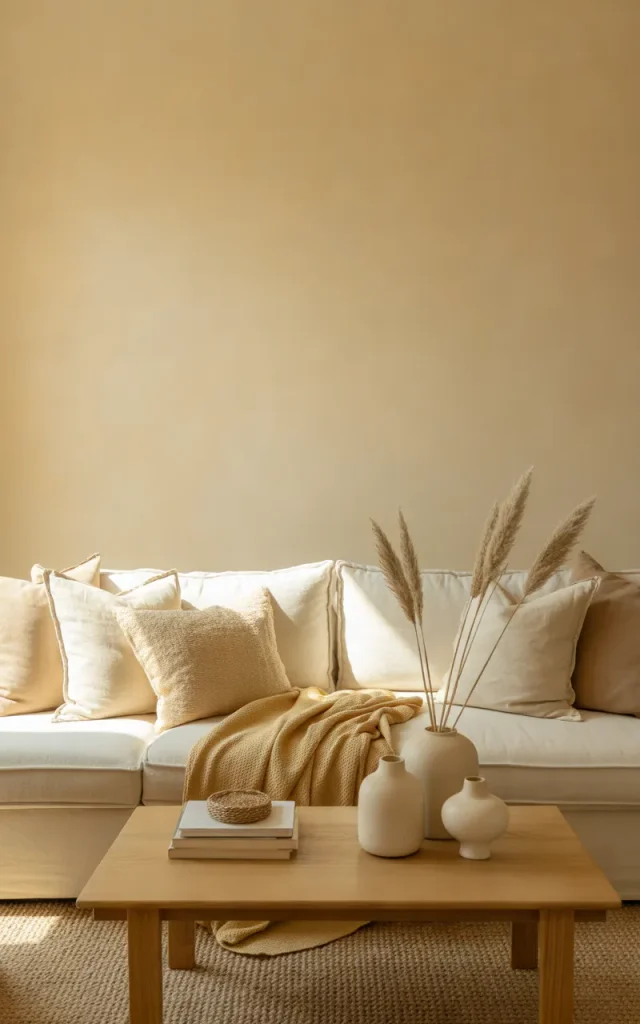
Warm minimalism · Calm and understated
Not every accent wall needs to shout for attention. Sometimes, the most beautiful result comes from choosing a colour that is only slightly deeper or warmer than the surrounding walls.
A beige accent wall creates a gentle sense of depth while keeping the living room bright and welcoming. Try sand, mushroom, warm taupe, or creamy caramel, depending on your existing furniture and flooring.
I would pair this look with ivory cushions, a natural wood coffee table, woven baskets, and soft linen curtains. Different textures prevent the neutral palette from looking flat.
Small Space Hack: If your living room is compact, use a warm beige accent wall behind the sofa instead of introducing a very dark colour. It creates a defined area without making the room feel visually heavy.
The beauty of this idea lies in its flexibility. You can update your cushions, artwork, and accessories seasonally without needing to repaint the wall.
Highlight Your Sofa With an Oversized Art Wall
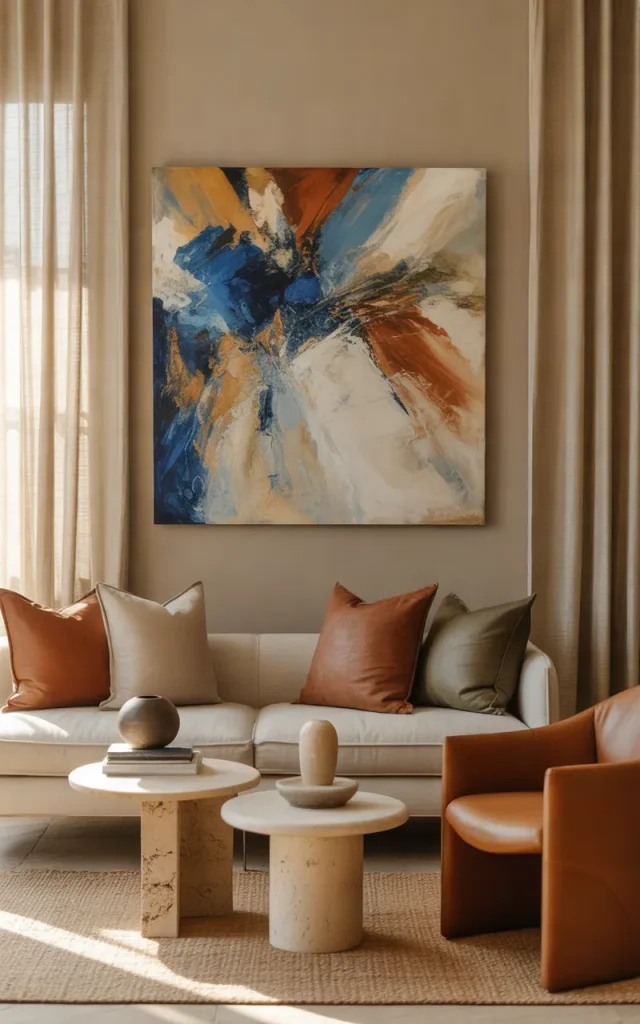
Eclectic contemporary · Expressive and personal
If you love artwork, let it become the star of your living room accent wall. A large abstract painting, expressive canvas, or oversized framed print can instantly give the room a sense of personality.
Start by choosing a piece that complements your sofa and rug. It doesn’t have to match every colour in the room, but repeating one or two shades elsewhere will help everything feel connected.
For a more curated appearance, consider a large canvas above the sofa or two complementary pieces arranged side by side. You could also create a gallery wall with a mixture of photography, illustrations, and personal artwork.
A Micro-tip: Aim to position the centre of your artwork at a comfortable viewing height, and keep the arrangement proportionate to the furniture beneath it.
I especially love this idea for renters because framed art can transform a plain wall without permanent architectural changes. 🎨
Install Floating Shelves for a Functional Accent Wall
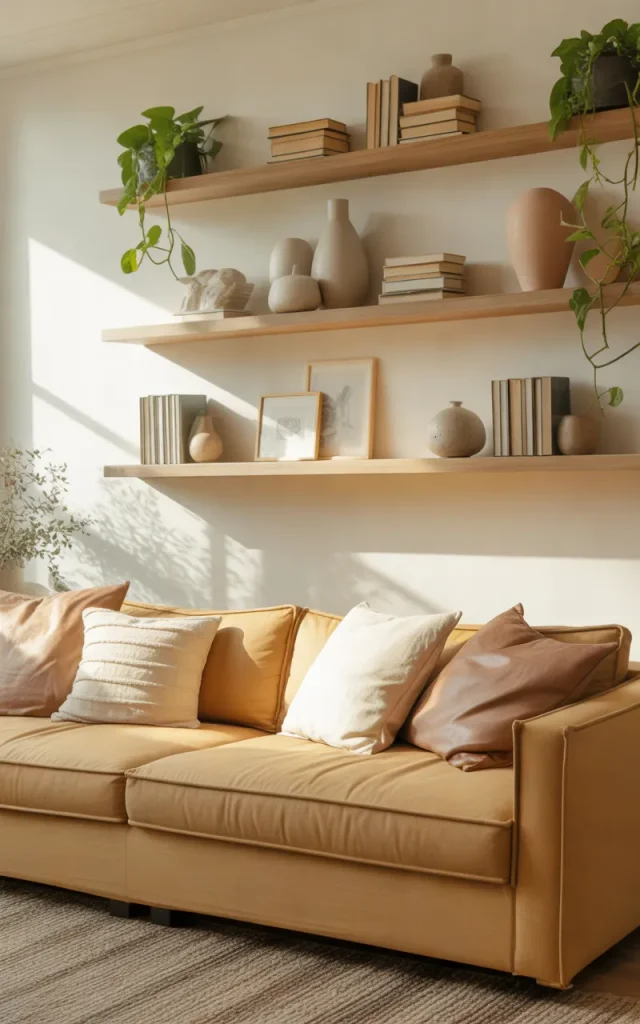
Modern casual · Practical and decorative
Why choose between a beautiful wall and useful storage when you can have both? Floating shelves turn an empty living room wall into a display area for books, plants, framed photographs, and favourite decorative objects.
For a modern look, choose simple oak shelves against a warm white wall. If you prefer something moodier, dark shelves against a muted green or charcoal background can look wonderfully dramatic.
I recommend arranging objects in small groups rather than filling every inch of shelf space. Mix horizontal books with vertical pieces, add a small plant, and leave a little breathing room around each arrangement.
One rule to remember: Secure every shelf according to its mounting requirements and the type of wall you have. Heavy books and ceramics need appropriate support.
This design works especially well in apartments where you want your walls to provide both visual interest and practical storage.
Make a Bold Statement With Navy Blue Paint
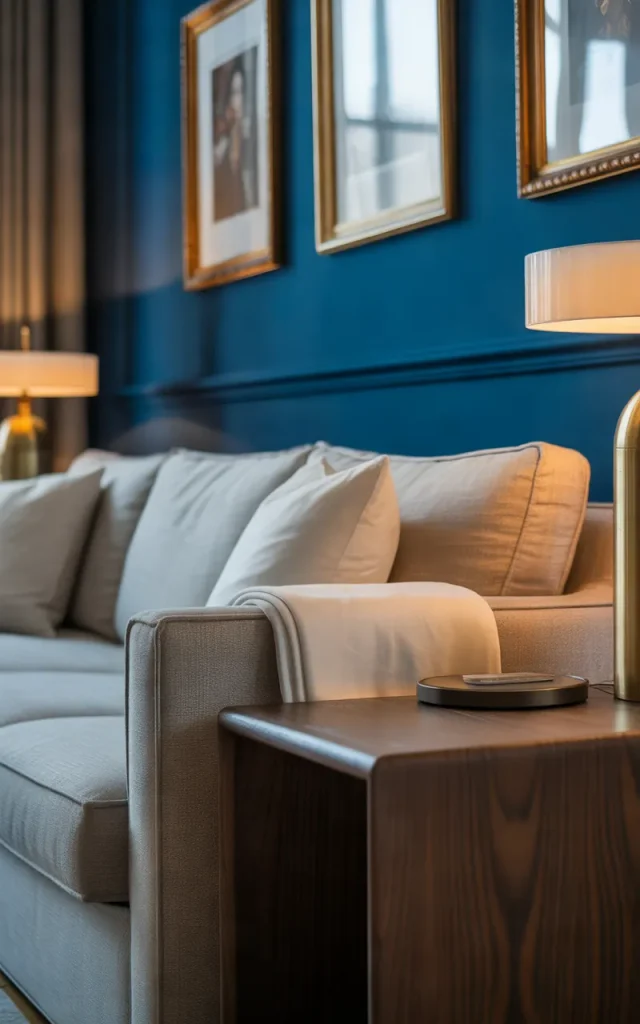
Classic modern · Rich and confident
Navy blue is one of those colours that manages to feel both bold and timeless. It brings depth to a living room without the sometimes-harsh appearance of pure black.
I love navy behind a light gray, ivory, or camel-coloured sofa. Add warm brass accents, a wooden side table, and cream cushions to soften the contrast. For a more contemporary interior, black-framed artwork and streamlined furniture work beautifully, too.
You can keep the surrounding walls white or choose a warm neutral that complements the blue. Either way, the accent wall becomes a strong visual anchor.
Instant Gratification Tip: Before painting the entire wall, test a few navy samples in different lighting conditions. Blue can look dramatically different in bright daylight and under warm evening lamps.
If your living room feels a little bland, this is a relatively straightforward way to give it more personality.
Create a Cozy Focal Point With Reclaimed Wood
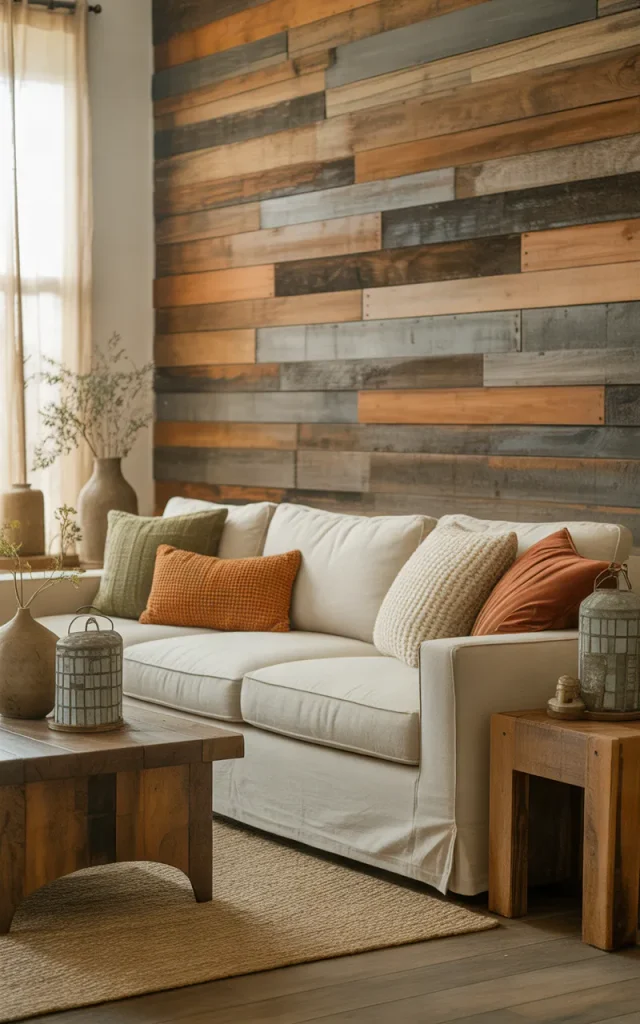
Farmhouse · Warm and lived-in
Reclaimed wood brings history, texture, and warmth into a living room. Its weathered finish makes the space feel relaxed and welcoming, especially when the rest of the decor is simple.
I’d use reclaimed boards behind a sofa or around a fireplace, choosing a finish that complements the floor rather than competing with it. Weathered gray wood works beautifully in coastal-inspired rooms, while honey-toned boards create a warmer farmhouse atmosphere.
To keep the design from feeling too rustic, balance the wall with modern furniture, simple lighting, and neutral upholstery. A cream sectional or linen sofa looks especially good against varied wood tones.
Budget Alternatives
- Use reclaimed-look wood panels instead of sourcing individual boards.
- Create a partial feature behind the sofa rather than covering the entire wall.
- Look for responsibly sourced reclaimed timber from reputable local suppliers.
Remember to inspect the material carefully and prepare it appropriately before installation. A little natural variation is charming, but loose boards and uneven finishes can detract from the overall look.
Frame Your Television With a Stylish Accent Wall
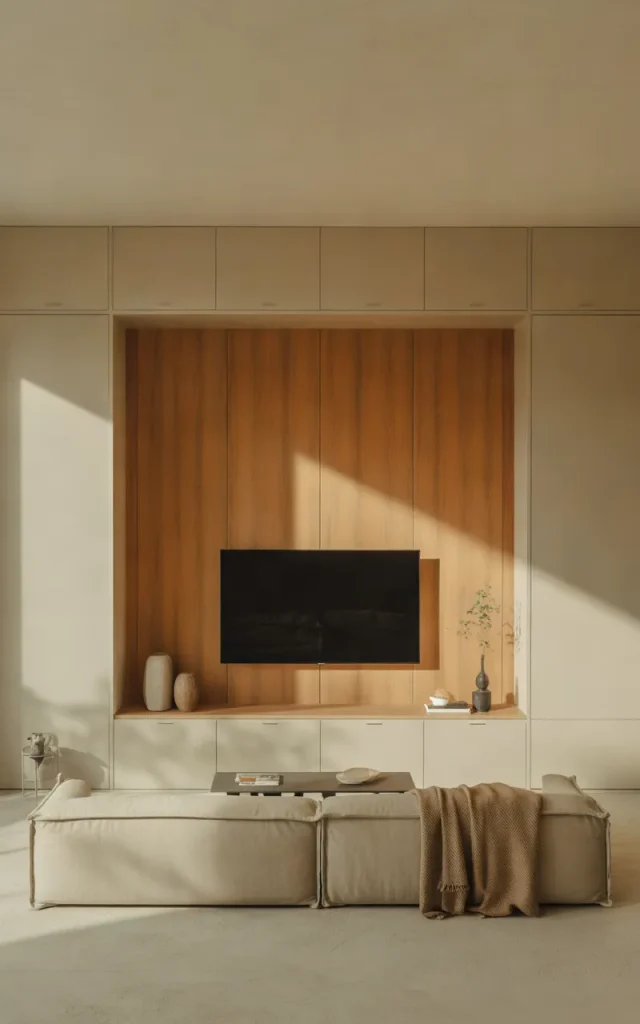
Contemporary · Clean and coordinated
Let’s be honest. The television often becomes the visual centre of the living room, whether we planned it that way or not. Instead of trying to hide it completely, I prefer designing the wall around it so the screen feels like part of the overall interior.
A combination of warm wood panels, matte paint, or a subtle stone-look surface can create a polished backdrop. You might also add a floating media console and a few carefully chosen accessories to give the wall a finished appearance.
For a minimalist room, keep the panel design simple and conceal cables wherever practical. In a larger living room, consider built-in cabinetry on either side of the television to create a balanced composition.
Actionable Tip: Measure the television, console, and available wall space before deciding on the accent wall’s dimensions. Leave enough clearance for ventilation, cable access, and any mounting requirements.
The goal is to make the entire arrangement feel intentional, not simply to decorate the space immediately behind the screen.
Add Textured Plaster for an Organic Modern Look
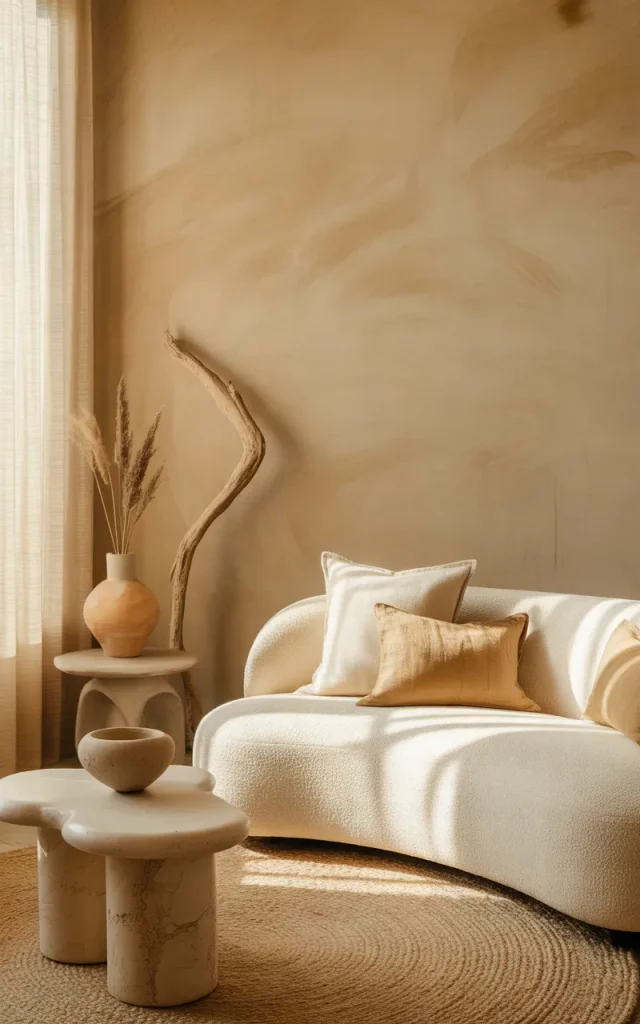
Organic modern · Soft and sculptural
If you enjoy interiors that feel relaxed but carefully considered, a textured plaster accent wall is worth exploring. Its gentle variations catch the light differently throughout the day, creating depth without relying on a strong pattern.
Limewash-style finishes and decorative plaster effects are especially lovely in warm white, pale beige, mushroom, or muted clay. They pair naturally with curved furniture, linen upholstery, sculptural lamps, and light oak.
Unlike a glossy decorative surface, a softly textured wall feels understated. It doesn’t need much additional decoration because the finish itself provides interest.
How to steal this look
- Choose a muted colour that complements the room’s existing undertones.
- Test the finish on a sample board before applying it to the wall.
- Use lighting that highlights the texture without creating harsh shadows.
- Keep nearby accessories simple and tactile.
Different products have different application and maintenance requirements, so check whether the chosen finish suits your wall surface. If you love subtle details, this approach can make an ordinary living room feel beautifully considered.
Install Geometric Panels for a Contemporary Finish
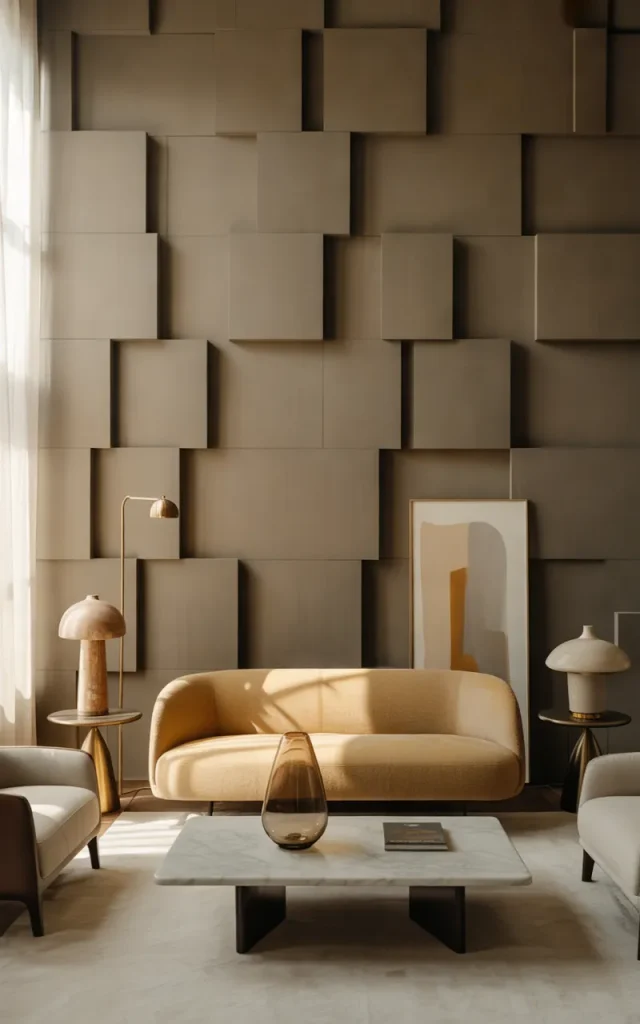
Modern contemporary · Structured and striking
Geometric wall panels are ideal when you want your living room to have a strong design feature. They can introduce angular lines, repeated shapes, and a sense of architectural movement without requiring colourful wallpaper.
I like understated geometric patterns in warm white, greige, or soft gray. The result is sophisticated rather than overwhelming. If you prefer something bolder, try a deep blue or charcoal finish with carefully placed lighting.
This idea works particularly well behind a sofa or on a dedicated media wall. In larger rooms, you can use more substantial patterns. For smaller spaces, simpler shapes and wider spacing tend to feel less crowded.
Trend callout: Three-dimensional surfaces and architectural wall details offer an alternative to purely decorative paint colours.
One thing I would avoid is combining an elaborate geometric wall with too many busy patterns elsewhere. Let the panels provide the main visual statement, then use solid-coloured upholstery and restrained accessories to support the design.
Choose Floral Wallpaper for a Romantic Accent Wall
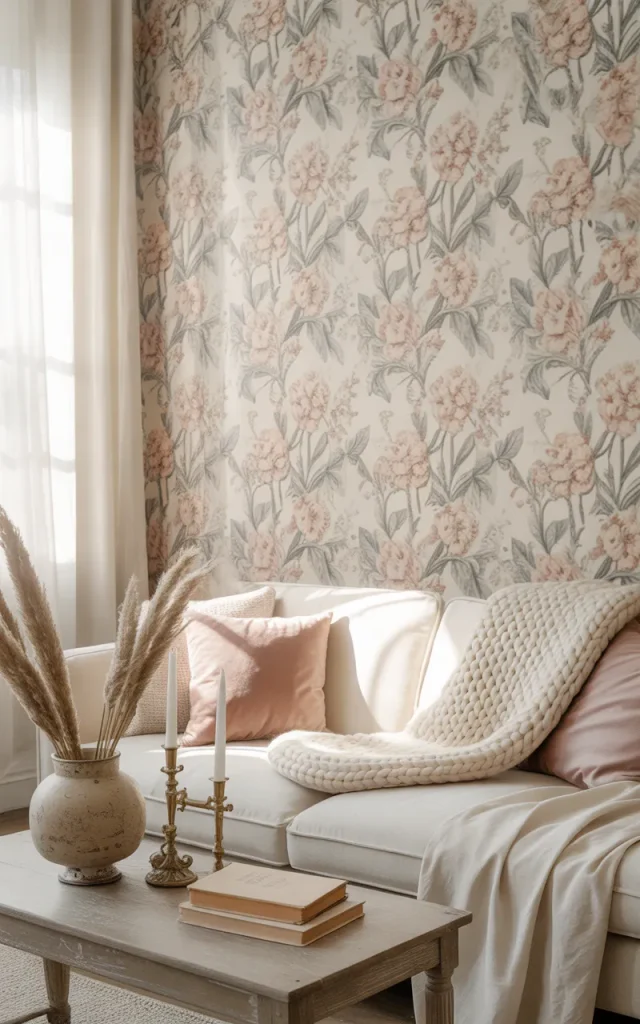
Romantic traditional · Soft and expressive
Floral wallpaper can make a living room feel charming, personal, and a little more playful. It doesn’t have to look old-fashioned, either. The right scale, colour palette, and furniture can make floral patterns feel fresh and contemporary.
For a soft romantic interior, choose delicate flowers in dusty rose, muted green, cream, or pale blue. If you prefer a dramatic look, consider oversized botanical prints with a dark background.
I’d place the wallpaper behind a sofa or in a sitting area where the pattern can be appreciated without competing with too many other elements. Solid-coloured cushions and simple window treatments will help maintain balance.
Colour swap suggestion
| Desired mood | Wallpaper colours |
| Soft and romantic | Blush, cream, sage |
| Fresh and airy | White, pale blue, green |
| Dramatic and cozy | Burgundy, navy, dark green |
| Modern botanical | Terracotta, olive, beige |
If you’re renting or like to refresh your decor frequently, explore removable wallpaper options suitable for your wall surface.
Warm Up the Room With a Terracotta Accent Wall
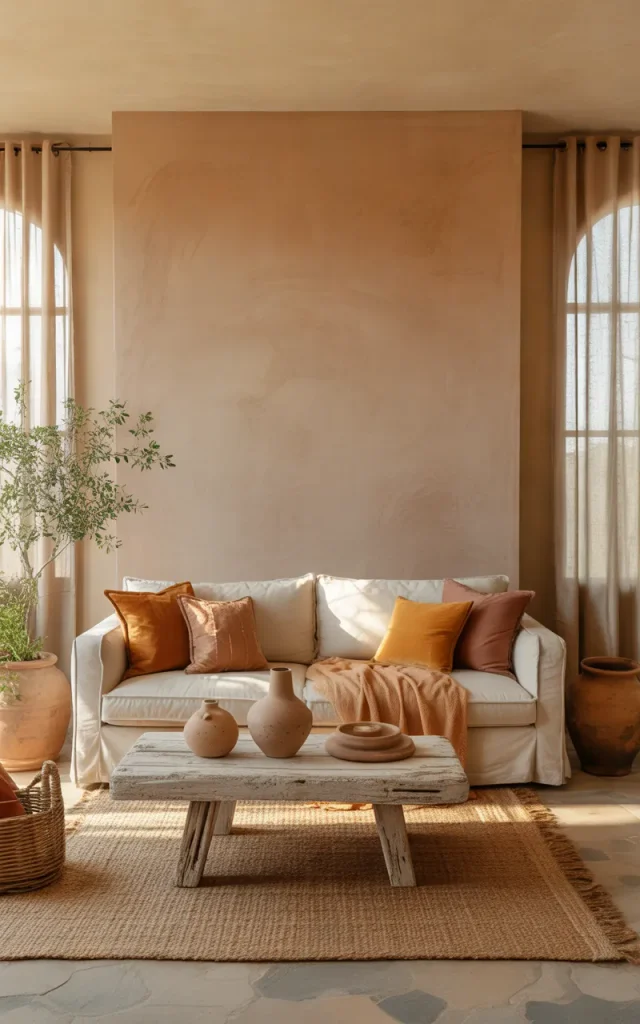
Mediterranean · Earthy and inviting
Terracotta brings warmth into a living room in a way that feels natural rather than overly bright. Its earthy red-orange undertones can make the space feel welcoming, especially when paired with creamy neutrals and natural materials.
I would start with a muted terracotta behind the sofa, then introduce linen cushions, a jute rug, and a wooden coffee table. A few ceramic vases or handmade-looking accessories can reinforce the relaxed atmosphere.
You don’t have to commit to a highly saturated orange. Dusty clay, faded rust, and soft cinnamon are excellent alternatives if you prefer a more understated palette.
Vibe check
- Love earthy colours and natural materials? This is a great match.
- Prefer cool gray and icy blue interiors? Test the colour carefully before committing.
- Want a cozy living room without using very dark paint? A softer terracotta may be just right.
The colour can look richer under warm lighting, so check your paint samples during both daytime and evening. Once you find the right shade, this wall can make the entire living room feel more grounded and welcoming. 🧡
Highlight Architectural Features With Contrasting Paint
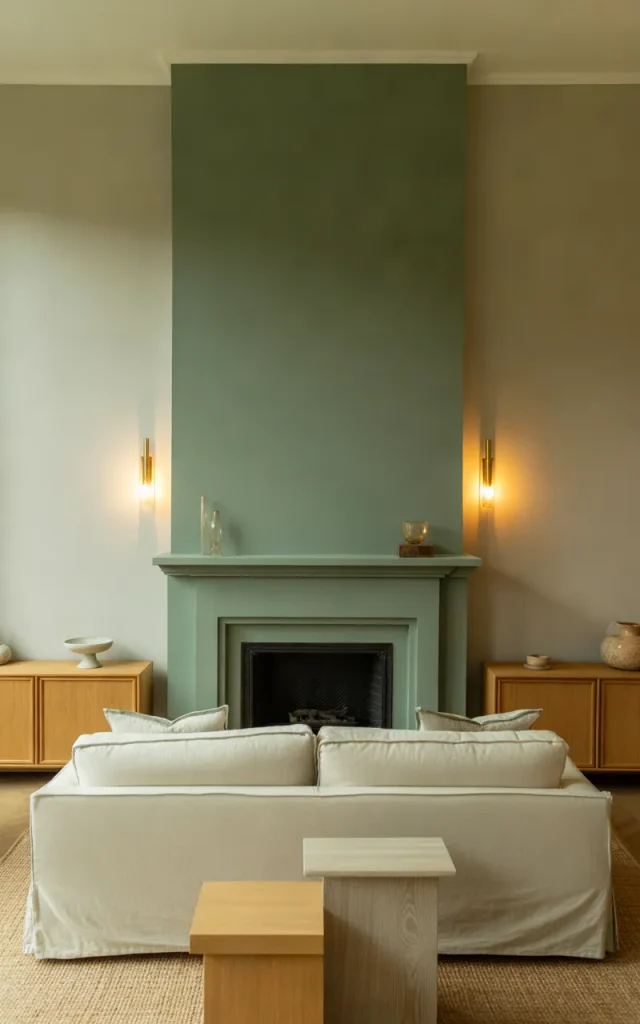
Modern classic · Defined and balanced
Some living rooms already have interesting architectural features, such as alcoves, chimney breasts, recesses, or projecting walls. Rather than covering them with elaborate decor, use contrasting paint to make them stand out.
For example, a muted green chimney breast against warm white walls can create a lovely focal point. A pale taupe alcove behind a reading chair can define a cozy corner without adding furniture or visual clutter.
I recommend choosing colours that relate to the room’s existing palette. The contrast should feel intentional, not like an unrelated patch of paint.
Myth-buster: An accent wall doesn’t always have to cover an entire wall from corner to corner. Highlighting a single architectural feature can be just as effective.
Before painting, examine how the natural light moves through the room and where your main furniture sits. You want the architectural detail to be visible from the most important viewpoints.
This is a particularly practical option if your home already has interesting structural features that deserve more attention.
Transform the Space With a Two-Tone Accent Wall
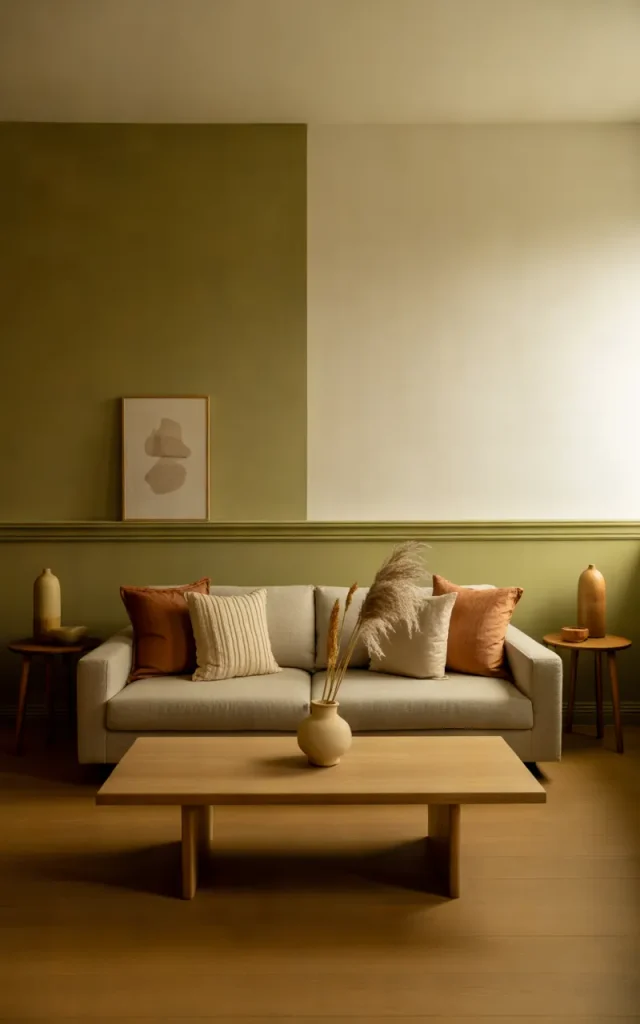
Contemporary casual · Creative and balanced
A two-tone accent wall is a wonderful option if you want something more interesting than a single paint colour but aren’t ready for wallpaper or paneling. By combining two complementary shades, you can create a wall that feels layered and thoughtfully designed.
One approach I love is painting the lower half of the wall in muted olive or taupe while keeping the upper half warm white. The darker lower section grounds the room, while the lighter upper portion maintains a sense of openness.
You can divide the colours horizontally, create a broad painted arch, or use a clean vertical division to define a particular area. The best arrangement depends on the wall’s proportions and the furniture nearby.
Step-by-step instructions
- Choose two colours with compatible undertones.
- Decide where the division should sit in relation to your sofa, windows, and other architectural features.
- Measure the wall and mark the line with a level.
- Apply painter’s tape carefully and prepare the surface.
- Paint the colours according to the product instructions, allowing sufficient drying time between coats.
For a softer look, use related shades rather than colours with extreme contrast. For a more expressive interior, try a muted blue with warm cream or terracotta with pale beige.
What most people get wrong: They choose the colours first and consider the wall proportions afterward. Plan the division before painting so the finished design complements the furniture rather than cutting awkwardly across it.
Create a Dramatic Atmosphere With Black Paneling
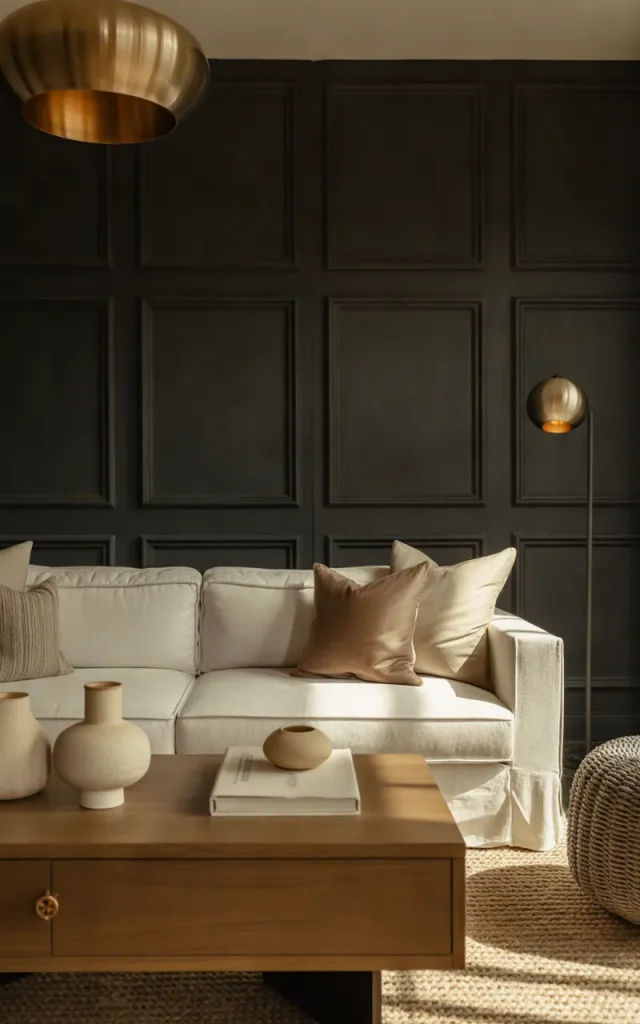
Modern luxury · Bold and sophisticated
Black paneling can create a striking living room accent wall, especially when you want a rich, intimate atmosphere. It works beautifully with contemporary furniture, sculptural lighting, and carefully chosen metallic details.
I would pair matte black panels with a light-colored sofa, a warm wood coffee table, and cream or caramel accessories. These contrasting materials prevent the room from feeling too heavy.
If your living room is large enough, full-height black paneling can create a dramatic backdrop for a television or fireplace. In smaller spaces, a more restrained panel behind the sofa may be easier to balance.
Do this 👉
- Introduce warm lighting to soften the dark finish.
- Mix wood, linen, and other tactile materials.
- Keep the surrounding decor relatively simple.
- Test the paint or panel finish under your actual lighting conditions.
Not this ❌
- Assume every black paint has the same undertone.
- Add multiple competing patterns to an already strong wall.
- Ignore the effect of limited daylight.
I particularly recommend a matte finish if you want a contemporary appearance without distracting reflections. With the right balance, black paneling feels elegant rather than gloomy.
Install a Backlit Accent Wall for a Luxurious Glow
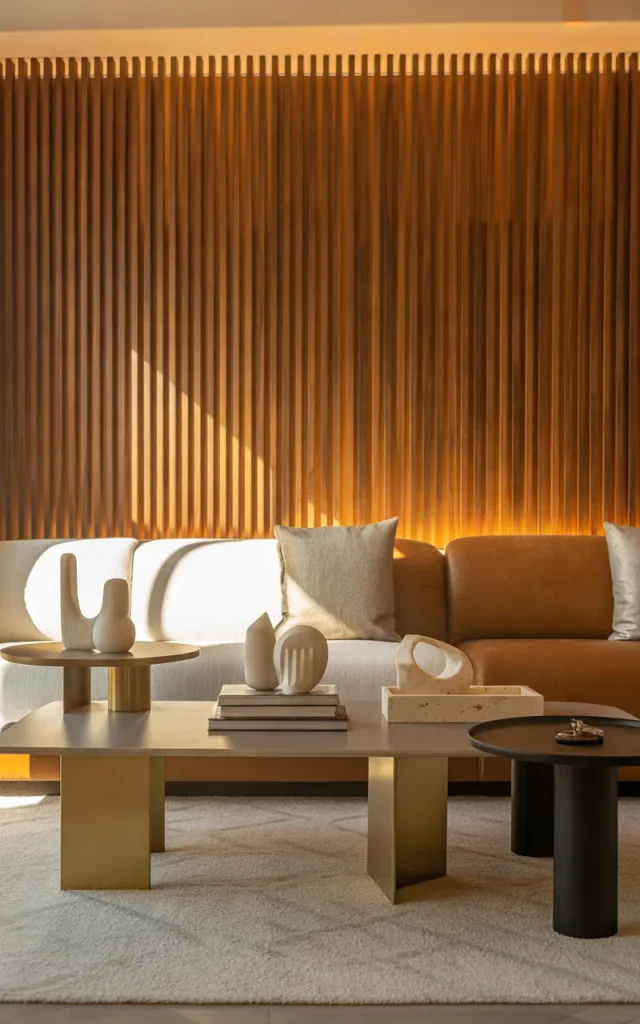
Contemporary luxury · Atmospheric and refined
Lighting can transform an accent wall from a simple decorative feature into something that feels almost architectural. A backlit panel, concealed LED strip, or carefully placed wall-washing light can highlight textures and create a beautiful evening atmosphere.
I especially like warm lighting behind wood slats, stone-look panels, or a textured plaster finish. The light brings out the material’s details and creates depth without requiring additional colours or elaborate decorations.
For a media wall, concealed lighting can define the television area and make the overall composition feel more polished. In a reading corner, a softly illuminated feature wall can create a cozy backdrop for an armchair and side table.
One rule to remember: Plan the lighting before the wall installation is complete. Cable routes, access points, heat considerations, and suitable electrical components all matter.
Choose a colour temperature that complements your room. Warm white generally creates a relaxed atmosphere, while neutral white can suit a cleaner, more contemporary scheme.
I would also install dimmable lighting where practical. You can keep it subtle during the day and turn up the glow in the evening. The result feels luxurious without needing an excessively elaborate design.
Bring Coastal Charm With Whitewashed Wood
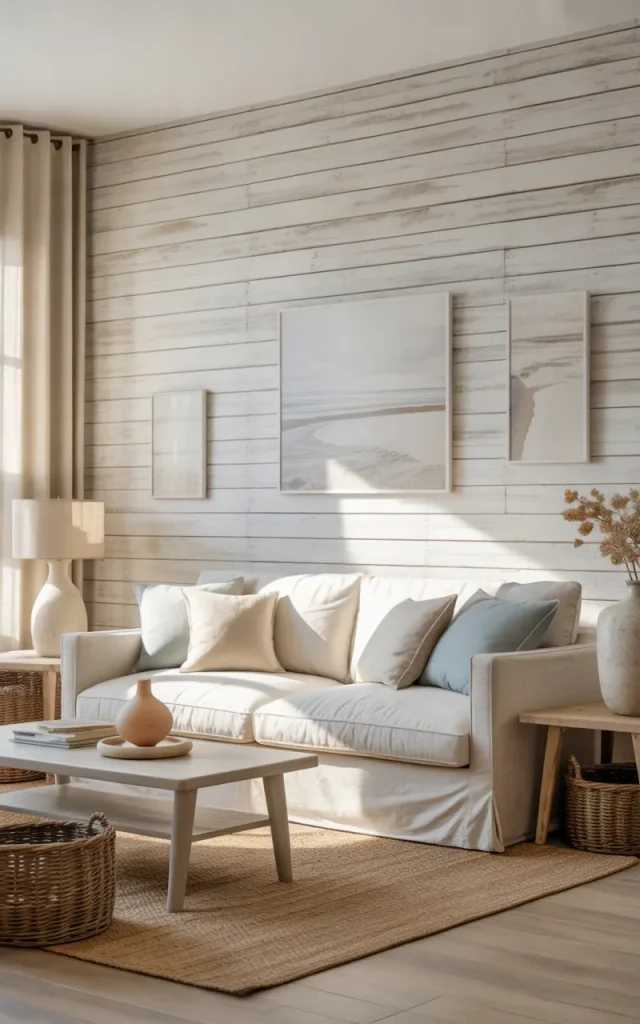
Coastal contemporary · Light and breezy
If you love bright interiors and relaxed seaside-inspired decor, a whitewashed wood accent wall may be exactly what your living room needs. It introduces natural texture while keeping the palette light and airy.
Whitewashed boards look lovely behind a cream sofa or alongside pale blue and sandy beige accessories. Add woven baskets, linen curtains, a jute rug, and light wood furniture to reinforce the coastal atmosphere without making the room feel themed.
You can install horizontal boards for a relaxed, expansive appearance or vertical boards for a more structured finish. The choice depends on the wall’s proportions and the visual effect you prefer.
Seasonal switch
| Season | Easy styling update |
| Spring | Add fresh greenery and pale blue cushions |
| Summer | Use linen, woven textures, and light ceramics |
| Autumn | Introduce caramel throws and warmer wood tones |
| Winter | Layer cream knits and soft ambient lighting |
For a budget-friendly version, consider whitewashed-look wall panels or a suitable finish applied to existing timber. Always test the colour first because whitewashing can appear very different depending on the wood grain beneath it.
The overall goal is a space that feels sunlit, comfortable, and easy to live in—not overly decorated.
Make a Small Living Room Feel Special With a Painted Arch
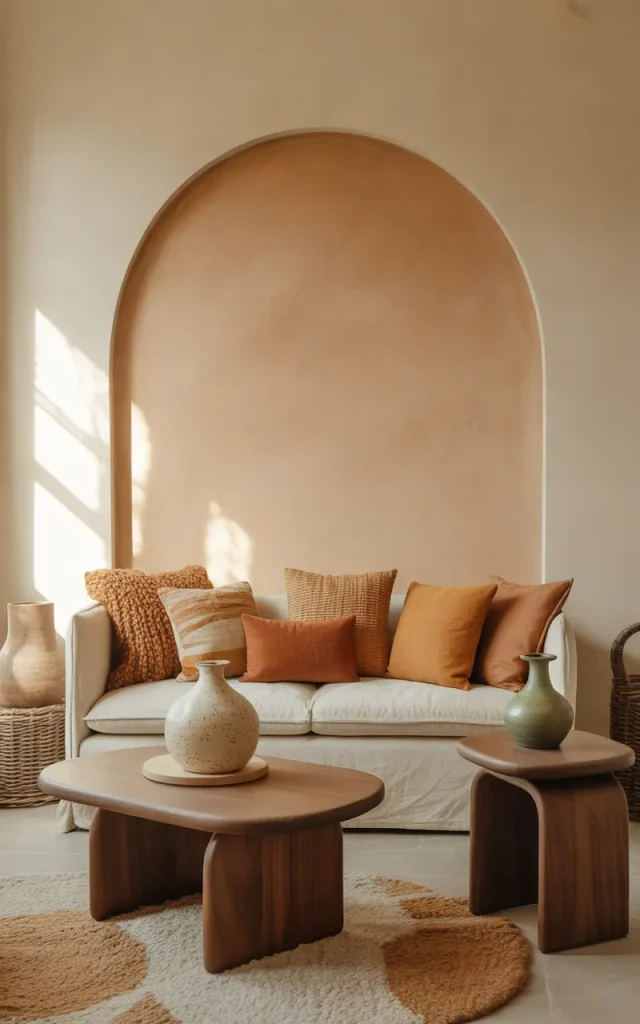
Modern bohemian · Playful and artistic
A painted arch is a simple way to create a focal point without installing heavy materials or committing to an entire wall of colour. It introduces a soft architectural shape that can frame a sofa, console table, reading nook, or favourite piece of artwork.
I love arches in muted terracotta, dusty pink, olive green, or warm beige. These shades work beautifully with natural wood, cream upholstery, woven accessories, and indoor plants.
You can make the arch narrow and understated or extend it wider than the furniture beneath it. A tall arch can draw the eye upward, while a wider design creates a more relaxed visual frame.
Small space hack: Use a painted arch behind a compact sofa or a small console instead of adding bulky decorative furniture. It creates a defined feature without taking up any floor space.
To create the shape, mark the desired height and width, then use a reliable method to draw an even curve. Apply painter’s tape where appropriate and use a small brush to refine the edges.
Avoid making the arch too small for the furniture it frames. The proportions should feel deliberate, with enough space around the shape to let it stand out.
This is one of my favourite options for renters or budget-conscious decorators who want a creative result with relatively little material.
Add a Textured Fabric Wall for Softness and Warmth
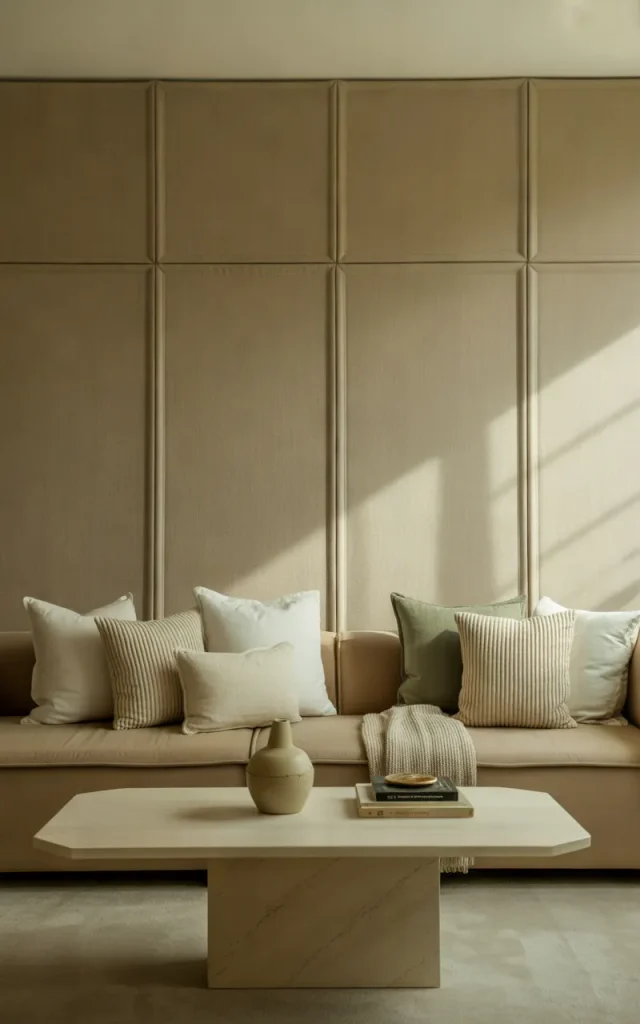
Soft contemporary · Tactile and cozy
Paint and wood aren’t the only materials that can make an accent wall interesting. Fabric-inspired wall treatments, upholstered panels, and textile-covered sections introduce softness that can make a living room feel especially comfortable.
Consider a wall of upholstered panels in oatmeal linen, warm gray fabric, or soft taupe. This works particularly well behind a sofa or in a quiet sitting area where the goal is to create a gentle, inviting atmosphere.
For a more bohemian interior, woven wall coverings or natural-fiber textures can bring warmth and visual depth. Keep the furniture relatively streamlined so the fabric remains the main feature.
Budget alternatives
- Hang a large woven textile as a decorative focal point.
- Use a fabric-covered framed panel rather than covering the entire wall.
- Explore removable textile-look wallpaper suitable for the wall surface.
- Create a smaller upholstered section behind an accent chair.
Before choosing a fabric-based installation, consider dust, cleaning requirements, humidity, and fire-safety guidance for the materials involved. These factors are particularly important in a frequently used family living room.
I recommend this approach when you want your accent wall to feel softer and more tactile than a traditional painted feature. Pair it with warm lamps, layered cushions, and a comfortable rug to create a space you’ll genuinely enjoy spending time in.
Combine Wallpaper, Wood, and Paint for a Custom Accent Wall
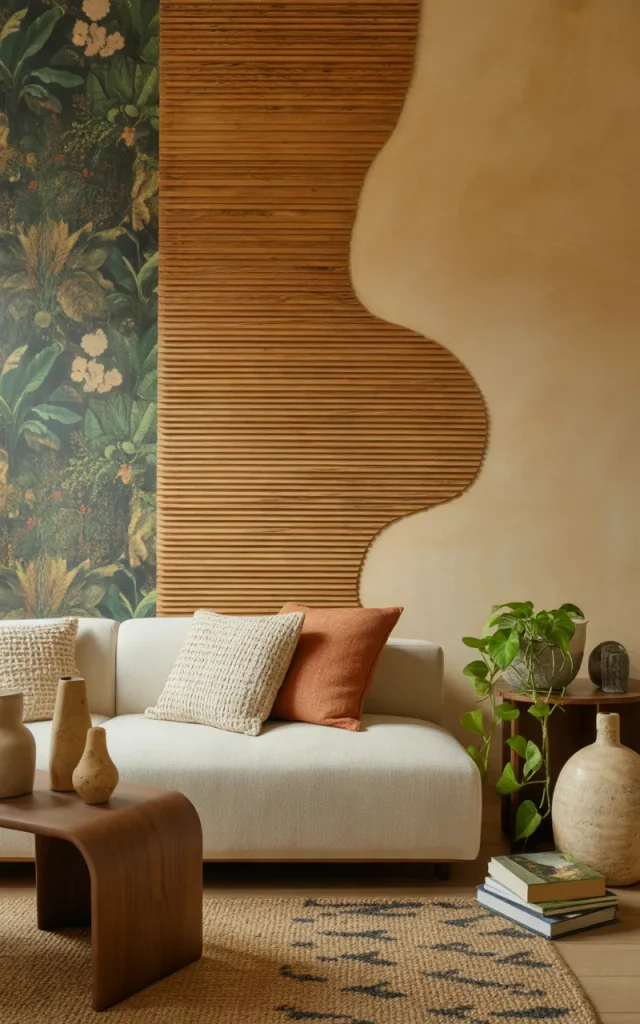
Eclectic contemporary · Layered and distinctive
Why settle for one finish when you can combine several materials into a cohesive design? A mixed-material accent wall can bring together the warmth of wood, the personality of wallpaper, and the simplicity of paint.
For example, you could use narrow wood slats along the lower portion of the wall, a subtle botanical wallpaper above them, and a painted border to frame the arrangement. Alternatively, combine a painted central panel with wood detailing on either side for a more contemporary look.
I recommend choosing one dominant material and allowing the others to play supporting roles. If the wallpaper has a strong pattern, keep the wood finish simple. If the wood has pronounced grain, choose a quieter paint colour and understated accessories.
How to steal this look
- Start with the overall mood you want: warm, dramatic, playful, or sophisticated.
- Choose a main finish that anchors the design.
- Select one or two complementary materials with different textures.
- Repeat colours from the accent wall in cushions, rugs, or artwork.
- Sketch the proportions before buying materials.
- Check the installation requirements for each finish, especially where different materials meet.
For a more budget-conscious approach, create a small feature section behind the sofa instead of treating the entire wall. You can also use wallpaper on a central panel and paint the surrounding areas to achieve a layered appearance with fewer materials.
Surprise Fact: A wall can feel richly textured even when most of its surface is painted. The contrast between a smooth painted section, a patterned wallpaper panel, and a little wood detailing may be enough to make the whole design feel custom.
The most important thing is cohesion. When the colours, proportions, and materials relate to one another, the finished wall looks intentional rather than crowded.
Final Thoughts
The best living room accent wall ideas aren’t necessarily the most expensive or dramatic ones. They’re the designs that complement your furniture, reflect your personality, and make your home feel more inviting. From earthy green paint and elegant molding to backlit panels and creative painted arches, there’s plenty of room to experiment.
My advice? Start with one wall and one clear idea. Test your colours, consider your room’s lighting, and choose materials that work with your everyday lifestyle. You don’t need to transform everything at once.
Sometimes, a little paint, a thoughtful texture, or a beautiful focal point is all it takes to make your living room feel new again. Happy decorating! 🏡✨
