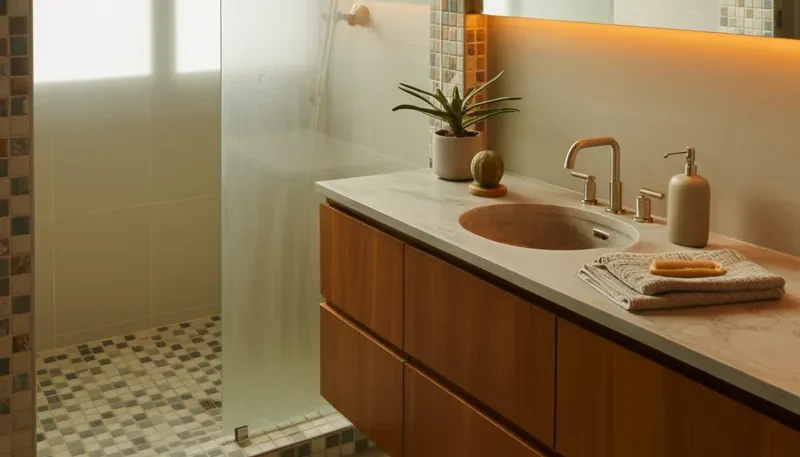
Choosing bathroom flooring sounds simple until you actually start looking at all the possibilities.
Suddenly, you’re comparing porcelain, ceramic, stone, vinyl, terrazzo, patterns, colors, textures, finishes… and wondering why the bathroom floor has become such a big decision. 😅
The good news? Your floor can completely change the personality of your bathroom. Whether you want something warm and cozy, crisp and modern, luxurious, playful, or timeless, there’s a flooring idea that can get you there.
I’ve gathered 18 bathroom flooring ideas that balance style with everyday practicality. Because a beautiful floor is great, but a beautiful floor that handles moisture, splashes, bare feet, and daily life? Even better.
Lay wood-look porcelain planks for warmth
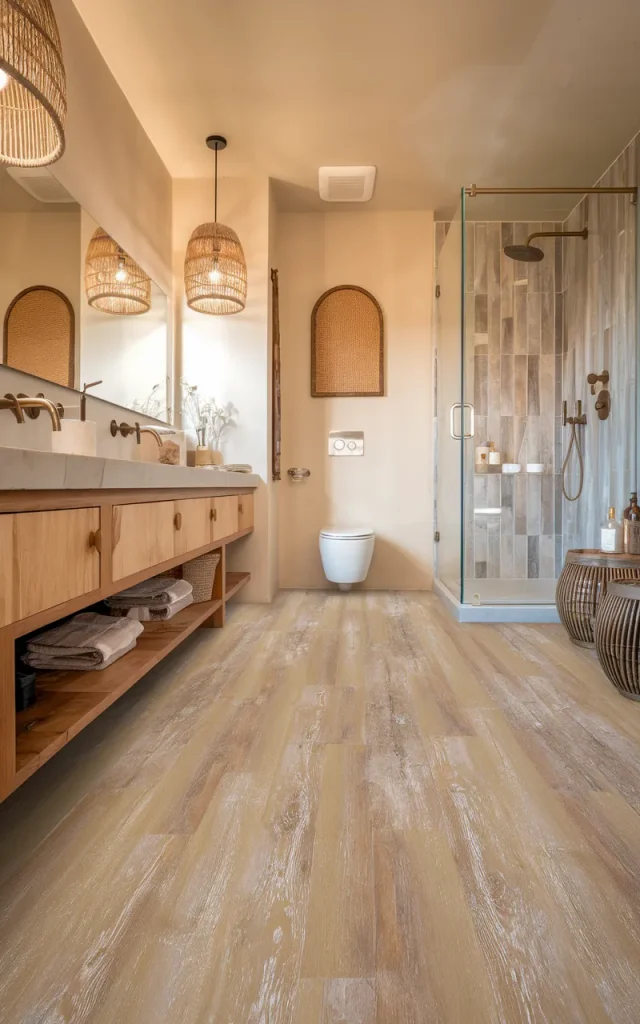
I love the warmth of wood in a bathroom, but real wood flooring isn’t always the easiest choice in a moisture-heavy room. That’s where wood-look porcelain comes in.
Choose long planks that mimic oak, walnut, or weathered wood. The realistic grain adds softness to bathrooms filled with hard surfaces such as tile, glass, and metal.
For a more convincing effect, pay attention to the grout color. A shade close to the tile usually keeps the individual planks from looking too visually disconnected.
🌿 Quick Tip:
Run the planks lengthwise toward the main sightline if you want the bathroom to feel longer.
Install classic checkerboard flooring for timeless charm
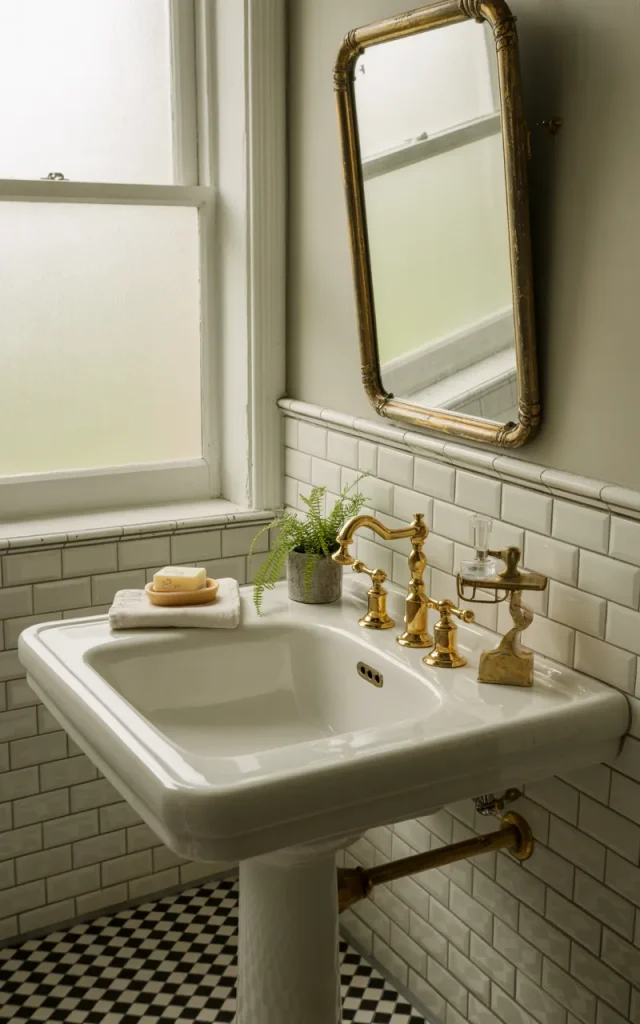
Checkerboard floors have been around forever, and honestly, I don’t think they’re going anywhere.
Black and white is the obvious combination, but don’t feel limited to it. Soft sage and cream, charcoal and ivory, or terracotta and pale beige can create a gentler version of the look.
I particularly like checkerboard flooring in traditional, vintage, farmhouse, and transitional bathrooms. Pair it with simple wall tile so the floor gets its moment.
The trick is scale. Large checkerboard squares feel bold and graphic, while smaller squares create a more detailed, nostalgic appearance.
Use penny tiles to create texture underfoot
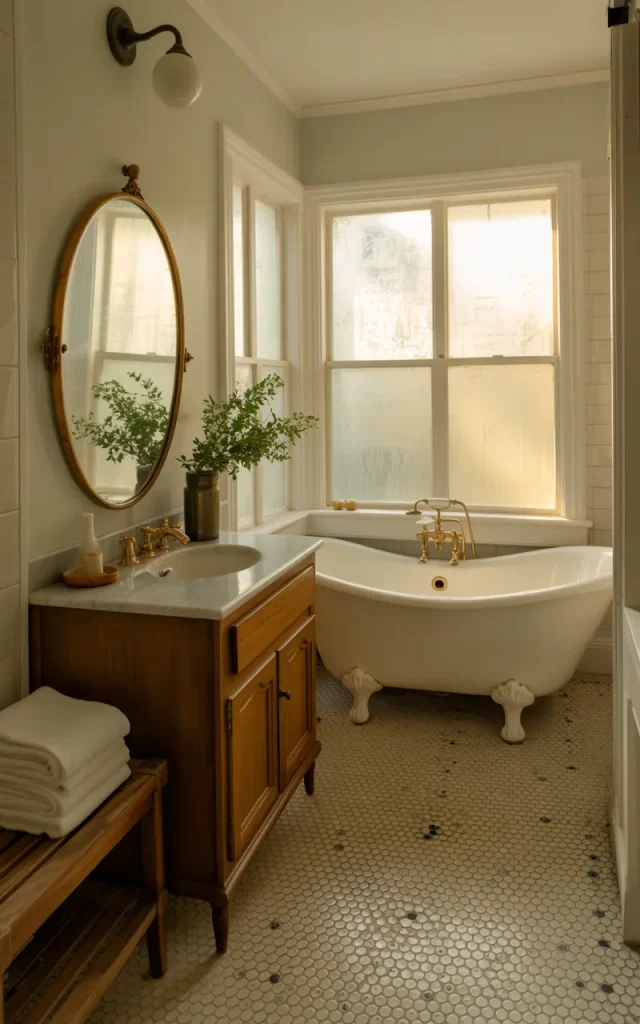
Penny tiles are one of my favorite ways to introduce personality without overwhelming a bathroom.
The small round tiles create an interesting texture and plenty of visual movement. You can keep things classic with white tiles and dark grout, or choose a richer color for something more unexpected.
They’re particularly lovely in vintage-inspired bathrooms, but they can also work surprisingly well in modern spaces when paired with streamlined fixtures.
There is one thing to consider: all those grout lines require regular cleaning. Still, if you love detail and character, the payoff can be worth it. 😊
Try terrazzo flooring for playful sophistication
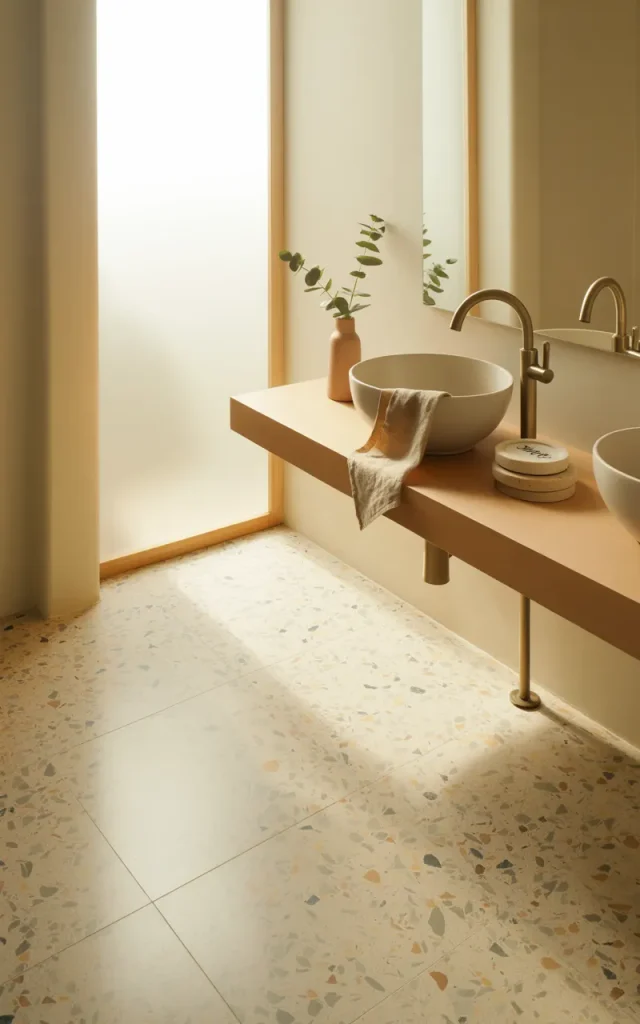
Terrazzo is fantastic when you want your bathroom floor to feel special without relying on a complicated pattern.
The scattered chips can bring together several colors already present in the room. For example, a creamy terrazzo with gray, tan, and muted green chips can quietly connect the floor to cabinetry, walls, and accessories.
I prefer terrazzo when the rest of the bathroom is relatively restrained. Let the floor become the fun part.
🎨 Colour swap suggestion:
| Instead of | Try |
| White terrazzo | Warm ivory terrazzo |
| Cool gray chips | Taupe and beige chips |
| Bright colorful chips | Muted earthy chips |
The result feels collected rather than chaotic.
Pick warm beige flooring for a cozy atmosphere
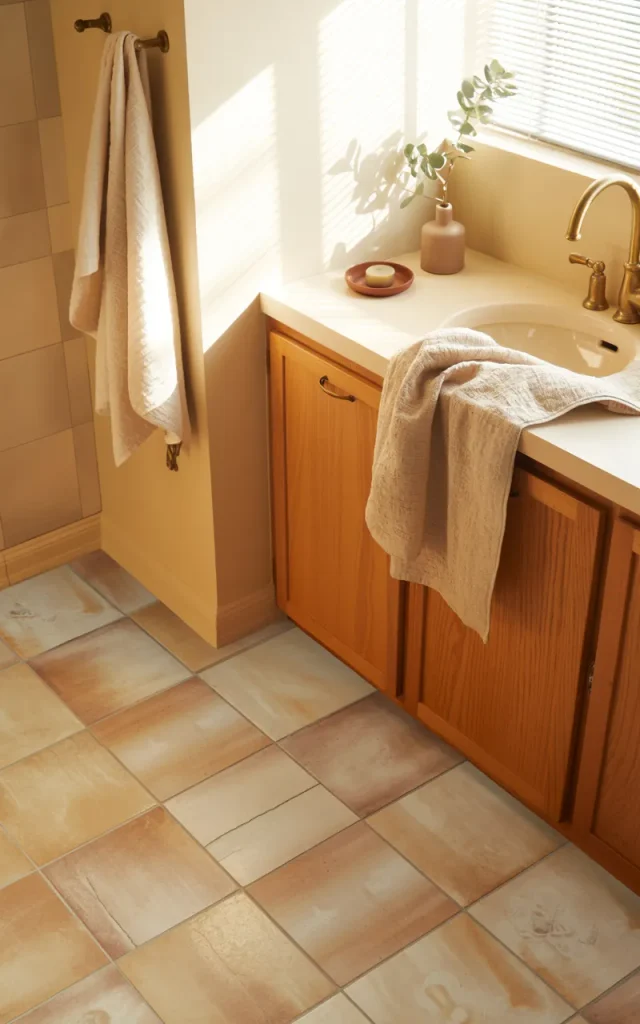
White bathroom floors are popular, but they aren’t your only route to a fresh-looking space.
Warm beige flooring can make a bathroom feel softer and more welcoming. It works particularly well with cream walls, oak cabinetry, brass fixtures, and natural fabrics.
I love this option when someone tells me they want a bathroom that feels more like a peaceful retreat than a clinical space.
Try to choose a beige with an undertone that works with the rest of your room. A pinkish beige, yellow beige, and gray beige can create very different results.
One rule to remember:

Always view a flooring sample alongside your wall color and cabinetry before committing.
Lay hexagon tiles for a modern organic feel
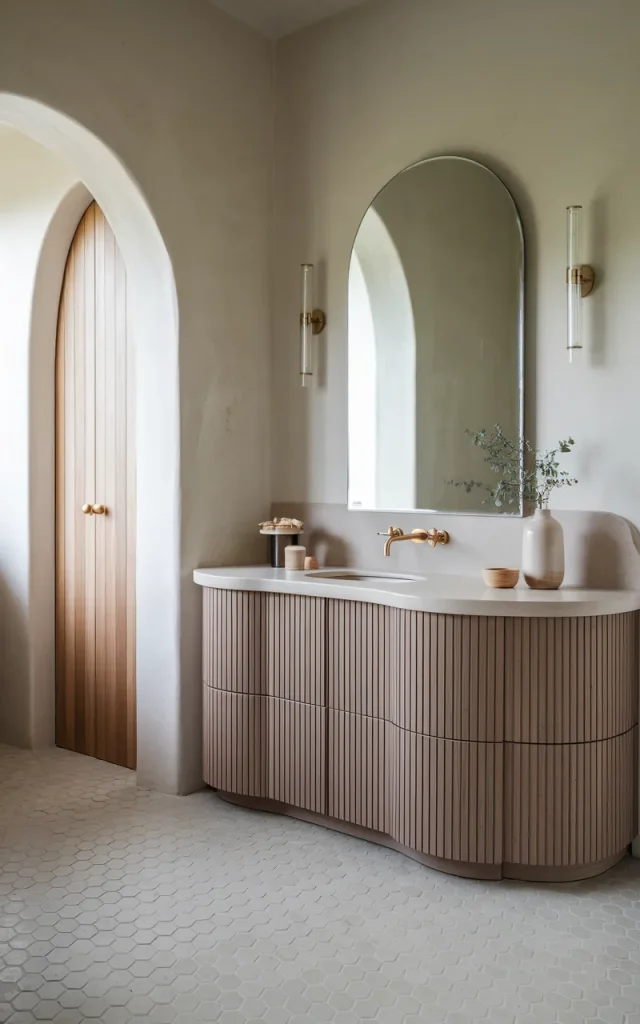
Hexagon tiles have a lovely balance between structure and softness. The shape is geometric, but its six sides keep it from feeling as rigid as a traditional grid.
For a contemporary bathroom, try medium or large hexagons in charcoal, cream, greige, or muted green.
Smaller hexagons can create a more intricate appearance, while larger ones feel cleaner and more modern.
If you’re already using a strong shape elsewhere, such as arched mirrors or curved cabinetry, hexagonal flooring can create a nice contrast without feeling unrelated. 🏡
Install black floor tiles for dramatic contrast
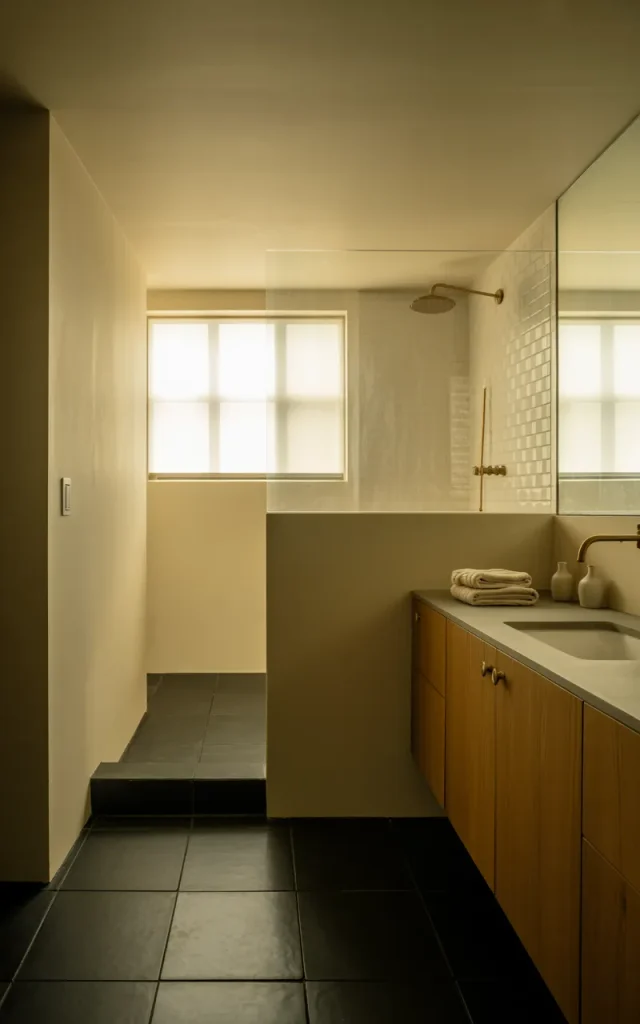
A black bathroom floor can completely transform a space.
I especially like it when the walls are lighter, because the dark floor visually anchors the room. White walls, warm wood, brass hardware, and a few soft textiles can keep the overall look balanced.
Who this is for: This idea is perfect if you love dramatic interiors but don’t want to paint the entire bathroom dark.
Matte black tends to feel softer and more contemporary than a highly glossy finish. Just keep maintenance in mind because some dark surfaces can show dust, hair, and water marks more easily.
A dark floor also gives you a wonderful opportunity to play with lighter accessories.
The goal isn’t to make everything look antique. It’s to create that charming, lived-in feeling while keeping the bathroom functional.
Use wood-look tile in a long, narrow bathroom
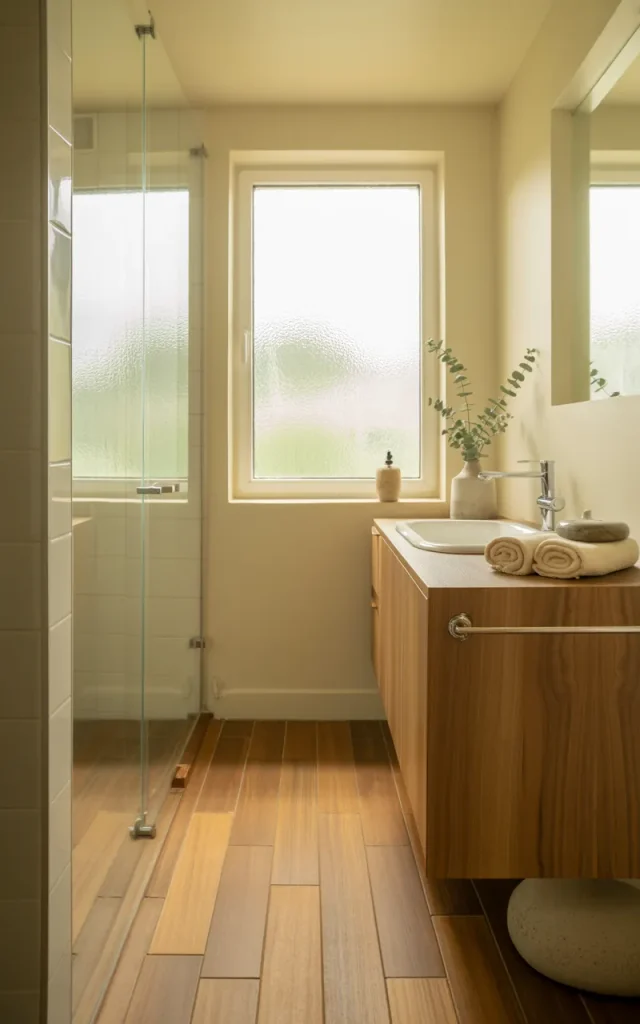
Long bathrooms can sometimes feel like corridors, so I like using flooring strategically to influence how the room is perceived.
Wood-look porcelain planks can soften the space and introduce a directional element. Depending on the room’s proportions, laying the planks across the narrow width can visually emphasize the width rather than reinforcing the long corridor effect.
A Micro-tip: Test your tile layout with loose samples before installation. The direction can make more difference than you might expect.
Pair the flooring with light walls and warm cabinetry for an easy, welcoming scheme.
And unlike real timber, properly selected porcelain gives you the wood appearance without making moisture the star of the conversation.
Create a border around the bathroom floor
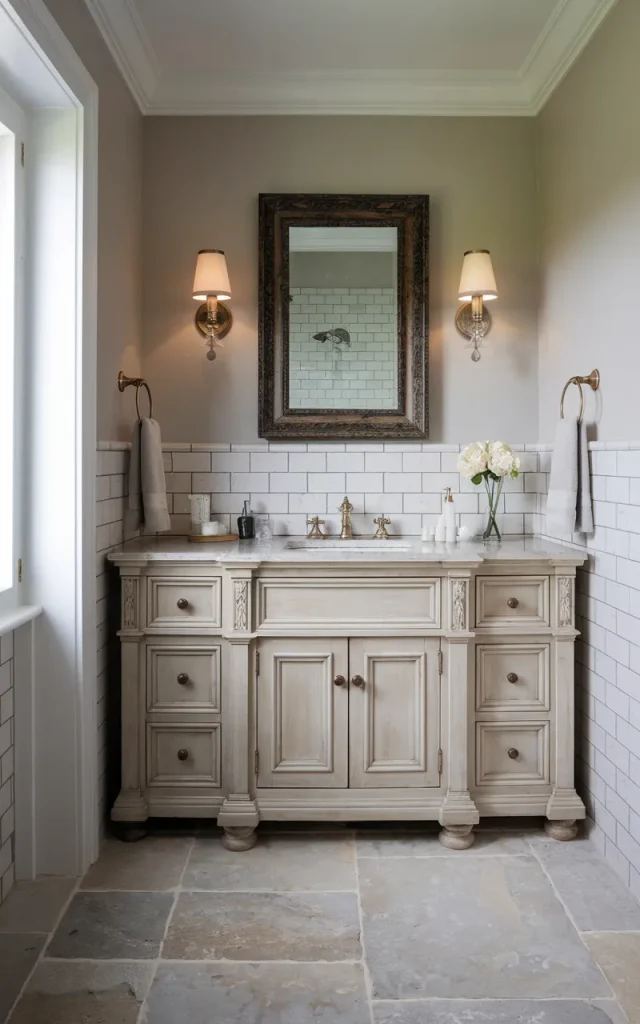
A floor border is such a simple detail, yet it can make a bathroom feel much more intentional.
Use a contrasting tile around the perimeter while keeping the center relatively simple. You could frame a pale stone-look floor with charcoal tiles or surround a patterned center with a narrow solid border.
Why it works:
The border visually defines the floor and gives the room a finished architectural quality. This approach works particularly well in traditional bathrooms, vintage spaces, and rooms where you want a slightly formal appearance.
Keep the border proportionate to the room. A very wide border can visually shrink a small bathroom.
Mix two tile sizes in a controlled pattern
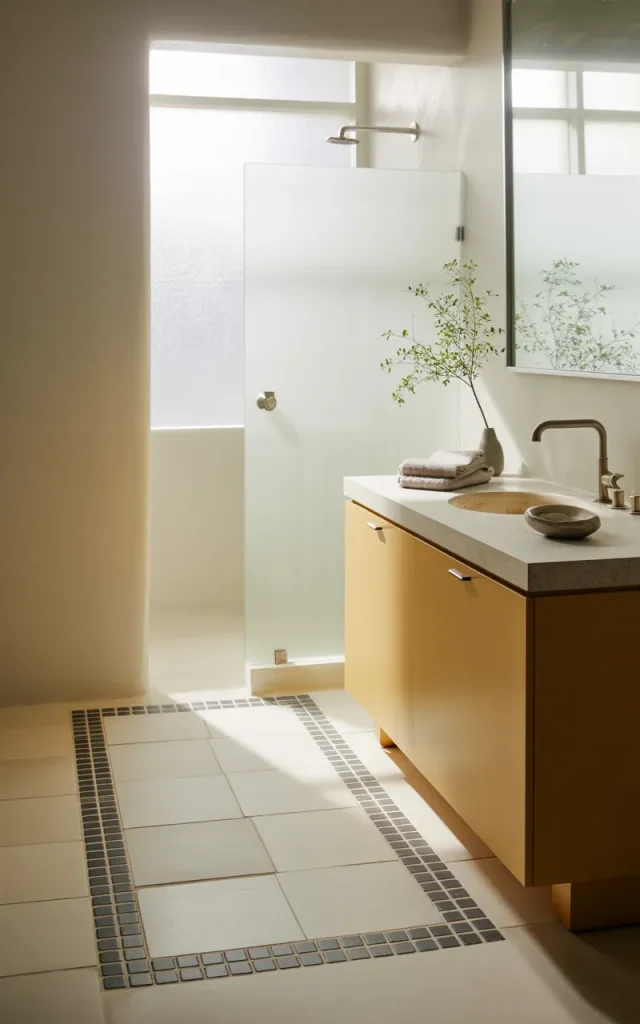
Who says your bathroom floor has to use one tile size?
Combining large and small tiles can create subtle dimension without introducing a loud pattern. For example, larger square tiles can form the main floor while smaller coordinating tiles create a perimeter or transition zone.
Common Mistakes to Avoid:
- Mixing too many colors.
- Using unrelated tile finishes.
- Choosing patterns that fight with the wall tile.
- Forgetting to plan transitions around fixtures.
I’d stick with one color family and let the difference in scale do the work.
It’s a clever choice when you want something customized-looking without going fully decorative.
Choose soft gray flooring for a versatile backdrop
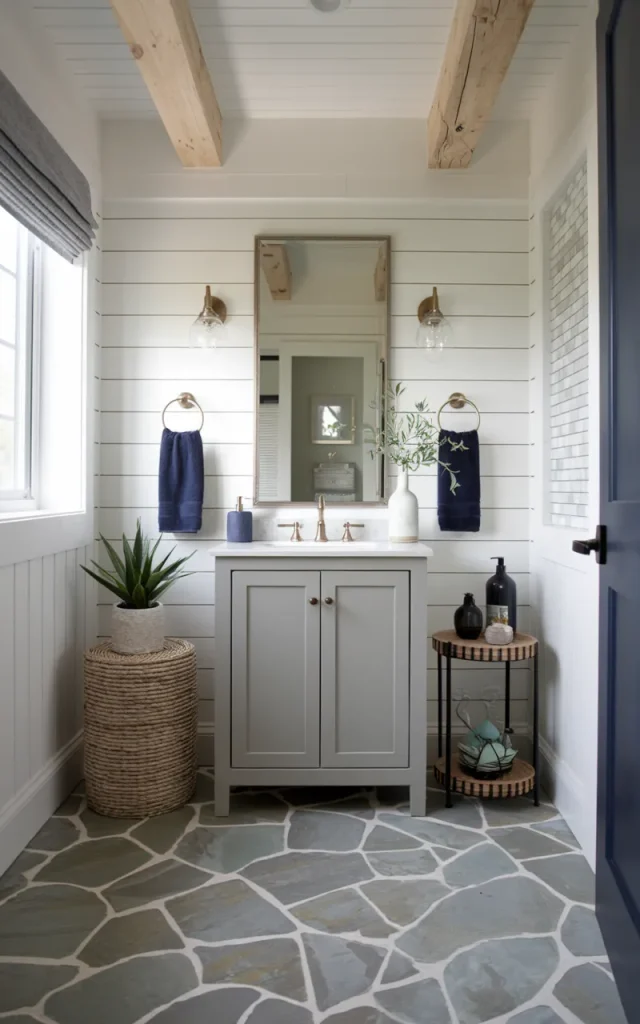
Soft gray flooring is one of those choices I recommend when someone wants flexibility.
It works with white, cream, navy, sage, dusty blue, black, natural wood, and plenty of other colors. That means you can change your towels, artwork, or accessories later without worrying that the floor will suddenly clash.
Instant Gratification Tip:
Add a plush bath mat in a warmer tone immediately after installing cool gray flooring. It can make the whole bathroom feel more inviting. Look for gentle variation rather than an entirely flat gray. Stone-inspired movement usually gives the floor more depth.
Try a muted green bathroom floor
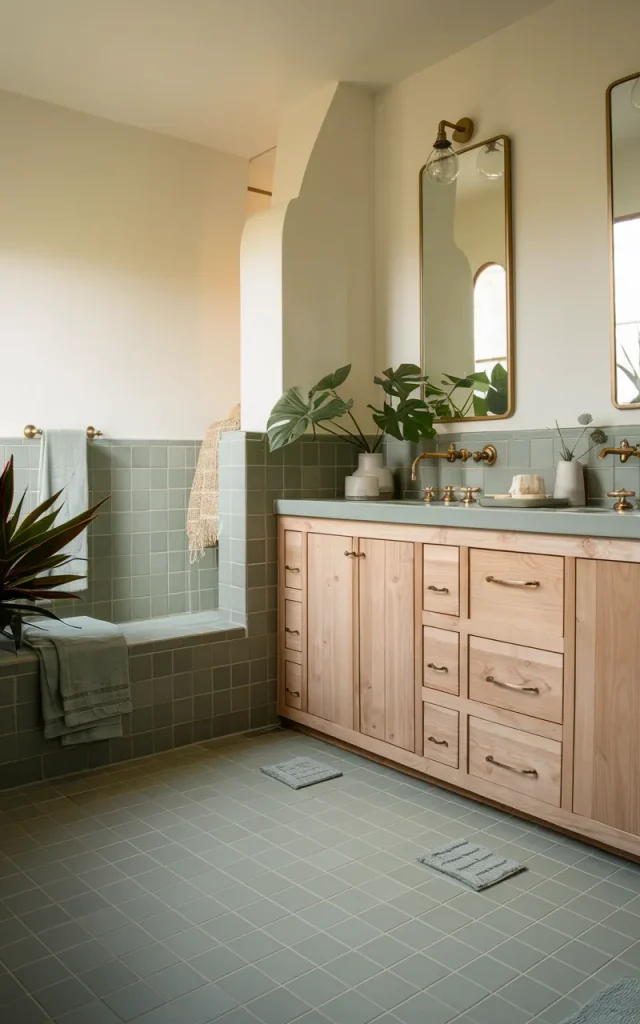
Green flooring might sound like a big commitment, but muted shades can be surprisingly easy to live with.
Think olive, sage, moss, eucalyptus, or dusty green rather than extremely bright emerald. These shades can create a calm, nature-inspired bathroom without becoming overwhelming.
Vibe check:
- 🌿 Calm: sage green
- 🌲 Moody: deep moss
- ☁️ Soft: dusty eucalyptus
- 🪴 Earthy: muted olive
Pair the floor with warm white walls and natural wood if you want the green to feel relaxed.
I’d avoid introducing too many additional colors. Let the floor be the personality piece.
Use terrazzo-look porcelain for low-fuss personality
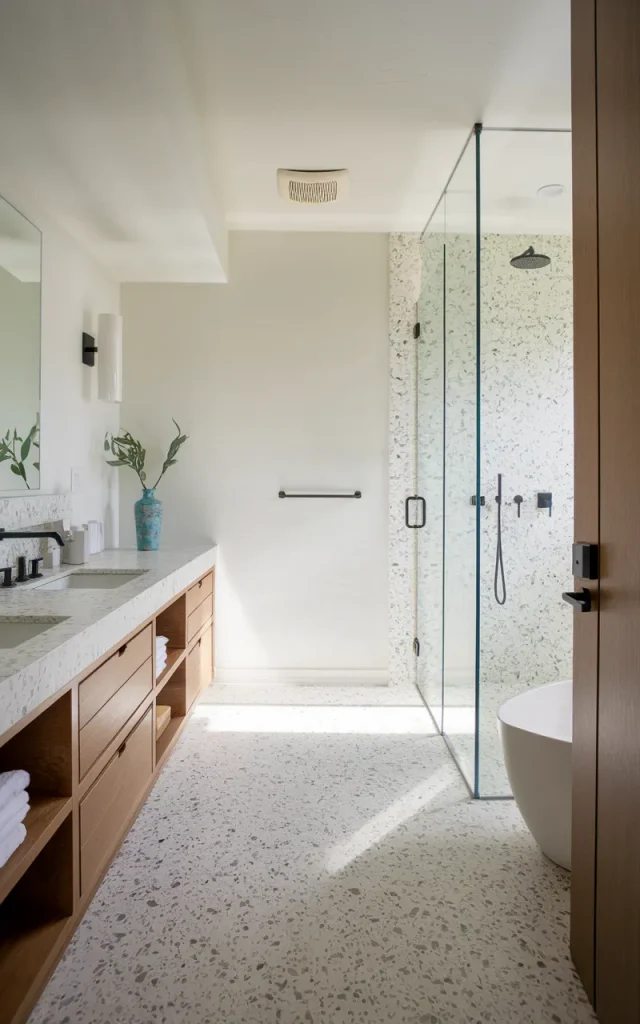
If you love the playful look of terrazzo but want a porcelain option, terrazzo-look tile can be a great compromise.
Choose a pattern with chips that coordinate with your existing palette. I often prefer subtle versions with warm neutrals because they have enough personality to be interesting but won’t become dated as quickly.
Myth-buster:

A patterned bathroom floor doesn’t automatically mean the room needs to be colorful. In fact, a neutral terrazzo-style floor can be the perfect foundation for a minimalist bathroom. Keep your walls simple, choose streamlined fixtures, and allow those little flecks to add the visual detail.
Frame a patterned floor with a solid tile border
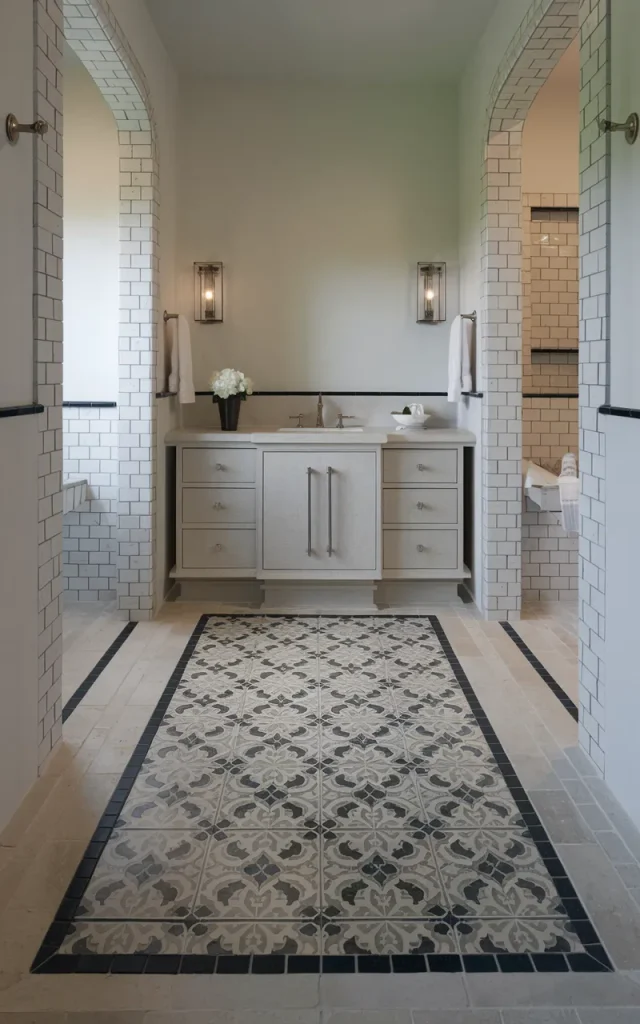
If you adore patterned floors but worry they’ll overwhelm your bathroom, framing the pattern can help.
Use a decorative tile in the central area and surround it with a solid tile border. The border acts almost like a picture frame, giving the pattern a defined visual boundary.
How to steal this look:
- Pick one dominant pattern color.
- Match the border to one of the pattern’s quieter tones.
- Keep the walls uncomplicated.
- Repeat the border color in a small accessory or fixture.
- Avoid introducing another competing pattern.
This works beautifully in traditional and transitional bathrooms, but it can also look fantastic in a contemporary space when the pattern is restrained.
Add a bold blue floor for personality
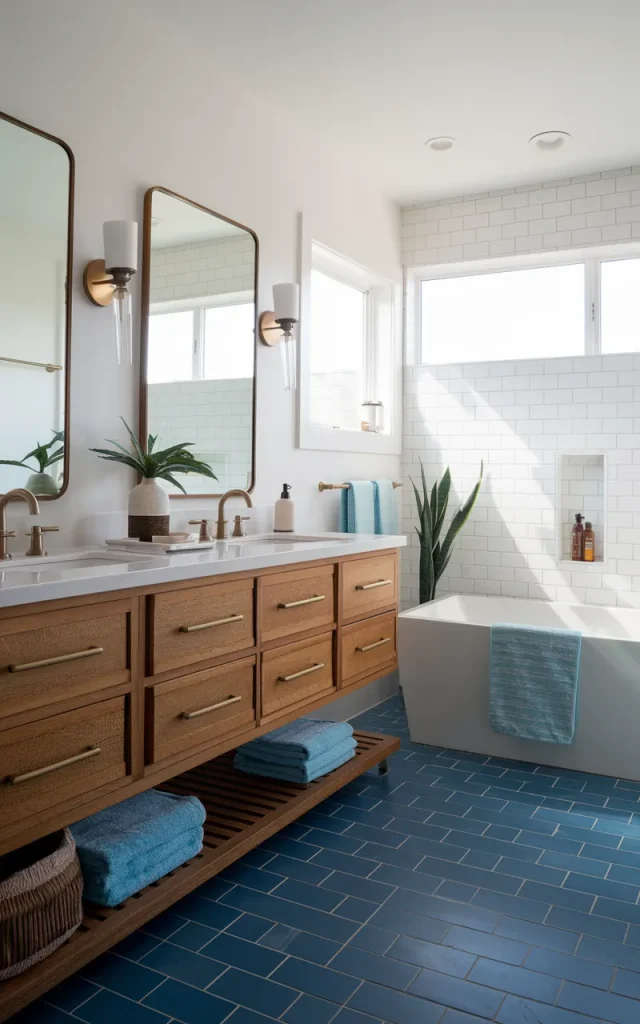
Sometimes a bathroom simply needs a little courage.
A deep blue floor can be beautiful, especially when paired with crisp white walls and warm metal accents. Navy, indigo, dusty blue, and blue-gray are all worth considering.
Trend callout: Color is increasingly being used to give bathrooms more personality instead of treating them as purely neutral utility spaces.
If a fully saturated blue floor feels intimidating, use a blue-and-white pattern instead. You’ll still get the color without making the entire surface one intense block.
I love adding warm wood alongside blue because the contrast prevents the room from feeling cold.
Install concrete-look flooring for an industrial edge
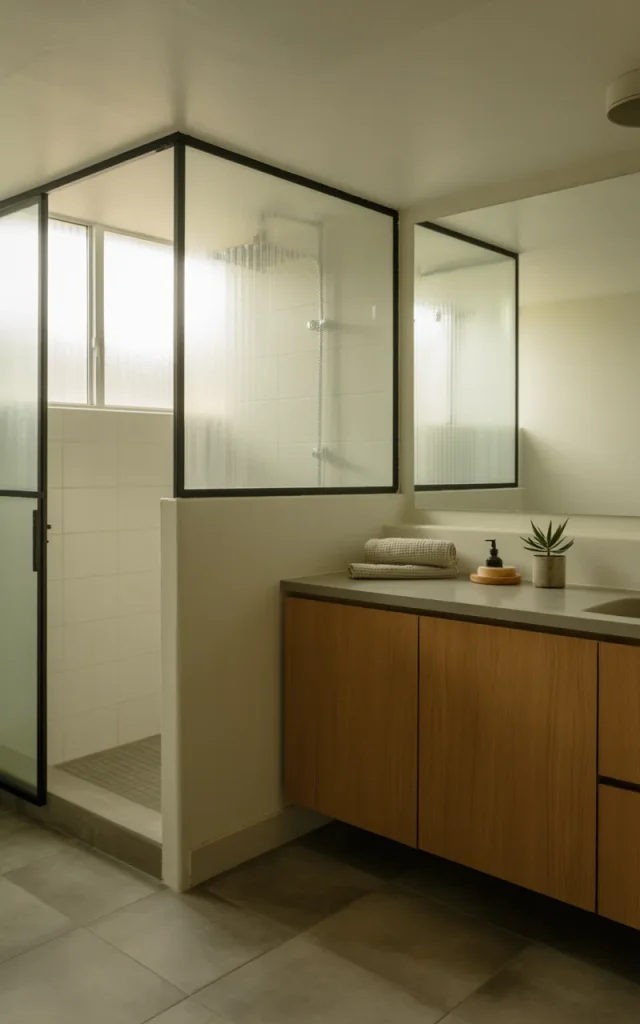
Concrete-look porcelain gives a bathroom that relaxed industrial character without requiring an actual concrete floor.
Choose medium gray for a classic industrial appearance, or go warmer with greige if you want something softer.
Pair it with black-framed glass, simple cabinetry, exposed-looking hardware, and minimal accessories.
What most people get wrong: They sometimes assume an industrial bathroom needs to be dark.
It doesn’t.
A light concrete-look floor with white walls and natural wood can feel bright, modern, and surprisingly cozy.
For a more polished result, choose one consistent finish throughout the room rather than combining too many competing industrial materials.
Lay diagonal tiles to visually widen the floor
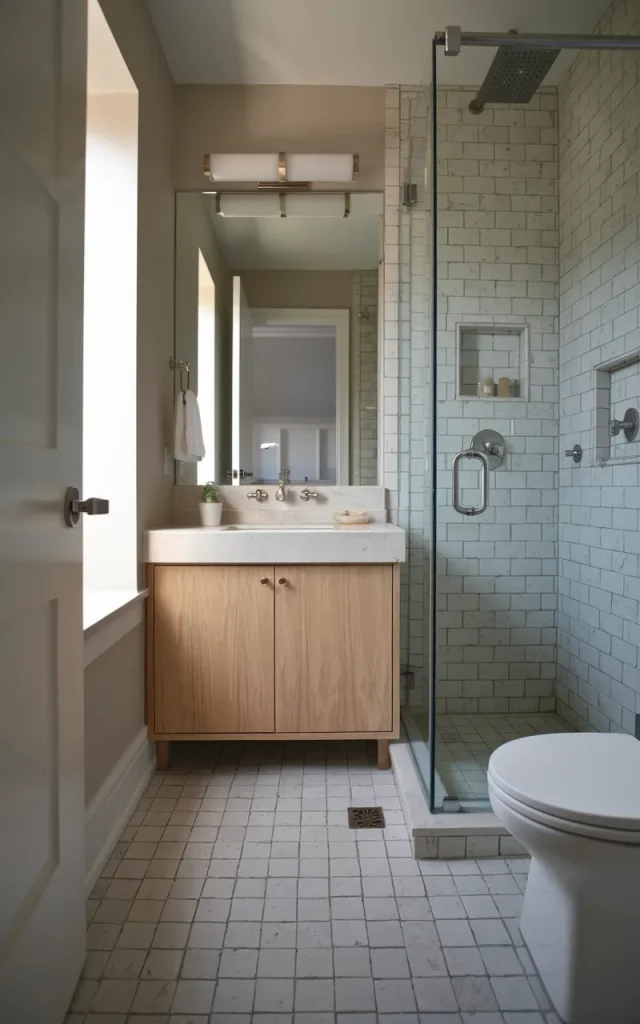
Here’s a simple layout trick that can make a traditional tile feel completely different.
Instead of installing square tiles in a straight grid, turn them diagonally. The angled lines draw the eye across the room rather than simply following the walls.
Thumb Rule:
The more noticeable the floor pattern, the calmer I’d keep the surrounding finishes.This works particularly well when the bathroom itself has an awkward shape or when you want to make a small room feel less boxy.
It’s not a magic trick that physically changes the dimensions, of course. But visually, the diagonal arrangement can break up rigid lines and create a more dynamic impression.
Combine two complementary floor materials
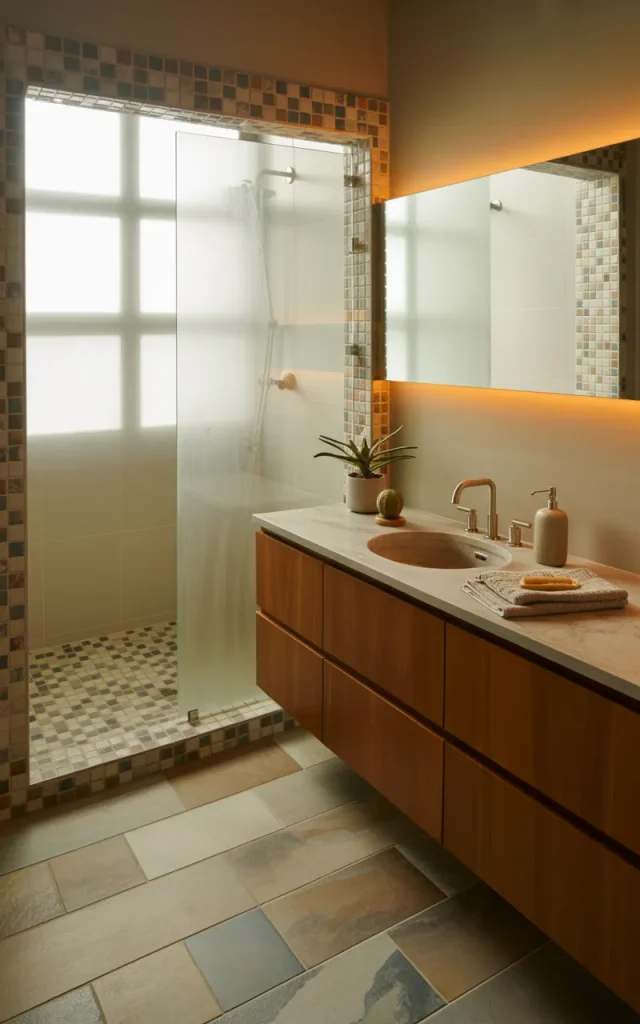
For a truly customized bathroom, consider combining two flooring materials or tile finishes in different zones.
For example, use a stone-look tile throughout the main floor and introduce a small decorative mosaic around the shower area. Or create a defined zone around a freestanding tub.
Do’s & Don’ts:
- Do: Keep the colors related.
- Do: Use the transition intentionally.
- Do: Consider how the materials meet.
- Don’t: Combine several unrelated patterns.
- Don’t: Ignore differences in thickness.
- Don’t: Create awkward little leftover sections.
The best mixed-material floors look deliberate. You want people to think, “That’s a beautiful design choice,” not “Why did the tile suddenly change there?”
Final Thoughts
The best bathroom flooring ideas aren’t necessarily the trendiest ones. They’re the ones that fit your room, your lifestyle, your cleaning habits, and the feeling you want every time you walk through the door.
Maybe that means warm wood-look porcelain. Maybe it’s a dramatic black tile, playful terrazzo, classic checkerboard, or wonderfully quiet beige stone.
Start with one idea that makes you pause and think, Yes, that’s exactly the feeling I want. Then build the rest of the bathroom around it. A thoughtful floor can change the entire room—and sometimes, that’s all the makeover you really need. 🛁
